
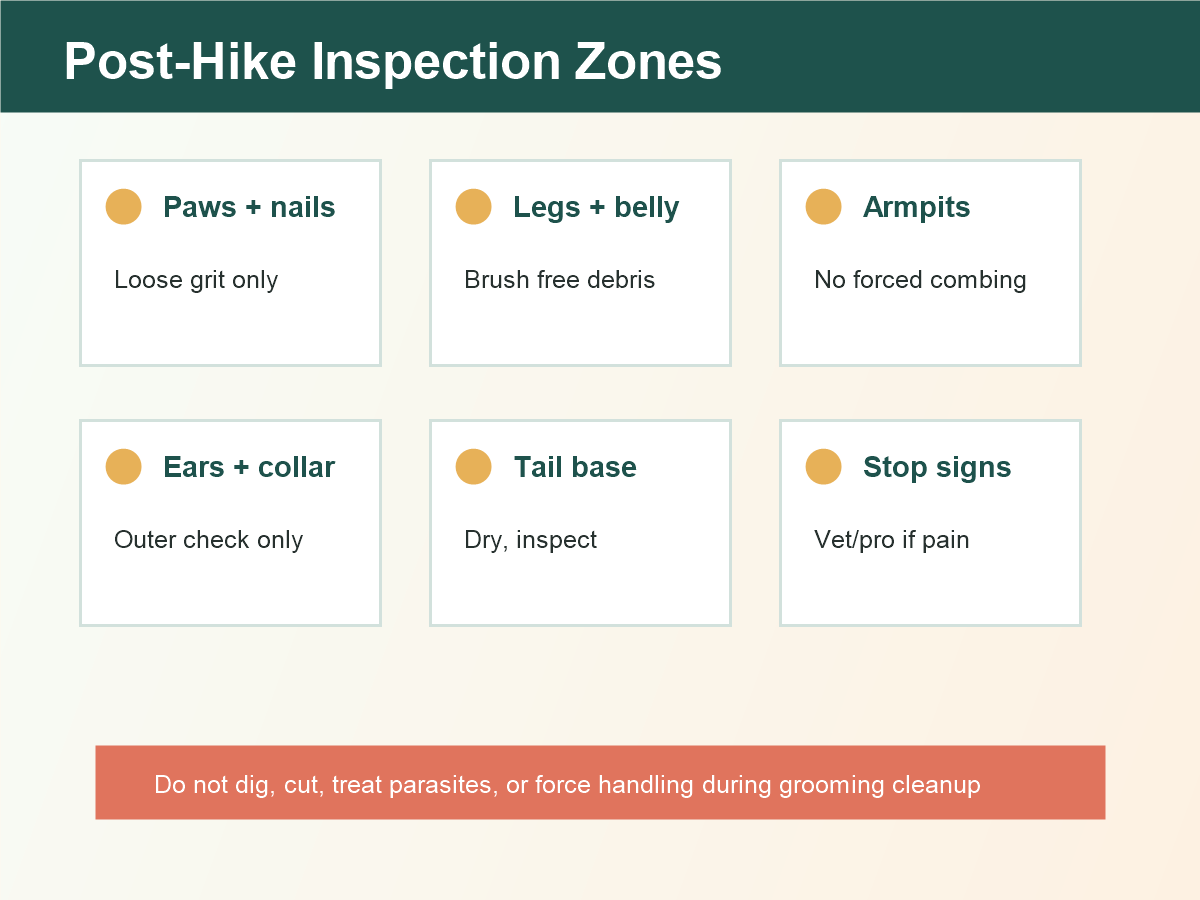
After a hike, inspect paws, nails, legs, belly, armpits, ears, collar areas, and tail base before you brush or bathe. Remove only loose debris, rinse routine dirt when needed, dry damp areas, and stop for parasites, wounds, limping, embedded objects, pain, severe mats, chemical exposure, distress, or unsafe handling.
This is routine grooming cleanup, not tick removal, parasite treatment, wound care, pain management, chemical exposure treatment, dematting, or forced handling advice.
Post-Hike Grooming Order
- Let your dog settle in a calm, well-lit place.
- Check paws, pads, toe gaps, nails, and dewclaws.
- Check legs, belly, armpits, tail base, ears, and collar or harness lines.
- Remove loose debris only.
- Brush or comb only where the coat moves freely.
- Rinse paws, belly, or coat if routine dirt remains.
- Stop for parasites, wounds, limping, embedded objects, pain, severe mats, chemical smell, or unsafe handling.
Paw and Nail Check
Start with the paws because trail grit, seeds, and small debris often collect between toes and around nails. Look for loose dirt, sand, mud, tiny plant pieces, and damp spots. Routine dirt can be wiped or rinsed away.
AKC paw-cleaning guidance supports cleaning paws after outdoor mess. For a more detailed everyday paw routine, use how to clean dog paws after a walk.
Do not dig out embedded material, scrub painful pads, or keep handling a limping dog. Those are stop signs, not grooming steps.
Burrs, Seeds, and Coat-Zone Debris
Check high-friction areas next: armpits, groin, behind ears, tail base, belly, feathering, collar line, and harness contact points. If debris is loose, lift it out gently with fingers or a wide, easy pass of a comb.
If a burr is tight, the coat catches, the skin pulls, or your dog flinches, stop. Do not cut, shave, force-comb, or turn a painful tangle into a home grooming project. If you need help deciding whether coat catching is a tangle or a mat, see dog matting vs tangles and how to comb check a dog coat.
Tick-Check Boundary
After tall grass, brush, wooded trails, or heavy vegetation, check the coat and skin carefully. Cornell’s canine Lyme disease guidance supports checking dogs after exposure to tick habitat.
This grooming guide does not teach tick removal or parasite treatment. If a tick or parasite is found or suspected, use veterinarian guidance or another qualified source for the next step.
Rinse, Towel, or Bath Decision
Use the smallest cleanup that solves the routine mess. A towel wipe may be enough for dust. A paw rinse may be enough after a dry trail. A fuller rinse may make sense after mud or wet grass if the skin and coat are safe to handle.
If the hike happened in hot weather, keep cleanup short and cool. ASPCA hot weather safety guidance emphasizes shade, water, and avoiding extreme heat. For grooming choices on hot days, see how to groom a dog in summer.
If your dog also swam on the outing, use the separate post-water routine in dog grooming after swimming.
Gear and Coat Cleanup
Wash or set aside dirty towels, wipe down washable gear by label directions, and check collars or harnesses before the next outing. ASPCA dog grooming tips support using brushing time to inspect the coat and skin. Keep that inspection gentle and stop if you find a problem outside routine grooming.
If your dog came home with dog-park style shared-area dirt too, the dog grooming after dog park guide has a broader public-space cleanup routine.
Stop Signs After Hiking
| Stop sign | Safer next step |
|---|---|
| Tick, parasite, flea dirt, or suspected parasite | Stop grooming and use veterinarian or qualified parasite guidance. |
| Wound, bleeding, swelling, hot spot, or skin pain | Stop and contact a veterinarian. |
| Limping, embedded object, painful paw, or repeated guarding | Stop handling the area and use veterinary guidance. |
| Severe mat, tight burr, or coat pulling at the skin | Use a qualified groomer or veterinarian. |
| Chemical smell, unknown residue, distress, snapping, or unsafe handling | Stop the session and get professional guidance before continuing. |
FAQ
Should I groom my dog after hiking?
Yes. A calm inspection and light cleanup can catch loose debris, paw dirt, damp coat zones, and handling stop signs before they worsen.
How do I check my dog for burrs after a hike?
Check paws, legs, belly, armpits, behind ears, tail base, collar line, and harness contact points. Remove only loose debris gently and stop for painful or tight debris.
Should I rinse my dog’s paws after hiking?
Rinse or wipe paws when there is routine mud, dust, sand, grit, or plant debris. Stop for pain, wounds, limping, swelling, or embedded material.
Can I remove ticks in this grooming routine?
No. This routine is for checking and routing. If a tick or parasite is found or suspected, use veterinarian guidance or another qualified source.
When should post-hike cleanup become a vet visit?
Use a veterinarian for limping, wounds, parasites, embedded objects, swelling, pain, chemical exposure, hot spots, illness signs, or unusual behavior after hiking.