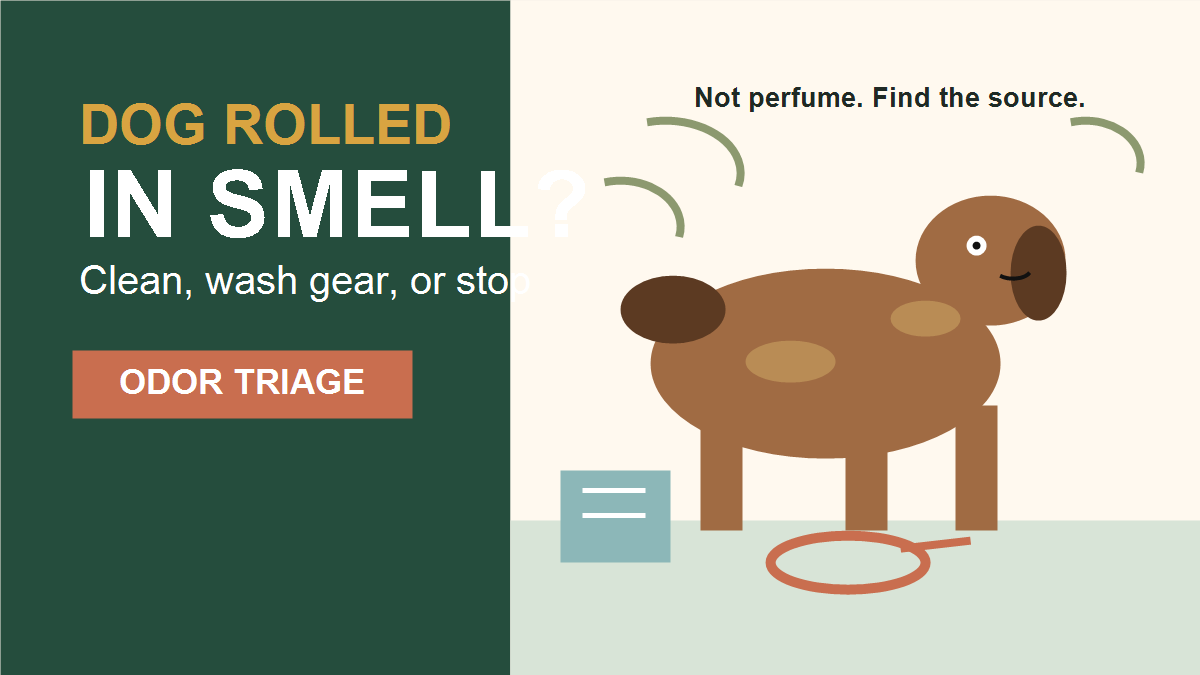

If your dog rolled in something smelly, do not start by covering the odor. First decide whether it is a normal surface mess or a warning sign. For routine surface odor, remove contaminated gear, rinse or wipe debris, shampoo only the affected coat when needed, rinse thoroughly, dry well, and clean collars, bedding, towels, and washable surfaces that touched the smell.
Stop grooming and call a veterinarian, emergency clinic, or poison-control resource if the smell involves the eyes, mouth, ears, rear, wounds, chemicals, illness, pain, breathing trouble, collapse, or a persistent foul odor that seems to come from the skin instead of the coat.
Odor Cleanup Flowchart
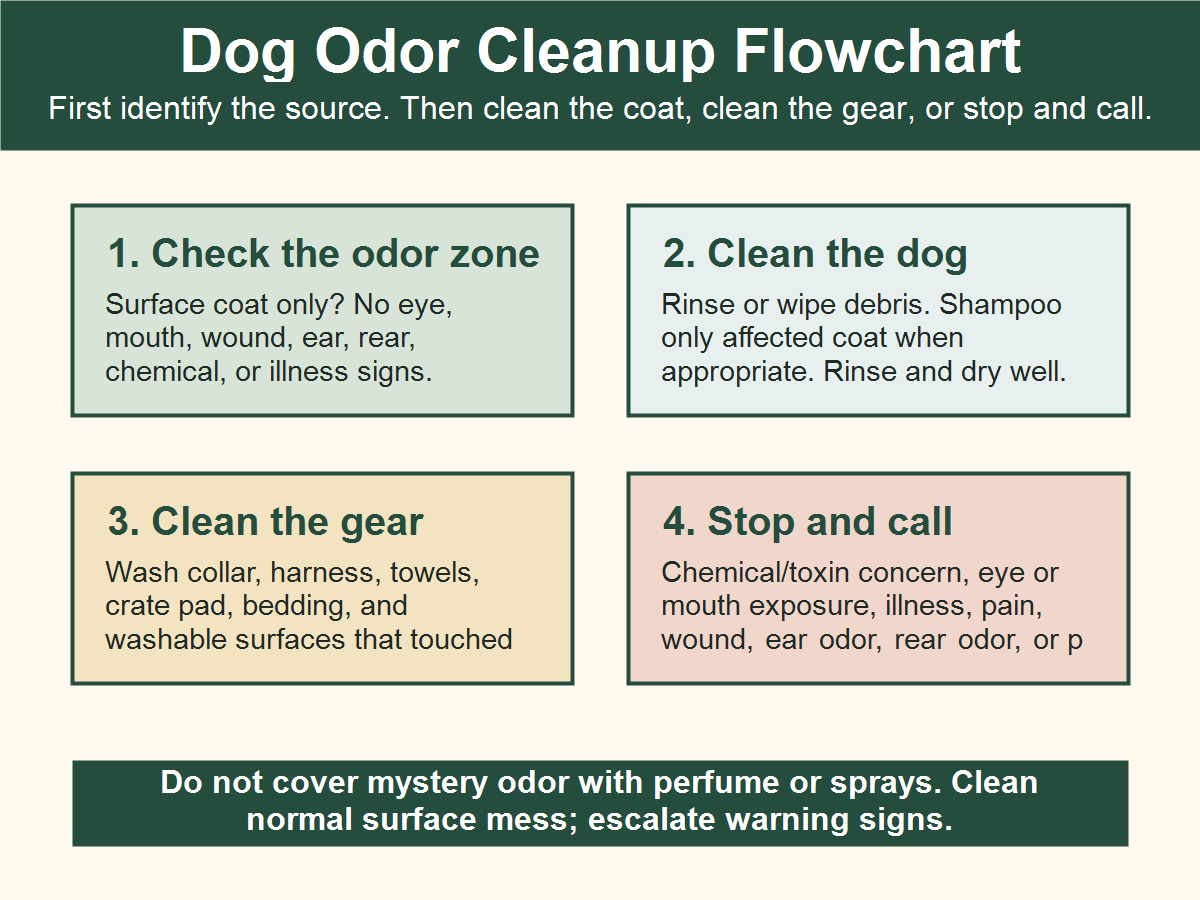
| What you find | Routine cleanup path | Stop path |
|---|---|---|
| Smell is clearly on the coat surface | Rinse or wipe debris, then shampoo only the affected area if needed. | Stop if the skin looks sore, swollen, broken, or painful. |
| Collar, harness, towel, crate pad, or bedding touched the smell | Remove and wash gear before it transfers odor back to the coat. | Discard or isolate items that may be contaminated by unknown chemicals. |
| Odor is near eyes, mouth, ears, rear, wound, or irritated skin | Do not treat it as a normal bath problem. | Call a veterinarian or emergency clinic for direction. |
| Chemical, fuel, pesticide, toxin, illness, collapse, breathing trouble, or severe distress concern | Do not rinse, mix products, or experiment unless instructed. | Call professional help immediately. |
Before You Start Cleaning
Move your dog to an easy-to-clean area and keep them from licking the smelly spot. Take a quick look before adding water or shampoo. The goal is to learn where the odor is coming from, not to make the dog look clean as fast as possible.
- Put on gloves if the mess may be feces, garbage, wildlife residue, or unknown outdoor material.
- Remove the collar, harness, leash, sweater, bandana, or any item that touched the smell.
- Keep your dog away from carpet, couches, beds, and other soft surfaces until you know whether the odor transfers.
- Take a quick note or photo of the suspected source if it may matter for a veterinary call.
If the mess is mud or normal outdoor dirt as well as odor, use the related dog grooming after mud guide for the dry-brush, rinse, bath, or stop decision.
Quick Stop Signs: When Odor Is Not Just Odor
Some smells should not be handled as routine grooming. Stop and call a veterinarian, emergency clinic, or poison-control resource if your dog may have contacted chemicals, toxins, medication, fuel, pesticides, dead wildlife, contaminated water, or anything that caused drooling, vomiting, coughing, weakness, collapse, breathing trouble, eye irritation, mouth irritation, bleeding, or severe distress.
Also stop if the odor seems to come from the ears, skin, rear end, mouth, or a wound rather than from something on the coat. Do not deodorize those signs away.
Brief Skunk Branch
If skunk spray is suspected, keep the spray away from your dog’s eyes and mouth, avoid home chemical experimentation, and follow veterinary or professional guidance. The AKC notes that dogs sprayed in the eyes or mouth, or dogs that seem sick after skunk exposure, should be handled with veterinary help.
This page is for broad surface-odor cleanup. A dedicated skunk-spray page should handle skunk-specific steps separately.
Step 1: Identify The Odor Zone
Before getting the whole dog wet, find the main odor area. Common places include the neck and shoulders, side of the body, ears and cheeks, belly, legs, paws, tail, and collar area.
Part the coat gently with your fingers. Look for sticky residue, plant matter, mud, feces, oily patches, redness, broken skin, swelling, discharge, or tenderness. If the coat looks normal and the smell is clearly on the surface, routine cleanup may be reasonable. If skin looks abnormal or painful, pause and call the vet.
Step 2: Remove Collars, Harnesses, And Bedding
Odor often stays on gear even after the dog is clean. Put collars, harnesses, towels, blankets, crate bedding, and washable covers in a separate laundry pile. If an item is not washable, set it aside until you can check the care label or replace it.
Do not put a smelly collar back on a clean dog. The odor can transfer right back to the neck coat.
Step 3: Pre-Rinse Or Wipe Surface Debris
For loose dirt, mud, grass, or surface residue, start with plain lukewarm water or a damp cloth. Rinse or wipe from cleaner areas toward the dirty area so you do not spread the smell across the coat.
Keep water and shampoo away from the eyes, ears, nose, and mouth. If the odor is on the face, use a damp cloth with extra care and stop if your dog squints, paws at the face, coughs, gags, or resists because of discomfort. For bath setup, use dog bath water temperature before you wet the coat.
Step 4: Shampoo Only The Affected Coat When Appropriate
If plain water does not remove a normal surface odor, use a routine dog shampoo according to the label. Work only on the affected coat when the mess is localized. A full bath may be useful if the odor transferred across the body, but it is not always needed.
Massage gently with your fingers. Do not scrub irritated skin, open wounds, hot spots, painful mats, ears, eyes, mouth, or the rear area. Those are not shampoo problems.
Step 5: Rinse, Dry, And Recheck
The ASPCA dog grooming tips support basic bath habits such as brushing before bathing, protecting sensitive areas, rinsing, drying, and checking for skin abnormalities. For odor events, rinsing matters because leftover shampoo can leave the coat itchy and leftover residue can keep smelling.
After rinsing, towel blot the coat and dry the dog in a warm, low-stress space. Recheck the original odor zone once the coat is mostly dry. If the smell is still strong, seems to come from the skin instead of the hair, or returns quickly, call a veterinarian rather than adding perfumes or stronger products. Use how to rinse dog shampoo completely if shampoo was used.
Clean The Surroundings Too
Odor cleanup is not finished until the surroundings are clean. The CDC healthy pets guidance for dogs includes basic hygiene reminders such as handwashing after handling dogs, supplies, or waste.
- Wash collars, harnesses, leashes, towels, crate pads, and bedding that touched the mess.
- Wipe washable floors, crate trays, bath surfaces, and grooming tools.
- Wash your hands after handling contaminated coat, gear, laundry, or outdoor messes.
- Keep used towels separate until they are laundered.
What Not To Do After A Mystery Odor Event
Do not use perfume, essential oils, deodorizing sprays, harsh cleaners, undiluted concentrates, home chemical mixes, or human cosmetic products to cover the smell. Covering odor can irritate skin and may hide signs the vet needs to evaluate.
Do not squeeze anal sacs, clean deep inside ears, treat wounds, shave irritated patches, or cut out mats as part of odor cleanup.
FAQ
Can I bathe my dog right after they roll in something smelly?
Yes, if the odor is clearly a normal surface mess and your dog is otherwise comfortable. First check for toxin exposure, eye or mouth contact, wounds, pain, ear odor, rear-end odor, or illness.
What smells should not be handled as normal grooming?
Chemical smells, skunk spray near the eyes or mouth, foul ear odor, fishy rear-end odor, wound odor, persistent skin odor, and odor with vomiting, collapse, breathing trouble, pain, discharge, or distress should not be masked or treated as routine bathing.
Should I wash my dog’s collar and bedding too?
Yes. Collars, harnesses, leashes, towels, blankets, and crate bedding can hold odor and transfer it back to the coat.
What if the smell is near the ears, mouth, eyes, or rear?
Use extra caution and do not put shampoo, sprays, or cleaning products in those areas. If there is discharge, redness, squinting, swelling, pain, or persistent odor, call a veterinarian.
Can I use perfume or deodorizing spray instead of washing?
No. Covering odor does not remove the source and can hide medical signs. Clean normal surface mess gently, and call a vet for abnormal or persistent smells.