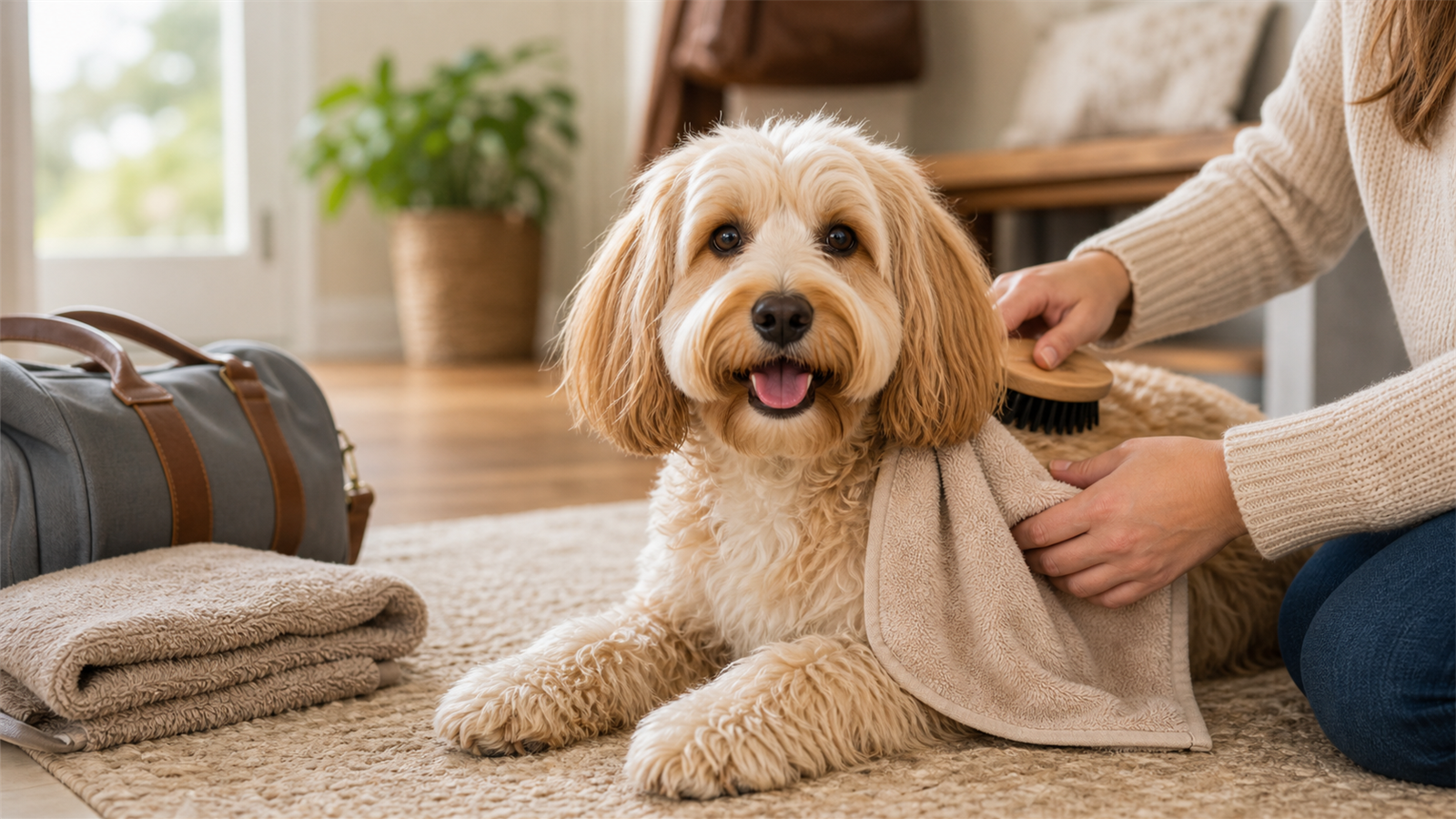

After a hotel stay with your dog, the best grooming plan is a calm return-home reset: let your dog settle, check paws and coat, clean used travel items, and decide whether a bath is actually needed. This guide does not judge hotel cleanliness or verify lodging policies. It only covers what to do once your dog is back home.
The goal is simple: remove ordinary travel dirt without turning a tired dog into a handling fight. Stop early for pain, wounds, illness signs, chemical concerns, suspected parasites, or tight mats.
Start With a Quiet Reset
Give your dog a few minutes to drink water, sniff home, and relax before you start checking paws or coat. Dogs can come home overstimulated from elevators, hallways, new smells, and car time. A short pause helps you see whether your dog is comfortable enough for normal grooming.
If your dog is pacing, hiding, growling, snapping, shaking, or refusing touch, keep the session small. Do only the checks needed for safety, then return later or ask a groomer or veterinarian for help if handling is not safe.
The Post-Hotel Grooming Checklist
Use this order each time so you do not miss the common problem spots from pet-friendly rooms, parking lots, elevators, sidewalks, and travel bedding.
1. Check paws first
Look between toes, around nails, along pad edges, and on the lower legs. Remove ordinary grit with a towel or damp cloth. Stop for limping, swelling, bleeding, strong pain, sticky chemical residue, or anything you cannot identify safely.
If paws are the main issue, the same careful approach used for cleaning dog paws after a walk works well after hotel hallways, parking areas, and sidewalks too.
2. Brush before bathing
Check the coat for carpet fibers, crumbs, grass, loose hair, damp spots, and small tangles. Brush out light debris before you decide on a bath. Water can tighten tangles and make a small knot harder to handle.
For heavier outdoor dirt, compare the reset with our dog grooming after mud guide. For outdoor travel, the after-camping grooming checklist uses a similar stop-first approach.
3. Check belly, tail, collar area, and armpits
These areas collect lint, bedding fibers, damp patches, and friction tangles. Work slowly and use your fingers only for a light surface check. Do not pull tight mats, cut mats with scissors, or force brushing over painful skin.
4. Look at face and ears without digging
Do a visual check for debris, odor, redness, discharge, swelling, or pain. This is not an ear-cleaning or eye-treatment guide. Contact a veterinarian for discharge, strong odor with irritation, swelling, pain, or suspected injury.
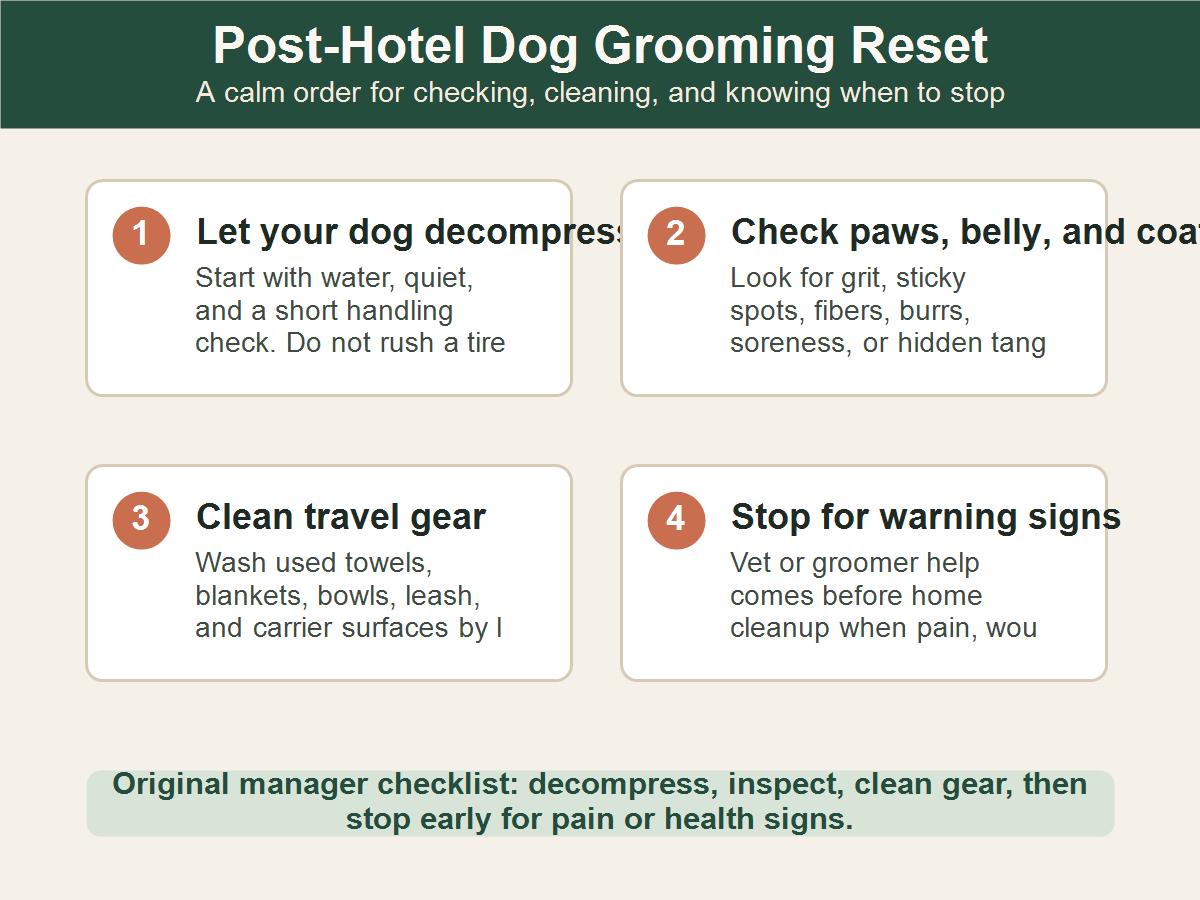
Clean the Travel Items That Came Home With Your Dog
Hotel odor often sits in towels, blankets, harnesses, travel bowls, leashes, soft carriers, and the car blanket more than in the dog. Wash fabric items by their care labels. Wipe hard items only with products that are safe for the surface and used exactly as directed.
The CDC advises reading and following disinfectant labels when cleaning pet supplies and keeping pets safe around cleaners. CDC home-cleaning guidance also supports cleaning visibly dirty surfaces and following product directions.
Decide Whether Your Dog Needs a Bath
Not every hotel stay needs a full bath. A brush-out, paw wipe, towel change, and bedding wash may be enough if the coat is clean and your dog smells normal.
| What you find | Best next step |
|---|---|
| Light dust, lint, or hallway grit | Brush, wipe paws, and wash used travel items. |
| General dog odor without skin changes | Brush first, then bathe only if odor remains and handling is safe. |
| Sticky unknown residue | Stop and call a veterinarian or poison-control resource before spreading it. |
| Tight mats or painful tangles | Do not cut or pull. Book a professional groomer. |
| Wounds, limping, discharge, illness, or severe odor with symptoms | Call a veterinarian. |
Hotel Odor Is Not Always a Bath Problem
Mild room odor can cling to blankets, collars, towels, or the car seat cover. Start with laundry and a brush-out before assuming your dog needs a full wash. If odor is strong and comes with redness, skin changes, discharge, pain, vomiting, diarrhea, coughing, or low energy, treat it as a health sign rather than a cosmetic issue.
If the smell is from rolling in something outdoors during the trip, use the safety boundaries in dog grooming after rolling in a smell.
When to Stop and Call a Professional
Call a veterinarian for wounds, bleeding, limping, suspected parasites, skin irritation, illness signs, chemical exposure, or severe odor with symptoms. Call a professional groomer for painful mats, tight tangles, coat cleanup you cannot finish safely, or a dog who cannot be handled calmly at home.
If your dog came home from a boarding-style stay rather than a hotel stay with you, use the more specific dog grooming after kennel boarding guide.
Bottom Line
A good post-hotel grooming reset is not dramatic. Let your dog decompress, inspect paws and coat, clean the gear that came home with you, and bathe only when it solves a real dirt or odor problem. The safest routine is the one that stops early when the dog, skin, coat, or situation is no longer right for home handling.
FAQ
Should I bathe my dog after every hotel stay?
No. Start with paws, coat, belly, odor, and bedding. Bathe only when the dog is dirty or smelly enough to need it and can be handled safely.
How do I remove hotel smell from my dog?
Brush first, wipe paws, and wash towels, blankets, collars, and travel bedding. If mild odor remains, a bath may help. Strong odor with skin changes, pain, discharge, or illness signs needs veterinary advice.
Can I use disinfectant on my dog’s travel gear?
Only use cleaners according to the label and keep pets safe around treated items. Do not apply household disinfectants to your dog’s coat or skin.
What if my dog has mats after travel?
Do not cut mats with scissors or pull tight tangles. Brush only loose, comfortable tangles. Use a professional groomer for painful or close-to-skin mats.
Sources: CDC cleaning and disinfecting pet supplies; CDC home cleaning and disinfecting guidance.