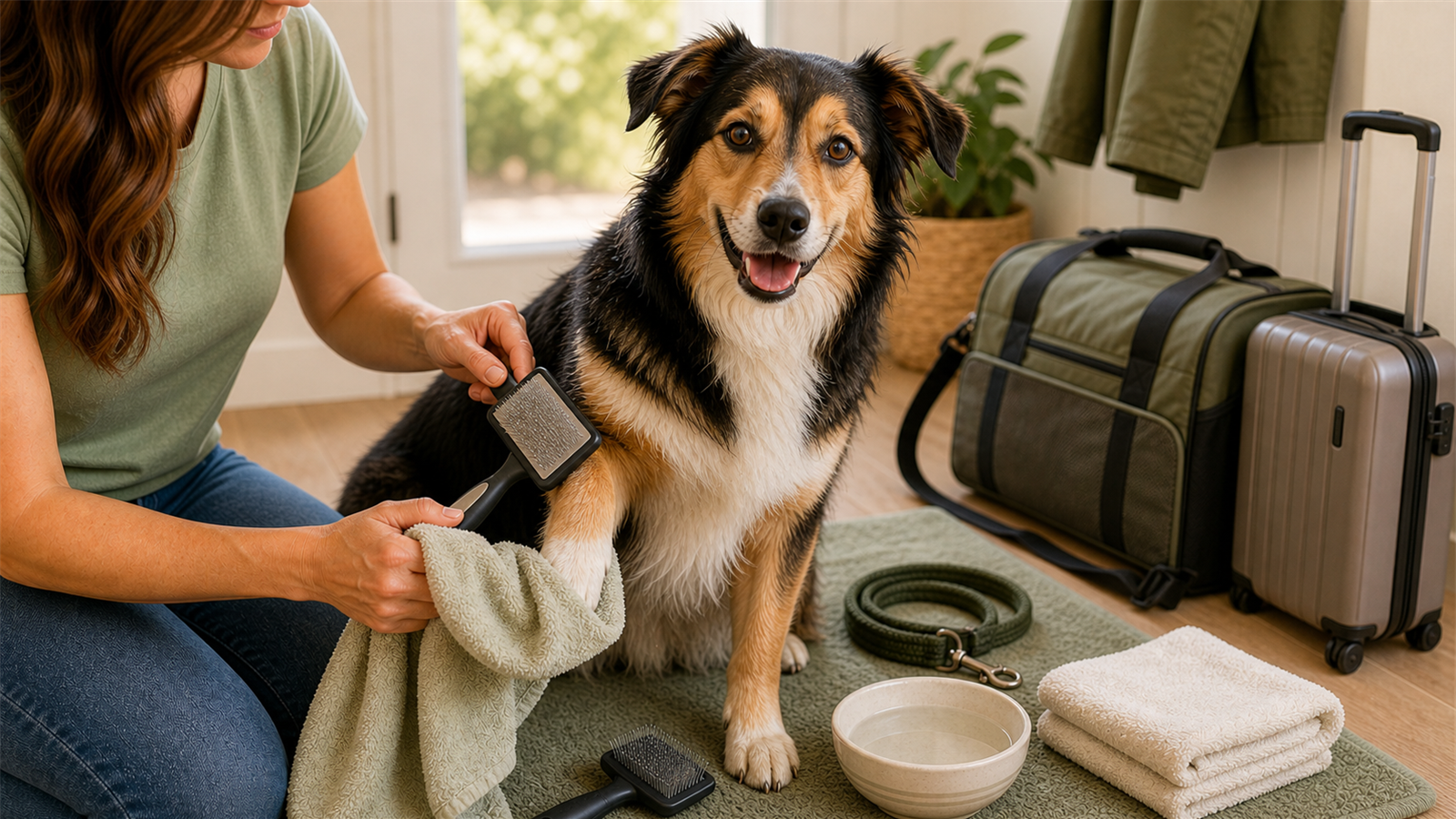

Before travel, keep grooming calm and early. The goal is not a perfect coat at the door. It is a clean, dry, comfortable dog who is not starting the trip stressed, damp, sore, or tangled.
This guide covers routine grooming timing only. For carrier rules, lodging rules, destination requirements, health certificates, medication, motion sickness, illness, injury, heat risk, or anxiety treatment, check your veterinarian, carrier, lodging provider, destination authority, and current official guidance.
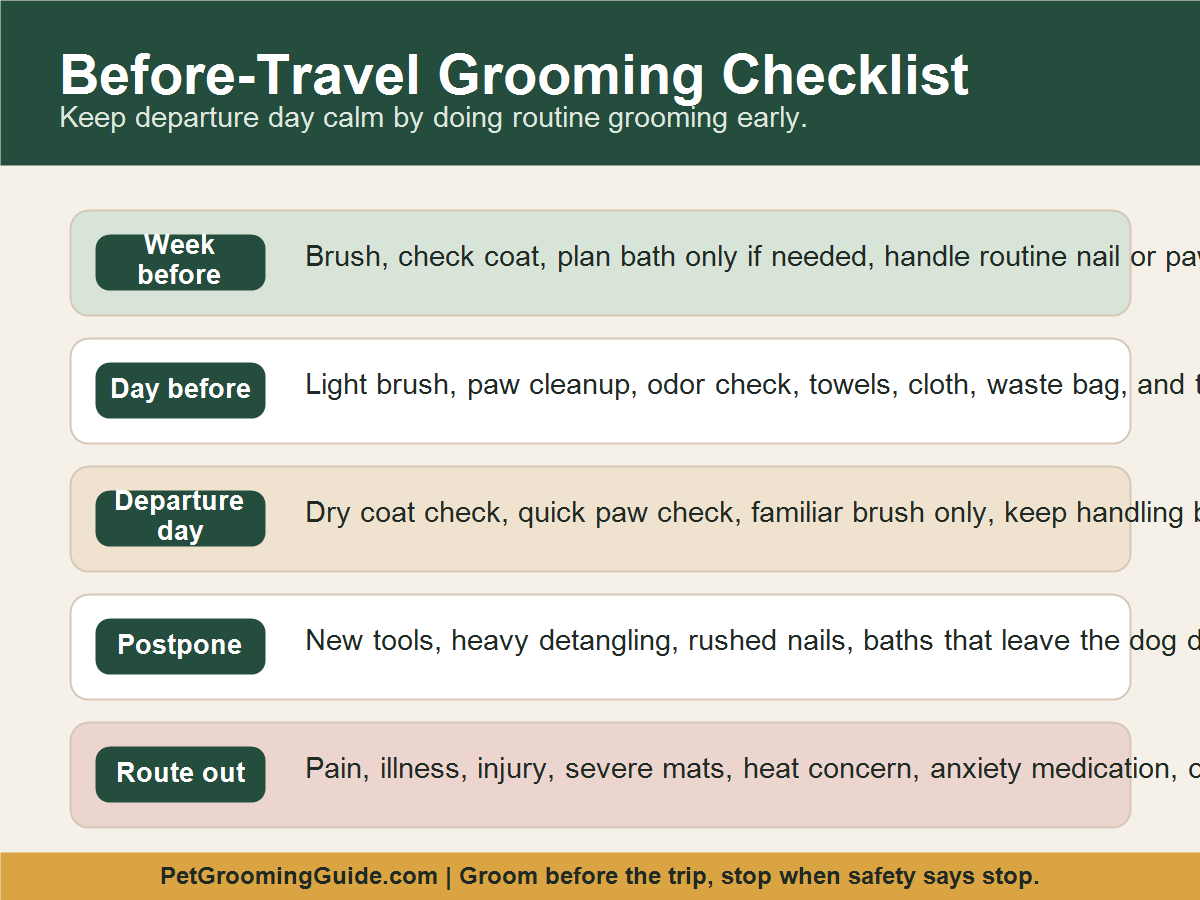
Pre-trip grooming timing matrix
| Timing | Routine grooming tasks | Postpone or skip | Route out |
|---|---|---|---|
| Week before | Brush the coat, check common friction areas, plan a bath if needed, and handle nail or paw care only if it is already routine. | New tools, stressful nail work, severe mat removal, or a full groom your dog does not tolerate. | Professional groomer, veterinarian, carrier, lodging provider, destination authority, or current official source. |
| Day before | Light brushing, paw cleanup, odor check, towel staging, bedding or mat prep, and kit check. | A bath if your dog cannot dry fully, heavy detangling, or anything that leaves the dog upset overnight. | Skin symptoms, persistent odor, pain, illness, injury, or travel-health questions. |
| Departure day | Quick paw check, dry-coat check, familiar brush only if useful, and calm handling. | Bathing, rushed nail trimming, new products, deep coat work, or any grooming that raises stress. | Illness, injury, heat concern, medication question, anxiety concern, legal rule, or carrier requirement. |
What to do the week before travel
Use the week before the trip to find problems early. Brush the coat, check behind the ears, under the collar area, armpits, belly, tail base, and legs. If you find tight mats, sore skin, swelling, wounds, or a reaction that makes handling unsafe, stop the home plan and route the issue to a groomer or veterinarian.
If your dog needs a bath, schedule it early enough that the coat dries completely and you can see whether any skin or odor issue remains. The ASPCA dog grooming guidance supports brushing before bathing and using careful bathing and drying routines, which is why a travel bath should not be squeezed into the final minutes.
Nail care belongs in this early window only when it is already normal for your dog. If nail trimming turns into a fight, skip the last-minute attempt and use a safer plan. Our dog nail trimming setup checklist can help you decide whether the setup is calm enough.
What to do the day before travel
The day before is for light finishing. Brush loose hair, wipe routine paw dirt, stage a towel or mat, and pack a simple cleanup bag. This is also a good moment to decide what can wait until after the trip.
A bath the day before is only a good idea when your dog handles baths calmly and can dry fully. A damp coat can trap odor, chill a dog in air conditioning, rub under a harness, or make crate bedding uncomfortable.
What to skip on departure day
Departure day grooming should be brief and familiar. Skip bathing, heavy detangling, new grooming tools, rushed nail trims, and any task that leaves the dog damp, sore, or keyed up before loading into a car, carrier, hotel room, or unfamiliar place.
If you notice routine paw dirt before leaving, keep it simple. A quick wipe and dry check is enough for many dogs. For a fuller routine, use the dog paw cleaning guide when you have time and your dog is settled.
Paw, collar, coat, and odor checks
Check the areas most likely to rub during travel: paws, under the collar, under a harness, armpits, belly, and tail base. The goal is to catch debris, dampness, tangles, or skin irritation before travel gear sits on the same spots for hours.
Odor should be treated as a signal, not just a smell to cover. Routine outdoor odor may improve with brushing, wiping, laundering bedding, and a properly timed bath. Strong, sour, painful, or persistent odor should be routed to a veterinarian instead of being masked before a trip.
Travel grooming kit, without product shopping
Keep the kit generic: a towel, brush or comb your dog already accepts, damp cloth or pet-safe wipe category, waste bags, a laundry bag, a small document pouch, and a familiar travel mat. The CDC pet preparedness kit guidance supports thinking in practical categories such as carriers, sanitation, towels, and cleaning supplies.
Do not pack regulated items based on a blog checklist. Rules can change by carrier, lodging, destination, and health status. FDA travel guidance for pets points owners toward veterinarian and destination-rule checks before travel.
What can wait until after the trip
Some grooming is better after arrival or after the return home. Deep brushing after a road trip, odor cleanup, paw checks, and bedding cleanup often make more sense when the dog is settled. Use our dog grooming after road trip guide for the cleanup side of the plan.
Bottom line
Good dog grooming before travel is about timing and restraint. Do the calm, familiar work early. Keep departure day light. Skip anything that creates stress, dampness, soreness, or safety risk. Route medical, legal, carrier, and destination questions to the right authority.
FAQ
Should I groom my dog before travel?
Yes, routine grooming before travel can reduce loose hair, odor, paw dirt, and last-minute stress when it is done early and gently.
When should I bathe my dog before a trip?
Bathe only early enough for a full dry and only if your dog handles baths calmly. Do not leave a dog damp for departure.
Should I trim my dog’s nails before travel?
Only if nail trimming is already routine and comfortable for your dog. Do not start a stressful nail trim right before departure.
What grooming tasks should I skip on departure day?
Skip bathing, heavy detangling, new tools, rushed nail trims, and any grooming that causes stress or leaves the dog damp.
Is this airline or legal travel advice?
No. Check current requirements with your carrier, lodging provider, destination authority, veterinarian, and official sources.