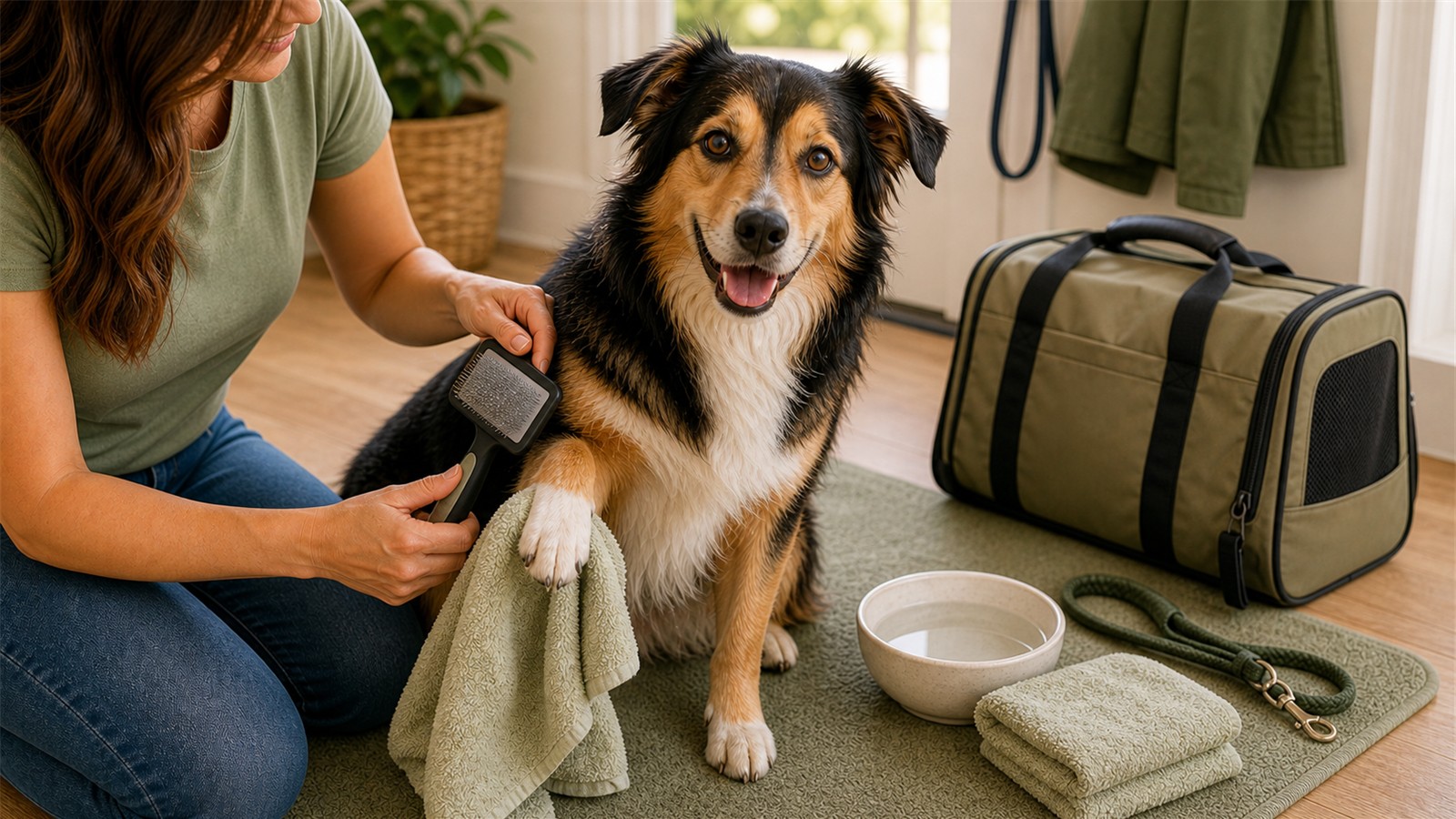

Groom your dog before boarding early enough that the coat is clean, fully dry, and comfortable at drop-off. The goal is not to hide problems or guess facility rules. The goal is to finish basic coat, paw, nail, and odor prep, then give the boarding team honest handoff notes.
This guide covers grooming timing only. For vaccine records, parasite prevention, illness, coughing, medication, sedation, anxiety treatment, or facility rules, check directly with your veterinarian and the boarding facility.
Boarding grooming timeline
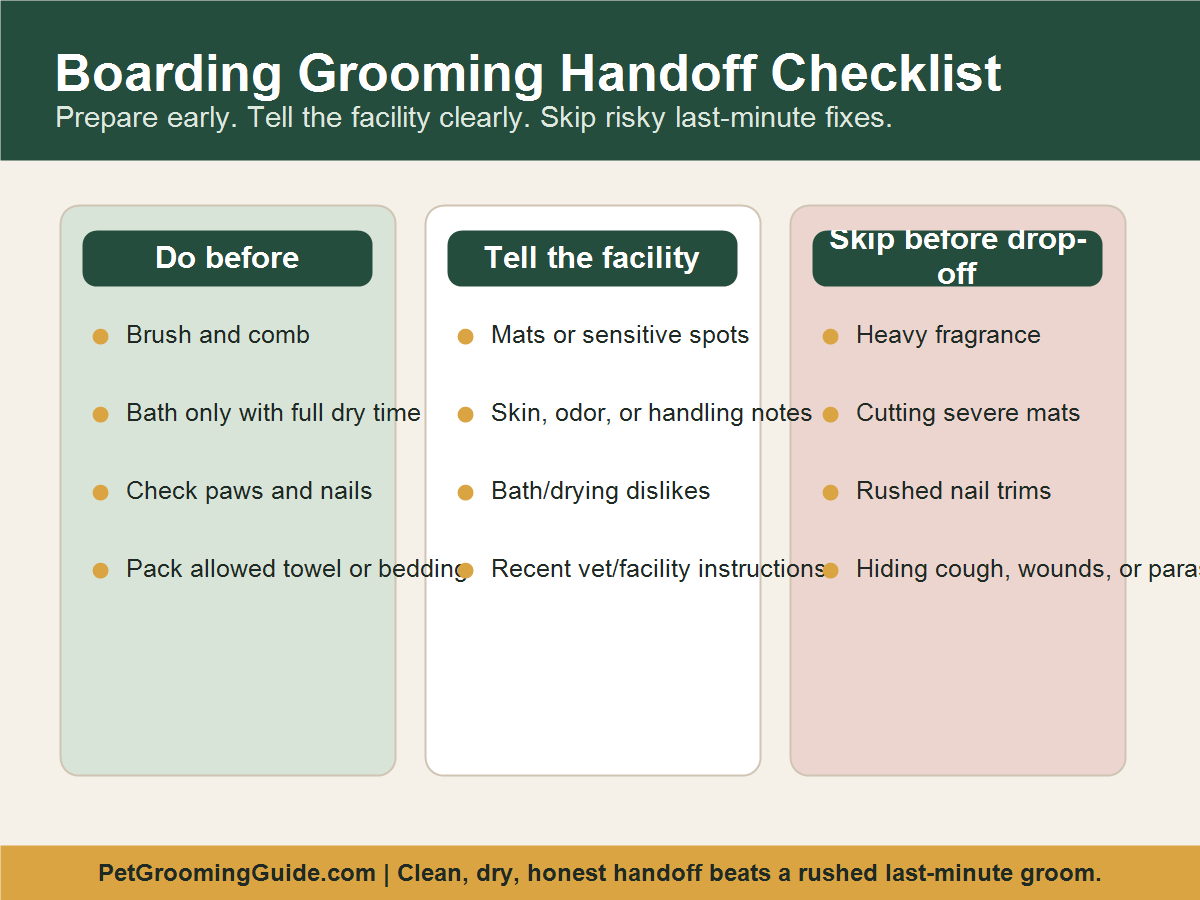
| Timing | Routine grooming tasks | Tell the facility | Skip before drop-off |
|---|---|---|---|
| Several days before | Brush and comb the coat, check mats, plan a bath if needed, and book professional help if the coat is beyond easy home care. | Mats, sensitive spots, grooming dislikes, and any recent skin or odor concern already discussed with your vet. | Cutting severe mats, trying new tools, or forcing a full groom your dog does not tolerate. |
| One to two days before | Bathe only if your dog handles baths calmly and has enough time to dry fully. Check paws, nails, collar area, belly, and tail. | Whether your dog dislikes bathing, drying, feet, ears, brushing, or tail handling. | Strong fragrances, harsh restraint, or anything that leaves the dog damp or upset. |
| Drop-off day | Keep grooming minimal. Do a quick coat and paw check, pack allowed washable items, and bring written notes. | Allowed bedding or towel, sensitive areas, mat locations, and facility-requested records. | Rushed nail trims, heavy detangling, bathing, symptom masking, or rule guessing. |
What to finish several days before drop-off
Start with brushing and combing. Work in small sections so you can find tangles before they become a boarding problem. Check behind the ears, under the collar, armpits, belly, tail base, legs, and any place a harness or bedding may rub.
If the coat has severe or extensive mats, do not cut them out at home before drop-off. Route that to a professional groomer or veterinarian, especially if the skin looks irritated or the dog reacts with pain. Our dog matting vs tangles guide can help you decide when a tangle has moved beyond routine brushing.
If you bathe, brush first, use lukewarm water, rinse carefully, and dry the coat fully. ASPCA dog grooming guidance supports brushing before bathing and careful bath handling, which is why boarding baths should be planned early instead of rushed.
What to check the night before
The night before boarding is for quiet checks, not a full grooming reset. Look at paws and between toes, nail comfort on hard floors, collar and harness contact areas, tail, belly, armpits, and behind the ears.
Odor matters too. Normal outdoor smell may improve with brushing, a properly timed bath, and clean bedding. Strong, sour, painful, or unexplained odor should not be covered with fragrance. Treat it as a reason to call your veterinarian or speak with the boarding facility before drop-off.
What to tell the boarding facility
Give the facility honest grooming and handling notes. Tell them where mats, tangles, or sensitive spots are located. Tell them whether your dog dislikes feet, ears, tail handling, brushing, bathing, or drying. If your dog has grooming stress signs, share those clearly. Our dog grooming anxiety signs guide can help you name what you are seeing.
Only pack generic washable items the facility allows, such as a towel or bedding. The CDC’s cleaning guidance for pet supplies is a useful reminder that pet items should be washable and handled safely, but each boarding facility may have its own rules.
What not to hide, mask, cut, or treat
Do not use grooming to hide a problem from the boarding team. Avoid heavy fragrance, last-minute mat cutting, unfamiliar products, harsh restraint, rushed nail trims, or bathing a dog who is already stressed or unwell.
Do not try to solve coughing, wounds, parasites, pain, medication questions, or illness through grooming. Dogs in close-contact settings can share illness, and boarding facilities may have their own health intake process. Treat health and policy questions as veterinarian-and-facility topics.
How boarding prep differs from travel prep
Boarding prep has a handoff layer. You are not only getting your dog clean and dry; you are giving another care team useful information. For broader trip timing, use the dog grooming before travel guide. For boarding, prioritize honest notes, allowed items, and clear stop signs.
Bottom line
Good dog grooming before boarding is early, simple, and honest. Brush and check the coat several days ahead. Bathe only with full dry time. Keep drop-off day light. Tell the facility about mats, sensitive spots, odor, handling worries, and anything your veterinarian or facility needs to address.
FAQ
Should I bathe my dog before boarding?
Only if your dog tolerates bathing and there is enough time for the coat to dry fully before drop-off. If bathing creates stress or leaves the coat damp, skip the bath and share any concerns with the facility.
How soon before boarding should I groom my dog?
Do coat checks several days ahead. Leave the final day for light brushing, paw checks, and written handoff notes.
Should I trim nails before boarding?
Check nail comfort ahead of time. If your dog resists nail handling or the quick is hard to judge, use a professional instead of rushing a trim before drop-off.
What should I tell a boarding facility about mats or skin issues?
Tell them where the issue is and whether your dog is sensitive there. For severe mats, pain, redness, wounds, discharge, coughing, or parasites, contact a veterinarian or professional groomer before boarding.
Is this boarding vaccine or facility policy advice?
No. Check the current boarding facility policy directly and ask your veterinarian about vaccine, parasite, illness, or medication questions.