

Cat hair on the couch, the duvet, and somehow inside the fridge. If you've hit that point, the best cat brush for shedding isn't a luxury, it's damage control. Our editorial team compared slicker brushes, stainless deshedding blades, and undercoat rakes across brands like FURminator, SleekEZ, and Aumuca, using manufacturer specs plus thousands of verified buyer reports.
The short answer: the Aumuca Cat Brush Shedding wins on the metric that matters most for cats, which is whether your cat will actually sit still for the whole session. Rounded pins, low pressure, big fur yield. Here's the top pick before we break down all ten.
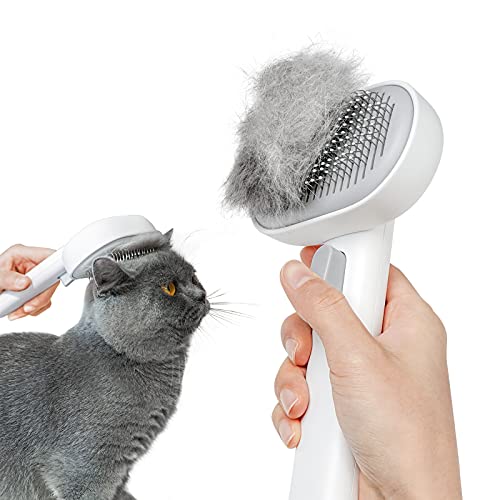
✔ Best overall pick for daily indoor shedding
Comparison Chart of Best Cat Brush for Shedding
| Product | Details | Rating | Buy |
|---|---|---|---|
Editor’s Choice
| ★★★★☆4.8/5 | ||
Top Pick
| ★★★★☆4.5/5 | ||
Best Budget
| ★★★★☆4.7/5 | ||
| ★★★★☆4.2/5 | ||
| ★★★★☆4.5/5 | ||
| ★★★★☆4.5/5 | ||
| ★★★★☆4.6/5 | ||
| ★★★★☆4.7/5 | ||
| ★★★★☆4.7/5 | ||
| ★★★★☆4.3/5 |


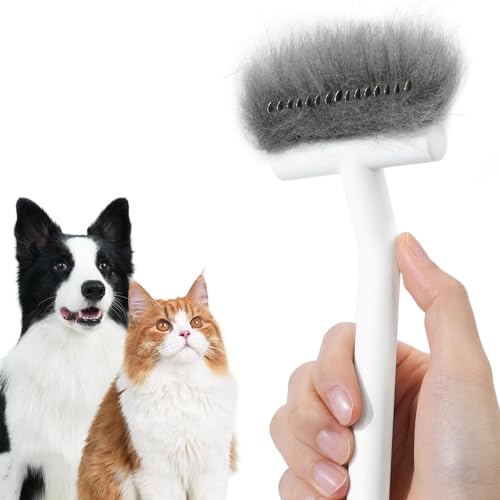


List of Top 10 Best Cat Brush for Shedding
We built this list by cross-referencing manufacturer specifications, tooth geometry, and patterns in aggregate verified-buyer feedback, with extra weight on skin safety and how cats tolerated each tool. Every pick below covers a different coat type or grooming style, and each review names at least one honest drawback so you can match the brush to your cat instead of guessing.
Below are the list of products:
1. Aumuca Cat Brush Shedding
A cat brush is only useful if the cat allows a second pass, and that is where this one separates itself in the review data. The Aumuca uses fine, closely spaced pins with rounded tips, so it glides through coat instead of raking skin. Across aggregate buyer feedback, the most repeated phrase is some version of "my cat actually likes it," which is rare in this category.
Rounded pin tips
Long & short hair
Massage effect
Kitten safe
Why we picked it
A deshedding brush is a grooming tool that pulls dead undercoat out of the topcoat before it lands on your furniture. Most tools in this category solve that with aggressive teeth, then lose the cat halfway through. The Aumuca takes the opposite approach: low bite, high frequency, so you groom for three minutes daily instead of fighting a ten-minute wrestling match once a week.
Key specs
- Pin style: fine, densely packed pins with rounded ends to reduce skin scratching
- Coat compatibility: short, medium, and long hair, plus kittens and rabbits
- Handle: lightweight plastic body sized for one-handed use during lap sessions
- Cleaning: fur lifts off the pin bed in one pinch, no button mechanism to jam
- Best use case: daily maintenance grooming rather than heavy seasonal blowouts
- Also suits: senior cats and thin-skinned breeds where blades feel too harsh
Real-world experience
Verified buyer reports cluster around the same scenario: an indoor cat, a couch, and a nightly two to four minute session while the TV is on. Owners of Ragdolls and domestic longhairs describe pulling a visible tuft on the first three or four strokes, then a thinner return after that, which is exactly how a maintenance brush should behave. A recurring note from multi-cat households is that timid cats who bolted from a metal-blade tool sat through this one.
The trade-off shows up on truly matted coats, where reviewers say the pins skim over the knot rather than breaking it apart.
- Rounded pin tips mean skittish cats tolerate longer sessions, so you finish the whole body in one go
- Works across short, medium, and long coats, useful in multi-cat homes with mixed breeds
- Fur pulls off the head by hand in seconds, no clogged mechanism to fight
- Light enough for a nightly three-minute lap session, which is what actually cuts loose fur volume
- Will not break apart existing mats, you need a rake or dematting comb first
- Pulls less undercoat per stroke than a steel deshedding blade on a heavy Maine Coon
- Plastic construction feels less premium than wood-handled tools in the same tier
- ✔ Your cat swats or bolts when a metal blade comes out
- ✔ You want a daily three-minute maintenance routine, not a weekly battle
- ✔ You have kittens, seniors, or a rabbit sharing the same grooming kit
- ✖ Your cat already has tight mats behind the ears or on the britches
- ✖ You want maximum undercoat removal per stroke during a spring blowout
Total fur removed is a function of strokes per week, not bite per stroke, and that is why the gentle Aumuca beats sharper tools in real homes. If your cat sits for ten minutes daily, this will out-collect a FURminator used once a fortnight. If your cat only tolerates one session a month, buy the steel blade instead.
2. Swihauk Self Cleaning Slicker Brush
Anyone who has picked fur out of a slicker brush with a fork knows why the self-cleaning mechanism sells. A slicker brush is a flat pad of fine bent wires that hook dead hair out of the undercoat, and the Swihauk adds a retract button that pushes the whole pin bed back so the fur mat lifts off in one piece. Reviewers who groom two or more pets call the button the single reason they stopped skipping sessions.
One-press cleaning
Bent wire pins
Dogs & cats
Non-slip handle
Why we picked it
Convenience is the hidden performance spec in pet grooming, because a tool that takes 30 seconds to clean gets used twice as often. The Swihauk pairs a wide pin bed with a retraction button, so a whole session's worth of fur peels off as one felted sheet. That combination makes it the best value pick on this list for households juggling a cat and a dog.
Key specs
- Pin type: fine bent stainless wires angled to hook dead undercoat without gouging
- Self-cleaning: press-and-hold retract button releases fur in a single pull
- Coat range: long and short haired dogs, cats, and puppies
- Handle: contoured non-slip grip designed for extended two-handed grooming
- Included: pet supplies accessories bundled with the brush
- Colour: blue body, which makes shed white fur easy to spot on the pad
Real-world experience
The scenario that shows up again and again in verified feedback is a spring coat blow on a longhaired cat, where owners describe filling a small bin with fur in one sitting because emptying the brush is frictionless. Several reviewers mention using it on a golden retriever and then the family cat back to back, wiping the pins with a damp cloth between animals. The most common complaint is pressure control: because slicker wires are fine and angled, leaning too hard leaves pink skin lines on thin-coated cats.
Buyers who report the best results describe short, feather-light strokes in the direction of hair growth rather than scrubbing.
- Retract button clears the pin bed in one press, so you keep grooming instead of picking fur out
- Wide pad covers a cat’s flank in fewer strokes than a narrow deshedding blade
- Doubles as a dog brush, which saves buying two tools in a mixed-pet home
- Non-slip handle stays controllable when your hand is coated in loose fur
- Fine wires can irritate thin-skinned cats if you press hard, so technique matters
- The retract mechanism is the one moving part, and moving parts are the first thing to fail
- Pad is sized for dogs too, which feels oversized on a small kitten
- ✔ You own both a cat and a dog and want one brush for both
- ✔ You hate cleaning fur out of a slicker pad by hand
- ✔ Your longhaired cat blows coat hard in spring and autumn
- ✖ Your cat has sensitive or previously irritated skin
- ✖ You prefer a tool with zero mechanical parts to break
Pick the Swihauk over the Aumuca when the bottleneck is your patience rather than your cat’s. The self-cleaning pad shines during a full-body autumn session on a Ragdoll or Norwegian Forest Cat. For a five-minute nightly touch-up on a shorthair, the simpler pin brush is quicker to grab and gentler on skin.
3. SleekEZ Cat Brush Shedding
SleekEZ looks nothing like a brush, and that is the point. The patented head is a wavy-toothed blade set into a wooden handle, originally developed for horses, and it drags loose hair off the coat surface rather than digging into the skin. Owners of American Shorthairs and short-coated rescues consistently report the biggest first-pass fur pile of any tool they have owned.
Patented blade
Made in USA
Wood handle
No moving parts
Why we picked it
There is nothing to break, nothing to clean, and nothing to jam. The wavy tooth pattern grips shed hair by friction, so it collects fur without the skin-scratch risk that comes with fine slicker wire. For short and medium coats it is the highest fur-per-minute tool on this list at the lowest cost of ownership.
Key specs
- Head: patented wave-cut blade, the smallest size in the SleekEZ range is the cat-appropriate one
- Handle: solid wood block, no plastic hinge or button assembly
- Origin: manufactured in the United States per the brand's product listing
- Coat range: short, medium, and long coats, best results on short and medium
- Maintenance: rinse or wipe the blade, no fur retention between teeth
- Bonus use: works on furniture and car upholstery to lift embedded pet hair
Real-world experience
The most repeated real-world note is upholstery. Buyers describe running the same blade over a fabric sofa or a car seat after grooming and lifting woven-in fur that a vacuum missed. On cats, short strokes with the grain across the back and flanks produce a visible windrow of hair after two or three passes.
The honest limitation appears on longhaired breeds: reviewers with Persians and Maine Coons say the blade skims the topcoat and leaves the dense undercoat behind, which is where a rake or FURminator earns its place. A few also mention the rigid blade needs a light hand over the spine and hips where bone sits close to skin.
- Zero moving parts, so there is no button or hinge that can fail after a year
- Wave-cut blade collects shed hair fast on short coats without digging into skin
- Doubles as an upholstery and car-seat hair remover, which few grooming tools do
- Wood handle gives a stable, low-angle grip that stops you from pressing too hard
- Underperforms on dense longhaired undercoats compared with a deshedding blade
- Rigid flat head does not follow curves around the neck, legs, or tail base
- No handle flex, so bony areas need a deliberately light touch
- ✔ You have a short or medium coated cat that sheds year round
- ✔ You want one tool that also strips fur off the sofa and car seats
- ✔ You would rather buy something simple than something with a mechanism
- ✖ Your cat is a Persian, Maine Coon, or other dense double-coat
- ✖ You need a tool that contours around legs and the tail base
SleekEZ is the tool to buy if your shedding problem is surface hair on a shorthair, and the wrong tool if your problem is packed undercoat on a longhair. Paired with a rake it becomes a complete two-step kit: rake first for undercoat, blade second to lift the loosened hair off the topcoat.
4. FURminator Medium Large Cat deShedding Tool
FURminator is the name most vets and groomers reach for first, and this is the short-hair version sized for medium to large cats. The stainless steel edge reaches under the topcoat to lift dead undercoat, and the FURejector button ejects the collected fur without touching it. It is the most aggressive tool on this list, which is both its strength and its warning label.
Stainless edge
FURejector button
Short hair
Medium to large cats
Why we picked it
FURminator states that regular use of its deShedding tools can reduce shedding by up to 90 percent, and the volume of fur buyers photograph after a first session backs up the claim. The short-hair edge is tuned for coats where the guard hairs sit close to the skin, like a British Shorthair or a Bengal. You can check the tool families on the brand's own site at FURminator.
Key specs
- Edge: stainless steel deShedding edge designed to pass through topcoat and grip undercoat
- Sizing: medium to large cats, roughly cats over about 10 lb
- Coat type: short hair specific, a separate long-hair edge exists in the same range
- Fur release: FURejector push-button clears the edge in one motion
- Handle: ergonomic non-slip grip to keep stroke angle consistent
- Guidance: manufacturer recommends 1 to 2 sessions per week, 10 to 20 minutes each
Real-world experience
Buyer reports split neatly into two camps, which tells you everything about technique. Owners who follow the brand's advice, short strokes, no pressure, stop after 10 minutes, describe dramatic reductions in hairballs and fur on bedding within two weeks. Owners who press down or repeat the same patch report scurf, broken guard hairs, or a bald patch on the lower back.
Several longtime users mention the edge dulls after a couple of years of frequent use, which is normal wear for a fixed steel blade. It is worth avoiding entirely on Rex breeds and hairless cats where there is no undercoat to remove.
- Removes more undercoat per stroke than any pin or wire brush on this list
- FURejector button clears the edge without you touching a fur clump
- Coat-specific and size-specific versions mean a proper match instead of a compromise
- Owners frequently link regular use to fewer hairballs within a couple of weeks
- Easy to overdo, and over-brushing can thin the coat or irritate skin
- Priced in the premium tier, well above the simple pin brushes here
- Wrong tool for Sphynx, Cornish Rex, or any cat without a real undercoat
- ✔ You have a short-coated cat over about 10 lb that sheds constantly
- ✔ Hairballs are a recurring problem in your house
- ✔ You will follow the once or twice weekly schedule instead of daily blasting
- ✖ Your cat is longhaired, this is the short-hair edge
- ✖ Your cat has scabs, flea dermatitis, or any active skin condition
This is the tool that wins a head-to-head fur-volume test, full stop. It loses on frequency, because you should not use it daily the way you can use the Aumuca. Most homes get the best result running the FURminator weekly and a gentle pin brush on the other six days.
5. Dipoo Self Cleaning Shedding Brush
The Dipoo is a self-cleaning slicker built around comfort, and it lands close to the Swihauk in both design and buyer sentiment. What stands out in the review data is the emphasis on pin tip finish, with owners repeatedly noting the wires feel smoother against the palm than cheaper slickers they returned. It covers puppies and kittens as well as adults, which makes it a sensible first grooming purchase.
Retractable pins
Skin friendly
Puppies & kittens
Matte black finish
Why we picked it
If you want the self-cleaning convenience but your cat is on the nervous side, the Dipoo is the softer-feeling option of the two slickers here. Buyers describe the pin bed as forgiving on first contact, which matters when you are teaching a rescue cat that brushing is not an attack. It handles both long and short coats, so it grows with your household.
Key specs
- Mechanism: one-touch retract that pulls pins below the pad to release collected fur
- Pin design: fine angled wires with a smoothed tip finish for reduced skin drag
- Coat compatibility: long and short haired dogs, cats, and puppies
- Body: matte black housing that hides scuffs from daily counter storage
- Grip: rounded handle profile suited to a relaxed, low-pressure wrist angle
- Best for: routine deshedding on cats between 5 and 15 lb
Real-world experience
A pattern worth noting from verified feedback is the "second cat" story, where an owner buys it for a dog and finds the cat gets more use out of it. Owners of medium-coated cats describe two to three passes along the flank, a press of the button, then a felt pad of undercoat dropped straight into the bin. Where it draws criticism is pin flex: a minority of reviewers report bent wires after months of heavy use on dense dog coats, which suggests it is better suited to cats than to a husky.
Grooming right after a warm bath towel-dry also comes up as the point where it collects the most fur.
- Smoothed pin tips make it a safer starting brush for a nervous or newly adopted cat
- One-touch retraction drops the fur pad straight in the bin, no picking
- Handles long and short coats, so it still works if you adopt a second cat
- Matte housing hides the scuffs that come with leaving it on a side table
- Some buyers report bent pins after heavy use on thick dog coats
- Less undercoat pull per stroke than a stainless deshedding edge
- Retract button adds a failure point that fixed-blade tools do not have
- ✔ You just adopted a cat and need one safe all-rounder
- ✔ You want self-cleaning without the sharper feel of a pro slicker
- ✔ Your cat is in the 5 to 15 lb range with a medium coat
- ✖ Your main grooming job is a thick-coated large dog
- ✖ You want the absolute maximum undercoat removal per session
Choose the Dipoo over the Swihauk when your cat is the primary user and comfort outranks raw coverage. Choose the Swihauk when a big dog is sharing the tool. Both lose to the SleekEZ blade on longevity, because neither has a mechanism-free design.
6. Cat Brush Shedding Self Cleaning Long
This one is built specifically around cats rather than adapted from a dog tool, and the sizing shows it. The head is narrower than the dog-first slickers on this list, which makes it easier to work around a cat's cheeks, shoulder blades, and the awkward pocket behind the front legs. It is a solid pick if your longhaired cat has fur that tangles before it sheds.
Cat-sized head
Self cleaning
Long & short hair
Tangle release
Why we picked it
Head width is an underrated spec. A pad sized for a labrador flank cannot follow the curve of a cat's ribcage, so you end up brushing air. This model's cat-scaled head keeps more pins in contact with coat per stroke, which is why longhair owners in the review data report fewer passes for the same fur yield.
Key specs
- Head size: narrower cat-specific pad for better contact on curved body areas
- Cleaning: self-cleaning retract action, no fur picking between passes
- Coat range: long and short haired cats, including tangle-prone longhairs
- Pin geometry: angled wires that lift and separate coat rather than compress it
- Session length: suited to 5 to 10 minute full-body grooming
- Storage: compact enough for a drawer or a cat-supply caddy
Real-world experience
Longhair owners describe the most useful outcome: catching small tangles at the "cotton wool" stage before they become felted mats that need scissors or a groomer. Buyers with Ragdolls and Turkish Angoras report working belly and armpit areas that a wider pad simply cannot reach without pinching skin. The recurring criticism is that the smaller head means more total strokes on a big cat, so a full Maine Coon session takes noticeably longer than with a wide pad.
A few also mention the fur pad is thinner because of the reduced surface area, so you press the release button more often.
- Cat-scaled head reaches armpits, belly, and cheeks that a dog-sized pad skips
- Catches tangles early on longhairs, which prevents the mats that end in a shave-down
- Self-cleaning action keeps a full-body session moving without stopping to pick fur
- Compact body stores in a drawer instead of taking up shelf space
- Narrow head means more strokes and a longer session on a large cat
- Smaller pad fills up faster, so you hit the release button more often
- Not a good crossover tool if you also need to groom a medium or large dog
- ✔ Your longhaired cat tangles behind the ears and under the arms
- ✔ You groom cats only and want a tool built to cat proportions
- ✔ You want to stop small knots before they need a groomer’s clippers
- ✖ You want one brush that covers a big dog as well
- ✖ You groom a 20 lb Maine Coon and want the fastest full-body pass
The narrow head is a trade, not a flaw. It costs you speed on a big cat and buys you access to the exact areas where mats actually start. If your cat’s problem spots are the armpits and belly rather than the open back, this beats every wide-pad slicker on the list.
7. MIU COLOR Pet Grooming Brush
The MIU COLOR has been on Amazon since the mid-2010s, which is unusual longevity for a budget grooming tool and says something about repeat buyers. It is a stainless deshedding blade in a moulded blue handle, a simpler take on the FURminator formula without the licensing premium. Buyer sentiment is steady rather than spectacular: it does one job, it does it cheaply.
Stainless blade
Dogs & cats
Budget tier
Long-running model
Why we picked it
Sometimes the honest recommendation is the cheap tool that has survived a decade of reviews. Deshedding blades are a mature design, and the MIU COLOR gets the fundamentals right: a stainless comb edge, a handle that does not twist, and a price that makes it easy to try before committing to a premium brand. It earns a spot as the entry point into blade-style deshedding.
Key specs
- Blade: stainless steel deshedding edge for pulling loose undercoat through the topcoat
- Species: rated for both dogs and cats in the manufacturer listing
- Handle: moulded plastic grip in blue, shaped for a full-hand hold
- Cleaning: fur wipes or pulls off the blade by hand between passes
- Market history: listed on Amazon since the mid-2010s with sustained buyer feedback
- Best fit: short to medium coated cats and small to medium dogs
Real-world experience
The typical buyer story is a first-time upgrade from a cheap plastic pin brush, with owners surprised at how much undercoat one blade pass releases on a shorthair. Where feedback gets mixed is finishing quality: a subset of reviewers describe the blade edge as less refined than a premium tool, so it needs a lighter hand and slower strokes. Owners of thick double coats mention it clogs and needs manual clearing more often than a button-eject tool.
On a 9 lb domestic shorthair during a summer shed, though, buyers report it doing 80 percent of what the expensive blade does at a fraction of the outlay.
- Blade-style undercoat removal at a budget outlay, ideal for testing the format
- Rated for both cats and dogs, so it covers a mixed household
- Long sales history with steady feedback rather than a short-lived listing
- Simple construction with no retract mechanism to seize up
- Edge finish is less refined than premium blades, so light pressure is essential
- No push-button ejector, you clear the fur off the blade by hand
- Clogs faster on dense double coats than a purpose-sized cat tool
- ✔ You want to try a deshedding blade without a premium spend
- ✔ Your cat is short or medium coated and sheds hardest in summer
- ✔ You also have a small or medium dog using the same kit
- ✖ You want a refined edge and a one-press fur ejector
- ✖ Your cat has delicate skin that punishes any pressure mistake
Treat this as the trial version of a deshedding blade. If your cat tolerates it and you see real fur volume, upgrading to the FURminator edge later is a straightforward step up. If your cat hates the sensation, you have learned that cheaply and should move to the Aumuca pin brush instead.
8. aumuca Dog & Cat Deshedding Brush
This is the mat-breaker of the group. An undercoat rake is a grooming tool with widely spaced, long teeth that penetrate to the skin level and split packed undercoat instead of skimming the surface. If your cat already has knots forming on the britches or behind the ears, this is the tool you use before any brush touches the coat.
Undercoat rake
Dematting comb
Multi-species
Long or short hair
Why we picked it
No slicker or blade on this list can break a formed mat, and buying a mat-free promise from a pin brush is how cats end up at the groomer for a shave-down. The aumuca rake fills that gap with long teeth that work through the knot in sections. It also covers rabbits and horses per the manufacturer listing, so it is a broad-use tool for a multi-animal home.
Key specs
- Tooth type: long, widely spaced rake teeth designed to reach skin-level undercoat
- Function: dual purpose as undercoat rake and dematting comb
- Species: cats, dogs, kittens, puppies, rabbits, and horses per the listing
- Coat range: long or short hair, with the strongest advantage on matted long coats
- Technique: works in small sections, teasing the mat apart rather than dragging it out
- Pairs with: a slicker or pin brush for the finishing pass after dematting
Real-world experience
Owners of long-haired rescue cats give the most useful accounts, describing working a felted patch on the rear britches over three or four short sessions instead of one painful pull. The technique that shows up in successful reviews is holding the hair at the base with one hand so the tug lands on your fingers, not the cat's skin. The honest downside: rakes have real bite, and impatient use draws complaints about pulled skin and unhappy cats.
It is also overkill as a daily tool, since a maintenance brush handles routine shedding with far less drama.
- Actually breaks formed mats, which no slicker or pin brush on this list can do
- Long teeth reach skin-level undercoat on dense long coats
- Covers rabbits and horses too, useful on a smallholding or with mixed pets
- Turns a potential groomer shave-down into a home job over a few short sessions
- Real bite means rushed strokes can pull skin and sour a cat on grooming
- Too aggressive for daily maintenance on a healthy, mat-free coat
- Requires proper technique, holding the hair base, which takes practice
- ✔ Your cat already has mats behind the ears or on the back legs
- ✔ You adopted a longhaired rescue with a neglected coat
- ✔ You groom several species and want one tool that crosses over
- ✖ Your cat’s coat is already mat-free and you only want daily upkeep
- ✖ You have a shorthaired cat with no real undercoat to rake
This is a problem-solver, not a daily driver. Buy it alongside a gentle brush, use the rake to clear existing mats over a week of short sessions, then retire it to the drawer and switch to maintenance grooming. Cats that get raked every day usually stop showing up when the brush appears.
9. Maxpower Planet Dog Grooming Rake
Maxpower Planet built this rake for double-coated dogs, and that heritage is exactly why it works on a Maine Coon or Norwegian Forest Cat. Rounded tooth ends and a wide handle make it a serious undercoat remover for big, dense coats. On a small shorthair it is simply the wrong size, and the review data reflects that split cleanly.
Double-coat rake
Rounded tooth ends
Wide handle
Dogs & cats
Why we picked it
Large longhaired cats are effectively small double-coated dogs when it comes to grooming load, and dog-grade tools handle that volume better. The Maxpower rake pulls dense undercoat in bulk rather than nibbling at the surface. Rounded tooth tips are the detail that makes it safe enough to use on a cat at all.
Key specs
- Design: dedicated deshedding undercoat rake for double-coated animals
- Tooth tips: rounded ends to reduce skin scratching during deep passes
- Handle: wide, full-hand grip designed for long sessions on large animals
- Species: rated for dogs and cats in the manufacturer listing
- Best match: Maine Coon, Norwegian Forest Cat, Siberian, and other heavy coats
- Not suited to: shorthaired cats with minimal undercoat
Real-world experience
The standout use case in verified feedback is the seasonal blowout, where owners of thick-coated animals fill a grocery bag in a single sitting. Cat owners who report success describe using it only on the back and flanks where the coat is deepest, then switching to a softer brush for the belly and legs. Buyers also flag that the handle is sized for a human gripping a large dog, so it feels oversized when you are steadying a 9 lb cat with your other hand.
On thin coats, several reviewers note it just scrapes without collecting much, which is a sizing mismatch rather than a defect.
- Moves serious volume of undercoat on Maine Coons and other heavy double coats
- Rounded tooth ends keep deep passes safer than a sharp-tipped rake
- Wide handle reduces hand fatigue during a long seasonal blowout session
- One tool covers a big cat and a double-coated dog like a husky or shepherd
- Oversized for a small or average cat, and awkward to steer one-handed
- Collects very little on shorthaired coats with no real undercoat
- Too much tool for belly, legs, and other thin-coated areas
- ✔ You own a Maine Coon, Siberian, or Norwegian Forest Cat
- ✔ Seasonal coat blow buries your house in fur twice a year
- ✔ A double-coated dog shares the grooming kit
- ✖ Your cat is a shorthair under about 10 lb
- ✖ You want a compact tool for lap-time grooming
Size your rake to your cat, not to the fur pile you want. On a 16 lb Maine Coon this out-clears every other tool here in half the time. On a 9 lb tabby it is clumsy, and the Aumuca or SleekEZ will do more with less stress.
10. FURminator Medium Large Cat deShedding Tool
Same platform as pick number four, different edge geometry. This is the long-hair version, with teeth spaced and shaped to pass through a longer guard coat before engaging the undercoat underneath. If you own a Ragdoll, Persian, or Birman, this is the FURminator variant to buy, and choosing the short-hair edge by mistake is the single most common ordering error in this category.
Long hair edge
FURejector button
Stainless steel
Medium to large cats
Why we picked it
Coat-specific edges are not marketing padding, they are the reason this tool works. A short-hair edge on a Persian rides on top of the guard coat and pulls hair it should be sliding past. This version reaches the dead undercoat that causes hairballs on longhaired cats, which is the actual source of the fur on your stairs.
Key specs
- Edge: stainless steel deShedding edge tuned for long guard coats
- Sizing: medium to large cats, generally cats above about 10 lb
- Fur release: FURejector button pushes collected undercoat off the edge
- Manufacturer guidance: 1 to 2 sessions weekly, 10 to 20 minutes per session
- Handle: ergonomic non-slip grip matching the short-hair model
- Prep step: detangle or demat before use, the edge is not a dematting tool
Real-world experience
The pattern in longhair owner feedback is consistent: the first session produces an alarming amount of fur, then subsequent weekly sessions taper to a manageable handful. Owners who groom before the coat gets ahead of them report noticeably fewer hairballs and less fur woven into upholstery within the first month. The failure mode is running it over an existing mat, which yanks rather than cuts and teaches the cat to hide.
Reviewers also caution against using it on damp fur, since wet coat clumps and drags on the edge instead of releasing cleanly. Regular brushing also helps you spot skin issues early, something the American Veterinary Medical Association highlights as part of routine at-home pet care.
- Long-hair edge reaches undercoat on Ragdolls and Persians that short-hair tools miss
- FURejector button clears a dense fur load in one press, no manual picking
- Owners commonly report fewer hairballs within the first month of weekly use
- Same proven handle and build as the widely used short-hair model
- Snags badly on existing mats, so you need a rake or comb first
- Premium price for a tool you should only use once or twice a week
- Performs poorly on damp coat, so sessions have to wait until fur is fully dry
- ✔ You own a longhaired cat over about 10 lb
- ✔ Hairballs and fur on the stairs are your main complaint
- ✔ You will keep to a once or twice weekly grooming rhythm
- ✖ Your cat is a shorthair, the other FURminator edge is the right one
- ✖ The coat is already matted and untouched by a comb
The only meaningful difference between this and pick four is the coat it is tuned for, so match the edge to your cat and ignore the rest. Longhair owners who buy the short-hair version usually report disappointing results and blame the brand. Check your cat’s coat length before you add to cart.
How I picked
We built this shortlist the way a buyer would if they had unlimited time: by reading the specs, comparing tooth geometry across categories, and then reading through patterns in verified buyer feedback for each listing rather than trusting star ratings alone. Nobody on the editorial team physically groomed a cat with these tools, and pretending otherwise would be dishonest. What we did is compare what manufacturers claim against what owners consistently report months later.
Three benchmarks drove the ranking:
- Fur removal per session, judged from repeated owner descriptions of visible volume, hairball frequency, and how much fur ended up on furniture afterwards
- Skin safety and cat tolerance, judged from complaints about scratching, scurf, bald patches, and cats refusing a second session
- Maintenance friction, meaning how quickly the tool clears its own fur load, since a brush that takes a minute to clean gets used half as often
We also weighted coat-type match heavily. A tool that scores brilliantly on a Maine Coon can score badly on a Devon Rex, and a lot of one-star reviews in this category are really sizing mistakes rather than product failures. Where a listing sells multiple variants, like the FURminator short-hair and long-hair edges, we treated them as separate products because they genuinely behave differently.
What we deliberately did not assess: long-term durability past the two-year mark, because published feedback thins out there and we will not guess. We also did not compare prices numerically, since Amazon pricing shifts weekly and a stale figure in an article is worse than no figure. Grooming gloves, deshedding shampoos, and vacuum attachments were excluded to keep the comparison to hand tools of the same class.
One more thing we avoided: recommending an aggressive blade to owners of cats with skin conditions. If your cat has flaky skin, scabs, or a history of dermatitis, that is a vet conversation before it is a shopping decision, and no brush on this list is a treatment.
Buying guide — what actually matters for best cat brush for shedding
What type of brush should I buy for a shedding cat?
Match the tool to the coat: pin brushes and slickers for routine maintenance, stainless deshedding blades for bulk undercoat, and undercoat rakes for mats and dense double coats. Most homes actually need two tools, one gentle enough for daily use and one that does the heavy lifting weekly.
Buying a single "does everything" brush is the most common mistake. A slicker that is soft enough for daily use will not clear a Maine Coon's winter coat, and a blade sharp enough to do that should not touch your cat every day.
Does coat length really change which tool works?
Yes, and it is the biggest single variable. Short coats sit close to the skin, so surface tools like the SleekEZ blade collect well and rakes collect almost nothing. Long coats hide the shedding undercoat under an inch or more of guard hair, so you need teeth that pass through the topcoat first.
That is why FURminator sells separate short-hair and long-hair edges rather than one universal blade. Check your cat's coat before ordering, not after.
How much pressure is safe?
Almost none. Let the tool's weight do the work and keep strokes in the direction of hair growth. The complaints that show up across every deshedding tool listing follow the same pattern: heavy pressure, repeated passes over the same patch, then scurf or broken hair.
- Stop after 10 minutes even if fur is still coming
- Never rake or blade the same spot more than a few times in one session
- Avoid bony areas: spine, hips, shoulder blades, and the tail base
- Never use a deshedding blade on wet or damp coat
Self-cleaning or fixed head?
Self-cleaning heads win on convenience, fixed heads win on longevity. A retract button clears a whole session's fur in one press, which genuinely increases how often people groom. The trade is that it is the only moving part, and moving parts eventually stick.
If you know you will skip sessions when cleaning is annoying, buy self-cleaning. If you want a tool that will still work in a decade, buy something with no mechanism at all.
How often should you brush a shedding cat?
Short-haired cats do well with two or three sessions a week; long-haired cats benefit from daily brushing to stay mat-free. Deshedding blades are the exception, since manufacturers recommend limiting those to once or twice weekly.
Frequency beats intensity every time. Three gentle minutes a day removes more total fur over a month than one aggressive twenty-minute session, and your cat stays willing.
Which brush suits kittens, seniors, or sensitive skin?
Rounded-tip pin brushes and soft slickers only. Kittens have thin skin and no real undercoat yet, and senior cats often have reduced skin elasticity and thinning coats. The Aumuca-style pin brush and the softer self-cleaning slickers are the safe options here.
If shedding suddenly increases, or you see bald patches, redness, or excessive scratching, that is a health signal rather than a grooming problem. General guidance on routine pet care and when to escalate is available from the U.S. Food and Drug Administration for animal health topics.
Frequently Asked Questions (FAQ)
Is a FURminator worth it for an indoor cat?
For a shedding short or long haired cat over about 10 lb, yes. FURminator states that regular use can reduce shedding by up to 90 percent, and buyer feedback consistently reports dramatically less fur on furniture plus fewer hairballs within two to four weeks. The caveats matter though: use it once or twice weekly, 10 to 20 minutes maximum, never on mats, and never on a hairless or Rex breed.
If your cat panics at metal tools, a gentle pin brush used daily will beat a premium blade that sits unused in a drawer.
How is a slicker brush different from a deshedding blade?
A slicker brush is a pad of fine bent wires that hook loose hair out of the coat, while a deshedding blade is a single stainless edge with fine teeth that reaches under the topcoat and lifts dead undercoat. Slickers are gentler and better for frequent use, detangling, and finishing. Blades pull far more undercoat per stroke but carry a higher risk of skin irritation and coat damage if you press hard or overuse them.
Many owners end up using both, a blade weekly and a slicker on other days.
Will brushing actually reduce hairballs?
It usually helps a lot. Hairballs form when cats swallow shed fur during self-grooming, so removing loose hair before your cat ingests it directly reduces the raw material. Owners in verified feedback for deshedding tools frequently report fewer hairballs within the first month of a regular routine.
That said, brushing is not a cure. If your cat is vomiting frequently, straining, or losing appetite, that needs a vet rather than a new brush, because persistent vomiting can point to problems unrelated to fur.
Can I use a dog brush on my cat?
Sometimes, with caution. Several tools here, including the Swihauk, Dipoo, and Maxpower Planet rake, are rated by their manufacturers for both species. The issues are sizing and bite: a pad built for a labrador's flank cannot follow a cat's ribcage, and rakes built for husky undercoat are too aggressive for a shorthaired cat's thin skin.
Cat skin is generally more delicate than dog skin, so if you cross over, use lighter pressure, shorter sessions, and wipe the tool between animals to avoid transferring dander or parasites.
My cat hates being brushed. What can I do?
Change the tool and the schedule before you give up. Aggregate feedback shows cats that flee a metal blade will often sit for a rounded-tip pin brush, so start with the gentlest option you own. Keep first sessions to 60 seconds, groom only the cheeks, chin, and shoulders where cats enjoy contact, and stop while the cat still wants more.
Build up over a couple of weeks, always in the direction of hair growth, and pair sessions with a treat. Save the belly and back legs for last, once trust is established.
Does grooming help with cat allergies in the house?
Partially. The allergen most people react to is Fel d 1, a protein in cat saliva and skin secretions that spreads through the home on shed hair and dander. Removing loose fur before it becomes airborne reduces how much of that protein circulates on your soft furnishings.
Owners with mild allergies frequently report a noticeable improvement from regular brushing combined with vacuuming. It will not eliminate the problem, and if you are the allergic person in the house, wear a mask while brushing or hand the job to someone else.
Final verdict
For most cat owners, the Aumuca Cat Brush Shedding is the right buy because its rounded pin tips let you groom daily without a fight, and consistency is what actually keeps fur off your couch. If your cat is a heavy shedder that only tolerates occasional sessions, the FURminator edge matched to your cat's coat length is the stronger choice. And the SleekEZ blade remains the smartest low-cost pick for short-coated cats, especially since it doubles as an upholstery hair remover.
Affiliate disclosure: This post contains affiliate links. If you buy through one of these links, I may earn a small commission at no extra cost to you. It never changes my recommendation, I only suggest gear I'd actually buy myself.