Category: Dog Grooming Guides

  • How to Keep Dog Grooming Notes at Home

    How to Keep Dog Grooming Notes at Home

    Dog grooming notes do not need to be complicated. A useful home record can be as simple as the date, the grooming task, the body area you checked, how your dog tolerated it, whether you took a photo, and what should happen next.
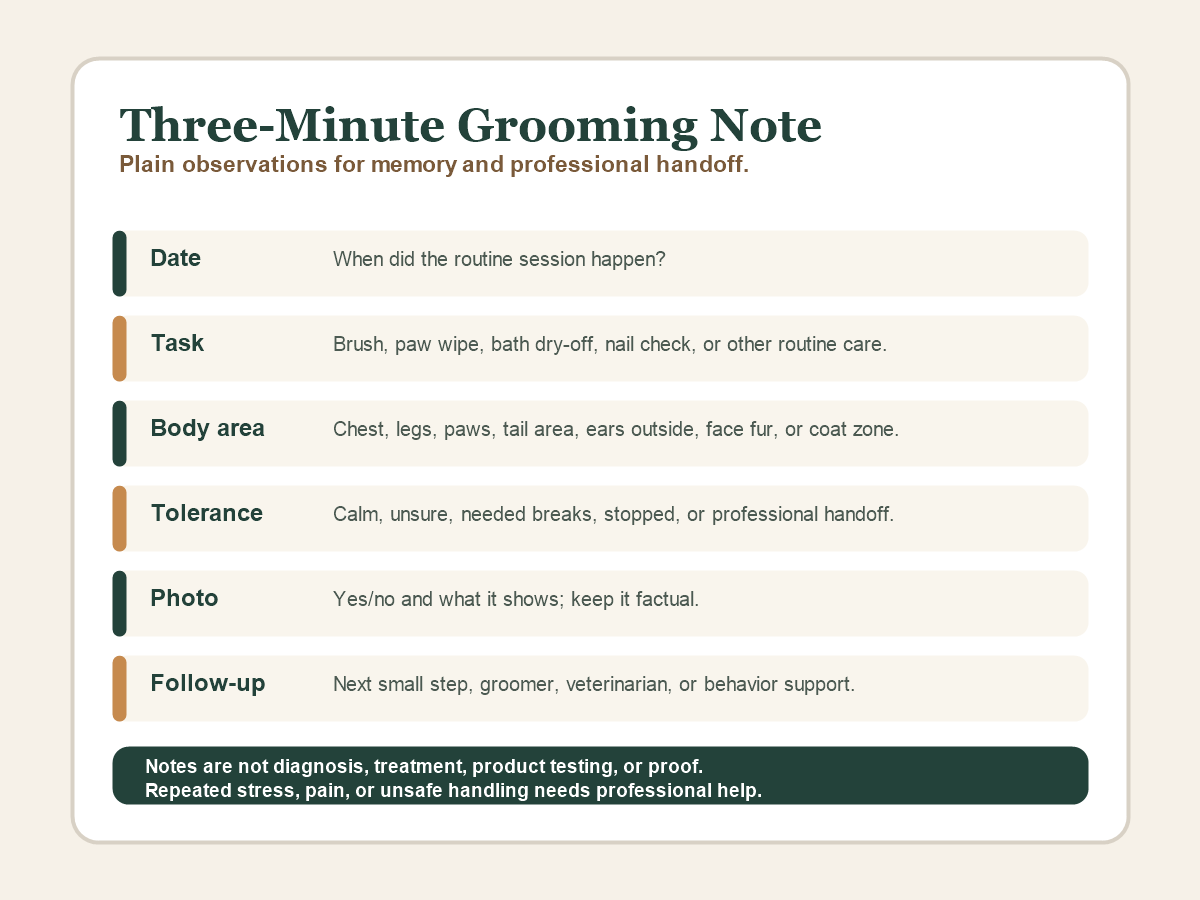
    Three-minute home dog grooming notes template with date, task, body area, tolerance, photo, and follow-up fields.
    A simple grooming note should help you remember patterns and explain concerns clearly, not diagnose a problem at home.

    The Three-Minute Grooming Note

    Use the same short format after brushing, bathing, paw checks, nail handling, ear checks, or any grooming session where you noticed a change. The goal is to make the next decision calmer and more accurate.

    FieldWhat to writeWhy it helps
    DateJune 15, 2026Shows whether something is new, improving, or repeating.
    TaskBrushing, bath prep, paw check, nails, ear checkKeeps the note tied to a real grooming activity.
    Body areaLeft ear, rear legs, tail base, paws, belly, coat sectionMakes patterns easier to discuss with a groomer or veterinarian.
    ToleranceCalm, unsure, pulled away, growled, yelped, hid, tried to biteHelps you decide whether to shorten the next session or stop.
    PhotoYes or no, with a short labelCreates a visual reference without relying on memory.
    Follow-upTry shorter session, call groomer, call vet, leave area aloneTurns the note into a safer next step.

    What Notes Can And Cannot Do

    Home grooming notes are a memory tool. They can help you explain what you saw, when it happened, and how your dog reacted. They cannot diagnose skin disease, ear infections, pain, anxiety, parasites, allergies, or behavior problems.

    If a dog repeatedly pulls away, cries, guards a body area, shows skin changes, has odor, has discharge, or seems painful, stop grooming that area and ask a qualified professional. The dog brushing stop guide can help you separate a short pause from a session that should end for the day.

    What To Record After Routine Sessions

    For normal at-home grooming, write only what would help you make a better decision next time. Keep it factual and short.

    After this sessionRecord thisSkip this
    BrushingCoat section, tangles, mats, shedding level, toleranceGuessing why a mat formed without evidence
    Bath prepBrush-first result, skin check, product used, rinse concernsUsing the note as a product review or medical conclusion
    Paws or nailsWhich paw, handling tolerance, any limping or sensitivity noticedContinuing if the dog shows pain or escalating stress
    Ears or faceOnly what you observed from the outside, plus odor or sensitivityPutting tools into the ear canal or trying to treat at home

    For a broader routine, pair your notes with the beginner dog grooming checklist or the weekly brushing routine.

    Fictional Sample Note

    This is a fictional routine note, not medical guidance:

    Date: June 15, 2026
    Task: Brushing after walk
    Body area: Rear legs and tail base
    Tolerance: Calm on rear legs, turned away at tail base
    Photo: Yes, small tangle before brushing
    Follow-up: Keep next session shorter, brush tail base first, stop if pulling away repeats.

    When Notes Should Become A Professional Handoff

    Turn your notes into a handoff when the pattern repeats, the same area stays sensitive, you see skin changes, your dog becomes more stressed over time, or you are unsure whether grooming is safe to continue. A useful handoff includes:

    • The dates you noticed the issue.
    • The body area involved.
    • What you were doing when your dog reacted.
    • Whether you have photos.
    • What you stopped doing at home.

    Before any home grooming session, use the pet grooming safety checklist to check the room, tools, products, body areas, and stop signs.

    What To Tell A Groomer, Veterinarian, Or Behavior Professional

    Be specific and calm. Instead of saying “my dog hates grooming,” try: “On June 15, he pulled away when I brushed near the tail base. I stopped. It happened again two days later, and I have a photo of the tangle.” That kind of note is much easier for a professional to act on.

    Helpful Companion Guides

    Sources

    This guide uses general dog grooming and care guidance from the ASPCA dog grooming tips, ASPCA general dog care, and VCA Hospitals grooming and coat care guidance.

    Bottom Line

    Keep dog grooming notes short, factual, and tied to the next safe action. Record the date, task, body area, tolerance, photo status, and follow-up. Use the notes to remember patterns and communicate clearly, not to diagnose or push through stress.

    FAQ

    Do I need a grooming notebook?

    No. A phone note, printed checklist, calendar entry, or simple spreadsheet can work as long as you record the same basic fields each time.

    Should I take photos every time?

    No. Photos help when you see a visible change, tangle, mat, skin concern, or repeated issue. Do not force a photo if handling the area makes your dog more stressed.

    Can grooming notes replace a vet visit?

    No. Notes can help you explain what happened, but they do not replace veterinary care when there are signs of pain, skin changes, odor, discharge, bleeding, limping, or repeated distress.

    What is the most useful thing to write down?

    The most useful note is usually the body area, what you were doing, and how your dog reacted. That gives you and a professional a clear starting point.
  • Pet Grooming Safety Checklist for Dogs at Home

    Pet Grooming Safety Checklist for Dogs at Home

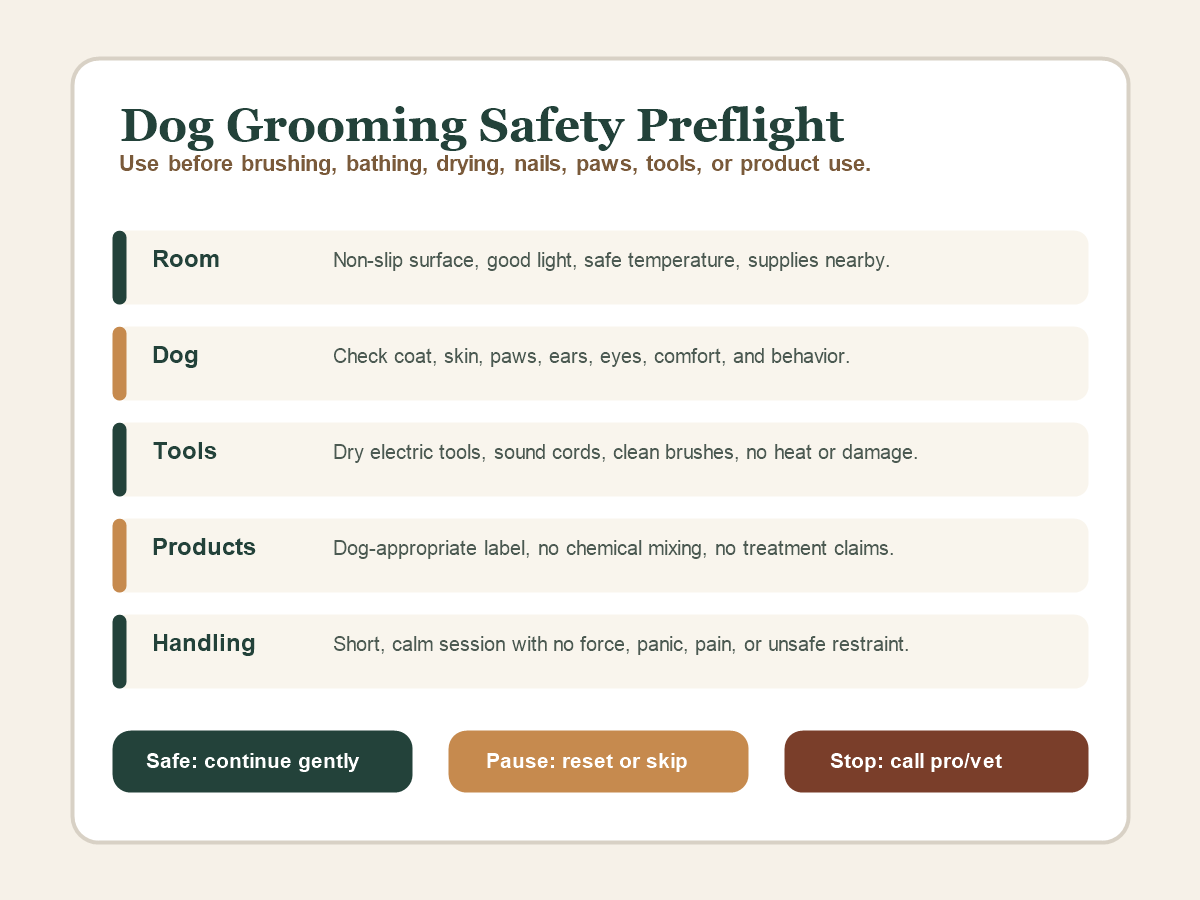
    This pet grooming safety checklist is for dogs groomed at home. Before brushing, bathing, drying, nail work, paw checks, face wiping, ear-area wiping, or tool use, confirm that the room, dog, tools, products, and handling plan are safe enough to continue.

    Although the keyword says “pet,” this page is dog-only. Cats, rabbits, birds, reptiles, and small pets need species-specific handling and safety guidance.

    Dog grooming safety preflight checklist covering room setup, dog body check, tool safety, product label, handling, and safe pause stop decisions.

    Room Setup Checklist

    CheckSafe to continue when…Stop or change setup when…
    SurfaceDog has stable footingFloor, tub, or table is slippery
    LightingYou can see coat, skin, nails, and paws clearlyYou are guessing
    Water and electricityElectric tools are away from waterTools, cords, outlet, or hands are wet
    TemperatureDog is comfortableRoom is too hot, cold, or poorly ventilated
    SuppliesItems are within reachYou must leave the dog unattended

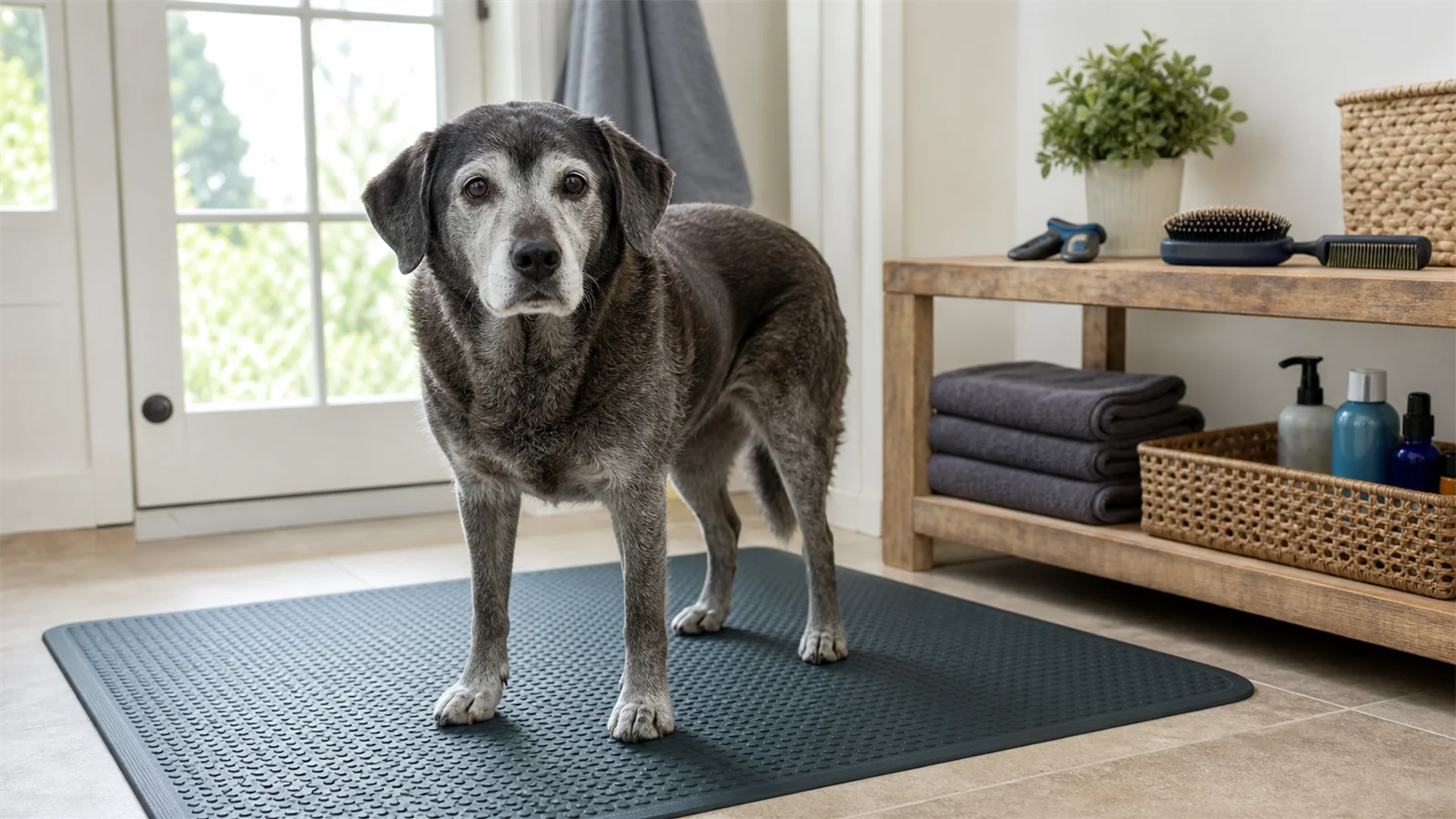
    A non-slip surface and calm room are not decoration. They reduce rushing, slipping, and unsafe handling.

    Dog Body Check

    Before grooming, scan the coat, skin, paws, ears, eyes, and behavior. You are not diagnosing; you are deciding whether home grooming is appropriate today.

    Stop for severe mats, painful mats, wounds, sores, bleeding, redness, swelling, discharge, odor with irritation, limping, pain, eye or ear symptoms, panic, aggression risk, breathing trouble, collapse, overheating, chemical exposure concern, or unsafe handling.

    For routine task planning after the safety check, use the dog grooming checklist for beginners.

    Tool Safety Check

    Inspect every tool before it touches the dog.

    • For brushes and combs, look for broken teeth, sharp edges, trapped debris, or rust.
    • For clippers, trimmers, dryers, or other electric tools, check cords, housing, guards, blade condition, heat, smell, sound, and dryness.
    • Stop using tools with damaged cords, cracked housings, sparks, burning odor, overheating, wet electric parts, rust, sharp or broken teeth, missing guards, abnormal noise, or any sign that the tool was dropped or damaged.

    This page does not teach electrical repair, clipper repair, or product servicing. If a tool seems unsafe, stop using it and follow the manufacturer route.

    Product-Label Check

    Use only dog-appropriate routine grooming products and follow the label. Do not mix chemicals, invent disinfectant recipes, claim sterilization, use medicated products without veterinary direction, or substitute household products for dog grooming products.

    The CDC advises cleaning first before sanitizing or disinfecting, following product labels, using ventilation, not mixing products, and not wiping or bathing pets with disinfecting products. If chemical exposure is possible, stop grooming and contact a veterinarian or appropriate emergency route rather than trying to treat the problem from a checklist.

    Handling and Comfort Check

    The dog should be able to stand, sit, or rest without forced restraint. Short sessions are safer than long sessions that push the dog into panic.

    Pause if the dog is restless or tired. Stop if the dog panics, growls, snaps, repeatedly tries to escape, shows pain, or cannot be handled safely.

    If the issue happens during brushing, the when to stop dog brushing session decision tree gives a more specific brushing route.

    Safe, Pause, Stop Card

    StatusWhat it looks likeWhat to do
    Safe to continueCalm dog, ordinary skin, safe tools, clear setupContinue gently
    PauseDog is tired, distracted, or mildly worriedTake a break or skip the next task
    Stop/callPain, medical signs, severe mats, panic, damaged toolsEnd the session and route to a veterinarian, groomer, behavior professional, or manufacturer

    Cleanup Checklist

    After grooming:

    • Dry damp surfaces.
    • Remove loose hair from tools.
    • Let tools dry before storage.
    • Put products away where the dog cannot reach them.
    • Note any skin, paw, nail, coat, or behavior issue that needs follow-up.

    For coat-care rhythm after the session, see the weekly dog brushing routine.

    Sources

    Bottom Line

    Home dog grooming is safer when you check the setup before you start. Confirm stable footing, clear lighting, dry and sound tools, dog-appropriate product labels, and calm handling. Pause early when the dog is worried or tired, and stop for pain, medical signs, severe mats, damaged tools, chemical concerns, panic, or unsafe handling.

    FAQ

    Is this checklist for all pets?

    No. This page targets dog grooming at home. Cats, rabbits, birds, reptiles, and small pets need species-specific handling and safety guidance.

    What is the most important dog grooming safety rule?

    Stop when the dog, skin, coat, tool, product, or setup becomes unsafe. Do not push through pain, panic, medical signs, electrical risk, or severe mats.

    Can I use restraint to finish grooming?

    This page does not teach restraint or forced handling. If a dog cannot be groomed safely and calmly at home, stop and use a professional route.

    Should I disinfect all grooming tools?

    Clean first and follow product labels and manufacturer instructions. Do not invent disinfectant recipes or make sterilization claims.

    What should I check after grooming?

    Dry damp areas, clean loose hair from tools, store products safely, and note any skin, paw, nail, coat, or behavior issue that needs follow-up.

  • When to Stop a Dog Brushing Session

    When to Stop a Dog Brushing Session

    Knowing when to stop brushing is part of safe routine coat care. A session can end because the coat is done, the dog is tired, the skin or coat shows a warning sign, or handling is no longer safe. Stopping early is better than brushing through pain, panic, or owner frustration.

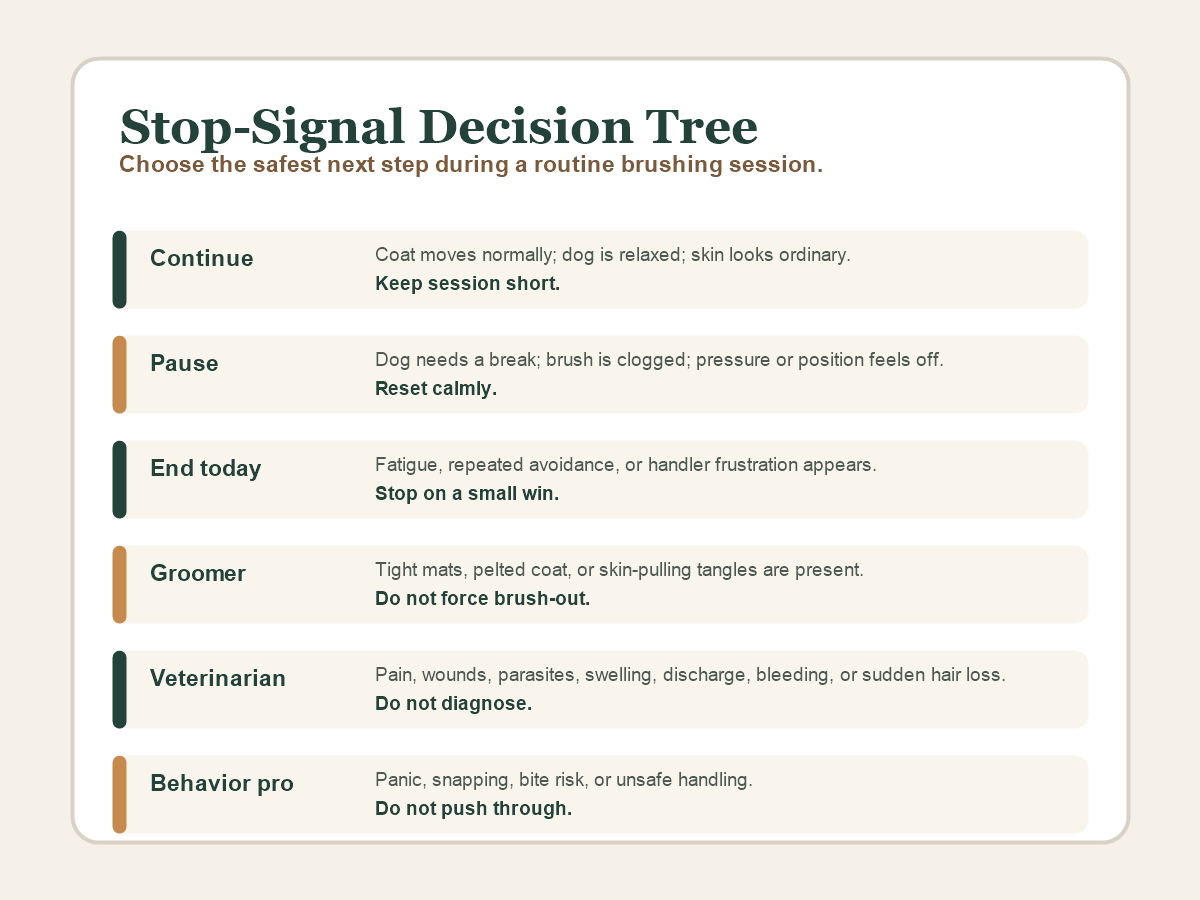
    Use four everyday outcomes: continue, pause, end for today, or call a professional. Continue only when the dog is comfortable, the coat is moving normally, and the skin looks normal.

    Stop-signal decision tree for dog brushing with continue, pause, end today, groomer, veterinarian, and behavior professional outcomes.

    The Quick Stop-Signal Rule

    Stop immediately for pain, yelping, flinching, skin pulling, bleeding, redness, sores, swelling, discharge, parasites, tight mats, pelted coat, panic, growling, snapping, freezing, repeated escape attempts, or owner loss of control.

    These are not signals to push through. They are routing points. Medical-looking signs belong with a veterinarian. Tight or severe mats belong with a qualified groomer. Handling fear, aggression risk, or bite risk belongs with a qualified trainer or behavior professional.

    Continue When Everything Looks Ordinary

    You can continue a brushing session when:

    • The dog is relaxed or only mildly wiggly.
    • The coat moves normally under gentle brushing.
    • The skin looks ordinary for your dog.
    • There is no flinching, yelping, skin pulling, panic, growling, or snapping.
    • You can keep the session short and calm.

    Even then, stop before the dog is tired. Routine brushing works best when your dog can repeat it without dreading the next session. For weekly planning, use the weekly dog brushing routine.

    Pause When the Session Needs a Reset

    Pause when the dog needs a break, the brush is clogged, your pressure feels too firm, the dog keeps shifting, or you are not sure whether a spot is a tangle, a mat, or a skin problem.

    A pause is not failure. Put the brush down, clean hair from the tool, let your dog relax, and reassess. If the session returns to calm, continue briefly. If the same problem repeats, end for today.

    End for Today Before It Turns Into a Fight

    End the session when comfort is fading, the dog is repeatedly avoiding the brush, or you are getting frustrated. A short, calm session is better than a long one that ends with force.

    Good reasons to end today include:

    • The dog keeps moving away after breaks.
    • The same zone keeps causing worry.
    • You are brushing harder just to finish.
    • The dog is tired from bathing, drying, nail care, or another grooming task.
    • You are no longer calm enough to handle gently.

    For a broader beginner routine, see the dog grooming checklist for beginners.

    Call a Groomer for Tight Mats or Coat Pulling

    Call a qualified groomer when the coat is tightly matted, pelted, close to the skin, or pulling the skin when you try to brush. Do not cut mats out with scissors. Do not keep brushing until the dog gives up.

    Severe mats can hide skin irritation and pain. If you are not sure whether a tangle is safe to handle, treat that uncertainty as a stop sign.

    Call a Veterinarian for Skin, Pain, Parasites, or Bleeding

    Call a veterinarian for wounds, parasites, swelling, discharge, bleeding, pain, sudden hair loss, hot spots, red or raw skin, or a dog that reacts as if an area hurts.

    Grooming is for noticing these problems, not diagnosing or treating them. Merck notes that signs such as oozing from the eyes, ears, or nose, hair loss, itching, red spots, and limping can indicate a dog may be sick. If brushing reveals a health concern, the safest next step is veterinary care.

    Call a Behavior Professional for Panic or Bite Risk

    Stop and use qualified help if the dog panics, snaps, growls, freezes, repeatedly tries to escape, or you feel bite risk rising. This page does not teach restraint, sedation, punishment, dominance handling, flooding, or casual muzzle use as a workaround.

    If you need to force the session to continue, the session should end.

    Write Down What Happened

    After stopping, make a short note:

    • Which body zone caused the stop.
    • What you noticed in the coat, skin, or behavior.
    • What action you chose: pause, end, groomer, veterinarian, or behavior help.
    • What to avoid next time.

    That note can prevent the next session from starting in the same problem area.

    Sources

    Bottom Line

    Stop brushing before the session becomes painful, frightening, or unsafe. Continue only when the coat, skin, dog, and handler are all calm enough. Pause for small resets, end for today when comfort fades, and call the right professional for mats, medical signs, panic, bite risk, or unsafe handling.

    FAQ

    When should I stop brushing my dog immediately?

    Stop immediately for pain, yelping, flinching, skin pulling, bleeding, red or wounded skin, parasites, tight mats, panic, growling, snapping, repeated escape attempts, or unsafe handling.

    Should I brush through mats if my dog does not like it?

    No. Tight, painful, widespread, close-to-skin, or skin-pulling mats should go to a qualified groomer or veterinarian. Do not cut them out with scissors at home.

    What if my dog growls during brushing?

    Stop the session. Growling is a warning signal, not a challenge to overcome. Use qualified help if fear, aggression risk, or bite risk is part of grooming.

    Is it okay to take breaks during brushing?

    Yes. Breaks are useful when the dog needs to reset, the brush needs cleaning, or you need to check pressure and position. If the same problem repeats, end for today.

    What should I do after stopping a brushing session?

    Write down the body zone, what happened, your dog’s response, and the next safe action. That may be a shorter session, a groomer, a veterinarian, or behavior support.

  • Weekly Dog Brushing Routine by Coat Type and Tolerance

    Weekly Dog Brushing Routine by Coat Type and Tolerance

    A weekly dog brushing routine works best when it matches your dog’s coat length, shedding level, and tolerance. Start with short, repeatable sessions instead of one long catch-up session. If the coat is painful, tightly matted, red, irritated, or your dog cannot be handled calmly, stop and use a qualified groomer or veterinarian.

    This routine is a planning guide, not a promise that one schedule works for every dog. Coat type, season, health, age, and handling comfort all change the plan.

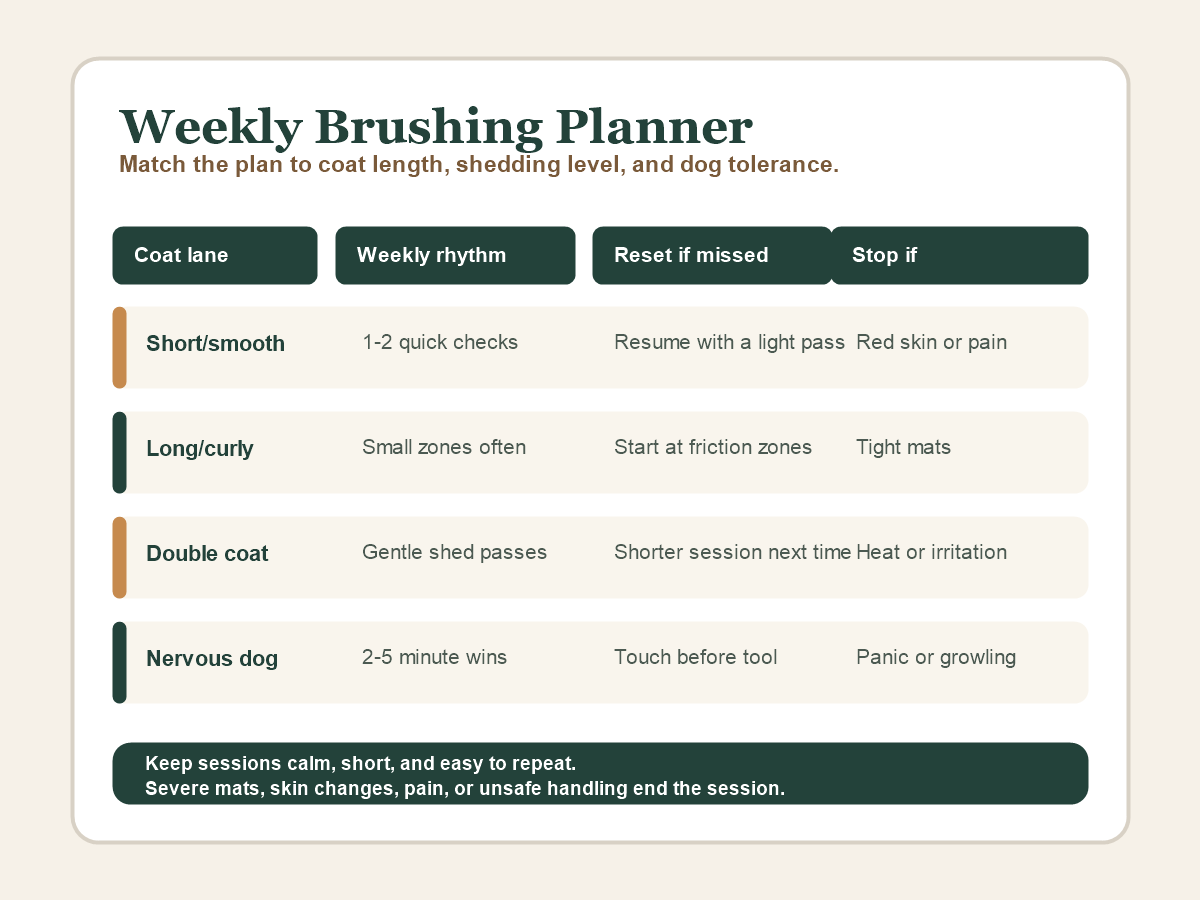
    Weekly dog brushing planner by coat lane, weekly rhythm, missed-session reset, and stop signs.

    The Simple Weekly Brushing Rule

    Use the easiest routine your dog can tolerate consistently. A short smooth coat may only need quick checks and loose-hair passes. A long, curly, feathered, or double coat usually needs more frequent small-zone brushing so tangles do not build up.

    For broader grooming timing, use the dog grooming schedule by coat type alongside this weekly brushing planner.

    Weekly Brushing Planner

    Coat laneWeekly rhythmWhere to focusReset if you miss a session
    Short or smooth coatOne or two quick checksLoose hair, dirt, skin changes, pawsResume with a light pass; do not overbrush to catch up
    Long, curly, or silky coatSeveral small sessionsBehind ears, collar line, armpits, belly, tail, rear legsStart with friction zones and stop if tangles pull
    Double coat or shedding coatGentle shed checks, more during seasonal sheddingLoose undercoat, comfort, skin irritation, overheating riskUse shorter sessions rather than one intense session
    Nervous or low-tolerance dogTwo- to five-minute winsTouch-before-tool practice, calm release, reward breaksRestart with handling only before brushing again

    What to Check Before You Brush

    Before brushing, part the coat gently in a few areas and check for:

    • Red, raw, flaky, swollen, wounded, or painful skin.
    • Parasites, flea dirt, hot spots, or unusual odor.
    • Tight mats, pelted coat, or tangles close to the skin.
    • Sudden hair loss or a coat change that seems unusual for your dog.
    • Fear signs such as freezing, growling, snapping, panic, or repeated escape attempts.

    The ASPCA notes that grooming time can also be a chance to check for fleas and skin concerns, while VCA emphasizes that matting and coat problems can become uncomfortable. Keep the check gentle and stop if anything looks medical or painful.

    Short-Coat Weekly Routine

    For many short or smooth coats, the weekly routine can be simple:

    • Do a quick body check.
    • Use a gentle coat-appropriate brush or mitt category.
    • Wipe ordinary dirt from paws or coat if needed.
    • Stop if the skin looks irritated or brushing causes discomfort.

    Short coats still need observation. A dog can have skin irritation, parasites, paw problems, or handling stress even when the coat itself is easy.

    Long, Curly, or Feathered-Coat Routine

    Long, curly, silky, or feathered coats usually need smaller, more frequent sessions. Focus on friction zones where tangles often form: behind the ears, under the collar, armpits, chest, belly, tail, and rear legs.

    Do not brush hard through tangles. If a tangle does not loosen gently, stop. Severe mats, close-to-skin mats, pain, or skin pulling belong with a qualified groomer or veterinarian.

    Double-Coat and Shedding-Season Routine

    For double-coated or heavy-shedding dogs, increase brushing during shedding seasons, but keep pressure and session length conservative. The goal is to remove loose coat without scraping skin, overheating the dog, or turning the session into a struggle.

    If the dog is hot, tired, irritated, or trying to leave, pause or end the session. You can return later with a shorter pass.

    Missed a Week? Do Not Overcorrect

    If you miss a brushing session, do not make the next session twice as long. Use a reset:

    • Check skin and coat first.
    • Start with the easiest zone.
    • Brush for a few calm minutes.
    • Stop before your dog gets frustrated.
    • Schedule another short session instead of forcing the full routine.

    This is especially important for puppies, seniors, nervous dogs, and dogs with thick or mat-prone coats.

    When to Stop Brushing

    Stop brushing for pain, yelping, flinching, skin pulling, redness, sores, wounds, swelling, parasites, bleeding, sudden hair loss, tight mats, pelted coat, panic, growling, snapping, freezing, repeated escape attempts, or handling that no longer feels safe.

    Use a veterinarian for medical-looking skin, pain, parasites, wounds, sudden coat changes, or infection concerns. Use a qualified groomer for severe mats or coat work you cannot safely maintain at home.

    Helpful Companion Guides

    Sources

    Bottom Line

    A weekly brushing routine should be easy to repeat, matched to the coat, and calm enough for your dog to tolerate. Brush short coats lightly, split long or curly coats into small zones, adjust during shedding season, and stop early when the coat, skin, or behavior says the session is no longer safe.

    FAQ

    How often should I brush my dog each week?

    It depends on coat type and tolerance. Short coats may need one or two quick checks, while long, curly, feathered, or shedding coats often need smaller sessions several times a week.

    What if I miss my dog’s brushing routine?

    Do not overcorrect with a long session. Check the coat, start with an easy zone, brush for a few calm minutes, and schedule another short session later.

    Should I brush more during shedding season?

    Often yes, but keep the sessions gentle and short. More frequent light passes are safer than one harsh or exhausting brushing session.

    When should I stop brushing my dog?

    Stop for pain, red or wounded skin, parasites, tight mats, panic, growling, snapping, repeated escape attempts, or any handling that feels unsafe.

    Can brushing replace professional grooming?

    No. Brushing helps with routine maintenance, but severe mats, coat work you cannot safely manage, medical skin signs, pain, or unsafe handling need a groomer or veterinarian.

  • Dog Grooming Checklist for Beginners

    Dog Grooming Checklist for Beginners

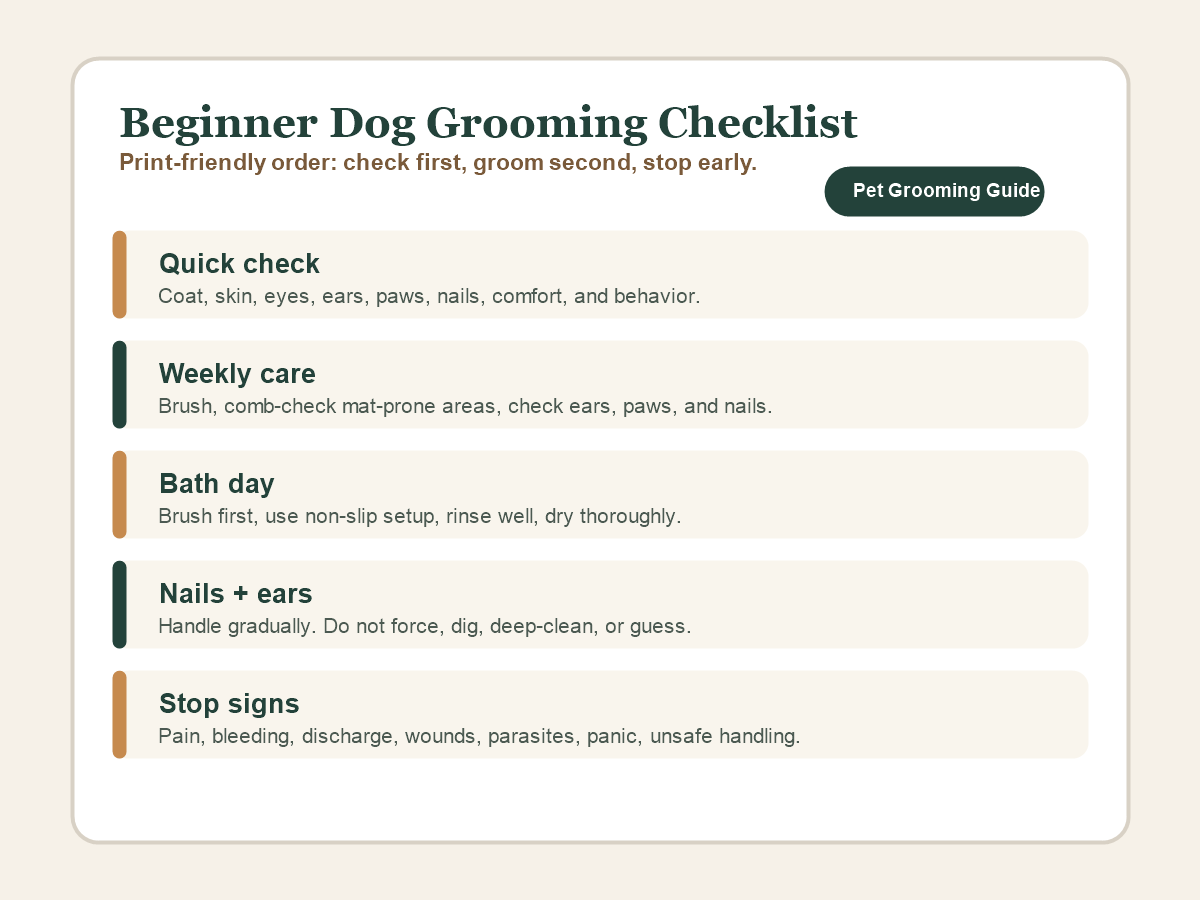
    A beginner dog grooming checklist should help you notice problems early, keep your dog comfortable, and avoid tasks that belong with a professional. Start with simple checks: coat, skin, eyes, ears, paws, nails, comfort, and behavior. Then build brushing, bathing, nails, and ear care into short sessions your dog can tolerate.

    Do not try to do everything in one day. A calm five-minute session is more useful than a full routine that ends in fear or force.

    Beginner dog grooming checklist graphic covering quick checks, weekly care, bath day, nails and ears, and stop signs.

    Beginner Rule: Check First, Groom Second

    Before brushing, bathing, trimming nails, or cleaning ears, look at the whole dog. Check:

    • Coat condition and loose hair.
    • Red, raw, flaky, wounded, or painful skin.
    • Eyes for squinting, redness, injury, or discharge.
    • Ears for odor, redness, swelling, pain, or discharge.
    • Paws for cracked pads, debris, swelling, or limping.
    • Nails for length, cracks, and safe handling tolerance.
    • Behavior for fear, growling, freezing, frantic movement, or panic.

    If you find a medical-looking problem, grooming is no longer the solution. Stop and ask a veterinarian.

    Daily or Quick Check

    Use this as a fast habit, especially after walks or outdoor play.

    AreaWhat to checkWhat not to do
    CoatDirt, burrs, loose hair, small tanglesDo not pull painful tangles
    SkinRedness, sores, parasites, swellingDo not diagnose or treat skin problems
    EyesClear, comfortable eyesDo not treat red, painful, or discharging eyes
    PawsDebris, cracked pads, limpingDo not dig at embedded objects
    BehaviorCalm enough to handleDo not force restraint

    For puppies, seniors, and nervous dogs, this daily check may be the whole session.

    Weekly Checklist

    Most beginners can start with a weekly maintenance session:

    • Brush with a coat-appropriate tool category.
    • Comb-check mat-prone areas if the coat is long, curly, dense, or feathered.
    • Check ears without deep cleaning.
    • Check nails and paws.
    • Wipe ordinary surface dirt from the coat or feet.
    • Note any changes to skin, coat, smell, comfort, or behavior.

    Short smooth coats may need less brushing than curly or long coats, but every dog benefits from being checked regularly. For timing by coat, use the dog grooming schedule by coat type.

    Monthly or As-Needed Checklist

    Some tasks happen less often or depend on the dog:

    • Bathing when dirty, smelly from ordinary activity, or seasonally needed.
    • Nail trimming or grinding when nails are long and the dog can be handled safely.
    • Ear cleaning only when appropriate and not painful.
    • Professional grooming for coat shaping, clipping, heavy shedding help, or unsafe handling.

    Do not bathe to cover up persistent odor, itch, discharge, wounds, or inflamed skin. Those are stop signs.

    Bath-Day Checklist

    Before the bath:

    • Brush out loose hair and small tangles.
    • Stop if mats are tight, painful, widespread, or close to the skin.
    • Put a non-slip surface in place.
    • Keep towels ready.
    • Plan a short session with breaks.

    During the bath:

    • Use lukewarm water.
    • Keep shampoo and water away from eyes and ear canals.
    • Rinse thoroughly.
    • Stop if the dog panics, overheats, struggles to breathe, or cannot be handled safely.

    After the bath:

    • Dry thoroughly, including paws, armpits, belly, ears, and skin folds.
    • Brush again once fully dry.
    • Save nails or ears for another day if the dog is tired.

    For a deeper bath-day safety check, see dog bathing mistakes to avoid at home.

    Nail Checklist

    Nail care should be gradual. Handle paws first, reward calm behavior, and trim or grind only small amounts when you know where you are working.

    Stop for bleeding, pain, limping, panic, sudden jerking, growling, or uncertainty about nail anatomy. Do not wrestle through nail care. A groomer, veterinary team, or trainer-informed plan can make nail work safer.

    Ear Checklist

    For beginners, ear care starts with looking and smelling, not deep cleaning. Healthy ears should not be painful, swollen, heavily odorous, or full of discharge.

    Do not put cotton swabs down the ear canal. Do not treat suspected ear infections at home. Do not keep cleaning an ear that looks worse or hurts.

    Grooming Tasks Beginners Should Avoid

    Beginners should not attempt:

    • Severe mat removal.
    • Cutting mats out with scissors.
    • Advanced clipping or breed trims.
    • Deep ear cleaning.
    • Medical skin, ear, eye, fold, or wound care.
    • Anal gland expression.
    • Dental scaling.
    • Forced restraint or sedation.

    Learning what to skip is part of good at-home grooming.

    When to Stop and Call a Pro or Vet

    Call a veterinarian for wounds, parasites, hot spots, bad odor with redness, red or raw skin, ear pain or discharge, eye squinting or discharge, limping, bleeding nails, suspected infection, breathing trouble, overheating, or pain.

    Call a professional groomer for severe mats, coat work you cannot safely maintain, nail care you cannot do safely, or a dog that cannot be groomed without force.

    Bottom Line

    A beginner grooming routine should feel calm, short, and repeatable. Check your dog first, do the easy maintenance your dog can tolerate, split bigger tasks across days, and stop early when you see pain, fear, skin problems, ear problems, severe mats, or unsafe handling.

    FAQ

    What should be on a beginner dog grooming checklist?

    A beginner checklist should include coat brushing, skin checks, eyes, ears, paws, nails, bath planning, drying, behavior checks, and clear stop rules.

    How often should beginners groom a dog at home?

    Do quick comfort checks often, brush on a coat-appropriate schedule, bathe as needed, and check nails every one to two weeks. Adjust for coat type and tolerance.

    What grooming tasks should beginners avoid?

    Avoid severe mat removal, advanced clipping, deep ear cleaning, medical care, forced restraint, sedation advice, anal gland expression, and dental scaling.

    Do I have to do nails, ears, brushing, and bathing in one session?

    No. Splitting tasks across days is often safer and calmer, especially for puppies, seniors, fearful dogs, and beginners.

    What are signs I should stop grooming?

    Stop for pain, bleeding, discharge, swelling, wounds, parasites, overheating, breathing trouble, panic, aggression, or any handling that feels unsafe.

  • Dog Bathing Mistakes to Avoid at Home

    Dog Bathing Mistakes to Avoid at Home

    The biggest dog bathing mistakes are skipping the pre-bath brush, bathing over tangles, using an unsafe setup, spraying the face or ears carelessly, leaving shampoo residue, drying poorly, and forcing a frightened or painful dog through the bath. A safer home bath starts before the water turns on.

    Quick Answer

    Before bathing your dog, brush and check the coat, prepare non-slip footing, use lukewarm water, keep water away from eyes and ears, rinse until the coat feels clean, and dry for comfort. Stop for severe mats, wounds, parasites, ear discharge, pain, panic, growling, snapping, or unsafe handling.

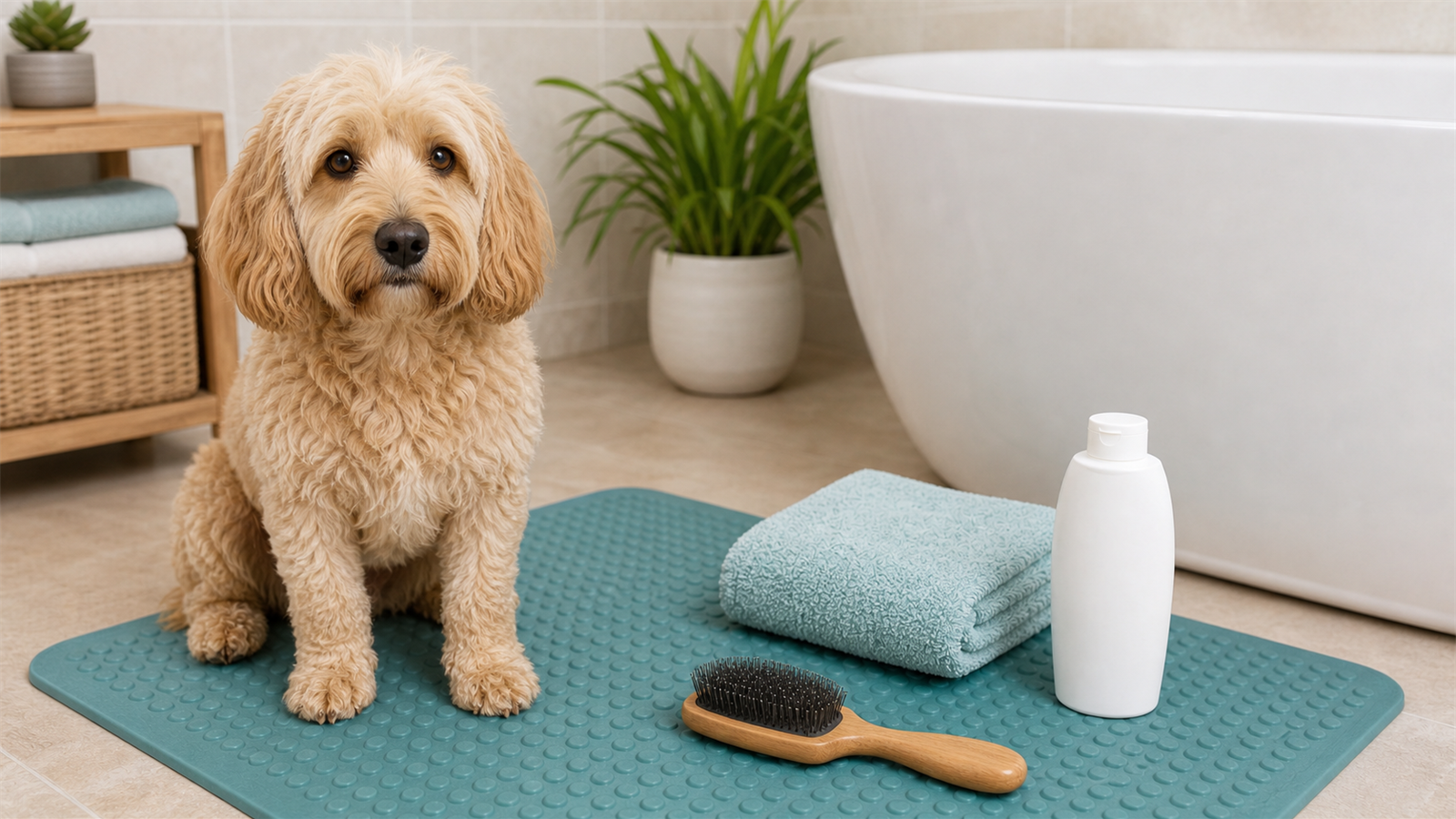
    Dry dog bath setup with towel, closed shampoo, brush, and non-slip mat

    Bath-Prep Checklist

    Use this checklist before water touches the coat. It is a routine grooming check, not medical advice or a reason to push through pain or fear.

    Before the bathWhy it mattersStop if you see
    Brush and check the coatTangles can tighten after water, and brushing helps reveal skin issues.Severe mats, painful coat, wounds, or skin irritation.
    Check ears, paws, skin, and behaviorA bath should not hide pain, illness, or handling risk.Ear discharge, parasites, limping, panic, growling, or snapping.
    Set non-slip footingSlipping can make baths stressful and unsafe.A dog who cannot stand calmly or safely.
    Use lukewarm waterWater that is too hot or cold can upset the dog.Shivering, overheating, distress, or trying to escape.
    Control face and ear waterDirect spray near eyes, ears, and nose can frighten or irritate dogs.Head shaking, face sensitivity, ear pain, or strong odor.
    Rinse and dry patientlyResidue and damp coat can leave the skin uncomfortable.Fear of dryer noise, heat discomfort, or unsafe handling.

    Mistake 1: Skipping the Pre-Bath Coat Check

    Brush before bathing when the dog can tolerate it. VCA notes that burrs and tangles should be brushed out before a bath because they can become harder to remove afterward. The ASPCA also explains that brushing helps keep the coat in good condition and lets you inspect the skin.

    Do not bathe over severe mats. Do not cut mats out with scissors. If the coat is severely tangled, painful, tight to the skin, or paired with irritation, use a professional groomer or veterinarian.

    Mistake 2: Using the Wrong Setup or Water Approach

    An unsafe bath setup can turn a normal grooming task into a fear event. Use a stable, non-slip surface, keep supplies within reach, and use lukewarm water. Avoid chasing the dog around the room or lifting a struggling dog into a tub without a safe plan.

    For large or nervous dogs, shorten the goal. A quick paws-and-belly rinse may be safer than forcing a full bath.

    Mistake 3: Letting Shampoo or Water Get Into Eyes and Ears

    ASPCA Pet Insurance grooming guidance recommends avoiding the ears, eyes, and nose during bathing. Use controlled water flow around the face. A damp cloth can be safer than direct spray for many dogs.

    Stop if you notice ear pain, discharge, strong odor, swelling, head shaking, or sensitivity. Bathing is not a fix for ear problems.

    Mistake 4: Not Rinsing Long Enough

    Shampoo residue can irritate skin and leave the coat feeling dull or tacky. Rinse slowly, especially through dense, long, curly, or double coats. Lift sections of coat gently and check that water runs clear.

    Do not assume a quick surface rinse is enough on thick coats. Dense-coated dogs may need more careful rinsing than their coat length suggests.

    Mistake 5: Drying in a Way That Leaves Mats, Chill, or Fear

    Drying should match the dog and coat. Towel-dry thoroughly, especially around the chest, belly, legs, and undercoat. If using a dryer, avoid high heat, keep the noise and airflow tolerable, and stop if the dog becomes frightened.

    For long, curly, or mat-prone coats, drying without brush and comb checks can allow tangles to tighten. For fearful dogs, the priority is calm handling and safety, not a perfect finish.

    Mistake 6: Bathing Too Often or Using Bath Time to Solve Medical Issues

    Merck notes that dogs may be bathed with pet shampoo when dirty, smelly, or seasonally appropriate. Bathing more often is not always better. If you need a starting point by coat type, use the dog grooming schedule by coat type as a planning guide, then adjust for skin, coat condition, activity, and veterinarian guidance.

    Do not try to solve itching, redness, wounds, parasites, odor with inflamed skin, sudden hair loss, or recurring ear problems with repeated baths. Those signs need veterinarian guidance.

    When to Stop and Call a Groomer or Vet

    Stop the bath if the dog is panicking, growling, snapping, repeatedly trying to escape, or showing pain. Stop and call a groomer or veterinarian for severe mats, wounds, skin infection signs, parasites, ear pain or discharge, medical fragility, or unsafe handling.

    Puppies, seniors, and medically fragile dogs may need a shorter, gentler plan approved by a veterinarian or professional groomer.

    Helpful Companion Guides

    Bottom Line

    A good dog bath is mostly preparation: brush and check the coat first, set up stable footing, keep water away from eyes and ears, rinse patiently, and dry for comfort instead of speed. If the bath turns into pain, panic, medical concern, severe matting, or unsafe handling, stop and use a veterinarian or professional groomer.

    FAQ

    Should I brush my dog before or after a bath?

    Brush before the bath, especially if the dog has tangles or loose coat. You can do a second gentle brush after the coat is mostly dry if the dog tolerates it.

    Can I use human shampoo on my dog?

    Use dog shampoo unless your veterinarian tells you otherwise. Skin needs vary, and this guide does not recommend specific products.

    How often should I bathe my dog?

    Bathe when the dog is dirty, smelly, or seasonally needs it. Coat type, skin condition, activity, and veterinarian guidance matter more than a universal schedule.

    What if my dog is scared of baths?

    Do not force a full bath. Work on short, calm introductions to the bath area, water sounds, towels, and touch. Stop for panic, growling, snapping, or unsafe handling.

    Is air-drying okay?

    It depends on coat type, room temperature, and dog comfort. Thick, long, or curly coats may need more careful drying to avoid moisture and tangles. Avoid heat and forced drying if the dog is frightened.

    Sources

  • Dog Grooming Schedule by Coat Type

    Dog Grooming Schedule by Coat Type

    A dog grooming schedule should start with coat type, not a universal calendar. Short smooth coats, dense double coats, long coats, curly coats, and wire coats all need different brushing and professional-care plans. Use this schedule as a starting point, then adjust for age, season, activity, skin condition, coat condition, and how safely your dog tolerates grooming.

    Quick schedule matrix by coat type

    Use this matrix as a starting framework, then adjust for your dog’s coat condition, age, season, activity, and safe handling limits.

    Coat typeBrushingBathingNailsEarsPro-groom boundary
    Short smoothAbout weekly, more when sheddingWhen dirty, smelly, or seasonally neededCheck every 1 to 2 weeksCheck during groomingUsually as needed unless nails, skin, or handling are difficult
    Short dense or doubleSeveral times weekly; more during coat blowWhen dirty or shedding support is neededCheck every 1 to 2 weeksCheck after baths/swimmingHelpful for heavy seasonal shedding or unsafe handling
    Medium or longSeveral times weekly to daily in friction areasWhen coat is brushed out and bathing is neededCheck every 1 to 2 weeksCheck regularlyUse a groomer if tangles are extensive or home brushing falls behind
    Curly, woolly, or continuously growingFrequent brushing and combing, often daily in mat-prone areasOn a maintenance plan, not over matsCheck every 1 to 2 weeksCheck regularlyRegular professional grooming is often needed for clipping and mat prevention
    WireRoutine brushing/comb checks; method depends on coatWhen neededCheck every 1 to 2 weeksCheck regularlyHand-stripping or coat-specific work belongs with a skilled groomer if unfamiliar

    The ASPCA notes that brushing method and frequency depend on coat type, and USDA coat-care guidance states that frequency varies by breed, type, and length. Treat the table as a practical planning tool, not a medical rule or a promise that every dog fits the same interval.

    Short smooth coats

    Short smooth coats often need less brushing than long or curly coats, but they are not maintenance-free. Weekly brushing can remove loose hair, dirt, and debris while giving you a chance to check the skin.

    Good home focus:

    • Light brushing with a coat-appropriate category tool.
    • Skin inspection for redness, fleas or flea dirt, bumps, sores, or irritation.
    • Bathing only when the dog is dirty, smelly, or seasonally needs it.

    Do not over-bathe to chase shedding. If the dog has sudden hair loss, itching, sores, or parasites, stop and ask a veterinarian.

    Short dense and double coats

    Short dense and double coats, including many Labradors, shed more than their coat length suggests. Brushing several times weekly may help keep loose hair controlled, and daily short sessions may be useful during seasonal coat blow.

    Home focus:

    • Gentle loose-hair removal.
    • Pre-bath brushing before water.
    • Thorough drying after baths, especially in dense coat.
    • No shaving as a normal shedding shortcut.

    For heavy seasonal shedding, a groomer can help if the dog tolerates professional handling. For bald patches, painful skin, parasites, wounds, or sudden excessive shedding, call a vet.

    Medium and long coats

    Medium and long coats need more frequent attention because friction areas can tangle quickly. Common problem spots include behind ears, armpits, chest, belly, tail, collar area, and rear legs.

    Home focus:

    • Brush and comb in layers.
    • Check friction areas before and after baths.
    • Keep sessions short enough that the dog can stay calm.
    • Stop before small tangles become severe mats.

    VCA advises that severe or extensive tangles should be handled by a groomer or veterinarian. Do not cut mats out with scissors.

    Curly, woolly, corded, or continuously growing coats

    Curly and continuously growing coats can mat close to the skin even when the surface looks fluffy. These coats often need frequent brushing, comb checks, and professional grooming for clipping or coat shaping.

    Home focus:

    • Comb-check down to the skin where safe.
    • Maintain a regular pro-groom interval approved by the owner and groomer.
    • Avoid bathing over tangles.
    • Keep the coat length realistic for your home maintenance schedule.

    If brushing has already become a fight or the coat has tight mats, stop and book a professional appointment.

    Wire coats and hand-stripping boundaries

    Wire coats can need coat-specific techniques. Some wire-coated dogs are clipped, while others may be hand-stripped by a skilled groomer depending on coat goals and dog tolerance.

    At home, keep the schedule simple: routine brushing, skin checks, nail checks, ear checks, and professional help for unfamiliar coat work.

    Nails, ears, teeth, and bath cadence across all coats

    Coat type changes brushing needs, but every dog needs routine checks.

    TaskGeneral planning note
    NailsCheck every 1 to 2 weeks; trim only when you can do it safely
    EarsCheck for odor, redness, discharge, or pain; ask a vet for concerning signs
    TeethFollow veterinarian guidance for dental care
    BathingBathe when dirty, smelly, or seasonally appropriate; use dog shampoo
    SkinWatch for redness, sores, parasites, odor, sudden hair loss, or pain

    Merck notes that regular brushing helps remove loose hair and prevent mats, and bathing should use pet shampoo when appropriate.

    Dog grooming schedule decision tree showing when to adjust the routine or call a groomer or veterinarian.
    Use stop signs and coat condition to decide whether to continue, adjust, or call a professional.

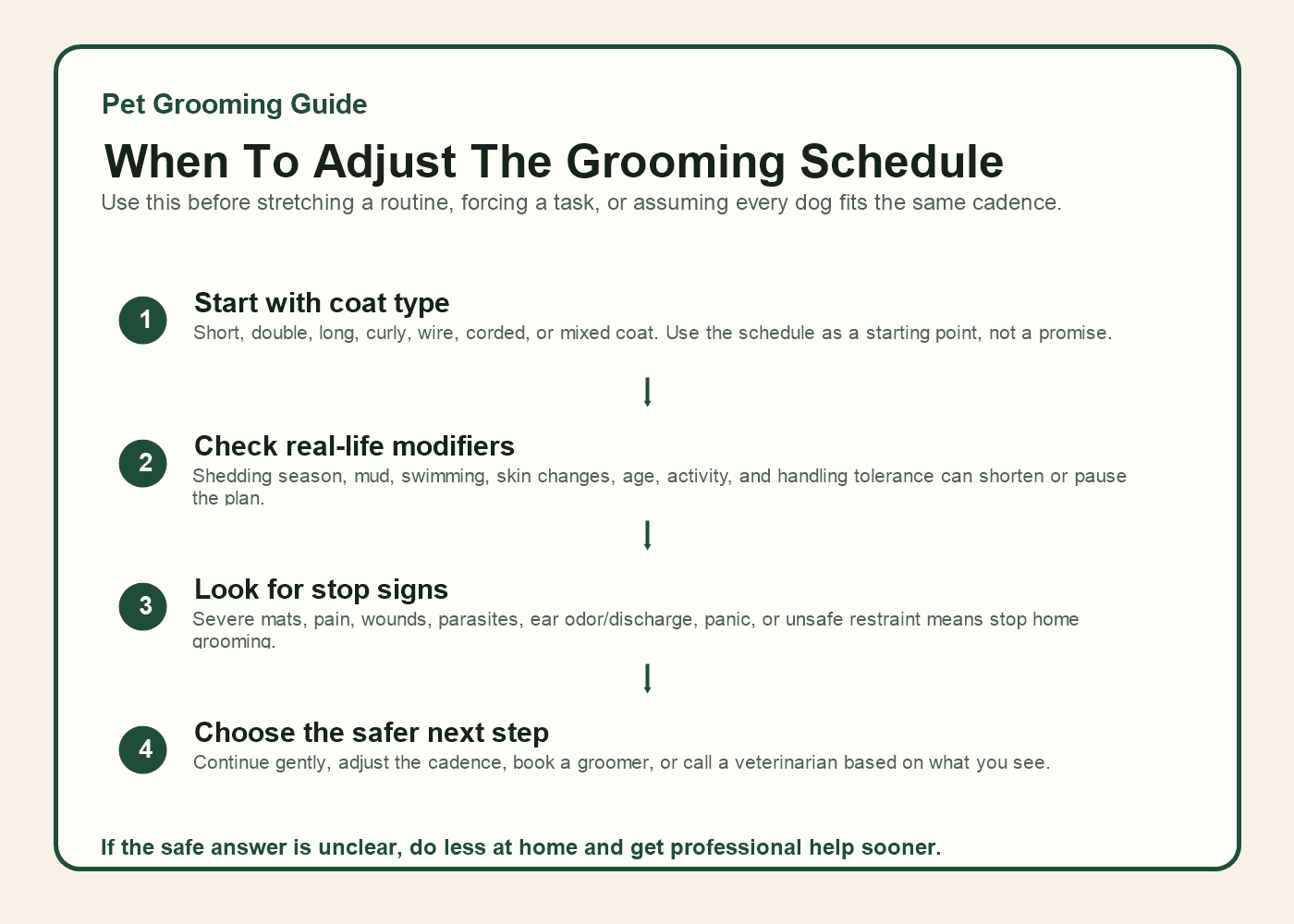
    Adjust the schedule for season, age, skin, and tolerance

    Increase brushing during seasonal shedding, muddy weather, swimming periods, or coat transitions. Reduce intensity if the dog becomes sore, anxious, or irritated.

    Puppies need short introductions. Seniors may need softer handling and more breaks. Dogs with skin disease, wounds, parasites, ear pain, sudden hair loss, or medical fragility need veterinarian guidance before a grooming schedule is treated as routine.

    When to call a groomer or vet

    Call a groomer for extensive tangles, coat work you cannot safely do, clipping needs, or a dog whose coat maintenance has fallen behind.

    Call a veterinarian for skin irritation, wounds, parasites, ear pain, discharge, sudden hair loss, unusual odor with redness, pain, or medical concerns.

    If the dog growls, snaps, panics, or cannot be handled safely, stop grooming and seek professional help.

    Bottom line

    Start with the coat type, then adjust the schedule around the dog in front of you. Brush often enough to keep the coat loose, dry, and manageable; bathe only when it helps; check nails and ears routinely; and stop early when the coat, skin, or handling situation is no longer safe for home grooming.

    If the plan feels hard to keep up with, shorten the coat where appropriate, split grooming into smaller sessions, or bring in a groomer before tangles become painful. Call a veterinarian for skin changes, wounds, ear pain, discharge, sudden hair loss, parasites, unusual odor with irritation, or any sign that grooming has become a medical concern.

    FAQ

    What is the best dog grooming schedule by coat type?

    The best schedule matches coat type and tolerance. Short smooth coats may need weekly brushing, dense double coats often need several sessions weekly, and long or curly coats may need frequent brushing plus professional grooming.

    How often should I bathe my dog?

    Bathe when the dog is dirty, smelly, or seasonally needs it. Do not use bathing as the only shedding or mat-control plan, and do not bathe over severe tangles.

    Do all dogs need professional grooming?

    Not every dog needs frequent haircut-style grooming, but many dogs benefit from professional nail care, coat work, deshedding support, or help when handling is unsafe.

    What if my dog hates brushing?

    Do not force the schedule. Switch to short tolerance-building sessions and stop for growling, snapping, panic, pain, or severe mats.

    Should I follow a coat-type schedule or a breed-specific grooming guide?

    A coat-type schedule is the best starting point because coat length, density, shedding pattern, and mat risk drive most routine grooming decisions. A breed-specific guide can then add details for common coat traits, trim choices, and handling issues within that breed.