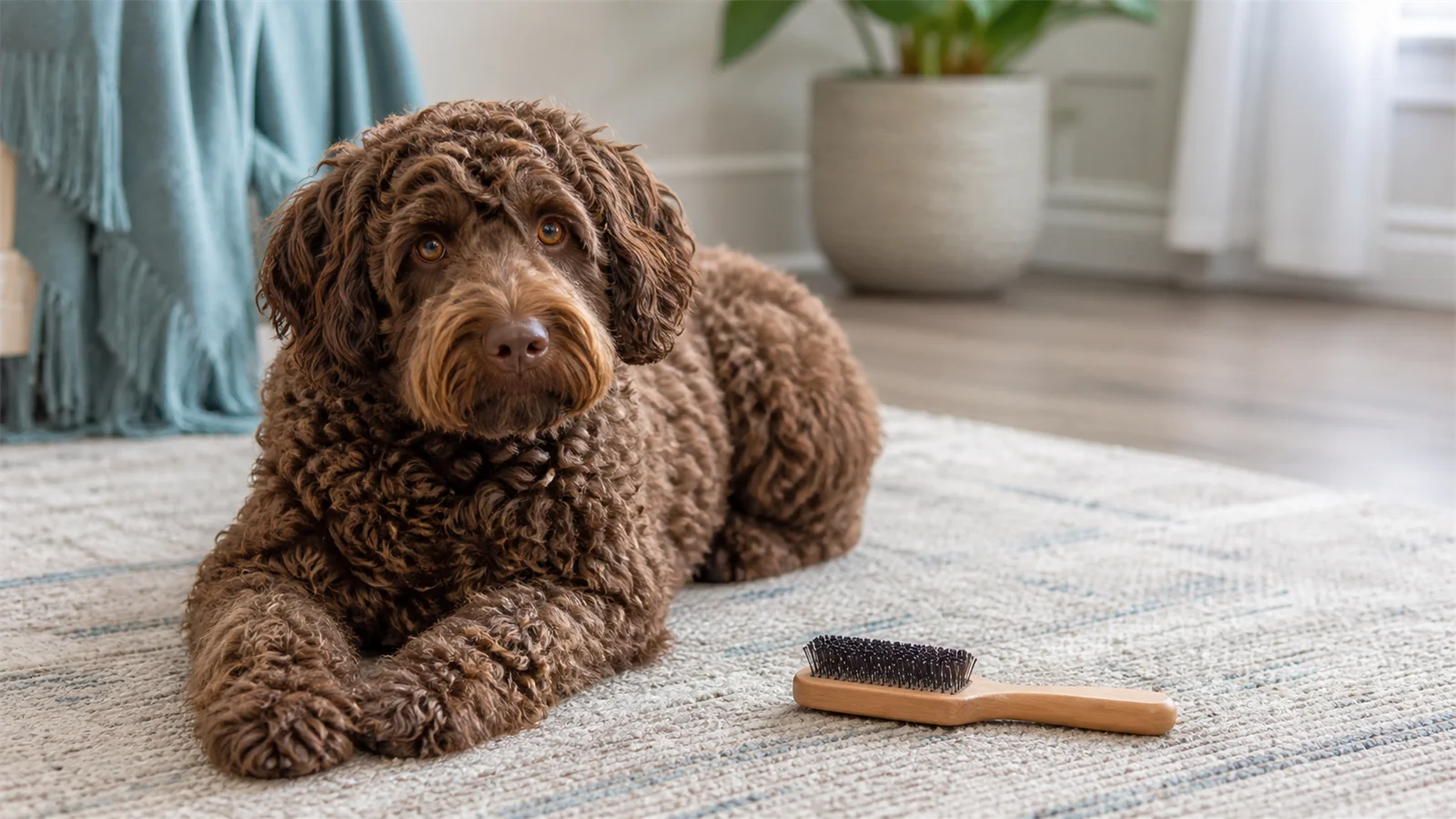

Knowing when to stop brushing is part of safe routine coat care. A session can end because the coat is done, the dog is tired, the skin or coat shows a warning sign, or handling is no longer safe. Stopping early is better than brushing through pain, panic, or owner frustration.
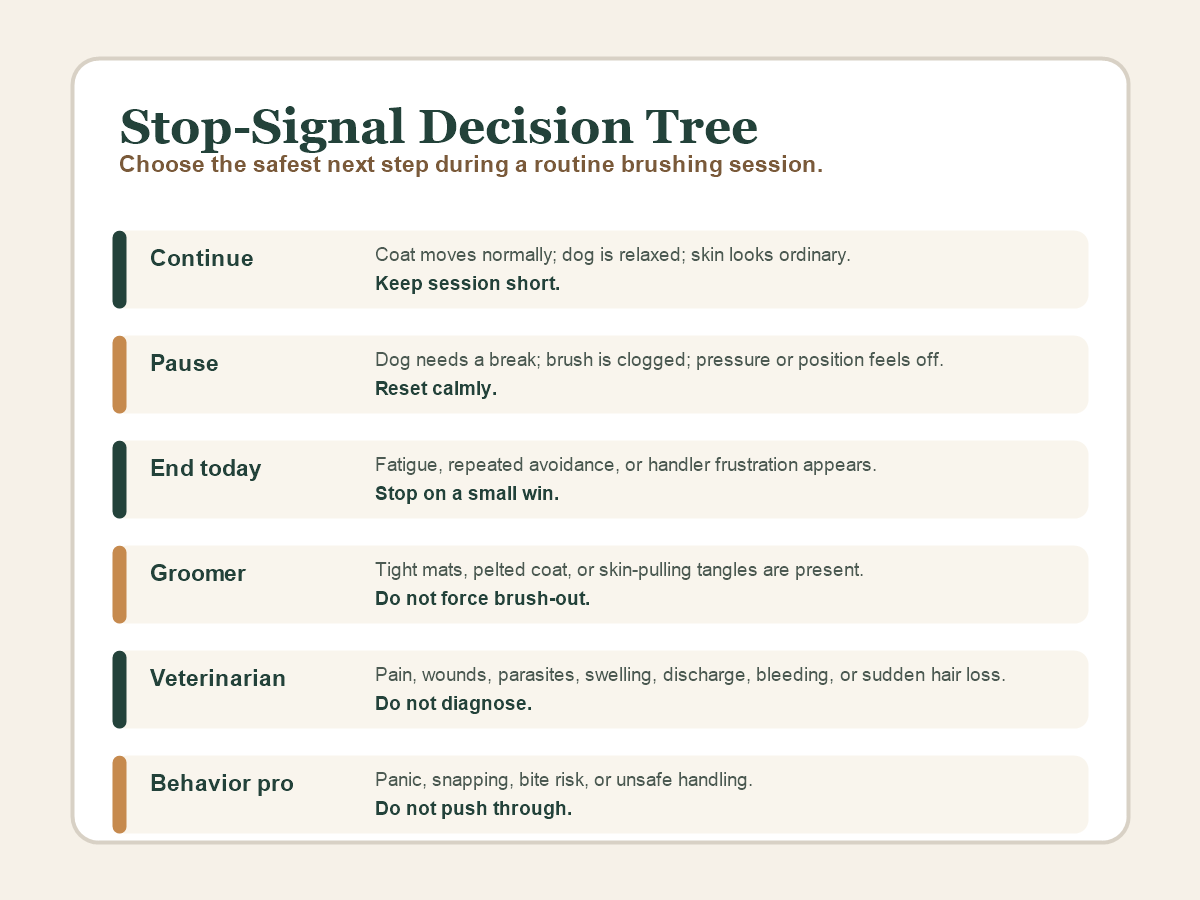
Use four everyday outcomes: continue, pause, end for today, or call a professional. Continue only when the dog is comfortable, the coat is moving normally, and the skin looks normal.
The Quick Stop-Signal Rule
Stop immediately for pain, yelping, flinching, skin pulling, bleeding, redness, sores, swelling, discharge, parasites, tight mats, pelted coat, panic, growling, snapping, freezing, repeated escape attempts, or owner loss of control.
These are not signals to push through. They are routing points. Medical-looking signs belong with a veterinarian. Tight or severe mats belong with a qualified groomer. Handling fear, aggression risk, or bite risk belongs with a qualified trainer or behavior professional.
Continue When Everything Looks Ordinary
You can continue a brushing session when:
- The dog is relaxed or only mildly wiggly.
- The coat moves normally under gentle brushing.
- The skin looks ordinary for your dog.
- There is no flinching, yelping, skin pulling, panic, growling, or snapping.
- You can keep the session short and calm.
Even then, stop before the dog is tired. Routine brushing works best when your dog can repeat it without dreading the next session. For weekly planning, use the weekly dog brushing routine.
Pause When the Session Needs a Reset
Pause when the dog needs a break, the brush is clogged, your pressure feels too firm, the dog keeps shifting, or you are not sure whether a spot is a tangle, a mat, or a skin problem.
A pause is not failure. Put the brush down, clean hair from the tool, let your dog relax, and reassess. If the session returns to calm, continue briefly. If the same problem repeats, end for today.
End for Today Before It Turns Into a Fight
End the session when comfort is fading, the dog is repeatedly avoiding the brush, or you are getting frustrated. A short, calm session is better than a long one that ends with force.
Good reasons to end today include:
- The dog keeps moving away after breaks.
- The same zone keeps causing worry.
- You are brushing harder just to finish.
- The dog is tired from bathing, drying, nail care, or another grooming task.
- You are no longer calm enough to handle gently.
For a broader beginner routine, see the dog grooming checklist for beginners.
Call a Groomer for Tight Mats or Coat Pulling
Call a qualified groomer when the coat is tightly matted, pelted, close to the skin, or pulling the skin when you try to brush. Do not cut mats out with scissors. Do not keep brushing until the dog gives up.
Severe mats can hide skin irritation and pain. If you are not sure whether a tangle is safe to handle, treat that uncertainty as a stop sign.
Call a Veterinarian for Skin, Pain, Parasites, or Bleeding
Call a veterinarian for wounds, parasites, swelling, discharge, bleeding, pain, sudden hair loss, hot spots, red or raw skin, or a dog that reacts as if an area hurts.
Grooming is for noticing these problems, not diagnosing or treating them. Merck notes that signs such as oozing from the eyes, ears, or nose, hair loss, itching, red spots, and limping can indicate a dog may be sick. If brushing reveals a health concern, the safest next step is veterinary care.
Call a Behavior Professional for Panic or Bite Risk
Stop and use qualified help if the dog panics, snaps, growls, freezes, repeatedly tries to escape, or you feel bite risk rising. This page does not teach restraint, sedation, punishment, dominance handling, flooding, or casual muzzle use as a workaround.
If you need to force the session to continue, the session should end.
Write Down What Happened
After stopping, make a short note:
- Which body zone caused the stop.
- What you noticed in the coat, skin, or behavior.
- What action you chose: pause, end, groomer, veterinarian, or behavior help.
- What to avoid next time.
That note can prevent the next session from starting in the same problem area.
Sources
- VCA: Grooming and Coat Care for Your Dog
- ASPCA: Dog Grooming Tips
- Merck Veterinary Manual: Routine Health Care of Dogs
Bottom Line
Stop brushing before the session becomes painful, frightening, or unsafe. Continue only when the coat, skin, dog, and handler are all calm enough. Pause for small resets, end for today when comfort fades, and call the right professional for mats, medical signs, panic, bite risk, or unsafe handling.
FAQ
When should I stop brushing my dog immediately?
Stop immediately for pain, yelping, flinching, skin pulling, bleeding, red or wounded skin, parasites, tight mats, panic, growling, snapping, repeated escape attempts, or unsafe handling.
Should I brush through mats if my dog does not like it?
No. Tight, painful, widespread, close-to-skin, or skin-pulling mats should go to a qualified groomer or veterinarian. Do not cut them out with scissors at home.
What if my dog growls during brushing?
Stop the session. Growling is a warning signal, not a challenge to overcome. Use qualified help if fear, aggression risk, or bite risk is part of grooming.
Is it okay to take breaks during brushing?
Yes. Breaks are useful when the dog needs to reset, the brush needs cleaning, or you need to check pressure and position. If the same problem repeats, end for today.
What should I do after stopping a brushing session?
Write down the body zone, what happened, your dog’s response, and the next safe action. That may be a shorter session, a groomer, a veterinarian, or behavior support.