
You've brought home an Abyssinian, and now you're staring at that gorgeous ticked coat wondering what you've gotten yourself into. Here's the truth: learning how to groom an Abyssinian cat is actually the easiest part of owning one. This breed barely sheds, has no undercoat to mat, and generally keeps itself spotless.
The real challenge isn't the grooming itself. It's unlearning everything you've been told about grooming other cats.
The Abyssinian's coat is unlike any other breed's. Each hair has multiple bands of color, a trait called "ticking," and that fine, close-lying texture means it needs almost nothing in the way of brushing. In fact, over-grooming can ruin the very thing you're trying to maintain.
As of 2026, feline coat research from institutions like the Cornell Feline Health Center confirms that single-coated breeds like the Abyssinian require a completely different maintenance approach than their double-coated cousins. Done right, your entire grooming routine takes about seven minutes a week. Let's break down exactly what that looks like.
Quick Answer
Groom an Abyssinian by hand-grooming weekly with damp palms. Follow with a rubber curry brush. Finish with a chamois cloth.
Check ears monthly. Trim nails every two to three weeks. Bathe only when visibly dirty.
Never use a slicker brush. Never over-brush. The coat is self-maintaining.
Your goal is removing loose hair and distributing natural oils. You are not detangling an undercoat. You are polishing a finish.
Seven minutes. Once a week. That's the entire secret.
Why Grooming an Abyssinian Is Different From Other Cats
Most cat owners grew up with a mental image of grooming that involves a slicker brush, a deshedding tool, and fifteen minutes of tugging at a double coat. The Abyssinian breaks every one of those assumptions. This is a single-coated breed.
There is no fluffy undercoat hiding beneath the top layer. There are no dense mats forming in the armpits. Your cat's coat is one layer of fine, elastic hairs so close-lying that they almost look painted on.
Here's what that means in practice. When you brush an Abyssinian with standard cat grooming tools, you're not removing loose undercoat. You're pulling out the actual topcoat.
The ticked bands of color on each hair are delicate. Aggressive brushing breaks those hairs, removes the color banding, and leaves the coat looking faded and ragged. Aggregate owner reports and breed standards from the Cat Fanciers' Association both emphasize this point: the Abyssinian coat is meant to be hands-on, not brush-heavy.
The second difference is oil distribution. A double-coated cat needs brushing to spread oils through thick fur. An Abyssinian's fine coat distributes its natural oils with simple body movement.
Your cat's tongue does most of the work. Your job is just to catch the loose hairs that the tongue misses and give the coat a final polish. That's why hand-grooming beats any brush on the market for this specific breed.
Think of it this way. A Persian is a wool sweater that needs occasional carding. An Abyssinian is a silk shirt that needs a gentle wipe-down.
Treat it accordingly.
Reading Your Cat's Coat: Visual Cues Every Owner Should Know
Before you touch your cat, you need to know what a healthy Abyssinian coat looks like. This breed's coat is a live diagnostic tool. It tells you when grooming is working, when you're doing too much, and when something medical is going on underneath.
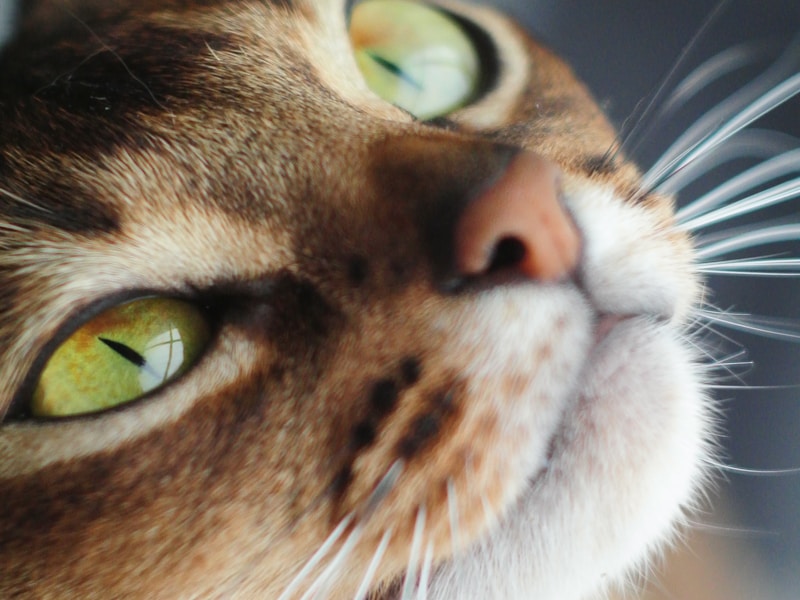
Image source: Bing (Web (fair-use with source credit))
What a Healthy Aby Coat Looks Like in Natural Light
Look at your cat in bright, indirect sunlight. You want the coat to have a warm, glossy sheen that shifts color as the cat moves. Each hair should show distinct bands of color, usually a warm reddish-brown base with darker ticking at the tip.
The coat should lie flat against the body, not stand up or fluff outward. When you run your hand along the back, you should feel smooth, dense, springy hair with no bare patches.
If the coat looks dull or dusty, that's a sign of two things. Either your cat hasn't been hand-groomed in a while and needs oil redistribution, or you've been washing too often and stripped the natural oils entirely. Both are fixed with the routine in the next section.
The Difference Between "Dull From Dirt" and "Dull From Over-Brushing"
This is a subtle visual distinction that trips up a lot of new owners. A dull coat from dirt looks dusty. Light doesn't bounce off the hairs evenly.
You might see a slight gray film over the color. The fix is a warm, damp hand-grooming session followed by the chamois finish.
A dull coat from over-brushing looks different. The hair itself is damaged. You'll see split ends, uneven length across the back, and a kind of lifeless flatness that doesn't respond to wiping.
The ticked banding at the tips of the hairs will look indistinct or washed out. This damage is not immediately reversible. You have to stop brushing entirely and let the coat grow out for a few weeks while you hand-groom only.
How the Ticked Color Bands Reveal Coat Health
The ticking is your best indicator. Run your fingers through the coat and part a few hairs. Each hair should have at least two, sometimes three or four, distinct bands of color.
The base is usually lighter, with the classic Abyssinian look being a lighter undercoat with darker ticking. If the bands look smeared or blended into one uniform color, your coat is either dirty, over-brushed, or stripped of oils by too-frequent bathing.
Feline breed association guidance and grooming tool manufacturers both note that a properly maintained Abyssinian coat has sharp, distinct ticking. When you see that definition come back during your grooming routine, you know you're doing it right.
Skin Signs to Spot Before They Become Problems
While you're inspecting the coat, look at the skin underneath. Part the hair in several spots: the back, the belly, the base of the tail. Healthy skin is pale pink to lightly pigmented, with no flakes, no redness, and no scabs.
Watch for tiny black specks that move, which are flea dirt and fleas. Check for red inflamed patches, which could be allergies or over-grooming. Look for dry white flakes that don't brush off easily.
If you see any of these signs during a visual check, stop the cosmetic routine and address the underlying issue. Fleas require treatment. Red patches require a vet visit.
Dry skin might just mean you're over-bathing, but it can also indicate a dietary deficiency.
Step-by-Step: The Hands-On Grooming Session
Now we get to the actual routine. Set aside seven minutes, once a week. Gather your minimal arsenal: a rubber curry brush, a chamois cloth or soft microfiber towel, a pair of cat nail clippers, and a vet-approved ear cleaner with cotton balls.
That's the complete shopping list.
Step 1: Hand-Grooming First (Yes, Before Any Brush)
Wet your hands with lukewarm water. Don't soak them. Just damp enough to pick up loose hair as you stroke.
Run your hands firmly along your cat's back, sides, and tail, following the direction of the hair growth. You're not massaging. You're collecting loose hairs and lightly distributing surface oils.
After each full pass, rinse your hands over the sink to remove the collected fur. Keep going until your hands come back nearly clean, which usually takes two to three minutes for a full body pass. This is also your bonding moment.
Cats respond well to this kind of gentle, predictable touch, and many Abyssinians will start purring, kneading, and leaning into your palms. That's the sign your technique is right.
Make eye contact and talk softly while you work. This isn't just maintenance. It's trust building that makes every other step, nails and ears included, dramatically easier.
Step 2: The Rubber Curry Technique
Once hand-grooming has lifted the surface loose hair, bring out the rubber curry. The Zoom Groom, a Kong-brand rubber curry brush, is the closest thing to a universal recommendation in the Abyssinian community. Its rubber nubs are soft enough to be gentle on sensitive skin and flexible enough to grab loose hairs without pulling healthy ones.

Image source: Bing (Web (fair-use with source credit))
Use small circular motions across the back and sides. Apply light to moderate pressure. You should see a small layer of loose hair accumulate on the brush after a few strokes.
That's exactly what you want. Work the brush briefly over the tail, but skip the belly unless your cat is extremely relaxed. Belly skin is thin and sensitive, and a rubber curry can be irritating there.
Stop after two to three minutes. This is not a marathon. The curry is doing a single job, lifting the dead hairs that hand-grooming missed.
Step 3: The Chamois Finish
Take your chamois cloth or a high-quality microfiber towel. Fold it into a pad that fits your palm. Gently wipe your cat's entire coat, again following the direction of hair growth, from head to tail.
This step is pure polish. It smooths the coat down, aligns the hair shafts, and gives that glossy, reflective finish that makes Abyssinians look like they've just come from the show ring.
You'll notice the coat clicking under the chamois, which is the sound of hair snapping back into perfect alignment. When you're done, your cat should look like light is rolling off the back. If the chamois comes away with a gray residue, that's loose hair plus dust, which is normal and means the previous steps pulled it to the surface.
Step 4: Ear Inspection and Cleaning
Once the coat is done, turn your attention to the ears. Abyssinians are not particularly prone to ear problems, but their large, open ears collect dust and wax. Check them once a month, or any time you see your cat shaking its head more than usual.
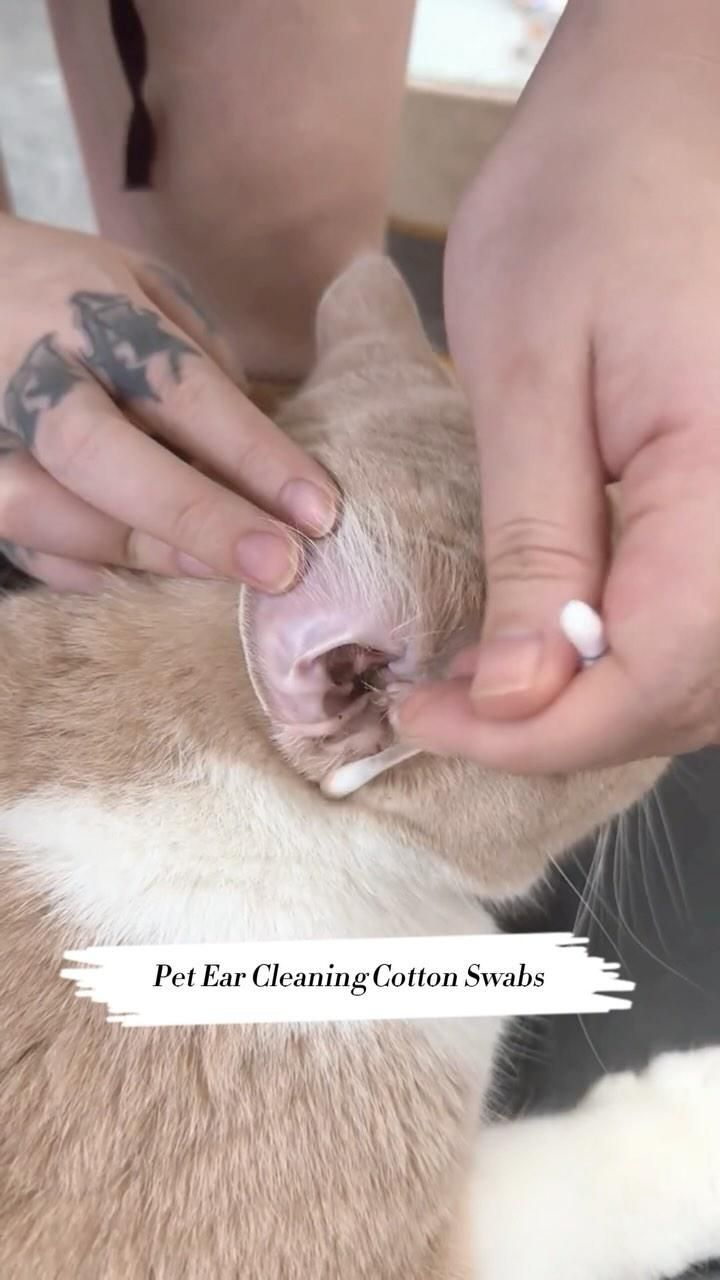
Image source: Bing (Web (fair-use with source credit))
Fold the ear flap back gently with your thumb. The inner surface should be clean, pale pink, and free of debris. A small amount of light brown wax is fine.
Dark, crumbly wax or any sign of redness warrants a vet visit. To clean, use a cotton ball dampened with a vet-approved feline ear cleaner. Never use a cotton swab.
It pushes debris deeper and can puncture the eardrum.
Step 5: Nail Trimming Without the Drama
Nail trims every two to three weeks are essential. Abyssinians are active and fast, and claws that don't get trimmed can curl into the paw pads, causing severe pain and infection. Start by pressing gently on the toe to extend the claw.
Look for the pink "quick" inside the translucent nail. In hissing and squirming cats, a calm restraint position, one hand over the shoulders, one lifting the paw, can prevent both of you from getting hurt.
Cut only the clear tip, at a 45-degree angle, in one firm squeeze. If you hit the quick, apply styptic powder to stop the bleeding. Don't panic, it's not dangerous, and don't punish the cat.
It will just make future trims harder.
Step 6: Quick Dental Maintenance
Yes, dental care counts as grooming. Abyssinians are prone to gingivitis and periodontal issues. A soft-bristle baby toothbrush, angled at the gum line, with a pea-sized amount of cat-safe toothpaste, two to three times per week, is enough to dramatically reduce plaque buildup.
Start slow. Let your cat lick the paste first. Then move to a few gentle strokes.
Step 7: The Reward That Makes Next Time Easier
End every session with a high-value treat. This is the most important step in the entire routine. You are conditioning your cat to tolerate, even enjoy, grooming.
Give a treat immediately after the last nail trim, not in the middle, so your cat learns that the whole sequence ends in something good. Over time, most Abyssinians come running when they see the chamois come out.
Common Visual Mistakes: What Over-Grooming Looks Like

Image source: Bing (Web (fair-use with source credit))
Here's the part nobody talks about. The biggest threat to your Abyssinian's gorgeous coat is not neglect. It's you being too enthusiastic with the grooming tools.
Because the breed is so low-maintenance, almost every grooming mistake comes from doing too much, not too little.
The "Balding Belly" Pattern From Brushing Too Hard
This is the most common visual failure seen in owner forums and veterinary clinics. An owner notices their cat is shedding, reaches for the slicker brush, and goes to town on the belly and flanks. A few weeks later, they see patchy, sparse hair in those same areas.
The skin underneath is red and irritated.
The pattern is unmistakable. The back and head look fine, because the owner didn't brush there as hard, but the belly and inner thighs look moth-eaten. This is classic brush trauma.
The fine single coat doesn't anchor deeply, so aggressive brushing pulls the entire hair shaft out by the root. Stop immediately. Switch to hand-grooming only.
The hair will regrow in six to eight weeks.
Why Your Cat's Coat Looks Streaky After Using the Wrong Brush
A streaky coat looks wet in patches and dry or dull in others, even though the cat hasn't been near water. This happens when brushing strips the protective oil layer unevenly. Slicker brushes and bristle brushes are the usual culprits.
They remove more oil in the spots you brushed longest, creating a patchwork of shine and dullness.
You can spot it from across the room. The coat's clean, even luster is replaced by a mottled appearance, especially noticeable on the darker ticked areas. The fix is a two-week reset.
No brushing at all. Just hand-grooming with damp palms and a chamois finish. The oils rebalance, and the streaking disappears.
Static Buildup: How It Makes a Healthy Coat Look Ragged
In dry climates, especially during winter, synthetic-bristle brushes are a static machine. Rub a plastic brush across the coat and you'll watch individual hairs stand on end, stick out at odd angles, and refuse to lie flat. The result is a coat that looks puffy, uneven, and, frankly, a little electrocuted.
This is purely cosmetic and not damaging. But it's also a sign you don't need that brush in the first place. Rubber curry brushes and chamois cloths don't generate the same static if you keep them slightly damp.
The key is a light mist, not a soak.
The Silent Damage of Washing Too Often
Bathing an Abyssinian is almost never a good idea. Abyssinians are fastidious self-groomers. Their coats naturally require very little bathing, which is why vets recommend washing only when visibly dirty or when a skin condition requires a medicated shampoo.
What does "too often" look like? You'll see it first in the coat. A washed-and-dried Abyssinian loses its natural gloss.
The ticked color bands look muted, like someone turned down the saturation. The texture goes dry and papery to the touch. They'll often develop mild flakiness along the back.
If your cat's coat looks like this, pause the baths. Get back to hand-grooming and chamois polishing. Within two to three weeks, the natural oils will return and the coat's vibrancy comes back on its own.
If you truly need to bathe, use a cat-safe, mild shampoo, and rinse thoroughly. But hear me on this: most Abyssinians go their entire lives without ever touching soap, and they look brilliant for it.
Tools Compared: What to Buy, What to Skip
The grooming aisle at any pet store is overwhelming. Brushes, combs, mitts, gloves, deshedding tools, and sprays, all promising a better coat. For an Abyssinian, you need almost none of it.
Here's a breakdown of what actually earns a spot in your grooming kit, and what's a waste of money.
| Tool | Verdict | Why |
|---|---|---|
| Rubber curry brush (e.g., Zoom Groom) | Buy | Lifts loose hair without damaging the delicate topcoat. |
| Chamois cloth | Buy | Gives the final polish and shine. A microfiber towel works too. |
| Cat-safe nail clippers | Buy | Essential for trims every 2-3 weeks. |
| Cotton balls + vet-approved ear cleaner | Buy | For monthly ear checks. |
| Soft-bristle baby toothbrush | Buy | For dental maintenance. |
| Slicker brush | Skip | Too harsh. Pulls out the topcoat and breaks the ticked color bands. |
| Deshedding tool (e.g., Furminator) | Skip | Designed for undercoats. Your cat doesn't have one. It will ruin the coat. |
| Dry shampoo foam | Skip | Leaves residue on the fine coat and can dull the ticking. |
| Grooming gloves | Maybe | Fine in a pinch, but the rubber curry does a better job. |
The general rule is simple. If a tool is designed for thick fur or undercoat management, it's wrong for an Abyssinian. If it's soft, flexible, and meant for smoothing, it's probably fine.
Seasonal Grooming Adjustments
Your Abyssinian's grooming needs shift slightly with the seasons, though not as dramatically as double-coated breeds. Here's what changes and what stays the same.
Spring and Fall Shedding Spikes
Even single-coated cats shed more during the transition seasons. In spring, your cat is losing the thicker winter coat. In fall, it's growing that coat back.
During these periods, which typically last three to four weeks, you'll notice more loose hair on your hands during hand-grooming. You may also spot a few stray hairs on your couch.
Adjust your routine. During these shedding spikes, you can increase hand-grooming frequency to every other day. The rubber curry can get an extra pass.
But resist the urge to brush harder. The same gentle technique applies, you just do it more often.
How Humidity and Dry Climates Affect the Coat
Humidity is your friend when it comes to Abyssinian coats. Moist air helps the coat lie flat and keeps the natural oils from drying out. If you live in a humid climate, your grooming routine barely changes, just the standard weekly session.
Dry climates present a different challenge. Low humidity, especially in winter with indoor heating, leads to static buildup and a drier-feeling coat. Your Abyssinian may need a slightly more frequent chamois finish to smooth things down.
Some owners keep a spray bottle with plain water nearby to lightly mist their hands before hand-grooming. That extra moisture helps reduce static and keeps the coat looking smooth.
When to Switch From Weekly to Daily Hand-Grooming
Here's a clear signal for when more is needed. During heavy shedding periods, if you run your hand along your cat's back and come away with more than a few hairs, do an extra hand-grooming session that day. That's it.
You don't need to formally switch your routine. Most owners find that during peak shedding, two hand-grooming sessions per week handles the extra loose hair, with the occasional daily touch-up during the worst week.
The Senior Abyssinian: Grooming Needs That Change With Age
As your Abyssinian moves into its senior years, typically around age 10 and up, its grooming needs shift. You'll notice changes in the coat, the skin, and the way your cat tolerates handling. None of this is alarming.
It just requires adjusting your approach.
Thinning Coat Texture and How to Adapt Your Touch
Senior cats often develop a slightly thinner, drier coat. The fur loses some of its springy elasticity, and the ticking may look less distinct than it did in youth. This is a natural aging process, not a sign that something is wrong.
Adapt by being even gentler with your touch. Older skin is less elastic and more prone to irritation. Reduce rubber curry use to once every other week unless shedding is heavy.
Rely more on hand-grooming with damp palms, which is endlessly gentle. The chamois finish becomes even more important, as it helps smooth the coat and gives a bit of artificial sheen.
Matting Behind the Ears and Under the Chin
This is the one age-related grooming issue that actually requires attention. Senior cats sometimes develop small tangles behind the ears and under the chin because they groom those areas less effectively as they age. These are not the dense mats of a long-haired cat.
They're more like small snarls of fine hair.
Do not reach for scissors. The skin in those areas is loose and thin, and one slip can cause a serious cut. Instead, work the tangle gently with your fingers.
You can also use a wide-toothed flea comb, very carefully, starting at the edge of the tangle and working inward. If the mat is tight and painful, a professional groomer or vet can remove it safely.
Arthritis and Handling: Adjusting Restraint Techniques
As cats age, arthritis in the hips, knees, and spine becomes common. The classic restraint position, one hand over the shoulders, one lifting a paw, becomes uncomfortable. Your cat may start to cry out or pull away when you try to hold them still.
Adjust your restraint. Let your senior cat stand on a non-slip mat instead of holding them in your lap. Groom them in short bursts, one paw or one ear at a time, rather than in one marathon session.
You'll notice they tolerate it better when they can stand comfortably on their own.
When to Step In With Grooming Help
There comes a point where your senior cat can't keep up with their own grooming. You'll see a slightly greasy coat along the back, or a dull overall appearance. This is time for you to become their primary groomer.
Increase your hand-grooming sessions to two or three times a week. Schedule monthly nail trims without fail, since seniors often stop scratching and their nails grow unchecked.
If your cat becomes completely resistant to handling, or if joint pain makes even gentle grooming stressful, talk to your vet. They can recommend pain management options or refer you to a professional groomer experienced with senior cats.
Kidnapping Your Cat's Cooperation: Handling and Restraint Tips
Abyssinians are intelligent, active, and opinionated. They're also famously bonded to their humans, which makes grooming easier, but they're not always happy about being held still. Here's how to make the process work without turning it into a wrestling match.
The Towel Wrap Technique for Nails and Ears
When your cat absolutely refuses to stay still, the towel wrap is your best tool. Lay a bath towel on a flat surface. Place your cat in the center.
Wrap one side over the body, tuck it under the chin, then wrap the other side over the top. Your cat is now in a purrito, with only one paw, the head, or one ear exposed for grooming.
The key is not to wrap so tight that you restrict breathing. You want enough pressure to hold the body still while you work. Most cats resist the wrap for the first few seconds, then relax once they realize they can't wriggle free.
This is an especially effective technique for nail trims on cats that hate being held.
Reading Body Language: The Tail Twitch, the Ear Flatten, the "I'm Done" Stare
Before your cat gets to the point of biting or scratching, they give you clear warning signs. Learn to read them. A slow, deliberate tail twitch is the first sign of annoyance.
An ear that flattens to the side means they're getting uncomfortable. The classic "I'm done" stare is a direct look at you with slightly dilated pupils, saying, in no uncertain terms, that the session is over.
When you see these signs, stop. Give your cat a treat, put the tools away, and try again later. Pushing through the warning signs is how you end up with scratched arms and a cat that hides when you bring out the chamois.
Building a Positive Grooming Ritual From Kittenhood
Start early. From the first week your kitten comes home, handle their paws, ears, and mouth briefly, several times a day. Touch each paw, fold an ear back, peek at their gums, then give a treat.
You're teaching your kitten that all this handling is normal, boring, and, most importantly, followed by food.
By eight weeks, your kitten should be comfortable having its nails lightly trimmed. By four months, a full grooming session should feel routine. This early conditioning is worth more than any restraint technique you'll learn later.
What to Do If Your Cat Absolutely Refuses to Sit Still
Some Abyssinians are just more difficult than others. They squirm, they complain, and they make the whole process miserable. If your cat is one of these, break the session into tiny pieces.
Do one paw today. One ear tomorrow. One minute of hand-grooming the next day.
Eventually, your cat will learn that the whole process isn't one frightening marathon, but a series of short, manageable interactions.
If your cat truly cannot be handled safely, even with a towel, enlist help. A second person can hold while you groom. If even that fails, a professional cat groomer or a veterinary technician can do the job.
It's better to pay for a pro than to log a thousand scratches.
Mistakes to Avoid: What Most Owners Get Wrong
Every breed has its specific set of mistakes that owners make once before learning better. These are the ones I see over and over again with Abyssinians. Skip these, and you're already ahead of the curve.
Over-Brushing a Coat That Barely Sheds
This is mistake number one. New owners see the basic grooming advice, "brush your cat regularly," and apply it with a vengeance. They get out the slicker brush and go to work.
Within a few days, the coat starts to look thin and the cat starts to avoid the owner.
Stop brushing as an instinct. The Abyssinian coat does not need daily brushing. It needs weekly, gentle, minimalist attention.
When in doubt, do less. You cannot hurt the coat by hand-grooming too gently. You can absolutely hurt it with a brush.
Using Human Shampoo or Conditioner
This one seems obvious, but you'd be surprised. Human shampoo is formulated for a human scalp pH, around 5.5. A cat's skin is closer to neutral, around 6.5 to 7.5.
Using human shampoo strips the coat's natural oils completely and can cause severe skin irritation, itching, and flaking.
When you do bathe your cat, which should be rare, use a cat-specific shampoo. These are formulated to match feline skin pH and are far gentler on the coat. The same goes for conditioners.
Skip them unless prescribed by a vet.
Scrubbing at Mats Instead of Working Them Out by Hand
If you find a mat, resist the urge to scrub at it with a brush or tug at it with a comb. You'll pull healthy hair out around the mat and irritate the skin underneath.
Instead, work the mat gently with your fingers. Start at the edges and slowly pull the fibers apart. If the mat is tight and painful, cut it out is wrong, scissors near the skin is dangerous.
Go to a professional.
Ignoring the Ears Until They're Visibly Dirty
Abyssinian ears are large and open, which means they attract dust and debris. The problem is that many owners don't check until they see visible dirt from across the room. By that point, the wax may have hardened and the ear may be irritated.
Make ear checks part of your monthly routine. A 30-second look with a cotton ball prevents the buildup that leads to ear infections. It's the easiest maintenance you'll do, and the one most people skip.
When to Call the Vet: Red Flags That Aren't Grooming Issues
Not every coat problem can be fixed with a better grooming routine. Some issues are medical, and their earliest symptoms appear in the coat and skin. You need to know the difference between a grooming mistake and a health problem.
Over-Grooming (Licking Patches of Hair Off)
If you see patches of hair missing on the belly, inner thighs, or flanks, but the skin looks perfectly fine, the issue may not be over-brushing. It may be that your cat is licking the hair off. This is a sign of stress, anxiety, or an underlying allergy.
Your cat isn't grooming itself because it's dirty. That's what's called over-grooming. Cats do this when they're stressed, and the act of licking releases endorphins that temporarily calm them down.
If you see this, think about what's changed at home. A new pet, a move, a change in your schedule, and consider a vet visit to rule out allergies.
Flaky Skin That Doesn't Improve With Gentle Care
We talked about flakiness from over-bathing. But if you've stopped bathing and the flakiness persists, it's worth a vet visit. Persistent dandruff can be a sign of poor nutrition, specifically a deficiency in omega-3 and omega-6 fatty acids, or it can indicate an underlying skin condition like seborrhea.
A vet can run tests and recommend a dietary change or a supplement. Don't just keep treating it with grooming tools.
Sudden Dullness or Breakage in the Coat
A coat that suddenly loses its sheen, becomes brittle, or shows breakage, hair that snaps, not sheds, is a sign of an internal problem. It could be thyroid issues, kidney disease, or a nutritional deficiency. Senior cats, in particular, can develop a dull coat as a symptom of an underlying condition.
If your cat's coat changes suddenly, and you haven't changed the grooming routine, call the vet.
Waxy, Dark Ear Discharge That Requires Medical Treatment
We've discussed routine ear cleaning, but there's a difference between light brown wax and dark, crumbly debris. This darker substance is a classic sign of ear mites. Ear mites are tiny parasites that live in the ear canal and cause intense itching and irritation.
They're highly contagious to other pets.
If you see dark stuff that looks like coffee grounds, don't try to clean it out yourself, a cotton swab will just push it deeper. Take your cat to the vet. They can prescribe a topical treatment that clears the mites quickly.
Frequently Asked Questions
How often should I groom my Abyssinian cat?
Once a week is the baseline. Each session takes five to ten minutes. During spring and fall shedding seasons, you can increase to hand-grooming every other day.
The goal is always the same: remove loose hair, distribute oils, and check for problems.
Can I use a regular cat brush on my Abyssinian?
A soft rubber curry is fine. Avoid slicker brushes and deshedding tools. They are too harsh for a single-coated breed.
One pass with a fine-toothed flea comb can be useful for checking for fleas, but it is not needed on a daily basis.
Does an Abyssinian need baths?
Rarely. Abyssinians are meticulous self-groomers, and their coats naturally require very little bathing. Bathe only if visibly dirty or if a vet prescribes medicated shampoo for a skin condition.
Bathing too often strips natural oils and damages the ticked coat.
How do I trim my Abyssinian's nails without getting scratched?
Hold your cat in a calm escalation. Use the towel wrap technique if needed. Press gently on each toe to extend the claw and identify the pink quick.
Cut only the clear tip at a 45-degree angle. Give a high-value treat after each successful session.
What should an Abyssinian's coat look like when it's healthy?
A healthy Abyssinian coat is glossy, close-lying, and springy to the touch. In natural light, it should show clear, distinct ticking, which is multiple bands of color on each hair. It should never look dull, dusty, or have visible flakes.
When should I worry about my cat's grooming habits?
If your cat is over-grooming, licking patches of hair off, or if you see persistent flakes, a sudden dull coat, or dark ear debris, contact your vet. These changes can signal allergies, stress, nutritional deficiencies, or parasites.
The Bottom Line: Your Simple Weekly Checklist
Here's the entire grooming routine, condensed so you can stick it on your fridge. Seven minutes. Once a week.
That's the whole commitment.
- Hand-groom with damp palms. Two to three minutes.
- Rubber curry over the back and sides. Two minutes.
- Chamois finish for gloss. One minute.
- Ear check once a month.
- Nail trim every two to three weeks.
- Dental wipe or brush two to three times a week.
If you do nothing else, hand-groom weekly and trim nails regularly. Your Abyssinian's coat will reward you with the breed's signature shine. That's the entire secret.
The easiest grooming routine you've ever had, with a cat that looks like a million bucks, all year long.