
You notice it one morning while your cat stretches across your lap. The fur along their back looks almost wet, clumped into spiky little points. Maybe there's a musty smell, maybe just a dull, oily sheen that wasn't there last week.
If you're here because "my cat's coat looks greasy" and you're wondering what's going on, you're in the right place. The short version: a greasy coat in cats is never the problem itself. It's a symptom of something else, and that something ranges from completely harmless to genuinely urgent.
Here's what we'll cover in practical terms. We'll walk through the most common causes, show you how to do a quick at-home exam, and give you a clear decision guide for when you can handle it yourself versus when you need a veterinarian. As of 2026, the research is quite clear on one thing: age is the single biggest factor in whether a greasy coat is a grooming annoyance or a red flag for chronic pain.
Cats over 11 years old with greasy fur are statistically much more likely to be dealing with arthritis or dental disease than a skin problem.
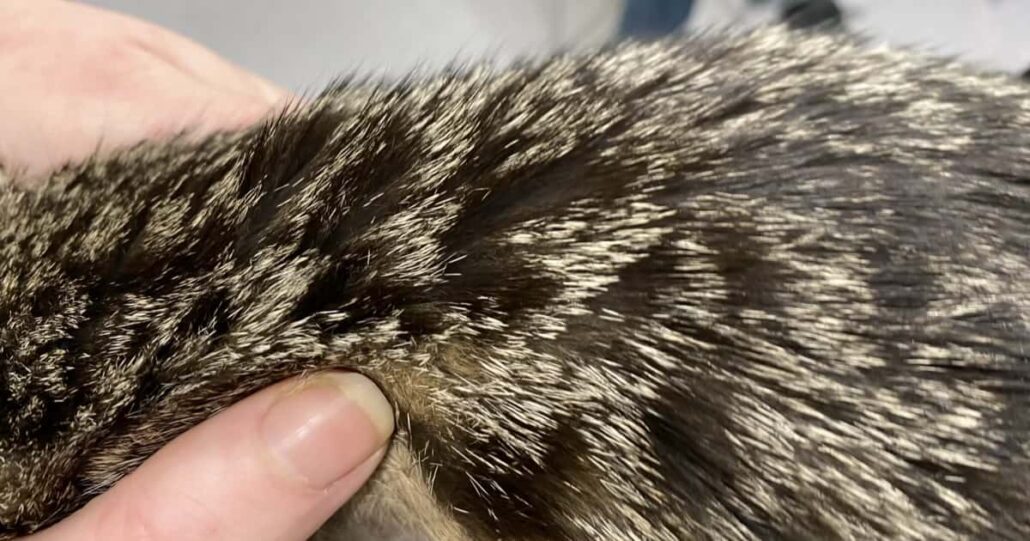
Image source: Bing (Web (fair-use with source credit))
Quick Answer
A greasy cat coat means your cat isn't grooming properly or their oil glands are overproducing. Check your cat's age, mobility, and mouth first. Young cats with greasy tails likely have stud tail.
Senior cats with greasy backs likely have arthritis pain. If you see fleas, redness, or sores, see a vet. If your cat is eating, drinking, and acting normal, start with a home exam.
If anything seems off, call your vet.
Why Your Cat's Coat Is Greasy: The Core Causes
Let's get the biology out of the way first, because it explains everything else. Cats have sebaceous glands at the base of each hair follicle. These glands produce sebum, an oily substance that keeps the coat waterproof and conditioned.
In normal amounts, sebum is invisible. The problem starts when sebum production ramps up, or when grooming stops removing the excess.
Here's the key distinction, and it's the foundation of the entire article.
Greasy from overproduction. Some cats just make more oil than others. This is especially common in intact male cats, where testosterone drives the sebaceous glands into overdrive. That's the classic "stud tail" scenario, where the oil concentrates at the base of the tail.
Greasy from under-grooming. This is the more common culprit, and it's almost always pain-related. When a cat stops grooming a particular area, the oil that would normally be licked away just sits there. The fur clumps, picks up dirt, and develops that stiff, dirty appearance.
Let's break down the main categories you'll actually encounter.
Sebaceous Gland Overactivity
This is the "too much oil" scenario, plain and simple. Some breeds are genetically predisposed to oilier skin. The Sphynx, for example, is famous for needing regular wiping because they lack the fur that would normally absorb and distribute the oil.
But among shorthaired cats, stud tail is the most common manifestation.
Stud tail, technically called supracaudal gland hyperplasia, happens when the glands at the top of the tail (near the base) enlarge and secrete excess oil. It's driven by hormones, so intact males get it most. But here's what surprises people: spayed females can get it too, though usually milder.
The visual signature is unmistakable. The fur at the top of the tail looks wet, matted, and sometimes develops blackheads at the skin level. The rest of the coat looks totally fine.
That's your clue that this is a localized gland issue, not a whole-body problem.
Under-Grooming Due to Pain
This is the one that breaks your heart when you figure it out. Cats are fastidious groomers. They spend anywhere from 30% to 50% of their waking hours cleaning themselves, according to research on feline behavior.
When that drops off, there's usually a reason.
Arthritis is the big one. And here's the nasty part: cats hide joint pain incredibly well. You might not see limping or stiffness, but you might see a greasy lower back, because your cat can't twist around anymore without hurting their hips or spine.
Dental disease is the second silent killer of grooming behavior. A cat with a painful tooth root abscess or severe gingivitis doesn't want to open their mouth for a thorough tongue-bath. The coat gets greasy because the brushing and licking simply stop.
This is why a greasy coat in a senior cat is such an important early warning sign. It's often the very first clue that something hurts.
Under-Grooming Due to Mobility Issues
Pain isn't the only reason a cat stops grooming. Sometimes they physically can't reach. Obesity is the classic culprit.
A cat carrying extra weight literally cannot bend enough to groom their lower back, the base of their tail, or their hind legs. The fur stays untouched, the oil accumulates, and you get that greasy patchwork look.
Age plays a role even without arthritis. Older cats lose flexibility. Their spines stiffen, their joints creak, and grooming the hard-to-reach spots becomes a chore they skip.
Systemic Health Issues
Sometimes the greasy coat is a byproduct of something happening inside the body. Hyperthyroidism, which is common in senior cats, speeds up metabolism and changes skin oil production. Diabetes can do the same, and it also makes cats feel generally unwell, which reduces grooming.
Allergies are another angle. Cats with environmental allergies or food sensitivities develop skin inflammation. The skin overcompensates by producing more oil, which then sits on the fur because the cat is too itchy and irritated to groom normally.
Let's break down the distinguishing features in a quick reference table.
| Cause | Typical Age | Where It Shows | Other Signs |
|---|---|---|---|
| Stud tail | Young adults, intact males | Base of tail | Blackheads, waxy buildup |
| Arthritis | Seniors (11+) | Lower back, hind legs | Stiffness, reduced jumping |
| Dental disease | Any, more common in seniors | Whole body | Bad breath, drooling |
| Obesity | Any | Lower back, rear end | Visible weight, lethargy |
| Hyperthyroidism | Seniors | Whole body | Weight loss, increased appetite |
| Allergies | Any | Whole body, face | Itching, redness, hair loss |
The 5-Minute Home Exam (Do This First)
Before you panic or book a vet appointment, do a focused five-minute exam. This isn't a substitute for professional diagnosis, but it will narrow down the possibilities dramatically. Grab your cat when they're relaxed, and work through these steps in order.
Step 1: The Flea Check
Start with the flea comb and a white paper towel. Run the comb firmly through the fur, especially along the back near the tail base and around the neck. This is where fleas congregate.
As you comb, brush the debris onto the white towel.
Then comes the crucial test. Add a few drops of water onto whatever you collected. If you see reddish-brown specks that bleed into the paper, that's flea dirt.
Flea dirt is digested blood. It's the definitive proof that your cat has fleas, even if you haven't seen a live flea.
Why does this matter for a greasy coat? Fleas cause intense itching. Your cat responds by scratching and biting, which inflames the skin.
The skin produces more oil to protect itself, and the whole area gets greasy and matted. Also, some cats are genuinely allergic to flea saliva, which cranks the inflammation up even higher.
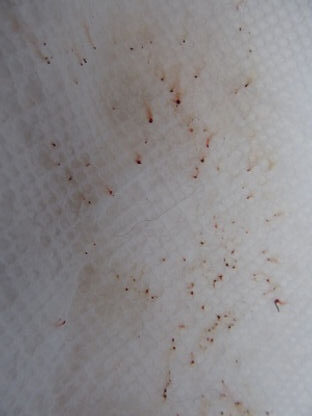
Image source: Bing (Web (fair-use with source credit))
If you see flea dirt, you've found a major contributor. Treat the fleas with a vet-approved product. Most greasy coats caused by fleas resolve within a few weeks of effective flea control.
Step 2: The Mobility Check
This is the test most people skip, and it's the one that catches arthritis early. Watch your cat jump onto a sofa or bed. Note any hesitation.
Watch them walk. Is the gait stiff? Do they favor one leg?
Then get hands-on. Gently run your hands along the spine, from between the shoulder blades down to the tail base. Press lightly along the hips and the lower back.
Watch for flinching, tail flicking, or your cat pulling away. A cat in joint pain will often give a subtle reaction, not a dramatic yowl.
Here's the key signal: if you pet the lower back and your cat dips their hindquarters or acts tense, that's a red flag for arthritis. This is often the same reason they're not grooming that area. The fur gets greasy because grooming that spot hurts too much.
Step 3: The Mouth and Chin Check
This takes under a minute. Check the chin for blackheads or red bumps. Feline acne presents as black specks on the chin and lips.
It can sometimes extend to the lower lip and cause significant inflammation. The chin may look greasy or dirty even after wiping.
Then the mouth. Gently lift the lip and look at the teeth and gums. You're looking for tartar buildup, red or bleeding gums, and any obvious loose or broken teeth.
If your cat's breath is noticeably foul, that's a clue. Dental disease is painful, and pain in the mouth directly reduces grooming behavior.
| Exam Step | What You're Looking For | What It Means |
|---|---|---|
| Flea comb + wet paper | Reddish-brown specks bleeding into paper | Active flea infestation |
| Back palpation | Flinching, stiffness, tense hindquarters | Possible arthritis |
| Chin inspection | Blackheads, redness, greasy chin | Feline acne |
| Mouth inspection | Tartar, red gums, bad breath | Dental disease affecting grooming |
Step 4: The Skin Surface Check
Part the fur in several places. Look at the skin itself, not just the coat. You're checking for redness, flaking, crusts, or bald patches.
Take note of any areas where the fur seems thinner or where there are broken hairs.
The distribution matters. If the grease is concentrated along the back, that points toward mobility or flea issues. If it's on the chin and tail, that points toward gland overactivity.
If it's patchy and accompanied by bald spots, that suggests allergic dermatitis or a skin infection.
Is It Stud Tail or Something Else?
Stud tail is one of those things that looks alarming but is actually fairly straightforward. Let's talk about what it is, what it looks like, and when it needs treatment.
What Stud Tail Looks Like
Look at the top of your cat's tail, right where it meets the body. On the top surface, you'll likely see greasy, matted fur that clumps together in spiky strands. The hair may look dirty even after cleaning.
At the skin level, you might see blackheads or a waxy, yellowish buildup.
The skin underneath is sometimes thickened and can look slightly red. The rest of the coat looks perfectly normal. That's the distinguishing feature.
Stud tail is localized. If the whole coat is greasy, the diagnosis shifts to something else.
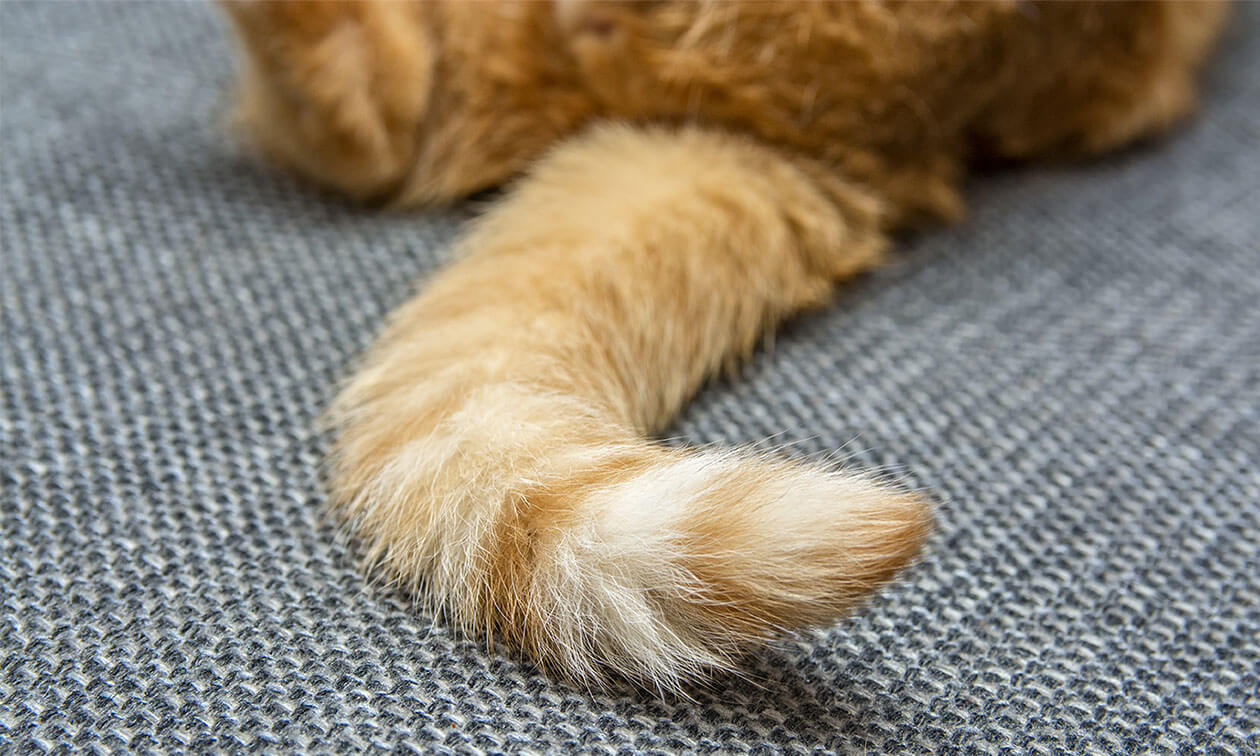
Image source: Bing (Web (fair-use with source credit))
Why It Happens
The supracaudal gland is a specialized sebaceous gland at the base of the tail. In intact male cats, testosterone levels drive this gland into high production. The result is a tail that looks like someone poured oil on it.
Female cats get it too, but it's usually milder and less common.
Age is a factor too. Stud tail typically emerges around puberty in young males, and it can persist into adulthood. In some cases, it gets more prominent during times of stress or seasonally.
When It Needs Treatment
Here's the honest answer: stud tail doesn't always need treatment. Mild cases are cosmetic, not harmful. Your cat isn't in pain, and the condition isn't a sign of systemic disease.
You can manage it at home with regular cleaning using a gentle, vet-approved grooming wipe or a mild medicated shampoo designed for cats.
When should you get help? If the area becomes inflamed, red, or painful. If you see pustules, discharge, or signs of a secondary infection.
If the condition doesn't improve with hygiene measures. In some cases, the gland becomes so overactive that it requires prescription treatment, which might include a topical steroid or antibiotic. For intact males who don't have breeding value, castration often resolves stud tail because it removes the testosterone source.
How to Tell If Your Cat Is Grooming Less
You can't watch your cat 24/7. But you can learn to read the evidence your cat leaves on their own body. The greasy coat is the most obvious clue, but there are others.
The Sniff Test
Give your cat a gentle sniff, especially along the back and the base of the tail. A healthy cat's coat has almost no smell. It might smell like warm laundry or slightly sweet from the saliva.
A greasy coat takes on a distinctly musty, sour, or even a bit rancid scent. This comes from sebum that isn't being licked away, plus trapped dirt and bacteria.
If you can smell the difference from a foot away, that's a sign grooming has dropped off for more than a day or two.
The Hair Pattern Check
Look at the pattern of the greasiness. Cats groom from front to back, essentially. They start with the face and chest, work along the flanks, and finish with the tail and lower back.
When grooming stops or becomes painful, the areas hit last go greasy first.
So a greasy lower back with a normal-looking chest and face points toward mobility issues or pain in the hips and spine. A greasy chin and tail with a normal back points toward gland overactivity. The pattern genuinely tells you something.
| Grooming Sign | Healthy Cat | Under-Grooming Cat |
|---|---|---|
| Coat sheen | Soft, clean, uniform | Dull, oily at the base |
| Scent | Minimal | Musty, sour, or strong |
| Fur texture | Smooth, flowing | Clumped, sticky, spiky |
| Hair loss | Even coat | Bald patches, especially lower back |
Behavioral Observational Cues
Spend a few minutes watching your cat groom. Yes, actually watching. You'll notice how often they groom, whether they're actually reaching the lower back, and whether the session ends with an irritated look or an aggressive bite at their own rear.
An important distinction: over-grooming and under-grooming look different. A cat over-grooming due to anxiety or skin irritation will have bald patches and red, irritated skin. Your cat's coat will look thin in some spots and greasy elsewhere.
A cat under-grooming due to pain will have greasy, clumpy fur with intact skin that just hasn't been cleaned.
Watch the grooming sessions closely. You might see your cat start grooming their back but then stop suddenly, almost like a flinch of discomfort. That's a direct visual cue of pain interfering with grooming.
Greasy Coat in Senior Cats: The Arthritis Red Flag
If your cat is over 11 years old and their coat looks greasy, stop and read this section carefully. This is the scenario where a greasy coat matters most, because it's often the earliest sign of chronic pain.
Why Joint Pain Stops Grooming Before You Notice Limping
Cats are masters of masking pain. In the wild, showing weakness gets you killed. That instinct is still hardwired into your indoor lap cat.
They won't limp until the pain is severe. But they will quietly stop doing things that hurt, and grooming happens to be one of the most physically demanding things they do.
Think about the mechanics. To groom the lower back and tail, a cat has to twist their spine into a tight U-shape. That motion compresses the vertebrae in the lower back and pulls on the hip joints.
For a cat with arthritis, that twist is genuinely painful. So they stop doing it. The fur on the lower back goes ungroomed, and oil accumulates.
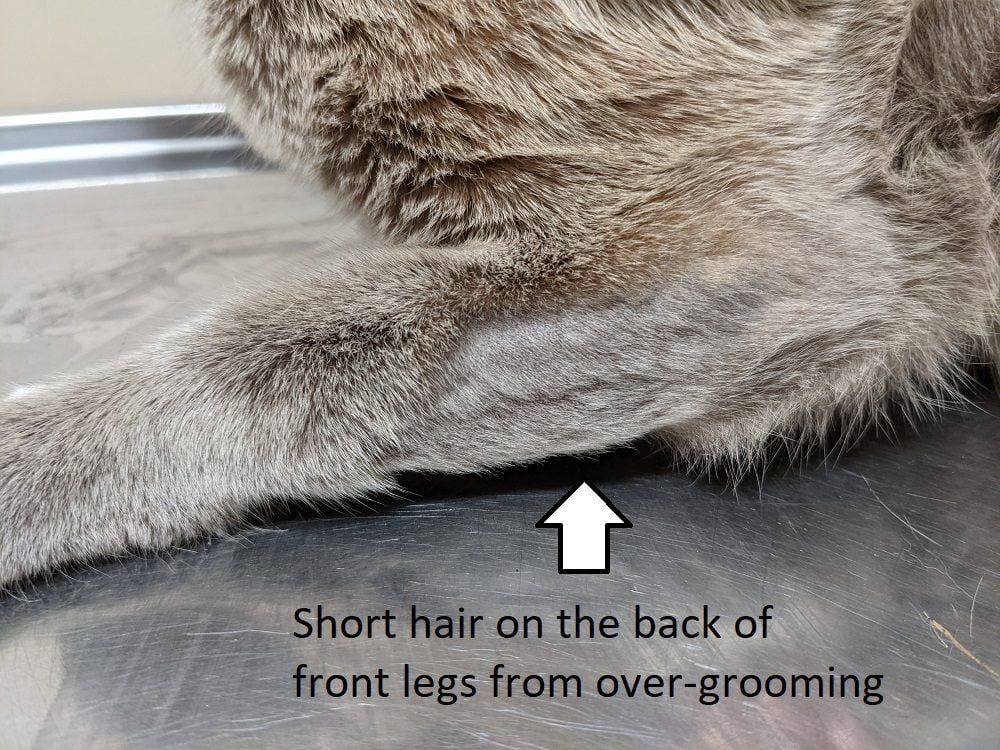
Image source: Bing (Web (fair-use with source credit))
How to Test Mobility at Home
You already did a basic version in the 5-minute exam. Here's a more detailed version that highlights subtle changes over time. Record your observations each week, even just mentally.
You're looking for trends, not a single moment.
Jump height. Does your cat still jump onto the windowsill or kitchen counter? A cat that used to jump onto a tall dresser and now stops at the sofa has lost jumping ability. That's a classic arthritis progression.
Stair behavior. Does your cat hesitate at the bottom of the stairs? Do they bunny-hop with both back legs together instead of stepping one foot at a time? That's a sign of hip or knee pain.
Litter box issues. If your cat starts eliminating outside the box, don't blame the cat. Blame the arthritis. Squatting in the box hurts when your hips are stiff.
Peeing over the edge or standing up while peeing are workarounds for painful squatting.
Grooming patches. You'll often see a distinct line where grooming stops. The front half of the cat looks clean. The back half is greasy and matted.
That split is a physical boundary of reach and flexibility.
When Weight Loss Fixes the Coat
Here's a scenario that plays out all the time in veterinary clinics. An overweight cat presents with a greasy coat. The owner assumes it's a skin problem.
The vet does an exam, finds arthritis in the hips and knees, and prescribes pain relief plus a weight loss plan.
It works. As the cat slims down, they can bend again. Grooming resumes, and the greasy coat resolves without a single skin treatment.
That's not a miracle. That's mechanics.
The Senior Wellness Checkup
The American Association of Feline Practitioners recommends senior wellness exams every six months for cats over 7 years old. That's twice a year, not once. Cats age roughly four times faster than humans, so six months for us is about two years for them.
A lot can change in that window.
If your senior cat has a greasy coat, schedule a vet visit. Ask specifically about arthritis screening and a dental check. Mention the greasy coat and ask the vet to look for pain points.
Early intervention with pain medication, joint supplements, or dental treatment can restore grooming behavior and dramatically improve your cat's quality of life.
Diet and Supplements That Fix Oily Fur
Diet is rarely the root cause of a greasy coat, but it's almost always a contributing factor. Getting the nutrition right can support skin health and reduce oiliness, especially when combined with treatment for the underlying cause.
What Omega-3s Actually Do for a Cat's Coat
Omega-3 fatty acids, specifically EPA and DHA, are the building blocks for healthy skin. They reduce inflammation at the cellular level. For cats with allergic skin conditions or inflammatory skin disease, this can reduce sebum overproduction.
The research is solid. Studies in veterinary dermatology show that omega-3 supplementation improves coat quality and reduces inflammatory skin lesions in cats. The standard dosage is roughly 100 to 250 mg of combined EPA and DHA per day for an average 10-pound cat.
| Omega-3 Factor | What It Does | Why It Matters |
|---|---|---|
| Reduces inflammation | Calms skin cells | Less sebum overproduction |
| Supports skin barrier | Healthier outer layer | Less oil leakage |
| Improves coat texture | More shine, less grease | Better grooming efficiency |
Fat Sources in Cheap Food That Cause Problems
Low-quality cat food often relies on poorly processed fats that oxidize or go rancid. These fats don't provide the same anti-inflammatory benefits as omega-3s, and they can actually contribute to dull, greasy coats.
Look at the ingredient list. You're hoping to see named animal fats (chicken fat, salmon oil) rather than generic "animal fat" or "poultry byproduct meal." The named sources are more likely to be fresh and properly preserved. Also check that the food includes a preservative like mixed tocopherols (vitamin E) rather than relying on artificial antioxidants.
The 8-12 Week Food Trial for Allergies
If your cat's greasy coat comes with itching, redness, or recurring ear infections, allergies are a strong suspect. The gold standard for diagnosis is a prescription hypoallergenic diet trial. This involves feeding a novel protein or hydrolyzed protein diet exclusively for 8 to 12 weeks.
Here's what makes this test tricky: your cat can't have anything else. No treats, no table scraps, no flavored medications, no other cat's food. One bite of chicken treats can reset the trial and give a false negative.
The goal is to see if the skin clears up when you remove all potential food allergens.
This is a test you should run under veterinary supervision. Your vet can recommend a specific prescription diet. London vet schools and the American Veterinary Medical Association both support hydrolyzed protein diets as the diagnostic standard for food allergies in cats.
The Role of Hydration
Dehydrated cats have drier, flakier skin. Dry skin triggers the sebaceous glands to overcompensate, producing more oil to try to moisturize the surface. It's a counterproductive loop.
Encouraging more water intake, whether through a fountain, wet food, or adding water to the food, can help break that cycle.
You'll know your cat is well hydrated if the skin springs back quickly when you gently pinch it at the scruff. Slow return suggests dehydration.
When and How to Bathe an Oily Cat
Let's be clear about this up front: most cats never need a bath. Their bodies are designed for self-cleaning. But if your cat has a genuinely greasy coat, a bath might be necessary, especially if the cause is the skin producing too much oil.
Why Most Cats Don't Need Bathing
Here's the thing. Bathing a cat strips their skin of natural oils. The sebaceous glands panic and produce even more oil to compensate.
This creates the "rebound oil" effect. You wash the cat, the coat looks great for two days, and then it's greasier than before.
So don't bathe your cat just for aesthetics. Bathe because there's an actual medical reason, and the vet has recommended it. Medicated shampoos for conditions like seborrhea are a different story.
Those are prescribed specifically because they treat the underlying issue.
Water Bath vs. Waterless Shampoo vs. Grooming Wipes
You have three options, and each serves a different purpose.
| Option | Best For | How It Works | Risks |
|---|---|---|---|
| Water bath | Severe grease, medicated treatment | Full immersion, actual rinse | Highly stressful, injury risk |
| Waterless shampoo | Mild to moderate grease | Spray-on foam, wipe off | Can leave residue if overdone |
| Grooming wipes | Spot cleaning, chin acne, daily touch-up | Wipe the affected area | Not enough for heavy grease |
Grooming wipes are the safest place to start. They're low-stress, and you can target just the greasy spots. Look for wipes labeled for cats specifically.
Dog wipes can contain essential oils that are toxic to cats.
The Safe Bathing Protocol
If you do bathe, do it right. The goal is to be gentle and fast, minimize stress, and disinfect the skin without leaving residue.
Step 1: Prepare everything first. Have towels, shampoo, a cup for rinsing, and a non-slip mat ready before you bring the cat in. You don't want to be fumbling for supplies mid-bath.
Step 2: Use lukewarm water. Test it on your wrist. It should feel neutral, not hot or cold. Cats have sensitive skin, and water that's too hot or cold will make them panic.
Step 3: Use a cat-specific or vet-prescribed shampoo. Never, ever use human shampoo. The pH balance is completely wrong for cat skin. Human dandruff shampoos containing zinc pyrithione are actively toxic to cats if absorbed.
Step 4: Lather gently, rinse thoroughly. Sediment left in the coat will cause itching and make the greasiness worse. Rinse until the water runs completely clear.
| Bath Safety Item | What to Use | What to Avoid |
|---|---|---|
| Shampoo | Cat-specific or vet-prescribed | Human shampoo, dish soap as repeated wash |
| Water temperature | Lukewarm, tested on wrist | Hot or cold water |
| Drying | Towel dry, warm room | Hair dryers on high heat |
| Frequency | Once a month max, unless vet-directed | Weekly bathing |
Shampoo Ingredients That Are Toxic to Cats
This is a safety issue. The essential oils that smell great in human shampoos are dangerous for cats. They lack the liver enzyme produced by the glucuronidation pathway that humans have, which means they can't properly metabolize certain compounds found in citrus, tea tree, peppermint, and other oils.
The result is liver toxicity, which can be severe.
Avoid shampoos containing:
- Tea tree oil
- Citrus extracts (lemon, orange, lime)
- Peppermint oil into cats
- Zinc pyrithione
- Salicylic acid (in high concentrations)
Stick with cat-specific products. If you're not sure, ask your vet for a recommendation. It's not worth guessing.
Mistakes That Make It Worse
You can accidentally turn a mild issue into a chronic one with the wrong approach. Here are the pitfalls to avoid.
Bathing Too Often
We touched on this earlier, but it deserves its own callout. Bathing strips oils, oil glands overcompensate, you bathe again, they produce even more. It's a destructive cycle.
If your cat's skin needs medicated bathing due to a diagnosis, follow the vet's schedule exactly. Don't add extra baths on your own.
Using Human Dandruff Shampoo
The intent makes sense. Greasy coat and dandruff? Dandruff shampoo seems logical.
It's not. Human dandruff shampoos contain active ingredients at concentrations that are safe for human skin but potentially toxic for cats. Zinc pyrithione is the big one.
It's a known toxin for cats, and it's a common ingredient in human anti-dandruff formulas.
Ignoring Dental Health While Treating the Skin
If your cat has dental disease, you can wash them every week and the coat will still be greasy. You're treating a symptom, not the cause. When the mouth hurts, grooming stops.
Fixing the teeth fixes the grooming. This is why a greasy coat in a senior cat should trigger a dental exam, not just a skin analysis.
Applying Dog Flea Medication
This is an emergency scenario. Never apply dog flea medication to a cat. Dog flea products contain permethrin, which is toxic to cats.
Application can cause tremors, seizures, and even death. Always use cat-specific products, and always verify the label before applying.
When to See the Vet: Red Flag Checklist
Some greasy coat situations are manageable at home. Others need a professional. Here's your red flag checklist.
Severe Itchiness or Hair Loss
If your cat is scratching to the point of breaking skin, if there are bald patches that are growing, or if the fur is coming off in clumps, this is a vet situation. This isn't a grooming lag. This is active skin disease.
Open Sores, Crusts, or Red Patches
Pustules, crusts, or weeping open lesions indicate a bacterial or fungal infection. These need prescription treatment. Over-the-counter creams aren't enough, and some anti-fungal creams for humans are dangerous for cats.
Changes in Appetite, Thirst, or Weight
A greasy coat alongside increased thirst, increased appetite, and weight loss is the classic hyperthyroidism triad in senior cats. If your cat is eating more but losing weight, don't wait. Get a vet appointment and ask for a T4 blood test.
Lethargy or Behavioral Changes
If your cat is more withdrawn, hiding, or less interactive than usual, that's a red flag. A greasy coat combined with lethargy could point to anything from an underlying infection to organ dysfunction.
| Red Flag | What It Suggests | Action |
|---|---|---|
| Severe itchiness, hair loss | Allergies, parasites, infection | Vet within 72 hours |
| Open sores, crusts | Bacterial or fungal infection | Vet as soon as possible |
| Increased thirst and weight loss | Hyperthyroidism, diabetes | Vet within 48 hours |
| Lethargy, hiding | Systemic illness | Vet immediately if severe |
| Sudden severe greasiness | Shock, toxin exposure | Emergency vet |
When to Call the Emergency Vet
Some situations can't wait. If your cat is also vomiting, has diarrhea, is lethargic to the point of not responding, or you suspect they got into something toxic, don't mess around. Call the nearest emergency veterinary clinic immediately.
Common Questions About Greasy Cat Coats
Why is my cat's tail greasy but the rest of the coat is fine?
That's almost certainly stud tail. The supracaudal gland at the base of the tail overproduces oil, triggered by hormones. It's most common in intact males, though females can get it.
Try grooming wipes designed for cats. If it doesn't clear up, your vet can prescribe a stronger topical treatment.
Can I use Dawn dish soap on my cat?
Dawn dish soap is safe for oily feathers on wildlife after oil spills, but it's too harsh for routine cat bathing. It will strip all natural oils from the skin, causing dryness and rebound oil production. If you must use it as a one-time emergency degreaser, dilute it heavily.
But don't make it a habit, and don't use it on kittens.
Is coconut oil safe for a cat's skin?
Yes, coconut oil is non-toxic to cats when applied topically in small amounts. But it won't fix the root cause of a greasy coat, and it can leave the fur even greasier. Some cats may also groom it off and eat it, which can cause mild gastrointestinal upset if they consume a lot.
It's not the answer you're looking for.
How long should I wait before seeing results?
That depends on the cause. Flea-related greasiness usually improves within two to three weeks of effective flea control. Arthritis-related greasiness may not improve until the cat is on pain medication, which can take effect within days.
Dietary changes take six to eight weeks to show up in coat quality.
Your Next Steps: A Decision Guide
Use this quick guide to match your cat's situation with the right action.
The Mild and Recent Path
If the greasiness is recent, mild, and your cat is otherwise acting normally, start with at-home care. Try grooming wipes, increase brushing, and monitor for a week. If the coat improves, keep up the routine.
The Senior or Sore Path
If your cat is over 11 years old, or if they flinch when you touch their lower back, book a vet appointment. Ask about arthritis and dental health. You don't need emergency triage, but you shouldn't delay a routine visit.
The Itchy and Flaky Path
If your cat is scratching, licking, or biting at their skin, or if you see flakes, it's time to investigate allergens. Start with flea prevention. If the problem persists, ask your vet about a food trial or skin testing.
The Stud Tail Path
If your cat is an intact male with a greasy tail base and blackheads, start with grooming wipes and consider neutering. It's a quality of life thing, and medication if it becomes inflamed.
The greasy coat is a clue. Follow it.