
You pour a capful into the water bowl, walk away, and hope you're doing something useful for your dog's teeth. So here's the real question behind the marketing: a dog dental water additive, does it help? Short version, yes, a little.
It's the weakest tool in the dental kit, not a replacement for anything.
The dividing line is the Veterinary Oral Health Council (VOHC) Seal of Acceptance, which a product only earns after showing a meaningful plaque or calculus reduction across two independent trials. As of 2026, only a small handful of water additives carry that seal. Most bottles on the shelf have never been through any efficacy testing at all.
That gap is the whole story.

Image source: Bing (Web (fair-use with source credit))
Quick Answer
Dog dental water additives help modestly with plaque and bad breath. They cannot dissolve hardened tartar already stuck to teeth. They do not reach below the gumline, where real gum disease happens.
Only VOHC-accepted products have proven, measured results. Brushing and professional cleanings remain far more effective. Treat an additive as a backup, never a substitute.
Why Getting This Right Matters More Than Most Dental Products
Most pet products fail harmlessly. A bad harness chafes. A boring toy gets ignored.
A water additive fails differently, because it can make a mouth smell fine while the disease underneath keeps moving.
That's the risk we care about here. Not the wasted money on the bottle. The eighteen months an owner spends feeling covered while a molar quietly loses its bone support.
Periodontal disease is already there by age three
Veterinary dental data has been consistent on this for decades. By the time a dog reaches three years old, the large majority already show some stage of periodontal disease. The American Veterinary Medical Association treats it as the most common clinical condition in adult dogs and cats.
That number reframes the question. You're not preventing a future problem in most cases. You're managing one that's already started.
Small breeds run ahead of that curve. Yorkshire Terriers, Chihuahuas, Toy Poodles, Maltese and Dachshunds pack full-size tooth counts into short jaws, so teeth rotate, crowd and trap plaque. Brachycephalic dogs like Pugs, French Bulldogs and Boston Terriers have the same crowding problem for a different anatomical reason.
If you own one of those breeds, a water additive alone is nowhere near enough.
Fresh breath can hide a painful mouth
Halitosis in dogs comes mostly from volatile sulfur compounds produced by anaerobic bacteria. Knock the bacterial load down in the mouth's fluid and the smell improves. That's real chemistry, and it happens fast, often inside two weeks.
The trouble is what that improvement teaches the owner. Breath gets better, so the mouth must be getting better. The smell was only ever a rough proxy.
A dog can have sweet-smelling breath and still be carrying:
- A fractured maxillary fourth premolar with an exposed pulp
- Advanced attachment loss around a canine root
- Tooth resorption lesions
- An oral mass on the gumline or under the tongue
- A dead tooth showing as pink or grey discolouration
None of that responds to anything in a water bowl. All of it hurts. Dogs are famously bad at telling you when their mouth hurts, because they keep eating right through it.
Use the additive if you like. Just never let it become the reason you skipped the annual oral exam.
Plaque vs. Tartar vs. Gum Disease: The Three Things People Keep Mixing Up
Almost every misleading claim in this category comes from blurring these three words. Labels say "tartar remover" when they mean "plaque control". Owners read that and expect the brown crust to melt off.
It doesn't, and it can't.
Let's separate them cleanly.
| Term | What it actually is | Can a water additive affect it? |
|---|---|---|
| Plaque | Soft, living bacterial biofilm on the tooth surface | Yes, modestly, if the product is proven |
| Calculus (tartar) | Plaque that has mineralised into hard, cemented deposit | No. Removal is mechanical only |
| Gingivitis | Reversible inflammation of the gum margin | Indirectly, by reducing plaque |
| Periodontitis | Irreversible loss of bone and attachment below the gum | No. This needs veterinary treatment |
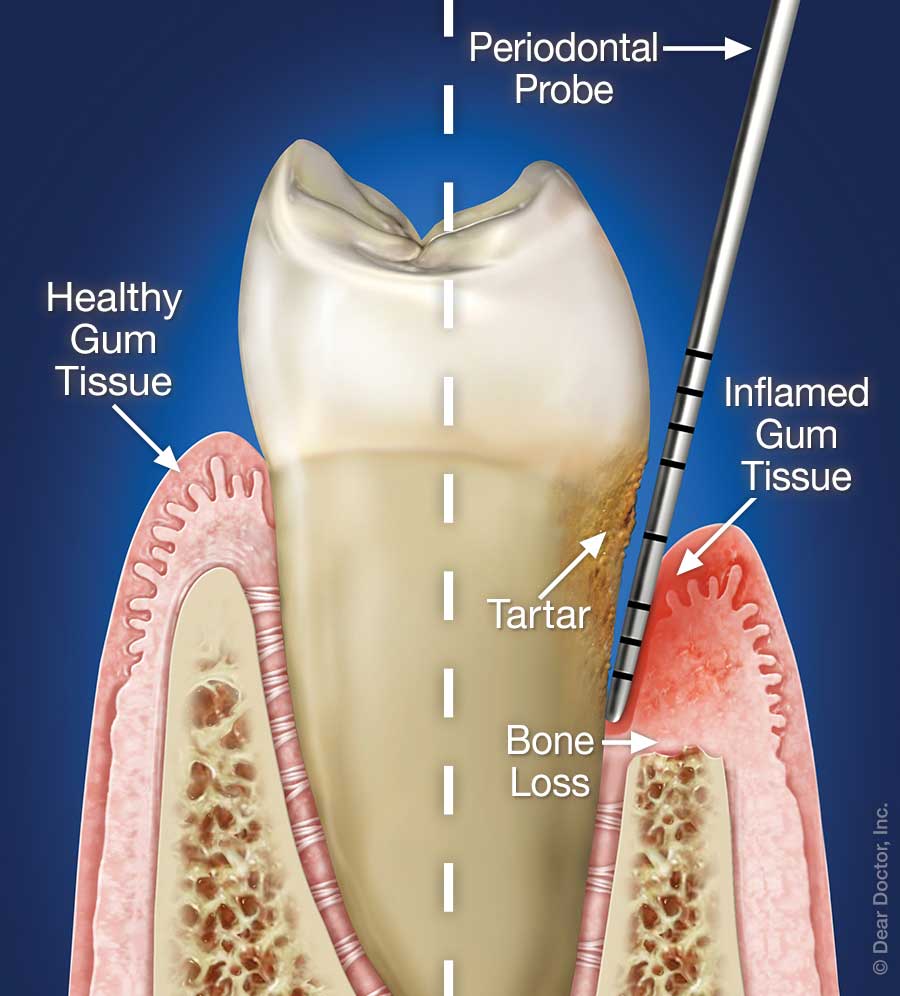
Image source: Bing (Web (fair-use with source credit))
The 24-hour plaque window
Plaque starts forming almost immediately on a clean tooth. Saliva lays down a protein film called the pellicle within minutes. Bacteria colonise that film within hours.
By roughly 24 hours you have an organised, sticky biofilm.
Then the clock speeds up. In dogs, mineralisation into calculus begins within days rather than weeks, far faster than in humans. Canine saliva is more alkaline and higher in calcium salts, exactly the wrong combination if you're trying to keep deposits soft.
That's why "once a week" home care barely moves the needle. The biofilm rebuilds daily, so anything you do has to be daily too. That's the one genuine argument in favour of water additives.
Supragingival vs. subgingival: where the real damage happens
This is the single most important idea in the whole article, so let's make it concrete.
Supragingival means above the gumline. That's the visible tooth, the part you see when you lift the lip, the part that goes brown and crusty.
Subgingival means below the gumline, inside the pocket between tooth and gum. That's where anaerobic bacteria thrive, where the periodontal ligament sits, and where bone loss begins.
Here's the uncomfortable truth. The destructive disease lives subgingivally. The cosmetic damage lives supragingivally.
Owners judge by what they can see, and what they can see is the least clinically important part.
A water additive circulates in the oral fluid. It contacts the visible surfaces of teeth and the outer gum margin. It does not flush a 5mm periodontal pocket.
Neither does a chew, a wipe, or even brushing.
Only subgingival scaling and curettage under anaesthesia reaches that space. That's why a COHAT (Comprehensive Oral Health Assessment and Treatment) exists, and why full-mouth dental radiographs are part of it. Without X-rays, a large share of the disease stays invisible.
So when someone asks whether a water additive can fix gum disease, the honest answer is no.
How Water Additives Actually Work Inside the Mouth
The mechanism is simpler than the marketing suggests. You dilute an antibacterial or anti-mineralisation agent into drinking water. The dog drinks.
The solution washes over the teeth and gums and mixes into the saliva pool.
Two things can happen from there. Antibacterial agents (chlorhexidine, cetylpyridinium chloride, zinc salts) reduce the bacterial population so biofilm builds more slowly. Chelating agents like sodium hexametaphosphate bind free calcium in saliva, so soft plaque takes longer to harden.
That's it. Both effects are real. Both are modest.
Neither is mechanical.
Contact time: a few seconds per drink
Compare the exposure honestly and the ceiling becomes obvious.
| Method | Rough daily contact with tooth surface | Mechanical disruption of biofilm |
|---|---|---|
| Toothbrushing | 60 to 120 seconds, directed at the gumline | Yes, the main benefit |
| Dental chew | 30 seconds to several minutes, chewing surfaces only | Yes, on some teeth |
| Water additive | A few seconds per drink, passive rinse | None |
A 20kg dog drinking around a litre a day might take six to ten drinking events. Each lasts seconds. The solution touches the teeth, then it's swallowed.
There's no scrubbing. Mature plaque has a protective matrix that chemical agents penetrate poorly. That's precisely why human dentistry never claims mouthwash replaces a toothbrush.
The upside is frequency. The dog gets a low dose many times a day, every day, without a single wrestling match. For a dog who genuinely will not tolerate handling, that consistency has real value.
Why nothing in a water bowl dissolves hardened tartar
Calculus is mineralised. It's mostly calcium phosphate compounds bonded to the enamel and root surface. You'd need something aggressive enough to attack that mineral, and anything that strong would also damage enamel and burn soft tissue.
No safe drinking-water concentration comes close. Any product claiming to dissolve, melt or remove existing tartar is overselling.
What a good additive can do is slow the formation of new calculus by interfering with mineralisation. That's a prevention claim, not a removal claim. The VOHC recognises the distinction directly, which is why it issues two separate seals: one for plaque control, one for calculus control.
If your dog already has visible brown deposits at the gumline, an additive cannot take them off. Only an ultrasonic scaler in a veterinary practice can.
What's Inside the Bottle: Active Ingredients Worth Knowing
Flip the bottle over. The ingredient panel tells you more than the front label ever will. Most additives fall into four camps, and they don't do the same job.
| Ingredient family | Typical examples | What it targets | Realistic limitation |
|---|---|---|---|
| Antiseptic | Chlorhexidine gluconate, cetylpyridinium chloride | Bacteria, plaque, breath | Taste aversion, not for indefinite daily use |
| Metal salts | Zinc gluconate, zinc sulfate, zinc ascorbate | Bacteria, sulfur compounds | Mild effect, dose-dependent |
| Chelators | Sodium hexametaphosphate, tetrasodium pyrophosphate | Calculus formation | No effect on existing tartar |
| Enzymatic | Lactoperoxidase, glucose oxidase, lysozyme, lactoferrin | Bacteria, natural saliva defences | Weaker evidence in additive form |
Chlorhexidine, CPC and zinc compounds
Chlorhexidine gluconate is the strongest antiplaque agent in veterinary oral care, usually at 0.12% in rinse form. It binds to oral tissues and keeps releasing for hours, which is why it works so well.
But it comes with baggage. It stains teeth over time, tastes bitter to many dogs, and can irritate mucosa. Human dental guidance generally caps continuous use at a couple of weeks, and the same caution reasonably applies to dogs.
Chlorhexidine additives make sense for short, targeted courses. Post-surgical care. A flare of gingivitis.
The run-up to a dental. They're a poor choice for pouring in the bowl every day for three years.
Cetylpyridinium chloride is gentler, tastes better, and is far more common in daily-use products. Weaker than chlorhexidine, but sustainable. Zinc salts sit in a similar bracket, with the bonus that zinc directly neutralises the sulfur compounds behind bad breath.
Sodium hexametaphosphate and calculus control
Sodium hexametaphosphate (often shortened to HMP) is a calcium chelator. It grabs free calcium ions in saliva before they can precipitate into the plaque matrix.
Think of it as slowing the setting of concrete. The plaque still forms. It just takes longer to turn hard.
This is the ingredient behind most legitimate calculus-control claims, and it's also used in dental diets and coated kibble. It does nothing antibacterial, so products relying on HMP alone tend to help with tartar buildup rather than gingivitis.
Enzyme systems, green tea extract and botanicals
Enzymatic blends borrow from the mouth's own defences. The lactoperoxidase and glucose oxidase system generates antibacterial compounds from substrates already present in saliva. Lysozyme and lactoferrin add to that.
The concept is well established in veterinary toothpaste. In a diluted water additive, the evidence is thinner. Some enzymatic additives get good owner feedback for breath control, but breath is not plaque.
Botanicals show up constantly. Green tea extract (EGCG), pomegranate extract, mints and essential oils. Green tea polyphenols do have documented antibacterial activity.
Whether the dose surviving in a water bowl matters clinically is a different question, and mostly unanswered.
Peppermint, spearmint and clove smell like clean. That's their main job.
Ingredients that should make you put the bottle back
Some entries on a label are a straight no. Scan for these before anything else.
- Xylitol. Non-negotiable. Xylitol triggers a massive insulin release in dogs, causing dangerous hypoglycaemia, and higher doses can cause acute liver failure. The FDA has issued repeated consumer warnings about xylitol in pet-accessible products. Reputable brands reformulated years ago, often swapping to erythritol, which is safe. Older stock still circulates. Check every bottle, every time.
- Tea tree oil (melaleuca). Documented toxicity in dogs and cats. Skip it.
- Pennyroyal oil. Hepatotoxic. No place in an oral product.
- Ethanol or alcohol. Irritating, and pointless in a drinking-water product.
- Vague "proprietary blend" with no disclosed actives. If they won't tell you what's in it, you can't assess it.
One more label habit worth building. Check the species. Some additives are dosed for dogs only, and cats are far more sensitive to essential oils and phenolic compounds.
If a cat drinks from the dog's bowl in your house, that dose matters.
The VOHC Seal: The One Label Check That Separates Proof from Marketing
If you take one practical thing from this article, take this. Before you judge any water additive, check whether it's on the Veterinary Oral Health Council accepted products list.
The VOHC was set up by the American Veterinary Dental College. It doesn't sell anything and doesn't run the trials itself. It reviews submitted data against a fixed protocol and either accepts the product or doesn't.
To earn a seal, a product has to show a defined minimum reduction in plaque or calculus against a control group, in two independent trials. Read the current criteria straight from the Veterinary Oral Health Council rather than trusting a secondhand number.
That's a modest bar. It's still infinitely higher than no bar at all, which is what most of the shelf clears.
Plaque seal vs. calculus seal: they're not the same
The VOHC issues two distinct seals, and this trips up almost everyone.
- Plaque control seal. The product reduced soft bacterial biofilm. This is the one that relates to gingivitis and gum health.
- Calculus control seal. The product reduced hardened deposit formation. This is the cosmetic and mechanical one.
Some products hold one. Some hold both. A product with only a calculus seal has not demonstrated a plaque effect, and plaque is what drives gum disease.
So "VOHC accepted" on a box isn't the end of the check. It's the start. Look at which seal, then decide whether that matches what you're trying to achieve.
How to verify a product before you buy
Don't trust the box. Packaging has been known to display seals for products no longer accepted, or lookalike graphics that aren't VOHC seals at all.
Here's the sequence, and it takes about ninety seconds:
- Open the VOHC accepted products list for dogs directly on their site.
- Find the exact product name and formulation. Reformulations matter, since a seal applies to the tested formula only.
- Note which seal it carries: plaque, calculus, or both.
- Cross-check the ingredient panel on the actual bottle you're holding.
- Confirm no xylitol, no tea tree oil, no alcohol.
Products that have appeared in this category with VOHC recognition include HealthyMouth and Virbac's C.E.T. AQUADENT FR3SH. Acceptance lists change, so verify at the point of purchase rather than taking any article's word for it, including this one.
Where Water Additives Genuinely Help (And Where They Fall Short)
Let's put the honest ledger side by side, because both columns are real.
| What they can do | What they can't do |
|---|---|
| Reduce plaque formation modestly, if VOHC accepted | Remove existing calculus |
| Cut bad breath by lowering sulfur-producing bacteria | Reach subgingival pockets |
| Slow tartar re-accumulation after a professional cleaning | Treat gingivitis that's already advanced |
| Provide daily coverage with zero handling | Replace brushing or a COHAT |
| Work for dogs who refuse every other home care method | Diagnose or address pain, fractures, or resorption |
The strongest legitimate use case is the one nobody markets. Post-cleaning maintenance.
After a COHAT, your dog's teeth are genuinely clean, above and below the gumline. Plaque starts rebuilding within 24 hours. That's the exact window where a chemical plaque-control agent has something meaningful to do, because there's no established biofilm or mineral deposit for it to fight through.
Where they fall short is anything remedial. A mouth with brown gumline crust, red inflamed margins and a smell you can catch across the room is past the point where any bowl additive contributes.
Aggregate owner reviews across this category tell a consistent story. Breath improvement gets reported often and quickly. Visible tartar reduction gets reported rarely, and when it does, the dog usually had a professional cleaning too.
That pattern matches the science exactly.
Safety Risks Most Labels Don't Spell Out
This goes into your dog's daily water supply. That deserves more scrutiny than a treat does, and the risks aren't always the obvious ones.
Xylitol and why every ingredient panel needs a scan
Dogs absorb xylitol rapidly and their pancreas responds with a huge insulin dump. Blood glucose crashes within 30 to 60 minutes.
Signs come on fast. Weakness, staggering, vomiting, collapse, seizures. Higher doses can cause acute liver necrosis a day or two later, which is often fatal.
Most reputable oral care brands removed xylitol years ago and moved to erythritol, which dogs tolerate fine. But old stock circulates, unbranded imports exist, and human oral rinses frequently still contain it.
Never use a human mouthwash in a dog's water. Ever.
If you suspect ingestion, that's an emergency call, not a wait-and-see. The ASPCA Animal Poison Control Center runs 24 hours in the US, and equivalent services exist in the UK and EU.
The water intake problem: dehydration, CKD and senior dogs
This is the risk that gets almost no airtime and matters more than people realise.
Additives change the taste and smell of water. Some dogs don't care. Some drink noticeably less.
A few refuse the bowl entirely.
For a healthy young dog, a small drop in intake is minor. For certain dogs, it's genuinely dangerous:
- Chronic kidney disease. These dogs depend on high water intake to compensate for poor urine concentrating ability. Reduced drinking can tip them into a crisis.
- Diabetes mellitus. Same principle, especially if glucose control is imperfect.
- Heart failure on diuretics. Fluid balance is already being manipulated pharmacologically.
- History of urinary stones. Dilute urine is a core part of prevention.
- Seniors generally. Reduced thirst drive plus reduced renal reserve is a bad combination.
If your dog falls into any of those groups, talk to your vet before starting. For stage 2 or higher kidney disease, most vets will steer you toward brushing or a dental diet instead.
Cats sharing the bowl
Cats are far more sensitive than dogs to essential oils, phenols and certain preservatives, because they lack some of the liver enzymes needed to process them.
They're also fussier drinkers with a naturally low thirst drive. That's exactly the wrong trait when the water suddenly tastes of mint.
Two rules if you have cats:
- Only use a product explicitly labelled safe for cats, at the cat dose.
- Always keep at least one untreated water source available in a separate room.
Cats with kidney disease, which is a huge proportion of cats over ten, should generally not have anything added to their water at all.
Chlorhexidine isn't a forever-daily product
This contradicts how these products are often sold, so it's worth stating plainly. Chlorhexidine-based additives are therapeutic, not maintenance.
Long-term daily exposure risks staining, taste aversion, altered oral flora and mucosal irritation. If your vet dispenses one, use it for the period they specify and then stop.
For open-ended daily use, choose a gentler chemistry: CPC, zinc, enzymatic, or an HMP-based formula.
Dogs That Benefit Most from a Water Additive
Not every dog gets the same value from this. Here's where it earns its place.
The strongest candidates:
- Dogs who genuinely will not tolerate a toothbrush, including rescues with handling trauma or bite risk around the muzzle
- Dogs recently home from a COHAT, where the goal is slowing re-accumulation on clean teeth
- Small and toy breeds with crowded dentition, as an addition to brushing
- Anaesthesia-risk dogs whose cleanings have to be spaced further apart
- Dogs already on brushing two or three times a week, using the additive on the off days
- Multi-dog households where individual brushing time is genuinely limited
Poor candidates:
- Dogs with chronic kidney disease, diabetes, or heart failure on diuretics
- Dogs in stage 3 or 4 periodontitis, who need treatment, not maintenance
- Puppies with retained deciduous teeth, which need extraction, not chemistry
- Dogs in the immediate post-extraction healing window, unless the surgeon prescribed a rinse
- Dogs who drink from puddles, ponds, toilets or the neighbour's bowl, since the dose becomes meaningless
That last one is more common than you'd think. If your dog gets most of their water outside the treated bowl, you're paying for nothing.
Water Additive vs. Brushing vs. Chews vs. Dental Diets
There's a clear hierarchy in veterinary dentistry, and water additives sit near the bottom of it. That's not a criticism. It's just where the evidence lands.

Image source: Bing (Web (fair-use with source credit))
| Method | Effectiveness | Effort required | Best for |
|---|---|---|---|
| Daily brushing | Highest. Mechanical biofilm removal at the gumline | High. 1 to 2 minutes daily, needs cooperation | Every dog who tolerates it |
| VOHC dental chews | Moderate. Mechanical plus chemical on chewing surfaces | Low. Dog does the work | Enthusiastic chewers, calorie budget permitting |
| Dental diets | Moderate. Kibble texture plus HMP coating | Very low. Replaces normal food | Dogs on a single-food diet with no medical conflict |
| Water additive | Low to modest. Chemical only, no mechanics | Lowest. Pour and walk away | Dogs who refuse handling, post-cleaning maintenance |
| Professional COHAT | Complete. Only method reaching subgingivally | Vet visit, anaesthesia, cost | Every dog, at the interval your vet advises |
Why brushing still wins by a mile
Brushing does the one thing nothing else does. It physically disrupts biofilm at the gum margin, which is precisely where gingivitis begins.
Use a veterinary enzymatic toothpaste, never human toothpaste. Human formulas contain fluoride at doses meant to be spat out, and some contain xylitol. Dogs swallow everything.
Target the outer surface of the upper teeth, especially the canines and the big carnassial premolars. The tongue does a reasonable job on the inner surfaces. You don't need to open the mouth wide, just lift the lip.
Realistic goal: 30 seconds a side, five to seven days a week. Three times a week is meaningfully better than nothing. Once a week is close to decorative.
Where chews and diets fit
VOHC-accepted chews and dental diets have real, measured data behind them. They work by texture, sometimes combined with an active like delmopinol or HMP.
Two caveats. Chews add calories, which adds up fast in a small dog. And hard chew objects carry a serious downside.
Antlers, hooves, bones, hard nylon and ice cubes cause slab fractures of the maxillary fourth premolar with grim regularity. It's one of the most common fracture presentations in veterinary dentistry. A chew you can't dent with a thumbnail is too hard.
Tennis balls are a separate problem. The fuzz holds grit and abrades enamel over years of fetching.
One method to avoid entirely
Anaesthesia-free dental cleaning, sometimes marketed as non-anaesthetic scaling, gets sold as a gentler alternative.
Both the American Veterinary Dental College and AAHA advise against it. The reason is simple. Without anaesthesia you cannot clean subgingivally, take radiographs, or probe pockets.
You scrape the visible surfaces so the teeth look white while the disease continues underneath.
It's the same failure mode as relying on a water additive, just more expensive and more stressful for the dog.
How to Start One Properly Without Putting Your Dog Off Water
If you've decided an additive earns a place in your routine, the introduction matters more than the brand.
The baseline lip-lift check
Do this before the first dose. Otherwise you'll have no way of knowing whether anything changed.
- Sit with your dog somewhere calm and well lit.
- Lift the upper lip on one side without opening the mouth.
- Photograph the canine and the large premolars, both sides.
- Note gum colour at the margin. Healthy is pink and tight. Red, puffy or bleeding is gingivitis.
- Note where the brown calculus line sits relative to the gum.
Save the photos with the date. In three months you'll want them.
Gradual introduction and the second bowl rule
The most common failure is dumping a full dose in and finding the dog won't drink.
- Start at half the recommended dose for the first three to five days.
- Put out a second bowl of plain untreated water in a different spot. Always. This is the safety net that prevents dehydration.
- Increase to full dose only once the dog is drinking normally from the treated bowl.
- Keep the plain bowl available for at least two weeks.
If your dog consistently chooses plain water over treated, that's your answer. Stop and use a different method. A refused additive has zero efficacy and a real dehydration risk.
Daily bowl hygiene and dosing accuracy
Measure properly. Use the cap or a measuring spoon, not a guess. Dosing is per volume of water, so a capful into a half-full bowl is a different concentration than a capful into a full one.
Other practical points:
- Make fresh solution daily. Don't top up a partially drunk bowl.
- Wash the bowl every day with soap and rinse thoroughly. Additives feed bowl biofilm, and slimy bowls defeat the purpose.
- Stainless steel or ceramic beats plastic, which scratches and holds bacteria.
- Check the manufacturer's guidance before using an additive in a filtered pet fountain. Carbon filters can strip actives, and some fountain makers advise against it.
- Store the concentrate out of reach. Undiluted product is a different exposure entirely.
Track intake for the first fortnight. Measure in millilitres, or just count how often you refill. A sustained drop is your signal to stop.
Mistakes That Undo the Whole Thing
Most failures here are quiet. Nothing dramatic happens, the routine just stops meaning anything.
- Treating the additive as the whole plan. It's the least effective tool available. Used alone, it's the dental equivalent of using mouthwash and never brushing.
- Buying on "tartar remover" claims. Nothing in a water bowl removes tartar. If the front label says it does, distrust the rest.
- Skipping the VOHC check. Without it, you have no evidence of any effect at all.
- Never reading the ingredient panel. Ninety seconds rules out xylitol and tea tree oil.
- Not noticing reduced drinking. The most likely real harm from this product category.
- Using a chlorhexidine product indefinitely. Therapeutic agents need end dates.
- Topping up rather than replacing. Dilutes the dose and grows biofilm in the bowl.
- Letting good breath cancel the vet appointment. The most consequential mistake on this list.
- Using human mouthwash. Fluoride, alcohol and sometimes xylitol. Never.
- Assuming the multi-pet bowl is fine. Check cat safety and cat dosing separately.
- Stopping when the bottle runs out. The effect depends entirely on continuous daily use. Two weeks off and you're back to baseline.
What It Costs Per Day vs. What a Dental Procedure Costs
The maths here is genuinely useful, and it usually surprises people in both directions.
A typical 32oz bottle dosed at roughly one capful per litre lasts a small dog a couple of months and a large dog considerably less. Water intake scales with body weight at roughly 50 to 60ml per kg per day.
| Dog size | Approx daily water | Additive use rate | Rough annual cost |
|---|---|---|---|
| 5kg (11 lb) terrier | 250 to 300 ml | Lowest | One bottle every 2 to 3 months |
| 20kg (44 lb) spaniel | 1 to 1.2 L | Moderate | Several bottles per year |
| 40kg (88 lb) retriever | 2 to 2.4 L | Highest | Ongoing repeat purchases |
Prices vary widely by brand, market and pack size, so check current retail rather than budgeting off a number in an article.
Now the other side of the ledger. A COHAT typically includes pre-anaesthetic bloodwork, IV fluids, anaesthesia with monitoring, full-mouth radiographs, ultrasonic scaling above and below the gumline, and polishing. Extractions, surgical flaps, nerve blocks and pain medication add to that.
Costs differ enormously by region, by whether you're at a general practice or a board-certified veterinary dentist, and by how much work the mouth needs. A straightforward cleaning and a mouth requiring eight extractions are not the same invoice.
Two practical notes. Routine dental care is excluded from most pet insurance policies, though dental disease arising from injury sometimes isn't, so read your wording. And in the US, February is National Pet Dental Health Month, when many practices run promotions.
It's also when the marketing noise around miracle additives peaks.
The honest framing isn't "additive instead of cleaning". It's "does daily home care push my dog's next cleaning from twelve months out to eighteen". That's a realistic goal, and the savings come from fewer extractions, not from skipping the procedure.
Reading a Dental Estimate Before You Say Yes
Estimates vary enormously, and that range makes people delay. Understanding the line items makes the number make sense.
| Line item | What it's for | Can it be skipped? |
|---|---|---|
| Pre-anaesthetic bloodwork | Screens organ function before anaesthesia | No, especially over 7 years |
| IV catheter and fluids | Blood pressure support and emergency access | No |
| Anaesthesia and monitoring | Allows subgingival work and radiographs | No. This is the whole procedure |
| Full-mouth dental radiographs | Reveals bone loss, abscesses, resorption, root fractures | No. Without them you're guessing |
| Scaling and polishing | Removes deposits above and below the gumline | No |
| Extractions | Charged per tooth or by complexity | Only if the tooth is savable |
| Nerve blocks and pain medication | Local anaesthesia and post-op comfort | No. Skipping this is a welfare issue |
Two things drive the final figure more than anything else. How many teeth need extracting, and how surgical those extractions are.
A single mobile incisor comes out in seconds. A multi-rooted carnassial with bone loss needs a flap, sectioning and suturing. Same dog, wildly different cost.
Why the estimate is a range, not a price
Your vet can't finalise the plan until the dog is anaesthetised and radiographed. That's not evasiveness. Half the disease is invisible until the X-rays come up.
Ask for two figures: best case (clean and polish only) and worst case (multiple surgical extractions). Then ask what the decision point is if they find more than expected.
Most practices will call you mid-procedure for consent on significant extra work. Confirm that in advance, and give them a number you'll actually answer.
Breed and Age Risk: Who Needs More Than an Additive
Some dogs can coast on light home care. Plenty can't, and knowing which category yours falls into changes how hard you push the routine.
| Group | Why the risk is higher | Realistic minimum home care |
|---|---|---|
| Toy breeds (Yorkshire Terrier, Chihuahua, Maltese, Toy Poodle) | 42 teeth crammed into a tiny jaw, rotated and crowded | Daily brushing plus annual COHAT from a young age |
| Dachshunds | Long narrow muzzle, high periodontitis rates, early bone loss | Daily brushing, early radiographs |
| Brachycephalics (Pug, French Bulldog, Boston Terrier) | Shortened jaw, rotated premolars, poor lip seal | Daily brushing, watch for crowding and gingival overgrowth |
| Greyhounds and sighthounds | Documented predisposition to rapid calculus and periodontal disease | Daily brushing, frequent professional cleanings |
| Large breed heavy chewers (Labrador, German Shepherd, Malinois) | Lower periodontal risk, much higher tooth fracture risk | Brushing plus strict chew-hardness rules |
| Seniors over 8 | Cumulative attachment loss, plus anaesthesia planning matters | Brushing plus earlier veterinary assessment, not later |
Notice the split. Small dogs mostly lose teeth to periodontal disease. Big dogs mostly lose them to fractures.
That changes how you use an additive. In a Yorkie, it's a minor contributor to a problem it can't solve alone. In a Labrador who cracks a slab off a molar chewing a bone, it's irrelevant to the actual risk.
If your dog is a toy breed, read this bit twice
Toy breeds often need their first COHAT far earlier than owners expect. Gingivitis at eighteen months isn't unusual in a crowded mouth.
Retained deciduous teeth are the other early flag. If an adult canine erupts while the puppy canine is still in place, plaque packs into the gap between them. That needs extraction, not chemistry.
If your vet suggests a dental in a young small-breed dog, that's not upselling. That's catching it before bone is gone.
Homemade Additives and DIY Fixes That Don't Work
Search any dog forum and you'll find free alternatives being passed around. None have efficacy data, and some cause harm.
- Apple cider vinegar in the water bowl. Widely recommended, no evidence for plaque control. Acidic solutions in drinking water raise enamel erosion concerns, and many dogs simply refuse to drink it.
- Baking soda. High sodium load, unpleasant taste, and no demonstrated plaque effect at drinking-water dilutions.
- Hydrogen peroxide, diluted. Irritating to oral mucosa. Ingestion causes vomiting. Never put this in a water bowl.
- Coconut oil. Won't dissolve in water, offers no proven antibacterial benefit on teeth, and adds pure fat calories.
- Human mouthwash, diluted. Fluoride, ethanol and often xylitol. Genuinely dangerous.
- Grapefruit seed extract on its own. Appears in some commercial blends, but there's no independent data supporting it as a standalone plaque agent.
The pattern is consistent. Anything cheap enough to mix at home is either untested or actively risky. If budget is the constraint, a toothbrush and veterinary toothpaste cost less per month than most additives and work considerably better.
Tracking Whether It's Working: A 90-Day Home Check
Home care fails quietly, so build in a checkpoint. Ninety days is long enough to see change and short enough to correct course.
Use the baseline photos you took before starting.
Every week, note three things:
- Gum margin colour. Pink and tight is healthy. A thin red line along the tooth is gingivitis.
- Bleeding on contact. Gently run a fingertip along the gum margin. Any bleeding is inflammation.
- Water intake. Same measuring jug, same routine. Note refills per day.
Every month, photograph:
- Upper canine, both sides
- Upper fourth premolar (the big one behind the canine), both sides
- The front incisors with lips relaxed
Shoot in the same light, same angle, same distance. Otherwise you're comparing shadows.
Reading the results at day 90
If gum margins look less red and there's no new calculus above the old line, the routine is working. Keep going.
If the calculus line has crept further down the tooth, chemistry alone isn't holding it. Add or increase brushing, and book an oral exam.
If gums bleed on light contact where they didn't before, stop assessing and book the vet. Bleeding is inflammation, and inflammation in a mouth is rarely just cosmetic.
If nothing has changed at all, that's still information. Some dogs don't respond much to a chemical-only approach. Switch tactics rather than buying a second bottle of the same thing.
Troubleshooting a Routine That Isn't Working
Most problems here are logistical, not scientific. Work through these before writing the whole approach off.
"My dog drinks from everywhere except the treated bowl."
Common in gardens with water butts, ponds or standing puddles. Also toilets. Reduce the alternatives during the day, or accept the dose is effectively random and use a chew instead.
"The bowl gets slimy within a day."
That's biofilm feeding on the additive's carriers, usually glycerin or sorbitol. Wash daily with soap, rinse thoroughly, dry. Switch from plastic to stainless steel or ceramic, since scratched plastic holds bacteria in the grooves.
"I use a filtered fountain."
Check the manufacturer's guidance first. Activated carbon filters strip out actives, so you may be filtering away the thing you paid for. Some fountain makers specifically advise against additives because of pump fouling.
"Our water is very hard."
Hard water carries more dissolved calcium and magnesium. Chelating additives like sodium hexametaphosphate get partly consumed binding those minerals before they reach the mouth. Not a dealbreaker, but expect less benefit.
"Two dogs, one bowl, very different sizes."
Dose by total water volume in the bowl, not by dog. Both get the same concentration, which is correct. Just be sure neither has a medical reason to avoid it.
"He drank it fine for a month, now he won't."
Palatability fatigue is real. Try a lower concentration for a week, or switch to an unflavoured formula. If refusal persists, stop and move to brushing or a VOHC chew.
"Breath was better, now it's bad again."
Two likely causes. Either the routine slipped, or something new is going on in the mouth. Check your own consistency first.
If you've been diligent, that's a vet appointment.
"We travel and boarding kennels won't dose it."
Accept the gap. A fortnight off won't undo months of work. Restart immediately on return, because consistency over a year matters more than perfection over a week.
US and UK Market Differences That Change What You Can Buy
The science doesn't change across borders. The shelf does, and so does the regulatory backstop behind it.
In the US, water additives sit in an awkward gap. They aren't approved drugs, so nobody reviews efficacy before sale. State feed control officials and AAFCO frameworks cover some labelling, and the FDA Center for Veterinary Medicine steps in mainly when something goes wrong.
That's why the VOHC list carries so much weight in the US. It's the only pre-purchase quality filter most owners have.
The UK runs differently. The Veterinary Medicines Directorate classifies products by claim, and anything making a genuine medicinal claim needs authorisation. Most water additives are sold as oral care products instead, which keeps them outside that net.
Practical effect for UK buyers: fewer VOHC-listed additives are stocked domestically, because the seal is a US-centred scheme and brands don't always pursue it. Virbac and Dechra products are widely available through practices. Several US retail brands simply aren't.
What this means when you're comparing options
- US shoppers: check the VOHC list first, then look for the NASC Quality Seal as a secondary manufacturing signal.
- UK shoppers: ask your practice what they stock and why. Vet-channel products are more likely to have data behind them than supermarket options.
- EU shoppers: ingredient permissions vary by member state. Read the label in your own language rather than assuming a US formula matches.
- Anywhere: an imported bottle bought through a marketplace listing may be an older formulation. That's exactly where legacy xylitol formulas resurface.
Warning Signs That Mean Stop Buying Additives and Book a Vet Exam
Some findings mean home care has done all it can. Recognising them early saves teeth.
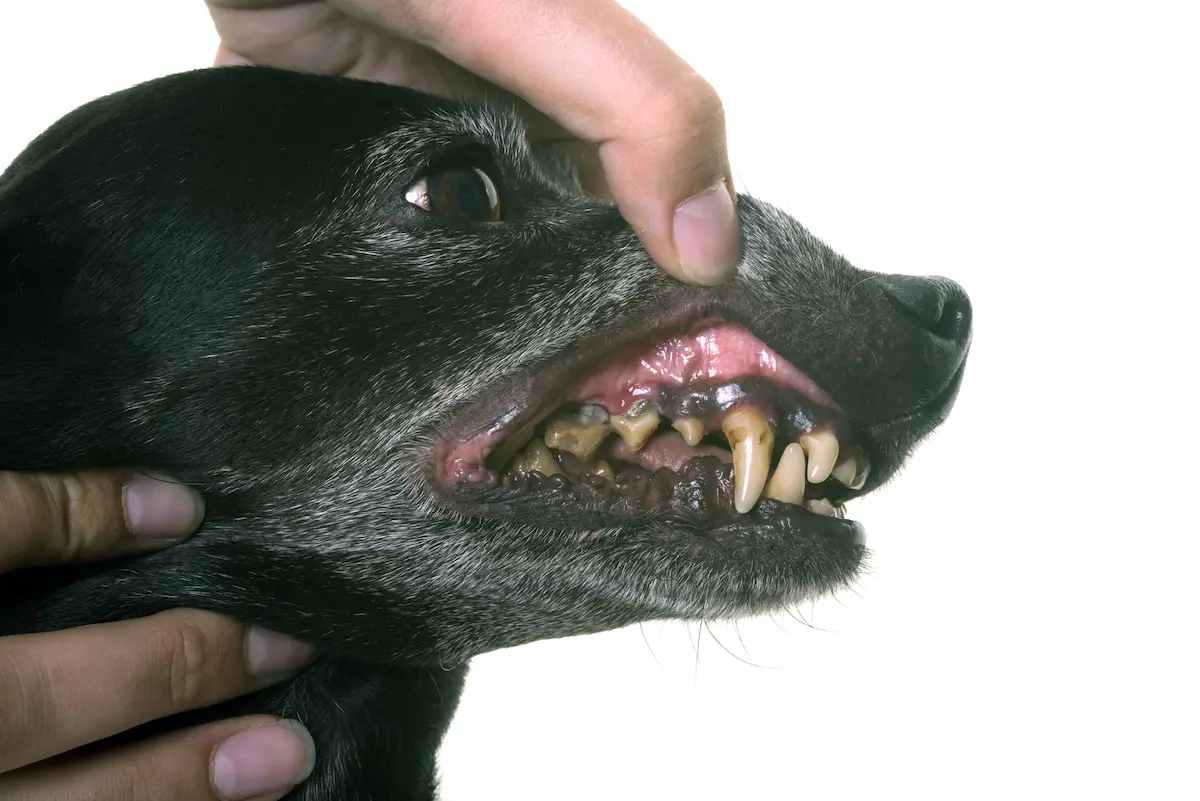
Image source: Bing (Web (fair-use with source credit))
Book an appointment if you see any of these:
- Thick brown or grey calculus covering the gumline, especially on the upper premolars
- Red, swollen or bleeding gum margins
- Gum recession exposing root surface, or visible gaps at the tooth base
- Any loose or wobbly tooth
- Breath that's getting worse despite daily additive use
- Chewing on one side only, dropping food, or turning away from hard kibble
- Pawing at the mouth or rubbing the face along furniture
- Drooling, especially if blood-tinged
- A discoloured tooth, pink, purple or grey, which usually means a dead pulp
- A lump, growth or ulcer anywhere in the mouth
- Facial swelling below the eye, or a draining sore on the cheek, which often signals an abscessed carnassial tooth
Stop the additive and call your vet if:
- Water intake drops noticeably and doesn't recover
- Your dog vomits or develops loose stools after starting
- Gums become irritated or ulcerated
- Your dog refuses the treated bowl over several days
A quick note on the smell test. If breath deteriorates while you're doing everything right, that usually means infection somewhere the additive can't reach. That's not a reason to buy a stronger product.
It's a reason to get radiographs.
Building a Home Dental Routine That Actually Slows Disease
Here's how the pieces fit together in a way that holds up over years.
Tier 1, the foundation. Brushing with veterinary enzymatic toothpaste, aiming for daily. Start with one tooth and a treat. Build up over weeks.
Most dogs accept it if the introduction is patient enough.
Tier 2, the proven adjuncts. A VOHC-accepted dental chew or dental diet. Pick one, account for the calories, be consistent.
Tier 3, the backstop. The water additive. Daily, correctly dosed, VOHC accepted where possible.
Tier 4, the non-negotiable. Annual veterinary oral exams, and a COHAT at the interval your vet recommends. For crowded small breeds that might mean every twelve months. For a big dog with good genetics and consistent brushing, it might stretch further.
A realistic weekly rhythm looks like this:
| When | What |
|---|---|
| Every day | Fresh additive solution in a washed bowl. Brush if you can. |
| Most days | Brushing, 30 seconds per side, focused on the gumline |
| Weekly | Lip-lift check, both sides. Note gum colour and any change. |
| Monthly | Photograph the canines and carnassials. Compare to baseline. |
| Annually | Veterinary oral exam. Book the COHAT when advised. |
| After every cleaning | Reset the whole routine from day one, while teeth are clean |
The last row matters more than any other. The 24 hours after a professional cleaning is the highest-value moment in your dog's dental year. Clean surfaces, no biofilm, nothing to fight through.
Start the additive and the brushing that same evening.
Frequently Asked Questions
How long does it take for a dog dental water additive to work?
Breath improvement usually shows within one to two weeks, since bacterial load drops fairly quickly. Plaque control effects are gradual and only continue while you're using it daily. Existing tartar never disappears at any timescale, because chemical agents can't dissolve mineralised deposit.
If breath worsens instead, book a veterinary oral exam.
Can a water additive replace brushing my dog's teeth?
No. Brushing mechanically disrupts plaque biofilm at the gumline, which no water additive can do. Additives only work chemically, with a few seconds of contact per drink.
Think of the additive as a supplement for days you can't brush, or for dogs who genuinely won't tolerate handling at all.
Are dog dental water additives safe for daily use?
Most CPC, zinc, enzymatic and HMP-based products are designed for daily use and are well tolerated. Chlorhexidine formulas are different and shouldn't run indefinitely without veterinary guidance. Always check for xylitol and tea tree oil.
Dogs with kidney disease, diabetes or heart failure need veterinary clearance first, because reduced drinking is genuinely risky.
My dog won't drink water with the additive in it. What should I do?
Drop to half the dose and always offer a second bowl of plain water alongside. If your dog still avoids the treated bowl after a week, stop using it. A refused additive delivers zero benefit and risks dehydration.
Switch to brushing, a VOHC dental chew, or a dental diet instead.
Is a dog water additive safe for cats drinking from the same bowl?
Only if the product is explicitly labelled and dosed for cats. Cats lack certain liver enzymes and are more sensitive to essential oils and phenolic compounds. They're also fussy drinkers with low thirst drives.
Always keep an untreated water source in a separate room, and avoid additives entirely for cats with kidney disease.
Do water additives help with tartar that's already on my dog's teeth?
No. Calculus is mineralised and bonded to the tooth surface. Nothing safe to drink can dissolve it.
Some additives contain sodium hexametaphosphate, which slows new calculus forming by binding salivary calcium. Existing deposits come off only with ultrasonic scaling during a professional cleaning under anaesthesia.
The Verdict: Worth Using, But Only in the Right Place
A dog dental water additive helps a bit. It's real, it's measurable in the VOHC-accepted products, and it beats doing nothing.
But it's the last line in the routine, not the first. It can't scrub, it can't reach below the gumline, and it can't take off what's already hardened onto the tooth. Anything sold on those promises is selling you a story.
Use it where it genuinely earns its keep. Straight after a professional cleaning, while the teeth are clean. On the days brushing doesn't happen.
For the dog who'd rather bite than let you near their mouth.
Check the VOHC list. Read the panel for xylitol. Watch the water intake for the first fortnight.
Keep a plain bowl available.
Then keep brushing, keep booking the annual oral exam, and keep lifting the lip once a week to look. The bottle in the bowl is the easy part. The looking is what actually saves teeth.