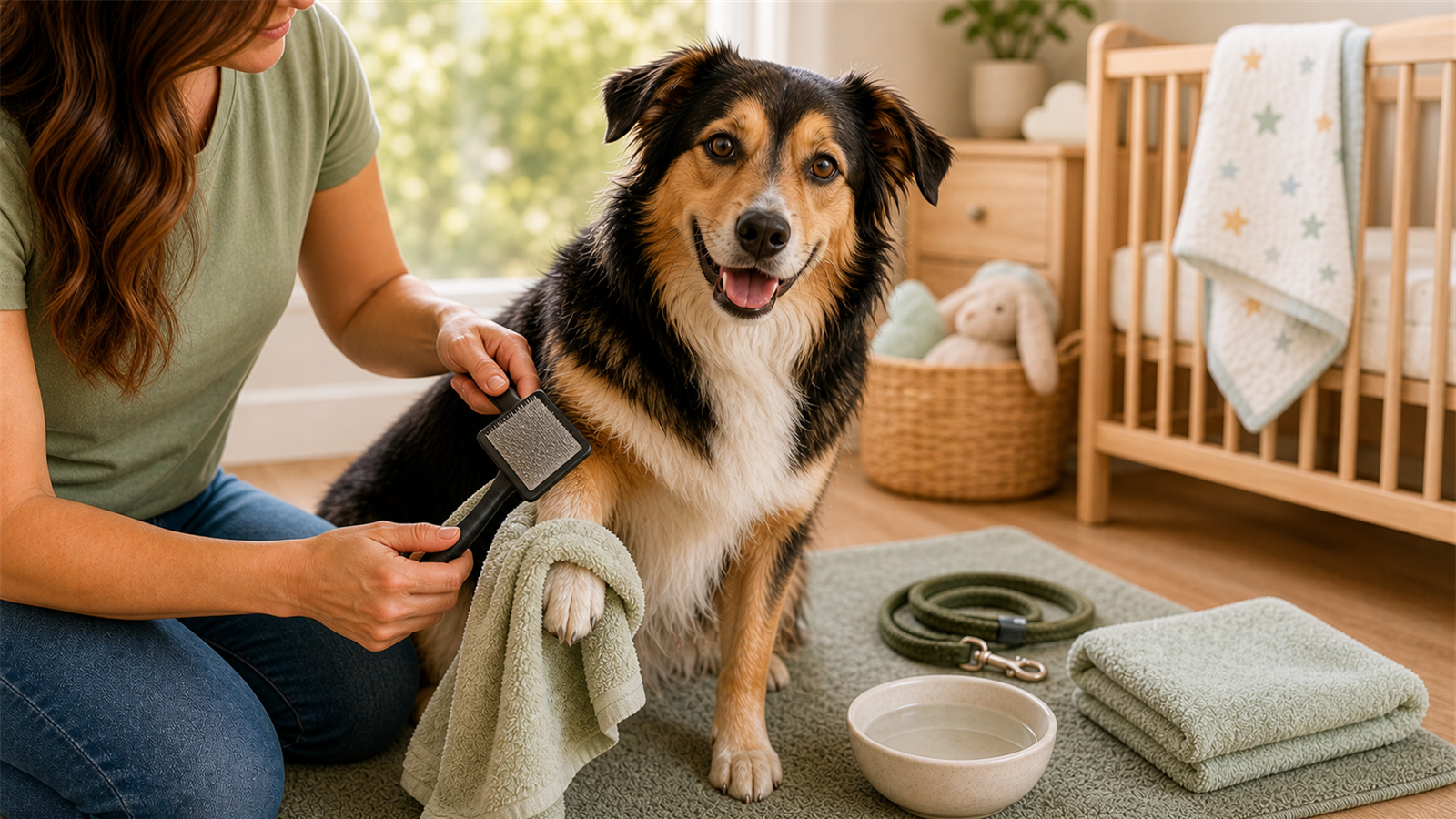

Before a new baby arrives, move your dog’s grooming onto a calm, predictable schedule early. Finish bigger coat, nail, paw, shedding, and odor tasks before the household changes, and keep baby safety, bite risk, medical concerns, and behavior training outside the grooming plan.
This is grooming routine advice only. For infant safety, dog-baby introductions, guarding, panic, aggression, medication, illness, wounds, or bite risk, work with qualified professionals such as your veterinarian, a credentialed trainer, and current child-safety resources.
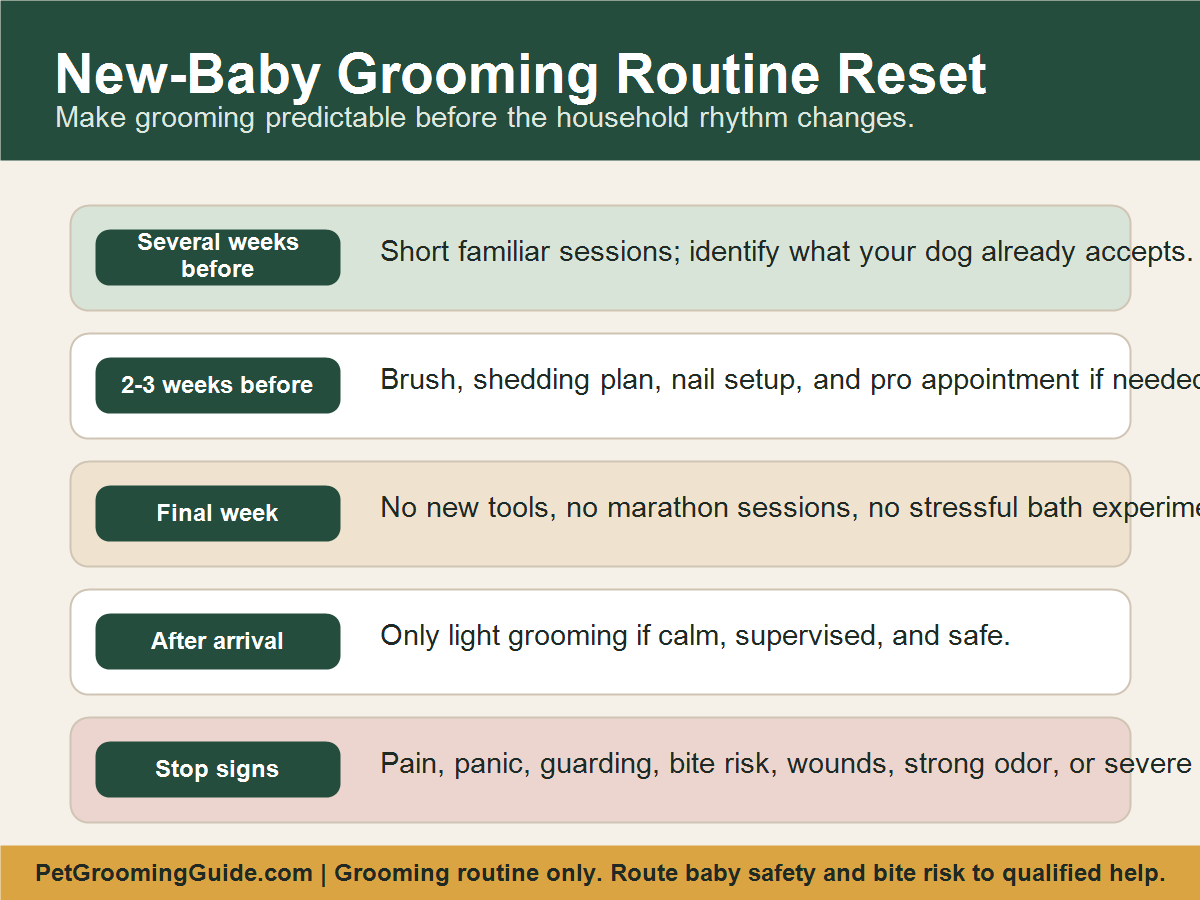
Baby-arrival grooming routine reset timeline
| Timing | Grooming goal | Keep it calm | Route out |
|---|---|---|---|
| Several weeks before | Identify what grooming your dog already tolerates: brushing, paw handling, towel drying, and quiet coat checks. | Use short familiar sessions in the same quiet place. | Panic, guarding, snapping, bite risk, wounds, severe mats, or sudden pain. |
| Two to three weeks before | Handle shedding, coat checks, nail planning, and any professional appointment if needed. | Avoid marathon sessions. Stop while the dog is still coping. | Medical odor, discharge, skin symptoms, unsafe handling, or professional grooming needs. |
| Final week | Light brushing, paw checks, written routine notes, and bedding or towel cleanup. | No brand-new tools, loud equipment, forced nail trims, or stressful bath experiments. | Dog-baby safety questions, medication questions, aggression, or bite concerns. |
| After arrival | Maintain only brief grooming that stays calm, supervised, and easy to stop. | Let the household settle. Skip non-urgent grooming if timing is unsafe. | Any situation where supervision, handling, or dog body language feels unsafe. |
What to stabilize before the due date
Prioritize grooming tasks that reduce daily friction: brushing, basic coat checks, nail planning, paw comfort, shedding control, and bath timing. The goal is not to make your dog perfect. The goal is fewer surprise grooming problems during the busiest weeks.
ASPCA dog grooming guidance supports regular brushing, careful bathing, rinsing, and drying. For a family expecting a baby, that means routine work should happen early enough that the dog is dry, rested, and not learning a stressful new process right before the household changes.
Write down what your dog accepts and what creates stress. This note can help family members keep grooming consistent after the baby arrives.
Coat, nail, paw, odor, and shedding priorities
For the coat, use regular brushing to find mats, irritation, or sore spots. For nails and paws, plan ahead if your dog resists foot handling. Our dog nail trimming setup checklist can help you decide whether nail work is calm enough to do at home.
For shedding, use steady brushing instead of a sudden over-grooming session. If loose hair is the main problem, use the loose dog hair guide when you have time to work calmly.
For odor, separate normal dirt from possible skin, ear, dental, or anal gland concerns. Strong, painful, or sudden odor should be routed to a veterinarian instead of covered with fragrance.
How to avoid making grooming feel like a new stressor
Keep sessions short and predictable. Use the same quiet place, the same basic tools, and the same gentle sequence when possible. Avoid introducing noisy equipment, long restraint, or unfamiliar handling right before the baby arrives.
If you need to introduce a brush, comb, towel, or dryer routine, do it gently and early. Our guide to introducing grooming tools keeps that work separate from the last-minute baby countdown.
What not to force, mask, or postpone
Do not force nail trims, mat removal, baths, ear cleaning, or brushing if your dog is showing fear or pain. Do not postpone severe mats, skin problems, ear odor, wounds, or sudden sensitivity until after the baby arrives. Do not use medication, sedatives, or behavior plans unless directed by your veterinarian or qualified professional.
If your dog shows panic, growling, snapping, guarding, or bite risk around handling, stop the grooming session. Use the dog grooming anxiety signs guide to identify warning signs, then route the concern to qualified help.
When this becomes trainer, vet, or child-safety territory
Use grooming only for grooming. Dog-baby introductions, infant supervision, guarding, bite risk, sleep-space boundaries, and household safety routines need current guidance from qualified people and sources.
The ASPCA’s dogs and babies resource is a useful starting point for understanding that a new baby brings new sounds, smells, routines, and household changes. This page does not replace professional baby-safety, dog-training, or veterinary advice.
Bottom line
Good dog grooming before a new baby is calm, early, and limited. Make routine grooming predictable before the household changes. Finish coat, nail, paw, odor, and shedding basics ahead of time. Stop when grooming becomes unsafe, painful, or behaviorally concerning.
FAQ
Should I groom my dog before bringing home a baby?
Yes, if grooming can stay calm and familiar. The goal is a comfortable coat, manageable shedding, and fewer last-minute tasks.
When should I schedule grooming before the due date?
Schedule major grooming early enough that your dog has time to rest and you have time to address any mat, skin, nail, or handling concerns.
How can I reduce shedding before a baby arrives?
Use regular brushing and coat checks. Avoid sudden over-grooming or unfamiliar tools right before the baby arrives.
What if my dog hates grooming before the baby comes?
Stop before the situation escalates. For fear, aggression, bite risk, or unsafe handling, ask a qualified trainer or veterinarian.
Is this dog-and-baby safety training advice?
No. This is grooming routine advice only. Child-safety and dog-baby interaction guidance must come from qualified, current resources.