
Fluffy cat tails are a magnet for mats, tangles, and hidden skin issues. If you've ever tried to brush one, you know it's not as simple as running a comb through and calling it a day. The tail is sensitive, delicate, and connected directly to your cat's spine, which means a wrong move can cause real pain or even injury.
That's why learning how to groom a fluffy cat's tail properly matters more than most owners realize.
Research from veterinary sources indicates that tail grooming requires different tools and techniques than the rest of the body. The skin on a cat's tail is thin and tightly stretched over the bone, so aggressive brushing can cause micro-tears, bruising, or a panicked cat that associates grooming with fear. As of 2026, veterinarians report seeing more tail-related emergencies from home grooming accidents than from the mats themselves.
Let's walk through exactly what you need to know, starting with why this seemingly simple task deserves your full attention.
Why Grooming a Fluffy Cat's Tail Is Different
The tail isn't just a furry appendage that hangs off the back end. It's an extension of your cat's spine, made up of 18 to 23 vertebrae wrapped in muscle, nerves, and a thin layer of skin. That anatomy matters because there's very little padding between the bone and the surface.
When you brush too hard or pull on a mat, you're putting direct pressure on those delicate structures.
Fluffy coats make it worse. Long-haired breeds like Persians, Maine Coons, and Ragdolls have dense undercoats that trap loose fur, dirt, and oils. The tail is particularly vulnerable because it's constantly moving, rubbing against surfaces, and collecting debris.
Over time, that loose fur twists together into tight mats that pull at the skin with every step. The result is pain, skin irritation, and sometimes infections that require veterinary treatment.
There's also the behavioral side. Most cats are protective of their tails. It's not just about being grumpy, it's a survival instinct.
A predator grabbing a cat's tail is a genuine threat, so their natural response is to pull away, hiss, or swat. When you reach for the tail with a brush, you're fighting millions of years of instinct. Understanding that helps you approach the process with more patience and less frustration.
What Makes Tail Mats Different From Body Mats
Mats on the body are usually loose enough to work through with your fingers or a comb. Tail mats are different. They form tighter, closer to the skin, and they wrap around the entire circumference of the tail like a sleeve.
That makes them harder to see, harder to reach, and dangerously easy to cut if you're using scissors.
A mat at the base of the tail is especially concerning. That area has higher oil production, which makes fur stick together faster. It's also where fecal matter can get trapped in long-haired cats, leading to painful tangles that harbor bacteria.
If left untreated, tight base mats can restrict circulation, and in severe cases, contribute to a condition called "tail paralysis" where nerve damage occurs.
Quick Answer
Groom a fluffy cat's tail by working from base to tip. Brush gently in small sections. Use a slicker brush for loose fur.
Use a dematting tool for tangles. Never pull or yank. Stop if your cat shows pain.
Check skin for redness or lumps first. Keep sessions under 10 minutes. Shave tight mats with clippers or see a vet.
Brush every 2 to 3 days for long-haired breeds. Never use scissors near the skin.
Before You Start: Quick Assessment
Before you even pick up a brush, you need to evaluate what you're working with. Jumping straight into grooming without checking the tail first is like starting surgery without reading the chart. You might miss something important, and you could make a hidden problem worse.
Check the Skin First
Gently part the fur along the entire tail, working from the base near the anus all the way to the tip. Look for signs of redness, scabs, flea dirt, or small bumps. These could indicate allergies, parasites, or an infection.
If you spot anything unusual, that's a reason to pause and consider a vet visit before continuing.
Also look for wounds. Cats get into fights, catch their tails on things, and sometimes injure themselves without you noticing. A mat can hide a small cut or abscess that's already infected.
Brushing over it would cause significant pain. If you find a wound, stop grooming and treat that first.
Feel for Mats
Run your fingers gently along the tail from base to tip, applying light pressure. You're feeling for tight clumps or tangles beneath the fur. Loose mats near the tips are manageable at home.
Tight mats flush against the skin are a different story. Those require careful handling and sometimes professional tools.
Here's how to categorize what you feel:
- Loose tangle: Fur is knotted but you can see skin underneath when you pull it apart
- Moderate mat: Fur is twisted together but there's some give when you press on it
- Tight mat: Fur is densely packed, hard to the touch, and you cannot see or feel the skin beneath
If you're dealing with tight mats, skip the brushing entirely for now and jump to the mat-handling section. Brushing over a tight mat just makes it worse by pushing more fur into the knot.
Read Your Cat's Mood
Your cat will tell you how they feel about this process long before you start. Watch for these signals:
- Tail flicking quickly means agitation
- Ears flattened backward signals distress
- Hissing or growling means stop immediately
- Tense body posture suggests they're bracing for pain
- Relaxed, purring, or kneading indicates they're comfortable
A calm cat is a groomable cat. If your cat is already stressed, aggressive, or showing signs of pain before you begin, that's not the time to push through. Wait for a better moment or book a professional groomer.
Know Your Coat Type
Different cats have different fur structures, and that changes your approach. Double-coated breeds like Maine Coons have a soft, dense undercoat beneath longer guard hairs. That undercoat is what mats most easily.
Single-coated breeds like the Balinese have less undercoat, so they tangle less but still need regular brushing.
Silky-furred breeds like Persians have fine, easily tangled fur that requires daily attention. Woolly-coated breeds like some Rex varieties have crimped fur that mats quickly but also breaks apart faster. Knowing your cat's coat type helps you set realistic grooming expectations and choose the right tools.
The Essential Grooming Toolkit
You don't need a drawer full of expensive gadgets to groom a fluffy cat's tail. But you do need the right basics. Using the wrong tool isn't just ineffective, it can actively hurt your cat and make the process worse.
Slicker Brush
This is your primary tool for daily and weekly tail grooming. The slicker brush has fine, short wires set closely together on a flat or slightly curved head. Those wires reach deep into the coat to remove loose undercoat fur and smooth out tangles before they become mats.
When choosing a slicker brush, look for one with stainless steel pins rather than plastic. Stainless steel glides through fur more easily and doesn't create static electricity. Rotating pin heads are another good feature because they reduce pulling on the skin.
The brush should feel comfortable in your hand, but not so large that it's awkward to maneuver around a tail.
Per manufacturer specifications, slicker brushes with rounded pin tips are safer than sharp-pointed ones. Some cheaper brushes have poorly finished tips that can scratch sensitive skin. Run the brush across the back of your hand before using it on your cat.
If it feels prickly or painful, find a different brush.
Wide-Toothed Comb
After brushing, you need a comb to verify that you've actually removed all the loose fur and tangles. A wide-toothed metal comb with rounded tips is ideal. The wide spacing lets it glide through longer fur without snagging, while the metal construction is sturdy enough to work through the undercoat.
Use the comb to check your work section by section. Comb gently from the skin outward, and listen for a smooth "zip" sound as it slides through clean fur. If it catches, you've missed a spot and need to go back with the brush.
Dematting Tool
For loose and moderate mats, a dematting tool is your best option. These tools have blades set at an angle with safety guards that cut through mats without slicing the skin. The blade sits against your palm, and the guard rests on the fur, so it only cuts the tangle, not the skin beneath.
Look for a dematting tool with sharp, replaceable blades. Dull blades will pull and tug without cutting through the mat, causing pain. Some tools have ergonomic handles that reduce hand fatigue during longer grooming sessions.
Keep these tools away from tight mats close to the skin. They can catch and pull, and even with safety guards, they're not meant for dense mats directly against the body.
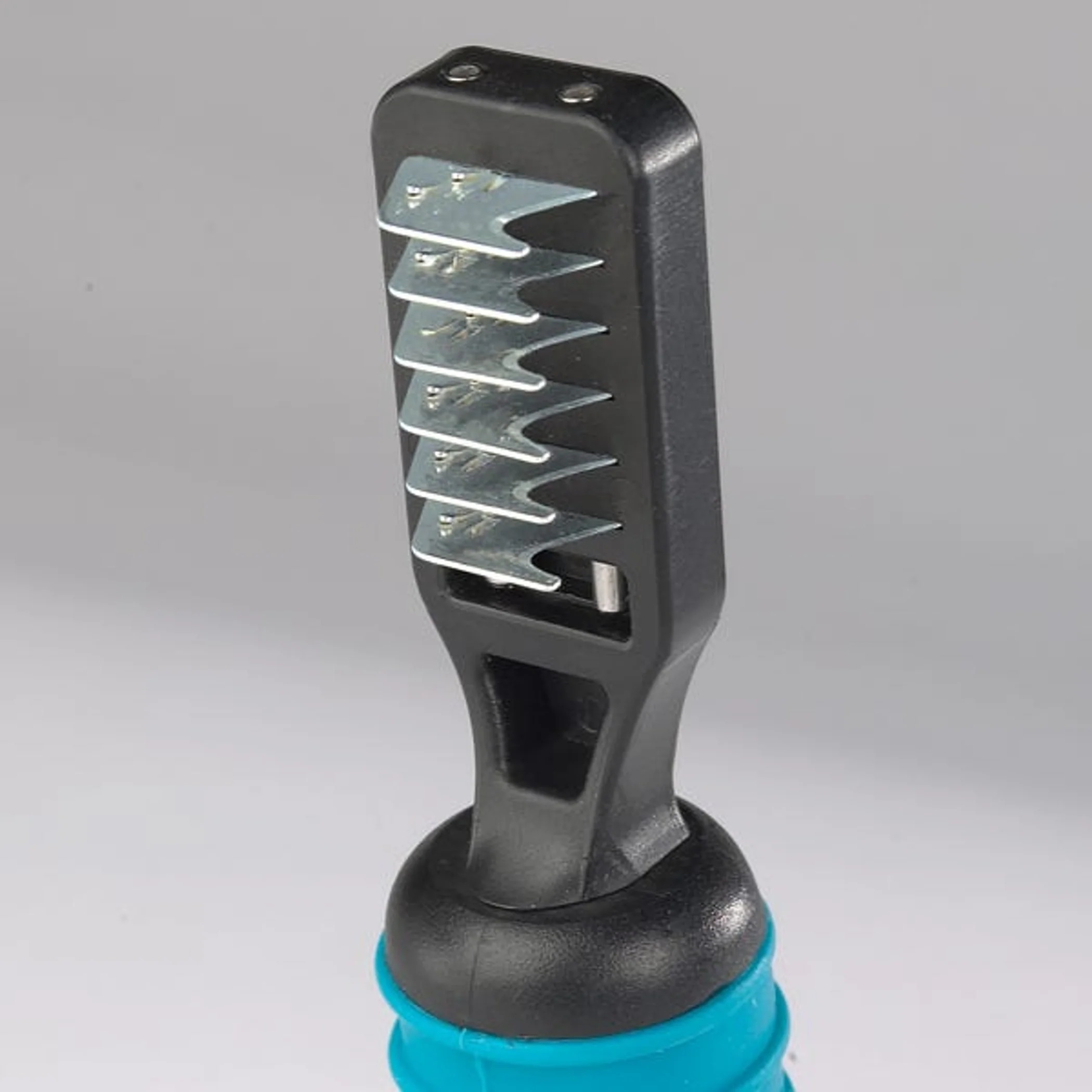
Image source: Bing (Web (fair-use with source credit))
Blunt-Tip Scissors
These have a very limited role in tail grooming. Blunt-tip scissors are for trimming fur, not cutting mats. You might use them to clean up the edges of a mat after you've worked through it, or to trim stray fur around the sanitary area.
They are not for cutting through dense tangles.
The risk with scissors near a cat's tail is obvious. Cats move suddenly, and a tail can flick in a split second. A sharp pair of scissors can easily nick skin or cut the tail itself.
If you need to cut a mat, use clippers instead. If you absolutely must use scissors, only use them on mats you can see clearly, with the skin fully visible beneath, and never on a moving cat.
Detangling Spray
A good detangling spray can make your job significantly easier. These sprays coat the fur with a light lubricant that helps mats slide apart and reduces static electricity. Look for products specifically formulated for cats, not dogs or humans.
Cat sprays have a pH balanced for feline skin and usually contain natural ingredients like aloe or keratin.
Apply the spray lightly to dry fur before brushing. Don't saturate the coat. A few spritzes on the matted area, followed by gentle finger-separation, is usually enough.
Let the spray sit for a minute or two so it can penetrate the tangle.
How to Brush the Tail Safely
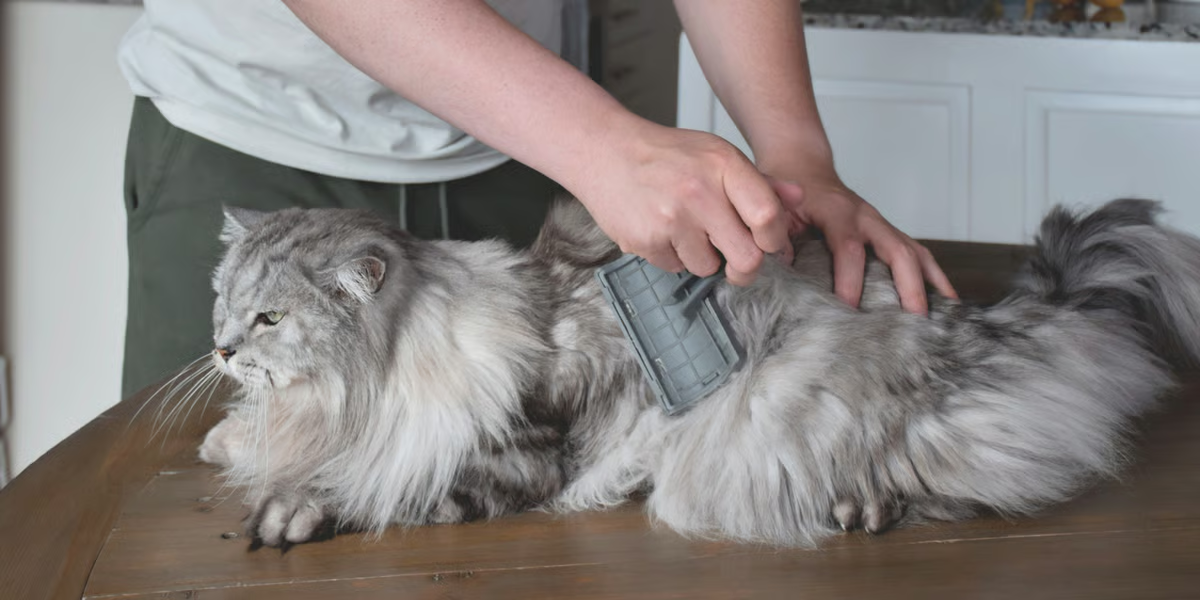
Image source: Bing (Web (fair-use with source credit))
Now that your tools are ready and your cat is calm, it's time to get to work. This step-by-step process is based on recommendations from veterinary professionals and professional groomers who handle fluffy tails daily. Take your time, follow each step, and don't rush.
Step 1: Position Your Cat Comfortably
Place your cat on a non-slip surface. A grooming table with a rubber mat or a towel on the floor works well. Some cats prefer to stand, while others like to lie on their side.
Let your cat choose the position that feels safest. Never force your cat into a position that makes them feel trapped.
Hold the tail gently but securely. The best grip is at the base of the tail, close to the body. This gives you control without putting pressure on the more sensitive tip.
Some groomers recommend holding the tail horizontally rather than vertically. A vertical tail stretches the skin and makes brushing more uncomfortable.
Step 2: Start With Your Fingers
Before bringing out the brush, use your fingers to gently separate any loose tangles. This is called finger-separation or finger-combing. It's the gentlest way to start, and it tells you exactly where the problem spots are.
Work through the fur in small sections, starting at the base and moving toward the tip.
If you hit a tangle, don't pull at it from both ends. This tightens the knot. Instead, hold the fur above and below the tangle to anchor it, then gently work your fingers through the knot from the outside in.
Think of it like untangling a necklace chain. Slow, patient, and methodical works far better than force.
Step 3: Brush From Base to Tip
Once your fingers have worked through the loose tangles, switch to your slicker brush. Start at the base of the tail and work your way toward the tip. Work in small sections, about an inch wide at a time.
Brush in short, gentle strokes, following the direction of hair growth.
The key here is angle and pressure. Keep the brush at a slight angle, with the pins barely penetrating the top layer of fur. Don't press down hard, don't dig deep, and don't use long sweeping strokes.
Short, light strokes are less likely to pull at the skin and are easier for your cat to tolerate.
Step 4: Use the "Comb Test"
After brushing a section, run your wide-toothed comb through it. The comb should glide through smoothly with no snags. If it catches, you've missed a tangle.
Go back with your fingers or the slicker brush and work that spot again.
This comb test is essential. Brushing alone only addresses the top layer of fur. The undercoat can still be matted and tangled even when the surface looks smooth.
The comb verifies that you've gotten all the way through.
Step 5: Work in Short Sessions
Most cats won't tolerate long grooming sessions on their tail. Per professional grooming standards, 5 to 10 minutes per session is the recommended maximum. If your cat starts showing signs of stress, stop.
It's far better to do a 5-minute session every day than to force a 20-minute session that ends in fear and scratching.
Step 6: End on a Positive Note
Always finish each grooming session with something your cat enjoys. A treat, a chin scratch, or a few minutes of playtime reinforces that grooming is a positive experience. Over time, your cat will learn to associate the brush with good things, making future sessions progressively easier.