
Your cat's breath could peel paint. You've noticed it when they yawn, that faint but unmistakable odor. And somewhere in the back of your mind, you know it's not normal.
That's usually the moment people start searching for how to brush a cat's teeth, and it's also the moment they discover just how much their cat hates the idea.
Here's the uncomfortable truth: feline dental disease is the single most common health problem in cats over three years old. The American Veterinary Dental College reports that 40% of cats over age three have some form of dental disease, and that number climbs to 60-90% by age four. The good news?
Most of it is preventable with a routine that takes less than two minutes a day. The bad news? Getting there requires patience, the right tools, and understanding exactly what you're working against.

Image source: Bing (Web (fair-use with source credit))
The Hard Truth About Cat Dental Care
Cats are masters of disguise. In the wild, showing weakness gets you killed, so they've evolved to hide pain completely. Your cat will eat, play, purr, and cuddle with a mouth full of infected teeth and never let you know.
By the time you notice bad breath, the problem is already well established.
Here's what's actually happening inside that tiny mouth:
- Plaque forms within 24-48 hours after eating, just like in humans
- Plaque hardens into tartar in 3-5 days if not removed
- Tartar pushes under the gumline, creating pockets of bacteria
- Bacteria enter the bloodstream, damaging the heart, kidneys, and liver
That last point is the one most people miss. Dental disease isn't just a mouth problem. It's a whole-body problem that shortens your cat's life.
Studies published in the Journal of Veterinary Dentistry confirm that periodontal bacteria in cats can colonize the heart valves and kidney tissue, contributing to serious systemic illness.
The cost side is just as painful. A professional dental cleaning under anesthesia typically runs $300-800 depending on your region, and that's before extractions. A cat with advanced periodontal disease needing multiple extractions can easily ring up a $1,500+ vet bill.
Compare that to the $15-30 you'll spend on a toothbrush and enzymatic toothpaste.
The math isn't complicated. The execution is.
Quick Answer: How to Brush a Cat's Teeth (Without Losing a Finger)
Use a cat-specific toothbrush and enzymatic toothpaste. Start slowly over three weeks. Lift your cat's lip and brush the outer surfaces of the teeth at a 45-degree angle.
Use small circular motions for 30 seconds per side. Aim for three times per week minimum. Never use human toothpaste.
Stop if your cat shows serious distress.
Why Cats Hate Toothbrushes (And What to Do About It)
Before you can fix the problem, you need to understand why it exists. Cats are not dogs. Dogs will tolerate almost anything for a treat and a pat.
Cats have a fundamentally different relationship with handling and control, and they remember negative experiences with remarkable clarity.
The prey vs. predator reflex
Your cat's mouth is a weapon. It's how they catch prey and how they defend themselves. When you try to open it or probe inside, you're triggering an instinctive protective response.
It's not that your cat is "bad" or "stubborn." Their brain is screaming that you're about to hurt them.
The texture problem
Toothbrushes feel foreign. The bristles are scratchy, the handle is awkward, and the whole experience is confusing. Human toothbrushes are worse because they're too large and too harsh for a cat's delicate gums.
This is one reason finger brushes exist, and why we recommend starting with them.
The flavor problem
Most cats are deeply suspicious of new tastes. Pet toothpaste comes in flavors like poultry, malt, and seafood specifically because cats reject minty or clinical flavors. If you've tried brushing with a poorly matched product, your cat may have already developed a negative association.
How cats learn and why it matters
Cats are associative learners. If brushing hurts, stresses, or confuses them, they'll remember it. One bad experience can set you back weeks.
The solution is counter-conditioning: pairing the brush with positive experiences, moving slowly, and consistently stopping before your cat gets upset. We'll walk through the exact protocol in the next section.
Before You Start: What You Need and What You Absolutely Cannot Use
The right tools make the difference between a smooth routine and a bloodbath. Let's break down what you actually need, why each piece matters, and the products that could genuinely harm your cat.
The essential shopping list
| Tool | Purpose | What to Look For |
|---|---|---|
| Finger toothbrush | First 1-2 weeks of training | Soft silicone bristles, fits snugly on your index finger |
| Long-handled cat toothbrush | Ongoing daily brushing | Angled head, extra-soft bristles, comfortable grip |
| Enzymatic toothpaste | Chemical plaque breakdown | Cat-specific, chlorhexidine or zinc-based formula |
| Gauze wraps | Alternative to brushes for sensitive cats | Plain rolled gauze, cut into 2×2 inch squares |
| Dental wipes | Quick maintenance between brushings | Pre-moistened, textured, no added sugars |
Why enzymatic toothpaste matters
Regular toothpaste relies on mechanical abrasion. Enzymatic toothpaste contains glucose oxidase and lactoperoxidase, enzymes that actively break down the bacterial cell wall and neutralize the byproducts that cause plaque. Manufacturer specifications indicate that chlorhexidine-based formulas reduce plaque accumulation by up to 45% when combined with mechanical brushing.
The toxic list: never use these
Human toothpaste is dangerous for cats. Full stop. Here's what makes it toxic:
- Xylitol: This artificial sweetener causes a rapid insulin spike, leading to hypoglycemia, seizures, and liver failure in cats
- Fluoride: Cats ingest toothpaste while you brush, and fluoride is toxic to their systems
- Baking soda: Disrupts electrolyte balance and can cause sodium ion poisoning
- Salt: Increases blood pressure and can cause sodium toxicity
- Foaming agents: Human toothpaste foams because of SLS; if a cat inhales that foam, it can cause aspiration pneumonia
Even "natural" human toothpastes are risky. Coconut oil itself isn't toxic, but the essential oils added for flavor often are. Peppermint oil, tea tree oil, and wintergreen oil are all toxic to cats, even in small amounts.
What about water additives and dental treats?
These can supplement brushing, but they can't replace it. Water additives containing chlorhexidine or zinc help slow bacterial growth, and dental treats with mechanical texture provide some abrasive cleaning. But neither physically disturbs the plaque biofilm the way brushing does.
Think of them as a mouthwash that never reaches the standard of a proper brush.
Step-by-Step: The 3-Week Desensitization Plan
You don't start brushing your cat's teeth on day one. That's the biggest mistake people make, and it's why so many give up after a single attempt. Instead, you'll build the routine over three weeks, each week introducing a new layer of comfort and capability.
Why this process works
The plan works because it addresses the two things cats need to accept handling: trust and predictability. Every session follows the same sequence, in the same location, at roughly the same time. Your cat learns what's coming, realizes they survive it, and gradually lowers their defenses.
Week 1: Mouth touching and taste testing
Goal: Get your cat comfortable with you touching their face and mouth.
Daily routine:
- Pick a quiet time when your cat is relaxed, not after play or during hunger
- Sit on the floor with your cat in your lap or beside you
- Gently stroke the sides of their face for 2-3 minutes
- Progress to lifting the lips briefly, just enough to see the teeth
- End with a high-value treat immediately after each session
Desensitization progression:
- Days 1-2: Stroke the cheeks and chin only
- Days 3-4: Lift the lip on one side for 2-3 seconds
- Days 5-7: Lift both lips, gradually increasing the hold to 5 seconds
Critical rule: If your cat squirms, hisses, or pulls away, stop immediately. End the session on a positive note by giving a treat after the stop. You're teaching them that resisting ends the experience, but also that cooperation gets rewarded.
Week 1 troubleshooting:
| Problem | Likely Cause | Fix |
|---|---|---|
| Cat runs away when you sit down | Previous negative experience | Use treats to lure them; start with simply sitting near them |
| Cat allows touching but not lip lifting | Sensitive whisker region | Apply gentle pressure, not pulling; never pinch the lip |
| Cat growls or hisses | Fear response | Go back to face stroking only for 2-3 more days |
Week 2: Gauze and finger brushing
Goal: Introduce the mechanical sensation of brushing without the brush.
Daily routine:
- Wrap a 2×2 inch piece of dry gauze around your index finger
- Dip it in a small amount of the enzymatic toothpaste
- Let your cat sniff and lick it first
- Gently insert your finger into the side of the mouth (don't pry the jaw open)
- Rub the gauze along the outer surfaces of the teeth in a light circular motion
- Target 10-15 seconds per side to start, building to 30 seconds by the end of the week
Why gauze works: Gauze has a slightly abrasive texture that removes some plaque, but more importantly, it lets your cat get used to the sensation of something rubbing against their teeth and gums. It also gives you a chance to assess your cat's mouth for any pain or sensitivity before you introduce something more rigid.
Switching to a finger brush:
- Around day 10-12, substitute the silicone finger brush for the gauze
- Apply a pea-sized amount of toothpaste to the brush
- Follow the same technique as the gauze
- Expect some initial resistance since the silicone feels different
Critical rule: If your cat bites down on your finger, don't pull away quickly. A sudden tug can cause tissue damage. Instead, press your finger further into the mouth (safely) and push gently upward against the roof.
This causes the cat to release the bite reflexively, much like how a mother cat carries a kitten.
Week 3: Real brush, real technique
Goal: Transition to a proper cat toothbrush with the full 30-second per side routine.
Daily routine:
- Introduce the long-handled brush for one or two sessions before full commitment
- Hold the brush like a pencil, not a hammer
- Position the bristles at a 45-degree angle where the tooth meets the gumline
- Use small circular motions on the outer surface of the teeth only
- Focus on the back molars first (where plaque accumulates most)
- Work forward to the canines and incisors
- End with a treat and praise every single time
The complete session timeline:
| Step | Duration |
|---|---|
| Cat approaches and settles | 30 seconds |
| Face stroking warm-up | 30-60 seconds |
| Lip lifting and brushing (per side) | 30 seconds each |
| Reward and praise | 15 seconds |
| Total | 2-3 minutes |
When to give up for the day: If your cat has two consecutive sessions where they're actively fighting for the entire time, stop pushing. Take a two-day break and resume with the gauze step to rebuild confidence. Forcing through resistance creates a negative association that takes weeks to undo.
The Correct Brushing Technique (In Detail)
The mechanics matter more than you might think. Brushing with the wrong angle or technique doesn't just fail to clean; it can cause gum injury, erode enamel, and make your cat associate brushing with pain.
The setup
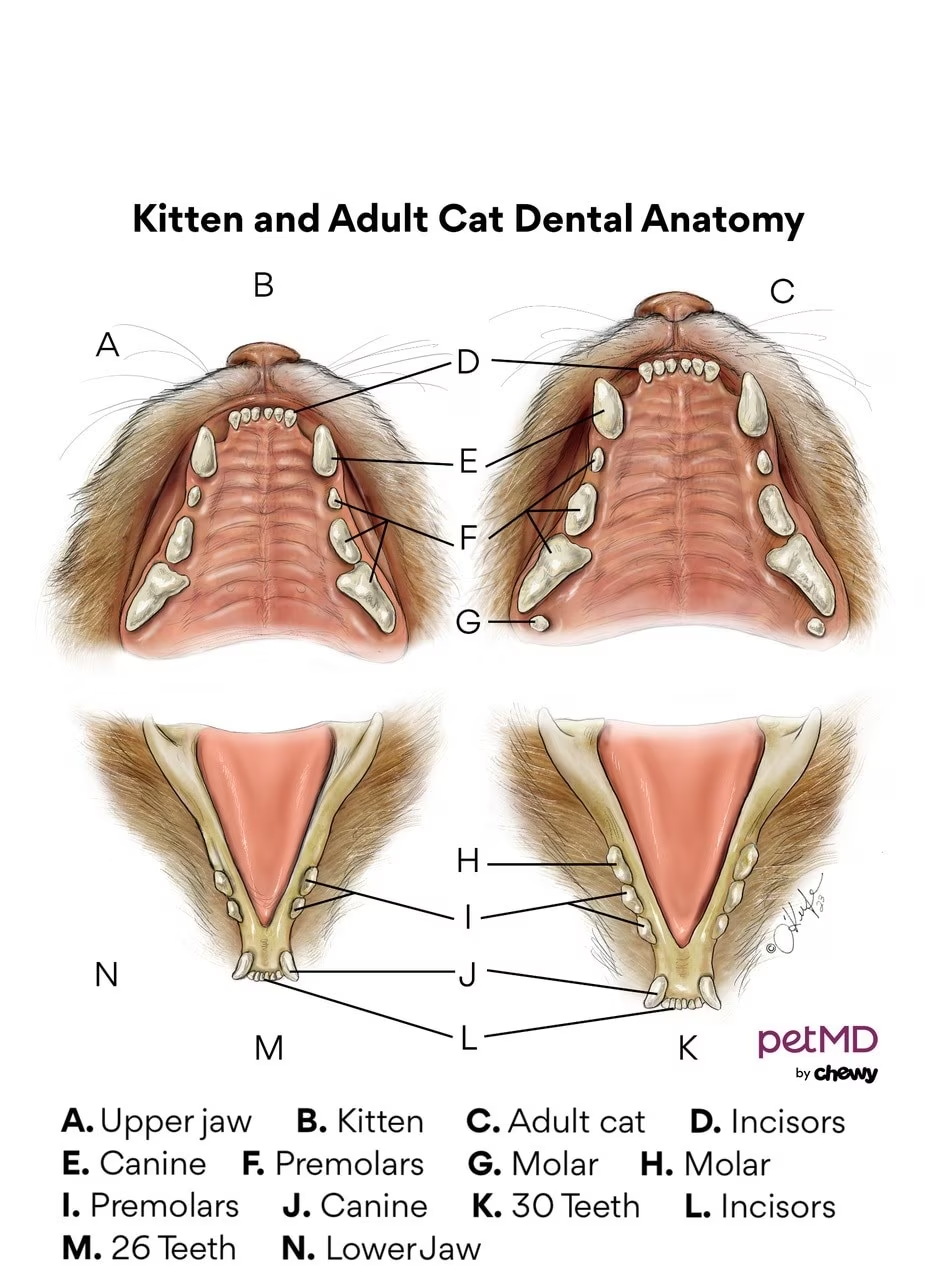
Place your cat on a stable, non-slip surface. A table, counter, or your lap all work, as long as your cat isn't sliding around. If you're using a table, lay down a towel for traction.
Support your cat's head gently from behind with your non-dominant hand, using your thumb to lift the lip on the side you're brushing.
The 45-degree angle
This is the gold standard for a reason. When the bristles hit the tooth at exactly 45 degrees, they penetrate slightly under the gumline where plaque bacteria love to hide. Anything steeper than 45 degrees and the bristles slide off the tooth surface.
Anything flatter and you're just wiping the crown, missing the problem area entirely.
The circular motion
Small circles, not scrubbing back and forth. Picture a tiny paintbrush working on a crown. Each circle should be about the size of the bristle head itself.
Three to four circles per tooth, then move to the next. You're not pressure washing; you're mechanically disrupting the biofilm that plaque needs to survive.
What you're doing by section
| Tooth Area | Technique | Why It Matters |
|---|---|---|
| Back molars | Small circles, 5-7 seconds each | Most plaque accumulation occurs here |
| Canines | Diagonal strokes from gumline up | Longer teeth need direction-specific cleaning |
| Incisors | Quick circular buffing | Small teeth accumulate less plaque |
| Inner surfaces | Skip entirely | Your cat's tongue naturally cleans these surfaces |
Why you never brush the inside
Here's a relief: you don't need to brush the inside of your cat's teeth. The tongue is a natural cleaning mechanism. Its abrasive surface and constant movement remove plaque from the inner surfaces effectively.
Brushing inside the mouth also requires prying the jaw open, which is stressful, dangerous, and completely unnecessary. The outer surfaces are where 95% of plaque accumulates in cats.
The biting problem
When a cat bites down on your brush, don't yank it away. Hold still for a moment, then gently work the brush out from the side. Every time you pull away abruptly, you teach the cat that the brush is a threat to be defeated.
Stay calm, stay still, and let the bite pass.
Session length and frequency
Keep sessions ridiculously short. Thirty seconds per side is plenty. Two minutes total, including warm-up, is a complete session.
You're after consistency, not intensity. A solid two-minute session three times a week produces measurably better oral health than a chaotic ten-minute session twice a month.
How Often Should You Brush? Realistic Frequency Goals
The ideal is every day. The reality is most households can't sustain that. So let's be honest about what works.
Daily brushing (the gold standard)
Daily brushing removes plaque before it mineralizes into tartar. At this frequency, you'll likely never need another professional cleaning for routine maintenance. It takes 2 minutes.
That's 730 minutes a year, roughly one movie. It's also the level where you'll see visible results within two weeks: pinker gums, fresher breath, less visible plaque.
Three times per week (the realistic minimum)
This is the baseline. Studies on canine dental care (which transfer well to cats given similar oral physiology) show that brushing three times per week significantly reduces plaque and gingivitis compared to no brushing. It won't reverse existing disease, and you may still need the occasional professional cleaning, but it will prevent progression.
Once per week (better than nothing, barely)
Weekly brushing keeps tartar from building up quickly, but it won't prevent gum disease. Plaque mineralizes within days. If you're only brushing weekly, you're fighting a losing battle.
If this is all you can manage, be extra vigilant about watching for signs of dental disease and budget for annual cleanings.
The frequency-to-outcome table
| Brushing Frequency | Plaque Control | Tartar Prevention | Breath Improvement | Commitment Level |
|---|---|---|---|---|
| Daily | Excellent | Excellent | Significant within 2 weeks | High |
| 3x per week | Good | Moderate | Noticeable within 3-4 weeks | Medium |
| Weekly | Fair | Poor | Minimal | Low |
| Never | None | None | None | None |
Why habit beats intensity
Cats are creatures of routine. A brief daily or near-daily session at the same time works better than a long, stressful session once a week. Your cat learns to expect it.
They may never love it, but they'll tolerate it, and tolerance is all you need.
Common Mistakes That Make Brushing Worse
Most people who give up on brushing their cat's teeth don't fail because of the cat. They fail because of a technique error that created a bad experience. Here are the most common ones, and how to avoid each.
Forcing the mouth open
You don't need to open your cat's mouth to brush. Ever. The outer surface of the teeth is what needs cleaning, and you can reach that by simply lifting the lip.
Forcing the jaw open triggers the bite reflex, causes panic, and teaches your cat that brushing equals a full-body threat response.
Quitting after two failed attempts
Consistency beats perfection. A two-minute session that ends with your cat mildly annoyed is a success. A session that ends with you bleeding is a failure.
But a week of mildly annoying sessions will produce noticeable improvement. Most people give up after two bad days. Don't.
Rewarding the wrong behavior
If you only give treats when your cat tolerates brushing, you're rewarding compliance. That's good. But if you give treats when your cat hisses or fights, you're rewarding aggression.
The treat must follow the desired behavior. If your cat fights the entire session, don't reward the fight. End the session, wait 20 minutes, and offer a treat to reset the association.
Mistaking pain for stubbornness
Cats hide pain. If your cat has suddenly started resisting brushing after weeks of tolerance, they may have developed dental disease. A fractured tooth, gum abscess, or resorptive lesion can make brushing genuinely painful.
If resistance appeared suddenly, schedule a veterinary exam before continuing.
Using the wrong toothpaste
Human toothpaste with mint flavor doesn't just taste bad to cats. The foaming action creates panic. The xylitol or fluoride creates toxicity risk.
If you've been using human toothpaste, stop immediately and switch to a veterinary enzymatic formula.
Brushing only when you remember
Inconsistent brushing is almost pointless. Plaque recolonizes within 24 hours. If you brush once every two weeks, you're not maintaining dental health; you're just removing the most superficial layer of buildup.
Set a reminder. Pick two or three regular days per week if daily isn't achievable.
When Home Brushing Isn't Enough: Signs You Need a Vet
Home brushing prevents and manages mild dental disease. It can't fix advanced cases. Here's how to know when you need professional help.

The early warning signs
Cats won't sit in a dental chair and raise their paw. You have to look for subtle changes:
- Bad breath that doesn't improve. If your cat's breath is consistently foul even after weeks of brushing, something is decaying in there.
- Red or swollen gums. Healthy cat gums are pink and tight against the teeth. Redness, swelling, or bleeding when you brush is gingivitis.
- Visible tartar. This means plaque hasn't been removed for several days or weeks. It appears as yellow or brown buildup near the gumline.
- Dropping food. Cats with tooth pain often chew and then drop food. Watch for this.
- Pawing at the mouth. This is a pain response. Contact your vet promptly.
- Chewing on one side only. Cats adapt to pain by favoring the comfortable side.
- Excessive drooling. This can indicate oral ulceration or tooth resorption.
What tooth resorption is and why it matters
Tooth resorption is the most common dental disease in cats. The body's own cells begin attacking and breaking down the tooth structure. It affects roughly 46% of cats over age four.
These lesions are extremely painful, and they're one of the leading reasons owners bring cats in for "just seems quieter than usual."
The catch? Resorption isn't visible without dental X-rays. The lesion often starts below the gumline.
By the time you see it, your cat is in significant pain.
The decision table
| Symptom | Home Care | Vet Visit |
|---|---|---|
| Mild bad breath | Yes, start brushing | Not urgent |
| Persistent bad breath after 3 weeks of brushing | Continue brushing | Schedule exam |
| Visible tartar buildup | Brush + dental treats | Within 1-2 months |
| Red or bleeding gums | Continue gentle brushing | Within 2 weeks |
| Dropping food or chewing one side | Stop brushing that side | Within 1 week |
| Pawing at mouth or excessive drooling | Stop brushing entirely | Immediate |
| Facial swelling or visible lump | Do not touch | Emergency |
Why you should never do anesthesia-free cleanings
You've seen the ads. A groomer or vet tech offers a "non-anesthetic dental cleaning" for cats. It's cheaper and seems safer.
Here's why it's a bad idea.
Anesthesia-free cleaning only reaches the visible crown of the tooth. It cannot clean below the gumline, which is where periodontal disease actually lives. Worse, it requires restraint.
A cat who resists being held down while instead of anesthesia-free scraping can suffer fractured teeth or jaw damage. The procedure is also painful enough to create severe anxiety that makes future home brushing nearly impossible.
The American Veterinary Dental College explicitly states that anesthesia-free dental cleanings "do not provide any benefits" and "are considered unacceptable." Professional dental prophylaxis requires general anesthesia so the vet can fully assess, clean below the gumline, and take dental X-rays to identify hidden disease.
Professional Dental Cleaning: What It Costs and Why It's Needed
Eventually, most cats over age five need at least one professional dental cleaning. Here's what that actually involves, what you'll pay, and why it's worth it despite the anesthesia risk.

What happens during a professional cleaning
A proper veterinary dental procedure involves more than just scraping visible tartar. Here's the sequence:
- Pre-anesthetic bloodwork. Evaluates organ function to ensure your cat can safely metabolize anesthesia.
- IV catheter and fluids. Maintains blood pressure and allows rapid intervention if complications occur.
- Intubation. A breathing tube protects the airway from water and debris during the cleaning.
- Digital dental X-rays. Captures below-gumline pathology that's invisible to the naked eye.
- Supra and subgingival scaling. Removes plaque and tartar from the crown and below the gumline.
- Polishing. Smooths the tooth surface, slowing future plaque accumulation.
- Fluoride or sealant application. Provides additional protection.
- Full oral exam. Identifies fractured teeth, resorptive lesions, and gum disease.
What it costs
| Region | Routine Cleaning | With Extractions |
|---|---|---|
| Rural / Midwest | $200-400 | $400-800 |
| Suburban / Average | $300-500 | $500-1,000 |
| Urban / Coastal | $500-800 | $800-1,500+ |
These ranges include anesthesia, monitoring, X-rays, and the cleaning itself. They don't include treatment for advanced disease, which can push totals significantly higher.
How often is it needed?
That depends on genetics, diet, and your home care routine:
- Cats with daily brushing: Every 3-5 years on average
- Cats with 3x/week brushing: Every 2-3 years
- Cats with no home care: Every 6-12 months
The anesthesia question
Anesthesia risk is real but lower than most owners fear. Modern monitoring equipment and safer drug protocols have dramatically reduced mortality rates. For otherwise healthy cats, the risk of anesthesia-related death is less than 0.1%.
Compare that to the long-term risk of untreated dental disease, which includes kidney failure, heart disease, and severe pain.
If your cat has underlying conditions like kidney disease or heart disease, your vet will adjust the protocol. They may recommend pre-operative medications, IV fluid therapy, or additional monitoring. This is why a professional dental cleaning is never a "find a cheap deal" purchase.
What happens after
Your cat may have a sore mouth for 24-48 hours. They'll eat softer food and may drool slightly. They'll be groggy from anesthesia.
If any extractions were done, they'll need pain medication and antibiotics. You'll be told to hold off on brushing for 4-7 days to let the gums heal. After that, resume brushing immediately so the investment wasn't wasted.
Alternatives That Actually Work (When Your Cat Refuses Brushing)
Some cats will never accept a toothbrush. You've tried. You've been patient.
They've threatened to end you in your sleep. This section is for you.
The truth about alternatives: none of them are as good as brushing. But several are dramatically better than nothing, and combining two or three can come close to the effect of daily brushing.
Dental treats: the marketing reality
Most dental treats carry the Veterinary Oral Health Council (VOHC) seal, but that seal means they've been proven to slow plaque and tartar accumulation, not prevent it. Think of treats as a supplement, the way a mouthwash supplements flossing.
- Dental chews and treats: Provide abrasive cleaning action as the cat bites down
- Prescription dental diets: Large kibble forces chewing, mechanically scraping teeth
- Raw bones and meat: Provide natural chewing resistance, but carry risk of dental fractures
| Option | Plaque Removal | Convenience | Safety Concerns |
|---|---|---|---|
| Daily brushing | Excellent | Moderate | Very safe |
| Dental treats | Moderate | Excellent | Minimal |
| Prescription dental diet | Moderate | Excellent | None |
| Raw meaty bones | Good | Low | Choking, fractures |
| Chlorhexidine rinse | Good | Good | Taste aversion |
Water additives and dental gels
This is the most passive option. You add a liquid or gel to your cat's water bowl, and the active ingredients reduce plaque-causing bacteria.
- Chlorhexidine-based additives: Effective but some cats refuse to drink the water
- Zinc-based additives: Less effective but better palatability
- Dental gels: Applied directly to the gums with your finger, no brushing needed
The tradeoff is efficacy. A 2020 review in the Journal of Veterinary Dentistry found that chlorhexidine-based products reduce plaque by about 20-30%. That's meaningful but nowhere close to brushing, which removes 60-70% of plaque when done correctly.
Dental wipes
These are textured wipes you rub over the teeth and gums. They're easier than a brush because they're flat, and they don't trigger the same biting reflex. Try them if your cat tolerates finger contact but hates bristles.
How to combine alternatives
If your cat refuses brushing entirely, the best routine is:
- Daily dental wipe (60 seconds)
- Dental treat every morning
- Water additive in the drinking bowl
- Prescription dental diet if they'll eat it
That combo gives you multiple angles of attack: mechanical disruption, bacterial control, and dietary abrasion. These next 5 options serve different portions of the mouth, so combining them works better than any single alternative.
The honest ranking
If you can only do one thing: brush. If you can't brush at all: dental wipes plus a water additive. That combination requires zero training and produces measurable improvement in most cats within three weeks.
What to Expect: Realistic Results by Week 1, Month 1, and Beyond
You need to know what success looks like so you don't give up during the early, awkward phase.
The first week (expectation reset)
The first week isn't about clean teeth. It's about habit formation. Your cat may fight.
You may doubt the process. You'll see no visible improvement. That's normal.
The plaque that's already there won't disappear. You're building the foundation.
Week 2-4 (the visible shift)
By week two, most cats accept the routine. By week three to four, you should notice:
- Breath smells better: The bacterial load in the mouth is dropping
- Gums look pinker: Inflammation is decreasing
- Visible plaque is reducing: Old plaque is slowly being disrupted
- Your cat fights less: The routine is becoming predictable
Month 2-6 (the stabilization phase)
If you're brushing three or more times per week, your cat's mouth should be visibly healthier by month two. Gums should be pink and tight. Breath should be neutral.
Tartar that was present before will gradually weak as the enzymes and mechanical action prevent new accumulation.
The 6-month mark and beyond
Your cat's mouth is now in a maintenance state. The plaque that remains is thin and manageable. You're preventing gingivitis from progressing to periodontitis, which is the goal.
Schedule a veterinary checkup to confirm the routine is adequate.
What NOT to expect
- Tartar reversal: Once tartar has mineralized, nothing you do at home removes it. Professional scaling is required.
- A happy cat: Most cats accept brushing. Very few enjoy it. That's okay.
- Perfection: You'll miss sessions. Life happens. Aim for consistency over perfection.
How to track progress
Keep a simple log. On a calendar, note:
- Which days you brushed
- How your cat reacted on a 1-5 scale
- Any visible changes in gums, breath, or behavior
Trends matter. If month three looks better than month one, you're on the right track.
Kittens vs. Senior Cats: Adjusting the Approach
Age changes everything about how you approach dental care. Here's how to adapt.
Kittens: the golden window
Kittens are the easiest candidates for tooth brushing. Their mouth is small, their teeth are new, and they haven't developed resistance yet. The window between 8 and 16 weeks is ideal for establishing a lifelong routine.
The kitten protocol:
- Start by gently rubbing the gums with your finger, no toothpaste
- Move to a finger brush dipped in a tiny amount of pet toothpaste
- Keep sessions to 15-20 seconds, then reward enthusiastically
- Use a soft-bristled kitten toothbrush by week 4 of training
Kittens also lose their baby teeth around 4-6 months. During this period, their gums are tender and they may resist brushing. Back off to gum massage only and resume brushing after the adult teeth come in.
Adult cats: the education phase
Adult cats adopted from shelters often have dental issues already. They may have never been handled. They may associate hands near their face with being restrained.
Start extra slow, spend two weeks on the desensitization phase instead of one, and consider a veterinary exam before starting.
Senior cats: special considerations
Senior cats are at the highest risk for dental disease but also the most fragile when it comes to intervention.
- Existing dental disease is likely: Over 70% of cats over age seven have some form of dental disease
- Underlying conditions affect care: Kidney disease, hyperthyroidism, and heart disease all impact what may be possible
- Anesthesia risk is higher: But not so high that you should skip dental care entirely
The senior protocol:
- Always get a veterinary exam before starting
- Discuss safe toothpaste options with your vet, especially if your cat has kidney disease
- Focus on prevention rather than expecting to reverse existing disease
- Consider more frequent professional cleanings if your senior cat tolerates anesthesia well
Breed considerations
Some breeds have more dental trouble than others:
| Breed | Risk | Why |
|---|---|---|
| Persian | High | Flat faces crowd teeth |
| Himalayan | High | Same brachycephalic anatomy |
| Siamese | Moderate | Prone to resorptive lesions |
| Maine Coon | Moderate | Large jaw, crowded molars |
| Domestic Shorthair | Average | Standard anatomy |
The bottom line on age
Start early if you can. Adapt if you can't. A senior cat who never tolerates brushing is better served by professional cleanings and water additives than by daily wrestling matches that raise stress hormones and make the problem worse.
Frequently Asked Questions
Can I use coconut oil to brush my cat's teeth?
Coconut oil itself is not toxic to cats, and some owners find it palatable. But it has no proven plaque-fighting ability. It also doesn't contain the enzymes that make veterinary toothpaste effective.
If you're using coconut oil because your cat refuses commercial toothpaste, look for a chlorhexidine-based veterinary gel instead. It has actual evidence behind it.
Is it okay if my cat swallows the toothpaste?
Yes, that's expected. Veterinary enzymatic toothpaste is formulated to be safe for swallowing. That's why you can never use human toothpaste, which contains ingredients that are toxic when ingested.
If you're worried about the specific brand, check the label for chlorhexidine or zinc as the active ingredient. Both are considered safe for daily use in cats.
My cat bites me when I try to brush. What am I doing wrong?
Most likely, you're moving too fast or trying to open the mouth. Take a step back. Go to week one of the desensitization plan and spend an extra week on face stroking and lip lifting.
Also, use a finger brush instead of a handle brush. If biting persists, it's worth a vet visit to rule out existing dental pain that makes brushing genuinely painful.
Do I need to brush the inside of the teeth?
No. The outer surfaces are where 95% of plaque accumulates. Your cat's tongue naturally cleans the inner surfaces, and trying to brush inside the mouth requires prying the jaw open, which is stressful and dangerous.
Focus on the outer surfaces at a 45-degree angle. That's all you need.
How do I brush my cat's teeth when they hate it?
Start with desensitization. For one to two weeks, just touch their face and lift their lips. Then introduce a finger brush with a tasty enzyme toothpaste.
Keep sessions under two minutes. End everything with a treat. If two weeks of daily practice doesn't improve tolerance, try dental wipes instead, or talk to your vet about behavior conditioning.
What's the best time of day to brush?
Cats are crepuscular, most active at dawn and dusk. Choose a time when your cat is relaxed, not after play and not during hunger. Many owners find just before the evening meal works well because the cat is motivated by the reward that follows.
The key is consistency. The same time every day establishes a routine your cat can predict and accept.
Final Verdict: What Your Cat Needs From You Right Now
Here's the honest summary. Brushing your cat's teeth is one of the few habits that genuinely extends their life. It prevents pain, disease, and expensive surgery.
It's also hard, and it doesn't happen overnight.
Start with the desensitization plan. Get the right tools, not human substitutes. Be consistent over intense.
Track your progress so you can see improvements that are too gradual to notice day by day.
And if brushing never becomes a comfortable routine for your cat, don't give up on dental care entirely. Dental wipes, water additives, prescription diets, and regular professional cleanings all contribute to a healthy mouth. Pick the combination your cat tolerates best and stick with it.
Your cat can't brush their own teeth. It falls to you. Not because it's easy, but because it matters.
The tiny mouth you're learning to handle is the same mouth that purrs, eats, and rubs against your hand. Keep it healthy, and they'll reward you with years of those moments.