
Most owners just want a number. How long can you leave a dog alone before it stops being fair on the dog? The honest answer is that there isn't one number, and anyone handing you a single figure without asking about your dog is guessing.
The RSPCA's welfare guidance sets four hours as the general ceiling for an adult dog left alone in one stretch, and it's a sensible default. But in our research across veterinary behaviour literature and welfare codes, that figure moves a lot depending on age, health, training history and whether anyone breaks up the day. Some dogs handle eight hours without blinking.
Others fall apart in twenty minutes.

Image source: Web (Bing) / cinemagia.ro (Web image (fair-use with source credit))
Quick Answer
How long can you leave a dog alone? Most healthy adults cope with four to six hours. Puppies manage roughly one hour per month of age.
Seniors and dogs on diuretics need breaks every two to three hours. Eight hours works only with a midday visit and proper training. Behaviour, not bladder capacity, usually sets the real limit.
The Honest Answer: Why "4 to 6 Hours" Is a Starting Point, Not a Rule
The four to six hour figure gets repeated everywhere. It's a reasonable average. It's also nearly useless on its own, because it describes a dog that doesn't exist: a healthy, well trained, middle aged, house trained dog with no anxiety and no medication.
That number is a rough blend of two separate ceilings that rarely line up:
- The physical ceiling. How long the dog can comfortably hold urine and stay hydrated, fed and thermally comfortable.
- The emotional and behavioural ceiling. How long the dog can stay calm, settled and out of trouble.
For most adult dogs, the second ceiling is far lower than the first. A five year old Labrador can physically hold on for eight or ten hours. Whether he spends those hours asleep on the sofa or eating the skirting board is a different question entirely.
That's why two dogs in identical flats can have limits four hours apart. One learned early that departures are boring and predictable. The other never learned it, and now every closed door triggers a stress response.
What the "one hour per month" puppy rule really means
It's a bladder guideline, not a behaviour guideline. A three month old puppy can usually hold urine for around three hours. That does not mean three hours alone is a good idea for a three month old puppy.
At that age, most puppies also can't self settle, can't be trusted around cables, and are still learning that you always come back. The toileting clock and the emotional clock are different clocks. Use the shorter one.
Bladder Isn't Usually the Limit, Behaviour Is
Ask most owners why they rush home, and they'll say the dog needs the loo. Ask a veterinary behaviourist, and you'll get a different answer. In most adult cases, the dog was fine on toileting and struggling on everything else.
The American Veterinary Medical Association groups these problems under separation related behaviour, an umbrella covering barking, destruction, house soiling, pacing, drooling and escape attempts when the owner leaves. Note that house soiling sits in that list. Plenty of "accidents" aren't bladder failures at all.
They're stress responses.
What actually happens in the first 30 minutes after you close the door
This is the single most useful thing to know, and almost nobody checks it. Distress peaks early. If a dog is going to unravel, it usually happens within the first fifteen to thirty minutes, not at hour four.
A settled dog follows a predictable pattern on camera:
- Two to five minutes of alertness near the door or window
- A short wander, maybe a drink
- Engagement with a food toy if one was left
- Lying down and sleeping within roughly ten to twenty minutes
A distressed dog looks nothing like that. You'll see pacing that doesn't stop, panting in a cool room, drooling, whining that builds rather than fades, or scratching at the exit point. A dog that won't touch a stuffed KONG is telling you something loud.
Here's the practical takeaway. If your dog settles inside twenty minutes, extending from four hours to six is a small ask. If your dog is still pacing at the thirty minute mark, adding hours makes it worse, and a midday walker won't fix it either.
That's a training problem, not a scheduling problem.
How long a healthy dog can physically hold it
Longer than most people assume. Adult dogs routinely hold urine overnight for eight to ten hours without difficulty. That's the normal, healthy pattern for a dog sleeping through the night.
Daytime is different because the dog is awake, moving, drinking and being stimulated. As a working guide:
| Situation | Typical comfortable hold |
|---|---|
| Adult, awake, normal water intake | 6 to 8 hours |
| Adult, overnight, asleep | 8 to 10 hours |
| Senior with reduced sphincter tone | 2 to 4 hours |
| Dog on furosemide or prednisolone | 1 to 3 hours |
| Puppy, awake | Roughly 1 hour per month of age |
Two warnings worth taking seriously. Habitually forcing very long holds causes discomfort, so "he can physically manage it" isn't the same as "it's fine every day". And never restrict water to buy yourself extra hours.
Constant access to fresh water is a welfare requirement under the Animal Welfare Act 2006 in England and Wales, and dehydration is a far bigger risk than a wet floor.
The 7 Variables That Change Your Dog's Number
Work through all seven honestly before you set a limit. Most owners find two or three that pull their number down and one or two that push it up.
Age and life stage
The strongest single variable. Puppies under six months are limited by bladder and by their inability to entertain themselves safely. Adolescents between six and eighteen months are limited by destructiveness, which peaks in that window even in dogs that were angels at four months.
Adults between one and seven are usually at their most flexible. Seniors from around eight onwards start sliding back down the scale, and it accelerates fast if cognitive dysfunction or arthritis gets involved.
Health conditions and medications
This branch overrides everything else. If any of the following apply, your ceiling drops regardless of how well behaved your dog is:
- Diuretics such as furosemide, which massively increase urine output within hours of a dose
- Steroids such as prednisolone, which drive both drinking and urination
- Diabetes mellitus, chronic kidney disease, or Cushing's disease, all of which cause increased thirst and urination
- Urinary incontinence, including urethral sphincter mechanism incompetence, common in spayed females
- Cognitive dysfunction syndrome in seniors, where the dog may become disoriented and vocal when alone
Talk to your vet about dose timing. Giving a diuretic first thing in the morning before a nine hour workday is a recipe for accidents and urine scalding. Shifting the schedule sometimes solves the whole problem.
Training history and time in the home
A dog taught alone time deliberately, in small increments, from puppyhood has a completely different tolerance to one that was never taught at all. The pandemic puppy cohort is the clearest example. Many of those dogs, now adults, never spent a single unsupervised hour until their owners went back to the office.
Time in your home matters too. A rescue dog in week one has no evidence that you're coming back. Start at minutes, not hours, no matter how calm they seem in your presence.
Breed traits, energy level, and heat tolerance
Breed doesn't set the number, but it shifts it. High drive working breeds like Border Collies, Malinois and Huskies need their mental needs met before an absence or they'll invent a job. Companion breeds bred for close human contact, including Cavaliers and some toy breeds, often show separation related behaviour more readily.
Brachycephalic breeds deserve a specific mention. Pugs, French Bulldogs, Bulldogs and Boxers cool themselves inefficiently. In a warm room with no airflow, a flat faced dog left alone for six hours is a genuine heat risk, and most UK homes have no air conditioning.
Crate, playpen, or free roam
The container changes the ceiling dramatically. A crate is the tightest constraint. Most welfare guidance caps continuous daytime crating at around four hours, and many trainers go shorter.
A puppy pen gives more room to shift position and separate toilet from bed. A single dog proofed room gives more again. Full house access has the highest ceiling for a trustworthy dog and the highest risk for one that isn't.
Home setup, climate, and neighbours
Practical stuff that quietly caps your number:
- Room temperature. Aim for roughly 18 to 24°C (65 to 75°F). South facing rooms in summer climb well past that.
- Water security. A tipped bowl at hour one turns a fine absence into a bad one. Use a heavy, non tip bowl or leave two.
- Window access. Great for light, terrible if your dog barks at every passer by for eight hours.
- Neighbours. In a flat, sustained barking can breach your tenancy long before it harms the dog.
Whether anyone breaks up the day
This is the variable most owners can actually change. A single midday break resets the toileting clock, the boredom clock and the movement clock all at once. It's the difference between a hard four hour ceiling and a workable eight hour day.
Placement matters more than people think. Put the visit at the halfway point, not at the end. Two blocks of four hours are far easier than seven hours followed by one.
Alone-Time Limits by Age: Puppy, Adult, and Senior
Here's the age based framework, with the caveat that health and training override every row in it. Treat these as opening bids, not final answers.
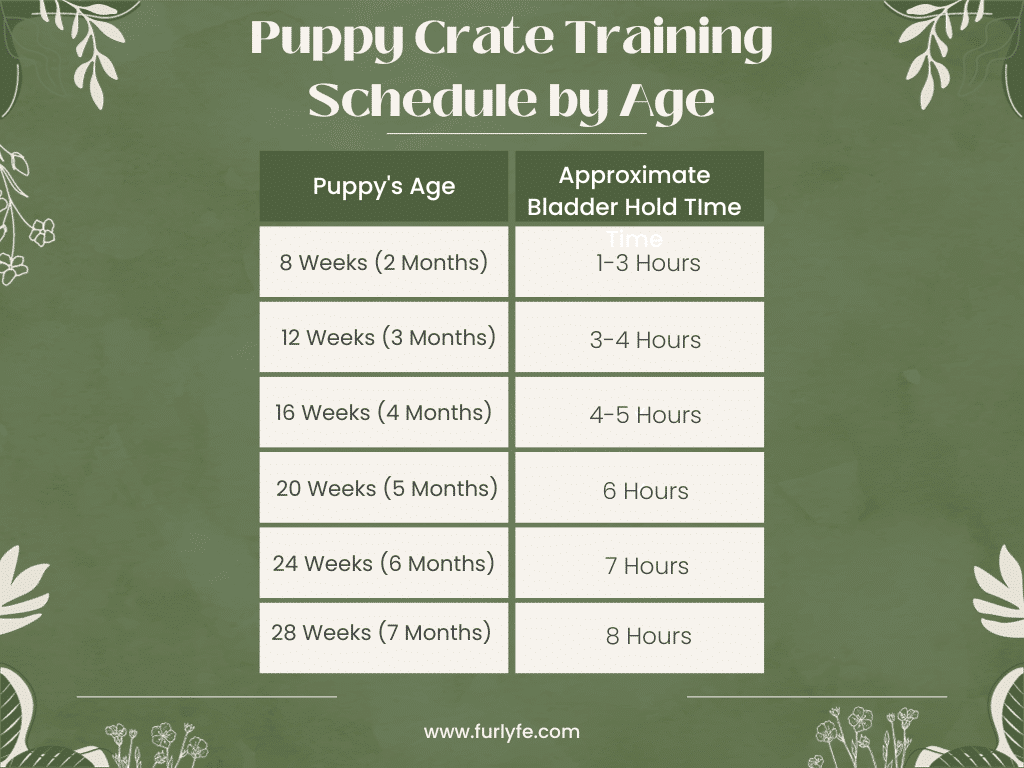
Image source: Bing (Web (fair-use with source credit))
| Life stage | Realistic daytime limit | What actually sets the limit |
|---|---|---|
| Puppy 8 to 10 weeks | 30 to 60 minutes | Bladder plus zero self settling skills |
| Puppy 3 months | 2 to 3 hours | Bladder, house training fragility |
| Puppy 4 to 6 months | 3 to 4 hours | House training regression, chewing |
| Puppy 6 to 12 months | 4 to 5 hours | Adolescent destructiveness peaks here |
| Adult 1 to 7 years | 4 to 6 hours, up to 8 with a break | Behaviour and boredom, rarely bladder |
| Senior 8 to 10 years | 3 to 4 hours | Bladder tone, arthritis, disorientation |
| Senior 10+ or incontinent | 2 to 3 hours | Incontinence, cognitive decline |
| On diuretics or steroids | 1 to 3 hours | Medication driven urination |
Three notes that make this table more useful.
Overnight is not the same as daytime. Puppies typically sleep through the night before they can manage the equivalent stretch during the day. A twelve week old puppy might do six hours overnight and only two hours awake. That's normal, not a contradiction.
Adolescence is the trap. Owners relax at eight months because house training is solid. Then the dog rediscovers chewing at ten months. Don't extend alone time during adolescence just because toileting is sorted.
Seniors decline gradually, then suddenly. A dog who managed five hours at nine may need three at eleven. Review the number every six months once your dog passes eight, and sooner if you spot night waking, pacing or new accidents.
Work Out Your Dog's Ceiling: The Decision Tree
Run through this in order. The first branch that matches your dog is the one you follow.
Start here: is there a health flag?
Answer this before anything else. If your dog has any of the following, your ceiling is medical, not behavioural:
- On a diuretic, steroid, or any drug that increases urination
- Diagnosed with diabetes, kidney disease, Cushing's, or a UTI
- Incontinent, or leaking urine while asleep
- Showing new night waking, disorientation, or getting stuck in corners
If yes: cap alone time at 2 to 3 hours until you've spoken to your vet. Ask specifically about dose timing. Add absorbent bedding and check the skin for urine scalding.
Don't start a behaviour programme yet. Rule out medical causes first, because pain and excessive urination produce behaviour that looks identical to anxiety.
If no: move to the branch that matches your dog.
Branch A: Puppy under 12 months
Start from the age table above, then subtract for anything unfinished. If house training isn't reliable, or the puppy chews anything that isn't a toy, sit at the lower end.
Your action list:
- Set the absence at the table figure, or your current reliable stretch, whichever is shorter.
- Confine to a puppy pen or one proofed room, not a crate, for anything over 90 minutes.
- Toilet break immediately before you leave, every time.
- Leave one safe, indestructible food toy. Nothing that can be broken up and swallowed.
- Add fifteen minutes per week only if the previous week was clean and calm on camera.
Don't use a crate to buy longer absences. It looks like it's working because nothing gets destroyed. On camera you'll often see a dog that never settled at all.
Branch B: Healthy adult, already settles well
Your dog sleeps within twenty minutes, has no accidents, and hasn't damaged anything in months. You've got the most headroom of any group.
Then: six hours is comfortable. Eight is realistic if you add a midday break at the halfway point and your home stays in the 18 to 24°C range. Beyond eight hours without a break, you're past the point where welfare guidance backs you up, even for a stoic dog.
Keep verifying. Record a full length absence every couple of months. Dogs change, especially around age seven or eight, and the first sign is usually a subtle increase in time to settle.
Branch C: Adult with anxiety or destruction
If your dog barks continuously, destroys exit points, soils indoors despite being house trained, or drools and pants when left, your ceiling right now is however long your dog stays calm. For some dogs that's two hours. For some it's ninety seconds.
Then: stop measuring in hours and start measuring in seconds. Adding a dog walker does not solve this. The distress happens in the first half hour of each absence, so two absences a day means two distress episodes instead of one.
Your sequence:
- Vet check first, to rule out pain, gastrointestinal issues, or endocrine disease.
- Find your threshold with a camera. Note the exact minute distress begins.
- Work below that threshold with graduated departures, never above it.
- Arrange cover so the dog is genuinely not left over threshold while you train. This is the hard part, and it's non negotiable.
- Ask your vet about referral to a veterinary behaviourist if there's no progress in four to six weeks.
Severe cases sometimes need medication alongside behaviour work. Fluoxetine and clomipramine are both used for canine separation anxiety under veterinary direction. They're not sedatives and they're not a shortcut.
They lower the baseline enough for training to land.
Branch D: Senior, incontinent, or on diuretics
Then: cap at 2 to 4 hours and build the environment around accidents rather than trying to prevent all of them. An eleven year old with weak sphincter tone isn't being naughty and won't be trained out of it.
Adjustments that work:
- Washable waterproof bedding, changed the moment it's soiled
- A defined indoor toilet area on hard flooring, away from the bed
- Non slip runners so an arthritic dog can actually get up and move
- Night lights for dogs with failing vision
Urine scalding is the risk nobody warns you about. If your dog lies in urine for hours, you'll see red, sore skin on the belly and inner thighs. That needs veterinary attention, and it needs the schedule shortened.
Branch E: New rescue in the first fortnight
Then: assume zero tolerance until proven otherwise, no matter how relaxed the dog seems while you're home. You have no history, and neither does the dog. Many rescues have never been left alone in a house, or were surrendered because of exactly this problem.
Week one plan: leave for two minutes, then five, then ten, always with a camera running. Build in small steps across the fortnight. Rescue organisations including the RSPCA recommend teaching alone time deliberately from day one rather than discovering the limit by accident on your first day back at work.
One more thing about rescues. Calm in your presence tells you nothing about behaviour in your absence. Some of the quietest dogs in the house scream the moment the door shuts.
Read the Evidence: What Your Camera, Floor, and Skirting Boards Are Telling You
Your dog leaves a report card every time you go out. Most owners never read it properly, because they only see the aftermath and not the sequence. A camera turns guesswork into data.
You don't need anything fancy. Any indoor camera with a phone app and a scrub bar works. Two way audio is optional and often counterproductive, because talking through a speaker winds an anxious dog up rather than settling them.
The four numbers worth tracking
Record one normal absence, then note these:
| Metric | What to record | What it tells you |
|---|---|---|
| Time to settle | Minutes from door close to lying down | Under 20 minutes means real headroom |
| First 30 minutes | Any pacing, panting, drooling, vocalising | The best single predictor of distress |
| Vocalisation episodes | Bouts per hour and length of each | Separates a bark at the postman from ongoing howling |
| Food engagement | Did the dog eat the stuffed toy? | Refusing high value food means stress |
Run this once, then again a month later. A dog whose settle time creeps from twelve minutes to thirty five is telling you something changed. Might be age.
Might be a new noise outside. Might be a health issue.
Reading the physical evidence
The house gives you a diagnosis if you know where to look. Location matters far more than the amount of damage.
- Damage at doors, windows and door frames. Scratched paint, chewed frames, bent blinds. This is escape behaviour and points to separation related distress, not boredom.
- Damage in the middle of the room. Chewed cushions, unravelled toys, raided bin. This is boredom and normal adolescent chewing.
- Urine or faeces near the exit point. Often stress related, especially in an otherwise house trained dog.
- Urine in a far corner or on absorbent surfaces. More likely a straightforward toileting problem or a bladder issue.
- Broken nails, worn pads, blood on crate bars or door edges. Serious. That's panic, and it needs a vet and a behaviourist, not a longer walk.
Faeces is worth a closer look too. Loose stool during absences, in a dog with a normal appetite otherwise, often points to stress rather than diet.
What the greeting tells you
The reunion is data as well. A dog that greets you happily for thirty seconds then goes back to what they were doing is a dog that coped. A dog that greets you with frantic, whole body excitement for several minutes, or one soaked in drool, has been in a heightened state for a while.
The classic "guilty look" is not guilt. Dogs read your body language and offer appeasement signals: lowered head, squinting eyes, tucked tail, slow tail wag. They do it whether or not they caused the mess.
Punishing after the fact teaches the dog to fear your return, which makes every future absence worse.
Boredom or Separation Anxiety? How to Tell Them Apart
Getting this wrong wastes months. Boredom responds to enrichment and exercise. Separation anxiety does not, and piling on more walks often achieves nothing.
| Signal | Boredom | Separation related anxiety |
|---|---|---|
| Timing of the behaviour | Later in the absence, once bored | First 15 to 30 minutes, almost always |
| Where the damage happens | Middle of the room, wherever's interesting | Doors, windows, exit points |
| Reaction to departure cues | Barely notices keys and shoes | Pacing, panting, following before you leave |
| When you're home in another room | Fine, self settles | Often follows you room to room |
| Food toy left down | Usually eaten | Frequently untouched |
| Physical signs | None | Drooling, panting in a cool room, trembling |
| Response to a second walk | Improves noticeably | Little or no change |
The room test
There's a quick check you can run today, no camera required. Shut yourself in the bathroom for two minutes while the dog is in the hallway.
A bored dog wanders off. An anxious dog whines, scratches or lies pressed against the door. If your dog can't cope with a closed internal door while you're still in the building, the problem isn't the length of your workday.
Isolation distress versus true separation anxiety
These get lumped together but they're different, and the difference changes your plan. True separation anxiety is attachment to a specific person. The dog is distressed when that person leaves, even if other people or dogs are present.
Isolation distress is simpler: the dog can't cope with being alone, full stop, but is fine with any company. That distinction matters, because isolation distress often responds well to a sitter or a housemate. True separation anxiety usually doesn't, which is why "get another dog to keep him company" fails so often.
What doesn't work
- Tiring the dog out first. Helps boredom. Barely touches anxiety. An exhausted anxious dog still panics.
- Getting a puppy as a companion. You risk ending up with two anxious dogs, because puppies copy.
- Anti bark collars. They suppress the noise and leave the underlying panic intact. Major welfare organisations advise against them.
- Flooding. Leaving the dog for eight hours to "get used to it" sensitises rather than builds tolerance.
- Ignoring pre departure signs. If your dog pants when you pick up your keys, the absence has already begun emotionally.
Crate vs. Playpen vs. One Safe Room vs. Full House Access
The container you leave your dog in changes both the safe ceiling and the risk profile. Bigger space means more time, more comfort and more things to destroy. Tighter space means less damage and a much shorter clock.
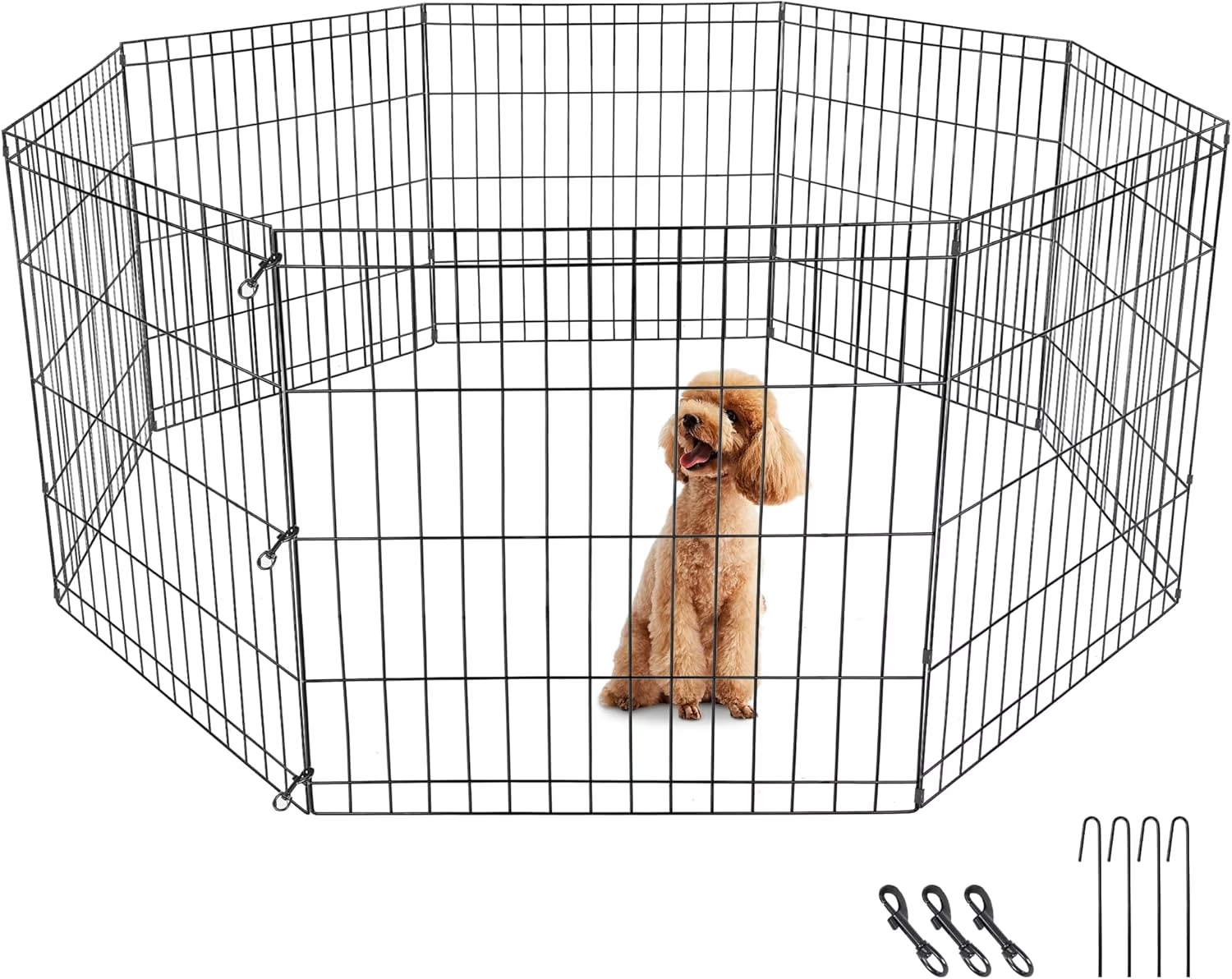
Image source: Bing (Web (fair-use with source credit))
| Setup | Sensible max alone | Best for | Main risk |
|---|---|---|---|
| Crate | Up to 4 hours daytime | Crate trained dogs, post surgery rest, short absences | Distress masked by silence, injury on bars |
| Puppy pen | 3 to 5 hours | Puppies, dogs still house training | Climbing out, pen tipping |
| One proofed room | 5 to 8 hours | Most adults, dogs that chew | Door frame damage in anxious dogs |
| Full house access | 6 to 8 hours plus | Trustworthy adults, no destruction history | Hazards, stairs, bins, cables |
Crate rules that actually matter
A crate is a bed, not a holding cell. It works brilliantly for a dog who chooses to go in and sleep. It's cruel for a dog who's shut in there panicking.
Non negotiables:
- Remove collars, tags and harnesses before crating. Tags catch on bars, and dogs have strangled this way.
- The dog must be able to stand, turn around and lie flat out on their side.
- Fresh water inside the crate, in a clip on bowl that can't tip.
- No cooked bones, no rawhide, no small chews unsupervised.
- Never use the crate as punishment. One bad association undoes months.
If your dog toilets in the crate, the crate is either too big, or you've left them too long, or there's a medical issue. Dogs don't usually soil their bed by choice.
When a room beats a crate
For most working households, one dog proofed room is the sweet spot. It allows the longest safe absence without the risks of full house access.
Proof it properly:
- Bin out, or behind a closed cupboard door.
- Cables clipped, coiled and out of reach. Chargers unplugged.
- Blind and curtain cords tied up high. Strangulation risk is real.
- Toxic houseplants removed, including lilies, sago palm and dieffenbachia.
- Food, medication and cleaning products behind latched doors.
- Heating set safely. No portable heaters, no open fires.
- Non slip flooring or a rug for older dogs.
Kitchens are popular because of the floor, but they hold the most hazards. If you use one, clear the counters properly. Dogs counter surf when you're out, not when you're watching.
Free roam: who it's actually for
Full house access suits adult dogs with a clean record over months, no history of exit point damage, and no reactivity to the front window. It's the highest ceiling available without a walker.
It's not a reward for good behaviour, though. It's an assessment. Move to free roam gradually: one short absence, camera on, then review.
Some dogs cope better with more space. Some pace the whole house and do worse than they did in one room.
Midday Cover Options: Walker, Daycare, Sitter, or Neighbour
This is where you buy back hours. The right option depends on your dog's temperament, not just your budget.
| Option | What it gives you | Best for | Poor fit for |
|---|---|---|---|
| Dog walker | 30 to 60 minute break, toilet, exercise | Most adult dogs on an 8 to 9 hour day | Dogs terrified of strangers entering |
| Drop in pet sitter | 20 to 30 minute toilet and check | Seniors, medicated dogs | High energy dogs needing real exercise |
| Doggy daycare | Full day cover, no absence at all | Sociable, well socialised adults | Reactive, nervous, elderly dogs |
| Neighbour or family | Flexible, free or cheap | Short term gaps, emergencies | Anything that must be reliable daily |
| Live in house sitter | Overnight and multi day cover | Holidays, business trips | Day to day working cover, cost prohibitive |
Dog walker: the default for most people
A walker turns one long absence into two shorter ones. That's the whole value. For a healthy adult on a nine hour workday, a single midday walk brings you back inside sensible territory.
Timing beats duration. A thirty minute visit at the midpoint does more good than an hour tacked on at hour seven. And if your dog is anxious about strangers, a walker letting themselves in can trigger more stress than the absence itself.
Do a meet and greet with you present, at least twice, before the first solo visit.
Check the basics: insurance, background check, how many dogs walked together, and whether they'll send a photo or note each visit. Ask what happens if they're ill.
Doggy daycare: brilliant for some, wrong for many
Daycare works when the dog genuinely enjoys other dogs and handles noise and chaos well. Those dogs come home tired and content.
It's a poor fit more often than the industry admits. Reactive dogs, nervous dogs, seniors and dogs with orthopaedic problems find a full day of forced social contact exhausting. Watch for reluctance at drop off, coming home wired rather than tired, or a rise in reactivity on walks.
Questions worth asking any daycare:
- What's the staff to dog ratio?
- Are dogs grouped by size and play style?
- Is there a quiet rest period, and is it enforced?
- What vaccination policy do they require?
- What's the assessment process for new dogs?
Drop in visits for medical cases
If you're in the senior or medication branch, a drop in visit is usually a better buy than a walk. It's shorter, cheaper, and the dog needs the toilet break far more than the exercise. Some sitters will also administer medication, which solves the diuretic timing problem neatly.
Using a neighbour without it falling apart
Informal help is great until it isn't. If you're relying on a neighbour daily, make it a proper arrangement: fixed time, spare key, written instructions on the fridge, your vet's number, and payment or a genuine reciprocal favour.
Always have a plan B. The most common failure in our research isn't the dog. It's the cover falling through, and the owner discovering their dog can't actually do nine hours after all.
What It Costs to Cover the Gap
Costs vary a lot by region, so treat these as ranges rather than quotes. Urban rates in London, New York or Sydney sit at the top end. Rural rates can be half that.
| Service | Typical UK range | Typical US range | Frequency most people use |
|---|---|---|---|
| Dog walk, 30 min solo | £12 to £20 | $20 to $30 | 3 to 5 days a week |
| Dog walk, group | £10 to £15 | $15 to $25 | 3 to 5 days a week |
| Drop in visit, 20 to 30 min | £10 to £15 | $18 to $28 | Daily for medical cases |
| Doggy daycare, full day | £22 to £40 | $30 to $50 | 2 to 5 days a week |
| Overnight home boarding | £30 to £50 | $50 to $85 | Holidays only |
| Live in house sitter, per night | £45 to £80 | $70 to $120 | Holidays only |
| Boarding kennel, per night | £25 to £45 | $40 to $70 | Holidays only |
| Pet camera, one off | £30 to £120 | $35 to $150 | One purchase |
| Automatic feeder, one off | £35 to £90 | $40 to $110 | One purchase |
Run the annual maths and it stops feeling optional. A midday walk five days a week at £15 works out around £3,600 a year. Daycare three days a week at £30 lands near £4,300.
Budget for it before you get a dog, not after.
The cost of getting it wrong
The comparison people forget is what a bad absence costs. Foreign body removal surgery, the kind you get when a bored dog swallows a sock, typically runs £1,500 to £4,000 in the UK and $2,000 to $7,000 in the US. That's one incident.
Then there's the recurring stuff. Replacing chewed door frames and skirting boards. Losing a deposit.
A tenancy warning over barking. A behaviourist referral after eighteen months of untreated anxiety, which costs far more than early intervention would have.
Where to spend first
If the budget is tight, spend in this order:
- A camera, roughly £40. You can't make good decisions without knowing what actually happens. Highest value purchase on the list.
- A vet check for anything that looks medical. Cheaper than treating the wrong problem for six months.
- Enrichment items, £20 to £40. A couple of durable stuffable toys and a lick mat cover most boredom cases.
- Midday cover, ongoing. The biggest single lever on your ceiling.
- Professional behaviour help, if the camera shows genuine distress.
Daycare sits last for a reason. It's the most expensive option and the one least likely to suit an anxious dog, which is exactly the dog whose owner is most tempted to book it.
How to Build Alone-Time Tolerance Step by Step
Alone time is a skill. Dogs aren't born with it, and no dog learns it by being left for eight hours and hoping. The training works because it stays below the point where the dog panics, every single time.
The whole method has one rule: never let your dog rehearse distress. Every absence that goes badly makes the next one harder. That's why the pace feels absurdly slow at the start.
Step 1: Find your actual threshold
Set the camera running, walk out, and watch the footage back. Note the exact minute the first stress signal appears. Panting, pacing, whining, standing at the door.
Whatever comes first.
That minute is your threshold, and your training starts well below it. If distress starts at four minutes, you're training at ninety seconds. If it starts the second the door shuts, you're training with the door handle, not the door.
Step 2: Break the pre departure cues
Your dog reads your routine long before you leave. Keys, shoes, coat, bag, the specific way you close the laptop. By the time you reach the door, an anxious dog has been stressed for ten minutes.
Defuse these one at a time, several times a day:
- Pick up your keys. Sit back down. Do nothing.
- Put your shoes on. Watch TV in them.
- Grab your coat, hang it back up.
- Open the front door, close it, stay inside.
Repeat until the dog stops lifting their head. This takes days, not minutes, and it's the step most people skip.
Step 3: Start with doors, not absences
Work up in this order. Move to the next stage only when the dog stays relaxed at the current one.
- Move to the door. Return.
- Touch the handle. Return.
- Open the door, close it. Stay inside.
- Step out, close the door, come straight back in.
- Step out for five seconds.
- Ten seconds. Thirty. One minute.
Come back before the dog gets worried, never after. That's the whole trick. You want the dog thinking "that was nothing", not "thank god you're back".
Step 4: Vary duration, never climb in a straight line
Once you're past a couple of minutes, stop increasing steadily. Predictable increases teach the dog that absences always get longer.
Mix it up: three minutes, then forty seconds, then five minutes, then ninety seconds. Random durations stop the dog anticipating. Aggregate trainer guidance is consistent on this, and it's a common reason progress stalls around the ten minute mark.
Step 5: Add a settle cue
Teach your dog to lie on a specific mat or bed on cue while you're home. Reward calm, not just the down position. Feed a treat every few seconds while they stay relaxed, then stretch the gaps.
Once the mat means "nothing is happening, switch off", use it as part of your departure. The dog goes to a place that already carries a calm association.
Step 6: A realistic timeline
Expect this to take longer than you want. Here's what our research across behaviour case literature suggests as typical, assuming daily short sessions.
| Starting point | Time to 30 minutes | Time to 3 to 4 hours |
|---|---|---|
| Puppy with no history | 1 to 2 weeks | 6 to 10 weeks |
| Adult, never taught, no panic | 2 to 4 weeks | 2 to 4 months |
| Adult, mild separation anxiety | 6 to 10 weeks | 4 to 8 months |
| Severe separation anxiety | 3 to 6 months | 8 to 18 months, often with medication |
The hardest part isn't the training. It's arranging cover so the dog isn't left over threshold while you work through it. If you train for ten minutes in the morning and then leave for nine hours, you've undone the session.
For that period, you need a sitter, a family member, taking the dog with you, or working from home. There's no way around it.
The Leaving Routine That Actually Works
Once your dog can handle the duration, the daily routine keeps it that way. Get this right and the same dog copes with an extra hour or two without noticing.

Image source: Bing (Web (fair-use with source credit))
The 60 minutes before you go
Order matters here more than most owners realise.
- Sniffing walk, not a ball session. Twenty to forty minutes of nose work tires a dog more thoroughly than sprinting. Frantic fetch leaves an aroused dog, not a settled one.
- Toilet break, last thing. Every time, no exceptions. Wait for both, not just a quick wee.
- Feed with timing in mind. Leave at least an hour between a meal and exercise for deep chested breeds like Great Danes, Weimaraners and Standard Poodles, because of bloat risk.
- Quiet time. Ten to fifteen minutes of nothing before you go. Let the arousal drop.
- Set the environment. Temperature checked, water topped up, hazards away.
- Hand over the food toy. Give it as you leave, not five minutes before.
The enrichment that earns its keep
A frozen stuffed rubber toy is the workhorse. It buys twenty to forty minutes of licking, and licking is genuinely calming for dogs. Freeze it overnight to make it last.
Good fillers: soaked kibble, plain natural yoghurt, wet dog food, mashed banana, pumpkin puree. Avoid anything with xylitol, grapes, raisins, onion, chocolate or macadamias. The ASPCA poison control list is the reference worth checking before you get creative.
Other options that hold up:
- Lick mats. Smear with wet food and freeze. Great for dogs that gulp.
- Snuffle mats. Scatter kibble through fabric strips. Ten to fifteen minutes of foraging.
- Cardboard box with kibble and scrunched paper. Cheap, effective, messy. Only for dogs that don't eat cardboard.
- Scatter feeding on a lawn or rug. Uses the whole meal and takes real time.
Skip anything the dog can break into pieces and swallow. No cooked bones, no rawhide, no small hard chews when you're not there. Choking and obstruction turn a normal Tuesday into emergency surgery.
Sound: helpful or not?
It depends on the dog and the reason for the noise. Low volume radio or a classical playlist can mask street sounds that trigger barking. Research on kennelled dogs has repeatedly found classical music associated with more resting and less vocalising than pop or talk radio.
But sound does nothing for a genuinely anxious dog. If your dog reacts to the doorbell on television, silence or white noise is better than a talk station.
Exits and returns
Leave without a speech. A long goodbye ritual signals that something significant is happening, and it teaches the dog to dread the pattern.
Come back the same way. Walk in, put your bag down, ignore the dog for thirty seconds, then greet calmly once they've settled. Rewarding a calm greeting builds calm greetings.
A worked example: the nine hour office day
Say you leave at 07:45 and get home at 17:15. That's nine and a half hours.
- 06:45 sniffing walk, 35 minutes
- 07:25 breakfast
- 07:40 toilet break
- 07:45 leave with frozen KONG
- 12:30 walker arrives, 45 minute walk and toilet break
- 17:15 home, calm greeting, walk at 17:45
Two blocks of roughly five and four and a half hours. For a healthy trained adult, that works. Without the midday visit, it doesn't.
Common Mistakes That Make Alone Time Worse
Most of these come from good intentions. They're still the reasons progress stalls.
Punishing after the fact. The dog can't connect your anger at 18:00 to the chewing at 10:00. All they learn is that your return is unpredictable and frightening, which raises anxiety during the next absence.
Treating a quiet dog as a settled dog. Silence is not calm. Plenty of dogs freeze, pant and shut down without making a sound.
Adding a second dog to fix anxiety. It works for isolation distress and usually fails for true separation anxiety. You also risk the new dog copying the behaviour.
Restricting water. Never do this to reduce accidents. Fresh water at all times is a legal welfare requirement in the UK and basic care everywhere else.
Using the crate to buy time. A crate reduces damage. It does not reduce distress. A dog that can't settle in a crate for four hours will just do it silently.
Increasing duration too fast. Going from thirty minutes to three hours because "he was fine" is the most common way owners lose weeks of progress.
Leaving pads down for a dog you want fully house trained. Pads teach that indoors is an acceptable toilet. For adult dogs, they usually slow house training rather than help it.
Leaving the collar on in a crate. Tags and buckles catch on bars. This has killed dogs. Remove everything.
Blaming behaviour without a vet check. Pain, UTIs, thyroid problems and cognitive decline all produce behaviour that looks exactly like anxiety.
Ignoring the adolescent dip. Dogs that were fine at eight months often regress between ten and eighteen months. Tighten the setup rather than assuming it's spite.
Leaving the TV on for a reactive dog. Doorbells, barking and knocking on screen can trigger the dog dozens of times a day.
Relying on a single cover arrangement. One walker with no backup means one cancellation turns into a nine hour absence for a dog that can't handle five.
Safety, Welfare Law, and the Lines You Shouldn't Cross
Some of this is legal, some is practical. All of it turns a manageable absence into a genuine emergency when it goes wrong.
The legal position
In England and Wales, the Animal Welfare Act 2006 places a duty of care on owners to meet five welfare needs: a suitable environment, a suitable diet, the ability to exhibit normal behaviour, appropriate housing with or apart from other animals, and protection from pain, suffering, injury and disease. Leaving a dog so long that these aren't met can constitute an offence.
The Department for Environment, Food and Rural Affairs publishes a Code of Practice for the Welfare of Dogs alongside the Act. It's not law itself, but courts can take it into account. Scotland and Wales have equivalent codes.
In the US, neglect and abandonment thresholds are set state by state. There's no single federal alone time rule. Prolonged confinement without food, water or sanitary conditions meets the definition of neglect in most states.
Beyond the law, sustained barking can breach a tenancy agreement, trigger a noise abatement notice from your local council, or cause problems with an HOA in the US.
Heat: the risk that kills
A closed room with sun through the window climbs well above outdoor temperature. Brachycephalic dogs, overweight dogs, seniors and thick coated breeds are all at higher risk of heatstroke.
Before a hot day absence:
- Close curtains or blinds on sun facing windows
- Leave a fan running, positioned so the dog can move away from it
- Provide two water bowls in different rooms
- Give access to a cool tiled floor if possible
- Shorten the absence, or cancel it
Never leave a dog in a car in warm weather, even briefly, even with windows cracked. Cabin temperature rises fast enough to be lethal within minutes. Many US states have laws allowing enforcement officers, and sometimes members of the public, to break in and remove an animal.
The hazard checklist
Run through this before any absence longer than an hour:
| Hazard | Action |
|---|---|
| Bin and food waste | Behind a closed door or in a latched cupboard |
| Electrical cables and chargers | Unplugged, clipped, out of reach |
| Blind and curtain cords | Tied high, cleats fitted |
| Houseplants | Removed if toxic (lilies, sago palm, dieffenbachia, aloe) |
| Medication | Locked away, including handbags on the floor |
| Cleaning products | Latched cupboards |
| Toilet lids | Closed, especially with cleaning blocks in |
| Stairs | Gated for puppies and unsteady seniors |
| Windows and balconies | Locked or restricted |
| Heaters and candles | Off, always |
Fireworks and storms
Never leave a noise phobic dog alone on Bonfire Night, New Year's Eve, or the Fourth of July. Same goes for a forecast thunderstorm if your dog reacts to them.
Dogs escape during firework panic more than any other time of year. They go through windows, over fences and out of front doors. If you can't be home, arrange for someone else to be.
Multi day absences
Leaving a dog alone overnight with automatic feeders and water fountains isn't acceptable, and in many jurisdictions it crosses into neglect. Anything beyond a working day needs a person.
Dogs need toileting, monitoring and human contact. A camera lets you watch a problem happen. It doesn't let you do anything about it.
When to Call a Trainer, Your Vet, or a Veterinary Behaviourist
Knowing who to call saves months. These three roles do different jobs, and the order matters.
Call your vet first if you see any of this
Book a veterinary appointment before any behaviour work when there's:
- New house soiling in a previously reliable dog
- Increased drinking or urination
- Blood in urine, straining, or frequent small wees
- Night waking, pacing or disorientation in a dog over eight
- Sudden onset of any separation behaviour, especially in an adult
- Self injury: bloodied paws, broken teeth or nails, damaged gums
- Weight loss, appetite change, or persistent loose stool
Sudden behaviour change in a previously settled adult dog is a medical flag until proven otherwise. Pain is the most under diagnosed driver of behaviour problems in dogs, and arthritis in particular gets missed for years.
Call a qualified trainer for mild to moderate cases
A good force free trainer is the right call when the camera shows boredom, mild restlessness, or a dog who simply never learned to be alone. They'll help you build a graduated departure plan and hold you to a realistic pace.
Look for credentials rather than marketing. In the UK, membership of the Animal Behaviour and Training Council register. In the US, certification through the Certification Council for Professional Dog Trainers or the Karen Pryor Academy.
Avoid anyone selling dominance theory, prong collars or shock collars for anxiety. Adding aversives to a frightened dog makes distress worse, and the major veterinary behaviour bodies are unanimous about this.
Call a veterinary behaviourist for severe cases
Escalate when the dog is panicking, self injuring, or hasn't improved after six to eight weeks of consistent training. A veterinary behaviourist is a vet with specialist behaviour qualifications, so they can diagnose medical contributors and prescribe.
That combination matters for severe separation anxiety. Behaviour modification alone often isn't enough when the dog's baseline arousal is too high to learn anything.
Medications used include fluoxetine and clomipramine, both licensed in various markets for canine separation anxiety, sometimes with trazodone for situational support. These take four to six weeks to reach full effect. They're a floor, not a fix, and they only work alongside training.
What a referral costs and what you get
| Professional | Typical UK cost | What they provide |
|---|---|---|
| Qualified trainer | £60 to £120 per session | Departure plan, coaching, follow up |
| Vet consultation | £40 to £80 | Medical workup, referral, basic advice |
| Veterinary behaviourist | £250 to £500 initial | Full diagnosis, written plan, prescribing |
| Clinical animal behaviourist | £150 to £350 initial | Detailed behaviour plan, works with your vet |
Check your pet insurance policy. Many UK policies cover behavioural treatment when referred by a vet, though usually only if the condition started after the policy began. That referral route can save several hundred pounds, so ask before you book privately.
Real Scenarios: Five Households, Five Different Answers
Five dogs, five sets of circumstances, five different ceilings. Find the one closest to yours.
The hybrid worker with a four year old Cocker Spaniel
Three days in the office, two at home. The dog is house trained, settles in eleven minutes on camera, and hasn't damaged anything in two years.
The answer: six hours comfortably, eight with a midday walk on office days. The two home days do a lot of quiet work here, because the dog never goes more than 48 hours without a normal day.
The one risk worth watching is inconsistency. A dog on a wildly variable schedule struggles more than one on a fixed long day. Keep the office days the same each week.
The full time nurse with a fourteen week old Labrador puppy
Twelve hour shifts, three days a week. The puppy holds about ninety minutes and cries within four minutes of being left.
The answer: the puppy can't be alone for a shift, and no gadget changes that. This household needs full day cover on shift days: a family member, a puppy sitter, or a daycare that accepts young puppies.
The two non shift days are the training window. Short graduated departures, twice a day, building toward two hours by around six months. Shortcutting this because the shift pattern is inconvenient is how you create a dog with lifelong separation anxiety.
The flat dweller with a rescued Greyhound, adopted six weeks ago
Retired racer, calm in the house, sleeps eighteen hours a day. Week one testing showed distress at nine minutes. Six weeks of graduated departures has taken that to two hours.
The answer: two hours right now, and no more. Greyhounds often look like the world's most relaxed dogs and still struggle badly with being alone, because kennel raised dogs have almost never been isolated.
Progress should continue at roughly thirty minutes added per fortnight, checked on camera each time. Realistic target is four to five hours by month four. The flat adds a second constraint, because sustained howling in a shared building becomes a tenancy problem quickly.
The office worker with an eleven year old Border Collie on furosemide
Heart medication given at 07:00, owner leaves at 08:00 and returns at 17:30. Recent accidents, and sore red skin on the belly.
The answer: three hours maximum, and the medication timing needs a conversation with the vet today. The urine scalding is a veterinary issue, not a behaviour one.
Practical fix: two drop in visits, mid morning and mid afternoon, plus washable waterproof bedding and a defined indoor toilet area on hard flooring. Some vets will move the diuretic dose to a time when someone's home. That single change often solves most of it.
The remote worker about to return to the office
Two year old Cockapoo, has never been alone. Owner has eight weeks' notice before a three day office week starts.
The answer: eight weeks is enough, but only if the training starts now. This is the most common situation we see, and the most fixable when it's caught early.
Week by week: cue desensitisation in week one, seconds to minutes in weeks two and three, thirty minutes by week four, ninety minutes by week six, three hours by week eight. Book a walker for the midpoint of each office day from day one. Don't wait to see whether the dog needs it.
Frequently Asked Questions
Can I leave my dog alone for 8 hours?
A healthy, trained adult dog manages eight hours if someone breaks up the day at the halfway point. Without a midday visit, eight hours in one stretch pushes past most welfare guidance. Puppies, seniors and dogs on diuretics can't do it at all.
Check camera footage before assuming your dog copes.
Is it cruel to leave a dog alone all day?
Leaving a dog alone all day with no toilet break, no company and no enrichment isn't fair, and in some cases it breaches welfare law. It stops being cruel when you add cover, proper preparation and training. A dog with a midday walk, a safe space and real alone time skills isn't suffering.
How long can a puppy be left alone?
Roughly one hour per month of age, capped at four to five hours by twelve months. An eight week old puppy manages 30 to 60 minutes. A three month old handles two to three hours.
That's a bladder guideline, though. Emotionally, most young puppies need building up far more gradually than the number suggests.
Can I leave my dog alone overnight?
No. Leaving a dog alone overnight without a person means no toileting, no monitoring and no help in an emergency. Automatic feeders and cameras don't cover it.
In several jurisdictions, unattended multi day absences meet the legal definition of neglect. Book a sitter, home boarder or overnight carer instead.
How long can a dog hold its bladder?
Healthy adults hold urine for six to eight hours while awake and eight to ten hours overnight. Seniors manage two to four hours. Dogs on furosemide or prednisolone may need out every one to three hours.
Never restrict water to extend these figures. Constant access to fresh water is a basic welfare requirement.
Will getting a second dog fix separation anxiety?
Usually not. A second dog helps with isolation distress, where the dog can't be alone but is fine with any company. True separation anxiety is attachment to one specific person, and company doesn't touch it.
You also risk the new dog copying the behaviour. Fix the first dog first.
Your Decision Guide: Setting a Limit You Can Actually Trust
Work through this in order and write the answer down.
Step 1. Rule out medical. Any diuretic, steroid, endocrine condition, incontinence or new night waking caps you at two to three hours until your vet says otherwise. Nothing else overrides that.
Step 2. Set your age baseline. One hour per month for puppies, four to six for healthy adults, two to four for seniors.
Step 3. Adjust for evidence, not hope. Record one normal absence. If settle time is under twenty minutes with no distress signals, keep your baseline or add an hour.
If distress appears in the first thirty minutes, your real ceiling is the minute it starts.
Step 4. Adjust for the container. Crate caps you at four hours. Puppy pen at five.
One proofed room or free roam gives you the full baseline.
Step 5. Add cover if the gap is bigger than the number. A midday break at the midpoint, not tacked on the end. That's the biggest lever you have.
Step 6. Re-test every three months. Sooner if anything changes: new medication, a house move, a new baby, a dog turning eight.
| If this is true | Then your ceiling is |
|---|---|
| On diuretics or incontinent | 2 to 3 hours, vet review needed |
| Puppy under 6 months | 1 hour per month of age |
| Adolescent 6 to 18 months | 4 to 5 hours, tighten the setup |
| Adult, settles under 20 minutes | 6 hours, 8 with a midday break |
| Adult, distress in first 30 minutes | Whatever the camera shows, then train up |
| New rescue, under a month in home | Start at minutes, build weekly |
| Senior 10+ or cognitive decline | 2 to 3 hours |
| In a crate | 4 hours, whatever else applies |
Two principles are worth holding onto. The physical limit and the emotional limit are separate, and the emotional one is almost always the binding one. And your dog's number changes over their life, sometimes quickly, so treat it as a figure you review rather than a fact you learned once.
As of 2026, welfare guidance across the RSPCA, the AVMA and DEFRA's dog welfare code still converges on roughly four hours as the sensible default for an adult dog in one stretch. Use it as your starting point. Then let your own camera footage tell you whether your dog earns more or needs less.