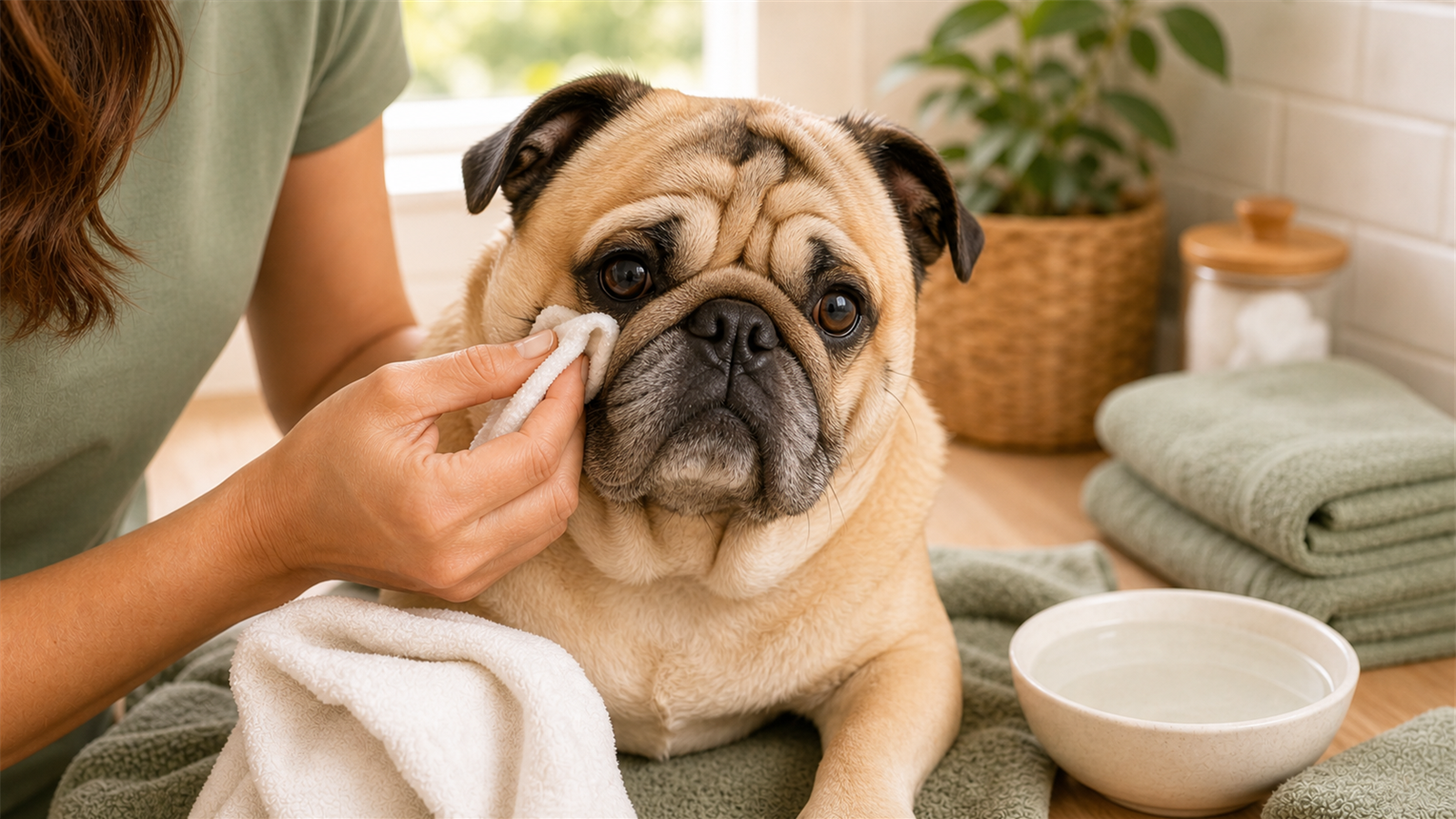

Clean healthy dog face folds by wiping away surface debris, then drying each fold completely. Stop before cleaning if you notice odor, redness, swelling, discharge, sores, bleeding, pain, suspected infection, or eye involvement. Those signs need a veterinarian, not more wiping at home.
This guide is for routine hygiene only. It is meant for normal face folds that collect moisture, drool, or light debris. It does not diagnose skin problems, replace veterinary care, or cover cleaning inside the eyes, nose, mouth, or ears.
What Face-Fold Cleaning Can and Cannot Do
Routine face-fold cleaning can help remove loose debris and reduce trapped moisture in healthy folds. It cannot solve sore skin, discharge, swelling, pain, strong odor, or suspected infection.
PDSA guidance on skin fold problems lists smelly skin, red or sore folds, discharge, and pain as signs that need veterinary help. ASPCA grooming guidance also recommends having skin abnormalities checked by a veterinarian. Use those boundaries before you start.
Supplies for Routine Hygiene
Keep the supplies simple. For routine cleaning, use a soft damp cloth or cotton pad, plain water, and a clean dry cloth. Use a routine wipe only if your veterinarian has already said it is suitable for your dog.
| Supply | Use it for | Avoid |
|---|---|---|
| Soft damp cloth | Light surface debris in healthy folds | Scrubbing, rough fabric, or rubbing sore skin |
| Plain water | Routine wipe-downs | Harsh cleaners, fragrance, whitening products, or alcohol |
| Clean dry cloth | Drying every fold after wiping | Leaving folds damp |
| Vet-approved routine wipe | Only when your veterinarian says it fits your dog | Medicated, antibacterial, antiseptic, or product-cure language at home |
Step-by-Step Face-Fold Cleaning
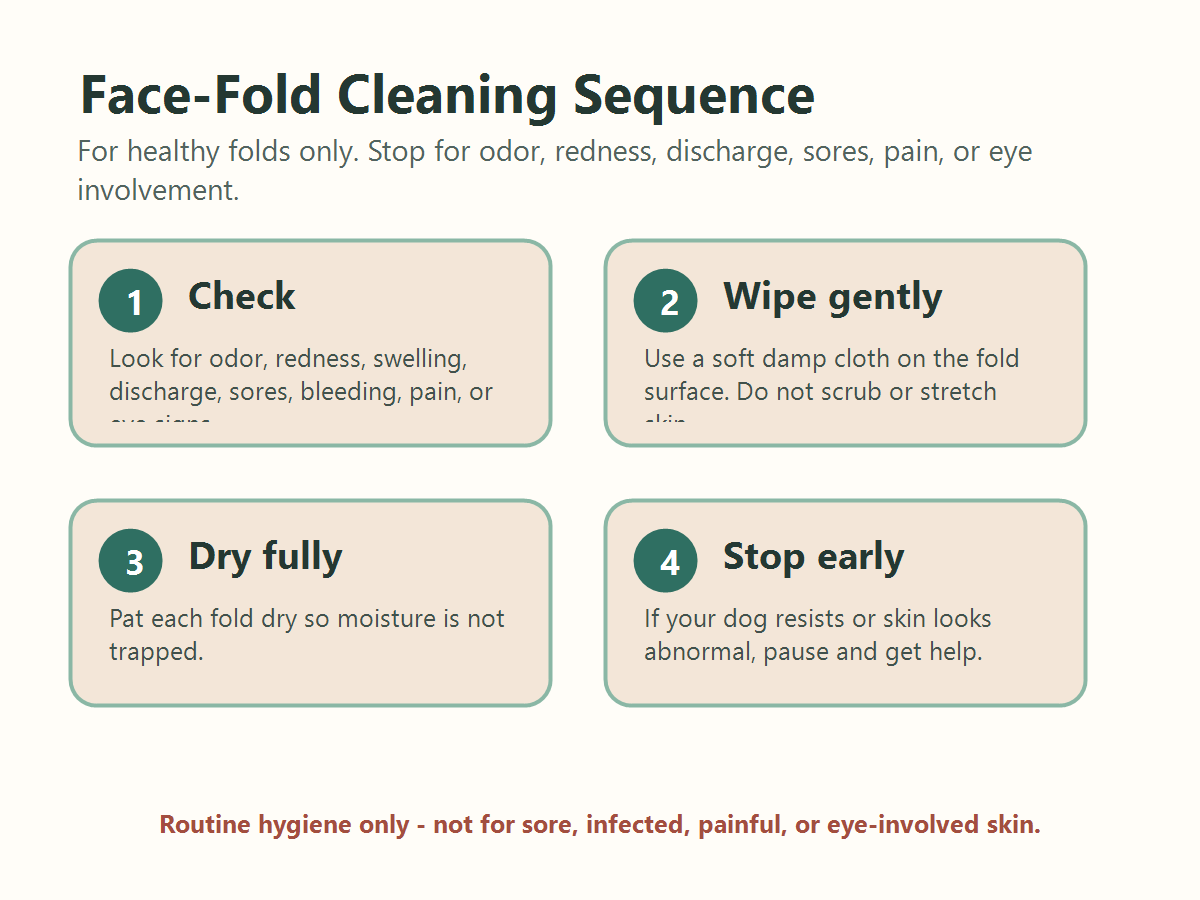
Work slowly and keep the fold open only enough to see the surface. If your dog pulls away, stiffens, growls, snaps, or seems painful, stop and get help instead of pushing through.
- Check first. Look for odor, redness, swelling, discharge, sores, bleeding, pain, suspected infection, or eye involvement.
- Lift gently. Open the fold just enough to reach the skin surface. Do not stretch the skin or force the head still.
- Wipe once. Use a soft damp cloth to remove loose debris from the fold surface.
- Change cloth area. Use a clean part of the cloth for the next fold so debris is not moved around.
- Dry fully. Pat the fold with a clean dry cloth until it feels dry, not damp.
- Stop early if needed. Short, calm sessions are safer than trying to finish every fold at once.
Dry-After-Cleaning Checklist
Drying is the step owners often rush. A clean fold that stays damp can still become uncomfortable, especially on wrinkled breeds or dogs that drool.
| Check | What you want | Stop if you see |
|---|---|---|
| Nose fold | Dry surface, no trapped debris | Odor, redness, swelling, discharge, or pain |
| Cheek folds | Dry cloth comes away mostly clean | Sores, bleeding, tenderness, or sticky discharge |
| Lower lip folds | Drool is wiped and the fold is dry | Strong smell, swelling, or repeated irritation |
| Eye-adjacent folds | Only the skin fold is wiped | Eye discharge, squinting, eye redness, or anything touching the eye |
Common Missed Zones
Face folds are not only the wrinkle above the nose. Check the nose fold, cheek folds, lower lip folds, and any small crease where drool or tears collect. Keep each check gentle and brief.
If the concern is eye debris rather than the fold itself, use a separate, conservative eye-area routine. The guide on how to clean dog eye gunk explains when to stop around the eyes.
Vet Stop Signs
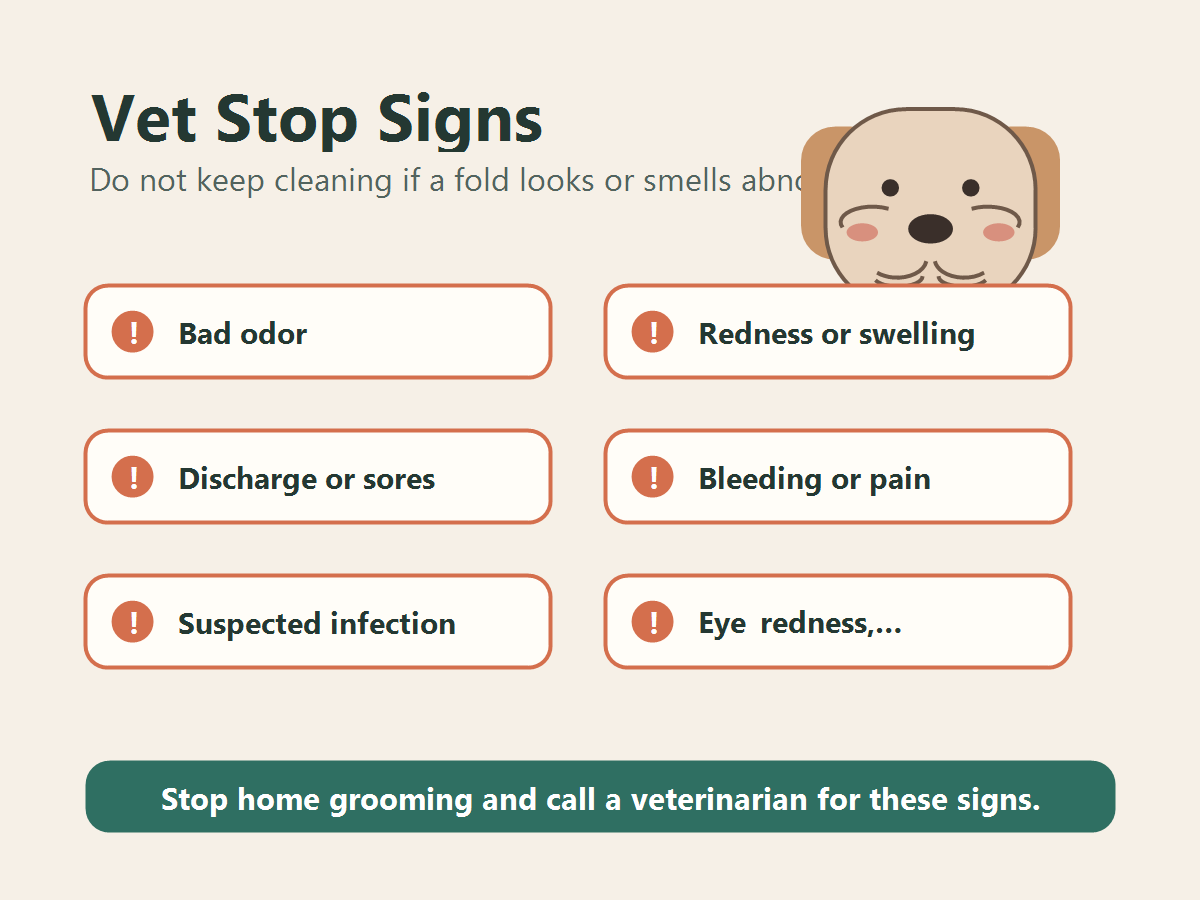
Do not treat face-fold warning signs as a cosmetic cleaning problem. Stop home grooming and contact a veterinarian when the fold looks or feels abnormal.
| What you notice | Safer next step |
|---|---|
| Bad odor, redness, swelling, sores, bleeding, discharge, or pain | Stop cleaning and call a veterinarian. |
| Suspected infection or worsening skin | Do not try new products at home; ask a veterinarian. |
| Eye redness, squinting, eye discharge, or wipe contact with the eye | Stop and contact a veterinarian. |
| Your dog resists, panics, growls, snaps, or cannot be handled safely | Stop and ask a professional groomer, veterinarian, or qualified trainer for help. |
FAQ
How often should you clean dog face folds?
Clean only as often as needed to keep healthy folds free of debris and dry. Some dogs need frequent light wiping; others need less. Ask your veterinarian for a routine if your dog has repeated fold problems.
What can I use to clean dog wrinkles?
For routine hygiene, use a soft damp cloth, plain water, and a clean dry cloth. Use wipes only if your veterinarian has already approved them for your dog.
Why do my dog’s face folds smell?
Odor is a stop sign. Do not cover it with fragrance or keep wiping. Contact a veterinarian because smell can come with irritation, trapped moisture, or skin disease.
Should face folds be dry after cleaning?
Yes. Dry each fold after wiping. The fold should feel dry, not damp, and the skin should not look rubbed or sore.
When should face folds be checked by a vet?
Use a veterinarian for odor, redness, swelling, discharge, sores, bleeding, pain, suspected infection, eye involvement, or anything that worsens after routine care.