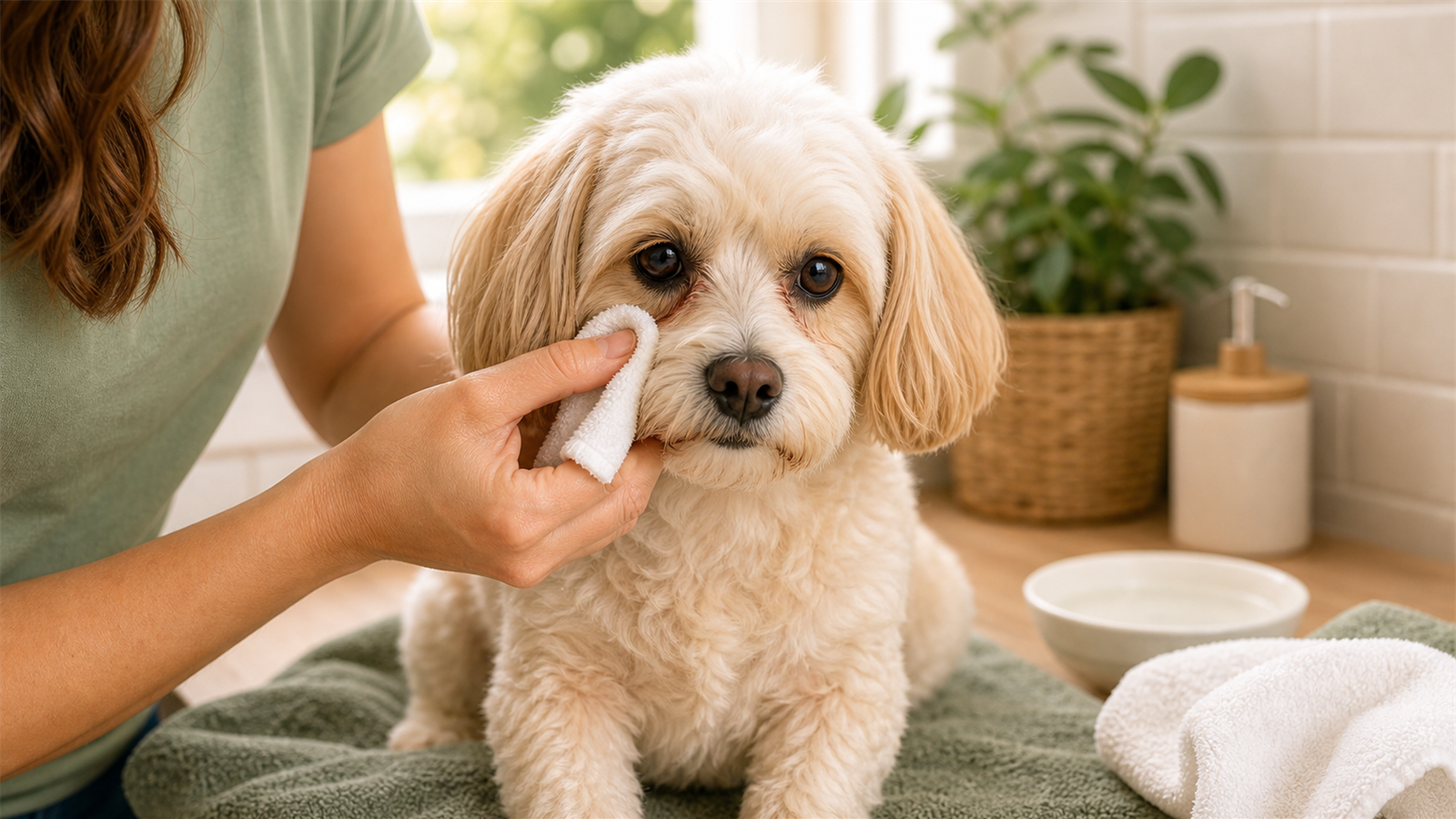

Clean dog tear stains only as fur hygiene: use a warm damp cloth on the stained fur, wipe away from the eye, and dry the area gently. Stop if you see redness, squinting, pain, swelling, bad odor, colored discharge, injury, vision change, or sudden/excessive tearing. Those signs need a veterinarian.
Do not put peroxide, whitening products, stain removers, essential oils, eye drops, supplements, or non-veterinary cleaners near or in a dog’s eye. This guide is not for treating eye discharge or eye disease.
Tear Stains vs Eye Discharge
Tear stains are color changes on the fur below or beside the eye. Eye discharge is material from the eye itself. Treat them differently: stained fur can sometimes be cleaned gently, but eye discharge or a change in the eye should not be handled as a cosmetic issue.
AKC tear-stain guidance explains that tear staining has several possible contributors. PetMD guidance on dog eye discharge also separates normal tear staining from abnormal discharge signs that need veterinary attention.
Before-Cleaning Inspection
Before wiping the fur, look at the area without touching the eye. If the eye looks red, swollen, cloudy, painful, or different from normal, stop. If your dog is squinting, pawing at the eye, pulling away, or suddenly tearing more than usual, stop.
| Check first | Clean fur only if | Stop if |
|---|---|---|
| Eye surface | The eye looks normal for your dog. | Redness, cloudiness, squinting, injury, or vision change. |
| Fur below the eye | The issue is staining on fur. | Colored discharge, bad odor, swelling, pain, or wet irritation. |
| Handling comfort | Your dog stays calm with light face handling. | Pulling away, panic, growling, snapping, or unsafe handling. |
Safe Cleaning Method for Stained Fur
Use the lightest routine that works. The goal is to loosen staining on the fur, not to clean the eye.
- Wash your hands. Keep the cloth clean and avoid transferring debris toward the eye.
- Dampen a soft cloth. Use warm water and wring it out so it is damp, not dripping.
- Wipe away from the eye. Touch stained fur only. Do not wipe toward the eye or across the eyeball.
- Use a clean cloth area. Change cloth sections instead of dragging debris back over the same fur.
- Dry the fur. Pat the area dry so moisture does not sit in the coat or nearby folds.
- Stop early. Short, calm cleaning is better than forcing the full stain to fade in one session.
What Not to Put Near a Dog’s Eyes
Avoid peroxide, bleach, whitening products, stain removers, essential oils, alcohol, fragrance, human skin products, and any cleaner that is not specifically approved by your veterinarian for your dog. Do not use this grooming guide to choose eye drops, medications, supplements, antibiotics, or diet changes.
If a veterinarian has already approved a routine wipe for your dog, follow their directions and keep it on the fur as instructed. If the eye becomes red, painful, swollen, cloudy, or more watery, stop using products and ask the veterinarian what to do next.
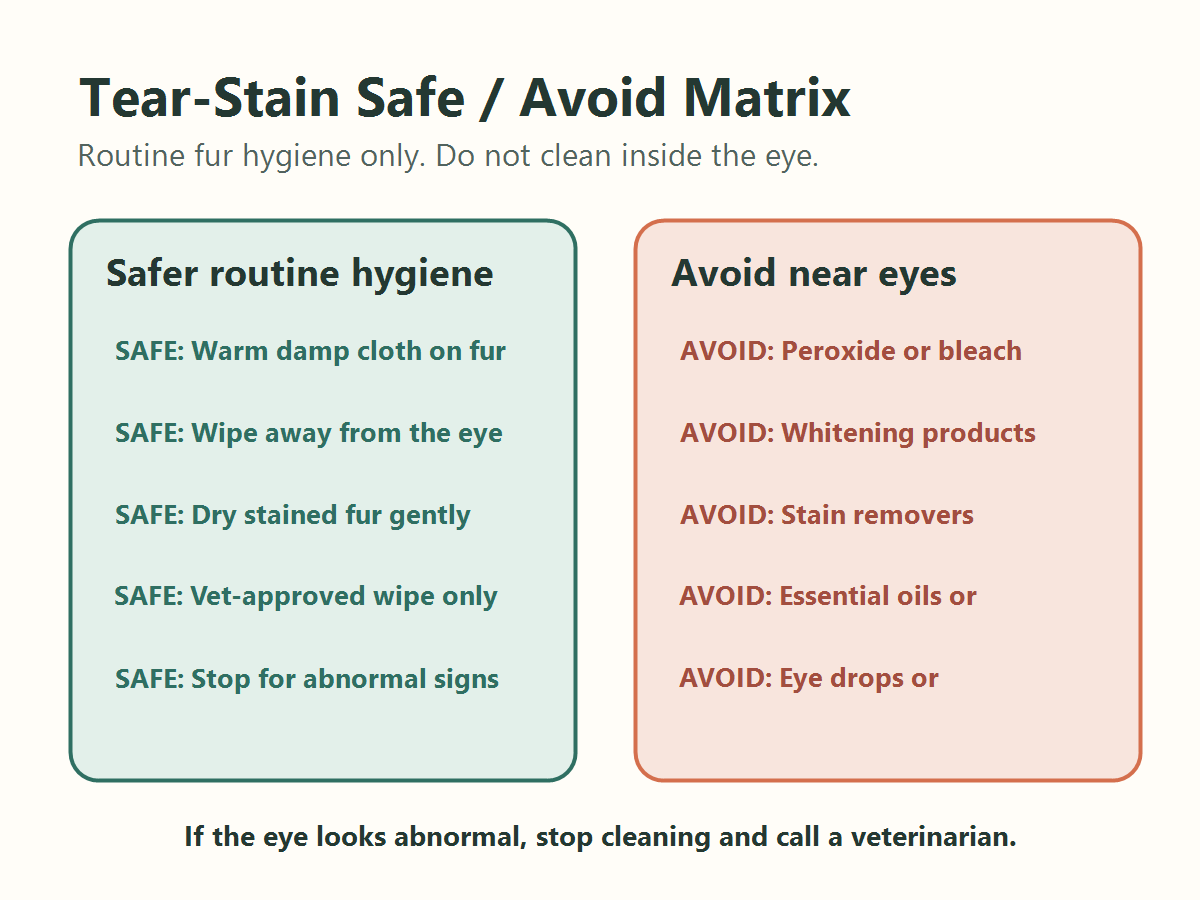
Safe and Avoid Matrix
| Safer routine hygiene | Avoid near the eye |
|---|---|
| Warm damp cloth on stained fur | Peroxide, bleach, or whitening products |
| Wiping away from the eye | Wiping into the eye or across the eyeball |
| Drying the fur gently after wiping | Leaving the area damp or rubbing hard |
| Vet-approved routine wipe when already advised | Stain removers, essential oils, or fragrance |
| Stopping for abnormal signs | Treating discharge or pain as cosmetic staining |
Related Face and Eye-Area Guides
If you are dealing with daily debris at the eye corner, use the separate guide on how to clean dog eye gunk. If staining overlaps with wrinkles or moisture pockets, the guide on how to clean dog face folds explains fold-drying boundaries.
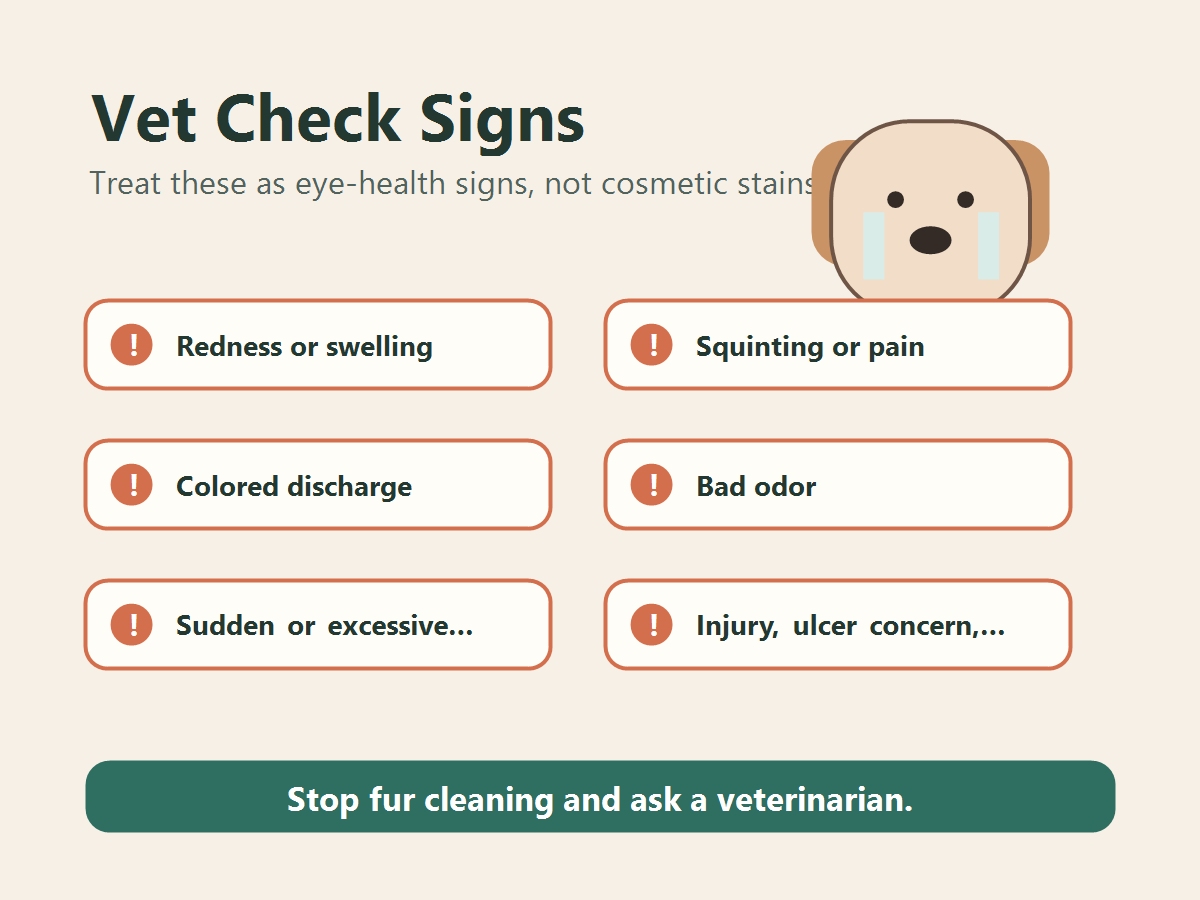
Vet-Check Signs
Call a veterinarian if the issue looks like an eye problem, not simple staining on fur.
| Sign | Why to stop home cleaning |
|---|---|
| Redness, swelling, squinting, pawing, or pain | These can point beyond routine grooming. |
| Colored discharge, bad odor, or sticky material from the eye | Do not treat discharge as a cosmetic stain. |
| Sudden or excessive tearing | A new change deserves veterinary advice. |
| Injury, ulcer concern, cloudiness, or vision change | Stop immediately and contact a veterinarian. |
| Panic, growling, snapping, or unsafe handling | Stop and get help before continuing face handling. |
FAQ
Can I clean dog tear stains at home?
Yes, if the issue is stained fur and the eye looks normal. Use a warm damp cloth on the fur only, wipe away from the eye, and stop for abnormal signs.
What is safe to use near dog tear stains?
A warm damp cloth is the safest routine starting point for stained fur. Use a wipe only if your veterinarian has already approved it for your dog.
Should I use peroxide near my dog’s eyes?
No. Avoid peroxide, bleach, whitening products, and stain removers near the eyes unless a veterinarian gives specific instructions.
When are tear stains a vet issue?
Use a veterinarian for redness, squinting, pain, swelling, colored discharge, odor, injury, vision change, or sudden/excessive tearing.
Are tear stains the same as eye discharge?
No. Tear stains are stained fur. Eye discharge is material from the eye and may need veterinary evaluation, especially if it is colored, sticky, smelly, painful, or sudden.