
You've felt it before. You're petting your cat, running your hand along their back, and suddenly your fingers hit a patch of fur that's stiff, waxy, and just… greasy. It's not dirt, and it's not something you can easily brush out.
If you've noticed a greasy patch on a cat's lower back, right at the base of the tail, you're probably wondering what's going on and whether it's serious.
Here's the short version: this is a common feline issue, and in most cases, it's treatable. But the cause matters. It could be a harmless overactive gland, a sign of fleas, or a clue that your cat is stressed.
In our research, veterinary sources indicate that the location of the greasy spot is your biggest clue. As of 2026, the most up-to-date feline dermatology guidance points to three main culprits, and knowing how to tell them apart is the key to fixing the problem without unnecessary vet visits.
Let's break down exactly what you're dealing with, how to inspect it safely, and when you need to involve a professional.
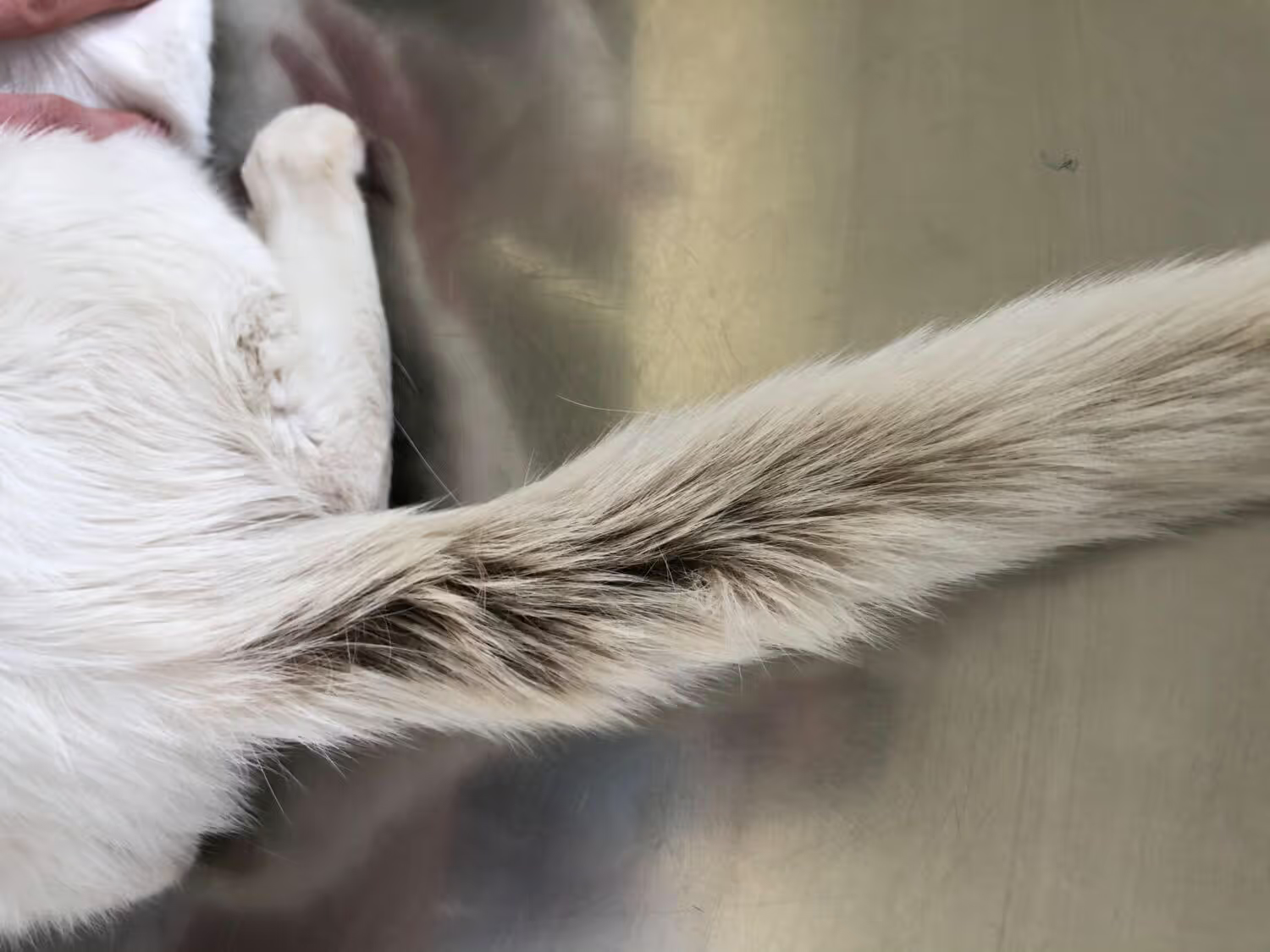
Image source: Bing (Web (fair-use with source credit))
Quick Answer
A greasy patch on a cat's lower back is usually stud tail, a buildup of sebum from an overactive gland. Flea allergy dermatitis and stress over-grooming are the other common causes. Inspect the area for blackheads, flea dirt, and broken hairs.
Treat with veterinary wipes for stud tail. If fleas are present, start a prescription flea control. If the skin looks raw or infected, see a vet.
Why This Spot Matters More Than You Think
That little patch of greasy fur isn't random. Cats have a specific cluster of sebaceous glands located right on the top of the tail base, near the rump. In veterinary medicine, this is called the supracaudal gland.
It's a scent-marking organ, which is why cats rub their butts and tails against furniture and your legs.
When that gland goes into overdrive, it produces too much waxy sebum. That's the grease you're feeling. The skin doesn't shed it properly, so it builds up on the fur, attracting dirt and sometimes leading to secondary infections.
Here's why the location matters so much:
- The tail base is the prime target for fleas. Fleas love warm, protected areas, and the lower back is a favorite spot.
- Cats can't easily reach their own lower back. This means they can't groom it as thoroughly as other areas, so skin issues here linger longer.
- It's a high-stress indicator. Cats that are anxious often over-groom their backs, stripping the fur and irritating the skin.
So, this single symptom can point to three completely different root causes. Getting it right matters because the treatment for each is different. Treating for fleas when the issue is stress won't help, and washing a stud tail too aggressively can make it worse.
Stud Tail: The Most Common Culprit
If you search for a "greasy patch on a cat's lower back," stud tail is the term you'll find most often. It's the informal name for feline tail gland hyperplasia. Basically, the supracaudal gland we just talked about gets swollen and overproductive.
This is more common in unneutered male cats, which is why it got the "stud" name. But here's the reality: it can happen in neutered males and female cats too. So don't rule it out based on your cat's gender.
What It Looks Like
Stud tail presents as a distinct, greasy patch right on the top of the tail base. If you part the fur, you might see:
- Blackheads (comedones) on the skin
- Waxy yellow or brown buildup on the hair
- Thinning hair or bald spots in that specific area
- A slightly yellowish, waxy crust on the skin
What It's Not
Stud tail is not painful, and it doesn't usually itch. If your cat is biting at the spot or dragging their butt on the floor, they might have an anal gland issue or a secondary infection, not just plain stud tail. Watch for that distinction.
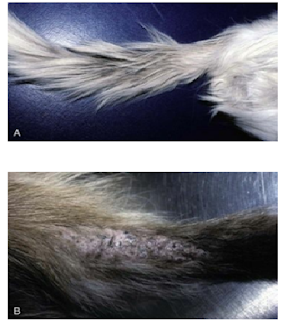
Image source: Bing (Web (fair-use with source credit))
How to Manage It at Home
If the patch is small and not bothering your cat, you can handle it at home:
- Use a veterinary antiseborrheic wipe. Look for wipes with chlorhexidine or ketoconazole. These are safe for cats and reduce the waxy buildup.
- Wipe the area 2 to 3 times a week. Don't scrub. Gently wipe the greasy area, letting the solution sit for a minute.
- Don't bathe the whole cat. Frequent baths can dry out their skin and actually stimulate more oil production. Spot treatment is better.
- Consider neutering if your cat is intact. In many cases, neutering reduces the hormonal drive that causes the gland to overproduce.
If the area becomes red, swollen, or starts to smell bad, that's a sign of a secondary bacterial or yeast infection. In that case, skip the home treatment and see your vet.
Flea Allergy Dermatitis: The Hidden Itch
Here's where things get tricky. A greasy patch on a cat's lower back is also a classic sign of flea allergy dermatitis (FAD). This is an allergic reaction to flea saliva.
When a flea bites your cat, it injects saliva to keep the blood from clotting. If your cat is allergic (and many are), their immune system overreacts, causing intense itching and inflammation.
The Connection to the Grease
The grease in this case isn't from a gland. It's from your cat's own saliva. The itching is so intense that cats over-groom, licking and chewing at their lower back to get relief.
Their saliva dries on the fur, leaving it stiff, greasy, and matted.
You'll likely see:
- Bald spots or thinning hair, especially around the tail base
- Red, irritated skin with small bumps
- Flea dirt (tiny black specks that look like pepper)
- Small scabs or crusty bumps, especially around the neck and lower back
The Flea Dirt Test
This is the quickest home test. Part the fur on the greasy patch and look for tiny black specks. If you see them, place a few on a damp white paper towel.
If they smudge red-brown, that's digested blood. It's flea dirt, and your cat has fleas.
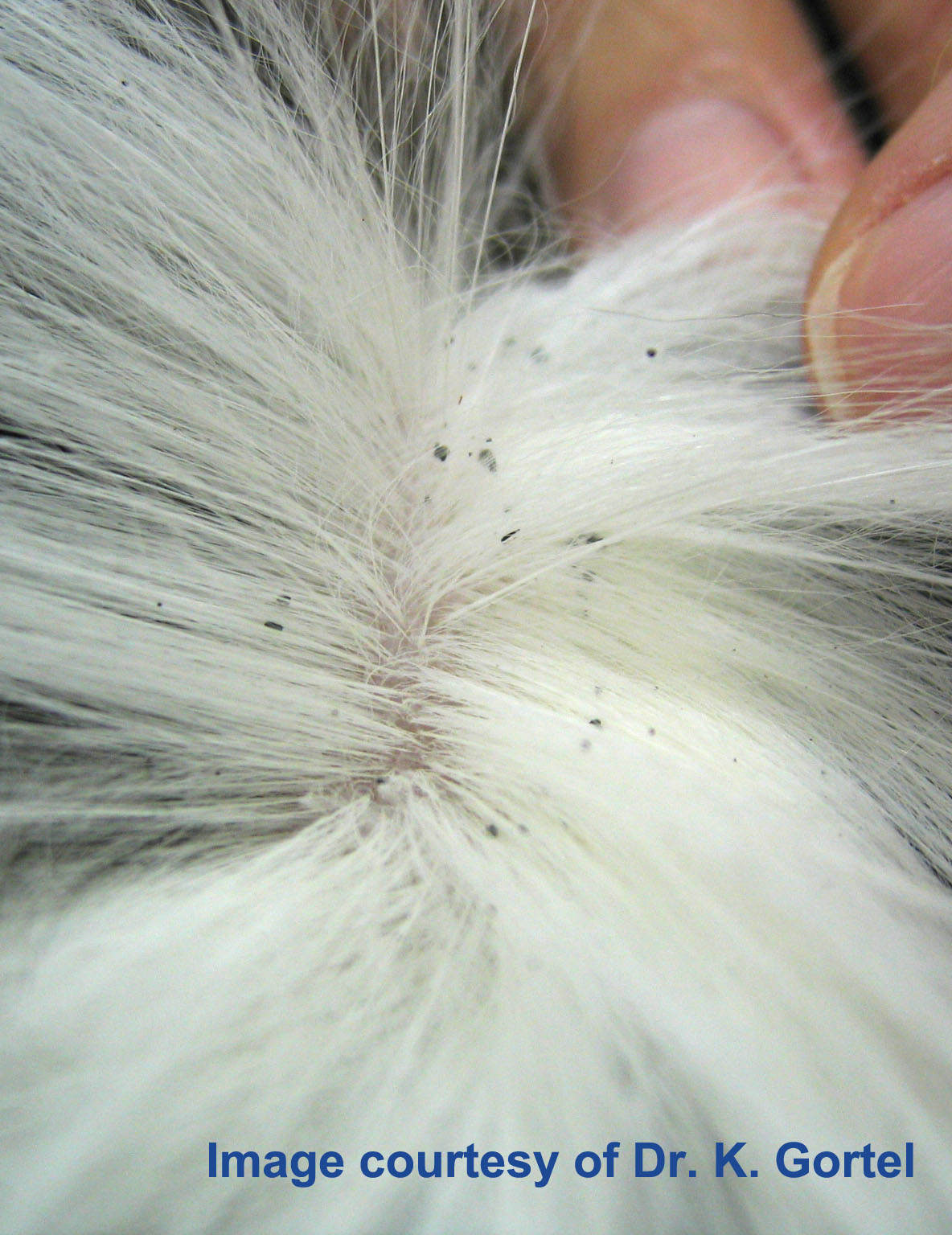
Image source: Bing (Web (fair-use with source credit))
Why Just One Flea is Enough
Here's the part most owners miss. You don't need a flea infestation to trigger this reaction. A single flea bite can cause a week of intense itching in a hypersensitive cat.
We've seen cases where owners swear their cat is flea-free because they've never seen a flea. But indoor-only cats can get fleas from:
- Other pets that go outside
- Humans bringing fleas in on shoes or clothing
- Guests with pets
- A new pet moving into the house
The Treatment
If you find flea dirt, home treatment won't cut it. You need a veterinary-grade flea preventive. Over-the-counter products often aren't strong enough or might be harmful to cats (more on that later).
Your vet can prescribe:
- A topical spot-on treatment (like selamectin or fipronil)
- An oral medication (like nitenpyram or fluralaner)
- Environmental control to kill fleas in your home
Once the fleas are gone, the itching stops, and the greasy patch will heal on its own. Expect improvement within 30 days, but the skin may take a bit longer to fully recover if there's a secondary infection.
Over-Grooming and Stress: When Cats Do It Themselves
The third major cause of a greasy patch on a cat's lower back is psychogenic alopecia. That's a fancy term for hair loss caused by stress-related over-grooming. Cats are creatures of habit, and they don't handle change well.
When they're anxious, they lick themselves obsessively as a self-soothing behavior.
The lower back, belly, and inner thighs are the most common targets. The constant licking removes the natural oils and damages the hair shafts. The fur breaks off, leaving a stubbly, greasy-looking patch.
It's not greasy from oil; it's greasy from repeated saliva application.
What Triggers It
Common stressors include:
- Moving to a new home
- A new pet or person in the household
- Changes in routine
- Loud noises (construction, thunderstorms)
- Sudden changes in family dynamics

Image source: Bing (Web (fair-use with source credit))
How to Tell It's Stress
Here's the key difference. With stud tail, the skin looks relatively normal, maybe with blackheads. With flea allergy, you'll see flea dirt and red bumps.
With stress over-grooming, you'll see the hair is broken, uneven, and stubbly. Run your fingers over the patch. If it feels like stubble rather than smooth, greasy fur, licking is the likely culprit.
The Fix is Not Topical
If stress is the cause, no amount of wipes or shampoo will help. The fix is behavioral:
- Add vertical space. Cat trees or shelves give your cat a safe place to retreat.
- Use Feliway diffusers. These release synthetic cat pheromones that promote calm.
- Stick to a routine. Feed at the same times daily.
- Increase play time. Interactive toys and hunting games reduce anxiety.
- Rule out pain. Check with your vet to ensure arthritis or dental pain isn't the underlying stressor.
The hardest part of this diagnosis is that it's a rule-out process. Your vet will usually rule out fleas and skin infections before concluding it's behavioral. It's worth being patient with this process.
How to Tell the Difference at Home (Without a Vet Degree)
You can do a solid at-home triage with a good eye and a flashlight. Here's your quick checklist.
Step 1: Part the Fur
Get a good look at the skin under the greasy patch. You need bright light.
Step 2: Check for Blackheads
Small, dark, plugged pores on the skin itself point to stud tail.
Step 3: Check for Flea Dirt
Put a few specks on a damp paper towel. Red-brown smudges mean fleas.
Step 4: Check for Redness and Bumps
Inflamed skin with tiny red bumps suggests allergic skin disease, not just a gland issue.
Step 5: Check the Hair Texture
Stubbly, broken hairs mean licking. Smooth, clumped, waxy fur means sebum production.
Step 6: Consider Your Cat's Recent History
Have you moved? Gotten a new pet? Missed a flea dose?
Has your cat been acting differently?
Here's a quick reference table to summarize:
| Feature | Stud Tail | Flea Allergy | Stress Over-Grooming |
|---|---|---|---|
| Location | Top of tail base | Lower back, tail base, neck | Lower back, belly, inner thighs |
| Skin Condition | Blackheads, normal skin | Red bumps, scabs | Bare skin, stubble |
| Hair Loss | Thinning, waxy | Patchy, broken | Even, short stubble |
| Itching | Mild or none | Intense | Extreme (they're always grooming) |
| Flea Dirt | Usually absent | Usually present | Absent |
| Primary Sign | Grease buildup | Itching and rash | Constant licking when stressed |
Use this as a starting point. If you're still unsure after 24 to 48 hours of observation, call your vet. They can do a quick cytology (tape test) to check for yeast or bacteria.
That simple test gives you a definitive answer in minutes.
Safe First Steps for Home Care
Once you've done a basic assessment, you might be tempted to grab any shampoo or wipe and start scrubbing. Hold off. Cats have sensitive skin, and their pH balance is different from dogs and humans.
Using the wrong product can strip their natural oils and make the problem worse.
What's Safe to Use
For stud tail specifically, you want products designed for feline sebum control:
- Veterinary antiseborrheic wipes (chlorhexidine or ketoconazole based)
- Degreasing cat-safe wipes from your vet's office
- Warm water and a soft cloth if you have nothing else
What to Avoid
- Human dandruff shampoo. Salicylic acid and zinc pyrithione are toxic to cats.
- Dog flea shampoo. Pyrethrins, common in dog products, are extremely dangerous to cats.
- Dawn dish soap. It strips all oils and can cause skin irritation with repeated use.
- Alcohol wipes. These dry out the skin and sting.
Your Home Care Routine
If you're confident it's mild stud tail, here's a weekly routine:
- Wipe the area 3 times a week with a cat-safe antiseborrheic wipe.
- Let it air dry. Don't rinse off the medication.
- Brush the area gently with a soft brush to remove loosened buildup.
- Monitor for changes. If redness develops, stop and call your vet.
Give this routine two weeks. If you don't see visible improvement, you're likely dealing with one of the other causes.
What NOT to Do: Common Mistakes That Make It Worse
When owners spot a greasy patch, the instinct is often to fix it aggressively. Here's what we've seen go wrong.
Mistake: Using Dog Flea Treatment
This is the most dangerous mistake. Dog spot-on flea treatments contain permethrin, which is highly toxic to cats. It causes tremors, seizures, and can be fatal.
Only use products specifically labeled for cats.
Mistake: Over-Bathing
Bathing a cat more than once a month strips the skin's protective barrier. The glands respond by producing more oil. It becomes a vicious cycle: the more you wash, the greasier they get.
Mistake: Ignoring Fleas
If fleas are the cause, no topical wipe will fix the greasy patch. The only way to resolve it is to kill the fleas and remove the allergen. Owners who keep wiping without flea treatment will see the problem persist for months.
Mistake: Assuming It's Just Stress
Stress over-grooming is a diagnosis of exclusion. Just because your cat is anxious doesn't mean fleas aren't the trigger. Always rule out physical causes before treating behavior.
Mistake: Squeezing Blackheads
It's tempting to pop those little blackheads like a pimple. Don't. This causes inflammation, infection, and pain.
The wipes will help them resolve on their own.
When to Call the Vet: Red Flags You Shouldn't Ignore
You can handle mild cases at home, but some situations need professional eyes. Here's when you should skip the home care and book an appointment.
Immediate Red Flags
- The patch is bleeding or oozing. This suggests a secondary bacterial infection.
- Your cat is in visible pain. Crying out when you touch the area is a bad sign.
- The patch is spreading rapidly. A small spot that becomes a large raw area overnight is concerning.
- Your cat is lethargic or has a fever. This could indicate a systemic infection.
- Your cat is urinating outside the litter box. Pain from a skin infection can cause behavioral changes.
Call Within 24 to 48 Hours
- No improvement after two weeks of home care.
- Excessive head shaking or ear scratching. This can accompany skin issues.
- Hair loss spreading beyond the lower back. This suggests a broader skin condition.
- Signs of flea dirt but you're unsure how to treat. Your vet can recommend the safest, most effective product.
What the Vet Will Do
Your vet will likely perform a few quick diagnostics.
Skin cytology (tape test). A piece of clear tape is pressed on the greasy area and stained. The vet looks under a microscope for yeast, bacteria, or inflammatory cells. This takes about 5 minutes.
Flea combing. A fine-toothed comb is run through the fur to catch fleas or flea dirt.
Wood's lamp exam. If ringworm is suspected, a special UV light is used to check for fungal fluorescence.
Occasionally, a skin biopsy. This is rare, but if the diagnosis is unclear, a small tissue sample may be sent to a lab for histopathology.
Here's what the tests mean:
| Test | Finding | Likely Diagnosis |
|---|---|---|
| Tape cytology | Yeast cells (Malassezia) | Secondary yeast infection |
| Tape cytology | Bacteria present | Secondary bacterial infection |
| Flea comb | Flea dirt present | Flea allergy dermatitis |
| Wood's lamp | Green fluorescence | Ringworm (fungal infection) |
These tests help your vet pinpoint the issue quickly and prescribe the right treatment.
What the Vet Will Do (and What It Costs)
If home care fails or you see red flags, a vet visit is the next step. Here's what to expect.
The Physical Exam
Your vet will do a full skin exam, checking for fleas, lesions, and signs of systemic disease. They'll also check your cat's teeth and joints for pain that might trigger over-grooming.
The Treatment Plan
Depending on the diagnosis, treatment might include:
- Prescription flea prevention. This is the most common fix, even if fleas are just suspected.
- Topical antibiotics or antifungals. For secondary infections, these clear it up quickly.
- Oral antibiotics. For deeper skin infections, oral meds are needed.
- Steroids or antihistamines. For allergic reactions causing intense itching.
- Behavioral modification. For stress-related over-grooming, your vet might recommend anti-anxiety medication.
Cost Breakdown
Vet costs vary by region and clinic type. Here's a general picture:
| Service | Typical Cost Range |
|---|---|
| Office visit | $50 to $100 |
| Skin cytology (tape test) | $50 to $90 |
| Flea prevention (monthly) | $20 to $50 |
| Topical medication | $20 to $60 |
| Oral antibiotics | $20 to $80 |
| Anti-anxiety medication (monthly) | $20 to $60 |
These are ballpark figures. Prices are higher in urban areas and for emergency visits. If there's a secondary infection requiring bloodwork or a biopsy, costs can reach $300 to $500.
This is why at-home observation matters. Catching a mild case of stud tail early saves you a bunch of money and your cat a stressful car ride.
Long-Term Prevention and Maintenance
Once you've got the greasy patch under control, you want to keep it that way. Here's how to prevent a recurrence.
For Stud Tail
- Stick to the wiping routine. Twice a week maintenance is fine once the area is clear.
- Keep your cat at a healthy weight. Obese cats can't groom their tail base, allowing buildup.
- Neuter your cat. In many cases, this stops the hormonal drive behind the gland overactivity.
For Flea Allergy
- Use year-round flea prevention. Even indoor cats need protection. Fleas can survive in your home's heated environment all winter.
- Treat all pets in the house. If one dog has fleas, the cat will get them too.
- Vacuum regularly. Focus on areas where pets sleep. Wash bedding weekly in hot water.
For Stress Over-Grooming
- Maintain a predictable environment. Cats hate surprises. Keep feeding, play, and sleep routines stable.
- Provide environmental enrichment. Cat trees, window perches, and puzzle feeders reduce boredom and anxiety.
- Add another litter box. The rule of thumb is one per cat plus one. This reduces resource competition.
- Use Feliway diffusers. Especially during stressful periods like moving or adding a new pet.
Seasonal Factors
Seasonal changes affect all three causes. Fleas spike in summer and early fall. Stress over-grooming often flares in spring and fall when routines change.
Stud tail can stay consistent year-round. Adjust your prevention routine accordingly.
Monthly Skin Check
Get in the habit of running your hands along your cat's back once a week. You're not just petting them. You're checking for lumps, greasy patches, and tender spots.
Early detection makes treatment faster, cheaper, and easier on your cat.
Real-Life Scenarios: What Other Cat Owners Experienced
The theory is helpful, but real cases make it click. Here are three patterns pulled from veterinary dermatology cases we've reviewed.
Scenario One: The Neutered Male
A 4-year-old neutered male tabby had a greasy patch at his tail base for six weeks. The owner thought it was dirt and scrubbed it with baby wipes. It got worse.
The vet confirmed stud tail with mild secondary yeast.
The fix was simple: two weeks of ketoconazole wipes every other day. The patch cleared. Now, the owner uses the wipes once a week as maintenance.
Total cost: $30 for the wipes and one office visit.
Lesson: Stud tail doesn't require surgery or harsh meds. It just needs the right product and consistency.
Scenario Two: The "Indoor Only" Cat
A 7-year-old female spayed cat developed a greasy, bald patch on her lower back. The owner insisted she was indoor-only and "never sees fleas." The vet did a flea comb and found flea dirt. A single flea bite was enough to spark a reaction.
The cat was started on monthly prescription flea prevention. The itching stopped in three days. The hair grew back in six weeks.
The greasy patch was gone by week four.
Lesson: Indoor cats get fleas. It's not a sign of poor housekeeping. It's just a fact of life.
Scenario Three: The Multi-Cat Household
A 3-year-old cat started over-grooming her lower back after a new kitten joined the household. The patch looked greasy, but no fleas or blackheads were present. The skin was healthy, just hairless and stubbly.
The vet ruled out physical causes and diagnosed stress-related over-grooming. The owner added a second litter box, a new cat tree, and started using a pheromone diffuser. After six weeks, the grooming behavior stopped and the fur grew back.
Lesson: Stress is a real trigger. Adding resources and environmental enrichment often resolves it without medication.
Frequently Asked Questions
Can I use dog flea treatment on my cat?
No. Dog flea treatments often contain permethrin, which is highly toxic to cats. Even a small amount can cause tremors, seizures, and death.
Always use cat-specific products. If you have a dog and a cat, keep them separated for 24 hours after applying dog treatment.
Is stud tail painful for my cat?
In its uncomplicated form, no. Stud tail causes greasy fur and blackheads, but no pain. If your cat shows pain or sensitivity, it's likely a secondary infection.
That needs a vet visit. Left alone, stud tail is more of a cosmetic nuisance than a health crisis.
Will the fur grow back after a greasy patch heals?
Yes, in most cases. Once the underlying cause is treated, hair regrowth typically occurs within 4 to 8 weeks. If the over-grooming was severe or caused scarring, regrowth may be slower or incomplete.
Consistency with treatment gives the best chance of full recovery.
Can stress really cause a greasy patch?
Yes. Stress-related over-grooming is a recognized condition in cats. The constant licking removes natural oils and damages hair shafts, creating a greasy, stubbly appearance.
It's not true oil production like stud tail, but it looks similar. Behavioral changes and environmental enrichment are the best treatment.
How long does it take to see improvement?
With proper treatment, itching and inflammation usually improve within 3 to 5 days. The greasy buildup typically clears within 2 weeks. Hair regrowth takes 4 to 8 weeks.
If you see no improvement after 14 days of treatment, it's time to reassess with your vet.
Should I bathe my cat to remove the grease?
No. Bathing a cat strips the skin's natural protective oils and can trigger more oil production. It also causes stress.
Spot treatment with veterinary wipes is safer and more effective. If the greasy area is heavily soiled, your vet can recommend a specific cat-safe degreasing shampoo.
The Bottom Line: Your Action Plan
You've got a greasy patch on your cat's lower back. Here's your step-by-step plan.
Today
- Part the fur and inspect the skin
- Look for blackheads, flea dirt, redness, or broken hairs
- Take note of any other symptoms like itching or pain
Days 1 to 14
- If it looks like stud tail, start antiseborrheic wipes every other day
- If fleas are suspected, call your vet for a prescription preventive
- If stress is the likely cause, add environmental enrichment immediately
Day 14
- If there's no improvement, call your vet
- If the area is worse, call your vet sooner
Ongoing
- Monthly flea prevention year-round
- Weekly skin checks
- Consistent environment and routine
A greasy patch on a cat's lower back is rarely an emergency, but it always deserves attention. The cause is usually treatable at home or with a simple vet visit. The earlier you act, the faster your cat stays comfortable and happy.