
Your hands look like you lost a fight with a rose bush. Working out how to stop a puppy from biting feels urgent when every cuddle turns into an ambush and the kids won't sit on the floor anymore. Here's what most advice gets wrong: puppy biting isn't one problem.
It's about eight different problems that all look identical from the outside.
The fix depends entirely on why that mouth is on you. Puppies between 8 and 16 weeks need roughly 16 to 20 hours of sleep in every 24, and a large share of panicked "my puppy is aggressive" calls turn out to be an overtired pup who skipped a nap. As of 2026, the guidance from certified trainers and veterinary behavior bodies still lands in the same place: diagnose first, then train.
So let's work out what's actually going on.
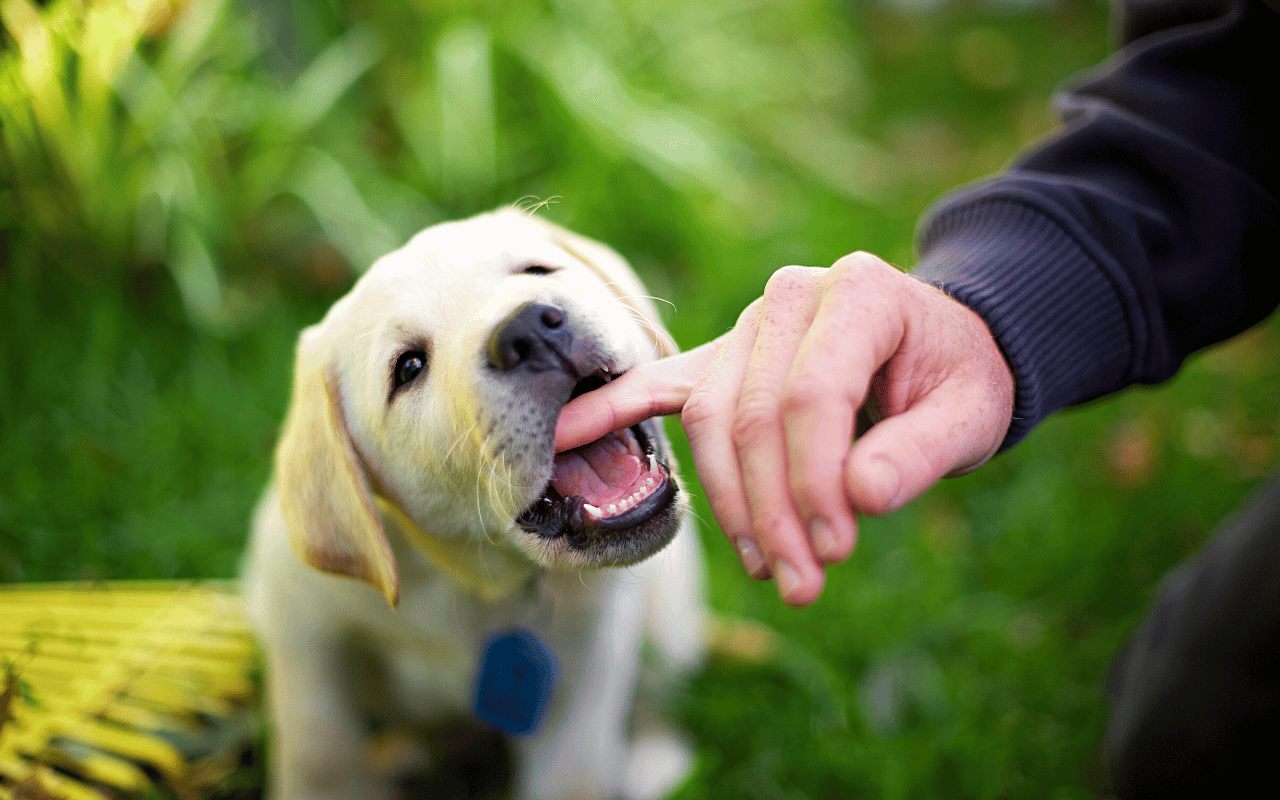
Image source: Bing (Web (fair-use with source credit))
Quick Answer
Stop a puppy from biting by fixing the cause, not the symptom. Most biting is overtiredness, teething, or overexcited play. Enforce a nap every 45 to 90 minutes of wake time.
Redirect the mouth onto a chew toy, every single time. Never let your hands become toys.
Why Your Puppy Bites You Constantly (And Why It's Not Aggression)
Puppies explore the world with their mouths the way babies explore with their hands. They have no thumbs. Biting is how they test texture, temperature, and whether a thing is worth playing with.
Your skin, sadly, ranks extremely high on that list. It's warm, it moves, it makes noise, and it reacts. From a puppy's point of view, you're the best toy in the house.
The littermate lesson your puppy didn't finish
Between roughly 4 and 8 weeks, puppies bite each other constantly during play. When one bites too hard, the other yelps and the game stops dead. That's the feedback loop that teaches bite inhibition, which simply means learning to control how hard the jaw closes.
That lesson isn't finished when the puppy comes home. It's barely started. Your job is to pick up where the littermates left off, which is why pushing a young puppy to stop biting entirely, before teaching a soft mouth, is a mistake we see over and over.
Two situations make this harder:
- Single Puppy Syndrome. A pup raised as a litter of one never got that peer feedback. Bite pressure control is often noticeably worse.
- Early separation. Puppies removed from the litter before 8 weeks (56 days) commonly show harder, more frequent mouthing. In the UK, 8 weeks is the legal minimum for sale, and most US states set the same floor.
The land shark stage is real and it's temporary
Between roughly 8 and 20 weeks you're dealing with 28 deciduous teeth built like sewing needles. They're thin, sharp, and designed to make littermates squeal. They break skin easily even when the puppy is being gentle by its own standards.
That's the confusing part. A puppy delivering a soft, polite play bite can still leave you bleeding. The wound doesn't tell you how hard the bite was.
So when is it actually something to worry about?
True aggression in an 8 to 16 week old puppy is rare. Genuinely rare. What people usually label aggression is play, frustration, or exhaustion.
The warning signs that need professional eyes are specific and they don't look like normal play:
- A stiff, frozen body before the bite instead of a wiggly one
- A hard stare with a closed mouth
- Silent biting with no play growl or squeaking
- Guarding food, chews, or stolen items with a low warning growl
- Bites aimed at a person's face, or at one specific family member only
- Repeated skin punctures from a puppy over 5 months old
If you're seeing those, skip ahead to the red flags section. Everything else on this page is for normal, noisy, wiggly, infuriating puppy mouthing, which is the vast majority of cases.
Play Biting vs Fear Biting vs Guarding: Reading Your Puppy's Body Language
Before you pick a technique, you need to read the puppy. The same bite means three completely different things depending on the body attached to it.

Image source: Bing (Web (fair-use with source credit))
Loose Body, Wiggly Bum, Bouncy Play Growl
This is play, and it's around 90% of what you're dealing with. Look at the whole dog, not the teeth.
Play looks like this:
- Play bow. Elbows down, bum in the air, tail going. That's an invitation, not a threat.
- Loose, curvy body. The spine wiggles. Nothing is rigid.
- Bouncy, exaggerated movement. Bounding, spinning, pouncing.
- Open, relaxed mouth. Corners soft, tongue often out.
- Noisy. Play growls are high, stuttery, and go up and down. They sound ridiculous.
- Rapid switching. Bites you, grabs a toy, races off, comes back.
A puppy doing all of this is not attacking you. It's trying to start a game with the only body part it has available.
Stiff Body, Hard Stare, Silent Grab
This one deserves respect. It's uncommon in young puppies but it's not impossible, especially in fear-based or pain-based cases.
Watch for:
- Stillness. The puppy freezes for a beat before contact.
- Hard, direct stare or whale eye (whites of the eye showing in a half moon).
- Closed, tight mouth with tension in the lips.
- Ears pinned flat back, or jammed hard forward.
- Silence. No play growl, no squeaking, no bouncing.
- Raised hackles along the shoulders or the base of the tail.
- Slow recovery. After the bite, the puppy stays tense instead of bouncing back into play.
A stiff, silent grab with a hard mouth is a different conversation from play biting. That's a call to your vet first, to rule out pain, and then to a credentialed behavior professional.
The Growl You Should Never Punish
A growl is information. It's your puppy telling you it's uncomfortable before it uses teeth.
Punish the growl and you don't remove the discomfort. You remove the warning. That's how you end up with a dog that bites "out of nowhere" at three years old, which is one of the most common histories veterinary behaviorists report in bite cases.
Treat a growl as data instead. Ask what the puppy was uncomfortable about, back off the pressure, and change the setup so the puppy doesn't need to say it again. The American Veterinary Society of Animal Behavior has published position statements on exactly this point, and they're worth reading if you're getting conflicting advice from friends and family.
A quick field test
Take your hands off the puppy for three seconds and stop moving completely. Play biters usually paw at you, bark, or grab a toy to restart the game. Fearful or guarding puppies usually take the space and disengage.
That single pause tells you which branch you're on.
The 6 Variables That Change Which Method Works
There is no single answer to puppy biting because six things shift the correct response. Get these wrong and the "right" technique fails.
Age Bracket: 8 Weeks vs 4 Months vs 7 Months
Age changes both the cause and the realistic goal.
| Age | Main driver | Realistic goal |
|---|---|---|
| 8 to 12 weeks | Exploration, play, sleep debt | Soften bite pressure, protect sleep |
| 12 to 16 weeks | Teething pain, rising arousal | Chew outlets, reduce bite frequency |
| 4 to 6 months | Molars, adolescence starting | Zero skin contact, impulse control |
| 6 to 12 months | Boundary testing, frustration | Reliable "leave it" and off switch |
Expecting a 10 week old puppy to have adult self control is like expecting a toddler to sit still through a film. The brain hardware isn't there yet.
Sleep Debt and the Evening Witching Hour
This is the single most underrated variable, and it's the one we'd check first in almost every case.
Puppies under 16 weeks typically need 16 to 20 hours of sleep per 24. Most family puppies get nowhere near that, because there's always someone wanting to play with them. An overtired puppy doesn't get sleepy.
It gets manic, mouthy, and completely unable to hear you.
If your puppy is worst between roughly 5pm and 9pm, that's not a training problem. That's a knackered puppy running on fumes.
Teething Stage and Needle Teeth
Adult teeth push through from around 12 weeks to 24 weeks, finishing with the molars at roughly 5 to 7 months. That's months of sore, itchy gums.
A teething puppy needs pressure and cold on its gums. No amount of "no" fixes a physical sensation. If the biting is slow, grinding, and gum-focused rather than fast and snatchy, teething is likely in the mix.
Breed Drive: Herding Nips vs Terrier Grabs vs Retriever Mouthing
Breed doesn't determine everything, but it strongly shapes the flavour of the biting.
- Herding breeds (Border Collie, Australian Shepherd, Cattle Dog, Corgi, Kelpie, German Shepherd) target movement. Ankles, trouser hems, running children. Yelping often makes this dramatically worse because a squeal is exactly what prey does.
- Terriers (Jack Russell, Staffie, Patterdale, Cairn) grab and hold with high arousal. They escalate fast and take longer to come back down.
- Gundogs and retrievers (Labrador, Golden, Cocker, Springer) are hands-and-wrists carriers. Softer mouths generally, but relentless.
- Guardian breeds (Rottweiler, Doberman, Cane Corso) get big fast. The same bite that was funny at 12 weeks is a real problem at 30kg, so the timeline is tighter.
- Toy breeds get away with it far too long because it doesn't hurt much. That's how you end up with a 4kg dog that bites for real.
Litter History and Early Separation
Ask yourself three questions. When was the puppy separated from the litter? Was it raised with siblings?
Was it hand reared?
Puppies who left before 8 weeks, litters of one, and hand reared pups all commonly show weaker bite inhibition. The plan doesn't change, but the timeline stretches. Budget more weeks, not more force.
Who's in the House: Kids, Guests, and Other Dogs
A 4 year old who screams and runs is an arousal machine. An elderly relative on blood thinners is a genuine injury risk from a bite that would barely mark you.
Household composition decides how much management you need, meaning gates, pens, and separation, versus how much you can rely on training alone. With small children, management always comes first.
The Decision Tree: Match Your Puppy's Biting to the Right Plan
Work through these branches in order. Most households land on Branch 1 or 2, and a good number are on both.
Branch 1: Overtired Biting and the Enforced Nap Protocol
Signs: Worst in the evening. Frantic, sloppy, indiscriminate biting. Zoomies that tip into nipping.
Puppy ignores toys and treats it normally loves. Whites of the eyes showing, breathing fast.
Do this:
- Log your puppy's actual sleep for two days. Count it honestly. Most owners are shocked.
- Cap wake windows at 45 to 90 minutes for pups under 16 weeks.
- When the window closes, put the puppy in a crate or pen. Not when it looks tired. When the clock says so.
- Cover part of the crate, dim the room, and stay out of it.
- Expect 2 to 10 minutes of protest, then sleep.
- Add a pre-emptive nap at around 4pm to head off the evening spike.

Image source: Web (Bing) / agents.teenpattistars.io (Web image (fair-use with source credit))
Do not respond to overtired biting with more exercise. Tiring out a sleep-deprived puppy is like giving an exhausted toddler a sugar rush. In our research, this is the single fastest-acting fix on the list, and families often report a noticeable difference within 3 to 5 days.
Branch 2: Play Biting and Bite Inhibition First
Signs: Loose body, play bow, noisy stuttery growl, bites during hands-on play, stops when you stop.
Do this:
- Stop all hands-on wrestling. Completely. Hands deliver food and calm strokes only.
- Keep a toy within reach in every room you use.
- Pre-load. Put the toy in your hand before you greet or engage the puppy.
- When teeth touch skin: freeze, go quiet, stand up slowly, count three seconds.
- Then re-engage with the toy, not your hand.
- Reward the moment the puppy chooses the toy over you.
The order matters. Soften the bite first, then reduce how often it happens. Trying to eliminate all mouthing at 9 weeks skips the pressure lesson entirely.
Branch 3: Teething Biting, Cooling and Chew Rotation
Signs: Slow gnawing rather than snatching. Chewing furniture legs and skirting boards. Some drool, sometimes a little blood on toys, occasionally a tooth on the floor.
Do this:
- Freeze a damp, knotted flannel or a stuffable rubber toy overnight.
- Stuff a hollow rubber toy with soaked kibble and a little plain yoghurt, then freeze it.
- Rotate 4 to 6 chews, offering only 2 at a time. Novelty keeps them interesting.
- Offer a frozen carrot or a lick mat during the evening slump.
- Feed at least one meal a day out of a chew toy instead of a bowl.
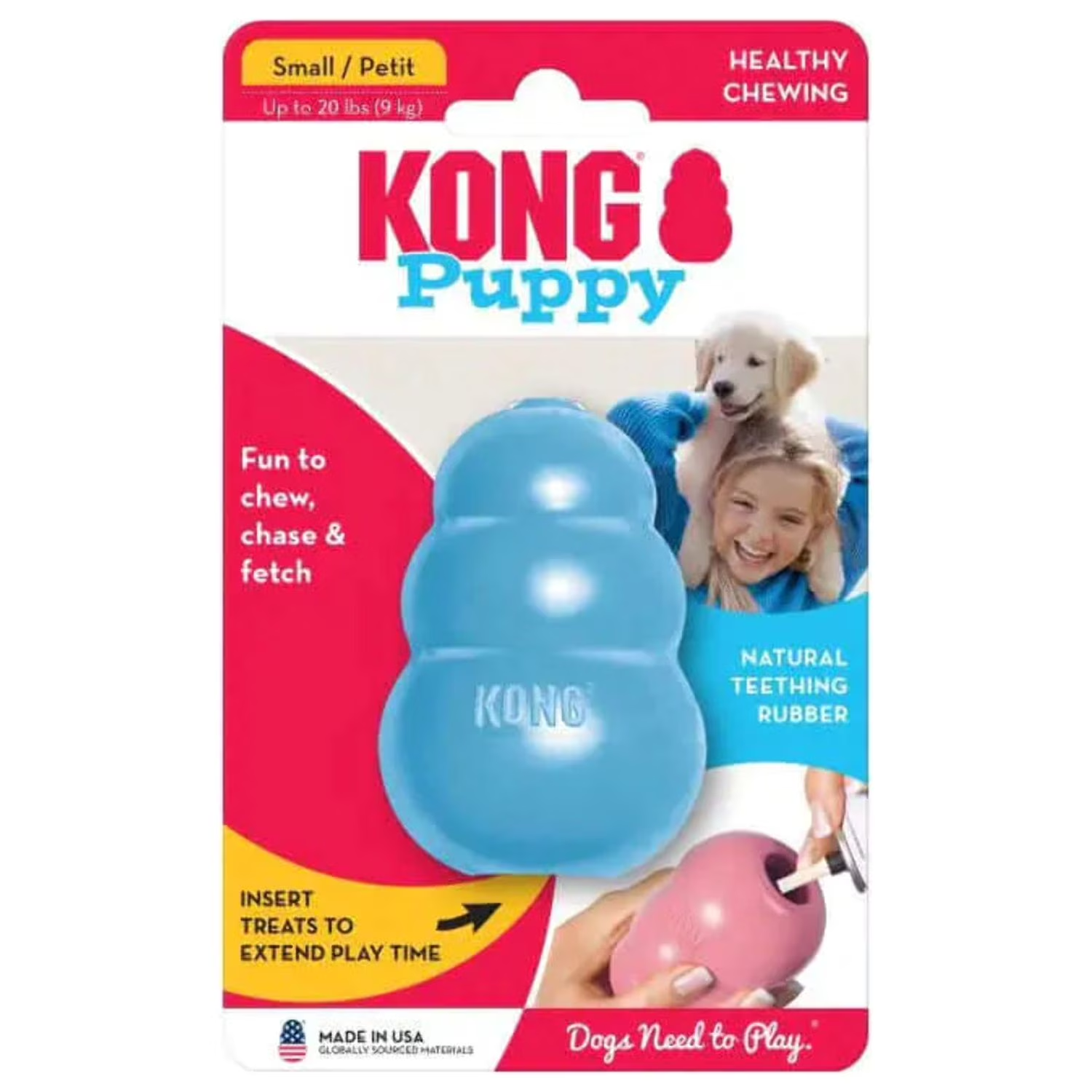
Image source: Bing (Web (fair-use with source credit))
Use the thumbnail test on any chew. Press your nail into it. If it doesn't dent, it's hard enough to fracture a tooth.
That rules out antlers, hooves, and rock-hard nylon for puppies.
Branch 4: Chase and Ankle Nipping
Signs: Bites trouser hems, socks, shoelaces. Targets running children. Worst on walks or in corridors.
Very common in herding breeds.
Do this:
- Stop moving. Movement is the reward. Become a lamp post.
- Do not yelp. Yelping mimics prey and pours fuel on it.
- Feed the drive properly with a flirt pole twice a day, 3 to 5 minutes each. Chase, catch, release, repeat.
- Teach children the "be a tree" rule: stop, fold arms, look at the sky, stay silent.
- Use a house line indoors so you can calmly step on it instead of grabbing the puppy.
The instinct isn't going away. Give it a legal outlet or it finds an illegal one.
Branch 5: Attention-Seeking Biting
Signs: Bites when you're on the phone, at the laptop, or talking to someone else. Stops the moment you engage. Often paired with barking.
Do this: Change what gets paid. Right now, biting reliably produces attention. Reward calm instead.
Drop a treat when the puppy settles, before it thinks to bite. Give it a chew before you sit down at the desk, not after the first nip.
Expect an extinction burst, meaning it gets worse for two or three days before it improves. That's normal and it's a sign the plan is working.
Branch 6: Handling and Grooming Biting
Signs: Bites when brushed, towel dried, having paws touched, being picked up, or having the collar grabbed.
Do this: Build cooperative care, which means teaching the puppy to opt in.
- Touch a paw for one second, feed a treat, let go. Repeat. Build up slowly.
- Teach a chin rest on your palm as a "yes, carry on" signal.
- Practise collar grabs as a game: touch collar, treat, release. Twenty reps over a week.
- Never restrain and push through. That teaches the puppy that struggling is the only option that works.
Branch 7: Resource Guarding, Trade Don't Take
Signs: Stiffens over food, chews, or stolen items. Speeds up eating when you approach. Low growl, hard stare, body curved around the object.
Do this immediately: Stop taking things off your puppy. Every grab confirms that you're a threat to its stuff.
- Trade up. Offer something better, take the item when the puppy lets go.
- Walk past the food bowl and drop something good in. Keep walking.
- Puppy-proof so there's less worth stealing.
- Teach "drop it" as a swap game, never as a wrestle.
Guarding that involves stiffness, freezing, or air snapping warrants a certified professional now, not in six months. This one gets worse with time and with confrontation.
Branch 8: Fear or Pain Biting, Vet First
Signs: Bites when approached, cornered, touched in one spot, or woken. Retreats then snaps. Stiff and silent.
Sudden change in a previously friendly puppy.
Do this: Book a vet appointment before you book a trainer. Retained baby teeth, gum infection, ear infection, GI pain, and orthopaedic problems all show up as "sudden biting". A sudden behavior change in a young dog is a medical question until proven otherwise, and the American Veterinary Medical Association makes the same point in its bite prevention guidance.
Once pain is ruled out, work with a veterinary behaviorist (DACVB in the US) or an ABTC-registered clinical animal behaviourist in the UK. Not a group class.
Bite Inhibition: The 4-Stage Sequence Most Owners Skip
Here's the part that gets left out of nearly every quick-tip list. You don't teach a puppy to stop biting. You teach it to bite softly, then you teach it to bite less, then you teach it not to bite people at all.
Skip the pressure stage and you get a dog that rarely bites but has no idea how hard its jaws are. That's the dog that does real damage the one time it panics at the vet.
| Stage | Goal | What you reinforce | Typical window |
|---|---|---|---|
| 1 | Eliminate hard bites | Any softening of pressure | 8 to 12 weeks |
| 2 | Eliminate medium bites | Only gentle contact continues the game | 12 to 16 weeks |
| 3 | Reduce frequency | Puppy chooses toys over skin | 16 weeks to 5 months |
| 4 | No skin contact at all | Mouth stays off people, full stop | By 5 to 6 months |
How to run each stage
Stage 1. Only react to the hardest bites. Freeze, go still and quiet, count three seconds, then carry on. Let the soft ones go for now.
If you react to everything, the puppy gets no information about what "too hard" means.
Stage 2. Once the hard bites are gone for about a week, raise the bar. Now the medium bites end the game too. Same response: freeze, quiet, three seconds, resume.
Stage 3. Any tooth on skin ends the interaction. Get up, walk away, or pop the puppy calmly behind a gate for 10 to 30 seconds. Not minutes.
A long time out just confuses the puppy about what ended the fun.
Stage 4. Teeth on people is off the table. By now the puppy should have plenty of legal outlets, so it isn't losing anything.
Two rules that make or break this
Reward the release. The instant the mouth comes off you, that's the moment worth paying. Most owners miss it because they're busy being annoyed.
Timing beats intensity. A quiet, boring, three second freeze delivered within half a second works far better than a loud reaction delivered two seconds late. Puppies connect consequences to what happened in the last second or so.
Bite inhibition ideally locks in before about 4 to 5 months, while the jaw is still small and the stakes are low. That's the deadline worth working to.
Why Yelping Like a Littermate Backfires on Half of All Puppies
The yelp advice is everywhere. It sounds logical, because that's genuinely what littermates do. The problem is that you're not a littermate, and a lot of puppies read a human squeal completely differently.
What actually happens when you yelp
For roughly half of puppies, the yelp works as advertised. The pup startles, pauses, and disengages for a moment.
For the other half, the yelp is the best thing that's happened all day. High-pitched noise plus a jerking hand is a near-perfect prey imitation. The biting gets faster, harder, and more excited.
Herding breeds and terriers are the usual culprits. If your Border Collie or Patterdale goes up a gear when you squeal, stop squealing. That's your answer.
The freeze method works on both types
The reliable alternative is boring. That's the point.
- Go completely still. Hands, arms, shoulders, everything.
- Say nothing. No "ow", no "no", no sharp inhale.
- Look away and up.
- Count to three in your head.
- Resume the game with a toy in hand.
Stillness removes the two things that make biting fun: movement and reaction. It works on the pups who escalate at noise, and it works on the ones who respond to yelping too.
Why pulling your hand away makes it worse
Snatching your hand back triggers a reflex that has nothing to do with training. Fast movement away from a puppy's mouth means chase. Every time.
Push your hand slightly toward the puppy instead, then go still. It feels wrong and it works. The puppy releases because there's nothing to grab at.
The Sleep Protocol: Wake Windows, Nap Cues and Crate Setup
If you only fix one thing on this page, fix sleep. In our research on puppy behavior cases, sleep debt is the most common hidden driver of "sudden" biting problems, and it's the fastest to correct.
How much sleep your puppy actually needs
| Age | Sleep per 24 hours | Max wake window |
|---|---|---|
| 8 to 12 weeks | 18 to 20 hours | 45 to 60 minutes |
| 12 to 16 weeks | 16 to 18 hours | 60 to 90 minutes |
| 4 to 6 months | 15 to 18 hours | 90 to 120 minutes |
| 6 to 12 months | 14 to 18 hours | 2 to 3 hours |
Count all sleep, including naps on your lap. But be honest about the difference between dozing with one ear up and proper, deep, twitchy-paws sleep. Only the second kind repays sleep debt.
Signs your puppy is over its wake window
- Frantic biting that ignores toys
- Zoomies indoors, especially in circles
- Grabbing anything and everything off the floor
- Barking at nothing
- Suddenly "forgetting" cues it knew an hour ago
- Whites of the eyes showing, panting without exercise
That last-hour meltdown isn't defiance. It's a tired puppy with no off switch of its own yet.
Setting up the nap
The crate or pen isn't punishment. It's a bedroom.
- Size it so the puppy can stand, turn around, and lie stretched out. No bigger for now.
- Cover three sides with a blanket to cut visual stimulation. Leave airflow.
- Put it somewhere quiet, not in the middle of family traffic.
- Take the collar off before crating. Tags and crate bars are an entanglement risk.
- Give a stuffed chew or lick mat as the puppy goes in.
The nap routine, step by step
- Watch the clock, not the puppy. When the wake window ends, the nap starts.
- Give a consistent cue. "Bedtime" or "nap" works fine.
- Toilet break first, every time.
- Into the crate with a chew.
- Cover, dim, walk away.
- Ignore protest for 5 to 10 minutes unless it's a genuine toilet emergency.
Most puppies settle within 2 to 10 minutes once the routine is predictable. If yours screams for 20 minutes solid every time, drop back a step and feed meals in the crate with the door open for a few days.
The pre-emptive evening nap
The 5pm to 9pm crash is so common that trainers just call it the witching hour. The fix is a nap before it starts, around 3.30pm to 4.30pm.
A puppy that goes into the evening rested is a different animal. Families who add this one nap often report the evening biting halving inside a week.
Redirection That Actually Works: Two-Toy Games, Tug Rules and Trade-Ups
Redirection fails for most people because it's reactive. They wait for the bite, then shove a toy in. By then the puppy has already been reinforced by biting skin, and the toy becomes a consolation prize.
Do it the other way round. Get the toy in play before the mouth lands.
Pre-loading
Keep a toy in every room you spend time in. Behind the sofa cushion, on the kitchen worktop, by the front door.
Before you greet the puppy, pick up the toy. Before you sit on the floor, pick up the toy. Before the kids come in from school, hand them a toy each.
Your hand should almost never be empty when the puppy is up and awake.
The two-toy game
This is the single most useful game for a mouthy puppy. It teaches release without conflict.
- Take two identical toys.
- Animate one along the floor. Let the puppy grab it.
- Stop moving that toy completely. Make it boring.
- Animate the second toy.
- The puppy drops the first to chase the second.
- Mark the drop with "yes" and let it have the second toy.
- Repeat.
Ten reps a day for a week and you've got the foundation of "drop it" without ever prising a jaw open.
Tug rules, and why tug is fine
Tug doesn't make dogs aggressive. That's an old myth. What it does is give a bitey puppy a legal, structured outlet for exactly the behavior you're trying to move off your hands.
Play by rules:
- Use a long toy with two handles or plenty of length. Keep hands 30cm or more from teeth.
- Start on your cue. "Take it" or "get it".
- If teeth touch skin, the game ends instantly. Toy goes behind your back for 10 seconds.
- Teach an "out" or "drop" using the two-toy game first.
- End the session while the puppy still wants more, not when it's frazzled.
- Keep sessions to 2 to 4 minutes for young pups.
Let the puppy win sometimes. Winning is the payoff, and a puppy that never wins stops playing by the rules.
Trade-ups for stolen items
Chasing a puppy that's stolen a sock teaches it that stealing starts the best game in the house. It also builds guarding.
Instead:
- Walk to the treat pot, calmly.
- Scatter three or four treats on the floor a metre away from the puppy.
- The puppy drops the sock to eat.
- Pick up the sock while it's eating. No fuss, no lunging.
- Sometimes give the sock back if it's safe. That keeps trades honest.
Do this consistently and your puppy will start bringing you stolen items instead of hiding with them.
Chew rotation
Novelty matters more than quantity. Six toys left out permanently become wallpaper.
- Keep 8 to 10 chews in a box.
- Put out 2 or 3 at a time.
- Swap every couple of days.
- Vary texture: rubber, rope, fleece, edible, frozen.
- Feed at least one meal a day out of a stuffable toy or snuffle mat.
Chewing and licking are naturally calming behaviors. A puppy that's had 20 minutes on a stuffed frozen toy is far easier to live with than one that's had 20 minutes of fetch.
Teaching the Off-Switch: Settle, Mat Work, Leave It and Drop It
Biting is an arousal problem as much as a mouth problem. A puppy that can't come down from excitement will always find its way back to your hands. So teach the coming-down as a skill.
Capturing calmness
The easiest training you'll ever do. Whenever your puppy lies down on its own, quietly drop a treat between its front paws.
Say nothing. Don't make eye contact. Don't make it a party.
You're reinforcing the state, not a trick.
Do this twenty or thirty times a day for two weeks and puppies start offering calm on purpose. It feels like magic and it's just reinforcement history.
Mat training in five steps
A mat gives the puppy a job that isn't biting.
- Put a towel or bed on the floor. Reward any interaction with it.
- Reward standing on it. Then sitting. Then lying down.
- Feed 5 or 6 treats in a row while the puppy stays down.
- Add duration slowly, 5 seconds at a time.
- Add a cue: "mat" or "place".
Then use it. Mat during dinner. Mat when guests arrive.
Mat when you sit down with a laptop.
Leave it, built properly
"Leave it" means "that thing is not yours, look at me instead". Build it in four stages.
- Closed fist. Treat in your fist. Puppy sniffs, licks, paws. The moment it backs off, mark and feed from the other hand.
- Open palm. Same treat, open hand. Close your fist if the puppy dives. Open again when it backs off.
- On the floor. Treat on the floor, hand hovering. Reward backing away.
- Moving. Roll a treat past. Reward the puppy for not chasing.
Add the verbal cue only at stage three, once the behavior is reliable. Naming it too early just teaches the puppy that the word predicts a lost argument.
Drop it without the wrestle
Use the two-toy game as the foundation, then formalise it.
- Puppy has toy A. Present toy B or a treat.
- The instant the mouth opens, say "drop".
- Mark and pay.
- Give toy A back most of the time.
A puppy that believes "drop" means "you lose your stuff" stops dropping. A puppy that believes "drop" means "something good happens and you often get it back" drops instantly.
Arousal up and down games
Deliberately practise the transition between excited and calm. It's a muscle.
- Tug or chase for 15 seconds.
- Stop. Ask for a sit or a hand target.
- Pay calmly.
- Restart the game as the reward.
Five reps. That's it. Over a few weeks the recovery time between "wild" and "settled" drops from minutes to seconds, and that's exactly the skill a bitey puppy is missing.
Kids and Puppies: A Safety Plan That Protects Both
This is where puppy biting stops being an annoyance and becomes a genuine safety issue. Children's faces are at puppy height, they move unpredictably, and they scream at exactly the frequency that winds a puppy up.
The non-negotiables
- No unsupervised contact. Ever. Not for a minute, not "just while I grab the washing". Use a gate or a pen.
- Active supervision only. Being in the same room while scrolling your phone isn't supervision.
- No face-to-face contact with young children on the floor.
- No child holds the puppy while it's mouthy.
- No child does the time-outs. Adults handle consequences.
Teach kids the tree
Children need one simple rule they can actually remember under pressure. "Be a tree" is it.
- Stop moving. Feet planted.
- Fold arms in, hands tucked.
- Look at the ceiling or the sky.
- Stay silent.
- Wait for an adult.
Practise it as a game when the puppy is asleep, so it's automatic when it isn't. Reward the child for doing it, not just the puppy.
Games kids can safely play
Kids don't need to stop interacting with the puppy. They need different jobs.
| Safe for kids | Why it works |
|---|---|
| Scatter feeding treats on the floor | No hands near teeth, calming sniffing |
| Rolling a ball along the ground | Distance, low arousal |
| Long two-handle tug, adult supervised | Keeps hands well clear |
| Hiding treats for the puppy to find | Mental work, zero contact |
| Filling a lick mat or stuffed toy | Kid feels involved, puppy settles |
| Not safe for kids | Why |
|---|---|
| Wrestling and rough play | Teaches hands are toys |
| Running away from the puppy | Triggers chase and heel nipping |
| Picking the puppy up | Restraint biting, dropping risk |
| Taking food or chews away | Builds resource guarding |
| Hugging around the neck | Common bite trigger, kids' faces at risk |
Managing the after-school spike
The half hour when children come home is peak chaos. Front door bangs, bags drop, everyone's shouting.
Put the puppy behind a gate with a stuffed chew before the door opens. Let the kids come in, settle, take their shoes off. Then let the puppy out into a calm room.
That single change removes one of the biggest daily flashpoints.
If a child gets bitten
Wash the wound with soap and running water for several minutes. Any puncture, any bite on the face or hands, or any wound that won't stop bleeding needs medical review the same day. Dog bites carry a real infection risk, and children's hands are full of tendon sheaths and joints where infection spreads fast.
Then step back and look at the setup, not the puppy. Something in the management failed.
Mistakes That Make Puppy Biting Worse
Some of the most popular advice actively slows progress down. A few bits are genuinely risky.
Scruffing, Alpha Rolls and Nose Taps
Pinning a puppy on its back, grabbing its scruff, holding its muzzle shut, or tapping its nose are all still circulating widely. They shouldn't be.
Research summarised by veterinary behavior organisations consistently links confrontational handling with increased fear and defensive aggression. Practically, here's what happens with a mouthy puppy: you pin it, it struggles, you hold, it panics. Now hands predict conflict.
There's also a timing problem. The puppy connects the punishment to being grabbed, not to the bite it delivered three seconds earlier.
Using Your Hands as Toys
This is the mistake almost every household makes without realising. Someone in the family, usually the person complaining loudest, is play-wrestling with the puppy.
You cannot teach "hands are not toys" while also using hands as toys. The puppy has no way to tell the difference between the fun version and the annoying version.
House rule: hands feed, stroke calmly, and clip the lead. That's it. Every game runs through a toy.
More Exercise When the Puppy Needs a Nap
"Tire it out" is the most common wrong turn. It's also physically risky for growing joints.
The usual guideline for structured walking is around 5 minutes per month of age, up to twice daily. So a 4 month old puppy gets roughly 20 minutes, twice a day. Long forced walks and repetitive fetch on hard ground put real load on developing growth plates.
More to the point, an overtired puppy that gets more exercise becomes an overtired puppy with adrenaline. Swap physical exercise for sniffing, chewing, licking, and sleep. Ten minutes of a snuffle mat beats half an hour of ball throwing for calming a bitey pup.
Time-Outs That Last Too Long
Two minutes is too long. Five minutes is way too long. A puppy has no idea why it's still behind a gate after 90 seconds.
Use 10 to 30 seconds. The point is information, not punishment. Bite, fun stops immediately, fun comes back quickly.
That contrast is what teaches.
Also watch which side of the gate you use. Removing yourself is often better than dragging the puppy, because grabbing a collar mid-arousal can trigger more biting.
Inconsistent Rules Across the Household
If one person allows hand wrestling and everyone else doesn't, the puppy learns that biting sometimes works. Intermittent reinforcement produces the most persistent behavior there is. It's the same reason slot machines are addictive.
Get everyone in a room for ten minutes. Agree three rules. Write them on the fridge:
- Toy in hand before touching the puppy.
- Teeth on skin means freeze, three seconds, redirect.
- Nap at the end of every wake window, no exceptions.
That's more effective than any single technique on this page.
A few smaller ones worth naming
- Punishing the growl. Removes your early warning system.
- Bitter apple spray on hands. Doesn't address why the puppy is biting, and many pups genuinely don't care.
- Shouting "no" on repeat. Becomes background noise within days.
- Removing all toys so the puppy "isn't confused". You've just removed every legal outlet.
- Giving up at day 10. Most protocols need 3 to 6 weeks of consistency before they look solid.
Gear That Earns Its Keep: Chews, Pens, Long Lines and Lick Mats
You don't need much. You do need the right few things, because management is what stops the puppy rehearsing the behavior while training catches up.
| Item | What it does for biting | Rough spend |
|---|---|---|
| Crate | Enforced naps, safe downtime | $40 to $150 / £30 to £120 |
| Playpen | Contained space when you can't supervise | $50 to $120 / £35 to £100 |
| Baby gate | Instant time-outs, kid separation | $30 to $90 / £20 to £70 |
| Stuffable rubber toy (2 to 3) | Frozen chew outlet, meal delivery | $10 to $25 each / £8 to £20 |
| Lick mat | Fast calming tool for the evening slump | $8 to $15 / £5 to £12 |
| Snuffle mat | Sniffing lowers arousal | $15 to $30 / £12 to £25 |
| Long line, 5 to 10m | Outdoor freedom without grabbing | $15 to $40 / £12 to £35 |
| House line (light, 2m) | Calm indoor control, no collar grabs | $8 to $20 / £6 to £15 |
| Flirt pole | Legal chase outlet for herding types | $20 to $40 / £15 to £30 |
| Two-handle tug | Keeps hands away from teeth | $10 to $25 / £8 to £20 |
Total realistic setup lands around $150 to $300 in the US, or £120 to £250 in the UK. That's less than one behavior consult.
Chew Hardness and the Thumbnail Test
Manufacturer guidance across the major chew brands lands in the same place: a chew should have some give.
Press your thumbnail firmly into the surface. If it leaves a mark or dents, it's puppy safe. If it doesn't move at all, it can fracture a tooth.
Puppy-specific versions of rubber chew toys are made from a softer compound than the adult versions for exactly this reason. Check the packaging, because the same brand often sells three hardness grades in near-identical shapes.
Size matters too. The chew should be too big to fit entirely in the puppy's mouth. Anything that can be swallowed whole is a blockage risk.
What to Avoid: Antlers, Hooves and Hard Nylon
These come up constantly in "indestructible chew" recommendations, and they're a common cause of slab fractures on the upper carnassial teeth.
Steer clear of:
- Antlers (split or whole)
- Cow and pig hooves
- Hard nylon bones not marked as puppy grade
- Real bones, cooked or raw, for young puppies
- Tennis balls as chew toys. The abrasive fuzz wears enamel down
- Sticks. Splinter and puncture risk, and they teach wood chewing
Rawhide and hard chews like bully sticks need supervision if you use them at all, because of choking and swallowing risk as they soften.
Long lines, briefly
A long line changes outdoor biting because you stop grabbing your puppy. Standing on a line to stop a chase is calm. Lunging for a collar is exciting, and excitement is the fuel.
Use it on a harness, not a collar. Biothane wipes clean and doesn't hold water. Never leave one on an unsupervised puppy, indoors or out.
Realistic Timelines: What Progress Looks Like Week by Week
Owners quit because they expect a fix in three days. Here's what the curve actually looks like when the protocol is run consistently.
| Timeframe | What to expect |
|---|---|
| Days 1 to 3 | Often worse. Extinction burst as old strategies stop working |
| Days 4 to 7 | Hard bites start dropping. Evening biting eases if sleep is fixed |
| Weeks 2 to 3 | Bite pressure noticeably softer. Puppy starts choosing toys |
| Weeks 4 to 6 | Frequency drops sharply. Redirection works most of the time |
| Months 3 to 4 | Skin contact becomes occasional and gentle |
| 4 to 6 months | Mouthing largely resolved for most puppies |
| 5 to 10 months | Possible adolescent relapse, usually brief |
Track it or you won't see it
Progress on biting is invisible day to day. Keep a simple log for two weeks.
Each evening, note four things:
- Total hours of sleep
- Number of hard bites (skin marked)
- Number of total bites
- Worst time of day
Owners who track this almost always find the hard bites disappear well before the total count drops. That's exactly the sequence you want. It's stage one working.
When to expect the first real win
Sleep fixes show up fastest, often in 3 to 5 days. Bite pressure takes 1 to 2 weeks. Frequency takes 3 to 6 weeks.
Full resolution is measured in months, because it's partly maturation.
If you're seeing zero change after 3 weeks of genuinely consistent work, something's misdiagnosed. Go back to the decision tree and check whether you're on the right branch.
Costs: Puppy Classes, Private Trainers and Behaviourist Referrals
Most biting cases don't need paid help. Some absolutely do, and knowing the going rates stops you either overpaying or delaying.
| Service | US | UK | Best for |
|---|---|---|---|
| Group puppy class, 4 to 6 weeks | $120 to $250 | £80 to £180 | Socialisation, normal mouthing, first-time owners |
| Private trainer, per session | $75 to $200/hr | £50 to £120/hr | Household-specific setups, kids, herding nips |
| In-home package, 3 to 4 sessions | $300 to $700 | £200 to £450 | Persistent play biting, multi-person households |
| Certified behavior consultant | $150 to $300/hr | £90 to £200/hr | Resource guarding, fear biting |
| Veterinary behaviorist consult | $300 to $700+ | £250 to £600+ | Suspected pain, severe fear, medication questions |
Checking credentials properly
Dog training is unregulated in both the US and the UK. Anyone can print a business card. Look for assessed credentials, not just membership.
In the US, look for CPDT-KA or CPDT-KSA from the Certification Council for Professional Dog Trainers, KPA CTP from the Karen Pryor Academy, CDBC from the IAABC, or DACVB for veterinary behaviorists.
In the UK, look for ABTC registration, which covers Registered Animal Training Instructors and Clinical Animal Behaviourists. The Animal Behaviour and Training Council maintains the public register, and it's the closest thing the UK has to a standards body.
Questions worth asking before you book
- What happens if my puppy bites during the session?
- What equipment do you use? Prong collars, slip leads used for correction, and e-collars are red flags on a puppy.
- Do you offer a written plan afterwards?
- Are you insured, and do you hold current first aid training?
If a trainer talks about dominance, being the alpha, or "showing the puppy who's boss", keep looking. That framework has been out of date in behavior science for decades.
Free things that genuinely help
- Your vet nurse. Many run free puppy clinics and can rule out mouth pain.
- Breed-specific rescue organisations, which often give free behavior advice.
- National welfare charities in the UK publish detailed free puppy guides.
Bite Wounds, Liability and Legal Basics You Should Know
Puppy teeth break skin easily. Most of the time it's a scratch. Sometimes it isn't, and the aftermath has practical consequences.
Treating a bite at home
- Wash with soap and running water for 5 minutes. Don't scrub hard.
- Let it bleed briefly. It flushes the wound.
- Dry, then cover with a clean dressing.
- Watch for redness, heat, swelling, or red streaking over the next 48 hours.
When to get medical attention
Seek same-day care for:
- Any puncture wound, even a small one. Punctures seal over and trap bacteria
- Bites on the hand, wrist, foot, face, or over a joint
- Bleeding that won't stop with 10 minutes of pressure
- Any bite on a young child, an older adult, or anyone immunosuppressed
- Anyone on blood thinners
- Signs of infection at any point
Dog bite wounds carry a real infection risk, including Pasteurella and Capnocytophaga. Tetanus status is worth checking. The Centers for Disease Control and Prevention publishes guidance on bite wound care and zoonotic infection risk that's worth a read if you're unsure.
The legal side, briefly
Rules vary and you should check your local position, but the broad shape is consistent.
United States. Most states apply either strict liability (the owner is responsible regardless of prior history) or a "one bite" rule. Many jurisdictions require bites that break skin to be reported to the local health department, which triggers a rabies observation period. Rabies vaccination status matters enormously here.
United Kingdom. The Dangerous Dogs Act 1991, as amended in 2014, covers dogs dangerously out of control, and since 2014 that includes incidents on private property, including your own home. The Animal Welfare Act 2006 also places a duty of care on you, which is one more reason aversive methods are a poor choice.
Insurance. Home and renter policies frequently have dog bite clauses, and some exclude specific breeds or dogs with a bite history. Worth checking before you need it.
None of this is likely to touch a normal mouthy 12 week old. It matters because the puppy becomes an adult dog, and adult bite incidents are where the consequences live.
Red Flags That Mean You Need a Professional Now
Most puppy biting is a training and management job. A small subset isn't, and delay makes those cases meaningfully harder to fix.
Book a vet appointment first, then a qualified behavior professional, if you see any of the following:
- Stiff, silent biting with a frozen body and hard stare
- Guarding food, chews, beds, or stolen items, with growling or freezing
- Air snapping or lunging toward a person
- Bites that break skin repeatedly in a puppy over 5 months
- Biting aimed at one specific family member and nobody else
- Bites directed at a child's face
- A sudden change in a previously friendly puppy
- Biting when touched in one particular spot, which is a pain flag
- A puppy that never settles, even with sleep protocols in place
- Any bite that leaves you genuinely frightened of your own dog
Why the vet comes first
Pain masquerades as behavior. Retained deciduous teeth, gum infection, ear infection, gastrointestinal discomfort, hip or elbow dysplasia, and panosteitis all show up as irritability and biting in young dogs.
A behaviorist will send you back to the vet anyway. Save the step and the money.
Don't wait for it to be bad enough
The instinct is to give it another few months. Behavior problems in dogs almost never improve with time and rehearsal. They consolidate.
An 11 week old puppy that guards a chew is a straightforward case. The same dog at 14 months is a much bigger project, and the bites hurt considerably more.
The Adolescent Relapse at 5 to 10 Months
You'll fix the biting. Then somewhere between 5 and 10 months, it comes back, and it feels like everything you did was pointless.
It isn't. This is adolescence, and it's a normal, well-documented phase. The dog isn't being spiteful and it hasn't forgotten its training.
What's actually happening
Adolescent dogs show measurable changes in stress responses, impulse control, and how reliably they respond to cues, especially with their primary caregiver. Add a second fear period around 6 to 14 months and rising frustration tolerance issues, and you get a dog that's bigger, stronger, and briefly worse behaved.
The mouthing that returns tends to be different in flavour. It's usually frustration-driven, not exploratory. It shows up when the dog is thwarted: on lead, behind a gate, when play stops, when it can't reach something.
How to handle it
- Go back to management. Gates, pens, and house lines come back out for a few weeks.
- Protect sleep again. Adolescents still need 14 to 18 hours and often stop taking it voluntarily.
- Re-run the basics in easy environments. Leave it, drop it, mat, settle. Short sessions.
- Increase sniffing and chewing, not exercise. Decompression walks on a long line beat drilling.
- Stay calm and boring when teeth land. Same freeze, same three seconds.
- Don't add corrections. This is the exact point where owners reach for aversive tools, and it's the exact point where fear-based problems get built.
How long it lasts
Most families report the worst of it clears in 4 to 8 weeks of steady work. Larger breeds tend to have longer adolescence, sometimes running to 18 months to full maturity.
Treat it as a wobble, not a failure. The foundations you built at 12 weeks are still there underneath.
Breed-Specific Tweaks: Herding, Terrier, Gundog, Guardian and Toy Puppies
The core plan doesn't change by breed. What changes is which parts you lean on hardest, and how long you budget.
Herding breeds
Border Collies, Australian Shepherds, Cattle Dogs, Corgis, Kelpies and German Shepherds bite movement, not people. That distinction matters. Your ankles are only interesting because they're moving.
- Prioritise the flirt pole over fetch. Chase, catch, release gives the whole sequence a legal ending.
- Kill the yelp completely. High-pitched noise is the accelerant here.
- Teach a stationary default (mat or sit) that pays better than chasing.
- Watch for eye-stalk-freeze patterns before the nip. That's the tell, and it gives you a two-second window.
Aggregate trainer reports suggest herding pups take longer on the frequency stage but often have naturally soft mouths. Bite pressure is rarely the issue. Bite persistence is.
Terriers
Jack Russells, Patterdales, Staffies and Cairns escalate fast and come down slowly. The arousal curve is steeper.
- Cap play sessions at 2 to 3 minutes. Stop before the peak, not after.
- Build the up-and-down arousal game in earlier than you would with other breeds.
- Expect a longer latency to settle. Two to five minutes is normal early on.
- Use tug deliberately. Terriers do better with a structured grip outlet than without one.
Gundogs and retrievers
Labradors, Goldens, Cockers and Springers are carriers. They want something in the mouth at all times, and if there's nothing available, it's your wrist.
- Pre-loading toys matters more here than anywhere else. Never approach empty-handed.
- Give them something to hold at the front door, on walks, when guests arrive.
- Soft, holdable items work better than hard chews for this. A fleece toy or a rolled sock-sized tug.
- Bite pressure is usually mild. Frequency is relentless.
Guardian breeds
Rottweilers, Dobermans, Cane Corsos and larger shepherd types grow fast, and that shortens your window.
- Work the bite inhibition stages on a tighter schedule. Target zero hard bites by 12 weeks.
- Get skin contact eliminated by 4 to 5 months, not 6.
- Involve a qualified trainer earlier, ideally in a group puppy class, for the socialisation as much as the biting.
- Never use confrontational handling. A defensive response from a 40kg adolescent is a different scale of problem.
Toy breeds
Chihuahuas, Yorkies, Dachshunds and Pomeranians get a free pass for far too long, because the bites don't hurt much.
- Apply exactly the same standards. A 4kg dog that bites is still a dog that bites.
- Be careful with handling-related biting. Small dogs get picked up constantly without consent, and that builds defensive mouthing fast.
- Use the cooperative care work early. Chin rest, consent to lift, three-second handling reps.
- Their teeth are small, so hard-bite feedback is harder for you to judge. Watch the puppy's body, not your skin.
| Breed group | Hardest stage | Best-fit outlet | Extra watch-out |
|---|---|---|---|
| Herding | Frequency | Flirt pole | Yelping backfires |
| Terrier | Arousal recovery | Structured tug | Escalates fast |
| Gundog | Constant mouthing | Carry toy | Never approach empty-handed |
| Guardian | Timeline pressure | Chews plus early class | Size at 6 months |
| Toy | Owner consistency | Cooperative care | Handling without consent |
Lead Biting, Harness Grabbing and Walk Meltdowns
Walks are their own flashpoint. Half the owners who ask about biting are really asking about a puppy that spins, grabs the lead, and hangs off it like a fish.
Why it happens
Lead biting is almost always frustration or overstimulation, not naughtiness. The puppy wants to move, can't, and redirects onto the nearest available object. Which is the lead attached to its own face.
The second cause is arousal from the environment. Too many smells, dogs, cars, and children at once. The puppy tips over threshold and the mouth comes out.
The fix, step by step
- Shorten the walk. Use the 5 minutes per month of age guide. A 4 month old gets around 20 minutes.
- Fit the harness indoors first. Treat, clip, treat, unclip. Ten reps a day for a week.
- Carry a toy on walks. Hand it over before the lead grabbing starts, not after.
- Stop dead when teeth hit the lead. No tugging back. Tug-of-war is exactly what the puppy wants.
- Scatter three treats on the ground. Sniffing resets arousal fast.
- Turn and walk five paces the other way once the puppy re-engages.
If it happens at the same point on every walk, that's a trigger, not a habit. Change the route.
Harness and collar grabbing at the door
The pre-walk excitement is often worse than the walk. Puppies grab hands, sleeves, and the harness itself.
Break the routine into pieces. Pick up the harness, put it down, walk away. Do that ten times over two days until the harness stops being a starting pistol.
Then fit it, and don't go anywhere. Fit it before breakfast. Fit it and sit down.
The harness stops predicting the walk, and the arousal drops with it.
Decompression walks beat drill walks
A sniffing walk on a long line does more for a bitey puppy than a structured heel session. Sniffing lowers heart rate and gives the brain a proper job.
Aim for two or three sessions a week where the only goal is to let the puppy use its nose. Use a 5 to 10 metre line on a harness, find a quiet field, and just follow.
Puppy Biting in Multi-Dog and Multi-Pet Households
Adding a puppy to an existing dog changes the maths. Sometimes it helps enormously. Sometimes it creates a second problem.
When the older dog helps
A well-socialised adult dog teaches bite inhibition better than any human can. The feedback is instant, proportionate, and in a language the puppy understands.
You'll see a lip curl, a short air snap, or the adult simply walking away. All of those are healthy corrections. Let them happen, as long as the adult is fair and the puppy recovers quickly.
When to step in
Intervene if you see any of these:
- The adult pins, stands over, or holds the puppy down
- The puppy screams rather than yelps
- The puppy can't get away, with no escape route
- The adult stalks the puppy or fixates on it
- The puppy stops recovering and starts avoiding the adult
Older dogs with pain, arthritis, or poor social skills should not be left to "sort it out". That's how you get a genuine injury and a puppy with a lasting fear of other dogs.
The rule most people get wrong
Don't let the older dog do all the work. It's tempting, because the puppy stops biting you and starts biting the dog.
Two problems with that. The adult gets no peace, and a lot of older dogs become resentful and start avoiding the house. And the puppy never learns that human skin has different rules from dog fur.
Practical split: manage puppy-to-adult contact in short supervised sessions, and do your own bite inhibition work separately.
Setup for a two-dog house
- Give the adult a puppy-free zone behind a gate, permanently.
- Feed separately, always. Food is where guarding starts.
- Rotate, don't merge. Puppy out, adult resting. Then swap.
- Cap play sessions at 5 to 10 minutes early on.
- Let the adult have high-value chews somewhere the puppy cannot reach.
Cats and small pets
Puppy biting aimed at a cat is chase behavior, not play. It escalates quickly and cats defend their eyes.
Use a house line indoors so you can stop the chase without grabbing. Give the cat vertical escape routes and gated safe rooms. Reward the puppy heavily for looking at the cat and then looking back at you.
That's the behavior you want on repeat.
Rescue, Imported and Hand-Reared Puppies: Adjusting the Timeline
The standard plan assumes a puppy that stayed with its litter until 8 weeks and had a decent start. Plenty don't.
What changes with a poor start
Puppies separated early, hand reared, or raised in poor conditions commonly show three things. Harder bite pressure, slower recovery from arousal, and less tolerance for handling.
None of that is permanent. It just moves the timeline. Where a well-started puppy might soften its bite in 1 to 2 weeks, budget 3 to 5 weeks here and don't panic when week two looks flat.
Litters of one
Single puppies never got peer feedback on pressure. They also often never learned to lose a game gracefully.
- Spend longer on stage one. Reward any softening, however small.
- Book a well-run puppy class specifically for the peer play, not the sits.
- Practise the two-toy game heavily. Learning to release without conflict is the missing skill.
Imported rescue puppies
Puppies brought in from overseas rescue often arrive with gaps in socialisation and a stressful transit history. Some are also older than stated.
Give a decompression period of 2 to 3 weeks before you start any formal training. Keep the world small. Focus on sleep, routine, and predictable handling.
Biting that appears in week one is frequently stress-related. It often reduces on its own once the puppy stops living in a state of high alert.
Hand-reared and orphaned puppies
Hand rearing removes both the dam's corrections and the littermate feedback. That's the double hit.
Expect slower progress on pressure and a stronger tendency toward mouthing people for comfort. These pups often benefit from a stuffed toy or a lick mat at moments they'd otherwise mouth you.
Get a certified trainer involved early. Not because anything is wrong, but because the standard advice fits these puppies badly.
When history is unknown
If you don't know the background, work backwards from behavior instead. Run the bite log for a week. Note pressure, frequency, and recovery time.
Hard bites with slow recovery point toward a bite inhibition gap. Soft bites with high frequency point toward normal play plus sleep debt. Treat what you can see, not what you assume.
Your First 14 Days: A Day-by-Day Starter Plan
Most people fail on execution, not knowledge. Here's a two-week runway that fits around a normal household.
Days 1 to 2: Set up and measure
- Fit the gates, crate, and pen. Put a toy in every room.
- Start the bite log. Sleep hours, hard bites, total bites, worst time of day.
- Tell every household member the three fridge rules.
- Change nothing else yet. You're getting a baseline.
Days 3 to 5: Fix sleep
- Cap wake windows using the age table.
- Add a nap at around 4pm, before the evening spike.
- Crate or pen for every nap, no exceptions, with a stuffed chew going in.
- Expect protest on day 3 and much less by day 5.
Most families see the first real change here. Evening biting drops before anything else does.
Days 6 to 8: Kill hands-as-toys
- Zero wrestling from anyone, including the person who thinks it's funny.
- Pre-load a toy before every greeting and every floor session.
- Start the freeze response on hard bites only. Three seconds, silent, then resume.
- Keep play sessions to 3 to 5 minutes.
Days 9 to 11: Build the alternatives
- Start the two-toy game. Ten reps a day.
- Begin mat training. Five short sessions daily, two minutes each.
- Introduce "leave it" at the closed fist stage.
- Start capturing calmness. Drop a treat every time the puppy settles on its own.
Days 12 to 14: Tighten and review
- Raise the bar. Medium bites now end the game too.
- Add the arousal up-and-down game, five reps a day.
- Introduce short time-outs behind a gate, 10 to 30 seconds, for repeat biting.
- Review the log against day 1.
What good progress looks like at day 14
| Marker | Day 1 typical | Day 14 target |
|---|---|---|
| Sleep hours | 11 to 14 | 16 to 19 |
| Hard bites per day | 8 to 20 | 0 to 3 |
| Total bites per day | 30 to 60+ | 15 to 30 |
| Recovery after arousal | 3 to 5 minutes | Under 2 minutes |
| Redirection success | Occasional | Most of the time |
Total bite counts often barely move in two weeks. That's fine. Hard bites vanishing is the number that predicts everything else.
If nothing has shifted
Check three things before changing the plan.
- Is the sleep real? Dozing on your lap doesn't count. Count only crate or pen sleep.
- Is everyone consistent? One person wrestling undoes the whole thing.
- Is the diagnosis right? Re-run the decision tree with fresh eyes.
If all three check out and there's still no movement by day 21, bring in a credentialed trainer. Bring the log with you. A trainer who can see fourteen days
[trimmed for storage]