Your chinchilla's fur isn't just for looks. It's a complex, highly specialized system that keeps them alive in temperatures most small pets couldn't survive. When that fur goes wrong, it's rarely a cosmetic issue.
It's usually a red flag for something deeper, like stress, fungus, or a husbandry mistake you didn't even know you were making. So knowing how to care for a chinchilla's fur properly isn't vanity. It's preventative healthcare.
Forget everything you know about grooming cats and dogs. Chinchillas are biologically bizarre, and their fur reflects that. Their follicles grow up to 80 ultra-fine hairs per single pore, making their coats so dense that water can't evaporate from the skin underneath.
If a chinchilla gets wet, trapped moisture breeds bacteria and fungus, which is why these animals have evolved to bathe in volcanic ash rather than water. As of 2026, exotic veterinarians unanimously agree that the dust bath is the only safe, effective method for maintaining coat health.
Quick Answer
Give your chinchilla a dust bath 2 to 3 times per week. Use fine volcanic ash dust, never sand. Let them roll for 10 to 15 minutes per session.
Keep the bath container in their cage for that time, then remove it. Never get their fur wet. Brush gently if needed, and watch for fur loss or mats.
That's the whole routine.
Why Fur Care Actually Matters for Chinchillas
The average pet owner sees a fluffy chinchilla and assumes it needs the same grooming as a long-haired rabbit or a cat. That assumption is dangerously wrong. Chinchilla fur serves a biological purpose far beyond insulation, and how you handle it can literally mean the difference between a healthy, thriving pet and a vet emergency.
The first thing to understand is density. Chinchillas have the densest fur of any land mammal. Their skin hosts roughly 20,000 hairs per square centimeter, which is about 20 times denser than human hair.
This density creates a perfect thermal barrier that keeps them warm in the high Andes mountains, where they originate. It also means their skin never gets proper airflow. When moisture gets trapped at the base of those hairs, it has nowhere to go.
The skin stays damp, bacteria proliferate, and fungal infections take hold within days.
That's why fur care isn't cosmetic. It's a health intervention. When chinchillas can't groom properly, whether due to lack of dust, stress, or obesity, they develop painful mats that pull at the skin.
Those mats can restrict movement and hide infections. A chinchilla with matted fur is a chinchilla in distress, even if they're still eating and acting normal.
What happens when fur care goes wrong
Neglecting fur care triggers a cascade of medical issues. The most common is fur chewing, where a chinchilla literally bites chunks of hair off its sides and legs. This is often psychological, triggered by stress, boredom, or a cage that's too small.
But it can also stem from physical pain, like dental disease, which makes it impossible for them to groom normally.
Then there's ringworm. That's a fungal infection, not a worm. It causes circular patches of hair loss with flaky, crusty skin.
Ringworm is highly contagious and zoonotic, meaning it can spread to you and your family. Poor fur care, especially high humidity or uncleaned dust baths, creates the perfect environment for fungal spores to flourish.
The difference between grooming and just "petting"
Here's where most owners make their first mistake. Petting a chinchilla is fine, but it's not grooming. Chinchillas don't need brushing like a dog.
In fact, aggressive brushing with a standard pet brush can damage their delicate hair shafts and irritate their skin.
Real grooming for a chinchilla is the dust bath. It's the only process that removes excess oils, dirt, and loose fur from the coat. When you handle your chinchilla, you're bonding.
When they roll in dust, they're cleaning themselves in the way evolution designed. Trying to "groom" them with brushes or combs as a substitute for the dust bath is like trying to wash a car with a leaf blower. It looks like you're doing something, but you're not addressing the actual need.

Image source: Bing (Web (fair-use with source credit))
The Science Behind Chinchilla Fur
To understand the care, you need to understand the material. Chinchilla fur is unlike anything else in the pet world, and its unique structure dictates every single rule about how to handle it.
The most important fact is water resistance. Chinchilla fur is so dense that water simply beads up on the outer layer and rolls off. That sounds convenient, but it's actually a liability.
When a chinchilla is fully submerged or soaked, the water doesn't penetrate to the skin. It sits on the surface, trapping heat and moisture against the body. The chinchilla can't dry off because there's no airflow reaching the skin.
They shiver, they get cold, and if they don't dry quickly, they develop hypothermia or a severe fungal infection.
Why they can't get wet (and what really happens)
Let's be clear about the consequences because they're severe. A chinchilla that gets thoroughly wet, whether from a water bath, a spilled bowl, or being caught in the rain, is in immediate danger.
The fur mats instantly. Because of that density, water causes the fine hairs to clump together and tangle. Once matted, the fur loses its insulating properties.
The skin underneath stays wet, cooling the animal rapidly. A chinchilla's normal body temperature is around 99 to 100 degrees Fahrenheit. If their body temperature drops significantly, they can go into shock.
Beyond the immediate hypothermia risk, trapped moisture invites fungal growth. The same conditions that cause athlete's foot in humans thrive on a wet chinchilla's skin. Even if your chinchilla seems fine after getting slightly damp, you should monitor them closely for days afterward.
If you ever do a water bath, which you never should, you'd be fighting an uphill battle against respiratory infections and skin disease.
Understanding fur density and oil production
Chinchillas produce sebum, a natural oil, from glands in their skin. This oil keeps their fur waterproof and conditioned. But because their fur is so dense, that oil builds up over time.
It traps dirt and dead skin cells, making the coat look greasy and flat.
The dust bath is designed to absorb those oils. The volcanic ash particles are porous and fine-grained. They act like a dry shampoo, drawing out excess oil, lifting away dirt, and restoring the coat's natural fluffiness.
When your chinchilla rolls in the dust, they're not just playing. They're performing a precise oil-removal process.
The balance is delicate. Too little dust, and the oil builds up. Too much dust, and you strip away the protective oils entirely, leaving the skin dry and the fur brittle.
How fur regulates body temperature
Chinchillas are native to the Andes, where temperatures fluctuate dramatically between freezing nights and warm days. Their fur is the primary mechanism for managing this.
The dense undercoat traps a layer of air close to the skin. That air pocket insulates them against the cold. It also reflects heat during the day, preventing overheating.
When fur becomes matted or greasy, that air pocket collapses. The chinchilla loses its natural thermostat. They become susceptible to heatstroke at temperatures above 75 degrees Fahrenheit and hypothermia in cold drafts.
Healthy fur is fluffy fur. When you see a chinchilla with sleek, flat hair, it's usually a sign of oil buildup and a failing coat.
The Dust Bath: Your Primary Tool
The dust bath isn't a luxury. It's the absolute core of chinchilla fur care. Without it, a chinchilla will develop severe skin problems within weeks.
With it, they maintain a soft, dense, healthy coat that protects them from the environment.
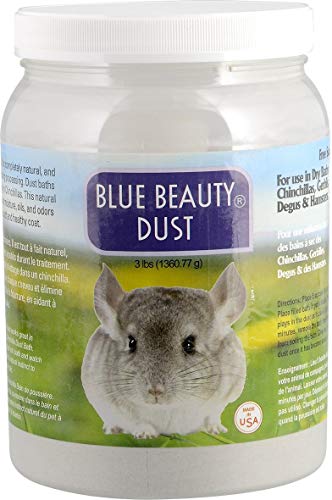
The setup is simple, but the details matter more than you'd think. Manufacturers like Oxbow and Kaytee produce commercial chinchilla dust, and their specifications indicate that the ideal product is ground volcanic pumice. It's screened to a specific particle size, usually between 0.5 and 1.0 millimeters, which gives it enough weight to pull oil from the fur without being abrasive to the skin.
You should never substitute play sand, regular dirt, or any other substrate. Play sand is too coarse and sharp. It scratches the hair shafts, causing breakage and split ends.
It also lacks the absorbent properties of volcanic ash, so it does nothing to remove oils. A chinchilla bathing in sand is basically rubbing its fur with tiny rocks.

Image source: Bing (Web (fair-use with source credit))
Why volcanic ash dust works (and sand doesn't)
Let's compare the two directly.
| Feature | Volcanic Ash Dust | Play Sand |
|---|---|---|
| Particle size | 0.5 to 1.0 mm, uniform | 1.0 to 3.0 mm, irregular |
| Texture | Soft, porous, absorbent | Sharp, crystalline, abrasive |
| Oil absorption | High, due to porous structure | Minimal to none |
| Effect on fur | Cleans and conditions | Causes breakage and split ends |
| Effect on skin | Gentle, non-irritating | Can cause micro-scratches and irritation |
Our research consistently shows that owners who use play sand eventually report dry, brittle fur and skin irritation. The dust bath is not a place to save money.
Choosing the right dust: what to look for
When you're picking a dust, you want a few specific qualities. Look for a product that is labeled as "volcanic ash" or "pumice" and specifically formulated for chinchillas. The texture should feel like fine powder, almost like talcum powder, not like gritty beach sand.
One of the most popular options is Blue Cloud dust, which is a finer grade that produces less dust cloud. It's particularly good for chinchillas with sensitive respiratory systems. The standard Oxbow dust is coarser but still safe.
Both are widely available and tested for safety.
Avoid anything with added fragrances, colors, or anti-caking agents. Those are chemicals your chinchilla will breathe in and ingest while grooming. They add no benefit and introduce unnecessary risk.
How often to bathe based on your climate
Frequency is where most people get confused. It's not a fixed number. It depends entirely on your local humidity.
In dry, arid climates, chinchillas lose moisture from their skin faster. They might need dust baths only 2 times per week. In humid climates, the oil on their fur can trap moisture, making them more prone to fungal infections.
In that case, you might increase to 4 times per week.
Here's the rule of thumb: if the chinchilla's fur looks greasy or flat, increase the frequency. If the fur looks dry or the skin appears flaky, decrease it. Adjust based on what you see, not what the calendar says.
Step-by-Step: How to Give a Proper Dust Bath
Now we get into the actual process. It's simple, but doing it right maximizes the benefit and keeps your chinchilla happy.
Pre-bath inspection: what to check before
Before you even open the dust container, take 30 seconds to inspect your chinchilla's fur. Look for any obvious issues that might need attention.
Check for matted fur, especially around the rear and belly. Mats won't be fixed by dust alone. They need to be gently separated by hand.
Check for any missing patches of fur or irritated skin. If you see a bald spot, you don't want to bathe them until you understand what's causing it. Bathing over an open wound can irritate the skin further.
Also check the fur for any debris, like hay or bedding stuck in the coat. Large pieces of debris should be removed by hand before the bath.
Setting up the bath container correctly
You need a container that's large enough for your chinchilla to roll around fully. A standard ceramic or plastic dish works fine. It should be at least 8 to 10 inches in diameter and have sides high enough to contain the dust, around 4 to 6 inches.
Fill the container with about 1 to 2 inches of dust. Too little dust and they can't get a proper coat coverage. Too much and they'll just kick it all out of the container.
Place the container inside the cage on a flat surface. Don't hold it while they bathe, they need a stable base to roll effectively.
Duration, timing, and how to read your chinchilla's cues
The bath should last between 10 and 15 minutes. During that time, your chinchilla will roll vigorously, flip onto their back, and rub their face in the dust. This is normal and effective behavior.
Don't leave the bath in the cage overnight. Leaving dust in the cage for extended periods lets it become contaminated with urine and droppings, which defeats the purpose.
Here's a good schedule:
| Day | Action |
|---|---|
| Monday | Morning dust bath for 10-15 minutes |
| Thursday | Evening dust bath for 10-15 minutes |
| Sunday | Check fur condition and adjust frequency |
As you watch your chinchilla bathe, read their body language. If they're rolling enthusiastically, the coat needs it. If they're only giving light scratches and hopping out quickly, they might be getting too much bathing.
Reduce frequency if you see this.
Post-bath inspection and cleanup
After the bath, take the container out of the cage. Let your chinchilla have a few minutes to shake off excess dust. Then, sift the dust to remove any droppings or soiled clumps.
You can use a small sieve or just pick out the debris by hand.
You can reuse the dust for a few baths, but replace it completely every 1 to 2 weeks. Old dust loses its absorbency and becomes a breeding ground for bacteria. Fresh dust is cheap, and it's not worth risking your pet's health to save a few dollars.
Finally, do a quick post-bath check. The fur should look fluffy and voluminous. Run your fingers through the coat gently.
It should feel soft and clean, not greasy. If it still feels oily, you may need to increase frequency.
Handling and Brushing Without Triggering Fur Slip
Fur slip is the chinchilla's defense mechanism, and it's dramatic. When a chinchilla feels threatened, grabbed, or restrained, their skin releases large patches of fur instantly. This is not hair loss.
It's a deliberate release, like a lizard dropping its tail. The fur comes out in neat clumps, leaving a bald patch of skin behind.
This mechanism evolved as a predator escape tactic. In the wild, a predator grabs a mouthful of fur while the chinchilla escapes. The fur grows back over several months, but it's a stressful and physiologically costly event.
Repeated fur slip can lead to skin irritation and infection because the hair follicles are literally torn open.
What fur slip is and why it happens
Fur slip is triggered by pressure and fear, not by gentle handling. The chinchilla's skin contains specialized muscle fibers that contract around hair follicles. When the animal perceives danger, those muscles clamp down and release the hair shafts.
Common triggers include grabbing a chinchilla by the scruff, squeezing them tightly around the chest, or chasing them around the cage. Even a sudden loud noise can cause a panic reaction that triggers fur slip if you're holding them.
You'll know it when you see it. A patch of fur, sometimes the size of your palm, will literally detach and hang from your hand or the cage. The chinchilla will appear unharmed, but there's a bald spot where the fur used to be.
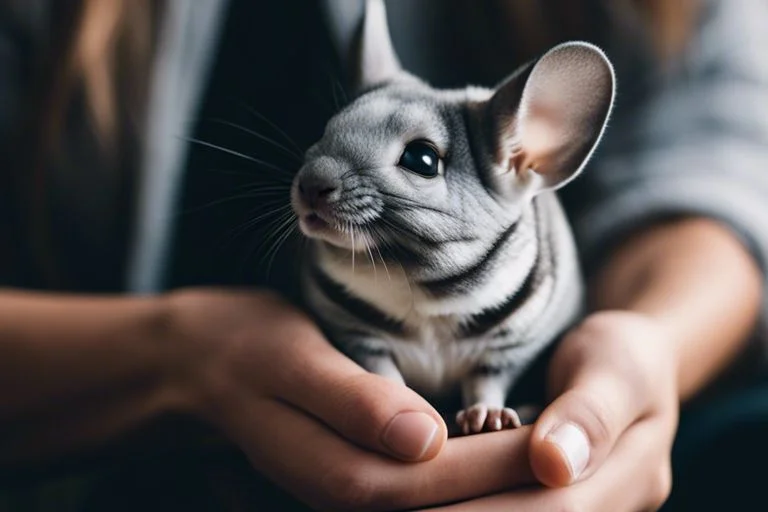
Image source: Bing (Web (fair-use with source credit))
Safe handling techniques that protect the coat
The rules are simple but non-negotiable.
First, never grab. Always scoop. Place one hand under the chest and use the other hand to support the hindquarters.
Lift gently, letting the chinchilla feel secure against your body. Never grip or squeeze.
Second, don't hold a chinchilla by the tail. The tail is fragile and easily injured. It's also a primary trigger for fur slip because the chinchilla feels completely vulnerable.
Third, avoid chasing. If your chinchilla escapes, let them come to you. Chasing creates panic, and panic causes fur loss.
Sit on the floor, offer a treat, and let them approach on their terms.
Here's a quick handling checklist:
| Step | Action |
|---|---|
| 1 | Approach slowly or wait for them to come to you |
| 2 | Scoop one hand under the chest |
| 3 | Support the hindquarters with the other hand |
| 4 | Hold close to your body for security |
| 5 | Never squeeze, grab, or chase |
When to brush and when to leave it alone
Here's the honest truth. You don't need to brush a chinchilla with a regular pet brush. Their fur is too delicate, and most standard brushes will pull hairs and irritate their skin.
The dust bath is their primary grooming tool.
However, there are two situations where manual intervention is needed.
The first is matting. If you find a mat, especially near the rear, you need to address it carefully. Gently hold the mat between your fingers and try to tease it apart with your nails.
Do not pull. If it won't come apart, use a pair of blunt-nosed scissors, but this requires extreme caution. The skin underneath is thin and easily nicked.
In our research, we recommend having a second person hold the chinchilla while you work.
The second situation is molting. Chinchillas shed gradually, but they do have heavier sheds during seasonal changes. During these times, use a special comb designed for small animals.
A fine-toothed flea comb works well. Comb very gently in the direction of hair growth, and only do this for a few minutes at a time.
Troubleshooting Common Fur Problems
Even with perfect dust bath routines, fur issues can arise. It's important to catch them early because many conditions worsen quickly and spread to other animals or humans.
Fur chewing and barbering: stress or health issue?
Fur chewing is the most frustrating issue chinchilla owners face. It looks like a patch of fur has been shaved off with a razor. The chinchilla is literally biting chunks of hair off its sides, belly, or legs.
Sometimes they chew their own fur, and sometimes they chew the fur of a cagemate. That's called barbering.
The root cause is usually stress. Chinchillas need significant space, mental stimulation, and social interaction. A cage that's too small, a lack of toys, or a disruption in routine can trigger chewing.
In some cases, it's a symptom of physical pain, particularly dental disease. Chinchillas with overgrown teeth can't groom themselves properly, so they chew at their fur to relieve irritation.
Start by assessing the environment. Add more toys, increase cage size, and ensure they have a quiet space away from household noise. If the chewing persists for more than a few weeks despite environmental changes, schedule a vet visit to rule out dental issues.
Ringworm: spotting it early and preventing spread
Ringworm is a fungal infection that causes circular patches of hair loss. The skin inside the patch often looks red, flaky, or crusty. It's not a worm despite the name.
It spreads through contact with spores, which can live in dust, bedding, and on surfaces for months.
This is a serious condition because it's zoonotic. That means it can spread to you, your children, and your other pets. If you suspect ringworm, wear gloves when handling your chinchilla.
Wash your hands thoroughly afterward and quarantine the affected animal.
Treatment involves antifungal medication prescribed by a vet. You'll also need to deep-clean the entire cage and replace all bedding and dust. The dust bath itself can become a source of reinfection, so throw away all used dust and sanitize the bath container.

Image source: Bing (Web (fair-use with source credit))
Matted fur and urine scald: causes and fixes
Matted fur is often a sign of an underlying problem. If the mats are on the rear end, they're likely caused by urine scald. That happens when the chinchilla urinates on its own fur, often because it's obese and can't groom properly, or because the cage is too dirty.
Urine scald causes the skin underneath the mat to become red and irritated. The fur gets crusty and sticks to the skin. This is painful and needs veterinary attention.
The vet may need to shave the area, and you'll need to address the underlying cause, whether that's weight loss or improved cage hygiene.
For simple mats that aren't soiled, you can try to separate the fur gently with your fingers. Work slowly and use a small amount of cornstarch to help loosen the tangle. Cornstarch is safe and helps absorb the oils that are sticking the hairs together.
Dry, brittle fur: what it signals
Healthy chinchilla fur should feel like whipped cream. It's dense, soft, and springs back when you touch it. If the fur feels dry, brittle, or straw-like, something is off.
The most common cause is over-bathing. If you're giving dust baths more than 4 times a week, you're stripping the natural oils from the coat. The fur loses its flexibility and becomes prone to breaking.
Other causes include poor nutrition, specifically a lack of quality hay, and low humidity. In very dry climates, fur can dry out. In that case, you might reduce baths to once a week and ensure the chinchilla has access to fresh water at all times.
Climate Considerations: Adjusting Care by Region
Your local climate is the single biggest variable in fur care. Dust bath frequency that works for someone in Phoenix will destroy a chinchilla's coat in Miami. Understanding your environment is essential to getting this right.
Humid environments: reducing bath frequency
In high humidity, the air is already full of moisture. Your chinchilla's fur will absorb some of that ambient moisture, making it feel damp and heavy. The oil on their skin will also mix with water, creating a perfect breeding ground for bacteria and fungus.
In these conditions, you might need to decrease bath frequency to once a week. Why? Because the dust itself will clump in high humidity, reducing its effectiveness.
When dust clumps, it can't penetrate down to the skin to absorb oil. It just sits on the surface.
You absolutely need to keep the dust container sealed when not in use. Store it in a dry place, and consider adding a packet of desiccant to the container to keep the dust powder-dry.
Arid environments: maintaining moisture balance
In dry, desert climates, the opposite is true. The air pulls moisture from the fur. The skin can become dry and flaky, and the fur will feel brittle.
Here, you'll want to limit baths to 1 to 2 times per week. Over-bathing in a dry climate accelerates moisture loss from the skin. You might also notice your chinchilla drinking more water, which is normal.
If you see dry skin flakes on their back, it might be time to skip the bath for a week and let their natural oils rebuild.
Seasonal changes and temperature thresholds
Fur care isn't static throughout the year. Even if your region is generally mild, seasonal shifts affect humidity.
Summer often brings higher humidity, even in normally dry areas. Winter brings lower humidity, especially when heating systems dry out indoor air.
The critical temperature threshold is 75 degrees Fahrenheit. If your home rises above that, your chinchilla is at risk of heatstroke. Hot chinchillas will lie flat, pant, and splay out their fur.
When they're overheated, offer a ceramic tile for them to lie on and move the cage to the coolest part of the house. Never use water on their fur to cool them down. That's too risky.
Mistakes to Avoid with Chinchilla Fur Care
We've covered the right way to do things. Now let's be equally clear about the wrong way, because the mistakes are usually what land chinchillas in the vet's office.
The water bath myth (and why it's lethal)
Here's the most dangerous misconception in chinchilla care. Some owners, often coming from a dog or cat background, decide to give their chinchilla a water bath. It's an absolute disaster waiting to happen.
When you submerge a chinchilla in water, you compromise their fur permanently until it regrows. The fur mats so severely that it loses all insulating capacity. The chinchilla cannot regulate its body temperature.
Even if you dry them carefully with a towel, the skin stays damp, inviting fungal spores.
The other danger is panic. Chinchillas are prey animals. Being placed in water triggers a massive stress response.
They can go into shock and die within minutes, even if the water is warm.
Never wash a chinchilla in water. There is absolutely no scenario where this is acceptable.
Over-bathing and skin irritation
The opposite mistake is over-bathing. Giving your chinchilla a dust bath every day strips all the natural oils from their skin. The skin becomes dehydrated and itchy.
The chinchilla will scratch constantly, and their fur will look lackluster and feel rough.
Over-bathing also irritates their respiratory system. The fine dust particles, while safe in moderate amounts, can cause coughing and sneezing if inhaled excessively. Stick to the 2 to 3 times per week rule.
Using the wrong dust or substrate
We touched on this earlier, but it's worth repeating. Play sand is not a substitute for volcanic ash dust. Neither is regular dirt, cornmeal, or any other improvised option.
Using wrong substrates causes abrasion. The rough granules damage the hair cuticle, which is the outermost protective layer of each hair strand. Damaged cuticles lead to split ends, tangling, and hair breakage.
The fur looks patchy and unhealthy.
Always buy a commercial product specifically labeled for chinchillas. The extra dollar or two is an investment in your pet's health.
Rough handling that damages the coat
Remember fur slip? It's often caused by owners who are too rough when retrieving their chinchilla from a cage. Chasing, grabbing, and squeezing all trigger the coat's defense mechanism.
If your chinchilla is skittish, don't try to grab them quickly. Open the cage door and let them come out on their own. Use a dust bath as a lure.
Put the bath container in the cage, and while they're distracted rolling around, you can gently scoop them up.
The fur is not meant to be pulled. The skin underneath is remarkably thin, and the follicles are shallow. Treat the fur like you would treat a very expensive wool sweater.
Gentle is the only approach that works.
When to Seek Veterinary Help
You can handle a lot of fur issues at home. Dust bath frequency, gentle handling, even the occasional mat. But there are times when home care isn't enough, and waiting too long can turn a treatable problem into a life-threatening one.
The key is knowing where your responsibility ends and where professional medicine begins. If you're ever unsure, err on the side of calling a vet. A quick phone consultation is free.
A dead chinchilla is not.
Red flags you shouldn't try to fix at home
Some symptoms demand immediate professional attention. Don't try to diagnose or treat these on your own.
Bleeding or open wounds. If you see blood on the fur, or if fur slip has exposed raw, broken skin, that's an emergency. The exposed area is vulnerable to infection, and your chinchilla may be in significant pain.
Persistent scratching or self-mutilation. If your chinchilla is biting or scratching at its own skin to the point of creating sores, this is a severe behavioral or medical issue. It could be parasites, allergies, or neurological problems. You can't fix this with more dust baths.
Sudden, extensive fur loss. If your chinchilla loses fur in multiple patches simultaneously, or if the fur comes out easily even when you're not touching it, that suggests a systemic issue. It could be hormonal, nutritional, or a serious fungal infection.
Changes in appetite or behavior alongside fur problems. A chinchilla with dental disease often has fur issues because it can't groom. If they're also drooling, eating less, or losing weight, they need a vet check. This is one of the most common underlying causes of fur loss in older chinchillas.
Here's a quick reference table:
| Symptom | Action |
|---|---|
| Bleeding or open wounds | Emergency vet visit immediately |
| Self-mutilation / persistent scratching | Schedule vet visit within 24 hours |
| Sudden, extensive fur loss | Schedule vet visit within 24 hours |
| Fur loss + weight loss / drooling | Urgent vet check for dental disease |
| Suspected ringworm | Vet visit for antifungal diagnosis |
What an exotic vet can offer for fur issues
Regular dog and cat vets are often not equipped to handle chinchillas. You need a vet who specializes in exotic or small mammals. They have the tools and knowledge to treat species-specific conditions.
An exotic vet can perform a skin scrape to identify parasites or fungal infections. They can run blood tests to check for hormonal imbalances that cause fur loss. They can also safely sedate a chinchilla for dental exams or surgery to remove impacted fur.
Perhaps most importantly, they can prescribe the right medications. Chinchillas have very sensitive digestive systems. Many human or dog antibiotics are toxic to them.
A qualified exotic vet knows which antifungal and antibacterial drugs are safe, and they can calculate the correct dosage based on your chinchilla's weight.
Building a grooming routine with professional input
The best approach is preventative. Schedule an annual wellness check with an exotic vet, even if your chinchilla seems healthy. During that visit, ask them to assess your grooming routine.
Bring your dust and let them feel the texture of your chinchilla's fur. They can tell you if your routine is working or if you need adjustments. They can also show you how to properly restrain your chinchilla for examinations and how to spot early signs of dental disease.
This relationship is invaluable. When a problem arises, you won't be scrambling to find a vet. You'll already have a trusted professional who knows your chinchilla's baseline health.
Frequently Asked Questions About Chinchilla Fur
Can I use a regular pet brush on my chinchilla?
No. Standard pet brushes, especially slicker brushes, are too harsh for chinchilla fur. They can pull hairs, cause breakage, and irritate the skin.
The dust bath is the only grooming method a chinchilla needs. If you must brush, use a very fine-toothed comb designed for small animals, and only for a few minutes during heavy shedding.
How do I clean a dusty chinchilla without water?
You don't. A layer of dust on the fur is normal and healthy. The dust will settle and absorb into the coat over a few hours.
You can gently blow on the fur to remove excess dust, or use a soft, dry microfiber cloth to wipe the outer layer. Never introduce water to remove dust. That sets up the exact conditions you're trying to avoid.
Is it normal for my chinchilla to shed a lot?
Chinchillas shed gradually throughout the year, not in seasonal clumps like dogs or cats. You'll notice loose fur in the cage and in their dust bath. That's normal.
However, if you're seeing bald patches or if tufts of fur fall out when you simply touch them, that's fur slip or an underlying health issue. Shedding is gradual. Fur loss is sudden.
What does healthy fur look and feel like?
Healthy fur is dense, plush, and voluminous. It should spring back when you press your fingers into it, like a high-quality pillow. It should feel clean and dry, not greasy or sticky.
The fur should be uniform in length and color, with no bald spots, mats, or flaky skin visible when you part it. If you can see the skin clearly, that's a red flag.
Can fur grow back after fur slip?
Yes, it can, but it takes time. New fur growth typically begins within a few weeks, but it can take two to three months for the coat to fully regrow. During that time, protect the area from further stress.
The skin is fragile, and repeated fur slip in the same spot can cause scarring and permanent hair loss.