
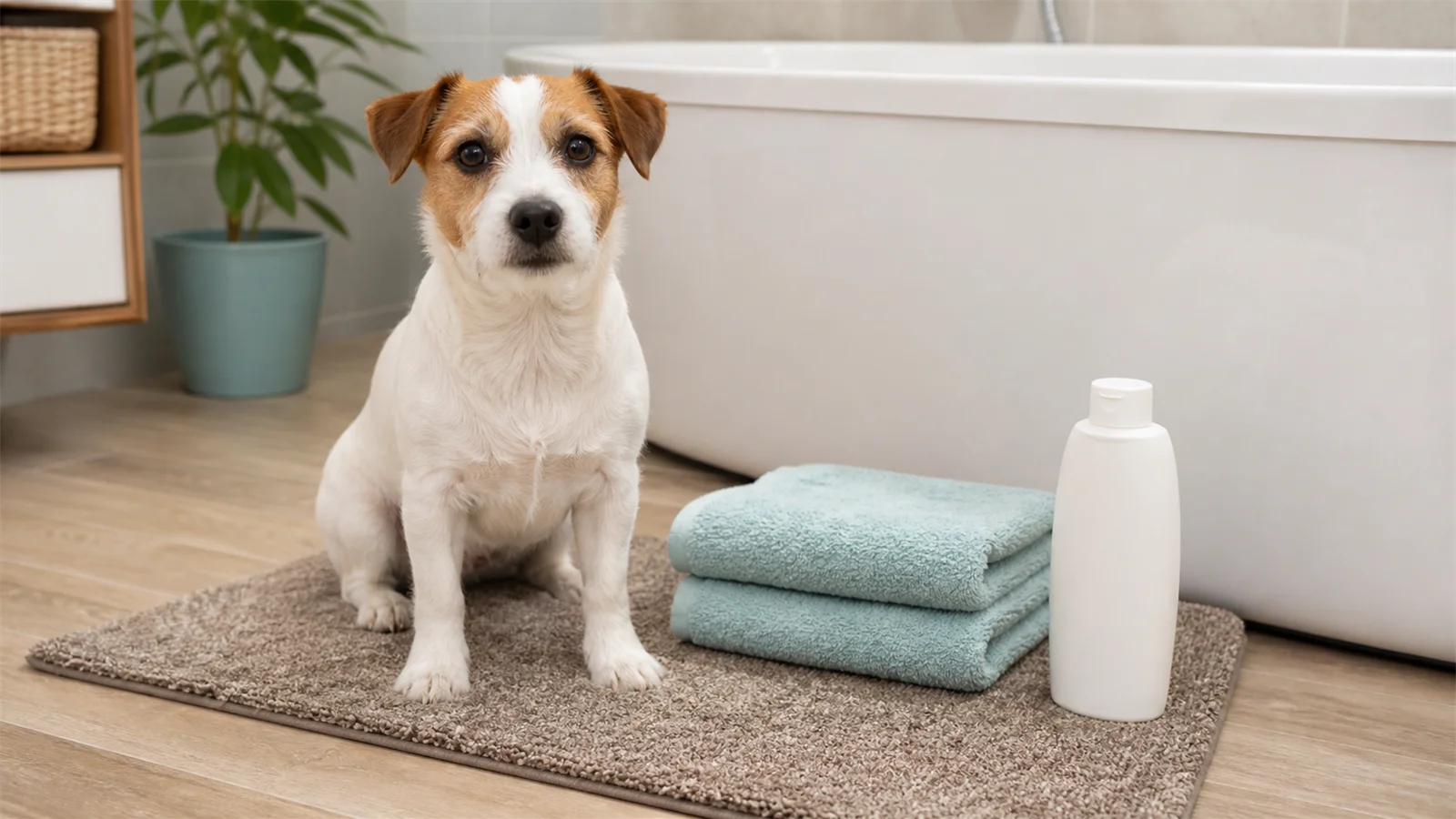
The biggest dog bathing mistakes are skipping the pre-bath brush, bathing over tangles, using an unsafe setup, spraying the face or ears carelessly, leaving shampoo residue, drying poorly, and forcing a frightened or painful dog through the bath. A safer home bath starts before the water turns on.
Quick Answer
Before bathing your dog, brush and check the coat, prepare non-slip footing, use lukewarm water, keep water away from eyes and ears, rinse until the coat feels clean, and dry for comfort. Stop for severe mats, wounds, parasites, ear discharge, pain, panic, growling, snapping, or unsafe handling.
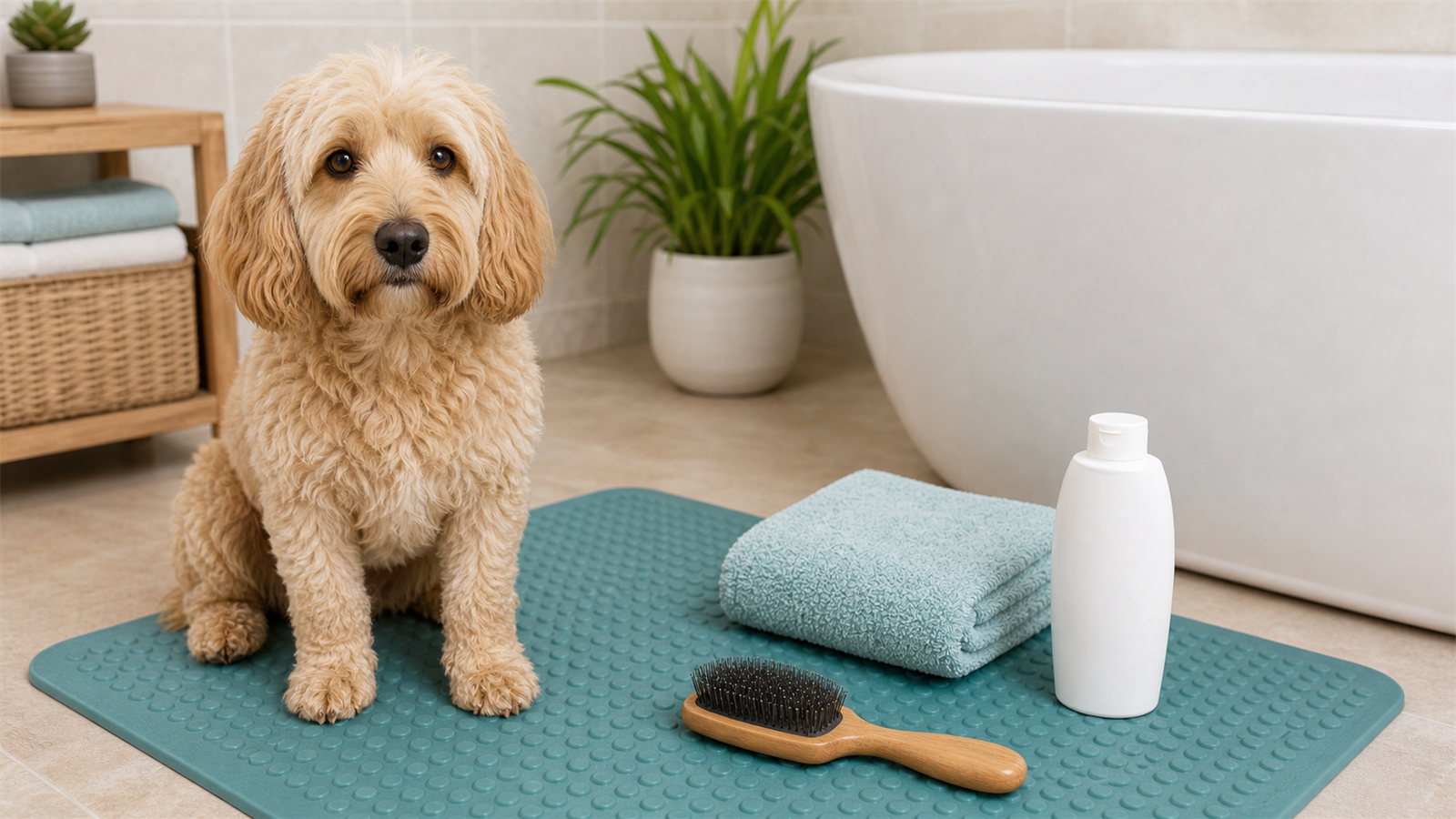
Bath-Prep Checklist
Use this checklist before water touches the coat. It is a routine grooming check, not medical advice or a reason to push through pain or fear.
| Before the bath | Why it matters | Stop if you see |
|---|---|---|
| Brush and check the coat | Tangles can tighten after water, and brushing helps reveal skin issues. | Severe mats, painful coat, wounds, or skin irritation. |
| Check ears, paws, skin, and behavior | A bath should not hide pain, illness, or handling risk. | Ear discharge, parasites, limping, panic, growling, or snapping. |
| Set non-slip footing | Slipping can make baths stressful and unsafe. | A dog who cannot stand calmly or safely. |
| Use lukewarm water | Water that is too hot or cold can upset the dog. | Shivering, overheating, distress, or trying to escape. |
| Control face and ear water | Direct spray near eyes, ears, and nose can frighten or irritate dogs. | Head shaking, face sensitivity, ear pain, or strong odor. |
| Rinse and dry patiently | Residue and damp coat can leave the skin uncomfortable. | Fear of dryer noise, heat discomfort, or unsafe handling. |
Mistake 1: Skipping the Pre-Bath Coat Check
Brush before bathing when the dog can tolerate it. VCA notes that burrs and tangles should be brushed out before a bath because they can become harder to remove afterward. The ASPCA also explains that brushing helps keep the coat in good condition and lets you inspect the skin.
Do not bathe over severe mats. Do not cut mats out with scissors. If the coat is severely tangled, painful, tight to the skin, or paired with irritation, use a professional groomer or veterinarian.
Mistake 2: Using the Wrong Setup or Water Approach
An unsafe bath setup can turn a normal grooming task into a fear event. Use a stable, non-slip surface, keep supplies within reach, and use lukewarm water. Avoid chasing the dog around the room or lifting a struggling dog into a tub without a safe plan.
For large or nervous dogs, shorten the goal. A quick paws-and-belly rinse may be safer than forcing a full bath.
Mistake 3: Letting Shampoo or Water Get Into Eyes and Ears
ASPCA Pet Insurance grooming guidance recommends avoiding the ears, eyes, and nose during bathing. Use controlled water flow around the face. A damp cloth can be safer than direct spray for many dogs.
Stop if you notice ear pain, discharge, strong odor, swelling, head shaking, or sensitivity. Bathing is not a fix for ear problems.
Mistake 4: Not Rinsing Long Enough
Shampoo residue can irritate skin and leave the coat feeling dull or tacky. Rinse slowly, especially through dense, long, curly, or double coats. Lift sections of coat gently and check that water runs clear.
Do not assume a quick surface rinse is enough on thick coats. Dense-coated dogs may need more careful rinsing than their coat length suggests.
Mistake 5: Drying in a Way That Leaves Mats, Chill, or Fear
Drying should match the dog and coat. Towel-dry thoroughly, especially around the chest, belly, legs, and undercoat. If using a dryer, avoid high heat, keep the noise and airflow tolerable, and stop if the dog becomes frightened.
For long, curly, or mat-prone coats, drying without brush and comb checks can allow tangles to tighten. For fearful dogs, the priority is calm handling and safety, not a perfect finish.
Mistake 6: Bathing Too Often or Using Bath Time to Solve Medical Issues
Merck notes that dogs may be bathed with pet shampoo when dirty, smelly, or seasonally appropriate. Bathing more often is not always better. If you need a starting point by coat type, use the dog grooming schedule by coat type as a planning guide, then adjust for skin, coat condition, activity, and veterinarian guidance.
Do not try to solve itching, redness, wounds, parasites, odor with inflamed skin, sudden hair loss, or recurring ear problems with repeated baths. Those signs need veterinarian guidance.
When to Stop and Call a Groomer or Vet
Stop the bath if the dog is panicking, growling, snapping, repeatedly trying to escape, or showing pain. Stop and call a groomer or veterinarian for severe mats, wounds, skin infection signs, parasites, ear pain or discharge, medical fragility, or unsafe handling.
Puppies, seniors, and medically fragile dogs may need a shorter, gentler plan approved by a veterinarian or professional groomer.
Helpful Companion Guides
- Pet Grooming Safety Checklist for Dogs at Home
- Dog Grooming Checklist for Beginners
- When to Stop a Dog Brushing Session
- Weekly Dog Brushing Routine
Bottom Line
A good dog bath is mostly preparation: brush and check the coat first, set up stable footing, keep water away from eyes and ears, rinse patiently, and dry for comfort instead of speed. If the bath turns into pain, panic, medical concern, severe matting, or unsafe handling, stop and use a veterinarian or professional groomer.
FAQ
Should I brush my dog before or after a bath?
Brush before the bath, especially if the dog has tangles or loose coat. You can do a second gentle brush after the coat is mostly dry if the dog tolerates it.
Can I use human shampoo on my dog?
Use dog shampoo unless your veterinarian tells you otherwise. Skin needs vary, and this guide does not recommend specific products.
How often should I bathe my dog?
Bathe when the dog is dirty, smelly, or seasonally needs it. Coat type, skin condition, activity, and veterinarian guidance matter more than a universal schedule.
What if my dog is scared of baths?
Do not force a full bath. Work on short, calm introductions to the bath area, water sounds, towels, and touch. Stop for panic, growling, snapping, or unsafe handling.
Is air-drying okay?
It depends on coat type, room temperature, and dog comfort. Thick, long, or curly coats may need more careful drying to avoid moisture and tangles. Avoid heat and forced drying if the dog is frightened.