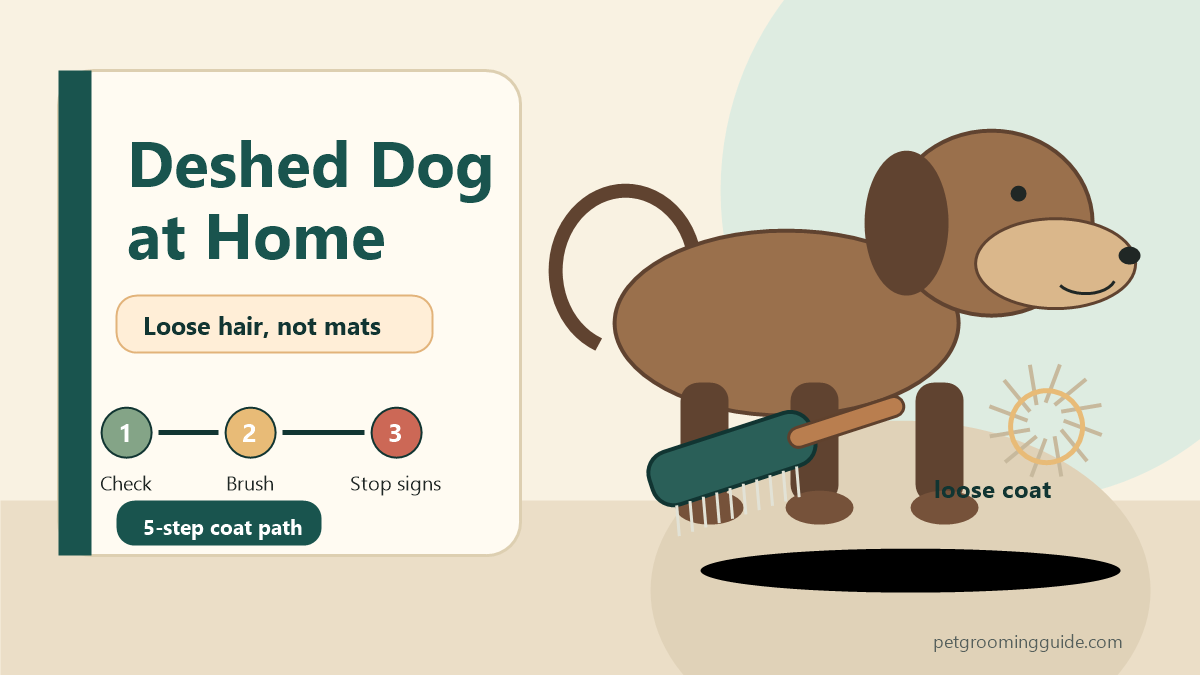
Tag: dog brushing

  • How to Deshed a Dog at Home Safely

    How to Deshed a Dog at Home Safely

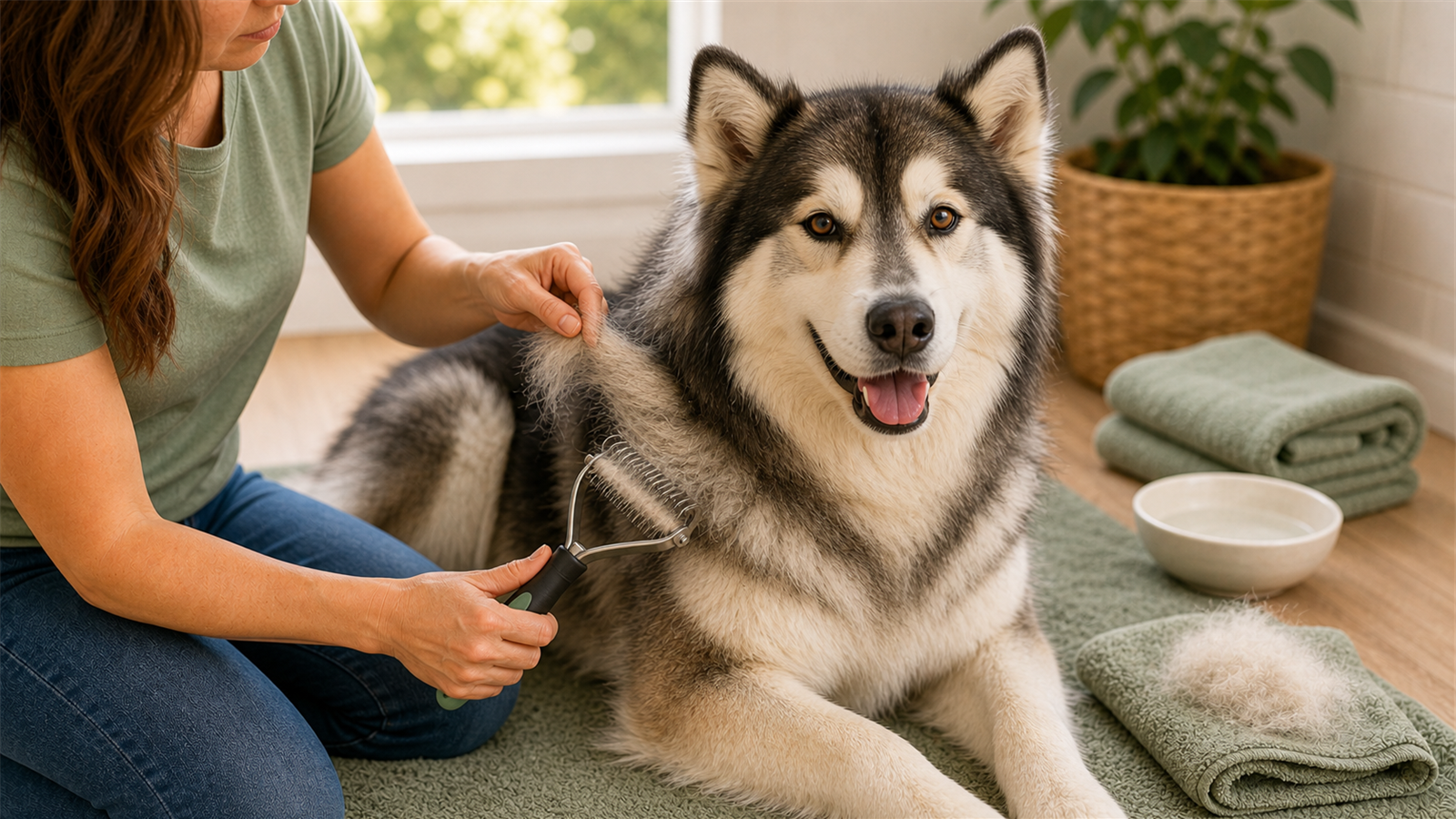
    Deshedding a dog at home means removing loose dead hair safely. It is not mat removal, and it should not involve scraping skin, digging with a tool, or trying to pull every last hair. Start with a skin and coat check, choose the gentlest path for the coat, use light pressure, and stop at the first sign of redness, soreness, pain, or stress.

    If your dog has tight mats, irritated skin, hot spots, bald patches, parasites, sudden heavy hair loss, or pain, skip deshedding and use a veterinarian or qualified groomer. For a broader loose-hair routine, see how to remove loose dog hair.

    Check the Coat Before You Start

    A safe deshedding session starts with inspection, not brushing. Part the coat with your fingers in a few dense areas and look for skin changes, tight tangles, packed undercoat, or damp spots.

    Stop before deshedding if you see:

    • Red, sore, hot, flaky, swollen, or broken skin.
    • Bald patches, parasites, odor with irritation, or sudden coat change.
    • Tight mats, skin-level mats, or packed coat that does not separate easily.
    • Pain, yelping, growling, snapping, trembling, or panic.

    Texas A&M Pet Talk notes that abnormal shedding or skin and coat concerns can call for a veterinarian conversation. Treat sudden or patchy hair loss as a health question, not a brushing challenge.

    Deshedding Is Not Dematting

    Deshedding removes loose dead hair that is ready to release. Dematting deals with tangled or compacted hair. Those jobs need different boundaries.

    The ASPCA’s matting guidance warns that mats can hide skin problems and that cutting mats out with scissors can injure pets. If a mat does not brush out easily with gentle work, do not cut, scrape, or force it. Use a groomer or veterinarian.

    Choose the Gentlest Deshedding Path

    The right path depends on coat type, skin condition, mat status, and how well the dog tolerates handling. The ASPCA dog grooming tips recommend matching brushes and combs to the dog’s hair type.

    Coat stateSafer pathStop if
    Short smooth coat, healthy skinRubber curry or soft brush category, short light passesSkin gets pink, warm, flaky, or sore
    Medium double coat, mat-freeDry brush in small zones, then comb-check dense areasTool catches, dog resists, or skin changes
    Heavy double coat, mat-freeShort dry sessions; bath-assisted only if you can dry to skinCoat stays damp near the skin or packed areas remain
    Long, curly, or wavy coatComb-check first; use gentle brushing only where hair separatesTangles pull, tighten, or sit close to skin
    Irritated skin, severe mats, or sudden hair lossNo home desheddingUse a veterinarian or groomer
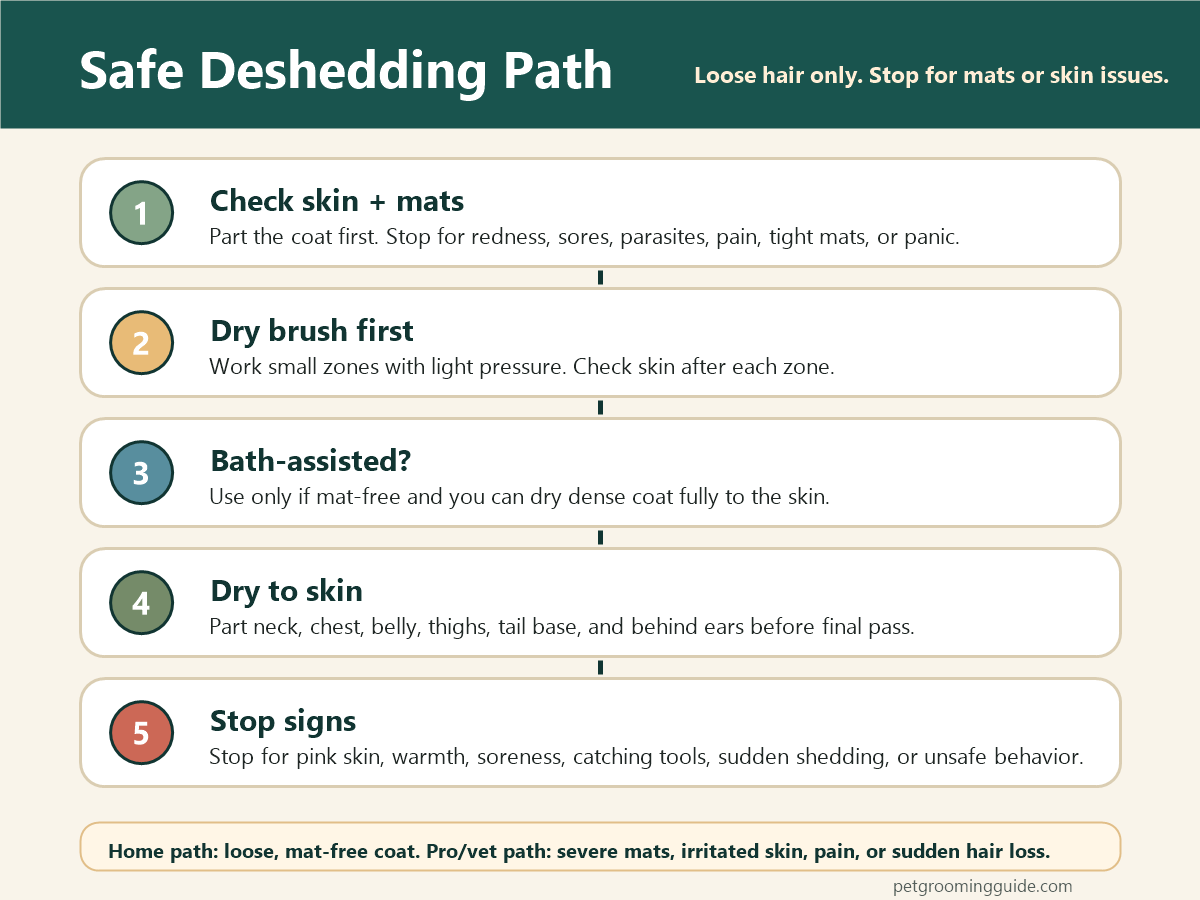
    Deshedding path card showing skin and mat checks, dry brushing, mat-free bath-assisted deshedding, dry-to-skin checks, and stop signs.
    Use this path card as a quick check: loose hair only, dry brush first, use bath-assisted work only when mat-free, and stop for mats or skin issues.

    Dry-Brush Deshedding Routine

    Use the dry-brush path when the coat is dry, skin looks calm, and there are no severe mats. Keep the session short enough that the dog stays relaxed.

    1. Set the dog on a non-slip surface with good light.
    2. Part the coat and check skin before the first brush pass.
    3. Work one small zone at a time: neck, shoulder, side, chest, thigh, tail base.
    4. Use light pressure and short strokes with a slicker brush, rubber curry, undercoat rake, deshedding tool, or comb only where that category fits the coat.
    5. Pause after each zone and look at the skin.
    6. Finish with a light comb-check or soft brush pass where the coat allows it.

    Merck Veterinary Manual supports regular brushing as part of routine dog care and notes that grooming helps maintain coat health. The home goal is controlled loose-hair removal, not making shedding stop.

    If brushing often turns into tugging, see dog brushing mistakes before repeating the same session pattern.

    Bath-Assisted Deshedding

    Bath-assisted deshedding can help some mat-free coats release loose hair, but water can make existing tangles tighter and can leave dense coats damp near the skin. Brush and inspect first.

    Use the bath-assisted path only if:

    • The coat is mat-free and separates easily.
    • The skin is calm.
    • The dog tolerates bathing and drying.
    • You can dry dense areas all the way to the skin.

    After the bath, rinse well, towel-blot, dry thoroughly, and part the coat in dense areas before doing a final light pass. The Cornell Richard P. Riney Canine Health Center notes that moisture and matted hair can be part of hot-spot risk. For drying help, use how to dry a dog after a bath.

    How Much Deshedding Is Enough?

    Stop while the skin still looks normal and the dog is still comfortable. More loose hair may release later, especially during seasonal coat changes.

    Good stopping points include:

    • The brush is collecting less hair with each gentle pass.
    • The coat feels looser and parts more easily.
    • The dog is becoming tired, restless, or less cooperative.
    • The skin looks even, calm, and unchanged.

    Do not press harder when hair release slows. Repeated passes over one area can irritate the skin. For routine planning by coat type, see the dog grooming schedule by coat type.

    Tool Categories to Know

    Tool names here are category-level only. The aim is to match the tool style to the coat, not to shop for a specific brand.

    Tool categoryWhere it may fitUse carefully
    Rubber curryShort smooth coats and surface loose hairAvoid sore or irritated skin
    Slicker brushLight loose hair and some coat separationUse light pressure; do not scrape
    Undercoat rakeSome dense double coats when mat-freeStop if it catches or pulls
    Deshedding toolSpecific mat-free shedding coatsAvoid repeated passes and wrong-coat use
    CombChecking whether the coat is truly separatedDo not drag through resistance

    If you are choosing between common brush categories, slicker brush vs pin brush explains the difference by coat job and safety limits.

    When to Call a Groomer or Veterinarian

    Call a groomer for severe mats, packed coat, recurring matting, a dense coat you cannot dry fully, or a dog who cannot tolerate handling safely.

    Call a veterinarian for bald patches, sores, hot spots, redness, parasites, sudden heavy shedding, painful skin, swelling, bleeding, odor with irritation, or behavior changes that suggest pain.

    FAQ

    How often should you deshed a dog?

    It depends on coat type, season, skin condition, and tolerance. Many dogs need more loose-hair work during seasonal shedding, but the right frequency is the one that manages loose coat without redness, soreness, or stress.

    Should you bathe before deshedding?

    Usually, check and brush first. Bath-assisted deshedding is safer only when the coat is mat-free and you can dry the coat fully to the skin.

    Can deshedding hurt a dog’s skin?

    Yes. Too much pressure, repeated passes, the wrong tool category, or brushing irritated skin can cause pain or redness. Stop if the skin changes or the dog shows distress.

    What is the difference between deshedding and dematting?

    Deshedding removes loose dead hair. Dematting deals with tangled or compacted hair. Severe, tight, painful, or skin-close mats should be handled by a qualified groomer or veterinarian.

    Will deshedding stop my dog from shedding?

    No. Deshedding can reduce loose hair on the coat and around the home, but normal shedding continues. Be cautious of any promise that one session or tool will stop shedding.

    When is shedding a vet problem?

    Use a veterinarian for bald patches, sores, parasites, hot spots, sudden heavy shedding, painful skin, odor with irritation, swelling, or major coat changes.

    Bottom Line

    Deshedding at home is safest when it stays gentle, short, and limited to loose hair. Check skin and mats first, work in small zones, use light pressure, dry dense coats fully after any bath, and stop before irritation starts. If the coat is matted, painful, abnormal, or unsafe to handle, the right next step is a groomer or veterinarian, not a harder brush pass.
    Sources

  • How to Comb Check a Dog Coat

    How to Comb Check a Dog Coat

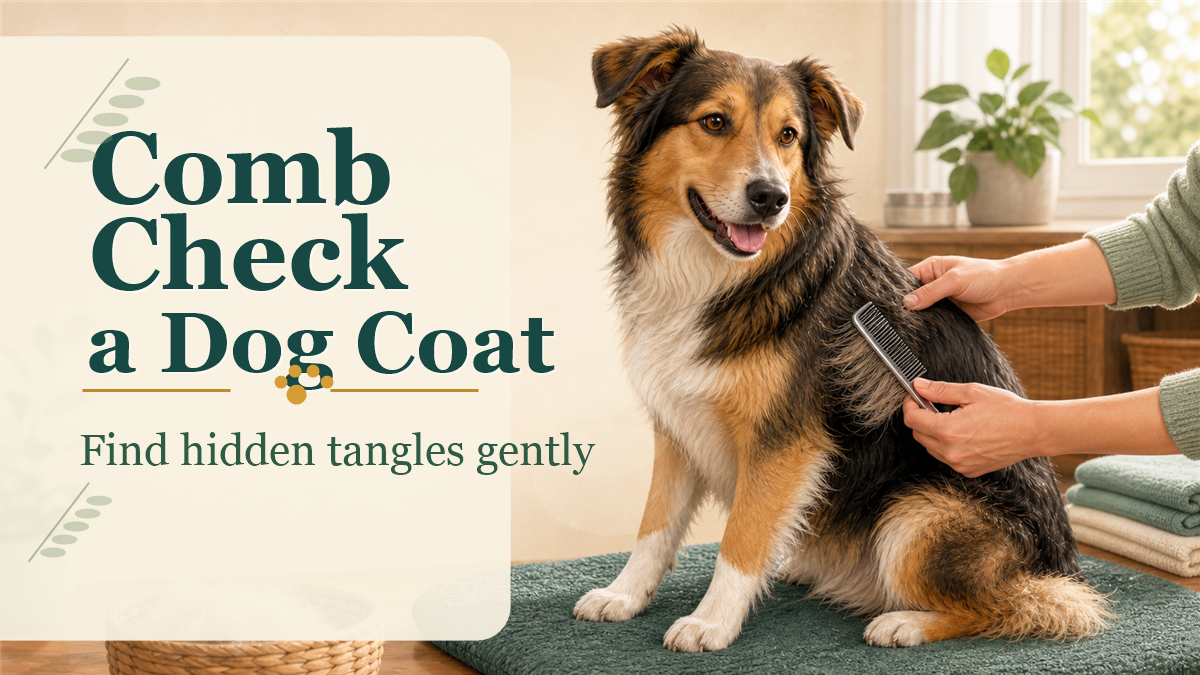
    A comb check is a gentle pass/fail test after brushing. You slide a comb through one small brushed section to see whether the coat is truly open, not just smooth on top. Pass means the comb glides through without catching, tugging, skin pull, or a worried reaction from your dog. Fail means stop that section and do not force the comb.

    Comb check before a bath, before drying a long or dense coat, or before ending a brushing session. Stop for pain, redness, tight mats, panic, defensiveness, or skin irritation. Use a groomer for coat work you cannot do gently, and call a veterinarian for painful skin, wounds, parasites, bleeding, infection signs, or any medical concern.

    What a Comb Check Is

    A comb check verifies brushing. It is not a detangling shortcut, a mat-removal method, or a reason to pull harder. The point is to learn whether the brush reached through the coat.

    This matters because a coat can look neat on the surface while tangles stay hidden underneath. The ASPCA notes that brushing helps remove loose hair and dirt, spread natural oils, and check for fleas and flea dirt. A comb check makes that brushing result easier to confirm, section by section.

    When to Comb Check

    Use a comb check after brushing a small area, not before. If you start with the comb and it hits resistance, you may drag through a tangle before you know what is there.

    Comb checking is especially useful before a bath. If the coat still has hidden tangles or mats, water and drying can make the session harder on your dog. For bath order, see dog grooming before or after bath.

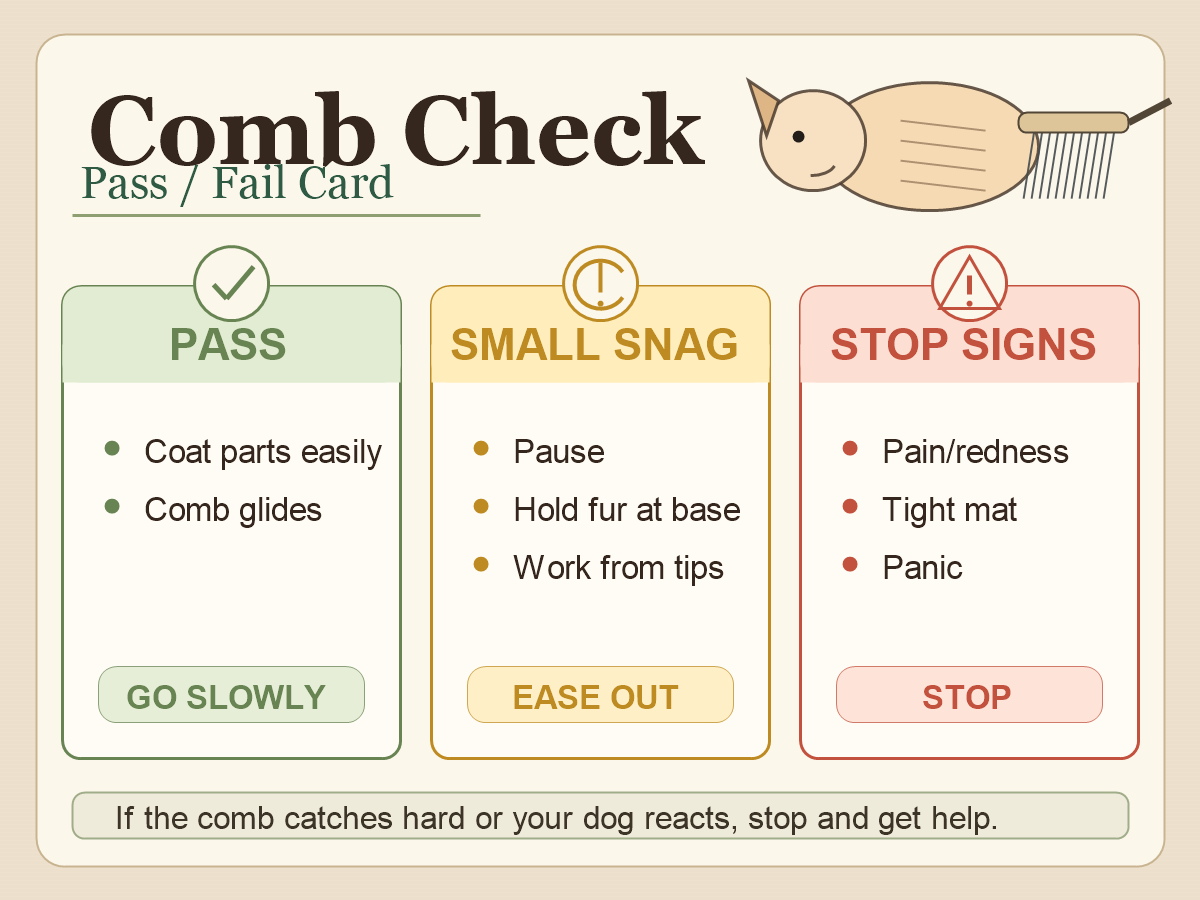
    The Pass/Fail Comb-Check Framework

    Think of each section as pass, pause, or fail. That keeps the check simple and prevents the common mistake of treating resistance like something to push through.

    ResultWhat you feelWhat to do next
    PassThe comb glides from the skin-side coat outward without snagging, tugging, or upsetting the dog.Move to the next small section.
    PauseThe comb meets a light snag, but the dog is calm and the skin is normal.Stop combing that spot. Go back to gentle brushing only if the hair separates easily.
    FailThe comb stops, pulls skin, hits a tight mat, or the dog flinches, panics, growls, snaps, or turns defensively.End work on that area. Use a groomer or veterinarian as appropriate.

    A failed section is useful information. It tells you the coat is not ready for bath, not ready for a harder comb pass, and not safe to rush.

    Comb-check pass fail card showing pass signs, small snag steps, and stop signs for pain, redness, tight mats, or panic.
    Use the comb check as a pass, pause, or stop signal instead of forcing the comb through resistance.

    Zones to Check

    Comb check the areas that rub, bend, collect loose coat, or hide tangles. Work slowly around thin or sensitive skin.

    • Behind the ears.
    • Collar and harness line.
    • Armpits.
    • Chest and belly.
    • Inner legs and feet.
    • Tail base, pants, and feathering.
    • Any spot where the coat looks packed, flat, damp, or clumped.

    If you find repeated catching in these friction zones, use dog matting vs tangles before deciding whether the area is safe for home brushing.

    How to Hold the Comb

    Use a clean metal comb category that suits the coat. Hold it lightly, close enough that you can feel resistance before it becomes a pull. Keep your other hand near the coat section so you can notice skin movement.

    1. Brush a small section first.
    2. Part or lift the coat so you can see the area you are checking.
    3. Start with a light comb pass through the brushed section.
    4. Watch the dog and the skin, not just the comb.
    5. Stop as soon as the comb catches, the skin moves, or the dog reacts.

    Do not saw the comb back and forth, brace the dog to finish, or pull harder because the section is almost done. If the comb cannot pass gently, the section fails the check.

    What to Do If the Comb Catches

    If the comb catches once, stop the comb pass and look at the area. A loose tangle may separate with gentle brushing if the dog stays calm and the skin looks normal. A tight mat, repeated catching, pain, redness, or skin pull needs a different plan.

    Use how to line brush a dog if the coat is safe to brush but you need smaller sections. Use how to prevent dog mats for a routine that reduces future catching.

    Call a groomer when the coat is tight, packed, skin-close, widespread, or beyond what you can brush without pulling. Call a veterinarian when there is pain, red or irritated skin, wounds, parasites, bleeding, swelling, infection signs, sudden coat loss, or a dog who seems medically fragile.

    Comb Check by Coat Type

    Coat typeHow to checkExtra caution
    Smooth coatUsually limited checks in thicker areas or shedding spots.Do not scrape thin skin for loose hair.
    Long silky coatCheck in small sections after brushing ends, ears, legs, belly, and tail.Stop if feathering pulls or twists around the comb.
    Curly or wavy coatUse very small sections and check close to the skin only after brushing opens the coat.Hidden mats may sit close to the skin; do not force the comb.
    Dense double coatCheck packed areas after light section brushing.Stop if undercoat is packed tight or the skin gets irritated.
    Feathered coatCheck behind ears, legs, tail, chest, and pants in short passes.These areas can be sensitive and mat from friction.

    The ASPCA’s at-home grooming tips describe different brush and comb categories by coat type. This guide stays category-level and does not recommend specific products.

    Stop Signs

    End the session if the check is no longer calm, gentle, and clear. A comb check should never turn into a struggle.

    • Pain, yelping, flinching, or repeated turning toward the comb.
    • Redness, raw skin, hot skin, swelling, scabs, wounds, bleeding, or skin irritation.
    • Tight mats, skin-close mats, packed coat, or coat that pulls the skin.
    • Panic, freezing, growling, snapping, biting, or defensive behavior.
    • Fleas, ticks, parasite dirt, sudden hair loss, or unusual skin changes.
    • Any situation where restraint or sedation seems necessary.

    For broader brushing safety mistakes, see dog brushing mistakes.

    FAQ

    What is a comb check on a dog?

    A comb check is a gentle pass through a brushed coat section to confirm that hidden tangles are not left under the surface.

    Should you comb check before bathing?

    Yes, when it is safe. Comb check after brushing and before bathing so hidden tangles or mats are not missed before water is added.

    What does it mean if the comb catches?

    It means that section does not pass. Stop the comb pass, check the skin and coat, and do not pull through resistance.

    Can I comb through a mat?

    No. Do not force a comb through tight, painful, skin-close, or repeated matting. Use a groomer or veterinarian as appropriate.

    Which coat zones should I comb check?

    Focus on behind the ears, collar line, armpits, chest, belly, legs, feet, tail, pants, feathering, and any packed or clumped area.

    Sources

  • How to Line Brush a Dog at Home

    How to Line Brush a Dog at Home

    Line brushing means lifting a dog’s coat and brushing one small section at a time so the brush reaches more than the surface coat. It can help on long, double, curly, wavy, and feathered coats, but it is not a way to remove tight mats. If the brush catches, the skin pulls, or the dog reacts in pain or fear, stop and get help from a groomer or veterinarian.

    Use light pressure, good light, and sections small enough that you can see the skin-side coat without scraping the skin. Do not force a brush or comb through mats, red skin, wounds, parasites, or a dog that is panicking, growling, snapping, or too hard to handle safely.

    What Line Brushing Is

    Line brushing is a section-by-section brushing method. You lift or part a narrow layer of coat, brush that visible section gently, move to the next nearby section, and check whether the coat is opening without tugging.

    The goal is to prevent surface brushing, where the top looks smooth while tangles stay hidden underneath. This matters most on coats that hold hair in layers, such as long coats, double coats, curly or wavy coats, and feathering behind the ears, legs, tail, and chest.

    The ASPCA’s dog grooming guidance notes that brushing helps remove dirt, spread natural oils, and check for fleas and flea dirt. Line brushing applies that same idea in smaller visible sections.

    When Line Brushing Helps

    Line brushing helps when the coat is healthy enough to brush and the problem is reach, not pain or tight matting. It is useful when the brush is only smoothing the surface, when feathering tangles between sessions, or when a thick coat needs smaller sections before a comb check.

    Coat areaLine-brushing fitStop point
    Long coatSmall rows from lower coat upwardStop if the coat pulls skin or forms tight clumps.
    Double coatSmall sections where undercoat packs behind the topcoatStop for packed coat you cannot open with light brushing.
    Curly or wavy coatVery small sections with careful comb checksStop for skin-close mats or curls that will not separate gently.
    FeatheringShort sections behind ears, legs, tail, and chestStop for pain, redness, or mats near thin skin.
    Smooth coatUsually not neededUse a simpler gentle brushing routine instead.

    If you are unsure whether a spot is a loose tangle or a mat, check dog matting vs tangles before brushing through resistance.

    Set Up Before You Start

    Choose a calm time, a steady surface, and enough light to see the coat part clearly. Keep the session short if your dog is young, tired, worried, sore, or new to brushing.

    • Use a brush or comb category that fits the coat, such as a slicker brush, pin brush, or metal comb.
    • Keep one hand close to the section so you can feel skin movement.
    • Brush with light pressure instead of pressing down toward the skin.
    • Clear hair from the brush often.
    • Reward calm pauses and stop before the dog becomes overwhelmed.

    If your dog already dislikes brushing, start with handling and tolerance work first. The guide on how to brush a dog that hates being brushed can help you keep the session safer and shorter.

    Step-by-Step Line Brushing

    Work slowly and keep each section small. If you cannot see what the brush is doing, the section is probably too large.

    1. Run your hands over the coat first. Check for mats, sore skin, wounds, parasites, swelling, heat, or painful spots.
    2. Lift a narrow layer of coat so you can see the section underneath.
    3. Hold the loose coat gently, without pulling the skin tight.
    4. Brush the exposed section with light strokes in the direction the coat grows.
    5. Move to the next small section beside or above it.
    6. Pause often to check skin color, dog comfort, and whether the brush is catching.
    7. When safe, finish the area with a gentle comb check. If the comb catches, do not force it.
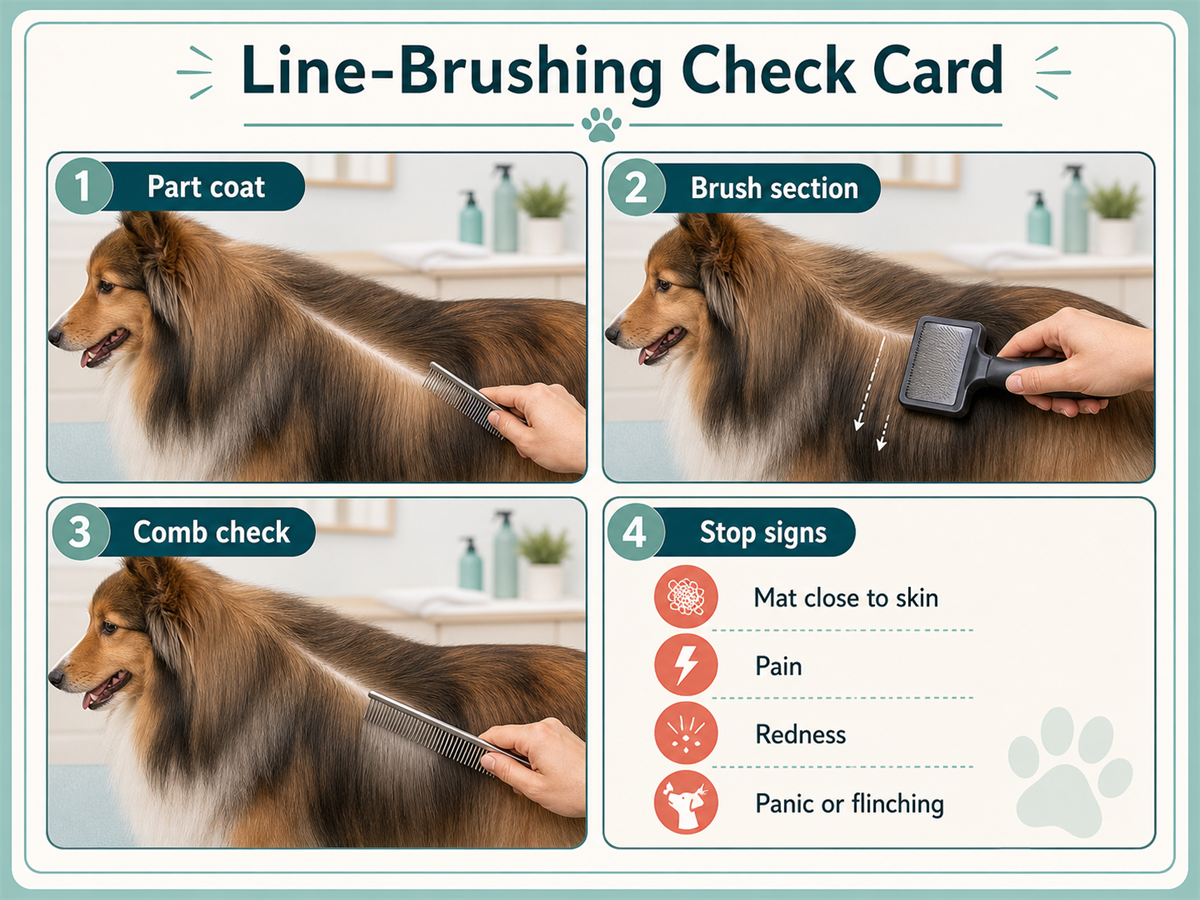
    Line-brushing check card showing part coat, brush section, comb check, and stop signs.
    Use this quick sequence while line brushing: part the coat, brush a small section, comb-check only when safe, and stop for pain, redness, panic, flinching, or mats close to the skin.

    How Small Should Each Section Be?

    Each section should be small enough that you can see the coat you are brushing and feel whether the skin is being pulled. Thicker, longer, curlier, or more packed coats need smaller sections than open, easy coats.

    Use smaller sections around ears, armpits, legs, tail, collar areas, and other friction spots. These areas can mat faster and may have thinner, more sensitive skin.

    For routine spacing and prevention, see how to prevent dog mats. For a broader brushing rhythm, the dog grooming schedule by coat type can help you choose a realistic cadence.

    Follow With a Comb Check

    A comb check tells you whether the brush reached through the section. Use it only when the dog is comfortable and the coat has already opened with gentle brushing.

    The comb should move through without tugging, skin pull, or a pain response. If it catches, stop. The answer is not more force. You may need a smaller section, a calmer session, or a groomer if the coat is tight or close to the skin.

    Stop Signs

    Stop line brushing if the dog or coat shows signs that the job is no longer safe for home brushing. These signs mean the session needs to end, not intensify.

    • Pain, flinching, yelping, or repeated turning toward the brush
    • Red, raw, swollen, hot, scabbed, wounded, or bleeding skin
    • Fleas, ticks, parasite dirt, or sudden skin changes
    • Tight mats, mats close to the skin, packed coat, or coat that pulls the skin
    • Panic, freezing, growling, snapping, biting, or unsafe handling
    • Any situation where sedation or restraint seems necessary

    Use a professional groomer for tight mats, packed coat, sensitive-area matting, or coat work you cannot do gently. Use a veterinarian for wounds, parasites, painful skin, infection signs, sudden coat loss, or any medical concern.

    Common Line-Brushing Mistakes

    • Brushing only the top layer and missing the coat underneath.
    • Taking sections so large that you cannot see the brush contact.
    • Pressing the brush down into the skin.
    • Using line brushing as a mat-removal method.
    • Dragging a comb through resistance after brushing.
    • Continuing after the dog shows pain, fear, or defensive behavior.
    • Bathing a coat that still has tight tangles or mats.

    For more brushing errors to avoid, see dog brushing mistakes. If you are brushing before a bath, review dog grooming before or after bath so mats and tangles are handled before water can tighten them.

    How Line Brushing Fits With Shedding

    Line brushing can help collect loose hair from deeper coat layers, but it should still feel gentle. On shedding coats, work in small sections, clear the brush often, and stop before the skin gets irritated.

    If your main goal is normal shedding control rather than sectioning a long or curly coat, start with how to remove loose dog hair.

    FAQ

    What is line brushing a dog?

    Line brushing is brushing a dog’s coat in small lifted sections so you can reach through the coat instead of smoothing only the surface.

    Which dogs need line brushing?

    Long, double, curly, wavy, and feathered coats may benefit from line brushing. Smooth coats usually need a simpler brushing routine.

    Should line brushing hurt?

    No. Stop for pain, redness, skin pull, tight mats, panic, growling, snapping, or any sign that the dog cannot be handled safely.

    Can line brushing remove mats?

    No. Line brushing is not a severe mat-removal method. Do not force brushes or combs through mats. Use a groomer or veterinarian for tight, painful, skin-close, or widespread mats.

    Do you comb after line brushing?

    Yes, when it is safe. A comb check can confirm whether the section is open. If the comb catches or pulls skin, stop instead of forcing it.

    Sources

  • Dog Brushing Mistakes That Can Hurt Your Dog’s Coat

    Dog Brushing Mistakes That Can Hurt Your Dog’s Coat

    The biggest dog brushing mistakes are brushing only the surface, brushing or bathing over mats, using the wrong brush category, pressing too hard, overbrushing one area, skipping friction zones, and ignoring pain, skin, or behavior stop signs. Safer brushing is slower, lighter, and honest about when a groomer or veterinarian should take over.

    Do not use brushing to solve severe mats. Stop for tight mats, mats close to skin, redness, sores, bleeding, parasites, bald patches, hot spots, pain, yelping, growling, snapping, freezing, or panic.

    Quick Mistake Check

    Mistake 1: Brushing Only the Surface

    Surface brushing can make the outer coat look tidy while tangles keep forming underneath. This is common on long, curly, fleece, woolly, and dense double coats.

    Work in small sections. Part the coat, brush gently through that section, then use a comb to check whether the coat is open near the skin. If the comb catches painfully or repeatedly, stop instead of pulling through it.

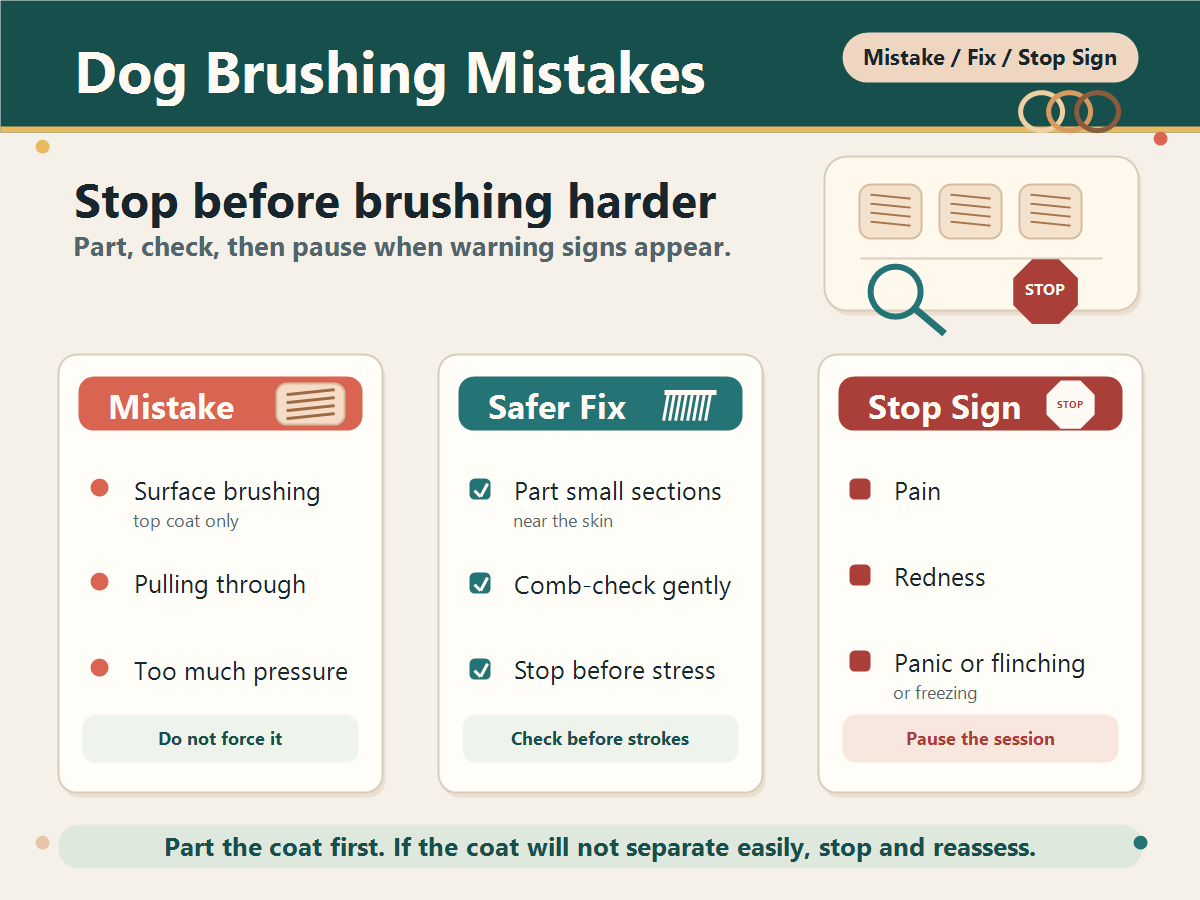
    Dog brushing mistakes card showing safer fixes and stop signs for pain, redness, panic, or flinching.
    Use this quick check when brushing starts to snag, pull, or stress the dog. Stop for pain, redness, panic, repeated flinching, or mats close to the skin.

    The ASPCA says brushing helps prevent tangles and gives owners a chance to check the skin. That only works when the session reaches more than the top layer.

    Mistake 2: Brushing or Bathing Over Mats

    Water can make tangles and mats tighter. Hard brushing over a mat can pull skin and make the dog afraid of grooming.

    Do not bathe over severe mats, force a brush through a tight mat, cut mats with scissors, or keep working because the mat looks small from the outside. Use a groomer or veterinarian for severe, painful, skin-close, widespread, or suspicious mats.

    If you are not sure whether you are dealing with a tangle or a mat, start with dog matting vs tangles. For routine prevention, see how to prevent dog mats. For bath order, use dog grooming before or after bath.

    Mistake 3: Using the Wrong Brush for the Coat

    No single brush category fits every dog. Coat length, density, curl, skin sensitivity, and tolerance all matter.

    MistakeSafer choiceStop sign
    Brushing only the topcoatWork in small sections and comb-check near the skin.The comb catches, pulls, or will not pass gently.
    Brushing or bathing over matsPause and check whether the mat is a groomer or vet task.The mat is tight, painful, skin-close, widespread, or paired with sore skin.
    Using one brush for every coatMatch the tool category to coat type.The tool scrapes, snags, or leaves hidden tangles.
    Pressing harder to get more hairUse light pressure and short sessions.Skin looks red or the dog becomes tense, sore, or evasive.
    Skipping friction zonesCheck behind ears, collar lines, armpits, belly, thighs, tail base, legs, feet, and sanitary areas.The area is sensitive, packed, damp, red, or painful.

    The ASPCA recommends choosing brushes and combs based on the dog’s hair type and asking a veterinarian or groomer when unsure. If you need a broader routine, use the dog grooming schedule by coat type.

    Mistake 4: Pressing Too Hard or Overbrushing One Area

    Brushing should not scrape the skin. Pressing harder does not make a tool safer or more effective. It can create redness, soreness, and handling fear.

    Use lighter pressure than you think you need. Keep sessions short, rotate zones, check skin color and comfort often, and stop before the dog gets sore. Do not chase every last loose hair. Shedding control is maintenance, not a perfect finish.

    For loose-hair work, see how to remove loose dog hair. For double-coated dogs, check double-coat dog grooming mistakes before using heavy undercoat tools.

    Mistake 5: Skipping Friction Zones

    Mats often form where coat rubs, compresses, or holds moisture. These spots are also more sensitive, so check them slowly.

    • Behind ears.
    • Collar and harness line.
    • Armpits.
    • Chest and belly.
    • Inner thighs.
    • Tail base.
    • Legs and feet.
    • Sanitary area.

    If a friction zone is packed, painful, red, damp, or hard to see clearly, stop and use a groomer or veterinarian instead of brushing harder.

    Mistake 6: Ignoring Skin, Pain, or Behavior Stop Signs

    Brushing is also a comfort and skin check. Stop if you see redness, sores, bleeding, parasites, bald patches, hot spots, pain, yelping, growling, snapping, freezing, panic, sudden heavy shedding, or a sudden coat change.

    Do not treat abnormal hair loss, sore skin, or parasites as a brushing problem. Texas A&M Pet Talk notes that abnormal shedding or skin and coat concerns can warrant a veterinarian conversation.

    If the main problem is fear or handling, use how to brush a dog that hates being brushed and keep the session short. A dog that is panicking, painful, or unsafe to handle needs help, not a longer brushing session.

    Brushing Routine by Coat Type

    The routine should change when the coat, skin, season, or dog’s tolerance changes.

    Coat typeCommon starting categoryMain caution
    Short smoothSoft brush, rubber curry, or grooming mittDo not scrape thin or sensitive skin.
    Long silkyPin brush and combWork ends first and check for hidden tangles.
    Curly or doodle-typeSlicker and comb, used gentlyMats may hide close to the skin.
    Dense double coatUndercoat rake, slicker, and comb category with light pressureDo not overwork one area or scrape for loose hair.
    Wire or specialty coatGroomer-guided brush and comb routineAsk for help if the technique is unfamiliar.

    The Merck Veterinary Manual supports regular brushing as part of routine dog care, while skin changes, parasites, pain, or wounds need more than a home brushing routine.

    When to Call a Groomer or Vet

    Call a groomer for severe mats, skin-close mats, recurring mats you cannot prevent, packed undercoat, coat work beyond your skill, or a dog who cannot tolerate brushing safely.

    Call a veterinarian for wounds, infection signs, parasites, hot spots, sudden hair loss, painful skin, swelling, bleeding, or behavior changes that suggest pain.

    FAQ

    Can you brush a dog too much?

    Yes. Too much pressure, too many repeated passes, or overworking one area can irritate skin. Use shorter sessions and stop when the skin or dog shows discomfort.

    Should you brush mats before or after a bath?

    Minor loose tangles may be handled before bathing if the dog stays comfortable and the hair separates without pulling. Severe, tight, painful, or skin-close mats should go to a groomer or veterinarian.

    How do I know if I am brushing to the skin?

    After brushing a small section, use a comb to check near the skin. If the comb cannot pass without catching or hurting, surface brushing is likely missing tangles.

    What brush should I use for my dog’s coat?

    Choose by coat type and ask a groomer or veterinarian when unsure. This guide uses tool categories only and does not recommend specific products.

    When should a groomer remove mats?

    A groomer should handle severe, tight, painful, skin-close, widespread, or recurring mats. A veterinarian may be needed when mats are paired with wounds, infection signs, parasites, or pain.

    Sources

  • Double Coat Dog Grooming Mistakes to Avoid

    Double Coat Dog Grooming Mistakes to Avoid

    The biggest double coat dog grooming mistakes are shaving or clipping without coat-specific guidance, brushing only the surface, overusing deshedding tools, bathing over tangles, drying only the top layer, forcing mats, ignoring skin changes, and trying to remove every loose hair. A safer routine protects the skin, works gently through the coat, and stops early when the dog is uncomfortable.

    This guide is about mistake prevention. It does not teach shaving, clipping, mat removal, skin treatment, parasite treatment, or breed-specific trimming.

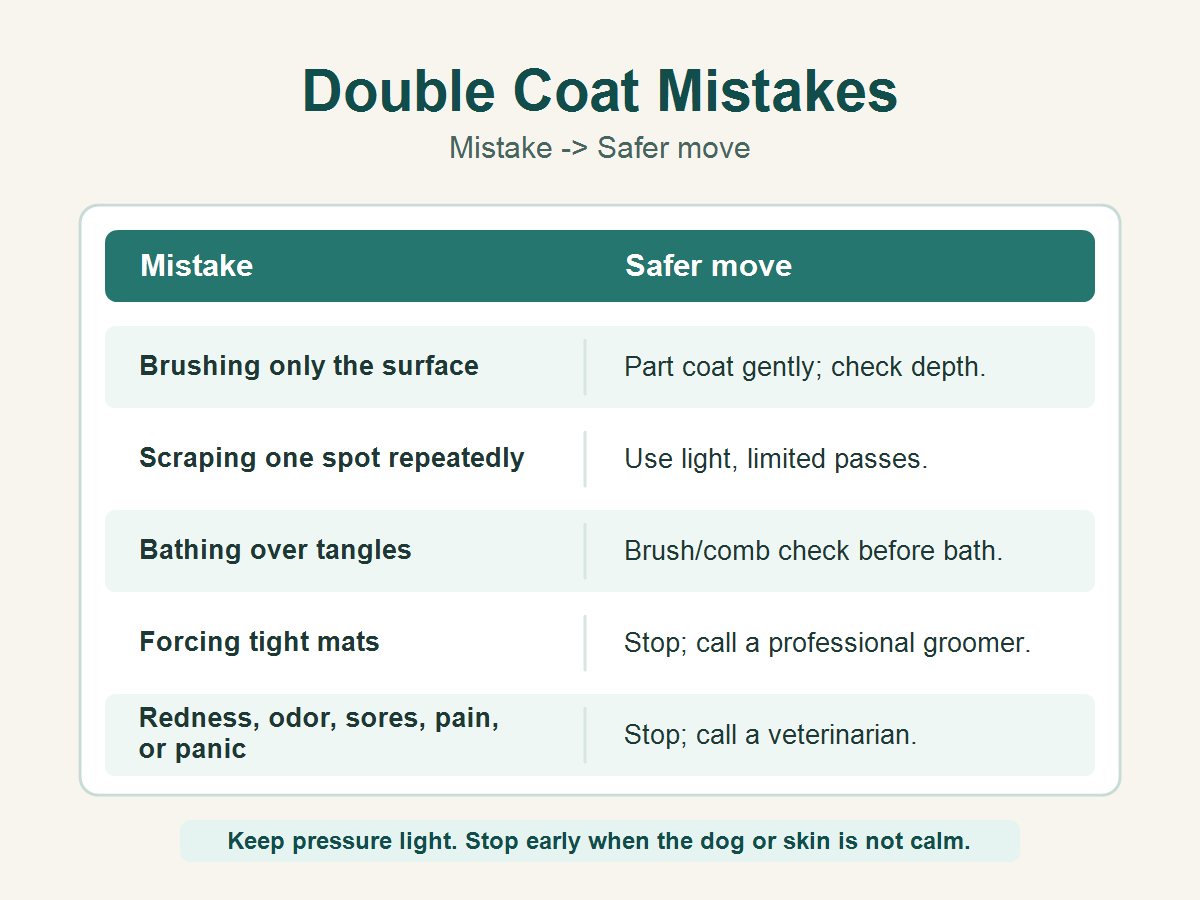
    Double coat dog grooming mistakes table showing safer moves for brushing, deshedding, bathing, mats, and skin warning signs.
    Use this as a quick mistake-prevention card. Stop for tight mats, skin changes, pain, panic, or unsafe handling.
  • CoatSafer routineWatch for
    Short smoothGentle passes and skin inspectionRedness from too much pressure
    Long silkySection work, ends first, comb checkTangles behind ears, legs, and tail
    Curly or doodle-typeLine brushing and skin-level comb testHidden mats close to skin
    Dense doubleLoose undercoat removal with breaksOverbrushing, scraping, or packed undercoat
    Wire or specialty coatGroomer guidance if technique is unfamiliarWrong tool category or coat damage
    MistakeWhy it can cause troubleSafer alternative
    Shaving or clipping because the dog shedsThe coat may need an individual assessment before any major trim decisionAsk a qualified groomer or veterinarian for coat-specific guidance
    Brushing only the surfaceLoose undercoat and tangles can stay hidden below the topcoatPart small sections gently and check the coat depth without forcing
    Using a deshedding tool too muchRepeated passes over one area can irritate skin or thin the coat unevenlyUse light, limited passes only when the skin and coat look normal
    Bathing before checking tanglesWater can make existing coat problems harder to work withBrush and comb-check before the bath when the coat is safe to handle
    Drying only the top layerDense coat can hold dampness near the skinDry thoroughly and recheck thick areas after the coat settles
    Forcing mats or tight spotsPulling can hurt the dog and injure skinStop and use a professional groomer
    Ignoring redness, odor, bald patches, or sudden shedding changesThese can point to a skin or health problemStop grooming that area and call a veterinarian
    Chasing every loose hairOver-grooming can leave skin sore before shedding is truly finishedStop while the dog is comfortable and the skin looks calm

    Mistake 1: Shaving or Clipping Without Coat-Specific Guidance

    Do not assume a double-coated dog should be shaved just because the dog sheds. Shedding is normal for many double-coated dogs, and a major coat change should be based on the individual dog, coat condition, season, health, and comfort.

    If shaving or clipping is being considered, ask a qualified groomer who can see the coat in person. If skin disease, heat stress risk, wounds, or medical fragility is part of the decision, involve a veterinarian.

    Mistake 2: Brushing Only the Coat You Can See

    A double coat can look smooth on top while loose undercoat, tangles, or packed hair sit deeper. Surface brushing may make the dog look tidy without actually checking the coat near the skin.

    Part the coat gently in a small area so you can see whether the brush or comb is reaching the layer that needs attention. If the tool stops, pulls skin, or makes the dog flinch, do not drag through it.

    PetMD guidance on matted pet hair explains why tight mats need careful handling and may need professional help. ASPCA dog grooming tips also support regular brushing and watching for skin problems while grooming.

    Mistake 3: Overusing Deshedding Tools

    A deshedding tool should not be scraped over the same spot until no hair comes out. Loose hair can keep releasing during seasonal shedding, and the goal is not to strip the coat bare.

    Keep pressure light. Stop for redness, bald patches, skin twitching, yelping, flinching, growling, snapping, panic, or any sign of pain. If you are not sure which tool category belongs on your dog’s coat, get guidance before repeating passes.

    AKC grooming guidance covers routine brushing and coat checks, while Texas A&M shedding advice points to regular brushing as part of managing loose hair.

    Mistake 4: Bathing Before Loose Coat and Tangles Are Checked

    Bathing before a coat check can make a grooming session harder. Water can tighten existing tangles, and dense undercoat can be harder to dry once it is packed or dirty. If you are not sure whether a spot is a tangle or something more serious, use our guide to dog matting vs tangles before you keep brushing.

    Brush and comb-check gently before bathing when the coat is safe to work. If you find painful mats, mats close to the skin, sores, swelling, discharge, parasites, or strong odor with irritation, stop and route the dog to a groomer or veterinarian. For prevention between baths, see how to prevent dog mats.

    Mistake 5: Drying Only the Surface

    Dense coats can feel dry on top while still holding moisture deeper down. Dampness near the skin can leave the dog uncomfortable and may worsen odor or irritation.

    Dry in small sections and check thick areas such as the neck, chest, belly, pants, tail base, and behind the ears. Avoid high heat, and stop for overheating, breathing trouble, collapse, panic, or unsafe handling.

    Mistake 6: Ignoring Skin or Shedding Changes

    Some shedding changes with the season. Sudden shedding changes, bald patches, sores, redness, swelling, discharge, parasites, dandruff flare, odor with irritation, pain, or excessive scratching are different. Grooming should not be used to cover up a skin problem.

    Call a veterinarian when the coat change seems sudden, the skin looks abnormal, or the dog seems painful or unwell.

    Simple Coat-Parting Check

    Use a calm, gentle check before and after brushing. Look at the surface coat, part a small section with your fingers, check whether loose undercoat or tangles are sitting below the top layer, then stop if the skin looks irritated or the coat resists.

    This is a check, not a dematting method. Do not pull through tight spots, cut mats out, shave close to the skin, or keep working through pain.

    When to Stop and Get Help

    Stop home grooming and use a qualified groomer or veterinarian for painful mats, mats near the skin, pelted coat, bald patches, sores, redness, swelling, discharge, odor with irritation, parasites, sudden shedding change, pain, panic, aggression risk, or unsafe handling. If the main problem is fear around tools, start with our guide to brushing a dog that hates being brushed before you try longer coat sessions.

    Use a groomer for coat work beyond your skill. Use a veterinarian for skin problems, wounds, parasites, pain, sudden coat changes, or medical concerns.

    FAQ

    What is the most common double coat grooming mistake?

    A common mistake is trying to remove all shedding instead of managing loose coat gently. Double-coated dogs shed, and too much brushing or tool pressure can irritate skin.

    Should I shave my double-coated dog?

    This page does not give shaving instructions. If shaving or clipping is being considered, ask a qualified groomer or veterinarian for coat-specific guidance.

    Can I brush out mats at home?

    Do not force mats. Tight, painful, skin-close, or severe mats should be handled by a professional groomer or veterinarian, depending on the skin condition.

    How do I know if I am brushing too much?

    Stop if the skin turns red, the dog flinches or pulls away, hair starts thinning in one area, or you feel tempted to keep brushing until no loose hair remains.

    When should I stop grooming a double-coated dog?

    Stop for painful mats, mats near skin, bald patches, sores, redness, swelling, discharge, odor with irritation, parasites, sudden shedding change, pain, panic, aggression risk, or unsafe handling.

    Bottom Line

    Double coat grooming should manage loose coat without hurting the dog or irritating the skin. Check below the surface, use light tool pressure, brush before bathing when the coat is safe, dry dense areas thoroughly, and stop early when mats, skin changes, pain, or panic appear.

  • How to Brush a Dog That Hates Being Brushed

    How to Brush a Dog That Hates Being Brushed

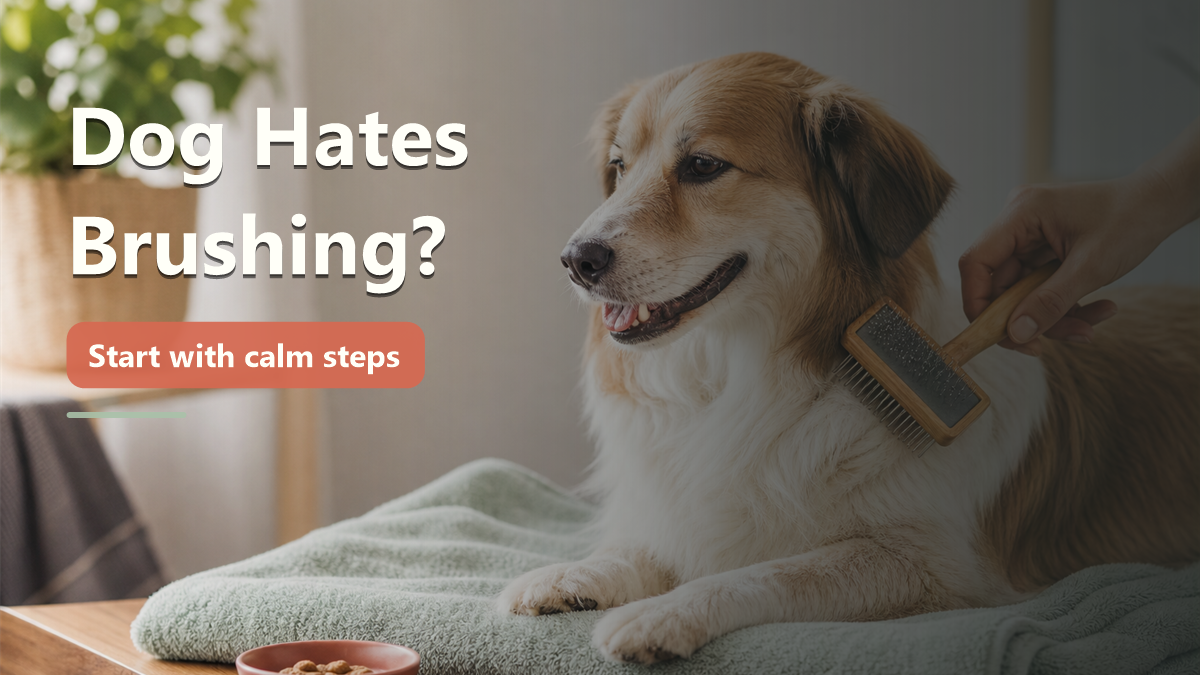
    If your dog hates being brushed, do not force a full brushing session. Stop, check for pain, tight mats, skin problems, parasites, and fear signs first. If the dog is safe and comfortable enough to practice, rebuild brushing with very short, reward-based steps: touch before tool, one easy area, one gentle stroke, reward, and stop before the dog escalates.

    This guide is for mild brushing resistance in a dog who can be handled calmly. It is not a plan for biting, growling, snapping, panic, painful mats, sedation, restraint, or brushing through pain. Those cases need a veterinarian, qualified groomer, or qualified trainer.

    First, Check for Pain, Mats, and Skin Problems

    A dog who resists brushing may not simply dislike the brush. The coat may pull at the skin, a body area may hurt, or the dog may have learned that grooming predicts discomfort.

    Before you practice brushing, check for:

    • Tight mats or tangles behind the ears, under the collar, in the armpits, along the belly, under the tail, or on the rear legs.
    • Red skin, sores, scabs, flea dirt, parasites, sudden bald patches, or a bad odor from the skin or ears.
    • Flinching, yelping, freezing, growling, snapping, guarding a body area, or repeated escape attempts.
    • Pain around the ears, paws, hips, tail, belly, or any area the dog suddenly will not let you touch.

    The ASPCA’s dog grooming tips note that brushing helps keep the coat in good condition and gives you a chance to look for skin concerns. If that check turns up pain, wounds, parasites, or sudden coat changes, pause home grooming and call your veterinarian.

    If you find tight mats, do not cut them out with scissors and do not brush through pain. The ASPCA’s matting guidance warns that mats can hide skin problems and that cutting them out can injure the pet. Use a qualified groomer or veterinarian for tight, severe, painful, or skin-close mats.

    What Not to Do When a Dog Resists Brushing

    Do not hold the dog down, chase the dog, punish the dog, brush faster to get it over with, or try to outlast growling, snapping, panic, or pain. Those choices can make the next session harder and can raise bite risk.

    Do not use sedation advice from a grooming article. If sedation or medication has entered the conversation, that is a veterinary decision.

    The AVSAB humane dog training position statement supports reward-based training and cautions against aversive methods. For brushing, that means making the task easier, pairing calm handling with rewards, and stopping before fear turns into a fight.

    Set Up a Low-Stress Brushing Spot

    Use a quiet spot with good footing. A towel, mat, or familiar surface can help the dog understand where the short practice happens. Keep the session simple: one coat-appropriate brush or comb, small rewards if they fit your dog’s health needs, and a timer.

    Start in a place where the dog can stay relaxed. Best Friends’ handling guidance recommends practicing in calm places first, pairing handling with rewards, and building gradually before adding harder distractions.

    If your dog already knows a calm station behavior, such as resting their chin on a towel or your hand, you can use it as a consent-style pause point. Fear Free’s chin-rest guidance explains how a chin rest can support cooperative care without holding the animal in place.

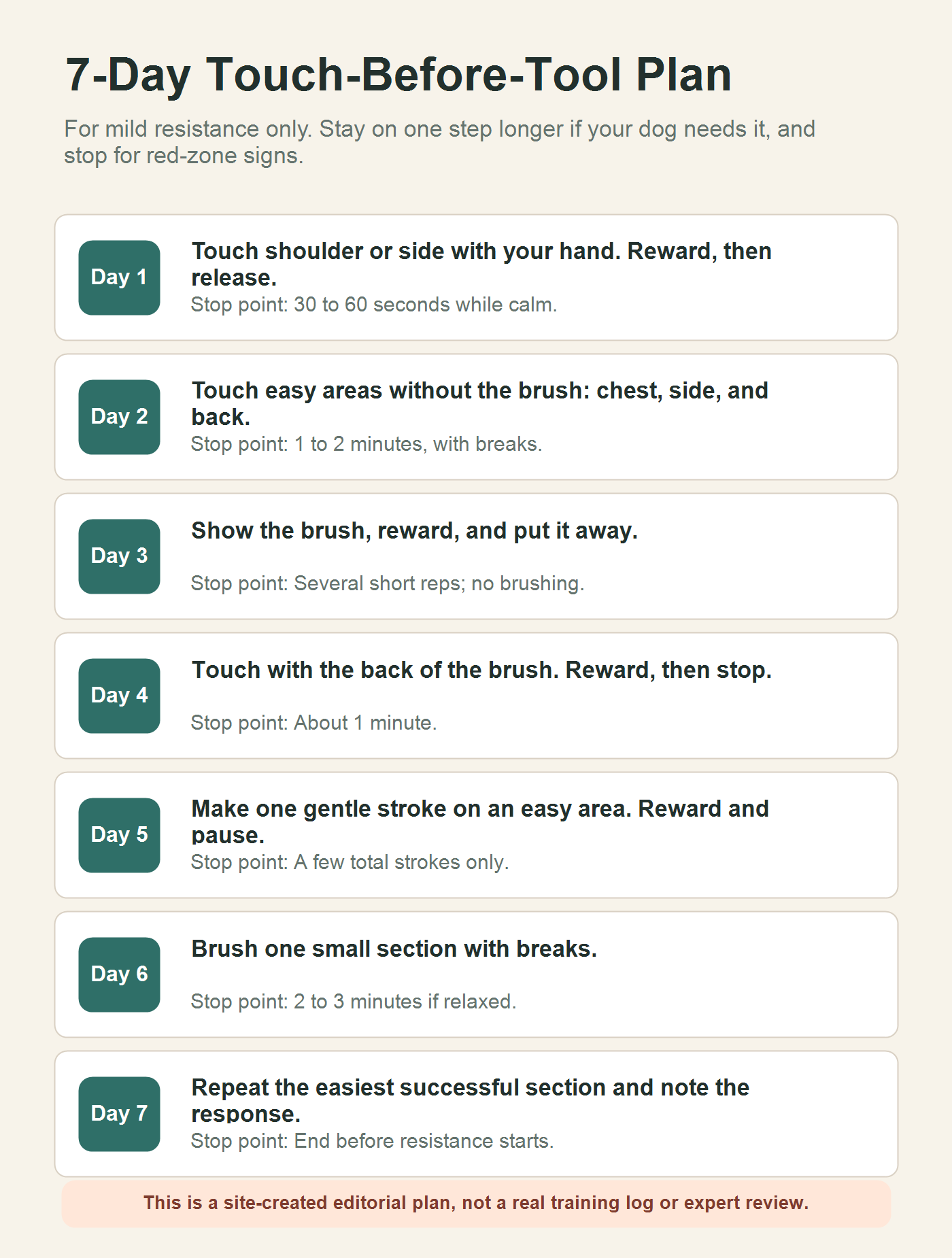
    Seven-day touch-before-tool brushing plan for mild dog brushing resistance, with short goals and stop points.
    Use this as a calm practice framework only. Stop for red-zone signs, pain, panic, growling, snapping, or bite risk.

    This plan is a starting point for calm, mild resistance. Stay on one step for more than a day if your dog needs it. If your dog shows red-zone signs from the scorecard below, stop and get professional help instead of making the step harder.

    DayGoalStop point
    1Touch the shoulder or side with your hand, reward, then release.30 to 60 seconds while the dog is still calm.
    2Touch easy grooming areas without the brush: chest, side, and back.1 to 2 minutes, with breaks.
    3Show the brush, reward, and put it away.Several short repetitions with no brushing.
    4Touch the dog with the back of the brush, reward, then stop.About 1 minute.
    5Make one gentle brush stroke on an easy area, reward, and pause.A few total strokes, not a full brushing session.
    6Brush one small section with breaks.2 to 3 minutes if the dog stays relaxed.
    7Repeat the easiest successful section and record the dog’s response.End before resistance starts.

    If the dog refuses food, turns away, stiffens, growls, snaps, freezes, yelps, guards a body area, or tries to leave, make the next session easier or stop and contact the right professional.

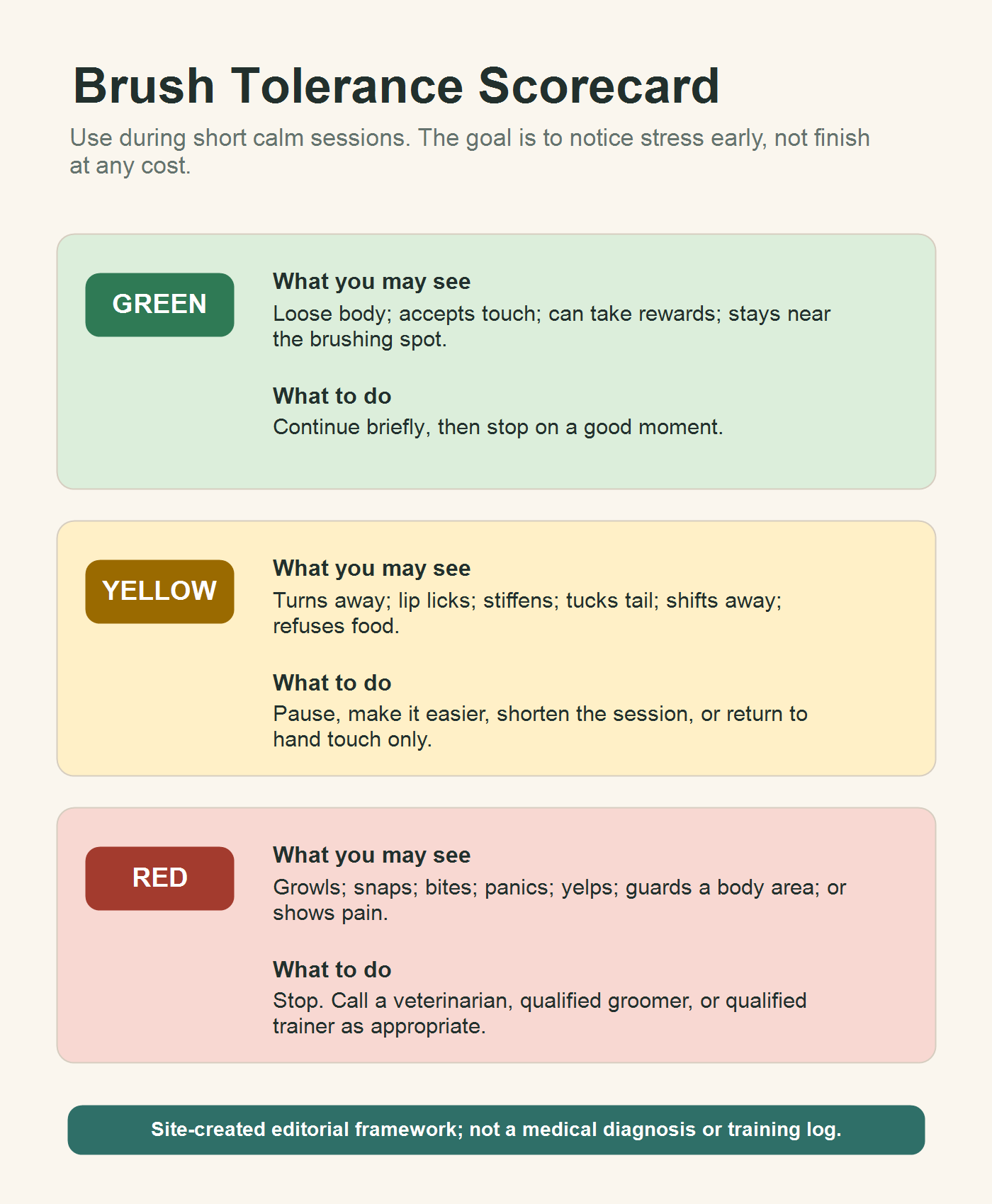
    Brush tolerance scorecard for a dog that resists brushing, showing green, yellow, and red stress signs and when to stop.
    The goal is to notice stress early, not finish brushing at any cost.

    Use this scorecard during every session. The goal is not to finish the coat at any cost. The goal is to notice stress early enough to keep the dog safe.

    ScoreWhat you may seeWhat to do
    GreenLoose body, accepts touch, can take rewards, stays near the brushing spot.Continue briefly, then stop on a good moment.
    YellowTurns away, lip licks, stiffens, tucks tail, shifts away, refuses food.Pause, reduce difficulty, shorten the session, or return to hand touch only.
    RedGrowls, snaps, bites, panics, yelps, guards a body area, or shows pain.Stop. Call a veterinarian, qualified groomer, or qualified trainer as appropriate.

    How to Brush One Small Area Safely

    Choose an easy area, often the shoulder or side. Touch with your hand first. If the dog stays loose, make one gentle pass in the direction the coat grows. Reward, pause, and stop early.

    Do not start with the worst tangle, belly, feet, ears, tail, or any area the dog guards. Build trust on an easy area first. Once the dog accepts that, slowly expand to nearby coat sections over later sessions.

    For long or curly coats, one small combed section may be enough for a session. If the coat is already matted, switch from home practice to professional help. Training a dog to accept brushing is not the same as removing painful mats.

    When to Stop and Call a Professional

    Call a qualified groomer for tight mats, coat maintenance beyond your skill level, or haircut-style work that cannot be done safely at home.

    Call a veterinarian for suspected pain, wounds, skin disease, parasites, sudden hair loss, ear pain, medication questions, or any medical concern.

    Call a qualified trainer or behavior professional if fear is not improving with easy steps, or if your dog shows growling, snapping, biting, panic, or repeated escape attempts. Bite-risk cases are not a home brushing challenge.

    FAQ

    Should I force my dog to be brushed?

    No. Forcing can increase fear and bite risk. Stop, check for pain or mats, and rebuild tolerance with short rewarded steps only if the dog can stay calm.

    What if my dog growls when I brush?

    Stop immediately. Growling is a warning sign. Check for pain, mats, and sensitive areas, then contact a veterinarian, qualified groomer, or qualified trainer depending on what you find.

    Can treats help a dog accept brushing?

    Yes, treats can help if the dog can eat calmly and the food fits the dog’s health needs. Treats do not replace stopping for pain, mats, panic, growling, snapping, or bite risk.

    How long should brushing sessions be for a dog that hates brushing?

    Start with seconds or one small area. Stop while the dog is still calm. A short successful session is better than a long session that ends with fear or a struggle.

    Can I brush out mats at home?

    Only small, loose tangles may be safe to work through gently. Tight, severe, painful, skin-close, or widespread mats need a qualified groomer or veterinarian.

    What brush should I use for a dog that hates brushing?

    Use a coat-appropriate brush or comb and keep pressure light. The tool matters less than the dog’s comfort, the condition of the coat, and stopping before stress escalates.

    Bottom Line

    For a dog that hates being brushed, the safest order is check first, train second, brush last. Rule out pain and mats, avoid force, practice short touch-before-tool steps, and stop for growling, snapping, panic, pain, severe mats, or bite risk.

  • How to Prevent Dog Mats at Home

    How to Prevent Dog Mats at Home

    Prevent dog mats by brushing and comb-checking high-friction areas before tangles tighten, keeping the coat dry and clean, and stopping early when hair pulls skin or the dog shows pain. This page is prevention only. It does not teach dematting, cutting, shaving, or brushing through painful mats.

    Any frequency here is a conservative starting point. Long, curly, wavy, feathered, or double coats usually need more attention than smooth coats, and the routine changes with coat, activity, moisture, and mat history.

    What Causes Dog Mats?

    Mats form when loose hair, friction, moisture, and skipped comb checks let the coat compact. They often start where hair rubs, bends, or traps dampness.

    ASPCA matting guidance notes that mats are uncomfortable and prevention depends on a dog’s coat and grooming needs. ASPCA general dog-care guidance also supports frequent brushing and checking the coat before bathing.

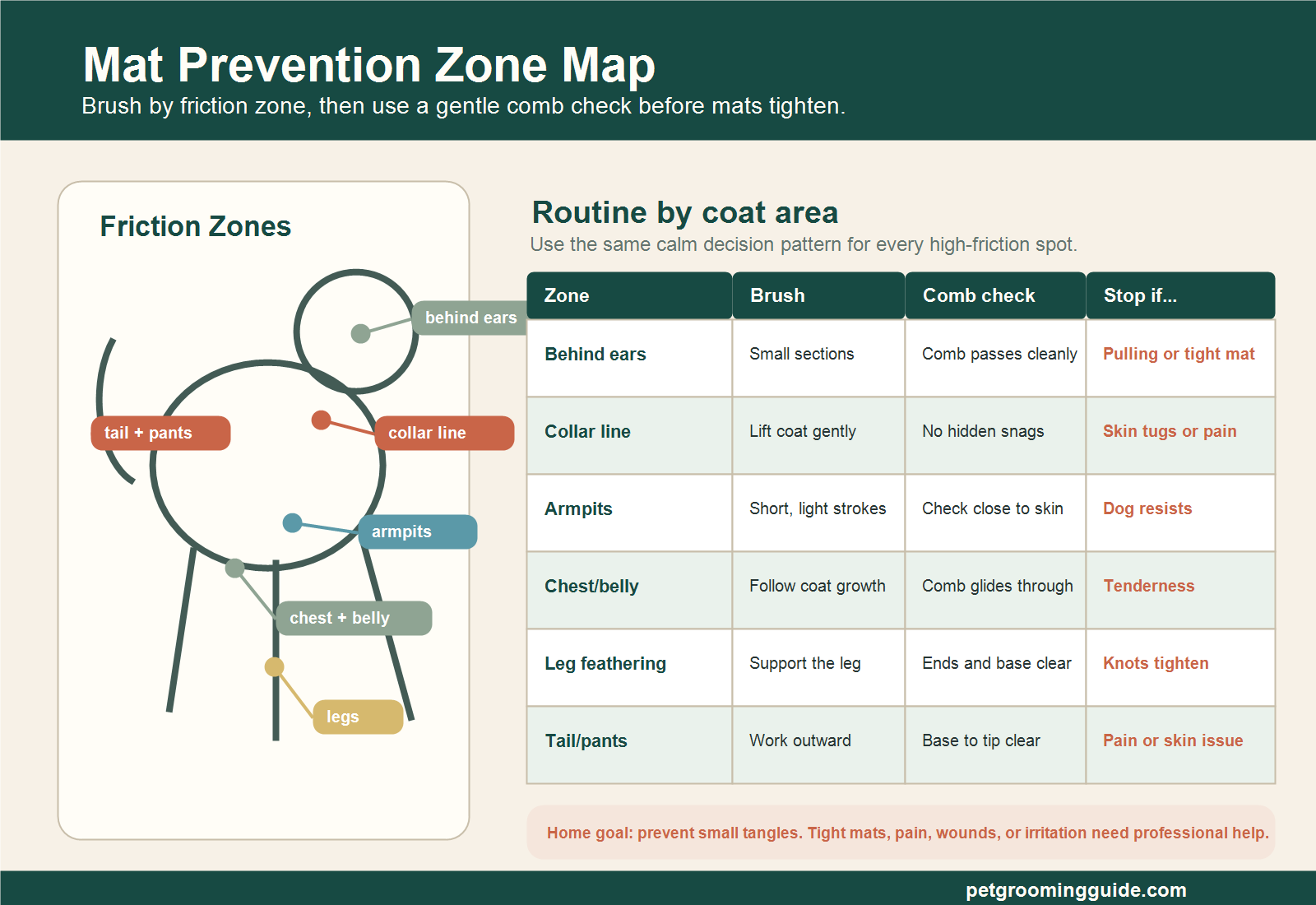
    Mat prevention zone map showing behind ears, collar line, armpits, chest and belly, leg feathering, and tail and pants with brush, comb check, and stop-point guidance.
    Use this as a prevention map only. Stop for pain, skin pulling, wounds, irritation, or tight mats and use a qualified groomer or veterinarian.
    ZoneWhy it matsConservative check rhythm
    Behind earsFriction and fine coatCheck most often
    Collar or harness lineCompression and rubbingCheck after gear-heavy days
    Armpits and chestMovement and moistureCheck often on long or curly coats
    Belly and legsDirt, dampness, frictionCheck after wet or outdoor days
    Tail, pants, featheringLong coat and sheddingCheck more during shedding

    Do not treat this as a universal schedule. A dog with a coat that mats easily may need checks more often.

    High-Friction Zones to Check First

    Start where mats usually form: behind the ears, under collars, armpits, chest, belly, inner legs, tail base, pants, and feathering. Use gentle sectioning, and stop if the coat pulls skin.

    Brush Before Bath: Why Water Can Make Tangles Worse

    Brush and comb-check before bathing when the coat is safe to work. ASPCA dog grooming tips and ASPCA general dog-care guidance support brushing or combing out mats before bathing.

    Do not bathe over mats, painful tangles, wounds, parasites, irritation, or skin pulling.

    Comb-Check Routine After Brushing

    A comb check verifies the coat after brushing. A pass means the comb glides through a small section without catching, tugging, pulling skin, or causing the dog discomfort. If the comb catches, stop that section and return to gentle brushing only if it is safe.

    If catching, pain, tight mats, skin redness, or resistance appears, route to a qualified groomer or veterinarian.

    Prevention by Coat Type

    Smooth coats may need only light brushing and skin checks. Long, curly, wavy, feathered, and double coats often need more frequent friction-zone checks. Exact timing depends on the individual coat, activity, moisture, and mat history.

    Use category-level tools only: slicker brush, pin brush, comb, and an undercoat rake when appropriate. This page does not recommend products.

    When Prevention Is Too Late and a Pro Is Needed

    Use a professional groomer for tight mats, severe mats, skin pulling, painful tangles, or coat work beyond your skill. Severe mat removal is not a home task. Use a veterinarian for wounds, irritation, parasites, bleeding, pain, medically fragile dogs, or skin problems.

    FAQ

    How do you prevent mats on a dog?

    Brush and comb-check friction zones before tangles tighten, keep the coat dry, brush before bathing, and stop early for pain or skin pulling.

    Where do dogs mat most often?

    Common zones include behind the ears, the collar line, armpits, chest, belly, legs, tail, pants, and feathering.

    Should you bathe a matted dog?

    No. Do not bathe over mats. Brush only if it is safe, and use a professional for tight or painful mats.

    Can small tangles become mats?

    Yes. Loose tangles can compact into mats if friction, moisture, and loose hair build up.

    When should a groomer handle dog mats?

    Use a groomer for tight, severe, skin-close, painful, or recurring mats, or when the dog resists handling.

    Bottom Line

    The best way to prevent dog mats is to check friction zones early, brush before bathing when the coat is safe, and comb-check gently after brushing. Once hair is tight, painful, skin-close, or pulling, stop home grooming and use a qualified groomer or veterinarian.

  • Dog Matting vs Tangles: How to Tell the Difference

    Dog Matting vs Tangles: How to Tell the Difference

    A loose tangle may separate with calm, gentle checks when there is no pain, skin pulling, tight mat, irritation, wound, parasite, bleeding, resistance, or unsafe handling. A mat feels compacted, pulls skin, resists gentle movement, or causes discomfort; it should stop home grooming and route to a qualified groomer or veterinarian.

    This page identifies and routes coat problems. It does not teach dematting, cutting, shaving, force-combing, or bathing over mats.

    Tangle vs Mat: Quick Definitions

    Coat issueWhat it usually meansHome action
    Loose tangleHair is crossed or lightly caught but still movableGentle check only if the dog is calm
    Mild tangleSmall snag with no skin pull or discomfortPause, brush gently if safe, then comb-check
    MatCompacted hair that resists gentle movementStop and route to a groomer
    Painful or skin issuePulling, redness, sores, bleeding, parasitesStop and route to a vet or pro
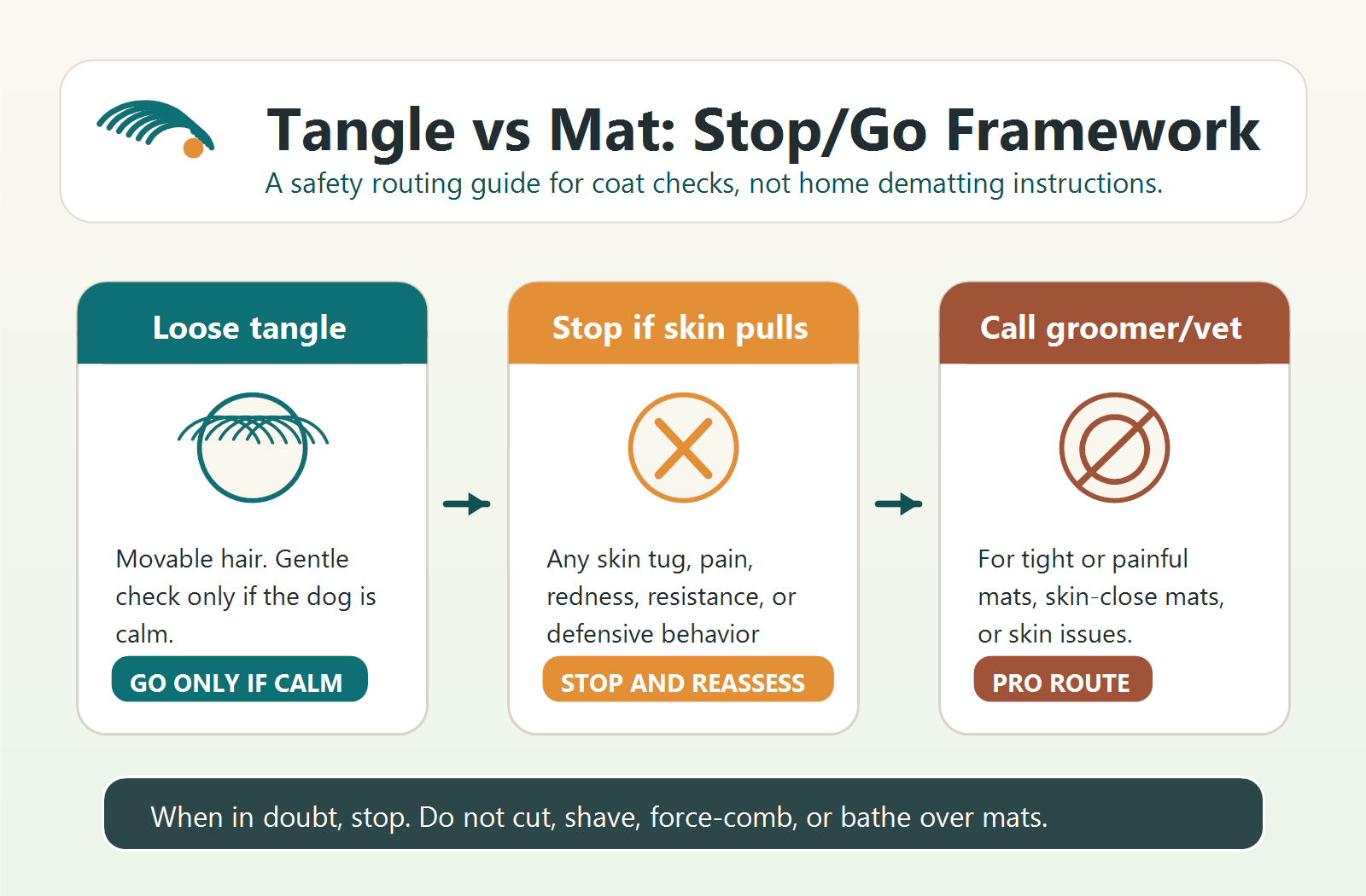
    Tangle vs mat stop-go framework showing loose tangle, stop if skin pulls, and call groomer or veterinarian for tight or painful mats.
    Use this as a stop/go guide only. Do not cut, shave, force-comb, or bathe over tight mats at home.

    Go slowly only when all of these are true: the dog is calm, the hair moves gently, there is no skin pulling, there is no pain, there is no redness or wound, and the brush or comb is not being forced.

    Stop when any resistance, skin pull, pain, tight mat, redness, parasite, bleeding, or defensive behavior appears.

    What a Loose Tangle Can Look and Feel Like

    A loose tangle may look like a small crossed section of hair that shifts when you lift it lightly. It should not feel hard, packed, skin-close, or painful.

    If a loose tangle does not separate with gentle brushing and a calm dog, stop the section and reassess. Do not increase pressure.

    What a Mat Can Look and Feel Like

    A mat can feel firm, compacted, or close to the skin. It may pull skin when moved and can hide irritation or sores.

    VCA grooming and coat-care guidance routes severe or extensive tangles to a groomer or veterinarian. ASPCA matting guidance notes mats are uncomfortable and progressed mats may require professional clipping. This page does not teach clipping or removal.

    Why Bathing Matted Hair Can Make Things Worse

    Water can tighten tangles and make coat problems harder to manage. Brush before bathing only when the coat is safe to brush. ASPCA dog grooming tips support brushing before bathing to remove dead hair and mats.

    Do not bathe over mats, skin irritation, wounds, parasites, or painful areas.

    When to Call a Groomer or Vet

    Call a groomer for compacted mats, tight tangles, skin-close mats, recurring mats, or coat work beyond your skill.

    Call a veterinarian for sores, skin irritation, wounds, bleeding, parasites, pain, infection signs, defensive behavior tied to pain, sedation needs, or medically fragile dogs.

    How to Prevent the Next Mat

    After the current problem is safely routed, prevention means friction-zone checks, line brushing when appropriate, comb checks, drying the coat well, and brushing before baths.

    FAQ

    What is the difference between a mat and a tangle on a dog?

    A tangle is usually loose and movable. A mat is compacted hair that resists gentle movement and may pull skin.

    Can I brush out a dog tangle at home?

    Only if it is loose, the dog is calm, and there is no pain, skin pull, irritation, wound, parasite, bleeding, or resistance.

    Should I cut out a dog mat?

    No. This page does not recommend cutting mats at home. Use a qualified groomer or veterinarian.

    Can I bathe a dog with mats?

    No. Bathing over mats can make tangles worse and hide skin problems.

    When does matting need a groomer or vet?

    Use a groomer for tight or severe mats. Use a vet for skin irritation, sores, bleeding, parasites, pain, infection signs, or medically fragile dogs.

    Bottom Line

    A loose tangle is movable and may be checked gently with a calm dog. A mat is compacted, resistant, painful, skin-close, or risky, and it should stop home grooming. When in doubt, choose the safer route and call a qualified groomer or veterinarian.

  • How to Groom a Dog at Home Safely

    How to Groom a Dog at Home Safely

    To groom a dog at home safely, start with a calm setup and a quick body check, brush and comb before bathing, decide whether a bath is needed, rinse and dry thoroughly, check paws and nails carefully, keep face and ear work surface-level, and stop as soon as the dog, coat, skin, or tool setup becomes unsafe.

    You do not have to finish every grooming task in one session. For many dogs, the safest home groom is short, calm, and intentionally unfinished.

    At-Home Dog Grooming Order

    Use this order as a safety flow, not a race. Skip any step that would make the session too long, stressful, or risky.

    StepWhat to doStop or skip if
    1Set up a quiet, well-lit room with non-slip footingThe dog is already panicked or the floor is slippery
    2Check coat, skin, paws, eyes, and ears before tools touch the dogYou see pain, swelling, bleeding, discharge, severe mats, or unsafe handling
    3Brush and comb gently before any bathMats are tight, painful, close to skin, or in a sensitive area
    4Bathe only if needed, using a dog-appropriate shampoo categoryA bath would make the session too long or the dog is not safe to bathe today
    5Rinse well and dry fully on a non-slip surfaceThe dog overheats, panics, struggles to breathe, or cannot be handled calmly
    6Check paws and nails within your skill levelThere is limping, bleeding, swelling, paw guarding, or nail-trim uncertainty
    7Wipe face and ear areas only where appropriateThere is eye squinting, discharge, ear pain, odor with irritation, or facial pain

    Original Safe-Order Framework

    Pet Grooming Guide original framework: build the session around stopping early, not getting everything done.

    1. Set the room: quiet space, bright light, towels, non-slip footing, and tools placed before the dog arrives.
    2. Check first: look for mats, soreness, skin changes, paw problems, ear/eye concerns, and stress level.
    3. Brush before water: gently loosen loose coat and find tangles before bathing.
    4. Choose the smallest useful session: brush-only, bath-only, paw check, or full routine only when calm and safe.
    5. Route up quickly: use a groomer for severe coat problems or handling limits, and use a veterinarian for pain, injury, discharge, limping, or medical concern.

    Set Up the Room First

    Choose a quiet area with good light, a stable surface, towels, and clean water if bathing. Keep electric tools away from water and damp surfaces. Read product labels and tool manuals before the dog is on the grooming surface.

    Skip the session if the room is too hot, the surface is slippery, the dog is already panicked, or you cannot keep the setup controlled without force.

    Do a Quick Body and Coat Check

    Before brushing or bathing, look over the coat and skin. This is a safety check, not a diagnosis.

    Stop and call a veterinarian or professional groomer if you see severe mats, painful mats, wounds, sores, bleeding, redness, swelling, discharge, odor with irritation, eye squinting, ear pain, limping, obvious pain, parasites, sudden skin or coat changes, panic, aggression risk, or unsafe handling.

    Brush and Comb Before Bathing

    Brush and comb gently before a bath to remove loose coat and find tangles. Bathing over tangles can make coat problems harder to manage, especially on thick, curly, or double-coated dogs.

    Do not force a brush through mats. Do not cut mats out at home if they are tight, painful, close to the skin, or in a sensitive area. That belongs with a qualified groomer or veterinarian, depending on the dog and skin condition.

    Decide Whether to Bathe Today

    A bath is not always required. If the dog is clean enough and the main need is brushing, stop after brushing and comfort checks. If a bath is needed, use a dog-appropriate shampoo category and follow the label.

    Avoid human shampoos, medicated products chosen without veterinary direction, pesticide shortcuts, or chemical mixtures. Rinse well and keep water and shampoo away from the eyes and ear canal. For bath-specific mistakes, use the dog bathing mistakes guide before repeating the routine.

    Dry Fully and Watch Comfort

    Drying matters because trapped moisture can irritate skin and make thick coats uncomfortable. Use towels first and keep the dog warm, calm, and secure on a non-slip surface.

    If using any electric drying tool, follow the manufacturer instructions, avoid heat stress, and stop for panic, overheating, breathing trouble, collapse, or unsafe handling. This guide does not teach advanced salon drying.

    Check Paws and Nails Carefully

    After brushing or bathing, check the paws for trapped moisture, debris, nail-edge issues, and signs of discomfort. Nail work should stay within what you can safely do. If you need a dedicated setup check, use the dog nail trimming setup checklist.

    Stop and call a veterinarian for limping, pain, swelling, bleeding, cuts, burns, blisters, discharge, excessive licking, chemical exposure concern, or sudden sensitivity. Stop and call a groomer for paw-hair trimming uncertainty or mats between toes.

    Keep Ears and Face Surface-Level

    For the face and ear area, keep home grooming gentle and surface-level. Wipe only where appropriate and do not insert tools or cotton swabs into the ear canal.

    Ear pain, discharge, odor with irritation, head shaking, eye discharge, eye squinting, or facial pain should stop the grooming session and move the decision to a veterinarian.

    Skip This Today Decision Box

    If this is trueSafer choice
    The dog is nervous but not unsafeDo one short task and end positively
    The coat has small tangles you can brush gentlyWork slowly, then stop before frustration
    The dog has painful mats or skin changesStop and call a groomer or veterinarian
    Nails are stressful todaySkip nails and use a nail-specific setup guide later
    Bathing would make the session too longBrush today, bathe another day
    Tools look damaged or wetDo not use them; follow the manufacturer route

    Cleanup After the Session

    When the session ends, clean and dry the grooming area, remove hair from tools, store tools away from moisture, and note any issue you should revisit later. If the dog seems sore, itchy, unusually tired, or uncomfortable after grooming, stop home grooming and consider veterinary advice.

    FAQ

    What order should I groom my dog at home?

    Start with setup and a body check, then brush and comb, decide on bathing, rinse and dry, check paws and nails, do gentle face or ear-area wiping if appropriate, and clean up. Stop anytime safety changes.

    Do I have to bathe my dog every time I groom?

    No. Many home sessions can be brushing, paw checks, or comfort work only. A shorter session is often safer than trying to do everything at once.

    Can I remove severe mats at home?

    No. Severe, painful, tight, or skin-close mats should be handled by a professional groomer or veterinarian. Do not cut them out at home.

    When should I stop grooming immediately?

    Stop for wounds, bleeding, swelling, discharge, pain, panic, breathing trouble, collapse, chemical exposure concern, severe mats, damaged tools, wet electric tools, or unsafe handling.

    Bottom Line

    Safe home grooming is a sequence of small decisions. Set up the room first, check the dog before tools touch the coat, brush before bathing, skip tasks that are too much for today, and route pain, injury, severe mats, discharge, panic, or unsafe handling to a veterinarian or qualified groomer.

    Sources

  • Dog Grooming Order of Operations

    Dog Grooming Order of Operations

    For most dogs, the safest grooming order is body check first, brush and comb before water, handle nails while the dog is still calm, bathe and rinse if needed, dry safely, then finish with ears, paws, and a final coat check. The order can change by coat type, bath need, nail sensitivity, and drying method.

    This is an adaptive workflow, not a rigid promise that every dog should complete every step in one session. If you see wounds, lumps that need a vet check, parasites, severe mats, burns, bleeding, pain, panic, aggression, sedation needs, restraint risk, or medically fragile handling, stop the home session and use a veterinarian or qualified professional.

    The Default Dog Grooming Order

    Use this default sequence when the dog is healthy, calm, and safe to handle.

    OrderStepMain decision
    1Body and skin checkIs it safe to groom today?
    2Brush and combCan the coat be opened before water?
    3NailsIs the dog calm enough for paw handling?
    4Bath and rinseDoes the dog need a bath today?
    5Towel and dryWhat drying method fits the coat and dog?
    6Ears, paws, final checkAre there any remaining stop signs?

    The ASPCA’s dog grooming tips support brushing before bathing to remove dead hair and mats, followed by wetting, shampooing, rinsing, and drying.

    Original Grooming Order Map

    Pet Grooming Guide original framework: use this order as a decision map, not a race to finish every task.

    1. Check first: stop for pain, wounds, severe mats, parasites, panic, or unsafe handling.
    2. Open the coat: brush and comb before water when tangles are minor and the dog is comfortable.
    3. Handle nails early only if calm: split nail work into another day if paw handling escalates stress.
    4. Bathe only when needed: skip the bath if the coat, skin, or behavior makes water unsafe today.
    5. Dry gently: prioritize towels and safe airflow over high heat.
    6. Finish with checks: ears, paws, coat dampness, debris, and comfort decide what happens next time.

    Step 1: Pre-Groom Body and Skin Check

    Start with a quick nose-to-tail check before tools come out. Look for wounds, lumps that need a vet check, parasites, severe mats, hot or painful areas, bleeding, burns, or behavior that says the dog is not safe to handle.

    Do not groom over wounds, lumps needing veterinary review, parasites, severe mats, painful skin, burns, bleeding, panic, or aggression. If any of these are present, stop and route to a veterinarian or qualified professional.

    Step 2: Brush and Comb Before Water

    Brush and comb before bathing whenever the coat needs it and the dog can tolerate it. VCA notes that brushing helps remove loose hair, dead skin, debris, and parasites while distributing oils. VCA also says severe or extensive tangles should be handled by a professional groomer or veterinarian.

    • Loose hair and minor tangles: brush before bath if the dog stays comfortable.
    • Severe mats or skin-close tangles: stop and use a professional.
    • Painful brushing: stop.
    • Parasites or skin concerns: stop and use veterinary guidance.

    Bathing over mats can make coat problems worse, so water should not be the first step when the coat is tangled.

    Step 3: Nails Before or After Bath?

    Nails often fit best before the bath because the dog is less tired and the floor is dry. That said, nail timing should follow the dog’s stress level.

    Trim or grind nails before the bath only when the dog is calm, paw handling is already accepted, good light and supplies are ready, and the handler can stop after one nail if needed.

    Move nails to another session when the dog is already stressed, paw handling triggers panic, the nail is bleeding, torn, or painful, or restraint would be required. VCA nail-handling guidance supports preparation and styptic readiness; this section is about setup logic, not clipping technique.

    Step 4: Bath, Rinse, and Towel Stage

    Bathe only when the dog needs it and the setup is safe. After brushing, wet the coat, shampoo with a dog-safe product category, rinse thoroughly, and towel before any airflow step.

    Do not bathe a dog with severe mats, wounds, burns, parasites, pain, panic, or unsafe handling. A bath should not be used to treat skin problems or cover medical odor.

    Step 5: Drying Method by Coat

    Drying should prioritize airflow and comfort, not high heat. The AKC drying guide supports airflow rather than heat for drying fur and warns that heat can burn skin.

    Coat or situationDrying direction
    Short coatTowel thoroughly and use gentle airflow if needed.
    Dense or double coatTowel, part-check damp areas, and use safe airflow.
    Long or tangle-prone coatDry while monitoring for tangles and skin comfort.
    Noise-sensitive dogUse towel work and breaks; stop for panic.

    Stop for overheating, burns, panic, pain, or unsafe restraint.

    Step 6: Ears, Paws, Final Comb Check

    After the coat is dry enough to inspect, finish with outer-ear checks, paw checks, and a final comb or brush pass where safe.

    VCA ear guidance says red, inflamed, or painful ears should be evaluated by a veterinarian before cleaning. Keep ear work conservative and visible. Do not push into painful ears, treat discharge, or clean aggressively.

    Final checks should answer whether the coat is dry at the skin where it needs to be, paws are free of debris, any skin problem appeared during grooming, and the dog stayed comfortable enough to continue next time.

    When to Change the Order or Stop

    Change the order when the dog or coat needs it. Some dogs do better with nails on a separate day. Some coats need brushing only, not a bath. Some dogs need drying breaks.

    Stop completely for wounds, lumps needing vet check, parasites, severe mats, burns, bleeding, pain, panic, aggression or restraint risk, sedation needs, or medically fragile handling. Home grooming should be split into shorter sessions rather than forced into one long workflow.

    FAQ

    What order should you groom a dog in?

    For most dogs: body check, brush and comb, nails if calm, bath and rinse if needed, dry safely, then ears, paws, and final checks.

    Should you brush a dog before or after a bath?

    Brush before the bath when the coat needs it and brushing is safe. Severe or painful tangles should go to a groomer or veterinarian.

    Should you trim dog nails before or after a bath?

    Often before the bath, while the dog is calmer and dry. Move nails to another session if paw handling causes stress or risk.

    When should you clean a dog’s ears during grooming?

    Keep ear checks near the end and conservative. Painful, red, inflamed, odorous, or draining ears need veterinary evaluation before cleaning.

    When should you stop a home grooming session?

    Stop for wounds, parasites, severe mats, burns, bleeding, pain, panic, aggression, sedation needs, restraint risk, or medically fragile handling.

    Bottom Line

    A good dog grooming order starts with safety, not tools. Check the dog first, brush before water when the coat allows it, do nail work only while the dog is calm, bathe only when needed, dry gently, and finish with ears, paws, and a final comfort check. If the dog, coat, skin, or handling situation turns unsafe, stop and bring in a professional.

    Sources

  • When to Stop a Dog Brushing Session

    When to Stop a Dog Brushing Session

    Knowing when to stop brushing is part of safe routine coat care. A session can end because the coat is done, the dog is tired, the skin or coat shows a warning sign, or handling is no longer safe. Stopping early is better than brushing through pain, panic, or owner frustration.

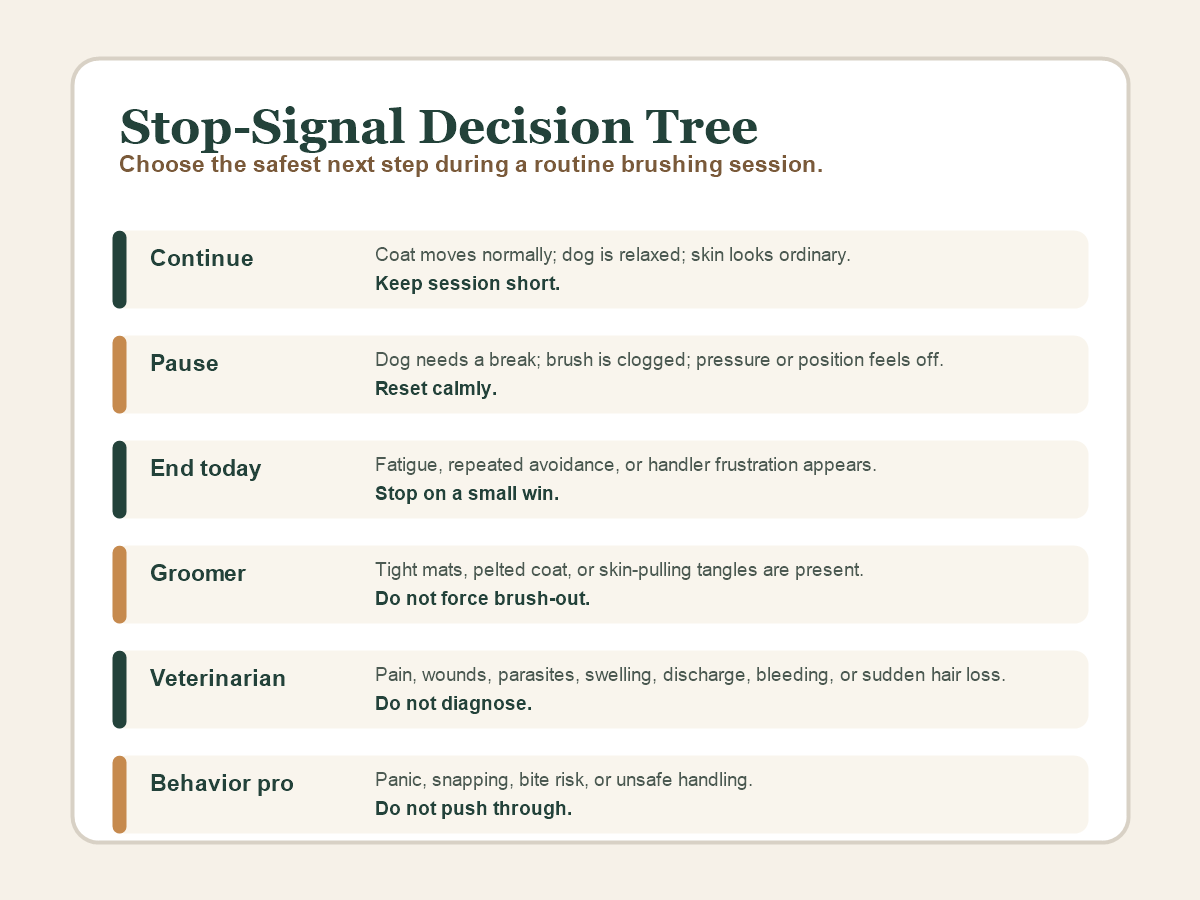
    Use four everyday outcomes: continue, pause, end for today, or call a professional. Continue only when the dog is comfortable, the coat is moving normally, and the skin looks normal.

    Stop-signal decision tree for dog brushing with continue, pause, end today, groomer, veterinarian, and behavior professional outcomes.

    The Quick Stop-Signal Rule

    Stop immediately for pain, yelping, flinching, skin pulling, bleeding, redness, sores, swelling, discharge, parasites, tight mats, pelted coat, panic, growling, snapping, freezing, repeated escape attempts, or owner loss of control.

    These are not signals to push through. They are routing points. Medical-looking signs belong with a veterinarian. Tight or severe mats belong with a qualified groomer. Handling fear, aggression risk, or bite risk belongs with a qualified trainer or behavior professional.

    Continue When Everything Looks Ordinary

    You can continue a brushing session when:

    • The dog is relaxed or only mildly wiggly.
    • The coat moves normally under gentle brushing.
    • The skin looks ordinary for your dog.
    • There is no flinching, yelping, skin pulling, panic, growling, or snapping.
    • You can keep the session short and calm.

    Even then, stop before the dog is tired. Routine brushing works best when your dog can repeat it without dreading the next session. For weekly planning, use the weekly dog brushing routine.

    Pause When the Session Needs a Reset

    Pause when the dog needs a break, the brush is clogged, your pressure feels too firm, the dog keeps shifting, or you are not sure whether a spot is a tangle, a mat, or a skin problem.

    A pause is not failure. Put the brush down, clean hair from the tool, let your dog relax, and reassess. If the session returns to calm, continue briefly. If the same problem repeats, end for today.

    End for Today Before It Turns Into a Fight

    End the session when comfort is fading, the dog is repeatedly avoiding the brush, or you are getting frustrated. A short, calm session is better than a long one that ends with force.

    Good reasons to end today include:

    • The dog keeps moving away after breaks.
    • The same zone keeps causing worry.
    • You are brushing harder just to finish.
    • The dog is tired from bathing, drying, nail care, or another grooming task.
    • You are no longer calm enough to handle gently.

    For a broader beginner routine, see the dog grooming checklist for beginners.

    Call a Groomer for Tight Mats or Coat Pulling

    Call a qualified groomer when the coat is tightly matted, pelted, close to the skin, or pulling the skin when you try to brush. Do not cut mats out with scissors. Do not keep brushing until the dog gives up.

    Severe mats can hide skin irritation and pain. If you are not sure whether a tangle is safe to handle, treat that uncertainty as a stop sign.

    Call a Veterinarian for Skin, Pain, Parasites, or Bleeding

    Call a veterinarian for wounds, parasites, swelling, discharge, bleeding, pain, sudden hair loss, hot spots, red or raw skin, or a dog that reacts as if an area hurts.

    Grooming is for noticing these problems, not diagnosing or treating them. Merck notes that signs such as oozing from the eyes, ears, or nose, hair loss, itching, red spots, and limping can indicate a dog may be sick. If brushing reveals a health concern, the safest next step is veterinary care.

    Call a Behavior Professional for Panic or Bite Risk

    Stop and use qualified help if the dog panics, snaps, growls, freezes, repeatedly tries to escape, or you feel bite risk rising. This page does not teach restraint, sedation, punishment, dominance handling, flooding, or casual muzzle use as a workaround.

    If you need to force the session to continue, the session should end.

    Write Down What Happened

    After stopping, make a short note:

    • Which body zone caused the stop.
    • What you noticed in the coat, skin, or behavior.
    • What action you chose: pause, end, groomer, veterinarian, or behavior help.
    • What to avoid next time.

    That note can prevent the next session from starting in the same problem area.

    Sources

    Bottom Line

    Stop brushing before the session becomes painful, frightening, or unsafe. Continue only when the coat, skin, dog, and handler are all calm enough. Pause for small resets, end for today when comfort fades, and call the right professional for mats, medical signs, panic, bite risk, or unsafe handling.

    FAQ

    When should I stop brushing my dog immediately?

    Stop immediately for pain, yelping, flinching, skin pulling, bleeding, red or wounded skin, parasites, tight mats, panic, growling, snapping, repeated escape attempts, or unsafe handling.

    Should I brush through mats if my dog does not like it?

    No. Tight, painful, widespread, close-to-skin, or skin-pulling mats should go to a qualified groomer or veterinarian. Do not cut them out with scissors at home.

    What if my dog growls during brushing?

    Stop the session. Growling is a warning signal, not a challenge to overcome. Use qualified help if fear, aggression risk, or bite risk is part of grooming.

    Is it okay to take breaks during brushing?

    Yes. Breaks are useful when the dog needs to reset, the brush needs cleaning, or you need to check pressure and position. If the same problem repeats, end for today.

    What should I do after stopping a brushing session?

    Write down the body zone, what happened, your dog’s response, and the next safe action. That may be a shorter session, a groomer, a veterinarian, or behavior support.

  • Dog Grooming Checklist for Beginners

    Dog Grooming Checklist for Beginners

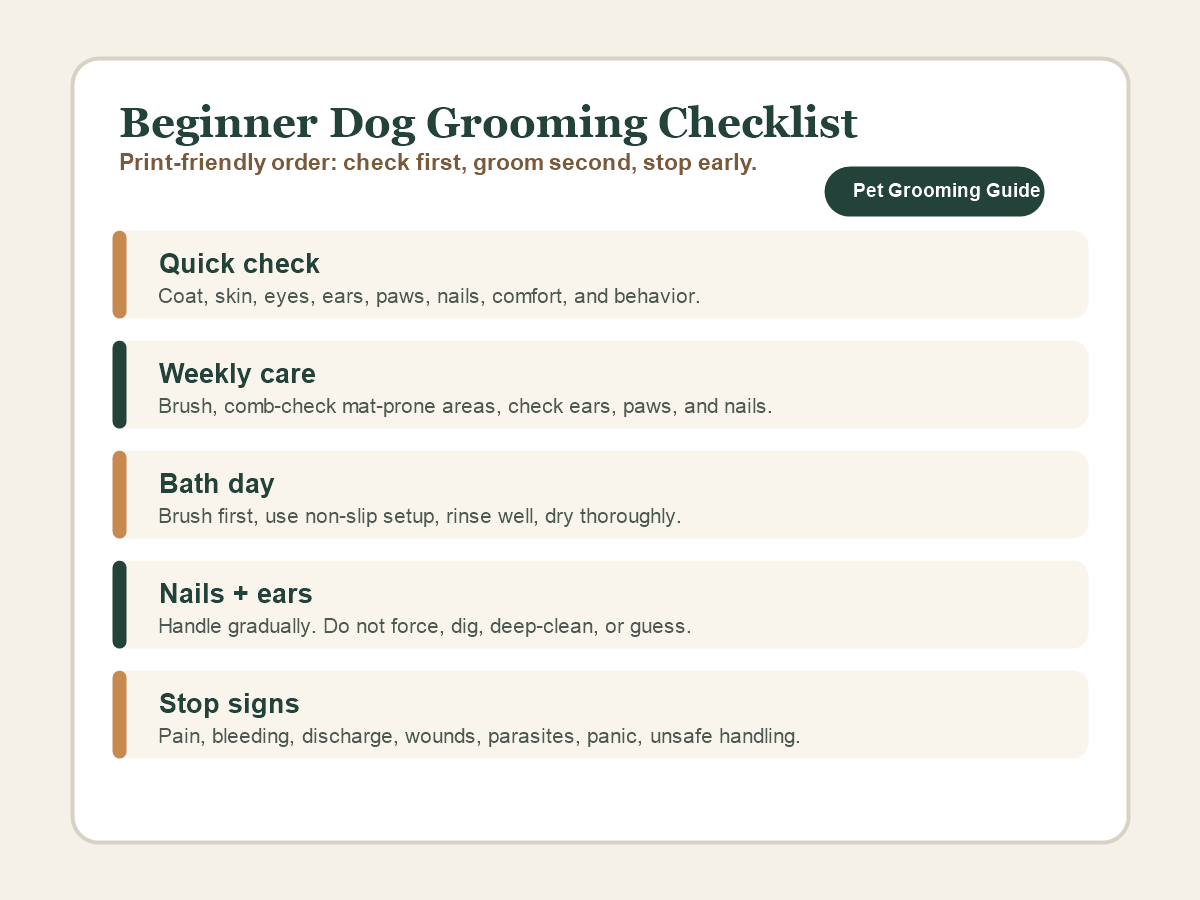
    A beginner dog grooming checklist should help you notice problems early, keep your dog comfortable, and avoid tasks that belong with a professional. Start with simple checks: coat, skin, eyes, ears, paws, nails, comfort, and behavior. Then build brushing, bathing, nails, and ear care into short sessions your dog can tolerate.

    Do not try to do everything in one day. A calm five-minute session is more useful than a full routine that ends in fear or force.

    Beginner dog grooming checklist graphic covering quick checks, weekly care, bath day, nails and ears, and stop signs.

    Beginner Rule: Check First, Groom Second

    Before brushing, bathing, trimming nails, or cleaning ears, look at the whole dog. Check:

    • Coat condition and loose hair.
    • Red, raw, flaky, wounded, or painful skin.
    • Eyes for squinting, redness, injury, or discharge.
    • Ears for odor, redness, swelling, pain, or discharge.
    • Paws for cracked pads, debris, swelling, or limping.
    • Nails for length, cracks, and safe handling tolerance.
    • Behavior for fear, growling, freezing, frantic movement, or panic.

    If you find a medical-looking problem, grooming is no longer the solution. Stop and ask a veterinarian.

    Daily or Quick Check

    Use this as a fast habit, especially after walks or outdoor play.

    AreaWhat to checkWhat not to do
    CoatDirt, burrs, loose hair, small tanglesDo not pull painful tangles
    SkinRedness, sores, parasites, swellingDo not diagnose or treat skin problems
    EyesClear, comfortable eyesDo not treat red, painful, or discharging eyes
    PawsDebris, cracked pads, limpingDo not dig at embedded objects
    BehaviorCalm enough to handleDo not force restraint

    For puppies, seniors, and nervous dogs, this daily check may be the whole session.

    Weekly Checklist

    Most beginners can start with a weekly maintenance session:

    • Brush with a coat-appropriate tool category.
    • Comb-check mat-prone areas if the coat is long, curly, dense, or feathered.
    • Check ears without deep cleaning.
    • Check nails and paws.
    • Wipe ordinary surface dirt from the coat or feet.
    • Note any changes to skin, coat, smell, comfort, or behavior.

    Short smooth coats may need less brushing than curly or long coats, but every dog benefits from being checked regularly. For timing by coat, use the dog grooming schedule by coat type.

    Monthly or As-Needed Checklist

    Some tasks happen less often or depend on the dog:

    • Bathing when dirty, smelly from ordinary activity, or seasonally needed.
    • Nail trimming or grinding when nails are long and the dog can be handled safely.
    • Ear cleaning only when appropriate and not painful.
    • Professional grooming for coat shaping, clipping, heavy shedding help, or unsafe handling.

    Do not bathe to cover up persistent odor, itch, discharge, wounds, or inflamed skin. Those are stop signs.

    Bath-Day Checklist

    Before the bath:

    • Brush out loose hair and small tangles.
    • Stop if mats are tight, painful, widespread, or close to the skin.
    • Put a non-slip surface in place.
    • Keep towels ready.
    • Plan a short session with breaks.

    During the bath:

    • Use lukewarm water.
    • Keep shampoo and water away from eyes and ear canals.
    • Rinse thoroughly.
    • Stop if the dog panics, overheats, struggles to breathe, or cannot be handled safely.

    After the bath:

    • Dry thoroughly, including paws, armpits, belly, ears, and skin folds.
    • Brush again once fully dry.
    • Save nails or ears for another day if the dog is tired.

    For a deeper bath-day safety check, see dog bathing mistakes to avoid at home.

    Nail Checklist

    Nail care should be gradual. Handle paws first, reward calm behavior, and trim or grind only small amounts when you know where you are working.

    Stop for bleeding, pain, limping, panic, sudden jerking, growling, or uncertainty about nail anatomy. Do not wrestle through nail care. A groomer, veterinary team, or trainer-informed plan can make nail work safer.

    Ear Checklist

    For beginners, ear care starts with looking and smelling, not deep cleaning. Healthy ears should not be painful, swollen, heavily odorous, or full of discharge.

    Do not put cotton swabs down the ear canal. Do not treat suspected ear infections at home. Do not keep cleaning an ear that looks worse or hurts.

    Grooming Tasks Beginners Should Avoid

    Beginners should not attempt:

    • Severe mat removal.
    • Cutting mats out with scissors.
    • Advanced clipping or breed trims.
    • Deep ear cleaning.
    • Medical skin, ear, eye, fold, or wound care.
    • Anal gland expression.
    • Dental scaling.
    • Forced restraint or sedation.

    Learning what to skip is part of good at-home grooming.

    When to Stop and Call a Pro or Vet

    Call a veterinarian for wounds, parasites, hot spots, bad odor with redness, red or raw skin, ear pain or discharge, eye squinting or discharge, limping, bleeding nails, suspected infection, breathing trouble, overheating, or pain.

    Call a professional groomer for severe mats, coat work you cannot safely maintain, nail care you cannot do safely, or a dog that cannot be groomed without force.

    Bottom Line

    A beginner grooming routine should feel calm, short, and repeatable. Check your dog first, do the easy maintenance your dog can tolerate, split bigger tasks across days, and stop early when you see pain, fear, skin problems, ear problems, severe mats, or unsafe handling.

    FAQ

    What should be on a beginner dog grooming checklist?

    A beginner checklist should include coat brushing, skin checks, eyes, ears, paws, nails, bath planning, drying, behavior checks, and clear stop rules.

    How often should beginners groom a dog at home?

    Do quick comfort checks often, brush on a coat-appropriate schedule, bathe as needed, and check nails every one to two weeks. Adjust for coat type and tolerance.

    What grooming tasks should beginners avoid?

    Avoid severe mat removal, advanced clipping, deep ear cleaning, medical care, forced restraint, sedation advice, anal gland expression, and dental scaling.

    Do I have to do nails, ears, brushing, and bathing in one session?

    No. Splitting tasks across days is often safer and calmer, especially for puppies, seniors, fearful dogs, and beginners.

    What are signs I should stop grooming?

    Stop for pain, bleeding, discharge, swelling, wounds, parasites, overheating, breathing trouble, panic, aggression, or any handling that feels unsafe.