Tag: dog grooming safety

  • Dog Matting vs Tangles: How to Tell the Difference

    Dog Matting vs Tangles: How to Tell the Difference

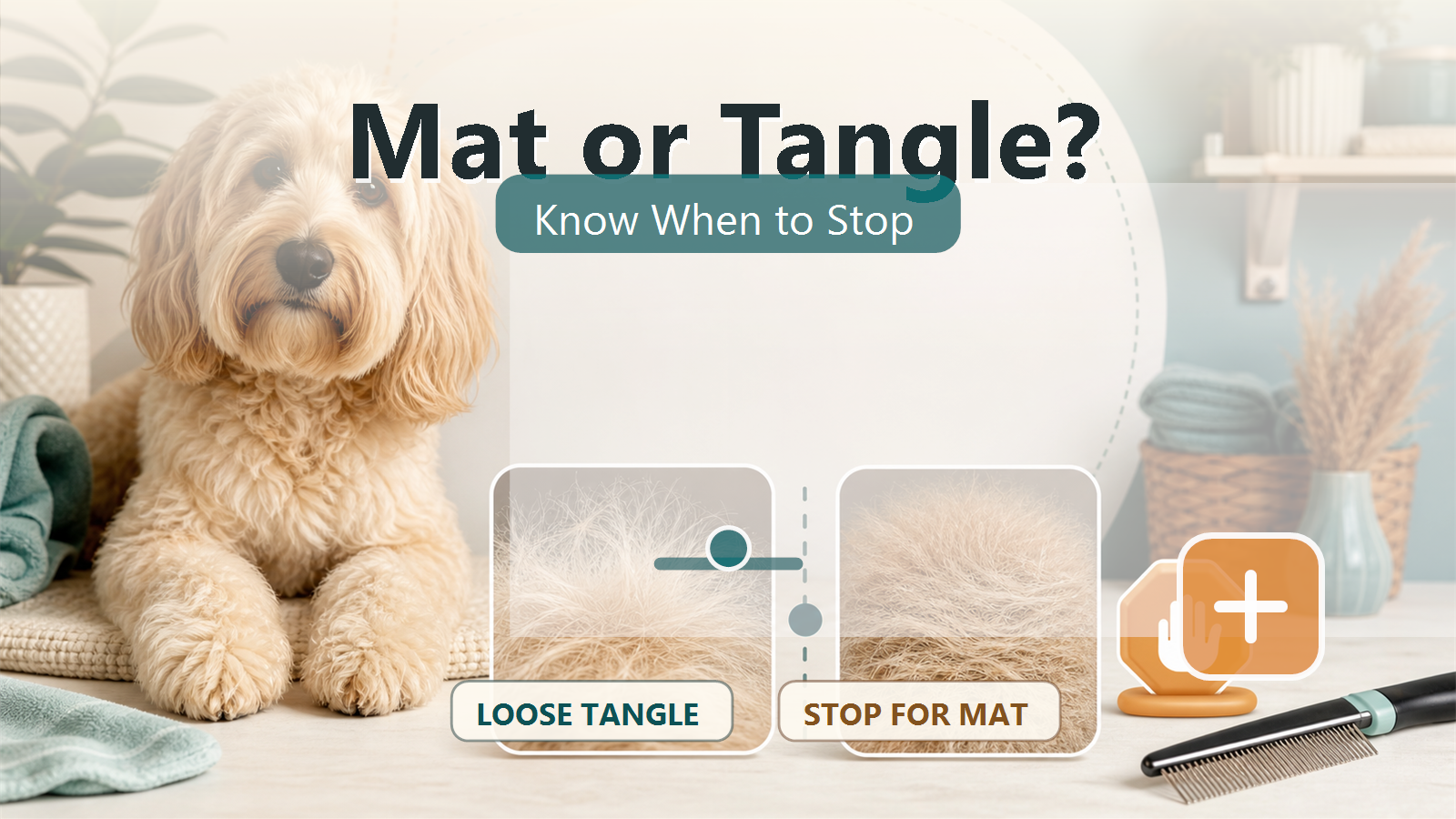
    A loose tangle may separate with calm, gentle checks when there is no pain, skin pulling, tight mat, irritation, wound, parasite, bleeding, resistance, or unsafe handling. A mat feels compacted, pulls skin, resists gentle movement, or causes discomfort; it should stop home grooming and route to a qualified groomer or veterinarian.

    This page identifies and routes coat problems. It does not teach dematting, cutting, shaving, force-combing, or bathing over mats.

    Tangle vs Mat: Quick Definitions

    Coat issueWhat it usually meansHome action
    Loose tangleHair is crossed or lightly caught but still movableGentle check only if the dog is calm
    Mild tangleSmall snag with no skin pull or discomfortPause, brush gently if safe, then comb-check
    MatCompacted hair that resists gentle movementStop and route to a groomer
    Painful or skin issuePulling, redness, sores, bleeding, parasitesStop and route to a vet or pro
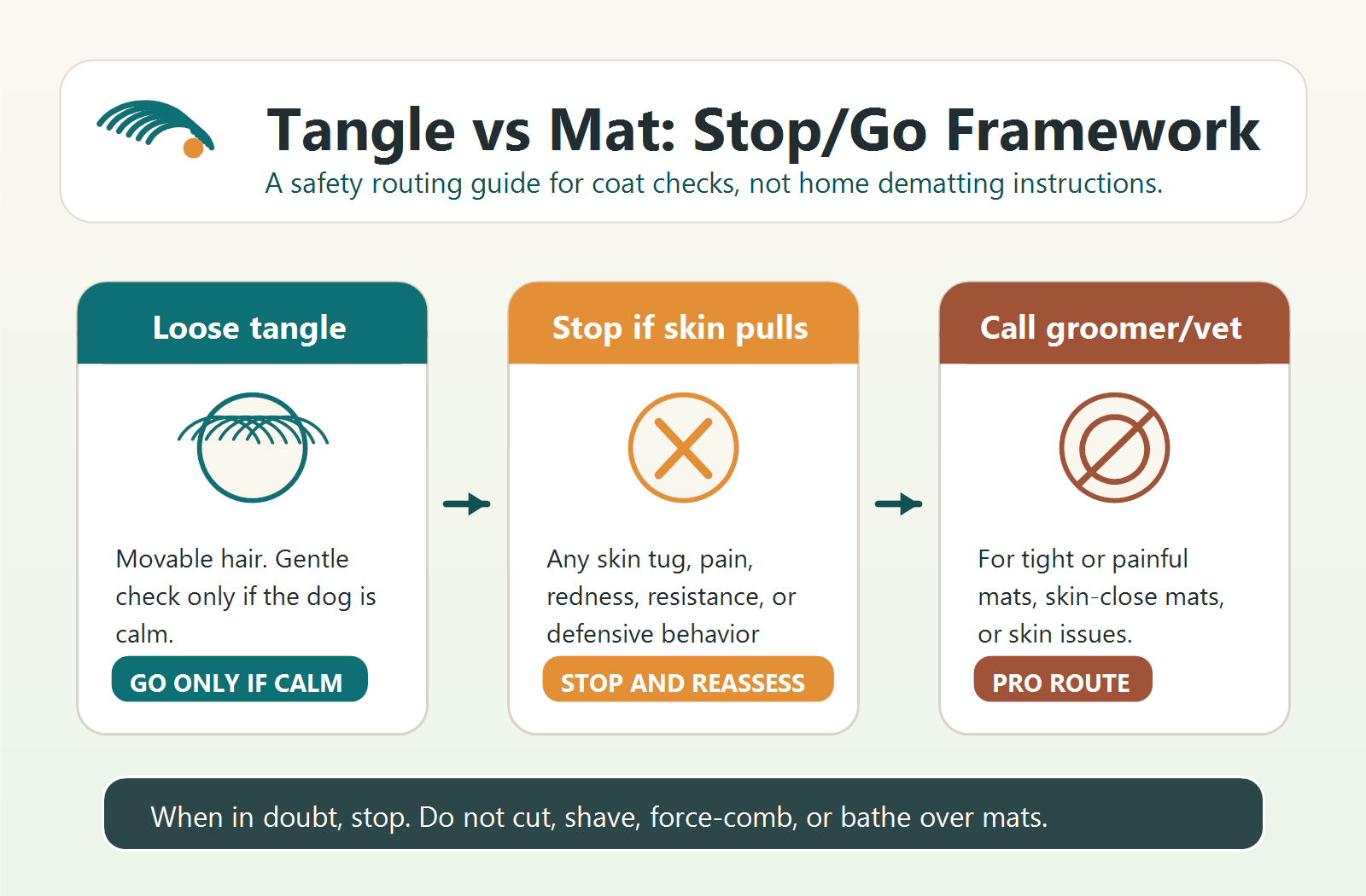
    Tangle vs mat stop-go framework showing loose tangle, stop if skin pulls, and call groomer or veterinarian for tight or painful mats.
    Use this as a stop/go guide only. Do not cut, shave, force-comb, or bathe over tight mats at home.

    Go slowly only when all of these are true: the dog is calm, the hair moves gently, there is no skin pulling, there is no pain, there is no redness or wound, and the brush or comb is not being forced.

    Stop when any resistance, skin pull, pain, tight mat, redness, parasite, bleeding, or defensive behavior appears.

    What a Loose Tangle Can Look and Feel Like

    A loose tangle may look like a small crossed section of hair that shifts when you lift it lightly. It should not feel hard, packed, skin-close, or painful.

    If a loose tangle does not separate with gentle brushing and a calm dog, stop the section and reassess. Do not increase pressure.

    What a Mat Can Look and Feel Like

    A mat can feel firm, compacted, or close to the skin. It may pull skin when moved and can hide irritation or sores.

    VCA grooming and coat-care guidance routes severe or extensive tangles to a groomer or veterinarian. ASPCA matting guidance notes mats are uncomfortable and progressed mats may require professional clipping. This page does not teach clipping or removal.

    Why Bathing Matted Hair Can Make Things Worse

    Water can tighten tangles and make coat problems harder to manage. Brush before bathing only when the coat is safe to brush. ASPCA dog grooming tips support brushing before bathing to remove dead hair and mats.

    Do not bathe over mats, skin irritation, wounds, parasites, or painful areas.

    When to Call a Groomer or Vet

    Call a groomer for compacted mats, tight tangles, skin-close mats, recurring mats, or coat work beyond your skill.

    Call a veterinarian for sores, skin irritation, wounds, bleeding, parasites, pain, infection signs, defensive behavior tied to pain, sedation needs, or medically fragile dogs.

    How to Prevent the Next Mat

    After the current problem is safely routed, prevention means friction-zone checks, line brushing when appropriate, comb checks, drying the coat well, and brushing before baths.

    FAQ

    What is the difference between a mat and a tangle on a dog?

    A tangle is usually loose and movable. A mat is compacted hair that resists gentle movement and may pull skin.

    Can I brush out a dog tangle at home?

    Only if it is loose, the dog is calm, and there is no pain, skin pull, irritation, wound, parasite, bleeding, or resistance.

    Should I cut out a dog mat?

    No. This page does not recommend cutting mats at home. Use a qualified groomer or veterinarian.

    Can I bathe a dog with mats?

    No. Bathing over mats can make tangles worse and hide skin problems.

    When does matting need a groomer or vet?

    Use a groomer for tight or severe mats. Use a vet for skin irritation, sores, bleeding, parasites, pain, infection signs, or medically fragile dogs.

    Bottom Line

    A loose tangle is movable and may be checked gently with a calm dog. A mat is compacted, resistant, painful, skin-close, or risky, and it should stop home grooming. When in doubt, choose the safer route and call a qualified groomer or veterinarian.
  • When to Stop Grooming and Call a Pro

    When to Stop Grooming and Call a Pro

    Stop grooming and call a professional when the coat, skin, behavior, breathing, paws, nails, ears, eyes, or tools move outside a calm routine home session. Some problems belong with a groomer, some belong with a veterinarian, and unsafe tools belong with the manufacturer or service route.

    This is a routing guide, not a treatment guide. It does not diagnose, treat, sedate, restrain, demat severe coats, or repair tools.

    The Simple Rule: Pause, Stop, or Call

    SignalWhat it usually means for the home session
    Mild wiggles, short attention span, normal coatPause, shorten the session, or retry later
    Tangles beyond your skill, coat uncertainty, advanced trim needStop and call a professional groomer
    Pain, wounds, bleeding, swelling, discharge, limping, breathing troubleStop and call a veterinarian
    Damaged, wet, sparking, overheating, rusty, or broken toolStop using the tool and contact the manufacturer or service route

    If you are unsure, end the session. A stopped session is easier to fix than a pushed session that becomes painful or unsafe.

    Original Red, Yellow, Green Routing Matrix

    Pet Grooming Guide original framework: sort the moment by risk, then choose the safest next route.

    StatusExampleNext action
    GreenCalm dog, normal coat, safe toolsContinue gently
    YellowDog needs a break, minor tangle, owner unsure about one taskPause, simplify, or skip that task
    Red – groomerSevere mats, advanced trim, coat uncertaintyStop and call a professional groomer
    Red – vetPain, wounds, limping, discharge, breathing troubleStop and call a veterinarian
    Red – manufacturerDamaged cord, sparks, rust, overheating, wet electrical toolStop using the tool and contact the service route

    Coat and Mat Stop Signs

    Call a professional groomer for severe mats, painful mats, pelted coat, mats close to skin, or coat problems you cannot separate safely with gentle brushing. Do not cut mats out at home and do not force a brush through them.

    Call a veterinarian if mats are paired with sores, bleeding, swelling, discharge, skin odor with irritation, parasites, or obvious pain. A groomer can help with coat handling, but medical signs need veterinary guidance.

    Skin, Ear, Eye, and Paw Stop Signs

    Stop grooming and contact a veterinarian for wounds, sores, bleeding, redness, swelling, discharge, odor with irritation, eye squinting, eye discharge, eye pain, ear pain, ear discharge, strong ear odor with discomfort, limping, paw pain, burns, blisters, embedded-object concern, sudden sensitivity, excessive licking, parasites, or severe scratching.

    Do not try to treat these during grooming. Do not apply medication, pesticide products, antiseptics, disinfectants, bandages, or home remedies from this page.

    Behavior and Handling Stop Signs

    Pause for normal restlessness. Stop for panic, growling, snapping, repeated attempts to escape, aggression risk, or any handling that would require force.

    If there is no medical emergency but the dog cannot be handled safely, call a professional groomer or a qualified handling-support route. If the behavior is sudden, paired with pain, or paired with medical signs, call a veterinarian.

    Breathing, Heat, and Chemical Exposure

    Stop immediately and call a veterinarian or emergency veterinary route for breathing trouble, collapse, heat stress signs, burns, blisters, or chemical exposure concern.

    Do not continue drying, bathing, clipping, brushing, or nail work while you wait through breathing or collapse signs.

    Nails and Paws

    Stop nail work for pain, bleeding, repeated pulling away, limping, swelling, sudden sensitivity, or unsafe handling. Pain or bleeding means the session ends.

    For paw pads, stop and call a veterinarian for cuts, burns, blisters, discharge, swelling, embedded-object concern, excessive licking, limping, or chemical exposure concern. If the issue is setup rather than injury, use the dog nail trimming setup checklist before trying again another day.

    Tool and Electrical Stop Signs

    Stop using a grooming tool and follow the manufacturer or professional service route for damaged cords or plugs, cracked housing, sparks, burning odor, overheating, water exposure, rust, broken or sharp blade teeth, missing guards, abnormal noise, or dropped electrical tools.

    Do not open the tool, repair cords, sharpen blades, diagnose electrical problems, or keep using a tool because it still turns on. For basic non-repair care, use the appropriate tool-cleaning guidance after the tool is safe to handle.

    Call Groomer vs Call Vet

    Call a groomer whenCall a veterinarian when
    The coat is matted beyond gentle brushingThe dog has pain, bleeding, swelling, discharge, or injury
    The trim requires skill you do not haveThe dog is limping, collapsing, struggling to breathe, or showing heat stress signs
    The dog needs a calmer professional setup without a medical emergencyEar, eye, paw, skin, chemical, parasite, or sudden sensitivity signs appear
    You are unsure how to handle coat safelyThe issue looks medical, painful, infected, or urgent

    FAQ

    When should I call a groomer instead of trying at home?

    Call a groomer for severe mats, painful mats, advanced clipping, breed-specific trims beyond your skill, coat uncertainty, or handling that cannot be completed calmly and safely.

    When should I call a vet after grooming?

    Call a veterinarian for pain, limping, wounds, bleeding, swelling, discharge, odor with irritation, eye or ear symptoms, burns, blisters, breathing trouble, collapse, chemical exposure concern, parasites, or sudden skin changes.

    Should I keep grooming if my dog panics?

    No. Stop the session. Panic increases injury risk and can make future grooming harder. Resume only with a safer plan and appropriate professional help if needed.

    Can I fix a clipper problem during grooming?

    No. Stop using damaged, wet, sparking, overheating, rusty, or broken tools and follow the manufacturer or professional service route.

    Bottom Line

    A safe home grooming session has permission to stop. Pause for mild restlessness, call a groomer for coat or handling tasks beyond your skill, call a veterinarian for pain or medical signs, and stop using any damaged or unsafe tool. Ending early is part of safe grooming.

    Sources

  • Pet Grooming Safety Checklist for Dogs at Home

    Pet Grooming Safety Checklist for Dogs at Home

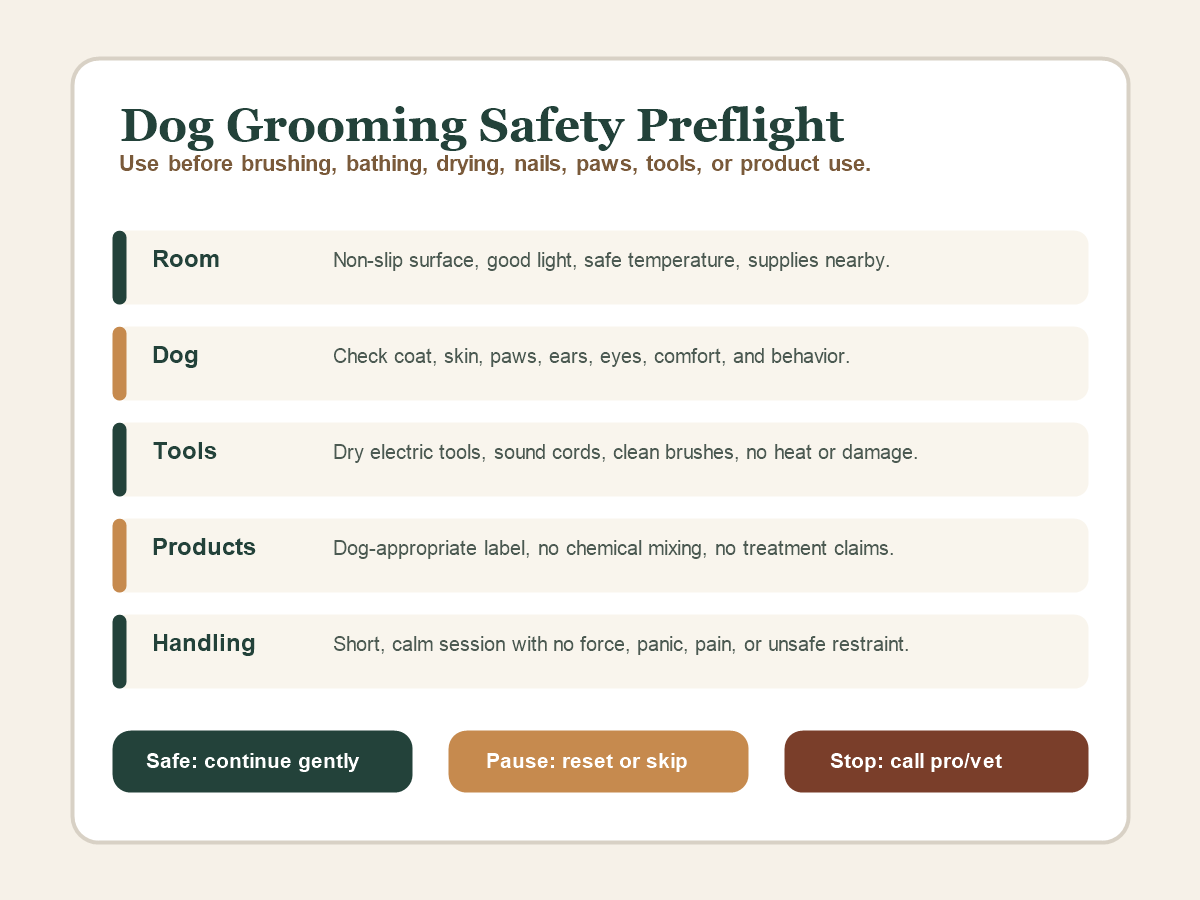
    This pet grooming safety checklist is for dogs groomed at home. Before brushing, bathing, drying, nail work, paw checks, face wiping, ear-area wiping, or tool use, confirm that the room, dog, tools, products, and handling plan are safe enough to continue.

    Although the keyword says “pet,” this page is dog-only. Cats, rabbits, birds, reptiles, and small pets need species-specific handling and safety guidance.

    Dog grooming safety preflight checklist covering room setup, dog body check, tool safety, product label, handling, and safe pause stop decisions.

    Room Setup Checklist

    CheckSafe to continue when…Stop or change setup when…
    SurfaceDog has stable footingFloor, tub, or table is slippery
    LightingYou can see coat, skin, nails, and paws clearlyYou are guessing
    Water and electricityElectric tools are away from waterTools, cords, outlet, or hands are wet
    TemperatureDog is comfortableRoom is too hot, cold, or poorly ventilated
    SuppliesItems are within reachYou must leave the dog unattended

    A non-slip surface and calm room are not decoration. They reduce rushing, slipping, and unsafe handling.

    Dog Body Check

    Before grooming, scan the coat, skin, paws, ears, eyes, and behavior. You are not diagnosing; you are deciding whether home grooming is appropriate today.

    Stop for severe mats, painful mats, wounds, sores, bleeding, redness, swelling, discharge, odor with irritation, limping, pain, eye or ear symptoms, panic, aggression risk, breathing trouble, collapse, overheating, chemical exposure concern, or unsafe handling.

    For routine task planning after the safety check, use the dog grooming checklist for beginners.

    Tool Safety Check

    Inspect every tool before it touches the dog.

    • For brushes and combs, look for broken teeth, sharp edges, trapped debris, or rust.
    • For clippers, trimmers, dryers, or other electric tools, check cords, housing, guards, blade condition, heat, smell, sound, and dryness.
    • Stop using tools with damaged cords, cracked housings, sparks, burning odor, overheating, wet electric parts, rust, sharp or broken teeth, missing guards, abnormal noise, or any sign that the tool was dropped or damaged.

    This page does not teach electrical repair, clipper repair, or product servicing. If a tool seems unsafe, stop using it and follow the manufacturer route.

    Product-Label Check

    Use only dog-appropriate routine grooming products and follow the label. Do not mix chemicals, invent disinfectant recipes, claim sterilization, use medicated products without veterinary direction, or substitute household products for dog grooming products.

    The CDC advises cleaning first before sanitizing or disinfecting, following product labels, using ventilation, not mixing products, and not wiping or bathing pets with disinfecting products. If chemical exposure is possible, stop grooming and contact a veterinarian or appropriate emergency route rather than trying to treat the problem from a checklist.

    Handling and Comfort Check

    The dog should be able to stand, sit, or rest without forced restraint. Short sessions are safer than long sessions that push the dog into panic.

    Pause if the dog is restless or tired. Stop if the dog panics, growls, snaps, repeatedly tries to escape, shows pain, or cannot be handled safely.

    If the issue happens during brushing, the when to stop dog brushing session decision tree gives a more specific brushing route.

    Safe, Pause, Stop Card

    StatusWhat it looks likeWhat to do
    Safe to continueCalm dog, ordinary skin, safe tools, clear setupContinue gently
    PauseDog is tired, distracted, or mildly worriedTake a break or skip the next task
    Stop/callPain, medical signs, severe mats, panic, damaged toolsEnd the session and route to a veterinarian, groomer, behavior professional, or manufacturer

    Cleanup Checklist

    After grooming:

    • Dry damp surfaces.
    • Remove loose hair from tools.
    • Let tools dry before storage.
    • Put products away where the dog cannot reach them.
    • Note any skin, paw, nail, coat, or behavior issue that needs follow-up.

    For coat-care rhythm after the session, see the weekly dog brushing routine.

    Sources

    Bottom Line

    Home dog grooming is safer when you check the setup before you start. Confirm stable footing, clear lighting, dry and sound tools, dog-appropriate product labels, and calm handling. Pause early when the dog is worried or tired, and stop for pain, medical signs, severe mats, damaged tools, chemical concerns, panic, or unsafe handling.

    FAQ

    Is this checklist for all pets?

    No. This page targets dog grooming at home. Cats, rabbits, birds, reptiles, and small pets need species-specific handling and safety guidance.

    What is the most important dog grooming safety rule?

    Stop when the dog, skin, coat, tool, product, or setup becomes unsafe. Do not push through pain, panic, medical signs, electrical risk, or severe mats.

    Can I use restraint to finish grooming?

    This page does not teach restraint or forced handling. If a dog cannot be groomed safely and calmly at home, stop and use a professional route.

    Should I disinfect all grooming tools?

    Clean first and follow product labels and manufacturer instructions. Do not invent disinfectant recipes or make sterilization claims.

    What should I check after grooming?

    Dry damp areas, clean loose hair from tools, store products safely, and note any skin, paw, nail, coat, or behavior issue that needs follow-up.

  • When to Stop a Dog Brushing Session

    When to Stop a Dog Brushing Session

    Knowing when to stop brushing is part of safe routine coat care. A session can end because the coat is done, the dog is tired, the skin or coat shows a warning sign, or handling is no longer safe. Stopping early is better than brushing through pain, panic, or owner frustration.

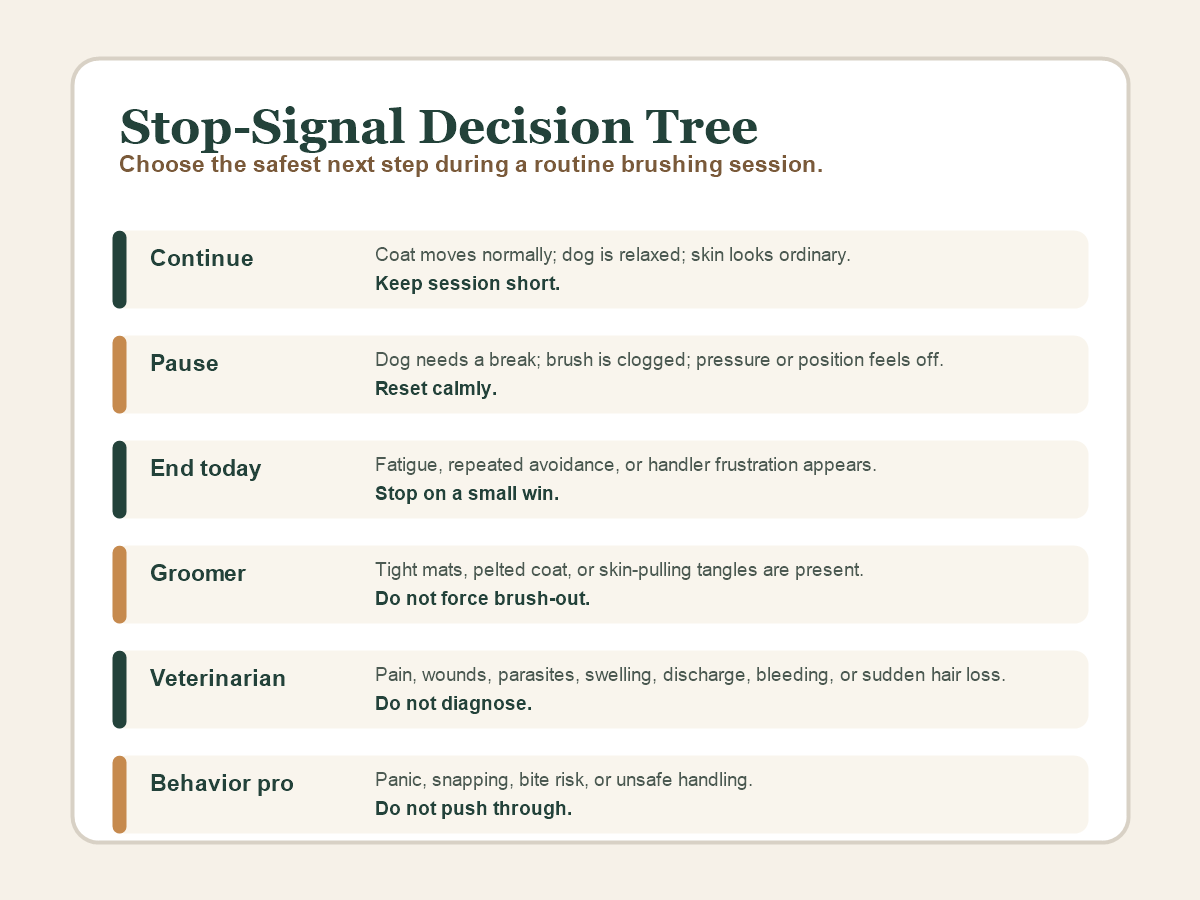
    Use four everyday outcomes: continue, pause, end for today, or call a professional. Continue only when the dog is comfortable, the coat is moving normally, and the skin looks normal.

    Stop-signal decision tree for dog brushing with continue, pause, end today, groomer, veterinarian, and behavior professional outcomes.

    The Quick Stop-Signal Rule

    Stop immediately for pain, yelping, flinching, skin pulling, bleeding, redness, sores, swelling, discharge, parasites, tight mats, pelted coat, panic, growling, snapping, freezing, repeated escape attempts, or owner loss of control.

    These are not signals to push through. They are routing points. Medical-looking signs belong with a veterinarian. Tight or severe mats belong with a qualified groomer. Handling fear, aggression risk, or bite risk belongs with a qualified trainer or behavior professional.

    Continue When Everything Looks Ordinary

    You can continue a brushing session when:

    • The dog is relaxed or only mildly wiggly.
    • The coat moves normally under gentle brushing.
    • The skin looks ordinary for your dog.
    • There is no flinching, yelping, skin pulling, panic, growling, or snapping.
    • You can keep the session short and calm.

    Even then, stop before the dog is tired. Routine brushing works best when your dog can repeat it without dreading the next session. For weekly planning, use the weekly dog brushing routine.

    Pause When the Session Needs a Reset

    Pause when the dog needs a break, the brush is clogged, your pressure feels too firm, the dog keeps shifting, or you are not sure whether a spot is a tangle, a mat, or a skin problem.

    A pause is not failure. Put the brush down, clean hair from the tool, let your dog relax, and reassess. If the session returns to calm, continue briefly. If the same problem repeats, end for today.

    End for Today Before It Turns Into a Fight

    End the session when comfort is fading, the dog is repeatedly avoiding the brush, or you are getting frustrated. A short, calm session is better than a long one that ends with force.

    Good reasons to end today include:

    • The dog keeps moving away after breaks.
    • The same zone keeps causing worry.
    • You are brushing harder just to finish.
    • The dog is tired from bathing, drying, nail care, or another grooming task.
    • You are no longer calm enough to handle gently.

    For a broader beginner routine, see the dog grooming checklist for beginners.

    Call a Groomer for Tight Mats or Coat Pulling

    Call a qualified groomer when the coat is tightly matted, pelted, close to the skin, or pulling the skin when you try to brush. Do not cut mats out with scissors. Do not keep brushing until the dog gives up.

    Severe mats can hide skin irritation and pain. If you are not sure whether a tangle is safe to handle, treat that uncertainty as a stop sign.

    Call a Veterinarian for Skin, Pain, Parasites, or Bleeding

    Call a veterinarian for wounds, parasites, swelling, discharge, bleeding, pain, sudden hair loss, hot spots, red or raw skin, or a dog that reacts as if an area hurts.

    Grooming is for noticing these problems, not diagnosing or treating them. Merck notes that signs such as oozing from the eyes, ears, or nose, hair loss, itching, red spots, and limping can indicate a dog may be sick. If brushing reveals a health concern, the safest next step is veterinary care.

    Call a Behavior Professional for Panic or Bite Risk

    Stop and use qualified help if the dog panics, snaps, growls, freezes, repeatedly tries to escape, or you feel bite risk rising. This page does not teach restraint, sedation, punishment, dominance handling, flooding, or casual muzzle use as a workaround.

    If you need to force the session to continue, the session should end.

    Write Down What Happened

    After stopping, make a short note:

    • Which body zone caused the stop.
    • What you noticed in the coat, skin, or behavior.
    • What action you chose: pause, end, groomer, veterinarian, or behavior help.
    • What to avoid next time.

    That note can prevent the next session from starting in the same problem area.

    Sources

    Bottom Line

    Stop brushing before the session becomes painful, frightening, or unsafe. Continue only when the coat, skin, dog, and handler are all calm enough. Pause for small resets, end for today when comfort fades, and call the right professional for mats, medical signs, panic, bite risk, or unsafe handling.

    FAQ

    When should I stop brushing my dog immediately?

    Stop immediately for pain, yelping, flinching, skin pulling, bleeding, red or wounded skin, parasites, tight mats, panic, growling, snapping, repeated escape attempts, or unsafe handling.

    Should I brush through mats if my dog does not like it?

    No. Tight, painful, widespread, close-to-skin, or skin-pulling mats should go to a qualified groomer or veterinarian. Do not cut them out with scissors at home.
    What if my dog growls during brushing?

    Stop the session. Growling is a warning signal, not a challenge to overcome. Use qualified help if fear, aggression risk, or bite risk is part of grooming.

    Is it okay to take breaks during brushing?

    Yes. Breaks are useful when the dog needs to reset, the brush needs cleaning, or you need to check pressure and position. If the same problem repeats, end for today.

    What should I do after stopping a brushing session?

    Write down the body zone, what happened, your dog’s response, and the next safe action. That may be a shorter session, a groomer, a veterinarian, or behavior support.