
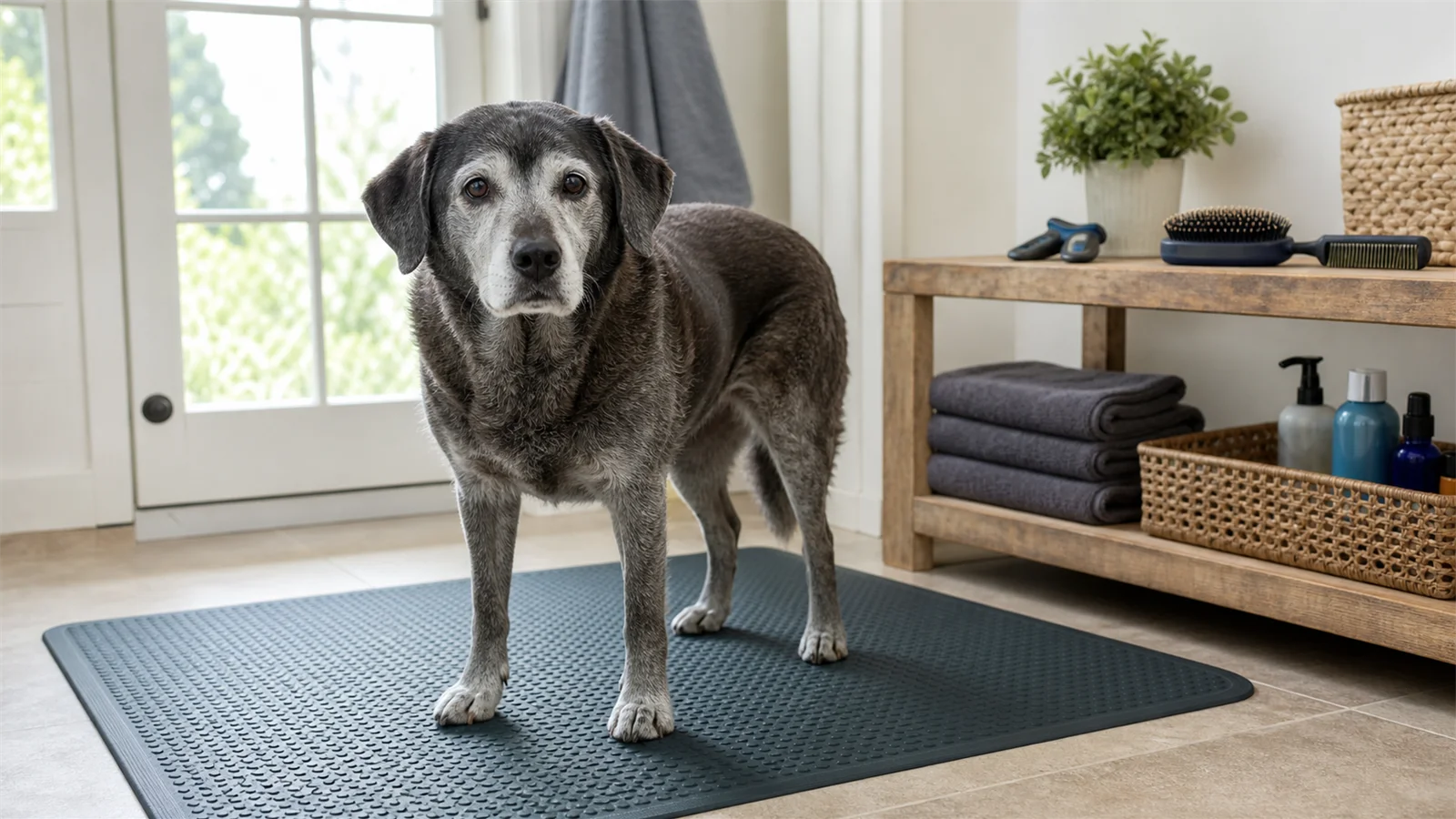
This pet grooming safety checklist is for dogs groomed at home. Before brushing, bathing, drying, nail work, paw checks, face wiping, ear-area wiping, or tool use, confirm that the room, dog, tools, products, and handling plan are safe enough to continue.
Although the keyword says “pet,” this page is dog-only. Cats, rabbits, birds, reptiles, and small pets need species-specific handling and safety guidance.
Room Setup Checklist
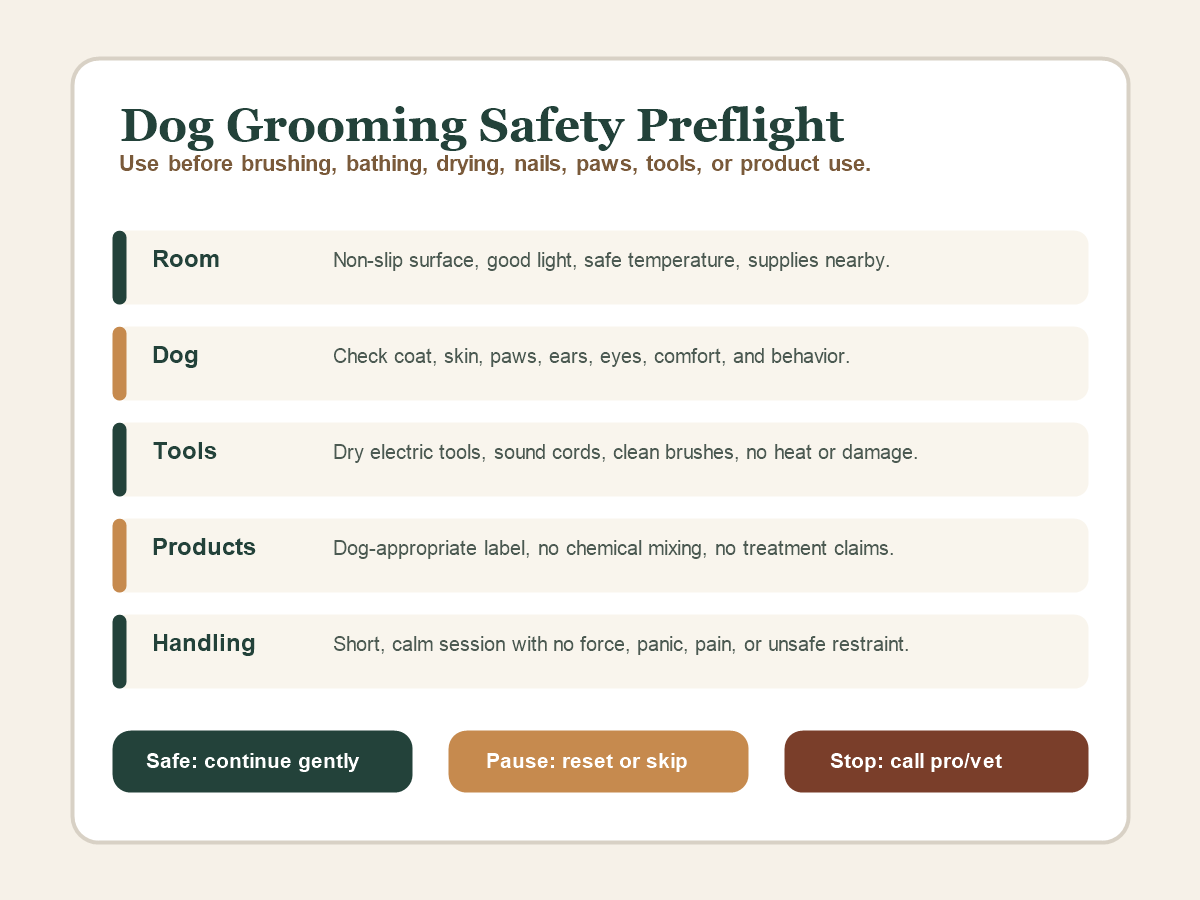
| Check | Safe to continue when… | Stop or change setup when… |
|---|---|---|
| Surface | Dog has stable footing | Floor, tub, or table is slippery |
| Lighting | You can see coat, skin, nails, and paws clearly | You are guessing |
| Water and electricity | Electric tools are away from water | Tools, cords, outlet, or hands are wet |
| Temperature | Dog is comfortable | Room is too hot, cold, or poorly ventilated |
| Supplies | Items are within reach | You must leave the dog unattended |
A non-slip surface and calm room are not decoration. They reduce rushing, slipping, and unsafe handling.
Dog Body Check
Before grooming, scan the coat, skin, paws, ears, eyes, and behavior. You are not diagnosing; you are deciding whether home grooming is appropriate today.
Stop for severe mats, painful mats, wounds, sores, bleeding, redness, swelling, discharge, odor with irritation, limping, pain, eye or ear symptoms, panic, aggression risk, breathing trouble, collapse, overheating, chemical exposure concern, or unsafe handling.
For routine task planning after the safety check, use the dog grooming checklist for beginners.
Tool Safety Check
Inspect every tool before it touches the dog.
- For brushes and combs, look for broken teeth, sharp edges, trapped debris, or rust.
- For clippers, trimmers, dryers, or other electric tools, check cords, housing, guards, blade condition, heat, smell, sound, and dryness.
- Stop using tools with damaged cords, cracked housings, sparks, burning odor, overheating, wet electric parts, rust, sharp or broken teeth, missing guards, abnormal noise, or any sign that the tool was dropped or damaged.
This page does not teach electrical repair, clipper repair, or product servicing. If a tool seems unsafe, stop using it and follow the manufacturer route.
Product-Label Check
Use only dog-appropriate routine grooming products and follow the label. Do not mix chemicals, invent disinfectant recipes, claim sterilization, use medicated products without veterinary direction, or substitute household products for dog grooming products.
The CDC advises cleaning first before sanitizing or disinfecting, following product labels, using ventilation, not mixing products, and not wiping or bathing pets with disinfecting products. If chemical exposure is possible, stop grooming and contact a veterinarian or appropriate emergency route rather than trying to treat the problem from a checklist.
Handling and Comfort Check
The dog should be able to stand, sit, or rest without forced restraint. Short sessions are safer than long sessions that push the dog into panic.
Pause if the dog is restless or tired. Stop if the dog panics, growls, snaps, repeatedly tries to escape, shows pain, or cannot be handled safely.
If the issue happens during brushing, the when to stop dog brushing session decision tree gives a more specific brushing route.
Safe, Pause, Stop Card
| Status | What it looks like | What to do |
|---|---|---|
| Safe to continue | Calm dog, ordinary skin, safe tools, clear setup | Continue gently |
| Pause | Dog is tired, distracted, or mildly worried | Take a break or skip the next task |
| Stop/call | Pain, medical signs, severe mats, panic, damaged tools | End the session and route to a veterinarian, groomer, behavior professional, or manufacturer |
Cleanup Checklist
After grooming:
- Dry damp surfaces.
- Remove loose hair from tools.
- Let tools dry before storage.
- Put products away where the dog cannot reach them.
- Note any skin, paw, nail, coat, or behavior issue that needs follow-up.
For coat-care rhythm after the session, see the weekly dog brushing routine.
Sources
- ASPCA: Dog Grooming Tips
- VCA: Grooming and Coat Care for Your Dog
- CDC: When and How to Clean and Disinfect Your Home
- AKC: How to Groom a Dog at Home
Bottom Line
Home dog grooming is safer when you check the setup before you start. Confirm stable footing, clear lighting, dry and sound tools, dog-appropriate product labels, and calm handling. Pause early when the dog is worried or tired, and stop for pain, medical signs, severe mats, damaged tools, chemical concerns, panic, or unsafe handling.
FAQ
Is this checklist for all pets?
No. This page targets dog grooming at home. Cats, rabbits, birds, reptiles, and small pets need species-specific handling and safety guidance.
What is the most important dog grooming safety rule?
Stop when the dog, skin, coat, tool, product, or setup becomes unsafe. Do not push through pain, panic, medical signs, electrical risk, or severe mats.
Can I use restraint to finish grooming?
This page does not teach restraint or forced handling. If a dog cannot be groomed safely and calmly at home, stop and use a professional route.
Should I disinfect all grooming tools?
Clean first and follow product labels and manufacturer instructions. Do not invent disinfectant recipes or make sterilization claims.
What should I check after grooming?
Dry damp areas, clean loose hair from tools, store products safely, and note any skin, paw, nail, coat, or behavior issue that needs follow-up.