Tag: dog handling

  • Puppy’s First Grooming at Home

    Puppy’s First Grooming at Home

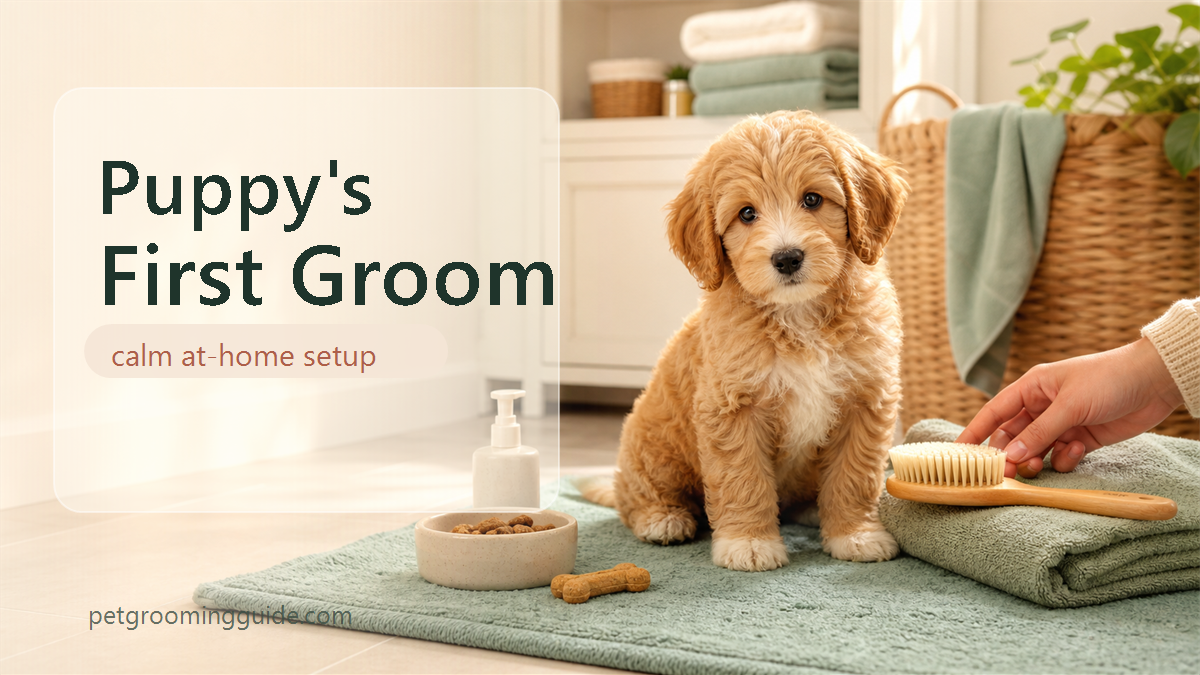
    A puppy’s first grooming at home should be short, calm, and focused on practice, not a full bath, haircut, or nail trim. Start with gentle touch, a soft brush introduction, bath-area setup, towel handling, quiet grooming sounds, and paw handling. Keep each step easy enough that your puppy can recover, take a break, and come back curious.

    This guide is for healthy puppies who can be handled safely at home. Ask your veterinarian before changing grooming plans for illness, wounds, parasites, skin problems, eye or ear concerns, pain, vaccine uncertainty, overheating, medication questions, or a medically fragile puppy. If your puppy growls, snaps, bites, panics, or cannot settle after an easier step, stop and get help from the right professional instead of pushing through.

    Before You Start: Health, Vaccines, and Safety Boundaries

    Do not start a grooming lesson when your puppy is sick, injured, overheated, shivering, covered in parasites, showing skin irritation, guarding a body area, or already too tired to learn. Grooming practice should feel like a small, predictable routine, not a test of restraint.

    Keep the setup simple:

    • Use clean tools, a towel, and a non-slip surface.
    • Work indoors or in another low-risk area your veterinarian considers appropriate.
    • Keep sessions to seconds or a few minutes.
    • Pair calm handling with small rewards, praise, or release.
    • Stop before your puppy gets overwhelmed.

    AVSAB’s puppy socialization statement supports early socialization where illness risk is minimized, but it is not a substitute for your veterinarian’s guidance. Ask your vet about vaccine timing, public grooming places, and any puppy-specific health risk.

    What First Grooming Means for a Puppy

    First grooming means introduction. Your puppy is learning that hands, brushes, towels, mats, water sounds, and nail tools are ordinary parts of care. The goal is not to finish every task in one day.

    Early goals are small:

    • Your puppy accepts gentle touch on easy areas such as the shoulder, side, chest, and back.
    • Your puppy sees a brush or comb without needing to mouth it, flee from it, or wrestle with it.
    • Your puppy can stand briefly on a towel or non-slip mat.
    • Your puppy hears quiet grooming sounds from a comfortable distance.
    • Your puppy learns that grooming pauses when they need a break.

    PetMD’s puppy grooming guidance supports early acclimation to handling and grooming tools at home, while first professional grooming timing depends on booster status and individual guidance.
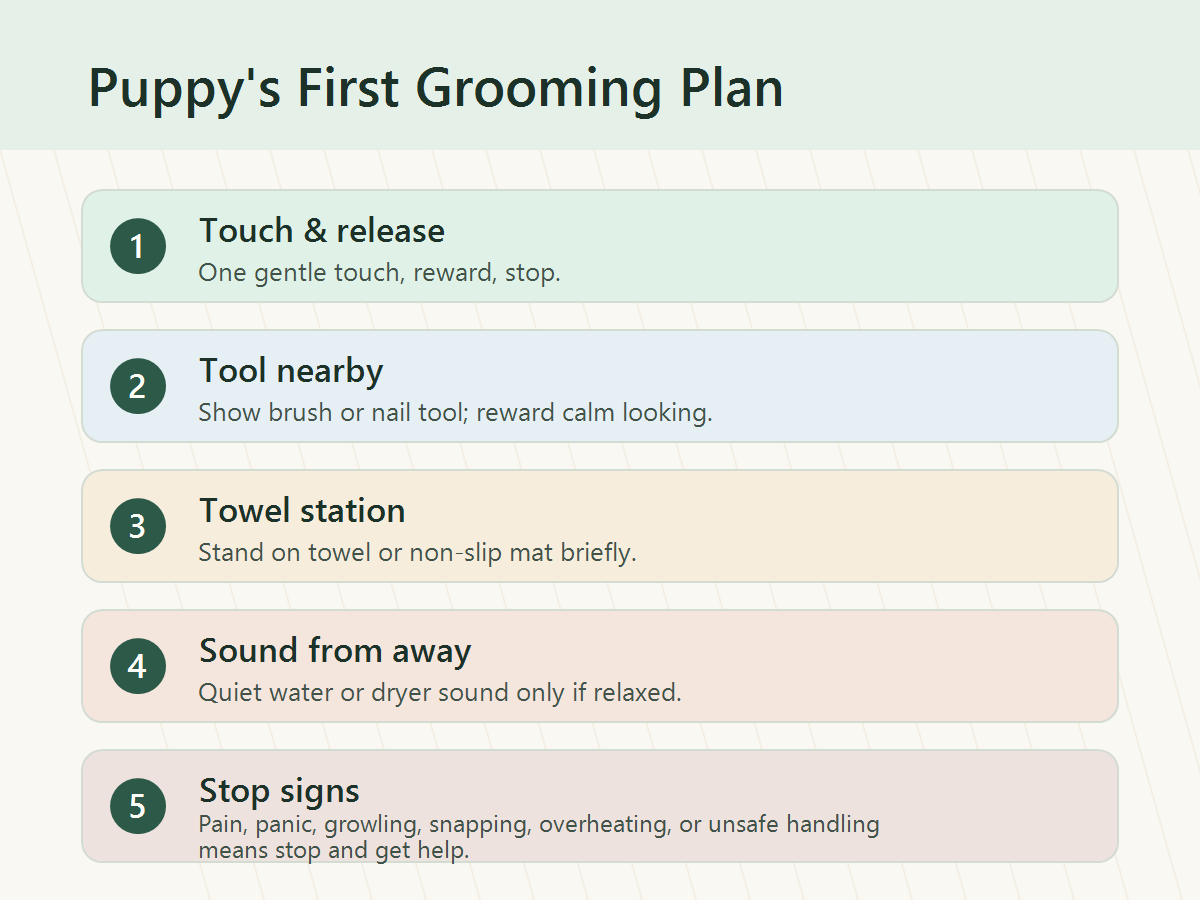
    Puppy's first grooming plan showing five small steps from touch and release to stop signs for pain, panic, overheating, or unsafe handling.
    Use this as a calm first-grooming practice ladder. Stop for pain, panic, overheating, unsafe handling, or bite risk.

    Use this plan as a gentle starting rhythm. Repeat any day that still feels hard, skip steps your puppy is not ready for, and end each session while your puppy is still calm. The plan is not a deadline.

    DayPractice goalKeep it short
    1Touch the shoulder and back, reward, then release.About 30 seconds.
    2Touch each paw briefly without holding it tightly.30 to 60 seconds.
    3Touch the ears, collar area, chest, and tail area lightly.30 to 60 seconds.
    4Show the brush or comb, reward calm interest, and put it away.Several brief repetitions.
    5Make one soft brush stroke on an easy area.Under 1 minute.
    6Stand on a towel or non-slip mat and step off again.About 1 minute.
    7Touch a nail tool near the paw without trimming.About 30 seconds.
    8Use a towel rub on the chest, side, or back.About 1 minute.
    9Visit the bath area with no water and no bath.1 to 2 minutes.
    10Let your puppy hear quiet water from a comfortable distance.About 30 seconds.
    11Touch a damp cloth to a paw, chest, or easy coat area.About 30 seconds.
    12Play a quiet dryer or clipper sound at a distance only if your puppy stays calm.A few seconds.
    13Combine an easy brush stroke with the towel or mat station.1 to 2 minutes.
    14Repeat the easiest successful routine and stop early.End on calm.

    If your puppy moves from curious to worried, make the next step easier. If your puppy panics, snaps, bites, yelps, guards a body area, or cannot settle, stop the plan and ask a veterinarian, qualified trainer, or professional groomer for help.

    Touch-Tolerance Scorecard

    Use this scorecard during every grooming practice. It helps you decide whether to continue, make the step easier, or stop.

    ScorePuppy signsWhat to do
    GreenLoose body, curious, can take rewards, comes back toward you, recovers quickly.Continue briefly, then stop while it is still easy.
    YellowPulls away, yawns, lip licks, turns head away, hides, stiffens, refuses rewards.Pause, reduce the step, shorten the session, or return to hand touch only.
    RedGrowls, snaps, bites, panics, yelps, freezes, guards a body area, or seems painful.Stop. Call a veterinarian, qualified groomer, or qualified trainer as appropriate.

    AVSAB’s humane training statement supports reward-based methods and cautions against aversive methods. For puppy grooming, that means you make the step easier instead of using punishment, harsh restraint, or force.

    First Brush, First Bath Setup, and First Nail Practice

    For the first brush, choose an easy area such as the shoulder, side, chest, or back. Touch with your hand first. If your puppy stays loose, make one gentle brush stroke in the direction the coat grows, reward, and stop.

    Do not start with mats, the belly, feet, ears, tail area, or anywhere your puppy guards. Do not cut mats out with scissors. If the coat is already tangled close to the skin, painful, or widespread, ask a professional groomer or veterinarian for help. For broader home-safety context, see common dog bathing mistakes before you attempt a full bath.

    For the first bath setup, practice the bath area before using water. Use a non-slip surface, keep the room comfortable, prepare towels, and avoid spraying the eyes, ears, and nose. When a real bath is needed, use lukewarm water and a dog or puppy shampoo that fits your puppy’s health needs.

    For nail practice, touch the paws and let the nail tool appear nearby before any trimming. If you do not know where the quick is, or your puppy pulls away hard, yelps, bleeds, limps, or guards a paw, stop and get guidance.

    The ASPCA’s dog grooming tips cover basic brushing, bathing, ear, and nail care. Keep puppy work smaller than an adult routine and route pain, skin changes, ear odor, discharge, redness, or injury to your veterinarian.

    Grooming Sounds Without Overwhelming Your Puppy

    Dryers, clippers, running water, and nail tools can be scary if they arrive all at once. Introduce sound from a distance, at a low level, for a few seconds. Pair calm noticing with a reward or break, then stop.

    Do not point a dryer at your puppy’s face, ears, or eyes. Avoid hot air, long sessions, and any setup that makes your puppy pant hard, drool heavily, try to escape, or seem overheated. If your puppy shows heavy panting, weakness, collapse, repeated vomiting, distress, or heat-related concern, stop grooming and contact a veterinarian right away.

    How to Prepare for the First Professional Groomer Visit

    Ask your veterinarian about vaccine and exposure risk before scheduling a public or professional grooming visit. Ask the groomer what they require, what services are appropriate for a first puppy visit, and how they handle puppies who are still learning.

    The first visit may be a short introduction instead of a full bath, haircut, nail trim, and blow-dry. Coat type, health, vaccine guidance, matting, behavior, and the groomer’s policies all matter.

    After the first two weeks of practice, use a longer-term dog grooming schedule by coat type to decide what needs regular attention. If your puppy is already worried about brushing, slow down and use the gentler troubleshooting steps in how to brush a dog that hates being brushed.

    When to Stop and Ask for Help

    Call your veterinarian for illness, wounds, parasites, skin irritation, redness, swelling, discharge, eye problems, ear odor or pain, limping, suspected pain, overheating, vaccine uncertainty, medication questions, or any medical concern.

    Call a professional groomer for coat maintenance beyond your skill level, painful or tight mats, haircut planning, sanitary trimming, face trimming, or any work near sensitive areas that you cannot do calmly and safely.

    Call a qualified trainer or behavior professional for severe fear, growling, snapping, biting, panic, repeated escape attempts, or handling that is not improving with easier steps. Bite-risk grooming is not a home practice project.

    If your puppy is calm enough for a voluntary station behavior, Fear Free’s chin-rest guidance can help you understand cooperative-care practice. Do not use it to hold a puppy in place through fear or pain.

    FAQ

    When should I start grooming my puppy at home?

    You can start gentle at-home handling and grooming introductions early if your puppy is healthy and the sessions are short, clean, and calm. Ask your veterinarian about vaccine timing, public exposure, and individual health risks.

    Should the first puppy grooming include a full bath?

    Not always. Many puppies do better with touch, towel, brush, mat, and bath-area practice before a full bath. A full bath can wait unless your puppy truly needs one.

    When can my puppy go to a professional groomer?

    Ask your veterinarian and the groomer. Timing depends on vaccine guidance, local illness risk, your puppy’s health, coat needs, and the groomer’s requirements.

    What if my puppy bites the brush?

    Slow down. Show the brush, reward calm looking, and put it away before your puppy grabs it. Do not chase, scold, pry, or turn brushing into a wrestling game.

    What if my puppy is already scared of grooming?

    Use easier steps and stop before panic. For growling, snapping, biting, severe fear, or a puppy who cannot recover after a break, ask a qualified trainer, veterinarian, or professional groomer for help.

    Can I trim my puppy’s face, feet, or sanitary area at home?

    Only if you have the skill, lighting, tool control, and a calm puppy. For most beginners, face, eye-area, paw, sanitary, and haircut work are safer with a professional groomer.

    Bottom Line

    A puppy’s first grooming at home should build trust in tiny steps. Practice touch, brush sight, towel handling, bath-area setup, paw handling, and quiet sounds before expecting a full groom. For the wider routine after puppy introductions, use the full how to groom a dog at home guide. Stop for fear, pain, skin or ear trouble, eye concerns, overheating, unsafe handling, vaccine uncertainty, or any veterinary concern.
  • How to Brush a Dog That Hates Being Brushed

    How to Brush a Dog That Hates Being Brushed

    If your dog hates being brushed, do not force a full brushing session. Stop, check for pain, tight mats, skin problems, parasites, and fear signs first. If the dog is safe and comfortable enough to practice, rebuild brushing with very short, reward-based steps: touch before tool, one easy area, one gentle stroke, reward, and stop before the dog escalates.

    This guide is for mild brushing resistance in a dog who can be handled calmly. It is not a plan for biting, growling, snapping, panic, painful mats, sedation, restraint, or brushing through pain. Those cases need a veterinarian, qualified groomer, or qualified trainer.

    First, Check for Pain, Mats, and Skin Problems

    A dog who resists brushing may not simply dislike the brush. The coat may pull at the skin, a body area may hurt, or the dog may have learned that grooming predicts discomfort.

    Before you practice brushing, check for:

    • Tight mats or tangles behind the ears, under the collar, in the armpits, along the belly, under the tail, or on the rear legs.
    • Red skin, sores, scabs, flea dirt, parasites, sudden bald patches, or a bad odor from the skin or ears.
    • Flinching, yelping, freezing, growling, snapping, guarding a body area, or repeated escape attempts.
    • Pain around the ears, paws, hips, tail, belly, or any area the dog suddenly will not let you touch.

    The ASPCA’s dog grooming tips note that brushing helps keep the coat in good condition and gives you a chance to look for skin concerns. If that check turns up pain, wounds, parasites, or sudden coat changes, pause home grooming and call your veterinarian.

    If you find tight mats, do not cut them out with scissors and do not brush through pain. The ASPCA’s matting guidance warns that mats can hide skin problems and that cutting them out can injure the pet. Use a qualified groomer or veterinarian for tight, severe, painful, or skin-close mats.

    What Not to Do When a Dog Resists Brushing

    Do not hold the dog down, chase the dog, punish the dog, brush faster to get it over with, or try to outlast growling, snapping, panic, or pain. Those choices can make the next session harder and can raise bite risk.

    Do not use sedation advice from a grooming article. If sedation or medication has entered the conversation, that is a veterinary decision.

    The AVSAB humane dog training position statement supports reward-based training and cautions against aversive methods. For brushing, that means making the task easier, pairing calm handling with rewards, and stopping before fear turns into a fight.

    Set Up a Low-Stress Brushing Spot

    Use a quiet spot with good footing. A towel, mat, or familiar surface can help the dog understand where the short practice happens. Keep the session simple: one coat-appropriate brush or comb, small rewards if they fit your dog’s health needs, and a timer.

    Start in a place where the dog can stay relaxed. Best Friends’ handling guidance recommends practicing in calm places first, pairing handling with rewards, and building gradually before adding harder distractions.

    If your dog already knows a calm station behavior, such as resting their chin on a towel or your hand, you can use it as a consent-style pause point. Fear Free’s chin-rest guidance explains how a chin rest can support cooperative care without holding the animal in place.

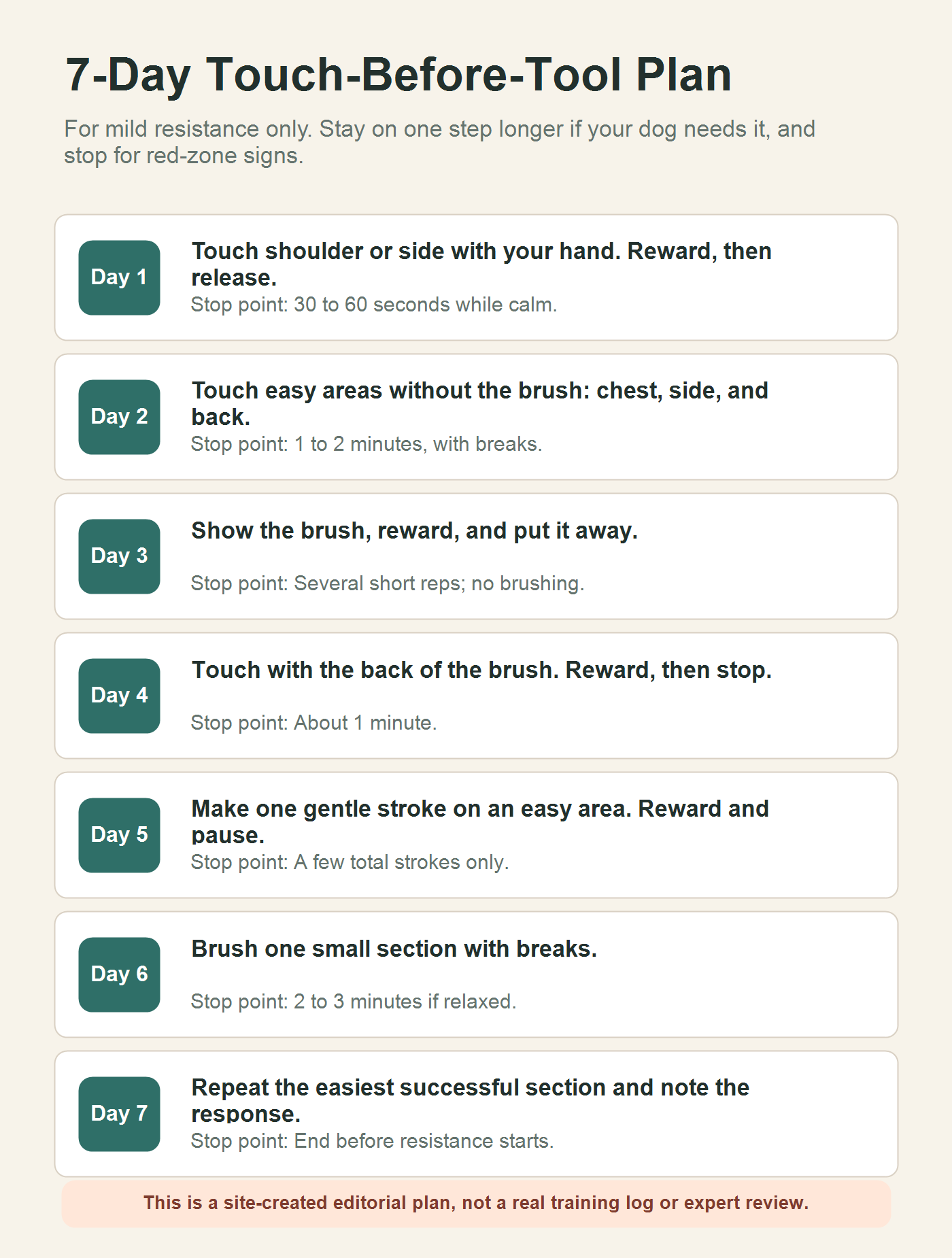
    Seven-day touch-before-tool brushing plan for mild dog brushing resistance, with short goals and stop points.
    Use this as a calm practice framework only. Stop for red-zone signs, pain, panic, growling, snapping, or bite risk.

    This plan is a starting point for calm, mild resistance. Stay on one step for more than a day if your dog needs it. If your dog shows red-zone signs from the scorecard below, stop and get professional help instead of making the step harder.

    DayGoalStop point
    1Touch the shoulder or side with your hand, reward, then release.30 to 60 seconds while the dog is still calm.
    2Touch easy grooming areas without the brush: chest, side, and back.1 to 2 minutes, with breaks.
    3Show the brush, reward, and put it away.Several short repetitions with no brushing.
    4Touch the dog with the back of the brush, reward, then stop.About 1 minute.
    5Make one gentle brush stroke on an easy area, reward, and pause.A few total strokes, not a full brushing session.
    6Brush one small section with breaks.2 to 3 minutes if the dog stays relaxed.
    7Repeat the easiest successful section and record the dog’s response.End before resistance starts.

    If the dog refuses food, turns away, stiffens, growls, snaps, freezes, yelps, guards a body area, or tries to leave, make the next session easier or stop and contact the right professional.

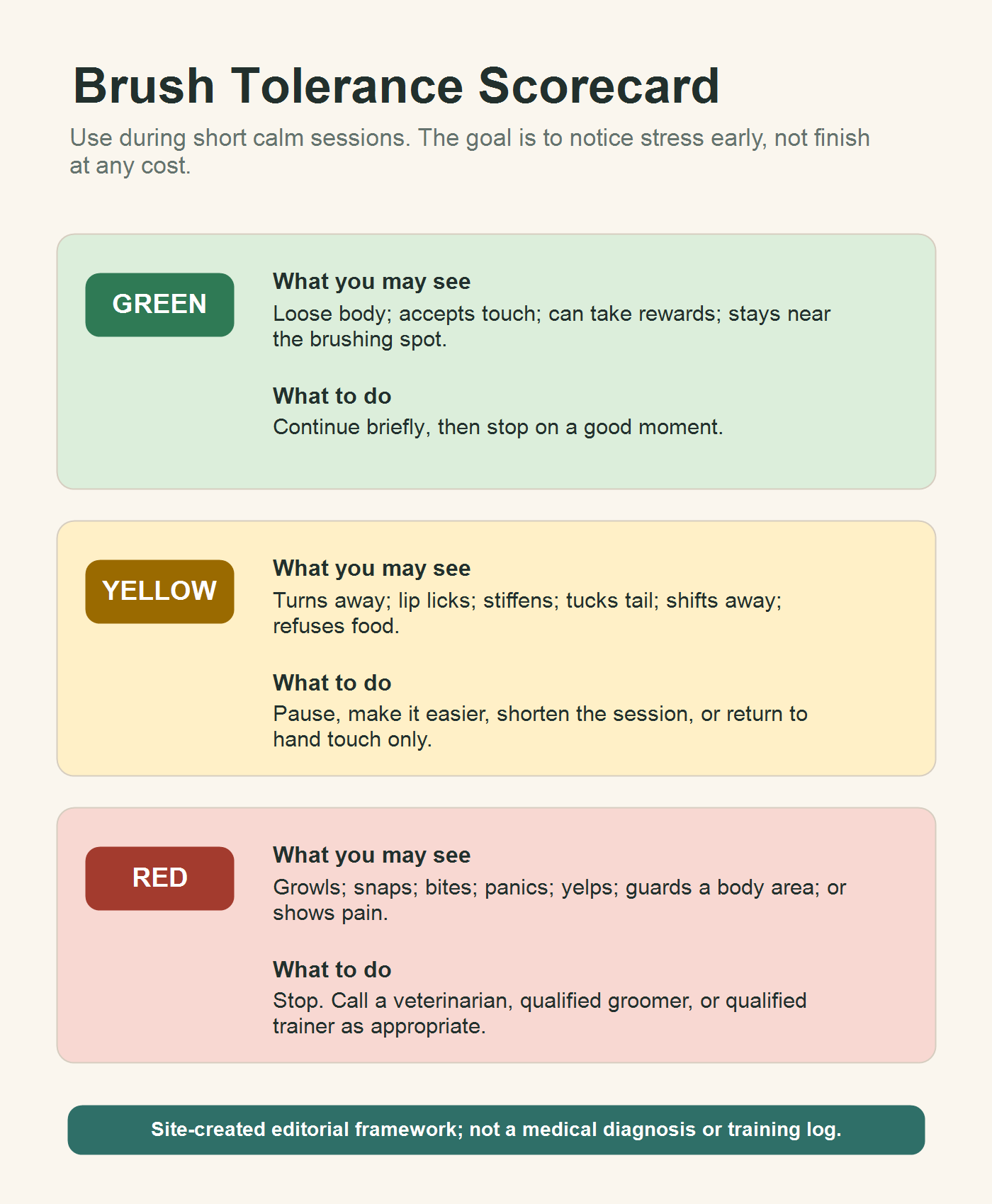
    Brush tolerance scorecard for a dog that resists brushing, showing green, yellow, and red stress signs and when to stop.
    The goal is to notice stress early, not finish brushing at any cost.

    Use this scorecard during every session. The goal is not to finish the coat at any cost. The goal is to notice stress early enough to keep the dog safe.

    ScoreWhat you may seeWhat to do
    GreenLoose body, accepts touch, can take rewards, stays near the brushing spot.Continue briefly, then stop on a good moment.
    YellowTurns away, lip licks, stiffens, tucks tail, shifts away, refuses food.Pause, reduce difficulty, shorten the session, or return to hand touch only.
    RedGrowls, snaps, bites, panics, yelps, guards a body area, or shows pain.Stop. Call a veterinarian, qualified groomer, or qualified trainer as appropriate.

    How to Brush One Small Area Safely

    Choose an easy area, often the shoulder or side. Touch with your hand first. If the dog stays loose, make one gentle pass in the direction the coat grows. Reward, pause, and stop early.

    Do not start with the worst tangle, belly, feet, ears, tail, or any area the dog guards. Build trust on an easy area first. Once the dog accepts that, slowly expand to nearby coat sections over later sessions.

    For long or curly coats, one small combed section may be enough for a session. If the coat is already matted, switch from home practice to professional help. Training a dog to accept brushing is not the same as removing painful mats.

    When to Stop and Call a Professional

    Call a qualified groomer for tight mats, coat maintenance beyond your skill level, or haircut-style work that cannot be done safely at home.

    Call a veterinarian for suspected pain, wounds, skin disease, parasites, sudden hair loss, ear pain, medication questions, or any medical concern.

    Call a qualified trainer or behavior professional if fear is not improving with easy steps, or if your dog shows growling, snapping, biting, panic, or repeated escape attempts. Bite-risk cases are not a home brushing challenge.

    FAQ

    Should I force my dog to be brushed?

    No. Forcing can increase fear and bite risk. Stop, check for pain or mats, and rebuild tolerance with short rewarded steps only if the dog can stay calm.

    What if my dog growls when I brush?

    Stop immediately. Growling is a warning sign. Check for pain, mats, and sensitive areas, then contact a veterinarian, qualified groomer, or qualified trainer depending on what you find.

    Can treats help a dog accept brushing?

    Yes, treats can help if the dog can eat calmly and the food fits the dog’s health needs. Treats do not replace stopping for pain, mats, panic, growling, snapping, or bite risk.

    How long should brushing sessions be for a dog that hates brushing?

    Start with seconds or one small area. Stop while the dog is still calm. A short successful session is better than a long session that ends with fear or a struggle.

    Can I brush out mats at home?

    Only small, loose tangles may be safe to work through gently. Tight, severe, painful, skin-close, or widespread mats need a qualified groomer or veterinarian.

    What brush should I use for a dog that hates brushing?

    Use a coat-appropriate brush or comb and keep pressure light. The tool matters less than the dog’s comfort, the condition of the coat, and stopping before stress escalates.

    Bottom Line

    For a dog that hates being brushed, the safest order is check first, train second, brush last. Rule out pain and mats, avoid force, practice short touch-before-tool steps, and stop for growling, snapping, panic, pain, severe mats, or bite risk.

  • How to Introduce a Dog to Grooming Tools

    How to Introduce a Dog to Grooming Tools

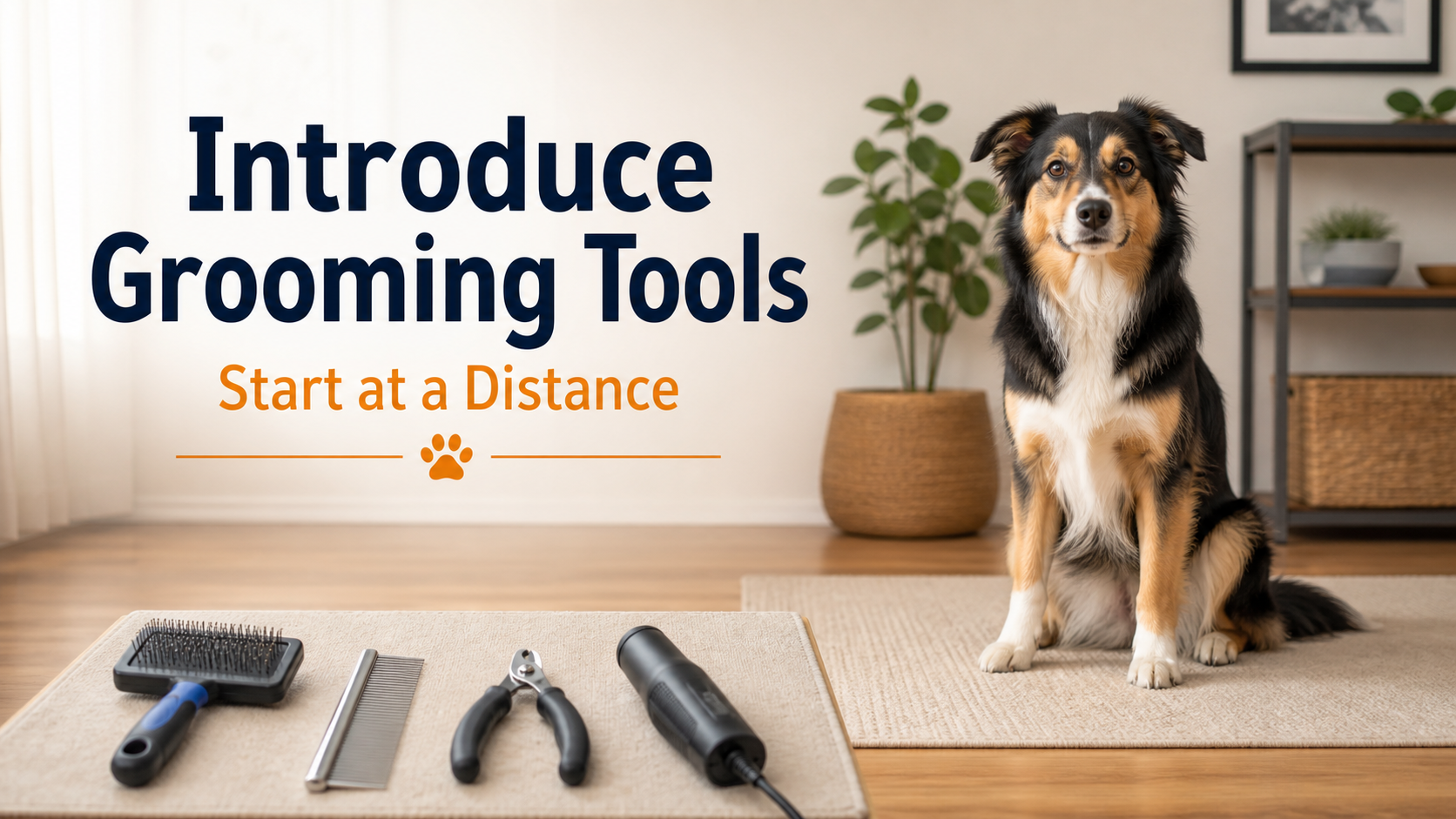
    Introduce grooming tools by letting the dog notice the tool at a comfortable distance, rewarding calm behavior, and adding sound or contact gradually only in mild, safe cases. Stop for panic, aggression, bite risk, severe fear, pain, unsafe handling, sedation questions, or medically fragile dogs.

    This is gentle comfort-building for routine grooming tools. It is not behavior therapy, sedation advice, or a guarantee that home grooming will be safe for every dog.

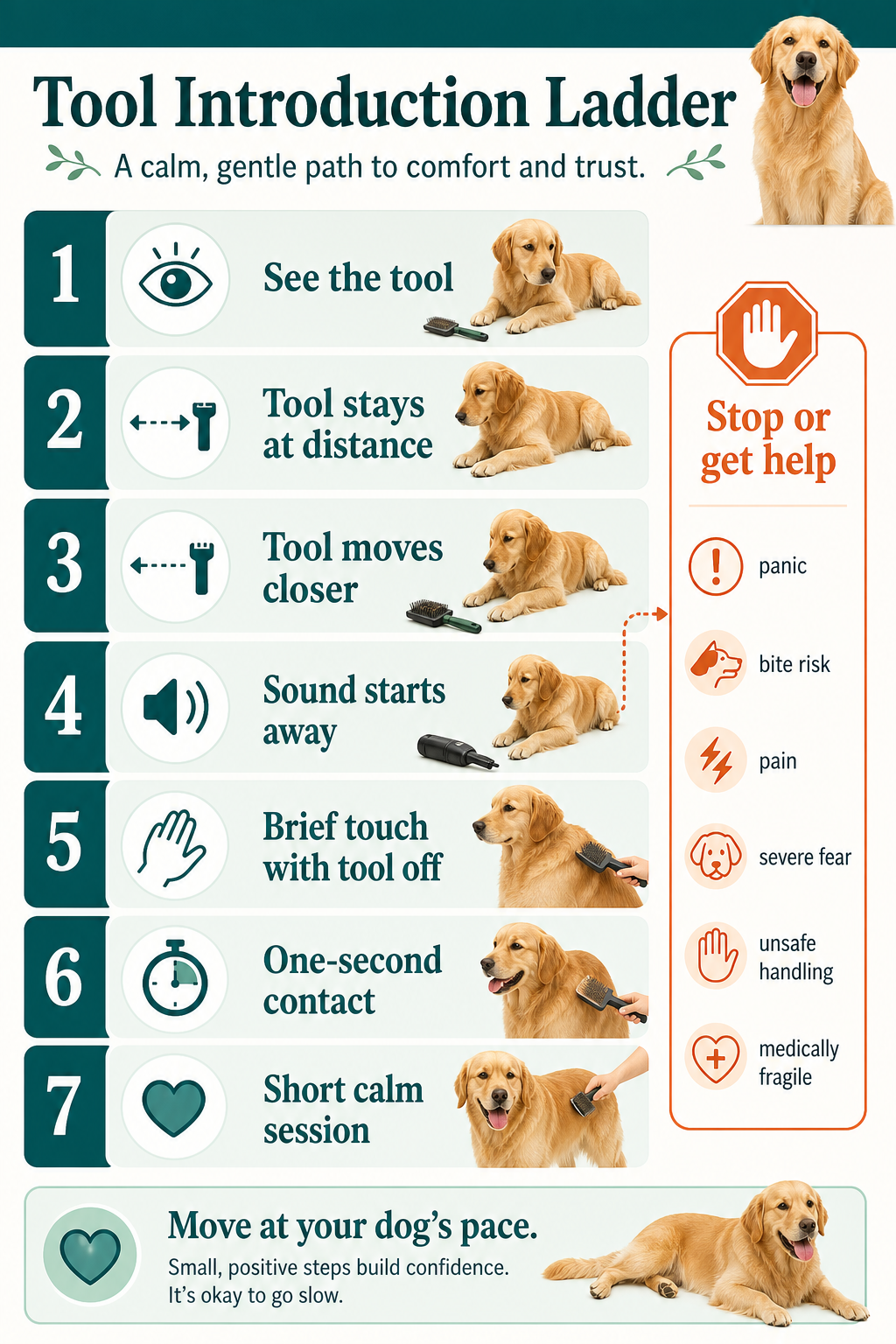
    The Tool-Introduction Ladder

    VCA handling guidance supports starting with gentle handling and gradually adding tools. Best Friends guidance on grooming and vet handling also supports small, reward-based steps rather than forcing contact.

    StepGoalStop if
    SightDog notices the tool at a distanceAvoidance escalates
    SoundTool sound starts far away, if relevantStartle, panic, or fleeing
    Near bodyTool comes closer without contactTension or freezing
    Brief touchOne-second contact only if calmPulling away, growling, or pain
    Short sessionOne tiny grooming actionStress signs return
    Tool Introduction Ladder showing seven dog-only steps from seeing the tool at a distance to a short calm session, with stop or get-help signs.
    Use this ladder to keep distance, sound, touch, and stop points separate while introducing grooming tools.

    Start With Sight Before Sound or Touch

    Do not turn on a loud tool close to the dog as the first step. Let the dog see the brush, comb, nail tool, clipper, or dryer from a distance where they can stay calm. If the dog moves away, increase distance or stop for the day.

    VCA puppy handling guidance supports positive associations with clippers, grinders, and tool sounds. The same idea applies to adult dogs, but only when the dog is calm enough for the step.

    Brushes and Combs

    Let the dog see and sniff the brush or comb if calm. Touch an easy body area briefly before brushing. Stop if the dog freezes, moves away repeatedly, guards the area, or shows pain.

    Nail Clippers and Grinders

    Use nail-specific setup and stop-sign guidance for actual trimming. This page only covers mild tool introduction. Do not handle nails if the dog guards paws, panics, bites, limps, or appears painful.

    Clippers and Dryers

    For sound-based tools, distance matters. Start far enough away that the dog can stay calm. Dryer and clipper sounds should not be forced on a dog who is panicking or trying to escape.

    When to Pause, Step Back, or Stop

    VCA stress-free nail-trimming guidance supports pausing when stress signs appear. Pause for mild stress. Step back if the dog becomes tense or avoids the tool. Stop for panic, aggression, bite risk, severe fear, pain, unsafe handling, sedation needs, or medically fragile status.

    When to Call a Qualified Groomer, Trainer, or Veterinarian

    Use a veterinarian for pain, medically fragile dogs, sudden behavior change, or sedation questions. Use a qualified groomer for tools you cannot introduce safely. Use a qualified trainer for fear that goes beyond mild, calm exposure.

    FAQ

    How do I get my dog used to grooming tools?

    Start with distance and calm observation, then add sound or brief contact only if the dog stays relaxed.

    Should I turn on clippers near my dog right away?

    No. Start with the tool off or far away, then add sound gradually only in mild, safe cases.

    How do I introduce a dog to a dryer?

    Start at a distance, use low intensity where possible, and stop for noise distress or panic.

    What if my dog runs away from grooming tools?

    Stop. Running away means the setup is too hard or unsafe for that session.

    When should a professional help?

    Use a professional for panic, aggression, bite risk, severe fear, pain, unsafe handling, or medically fragile dogs.

    Bottom Line

    Start with the tool at a calm distance, add sound and touch only in tiny steps, and stop as soon as the dog shows that the setup is too hard. Grooming tools are easier to introduce when the dog still has room to feel safe.