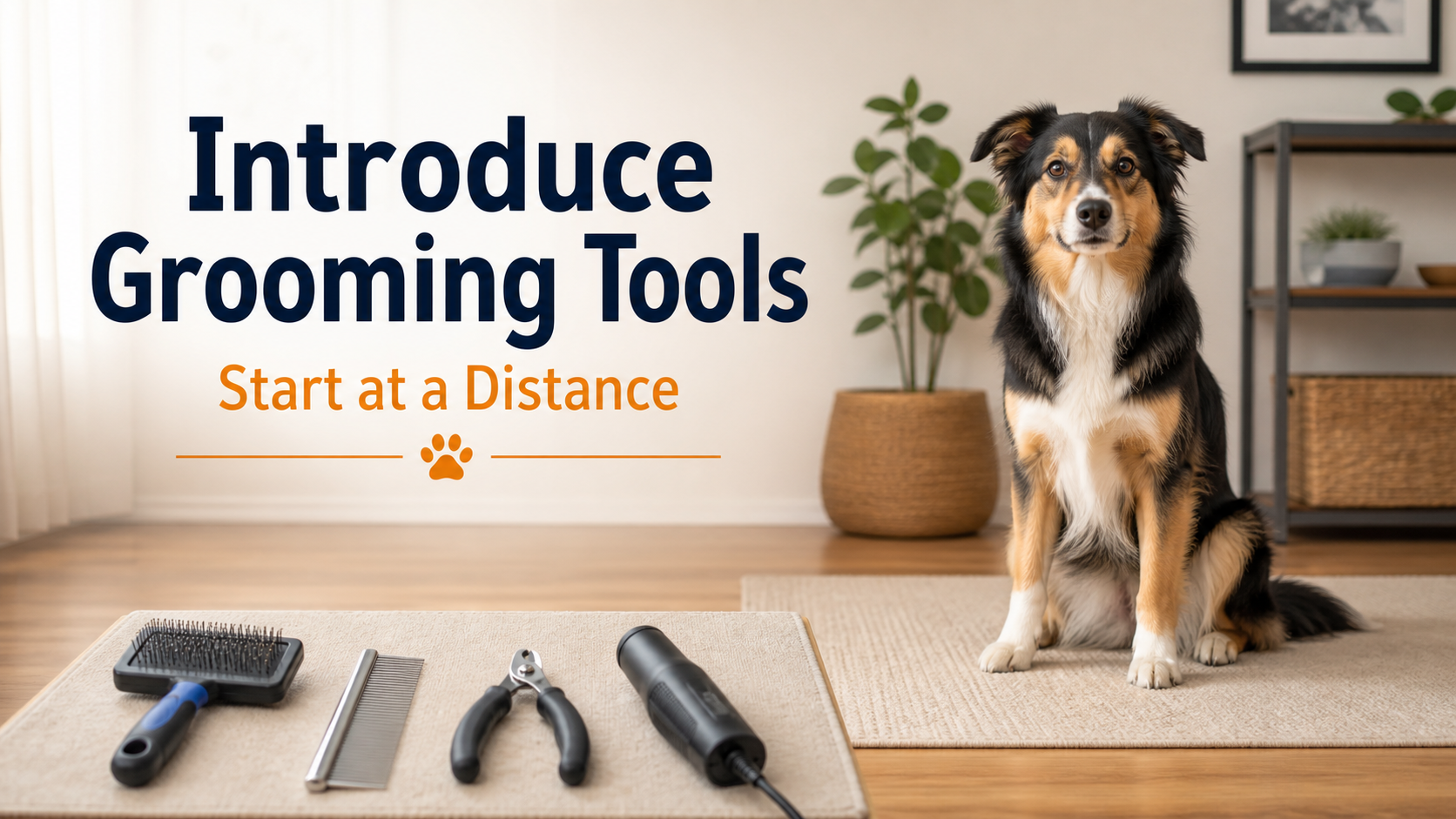

Introduce grooming tools by letting the dog notice the tool at a comfortable distance, rewarding calm behavior, and adding sound or contact gradually only in mild, safe cases. Stop for panic, aggression, bite risk, severe fear, pain, unsafe handling, sedation questions, or medically fragile dogs.
This is gentle comfort-building for routine grooming tools. It is not behavior therapy, sedation advice, or a guarantee that home grooming will be safe for every dog.
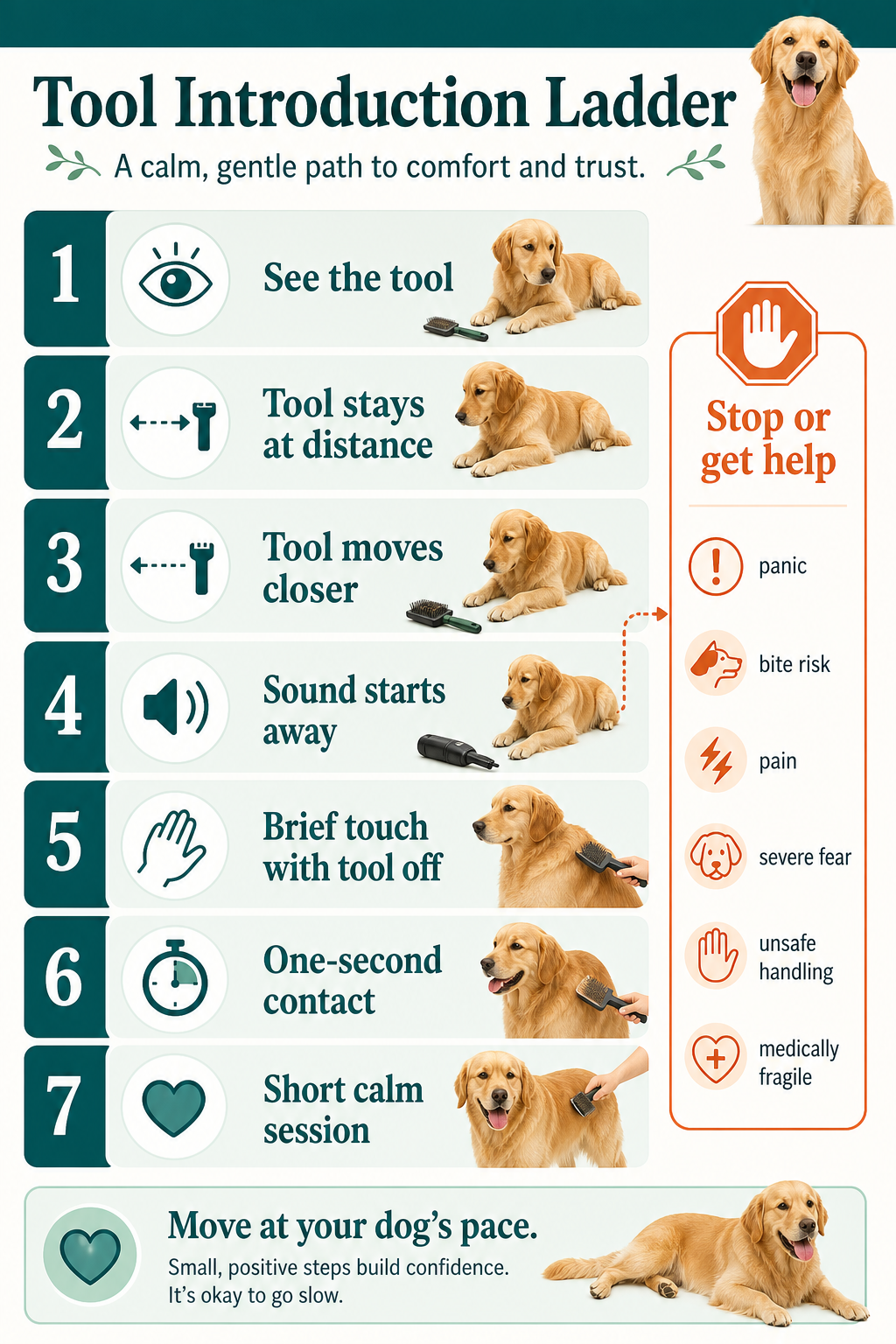
The Tool-Introduction Ladder
VCA handling guidance supports starting with gentle handling and gradually adding tools. Best Friends guidance on grooming and vet handling also supports small, reward-based steps rather than forcing contact.
| Step | Goal | Stop if |
|---|---|---|
| Sight | Dog notices the tool at a distance | Avoidance escalates |
| Sound | Tool sound starts far away, if relevant | Startle, panic, or fleeing |
| Near body | Tool comes closer without contact | Tension or freezing |
| Brief touch | One-second contact only if calm | Pulling away, growling, or pain |
| Short session | One tiny grooming action | Stress signs return |
Start With Sight Before Sound or Touch
Do not turn on a loud tool close to the dog as the first step. Let the dog see the brush, comb, nail tool, clipper, or dryer from a distance where they can stay calm. If the dog moves away, increase distance or stop for the day.
VCA puppy handling guidance supports positive associations with clippers, grinders, and tool sounds. The same idea applies to adult dogs, but only when the dog is calm enough for the step.
Brushes and Combs
Let the dog see and sniff the brush or comb if calm. Touch an easy body area briefly before brushing. Stop if the dog freezes, moves away repeatedly, guards the area, or shows pain.
Nail Clippers and Grinders
Use nail-specific setup and stop-sign guidance for actual trimming. This page only covers mild tool introduction. Do not handle nails if the dog guards paws, panics, bites, limps, or appears painful.
Clippers and Dryers
For sound-based tools, distance matters. Start far enough away that the dog can stay calm. Dryer and clipper sounds should not be forced on a dog who is panicking or trying to escape.
When to Pause, Step Back, or Stop
VCA stress-free nail-trimming guidance supports pausing when stress signs appear. Pause for mild stress. Step back if the dog becomes tense or avoids the tool. Stop for panic, aggression, bite risk, severe fear, pain, unsafe handling, sedation needs, or medically fragile status.
When to Call a Qualified Groomer, Trainer, or Veterinarian
Use a veterinarian for pain, medically fragile dogs, sudden behavior change, or sedation questions. Use a qualified groomer for tools you cannot introduce safely. Use a qualified trainer for fear that goes beyond mild, calm exposure.
FAQ
How do I get my dog used to grooming tools?
Start with distance and calm observation, then add sound or brief contact only if the dog stays relaxed.
Should I turn on clippers near my dog right away?
No. Start with the tool off or far away, then add sound gradually only in mild, safe cases.
How do I introduce a dog to a dryer?
Start at a distance, use low intensity where possible, and stop for noise distress or panic.
What if my dog runs away from grooming tools?
Stop. Running away means the setup is too hard or unsafe for that session.
When should a professional help?
Use a professional for panic, aggression, bite risk, severe fear, pain, unsafe handling, or medically fragile dogs.
Bottom Line
Start with the tool at a calm distance, add sound and touch only in tiny steps, and stop as soon as the dog shows that the setup is too hard. Grooming tools are easier to introduce when the dog still has room to feel safe.