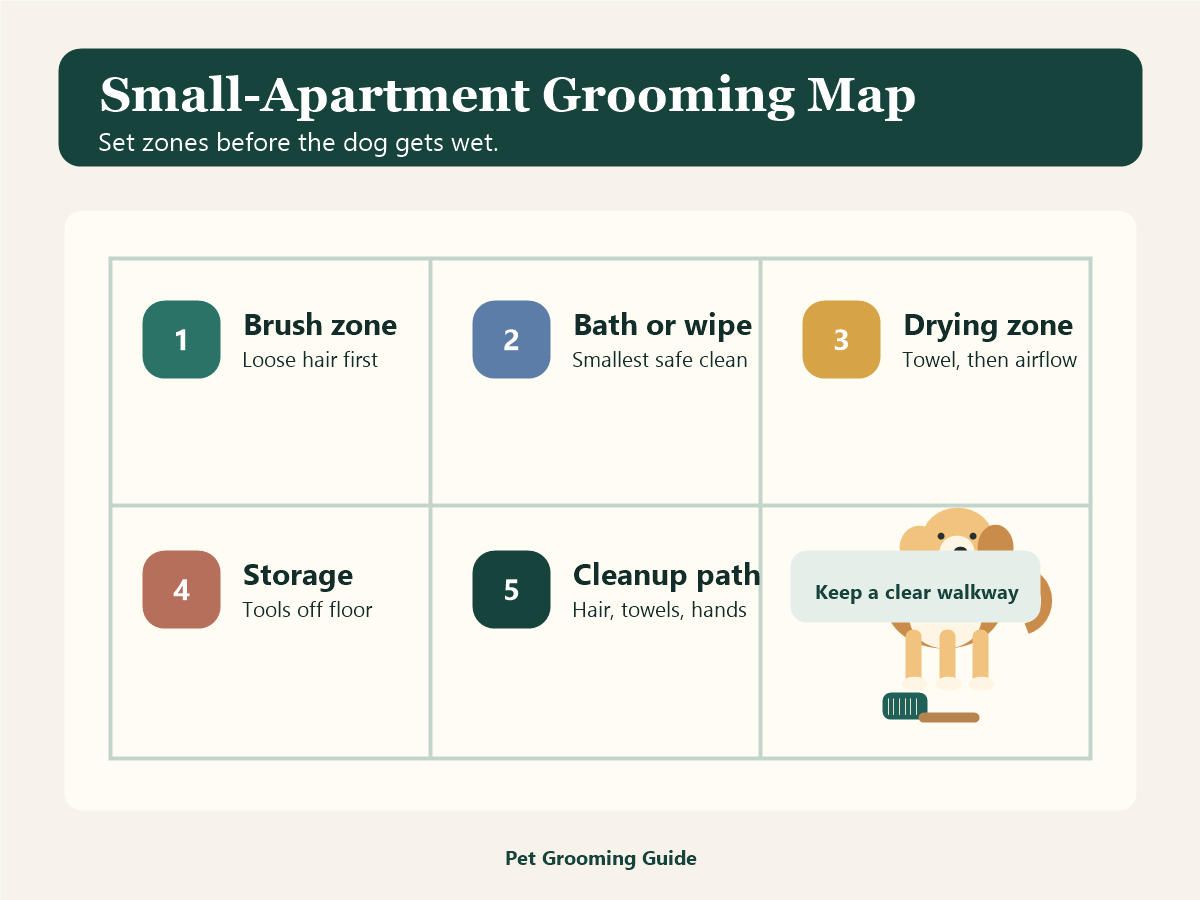
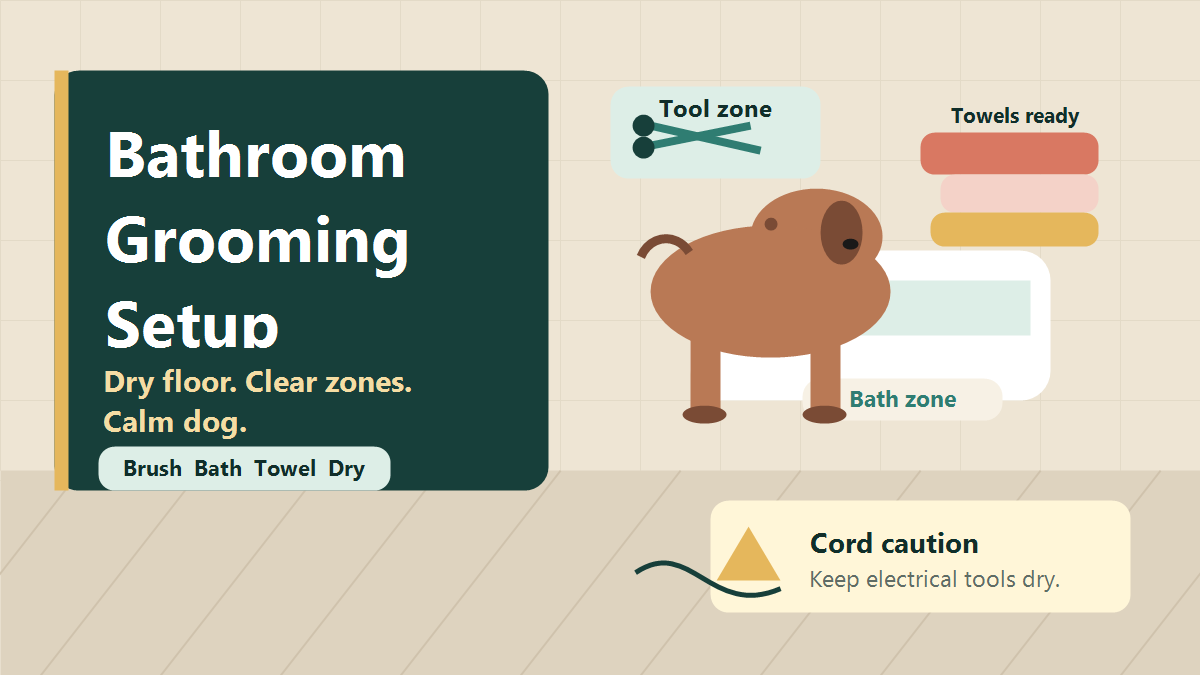
A safer dog grooming bathroom setup has clear zones before the dog enters the room: brush, bath, towel, drying, tools, drain awareness, and cleanup. Keep the floor dry where people walk, keep cords and electrical tools away from splash or standing water, leave the exit and airflow open, and stop if the dog cannot be handled calmly.
This setup is for ordinary at-home grooming logistics. It is not a fix for panic, pain, wounds, severe mats, parasites, breathing trouble, or unsafe handling. In those cases, pause and use a veterinarian or qualified groomer.
Set the Bathroom Before the Dog Comes In
Bathroom grooming gets harder when towels, tools, and cleanup supplies are scattered. Set the room first so the dog spends less time waiting on a wet, cramped, or slippery surface.
- Clear the floor and exit path.
- Stage towels where you can reach them without stepping away.
- Keep brushes, combs, and other grooming tools outside splash zones.
- Check footing in the brush, bath, towel, and drying areas.
- Keep cords, chargers, dryers, and clippers away from water.
- Confirm ventilation and a calm route out of the room.
The ASPCA dog grooming tips support brushing before bathing and using a practical bath setup with warm water. Wet floors and clutter are also basic safety hazards; OSHA slip, trip, and fall guidance supports keeping walking surfaces clean, dry, and clear.
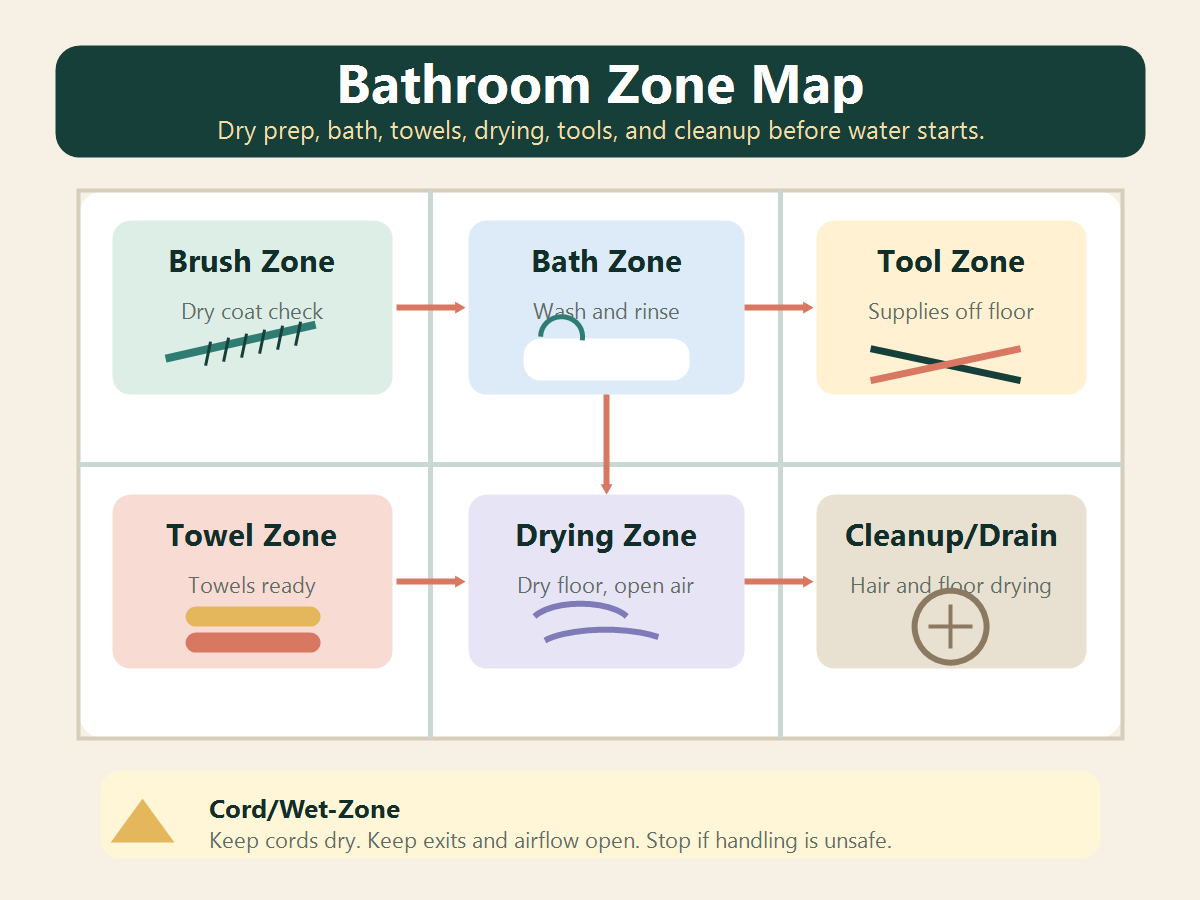
Think of the bathroom as a short workflow, not one crowded wet area. The goal is to move from dry coat work to bath, towel, drying, and cleanup without crossing cords through water or blocking the dog's exit path.
| Zone | Purpose | Setup note |
|---|---|---|
| Brush zone | Remove loose coat and check for tangles before water | Keep it dry and away from tub splash. |
| Bath zone | Wet, wash, and rinse | Use stable footing and do not lift a dog into a setup you cannot control safely. |
| Towel zone | First dry-off step before the dog shakes water across the room | Stack towels before the dog is wet. |
| Drying zone | Towel drying and comfortable airflow when appropriate | Keep cords away from standing water and away from the exit path. |
| Tool zone | Brushes, combs, nail tools if used, and grooming supplies | Keep tools organized and out of the dog's walking path. |
| Cleanup and drain zone | Hair capture, drain awareness, floor drying, and supplies | Clean hair and water before they become slip or clog problems. |
Small, Medium, and Large Dog Setup Notes
Small dogs may fit in a sink or low tub only when lifting is easy, the surface is secure, and the dog stays calm. Keep one hand free for steady support and never leave the dog perched near an edge.
Medium dogs usually need more towel staging and a clear turn-around path. If the dog bumps into cabinets, blocks the door, or cannot stand comfortably, the room is not set up well enough for a calm session.
Large dogs need more floor space, more towels, and a plan that does not depend on awkward lifting. If the bathroom forces you to pull, drag, hoist, or trap the dog, choose a different setup or use professional help. For no-tub alternatives, see dog grooming without a bathtub.
Footing and Floor Control
Footing matters in every zone, not just inside the tub. A dog that slips may panic, twist, scramble, or resist the next bath. Keep the standing surface stable, dry the walking path as you go, and remove laundry, bottles, cords, and loose supplies from the floor.
Do not block the doorway with towels, bins, stools, or a closed-in drying setup. The dog and handler both need a clear way out if the session has to stop quickly.
Cord and Water Separation
Keep electrical tools, chargers, and cords outside wet zones. UL Standards & Engagement discusses the risk of electric grooming appliances near water and safety measures such as GFCI protection. This article does not give electrical work or wiring advice.
Do not run cords across wet floors, into splash zones, under towels, or through the dog's exit path. If you cannot keep the drying area dry and controlled, towel dry first and move the dog to a safer ventilated area before using airflow.
Drying Zone
The drying zone should be dry, ventilated, and calm. Start with towels. If airflow is used, keep it comfortable, keep the dog on secure footing, and stop for panic, coughing, breathing trouble, overheating signs, or unsafe handling. For more drying detail, use how to dry a dog after a bath.
Do not crowd the drying zone with closed doors, blocked vents, wet cords, or piles of towels on the floor. A dry path out of the room matters as much as the drying tool itself.
Cleanup Flow
Cleanup is part of the setup. Plan for hair capture, towel placement, drain awareness, floor drying, and tool storage before you start. The CDC home cleaning guidance supports cleaning first and following product labels when using cleaning or disinfecting products.
Keep cleaners away from pets, avoid mixing products, and let surfaces dry before the dog returns to the room. If the dog has parasites, wounds, discharge, or signs of infection, routine bathroom cleanup advice is not enough; ask a veterinarian or qualified professional.
When to Stop
Stop the session if the dog panics, becomes aggressive, has breathing trouble, shows pain, has wounds, has severe mats, has parasites, cannot stand securely, or cannot be handled without force. Stop as well if the room setup creates electrical, ventilation, slipping, lifting, or blocked-exit risk.
A paused session is better than pushing through a bathroom setup that has become unsafe.
Bottom Line
A good dog grooming bathroom setup separates dry prep, bath work, towels, drying, tools, drain awareness, and cleanup before water starts running. Keep floors and exits clear, keep cords away from wet zones, use calm handling, and stop for pain, panic, breathing trouble, severe mats, parasites, wounds, or any setup you cannot control safely.
FAQ
What should I set up before bathing my dog in the bathroom?
Set towels, secure footing, grooming tools, a clear exit path, drying space, and cleanup supplies before the dog enters the room.
Where should grooming tools go in a bathroom setup?
Keep brushes, combs, nail tools, dryers, chargers, and cords outside splash zones and out of the dog's walking path.
Can I use a dryer in the bathroom?
Only if the setup keeps electrical tools and cords away from water, the floor is dry and secure, ventilation is open, and the dog tolerates airflow calmly.
Is a bathroom setup enough for every dog?
No. Dogs with panic, aggression, breathing trouble, pain, wounds, severe mats, parasites, or unsafe handling needs should be routed to a veterinarian or qualified groomer.