
Dog grooming in a small apartment works best when you set up stations before you start: brush first, contain loose hair, clean only what needs cleaning, dry with airflow and ventilation, then clear the floor, drains, towels, and tools. The goal is not a no-mess promise. It is a calmer path through a tight space.
Stop before you begin if your dog is too large to handle safely in the space, the floor is slippery, ventilation is poor, or the dog has severe mats, wounds, pain, panic, biting risk, heat or cold stress, or medical fragility. In those cases, use a professional groomer or veterinarian instead of forcing a home session.
Quick Answer: The Small-Apartment Grooming Plan
| Station | What happens there | Small-space rule |
|---|---|---|
| Brush zone | Loose hair, coat check, small painless tangles only | Brush before water so less hair reaches the bath area. |
| Bath or wipe zone | Paw rinse, wipe-down, shower, or safe basin when needed | Use the smallest safe cleaning method for the mess. |
| Drying zone | Towels first, then airflow if the dog tolerates it | Keep air moving and avoid high heat in a closed space. |
| Storage zone | Towels, brush, comb, cloths, waste bags, and cleanup tools | Keep tools off the floor and out of the dog’s path. |
| Cleanup path | Hair, drains, wet floors, towels, tools, and hands | Clean after the dog is settled so you are not dividing attention. |
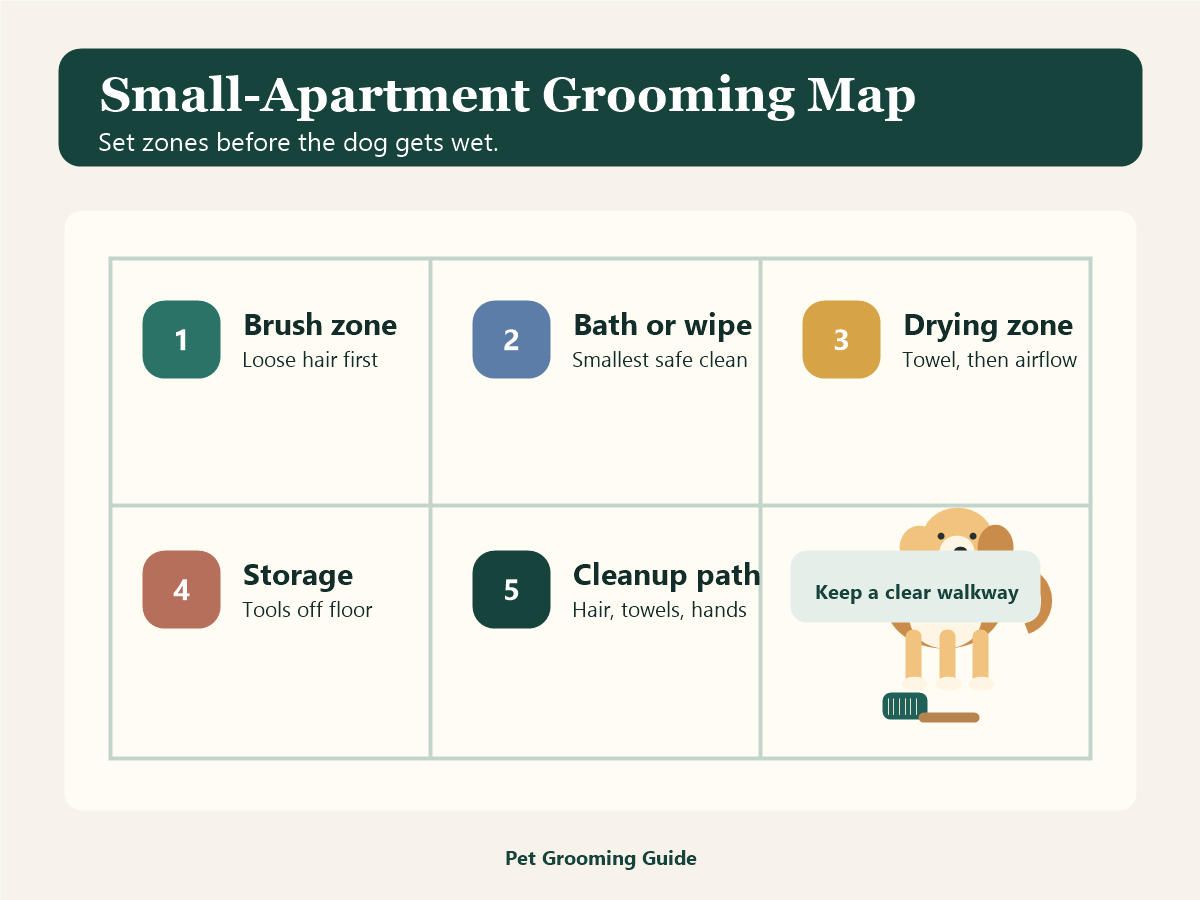
Plan the session like a short route through the apartment, not like one crowded grooming spot. A simple order is brush zone, bath or wipe zone, drying zone, storage zone, then cleanup path. For the broader sequence of home grooming tasks, see dog grooming order of operations.
Keep one clear walking path for you and the dog. Move stools, loose rugs, cords, laundry baskets, and open bottles before the coat is wet. Put towels and cleanup cloths where you can reach them without stepping over the dog.
If the apartment layout makes you turn, lift, restrain, or dry the dog in a way that feels unsafe, shrink the job. A wipe-down, paw rinse, or separate brush session may be the right answer.
Brush Zone: Control Hair Before Water
Start with brushing or a coat check when the coat allows it. The ASPCA dog grooming tips recommend brushing before bathing to remove dead hair and mats. In an apartment, that same step also helps keep loose coat from spreading into the bath and drying areas.
Pick a spot with traction and enough room for the dog to stand naturally. A washable mat, towel, or easy-clean floor area can work if it does not slide. Keep a bag or bin nearby for hair from the brush, but do not let the dog step around loose hair piles or tools.
Do not brush over painful skin, wounds, severe mats, or tight hair close to the skin. Do not keep working because the apartment is already set up. The coat check is allowed to end the session.
Bath Or Wipe-Down Zone
Use the smallest safe cleaning method that fits the mess. Light dirt may need only a paw rinse or wipe-down. A fuller bath may fit better in a shower, tub, or safe basin, depending on your dog and your space. If you do not have a tub, the dog grooming without a bathtub guide covers no-tub options.
Before water starts, check footing. Slippery tile, narrow corners, unstable basins, and unsafe lifting are bigger problems in a small apartment because there is less room to recover if the dog slips or bolts.
Keep water lukewarm, avoid spraying into the ears, eyes, and nose, and rinse carefully. Do not turn a cramped bathroom into a restraint area. If the dog panics, freezes, snaps, repeatedly tries to escape, or cannot stand safely, stop.
Drying Zone: Airflow, Noise, And Ventilation
Towel first, then use airflow only if the dog tolerates it. The AKC drying guide explains that airflow, not heat, dries fur, and that heat can burn skin. That matters in small rooms where heat, humidity, and noise build quickly.
Do not run a dryer in a closed, poorly ventilated space. Open a safe ventilation path if you can, keep the dryer moving, and avoid aiming hot air close to the skin.
Stop drying if the dog is distressed, the room feels hot or stuffy, the floor gets slippery, or you cannot keep the dryer, towels, and dog under calm control.
Storage And Spill Control
Small apartments reward setup. Before you start, place towels, brush, comb, cleanup cloths, waste bags, and any needed rinse supplies within reach. Close bottles when they are not in your hand. Keep sharp tools, cords, and slick containers off the floor.
Do not stack supplies in the dog’s exit path. If the dog needs a break, you should be able to move away from the grooming zone without stepping over wet towels, cords, or loose tools.
Cleanup Checklist For Small Spaces
Clean after the dog is safe and settled. The CDC guidance on healthy dogs includes cleanup and handwashing as basic ways to reduce germ spread around dogs. In an apartment, cleanup also keeps wet floors, loose hair, and used towels from becoming the next problem.
- Collect loose hair from the brush zone.
- Check the bath or rinse area for hair and residue.
- Remove hair from the drain catcher if one was used.
- Wipe obvious water from floors before anyone walks through.
- Set towels aside for washing or drying.
- Clean brushes, combs, and rinse tools, then let them dry.
- Wash your hands after handling hair, towels, drains, or cleanup cloths.
Stop Signs And When To Use A Pro
A small apartment can make a hard grooming session harder. Stop and use a professional groomer, veterinarian, or qualified handler if the dog has severe or widespread mats, wounds, painful skin, unsafe mobility, panic, biting risk, heat or cold stress, breathing distress, or medical fragility.
Use a professional groomer for coat work that needs safer handling, better equipment, or skill beyond a basic home session. Use a veterinarian for wounds, raw skin, ear discharge, eye injury, limping, pain, parasites, bad odor from skin or ears, breathing trouble, heat stress, or sudden behavior change.
Bottom Line
For dog grooming in a small apartment, set the route before the dog is wet: brush zone, bath or wipe zone, drying zone, storage zone, and cleanup path. Keep footing secure, keep air moving, keep tools off the floor, and stop as soon as the space or the dog no longer feels safe.
FAQ
How do you groom a dog in a small apartment?
Use stations. Brush first, choose a safe bath or wipe-down area, dry with towels and airflow, store tools off the floor, then clean hair, drains, floors, towels, tools, and hands.
How do you control dog hair while grooming indoors?
Brush before water, keep one planned brush zone, collect loose hair before moving to the bath area, and clean the floor after the dog is settled.
How do you dry a dog in an apartment?
Towel first, then use airflow with ventilation if the dog tolerates it. Avoid high heat, closed rooms, slippery floors, and drying setups that make the dog panic.
Can you groom a dog without a bathtub?
Yes, for some dogs and messes. A wipe-down, paw rinse, shower, or safe basin may work, but the setup still needs traction, space, calm handling, and a safe cleanup path.
When is a small apartment unsafe for dog grooming?
It is unsafe when footing is poor, ventilation is blocked, lifting is risky, the dog cannot be handled calmly, or there are medical, pain, matting, heat, breathing, or behavior stop signs.