
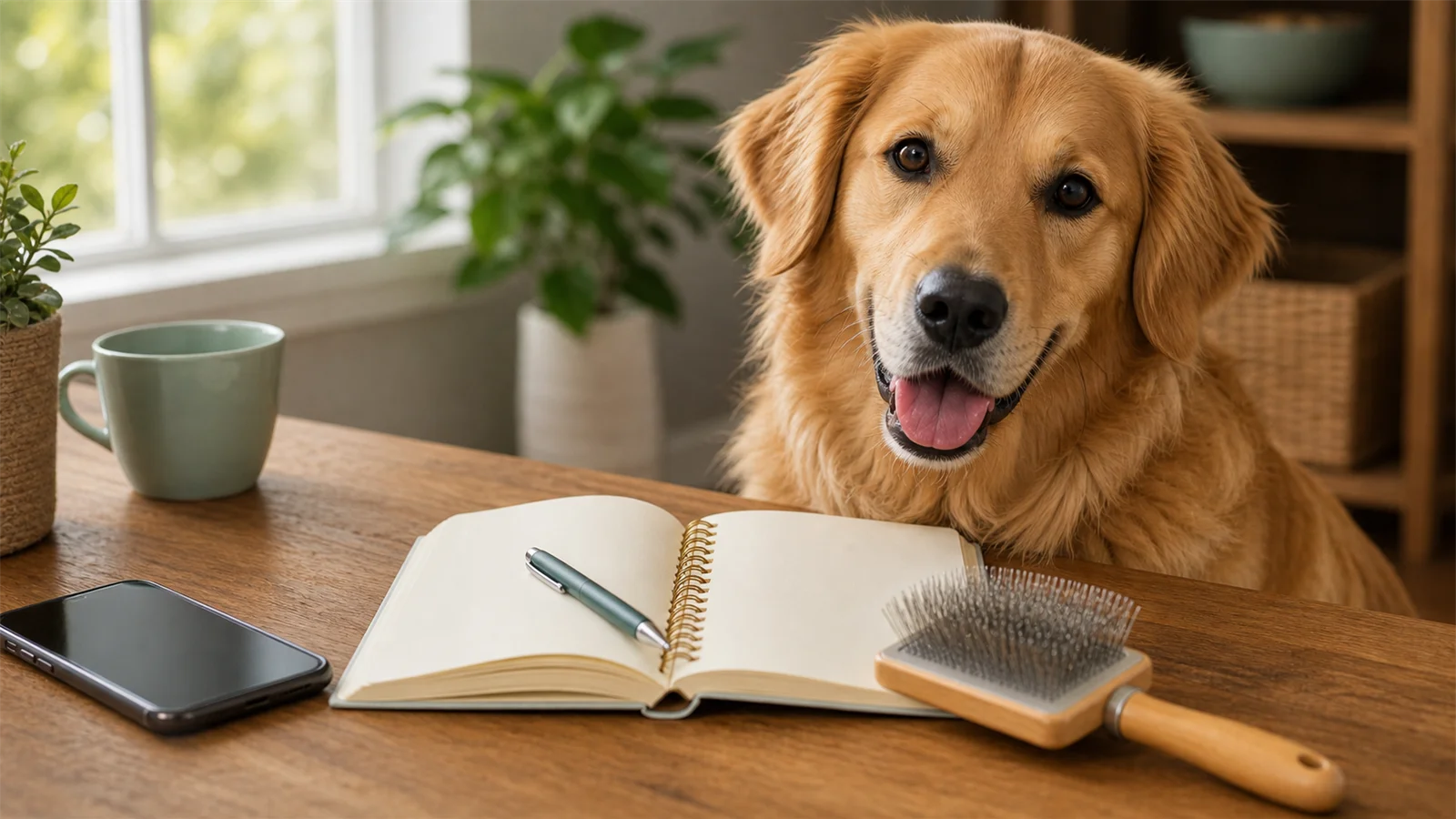
Dog grooming notes do not need to be complicated. A useful home record can be as simple as the date, the grooming task, the body area you checked, how your dog tolerated it, whether you took a photo, and what should happen next.
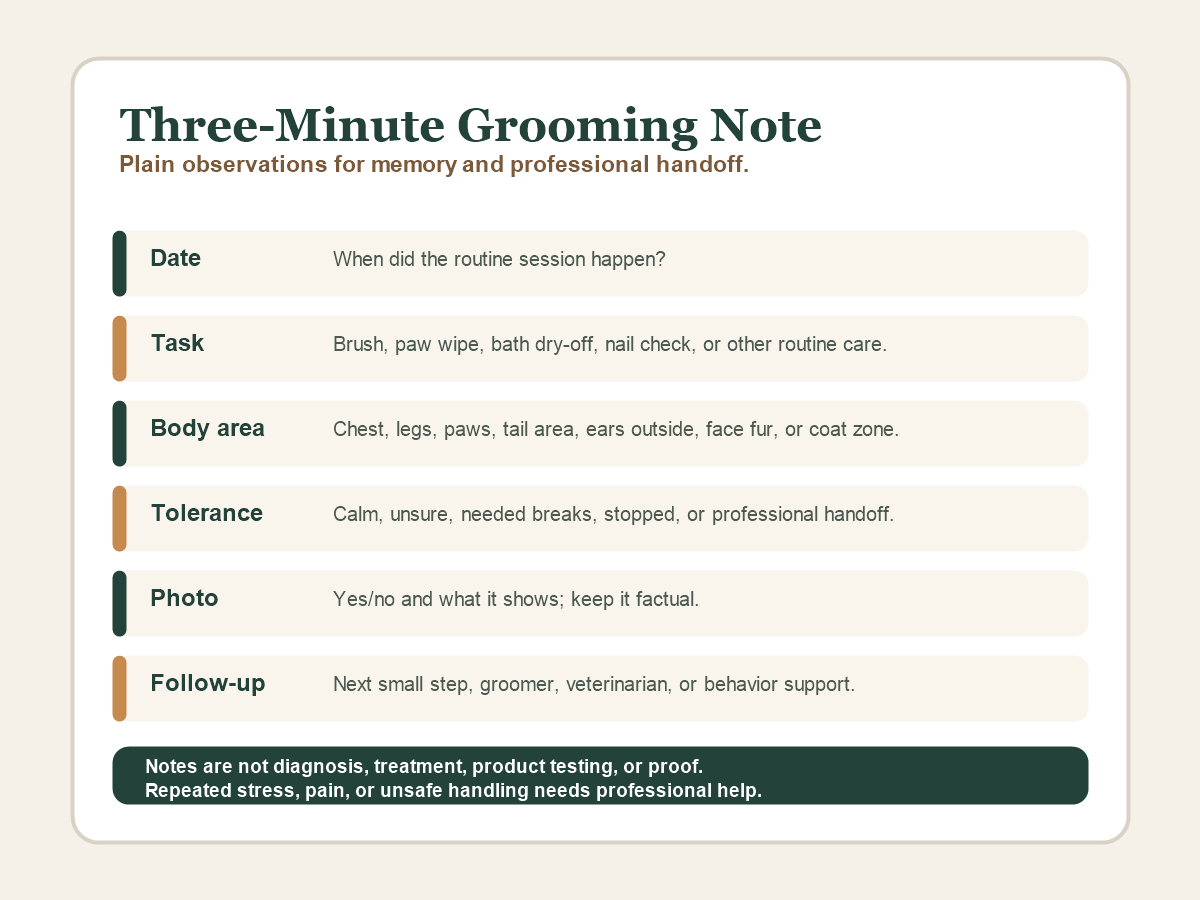
The Three-Minute Grooming Note
Use the same short format after brushing, bathing, paw checks, nail handling, ear checks, or any grooming session where you noticed a change. The goal is to make the next decision calmer and more accurate.
| Field | What to write | Why it helps |
|---|---|---|
| Date | June 15, 2026 | Shows whether something is new, improving, or repeating. |
| Task | Brushing, bath prep, paw check, nails, ear check | Keeps the note tied to a real grooming activity. |
| Body area | Left ear, rear legs, tail base, paws, belly, coat section | Makes patterns easier to discuss with a groomer or veterinarian. |
| Tolerance | Calm, unsure, pulled away, growled, yelped, hid, tried to bite | Helps you decide whether to shorten the next session or stop. |
| Photo | Yes or no, with a short label | Creates a visual reference without relying on memory. |
| Follow-up | Try shorter session, call groomer, call vet, leave area alone | Turns the note into a safer next step. |
What Notes Can And Cannot Do
Home grooming notes are a memory tool. They can help you explain what you saw, when it happened, and how your dog reacted. They cannot diagnose skin disease, ear infections, pain, anxiety, parasites, allergies, or behavior problems.
If a dog repeatedly pulls away, cries, guards a body area, shows skin changes, has odor, has discharge, or seems painful, stop grooming that area and ask a qualified professional. The dog brushing stop guide can help you separate a short pause from a session that should end for the day.
What To Record After Routine Sessions
For normal at-home grooming, write only what would help you make a better decision next time. Keep it factual and short.
| After this session | Record this | Skip this |
|---|---|---|
| Brushing | Coat section, tangles, mats, shedding level, tolerance | Guessing why a mat formed without evidence |
| Bath prep | Brush-first result, skin check, product used, rinse concerns | Using the note as a product review or medical conclusion |
| Paws or nails | Which paw, handling tolerance, any limping or sensitivity noticed | Continuing if the dog shows pain or escalating stress |
| Ears or face | Only what you observed from the outside, plus odor or sensitivity | Putting tools into the ear canal or trying to treat at home |
For a broader routine, pair your notes with the beginner dog grooming checklist or the weekly brushing routine.
Fictional Sample Note
This is a fictional routine note, not medical guidance:
Date: June 15, 2026
Task: Brushing after walk
Body area: Rear legs and tail base
Tolerance: Calm on rear legs, turned away at tail base
Photo: Yes, small tangle before brushing
Follow-up: Keep next session shorter, brush tail base first, stop if pulling away repeats.
When Notes Should Become A Professional Handoff
Turn your notes into a handoff when the pattern repeats, the same area stays sensitive, you see skin changes, your dog becomes more stressed over time, or you are unsure whether grooming is safe to continue. A useful handoff includes:
- The dates you noticed the issue.
- The body area involved.
- What you were doing when your dog reacted.
- Whether you have photos.
- What you stopped doing at home.
Before any home grooming session, use the pet grooming safety checklist to check the room, tools, products, body areas, and stop signs.
What To Tell A Groomer, Veterinarian, Or Behavior Professional
Be specific and calm. Instead of saying “my dog hates grooming,†try: “On June 15, he pulled away when I brushed near the tail base. I stopped. It happened again two days later, and I have a photo of the tangle.†That kind of note is much easier for a professional to act on.
Helpful Companion Guides
- Pet Grooming Safety Checklist for Dogs at Home
- Dog Grooming Checklist for Beginners
- Weekly Dog Brushing Routine
- When to Stop a Dog Brushing Session
Sources
This guide uses general dog grooming and care guidance from the ASPCA dog grooming tips, ASPCA general dog care, and VCA Hospitals grooming and coat care guidance.
Bottom Line
Keep dog grooming notes short, factual, and tied to the next safe action. Record the date, task, body area, tolerance, photo status, and follow-up. Use the notes to remember patterns and communicate clearly, not to diagnose or push through stress.
FAQ
Do I need a grooming notebook?
No. A phone note, printed checklist, calendar entry, or simple spreadsheet can work as long as you record the same basic fields each time.
Should I take photos every time?
No. Photos help when you see a visible change, tangle, mat, skin concern, or repeated issue. Do not force a photo if handling the area makes your dog more stressed.
Can grooming notes replace a vet visit?
No. Notes can help you explain what happened, but they do not replace veterinary care when there are signs of pain, skin changes, odor, discharge, bleeding, limping, or repeated distress.
What is the most useful thing to write down?
The most useful note is usually the body area, what you were doing, and how your dog reacted. That gives you and a professional a clear starting point.