
Let's be honest. You brought home a Doberman because they're sleek, loyal, and intimidatingly elegant. Then you realized the short coat still sheds enough fur to knit a second dog.
Those nails click on the floor like tap shoes. And the ears need more attention than you expected.
Here's the good news: learning how to groom a Doberman is one of the easiest routines you'll master with this breed. Unlike double-coated dogs that need hours of de-shedding and professional blowouts, the Doberman's single-layer coat is low-maintenance by design. As of 2026, the American Kennel Club breed standard describes the coat as "smooth-haired, short, hard, thick and close lying." No undercoat, no curls, no mats.
What most owners get wrong isn't the brushing. It's the skin underneath. Dobermans have sensitive skin that's prone to dryness, and the wrong grooming habits can cause more damage than good.
Over-bathing and using the wrong deshedding tools are the top two mistakes owners make. Both are easily avoidable once you understand the breed's unique coat biology.
Quick Answer
Groom a Doberman weekly with a rubber mitt to remove loose hair. Clean ears weekly with a drying cleaner. Trim nails every 3 to 4 weeks with a grinder.
Bathe every 6 to 8 weeks with a mild oatmeal shampoo. Use lukewarm water. Dry with a towel.
Never shave the coat. Watch for skin flakes and redness.
Why Grooming a Doberman Is Different (and Easier Than You Think)
The Doberman Pinscher has what groomers call a "single coat." There's no soft, fluffy undercoat hiding beneath the top layer. What you see is what you get: short, stiff hairs that lie flat against the body.
This matters for grooming in a few big ways.
First, there's no seasonal "blowout" where massive clumps of undercoat come loose. Your Doberman sheds a little bit all year round, but it's manageable with a weekly pass. Second, because there's no undercoat to trap heat or moisture, the skin sits closer to the surface.
That makes it more exposed and more sensitive to harsh grooming tools.
The trade-off is simple. The coat is easy to maintain, but the skin needs a gentle approach. A golden retriever needs heavy-duty de-shedding tools to reach the undercoat.
Your Doberman needs a light touch because you're working directly on the skin, not through layers of fur.

Image source: Bing (Web (fair-use with source credit))
The Skin Sensitivity Factor
Dobermans are prone to several skin conditions that grooming can either help or worsen. Dry skin, flaking, and contact dermatitis are common. The breed also has a higher-than-average rate of hypothyroidism, which shows up as a dry, brittle coat and hair loss.
Grooming won't fix that, but your weekly routine will help you notice it early.
The takeaway: your grooming routine should protect the skin barrier, not just remove hair. That means avoiding harsh brushes, skipping human shampoos, and resisting the urge to over-bathe.
What the Breed Standard Says
The American Kennel Club standard describes the ideal Doberman coat as "smooth-haired, short, hard, thick and close lying." For grooming purposes, this tells you the coat should look tight and glossy, not fuzzy or fluffy.
If your Doberman's coat starts looking dull, dry, or patchy, that's a red flag. It could be a grooming issue, a diet issue, or a medical issue. Your weekly routine is the perfect time to catch these changes early.
The Essential Doberman Grooming Kit
You don't need a drawer full of expensive tools. In fact, owning too many tools is a common mistake. The Doberman's coat responds best to a short list of specific items, and some popular grooming products are actually counterproductive for this breed.
Here's the kit we recommend:
| Tool | Purpose | Frequency of Use |
|---|---|---|
| Rubber curry mitt | Removes loose hair, stimulates skin | 2–3 times per week |
| Soft-bristle brush | Finishing pass for shine | Weekly |
| Dremel-style nail grinder | Files nails safely, avoids splitting | Every 3–4 weeks |
| Nail clippers (scissor type) | Backup for quick trims | As needed |
| Styptic powder | Stops bleeding if you cut the quick | Emergency only |
| Drying ear cleaner | Prevents moisture buildup and infections | Weekly |
| Cotton balls or gauze | Wipes ears without pushing debris deeper | Weekly |
| Oatmeal or hypoallergenic shampoo | Gentle cleansing, no harsh chemicals | Every 6–8 weeks |
| Lightweight conditioner | Adds moisture to dry skin | With each bath |
| Paw balm | Protects cracked pads in winter or summer | Seasonal |
Tools to Skip (and Why)
Some grooming tools are actively bad for Dobermans. The Furminator works well on double-coated breeds but is unnecessarily harsh for a single-coated dog. Using it more than once a week can cause brush burn and skin irritation.
The same goes for slicker brushes with fine wire bristles. They're designed for longer coats and can scratch the skin directly.
Skip the grooming table too. Dobermans are tall, athletic dogs that groom fine on the floor or a nonslip mat. A table adds fall risk without real benefit.
Human hair dryers are another no-go. High heat settings can burn sensitive skin. If you must use a dryer, use a low-heat, low-speed pet dryer and keep it moving constantly.
Honestly, a few towels and air drying work fine for this breed.
Choosing the Right Shampoo
Look for shampoos labeled "oatmeal," "hypoallergenic," or "sensitive skin." These have soothing ingredients that don't strip natural oils. Avoid anything with harsh sulfates, artificial fragrances, or strong dyes. If your Doberman has persistent itching or flaking, a veterinary dermatologist might recommend a medicated shampoo containing chlorhexidine or ketoconazole.
That's a prescription decision, not a grooming aisle decision.

Image source: Bing (Web (fair-use with source credit))
Step-by-Step: The Weekly Grooming Routine
A full grooming session takes about 20 to 30 minutes once you get the hang of it. The goal is consistency, not intensity. A brief weekly session beats a marathon monthly session every time.
Step 1: Pre-Groom Inspection
Before you touch any tool, run your hands over your dog's entire body. Start at the head, move down the neck, over the chest, along the back, and down each leg. You're feeling for:
- Lumps, bumps, or unusual swelling
- Ticks or fleas
- Hot spots or raw patches
- Scabs or cuts
- Changes in coat texture
This takes two minutes but it's the most valuable part of the routine. Dobermans are stoic dogs that hide pain well. Grooming is your best chance to catch problems early.
Step 2: Brushing with the Rubber Mitt
Put on the rubber curry mitt and work in the direction of hair growth. Start at the neck and work down the body in long, sweeping strokes. Apply firm but gentle pressure.
You're not scrubbing. You're gliding.
The mitt does two things. It picks up loose hair that would otherwise end up on your couch, and it stimulates the skin to distribute natural oils. These oils give the coat its signature glossy shine.
Spend extra time on the rump and thighs where the coat is harshest and shedding is heavier. If your dog starts squirming, lighten the pressure. The tucked-up abdomen is especially sensitive.
Use one or two light passes there and move on.
After brushing, the mitt will be covered in a layer of loose hair. Rinse it under warm water and set it aside.
Step 3: The Finishing Pass
Once you've removed the loose hair, take a soft-bristle brush and make a final pass over the entire body. This smooths the coat and picks up any remaining debris. It also distributes the natural oils more evenly for that show-dog gloss.
This step is quick. It should take no more than two minutes. If your brush is pulling or scratching, the bristles are too stiff.
Switch to a softer brush.
Step 4: Ear Inspection and Cleaning
Dobermans have pendant ears that flop down, creating a warm, dark environment where bacteria and yeast thrive. That's why ear infections are one of the most common health issues in the breed.
You'll need a drying-type ear cleaner and cotton balls or gauze. Apply the cleaner to a cotton ball and wipe the outer ear and the visible part of the ear canal. Never insert anything into the ear canal, including Q-tips.
You'll just push debris deeper.
A weekly cleaning is enough for most dogs. If your Doberman swims frequently or lives in a humid climate, you might need to clean more often.
Signs of an ear infection include:
- Strong, yeasty odor
- Head shaking or tilting
- Redness or swelling inside the ear
- Dark brown or yellow discharge
- Sensitivity when you touch the ear
If you notice any of these, skip the cleaning and call your vet. Over-the-counter treatments might mask the problem and make it worse.
Step 5: Nail Grinding (the 45-Degree Scoop)
Doberman nails grow fast and thick. If you hear clicking on hard floors, they're too long. Long nails don't just look bad.
They affect the dog's gait, put pressure on the joints, and increase the risk of torn nails.
The safest method is a Dremel-style rotary grinder. It files the nail gradually and avoids the splitting that can happen with clippers. The trade-off is that it takes longer and can overheat the nail if you hold it in one spot too long.
Here's the technique:
- Hold the grinder at a 45-degree angle to the nail.
- Apply the tool in a scooping motion, starting at the top and moving downward.
- Work in short bursts of 2 to 3 seconds.
- Stop as soon as you see a dark dot at the center of the nail. That's the quick.
- Touch the nail with your finger. If it feels warm, move to another nail and come back.
If you accidentally hit the quick, it will bleed. Apply styptic powder to the tip and hold pressure for a minute or two. The bleeding will stop.
For dogs that hate the grinder's vibration, introduce it slowly. Let them sniff it while it's off. Turn it on near them without touching them.
Reward calm behavior with treats. It might take a few sessions, but patience pays off.
Step 6: Paw Pad Check
While you're already at the feet, check the paw pads. Look for:
- Cracks or splits
- Debris caught between the toes
- Redness or swelling
- Small cuts on the pads
Apply a thin layer of paw balm if the pads feel dry or rough. This is especially important in winter when ice and salt cause cracking, and in summer when hot pavement can scorch the pads.
That's the full routine. Six steps, 20 minutes, done. Repeat next week.
The Bathing Playbook: How Often and How to Do It Right
Here's the rule: bathe your Doberman every 6 to 8 weeks, or whenever they're visibly dirty or smelly. That's it. More frequent bathing strips the natural oils that keep the coat healthy, and Dobermans that are bathed too often develop dry, itchy skin.
The 6-to-8-week schedule works for most dogs. If your Doberman goes on regular adventures, rolls in mud, or has a skin condition that requires medicated baths, adjust accordingly. But avoid bathing "just because" to make the coat smell nicer.
Over-bathing is the fastest way to ruin that glossy shine.
The Full Bath Process
Before the bath, brush your dog thoroughly. Wet hair sheds less, and you want the loose hair gone before the water hits.
Use lukewarm water, ideally between 90 and 100 degrees Fahrenheit. Anything hotter is uncomfortable. Anything colder won't rinse out the shampoo properly.
Wet the coat completely, working from the neck down. Avoid spraying directly into the ears, eyes, or nose. A handheld shower wand works great if you have one.
Otherwise, a plastic cup or bucket is fine.
Apply the shampoo and work it into a lather. Massage it into the skin with your fingers. Don't use a washcloth or sponge.
The friction from your hands is effective and gentle.
Let the shampoo sit for the recommended time on the bottle. This is usually 3 to 5 minutes. This gives the active ingredients time to work.
Then rinse thoroughly. Shampoo residue is a common cause of itching and flaking, so you want every trace gone.
Conditioner is optional but helpful for dogs with dry skin. Choose a lightweight conditioner formulated for dogs and follow the same steps as the shampoo. Rinse completely.
Drying Without Heat
Here's where Dobermans shine. Because there's no undercoat, they dry ridiculously fast. Most of the water comes off with a few passes of a microfiber towel.
Start by letting your dog shake off. Then work a microfiber towel over the entire body, squeezing rather than rubbing. Rubbing can tangle the coat and irritate the skin.
If you want to speed things up, a low-heat pet dryer works well. Keep it moving and hold it at least 6 inches from the skin. High heat damages the coat and burns the skin.
In most cases, your Doberman will be mostly dry within 10 minutes and fully dry within 20 to 30 minutes. That's the luxury of a single coat.
The Vinegar Rinse Trick (and When to Skip It)
Some owners swear by a final rinse of one part apple cider vinegar to four parts water. It neutralizes odors, restores skin pH, and adds shine. It's a solid trick for dogs with a mild "doggy smell" that lingers after bathing.
But vinegar isn't for every dog. If your Doberman has open wounds, cracked skin, or a diagnosed skin condition, skip it. Vinegar stings on broken skin.
And if you use too much, your dog will smell like salad dressing for a day.
Use it sparingly, and only if your dog doesn't have skin issues. Otherwise, plain water is the best final rinse.
Bathing Mistakes to Avoid
These four errors show up repeatedly across owner forums and grooming guides:
Using human shampoo. The pH of human skin is different from dog skin. Human products disrupt the canine skin barrier and cause dryness, itching, and flaking. Always use dog-specific shampoo.
Bathing too frequently. Hot water and shampoo strip natural oils. Stick to the 6-to-8-week schedule unless there's a strong reason to deviate.
Incomplete rinsing. Shampoo residue is a major cause of itchiness. Rinse until the water runs clear.
Using heat to dry. High heat burns the skin and damages the coat. Air dry or use low heat only.
One more thing: check the weather. Don't bathe your dog right before a cold outdoor session. A wet, chilling Doberman is miserable and more susceptible to illness.
Plan baths for a time when your dog can stay warm and dry afterward.
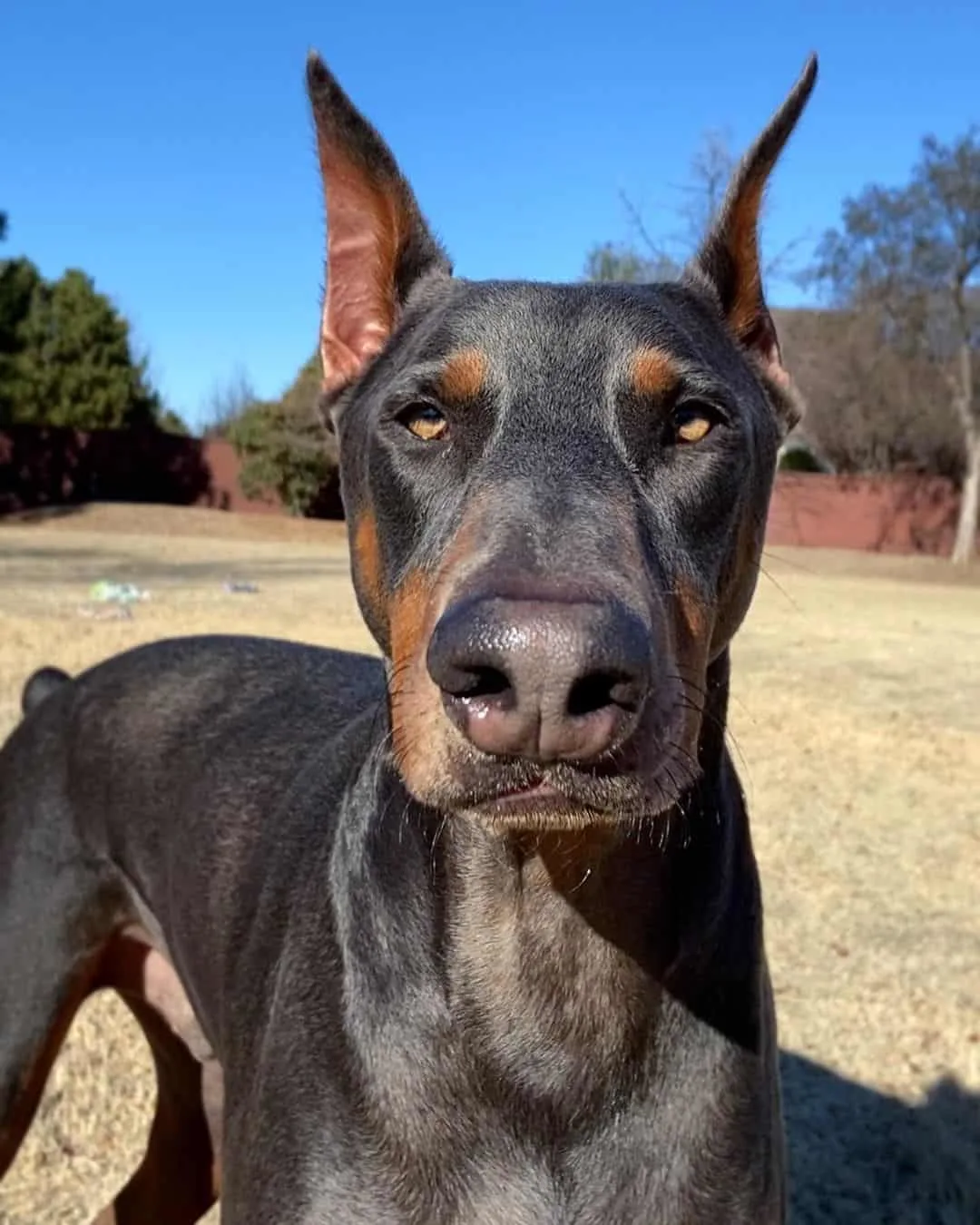
Image source: Bing (Web (fair-use with source credit))
Visual Guide: Reading Your Doberman's Coat and Skin
Your Doberman's coat is a window into their overall health. Learning to read what it's telling you is the difference between catching problems early and dealing with advanced conditions.
Normal Coat vs. Problem Coat
A healthy Doberman coat is short, hard, thick, and glossy. It should feel almost like a stiff carpet under your hand. The color should be rich and even, with the markings clearly defined.
A problem coat looks dull, brittle, or patchy. The hair might feel dry and straw-like. You might notice excessive shedding or bald spots.
These changes don't happen overnight, which is why weekly grooming is so important. You'll notice subtle shifts before they become serious issues.
Color Dilution Alopecia in Blue Dobermans
Blue Dobermans carry a diluted black pigment gene. This same gene can cause a condition called color dilution alopecia, which affects a significant portion of blue Dobermans at some point in their lives.
The symptoms are unmistakable. Patchy hair loss, particularly on the back, flanks, and thighs. The remaining hair looks thin and sparse.
The skin underneath might be scaly, itchy, or infected.
Grooming can't cure color dilution alopecia. It's a genetic condition with no known fix. But grooming can manage the symptoms.
Gentle brushing removes dead hair and stimulates the skin. Medicated shampoos can reduce itching and flaking. Moisturizing conditioners help soothe the irritated skin.
If you have a blue Doberman, watch for these signs starting around age 1 to 3. Early detection gives you the chance to adjust your grooming routine and include supportive products before the condition becomes severe.
Flaky Skin vs. Dandruff
Flaky skin and dandruff look similar but have different causes and treatments.
Dandruff is a specific condition called seborrhea. It produces greasy, yellowish scales that stick to the coat. It's often linked to allergies, hormonal issues, or nutritional deficiencies.
It needs veterinary attention.
Flaky skin is usually dryness. The flakes are white or gray and fall off easily. It responds well to moisturizing conditioners, dietary supplements like fish oil, and increased humidity in the home.
If you're not sure which one your dog has, look at the flakes. Greasy and yellow means seborrhea. Dry and white means simple dryness.
When in doubt, your vet can run a quick skin scraping to confirm.
The "Coat Funk" Smell
Every dog has a natural odor, but there's a difference between "dog smell" and "coat funk." Coat funk is a strong, unpleasant, almost sweaty odor that doesn't go away with wiping.
This smell usually comes from bacterial or yeast overgrowth on the skin. It often coexists with moisture, which is why coated areas that stay damp smell worse.
If your Doberman has persistent coat funk, start with better hygiene. Make sure they're fully dry after baths and after rain. Clean their ears regularly.
Brush them weekly to remove dead hair and debris.
If the smell persists despite good hygiene, see your vet. It could be a skin infection, allergies, or a hormonal imbalance like hypothyroidism. All of these are treatable, but they need proper diagnosis.
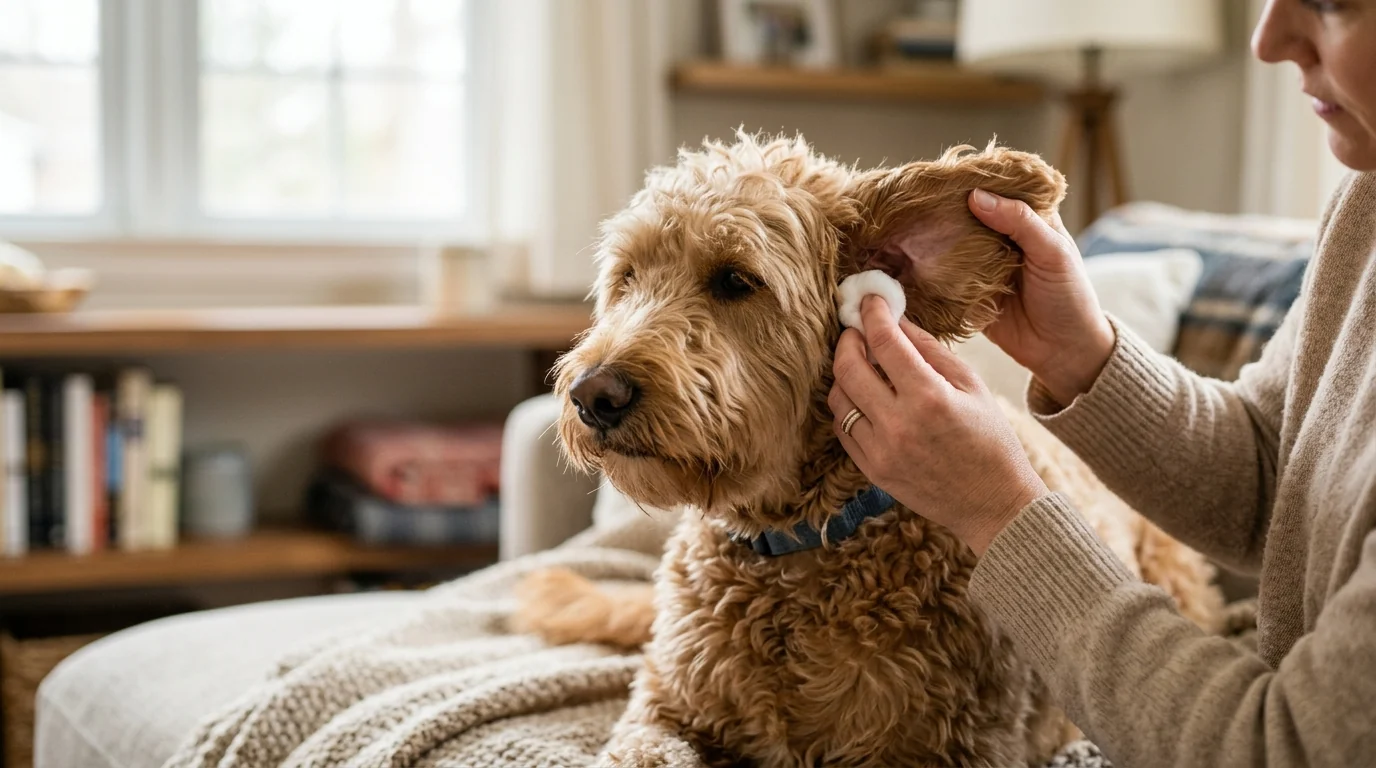
Image source: Bing (Web (fair-use with source credit))
Mistakes Even Experienced Owners Make
Grooming a Doberman seems simple, and it is. But simple doesn't mean error-free. Even seasoned owners slip up in ways that compromise their dog's coat and skin health.
Here are the mistakes we see most often.
Over-Bathing and Stripping Natural Oils
This is the most common mistake, hands down. Owners bathe their Doberman every week because they want the coat to look fresh and smell clean. The result is dry, itchy skin and a dull, brittle coat.
The coat's natural oils are its protection. They keep it shiny, flexible, and resistant to dirt. Strip those oils with frequent baths and the coat will look worse, not better.
Stick to the 6-to-8-week schedule. If your dog gets dirty between baths, use a damp towel or a dry shampoo made for dogs.
Scrubbing Too Hard on the Tucked-Up Abdomen
Dobermans have a famously tucked-up belly. That thin, sensitive skin sits close to the surface with minimal muscle or fat beneath. Scrubbing it hard with a brush or mitt is painful and can cause brush burn.
When you groom the abdomen, use light pressure. One or two passes with the mitt is enough. If your dog flinches or pulls away, you're pressing too hard.
Using the Wrong Deshedding Tool
Furminators and similar deshedding tools work by pulling out loose undercoat. Dobermans don't have an undercoat. Using these tools on a single-coated dog removes too many topcoat hairs and can leave the coat thin and patchy.
If you're dealing with shedding, a rubber mitt is the right tool. It removes loose topcoat hairs without damaging the rest of the coat. It also distributes natural oils, which improves shine.
Ignoring the Ears Until They Smell
You might not think about your dog's ears until you notice an odor during a snuggle session. By that point, the problem has usually developed into a full-blown infection.
Ear care is preventive. A two-minute wipe-down every week prevents the moisture buildup that leads to infections. It's one of the lowest-effort, highest-impact parts of the grooming routine.
Skipping Paw Care Until the Pads Crack
Dobermans are active dogs. They run on pavement, trails, and rocky terrain. Their paw pads take a beating.
Cracked pads are painful and can become infected. Regular inspection and balm application keep the pads supple and prevent cracking. In winter, this is non-negotiable.
In summer, hot pavement can burn the pads, so check them after walks.
Neglecting the Nails Until They Click
The click-click-click on hardwood floors is your dog telling you something. Long nails are uncomfortable and can alter your dog's gait, leading to joint strain over time.
Set a reminder on your phone. Every 3 to 4 weeks, sit down with your grinder and do a maintenance session. It takes 5 minutes.
Your dog's joints will thank you later.
Using Harsh Shampoos
Dog shampoos aren't all created equal. Some contain sulfates, artificial fragrances, and dyes that irritate sensitive skin. Your Doberman's single-layer coat means the skin gets no protection from an undercoat.
Harsh chemicals sit directly on the skin and cause reactions.
Read the ingredient list. Look for gentle, natural ingredients. Avoid anything with "fragrance" listed as an ingredient.
Oatmeal, aloe vera, and chamomile are all soothing options.
Forgetting the Finishing Pass
The rubber mitt removes loose hair. The finishing pass with a soft-bristle brush does something different. It smooths the coat, distributes oils, and gives the sheen that makes Dobermans look so striking.
Skipping this step leaves the coat slightly rough and uneven. It takes 90 seconds. It's the difference between a functional groom and a polished one.