
If you're cleaning damp cylinders of hair off the carpet more often than you'd like, you're in the right place. The honest answer to how to reduce cat hairballs starts somewhere most advice skips: counting them. Frequency tells you whether you're dealing with a grooming problem, a skin problem, or a gut problem.
Those three need completely different fixes.
Here's the number that changes everything. A cat bringing up more than one hairball a month is outside what most feline medicine specialists consider normal, and the cause usually isn't hair at all. Cats spend roughly 30 to 50 percent of their waking hours grooming, yet most pass that swallowed hair straight through in their stool.
So let's work out which cat you actually have.
Quick Answer
Reduce cat hairballs by cutting how much hair your cat swallows. Comb longhairs daily down to the undercoat. Feed more moisture through wet food.
Add fibre only if your vet agrees. Give petrolatum hairball gel between meals, not with them. Any cat bringing up more than one hairball a month needs a vet check, not more gel.
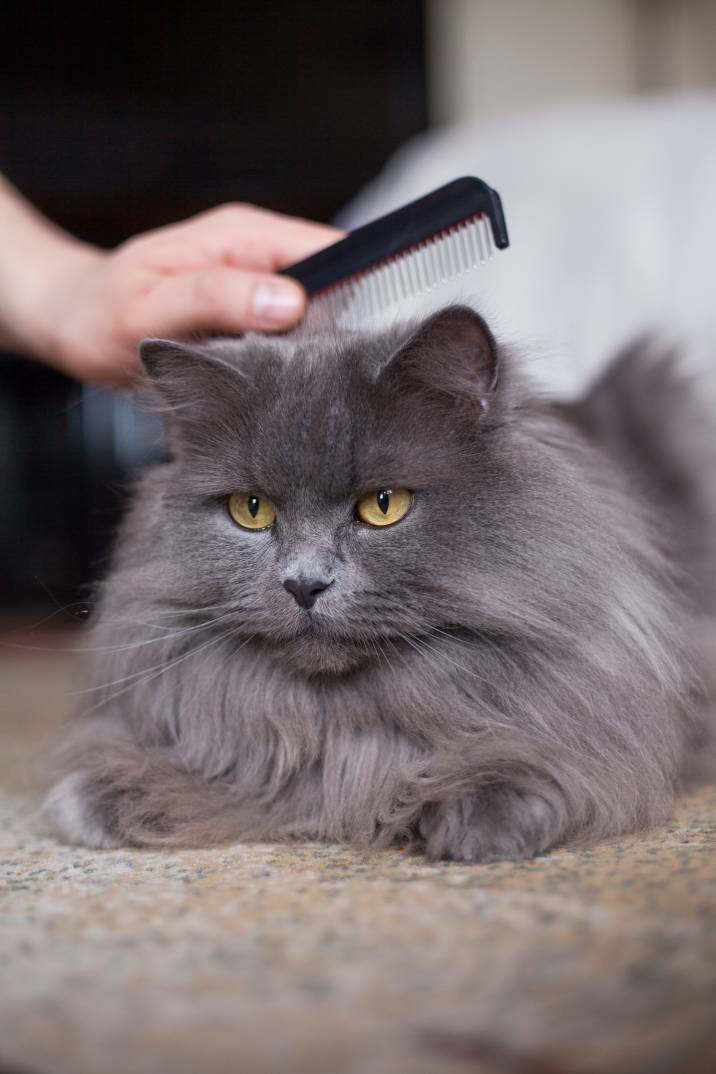
Image source: Web (Bing) / tailwagmart.com (Web image (fair-use with source credit))
Hairballs Aren't Normal in the Numbers Most Owners Think They Are
A hairball has a proper clinical name: a trichobezoar. It's a wad of swallowed hair bound with mucus and stomach fluid that never made it into the intestines. When it comes back up, it's usually tubular rather than round, because it takes the shape of the oesophagus on the way out.
Most owners treat hairballs as a fact of cat ownership. Something a cat just does, like knocking mugs off tables. That belief is what delays diagnosis of chronic gastrointestinal disease in thousands of cats every year.
Healthy cats swallow enormous amounts of hair. Their digestive tract is built to shift it. Hair moves from stomach to small intestine to colon and leaves in the litter tray, usually invisible to you.
Bringing it back up the other way is the exception.
What frequency actually tells you
Use this as your first sorting tool. Nothing else in this guide matters until you've placed your cat in one of these rows.
| How often | What it usually means | What to do |
|---|---|---|
| A few a year | Normal, especially in longhairs | Routine grooming, no action needed |
| Roughly one a month | Upper edge of normal | Step up grooming and review diet |
| More than one a month | Not normal | Book a vet appointment |
| Weekly or more | Likely skin or GI disease | Full vet workup, not more hairball gel |
| Retching with nothing produced | Possible obstruction | Same day or emergency vet |
That "more than one a month" line is the most useful threshold in this whole topic. In our research across feline internal medicine guidance, it comes up repeatedly as the point where "hairball" stops being a description and starts being a symptom.
Why the myth sticks around
Two reasons. Hairball products are everywhere, which quietly reinforces the idea that frequent hairballs are a normal thing to manage rather than investigate. And cats hide when they're unwell.
An owner finding two hairballs a week on the stairs assumes it's a hair volume issue, because that's the only variable they can see.
Meanwhile the real driver might be a flea allergy causing overgrooming. Or low grade inflammatory bowel disease slowing the stomach down. Or arthritis pain triggering compulsive licking over a sore hip.
Hair is the evidence left behind, not the crime.
The 60-Second Triage: Count First, Treat Second
Before you buy a single brush or tin of food, run this. It takes a minute and it decides which branch of the guide you belong on.
The five questions
Answer each one honestly. Guessing on frequency is the most common error, so if you're unsure, spend two weeks writing down every episode with a date.
- How many hairballs in the last 30 days? Count productive episodes only. Not gagging, not vomit that was mostly food.
- Does anything come up when your cat retches? Repeated heaving that produces nothing is a different problem entirely.
- Is the coat intact? Look at the belly, inner thighs, forelegs, and base of the tail. Bald patches, stubbly fur, or a coat that feels like velvet where it should feel like fur means overgrooming.
- Any change in weight, appetite, stools, or energy? Weight loss over 5 percent of body weight is a red flag on its own.
- How old is your cat? New hairballs in a cat over 11 puts hyperthyroidism, arthritis, and small cell lymphoma on the table.
Where your answers send you
Match your pattern to the branch, then work only that branch. Doing all four at once wastes money and tells you nothing about what worked.
| Your pattern | Your branch | Focus |
|---|---|---|
| Longhair, once a month or less, coat intact, cat well | Branch A | Grooming technique and frequency |
| Shorthair, or more than one a month, coat intact | Branch B | Diet, moisture, fibre, plus a vet check |
| Bald patches, belly stripe, constant licking | Branch C | Itch, pain, or stress. Skin workup |
| Senior cat, new or worsening episodes | Branch D | Vet bloods before anything else |
If you land on more than one branch, start with the one furthest down the table. A senior cat with a bald belly and weekly hairballs is not a grooming case. It's a vet case that happens to also need combing.
Why this order matters
Most people do it backwards. They buy hairball kibble and a deshedding tool, run it for two months, see no change, and only then book the vet. That's eight weeks lost, plus the cost of products that were never going to fix the underlying cause.
Triage first is cheaper and faster. It also means that when you do reach for grooming or diet changes, you'll be able to tell whether they worked.
What's Actually Happening Inside Your Cat
Understanding the mechanics makes every recommendation later on make sense. Three variables matter: how much hair goes in, how fast the gut moves it along, and how much moisture is in the system.

Image source: Web (Bing) / deviantart.com (Web image (fair-use with source credit))
Why a Cat's Tongue Collects So Much Hair
A cat's tongue is covered in filiform papillae, tiny backward-facing spines made of keratin, the same protein as claws and hair. They work like a one-way comb. Hair goes in, hair can't come back out.
That design is brilliant for grooming and terrible for hair disposal. Once a hair catches on those spines, the only route is down the throat. Your cat has no way to spit it out.
Now stack that against grooming time. Cats groom for roughly a third to half of their waking hours. During a spring moult, a semi-longhair like a Maine Coon or Norwegian Forest Cat sheds a startling volume of undercoat in a fortnight.
Most of it ends up swallowed.
Three things decide whether that hair leaves the tidy way or the messy way:
- Gut motility. How briskly the stomach empties and the intestines contract. Slow motility means hair sits and mats together.
- Moisture. A well-hydrated gut moves fibrous material along far more easily than a dry one.
- Fibre. The right kind binds hair into stool and carries it out.
Take any one away and hair starts pooling in the stomach. Once the mass gets too big to pass through the pylorus, the stomach's exit valve, the only remaining option is up.
The Difference Between Vomiting, Regurgitating, and Retching
Getting this right changes the vet conversation completely. Owners describe all three as "throwing up," and vets have to unpick it every consultation. Describe it accurately and you shortcut a lot of guesswork.
| What you see | What it is | What it suggests |
|---|---|---|
| Abdominal heaving, drooling, then contents come up | Vomiting | Stomach or systemic cause. Hairballs sit here |
| No effort, food slides out, often tubular and undigested | Regurgitation | Oesophageal issue, or eating too fast |
| Repeated heaving, nothing produced | Unproductive retching | Possible obstruction. Urgent |
| Coughing fit, crouched, neck extended, nothing comes up | Coughing | Often feline asthma, not hairballs at all |
That last row catches a lot of people out. A cat having an asthma attack crouches low, extends the neck, and makes a dry hacking sound. Owners see it and say "trying to bring up a hairball." It looks nearly identical.
It isn't.
The tell is the finish. A hairball episode ends with something on the floor. A cough ends with the cat swallowing and walking off.
If you're seeing repeated "hairball attempts" with nothing produced, film it on your phone and show the vet. That thirty second clip is one of the most useful diagnostic tools you can bring in.
Red Flags That Mean Stop and Call the Vet Today
Everything else in this guide can wait. This section can't. Cats are exceptional at masking illness, and hairball vomiting is one of the easiest symptoms in the world to dismiss.
Call your vet the same day if you see any of these:
- Repeated retching that produces nothing
- Vomiting more than two or three times in a day
- Unable to keep water down
- No food for 24 hours, especially in an overweight cat
- Lethargy, hiding, or a hunched posture
- A tense, painful, or distended belly
- No stool for 48 hours, or straining in the litter tray
- Blood in vomit or stool
- Pale, white, or yellow gums
- Rapid or open-mouth breathing
- Noticeable weight loss
The 24-hour appetite rule is not optional. Cats that stop eating are at real risk of hepatic lipidosis, where fat floods the liver and shuts it down. Overweight cats are most vulnerable. This can become life-threatening within days of anorexia, which is why "let's see how she is by the weekend" is bad advice for a cat that's off food.
Retching With Nothing Coming Up
If your cat heaves repeatedly and nothing comes out, stop treating it as a hairball. Reaching for more lubricant gel at this point is the classic mistake, and it wastes hours you don't have.
Unproductive retching can mean a mass is stuck. That might be a large trichobezoar wedged at the stomach outlet. It might equally be a foreign body, a tumour, or a section of intestine that's telescoped into itself.
Some cats keep eating and drinking around a partial obstruction, which is misleading.
A vet will start with a physical exam and abdominal palpation, then move to radiographs or ultrasound. Complete obstruction is a surgical emergency. Getting there early is the difference between a straightforward procedure and a section of dead bowel.
String, Thread, and Linear Foreign Bodies
This one deserves its own warning because the correct action is counterintuitive. If you can see string, thread, tinsel, or dental floss hanging from your cat's mouth or backside, do not pull it.
A linear foreign body anchors at one end, usually under the tongue or at the pylorus. The intestines keep trying to move the rest along, so the gut bunches up along the string like fabric on a drawstring. The string then saws through the intestinal wall from the inside.
Pulling makes it worse. You can tear the bowel in seconds. Cut the visible end short if it's caught on something and your cat is distressed, then get straight to a vet.
Cats who play with hair ties, ribbon, wool, or Christmas tinsel are at higher risk. So are cats who chew plastic bags. If you've got a string chewer and they start vomiting, treat it as an obstruction until a vet says otherwise.
The Cornell Feline Health Center publishes solid owner-facing guidance on feline GI emergencies.
The Four Things That Actually Drive Hairball Frequency
Once you've ruled out an emergency, this is where the real diagnostic work happens. Virtually every frequent-hairball cat traces back to one or more of these four drivers. Work out which applies and the fix becomes obvious.
Coat Type and Shedding Load
This is the driver everyone assumes is theirs. Sometimes it genuinely is.
Longhaired and semi-longhaired breeds swallow far more hair per grooming session than shorthairs. Persians, Himalayans, Maine Coons, Norwegian Forest Cats, Ragdolls and British Longhairs all carry dense undercoats that shed continuously. A Persian's cottony coat mats fastest of the lot.
Dense-coated shorthairs count too. British Shorthairs and Russian Blues have plush double coats that shed heavily even though the hairs are short.
Two things massively increase shedding load:
- Seasonal moult. Spring and autumn coat changes are driven by daylight length, and they're brutal in outdoor-access cats.
- Central heating and air conditioning. Indoor cats in climate-controlled homes often shed steadily all year instead of in two defined bursts. As of 2026, with most UK and US homes heated through winter, year-round shedding is the norm for indoor cats.
If your cat is a longhair, has an intact glossy coat, eats well, holds weight, and brings up a hairball roughly monthly during moulting season, this is almost certainly your only driver. You're on Branch A and combing technique is your whole answer.
Overgrooming From Itch, Pain, or Stress
Here's the one that gets missed most. A cat that grooms more swallows more hair, full stop. The volume going in doubles or triples, and no brush will keep up.
Overgrooming leaves signatures you can see:
- A bald or stubbly stripe down the belly, often called a "racing stripe"
- Thin fur on the inner thighs and forelegs
- Broken hairs that feel like stubble rather than smooth fur
- Fur loss over one hip or one flank only, which usually points to pain underneath
- Small scabs, especially along the back and around the neck and tail base
The most common causes, roughly in order of frequency:
| Cause | Typical clue |
|---|---|
| Flea allergy dermatitis | Scabs and hair loss over the lower back and tail base |
| Environmental allergy (atopy) | Face, ears, feet, belly. Often seasonal |
| Food reaction | Head and neck itch, sometimes with loose stools |
| Mites (Cheyletiella, Demodex gatoi) | Scurfy coat, contagious between cats |
| Pain: arthritis, cystitis, dental | Licking one specific area, usually one-sided |
| Stress or conflict | Symmetrical belly and flank loss, no skin lesions |
"But my cat is indoors only." Indoor cats absolutely get fleas. Fleas hitch in on humans, dogs, and secondhand furniture, and heated homes let them breed all year. Ruling fleas out with a vet-supplied preventive across every pet in the house is the cheapest, fastest test you can run.
Feline idiopathic cystitis is worth flagging separately. Cats with bladder pain lick their lower belly obsessively, and owners read it as grooming. If the licking is concentrated in front of the back legs and your cat is visiting the tray more often, mention it.
Gut Motility and Chronic Enteropathy
If your cat is shorthaired, well-coated, not overgrooming, and still bringing up hairballs regularly, the problem is transit rather than volume.
Chronic enteropathy is the umbrella term for long-running gut inflammation, and it includes inflammatory bowel disease. Inflamed intestines don't contract properly. Hair that should have been swept along within hours instead sits, tangles, and accumulates.
The awkward part is that low-grade alimentary lymphoma looks nearly identical to IBD on the surface. Same vomiting, same weight loss, same intermittent diarrhoea. Telling them apart needs ultrasound plus biopsy, not guesswork.
Signs that point here rather than at the coat:
- Shorthaired cat with frequent hairballs
- Intermittent soft stools or diarrhoea
- Slow weight loss over months
- Vomiting that sometimes contains food, sometimes bile, sometimes hair
- Grumbling appetite, picky one day and ravenous the next
There's a practical trap in this branch. Standard hairball-control diets work by adding insoluble fibre, which increases bulk. In a cat with an inflamed gut, more bulk can make vomiting worse.
That's why "just switch to hairball food" is poor advice for this group.
Body Condition and Grooming Reach
The least discussed driver, and one of the most fixable.
An overweight cat physically cannot reach its own lower back, tail base, and hindquarters. Those areas mat. The cat compensates by over-grooming everything it can reach, which concentrates hair ingestion into the front half of the body.
Use a body condition score from 1 to 9. You want a 4 or 5. At an ideal score you should feel ribs easily under a thin fat layer, see a waist from above, and see a tummy tuck from the side.
The World Small Animal Veterinary Association publishes a free body condition score chart worth printing out.
The same problem hits arthritic seniors from the other direction. They stop grooming their back end because twisting hurts. You get a matted rump and a cat swallowing less hair, not more.
Those cats often present with constipation rather than hairballs.
Practical takeaways for this driver:
- Weigh your cat monthly on a kitchen scale, not by eye. A 400g gain on a 4kg cat is 10 percent of body weight.
- Matted britches and a greasy tail base in a heavy cat means you're grooming those zones from now on.
- Any senior cat that suddenly stops grooming should be assessed for arthritis pain before you assume laziness.
Most cats with a real hairball problem have two of these four drivers running at once. A slightly overweight longhair in spring moult. A shorthair with mild IBD and an undiagnosed flea allergy.
Identifying both is what separates a fix that lasts from one that fades in a month.
Your Decision Path: Which Branch Does Your Cat Fall Into?
You've got your frequency count and your driver. Here's the plan for each branch, including how long to run it before you judge whether it worked.
The rule that holds across all four: change one thing at a time, give it four weeks, write down what happens. Stack three changes at once and you'll never know which one earned the result.
Branch A. Longhair, Seasonal, Once a Month or Less
Your cat is well. The coat is intact, weight is stable, appetite is good. Hairballs cluster around spring and autumn moult.
Your plan:
- Comb daily during moult, three times a week the rest of the year
- Comb down to the skin, not across the top of the coat
- Check and clear the four mat zones weekly: armpits, britches, behind the ears, tail base
- Move at least half the daily calories to wet food if you're feeding dry only
- Reassess after four weeks of consistent combing
When to escalate: if daily combing for a month doesn't cut frequency at all, you're not on Branch A. Move to Branch B and book a vet check.
Branch B. Shorthair or Frequent Hairballs
Shorthaired cats bringing up hairballs regularly are the clearest signal that hair volume isn't the issue. Transit is.
Your plan:
- Book a vet appointment first. Don't run diet trials blind
- Ask specifically for weight history, abdominal palpation, and a faecal test
- Once serious disease is ruled out, raise moisture intake before touching fibre
- Then run a single fibre or diet change for four weeks and log the result
- Have your cat weighed monthly at the practice, free at most surgeries
When to escalate: any weight loss, soft stools, or bile vomiting means push for bloods, total T4, and abdominal ultrasound rather than another food swap.
Branch C. Bald Patches, Belly Stripe, or Constant Licking
This branch is a skin case wearing a hairball costume. Grooming and diet changes are close to pointless until the itch or pain is dealt with.
Your plan:
- Start a vet-supplied flea preventive on every cat and dog in the house, and keep it going at least three months
- Treat the environment too. Most of a flea population lives in carpet and bedding, not on the cat
- If licking continues after three months of proper flea control, ask about a strict eight-week elimination diet trial
- Photograph the bald areas monthly so you can see change objectively
- If the fur loss is one-sided or over a joint, ask for a pain assessment before assuming allergy
When to escalate: open sores, bleeding, or a cat that licks through the night needs seeing sooner. Secondary bacterial infection is common and needs treating alongside the cause.
Branch D. Senior Cat With New or Worsening Episodes
A cat over 11 that suddenly starts producing hairballs after a lifetime of none has changed internally. That's the story, not the hair.
Your plan:
- Vet appointment first, no exceptions
- Ask for CBC, biochemistry, total T4, and urinalysis as a baseline
- Mention any change in water intake, appetite, night vocalising, or jumping ability
- If bloods are clean, ask about abdominal ultrasound and cobalamin (B12) testing
- Only start grooming or diet changes once you know what you're treating
Hyperthyroidism, chronic kidney disease, arthritis, and low-grade lymphoma all live in this age bracket. All four can present as "he's been bringing up more hairballs lately." Skipping bloods to save a hundred pounds here is a false economy.
Branch A in Practice: Getting the Grooming Right
Grooming is the only intervention that reduces hairballs at the source. Everything else manages hair that's already been swallowed. Done properly, it's also the fastest to show results.
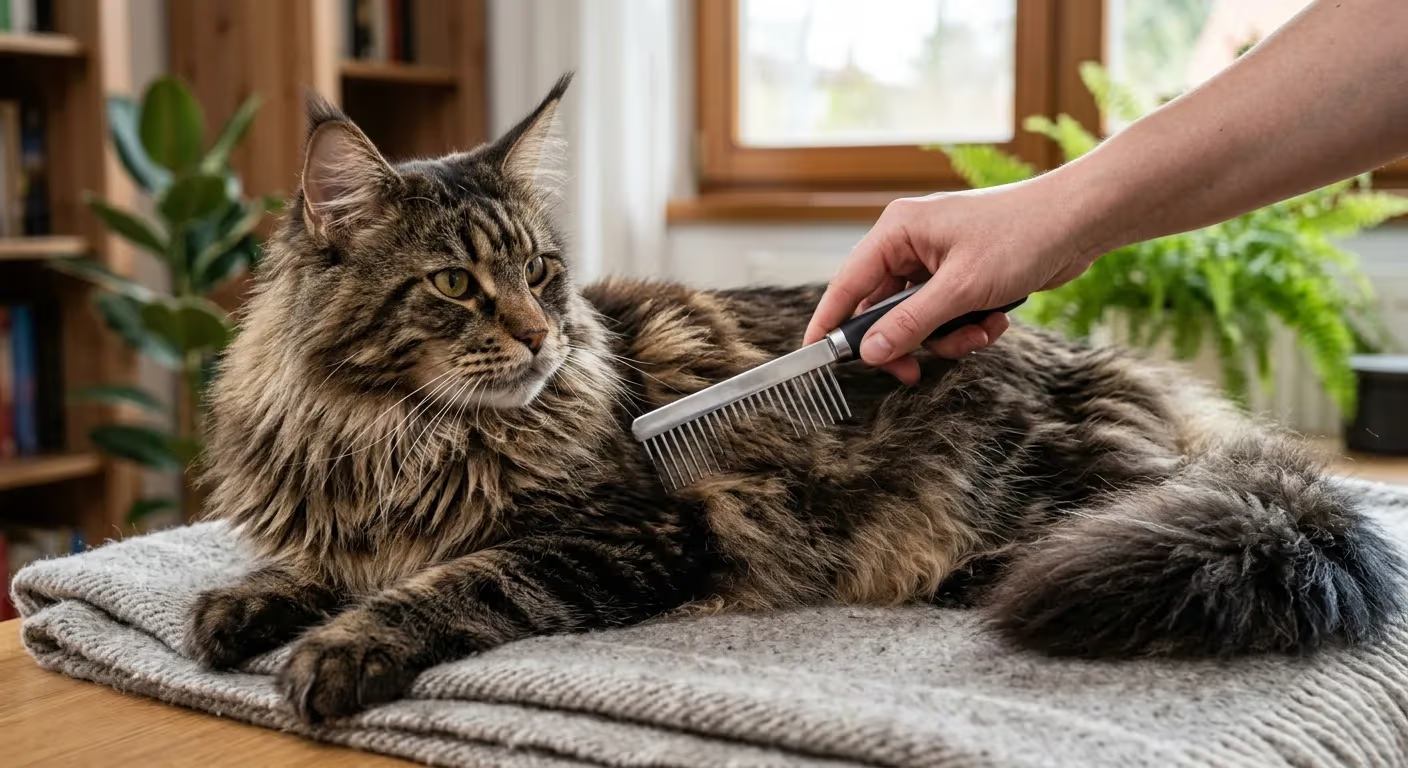
Image source: Bing (Web (fair-use with source credit))
Matching the Tool to the Coat
Most owners own the wrong tool for their cat's coat, and it's why brushing "doesn't work" for them. A slicker brush on a Persian removes almost nothing from the undercoat. A steel comb on a Devon Rex is uncomfortable and pointless.
| Coat type | Example breeds | Right tool | Frequency |
|---|---|---|---|
| Short single coat | Siamese, Burmese, Oriental | Rubber curry or grooming mitt | Weekly |
| Short dense double coat | British Shorthair, Russian Blue | Fine undercoat rake, then comb | 2 to 3 times weekly |
| Semi-longhair | Maine Coon, Norwegian Forest, Ragdoll | Coarse/fine steel comb | Daily in moult |
| Cottony longhair | Persian, Himalayan | Steel comb plus mat splitter | Daily, no exceptions |
| Rex coat | Devon Rex, Cornish Rex | Soft cloth or hands only | Weekly wipe-down |
The most useful tool for a longhaired cat is a stainless steel comb with two tine spacings, often sold as a greyhound comb. Coarse end to open the coat, fine end to finish. Tine length matters more than brand.
Manufacturer specifications typically list tines between 25mm and 40mm, and you want the longer end for a Maine Coon or Persian.
Line Combing vs Surface Brushing
Line combing separates useful grooming from decorative grooming. Surface brushing only lifts hair that was already falling out. Line combing pulls loose undercoat that would otherwise be swallowed within days.
Here's how it works:
- Sit the cat on a towel or non-slip mat, ideally on a raised surface
- Part the coat with your free hand so you can see skin
- Comb the exposed strip downward, from skin outward, in short strokes
- Move your parting hand up about a centimetre and repeat
- Work in sections: shoulder, flank, hip, chest, then the awkward bits
You'll know it's working when the comb comes out loaded with soft, pale, fluffy undercoat rather than smooth top hairs. If you're only getting glossy guard hairs, you're not reaching deep enough.
The four zones people always skip:
- Armpits. Friction point, mats fastest, most cats hate it. Do it in five-second bursts.
- Britches. The trousers at the back of the thighs. Dense and easy to miss.
- Behind the ears. Small mats form here almost invisibly.
- Tail base. Greasy in unneutered males and overweight cats.
Dealing With Mats Without Hurting Your Cat
Never try to comb a solid mat out. Cat skin is far thinner than human skin, and a tight mat pulls on it constantly.
Split first, comb second. Use a mat splitter or the blade of a dematting rake to cut the mat into two or three strips, then work the edges loose with the fine comb. Small mats come apart in a minute or two this way.
Scissors near cat skin are genuinely dangerous. Mats sit tight against the body and lift the skin with them, so what looks like a gap under the mat is often skin. Lacerations from owner dematting are a routine emergency presentation. If you must trim, use blunt-nosed scissors held parallel to the body, or better, small clippers with a number 10 blade.
Anything larger than a two pence coin or a US quarter, or any mat that's pulled the skin into a ridge, is a job for a groomer or vet. A sedated clip is unpleasant and expensive but far better than a skin tear.
The 5-Minute Session Rule for Cats Who Hate Brushing
Short sessions beat thorough ones. A cat combed for two minutes then released will tolerate it forever. A cat pinned for twenty minutes learns to bolt when it sees the comb.
Practical approach:
- Cap sessions at three to five minutes at first
- Stop while the cat is still relaxed, not when it starts wriggling
- End on the cat's favourite spot, usually cheeks or chin
- Pair with a licky mat or squeeze treat so the comb predicts something good
- Split a full longhair comb-out across three or four sessions in a week
Watch the tail. A twitching or thumping tail means you're one stroke from a bite. Stop there and you keep your progress.
Push past it and you undo weeks.
If your cat is genuinely aversive, start by touching them with the comb for two seconds and giving a treat. No combing at all for the first week. Aggregate owner reports show this counter-conditioning approach works faster than forcing sessions, though it feels painfully slow at the start.
Branch B in Practice: Diet, Fibre, and Moisture
If hair is moving too slowly through the gut, diet is your lever. Get the order right though. Moisture first, fibre second, specialist food last.
Soluble vs Insoluble Fibre, and When Fibre Backfires
The two fibre types do completely different jobs, and most owners never realise they're choosing between them.
| Fibre type | Common sources | What it does | Best for |
|---|---|---|---|
| Insoluble | Powdered cellulose, wheat bran | Adds bulk, speeds transit | Healthy gut, hair volume issue |
| Soluble | Psyllium husk, pumpkin, beet pulp | Forms gel, holds water, softens stool | Cats prone to constipation |
| Mixed | Beet pulp, inulin, chicory root | Bulk plus fermentation | General GI support |
Standard adult cat food runs around 1.5 to 3.5 percent crude fibre on the guaranteed analysis. Hairball-control formulas typically sit between 5 and 10 percent, sometimes higher. That difference is almost entirely added insoluble fibre.
Where it backfires. In a cat with inflammatory bowel disease or chronic enteropathy, piling in insoluble fibre increases bulk that an inflamed gut struggles to move. Vomiting can get worse. That's why Branch B starts with a vet visit rather than a food swap.
Psyllium is the gentler option for most cats and the one vets reach for more often. Dosing is small, usually a quarter to a half teaspoon mixed into wet food once or twice daily for an average 4 to 5kg cat. Confirm the dose with your vet first, and only ever use plain unflavoured psyllium.
Sweetened human fibre products can contain xylitol.
Pumpkin gets recommended constantly online. Plain 100 percent pumpkin purée is safe and provides some soluble fibre, but the fibre content per teaspoon is low. You'd need a meaningful volume to match a small pinch of psyllium, and most cats won't eat that much.
Never use pumpkin pie filling, which is loaded with sugar and spice.
Where Hairball-Control Kibble Helps and Where It Doesn't
Hairball-control dry food works for one specific cat: a healthy longhair with a high shedding load and no underlying disease. For that cat, it's a useful passive tool.
It does not work for:
- Cats overgrooming from allergy, since the input volume is the problem
- Cats with IBD or suspected chronic enteropathy
- Cats whose hairballs stem from slow motility caused by disease
- Cats already eating mostly wet food and drinking well
There's a hidden trade-off with dry hairball formulas. Dry food sits around 10 percent moisture. Canned food runs 75 to 78 percent.
Feeding a high-fibre dry food to a cat that already drinks poorly pulls the system drier, which is the opposite of what you want.
If you do switch, transition over 7 to 10 days. Start at roughly 25 percent new food, move to 50 percent by day four, 75 percent by day seven. Abrupt switches cause the exact vomiting you're trying to stop.
Check the label for an AAFCO nutritional adequacy statement in the US, or FEDIAF compliance in the UK and EU. Both confirm the food is complete and balanced rather than a supplement.
Raising Water Intake Without a Fight
A cat needs roughly 45 to 60ml of water per kilogram of body weight per day from all sources combined. For a 4.5kg cat, that's around 200 to 270ml daily. A cat on dry food alone gets almost none of that from food.
What actually moves the needle, in rough order of effect:
- Switch some or all meals to wet food. Nothing else comes close. Half wet, half dry already transforms daily water intake.
- Add water to wet food. A tablespoon stirred in is usually accepted without complaint.
- Move the water away from the food bowl. Cats instinctively avoid drinking beside food.
- Use wide, shallow bowls. Whisker contact with bowl sides puts a lot of cats off.
- Add a second and third water station in rooms the cat actually uses.
- Try a fountain. Some cats love moving water. Others ignore it entirely.
Ceramic, glass, or stainless steel beats plastic. Plastic scratches, holds bacteria, and some cats object to the smell.
If your cat suddenly starts drinking far more than usual, that's not a win. Increased thirst points toward kidney disease, diabetes, or hyperthyroidism, and needs a vet visit.
Hairball Gels and Lubricants: How to Use Them Properly
Lubricant gels are the most misused product in this category. They're not a cure and they don't reduce shedding. What they do is coat swallowed hair so it slides through instead of clumping.
Most are built on white petrolatum, which is medical-grade petroleum jelly. Malt, tuna, or chicken flavouring gets added so cats will lick it off a finger. Products like Laxatone sit in this category, and manufacturer instructions generally recommend a small ribbon, roughly a quarter to a half teaspoon, given a few times a week rather than daily.
Why Timing Around Meals Matters
Give lubricant gel between meals, not with food. Petrolatum coats intestinal contents indiscriminately, including nutrients.
The concern is fat-soluble vitamin absorption. Vitamins A, D, E and K all need dietary fat to be absorbed. A lubricant layer sitting over a meal reduces that uptake.
Occasional use is unlikely to matter. Daily use alongside every meal for months is a different story.
Practical timing:
- Give it at least an hour before or two hours after a meal
- Smear it on a front paw or the roof of the mouth if your cat won't lick it from a finger
- Never force it down the throat with a syringe
- Use for a few days around heavy moulting, then stop
Long-term daily use should always be a vet decision. If your cat needs gel every single day to stay comfortable, the gel is masking something. That's a diagnostic conversation, not a purchasing one.
The Mineral Oil Mistake You Should Never Make
Never syringe mineral oil or liquid paraffin into a cat's mouth. This is the one home remedy that can kill.
Mineral oil has no taste and no texture. It doesn't trigger the swallowing reflex properly. Squirted into the back of the mouth, it can pour straight into the trachea and down into the lungs.
The result is lipoid aspiration pneumonia, which is difficult to treat and sometimes fatal.
The same warning applies to any oil given by syringe. Olive oil, butter, and cooking oil get suggested constantly online. They add pointless calories, they don't lubricate the way petrolatum does, and high-fat boluses can trigger pancreatitis in susceptible cats.
Other products to keep away from your cat entirely:
- Human laxatives and stool softeners without vet direction
- Polyethylene glycol 3350 unless specifically dosed by your vet
- Any fibre supplement containing xylitol or artificial sweeteners
- Essential oils, particularly tea tree, citrus, pine, and eucalyptus
- Dog flea treatments containing permethrin, which is lethal to cats
That last one deserves emphasis. Permethrin poisoning from dog spot-on products applied to cats is a common and often fatal emergency. If you're treating fleas as part of Branch C, get cat-specific products from a vet.
Worth knowing: hairball gels and supplements are not licensed medicines. In the US they sit outside the FDA's drug approval process, and in the UK they aren't assessed by the Veterinary Medicines Directorate as veterinary medicinal products. Nobody has had to prove they work to a regulatory standard.
That doesn't make them useless, but it explains the gap between marketing claims and clinical evidence.
Grooming Tools Compared: Comb, Rake, Slicker, or Deshedder
Four tool categories, four different jobs. Buying the wrong one is the most common reason owners conclude their cat "can't be brushed."
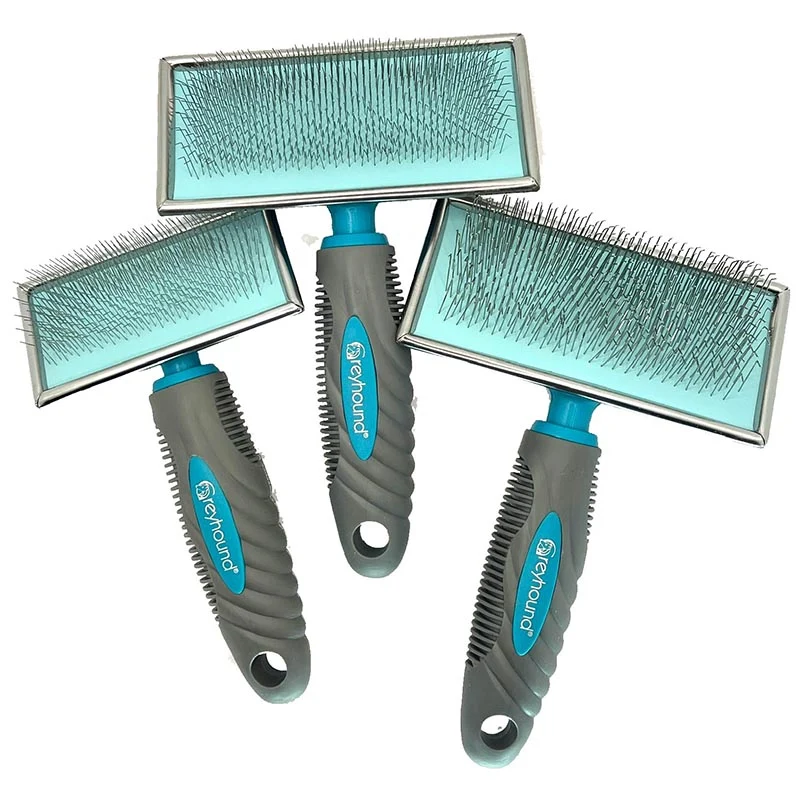
Image source: Bing (Web (fair-use with source credit))
| Tool | How it works | Best for | Watch out for |
|---|---|---|---|
| Steel greyhound comb | Long tines reach skin, two spacings | Longhairs and semi-longhairs. The workhorse | Skin scraping if tines are too short for the coat |
| Undercoat rake | Widely spaced curved teeth pull dead undercoat | Dense double coats, moulting season | Overuse thins the coat |
| Slicker brush | Fine angled wire pins lift surface loose hair | Finishing, medium coats | Brush burn from pressing too hard |
| Rubber curry or mitt | Static and grip lift short loose hair | Shorthairs, brush-averse cats | Removes almost nothing from an undercoat |
| Deshedding blade tool | Micro-serrated edge strips undercoat fast | Heavy seasonal shedders | Cuts guard hairs if overused |
Which one should you actually buy?
Buy a steel comb first, whatever your cat. It's the only tool that shows you what's happening at skin level, and it's the one groomers reach for most.
Then add a second tool matched to your situation:
- Heavy moulting longhair: an undercoat rake for the peak weeks
- Dense shorthair like a British Shorthair: a fine rake or slicker
- Cat that hates being brushed: a rubber mitt, and rebuild tolerance from there
- Very heavy seasonal shedder: a deshedding tool used sparingly, once a week in moult
Features worth paying for: rounded pin tips, a flexible head that follows body contours, comfortable weight, and solid tine anchoring. Features that don't matter much: self-cleaning eject buttons on cat-sized tools, and colour options.
The deshedding tool trap
Blade-style deshedding tools work brilliantly and get overused constantly. The blade is micro-serrated. Used weekly in moult, it strips dead undercoat.
Used daily year-round, it cuts and thins guard hairs and leaves the coat patchy and dull.
Aggregate owner reviews follow a clear pattern. Excellent early results, then complaints about coat texture after a few months of heavy use. Treat it as a seasonal tool, not a daily one.
Pressure is the other issue. These tools need almost no downward force. Let the weight of the tool do the work.
Pressing hard causes brush burn, a red irritated stripe of skin that shows up a day later and makes your cat refuse the next session.
Do you need a professional groomer?
Yes, in three situations. Extensive matting that can't be split at home. A cat too fearful or defensive to be handled safely.
Or a longhair whose owner physically can't manage daily combing, such as someone with arthritis or limited grip.
Expect roughly £35 to £90 in the UK or $50 to $120 in the US for a standard cat groom. A sedated clip at a veterinary practice runs higher, often £120 to £300 or $150 to $350, because it includes sedation, monitoring, and vet time.
A sanitary trim, clipping the fur around the back end and under the tail, is a small job that solves a lot of problems in longhaired and overweight cats. Worth asking for even if the rest of the coat is fine.
One thing to avoid: full body shaves as a hairball strategy. Shaving a longhaired cat removes the undercoat's insulating function, exposes skin to sunburn, and in some cats the coat regrows patchy or with altered texture. It's a solution for severe matting, not a routine hairball fix.
What the Vet Workup Looks Like If Hairballs Keep Coming
Knowing what to expect makes the appointment far more productive. It also stops you leaving with a tin of hairball food when what you needed was a blood panel.
Bring three things: your hairball diary, a phone video of an episode, and your cat's weight history. Vets consistently say those three shortcut more guesswork than anything else an owner can supply.
Bloods, T4, and Faecal Testing
This is the first tier, and it's where most cases get sorted. Expect a physical exam first, including abdominal palpation, a thyroid gland check at the neck, and a body condition score.
The standard opening panel:
- CBC (complete blood count). Looks for inflammation, infection, and anaemia.
- Biochemistry. Kidney and liver values, glucose, electrolytes, protein levels.
- Total T4. Thyroid hormone. Non-negotiable in any cat over 8 with vomiting.
- Urinalysis. Kidney concentrating ability and evidence of cystitis.
- Faecal float and Giardia test. Parasites cause chronic vomiting far more often than owners expect.
Low total protein or low albumin points toward gut disease. Raised T4 confirms hyperthyroidism, which is one of the more satisfying diagnoses because treatment usually resolves the vomiting outright.
A clean first-tier panel doesn't mean nothing's wrong. It means the common systemic causes are off the table and you're looking at the gut itself.
Ultrasound, Cobalamin, and the IBD vs Lymphoma Question
Abdominal ultrasound is the next step, and it's the one worth pushing for. It measures intestinal wall thickness and layering, checks lymph nodes, and rules out masses and foreign material.
Normal feline small intestinal wall thickness sits around 2 to 2.5mm. Consistent thickening beyond that, particularly with loss of the normal layered appearance, points to chronic enteropathy. Enlarged mesenteric lymph nodes raise concern for lymphoma.
Alongside imaging, ask about the GI panel:
| Test | What it shows | Why it matters |
|---|---|---|
| Cobalamin (B12) | Absorption in the ileum | Low levels indicate distal small intestinal disease |
| Folate | Absorption in the jejunum | Abnormal levels suggest proximal disease or bacterial overgrowth |
| fPLI | Pancreatic inflammation | Cats often have concurrent pancreatitis |
| TLI | Pancreatic enzyme output | Rules out exocrine pancreatic insufficiency |
Low cobalamin is common in cats with chronic enteropathy and it's easily corrected with injections or oral supplementation. Correcting it often improves appetite and vomiting on its own.
The frustrating part is the IBD versus small cell lymphoma question. Ultrasound can't separate them. Neither can bloods.
Only biopsy can, either endoscopic samples or full-thickness surgical biopsies.
Endoscopy is less invasive but only samples the surface layers, and it can't reach the whole small intestine. Full-thickness biopsy via laparotomy gives a definitive answer but is bigger surgery. Your vet will weigh your cat's age, stability, and anaesthetic risk.
Some cats get treated empirically instead. A diet trial with a hydrolysed protein food, then steroids if needed, and the response tells the story. That's a reasonable path for an older cat where surgery carries real risk.
Discuss it openly rather than assuming biopsy is the only option.
Costs You Can Expect at Each Stage
Costs vary by region, practice type, and whether you're in a city. These ranges reflect typical UK and US private practice pricing as of 2026 and are a planning guide, not a quote.
| Stage | UK | US |
|---|---|---|
| Steel greyhound comb | £10 to £30 | $12 to $35 |
| Undercoat rake or slicker | £8 to £25 | $10 to $30 |
| Deshedding blade tool | £18 to £40 | $20 to $45 |
| Hairball gel, 70g tube | £6 to £12 | $8 to $15 |
| Hairball-control dry food, 3 to 7kg | £18 to £50 | $20 to $60 |
| Vet-supplied flea preventive, 3 months | £25 to £45 | $35 to $70 |
| Standard consultation | £40 to £70 | $50 to $95 |
| CBC, biochemistry and T4 | £90 to £190 | $120 to $250 |
| Urinalysis and faecal testing | £40 to £90 | $50 to $120 |
| Abdominal ultrasound | £250 to £500 | $300 to $600 |
| Hydrolysed prescription diet, monthly | £45 to £80 | $60 to $110 |
| Endoscopy with biopsy | £900 to £2,000 | $1,200 to $2,500 |
| Professional groom | £35 to £90 | $50 to $120 |
| Sedated clip for matting | £120 to £300 | $150 to $350 |
| Foreign body surgery | £1,200 to £4,000+ | $1,500 to $5,000+ |
Where the money is best spent
Front-load the diagnostics. The most expensive route through this problem is buying products for a year, then discovering the cause was hyperthyroidism all along.
A consult plus first-tier bloods costs roughly £130 to £260 in the UK. That's about the same as two months of prescription food, and it either finds the answer or narrows the search dramatically.
Cheapest interventions with the best return, in order:
- A steel comb and ten minutes a day. Under £30 and it fixes most genuine Branch A cases.
- Proper flea control on every pet. Cheap, and rules out the most common overgrooming cause.
- Switching part of the diet to wet food. Often cost-neutral if you drop equivalent dry.
- A vet consult with your diary in hand. Buys direction instead of guessing.
Skip the sedated dematting cost entirely by staying on top of the four mat zones weekly. That single habit is worth hundreds a year in a Persian or Maine Coon household.
Does pet insurance cover this?
Usually yes for the diagnostics, provided the policy is lifetime cover and the signs weren't present before the policy started. Investigation of chronic vomiting is a legitimate claim in most UK lifetime policies and most US accident-and-illness plans.
What's almost never covered: grooming, hairball gels, over-the-counter supplements, and standard commercial hairball diets. Prescription therapeutic diets are sometimes covered in part, depending on the insurer.
Pre-existing condition exclusions are the catch. A cat with a documented history of chronic vomiting before the policy start date will typically have GI conditions excluded. Check your wording before you assume you're covered.
Mistakes That Make Hairballs Worse
Some of these waste effort. Others actively cause harm.
Diagnostic mistakes
- Treating every vomit as a hairball. The most expensive mistake in this topic, measured in delayed diagnoses.
- Not counting. Owners routinely underestimate frequency by half, because cats often vomit where they can't be seen.
- Adding more gel to unproductive retching. If nothing's coming up, lubricant isn't the answer. A vet is.
- Dismissing weight loss. A cat losing 300g over six months looks identical day to day. Only the scale catches it.
- Assuming indoor cats can't have fleas. They can and they do.
- Ignoring one-sided fur loss. Licking over one hip is a pain signal, not a coat problem.
Grooming mistakes
- Brushing the top of the coat only. Feels productive, removes almost nothing that would have been swallowed.
- Combing a mat instead of splitting it. Painful, slow, and it teaches your cat to hate the comb.
- Using a deshedding blade daily. Thins the coat and damages guard hairs over a few months.
- Pressing hard. Causes brush burn. Let the tool's weight do the work.
- Long sessions. Twenty minutes of restraint undoes weeks of tolerance building.
- Scissors flat against skin. Cat skin lifts with the mat. Lacerations happen fast.
- Shaving a longhair as a hairball fix. Removes thermoregulation, risks sunburn, and can change coat regrowth.
Diet and product mistakes
- Switching food overnight. Causes the vomiting you're trying to stop. Transition over 7 to 10 days.
- Adding insoluble fibre to a cat with suspected IBD. More bulk into an inflamed gut makes things worse.
- Giving petrolatum gel with meals. Interferes with fat-soluble vitamin absorption over time.
- Syringing any oil into the mouth. Aspiration pneumonia risk. Never do it.
- Butter, olive oil, or cooking oil as a home remedy. Empty calories, pancreatitis risk, no meaningful lubricant effect.
- Human laxatives without vet direction. Dosing is completely different and some contain xylitol.
- Running three changes at once. You learn nothing about what worked.
- Feeding high-fibre dry food to a cat that barely drinks. Pulls the system drier.
Household mistakes
- Leaving hair ties, ribbon, and tinsel accessible. Linear foreign bodies are a surgical emergency.
- Treating only one pet for fleas. The untreated animal reseeds the household within weeks.
- Skipping environmental flea treatment. Most of the population lives in carpet and bedding.
- Free-feeding an overweight cat. Weight gain reduces grooming reach and creates matted hindquarters.
- Not increasing litter tray count in multi-cat homes. Stress drives overgrooming. The n+1 rule applies here too.
Tracking Progress: The 4-Week Hairball Diary
Without a log, you're relying on memory, and memory is unreliable for something that happens every few days. A diary turns a vague sense of "maybe a bit better" into a number you can act on.
Four weeks is the right window. Long enough for a grooming or diet change to show effect. Short enough that you'll actually stick with it.
What to record
Keep it to one line per episode. Notes app, kitchen calendar, whatever you'll actually use.
| Field | Example entry | Why it matters |
|---|---|---|
| Date and time | 14 March, 7am | Reveals patterns around meals or overnight |
| Productive? | Yes, hair tube | Separates hairballs from unproductive retching |
| Contents | Hair only / hair and food / bile / foam | Bile and foam suggest empty stomach nausea |
| Location | Landing carpet | Confirms you're finding them all |
| Cat's mood after | Normal, ate breakfast | Rapid recovery is reassuring |
| Anything changed? | Started daily combing day 1 | Ties cause to effect |
Add a weekly weight. A kitchen scale works: weigh yourself, then yourself holding the cat, and subtract. Accurate to about 100g, enough to catch a trend.
Photograph any bald patches on day 1 and day 28, same lighting, same angle. Fur regrowth is slow and almost invisible day to day. Side-by-side photos make it obvious.
Reading the results at week four
Compare your week 4 count against week 1. Then decide.
- Down by half or more. Whatever you changed is working. Keep going, don't add anything else.
- Down slightly. Give it another four weeks. Coat changes take a full shedding cycle to show.
- No change. Your driver isn't the one you targeted. Move to the next branch.
- Worse. Stop the change. If you added fibre or switched food, revert and speak to your vet.
- Any red flag appearing. Stop the diary and book an appointment.
One realistic expectation. A Branch A longhair on daily line combing typically sees a meaningful drop within three to four weeks, because you're removing hair before it's swallowed. Branch B diet changes take longer, often two full months, because you're changing transit rather than input.
If nothing you try over three months moves the number, that's diagnostic information in itself. It strongly suggests an underlying cause that needs investigating rather than managing.
Long-Term Habits That Keep Hairballs Rare
Once you've got the frequency down, the goal shifts to keeping it there with the least effort. These are the habits that hold up over years rather than weeks.
The weekly routine that costs ten minutes
- Comb through the four mat zones. Armpits, britches, behind the ears, tail base. Two minutes.
- Run your hands over the whole body. You're feeling for lumps, scabs, mats, and sore spots.
- Flea comb the tail base. Flea dirt shows up here first. Comb onto damp white kitchen roll and look for rust-coloured specks.
- Check the ears and eyes while you've got the cat sitting still.
This doubles as an early warning system. Owners who handle their cats weekly catch skin lumps, abscesses, and matting far earlier than those who don't.
Seasonal adjustments
Shedding isn't constant, so your effort shouldn't be either.
| Period | Grooming | Other adjustments |
|---|---|---|
| Spring moult (Mar to May) | Daily for longhairs, rake in use | Gel a few times weekly if needed |
| Summer | 3 times weekly | Watch water intake in heat |
| Autumn moult (Sep to Nov) | Daily for longhairs | Second heaviest shed of the year |
| Winter | 2 to 3 times weekly | Indoor heating keeps shedding going |
Indoor cats under constant central heating shed more evenly year-round, so the peaks are flatter but never stop. If your cat has outdoor access, expect much sharper spring and autumn moults driven by daylight length.
The non-grooming habits that matter most
- Year-round flea prevention on every pet. Not seasonal. Heated homes support fleas in January.
- Keep body condition at 4 or 5 out of 9. A cat that can reach its own back end grooms evenly and mats less.
- Maintain moisture. Wet food or added water in every meal, permanently.
- Annual vet checks, twice yearly over age 10. Catches hyperthyroidism and kidney disease before symptoms show.
- Keep string-like items locked away. Hair ties, ribbon, dental floss, sewing thread, tinsel.
- Follow the n+1 litter tray rule. Number of cats plus one, spread across the house. Reduces stress-driven overgrooming.
- Dental checks. Painful teeth change grooming behaviour in ways owners rarely connect.
Omega-3 supplementation, worth it or not?
Worth trying for cats with dry, dull, or flaky coats, but give it a proper run before judging. EPA and DHA support skin barrier function, and a healthier barrier means less irritation and less scratching.
The timeline catches people out. Coat and skin changes take 8 to 12 weeks to become visible because you're waiting on new hair growth. Stopping at week four and declaring it useless is the most common error.
Use a cat-specific marine oil supplement with stated EPA and DHA content, and confirm dosing with your vet. Excess fat causes loose stools and adds calories, which matters in an overweight cat. Cod liver oil isn't the right choice because of its vitamin A load.
When to accept "good enough"
A healthy longhaired cat producing a few hairballs a year during moulting season is normal. Chasing zero isn't realistic and isn't a medical necessity.
The line to hold is the one from the very start. More than one a month means something's changed, and it's worth another look rather than another tube of gel.
Real Scenarios: Three Cats, Three Different Fixes
Three composite cases drawn from patterns that come up repeatedly in feline practice. Same presenting complaint, three completely different answers.
Case one: the Maine Coon in spring
A five-year-old neutered male Maine Coon, 7.2kg, indoor with garden access. Owner reports two to three hairballs a week from mid-March. Coat intact, no bald patches, eating well, weight stable for two years.
Where he sat: Branch A. Frequency was high, but seasonal, the coat was intact, and the cat was otherwise well.
What changed:
- Daily line combing with a coarse and fine steel comb, split into two 5-minute sessions
- Undercoat rake added twice weekly through the peak moult
- Britches and tail base cleared weekly, where two small mats were found in week one
- Petrolatum gel three times weekly for the first fortnight only
Result: frequency dropped to roughly one every ten days by week three, and to two episodes across the whole of May. The comb was pulling out visible handfuls of pale undercoat in the first fortnight, which is exactly the sign that line combing is reaching the right layer.
The lesson: volume was genuinely the driver. Removing hair before it was swallowed fixed it, and nothing else was needed.
Case two: the domestic shorthair with a bald belly
A three-year-old spayed female shorthair, 4.1kg, strictly indoor. Owner reports a hairball most weeks, plus occasional soft stools. She had already run three months of hairball-control kibble with no change.
The thing the owner hadn't spotted: a stubbly strip down the belly and thin fur on the inner thighs. The cat groomed privately, so the licking was never witnessed.
Where she sat: Branch C. Shorthair, high frequency, visible overgrooming signature.
What the vet found: flea dirt on a flea comb run over the tail base. Indoor-only, no visible fleas, but the household had a dog with garden access.
What changed:
- Vet-supplied isoxazoline preventive for cat and dog, monthly, for six months
- Environmental treatment of carpets and bedding, plus hot-washing all soft furnishings
- Hairball kibble dropped, half the diet switched to wet food
- Monthly belly photographs to track regrowth
Result: hairballs down to one in weeks five to eight, then none. Belly fur was visibly regrowing by week ten and fully covered by week sixteen. Regrowth always lags the fix, because you're waiting on a whole hair cycle.
The lesson: the kibble was never going to work. She wasn't swallowing hair because she had a lot of it. She was swallowing it because she couldn't stop licking.
Case three: the senior with new episodes
A thirteen-year-old spayed female, 3.4kg, down from 4.3kg over roughly a year. Owner reports hairballs starting six months ago in a cat that had never had one. Also drinking more and yowling at night.
Where she sat: Branch D. Age, new onset, weight loss, changed behaviour. Straight to bloods.
What the workup showed: total T4 well above reference range. Hyperthyroidism, with the classic package of weight loss despite a good appetite, increased thirst, night vocalising, and a coat that had gone slightly unkempt.
What changed:
- Antithyroid medication started, with rechecks at three weeks and eight weeks
- Blood pressure and kidney values monitored, since treating thyroid disease can unmask kidney disease
- Gentle grooming three times weekly, mostly because she'd stopped maintaining her own back end
- No hairball products at all
Result: hairballs stopped once thyroid levels came into range. Weight recovered to 3.9kg over four months.
The lesson: the hairballs were never the problem. They were the symptom that got the owner through the door.
Three cats, three drivers, three answers. If all three owners had reached for hairball food and a deshedding tool, only one would have got a result.
Your Decision Guide at a Glance
Everything condensed. Find your row, follow the action.
| If your cat is… | Then the likely driver is… | Do this first | Judge it at |
|---|---|---|---|
| Longhair, hairball monthly or less, coat intact, well | Shedding volume | Daily line combing to the skin | 4 weeks |
| Longhair, daily combing done, no improvement | Not volume. Something else | Vet consult with your diary | 4 weeks |
| Shorthair, more than one a month | Gut transit or skin | Vet consult before any product | Immediately |
| Bald belly stripe, stubbly fur, thin thighs | Overgrooming from itch or pain | Vet flea preventive on every pet | 12 weeks |
| Fur loss over one hip or joint only | Pain, often arthritis | Vet pain assessment | 4 weeks |
| Weight loss, soft stools, bile vomiting | Chronic enteropathy | Bloods, then ultrasound and GI panel | Immediately |
| Over 11, new or worsening episodes | Thyroid, kidney, or lymphoma | CBC, biochemistry, total T4, urinalysis | Immediately |
| Overweight, matted lower back | Can't reach to groom | Weight plan plus you groom the back end | 8 weeks |
| Retching, nothing produced | Possible obstruction | Vet same day | Now |
| Any string visible at mouth or anus | Linear foreign body | Vet emergency. Do not pull | Now |
| Off food 24 hours | Hepatic lipidosis risk | Vet same day | Now |
The three rules that carry the most weight
One a month is the line. Below it, manage at home. Above it, investigate. That single threshold sorts more cases correctly than any product on the shelf.
Change one thing, wait four weeks, write it down. Stacking changes feels efficient and teaches you nothing.
Nothing comes up means stop. Unproductive retching is not a hairball problem, and reaching for gel at that point costs time you may not have.
The order to work through, every time
- Count episodes over 30 days
- Check for red flags
- Check the coat for overgrooming signatures
- Check weight, appetite, stools, and age
- Pick your branch
- Run one change for four weeks with a diary
- Reassess. Escalate if flat or worse
Frequently Asked Questions
How many hairballs a month is normal for a cat?
A few a year is normal. Roughly one a month sits at the upper edge of normal, especially in longhaired breeds during spring and autumn moult. More than one a month is outside normal and warrants a vet check.
Weekly hairballs almost always point to overgrooming or gastrointestinal disease rather than coat volume.
Do hairball control cat foods actually work?
They help one specific cat: a healthy longhair with a heavy shedding load and no underlying disease. They work by adding insoluble fibre, typically raising crude fibre from around 2 percent to 5 to 10 percent. They won't help a cat overgrooming from allergy, and added bulk can worsen vomiting in cats with inflammatory bowel disease.
Why is my cat gagging but no hairball comes out?
Unproductive retching is not a hairball and needs a vet the same day. It can mean an obstruction, a mass, or a large trichobezoar stuck at the stomach outlet. It can also be feline asthma, which looks nearly identical to owners.
Film an episode on your phone and take it to the appointment.
Is olive oil or butter safe for cat hairballs?
No, and neither works well. Olive oil and butter add calories without providing meaningful lubrication, and high-fat boluses can trigger pancreatitis in susceptible cats. Never syringe any oil into a cat's mouth.
Mineral oil in particular can be inhaled and cause aspiration pneumonia, which is difficult to treat and sometimes fatal.
How often should I brush my cat to prevent hairballs?
Longhairs need daily combing during moult and three times weekly the rest of the year. Dense shorthairs like British Shorthairs need two to three sessions weekly. Fine shorthairs manage on weekly grooming with a rubber mitt.
Keep sessions to three to five minutes, and comb down to the skin rather than across the coat surface.
Can indoor cats get fleas and overgroom because of them?
Yes, routinely. Fleas travel indoors on humans, dogs, and secondhand furniture, and heated homes support breeding year-round. Flea allergy dermatitis is one of the most common overgrooming causes, and a single bite can trigger weeks of licking.
Run a flea comb over the tail base onto damp white paper and look for rust-coloured specks.
How long before grooming changes reduce hairballs?
Grooming changes usually show within three to four weeks, because you're removing hair before it's swallowed. Diet and moisture changes take longer, often eight weeks, since you're altering gut transit rather than input. Coat regrowth after fixing overgrooming takes twelve to sixteen weeks.
Log episodes weekly so you can see the trend rather than guessing.