
Standing at the chopping board with a dog parked at your feet is usually the moment people start asking what vegetables can dogs eat. Some are genuinely brilliant for them. A handful can land your dog in an emergency clinic inside 24 hours.
The gap between those two lists is wider than most owners expect.
Here's the number that frames everything else: treats of any kind, vegetables included, should stay under 10% of your dog's daily calorie intake. That guardrail comes from the nutritional frameworks veterinary nutritionists work to, and it exists because extras dilute a diet that's already balanced. So before we get to the safe list, let's sort out why "good for humans" and "good for dogs" are two different questions.

Image source: Bing (Web (fair-use with source credit))
Quick Answer
Dogs can safely eat carrots, green beans, broccoli, cucumber, peas and pumpkin. Cooked sweet potato, courgette, celery and bell peppers are also fine. Onions, garlic, chives, leeks and wild mushrooms are toxic and must be avoided.
Serve vegetables plain, chopped small, with no salt, oil or seasoning. Keep all treats under 10% of daily calories.
Why "Healthy for You" Doesn't Automatically Mean "Safe for Your Dog"
Dogs and humans process food differently at a cellular level. That's the whole story in one sentence. A vegetable that's a nutritional star on your plate can be chemically hostile to a dog.
Onions are the clearest example. You can eat a whole roasted onion with zero consequence. A dog's red blood cells can't handle the sulphur compounds in that same onion, and the damage builds quietly over several days.
The three things that actually decide whether a vegetable is safe
Most "can my dog eat X" answers fall apart because they only look at the first factor. All three matter.
- The compound. Does the vegetable contain something dogs metabolise badly? Alliums, solanine and oxalates are the big three.
- The dose relative to body weight. A 3 kg Chihuahua and a 40 kg Labrador are not the same animal. Toxic doses are measured in grams per kilogram, not "a bit" or "a lot".
- The preparation. Corn kernels are harmless. Corn on the cob is a surgical emergency. Same plant, completely different risk.
The "healthy halo" trap
Something gets labelled a superfood for humans, so it gets assumed safe for dogs by association. Kale, garlic and avocado all ride that halo. All three carry caveats or outright bans for dogs.
Garlic is the worst offender because of old folk advice about repelling fleas. There's no reliable evidence garlic works as a flea treatment, and there is solid clinical evidence it damages canine red blood cells. As of 2026, no veterinary body recommends feeding garlic to dogs at any dose.
Dose is not the same as "a little won't hurt"
Two dogs can eat identical amounts and get very different outcomes. Body weight, breed, existing illness and whether the exposure is a one-off or repeated all shift the picture.
Japanese breeds including the Akita and Shiba Inu carry red blood cells that are more vulnerable to oxidative damage. The same onion dose a Labrador shrugs off can cause measurable haemolysis in a Shiba. Repeated small exposures, like onion gravy over a week, are cumulative rather than harmless.
Safety note: Toxic doses in the veterinary literature are population averages. They tell you when signs become likely, not where safety ends. Treat every allium exposure as worth a phone call, regardless of the amount.
Can Dogs Actually Digest Vegetables? What Their Gut Does and Doesn't Handle
Yes, dogs can digest vegetables, but only partially and only when you help them. Their gut is built for meat first and plant matter second. That shapes everything about how you should prepare produce.
Domestic dogs carry multiple copies of the AMY2B gene, which drives pancreatic amylase production. That's the enzyme that breaks down starch. Wolves typically carry two copies.
Many dog breeds carry far more, an adaptation that happened alongside domestication and life around human food waste.
So dogs are not obligate carnivores. They're closer to facultative carnivores, perfectly capable of extracting energy from cooked starches like sweet potato and squash.
What their gut can't do
Dogs produce no cellulase. Cellulose is the rigid structural fibre in plant cell walls, and without an enzyme to break it, most of it passes straight through.
Their digestive tract is also short. Food moves through a dog in roughly 6 to 10 hours, compared with 24 to 72 hours in humans. There simply isn't time for extensive fermentation of tough plant material.
That's why you find recognisable chunks of carrot in the garden the next morning. It looks alarming. It's normal and not a sign of illness on its own.
Why chopping and cooking change everything
Breaking the cell wall is what releases the nutrition inside. Whole raw vegetables mostly deliver fibre and water. Chopped, steamed or puréed vegetables deliver beta-carotene, potassium, folate and antioxidants your dog can actually absorb.
Practical rule: if you want fibre and a satisfying crunch, serve raw and chopped. If you want nutrients, cook it plain and mash or purée it.
Fibre is doing more work than the vitamins
For a dog on a complete commercial diet, the vitamin contribution from vegetables is marginal. A properly formulated food already meets those requirements. The real value sits elsewhere.
- Soluble fibre (pumpkin, sweet potato flesh) absorbs water and firms up loose stool.
- Insoluble fibre (green beans, broccoli stems) adds bulk and supports regular transit.
- Fermentable fibre feeds gut bacteria and produces short-chain fatty acids that support the colon lining.
- Volume without calories helps dogs on weight-loss plans feel full when portions shrink.
That last point is why so many vets suggest bulking meals with green beans during a diet. The dog gets a full bowl. The calorie count barely moves.
The Safe List: 20+ Vegetables Dogs Can Eat (And How to Prepare Each One)
Everything below is safe for a healthy adult dog when it's served plain, in the right form, and within the 10% treat allowance. No salt, no butter, no oil, no stock cubes and absolutely no garlic or onion in the pan.
One rule applies to every item: introduce one new vegetable at a time and wait 24 to 48 hours before adding another. If something disagrees with your dog, you want to know exactly what it was.
Root Vegetables and Tubers: Carrot, Sweet Potato, Parsnip, Beetroot
These are the calorie-dense end of the vegetable world. Great in moderation, easy to overdo.
| Vegetable | Best preparation | Watch out for |
|---|---|---|
| Carrot | Raw sticks or coins, steamed, chilled for teething | Whole raw carrots crack teeth in enthusiastic chewers |
| Sweet potato | Cooked, peeled, plain mash or cubes | High carbohydrate load, roughly 90 kcal per 100 g |
| Parsnip | Boiled or steamed, chopped | Sweeter and starchier than it looks |
| Beetroot | Cooked, small amounts | Oxalates, plus it will turn stool and urine red |
| White potato | Cooked flesh only, never raw or green | Raw and green potato contain solanine |
| Turnip and swede | Cooked and cubed | Mildly goitrogenic in large amounts |
Carrots earn their reputation. A medium raw carrot is about 25 kcal with roughly 2 g of fibre, and the crunch gives a bit of mechanical cleaning at the gum line. It does not replace tooth brushing, and no vet will tell you otherwise.
For puppies teething, a large chilled carrot works well under supervision. Frozen solid is where people get into trouble. A rock-hard frozen carrot has enough density to fracture a premolar in a determined chewer, so chilled beats frozen for any dog over about 6 months.
Green Beans, Peas and Other Pods
This group is the weight-management workhorse. Low calorie, high volume, easy to portion.
- Green beans: fresh, frozen or canned with no added salt. Roughly 31 kcal per cup. Trim the ends and chop for small dogs.
- Garden peas, snow peas and sugar snaps: fresh or frozen, plain. Fine in small amounts.
- Edamame: shelled and plain only. Never salted, never in the pod.
- Mangetout: chop it, because the flat pods get gulped whole.
A quick caution on legumes. The FDA has been examining a possible link between certain grain-free diets high in peas, lentils and legume seeds and cases of dilated cardiomyopathy in dogs. That investigation concerns the formulation of complete diets, not a few peas as a treat.
You can follow the updates on the FDA's official site.
Dogs with a history of urate bladder stones, including many Dalmatians, should skip high-purine vegetables. Green peas sit moderately high on that list. Ask your vet first.
Cruciferous Vegetables: Broccoli, Cauliflower, Cabbage, Brussels Sprouts
Nutritionally excellent. Digestively, let's call it eventful.
Brassicas contain isothiocyanates, sulphur compounds that irritate the gut in quantity and produce genuinely impressive flatulence. Small amounts are fine. A bowlful is a bad night for everyone.
| Vegetable | Serve as | Sensible ceiling |
|---|---|---|
| Broccoli | Steamed florets and chopped stems | Under 10% of total daily food by volume |
| Cauliflower | Steamed, chopped small | Small handful for a medium dog |
| Cabbage | Lightly cooked, shredded | Occasional, not daily |
| Brussels sprouts | Cooked, halved or quartered | One or two for a medium dog |
| Bok choy | Steamed, chopped | Small portions |
Broccoli stems deserve a specific warning. They're dense and fibrous, and a chunk of stem swallowed whole is a real obstruction risk in small breeds. Slice stems into coins, never batons.
Brassicas are also goitrogenic, meaning they can interfere with thyroid function when eaten in large, sustained quantities. For a healthy dog getting occasional florets, this is a non-issue. For a dog on levothyroxine for hypothyroidism, raise it with your vet before making cabbage a daily habit.
Leafy Greens: Spinach, Kale, Lettuce, Bok Choy
Safe, but this is the group where "safe" comes with the most footnotes.
Spinach is high in oxalates. So is Swiss chard. In a dog with healthy kidneys eating a small amount occasionally, that's fine.
In a dog with chronic kidney disease or a history of calcium oxalate bladder stones, avoid it entirely.
Kale carries both oxalates and goitrogens, plus a fair amount of calcium. Small amounts, chopped and lightly steamed, are fine for a healthy dog. It should not become a daily topper.
- Romaine, butterhead and iceberg lettuce: the safest greens on the list. Mostly water, almost no calories, easy to digest. Chop it, because long leaves get swallowed in ribbons.
- Watercress and rocket: fine in tiny amounts, peppery enough that most dogs decline.
- Spinach: small amounts only, and never for oxalate-stone formers.
- Kale: occasional, chopped, lightly cooked.
Wash all leafy greens properly. Ready-to-eat bagged salad has been linked to bacterial contamination often enough that a rinse is worth the ten seconds.
Squashes and High-Water Vegetables: Pumpkin, Courgette, Cucumber, Celery
This is the group we'd point most owners toward first. Low risk, low calorie, genuinely useful.
Pumpkin is the one vets actually recommend. Plain canned pumpkin purée, not pie filling, is a soluble fibre source that helps with both loose stool and mild constipation. Around 5 kcal per tablespoon.
The commonly used dose is about 1 teaspoon per 4.5 kg of body weight, once or twice daily.
Check the tin before you open it. Pumpkin pie filling contains sugar, spices and often nutmeg, which is not something you want in your dog.
Cucumber is roughly 96% water and about 16 kcal per sliced cup. It's the ideal hot-weather treat and the ideal training treat for a dog on a diet. Slice it into half-moons rather than thick discs.
Courgette (zucchini) works raw or cooked, sliced thin. Butternut squash needs cooking and peeling, and the flesh mashes beautifully into a kibble topper. Celery is fine but stringy, so chop it into 1 cm pieces to break up the fibres.
Bell peppers are safe in all colours once you remove the stem, core and seeds. Red peppers carry the most vitamin C and beta-carotene. Skip anything from the chilli end of the family, because capsaicin causes real gastric distress in dogs.
Everything else worth knowing
A few that come up repeatedly:
- Corn kernels: safe, plain, off the cob. The cob itself is the danger.
- Asparagus: safe once cooked and chopped. Raw stalks are too tough to be worth it.
- Radish: safe, peppery, most dogs aren't interested.
- Artichoke hearts: plain and cooked only, never marinated in oil and garlic.
- Supermarket mushrooms: plain white button, chestnut and portobello are safe cooked and plain. Wild mushrooms are a completely different story.
The Never List: Vegetables That Are Genuinely Toxic to Dogs
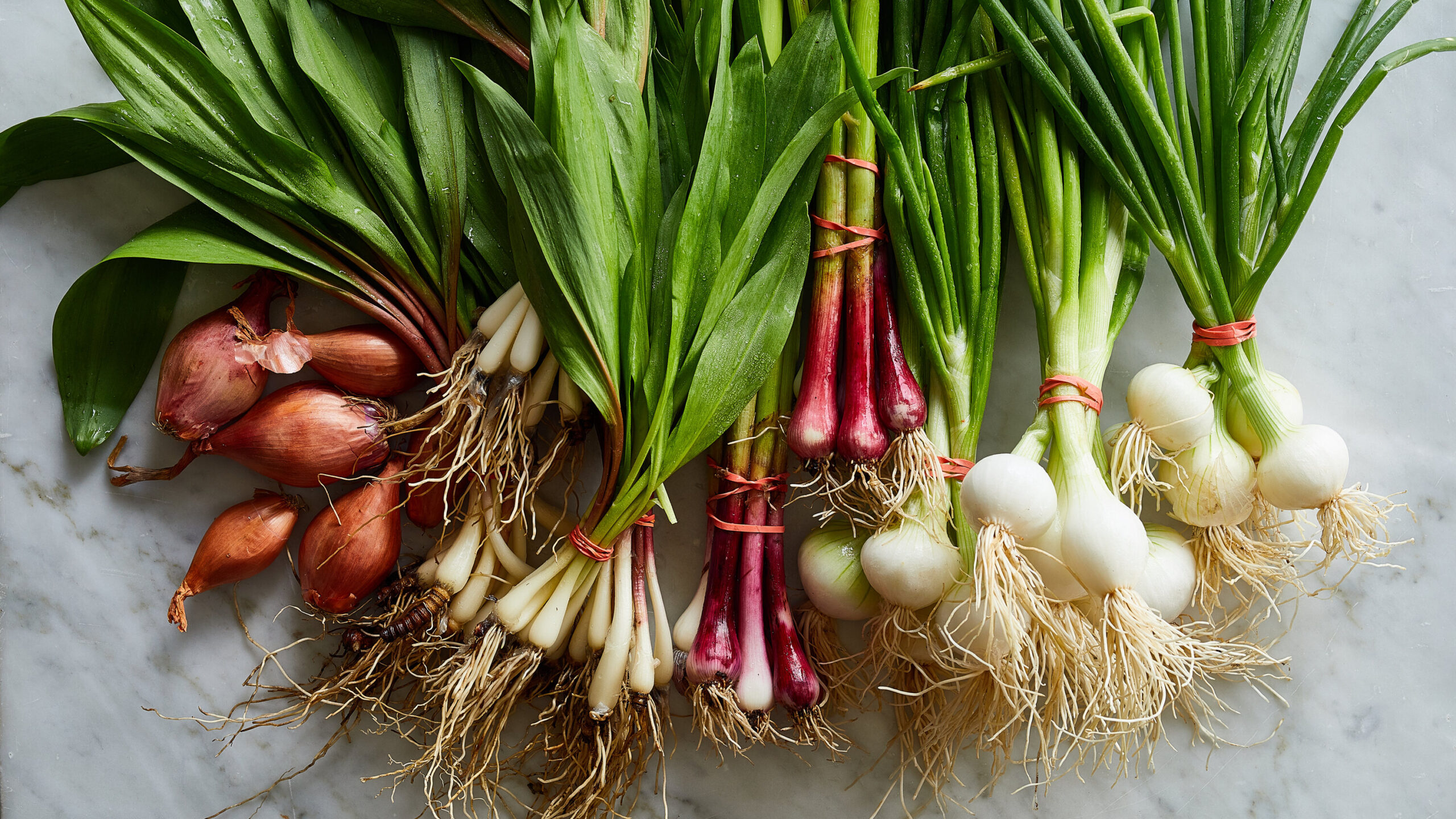
Image source: Bing (Web (fair-use with source credit))
These aren't "feed sparingly" items. They're hard stops. If your dog gets into any of them, the response is to call a vet or an animal poison line, not to wait and see.
Onion, Garlic, Chives and Leeks: Why the Allium Family Destroys Red Blood Cells
Every member of the Allium genus is toxic to dogs. That means onion, garlic, chives, leeks, shallots and spring onions, in every form: raw, cooked, dried, powdered, fried or in stock.
The mechanism is well documented. Alliums contain organosulphur compounds, including N-propyl disulphide, that oxidise haemoglobin inside red blood cells. The damaged haemoglobin clumps into Heinz bodies, the spleen removes those cells, and the dog becomes anaemic.
The clinical term is Heinz body haemolytic anaemia.
Here's what makes it genuinely dangerous: the timeline. Signs rarely appear straight away. Haemolysis typically shows up 1 to 5 days after ingestion.
A dog can seem completely fine on the evening it ate the onion and be visibly unwell three days later.
Rough toxic thresholds:
| Allium | Commonly cited toxic dose | Practical translation |
|---|---|---|
| Onion (fresh) | Signs reported from around 0.5% of body weight | About 25 g for a 5 kg dog, roughly a quarter of a medium onion |
| Garlic (fresh) | Roughly 15 to 30 g/kg, around 5x more potent than onion by weight | A few cloves is meaningful for a small dog |
| Onion or garlic powder | Far more concentrated than fresh | A teaspoon of powder can equal a whole fresh onion |
Powder is the trap almost nobody accounts for. Dried onion and garlic powder are dehydrated and concentrated. That means gravy granules, stock cubes, baby food, seasoned crisps, pizza, curry sauce and most leftover roast dinners carry a far higher dose than the fresh vegetable would.
Signs to watch for:
- Lethargy and weakness, often the first thing owners notice
- Pale or yellowish gums
- Rapid breathing or elevated heart rate
- Vomiting, drooling, abdominal pain
- Red or brown discoloured urine
- Reduced appetite and exercise intolerance
If you see red or brown urine after a known allium exposure, that's an emergency. Go straight in.
Do not induce vomiting at home unless a veterinary professional tells you to. The ASPCA Animal Poison Control Center and the UK Veterinary Poisons Information Service both handle these calls around the clock. Have your dog's weight and an estimate of the amount eaten ready when you ring.
Raw and Green Potato, Green Tomato and the Solanine Problem
Nightshade vegetables produce glycoalkaloids, mainly solanine and chaconine, as a natural pest defence. Cooking the flesh of a ripe potato or tomato reduces them to safe levels. The problem parts are the ones people don't think of as food.
Never feed:
- Raw potato, especially with green patches under the skin
- Potato peelings and sprouting eyes
- Green, unripe tomatoes
- Tomato plant leaves, stems and vines
- Any part of an aubergine plant other than the cooked fruit
Solanine poisoning causes vomiting, diarrhoea, drooling, drowsiness, tremors and, at higher doses, cardiac effects. Garden raiders are the usual patients. A dog that digs up potatoes or grazes on tomato vines can pick up a meaningful dose without you seeing it happen.
Cooked, plain, peeled white potato is fine in small amounts. Chips, roast potatoes cooked in fat and anything salted or seasoned are not.
Wild Mushrooms, Rhubarb Leaves and Corn on the Cob
Wild mushrooms are in a category of their own because the deadliest ones look unremarkable. Amanita phalloides, the death cap, causes acute liver failure and can kill a dog from a single ingestion. Galerina species carry the same toxins. Autumn is peak season in most temperate regions.
Nobody should be identifying mushrooms in a panic. If your dog eats a wild mushroom, treat it as an emergency, photograph the mushroom, and where possible bring a whole specimen including the base of the stem. Vets need that base to identify the species.
Rhubarb leaves contain high concentrations of soluble oxalates that bind calcium and cause acute kidney injury. The stalks contain far less, but there's no good reason to feed rhubarb at all. Keep dogs out of the rhubarb patch and off the compost heap where the leaves usually end up.
Corn on the cob is not toxic. It's mechanical. The cob sits at almost the perfect diameter to lodge in a dog's small intestine, it doesn't break down, and it doesn't pass.
This is one of the most common summer obstruction surgeries in general practice.
A dog that ate a cob may vomit repeatedly, refuse food, strain without producing stool and become quiet and hunched. Don't wait for those signs to progress. Obstruction is time-critical, and delay turns a straightforward enterotomy into a bowel resection.
Also on the never list:
- Avocado, botanically a fruit but always asked about, because of persin and the choking risk from the stone
- Uncooked kidney beans, which contain phytohaemagglutinin
- Anything from the compost bin, where mould produces tremorgenic mycotoxins
How Much Is Too Much? The 10% Treat Rule and Portion Sizes by Body Weight
The 10% rule is the single most useful number here. Everything your dog eats outside their complete and balanced food, vegetables included, should stay under 10% of their daily calorie intake.
Cross that line regularly and you get nutritional dilution. The complete food was formulated to meet requirements at a specific portion size. Bulk it out with 30% extras and the vitamin, mineral and amino acid ratios stop adding up, even though every individual ingredient was "healthy".
Working out your dog's treat budget
You need two numbers: daily calories and 10% of that. Here's the shortcut most practices use.
- Calculate resting energy requirement: RER = (30 x body weight in kg) + 70
- Multiply by an activity factor. Roughly 1.6 for a neutered adult, 1.2 to 1.4 for a dog on a weight-loss plan, up to 2.0 for a working dog.
- Take 10% of that figure. That's the treat ceiling, shared across biscuits, chews and vegetables.
Or check the feeding guide on your dog's food and use the calorie content listed per 100 g. Most manufacturers print it, and it's more accurate than a formula because it reflects what your dog actually eats.
Realistic daily vegetable portions
| Dog weight | Approx. daily calories | 10% treat budget | What that looks like in vegetables |
|---|---|---|---|
| 5 kg (Chihuahua, Yorkie) | ~350 kcal | ~35 kcal | 1 medium carrot, or 1 cup green beans |
| 10 kg (Cocker, Beagle) | ~590 kcal | ~60 kcal | 2 medium carrots, or 1 cup cucumber plus a few beans |
| 20 kg (Border Collie) | ~1,070 kcal | ~105 kcal | 3 carrots, or a large bowl of green beans and cucumber |
| 30 kg (Labrador) | ~1,550 kcal | ~155 kcal | 4 to 5 carrots, or 100 g cooked sweet potato |
| 40 kg (German Shepherd) | ~2,030 kcal | ~200 kcal | Roughly 200 g cooked squash or a generous mixed bowl |
Those figures assume vegetables are the only treats that day. If your dog has already had two training biscuits and a dental chew, the vegetable allowance shrinks accordingly.
The calorie cheat sheet
Values below are approximate, based on standard composition data for raw or plainly cooked vegetables.
| Vegetable | Portion | Calories | Notes |
|---|---|---|---|
| Cucumber | 1 cup sliced | ~16 kcal | Highest volume for lowest calories |
| Lettuce | 1 cup shredded | ~8 kcal | Almost pure water and fibre |
| Green beans | 1 cup | ~31 kcal | Best diet bulking option |
| Carrot | 1 medium | ~25 kcal | ~2 g fibre |
| Broccoli | 1 cup florets | ~31 kcal | Cap at 10% of the bowl |
| Pumpkin purée | 1 tbsp | ~5 kcal | Fibre supplement, not a snack |
| Sweet potato | 100 g cooked | ~90 kcal | The calorie-dense one |
| Peas | 1/2 cup | ~62 kcal | Higher than most people assume |
Two things owners get wrong here
Forgetting to subtract. If you're adding a meaningful volume of vegetables as a topper rather than a treat, reduce the main meal to match. Otherwise you're just adding calories, which is how "healthy" toppers create overweight dogs.
Treating volume as free. Cucumber genuinely is close to free. Sweet potato is not. A 5 kg dog eating 100 g of mashed sweet potato has used more than 25% of its daily calorie allowance in one sitting.
If your dog is on a prescription veterinary diet for kidney, liver, urinary or gastrointestinal disease, the 10% rule tightens further. Those diets work by controlling specific nutrient levels, and adding vegetables can undermine the whole point. Check with the vet who prescribed it before you add anything.
Raw vs Cooked vs Frozen vs Canned: Which Preparation Is Safest
There's no single winner here. Each form does a different job, and the right choice depends on what you're trying to achieve.
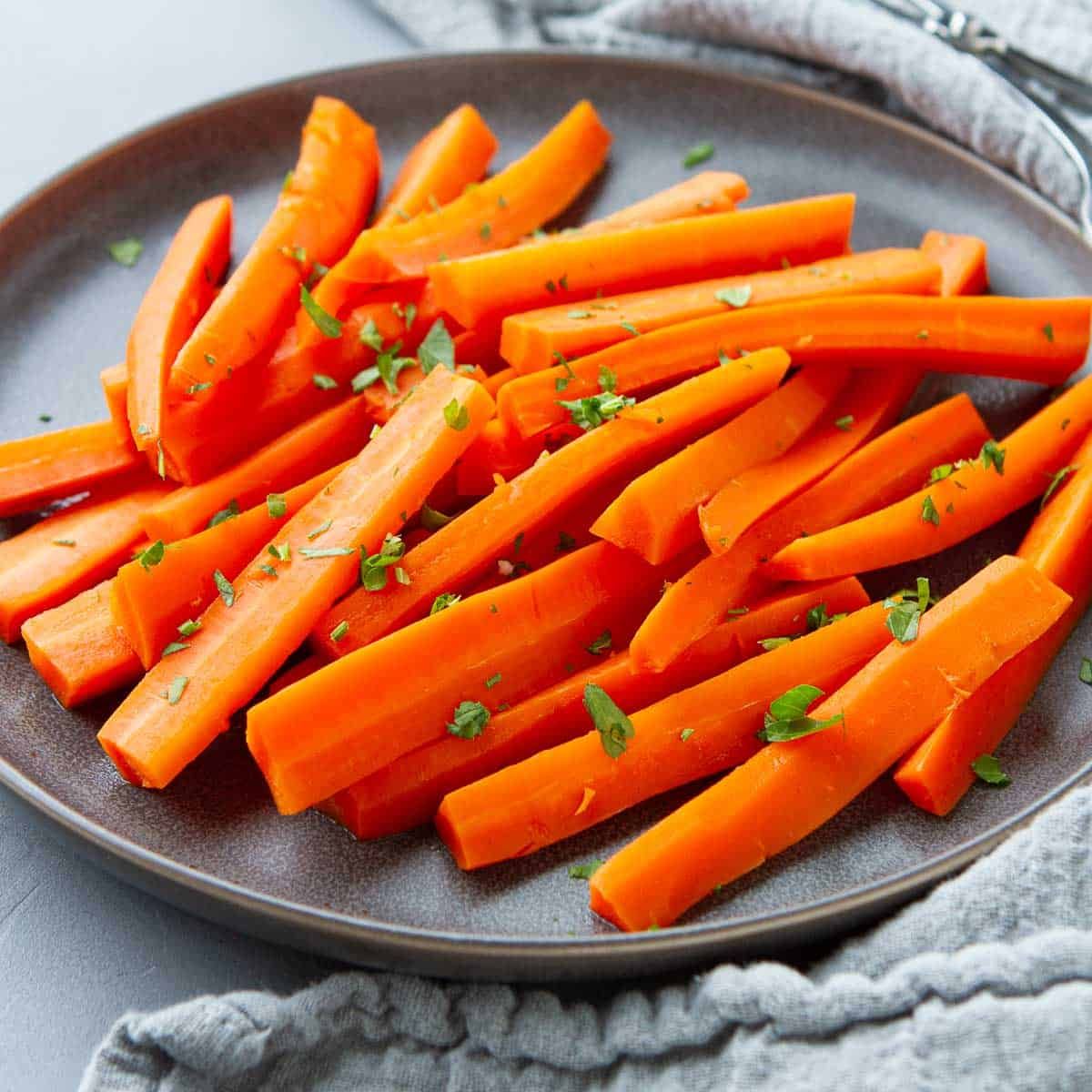
Image source: Bing (Web (fair-use with source credit))
One thing stays constant across all four: plain. No salt, no oil, no butter, no stock, no seasoning blends. Most commercial seasoning contains onion or garlic powder, which puts you straight back into allium territory.
Raw vegetables
Raw keeps the water content high and the calories low. It also keeps the cell walls intact, which means your dog absorbs less of the nutrition inside.
Best for: hydration, crunch, low-calorie training treats, teething relief.
Risks: choking and tooth fracture from dense items, harder digestion, pesticide and soil residue if you skip the wash.
Cut size does most of the safety work. Coins and half-moons are safer than batons, because a baton can wedge lengthways across the throat.
Cooked vegetables
Steaming or boiling ruptures the cell walls and releases carotenoids, potassium and folate your dog can actually use. It also softens fibrous items like broccoli stems and asparagus into something digestible.
Steaming preserves more water-soluble vitamins than boiling. If you boil, don't tip the water into the bowl as a "nutrient broth" unless it's completely plain, and never if the pan held anything seasoned.
Best for: nutrient absorption, sensitive stomachs, senior dogs, dogs with poor dentition, anything from the root vegetable or brassica group.
Avoid entirely: roasting in fat, frying, air-frying with oil, anything cooked alongside a joint of meat with garlic and herbs.
Frozen vegetables
Frozen produce is picked and blanched at peak ripeness, so nutrient retention often matches or beats fresh supermarket veg that's been in transit for a week. It's cheap, portions easily and keeps for months.
Check the bag. Plain single vegetables are fine. Anything labelled "with butter sauce", "seasoned", "Mediterranean mix" or "stir-fry blend" almost always contains onion or garlic.
Frozen peas and green beans straight from the freezer work well as a hot-weather treat for medium and large dogs. For small breeds, thaw them first so there's no choking risk from a solid pellet.
Canned vegetables
Usable, but read the label properly. The problem isn't the vegetable. It's the brine.
- Choose no salt added every time. Standard canned green beans can carry several hundred milligrams of sodium per serving.
- Drain and rinse thoroughly, even the no-salt versions.
- Canned pumpkin purée is the exception, genuinely useful, as long as it's 100% pumpkin.
- Never feed pumpkin pie filling, which contains sugar and spices including nutmeg.
Skip anything canned in oil, sauce or vinegar. Marinated artichokes, roasted peppers in oil and pickled anything are all off the list.
Side by side
| Form | Nutrient availability | Calorie load | Main risk | Best use |
|---|---|---|---|---|
| Raw, chopped | Lower | Lowest | Choking, tooth damage | Training treats, hydration |
| Steamed | Highest | Low | Overcooking to mush | Nutrition, sensitive guts |
| Boiled | Moderate | Low | Vitamin loss into water | Softening tough veg |
| Frozen, plain | High | Low | Seasoned blends, hard pellets | Batch feeding, summer treats |
| Canned, no salt | Moderate | Low | Sodium, added oils | Convenience, pumpkin fibre |
| Roasted in fat | Moderate | High | Pancreatitis trigger | Never |
What about purée and dehydrated veg?
Purée is the most digestible option and the easiest to portion. Blend plain cooked vegetables with a splash of water, spoon into an ice cube tray, and freeze. One cube is roughly 15 ml, which makes calorie tracking simple.
Dehydrated vegetable chews are safe if they're single-ingredient. Watch the concentration, though. Dehydration removes water, so 10 g of dried sweet potato carries far more calories than 10 g of the fresh version.
When a "Safe" Vegetable Becomes Risky: Health Conditions That Change the Answer
This is the part most safe-vegetable lists leave out. A vegetable that's fine for a healthy five-year-old Labrador can be actively harmful for a dog with kidney disease or diabetes.
If your dog has any diagnosed condition, or is on a prescription veterinary diet, treat everything below as a conversation to have with your vet rather than a decision to make alone.
Kidney Disease, Bladder Stones and Oxalates
Chronic kidney disease changes the rules on potassium and phosphorus. Diseased kidneys struggle to excrete phosphorus, and rising blood phosphorus accelerates further kidney damage. Renal diets are built around restricting it.
Adding vegetables to a prescription renal diet can undo that restriction without you realising. Some are worse than others.
| Vegetable | Concern for renal patients |
|---|---|
| Sweet potato | High potassium |
| Butternut squash | High potassium |
| Spinach | High potassium and oxalates |
| Peas and edamame | Moderate phosphorus and protein |
| Beetroot | High oxalates |
| Cucumber | Low risk, usually acceptable |
| Green beans | Generally lower risk |
Calcium oxalate bladder stones are a separate issue with an overlapping food list. Dogs that form them, commonly Miniature Schnauzers, Bichon Frises, Shih Tzus and Lhasa Apsos, need low-oxalate diets for life.
Cut entirely for oxalate stone formers: spinach, Swiss chard, beetroot, sweet potato, rhubarb in any form and okra.
Generally lower oxalate: cucumber, cauliflower, cabbage, peeled cooked white potato and lettuce.
Urate stones are a different problem again. Dalmatians and dogs with liver shunts need low-purine food, which means limiting peas, spinach, cauliflower, mushrooms and asparagus.
Diabetes and Blood Sugar
Diabetic dogs need consistency more than they need restriction. Their insulin dose is calculated around a predictable diet, and random carbohydrate additions destabilise glucose control.
Starchy vegetables are the ones to watch. Sweet potato, white potato, peas, corn, parsnip and butternut squash all carry a meaningful carbohydrate load.
Better options for diabetic dogs:
- Green beans, the classic diabetic-dog bulking food
- Cucumber
- Courgette
- Lettuce and other leafy greens
- Broccoli and cauliflower in small amounts
The fibre in green beans slows glucose absorption, which is exactly what you want. Keep the amount consistent day to day rather than varying it, and tell your vet what you're adding so insulin dosing accounts for it.
Pancreatitis, Hypothyroidism and Sensitive Stomachs
Pancreatitis is about fat, not vegetables. Plain steamed vegetables are safe for a dog with a pancreatitis history. Vegetables roasted in goose fat, tossed in butter or cooked in the meat tin are exactly what triggers a flare.
Veterinary practices consistently report a spike in pancreatitis admissions over the festive period, and roast dinner leftovers are a repeat offender. The vegetables aren't the problem. What they've been cooked in is.
Hypothyroidism raises the goitrogen question. Brassicas and soy contain compounds that can interfere with thyroid hormone production and, in theory, with levothyroxine absorption.
Practical guidance: occasional broccoli or cabbage won't derail a well-managed thyroid dog. Daily large servings might. Keep cruciferous vegetables to a few times a week and don't feed them within a couple of hours of medication.
Sensitive stomachs and IBD respond badly to sudden fibre changes. Introduce one vegetable at a time over a week rather than a day, favour cooked and puréed over raw, and skip the gas-producing brassicas entirely.
Dogs on an elimination diet trial should have nothing added at all. The whole point of the trial is a limited ingredient list. Adding carrot invalidates the result.
Deep-chested breeds and bloat
Great Danes, Weimaraners, Standard Poodles and Setters carry elevated risk of gastric dilatation-volvulus. Large volumes of fermentable, gas-producing food in one sitting is not a helpful combination.
There's no evidence that vegetables cause GDV. There's good sense in avoiding a huge bowl of broccoli and cabbage before exercise in a breed already at risk. Split portions, keep them modest, and leave an hour either side of activity.
Puppies
Puppies can have vegetables, but their calorie budget is doing more work than an adult's. Growth requires precise calcium, phosphorus and energy ratios, and diluting a growth formula with extras is a real risk in large-breed puppies.
Keep treats well under 10% for puppies. Chilled carrot for teething is fine. A bowl of mixed vegetables as a daily topper is not.
Choking, Obstruction and Tooth Fractures: The Physical Risks Owners Underestimate
Toxicity gets all the attention. In practice, mechanical injuries are far more common, and they're almost entirely preventable with a knife and thirty seconds.

Image source: Web (Bing) / taobao.com (Web image (fair-use with source credit))
Know your dog's eating style first
Every safe-size recommendation depends on this. Two dogs of identical weight can need completely different preparation.
- Chewers grind food down before swallowing. They tolerate larger pieces but are more prone to tooth fractures on hard items.
- Gulpers swallow whole. They need everything cut small, and they're the dogs who obstruct.
If you've ever watched a treat vanish without a single chew, you've got a gulper. Cut accordingly, no exceptions.
Safe cut sizes by dog size
| Dog size | Maximum piece size | Best shape |
|---|---|---|
| Toy, under 5 kg | 5 to 8 mm | Thin coins, fine dice |
| Small, 5 to 10 kg | 1 cm | Coins, half-moons |
| Medium, 10 to 25 kg | 1.5 to 2 cm | Coins, chunks |
| Large, 25 kg plus | 2 to 3 cm | Chunks, thick slices |
Coins beat batons. A round slice can't wedge across the airway the way a long stick can. Slice carrots, courgettes and cucumbers across the width, never lengthways.
The specific offenders
Corn cobs are the standout. They don't dissolve, they don't break down and they sit at almost exactly the wrong diameter for the canine small intestine. Strip the kernels, then bin the cob somewhere the dog physically cannot reach.
Broccoli and cauliflower stems are dense enough to lodge in small breeds. Slice into thin discs.
Whole raw carrots are a tooth-fracture risk for power chewers, particularly the carnassial teeth at the back. Frozen solid, that risk climbs.
Celery and asparagus have long fibrous strands. Chop across the fibres into 1 cm pieces so they break down rather than tangle.
Butternut and pumpkin skin is tough and poorly digested. Peel before cooking.
Avocado stones, whole potatoes and small round items like Brussels sprouts fed whole to a gulper all belong in the same category.
Signs of an obstruction
An intestinal obstruction is a surgical emergency. The window matters, because a delayed obstruction can compromise blood supply and turn a simple enterotomy into a bowel resection.
Get to a vet if you see:
- Repeated vomiting, especially of undigested food or bile
- Refusing food or water
- Straining to pass stool with nothing produced, or small volumes of watery stool
- A hunched posture, or the "praying" position with front legs down and rear up
- Abdominal pain when touched
- Lethargy and rapid decline over a few hours
Don't wait to see whether it passes. Don't give laxatives or oil. Don't induce vomiting, because a sharp or bulky object coming back up can do more damage than it did going down.
Actively choking, right now
Choking looks different from obstruction. It's immediate and distressed, either loud or silent with visible panic.
Look for pawing at the mouth, retching without producing anything, blue-tinged gums and frantic behaviour. If your dog can still cough forcefully, let them cough. Coughing is more effective than anything you can do.
If they can't breathe, open the mouth and look. Remove the object only if you can see it and grab it cleanly. Blind finger sweeps push objects deeper.
For a small dog, hold them with the back against your chest and apply firm upward thrusts just under the ribcage. For a large dog, stand behind them, make a fist under the ribs, and thrust upward and forward. Get to a vet afterwards regardless of the outcome, because there may be airway trauma or aspiration.
Introducing New Vegetables: A Step-by-Step Protocol That Avoids Upset Stomachs
Most vegetable-related vomiting and diarrhoea isn't toxicity. It's too much, too fast. A dog's gut microbiome adapts to fibre gradually, and a sudden load overwhelms it.
Follow this and you'll avoid nearly all of it.
The 12-step introduction protocol
- Check the safe list. If it isn't clearly safe, don't feed it.
- Screen for health conditions. Kidney disease, stones, diabetes, thyroid issues and pancreatitis all change the answer.
- Calculate the treat budget. Work out 10% of daily calories before you cut anything.
- Wash thoroughly under running water to remove soil, pesticide residue and surface bacteria.
- Peel and remove the risky parts. Skins, cores, stems, seeds, pits and cobs.
- Cook plain if the vegetable needs it. Steam or boil. No salt, oil, butter, stock or aromatics.
- Cut to size using the table above, based on your dog's weight and eating style.
- Cool completely. Hot food burns mouths and nobody thinks to check.
- Start tiny. One small piece for a small dog, two or three for a large dog. That's it on day one.
- Watch for 24 to 48 hours. Check stool consistency, appetite, gas and energy.
- Increase gradually over 5 to 7 days if everything looks normal.
- Reduce the main meal to offset the added calories if you're feeding a meaningful volume.
Only introduce one new vegetable at a time. If you add carrot, broccoli and sweet potato together and your dog gets loose stool, you've learned nothing about which one caused it.
A realistic 7-day introduction schedule
Using carrot for a 15 kg dog as the example:
| Day | Amount | What to watch |
|---|---|---|
| 1 | 2 small coins | Any vomiting within 4 hours |
| 2 | Rest day, no vegetable | Stool quality that morning |
| 3 | 4 coins | Gas, stool consistency |
| 4 | 6 coins | Appetite for main meals |
| 5 | Rest day | Confirm stool has stayed normal |
| 6 | Half a medium carrot | Any change in behaviour |
| 7 | Full portion within budget | Settled baseline |
Slower than most people expect. That's the point.
Troubleshooting the common reactions
Loose stool after 12 to 24 hours. Too much fibre too soon. Stop the vegetable, feed the normal diet only for 48 hours, then restart at a quarter of the amount.
Impressive gas. Almost always brassicas. Halve the portion or swap to a non-cruciferous option like green beans.
Vomiting within a few hours. Stop entirely. If it happens more than twice, or your dog seems unwell, call the vet. Repeated vomiting after eating something whole raises the obstruction question.
Whole pieces in the stool. Normal. It means the pieces were too large to break down, not that anything is wrong. Chop smaller or cook next time.
Refusing to eat it. Perfectly fine. Dogs have preferences. Try a different vegetable or a different preparation, and never force it.
Reduced appetite for main meals. Classic sign you've overshot the treat budget. Cut vegetable portions back and the appetite usually returns within a day or two.
Storage and batch prep
Cooked vegetables keep 3 to 4 days in the fridge in a sealed container. Beyond that, bin them.
Freezing is the better system. Purée or chop, portion into ice cube trays, freeze, then transfer to a bag. Frozen portions keep around 3 months and defrost in minutes.
Never feed vegetables showing mould. Mouldy food produces tremorgenic mycotoxins, which cause tremors and seizures in dogs. That's why compost bin access is a genuine hazard, not just a mess problem.
Nutrition and Calorie Data for Common Dog-Safe Vegetables
Calories tell you how much you can feed. This section covers what you get in return, plus the numbers that matter for dogs with health conditions.
Values below come from standard food composition data for raw or plainly cooked vegetables, per 100 g. Cooking shifts water content, so cooked figures vary slightly.
Fibre content per 100 g
Fibre is the main reason vegetables earn a place in the bowl. Here's how they stack up.
| Vegetable | Total fibre (g) | Fibre type | Practical use |
|---|---|---|---|
| Green peas | 5.7 | Mixed | Bulking, but higher calorie |
| Green beans | 3.4 | Mostly insoluble | Weight loss bulking |
| Broccoli | 2.6 | Mixed | General fibre |
| Carrot | 2.8 | Mixed, soluble pectin | All-round |
| Brussels sprouts | 3.8 | Mixed | Small portions only |
| Pumpkin (canned) | 2.9 | Largely soluble | Stool regulation |
| Sweet potato (cooked) | 3.0 | Soluble | Firming stool |
| Cucumber | 0.5 | Minimal | Hydration, not fibre |
| Lettuce (romaine) | 2.1 | Insoluble | Volume filler |
Pumpkin punches above its fibre number because of the type. Soluble fibre absorbs water and forms a gel, which is why it works for both diarrhoea and constipation.
Key nutrients worth knowing
| Nutrient | Best sources | What it supports |
|---|---|---|
| Beta-carotene | Carrot, sweet potato, pumpkin, butternut | Vitamin A precursor, vision, immune function |
| Vitamin C | Bell pepper, broccoli, Brussels sprouts | Antioxidant, though dogs synthesise their own |
| Vitamin K | Kale, spinach, broccoli, cabbage | Blood clotting |
| Potassium | Sweet potato, squash, spinach | Nerve and muscle function |
| Folate | Broccoli, asparagus, spinach | Cell division, red blood cell production |
| Lutein and zeaxanthin | Kale, spinach, peas | Retinal health |
| Sulforaphane | Broccoli, Brussels sprouts | Antioxidant pathway support |
Worth being honest here. A dog eating a complete and balanced commercial diet already meets its vitamin and mineral requirements. Vegetables aren't correcting a deficiency in a healthy, well-fed dog.
The genuine value sits in the fibre, the water, the low-calorie volume and the enrichment. Treat the micronutrients as a bonus rather than the reason.
The numbers that matter for sick dogs
If your dog has kidney disease, bladder stones or diabetes, these are the figures worth checking before you feed anything.
| Vegetable | Oxalate | Potassium (mg/100 g) | Phosphorus (mg/100 g) | Carbohydrate (g/100 g) |
|---|---|---|---|---|
| Spinach | Very high | 558 | 49 | 3.6 |
| Beetroot | High | 325 | 40 | 9.6 |
| Sweet potato | High | 337 | 47 | 20.1 |
| Broccoli | Low | 316 | 66 | 6.6 |
| Green beans | Low | 211 | 38 | 7.0 |
| Cucumber | Low | 147 | 24 | 3.6 |
| Cauliflower | Low | 299 | 44 | 5.0 |
| Green peas | Moderate | 244 | 108 | 14.5 |
| Cabbage | Low | 170 | 26 | 5.8 |
| Carrot | Low | 320 | 35 | 9.6 |
Read that table alongside your dog's diagnosis. Spinach looks like a superfood until you're managing calcium oxalate stones. Sweet potato looks wholesome until you're managing diabetes.
Water content, and why it matters
| Vegetable | Water content |
|---|---|
| Cucumber | 96% |
| Lettuce | 95% |
| Courgette | 95% |
| Celery | 95% |
| Broccoli | 89% |
| Carrot | 88% |
| Sweet potato | 77% |
High water content is why cucumber and lettuce are the go-to summer treats. They add hydration and bulk with almost no calorie cost, which helps a dog on a restricted diet.
None of this replaces fresh drinking water. It supplements it.
Mistakes Owners Make With Vegetables
The same handful of errors come up again and again. None of them come from carelessness. They come from applying human food logic to a dog.
Feeding straight from the roasting tin
The most frequent one. Roast carrots and parsnips look harmless sitting in the tray. They've been cooking in fat, salt and usually garlic for an hour.
You're not feeding a vegetable at that point. You're feeding a fat-loaded, allium-contaminated version of one. Set aside a plain portion before anything hits the oil.
Assuming the treat budget resets
Two carrots, a dental chew, three training biscuits and a bit of cheese in one day. Each felt small. Together they've pushed the daily total well past target.
Track everything, not just the obvious treats. Unrecorded extras are the main driver of creeping weight gain in veterinary weight clinics.
Trusting a "vegetable mix" without reading the bag
Frozen and canned vegetable blends are one of the most reliable ways to accidentally feed onion. Stir-fry mixes, Mediterranean blends and casserole vegetables almost always include onion, leek or garlic.
Buy single-ingredient frozen vegetables. Read the label every time the brand or packaging changes.
Treating garlic as medicine
The flea-repellent myth refuses to die. It shows up in home-cooked recipes and well-meaning advice from other owners.
There is no reliable evidence that dietary garlic repels fleas. There is clear evidence it damages canine red blood cells. Small daily doses are worse than a single accidental one, because the damage accumulates.
Adding vegetables to a prescription diet
If a vet prescribed a renal, urinary, hepatic or hydrolysed diet, it's doing a specific therapeutic job. Adding carrot to a urinary diet or sweet potato to a renal diet undermines the exact nutrient control the food was formulated for.
Always ask the prescribing vet first. They may approve one or two options and rule out others.
Confusing "natural" with "safe"
Wild garlic in spring woodland is natural. It's also an allium. Compost is natural.
It grows mould that produces tremorgenic mycotoxins.
Nature is not a safety certification. The dose and the compound decide.
Feeding too much, too fast
A dog that's never had vegetables gets a full bowl of steamed broccoli. Twelve hours later there's diarrhoea and the owner concludes broccoli is toxic.
It wasn't toxic. It was a sudden fibre load on a gut with no adaptation. Slow introduction fixes this almost every time.
Not adjusting for a small dog
Guidance written for a 30 kg Labrador gets applied to a 4 kg Yorkshire Terrier. Portion, piece size and toxic threshold all scale with body weight.
A quarter of a medium onion is a meaningful dose for a 5 kg dog. For a 40 kg dog it's far less significant. Same food, completely different risk.
Storing prepped veg too long
Cooked vegetables sit at the back of the fridge for a week, then get fed because they "look fine". Three to four days is the limit. After that, bin it.
Emergency Signs and When to Call the Vet Immediately
Some situations warrant a phone call. Others warrant getting in the car right now. Knowing the difference saves time you might not have.
The general rule with suspected toxicity: call before symptoms appear, not after. Decontamination is far more effective in the first couple of hours than treatment is on day three.
Go straight to an emergency vet
Don't wait, don't monitor at home:
- Any known ingestion of onion, garlic, chives, leeks or shallots
- A swallowed corn cob, whole or partial
- Any wild mushroom, even if it looks unremarkable
- Rhubarb leaves
- Repeated vomiting with no food or water staying down
- Red, brown or cola-coloured urine
- Pale, white or yellow gums
- Collapse, staggering, tremors or seizures
- Visible abdominal pain, hunched posture or a bloated, tight belly
- Difficulty breathing or blue-tinged gums
- Straining to pass stool with nothing coming out
Call your vet or a poison line the same day
- A large volume of a safe vegetable eaten in one go
- Diarrhoea lasting more than 24 hours
- A dog with kidney disease, diabetes or stones that ate something off its restricted list
- A puppy or dog under 5 kg that ate something questionable
- Any exposure where you can't work out how much was eaten
What to have ready when you call
Do this before you dial. It saves several minutes at a point where minutes count.
| Information | Why it matters |
|---|---|
| Your dog's current weight in kg | Toxic doses are calculated per kilogram |
| What was eaten | Species and form change the treatment |
| How much, as accurately as possible | Determines whether decontamination is worth it |
| Time since ingestion | Inducing vomiting is usually only useful within 2 hours |
| Existing conditions and medications | Changes the risk profile and treatment options |
| Packaging, plant material or a photo | Especially critical for mushrooms |
For mushrooms, take a whole specimen if you safely can, including the base of the stem in the soil. Identification often depends on that base, and a photo of the cap alone usually isn't enough.
Do not do these things at home
Don't induce vomiting unless a vet or a poison control professional tells you to. Hydrogen peroxide dosing is easy to get wrong, and it's actively dangerous with sharp or bulky objects, or in a dog that's already unwell.
Don't give salt to make a dog vomit. It causes salt toxicity, which is worse than most of what you'd be treating.
Don't give laxatives, oil or milk for a suspected obstruction. Nothing you add helps something pass that physically cannot pass.
Don't wait for symptoms with allium exposure. The 1 to 5 day delay before haemolysis appears is exactly why waiting is the wrong call.
Who to call
Both the ASPCA Animal Poison Control Center in the US and the UK's Veterinary Poisons Information Service operate 24 hours a day. The ASPCA line carries a consultation fee, typically around $95 as of 2026, and it covers unlimited follow-up on that case.
Some pet insurance policies reimburse that fee. Worth checking your policy before you need it, not during.
Save your regular vet's number and the nearest 24-hour emergency clinic in your phone now. Trying to find them at 2am while your dog is unwell is not the moment.
What treatment typically involves
Knowing what to expect takes some of the panic out of it.
- Recent ingestion: induced emesis, activated charcoal to bind remaining toxin
- Allium toxicity: IV fluids, repeated packed cell volume (PCV) checks over several days, blood transfusion in severe haemolysis
- Obstruction: X-rays or ultrasound, then endoscopy or surgery
- Mushroom ingestion: aggressive decontamination, liver enzyme monitoring, supportive care
- Solanine: fluids, anti-nausea medication, cardiac monitoring in serious cases
Real Scenarios: Roast Dinner Leftovers, Garden Raids and Compost Bins
Most vegetable incidents happen in three places. Understanding how they unfold makes them much easier to prevent.
The Sunday roast and the holiday table
This is the big one. Roast dinners combine every risk factor into a single plate: onion in the gravy, garlic in the stuffing, fat on the vegetables, and a bone in the mix.
Veterinary practices report a sharp seasonal spike in dietary indiscretion cases around Christmas, Thanksgiving and Easter. Pancreatitis admissions climb alongside them.
If you want to share, do it properly:
- Set aside plain vegetables before anything is seasoned, buttered or roasted in fat
- Steam a small portion separately if the main batch is going in the meat tin
- Keep gravy, stuffing, sauces and stock away entirely
- Brief guests and children before the meal, not during it
- Bin scraps in a sealed bin the dog cannot open
Sage and onion stuffing is the classic culprit. So is anything described as "caramelised", because caramelised onion is still onion.
If your dog has already eaten roast leftovers, work out what was in them. Gravy or stuffing means calling a vet. Plain roast potatoes cooked in fat means watching for pancreatitis signs: repeated vomiting, a hunched posture, refusing food and abdominal pain within 24 to 72 hours.
The vegetable garden raid
Gardens are full of the plants on the never list, usually attached to plants dogs find interesting to dig.
| Plant | Dangerous part |
|---|---|
| Onion, garlic, leek, shallot | Bulbs, sets, green tops, all of it |
| Potato | Foliage, sprouts, green tubers |
| Tomato | Leaves, stems, green unripe fruit |
| Rhubarb | Leaves |
| Wild garlic (ramsons) | Whole plant |
| Onion sets in trays | Concentrated and easy to reach |
Fence the vegetable beds, or fence the dog out of that section. Store bulbs, seed potatoes and onion sets in a shed rather than a low tray in the greenhouse.
Mushrooms deserve their own mention. They appear overnight in lawns and under trees, especially in autumn after rain. If your dog forages, walk the lawn before letting them out during a wet spell.
The compost bin
Compost is arguably the highest-risk container in the garden. It combines mouldy food, onion peelings, potato skins and rotting vegetable matter in one accessible heap.
The specific danger is tremorgenic mycotoxins from mould. These cause tremors, twitching, agitation and seizures, sometimes within an hour of ingestion. That's a genuine emergency, not an upset stomach.
Use a sealed, lidded composter rather than an open heap. Keep onion and garlic waste in the kitchen bin. Fence off the composting area if your dog is a determined scavenger.
The teething puppy
Chilled carrot is a good tool for a teething puppy, with two conditions. Chilled, not frozen solid. And always supervised.
Puppies bite off chunks unpredictably. Sit with them, take the carrot away once it's chewed down to a swallowable size, and never leave one in the crate.
The overweight dog on a diet plan
This is where vegetables genuinely earn their reputation. A common approach in veterinary weight clinics is replacing a portion of kibble with plain green beans to keep bowl volume up while cutting calories.
The mechanics are simple. Green beans deliver roughly 31 kcal per cup against several hundred for the equivalent volume of kibble. The dog feels full.
The calorie deficit does the work.
Two conditions apply. Any substantial swap should be supervised by a vet, because replacing too much complete food creates nutrient gaps. And a safe rate of loss is 1 to 2% of body weight per week, no faster.
The dog that steals from a toddler
Small children drop food constantly, and a lot of it is seasoned. Pizza crusts, pasta sauce, crisps and dips are all common sources of concentrated onion and garlic powder.
Feed the dog separately during family meals. A stair gate does more for canine safety than most people expect.
Frequently Asked Questions About Feeding Dogs Vegetables
Can dogs eat vegetables every day?
Yes, dogs can eat suitable vegetables daily as long as they stay within 10% of daily calories. Rotate options rather than feeding the same one constantly. Cucumber, carrot and green beans suit daily feeding best.
Keep cruciferous vegetables and high-oxalate greens like spinach to a few times a week instead.
What vegetables are toxic to dogs?
Onion, garlic, chives, leeks, shallots and spring onions are toxic in every form, including powdered and cooked. Wild mushrooms can cause fatal liver failure. Raw or green potato, potato sprouts, green tomatoes, tomato plant leaves and rhubarb leaves are also dangerous.
Corn cobs are not toxic but cause life-threatening intestinal obstruction.
Should I feed vegetables raw or cooked?
Both work, and they do different jobs. Raw vegetables give crunch, hydration and the lowest calorie count. Cooking ruptures cell walls and releases far more absorbable nutrients, so steamed is better for nutrition.
Always cook root vegetables, squash and tough brassica stems. Serve everything plain with no oil, salt or seasoning.
How much vegetable can I give my dog?
Keep all treats, vegetables included, under 10% of daily calories. For a 10 kg dog that's roughly 60 kcal, about two medium carrots. For a 30 kg dog it's around 155 kcal.
If you're using vegetables as a meal topper rather than a treat, reduce the main portion to match.
Can puppies eat vegetables?
Yes, but keep quantities small. Puppy growth formulas are precisely balanced for calcium, phosphorus and energy, and extras dilute that balance. This matters most in large-breed puppies.
Chilled chopped carrot works well for teething under supervision. Never feed frozen-solid vegetables to puppies, and introduce one new item at a time.
Do vegetables help clean a dog's teeth?
Crunchy raw vegetables give mild mechanical abrasion at the gum line, but the effect is small. They don't remove established plaque or tartar. Daily tooth brushing with a dog-specific toothpaste remains the only reliable home method.
Treat carrot sticks as a bonus, never as a replacement for dental care.
Your Verified Safe-Feeding Checklist
Run through this before anything new goes in the bowl. It takes under a minute and catches nearly every problem covered above.
Before you feed:
- Confirm the vegetable is on the safe list, not just "probably fine"
- Check it against any diagnosed condition (kidney disease, stones, diabetes, thyroid, pancreatitis)
- Confirm nothing has been prescribed that restricts additions
- Work out 10% of daily calories and check what's already been fed today
Preparation:
- Wash under running water
- Peel and remove stems, cores, seeds, pits and cobs
- Cook plain if the vegetable needs softening, steaming beats boiling
- No salt, oil, butter, stock, seasoning, onion or garlic at any stage
- Cut to coins or dice sized for your dog's weight and eating style
- Cool completely before serving
Serving:
- Start with one small piece for a first-time vegetable
- One new vegetable at a time, never two
- Supervise anything hard, round or larger than a bite
- Reduce the main meal if you're adding real volume
After:
- Watch 24 to 48 hours for stool changes, gas, vomiting or appetite loss
- Increase gradually over 5 to 7 days if all is well
- Store cooked leftovers 3 to 4 days maximum, or freeze in portions
- Never feed anything mouldy
Keep to hand:
- Your vet's number and the nearest 24-hour emergency clinic
- An animal poison control line number
- Your dog's current weight in kilograms
Get those four fundamentals right, correct vegetable, correct preparation, correct portion, correct dog, and vegetables become one of the most useful and cheapest tools you have. Get any one of them wrong and you're in a different conversation entirely.