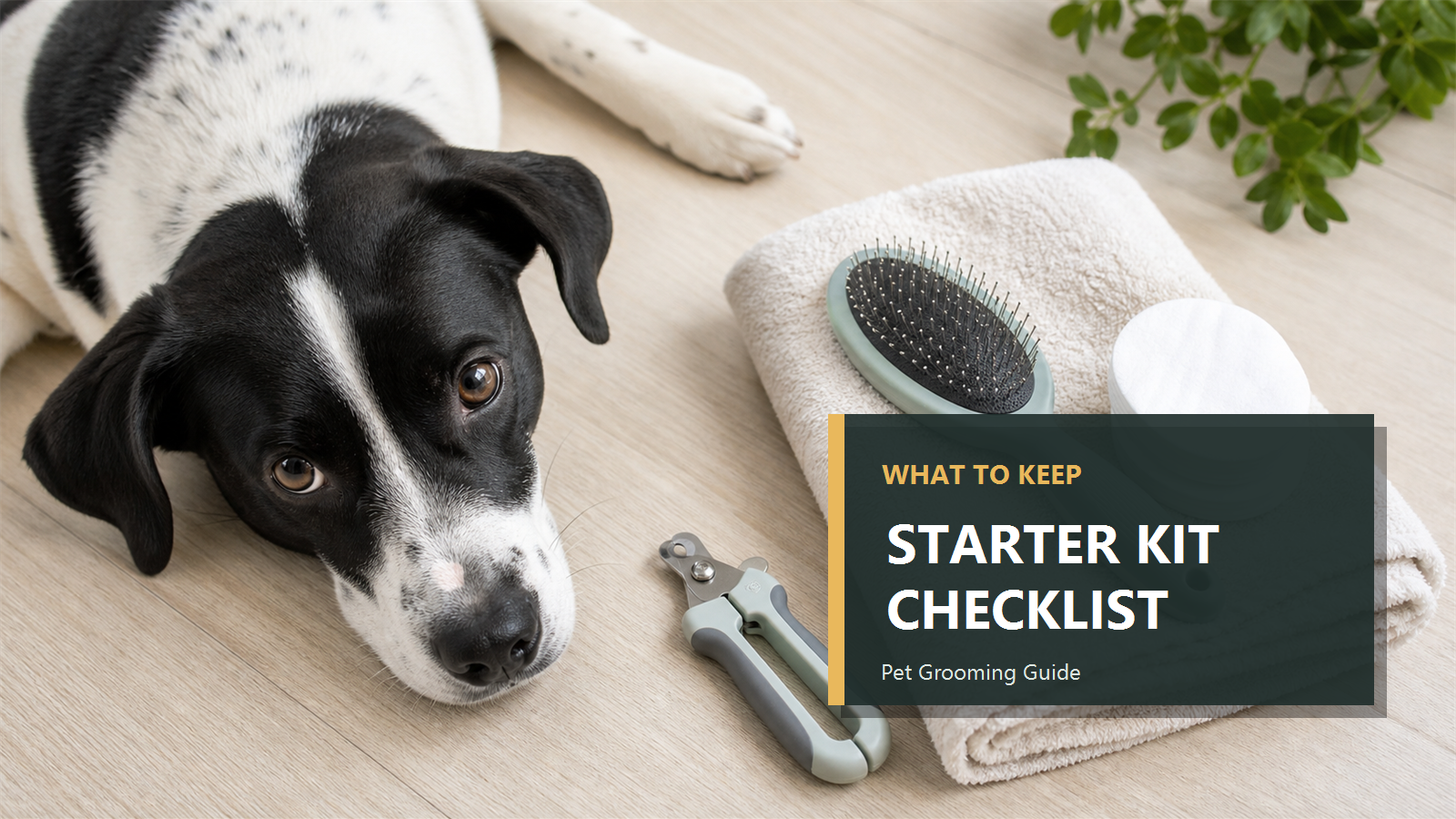

A beginner dog grooming kit should cover routine brushing, bathing, drying, nails, paws, gentle face and ear-area cleanup, safe setup, comfort breaks, and dry storage. It does not need professional tools, brand-specific bundles, medicated products, sedatives, restraints, dematting blades, or anything meant to replace a groomer or veterinarian.
Use this checklist by category. The goal is not to buy everything at once. The goal is to know what belongs in a safe starter kit, what can wait, and what should stay out of a beginner home kit.
Starter Dog Grooming Kit Checklist
| Category | What to include | Why it belongs |
|---|---|---|
| Brush and comb category | A coat-appropriate brush or comb category | Helps remove loose coat and find tangles early |
| Bath basics | Dog-safe shampoo category and towels | Supports routine bathing without human products |
| Drying | Absorbent towels and a safe drying area | Reduces trapped moisture after baths |
| Nails and paws | Nail tool category and paw-check supplies | Supports routine inspection and cautious nail care |
| Face and ear-area wiping | Soft cloths or wipes approved for dogs | Keeps cleanup gentle and surface-level |
| Setup | Non-slip mat and good lighting | Helps prevent slipping and rushed handling |
| Storage | Dry container, labels, and cleaning schedule | Keeps tools organized and easier to inspect |
| Comfort | Treats, breaks, and a calm session plan | Helps the dog learn grooming in small steps |
This page stays category-level on purpose. Specific products, brands, costs, retailer links, and rankings belong outside this informational checklist.
Original Starter, Optional, Stop Matrix
Pet Grooming Guide original framework: build the kit in three lanes: starter items, optional later items, and stop-and-call boundaries.
| Task area | Starter kit | Optional later | Stop and call |
|---|---|---|---|
| Brushing and comb checks | Coat-appropriate brush/comb category | Extra coat-specific tools | Severe mats, painful mats, skin redness, swelling, or discharge |
| Bath and dry | Dog-safe shampoo category and towels | Extra drying aids if safe and appropriate | Chemical exposure concern, sores, bleeding, or panic |
| Nails and paws | Nail tool category, towel, and light | Paw-hair trimming tools only with skill | Limping, pain, bleeding, swelling, or embedded object |
| Ears and face | Soft cloth or wipe category | None without a clear need | Ear pain, discharge, eye symptoms, or facial pain |
| Tool care | Dry storage, labels, and inspection routine | Inventory log | Damaged cords, cracks, rust, sparks, overheating, or wet electric tools |
| Comfort | Break plan, treats, and short sessions | Training or acclimation plan | Panic, aggression risk, unsafe handling, or forced restraint |
Optional Items That Can Wait
Optional tools depend on coat type, comfort level, and whether the basic routine is already calm and repeatable.
- Clippers or trimmers can wait until the dog is comfortable with sound and handling.
- Deshedding tools can wait until you understand coat type and pressure risk.
- Specialized combs can wait until you know where tangles form.
- Travel-size duplicates can wait until the home kit is stable.
- Any tool with blades, cords, batteries, chemicals, or sharp edges can wait until you can inspect and store it safely.
If a tool comes with a manual or label, that instruction is the authority. Stop using damaged tools, wet electric tools, missing guards, cracked housings, rusty blades, or anything that sparks, overheats, smells like burning, or feels unsafe.
What Does Not Belong in a Beginner Kit
Do not build a home kit around advanced or medical tasks. These are not beginner grooming supplies:
- Sedatives or calming medications.
- Restraint systems for forced handling.
- Medicated shampoos chosen without veterinary direction.
- Pesticide products chosen as grooming shortcuts.
- Wound-care supplies for treating grooming injuries.
- Dental scaling tools.
- Dematting blades for painful or severe mats.
- Ear medications.
- Tools meant for electrical repair, blade sharpening, or clipper repair.
The safer choice is a modest kit and a clear stop rule. When the task exceeds your skill, your dog is distressed, or the skin or coat does not look normal, pause the home session and route to the right professional.
Storage and Cleaning Matter
A kit is safer when it is easy to inspect. Store tools dry, away from bath areas, and separated from household cleaners. Keep labels and manuals with any item that has blades, cords, batteries, or chemicals.
After each session, remove hair from brushes and clippers where appropriate, let damp items dry fully, and discard anything damaged. For the broader routine, pair this kit page with the dog grooming checklist for beginners.
When to Skip Grooming and Call Someone Else
Stop the session and call a veterinarian or professional groomer for severe mats, painful mats, wounds, sores, bleeding, redness, swelling, discharge, persistent odor with irritation, ear pain or discharge, eye symptoms, limping, pain, panic, aggression risk, breathing trouble, chemical exposure concern, or unsafe handling.
Call the manufacturer or service route for damaged electrical tools, cracked housings, sharp or broken blade teeth, rust, overheating, sparking, burning odor, missing guards, or wet electric tools.
FAQ
What should be in a dog grooming kit for beginners?
A beginner kit should include safe categories for brushing, bathing, drying, nails, paws, surface-level face and ear-area cleanup, non-slip setup, comfort breaks, and dry storage. It should not start with advanced or medical tools.
Do I need clippers in a beginner dog grooming kit?
Not always. Clippers can wait until the dog is comfortable with handling and sound, and until you understand safety, blade heat, guards, and manufacturer instructions.
Should a dog grooming kit include ear medicine or medicated shampoo?
No. Ear medications, medicated shampoos, pesticide products, and treatment supplies should be used only with appropriate veterinary direction.
Is this a product buying guide?
No. This is a category checklist. It intentionally avoids brands, models, costs, retailer links, product rankings, product tables, and buying CTAs.
Bottom Line
A safe beginner dog grooming kit is modest, organized, and category-based. Start with brushing, bathing, drying, paw checks, surface-level cleanup, setup, comfort, and storage basics. Leave severe mats, medical signs, forced handling, damaged electrical tools, and treatment products to the right professional route.