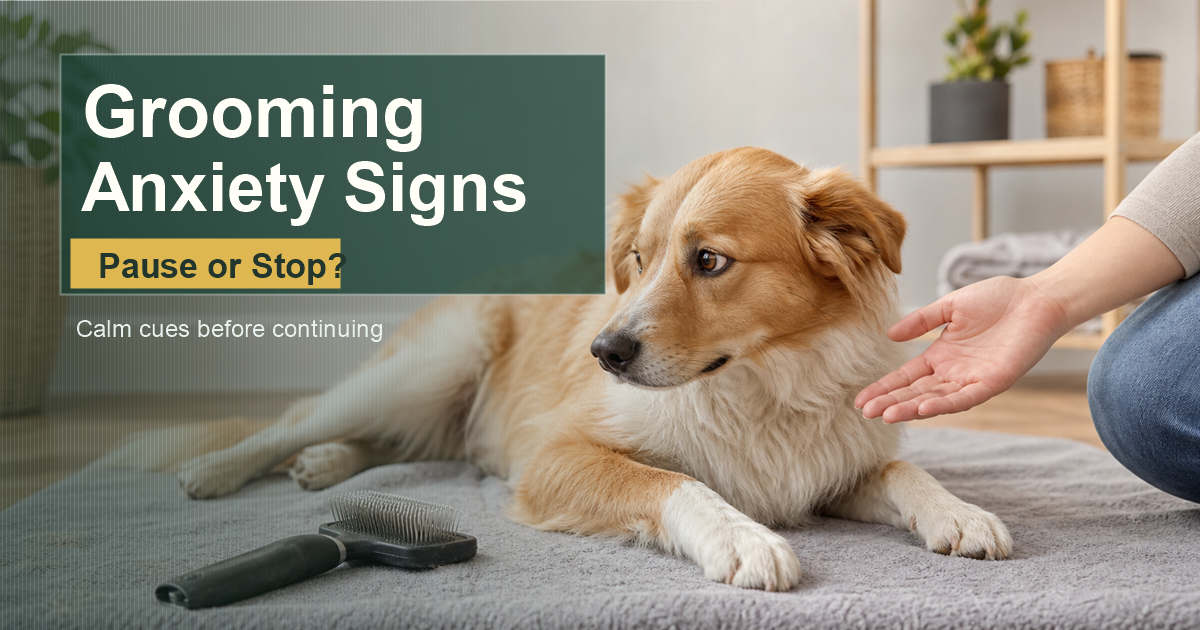

Dog grooming anxiety signs can include avoidance, lip licking, yawning, panting, trembling, tucked posture, freezing, whale eye, growling, snapping, or trying to escape. Pause for mild stress signs. Stop for panic, pain, bite risk, aggression, severe fear, unsafe handling, sedation questions, or medically fragile dogs.
This page is about reading signs and choosing a safer next step. It is not behavior treatment, sedation advice, muzzle advice, restraint advice, or a plan for handling aggression.
Grooming Anxiety Signs at a Glance
| Sign level | What you may see | What to do |
|---|---|---|
| Mild | Looking away, lip licking, yawning, mild panting, shifting away | Pause and make the setup easier |
| Moderate | Freezing, tucked posture, trembling, repeated escape attempts | Stop the task and reset later |
| Stop now | Growling, snapping, bite risk, panic, pain signs | End the session and call a qualified professional |
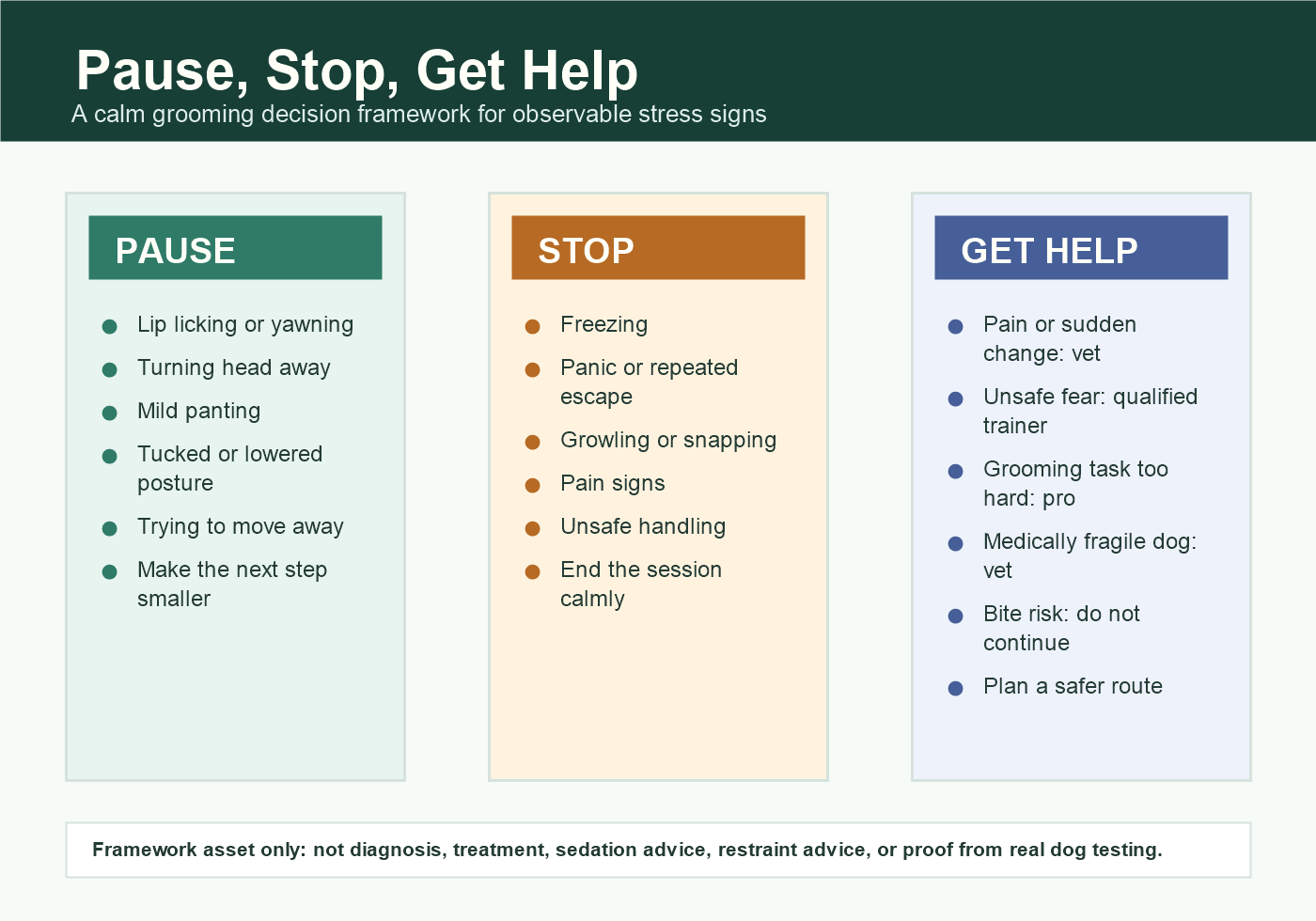
Fear Free’s fear, anxiety, and stress framework and its body-language guidance support watching the whole dog, not just one signal. Best Friends dog body language guidance also lists stress and fear signs such as moving away, tucked posture, growling, and showing teeth.
Mild Stress Signs: Pause and Lower the Intensity
Mild signs are a reason to make the session easier, not a reason to push through. VCA nail-trimming guidance supports pausing when subtle stress signs appear and not increasing difficulty until the dog is relaxed.
Examples include looking away, moving the paw or body away, lip licking, yawning, light panting, or a lowered posture. If the dog settles when the pressure drops, keep the next step smaller and shorter.
Stop-Now Signs: Panic, Growling, Biting, or Escape Attempts
Stop immediately for panic, bite risk, growling, snapping, repeated escape attempts, severe fear, pain, or unsafe handling. Do not hold the dog down, add harsh restraint, or continue because the session is almost done.
A stopped session is not a failure. It is the safer choice when the dog is showing that grooming has become too much for that moment.
Pain vs Fear: Why Both Stop the Session
Pain and fear can look similar during grooming. If a dog suddenly reacts to brushing, nail handling, ear work, bathing, or drying, treat it as a stop sign. Use a veterinarian when pain, injury, medically fragile status, or sudden behavior change may be involved.
What Not to Do
Do not use this article to choose sedatives, force a muzzle, restrain a panicked dog, treat aggression, or create a behavior plan. Those situations need a veterinarian, qualified groomer, or qualified trainer.
When to Call a Veterinarian, Groomer, or Trainer
Call a veterinarian for pain, sudden behavior changes, medically fragile dogs, sedation questions, or health concerns. Call a qualified groomer for grooming tasks you cannot complete safely. Call a qualified trainer for fear or handling work that goes beyond mild, calm cases.
FAQ
How do I know if my dog is anxious during grooming?
Watch for avoidance, lip licking, yawning, panting, trembling, freezing, whale eye, growling, snapping, or escape attempts. Look at the whole dog and the whole situation.
Should I keep grooming if my dog freezes?
No. Freezing can be a stress sign. Pause or stop rather than increasing pressure.
Is panting during grooming a stress sign?
It can be. Consider heat, pain, posture, breathing, and whether the dog is trying to leave.
When should I stop grooming an anxious dog?
Stop for panic, growling, snapping, bite risk, pain, severe fear, unsafe handling, or medically fragile status.
Who can help with grooming fear?
A veterinarian, qualified groomer, or qualified trainer can help decide the safer next step.
Bottom Line
Pause when grooming stress signs are mild, stop when the dog shows panic, pain, aggression, or bite risk, and get professional help when the session is no longer calm or safe. Safer grooming starts with listening to the dog before the problem escalates.