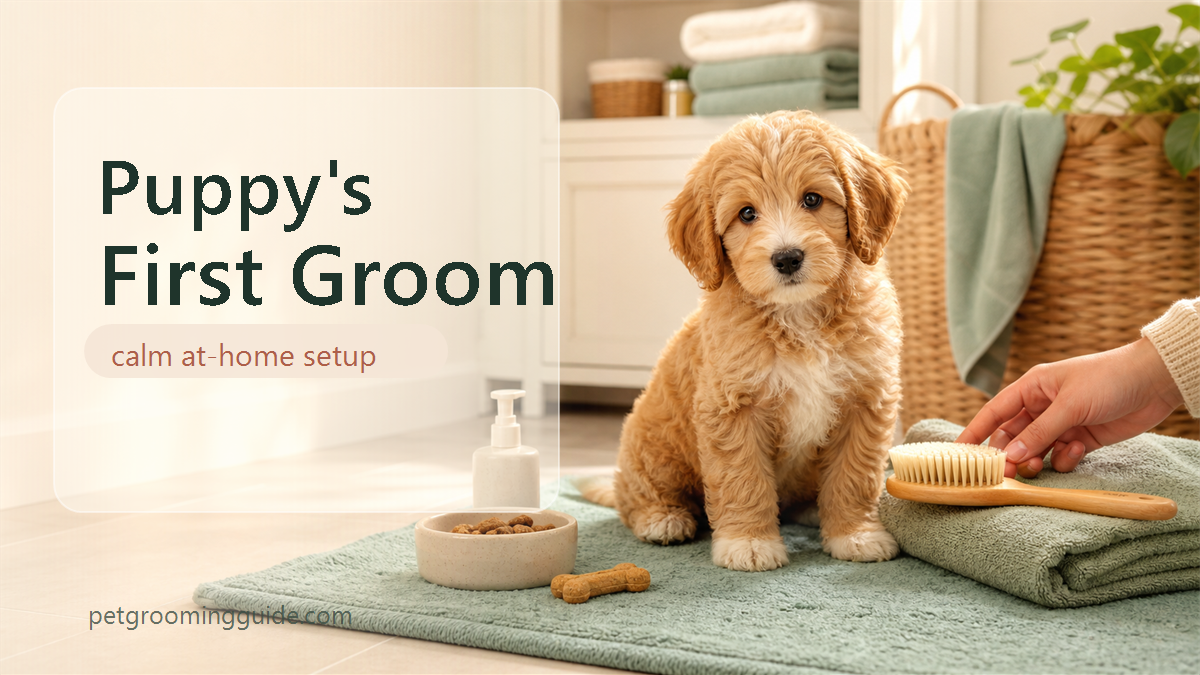

A puppy’s first grooming at home should be short, calm, and focused on practice, not a full bath, haircut, or nail trim. Start with gentle touch, a soft brush introduction, bath-area setup, towel handling, quiet grooming sounds, and paw handling. Keep each step easy enough that your puppy can recover, take a break, and come back curious.
This guide is for healthy puppies who can be handled safely at home. Ask your veterinarian before changing grooming plans for illness, wounds, parasites, skin problems, eye or ear concerns, pain, vaccine uncertainty, overheating, medication questions, or a medically fragile puppy. If your puppy growls, snaps, bites, panics, or cannot settle after an easier step, stop and get help from the right professional instead of pushing through.
Before You Start: Health, Vaccines, and Safety Boundaries
Do not start a grooming lesson when your puppy is sick, injured, overheated, shivering, covered in parasites, showing skin irritation, guarding a body area, or already too tired to learn. Grooming practice should feel like a small, predictable routine, not a test of restraint.
Keep the setup simple:
- Use clean tools, a towel, and a non-slip surface.
- Work indoors or in another low-risk area your veterinarian considers appropriate.
- Keep sessions to seconds or a few minutes.
- Pair calm handling with small rewards, praise, or release.
- Stop before your puppy gets overwhelmed.
AVSAB’s puppy socialization statement supports early socialization where illness risk is minimized, but it is not a substitute for your veterinarian’s guidance. Ask your vet about vaccine timing, public grooming places, and any puppy-specific health risk.
What First Grooming Means for a Puppy
First grooming means introduction. Your puppy is learning that hands, brushes, towels, mats, water sounds, and nail tools are ordinary parts of care. The goal is not to finish every task in one day.
Early goals are small:
- Your puppy accepts gentle touch on easy areas such as the shoulder, side, chest, and back.
- Your puppy sees a brush or comb without needing to mouth it, flee from it, or wrestle with it.
- Your puppy can stand briefly on a towel or non-slip mat.
- Your puppy hears quiet grooming sounds from a comfortable distance.
- Your puppy learns that grooming pauses when they need a break.
PetMD’s puppy grooming guidance supports early acclimation to handling and grooming tools at home, while first professional grooming timing depends on booster status and individual guidance.
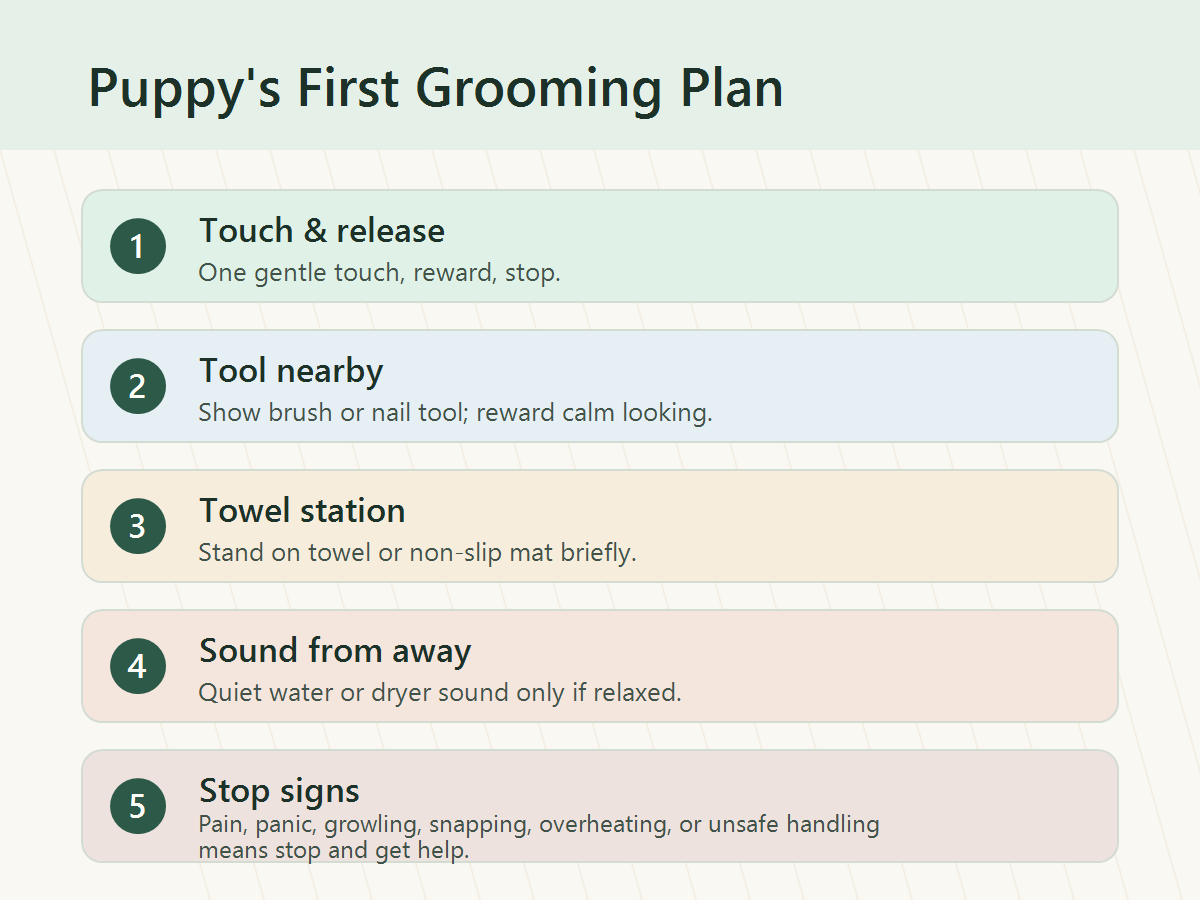
Use this plan as a gentle starting rhythm. Repeat any day that still feels hard, skip steps your puppy is not ready for, and end each session while your puppy is still calm. The plan is not a deadline.
| Day | Practice goal | Keep it short |
|---|---|---|
| 1 | Touch the shoulder and back, reward, then release. | About 30 seconds. |
| 2 | Touch each paw briefly without holding it tightly. | 30 to 60 seconds. |
| 3 | Touch the ears, collar area, chest, and tail area lightly. | 30 to 60 seconds. |
| 4 | Show the brush or comb, reward calm interest, and put it away. | Several brief repetitions. |
| 5 | Make one soft brush stroke on an easy area. | Under 1 minute. |
| 6 | Stand on a towel or non-slip mat and step off again. | About 1 minute. |
| 7 | Touch a nail tool near the paw without trimming. | About 30 seconds. |
| 8 | Use a towel rub on the chest, side, or back. | About 1 minute. |
| 9 | Visit the bath area with no water and no bath. | 1 to 2 minutes. |
| 10 | Let your puppy hear quiet water from a comfortable distance. | About 30 seconds. |
| 11 | Touch a damp cloth to a paw, chest, or easy coat area. | About 30 seconds. |
| 12 | Play a quiet dryer or clipper sound at a distance only if your puppy stays calm. | A few seconds. |
| 13 | Combine an easy brush stroke with the towel or mat station. | 1 to 2 minutes. |
| 14 | Repeat the easiest successful routine and stop early. | End on calm. |
If your puppy moves from curious to worried, make the next step easier. If your puppy panics, snaps, bites, yelps, guards a body area, or cannot settle, stop the plan and ask a veterinarian, qualified trainer, or professional groomer for help.
Touch-Tolerance Scorecard
Use this scorecard during every grooming practice. It helps you decide whether to continue, make the step easier, or stop.
| Score | Puppy signs | What to do |
|---|---|---|
| Green | Loose body, curious, can take rewards, comes back toward you, recovers quickly. | Continue briefly, then stop while it is still easy. |
| Yellow | Pulls away, yawns, lip licks, turns head away, hides, stiffens, refuses rewards. | Pause, reduce the step, shorten the session, or return to hand touch only. |
| Red | Growls, snaps, bites, panics, yelps, freezes, guards a body area, or seems painful. | Stop. Call a veterinarian, qualified groomer, or qualified trainer as appropriate. |
AVSAB’s humane training statement supports reward-based methods and cautions against aversive methods. For puppy grooming, that means you make the step easier instead of using punishment, harsh restraint, or force.
First Brush, First Bath Setup, and First Nail Practice
For the first brush, choose an easy area such as the shoulder, side, chest, or back. Touch with your hand first. If your puppy stays loose, make one gentle brush stroke in the direction the coat grows, reward, and stop.
Do not start with mats, the belly, feet, ears, tail area, or anywhere your puppy guards. Do not cut mats out with scissors. If the coat is already tangled close to the skin, painful, or widespread, ask a professional groomer or veterinarian for help. For broader home-safety context, see common dog bathing mistakes before you attempt a full bath.
For the first bath setup, practice the bath area before using water. Use a non-slip surface, keep the room comfortable, prepare towels, and avoid spraying the eyes, ears, and nose. When a real bath is needed, use lukewarm water and a dog or puppy shampoo that fits your puppy’s health needs.
For nail practice, touch the paws and let the nail tool appear nearby before any trimming. If you do not know where the quick is, or your puppy pulls away hard, yelps, bleeds, limps, or guards a paw, stop and get guidance.
The ASPCA’s dog grooming tips cover basic brushing, bathing, ear, and nail care. Keep puppy work smaller than an adult routine and route pain, skin changes, ear odor, discharge, redness, or injury to your veterinarian.
Grooming Sounds Without Overwhelming Your Puppy
Dryers, clippers, running water, and nail tools can be scary if they arrive all at once. Introduce sound from a distance, at a low level, for a few seconds. Pair calm noticing with a reward or break, then stop.
Do not point a dryer at your puppy’s face, ears, or eyes. Avoid hot air, long sessions, and any setup that makes your puppy pant hard, drool heavily, try to escape, or seem overheated. If your puppy shows heavy panting, weakness, collapse, repeated vomiting, distress, or heat-related concern, stop grooming and contact a veterinarian right away.
How to Prepare for the First Professional Groomer Visit
Ask your veterinarian about vaccine and exposure risk before scheduling a public or professional grooming visit. Ask the groomer what they require, what services are appropriate for a first puppy visit, and how they handle puppies who are still learning.
The first visit may be a short introduction instead of a full bath, haircut, nail trim, and blow-dry. Coat type, health, vaccine guidance, matting, behavior, and the groomer’s policies all matter.
After the first two weeks of practice, use a longer-term dog grooming schedule by coat type to decide what needs regular attention. If your puppy is already worried about brushing, slow down and use the gentler troubleshooting steps in how to brush a dog that hates being brushed.
When to Stop and Ask for Help
Call your veterinarian for illness, wounds, parasites, skin irritation, redness, swelling, discharge, eye problems, ear odor or pain, limping, suspected pain, overheating, vaccine uncertainty, medication questions, or any medical concern.
Call a professional groomer for coat maintenance beyond your skill level, painful or tight mats, haircut planning, sanitary trimming, face trimming, or any work near sensitive areas that you cannot do calmly and safely.
Call a qualified trainer or behavior professional for severe fear, growling, snapping, biting, panic, repeated escape attempts, or handling that is not improving with easier steps. Bite-risk grooming is not a home practice project.
If your puppy is calm enough for a voluntary station behavior, Fear Free’s chin-rest guidance can help you understand cooperative-care practice. Do not use it to hold a puppy in place through fear or pain.
FAQ
When should I start grooming my puppy at home?
You can start gentle at-home handling and grooming introductions early if your puppy is healthy and the sessions are short, clean, and calm. Ask your veterinarian about vaccine timing, public exposure, and individual health risks.
Should the first puppy grooming include a full bath?
Not always. Many puppies do better with touch, towel, brush, mat, and bath-area practice before a full bath. A full bath can wait unless your puppy truly needs one.
When can my puppy go to a professional groomer?
Ask your veterinarian and the groomer. Timing depends on vaccine guidance, local illness risk, your puppy’s health, coat needs, and the groomer’s requirements.
What if my puppy bites the brush?
Slow down. Show the brush, reward calm looking, and put it away before your puppy grabs it. Do not chase, scold, pry, or turn brushing into a wrestling game.
What if my puppy is already scared of grooming?
Use easier steps and stop before panic. For growling, snapping, biting, severe fear, or a puppy who cannot recover after a break, ask a qualified trainer, veterinarian, or professional groomer for help.
Can I trim my puppy’s face, feet, or sanitary area at home?
Only if you have the skill, lighting, tool control, and a calm puppy. For most beginners, face, eye-area, paw, sanitary, and haircut work are safer with a professional groomer.
Bottom Line
A puppy’s first grooming at home should build trust in tiny steps. Practice touch, brush sight, towel handling, bath-area setup, paw handling, and quiet sounds before expecting a full groom. For the wider routine after puppy introductions, use the full how to groom a dog at home guide. Stop for fear, pain, skin or ear trouble, eye concerns, overheating, unsafe handling, vaccine uncertainty, or any veterinary concern.