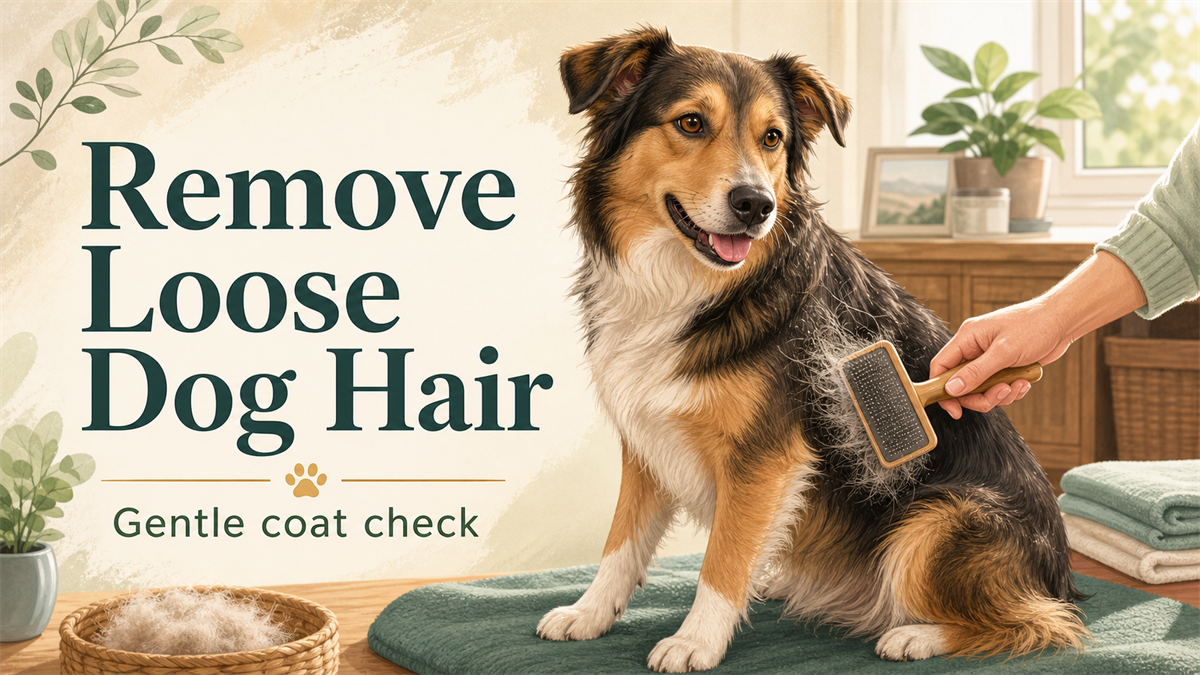
To remove loose dog hair at home, start with the coat type and the dog’s comfort level. Check for mats, sore skin, parasites, or sudden hair loss first. If the coat and skin look normal, use a gentle dry brush, bathe only when the coat is safe to wet, dry thoroughly, then do a light final pass. The goal is to control normal shedding, not stop shedding completely.
Stop before brushing or bathing if you see bald patches, red or painful skin, sores, fleas, ticks, tight mats, sudden heavy shedding, or a dog that cannot be handled safely. Use a veterinarian for medical concerns and a professional groomer for mats or coat work you cannot do gently.
Quick Answer by Coat Type
Coat type
Best starting sequence
Main caution
Short smooth
Light dry brush, wipe-down, bath only when needed
Do not scrape the skin or over-bathe.
Short dense or double coat
Dry brush, optional bath, thorough dry, light second pass
Do not shave for normal shedding or overuse deshedding tools.
Medium or long coat
Check for tangles, brush in sections, bathe only if the coat is safe, dry carefully
Do not bathe over tangles or mats.
Curly or woolly coat
Comb-check small sections and ask a groomer for matted coat
Mats can hide close to the skin.
Wire coat
Routine brush and comb checks, with professional help for coat-specific work
Do not assume every shedding tool fits a wire coat.
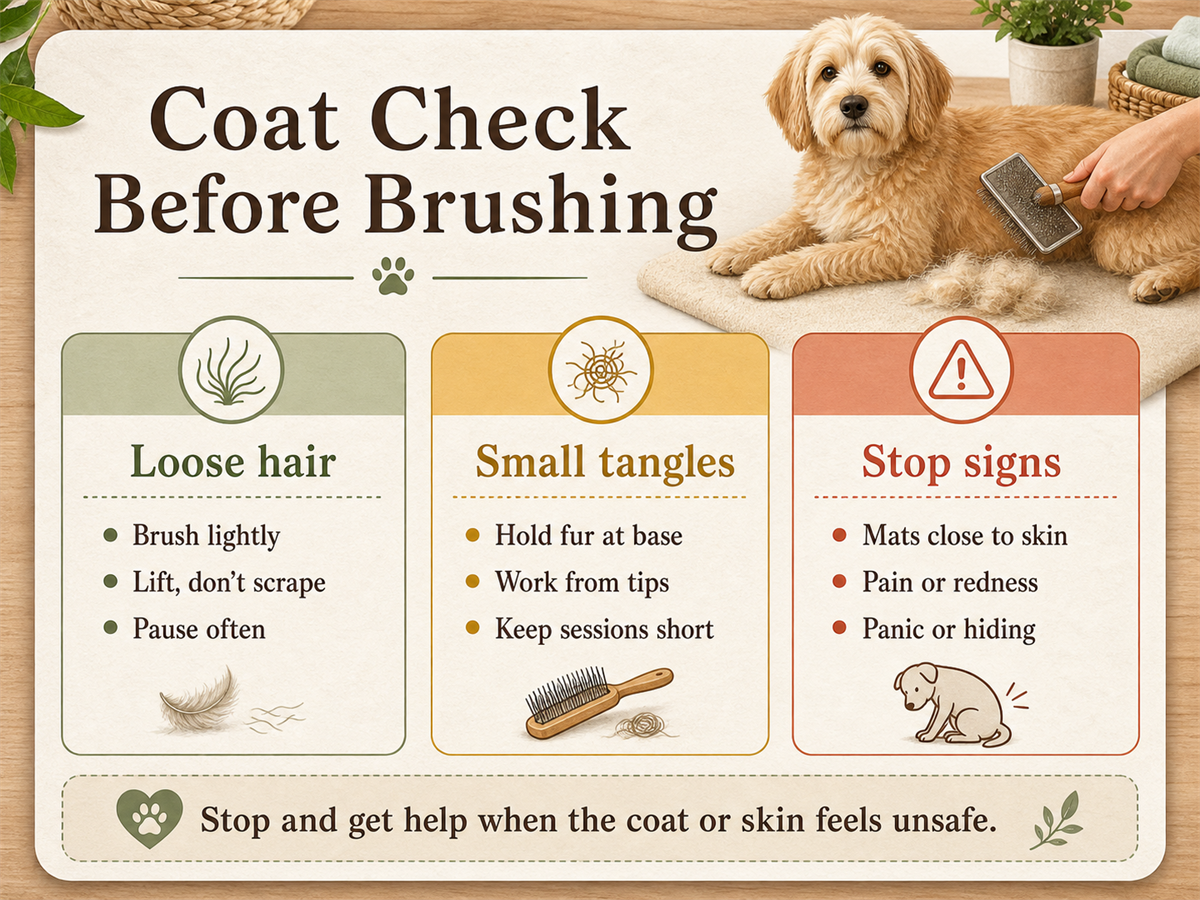
Use this quick coat check before brushing harder. Loose hair can be handled gently; pain, redness, panic, or mats close to the skin mean stop and get help.
Normal shedding leaves loose hair on the brush, floor, furniture, or your clothes. Abnormal hair loss can look different: bald patches, sudden coat thinning, red skin, sores, scabs, parasites, strong itching, pain, or a fast change from the dog’s usual pattern.
Do not treat those signs as a brushing problem. Stop and ask a veterinarian if the skin looks sore, infected, painful, or suddenly different. Ask a groomer for tight mats, packed coat, or coat work you cannot complete without pulling.
Dry brushing should come first for most dogs because it shows you what is happening under the topcoat before water hides or tightens problems.
Use a non-slip surface.
Run your hands over the coat to feel for tangles, tender spots, bumps, scabs, or mats.
Choose a coat-appropriate tool category, such as a soft brush, comb, grooming mitt, rubber curry, slicker brush, or undercoat tool.
Brush with light pressure in the direction the coat grows.
Work in small sections instead of dragging through a large area.
Clear hair from the tool often so you are not pushing old hair back into the coat.
Stop before the dog becomes sore, tense, or frustrated.
ASPCA dog grooming guidance says brushing removes dirt, spreads natural oils, and helps owners check for fleas and flea dirt. Keep that brush pass gentle. More pressure is not better.
What to Do for Mats and Tangles
Loose hair and mats are not the same problem. Loose hair should lift out with gentle passes. Mats feel packed, tight, or stuck, and they may pull the skin when you touch them.
Small, loose tangles may be eased apart before a bath only if the dog stays comfortable and the hair separates without pulling. Tight mats, widespread mats, skin-close mats, and mats over red or sore skin need a groomer or veterinarian. Do not force a brush through them, bathe over them, or use scissors close to the skin.
A bath can help loosen dead coat when the dog is healthy, the coat has been checked, and the dog can handle bathing. It should not be the first step on a tangled or matted coat.
Use lukewarm water and dog shampoo. Keep water and shampoo away from the eyes, ears, and nose. Rinse thoroughly, especially through dense, long, curly, or double coats. Leftover shampoo can irritate skin.
Skip the bath and get help if the dog is scared, painful, matted, hard to handle safely, or showing skin irritation. For bath timing and order, see dog grooming before or after bath.
Drying and Final Hair Cleanup
Drying matters because damp coat can hold loose hair, odor, and tangles. Towel-dry thoroughly. If you use a dryer, keep the temperature comfortable, use airflow the dog can tolerate, and stop if the dog becomes frightened or overheated.
Once the coat is mostly dry down near the skin, do a light second pass to collect loosened hair. Do not keep brushing just because more hair keeps appearing. Normal shedding can continue after a good grooming session.
A timed check can help you learn what works for your own dog without turning grooming into a harsh session. Keep the time short and use the same time limit for each step you compare.
What to record
Example note
Coat type
Short smooth, double, long, curly, or wire
Coat condition
Normal shedding, seasonal shedding, post-bath, or recently brushed
Step
Dry brush, bath, dry, final pass, cleanup
Tool category
Brush, comb, mitt, curry, undercoat tool, towel, or dryer
Time
Equal short sessions where possible
Dog tolerance
Calm, unsure, tense, or stop
Use this quick coat check before brushing harder. Loose hair can be handled gently; pain, redness, panic, or mats close to the skin mean stop and get help.
Use this as a home record, not a product test. Hair amount changes with season, coat type, health, recent baths, and how recently the dog was brushed.
Common Loose-Hair Mistakes
Brushing too hard.
Using one tool category for every coat.
Bathing over mats or tight tangles.
Expecting grooming to stop shedding.
Ignoring red skin, bald patches, parasites, pain, or sudden coat change.
Forcing a dog that is afraid, painful, or unsafe to handle.
Shaving a double coat to manage normal shedding.
When to Use a Groomer or Vet
Use a professional groomer for heavy undercoat work you cannot complete gently, extensive tangles, tight mats, coat packed close to the skin, trimming near sensitive areas, or a dog that needs safer handling.
Use a veterinarian for bald patches, sudden excessive shedding, parasites, sores, red or raw skin, pain, swelling, odor from skin or ears, ear discharge, eye problems, intense itching, or any medical concern.
FAQ
How do I remove loose dog hair fast?
Use a short, coat-appropriate dry brushing session first. If the coat is healthy and brushed out, a bath and thorough dry can help loosen more hair, but do not rush through mats, fear, or skin problems.
Does bathing remove loose dog hair?
Bathing can help loosen dead hair when it follows a coat check and gentle pre-brush. Do not bathe over severe tangles, mats, or irritated skin.
Can I use a deshedding tool every day?
Do not assume daily deshedding is safe. Overuse can irritate skin or damage coat. Match the tool category and frequency to coat type, skin condition, and dog tolerance.
Why is my dog still shedding after brushing?
Normal shedding can continue after grooming, especially during seasonal coat changes. Grooming removes loose hair that is ready to come out; it does not create a no-shed coat.
When is shedding abnormal?
Sudden bald spots, redness, sores, parasites, intense itching, pain, or sudden excessive shedding need veterinary guidance.