
Winter dog grooming should focus on routine brushing, removing salt or de-icer from paws, drying paws and coat before cold exposure when practical, and protecting the dog’s natural coat. Stop routine grooming for frostbite concern, hypothermia concern, cracked or bleeding pads, wounds, pain, limping, severe mats, or unsafe handling.
This is seasonal hygiene guidance, not cold-injury treatment. If your dog seems cold-stressed, painful, injured, or medically fragile, call a veterinarian instead of trying to fix it during grooming.
Winter Grooming Priorities
A simple winter routine has four jobs: brush the coat before tangles pack down, clean paws after salt or slush, dry wet areas before the dog returns to cold, and avoid coat changes that remove natural protection.
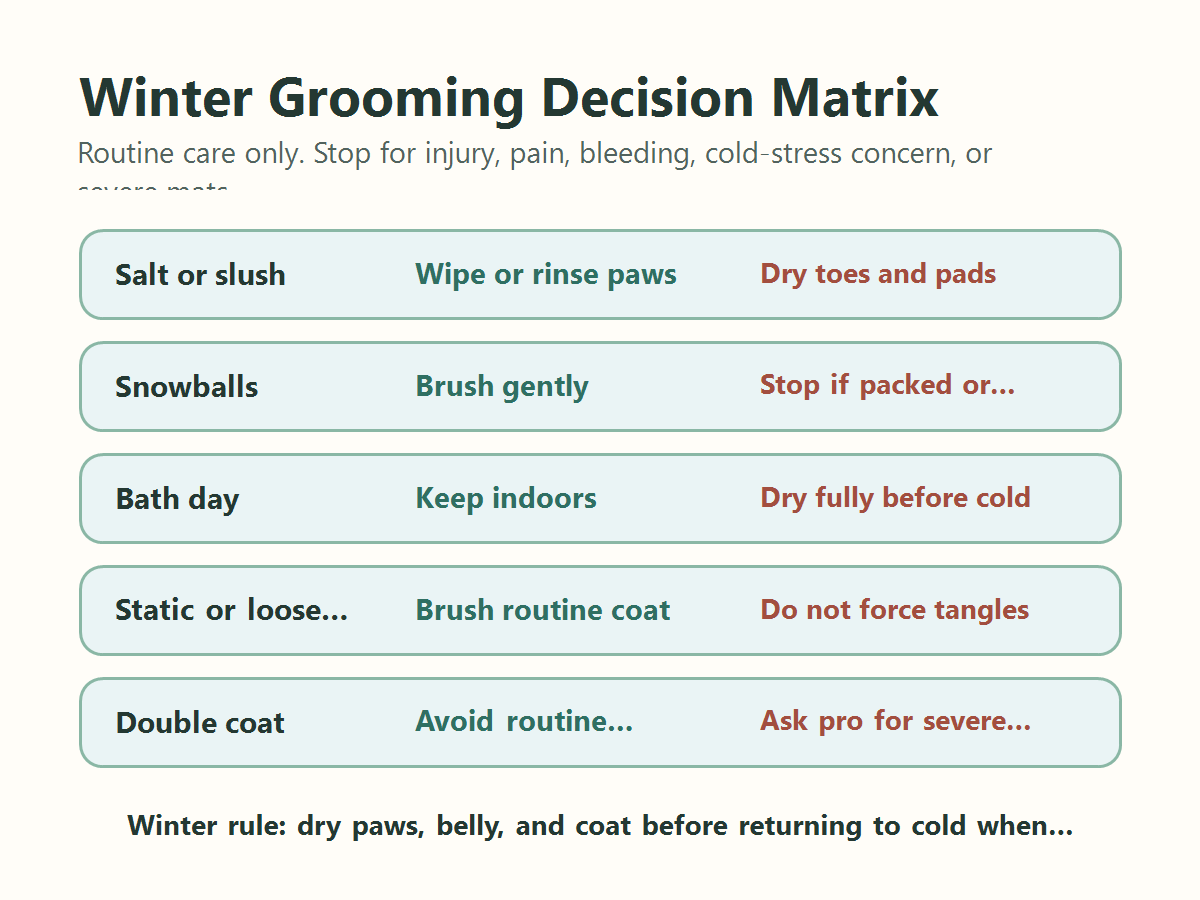
| Winter issue | Routine grooming step | Stop if |
|---|---|---|
| Salt or de-icer on paws | Wipe or rinse, then dry between toes and pads. | Pads are cracked, bleeding, swollen, painful, or injured. |
| Snowballs in coat | Gently loosen surface snow and dry the area. | The coat is packed, tight, painful, or close to the skin. |
| Static or loose winter coat | Brush routine loose coat and tangles before they tighten. | Your dog resists, panics, or the tangle will not release gently. |
| Winter bath day | Plan indoor drying time before cold exposure. | The dog cannot stay indoors until fully dry. |
Paw Rinse and Dry After Salt or Snow
After winter walks, check the paw pads, toe gaps, nail bases, and lower legs for salt, slush, mud, ice melt, or chemical residue. ASPCA winter paw guidance recommends washing and drying paws after walks to remove ice, salt, and chemicals. AKC paw-cleaning guidance also supports wiping or washing salty paws.
Use a damp cloth or gentle rinse for routine residue, then towel dry. If you need more detail, the guide on how to clean dog paws after a walk gives a step-by-step paw routine.
Do not scrub cracked, bleeding, swollen, painful, or injured pads. Do not pull hard at ice stuck in hair. Those are stop signs.
Coat Brushing, Static, and Snowballs
Winter brushing should prevent loose coat and small tangles from becoming packed. Check the legs, belly, chest, tail, collar line, and armpit areas after snow or wet walks.
Work gently from the outside of a loose tangle. Stop if the coat is tight to the skin, painful, matted, or packed with ice. Cutting or forcing winter mats can hurt the skin, especially when the coat is wet or cold.
Bath Timing and the Dry-Before-Cold Rule
If your dog needs a winter bath, plan it when the dog can stay indoors until fully dry. Use comfortable water, rinse thoroughly, towel dry, and use airflow-focused drying where appropriate. The guide on dog bath water temperature covers bath-water comfort boundaries.
The practical rule is simple: if the coat, belly, paws, or ears are still damp, keep the dog indoors and drying instead of sending them back into cold weather.
No-Shave Boundary for Protective Coats
Do not routinely shave a double-coated dog for winter grooming. AKC guidance on double-coated dog breeds explains that shaving removes both the undercoat and topcoat. For seasonal home grooming, focus on brushing, comb checks, and professional help for severe mats.
If coat removal seems necessary because of severe mats, pain, skin problems, or medical needs, ask a professional groomer or veterinarian about that individual dog.
Stop Signs: Cold, Paw, Skin, and Coat Concerns
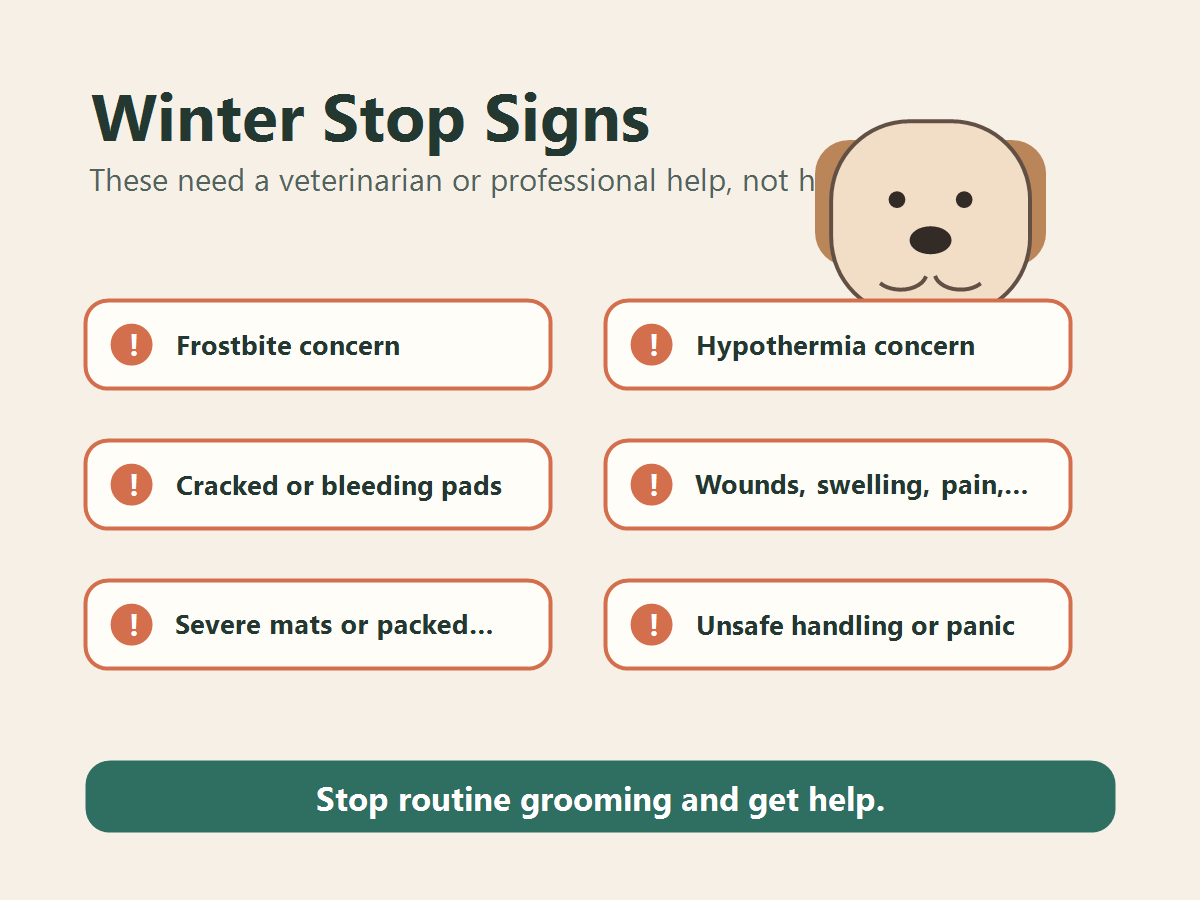
AVMA cold-weather safety guidance supports taking cold exposure seriously. In grooming terms, stop the routine and get help when the problem is no longer ordinary dirt, salt, loose coat, or bath timing.
| Stop sign | Safer next step |
|---|---|
| Frostbite or hypothermia concern | Call a veterinarian. |
| Cracked or bleeding pads, wounds, swelling, pain, or limping | Stop grooming and contact a veterinarian. |
| Severe mats, packed coat, or coat tight to the skin | Ask a professional groomer or veterinarian. |
| Panic, growling, snapping, or unsafe handling | Stop and get help before continuing. |
| Medically fragile dog or unusual winter behavior | Ask a veterinarian for individual guidance. |
FAQ
How should I groom my dog in winter?
Brush routinely, clean salt or slush from paws, dry wet areas before cold exposure, avoid routine double-coat shaving, and stop for pain, wounds, bleeding, cold-stress concern, or severe mats.
Should I rinse my dog’s paws after winter walks?
Yes, if paws touched salt, slush, mud, or ice melt. Wipe or rinse the residue, then dry between toes and pads.
Can I bathe my dog in winter?
Yes, if the dog can stay indoors until fully dry. Damp paws, belly, ears, or coat should trigger more indoor drying instead of outdoor time.
Should I shave my dog in winter?
Do not routinely shave double-coated dogs. Ask a professional groomer or veterinarian if mats or medical needs make coat removal seem necessary.
When do winter paw problems need a vet?
Use a veterinarian for cracked or bleeding pads, wounds, swelling, pain, limping, frostbite concern, hypothermia concern, or anything that looks worse than routine salt or dirt.