
After swimming, rinse off pool, lake, river, or ocean residue when needed, then towel-dry first and use gentle airflow only if your dog tolerates it. Keep water and tools out of the ear canal, check paws and skin, and stop if you see odor, discharge, head shaking, wounds, hot spots, limping, pain, distress, or unsafe handling.
This guide is for routine post-swim cleanup. It is not ear-infection treatment, wound care, parasite treatment, chemical exposure care, pain management, or advice for medically fragile dogs.
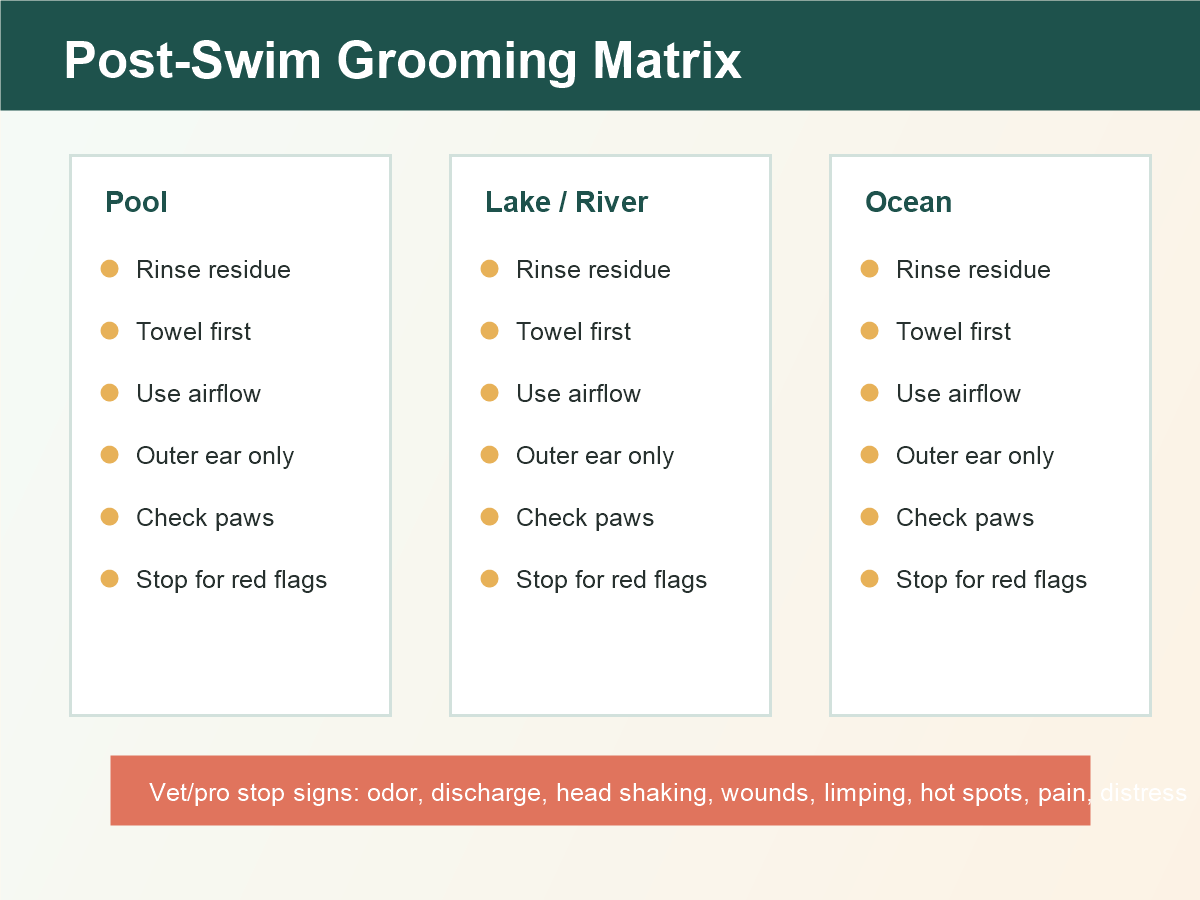
Post-Swim Cleanup Matrix
| Water source | Routine grooming priority | Stop if you see |
|---|---|---|
| Pool | Rinse residue if the coat feels sticky or smells like pool water. Dry coat folds, collar areas, paws, and tail base. | Skin redness, strong odor, red ears, discharge, head shaking, coughing, or distress. |
| Lake or river | Rinse debris, check belly and paws, dry damp coat zones, and clean towels or gear afterward. | Wounds, parasites or suspected parasites, hot spots, limping, pain, vomiting, diarrhea, or unsafe handling. |
| Ocean | Rinse salt and sand from the coat, paws, belly, tail, and collar area. Dry between toes and under harness contact points. | Eye irritation, ear symptoms, painful paws, swelling, limping, skin irritation, or unusual behavior. |
Rinse Sequence After Swimming
Use clean water to rinse residue from the coat, belly, paws, tail, and collar area when the coat feels sticky, sandy, salty, muddy, or heavily scented from water. Keep the rinse calm and practical. Work in small zones instead of turning a tired dog into a long bath project.
The ASPCA dog grooming tips recommend avoiding the ears, eyes, and nose during bathing. Apply the same boundary after swimming: rinse the coat and dirty areas, but do not pour or spray water into sensitive openings.
If the swim left shampoo-like residue from a later bath, use the separate guide on how to rinse dog shampoo completely. For normal post-swim cleanup, a simple residue rinse is often enough.
Dry the Coat Before Moisture Hides
Towel first. Press and blot instead of rubbing hard, especially around the belly, armpits, tail base, feathering, and collar area. Dense coats can feel dry on the surface while moisture remains deeper in the coat.
AKC drying guidance explains that airflow dries fur, while heat can burn skin. If you use a dryer, keep the setup cool, ventilated, and tolerated by the dog. Stop if the dog pants hard, panics, flinches, or cannot settle.
For a fuller drying routine, use how to dry a dog after a bath. The post-swim version is shorter: rinse residue if needed, towel well, use safe airflow only when tolerated, then check damp zones.
Outer Ear Boundary
After swimming, dry the outer ear flap and visible outer area gently with a towel. Do not push cotton, cloth, tools, powders, or cleaners deep into the ear canal. Do not use ear products unless a veterinarian has directed them for that dog.
Redness, odor, discharge, repeated head shaking, pain, swelling, scratching, or sensitivity around the ear is no longer a grooming task. Stop and ask a veterinarian. For bath-day prevention basics, see how to protect dog ears during bath.
Paw, Belly, Collar, and Tail Checks
After water play, check the areas that trap grit and moisture: toe gaps, paw pads, nails, belly, armpits, tail base, collar line, harness line, and long coat edges. Remove loose debris gently and dry damp areas before your dog settles into bedding or a crate.
If paws are muddy or gritty after the walk home, the guide on how to clean dog paws after a walk gives a paw-only routine. After swimming, keep the full-body moisture check too.
Summer Swim Timing
Swimming often happens on hot days, so keep the cleanup short and cool. Move to shade or indoors, offer water, keep airflow gentle, and avoid turning the post-swim check into a long grooming session. For broader hot-weather grooming decisions, use how to groom a dog in summer.
Stop Signs After Swimming
Stop routine grooming when the problem is not routine residue, sand, or damp coat care. Do not try to solve ear symptoms, wounds, parasites, illness signs, or pain with more rinsing or brushing.
| Stop sign | Safer next step |
|---|---|
| Odor, discharge, red ears, repeated head shaking, or ear pain | Stop and contact a veterinarian. |
| Wounds, hot spots, swelling, limping, embedded debris, or painful paws | Stop grooming and use veterinary guidance. |
| Parasites or suspected parasites after lake, river, trail, or beach time | Do not treat as grooming cleanup; contact a veterinarian. |
| Panic, snapping, freezing, or unsafe handling | Stop the session and get qualified help before continuing. |
| Medically fragile dog or unusual behavior after swimming | Ask a veterinarian for individual guidance. |
FAQ
Should I rinse my dog after swimming?
Often yes, especially after salt water, pool residue, lake debris, river mud, or sand. Keep the rinse gentle and avoid ears, eyes, and nose.
How do I dry my dog after swimming?
Towel first, then use cool airflow only if your dog tolerates it. Avoid high heat and check damp areas such as paws, belly, armpits, tail base, collar area, and dense coat zones.
How do I protect my dog’s ears after swimming?
Dry the outer ear flap and visible outer area only. Do not insert tools or cotton deep into the canal, and do not use ear products unless a veterinarian directed them.
What if my dog smells after swimming?
A light water smell may clear after a rinse and dry. Strong odor, ear odor, skin odor, discharge, redness, head shaking, or pain should go to a veterinarian.
When do post-swim symptoms need a vet?
Use a veterinarian for ear symptoms, wounds, hot spots, parasites or suspected parasites, limping, swelling, pain, distress, illness signs, or unusual behavior after swimming.