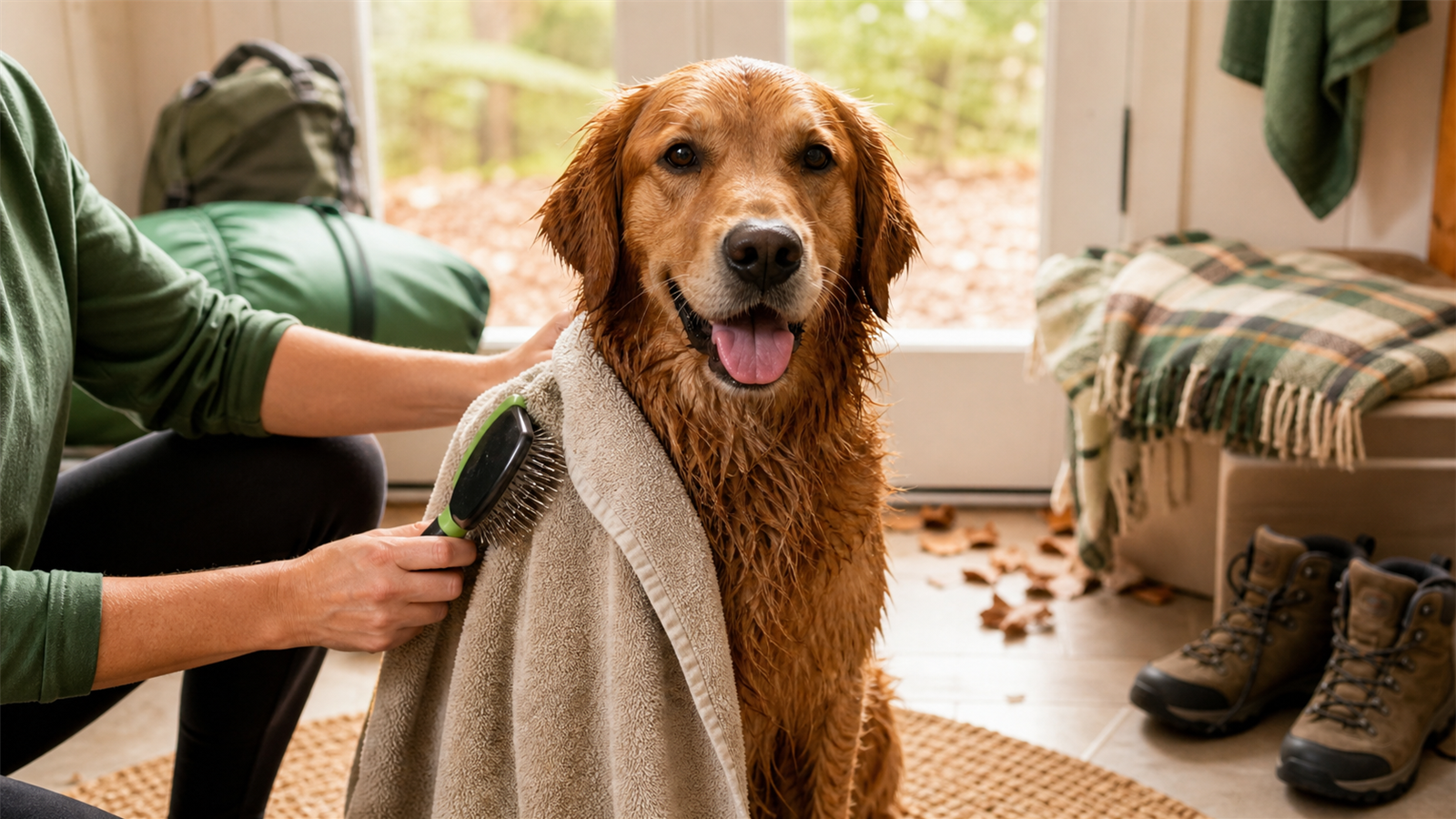

After camping, inspect your dog’s coat, paws, belly, collar area, and gear-contact zones before bathing. Remove loose debris gently, brush when safe, wipe or rinse routine grime, reset towels and bedding, and stop for ticks, embedded plant material, swelling, pain, bleeding, limping, chemical exposure, wounds, severe mats, distress, or unsafe handling.
This guide is for grooming cleanup only. It does not teach tick removal, foxtail extraction, parasite prevention, wound care, embedded-object removal, severe-mat cutting, or chemical-exposure treatment.
Campsite-Return Grooming Checklist
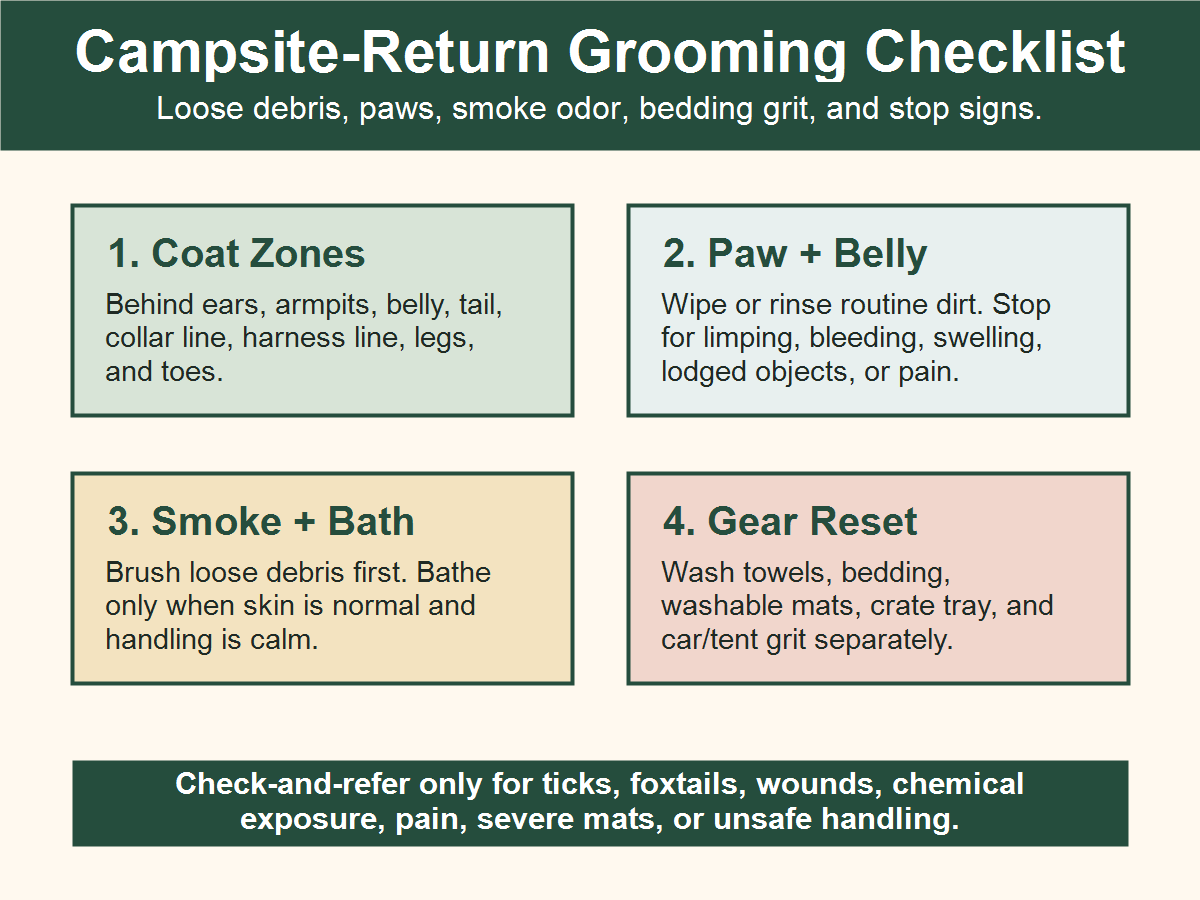
| Cleanup step | What to do | When to stop |
|---|---|---|
| Coat zones | Check behind ears, armpits, belly, tail, collar line, harness line, legs, and toes. | Embedded burrs, suspected foxtails, pain, tight mats, or skin injury. |
| Paws and belly | Wipe or rinse routine dirt, sand, and mud; dry before replacing gear. | Limping, bleeding, swelling, lodged objects, or pain. |
| Smoke and odor | Brush loose debris first; bathe only if the skin looks normal and handling is calm. | Chemical odor, wound odor, skin irritation, or unsafe handling. |
| Gear reset | Clean towels, bedding, washable mats, crate tray, and tent/car grit separately. | Unknown residue or cleaner exposure concern. |
Campsite-Return Grooming Order
- Keep your dog on a washable towel or mat.
- Check the coat before adding water.
- Remove only loose burrs, leaves, dirt, and dry debris.
- Inspect paws, toes, belly, tail, ears, collar line, harness line, and gear-contact zones.
- Brush safe loose debris before deciding on a bath.
- Wipe or rinse paws and belly.
- Wash bedding, towels, and washable camping items separately from the dog cleanup zone.
If the trip was mostly a long trail day, the related dog grooming after hiking guide covers single-outing inspection. If mud is the main problem, use dog grooming after mud.
Coat-Zone Inspection For Burrs And Loose Debris
Check behind ears, armpits, belly feathering, tail, collar line, harness line, legs, and between toes. Loose burrs or leaves can be lifted out gently. If debris is embedded, painful, close to the skin, or tangled into a mat, stop and route to a veterinarian or professional groomer.
Ticks and foxtails are check-and-refer items here. Cornell’s Lyme disease resource discusses tick exposure risk around outdoor vegetation, but this article does not give tick removal instructions. If you suspect tick attachment or embedded plant material, do not use this grooming article as a removal protocol.
For routine coat checking, use how to comb-check a dog coat. Do not force a comb through tight or painful areas.
Paw, Belly, Tail, And Collar Cleanup
Outdoor grit often collects under the belly, around the tail, and where collars or harnesses rub. Wipe or rinse routine dirt, then dry the area before replacing gear.
The AKC notes that dog paws can pick up dirt and debris outdoors and may need wiping or washing after messy exposure. For camping, keep the paw check gentle and stop if you see limping, bleeding, swelling, a lodged object, or pain.
Smoke Odor And Bath/No-Bath Decision
Campfire smell does not always require an immediate bath. Brush out loose debris first. If the coat still smells smoky but the skin looks normal and your dog is comfortable, a routine bath may help.
The ASPCA dog grooming tips support routine grooming basics such as brushing before bathing, avoiding sensitive areas, rinsing, and drying. Do not bathe over wounds, chemical exposure concerns, severe mats, or painful areas.
Bedding, Tent, And Car Reset
Keep this reset separate from the dog’s body. Shake out or launder towels, bedding, blankets, and washable mats so grit does not return to the coat. Wipe hard crate trays or carrier surfaces by label, and keep your dog away from wet cleaners or unknown residues.
This is not a vehicle-detailing or disinfecting article. Keep the dog-grooming workflow simple: separate dirty items, clean washable gear, dry the dog, then restore the collar, harness, and bedding only when they are clean.
Stop Signs After Camping
Stop grooming and contact a veterinarian or qualified professional for suspected tick attachment, embedded foxtail or plant material, swelling, pain, bleeding, limping, wounds, chemical exposure, severe mats, distress, or unsafe handling.
Do not cut out severe mats, dig out embedded objects, treat wounds, or experiment with chemical exposure cleanup. Let the right professional see the problem before grooming hides it.
FAQ
Should I bathe my dog after camping?
Maybe. Brush and inspect first. Bathe only for routine grime when there are no stop signs such as wounds, pain, embedded debris, suspected parasites, chemical exposure, severe mats, or unsafe handling.
How do I check my dog for burrs after camping?
Check behind ears, collar areas, armpits, belly, tail, legs, paws, and gear-contact zones. Remove only loose debris. Stop for embedded, painful, or matted debris.
How do I handle campfire smell in my dog’s coat?
Brush first, then decide if a routine bath is needed. Do not cover up odor linked with skin symptoms, wounds, pain, or chemical exposure.
Should I remove ticks or foxtails during grooming?
This guide does not provide removal instructions. Suspected tick attachment or embedded plant material should be routed to a veterinarian or appropriate professional guidance.
When should after-camping cleanup stop?
Stop for embedded objects, suspected ticks or foxtails, swelling, limping, bleeding, pain, wounds, chemical exposure, severe mats, distress, or unsafe handling.