Category: Dog Grooming

Dog grooming routines, tools, coat care, bathing, and home grooming guidance.

  • How to Clean Dog Tear Stains Safely

    How to Clean Dog Tear Stains Safely

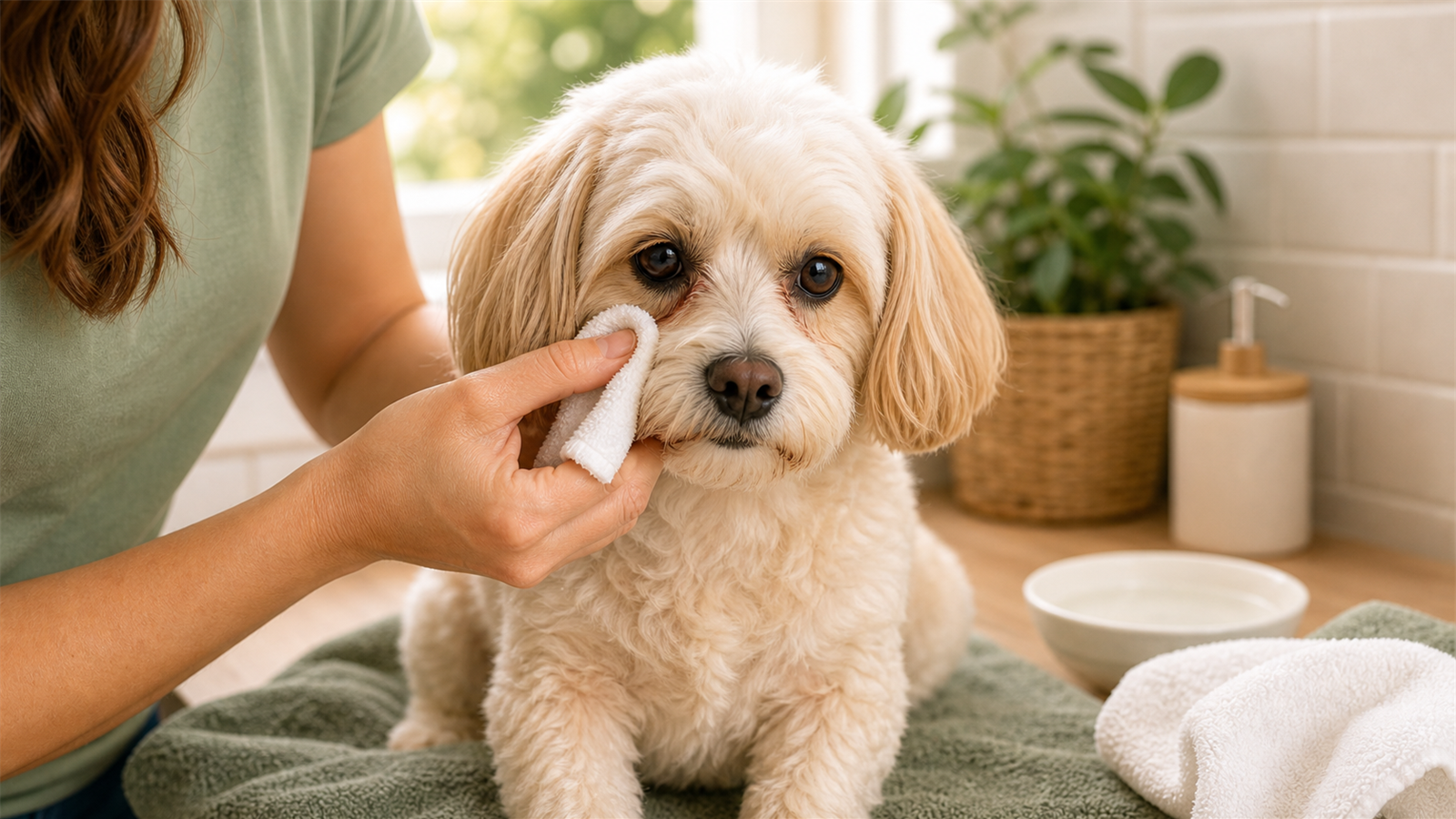
    Clean dog tear stains only as fur hygiene: use a warm damp cloth on the stained fur, wipe away from the eye, and dry the area gently. Stop if you see redness, squinting, pain, swelling, bad odor, colored discharge, injury, vision change, or sudden/excessive tearing. Those signs need a veterinarian.

    Do not put peroxide, whitening products, stain removers, essential oils, eye drops, supplements, or non-veterinary cleaners near or in a dog’s eye. This guide is not for treating eye discharge or eye disease.

    Tear Stains vs Eye Discharge

    Tear stains are color changes on the fur below or beside the eye. Eye discharge is material from the eye itself. Treat them differently: stained fur can sometimes be cleaned gently, but eye discharge or a change in the eye should not be handled as a cosmetic issue.

    AKC tear-stain guidance explains that tear staining has several possible contributors. PetMD guidance on dog eye discharge also separates normal tear staining from abnormal discharge signs that need veterinary attention.

    Before-Cleaning Inspection

    Before wiping the fur, look at the area without touching the eye. If the eye looks red, swollen, cloudy, painful, or different from normal, stop. If your dog is squinting, pawing at the eye, pulling away, or suddenly tearing more than usual, stop.

    Check firstClean fur only ifStop if
    Eye surfaceThe eye looks normal for your dog.Redness, cloudiness, squinting, injury, or vision change.
    Fur below the eyeThe issue is staining on fur.Colored discharge, bad odor, swelling, pain, or wet irritation.
    Handling comfortYour dog stays calm with light face handling.Pulling away, panic, growling, snapping, or unsafe handling.

    Safe Cleaning Method for Stained Fur

    Use the lightest routine that works. The goal is to loosen staining on the fur, not to clean the eye.

    1. Wash your hands. Keep the cloth clean and avoid transferring debris toward the eye.
    2. Dampen a soft cloth. Use warm water and wring it out so it is damp, not dripping.
    3. Wipe away from the eye. Touch stained fur only. Do not wipe toward the eye or across the eyeball.
    4. Use a clean cloth area. Change cloth sections instead of dragging debris back over the same fur.
    5. Dry the fur. Pat the area dry so moisture does not sit in the coat or nearby folds.
    6. Stop early. Short, calm cleaning is better than forcing the full stain to fade in one session.

    What Not to Put Near a Dog’s Eyes

    Avoid peroxide, bleach, whitening products, stain removers, essential oils, alcohol, fragrance, human skin products, and any cleaner that is not specifically approved by your veterinarian for your dog. Do not use this grooming guide to choose eye drops, medications, supplements, antibiotics, or diet changes.

    If a veterinarian has already approved a routine wipe for your dog, follow their directions and keep it on the fur as instructed. If the eye becomes red, painful, swollen, cloudy, or more watery, stop using products and ask the veterinarian what to do next.

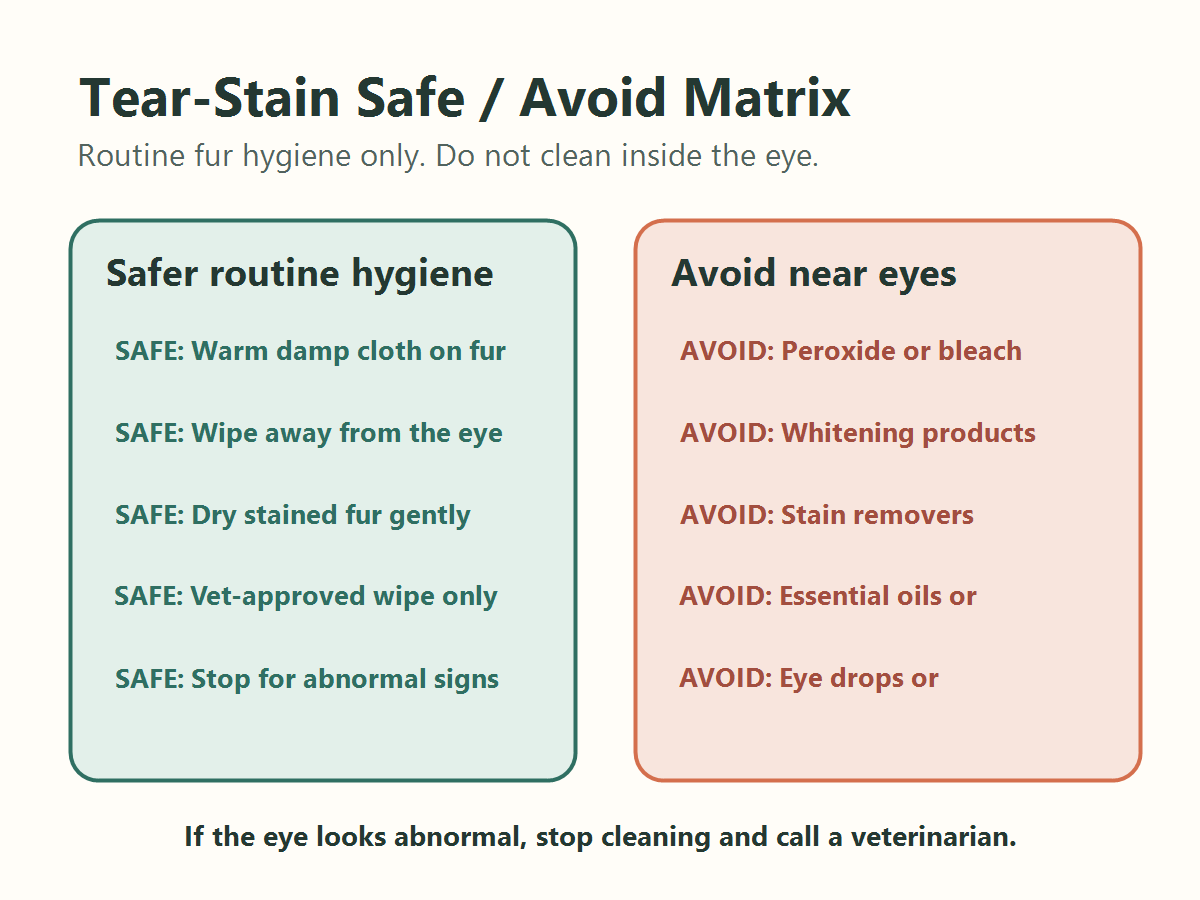
    Safe and Avoid Matrix

    Safer routine hygieneAvoid near the eye
    Warm damp cloth on stained furPeroxide, bleach, or whitening products
    Wiping away from the eyeWiping into the eye or across the eyeball
    Drying the fur gently after wipingLeaving the area damp or rubbing hard
    Vet-approved routine wipe when already advisedStain removers, essential oils, or fragrance
    Stopping for abnormal signsTreating discharge or pain as cosmetic staining
    Dog tear-stain safe and avoid matrix for damp cloth use, wiping away from the eye, and avoiding peroxide or whitening products
    Keep cleaning fur-only: use a damp cloth, wipe away from the eye, and avoid harsh cleaners or whitening products.

    Related Face and Eye-Area Guides

    If you are dealing with daily debris at the eye corner, use the separate guide on how to clean dog eye gunk. If staining overlaps with wrinkles or moisture pockets, the guide on how to clean dog face folds explains fold-drying boundaries.

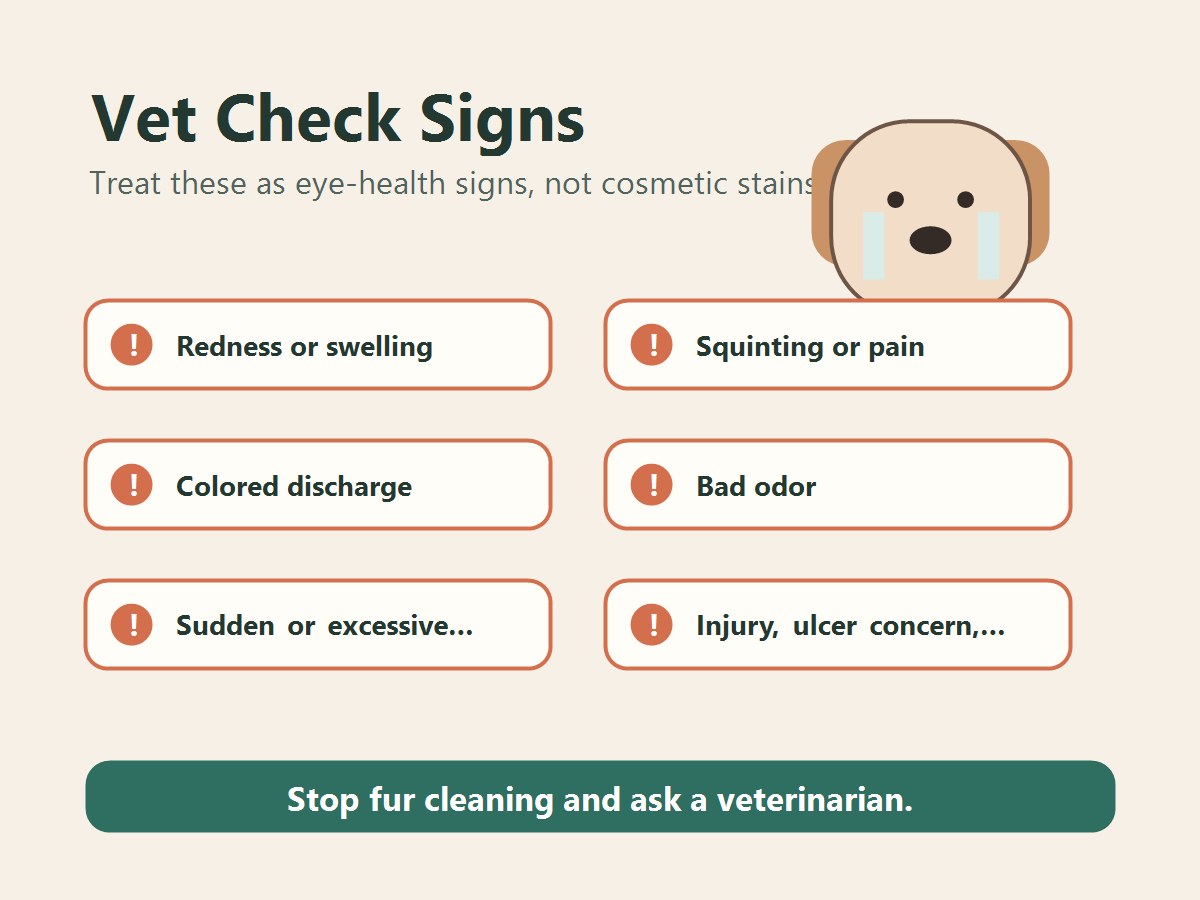
    Vet-Check Signs

    Call a veterinarian if the issue looks like an eye problem, not simple staining on fur.

    SignWhy to stop home cleaning
    Redness, swelling, squinting, pawing, or painThese can point beyond routine grooming.
    Colored discharge, bad odor, or sticky material from the eyeDo not treat discharge as a cosmetic stain.
    Sudden or excessive tearingA new change deserves veterinary advice.
    Injury, ulcer concern, cloudiness, or vision changeStop immediately and contact a veterinarian.
    Panic, growling, snapping, or unsafe handlingStop and get help before continuing face handling.
    Dog tear-stain vet check signs including redness, pain, colored discharge, odor, sudden tearing, injury, or vision change
    Stop home cleaning and call a veterinarian for redness, pain, colored discharge, odor, sudden tearing, injury, or vision change.

    FAQ

    Can I clean dog tear stains at home?

    Yes, if the issue is stained fur and the eye looks normal. Use a warm damp cloth on the fur only, wipe away from the eye, and stop for abnormal signs.

    What is safe to use near dog tear stains?

    A warm damp cloth is the safest routine starting point for stained fur. Use a wipe only if your veterinarian has already approved it for your dog.

    Should I use peroxide near my dog’s eyes?

    No. Avoid peroxide, bleach, whitening products, and stain removers near the eyes unless a veterinarian gives specific instructions.

    When are tear stains a vet issue?

    Use a veterinarian for redness, squinting, pain, swelling, colored discharge, odor, injury, vision change, or sudden/excessive tearing.

    Are tear stains the same as eye discharge?

    No. Tear stains are stained fur. Eye discharge is material from the eye and may need veterinary evaluation, especially if it is colored, sticky, smelly, painful, or sudden.
  • How to Clean Dog Face Folds Safely

    How to Clean Dog Face Folds Safely

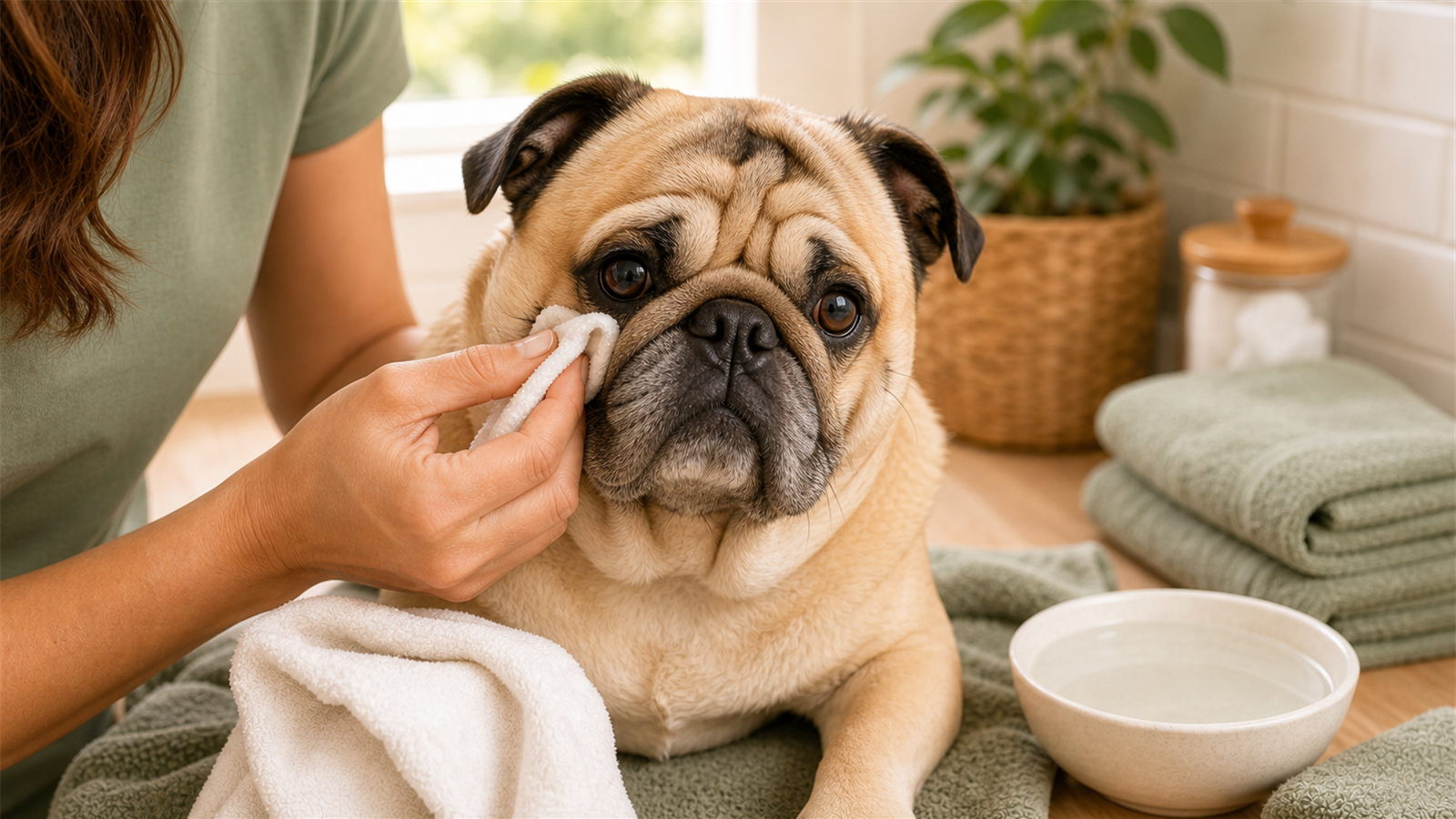
    Clean healthy dog face folds by wiping away surface debris, then drying each fold completely. Stop before cleaning if you notice odor, redness, swelling, discharge, sores, bleeding, pain, suspected infection, or eye involvement. Those signs need a veterinarian, not more wiping at home.

    This guide is for routine hygiene only. It is meant for normal face folds that collect moisture, drool, or light debris. It does not diagnose skin problems, replace veterinary care, or cover cleaning inside the eyes, nose, mouth, or ears.

    What Face-Fold Cleaning Can and Cannot Do

    Routine face-fold cleaning can help remove loose debris and reduce trapped moisture in healthy folds. It cannot solve sore skin, discharge, swelling, pain, strong odor, or suspected infection.

    PDSA guidance on skin fold problems lists smelly skin, red or sore folds, discharge, and pain as signs that need veterinary help. ASPCA grooming guidance also recommends having skin abnormalities checked by a veterinarian. Use those boundaries before you start.

    Supplies for Routine Hygiene

    Keep the supplies simple. For routine cleaning, use a soft damp cloth or cotton pad, plain water, and a clean dry cloth. Use a routine wipe only if your veterinarian has already said it is suitable for your dog.

    SupplyUse it forAvoid
    Soft damp clothLight surface debris in healthy foldsScrubbing, rough fabric, or rubbing sore skin
    Plain waterRoutine wipe-downsHarsh cleaners, fragrance, whitening products, or alcohol
    Clean dry clothDrying every fold after wipingLeaving folds damp
    Vet-approved routine wipeOnly when your veterinarian says it fits your dogMedicated, antibacterial, antiseptic, or product-cure language at home

    Step-by-Step Face-Fold Cleaning

    Work slowly and keep the fold open only enough to see the surface. If your dog pulls away, stiffens, growls, snaps, or seems painful, stop and get help instead of pushing through.

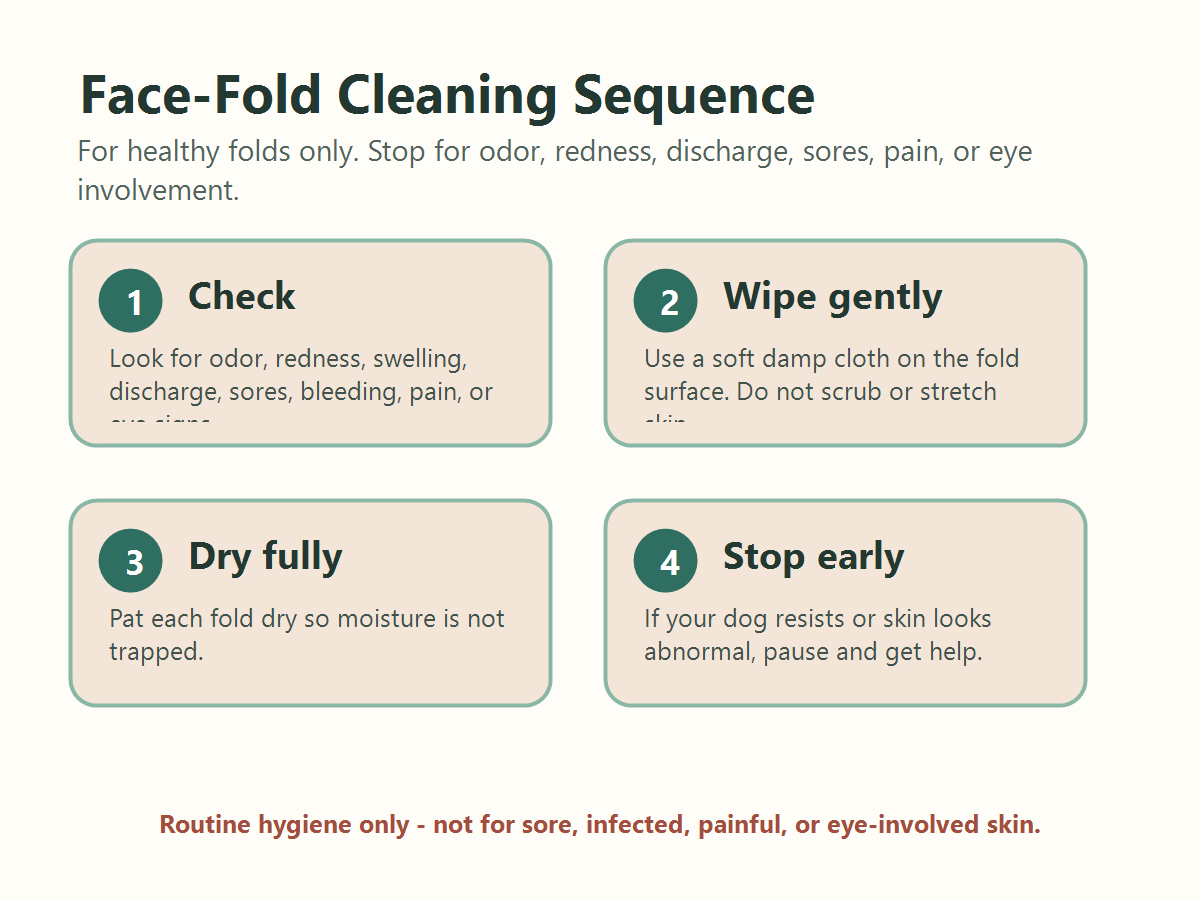
    1. Check first. Look for odor, redness, swelling, discharge, sores, bleeding, pain, suspected infection, or eye involvement.
    2. Lift gently. Open the fold just enough to reach the skin surface. Do not stretch the skin or force the head still.
    3. Wipe once. Use a soft damp cloth to remove loose debris from the fold surface.
    4. Change cloth area. Use a clean part of the cloth for the next fold so debris is not moved around.
    5. Dry fully. Pat the fold with a clean dry cloth until it feels dry, not damp.
    6. Stop early if needed. Short, calm sessions are safer than trying to finish every fold at once.
    Dog face-fold cleaning steps showing check, wipe, dry, and stop signs
    Use the same order every time: check first, wipe gently, dry fully, and stop if skin or handling is not routine.

    Dry-After-Cleaning Checklist

    Drying is the step owners often rush. A clean fold that stays damp can still become uncomfortable, especially on wrinkled breeds or dogs that drool.

    CheckWhat you wantStop if you see
    Nose foldDry surface, no trapped debrisOdor, redness, swelling, discharge, or pain
    Cheek foldsDry cloth comes away mostly cleanSores, bleeding, tenderness, or sticky discharge
    Lower lip foldsDrool is wiped and the fold is dryStrong smell, swelling, or repeated irritation
    Eye-adjacent foldsOnly the skin fold is wipedEye discharge, squinting, eye redness, or anything touching the eye

    Common Missed Zones

    Face folds are not only the wrinkle above the nose. Check the nose fold, cheek folds, lower lip folds, and any small crease where drool or tears collect. Keep each check gentle and brief.

    If the concern is eye debris rather than the fold itself, use a separate, conservative eye-area routine. The guide on how to clean dog eye gunk explains when to stop around the eyes.

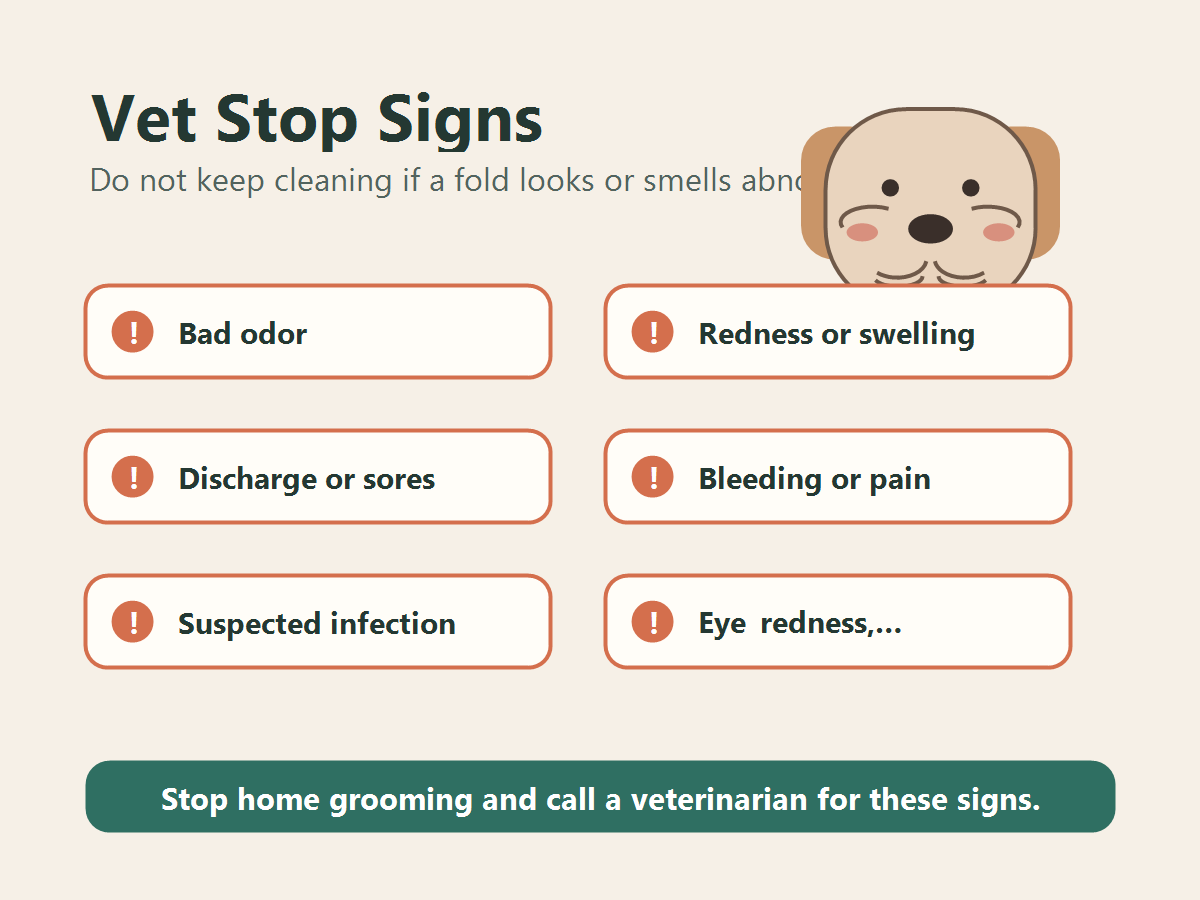
    Vet Stop Signs

    Do not treat face-fold warning signs as a cosmetic cleaning problem. Stop home grooming and contact a veterinarian when the fold looks or feels abnormal.

    What you noticeSafer next step
    Bad odor, redness, swelling, sores, bleeding, discharge, or painStop cleaning and call a veterinarian.
    Suspected infection or worsening skinDo not try new products at home; ask a veterinarian.
    Eye redness, squinting, eye discharge, or wipe contact with the eyeStop and contact a veterinarian.
    Your dog resists, panics, growls, snaps, or cannot be handled safelyStop and ask a professional groomer, veterinarian, or qualified trainer for help.
    Dog face-fold warning signs including odor, redness, swelling, discharge, sores, pain, and eye involvement
    Odor, redness, swelling, discharge, sores, bleeding, pain, suspected infection, or eye involvement should be checked by a veterinarian.

    FAQ

    How often should you clean dog face folds?

    Clean only as often as needed to keep healthy folds free of debris and dry. Some dogs need frequent light wiping; others need less. Ask your veterinarian for a routine if your dog has repeated fold problems.

    What can I use to clean dog wrinkles?

    For routine hygiene, use a soft damp cloth, plain water, and a clean dry cloth. Use wipes only if your veterinarian has already approved them for your dog.

    Why do my dog’s face folds smell?

    Odor is a stop sign. Do not cover it with fragrance or keep wiping. Contact a veterinarian because smell can come with irritation, trapped moisture, or skin disease.

    Should face folds be dry after cleaning?

    Yes. Dry each fold after wiping. The fold should feel dry, not damp, and the skin should not look rubbed or sore.

    When should face folds be checked by a vet?

    Use a veterinarian for odor, redness, swelling, discharge, sores, bleeding, pain, suspected infection, eye involvement, or anything that worsens after routine care.

  • Dog Grooming Record Keeping

    Dog Grooming Record Keeping

    Dog grooming record keeping means writing down the date, routine task, body area, generic product category, comfort notes, photos, follow-up question, and next routine date after grooming. Use the record to remember patterns and give clearer notes to a groomer or veterinarian. Do not use it to diagnose skin, ear, nail, parasite, pain, product, or behavior problems at home.

    A short log works best. Fill it out after baths, brushing, comb checks, nail sessions, paw wipes, outer-ear checks, face-fold wipes, or professional grooming visits. If your dog becomes uncomfortable or you see a health concern, stop the routine and ask the right professional instead of trying to solve it from the record.

    Quick Grooming Record Fields

    FieldWhat to writeSafe boundary
    DateGrooming date and approximate timeUse for routine spacing, not treatment timing.
    TaskBath, brush, comb check, paw wipe, nail trim, outer-ear wipe, face-fold wipeUse plain task names, not medical labels.
    Body zoneCoat, paws, nails, outer ears, face folds, belly, tail, harness area, mat-prone spotsRecord location only.
    Generic product or tool categoryDog shampoo, conditioner, towel, brush, comb, paw wipeDo not use the log to prove a cause or choose treatment.
    Comfort notesCalm, wiggly, needed break, pulled paw away, stopped earlyDo not force handling.
    ObservationTangles, loose hair, mud, damp coat area, residue concern, odor noticedEscalate abnormal or worsening signs.
    PhotoYes or no, plus what area the photo showsPhotos support handoff, not home diagnosis.
    Follow-up questionAsk groomer about harness-area tangles; ask vet if itching continuesUse referral language when signs are not routine.
    Next routine dateNext brush, bath, nail check, or appointmentKeep it to routine care planning.

    What a Grooming Record Should Track

    A useful dog grooming record answers four questions: what was done, where it happened on the dog, how the dog responded, and what should happen next. That is enough for most home routines.

    ASPCA dog grooming tips cover routine brushing, bathing, rinsing, drying, and cleaning around folds. ASPCA general dog care guidance also frames brushing, bathing, and basic checks as part of regular care. A record turns those ordinary steps into a clear timeline.

    Use simple wording. Write “mud between left front toes” instead of guessing what caused it. Write “stopped brushing behind harness area and will ask groomer” instead of pushing through a difficult spot.

    Fields for Baths, Brushing, Nails, Paws, and Ears

    For bath days, record whether you brushed or comb-checked first, which generic wash category was used, whether the rinse was thorough, and which thick coat areas needed extra drying time.

    For brushing and comb checks, record the coat zones checked, where loose hair or tangles appeared, where the dog stayed comfortable, and where you stopped. If you are unsure whether coat hair is a loose tangle or a tighter mat, use the safety boundaries in dog matting vs tangles and avoid cutting, shaving, or forcing the area.

    For nails and paws, record which paws were handled, whether your dog stayed calm, whether the session ended early, and any question for a groomer or veterinarian.

    For ears, keep notes to the outer ear and ear flap only. Do not use a grooming log to guide ear-canal cleaning, flushing, plucking, medication, or infection care. Stop and call a veterinarian for odor, discharge, redness, swelling, pain, head shaking, or repeated scratching.

    Product and Comfort Notes Without Guessing

    It is fine to write down a generic category, such as “dog shampoo” or “paw wipe,” so you can remember what changed in the routine. The record should not decide that a product caused a problem, that a sign is harmless, or that a different product should be tried as treatment.

    If itching, redness, inflammation, hair loss, sores, odor, pain, or worsening skin signs appear, AVMA allergy guidance for pet owners supports veterinary involvement for itch and inflammation concerns. Your log can help by showing what happened and when. It should not replace a veterinarian’s advice.

    Safe note: “Bath on June 14. Dog seemed comfortable during rinse. Scratched belly later that evening. No more grooming on that area; will call vet if it continues or worsens.”

    Unsafe note: “Shampoo caused allergy; treat with another product.”

    Photo Notes That Help a Groomer or Veterinarian

    Photos can make a grooming record easier to understand. Use them for routine coat length, tangle-prone areas, paw debris, nail length, collar or harness areas, and before-and-after grooming notes.

    Do not use photos to decide whether a wound, rash, parasite, ear problem, eye problem, painful area, or sudden behavior change is safe to handle at home. In those cases, the photo is a handoff note for a professional.

    Helpful photo notes are short: “before bath: mud on paws,” “after brush-out: harness area checked,” or “stopped: tight coat area near armpit; groomer question.”

    When the Record Should Trigger a Call

    Stop home grooming and call a veterinarian, professional groomer, or qualified trainer when the log shows a concern beyond routine care.

    What you noticeSafer next step
    Redness, sores, swelling, discharge, bad odor, hair loss, persistent itch, or worsening skinCall a veterinarian.
    Eye irritation, squinting, eye discharge, or eye exposureCall a veterinarian.
    Ear odor, discharge, head shaking, swelling, pain, or suspected infectionCall a veterinarian.
    Bleeding, wounds, punctures, parasites, limping, pain, or sudden behavior changeCall a veterinarian or qualified trainer, depending on the concern.
    Severe, tight, extensive, or skin-close matsCall a professional groomer or veterinarian.
    Panic, aggression, bite risk, or unsafe handlingStop and get help before continuing.

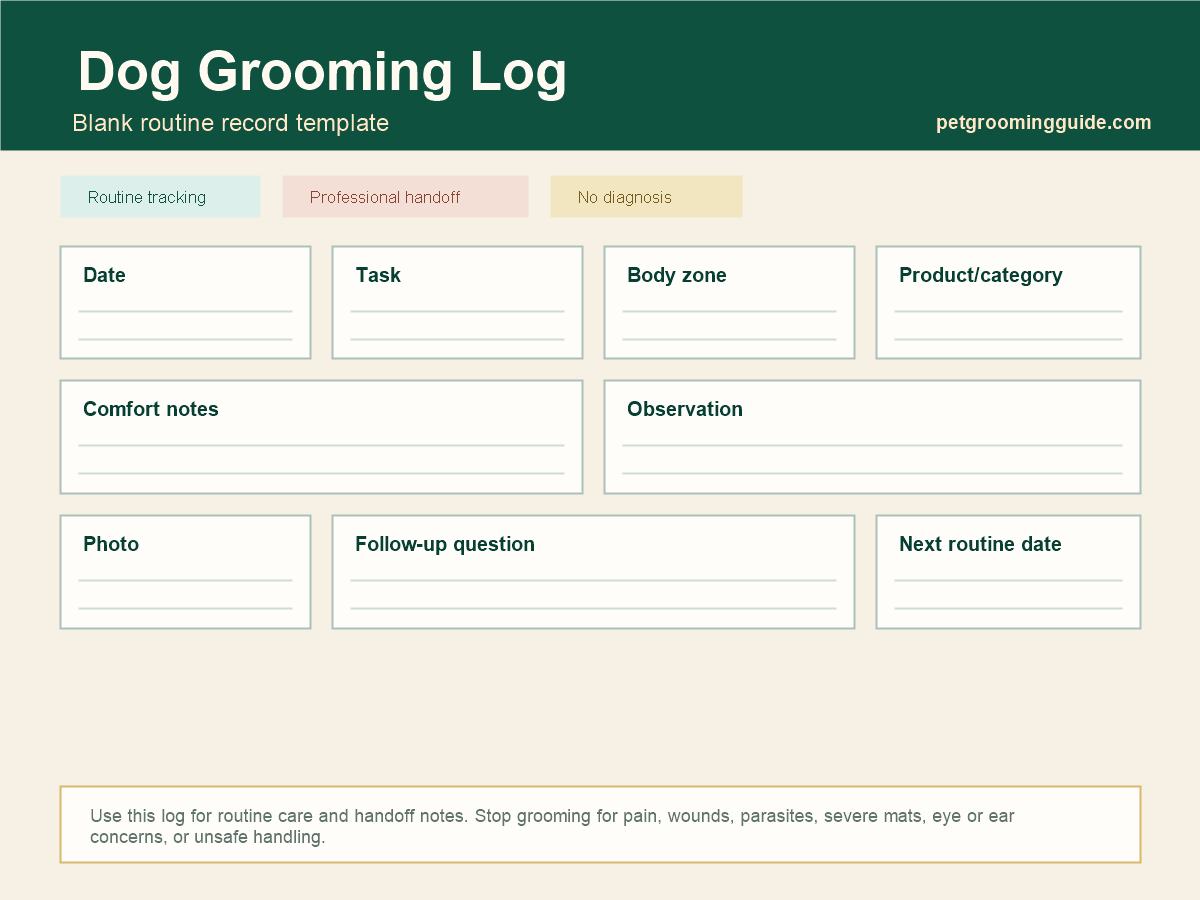
    Blank Dog Grooming Log Template

    Use this blank structure after routine grooming. Keep each entry brief and factual.

    Blank dog grooming record template with fields for date, task, body zone, product category, comfort notes, observations, photo, follow-up question, and next routine date.
    Blank dog grooming log template for routine notes and professional handoff questions.
    DateTaskBody zoneGeneric product/categoryComfort notesObservationPhoto?Follow-up questionNext routine date


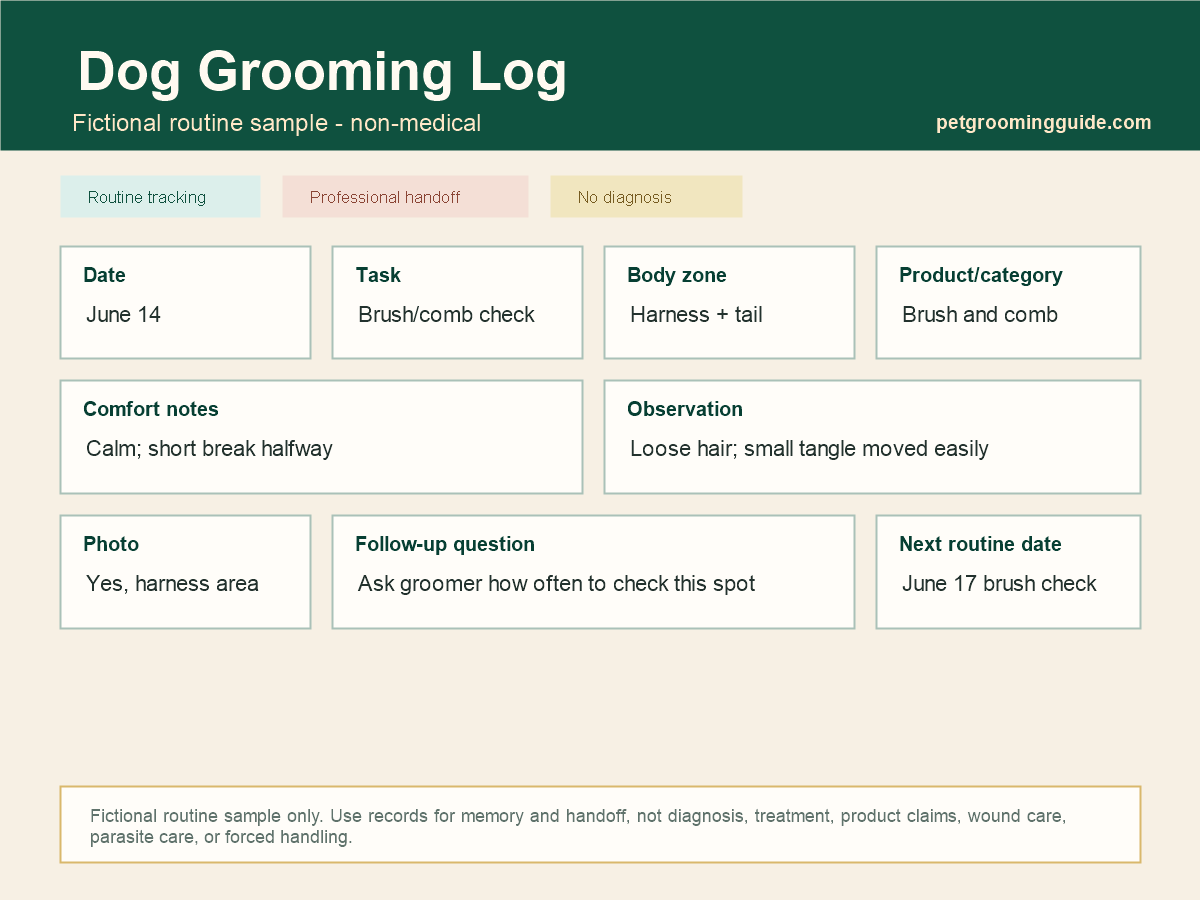
    Fictional Routine Sample

    This sample is fictional and routine only. It is not a medical example, treatment plan, or product test.

    Fictional routine dog grooming log with bath, brush, nail, and paw notes that avoid diagnosis or treatment.
    Fictional routine sample showing how to keep grooming notes factual and non-medical.
    DateTaskBody zoneGeneric product/categoryComfort notesObservationPhoto?Follow-up questionNext routine date
    June 14Brush and comb checkHarness area and tailSlicker brush and combCalm; short break halfwayLoose hair; small harness-area tangle moved easilyYes, harness areaAsk groomer how often to check this spotJune 17 brush check
    June 18Paw wipeFront pawsDamp clothPulled right paw away; stopped earlyMud between toes after walkNoTry shorter paw handling next routine if calmJune 20 paw check

    FAQ

    What should I write in a dog grooming record?

    Write the date, task, body area, generic product or tool category, comfort notes, routine observation, photo note, follow-up question, and next routine date. Keep the wording factual.

    Should I track shampoo or grooming products?

    Track generic product categories so you remember the routine. Do not use the record to diagnose allergies, prove product cause, or choose treatment.

    Are photos useful for grooming records?

    Yes. Routine photos can show coat length, tangle-prone spots, paw debris, nail length, and areas to ask a groomer or veterinarian about. They should support a professional conversation when signs are not routine.

    Can a grooming log help my vet or groomer?

    Yes. A clear timeline can help a groomer see where you stopped and can help a veterinarian understand when signs appeared. The log is a communication aid, not a diagnosis.

    When should I stop grooming and call a professional?

    Stop for pain, severe mats, wounds, parasites, bleeding, swelling, discharge, eye or ear concerns, worsening skin signs, panic, aggression, or bite risk. Call a veterinarian, professional groomer, or qualified trainer depending on the concern.

    Bottom Line

    A good dog grooming record is short, plain, and safe. Track routine care, note where your dog was comfortable, save photos when they help, and use the log to ask better questions. When the notes point to pain, skin changes, ear or eye concerns, severe mats, parasites, wounds, or unsafe handling, stop grooming and call a professional.