
Something's off with your dog's stomach, and you're trying to work out whether this is a wait-and-see night or a drive-to-the-emergency-vet night. That's exactly what this complete guide to dog digestive health is built to answer. Gut trouble is one of the most common reasons dogs end up in a consulting room.
Most cases turn out to be minor. A handful are not, and those are the ones that kill.
The stakes are genuinely high. Gastric dilatation-volvulus, the twisted-stomach emergency most people call bloat, still carries a mortality rate of roughly 10 to 20 percent even with fast surgery, and that figure climbs with every hour of delay. Knowing which signs mean "book an appointment" and which mean "go now" is the most useful thing you can learn as an owner.
So let's start with the red flags.

Image source: Bing (Web (fair-use with source credit))
Quick Answer
Dog digestive health rests on diet, parasite control, and early recognition of trouble. Most acute diarrhoea clears within 24 to 48 hours. Emergency signs include unproductive retching, a swollen abdomen, black tarry stool, or pale gums.
Chronic soft stool needs faecal testing, bloodwork, and a strict diet trial. Never fast a puppy or give human painkillers.
When a Dog's Gut Goes Wrong: The Signs That Can't Wait Until Monday
Here's the uncomfortable truth. The dog with one bout of vomiting and a wagging tail is usually fine. The dog that's quietly hunched in the corner, drooling, trying to be sick and producing nothing, is in serious trouble right now.
Vets see both every week. The difference isn't how dramatic it looks. It's a short list of specific signs.
The red-flag checklist every owner should know by heart
If your dog shows any of the following, this is an emergency call, not a morning appointment:
- Unproductive retching. Repeated heaving with nothing coming up, especially with drooling and restlessness. This is the classic GDV picture.
- A swollen, tight, or drum-like belly. Tap it. If it sounds hollow like a ripe melon, go.
- Pale, white, grey, or brick-red gums. Press a gum with your thumb. Colour should return in under two seconds.
- Collapse, weakness, or an inability to stand.
- Black, tarry stool (melaena). That's digested blood from the stomach or small intestine, and it means bleeding higher up.
- Large volumes of fresh blood in stool or vomit.
- Vomiting that won't stop, or a dog that can't keep water down for more than a few hours.
- Known or suspected swallowing of a sock, string, corn cob, bone, toy, or underwear.
- Suspected toxin: xylitol, chocolate, grapes or raisins, onions, macadamias, rodenticide, human painkillers, cannabis edibles.
- An unvaccinated or partly vaccinated puppy with vomiting plus diarrhoea. Assume parvovirus until proven otherwise.
- Hunched posture or the "praying position", front legs down and rear end up. That's abdominal pain.
- Any GI signs in a dog currently taking NSAIDs or steroids. Ulceration risk goes up sharply.
Diarrhoea alone, in a bright dog that's eating and drinking, rarely belongs on that list. Diarrhoea plus lethargy, plus fever, or lasting beyond 48 hours does.
Why "let's see how he is in the morning" costs lives with GDV and obstruction
Two conditions punish delay more than anything else in canine medicine.
GDV is a mechanical emergency. The stomach fills with gas and rotates on itself. That cuts off blood supply to the stomach wall and squeezes the major veins returning blood to the heart.
Shock follows fast. Blood lactate at admission is one of the strongest predictors of survival, which tells you everything about how time-sensitive this is.
Deep-chested breeds carry the highest risk. Lifetime risk in Great Danes has been reported at around one in four without a preventive gastropexy.
Foreign body obstruction is quieter and sneakier. A dog can swallow a sock and seem fine for a day. Then the vomiting starts, the gut above the blockage swells, and blood supply to that loop of intestine begins to fail.
Linear foreign bodies (string, tinsel, tights) are worse. The gut bunches up along the string like a curtain on a rail, and the string saws through the wall from the inside.
A practical rule: if the abdomen is distended, if the dog is retching without producing, or if the gums have lost their healthy pink, stop reading and call the nearest open clinic. Everything else in this guide can wait an hour. Those three cannot.
How Your Dog's Digestive System Actually Works
You don't need a veterinary degree here. But a rough mental map of the plumbing makes every symptom easier to read, and it's the difference between guessing and reasoning.
Mouth to colon: transit times, gastric emptying, and what normal looks like
Food travels a one-way route: mouth, oesophagus, stomach, small intestine (duodenum, jejunum, ileum), then the large intestine (caecum, colon, rectum).
Dogs barely chew. Their saliva has almost no digestive enzyme activity, so breakdown really starts in the stomach. That stomach is highly acidic and muscular.
The acid does two jobs: it starts protein digestion and it kills a large share of the bacteria a scavenging animal inevitably swallows.
The small intestine is where absorption happens. Pancreatic enzymes (amylase, lipase, proteases) arrive through the duodenum. Bile arrives from the gallbladder to emulsify fat.
Millions of finger-like villi pull nutrients across the gut wall.
The large intestine's job is different. It reclaims water and electrolytes, and it houses the bulk of the microbiome.
| Stage | Typical timing in a healthy adult dog |
|---|---|
| Gastric emptying (standard meal) | Around 6 to 8 hours |
| Small intestinal transit | Roughly 1 to 2 hours per section, variable |
| Total mouth-to-anus transit | Around 10 to 30 hours |
| Normal defecation frequency | 1 to 3 times daily |
| Daily water intake | Roughly 50 to 60 mL per kg bodyweight |
That last row matters more than most owners realise. A dog with diarrhoea loses water fast, and dehydration is what actually makes them ill.
The canine gut microbiome, short-chain fatty acids, and the mucosal barrier
Your dog's colon holds a dense community of bacteria. When that community is balanced, it ferments dietary fibre into short-chain fatty acids: mainly butyrate, propionate, and acetate. Butyrate is the primary fuel for the cells lining the colon.
Feed those cells properly and the barrier stays tight.
The barrier itself is a single layer of enterocytes, covered by mucus, backed by gut-associated lymphoid tissue. A large share of a dog's immune tissue sits in the gut wall. That's why gut disease so often shows up alongside skin problems and low-grade immune signs.
When the balance tips, we call it dysbiosis. It follows antibiotics, sudden diet change, stress, and disease. Recovery can take weeks, and in some dogs it never fully returns to baseline without help.
Why dogs digest fat, fibre, and protein differently from us
Three practical differences change what you feed a dog with a bad gut.
- Fat is the big one. Dogs handle fat well when they're healthy and terribly when the pancreas is inflamed. A high-fat meal is the most reliable trigger for acute pancreatitis, which is why holiday leftovers fill emergency clinics every December.
- Fibre is a tool, not a filler. Insoluble fibre bulks stool and speeds transit. Soluble and fermentable fibre (psyllium, beet pulp, inulin) slows things down, feeds the microbiome, and firms up large-bowel diarrhoea.
- Protein quality beats protein quantity. Highly digestible protein leaves less residue in the colon. Poorly digested protein ferments, causing gas, odour, and soft stool.
Dogs also lack meaningful lactase activity as adults. Milk, cream, and cheese are a common and completely avoidable cause of loose stool.
Vomiting vs Regurgitation vs Coughing: The Distinction Vets Wish Owners Got Right
Get this one wrong and the whole diagnostic path goes sideways. Owners say "he's been sick" and mean three completely different things.
What each one tells you about where the problem sits
Vomiting is an active event. There's warning: lip-licking, drooling, restlessness, then abdominal heaving. The material is usually partly digested, often yellow with bile, and it comes from the stomach or upper intestine.
Regurgitation is passive. Nothing heaves. Food just comes back up, often undigested, tube-shaped, and coated in clear or frothy saliva.
It typically comes minutes after eating and points to the oesophagus, not the stomach.
Coughing that ends in a gag gets misread as vomiting constantly. The dog coughs, retches once, brings up white froth, and the owner reports vomiting. That's usually a respiratory problem.
| Feature | Vomiting | Regurgitation |
|---|---|---|
| Effort | Active heaving, abdominal contractions | Passive, no effort |
| Warning signs | Drooling, lip-licking, pacing | None |
| Timing after eating | Any time, often 30 mins to hours | Usually within minutes |
| Appearance | Partly digested, bile, may smell sour | Undigested, tubular, foamy saliva |
| Points toward | Stomach, intestine, pancreas, systemic illness | Oesophagus, megaoesophagus, hiatal hernia |
Why it matters: chronic regurgitation raises the possibility of megaoesophagus, which brings a real risk of aspiration pneumonia. That's managed with upright feeding and specific food consistency, not with anti-nausea drugs.
Small bowel vs large bowel diarrhoea, how to tell them apart at home
This single distinction halves your vet's differential list. You can make the call yourself from details you already notice.
| Sign | Small bowel diarrhoea | Large bowel diarrhoea |
|---|---|---|
| Volume per motion | Large | Small, often just a smear |
| Frequency | Slightly increased (3 to 5 times daily) | Markedly increased (5 to 10+ times) |
| Urgency and straining | Rare | Common, with tenesmus |
| Mucus | Uncommon | Very common, jelly-like |
| Fresh red blood | Uncommon | Common (haematochezia) |
| Black tarry stool | Possible (melaena) | No |
| Weight loss | Common if chronic | Uncommon |
| Vomiting | Frequently present | Less common |
Small bowel signs suggest malabsorption, pancreatic disease, parasites, or infiltrative disease. Large bowel signs suggest colitis, whipworms, stress, or fibre-responsive disease. Some dogs show a mix, which usually means diffuse disease and warrants a fuller workup.
Reading Your Dog's Poop Like a Diagnostic Tool
Stool is free data, produced daily, and almost nobody records it properly. Vets do, and it's one reason they reach an answer faster.
The 1 to 7 faecal scoring scale and what each score means
Faecal scoring charts are standard clinical tools. The World Small Animal Veterinary Association publishes one used widely in practice and research. It runs from 1 (hard dry pellets) to 7 (watery, no texture).
| Score | Description | What it usually means |
|---|---|---|
| 1 | Hard, dry, separate pellets | Constipation, dehydration, low residue diet |
| 2 | Firm, segmented, holds shape | Slightly firm but acceptable |
| 3 | Log-shaped, moist, leaves no residue | Ideal. This is the target |
| 4 | Very moist log, leaves residue when picked up | Upper limit of normal |
| 5 | Very moist, distinct piles, loses shape | Mild diarrhoea |
| 6 | Textured piles, no defined shape | Moderate diarrhoea |
| 7 | Watery, puddle, no texture | Severe diarrhoea. Watch hydration closely |
Aim for a consistent 2 to 3. A dog that lives at 4 to 5 isn't "just a soft-stool dog". That's a chronic finding worth investigating.
Mucus, blood, colour, and greasy stool, what they point to
- Clear jelly-like mucus coating the stool: colonic irritation. Common with stress colitis, whipworms, or dietary indiscretion.
- Fresh red streaks (haematochezia): bleeding in the colon or rectum. Often colitis, sometimes anal gland issues.
- Black, tarry, sticky stool (melaena): digested blood from higher up. This is a same-day vet visit.
- Greasy, pale, voluminous, foul-smelling stool (steatorrhoea): undigested fat. Raises suspicion of exocrine pancreatic insufficiency, especially in German Shepherds.
- Grey or clay-coloured stool: possible bile flow problem.
- Rice-grain segments or sesame-seed specks around the anus: tapeworm segments.
- Green stool: usually grass, sometimes rapid transit.
Bright red blood in an otherwise happy dog with one bout of colitis is usually benign. Bright red blood in a lethargic dog with a plummeting appetite, especially a small breed, can signal acute haemorrhagic diarrhoea syndrome. That causes rapid fluid loss into the gut and needs aggressive fluids.
How often should a healthy dog poop?
Most healthy adult dogs go once or twice a day, sometimes three times. Puppies go more, often four or five times, because they eat more frequently and have faster transit.
What matters is the change, not the number. A dog that has always gone twice daily and suddenly goes six times has a problem. So does one that hasn't produced anything in 48 hours and is straining.
Keep a simple stool diary if anything's ongoing. Date, score, colour, blood or mucus, frequency, and what they ate. Photograph anything unusual.
Two weeks of that log is worth more to your vet than an hour of recalled description.
The Digestive Conditions Behind Most Cases
Here's the map of what's actually going on when a dog's gut misbehaves, from the trivial to the fatal.
Acute gastroenteritis, dietary indiscretion, and stress colitis
The bread and butter of small animal practice. Dogs are scavengers. They eat bins, rotten food, dead things, compost, and half a tub of butter off the counter.
Signs come on within hours: vomiting, diarrhoea, gurgling gut sounds, maybe a skipped meal. The dog stays bright, drinks normally, and improves within 24 to 48 hours on small, low-fat, easily digested meals.
Stress colitis is its own pattern. Boarding kennels, house moves, fireworks, and long car journeys trigger large-bowel diarrhoea with mucus and straining, typically 24 to 72 hours after the stressful event. It responds well to soluble fibre and time.
Gastric dilatation-volvulus, the 90-minute emergency
GDV is the one to memorise. The stomach distends with gas, twists on its axis, and traps everything inside while cutting off its own blood supply.
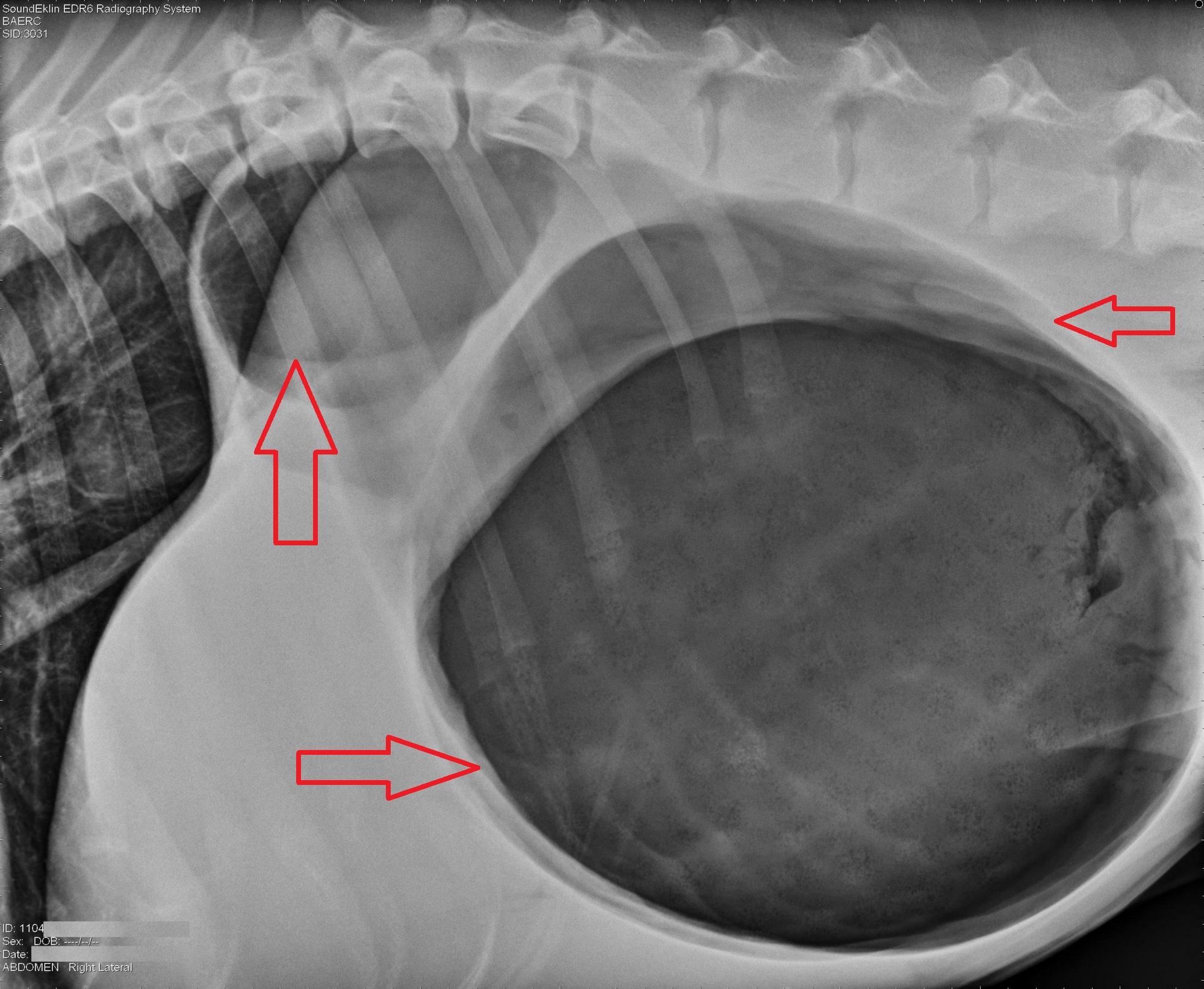
Image source: Bing (Web (fair-use with source credit))
On a right lateral abdominal radiograph, a twisted stomach shows a compartmentalised gas pattern that vets call the double bubble or reverse-C sign. That image is diagnostic within seconds, which is why the priority is getting the dog through the door.
Highest-risk breeds are deep and narrow chested: Great Danes, Standard Poodles, Weimaraners, Irish Setters, Saint Bernards, Dobermans, and German Shepherds. Risk climbs with age, with a first-degree relative that has bloated, and with eating one large rapid meal a day.
Prophylactic gastropexy tacks the stomach to the body wall so it can't rotate. Recurrence after emergency surgery drops from roughly 55 percent without a pexy to under 5 percent with one. Done electively alongside a spay or neuter, it typically runs a few hundred dollars.
Emergency GDV surgery commonly runs several thousand.
Parvovirus, Giardia, hookworms, and whipworms
Canine parvovirus attacks rapidly dividing cells in the intestinal crypts and bone marrow. Unvaccinated puppies get profuse, often bloody, foul-smelling diarrhoea with severe vomiting and crashing white cell counts. Incubation is 3 to 7 days.
With intensive supportive care, survival sits around 80 to 95 percent. Without it, most puppies die. The virus survives on surfaces for months to over a year, and ordinary household disinfectants don't touch it.
Giardia duodenalis causes soft, pale, greasy, foul stool, often in young dogs from kennels or shared water sources. It sheds intermittently, so one negative faecal float proves nothing.
Hookworms (Ancylostoma caninum) cause anaemia and dark stool. Multiple-anthelmintic-resistant strains are now well documented, particularly in the southeastern United States.
Whipworms (Trichuris vulpis) cause classic large-bowel diarrhoea with mucus and blood. They live in the caecum and shed sporadically enough to be missed on a single test.
Pancreatitis and exocrine pancreatic insufficiency
These two are opposites and often confused.
Pancreatitis is inflammation. The pancreas starts digesting itself. Classic triggers are a fatty meal, obesity, and certain drugs.
Signs: repeated vomiting, abdominal pain (the praying posture), lethargy, and often diarrhoea.
Miniature Schnauzers, Yorkshire Terriers, and Cocker Spaniels are over-represented. Diagnosis leans on a canine pancreatic lipase test plus ultrasound. Treatment is fluids, pain relief, anti-nausea medication, and early low-fat feeding.
Exocrine pancreatic insufficiency (EPI) is failure to produce enzymes at all. The dog eats ravenously and still loses weight, passing huge volumes of pale greasy stool.
German Shepherds and Rough Collies are the classic breeds. Diagnosis is a canine trypsin-like immunoreactivity (cTLI) blood test. Treatment is lifelong pancreatic enzyme replacement plus cobalamin, and treated dogs usually do very well.
Chronic enteropathy: food-responsive, antibiotic-responsive, and immunosuppressant-responsive
The term "IBD" has largely been retired in favour of chronic enteropathy, defined by response to treatment rather than by a single label. As of 2026, the accepted framework splits chronic GI signs lasting three weeks or more into four groups.
| Category | What it means | Typical response time |
|---|---|---|
| Food-responsive enteropathy (FRE) | Resolves on a hydrolysed or novel protein diet | Often within 1 to 2 weeks |
| Antibiotic-responsive enteropathy (ARE) | Improves on tylosin or similar | 1 to 2 weeks, relapse common |
| Immunosuppressant-responsive enteropathy (IRE) | Needs prednisolone, budesonide, or ciclosporin | 2 to 4 weeks |
| Non-responsive enteropathy (NRE) | Fails all of the above | Guarded prognosis |
The headline finding from the veterinary literature is encouraging. The majority of chronic enteropathy dogs turn out to be food-responsive. That means diet gets tried first, properly, before anyone reaches for steroids.
Protein-losing enteropathy, lymphangiectasia, and intestinal lymphoma
Protein-losing enteropathy (PLE) is what happens when the damaged gut leaks protein faster than the liver replaces it. Serum albumin falls. Once it drops below roughly 2.0 g/dL, fluid pools in the abdomen or chest and the limbs swell.
Yorkshire Terriers, Soft-Coated Wheaten Terriers, Rottweilers, and Norwegian Lundehunds carry known predispositions.
Lymphangiectasia is one of the main causes. The lymph vessels in the gut wall dilate and rupture, spilling protein and fat. It's managed with an ultra-low-fat diet, sometimes under 8 percent on a dry matter basis, far lower than any standard "sensitive stomach" food.
Intestinal lymphoma and other tumours can look identical to chronic enteropathy from the outside. Biopsy is the only way to separate them. In older dogs with weight loss and thickened bowel loops on ultrasound, that distinction changes everything about the plan.
Foreign bodies, linear foreign bodies, and intussusception
Labradors, young dogs, and anything with a taste for socks. A discrete foreign body causes intermittent then persistent vomiting, loss of appetite, and abdominal pain. Some pass.
Many need surgery.
Linear foreign bodies are the dangerous version. The string anchors at the tongue base or in the stomach while the gut keeps trying to move it along. Always check under the tongue.
Intussusception is when one segment of bowel telescopes into the next, usually secondary to severe diarrhoea or parasites. It's most common in puppies, presents with bloody mucoid stool and vomiting, and shows a distinctive target sign on ultrasound. It's a surgical case.
The great pretender: Addison's disease masquerading as a sensitive stomach
Hypoadrenocorticism deserves its own paragraph because it kills dogs that were being managed as "just a sensitive tummy".
The adrenal glands stop producing enough cortisol and often aldosterone. Signs are frustratingly vague: waxing and waning vomiting, diarrhoea, poor appetite, lethargy, and weight loss that improves on fluids and steroids, then returns.
Young to middle-aged females are over-represented, along with Standard Poodles, Portuguese Water Dogs, and Bearded Collies. Then one day the dog collapses in an Addisonian crisis with dangerously high potassium and a slow heart rate.
The screening test is cheap and simple: a basal cortisol. If it's above a set threshold, Addison's is effectively ruled out. Any dog with recurring, unexplained GI signs should have this done before anyone commits to a lifetime of diet changes and probiotics.
Which Dogs Are Most at Risk
Not every dog carries the same risk profile. Breed, age, and lifestyle shift the odds enough that knowing where your dog sits changes what you watch for.
Breed predispositions: Great Danes, German Shepherds, Miniature Schnauzers, Yorkies, Boxers
Genetics load the dice. These associations are well documented in veterinary literature and referral caseloads.
| Breed | Elevated risk for | What to watch for |
|---|---|---|
| Great Dane, Weimaraner, Standard Poodle, Irish Setter, Saint Bernard | Gastric dilatation-volvulus | Retching without producing, swollen belly |
| German Shepherd, Rough Collie | Exocrine pancreatic insufficiency, chronic enteropathy | Ravenous appetite with weight loss, greasy stool |
| Miniature Schnauzer, Cocker Spaniel, Yorkshire Terrier | Pancreatitis, hypertriglyceridaemia | Vomiting after fatty food, hunched posture |
| Yorkshire Terrier, Soft-Coated Wheaten Terrier, Rottweiler, Norwegian Lundehund | Protein-losing enteropathy, lymphangiectasia | Chronic diarrhoea, swollen limbs, pot belly |
| Boxer, French Bulldog | Histiocytic ulcerative colitis | Bloody mucoid diarrhoea in young dogs |
| Rottweiler, Doberman, American Pit Bull Terrier | Severe parvovirus | Any GI signs in an unvaccinated puppy |
| Collie, Australian Shepherd, Shetland Sheepdog, Long-haired Whippet | MDR1 drug sensitivity | Reactions to loperamide and certain wormers |
| Pug, French Bulldog, English Bulldog | Reflux, hiatal hernia, aerophagia | Regurgitation, excessive gulping and gas |
| Labrador Retriever | Foreign body ingestion | Sudden vomiting after unsupervised time |
Miniature Schnauzers deserve a specific mention. Many carry inherited high blood triglycerides, and that's a direct pancreatitis risk factor. A low-fat diet isn't optional for those dogs.
It's preventive medicine.
Boxer colitis is worth knowing too. It looks like ordinary large-bowel diarrhoea but it's caused by invasive E. coli in the colon wall. It responds to a specific antibiotic course, and diagnosis needs biopsy.
Treating it as stress colitis wastes months.
Age brackets: puppies, adults, and seniors
Puppies are the highest-stakes group. They have small energy reserves, so they crash fast. Any vomiting puppy under six months needs a low threshold for veterinary care.
Their top causes differ from adults: parvovirus, roundworms, coccidia, Giardia, dietary indiscretion, intussusception, and sudden diet change. Puppies also can't be fasted safely. Toy-breed puppies can drop into hypoglycaemia within hours without food.
Adults account for most cases of dietary indiscretion, food-responsive enteropathy, foreign bodies, and stress colitis. This is the group where owners most often "wait it out", and usually that works. Just not always.
Seniors change the calculation. Weight loss in an older dog with a normal or increased appetite is not normal ageing. That combination points toward EPI, chronic enteropathy, or intestinal lymphoma.
Older dogs also mask pain well, so subtle appetite changes carry more weight.
Lifestyle triggers: boarding, travel, working dogs, multi-dog households, holiday season
Environment matters as much as genetics.
- Boarding and kennels: stress colitis usually appears 24 to 72 hours after pickup. Giardia and kennel-acquired parasites show up a week or two later.
- Long car journeys: motion sickness, stress diarrhoea, and dogs that refuse food then binge on arrival.
- Working and sporting dogs: feeding a full meal within four hours of hard work raises both diarrhoea and GDV risk.
- Multi-dog households: parasites recycle endlessly. Treating one dog and not the others is why Giardia keeps coming back.
- Dog parks and shared water: Giardia, hookworm larvae, and Campylobacter all spread here.
- Holiday season: the December spike is real. Turkey skin, fat trimmings, cooked bones, tinsel, chocolate, raisins in Christmas pudding, and corn cobs at summer BBQs.
- Households with young children: more dropped food, more swallowed toys.
Regional exposure counts too. Hookworm pressure is heaviest in the warm, humid southeastern United States. Histoplasmosis clusters in the Ohio and Mississippi River valleys.
Pythiosis shows up along the Gulf Coast. Cane toad and mushroom toxicity spike seasonally in Florida and Australia.
Food Allergy, Food Intolerance, or Just Dietary Indiscretion?
Three completely different problems, one shared symptom. Owners jump to "allergy" first, and it's usually the least likely of the three.

Image source: Bing (Web (fair-use with source credit))
What actually causes adverse food reactions in dogs, and why grains rarely do
A true food allergy is an immune response to a specific protein. A food intolerance is a non-immune reaction, like fat causing loose stool. Dietary indiscretion is just a dog eating something it shouldn't have.
The published data on canine food allergens is consistent, and it doesn't match the marketing. The most commonly reported culprits are beef, dairy, chicken, wheat, lamb, soy, and egg.
There's a simple explanation for why beef, dairy, and chicken top the list. Those are the proteins dogs eat most. Exposure drives sensitisation, not the ingredient being inherently bad.
Signs of a genuine adverse food reaction:
- Chronic soft stool or intermittent diarrhoea with no infectious cause found
- Increased defecation frequency, often 4 or more times daily
- Itchy skin, ears, paws, or recurrent otitis alongside the gut signs
- Occasional vomiting, gas, and gurgling
- Signs that improve then return when the diet changes back
Grain-free diets carry a separate complication. The US Food and Drug Administration has been examining reports linking certain grain-free formulations to dilated cardiomyopathy in dogs, with updates published through the FDA Center for Veterinary Medicine. Going grain-free without a medical reason isn't a neutral decision.
Hydrolysed protein vs novel protein diets
Both work by removing the protein the immune system reacts to. They just do it differently.
| Feature | Hydrolysed protein | Novel protein |
|---|---|---|
| How it works | Protein broken into fragments too small to trigger a reaction | Uses a protein the dog has never eaten |
| Typical fragment size | Under 10 kDa, some under 3 kDa | Not applicable |
| Common examples | Hydrolysed chicken, hydrolysed soy | Rabbit, venison, kangaroo, duck, insect protein |
| Best for | Dogs with unknown diet history, rescues, multi-allergen dogs | Dogs with a clear, documented feeding history |
| Weakness | Palatability can be poor, higher cost | Cross-contamination in manufacturing, and you burn a protein option |
| Cost vs standard food | Roughly 1.5 to 3 times higher | Similar, sometimes higher for exotic proteins |
Hydrolysed diets are the safer default when you genuinely don't know what a dog has eaten. Rescue dogs, strays, and dogs fed table scraps for years fall into this group.
Novel protein works well when you have a reliable history. But there's a strategic cost. Once you've used venison as a trial protein and the dog reacts to it later, you can't use it again.
One warning about over-the-counter "limited ingredient" foods. Independent testing has repeatedly found undeclared proteins in retail diets marketed as single-protein. For a diagnostic trial, that contamination invalidates the whole exercise.
Running a proper 8 to 12 week elimination trial without wrecking it
This is where most owners lose. Not because the diet fails, but because the trial does.
The protocol is simple and completely unforgiving:
- Pick one diet. Hydrolysed or true novel protein. Get your vet's input on which.
- Transition over 7 to 10 days unless signs are severe enough to warrant a faster switch.
- Feed nothing else. At all. No treats, no table scraps, no dental chews, no rawhide, no flavoured toothpaste.
- Check the medications. Flavoured heartworm preventatives, chewable joint supplements, and palatable tablets all contain protein. Ask for unflavoured versions.
- Brief the whole household. One person slipping toast under the table ends the trial.
- Run it for 8 to 12 weeks. GI signs often improve in 2 to 4 weeks. Skin signs need the full stretch.
- Log everything. Faecal score daily, weight weekly, itch score if skin is involved.
- Rechallenge to confirm. Reintroduce the original diet. If signs return within 1 to 2 weeks, you've proven the diagnosis.
That last step gets skipped constantly, and it matters. Without a rechallenge, you don't know whether the diet fixed it or the dog would have improved anyway.
The single biggest saboteur: treats. If your dog needs rewards during training, use kibble from the trial diet, weighed out from the daily ration. That's it.
If there's zero improvement after 12 weeks of strict compliance, the diet isn't the answer. Move on to the next diagnostic step rather than trying a fourth food.
What to Feed a Dog With Digestive Problems
Feeding is the most powerful tool you have, and also the one people get wrong most often. Here's what holds up.
The truth about chicken and rice, and its 3 to 5 day limit
Boiled chicken and white rice works because it's low in fat, low in fibre, and highly digestible. That's the entire mechanism. It's not therapeutic and it's not magic.
It's also nutritionally incomplete. Feed it beyond about 3 to 5 days and you're running deficits in calcium, essential fatty acids, and several vitamins and minerals. In growing puppies, that matters within days.
Practical version if you use it:
- Skinless, boneless chicken breast, boiled, all fat and water drained
- Plain white rice, overcooked so it's soft
- Roughly 1 part chicken to 2 or 3 parts rice
- Split the daily amount into 4 to 6 small meals
- No oil, butter, salt, seasoning, garlic, or onion
The bigger issue is what it hides. Chicken and rice will not fix an obstruction, parvovirus, pancreatitis, or Addison's disease. A dog that keeps vomiting on a bland diet doesn't need more bland diet.
It needs a vet.
Prolonged fasting has also fallen out of favour. Research in both pancreatitis and parvovirus cases supports early enteral feeding, meaning small amounts of food sooner rather than starving the gut. The enterocytes lining the intestine feed partly from what's inside the gut.
Never fast a puppy. Never fast a toy breed. Twelve to twenty-four hours is the maximum for a healthy adult, and even that's now questioned.
Low-fat, highly digestible, and high-fibre diets, when each one wins
Different problems need different diets. Matching them is where owners gain the most ground.
| Diet type | Key spec | Best for |
|---|---|---|
| Highly digestible, moderate fat | 85%+ digestibility, low residue | Acute gastroenteritis, recovery, post-surgery |
| Low fat | Under 10% fat on dry matter basis | Pancreatitis, hyperlipidaemia, fat intolerance |
| Ultra-low fat | Roughly 5 to 8% fat DM | Lymphangiectasia, protein-losing enteropathy |
| High fibre / fibre-responsive | Added soluble and insoluble fibre | Chronic colitis, stress colitis, anal gland issues |
| Hydrolysed or novel protein | Fragments under 10 kDa, or unfamiliar protein | Food-responsive enteropathy, adverse food reactions |
One thing to understand about labels: the percentage on the bag is "as fed", not dry matter. A wet food showing 5% fat with 78% moisture is actually around 23% fat on a dry matter basis. That's high.
To convert, divide the as-fed percentage by the dry matter percentage, then multiply by 100. Get that calculation wrong and you can feed a pancreatitis dog a food that looks low fat and isn't.
Prescription GI diets vs over-the-counter sensitive stomach food
They aren't the same product with different pricing. The differences are real.
Prescription veterinary diets are formulated to specific therapeutic targets, undergo digestibility testing, use tightly controlled protein sources, and are manufactured with contamination protocols. They're required for a valid elimination trial and for conditions like lymphangiectasia.
Over-the-counter sensitive stomach foods suit mildly sensitive dogs. They're typically moderately digestible with a simplified ingredient list. But "sensitive stomach", "gentle", "digestive care", and "natural" have no legal definition in most markets.
The claim isn't regulated.
Who should use which:
- Mild, occasional soft stool, no weight loss: an over-the-counter sensitive stomach diet is a fair first try.
- Diagnosed pancreatitis, PLE, EPI, or chronic enteropathy: prescription diet, no shortcuts.
- Running a diagnostic elimination trial: prescription only. Retail contamination risk is too high.
- Post-surgical or hospital recovery: highly digestible prescription formula, short term.
Expect prescription diets to run roughly 1.5 to 3 times the cost of a mid-range adult food.
Pumpkin, psyllium, bone broth, and slippery elm, what the evidence supports
Honest assessment, because the internet oversells all four.
Pumpkin is fine but weak. Plain canned pumpkin (not pie filling) provides soluble fibre. The catch is dose.
You'd need a meaningful volume to shift stool consistency, and most owners add a spoonful that does very little.
Psyllium husk is the stronger option, with real clinical use in fibre-responsive large-bowel diarrhoea. Typical starting doses run around 1/2 to 2 teaspoons per meal depending on body size, mixed into wet food with plenty of water. Introduce it slowly.
Too much too fast causes gas and cramping.
Bone broth helps with hydration and palatability. That's the honest extent of it. Watch the sodium in commercial versions, and never use one containing onion or garlic.
Slippery elm is popular and poorly studied in dogs. It may coat and soothe, but there's no controlled canine data supporting specific claims. It can also interfere with absorption of medications given at the same time, so space doses at least two hours apart.
What does have solid support: hydration, low fat, high digestibility, appropriate fibre, and correct diagnosis.
Raw, kibble, gently cooked, home-prepared, an honest risk comparison
Feelings run hot here. The evidence is more measured.
| Format | Digestive strengths | Documented risks |
|---|---|---|
| Extruded kibble | Consistent, complete, shelf stable, cheapest | Lower moisture, quality varies enormously by brand |
| Canned or wet | High moisture, palatable, often lower carbohydrate | Costlier, dental considerations, fat content often underestimated |
| Gently cooked, commercial | High digestibility, good palatability | Expensive, requires refrigeration, shorter shelf life |
| Home-prepared | Full ingredient control, useful for elimination diets | Most published home recipes are nutritionally incomplete without formulation by a veterinary nutritionist |
| Raw (commercial or DIY) | Owners report firmer, smaller stools | Salmonella, Campylobacter, Listeria shedding, bone-related obstruction and fractured teeth, household zoonotic risk |
Raw feeding has the clearest documented downside, and it isn't mainly about the dog. It's about the humans. Raw pet food handling has been directly linked to household bacterial contamination, and the FDA advises against feeding raw pet food in homes with infants, elderly, pregnant, or immunocompromised residents.
If you feed raw anyway, the non-negotiables are: separate prep surfaces and utensils, thorough handwashing, dedicated storage, and no bones that can splinter or lodge. Never feed cooked bones of any kind.
For home-prepared diets, get the recipe formulated by a board-certified veterinary nutritionist. Generic online recipes routinely miss calcium, zinc, vitamin D, and essential fatty acid targets by wide margins.
Probiotics, Prebiotics, and the Supplement Aisle
The supplement shelf is where a lot of money disappears with very little to show for it. Some of it works. Most of it doesn't do what the label implies.
Strains with real canine data vs genus-only marketing
Probiotic effects are strain-specific, not species-specific. That's the whole game.
Enterococcus faecium SF68 is functionally a different organism from another Enterococcus faecium strain. A label reading "contains Lactobacillus acidophilus" without a strain designation tells you nothing about whether it does anything.
Strains with published canine research behind them include Enterococcus faecium SF68 and Bacillus subtilis C-3102, along with several multi-strain veterinary synbiotic formulations. When you see a strain code (letters and numbers after the species name), that's a good sign. When you don't, treat the product as unproven.
What probiotics realistically do in dogs:
- Shorten acute diarrhoea duration by roughly one to two days in controlled studies
- Help re-establish microbial balance after antibiotics
- Reduce stress-associated diarrhoea in kennelled dogs
- Support, but not replace, dietary management in chronic enteropathy
What they don't do: cure food allergies, fix an obstruction, or replace a diagnosis.
CFU counts, expiry dating, and why most shelf products underdeliver
Two numbers decide whether a probiotic is worth buying.
CFU at expiry, not at manufacture. Colony forming units die off during storage. A product guaranteeing counts at date of manufacture is telling you what it used to contain.
Strain identity. Genus, species, and strain code. All three, or it's marketing.
Independent analyses of retail pet probiotics have repeatedly found products containing far fewer live organisms than claimed, and in some cases organisms not listed on the label at all. Veterinary-channel products with third-party verification perform better in these audits.
Other things worth checking:
- Storage requirements. Some strains need refrigeration. Ones that don't are usually spore-forming, which survive stomach acid better.
- Synbiotic formulation. Probiotic plus prebiotic in one product. Reasonable value, since the prebiotic feeds the organisms.
- Yoghurt is not a probiotic supplement. The strains are human-food strains at low doses, and most adult dogs handle lactose poorly.
Prebiotics are the fibres that feed existing gut bacteria: fructo-oligosaccharides (FOS), mannan-oligosaccharides (MOS), inulin, and beet pulp. Many good GI diets already include them, so adding more on top can cause gas.
Where faecal microbiota transplantation currently stands
Faecal microbiota transplantation, or FMT, transfers processed stool from a screened healthy donor into a recipient dog, usually by enema or capsule.
The early data is promising, particularly in parvovirus puppies, where studies have reported faster resolution of diarrhoea. There's growing interest in chronic enteropathy and in dogs with persistent dysbiosis after antibiotics.
But it's not a routine treatment yet. Donor screening protocols vary between centres. Optimal dosing, route, and repeat frequency aren't settled.
As of 2026 it remains a referral-level option, best pursued through a veterinary internal medicine specialist rather than a DIY approach.
Cobalamin (vitamin B12) deserves a mention here because it's more useful than most supplements sold for gut health. Dogs with chronic small intestinal disease frequently become deficient, since cobalamin is absorbed in the ileum. Deficiency causes poor appetite, weight loss, and further gut damage.
It's cheap to test, cheap to correct, and correcting it often improves the response to everything else.
The Diagnostic Workup: What Your Vet Runs and Why
Understanding the sequence saves money. Owners who know why each test is being run make better decisions about what to authorise and what to decline.
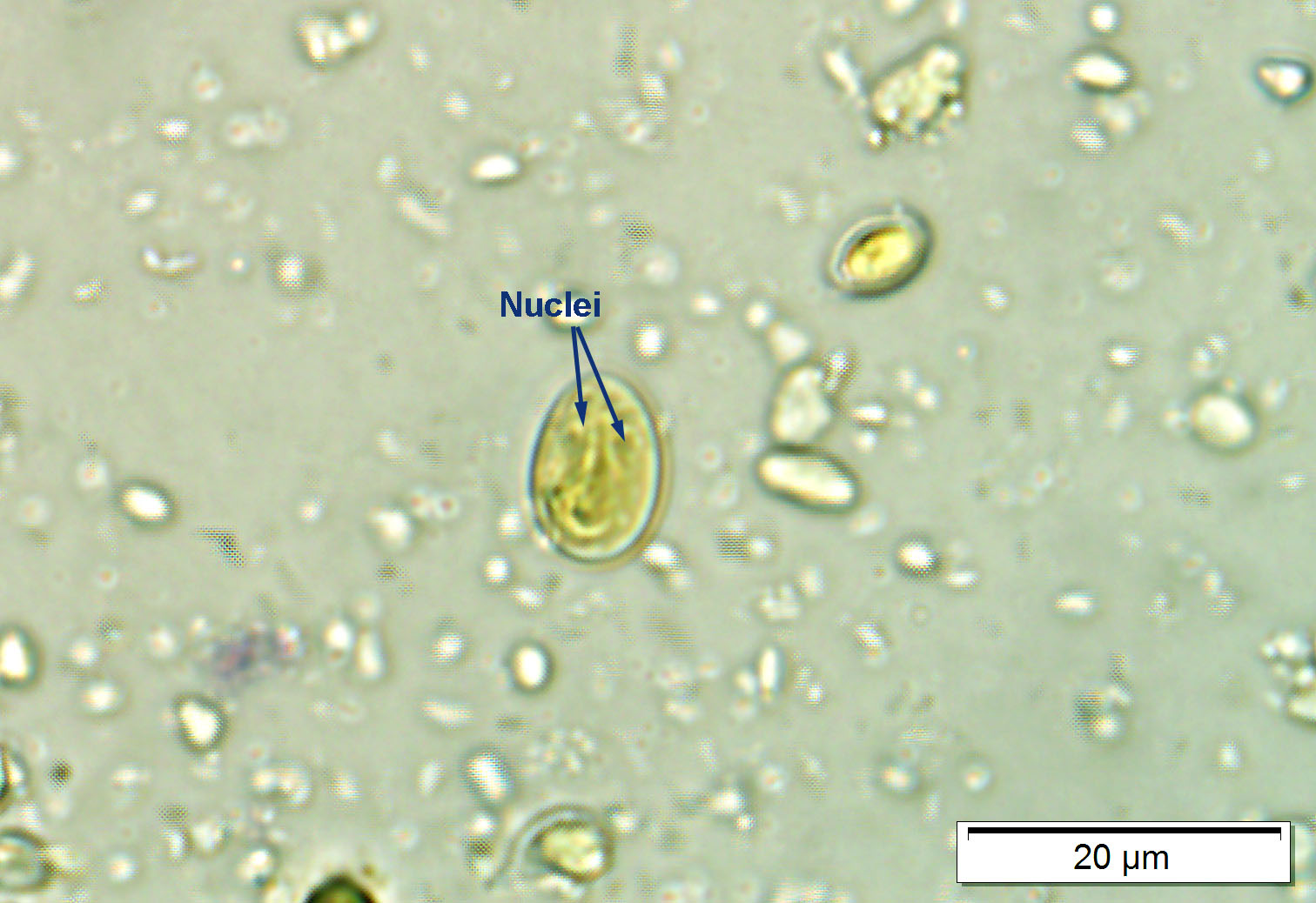
Image source: Bing (Web (fair-use with source credit))
Faecal testing, PCR panels, and why one negative float proves nothing
Parasites come first because they're common, cheap to find, and easy to treat.
The standard test is a faecal flotation, ideally with centrifugation, which is meaningfully more sensitive than passive flotation. Under the microscope you'd see parasite eggs or cysts suspended in the flotation solution. Giardia cysts appear as small oval structures with distinctive internal features.
Here's the catch. Giardia sheds intermittently. So do whipworms.
A single negative sample means very little.
Better approaches:
- Three samples over consecutive days, pooled or run separately
- Faecal antigen ELISA for Giardia, which detects protein rather than relying on catching a cyst
- Faecal PCR panels, testing for multiple pathogens at once including parvovirus, Salmonella, Campylobacter, and Clostridium toxin genes
PCR panels have a caveat worth knowing. They're sensitive enough to detect organisms that live harmlessly in healthy dogs. A positive Clostridium perfringens result doesn't automatically mean that's the cause.
Many vets will also run a therapeutic deworming trial regardless of results, using a broad-spectrum product like fenbendazole for three to five days. It's cheap, safe, and removes a variable before more expensive testing begins.
Bloodwork, cTLI, cPLI, cobalamin and folate, basal cortisol
Blood testing does two jobs. It rules out disease outside the gut, and it points to specific gut diagnoses.
| Test | What it checks | Why it matters |
|---|---|---|
| CBC | Red cells, white cells, platelets | Anaemia from bleeding, low white cells in parvovirus |
| Biochemistry | Liver, kidney, protein, glucose | Rules out kidney and liver disease mimicking GI signs |
| Albumin and globulin | Protein levels | Low albumin flags protein-losing enteropathy |
| Electrolytes | Sodium, potassium, chloride | Sodium:potassium ratio raises suspicion of Addison's |
| cTLI | Trypsin-like immunoreactivity | The definitive test for exocrine pancreatic insufficiency |
| cPLI / Spec cPL | Pancreatic lipase | Supports a pancreatitis diagnosis |
| Cobalamin and folate | B12 and folate levels | Localises disease and identifies treatable deficiency |
| Basal cortisol | Adrenal function screen | Rules out Addison's disease cheaply |
| Bile acids | Liver function | Screens for portosystemic shunt in young dogs |
The cobalamin and folate pair is often overlooked and genuinely informative. Low cobalamin points to ileal disease or EPI. Low folate points to proximal small intestinal disease.
Both low suggests diffuse disease.
Basal cortisol is the one to insist on. It's inexpensive, and a normal result effectively rules out the condition most likely to be missed. If it comes back borderline, an ACTH stimulation test confirms or excludes it.
Radiographs vs ultrasound vs endoscopy with biopsy
Each imaging option answers a different question. Ordering them out of sequence wastes money.
Radiographs (X-rays) are fast, cheap, and available almost everywhere. They're the right first choice for suspected obstruction, GDV, or a swallowed object. They show gas patterns, radio-opaque foreign bodies, and organ size.
They're poor at showing bowel wall detail, and many foreign bodies (fabric, plastic, rubber) don't show up at all. Expect roughly $150 to $350 in the US.
Ultrasound is the workhorse for chronic cases. It shows bowel wall thickness and layering, lymph node size, pancreatic changes, free fluid, and intussusception with its characteristic target appearance. It's operator dependent, so results improve significantly with an experienced sonographer.
Roughly $300 to $600.
Endoscopy with biopsy is the only way to get tissue without surgery. A camera passes down into the stomach and upper small intestine, or up through the colon, taking pinch biopsies along the way. It distinguishes chronic enteropathy from lymphoma, which changes treatment completely.
Roughly $1,500 to $3,000 including anaesthesia and histopathology.
The limitation of endoscopy: it only samples the mucosal surface. When disease sits deeper in the bowel wall, or in sections the scope can't reach, full-thickness surgical biopsy is needed. That's more invasive and carries a small risk of wound breakdown in low-albumin dogs, but gives better samples.
The logical testing order that saves money
Diagnostics done in the right order cost less and answer more. Here's the sequence most internal medicine workups follow for chronic GI signs.
- History and physical exam. Faecal scores, timeline, diet history, weight trend. Free, and often the most valuable step.
- Faecal testing plus a deworming trial. Cheapest possible answer, ruled in or out first.
- CBC, biochemistry, electrolytes, urinalysis. Rules out disease outside the gut.
- cTLI, cPLI, cobalamin, folate, basal cortisol. The targeted GI panel.
- Imaging. Radiographs if obstruction is possible, ultrasound for chronic cases.
- Diet trial. 8 to 12 weeks, strict. Most chronic cases stop here because they're food-responsive.
- Antibiotic trial. Only if diet fails and the picture fits.
- Endoscopy with biopsy. When steps 1 to 7 haven't answered it.
- Immunosuppressive therapy. Only after biopsy confirms what you're treating.
Skipping straight to step 8 happens more than it should. It's expensive, and in a food-responsive dog it was never necessary.
What to ask before authorising a test: "What will this result change about the treatment plan?" If the honest answer is "nothing right now", it can usually wait.
What It All Costs: Diagnostics, Treatment, and Emergency Care
Money is part of the decision whether anyone likes it or not. Knowing the numbers up front means you're not making a five-figure choice at 3am with no context.
Side-by-side price ranges for tests, surgery, and hospitalisation
These are typical US ranges as of 2026. Urban and emergency clinics sit at the higher end. Rural general practices sit lower.
UK and Australian pricing broadly tracks similar bands in local currency, though out-of-hours surcharges vary a lot.
| Service | Typical range (US) | Notes |
|---|---|---|
| Standard consultation | $60 to $120 | Emergency consult often $150 to $250 |
| Faecal flotation | $30 to $60 | Cheapest useful test you can run |
| Faecal PCR panel | $130 to $250 | Multiple pathogens in one run |
| Giardia antigen ELISA | $40 to $80 | More reliable than a single float |
| CBC and biochemistry | $120 to $250 | Baseline for any chronic case |
| cPLI / Spec cPL | $80 to $200 | Pancreatitis support |
| cTLI | $80 to $150 | Definitive for EPI |
| Cobalamin and folate panel | $100 to $200 | Often billed together |
| Basal cortisol | $60 to $110 | Rules out Addison's cheaply |
| Abdominal radiographs (2 to 3 views) | $150 to $350 | First choice for suspected obstruction |
| Abdominal ultrasound | $300 to $600 | Higher with a specialist sonographer |
| Endoscopy with biopsies | $1,500 to $3,000 | Includes anaesthesia and histopathology |
| Exploratory laparotomy with biopsy | $2,000 to $4,000 | Full-thickness samples |
| Foreign body removal surgery | $2,000 to $5,000 | Higher with intestinal resection |
| GDV emergency surgery | $3,000 to $8,000+ | Includes ICU, monitoring, complications |
| Parvovirus hospitalisation | $1,500 to $5,000+ | 3 to 7 days of intensive care |
| Overnight hospitalisation with IV fluids | $600 to $1,500 per night | Emergency facility rates |
| Prescription GI diet | $80 to $160 per month | Size dependent |
| Veterinary probiotic | $25 to $60 per month | Strain-verified products |
| Pancreatic enzyme replacement (EPI) | $60 to $200 per month | Lifelong, powder cheaper than capsules |
| Cobalamin injections | $25 to $50 per dose | Weekly initially, then monthly |
The pattern worth noticing: diagnostics are cheap relative to surgery. Spending $400 to reach an answer usually beats spending $2,000 guessing.
Elective gastropexy vs emergency GDV surgery, the numbers that make the case
For at-risk breeds, this is one of the clearest cost-benefit calculations in veterinary medicine.
| Elective prophylactic gastropexy | Emergency GDV surgery | |
|---|---|---|
| Typical cost | $400 to $1,000 combined with spay or neuter | $3,000 to $8,000+ |
| Standalone laparoscopic cost | $1,000 to $2,500 | Not applicable |
| Anaesthetic risk | Low, healthy planned patient | High, dog in shock |
| Mortality | Very low | Roughly 10 to 20 percent, higher with delay |
| Recurrence afterward | Under 5 percent | Around 55 percent if no pexy performed |
| Recovery | Routine, days | Extended, with ICU and possible complications |
| Timing | Your choice | Middle of the night, unplanned |
If you own a Great Dane, Weimaraner, Standard Poodle, Irish Setter, Saint Bernard, or a giant breed with a bloated relative, ask about combining a gastropexy with the neuter or spay. Laparoscopic techniques mean smaller incisions and faster recovery than they used to.
The stomach still bloats after a gastropexy. It just can't twist, and it's the twisting that kills.
Where pet insurance changes the decision
Insurance changes what owners are willing to authorise, which changes outcomes. Uninsured owners decline ultrasound and endoscopy far more often. Those declines lead to longer illness, more repeat visits, and sometimes a diagnosis reached too late.
Practical points on cover:
- Pre-existing exclusions bite hard here. A dog with two recorded episodes of diarrhoea before the policy starts may find all GI claims excluded. Insure young.
- Annual limits matter more than premiums. A chronic enteropathy dog can burn through $3,000 in a year. Lifetime cover beats per-condition caps for gut disease.
- Prescription diets are covered by some policies and not others. Check specifically.
- Wellness plans are not insurance. They cover vaccines and routine care, not a GDV.
Insurance penetration is high in the UK and Sweden, much lower in the US. If you're uninsured, ask your clinic about payment plans and third-party medical credit before you need them, not during the emergency.
Medications and Home Remedies: What Helps, What Harms
There's a small list of drugs that genuinely help a struggling gut, a larger list that's overused, and a short list that can kill. Knowing which is which matters.
Anti-nausea, acid suppressants, and antidiarrhoeals explained
Maropitant citrate is the workhorse anti-emetic in dogs. It blocks the vomiting centre in the brain and works for roughly 24 hours per dose. It's also mildly analgesic for visceral pain, which is part of why dogs perk up on it.
Ondansetron is used when maropitant alone isn't holding, often in parvovirus or pancreatitis cases. The two work through different pathways, so they're frequently combined.
Metoclopramide does two jobs: mild anti-nausea plus improved gastric emptying. It's useful for reflux and delayed emptying. It should never be given if obstruction is suspected, because you don't want to push gut contents against a blockage.
Omeprazole is the most effective acid suppressant available for dogs, meaningfully stronger than famotidine. It's the right choice for confirmed ulceration or reflux oesophagitis. Two things to know: it takes 2 to 3 days to reach full effect, and stopping it suddenly after long use causes rebound acid hypersecretion.
Taper it.
Famotidine is weaker and loses effect with continuous use over several days. It's fine short term.
Sucralfate coats ulcers and forms a protective barrier. It needs an acidic environment to activate, so give it separated from other medications by at least two hours.
Kaolin-pectin and montmorillonite clay are adsorbents. They firm stool without slowing the gut. Low risk, modest benefit.
Don't stack acid suppressants without a reason. Chronic omeprazole in a dog with no ulcer changes gut pH, alters the microbiome, and reduces absorption of some nutrients. It's not a harmless daily supplement.
Why metronidazole is no longer the automatic answer
Metronidazole used to be handed out for almost every case of dog diarrhoea. That's changed, and the reason is good evidence.
Controlled studies have shown metronidazole doesn't shorten uncomplicated acute diarrhoea compared to supportive care alone. Worse, it causes significant, measurable disruption to the gut microbiome that can persist for weeks after the course ends.
There's also a rare but serious neurological side effect at higher doses or with prolonged use: ataxia, head tilt, and nystagmus. It resolves when the drug stops, but it's alarming.
Where metronidazole still has a place:
- Confirmed anaerobic infections
- Some cases of Giardia, though fenbendazole is generally preferred first line
- Specific inflammatory conditions where a clinician has weighed the trade-off
Where it doesn't: routine three-day-old diarrhoea in an otherwise well dog.
Antimicrobial stewardship guidance from bodies like the American College of Veterinary Internal Medicine now discourages reflexive antibiotic use in acute canine diarrhoea. If your vet doesn't reach for antibiotics, that's current best practice, not neglect.
Tylosin is the exception worth knowing. It's the drug most associated with antibiotic-responsive enteropathy, and some dogs relapse every time it's withdrawn. Those dogs often do better long term on diet plus probiotics than on repeated antibiotic courses.
Loperamide and the MDR1 mutation warning
Loperamide, the active ingredient in common human anti-diarrhoeal tablets, can cause severe neurological toxicity in dogs carrying the MDR1 (ABCB1) gene mutation.
That mutation stops the blood-brain barrier from pumping certain drugs back out. The drug accumulates in the brain. Signs include sedation, ataxia, tremors, disorientation, and in severe cases coma.
Breeds with high MDR1 carrier rates:
- Rough and Smooth Collie (highest prevalence)
- Australian Shepherd and Miniature American Shepherd
- Shetland Sheepdog
- Long-haired Whippet
- Silken Windhound
- Border Collie (lower rate, still present)
- English Shepherd, German Shepherd (lower rate)
- Any herding-breed mix, including rescues of unknown parentage
Genetic testing is cheap and available through university veterinary genetics laboratories. One cheek swab, one result, useful for life. It also flags sensitivity to certain wormers, chemotherapy agents, and sedatives.
Beyond MDR1, loperamide has a second problem. Slowing the gut traps bacteria and toxins inside it. In infectious or inflammatory diarrhoea, that's the opposite of helpful.
Never give it to a dog with bloody diarrhoea, fever, or suspected obstruction.
Human medicines that must never go near your dog
This list causes preventable deaths every year.
| Drug | What it does to dogs |
|---|---|
| Ibuprofen | Severe gastric ulceration, perforation, kidney failure. Narrow safety margin |
| Naproxen | Even more toxic than ibuprofen. Very small doses cause ulcers |
| Paracetamol / acetaminophen | Liver damage and red blood cell injury |
| Aspirin | GI ulceration and bleeding, platelet effects |
| Bismuth subsalicylate products | Many contain salicylate. Also turns stool black, masking melaena |
| Human multivitamins with iron | Iron toxicity, corrosive gut injury |
| Xylitol-containing products | Sudden severe hypoglycaemia, liver failure. Found in some sugar-free medicines and peanut butters |
| Loperamide | MDR1 toxicity, plus trapping infection |
Also on the never list: garlic and onion powder in home broths, cooked bones of any kind, and grape or raisin-containing foods.
If a dog on prescribed NSAIDs or steroids starts vomiting or passing dark stool, stop the drug and call the vet the same day. That points toward ulceration. NSAIDs and corticosteroids should never be given together.
Mistakes That Turn a Minor Upset Into a Serious Problem
Most bad outcomes in gut disease aren't caused by rare disease. They're caused by ordinary decisions made with good intentions.
Prolonged fasting, especially in puppies
Fasting a sick dog for two or three days used to be standard advice. It isn't anymore, and in some patients it does real harm.
The enterocytes lining the small intestine take a share of their fuel directly from food inside the gut. Starve the gut and the villi shorten, the barrier loosens, and bacteria translocate more easily.
Puppies are the hard limit. A toy-breed puppy can develop hypoglycaemia within hours of not eating, and low blood sugar causes weakness, tremors, and seizures.
The rule: healthy adults, no more than 12 to 24 hours without food. Puppies, small breeds, and diabetic dogs, no meaningful fasting at all. If a dog won't eat voluntarily for 24 hours, that's a symptom, not a treatment plan.
Brand-hopping every two weeks
This is the most common self-inflicted cause of chronic soft stool.
The pattern: the dog has loose stool, so the food changes. Two weeks later it's still loose, so the food changes again. Six months and eight bags later, the dog has never been on one diet long enough for the gut to settle.
Every abrupt switch causes its own diarrhoea, which then gets blamed on the new food. It's a loop.
What to do instead:
- Transition over 7 to 10 days, or 14 days for a known sensitive dog
- Use 25 percent new / 75 percent old for days 1 to 3, then 50/50, then 75/25, then full
- Give any new diet a minimum of 4 weeks before judging it
- Change one variable at a time. Not the food, the treats, and the probiotic all at once
- Write down what you changed and when
If you can't remember what your dog has eaten over the past three months, neither can your vet reconstruct it. That history is diagnostic information.
Treating chronic weight loss as picky eating
A dog that's losing weight while eating well is not fussy. That's a malabsorption pattern until proven otherwise.
The three big causes are exocrine pancreatic insufficiency, chronic enteropathy with malabsorption, and intestinal lymphoma. All three are far easier to manage caught early.
Track it properly:
- Weigh monthly on the same scales, and log the number
- Any loss over 5 percent of body weight without a diet change deserves investigation
- Use a body condition score (1 to 9 scale, target 4 to 5) alongside weight
- Check muscle condition over the spine, skull, and hips separately. Muscle loss can happen even when weight looks stable
Owners often notice the dog "looks a bit tucked up" months before the scales confirm it. Trust that observation.
Cheating on an elimination trial with treats and flavoured meds
A single flavoured chew ruins eight weeks of work. The dog reacts, the trial reads as a failure, and the actual diagnosis gets missed.
The things that most commonly break a trial:
- Dental chews and rawhide
- Flavoured heartworm and flea preventatives
- Chewable joint supplements and palatable tablets
- Flavoured toothpaste
- Pill pockets and cheese used to give medication
- Table scraps from visitors or children
- Another dog's food bowl in a multi-dog house
- Cat food, cat litter, and rabbit droppings in the garden
- Chewing on wood, grass, or compost
Practical fixes: feed dogs in separate rooms, switch to unflavoured medication formulations, use the trial kibble as training rewards, and put a note on the fridge for the whole household.
Other common errors worth naming:
- Assuming one negative faecal test clears parasites. Giardia and whipworms shed intermittently.
- Buying a probiotic with no strain code. You're paying for unverified organisms.
- Ignoring scooting. Usually anal glands, not worms, and impaction can abscess.
- Assuming grain is the allergen. Beef, dairy, chicken, and wheat dominate the published data.
- Waiting on a distended abdomen. There's no scenario where that improves with time.
Building Long-Term Digestive Resilience
Prevention is unglamorous and it works. Most of what keeps a gut stable comes down to routine.
Feeding routine, portioning, slow feeders, and meal timing
Dogs do better on structure. A predictable feeding schedule steadies gut motility and makes any change in appetite immediately obvious.
- Feed twice daily for most adults. Splitting the ration reduces stomach volume per meal, which matters for gas, reflux, and GDV risk in deep-chested breeds.
- Measure with a scale, not a scoop. Cup measurements vary widely depending on how the food settles. A cheap kitchen scale removes the guesswork.
- Use a slow feeder for gulpers. Fast eaters swallow air, which contributes to bloating, burping, and post-meal vomiting. Puzzle bowls and snuffle mats both work.
- Avoid exercise for one hour before and two hours after meals. Especially in large, deep-chested breeds.
- Skip elevated bowls unless prescribed. Research in large-breed dogs found raised feeders associated with increased GDV risk, not reduced.
- Keep water available constantly. Restricting water to manage house-training in puppies is a common and unhelpful mistake.
Bilious vomiting syndrome, that morning yellow bile vomit on an empty stomach, usually responds to a small late-evening meal. It's one of the easiest problems on this list to fix.
The 7 to 10 day diet transition that actually works
Any diet change deserves a proper transition, even between two excellent foods.
| Days | New food | Old food |
|---|---|---|
| 1 to 3 | 25% | 75% |
| 4 to 6 | 50% | 50% |
| 7 to 9 | 75% | 25% |
| 10 | 100% | 0% |
For dogs with known sensitivity, stretch each stage to four or five days and run the transition over 14 days. If stool softens at any stage, hold at that ratio for a few extra days rather than pushing forward.
Add a probiotic during transitions and after antibiotics. That's one of the few situations where the evidence for supplementation is reasonably clear.
Parasite control, vaccination schedules, and dental health's gut connection
Parasite control is the cheapest gut insurance available. Guidance from the Companion Animal Parasite Council recommends year-round broad-spectrum control for most dogs, with faecal testing at least once or twice yearly depending on lifestyle and region.
Higher-frequency testing makes sense for dogs that visit dog parks, swim in shared water, hunt, live with children, or come from multi-dog environments. Anthelmintic resistance in Ancylostoma caninum is now documented, so a dog that stays positive after treatment needs a different drug class, not a repeat of the same one.
Vaccination against parvovirus is non-negotiable. The core puppy series typically runs every 3 to 4 weeks from around 6 to 8 weeks of age, finishing at or after 16 weeks, with a booster at roughly 6 to 12 months.
That final dose timing matters. Maternal antibodies can block earlier vaccines, which is why puppies vaccinated only at 8 and 12 weeks still get parvo. Keep unvaccinated puppies away from dog parks, pet shop floors, and unknown dogs until the series is complete.
Dental disease connects to gut health more than people expect. Painful mouths change chewing behaviour and food intake. Severe periodontal disease is also associated with systemic inflammation.
Daily brushing and appropriate dental care support the whole system.
Keeping a faecal diary, tracking body and muscle condition score
The dogs that get diagnosed fastest belong to owners with records.
A useful log takes 20 seconds a day:
- Date and faecal score (1 to 7)
- Number of motions
- Blood, mucus, or unusual colour
- Vomiting, and whether it was actually regurgitation
- Appetite and energy, roughly rated
- Anything eaten outside the normal diet
- Weight, weekly
Photograph anything abnormal against a plain background for scale. Vets read a photo far better than a description.
Body condition scoring uses a 1 to 9 scale, with 4 to 5 as the target. You should feel ribs easily with light pressure, see a waist from above, and see an abdominal tuck from the side. Muscle condition is scored separately by feeling over the spine, skull, shoulder blades, and pelvis.
For dogs on treatment, add specific rechecks: cobalamin four weeks after starting supplementation, albumin every 4 to 8 weeks in protein-losing enteropathy, and weight fortnightly in any chronic case.
Zoonotic Risk: Protecting the Humans in the House
A dog with diarrhoea isn't only a dog problem. Several gut pathogens transfer to people, and the households most at risk often don't realise it.
Salmonella, Campylobacter, Giardia, and Toxocara
Salmonella causes fever, cramping, and diarrhoea in people. Dogs can shed it without appearing ill at all, particularly those fed raw diets or raw treats.
Campylobacter jejuni is one of the most common bacterial causes of human gastroenteritis worldwide. Puppies with diarrhoea are a documented source, and infection can be severe in young children.
Giardia transmission between dogs and people is less common than assumed. The assemblages that typically infect dogs (C and D) differ from the main human ones. Cross-infection is possible but not the norm.
Basic hygiene handles the risk.
Toxocara canis, the roundworm, is the serious one for families. Eggs shed in dog faeces need 2 to 4 weeks in the environment to become infective, then survive in soil for years. Ingested by a child, larvae migrate through tissue, causing visceral or ocular larva migrans.
Ocular cases can cause permanent vision loss.
Ancylostoma hookworm larvae penetrate human skin directly, causing cutaneous larva migrans: itchy, winding red tracks, usually on the feet or hands. Bare feet on contaminated sand or soil are the classic exposure.
Higher-risk household members include infants and young children, adults over 65, pregnant women, and anyone immunocompromised. Guidance for these households is available through the CDC's Healthy Pets, Healthy People programme.
Raw feeding hygiene and safe stool handling
If raw food is in the house, treat it like raw chicken for human consumption, because that's exactly what it is.
- Thaw in the fridge in a sealed container, never on the counter
- Use dedicated bowls, boards, and utensils
- Wash hands with soap for 20 seconds after handling food or bowls
- Disinfect prep surfaces after every use
- Wash the dog's bowl after every meal, not weekly
- Don't let a raw-fed dog lick faces, especially children's
- Keep raw food separate from human food in the freezer
For stool handling generally:
- Pick up faeces daily from the garden, not weekly. That interval sits inside the Toxocara egg development window
- Bag and bin. Never compost dog waste
- Wash hands after garden work and before eating
- Cover children's sandpits when not in use
- No bare feet in areas where dogs toilet, especially in warm climates with hookworm pressure
- Trim the coat around the back end of long-haired dogs to reduce faecal carry
Wash food and water bowls daily. Biofilm builds fast, and shared bowls in multi-dog households spread organisms efficiently.
Disinfecting properly after a parvo case
Parvovirus is the hardest of these to eliminate, and most household cleaners simply don't work on it. It's a non-enveloped virus, which makes it resistant to alcohol, quaternary ammonium products, and most standard disinfectants.
What works:
- Diluted sodium hypochlorite (household bleach), commonly used at roughly 1 part bleach to 30 parts water, with a minimum contact time of 10 minutes on a pre-cleaned surface
- Accelerated hydrogen peroxide products labelled as effective against non-enveloped viruses
- Potassium peroxymonosulfate products used in veterinary and shelter settings
The sequence matters. Clean off organic material first, because bleach is inactivated by faeces and dirt. Then disinfect.
Then leave the full contact time before rinsing.
Other steps after a parvo case:
- Wash bedding and soft toys on the hottest cycle the fabric allows, and discard badly soiled items
- Bleach-safe hard surfaces, crates, bowls, and grooming tools
- Change shoes before entering the house, and wash them separately
- Treat soil and grass as contaminated for at least 6 to 12 months
- Don't bring a new unvaccinated puppy into that environment. Wait until it's fully vaccinated
A recovered dog continues shedding virus for a period after clinical signs resolve. Keep them away from parks and unvaccinated dogs for several weeks on your vet's advice.
Real-World Scenarios: How These Cases Play Out
Patterns make more sense with a face on them. These are composite cases built from typical presentations described in veterinary caseloads, not individual patients.
The Labrador that ate a sock
A three-year-old Labrador vomits twice on a Tuesday evening. He's bright, drinks water, and the owner puts it down to something he found in the park.
Wednesday he vomits four times and refuses breakfast. Thursday morning he's quiet, hunched, and has produced no stool since Tuesday.
What's happening: a partial obstruction. Fabric foreign bodies don't show on plain radiographs, which is why the first X-ray can look unremarkable apart from gas patterns and fluid-filled loops.
Typical workup: radiographs showing dilated small intestinal loops, then ultrasound identifying the obstruction point and confirming loss of normal motility past it.
Outcome: surgery. Caught before the bowel wall loses its blood supply, it's a simple enterotomy and the dog is home in two to three days. Left another 24 hours and it can require resection of dead intestine, doubling the cost and the complication risk.
The lesson: repeated vomiting plus no stool plus a dog that isn't bouncing back is not a bland-diet situation. Two days is the outer limit before imaging.
The German Shepherd losing weight on a full bowl
A two-year-old German Shepherd eats everything put in front of her and still drops weight. Her stools are pale, greasy, huge in volume, and foul-smelling. The owner has already tried three "sensitive stomach" foods and two probiotics.
What's happening: exocrine pancreatic insufficiency. The pancreas has lost the acinar cells that make digestive enzymes, so food passes through essentially undigested.
The test that settles it: a canine trypsin-like immunoreactivity (cTLI) blood test on a fasted sample. It costs roughly $80 to $150 and gives a definitive answer. No imaging, no endoscopy, no diet trial required.
Outcome: lifelong pancreatic enzyme replacement mixed into every meal, plus cobalamin supplementation, since almost all EPI dogs are B12 deficient. Weight typically returns over 4 to 8 weeks. Stool normalises within days once the dose is right.
The lesson: ravenous appetite with weight loss is a specific pattern, not fussiness. It has one cheap test, and it was available on day one.
The Great Dane at 2am
A six-year-old Great Dane ate his single daily meal at 6pm, then went out to play in the garden. By 11pm he's pacing, unable to settle, and drooling ropes of saliva.
He tries to vomit repeatedly. Nothing comes up. By midnight his abdomen looks visibly larger behind the ribs and feels tight.
What's happening: gastric dilatation-volvulus. His gums are already turning pale, and his heart rate is climbing as the twisted stomach compresses the veins returning blood to the heart.
What the clock does to the odds: with immediate surgery, most dogs survive. Blood lactate on admission is one of the best predictors, and it rises with every hour the stomach wall goes without blood supply. Delay until morning and a large share of these dogs die or need a section of stomach removed.
Outcome with fast action: decompression, aggressive IV fluids, surgery to untwist the stomach, and a gastropexy so it can't happen again. Expect $3,000 to $8,000 and several days in hospital.
The lesson: this dog's owner had been offered an elective gastropexy at neutering for a few hundred dollars. Unproductive retching in a deep-chested breed is a same-hour emergency, no exceptions.
The Yorkie with three years of "just a sensitive tummy"
A seven-year-old Yorkshire Terrier has had intermittent soft stool for years. She's been on four different foods, two courses of metronidazole, and a shelf probiotic. Recently her belly looks slightly rounded and her back legs seem puffy.
What's happening: protein-losing enteropathy, probably with intestinal lymphangiectasia. Yorkies are one of the classic predisposed breeds. Serum albumin has been quietly dropping for months.
Workup: bloodwork showing low albumin and low globulin together, low cobalamin, and ultrasound showing thickened bowel with bright mucosal striations. Biopsy confirms it.
Outcome: an ultra-low-fat diet, often under 8 percent fat on a dry matter basis, plus cobalamin, plus immunosuppressive therapy in many cases. Dogs caught early often stabilise for years. Dogs caught after abdominal fluid develops have a much tougher road, and clot risk rises with severe protein loss.
The lesson: chronic soft stool in a predisposed breed needs bloodwork, not another bag of food. A basic albumin check three years earlier would have changed the entire trajectory.
Your Digestive Health Decision Guide
When something goes wrong, you have three realistic options. Here's how to pick the right one quickly.
Emergency now, vet within 24 hours, or monitor at home
Work down this list in order. Stop at the first match.
Go to an emergency clinic right now if:
- The abdomen is swollen, tight, or drum-like
- The dog is retching repeatedly without bringing anything up
- Gums are pale, white, grey, blue, or brick red
- The dog has collapsed, can't stand, or is unresponsive
- Stool is black and tarry, or there's heavy fresh blood
- Vomiting is continuous, or water won't stay down
- You know or suspect they swallowed string, a corn cob, a bone, a toy, or clothing
- A toxin is involved: xylitol, chocolate, grapes, raisins, onions, macadamias, rodenticide, human painkillers, cannabis
- It's an unvaccinated or partly vaccinated puppy with vomiting plus diarrhoea
- The dog is hunched, praying, or clearly in abdominal pain
- Any GI signs in a dog currently on NSAIDs or corticosteroids
Book a vet appointment within 24 hours if:
- Diarrhoea has run past 48 hours in an otherwise bright dog
- Vomiting has happened more than twice in 24 hours
- The dog has skipped two consecutive meals
- There are streaks of fresh blood or jelly-like mucus, but the dog is bright
- Straining to pass stool with little or nothing coming out
- A puppy under six months has any diarrhoea at all
- A senior dog has any new, unexplained GI sign
- Weight has dropped noticeably in the last month
- Diarrhoea returns within a week of the last episode
Monitor at home for 24 to 48 hours if all of these are true:
- The dog is bright, alert, and interested in you
- Gums are pink and moist, with capillary refill under two seconds
- They're drinking normally and keeping water down
- No blood, no black stool, no abdominal pain
- One or two soft or loose motions, no worsening
- No known toxin or foreign body exposure
- The dog is a healthy adult, not a puppy, senior, or dog with an existing condition
While monitoring: offer small, frequent, low-fat, highly digestible meals rather than fasting. Keep water available. Log every stool and every vomit.
If anything on the emergency list appears, stop monitoring and go.
Skin tent test: gently lift the skin between the shoulder blades and let go. It should snap straight back. A slow return suggests dehydration around 6 to 8 percent, which needs veterinary fluids.
It's less reliable in very thin or very obese dogs, so use gum moisture as a cross-check.
Questions worth asking your vet at the appointment
Owners who ask better questions get better outcomes. These cut straight to what matters.
- "Do the signs look small bowel, large bowel, or both?"
- "Have we ruled out Addison's disease with a basal cortisol?"
- "Have we checked cobalamin and folate?"
- "Should we run a cTLI given the breed and the weight loss?"
- "Is there a reason to use an antibiotic here, or can we manage this with diet and supportive care?"
- "If we do a diet trial, which specific diet, and for how long?"
- "What result would change the plan? What can wait?"
- "What exact signs should send me back sooner?"
- "What's the total estimate, and what's the priority order if I need to stage the costs?"
- "Is a referral to a veterinary internal medicine specialist worth it at this point?"
Bring the stool diary. Bring photos. Bring the actual food packaging or a photo of the ingredient panel, plus a list of every treat, chew, and supplement.
That five minutes of preparation routinely shortens a workup.
Frequently Asked Questions About Dog Digestive Health
How long is too long for dog diarrhoea?
Diarrhoea lasting beyond 48 hours in an adult dog warrants a vet visit. Any diarrhoea in a puppy under six months needs same-day attention, since they dehydrate fast. Seek help immediately at any point if you see black tarry stool, heavy blood, lethargy, repeated vomiting, or a painful abdomen.
Can I give my dog Imodium for diarrhoea?
Don't, unless your vet specifically directs it. Loperamide causes severe neurological toxicity in dogs carrying the MDR1 gene mutation, common in Collies, Australian Shepherds, and Shetland Sheepdogs. It also slows the gut, trapping bacteria and toxins inside.
Never use it with bloody diarrhoea, fever, or suspected obstruction.
What are the first signs of bloat in dogs?
The earliest signs are restlessness, pacing, and an inability to settle. Drooling and repeated unproductive retching follow. The abdomen swells behind the ribs and feels tight or drum-like.
Gums pale as shock develops. Deep-chested breeds are at highest risk. This is a surgical emergency measured in hours, not days.
How do I know if my dog has a food allergy or just a sensitive stomach?
Only a strict elimination diet trial can tell you. Feed a hydrolysed or true novel protein diet for 8 to 12 weeks with zero treats, table food, or flavoured medications. If signs resolve then return on rechallenge with the old food, that confirms an adverse food reaction.
Beef, dairy, chicken, and wheat are the most common triggers.
Are probiotics actually worth it for dogs?
Some are. Strain matters more than brand. Look for a specific strain code such as Enterococcus faecium SF68 or Bacillus subtilis C-3102, plus CFU counts guaranteed through the expiry date.
Studies show these shorten acute diarrhoea by roughly one to two days. Products listing only a genus are unproven.
Is chicken and rice good for a dog with an upset stomach?
It works short term because it's low in fat and highly digestible. But it's nutritionally incomplete beyond three to five days, and it's inadequate for growing puppies. It also won't help an obstruction, pancreatitis, or parvovirus.
If your dog isn't improving within 48 hours on a bland diet, they need a diagnosis, not more chicken.