
That sharp, oily fish smell hits you right after a face lick, and the first thing you type is why does my dogs breath smell like fish. Here's what most owners miss. In the majority of cases, the smell isn't coming from the mouth at all.
It's anal sac fluid your dog has licked onto its muzzle fur.
The odour profile is what gives it away. Periodontal disease is genuinely common, affecting roughly 80% of dogs by age three, but it smells rotten and sewage-like rather than cleanly fishy. True fish smell comes from trimethylamine, the same compound behind off seafood.
As of 2026, telling those two smells apart is still the fastest route to the right answer.
Image source: Bing (Web (fair-use with source credit))
Quick Answer
Fishy dog breath usually comes from anal sac fluid, not the mouth. Dogs lick their rear, then transfer the oily secretion onto the muzzle. That fluid contains trimethylamine, which smells strongly of fish.
Dental disease smells rotten, kidney disease smells like ammonia, and diabetes smells sweet. Sniff the muzzle fur and the exhaled breath separately to tell which one you're dealing with.
The Short Answer: It's Usually Not Their Breath at All
Dogs have two small anal sacs sitting just inside the anus, at roughly the four and eight o'clock positions. They fill with a brown, oily secretion that a healthy dog empties naturally during a firm bowel movement. When they don't empty properly, the dog licks.
And once that fluid is on the fur around the mouth, every breath smells like a fishmonger's bin.
That's the single most common explanation, and it's the one generic advice tends to skip straight past. Most articles jump to "brush your dog's teeth", which is good advice in general but often the wrong answer here.
Here's the full set of possibilities, ranked by how often they actually turn out to be the cause.
| Cause | What it smells like | Other signs you'll notice | How common |
|---|---|---|---|
| Anal sac fluid on the muzzle | Sharp, oily, unmistakably fishy | Scooting, rear licking, smelly bedding | Very common |
| Periodontal disease | Rotting, sewage-like, sometimes metallic | Brown tartar, red gums, one-sided chewing | Very common |
| Fish-based food or omega supplements | Mild, consistent fishy note | Nothing else. Dog is otherwise fine | Common |
| Kidney disease (uraemia) | Ammonia or stale urine | Increased thirst, weight loss, poor appetite | Less common, high stakes |
| Diabetic ketoacidosis | Sweet, acetone, nail polish remover | Excessive drinking, vomiting, lethargy | Uncommon, urgent |
| Liver dysfunction or portosystemic shunt | Musty, sulphurous | Disorientation after meals, yellow gums | Uncommon, urgent |
| Lip fold dermatitis or yeast | Cheesy, yeasty, corn-chip | Damp, red skin folds along the lower lip | Common in spaniels and bulldogs |
| Oral foreign body, mass, or trauma | Foul and one-sided | Drooling, blood-tinged saliva, pawing at mouth | Uncommon |
| Pyometra or preputial discharge | Fishy, from the rear end | Licking at the genitals, discharge, illness | Uncommon, emergency in females |
If your dog is bright, eating normally, drinking normally, and just smells fishy, you're almost certainly in the top three rows. If anything in the bottom half rings true, that changes the plan entirely.
First, Work Out Where the Smell Is Actually Coming From
This is the step that saves people a wasted vet trip, or catches a serious problem early. Don't guess. Localise the odour before you do anything else.
The Muzzle Sniff Test (30 Seconds, Do This Before Anything Else)
Sit with your dog somewhere calm and well lit. Then work through this in order.
- Sniff the fur on the muzzle and around the lips. Get close. Don't wait for a yawn.
- Now hold the mouth gently closed and sniff the nostrils as your dog exhales. That's the actual breath.
- Compare the two. If the fur reeks and the nostrils smell fairly neutral, the mouth isn't the problem.
- Wipe the muzzle with a damp cloth, plain warm water is fine. Wait ten minutes, then re-sniff.
- If the smell has gone, it was surface contamination. Anal sac fluid, rolled-in pond debris, or something they licked.
- If it's still there after cleaning, it's coming from inside. Mouth, gut, or systemic.
That's the whole test. It takes half a minute and it splits the problem cleanly down the middle.
Breath vs. Coat vs. Rear End: Three Very Different Problems
Once you know where the smell lives, the next move is obvious.
If the smell is on the coat and muzzle:
Check the base of the tail, the hocks, and the fur either side of the anus. Anal sac fluid leaves an oily residue that stains lighter coats slightly brown. Check the bedding and the sofa too.
If one cushion smells fishy in a specific patch, your dog has been dragging its rear across it.
If the smell is genuinely on the exhaled breath:
Lift the lip and look at the back teeth. Then decide whether the smell is fishy or actually rotten. Owners often use "fishy" as a catch-all for any bad smell, and that's normal, but the distinction matters clinically.
Rotten and sewage-like points at the mouth. Cleanly fishy points elsewhere.
If the smell is strongest at the rear:
That's your answer. Look for swelling, redness, or discharge beside the anus. In an unspayed female, a fishy or foul discharge from the vulva alongside lethargy and increased thirst is a pyometra until proven otherwise.
That's a same-day emergency, not a wait-and-see.
Dogs also empty their anal sacs involuntarily when frightened. Fireworks, a vet waiting room, a car journey. If the fishy smell appeared suddenly after a stressful event and there are no other signs, that's usually it.
A bath and it's gone.
What Makes Something Smell Fishy in the First Place
Understanding the chemistry actually helps you diagnose. Different problems produce different compounds, and each one has its own signature smell.
Trimethylamine, Cadaverine and Why Anal Sacs Smell the Way They Do
Trimethylamine, or TMA, is the compound responsible for the smell of decaying fish. It's produced when bacteria break down certain nitrogen-containing compounds. Anal sac secretion is loaded with bacterial breakdown products, and TMA is a big part of what you're smelling.
It's the same chemistry behind the human condition trimethylaminuria, sometimes called fish odour syndrome.
Oral bacteria produce a different set of compounds. Volatile sulfur compounds like hydrogen sulfide and methyl mercaptan give diseased gums that eggy, drain-like stink. Cadaverine and putrescine, both by-products of protein decay, add the rotting note.
Together they smell foul, but rarely fishy in the clean seafood sense.
Systemic disease adds a third category:
- Uraemia raises blood urea, which crosses into saliva and breaks down to ammonia. Sharp, urine-like, catches the back of your throat.
- Ketoacidosis produces acetone. Sweet and chemical, like nail polish remover or slightly off apples.
- Liver failure produces mercaptans and dimethyl sulfide. Musty, sweetish, sometimes described as mousy.
So "bad breath is bad breath" is wrong. The specific smell narrows the field faster than almost anything else you can do at home.
Branch 1: Anal Sac Fluid on the Fur (The Most Common Cause by Far)
Anal sacs are scent glands. They're lined with apocrine and sebaceous glands, and in the wild they'd serve for territorial marking. In domestic dogs on soft modern diets, they don't always empty the way they should.
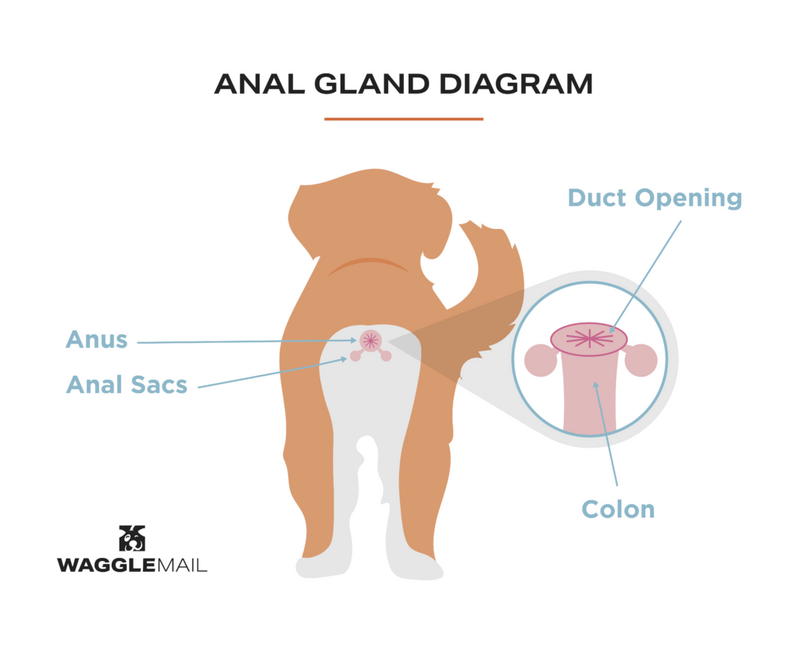
Image source: Bing (Web (fair-use with source credit))
The sacs sit either side of the anal opening, each draining through a narrow duct. Firm stool passing through applies pressure and squeezes them out. Soft stool doesn't.
That's why chronically loose stools, low-fibre diets, and obesity all push dogs toward anal sac trouble.
Telltale Signs: Scooting, Rear Licking, Smelly Bedding
If two or more of these apply, the anal sacs are almost certainly your culprit.
- Scooting or dragging the bottom along carpet or grass
- Persistent licking or chewing at the rear, tail base, or hind legs
- Chasing or biting at the tail
- Sitting down abruptly, then shifting position
- Straining or crying out when passing stool
- Damp brown spots on bedding, with that oily fish smell
- Swelling, heat, or redness at four or eight o'clock beside the anus
- Fishy smell that reappears within days of a bath
Scooting isn't exclusively an anal sac sign. Tapeworm segments, flea allergy dermatitis, and perianal skin infections all cause the same behaviour. If your dog scoots and the sacs check out clear, look at parasite control next.
Impaction vs. Infection vs. Abscess vs. Something Worse
These are four distinct problems, and they need four different responses.
| Condition | What's happening | Signs | Action |
|---|---|---|---|
| Impaction | Fluid thickens, duct blocks | Scooting, fishy smell, mild discomfort | Vet expression, then fibre and weight management |
| Anal sacculitis | Bacterial infection inside the sac | Pain, red swelling, blood or pus in fluid | Vet visit, flushing, antibiotics, pain relief |
| Abscess | Sac ruptures through the skin | Hot painful lump, open draining wound, fever | Same-day veterinary care |
| Anal sac adenocarcinoma | Malignant tumour of the gland | Firm mass, often no pain early, usually dogs over 8 | Urgent vet exam, aspirate, staging |
That last row is the one worth taking seriously. Apocrine gland anal sac adenocarcinoma is uncommon but aggressive, and it can raise blood calcium, causing increased thirst and weakness. Any firm lump beside the anus in an older dog needs checking, even if the dog seems fine.
If your dog is scooting and smells fishy but is otherwise well: book a routine appointment for expression and a rectal exam. Don't attempt it at home unless a vet or nurse has physically shown you how. Internal expression done badly bruises the duct and makes recurrence more likely.
If there's a hot swelling, an open wound, or your dog yelps when touched back there: that's an abscess or close to one. Go today.
If the dog is over eight and there's a firm lump that isn't painful: that needs a proper exam, a fine needle aspirate, and possibly abdominal imaging to check the sublumbar lymph nodes.
Recurrence is the frustrating part. Roughly 4 to 12% of dogs seen in primary care have anal sac problems, and a good chunk of those come back repeatedly. In our review of the veterinary literature, chronic recurrence very often traces back to an underlying allergic skin disease driving inflammation around the duct.
Treating the sacs over and over without addressing the allergy is a treadmill.
Branch 2: Periodontal Disease and Tooth Root Infection
If the smell survives a muzzle wipe and clearly rides on the exhaled breath, the mouth moves to the top of the list. Dental disease is the most under-recognised health problem in dogs. The American Veterinary Dental College stages it from grade one gingivitis through to grade four advanced periodontitis with bone loss.
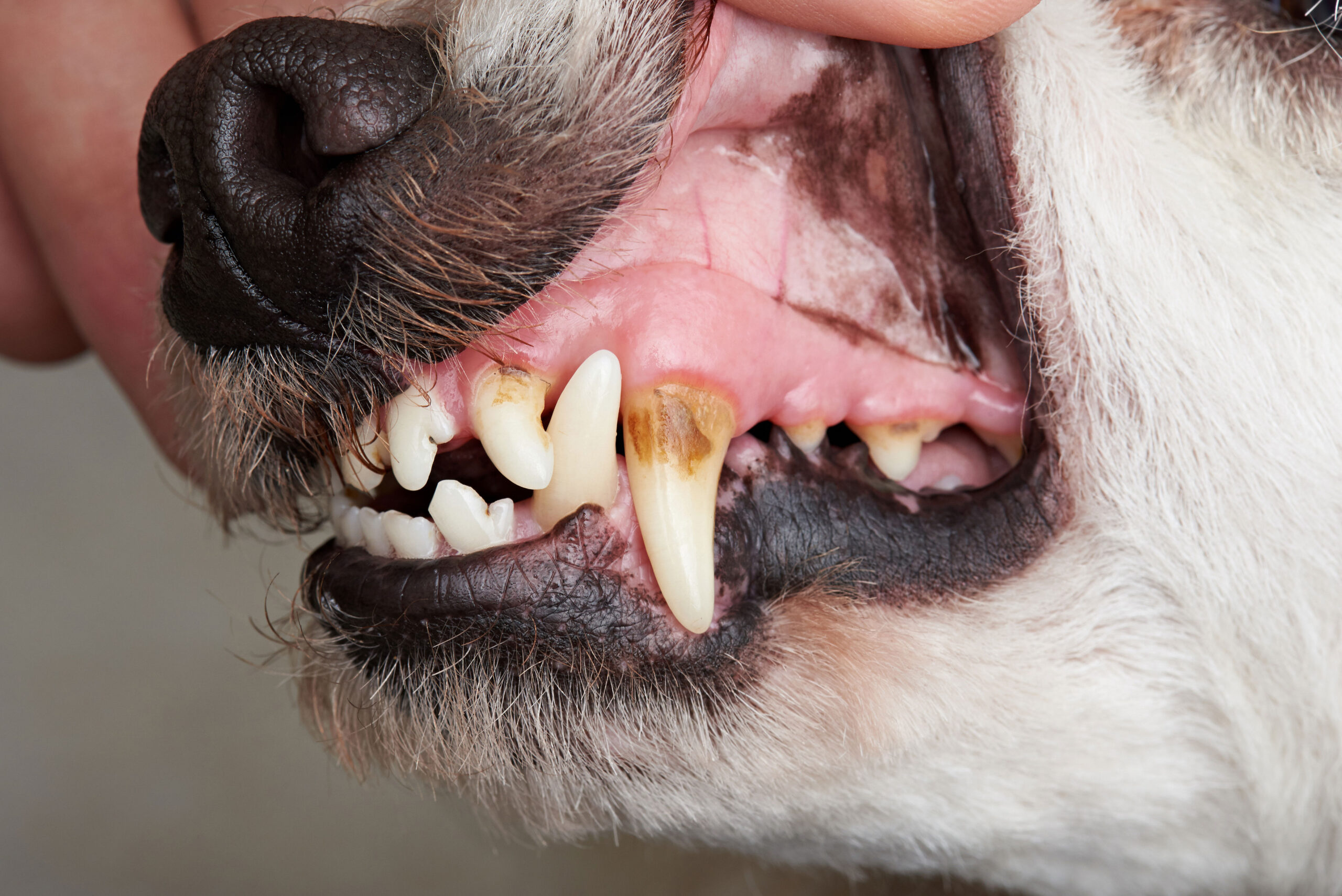
Image source: Bing (Web (fair-use with source credit))
Here's the sequence. Plaque, a soft bacterial biofilm, forms on the tooth within hours. Left alone, it mineralises into hard calculus in as little as 24 to 72 hours.
Bacteria push down into the gingival sulcus, the gum detaches, and a pocket forms. The bacteria in that pocket, particularly Porphyromonas species, produce the volatile sulfur compounds you're smelling.
How to Check Your Dog's Mouth at Home
You don't need equipment. You need good light and a calm dog.
- Lift the upper lip on one side. Don't open the jaws. Most dogs tolerate a lip lift far better.
- Look at the upper fourth premolar, the big carnassial tooth near the back. Tartar builds there first and heaviest.
- Check the gum line colour. Healthy gums are pale pink and meet the tooth in a clean, thin margin. Red, puffy, or bleeding margins mean gingivitis.
- Look for brown or grey calculus, especially where the tooth meets the gum.
- Check for recession. If you can see a dark gap or the fork between two roots, there's bone loss.
- Press gently either side of the muzzle, under each eye. A firm swelling below the eye often means an abscessed upper carnassial root.
- Lift the tongue. Look for string, grass awns, or a wound. A sublingual foreign body is easy to miss and smells terrible.
- Repeat on the other side and compare. Asymmetry is a red flag.
Behavioural clues matter just as much. Watch for chewing on one side only, dropping food, turning away from hard kibble, pawing at the face, or blood-tinged drool on toys.
Why Clean-Looking Teeth Can Still Be the Problem
Because most of the disease is invisible. Around 60% of dental pathology in dogs sits below the gum line, where you can't see it without full-mouth dental radiographs under anaesthesia. A dog can have a shiny white crown sitting on top of an abscessed root.
That's why "his teeth look fine" isn't a reliable all-clear. The American Animal Hospital Association dental guidelines treat radiographs as standard rather than optional during a professional cleaning.
Certain dogs are wired for early trouble. Small and toy breeds have full-sized teeth crammed into small jaws, so crowding traps plaque and bone loss starts young. Yorkshire Terriers, Maltese, Pomeranians, Chihuahuas, and Dachshunds top the list.
Greyhounds are an outlier, with a strong breed predisposition despite plenty of jaw space.
If you find red gums and visible tartar but no swelling: book a dental assessment. Expect a recommendation for a COHAT, a Comprehensive Oral Health Assessment and Treatment under general anaesthesia, with radiographs.
If you find facial swelling, a loose tooth, or blood in the saliva: that's a painful infection. Get seen within a day or two, not at the next routine check.
If the mouth looks genuinely clean and the breath still smells cleanly fishy: go back to Branch 1. You're probably chasing the wrong end of the dog.
Branch 3: Fish in the Food Bowl
Sometimes the answer is sitting right there on the ingredient panel. A dog eating salmon kibble twice a day, topped with a squirt of fish oil, is going to smell faintly of fish. That's not a disease.
That's dinner.
Check this branch early because it costs nothing and rules out a whole category. Diet-related odour is mild, constant, and comes with zero other symptoms. No scooting.
No red gums. No change in thirst or appetite. Just a low-level fishy note that's been there since you switched foods.
Salmon Oil, Fish-Based Kibble and Rancid Omega Supplements
The usual suspects, in rough order of how strongly they smell:
- Liquid fish oil and salmon oil pumps. The strongest offender by a mile, especially once opened.
- Krill oil capsules. Similar, slightly milder.
- Fish-based kibble. Salmon, whitefish, herring, sardine, menhaden meal.
- Hydrolysed fish protein prescription diets, used for food allergy trials.
- Fish-flavoured dental chews and training treats.
- Cat food raids. Cat diets are far more fish-heavy than dog diets.
- Joint supplements containing green-lipped mussel.
Rancidity is the part most owners never think about. Fish oils oxidise fast once exposed to air, heat, and light. A bottle sitting on a sunny kitchen shelf for four months will smell dramatically worse than a fresh one, and the oxidised oil is worth less nutritionally too.
Practical fix: keep fish oil in the fridge, buy smaller bottles, and use them within 60 to 90 days of opening. Check the manufacturer's storage instructions on the label. If it smells sharp or acrid rather than cleanly fishy, bin it.
There's a straightforward workaround if the smell bothers you but your dog needs the omega-3s. Algal oil is derived from marine algae rather than fish. It delivers DHA without the fishy odour, from the same source the fish get theirs from originally.
EPA levels are typically lower, so check the label against what your vet recommended.
The Two-Week Diet Swap Test
If you suspect food, prove it. Two weeks gives you a clear yes or no.
- Write down everything your dog eats. Main food, treats, chews, supplements, table scraps, the lot.
- Remove every fish-based item. Swap to a poultry, lamb, or beef-based food of similar quality.
- Transition over 5 to 7 days. Mix increasing amounts of the new food to avoid loose stools, which would confuse the picture by triggering anal sac problems.
- Stop fish oil entirely for the test period. Restart later if needed.
- Bathe the dog once at the start so you're not smelling old residue.
- Re-assess the muzzle and breath at day 14.
If the smell has faded or gone: it was dietary. You now choose between living with it, switching to algal oil, or keeping the non-fish diet.
If nothing changed: food wasn't the cause. Go back and work through the anal sacs and the mouth properly.
Don't run a diet swap on a dog that's on a prescription food for a diagnosed condition without speaking to your vet first. Renal, hepatic, and allergy diets aren't interchangeable with supermarket kibble.
Branch 4: When the Smell Points to Something Systemic
This is the branch nobody wants, and the reason we keep pushing you to identify the exact smell. Systemic disease breath is genuinely distinctive. Once you know what each one smells like, you can tell within seconds whether you're looking at a routine problem or a medical one.
The key point: none of these smell truly fishy. If your dog's breath smells fishy and nothing else is off, systemic disease is unlikely. If it smells ammonia-like, sweet, or musty, and the dog is off in any way, this is your branch.
Kidney Disease: Ammonia, Not Fish
Uraemic breath smells like ammonia or stale urine, not fish. That's the single most useful distinction in this whole article. When kidney function drops, urea builds up in the blood.
It crosses into saliva, oral bacteria break it down, and the result is a sharp, acrid smell that catches the back of your throat.
Signs that go with it:
- Drinking noticeably more, refilling the bowl more often
- Urinating more, larger puddles, possible night accidents
- Weight loss despite normal or reduced appetite
- Nausea, vomiting, reluctance to eat
- Pale gums, poor coat condition
- Mouth ulcers, particularly on the tongue and inner cheek (uraemic stomatitis)
- Lethargy that's crept up over weeks or months
Chronic kidney disease is staged 1 to 4 by the International Renal Interest Society using blood creatinine and SDMA alongside urine protein and blood pressure. SDMA matters because it rises earlier than creatinine, sometimes when only 25 to 40% of kidney function has been lost. Catching a dog at Stage 1 or 2 means diet and management still change the trajectory.
Catching them at Stage 4 rarely does.
If your dog has ammonia breath plus increased thirst: book bloodwork and a urinalysis this week. This is the most common systemic cause people mistake for dental disease.
Diabetes, Liver Problems and Pyometra: What Each One Smells Like
Diabetic ketoacidosis smells sweet. Acetone, nail polish remover, or slightly fermenting apples. The body burns fat for fuel because it can't use glucose, producing ketones.
The dog is usually drinking heavily, urinating heavily, vomiting, and getting weak fast. DKA is life-threatening and dogs can deteriorate within hours.
Liver dysfunction smells musty and sulphurous. Some describe it as mousy or sweetish. In young dogs, a congenital portosystemic shunt is the classic cause.
The tell is neurological signs that worsen 1 to 2 hours after eating: staring at walls, head pressing, circling, disorientation, sometimes seizures. Yellow gums, yellow whites of the eyes, or orange urine point at liver or bile duct problems too.
Pyometra is the one that genuinely does smell fishy, and it's an emergency. It's a pus-filled infection of the uterus in unspayed females, usually 4 to 8 weeks after a season. An open pyometra discharges foul, fishy fluid from the vulva, which the dog then licks off, putting the smell on the muzzle.
A closed pyometra has no discharge at all, which makes it more dangerous.
Watch for increased thirst, vomiting, loss of appetite, a swollen or painful abdomen, and lethargy in an unspayed bitch within two months of a heat cycle. That combination needs same-day emergency care.
In male dogs, a fishy or foul discharge from the prepuce is usually balanoposthitis, an inflammation of the penis and sheath. It's rarely an emergency, but it's uncomfortable and it produces exactly the licking behaviour that transfers smell to the face.
| Systemic cause | Breath smell | Speed of action needed |
|---|---|---|
| Chronic kidney disease | Ammonia, urine-like | Bloodwork within days |
| Diabetic ketoacidosis | Sweet, acetone | Emergency, same day |
| Liver disease or shunt | Musty, sulphurous | Urgent, within 24 to 48 hours |
| Pyometra (open or closed) | Fishy discharge, sick dog | Emergency, same day |
| Advanced periodontal infection | Rotten, sewage | Urgent, within a week |
Branch 5: Skin Folds, Ears and Yeast Overgrowth
Here's a scenario that catches people out constantly. The mouth checks out fine, the anal sacs are empty and healthy, and the diet has no fish in it. But the dog still smells.
The odour is coming from the skin right next to the mouth.
Lip fold dermatitis is inflammation and infection in the deep skin creases along the lower lip. Saliva collects in the fold, the skin stays permanently damp, and bacteria and yeast move in. Because the fold sits inches from the mouth, the smell is indistinguishable from breath odour unless you go looking.
Breeds built for this problem:
- Cocker Spaniels and English Springer Spaniels
- St Bernards and Newfoundlands
- Bulldogs and French Bulldogs
- Basset Hounds and Bloodhounds
- Any dog with heavy, pendulous jowls
Malassezia is the yeast most often involved. It smells musty, cheesy, or corn-chip-like rather than fishy. If the odour is more "old trainers" than "fishmonger", yeast is a strong candidate.
How to check: roll the lower lip outward with your thumb and look inside the fold. Look for redness, wet-looking skin, a brown or grey greasy film, hair loss, or a rash of small bumps. Wipe the fold with a dry tissue and smell the tissue.
That isolates the odour completely.
Ears count too. A dog with a yeasty or bacterial ear infection scratches, licks its paws, and rubs its face against furniture. The smell transfers around.
Lift the ear flap and check for redness, brown waxy discharge, or a sour smell. Never use leftover drops from a previous episode, since the wrong medication in a ruptured eardrum causes lasting damage.
There's a bigger picture behind repeat cases. Chronic lip fold dermatitis, recurrent ear infections, and recurrent anal sac problems in the same dog usually share one root cause: underlying allergic skin disease, either environmental atopy or a food allergy. Treating each flare-up in isolation means you'll be back in three months.
If the fold is red and smelly: clean it daily with a vet-recommended antiseptic wipe and dry it thoroughly. Persistent cases need medicated treatment. Severe recurrent cases sometimes need surgical cheiloplasty to remove the fold.
Odour Decoder: Matching the Smell to the Cause
Pull it all together and the diagnostic logic gets simple. Smell, plus location, plus accompanying signs, gets you to the right branch nearly every time.
| What you smell | Where it's strongest | Most likely cause | Other signs | What to do |
|---|---|---|---|---|
| Clean, oily, sharp fish | Muzzle fur, rear, bedding | Anal sac fluid | Scooting, rear licking | Routine vet visit for expression |
| Rotten, sewage, drains | Exhaled breath | Periodontal disease | Tartar, red gums, one-sided chewing | Book a dental assessment |
| Mild, steady fish | Breath and coat, all over | Fish-based diet or oil | None | Two-week diet swap test |
| Ammonia, stale urine | Exhaled breath | Kidney disease | Increased thirst, weight loss | Bloodwork and urinalysis this week |
| Sweet, acetone, pear drops | Exhaled breath | Diabetic ketoacidosis | Heavy drinking, vomiting, weakness | Emergency vet, today |
| Musty, sulphurous, mousy | Exhaled breath | Liver disease or shunt | Confusion after meals, yellow gums | Urgent vet, 24 to 48 hours |
| Cheesy, yeasty, corn chips | Lip folds, ears, paws | Malassezia, lip fold dermatitis | Scratching, head shaking, red skin | Vet visit, skin cytology |
| Foul fishy discharge | Rear end of unspayed female | Pyometra | Thirst, vomiting, lethargy, recent season | Emergency vet, today |
| Foul, one-sided, with drool | One side of the mouth | Foreign body, fractured tooth, oral mass | Blood in saliva, pawing at face | Vet within 1 to 2 days |
| Metallic, coppery | Exhaled breath | Oral bleeding, ulceration | Blood-tinged saliva, red gums | Vet within a few days |
Three practical notes on using this table.
Combinations are common. An overweight eight-year-old Cocker Spaniel can easily have anal sac impaction, grade three periodontal disease, and lip fold dermatitis all at once. Finding one cause doesn't rule out the others.
Trust the accompanying signs over the smell description. Owners genuinely struggle to name smells, and that's normal. Increased thirst, weight loss, and vomiting are far more reliable data points than "I think it smells a bit fishy".
Sudden onset versus gradual matters. Dental disease creeps in over months. Anal sac issues and stress-related gland emptying appear overnight. Systemic disease usually builds over weeks with other changes alongside it.
Red Flags That Mean Call the Vet Today, Not Next Week
Most fishy breath cases are annoying rather than dangerous. A handful are not. These signs override everything else in this article.
Emergency, go now:
- Sweet or acetone breath with vomiting, weakness, or collapse
- Fishy vaginal discharge in an unspayed female, with lethargy or thirst
- A hot, painful, swollen or ruptured lump beside the anus
- Difficulty breathing or swallowing
- Yellow gums, yellow eyes, or dark orange urine
- Seizures, head pressing, or disorientation
- A distended, painful abdomen
- Collapse or inability to stand
Urgent, within 24 to 48 hours:
- Marked increase in thirst and urination alongside any breath change
- Facial swelling, particularly below the eye
- Blood-tinged saliva or bleeding from the mouth
- Refusing food for more than 24 hours
- Dropping food, crying while eating, or pawing at the mouth
- Straining to defaecate with visible distress
- A firm, non-painful lump near the anus in a dog over eight
Book this week:
- Persistent fishy smell with scooting and rear licking
- Visible tartar with reddened, bleeding gums
- Loose or discoloured teeth
- Gradual weight loss with no obvious explanation
- Recurrent anal sac problems, three or more episodes in a year
- Smelly, red lip folds or ears
A word on pain. Dogs are extraordinarily good at hiding oral pain, because a wild canid that stops eating dies. They'll keep eating on a fractured tooth with an exposed pulp.
So "he's still eating fine" tells you almost nothing about whether his mouth hurts.
Don't give human painkillers while you wait. Ibuprofen, paracetamol (acetaminophen), and aspirin all cause serious harm in dogs, including gastrointestinal ulceration, kidney damage, and liver failure. The FDA Center for Veterinary Medicine is clear that only veterinary-prescribed analgesics should be used.
If your dog is in pain, that's a reason to go sooner, not a reason to self-medicate.
What Happens at the Vet Visit (And What It'll Cost)
Knowing what's coming makes the appointment far more productive. Bring specifics: when the smell started, whether it's on the fur or the breath, any scooting, changes in thirst, and a photo of the mouth if your dog let you take one.
The exam follows a predictable order. A general physical, then a look in the mouth while the dog is awake, then a rectal exam if the history points that way. Awake oral exams have limits.
A vet can grade visible tartar and gum inflammation, but they can't probe pockets or assess roots on a conscious dog.
Anal Sac Expression, Cytology and Rectal Exam
Manual expression is the first step and usually settles the question on the spot. A vet or nurse uses the internal technique, one gloved finger in the rectum, thumb outside, squeezing each sac between the two. That's far more thorough than the external squeeze used in most grooming salons.
What they're assessing:
- Volume and consistency. Thick, pasty, or gritty means impaction.
- Colour. Normal is brown to tan. Green, yellow, or creamy suggests infection.
- Blood. Fresh blood points to inflammation or a ruptured duct.
- Pain response. A sharp reaction means sacculitis rather than simple impaction.
- Any mass. A firm lump felt through the rectal wall changes everything.
If the fluid looks infected, they'll take a swab for cytology to look for bacteria and inflammatory cells. Infected sacs often get flushed and infused with an antibiotic and steroid preparation under sedation. Oral antibiotics alone frequently fail because the drug doesn't reach the sac lumen well.
If a mass is felt, expect a fine needle aspirate plus blood calcium testing. Around 25 to 50% of dogs with anal sac adenocarcinoma have hypercalcaemia of malignancy, which itself causes increased thirst and weakness. Abdominal ultrasound to check the sublumbar lymph nodes is standard staging.
COHAT, Dental X-Rays and Bloodwork
A COHAT is not a scale and polish. It's a full anaesthetised assessment with charting, probing, radiographs, and treatment of whatever's found. Skipping the radiographs means missing most of the disease, which is why the World Small Animal Veterinary Association global dental guidelines treat imaging as core to the procedure.
Here's the typical sequence:
- Pre-anaesthetic bloodwork, usually a CBC and biochemistry panel, plus urinalysis in older dogs
- Intravenous catheter, fluids, and induction
- Intubation to protect the airway from water and debris
- Full-mouth radiographs, 10 to 14 views in most dogs
- Periodontal probing and charting of all 42 teeth
- Ultrasonic scaling above and below the gum line
- Extractions where roots are compromised, with local nerve blocks
- Polishing, then a final rinse
- Recovery with monitoring, discharge the same day in most cases
Bloodwork does double duty here. It clears the dog for anaesthesia and screens for the systemic causes covered earlier. Creatinine, urea, SDMA, and urine specific gravity flag kidney disease.
Glucose and fructosamine catch diabetes. ALT, ALKP, and bile acids point at the liver.
Costs vary a lot by region and clinic type. These are indicative ranges as of 2026, not quotes.
| Service | US (USD) | UK (GBP) |
|---|---|---|
| Consultation | $50 to $100 | £35 to £70 |
| Anal sac expression | $15 to $60 | £15 to £40 |
| Anal sac flush and infusion under sedation | $200 to $500 | £150 to £350 |
| Blood panel plus urinalysis | $150 to $300 | £100 to £220 |
| Scale and polish, no extractions | $300 to $800 | £200 to £450 |
| Dental with radiographs and extractions | $800 to $2,500+ | £450 to £1,500+ |
| Anal sacculectomy (both sides) | $1,000 to $2,500 | £600 to £1,500 |
| Fine needle aspirate plus cytology | $150 to $350 | £100 to £250 |
Two things worth knowing about insurance. Most policies exclude routine dental work unless you've kept up with annual check-ups, and many require documented preventive care. Anal sac problems are usually covered as illness, but chronic recurrent cases can get flagged as pre-existing after the first claim.
Timelines are reassuring. Anal sac odour typically clears within 24 to 48 hours of expression plus a bath. Dental odour improves noticeably within 3 to 7 days of a COHAT.
Extraction sites get rechecked at 10 to 14 days.
Mistakes Owners Make With Fishy Dog Breath
Some of these are harmless time-wasters. A few cause real damage.
Why Human Toothpaste and Water Additives Backfire
Human toothpaste is genuinely dangerous for dogs, and it's the mistake we see most often. Many brands contain xylitol, a sweetener that triggers a massive insulin release in dogs. That causes life-threatening hypoglycaemia within 30 to 60 minutes, and higher doses cause acute liver failure.
Dogs can't spit, so they swallow the lot.
Fluoride is the second problem. Swallowed regularly, it causes gastrointestinal upset and, over time, systemic toxicity. Use a dog-specific enzymatic paste, which is designed to be swallowed and usually flavoured with poultry or malt.
Check dental water additives too. A handful of products contain xylitol, and it isn't always obvious on the label. It may appear as birch sugar or E967.
The ASPCA Animal Poison Control Center treats xylitol ingestion as an emergency, and so should you.
Water additives have a bigger issue anyway. They mask odour without touching the cause. If your dog has an abscessed carnassial root, a minty additive changes nothing except your ability to detect the problem.
The same goes for mints, parsley treats, breath sprays, and chlorophyll tablets.
Expressing Glands at Home and Over-Expression at the Groomer
Home expression goes wrong more often than it goes right. The external technique most owners find online squeezes the outside of the sacs, which empties the liquid portion but leaves thickened material behind. That buys a day or two of relief and a fast return of the problem.
Worse, aggressive squeezing bruises the duct and surrounding tissue. Inflammation narrows the duct, so the next impaction comes faster. That cycle is a recognised cause of chronic anal sac disease in dogs that never had a structural problem to begin with.
Over-expression is the flip side. Routine gland expression at every groom, on a dog with no symptoms, causes unnecessary irritation. Healthy anal sacs empty on their own.
If your dog isn't scooting, licking, or smelling, leave them alone.
The rule of thumb: express only when there are symptoms, and get a vet or nurse to show you the internal technique in person if you want to do it yourself. Never learn this from a video alone.
Other common errors worth avoiding:
- Giving antlers, hooves, cooked bones, or hard nylon chews. These fracture the carnassial teeth, and a slab fracture with an exposed pulp is both painful and smelly.
- Letting ice cubes become a habit. Same fracture risk on brittle teeth.
- Assuming a fishy smell after a firework display means disease. Frightened dogs empty their sacs involuntarily.
- Bathing repeatedly with harsh shampoo to kill the smell, which strips the coat and worsens skin problems.
- Waiting for the dog to tell you it's in pain. They won't.
Anaesthesia-Free Dental Cleaning: Why Vets Push Back
Anaesthesia-free cleaning polishes the visible crown and leaves the disease untouched. That's the core objection, and it isn't a commercial one. The bacteria causing the smell live below the gum line, inside periodontal pockets.
You can't access those on a conscious dog without causing pain and risking injury.
It also produces a cosmetically clean tooth on a diseased root, which delays proper treatment by months. Owners see white teeth and assume the problem's solved.
There's a legal dimension too. Veterinary dental specialists formally oppose the practice. In many US states and under UK veterinary legislation, scaling teeth is an act of veterinary surgery, so a non-veterinarian performing it may be practising unlawfully.
If anaesthetic risk is your worry, that's a fair conversation to have. Ask about pre-anaesthetic bloodwork, IV fluids, dedicated monitoring, and a tailored protocol for brachycephalic or senior dogs. Modern protocols are far safer than the reputation suggests.
Stopping It Coming Back
Fixing the current problem is the easy part. Keeping it gone is where most owners lose ground, usually because they change five things at once and stick with none of them.

Image source: Bing (Web (fair-use with source credit))
Fibre, Stool Quality and Healthy Anal Sacs
Firm stool is the whole game with anal sacs. A well-formed, slightly firm stool applies enough pressure on the way out to empty both sacs naturally. Soft or loose stool slides past and leaves them full.
What actually helps:
- Added soluble fibre. Psyllium husk is the most commonly used, typically 1/2 to 2 teaspoons per meal depending on body weight, added with plenty of water.
- Plain canned pumpkin. Not pie filling. Around 1 to 4 tablespoons a day by size.
- Weight management. Obesity is a strong risk factor, partly through reduced muscle tone around the sacs.
- Consistent diet. Constant food changes cause loose stools, which cause impaction.
- Regular exercise. Movement and normal defaecation frequency both help.
Ask your vet before adding fibre if your dog is on a prescription diet. Some renal and gastrointestinal formulas already have adjusted fibre levels.
Recurrent cases need an underlying cause found. If your dog has had three or more episodes in a year, push for an allergy investigation rather than another expression. Food trials, environmental allergy testing, and skin cytology are the standard route.
For genuinely intractable cases, surgical anal sacculectomy removes the sacs entirely, though it carries a small risk of faecal incontinence and is a last resort.
A Realistic Toothbrushing Routine Your Dog Will Tolerate
Daily brushing is the gold standard and the most effective thing you can do at home. Plaque mineralises within 24 to 72 hours, so anything less than every other day loses ground. Below three times a week, plaque control drops off sharply.
Most owners fail because they start by trying to brush. Don't. Build up over two weeks.
- Days 1 to 3. Let your dog lick a pea-sized blob of dog toothpaste off your finger. That's the whole session.
- Days 4 to 6. Lift the lip, rub the paste on the outside of the canine teeth with a fingertip. Five seconds. Praise, then stop.
- Days 7 to 9. Introduce a soft dog toothbrush or finger brush with paste. Touch the front teeth only. Ten seconds.
- Days 10 to 12. Brush the outer surfaces of the canines and front premolars. Twenty seconds per side.
- Days 13 to 14. Work back to the carnassials and molars. Thirty seconds per side.
- Ongoing. Aim for 30 seconds per side, daily, at the same time each day.
Technique notes that make it work:
- Only brush the outer surfaces. The tongue keeps the inner surfaces reasonably clean.
- Angle the bristles at about 45 degrees toward the gum line. That's where the plaque sits.
- Never force the jaws open. Lift the lip instead.
- Stop before your dog gets fed up. Ending on a good note matters more than finishing the mouth.
- Pair it with a fixed cue, like after the evening walk.
If your dog won't accept a brush, a finger brush or a dental wipe beats nothing. A gauze square wrapped round a finger with enzymatic paste works too.
VOHC-Accepted Chews, Diets and What Actually Works
The Veterinary Oral Health Council awards a Seal of Acceptance to products that have proven plaque or tartar reduction in controlled trials. That seal is the only meaningful filter on a shelf full of marketing claims. You can check the current accepted product list at vohc.org.
Here's how the main options stack up.
| Method | Effectiveness | Effort | Best for |
|---|---|---|---|
| Daily brushing | Highest | High | Any dog that tolerates handling |
| VOHC-accepted dental diet | Good | Very low | Dogs that refuse brushing entirely |
| VOHC-accepted dental chews | Moderate | Low | Supplementing brushing, food-motivated dogs |
| Dental wipes | Low to moderate | Medium | Dogs that won't accept a brush |
| Water additives | Low, mainly cosmetic | Very low | Marginal add-on only |
| Raw bones | Variable, fracture risk | Low | Not recommended by most veterinary dentists |
Dental diets work by kibble mechanics. The pieces are larger, with a fibre matrix that lets the tooth sink in rather than shattering the kibble on contact. That scrubs the tooth surface, and it's genuinely useful for dogs that won't accept a brush.
Chews add calories, so cut the daily food ration to compensate. A large dental chew can carry 100 to 200 kcal, a meaningful chunk of a small dog's daily allowance.
Check-up frequency: annual dental checks for medium and large breeds, every six months for toy breeds and dogs over eight. Small breeds accumulate periodontal disease years earlier, so annual is often too slow.
Breeds and Ages That Get This Most Often
Predisposition doesn't diagnose anything, but it does shift the odds. If your dog is on one of these lists, weight your suspicion accordingly.
Anal sac problems are most common in:
- Cocker Spaniels, the standout breed by some distance
- Chihuahuas and Miniature Poodles
- Dachshunds and Beagles
- French Bulldogs and Pugs
- Overweight Labradors and Golden Retrievers
- Any dog with chronic soft stools or allergic skin disease
Periodontal disease starts earliest in:
- Yorkshire Terriers, Maltese, Pomeranians
- Chihuahuas and Toy Poodles
- Shih Tzus and Pugs, where jaw shape crowds the teeth
- Greyhounds, a striking exception to the small-breed pattern
- Dachshunds and Papillons
Lip fold dermatitis clusters in:
- Cocker and Springer Spaniels
- St Bernards, Newfoundlands, Bloodhounds
- Basset Hounds and Bulldogs
Age changes the picture more than breed does. Here's the rough pattern.
| Age | Most likely cause of fishy odour | What to prioritise |
|---|---|---|
| Under 1 year | Diet, teething, retained deciduous teeth | Check for retained baby teeth, start a brushing habit |
| 1 to 3 years | Anal sac impaction, early gingivitis, diet | Gum check, stool quality, fibre |
| 3 to 7 years | Periodontal disease, anal sac disease, allergies | Annual dental assessment, allergy workup if recurrent |
| 7 to 10 years | Advanced dental disease, early kidney disease | Bloodwork with SDMA, six-monthly dental checks |
| Over 10 years | Kidney disease, oral masses, anal sac tumours | Full geriatric screen, careful rectal exam |
Puppies deserve a note. Teething breath between 4 and 7 months genuinely does smell odd, sometimes slightly metallic or sour, as deciduous teeth loosen and gums bleed a little. That resolves on its own.
What doesn't resolve is a retained deciduous canine sitting alongside the adult tooth, trapping food and plaque between them. Those need extracting, usually at neutering.
Real Scenarios: Four Dogs, Four Different Answers
Four composite cases drawn from typical primary-care presentations. Same complaint, four completely different outcomes.
Case one: the four-year-old Cocker Spaniel.
Owner reports a fishy smell after face licks, worst in the evenings. The muzzle sniff test is decisive: the fur reeks, the exhaled breath is neutral. There are brown smears on the sofa arm and the dog has been chewing at its tail base.
Diagnosis: anal sac impaction. Manual expression at the practice, a bath, and psyllium added to both meals. Smell gone within 36 hours.
Recurrence at four months prompted an allergy workup, which found environmental atopy.
Case two: the nine-year-old Yorkshire Terrier.
Owner describes the breath as fishy, but questioning brings out "rotten, like drains". The smell survives a muzzle wipe. A lip lift shows heavy calculus on both upper carnassials with bright red, bleeding gum margins.
Bloodwork is clear. Full-mouth radiographs at the COHAT reveal bone loss around six teeth and two abscessed roots. Eight extractions.
Odour resolved by day five, and the owner reported the dog playing with toys again within two weeks.
Case three: the eleven-year-old Labrador cross.
Owner mentions the breath alongside a comment that the water bowl empties twice a day now. The smell is sharp and ammonia-like on the exhaled breath, not fishy. The dog has lost 2.8 kg over four months.
Bloodwork shows elevated creatinine and SDMA with dilute urine. Diagnosis: chronic kidney disease, IRIS Stage 2. A renal diet and blood pressure monitoring started.
This is the case where the "fishy breath" search saved months.
Case four: the two-year-old Border Collie.
Mild, constant fishy smell for six weeks. No scooting. Gums pale pink and clean.
Bright, eating well, normal thirst. History reveals a switch to a salmon and potato kibble plus a daily pump of salmon oil, opened three months ago and stored on the windowsill. A two-week swap to a chicken-based diet, with the oil discontinued, cleared it completely.
Omega-3s later reintroduced as refrigerated algal oil, with no return of the smell.
The pattern across all four is the same. The smell narrowed things down, but the accompanying detail closed the case. Sofa smears.
Bleeding gums. An emptied water bowl. A sunny windowsill.
Frequently Asked Questions
Why does my dog's breath smell like fish but his teeth look clean?
Clean-looking teeth point away from the mouth entirely. In most of these cases the fish smell is anal sac fluid transferred to the muzzle by licking. Wipe the muzzle with a damp cloth, wait ten minutes, then sniff again.
If the smell has gone, the mouth was never the source.
Can I express my dog's anal glands myself at home?
You can, but we'd steer you away from it unless a vet or veterinary nurse has shown you the internal technique in person. The external squeeze most owners try empties only the liquid portion and leaves thickened material behind. Done roughly, it bruises the duct and makes future impactions more likely.
How often should healthy anal glands be expressed?
Never, in a dog with no symptoms. Healthy anal sacs empty naturally during a firm bowel movement. Routine expression at every groom irritates the tissue and can create the very problem it's meant to prevent.
Express only when there's scooting, rear licking, swelling, or a persistent fishy smell.
Does fish oil make dogs' breath smell?
Yes, and it's completely harmless. Liquid salmon and fish oils are the strongest offenders, especially once oxidised. Store them in the fridge and use within 60 to 90 days of opening.
If the odour bothers you, algal oil delivers DHA from marine algae with no fishy smell at all.
Is fishy breath in dogs a sign of kidney failure?
Rarely. Uraemic breath from kidney disease smells like ammonia or stale urine, not fish. It also comes with increased thirst, increased urination, weight loss, and reduced appetite.
If your dog has those signs alongside any breath change, book bloodwork including SDMA and a urinalysis within days.
Why does my dog suddenly smell like fish after being scared?
Frightened dogs empty their anal sacs involuntarily. Fireworks, thunderstorms, car journeys, and vet waiting rooms all trigger it. The smell appears within seconds and clings to the coat.
A bath sorts it out, and there's nothing else to treat unless the smell keeps coming back without a trigger.
Your Decision Guide: What to Do Based on What You Found
Work through this in order. Stop at the first branch that matches.
Start here: does the smell survive a damp-cloth wipe of the muzzle?
No, it disappears. It's surface contamination. Check the rear, tail base, and bedding for oily brown residue.
- Scooting or rear licking, dog otherwise well: book a routine appointment for expression and a rectal exam. Add fibre and manage weight afterwards.
- Hot, painful swelling or an open wound beside the anus: go today. That's an abscess.
- Firm, painless lump near the anus in a dog over eight: urgent appointment with an aspirate.
- No rear signs at all, and it followed fireworks or a car trip: bathe and move on.
- Unspayed female with foul discharge and lethargy within eight weeks of a season: emergency vet today.
Yes, it's still there after cleaning. The smell is internal. Now identify the odour.
- Rotten, sewage-like, or drain-like: the mouth. Lift the lip and check the upper carnassials. Tartar and red gums mean a dental assessment with radiographs. Facial swelling below the eye, a loose tooth, or blood in the saliva means seen within 1 to 2 days. A one-sided smell with drooling means checking under the tongue for a foreign body, then a vet within 48 hours.
- Ammonia or stale urine: kidney. Bloodwork with creatinine and SDMA, plus urinalysis, this week. Sooner if thirst has climbed or weight has dropped.
- Sweet, acetone, or pear drops: emergency. Diabetic ketoacidosis moves fast. Go now.
- Musty, sulphurous, or mousy: liver. Urgent, within 24 to 48 hours. Faster with confusion after meals, yellow gums, or seizures.
- Cheesy, yeasty, or corn-chip: skin, not mouth. Roll out the lower lip fold and check the ears. Book a vet visit for cytology and treatment.
- Mild, steady, and the dog is completely well: check the food bowl. Run the two-week swap off fish protein and fish oil.
Three closing rules that override the tree.
Any red flag beats any branch. Collapse, breathing trouble, yellow gums, seizures, a painful abdomen, or a bitch in season eight weeks ago with discharge. Those go straight to emergency care regardless of what the smell suggests.
Nothing found doesn't mean nothing's wrong. If you've worked through all five branches and drawn a blank, book the appointment anyway. A vet can probe pockets, palpate the sacs internally, and run bloods. You can't.
Fix the cause, not the smell. Water additives, breath sprays, and mints buy you a few hours and cost you the early warning. That smell is your dog telling you something. It's worth listening to.