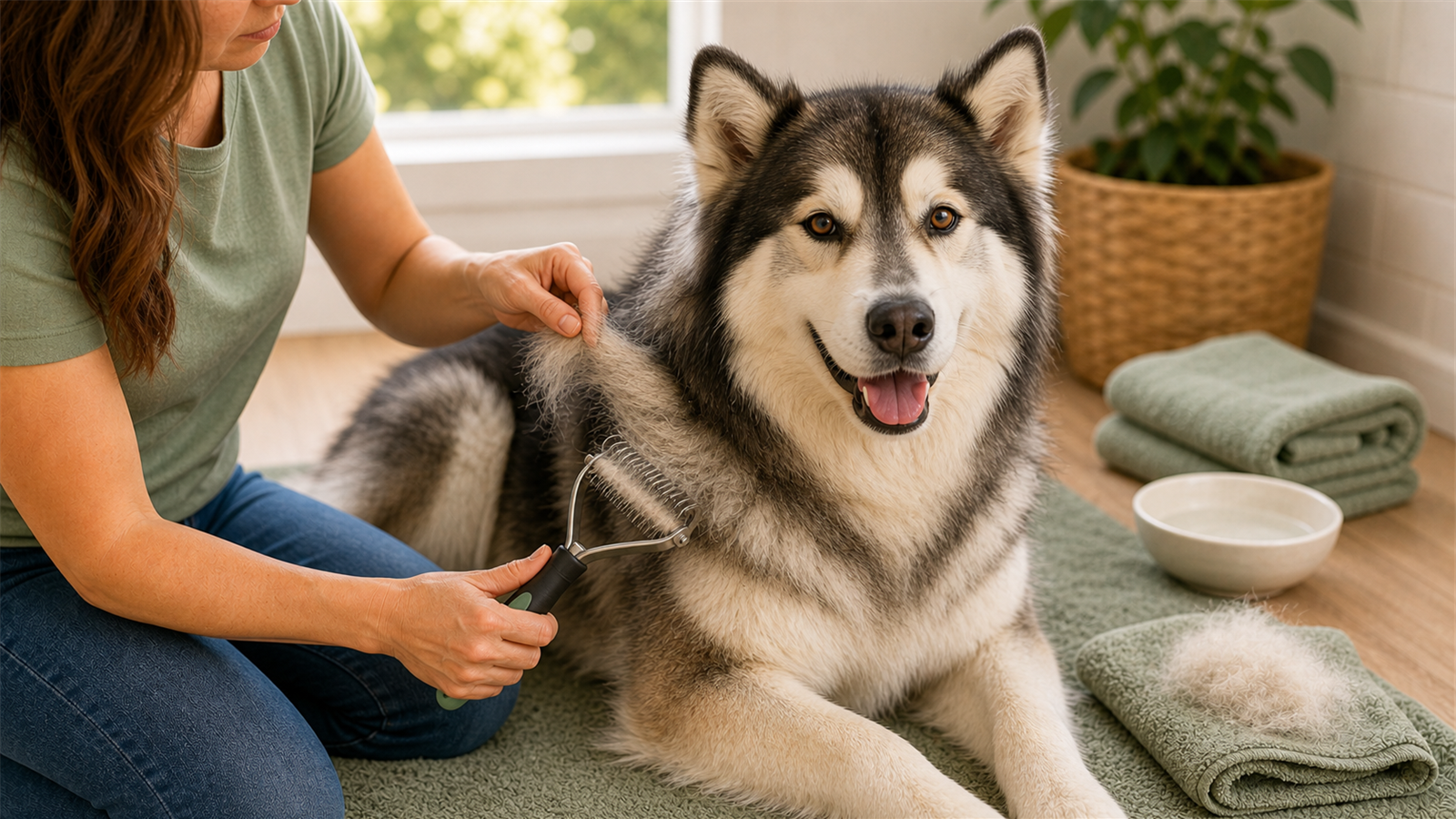

The biggest double coat dog grooming mistakes are shaving or clipping without coat-specific guidance, brushing only the surface, overusing deshedding tools, bathing over tangles, drying only the top layer, forcing mats, ignoring skin changes, and trying to remove every loose hair. A safer routine protects the skin, works gently through the coat, and stops early when the dog is uncomfortable.
This guide is about mistake prevention. It does not teach shaving, clipping, mat removal, skin treatment, parasite treatment, or breed-specific trimming.
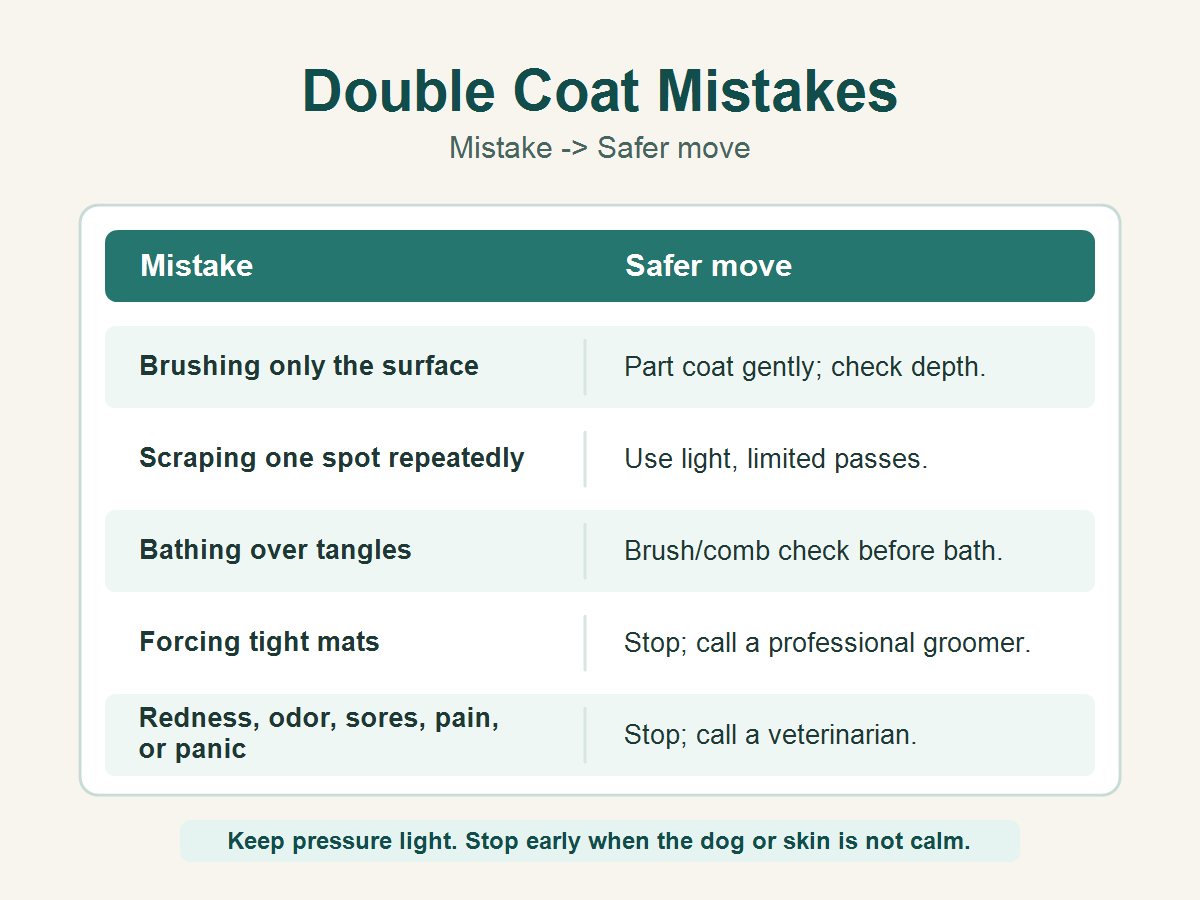
| Mistake | Why it can cause trouble | Safer alternative |
|---|---|---|
| Shaving or clipping because the dog sheds | The coat may need an individual assessment before any major trim decision | Ask a qualified groomer or veterinarian for coat-specific guidance |
| Brushing only the surface | Loose undercoat and tangles can stay hidden below the topcoat | Part small sections gently and check the coat depth without forcing |
| Using a deshedding tool too much | Repeated passes over one area can irritate skin or thin the coat unevenly | Use light, limited passes only when the skin and coat look normal |
| Bathing before checking tangles | Water can make existing coat problems harder to work with | Brush and comb-check before the bath when the coat is safe to handle |
| Drying only the top layer | Dense coat can hold dampness near the skin | Dry thoroughly and recheck thick areas after the coat settles |
| Forcing mats or tight spots | Pulling can hurt the dog and injure skin | Stop and use a professional groomer |
| Ignoring redness, odor, bald patches, or sudden shedding changes | These can point to a skin or health problem | Stop grooming that area and call a veterinarian |
| Chasing every loose hair | Over-grooming can leave skin sore before shedding is truly finished | Stop while the dog is comfortable and the skin looks calm |
Mistake 1: Shaving or Clipping Without Coat-Specific Guidance
Do not assume a double-coated dog should be shaved just because the dog sheds. Shedding is normal for many double-coated dogs, and a major coat change should be based on the individual dog, coat condition, season, health, and comfort.
If shaving or clipping is being considered, ask a qualified groomer who can see the coat in person. If skin disease, heat stress risk, wounds, or medical fragility is part of the decision, involve a veterinarian.
Mistake 2: Brushing Only the Coat You Can See
A double coat can look smooth on top while loose undercoat, tangles, or packed hair sit deeper. Surface brushing may make the dog look tidy without actually checking the coat near the skin.
Part the coat gently in a small area so you can see whether the brush or comb is reaching the layer that needs attention. If the tool stops, pulls skin, or makes the dog flinch, do not drag through it.
PetMD guidance on matted pet hair explains why tight mats need careful handling and may need professional help. ASPCA dog grooming tips also support regular brushing and watching for skin problems while grooming.
Mistake 3: Overusing Deshedding Tools
A deshedding tool should not be scraped over the same spot until no hair comes out. Loose hair can keep releasing during seasonal shedding, and the goal is not to strip the coat bare.
Keep pressure light. Stop for redness, bald patches, skin twitching, yelping, flinching, growling, snapping, panic, or any sign of pain. If you are not sure which tool category belongs on your dog’s coat, get guidance before repeating passes.
AKC grooming guidance covers routine brushing and coat checks, while Texas A&M shedding advice points to regular brushing as part of managing loose hair.
Mistake 4: Bathing Before Loose Coat and Tangles Are Checked
Bathing before a coat check can make a grooming session harder. Water can tighten existing tangles, and dense undercoat can be harder to dry once it is packed or dirty. If you are not sure whether a spot is a tangle or something more serious, use our guide to dog matting vs tangles before you keep brushing.
Brush and comb-check gently before bathing when the coat is safe to work. If you find painful mats, mats close to the skin, sores, swelling, discharge, parasites, or strong odor with irritation, stop and route the dog to a groomer or veterinarian. For prevention between baths, see how to prevent dog mats.
Mistake 5: Drying Only the Surface
Dense coats can feel dry on top while still holding moisture deeper down. Dampness near the skin can leave the dog uncomfortable and may worsen odor or irritation.
Dry in small sections and check thick areas such as the neck, chest, belly, pants, tail base, and behind the ears. Avoid high heat, and stop for overheating, breathing trouble, collapse, panic, or unsafe handling.
Mistake 6: Ignoring Skin or Shedding Changes
Some shedding changes with the season. Sudden shedding changes, bald patches, sores, redness, swelling, discharge, parasites, dandruff flare, odor with irritation, pain, or excessive scratching are different. Grooming should not be used to cover up a skin problem.
Call a veterinarian when the coat change seems sudden, the skin looks abnormal, or the dog seems painful or unwell.
Simple Coat-Parting Check
Use a calm, gentle check before and after brushing. Look at the surface coat, part a small section with your fingers, check whether loose undercoat or tangles are sitting below the top layer, then stop if the skin looks irritated or the coat resists.
This is a check, not a dematting method. Do not pull through tight spots, cut mats out, shave close to the skin, or keep working through pain.
When to Stop and Get Help
Stop home grooming and use a qualified groomer or veterinarian for painful mats, mats near the skin, pelted coat, bald patches, sores, redness, swelling, discharge, odor with irritation, parasites, sudden shedding change, pain, panic, aggression risk, or unsafe handling. If the main problem is fear around tools, start with our guide to brushing a dog that hates being brushed before you try longer coat sessions.
Use a groomer for coat work beyond your skill. Use a veterinarian for skin problems, wounds, parasites, pain, sudden coat changes, or medical concerns.
FAQ
What is the most common double coat grooming mistake?
A common mistake is trying to remove all shedding instead of managing loose coat gently. Double-coated dogs shed, and too much brushing or tool pressure can irritate skin.
Should I shave my double-coated dog?
This page does not give shaving instructions. If shaving or clipping is being considered, ask a qualified groomer or veterinarian for coat-specific guidance.
Can I brush out mats at home?
Do not force mats. Tight, painful, skin-close, or severe mats should be handled by a professional groomer or veterinarian, depending on the skin condition.
How do I know if I am brushing too much?
Stop if the skin turns red, the dog flinches or pulls away, hair starts thinning in one area, or you feel tempted to keep brushing until no loose hair remains.
When should I stop grooming a double-coated dog?
Stop for painful mats, mats near skin, bald patches, sores, redness, swelling, discharge, odor with irritation, parasites, sudden shedding change, pain, panic, aggression risk, or unsafe handling.
Bottom Line
Double coat grooming should manage loose coat without hurting the dog or irritating the skin. Check below the surface, use light tool pressure, brush before bathing when the coat is safe, dry dense areas thoroughly, and stop early when mats, skin changes, pain, or panic appear.