The biggest dog brushing mistakes are brushing only the surface, brushing or bathing over mats, using the wrong brush category, pressing too hard, overbrushing one area, skipping friction zones, and ignoring pain, skin, or behavior stop signs. Safer brushing is slower, lighter, and honest about when a groomer or veterinarian should take over.
Do not use brushing to solve severe mats. Stop for tight mats, mats close to skin, redness, sores, bleeding, parasites, bald patches, hot spots, pain, yelping, growling, snapping, freezing, or panic.
Quick Mistake Check
Mistake
Safer choice
Stop sign
Brushing only the topcoat
Work in small sections and comb-check near the skin.
The comb catches, pulls, or will not pass gently.
Brushing or bathing over mats
Pause and check whether the mat is a groomer or vet task.
The mat is tight, painful, skin-close, widespread, or paired with sore skin.
Using one brush for every coat
Match the tool category to coat type.
The tool scrapes, snags, or leaves hidden tangles.
Pressing harder to get more hair
Use light pressure and short sessions.
Skin looks red or the dog becomes tense, sore, or evasive.
The area is sensitive, packed, damp, red, or painful.
Mistake 1: Brushing Only the Surface
Surface brushing can make the outer coat look tidy while tangles keep forming underneath. This is common on long, curly, fleece, woolly, and dense double coats.
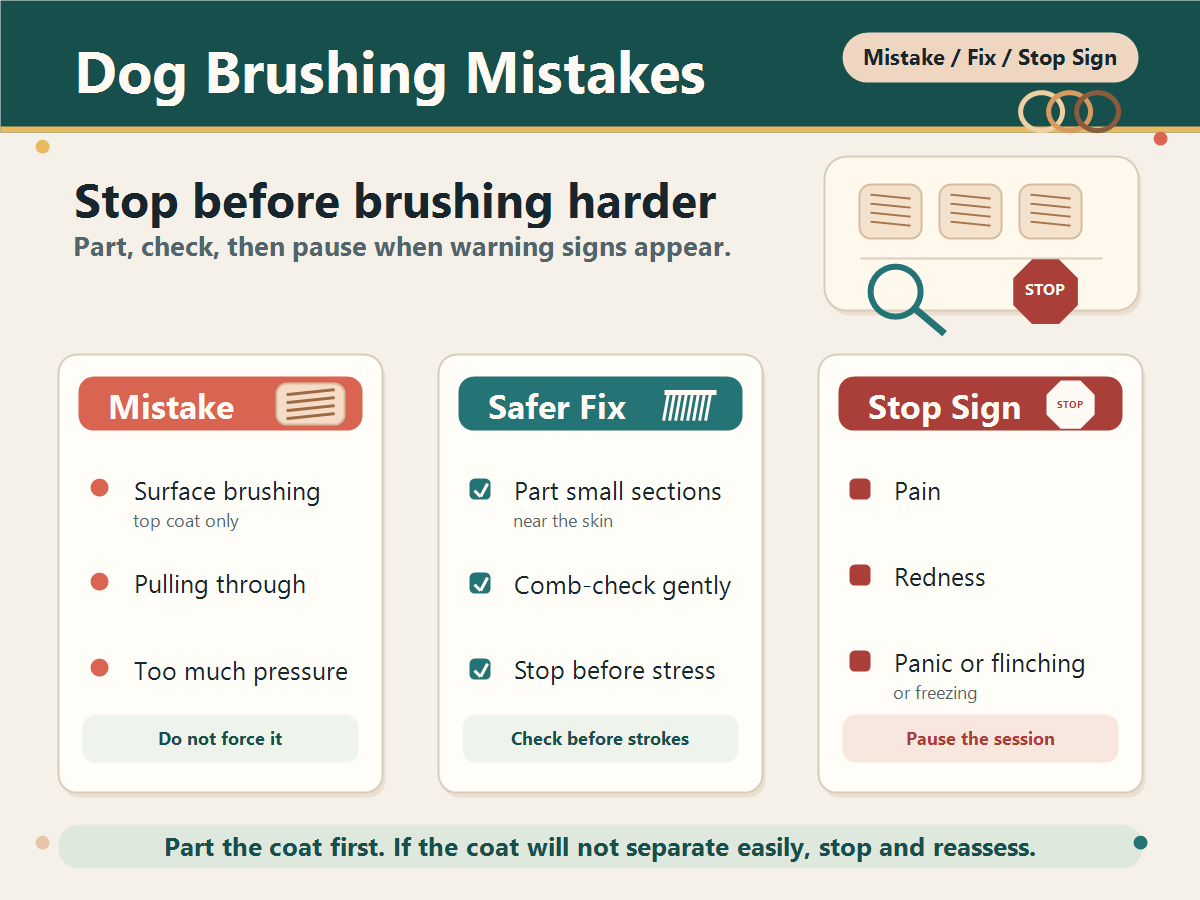
Work in small sections. Part the coat, brush gently through that section, then use a comb to check whether the coat is open near the skin. If the comb catches painfully or repeatedly, stop instead of pulling through it.
Use this quick check when brushing starts to snag, pull, or stress the dog. Stop for pain, redness, panic, repeated flinching, or mats close to the skin.
Water can make tangles and mats tighter. Hard brushing over a mat can pull skin and make the dog afraid of grooming.
Do not bathe over severe mats, force a brush through a tight mat, cut mats with scissors, or keep working because the mat looks small from the outside. Use a groomer or veterinarian for severe, painful, skin-close, widespread, or suspicious mats.
Mistake 4: Pressing Too Hard or Overbrushing One Area
Brushing should not scrape the skin. Pressing harder does not make a tool safer or more effective. It can create redness, soreness, and handling fear.
Use lighter pressure than you think you need. Keep sessions short, rotate zones, check skin color and comfort often, and stop before the dog gets sore. Do not chase every last loose hair. Shedding control is maintenance, not a perfect finish.
Mats often form where coat rubs, compresses, or holds moisture. These spots are also more sensitive, so check them slowly.
Behind ears.
Collar and harness line.
Armpits.
Chest and belly.
Inner thighs.
Tail base.
Legs and feet.
Sanitary area.
If a friction zone is packed, painful, red, damp, or hard to see clearly, stop and use a groomer or veterinarian instead of brushing harder.
Mistake 6: Ignoring Skin, Pain, or Behavior Stop Signs
Brushing is also a comfort and skin check. Stop if you see redness, sores, bleeding, parasites, bald patches, hot spots, pain, yelping, growling, snapping, freezing, panic, sudden heavy shedding, or a sudden coat change.
If the main problem is fear or handling, use how to brush a dog that hates being brushed and keep the session short. A dog that is panicking, painful, or unsafe to handle needs help, not a longer brushing session.
Brushing Routine by Coat Type
The routine should change when the coat, skin, season, or dog’s tolerance changes.
Call a groomer for severe mats, skin-close mats, recurring mats you cannot prevent, packed undercoat, coat work beyond your skill, or a dog who cannot tolerate brushing safely.
Call a veterinarian for wounds, infection signs, parasites, hot spots, sudden hair loss, painful skin, swelling, bleeding, or behavior changes that suggest pain.
FAQ
Can you brush a dog too much?
Yes. Too much pressure, too many repeated passes, or overworking one area can irritate skin. Use shorter sessions and stop when the skin or dog shows discomfort.
Should you brush mats before or after a bath?
Minor loose tangles may be handled before bathing if the dog stays comfortable and the hair separates without pulling. Severe, tight, painful, or skin-close mats should go to a groomer or veterinarian.
How do I know if I am brushing to the skin?
After brushing a small section, use a comb to check near the skin. If the comb cannot pass without catching or hurting, surface brushing is likely missing tangles.
What brush should I use for my dog’s coat?
Choose by coat type and ask a groomer or veterinarian when unsure. This guide uses tool categories only and does not recommend specific products.
When should a groomer remove mats?
A groomer should handle severe, tight, painful, skin-close, widespread, or recurring mats. A veterinarian may be needed when mats are paired with wounds, infection signs, parasites, or pain.