Category: Pet Care

General pet care topics that support safe grooming routines.

  • Dog Grooming After Mud

    Dog Grooming After Mud

    For mud, first decide whether the safest cleanup is dry-brushing, a paw-and-belly rinse, a full bath, or stopping. Unknown mud source, chemical smell, oily residue, road runoff, fertilizer or pesticide concern, wounds, limping, parasites, pain, severe mats, panic, or unsafe handling should not be treated as normal home grooming.

    This guide is for routine outdoor mud only. If the mud may contain chemicals or your dog seems hurt, stop and get professional guidance instead of trying to solve it with brushing or bathing.

    Mud Cleanup Decision Tree
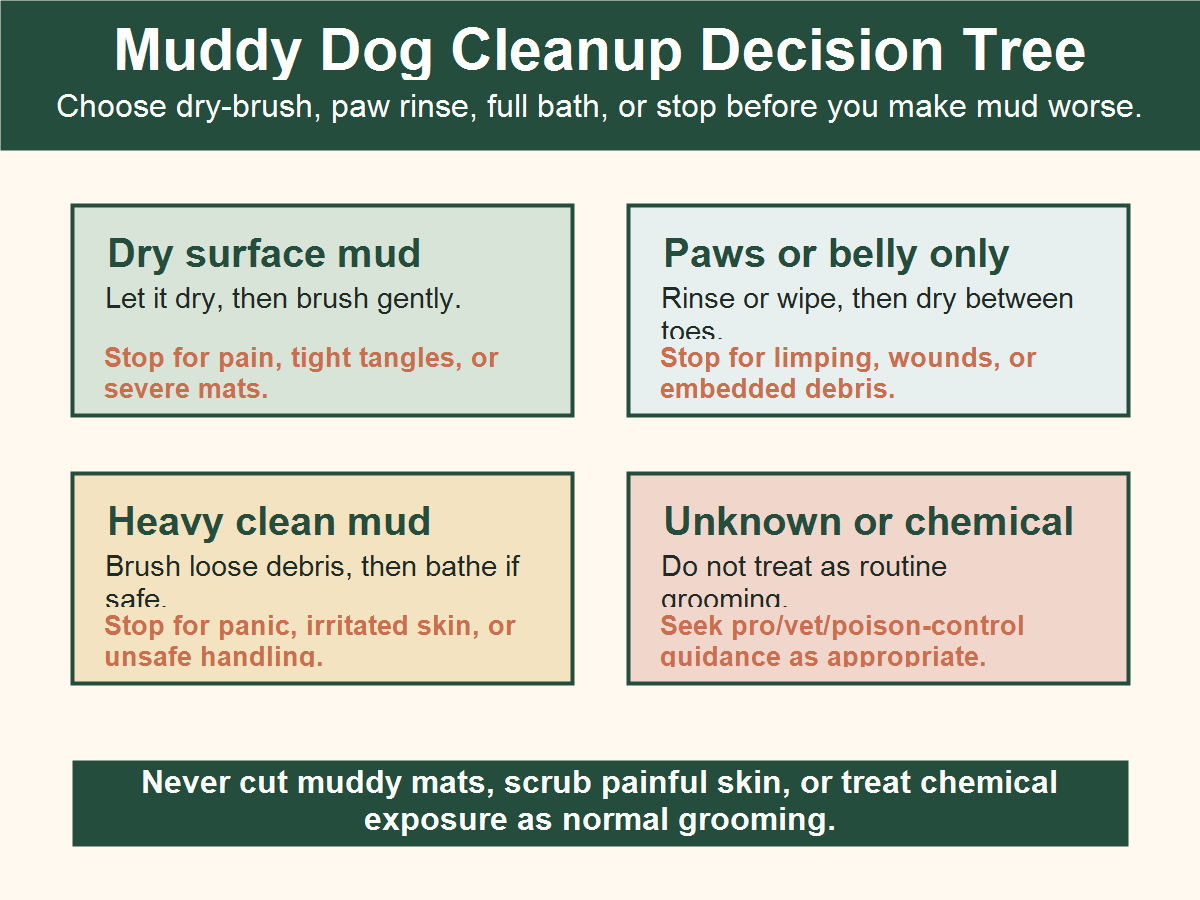
    Muddy dog cleanup decision tree showing dry-brush, paw rinse, full bath, and stop branches.
    What you seeRoutine branchStop branch
    Dry surface mud and loose coatLet it dry, then brush gently.Pain, tight tangles, or severe mats.
    Muddy paws, toes, legs, or belly onlyRinse or wipe, then dry between toes.Limping, embedded debris, wounds, swelling, or pain.
    Heavy clean-source mud on the coatBrush loose debris first, then bathe if safe.Skin irritation, panic, unsafe handling, or packed mats.
    Unknown source, chemical smell, oily residue, road runoff, pesticide, or fertilizer concernDo not treat it as routine grooming.Stop and seek professional guidance.

    When To Let Mud Dry And Brush

    If the mud is ordinary surface dirt and the coat moves comfortably, letting it dry before brushing can reduce smearing. Work lightly, use short passes, and stop if the coat pulls or the dog reacts.

    The ASPCA grooming tips support brushing before a bath to remove loose hair and mats. For mud, that means brushing only loose, comfortable debris before water touches the coat.

    Do not force a brush or comb through muddy tangles. If you are unsure whether you are seeing a simple tangle or a mat, use the dog matting vs tangles guide before continuing.

    When To Rinse Paws And Belly

    If mud is limited to paws, toes, lower legs, or belly, a rinse or damp cloth may be enough. The AKC notes that dog-safe wipes or a warm soapy washcloth can help with muddy paws, and more serious paw messes may need a warm washcloth.

    After rinsing, dry between toes and check pads, nails, and paw edges. For a normal after-walk routine, use how to clean dog paws after a walk.

    Stop for limping, embedded objects, wounds, swelling, or pain. Do not dig into the paw or keep handling a painful foot.

    When A Full Bath Makes Sense

    A full bath may make sense when mud is widespread, the source is known to be routine dirt, your dog can be handled calmly, and there are no pain, skin, mat, or chemical stop signs. Brush loose debris first when safe, then use lukewarm water and rinse until the coat feels clean.

    Keep the bath simple. The most common mistakes are leaving shampoo residue, scrubbing irritated skin, or rushing drying. Use how to rinse dog shampoo completely and how to dry a dog after a bath if the mud cleanup turns into a bath.

    Outdoor Context Matters

    Mud after a trail walk is different from mud after a dog park or swimming spot. After hiking, check burrs, ticks, paws, and coat friction zones. After a dog park, add a quick skin and smell check. After swimming, rinse and dry with moisture in mind.

    For related routines, see dog grooming after hiking, dog grooming after the dog park, and dog grooming after swimming.

    Unknown Mud Or Chemical Concern Is An Automatic Stop

    Unknown mud source, chemical smell, oily residue, road runoff, fertilizer, pesticide, wounds, limping, parasites, pain, severe mats, panic, or unsafe handling should not be handled as a normal grooming chore.

    This page does not give chemical exposure treatment, wound care, parasite treatment, pain management, dematting, cutting, or restraint instructions. When those signs show up, stop and contact the right professional resource for the situation.

    Stop Signs

    Stop signWhy it mattersWhat to do
    Chemical smell, oil, road runoff, fertilizer, or pesticide concernNormal grooming advice may be unsafe.Stop and seek professional guidance.
    Wounds, swelling, limping, embedded debris, or painThe dog may need medical care, not grooming pressure.Stop handling the sore area.
    Severe mats or packed coatWater and force-combing can make the problem worse.Use a qualified groomer or veterinarian.
    Panic, snapping, or unsafe handlingStress can make cleanup unsafe for the dog and person.Pause and use a calmer plan later or get help.

    Cleanup After The Cleanup

    Once your dog is safe and dry, rinse tools, set aside muddy towels, wipe the tub or floor, and wash your hands. Keep the routine short so the dog does not stay wet, chilled, or stressed longer than needed.

    FAQ

    Should I let mud dry before brushing my dog?

    Sometimes. Let routine surface mud dry only when the coat is comfortable and loose. Do not brush painful tangles, tight mats, or irritated skin.

    Should I rinse or bathe a muddy dog?

    Use a paw-and-belly rinse for limited mud. Use a full bath only for widespread routine dirt when your dog is calm and there are no pain, skin, mat, or chemical stop signs.

    Can mud cause mats?

    Mud can hide or worsen tangles, especially in long, curly, dense, or feathered coats. Stop for tight, painful, or severe mats.

    How do I clean muddy paws?

    Rinse or wipe routine mud, check between toes, and dry the paws. Stop for limping, wounds, embedded debris, swelling, or pain.

    When should muddy coat cleanup stop?

    Stop for unknown mud source, chemical smell, oily residue, road runoff, pesticide or fertilizer concern, wounds, limping, parasites, severe mats, pain, panic, or unsafe handling.

    Sources

  • Dog Grooming After Hiking

    Dog Grooming After Hiking

    After a hike, inspect paws, nails, legs, belly, armpits, ears, collar areas, and tail base before you brush or bathe. Remove only loose debris, rinse routine dirt when needed, dry damp areas, and stop for parasites, wounds, limping, embedded objects, pain, severe mats, chemical exposure, distress, or unsafe handling.

    This is routine grooming cleanup, not tick removal, parasite treatment, wound care, pain management, chemical exposure treatment, dematting, or forced handling advice.

    Post-Hike Grooming Order

    1. Let your dog settle in a calm, well-lit place.
    2. Check paws, pads, toe gaps, nails, and dewclaws.
    3. Check legs, belly, armpits, tail base, ears, and collar or harness lines.
    4. Remove loose debris only.
    5. Brush or comb only where the coat moves freely.
    6. Rinse paws, belly, or coat if routine dirt remains.
    7. Stop for parasites, wounds, limping, embedded objects, pain, severe mats, chemical smell, or unsafe handling.
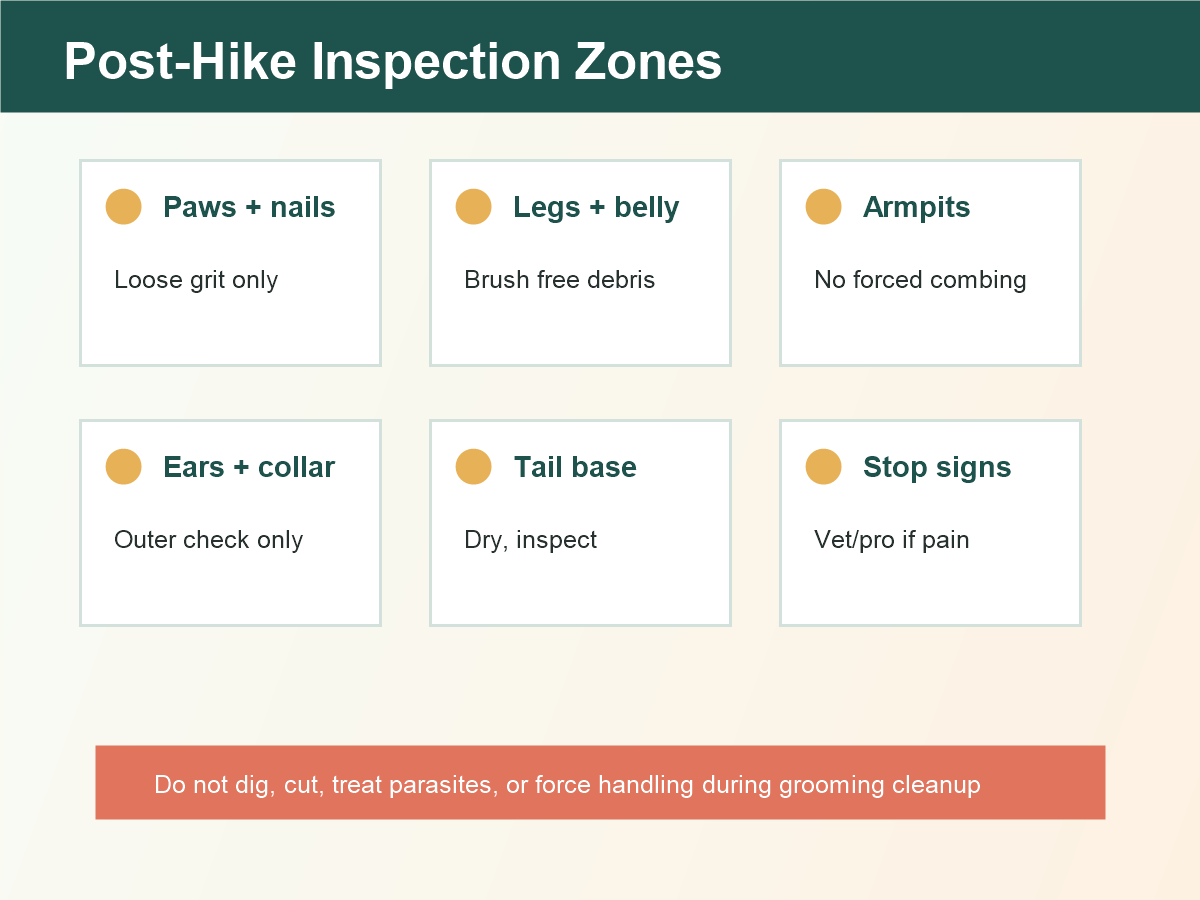
    Post-hike dog grooming inspection zones for paws legs belly armpits ears collar tail base and stop signs.
    Use this as a routine inspection map after trail time. Stop when the issue is medical, painful, embedded, parasite-related, or unsafe to handle.

    Paw and Nail Check

    Start with the paws because trail grit, seeds, and small debris often collect between toes and around nails. Look for loose dirt, sand, mud, tiny plant pieces, and damp spots. Routine dirt can be wiped or rinsed away.

    AKC paw-cleaning guidance supports cleaning paws after outdoor mess. For a more detailed everyday paw routine, use how to clean dog paws after a walk.

    Do not dig out embedded material, scrub painful pads, or keep handling a limping dog. Those are stop signs, not grooming steps.

    Burrs, Seeds, and Coat-Zone Debris

    Check high-friction areas next: armpits, groin, behind ears, tail base, belly, feathering, collar line, and harness contact points. If debris is loose, lift it out gently with fingers or a wide, easy pass of a comb.

    If a burr is tight, the coat catches, the skin pulls, or your dog flinches, stop. Do not cut, shave, force-comb, or turn a painful tangle into a home grooming project. If you need help deciding whether coat catching is a tangle or a mat, see dog matting vs tangles and how to comb check a dog coat.

    Tick-Check Boundary

    After tall grass, brush, wooded trails, or heavy vegetation, check the coat and skin carefully. Cornell’s canine Lyme disease guidance supports checking dogs after exposure to tick habitat.

    This grooming guide does not teach tick removal or parasite treatment. If a tick or parasite is found or suspected, use veterinarian guidance or another qualified source for the next step.

    Rinse, Towel, or Bath Decision

    Use the smallest cleanup that solves the routine mess. A towel wipe may be enough for dust. A paw rinse may be enough after a dry trail. A fuller rinse may make sense after mud or wet grass if the skin and coat are safe to handle.

    If the hike happened in hot weather, keep cleanup short and cool. ASPCA hot weather safety guidance emphasizes shade, water, and avoiding extreme heat. For grooming choices on hot days, see how to groom a dog in summer.

    If your dog also swam on the outing, use the separate post-water routine in dog grooming after swimming.

    Gear and Coat Cleanup

    Wash or set aside dirty towels, wipe down washable gear by label directions, and check collars or harnesses before the next outing. ASPCA dog grooming tips support using brushing time to inspect the coat and skin. Keep that inspection gentle and stop if you find a problem outside routine grooming.

    If your dog came home with dog-park style shared-area dirt too, the dog grooming after dog park guide has a broader public-space cleanup routine.

    Stop Signs After Hiking

    Stop signSafer next step
    Tick, parasite, flea dirt, or suspected parasiteStop grooming and use veterinarian or qualified parasite guidance.
    Wound, bleeding, swelling, hot spot, or skin painStop and contact a veterinarian.
    Limping, embedded object, painful paw, or repeated guardingStop handling the area and use veterinary guidance.
    Severe mat, tight burr, or coat pulling at the skinUse a qualified groomer or veterinarian.
    Chemical smell, unknown residue, distress, snapping, or unsafe handlingStop the session and get professional guidance before continuing.

    FAQ

    Should I groom my dog after hiking?

    Yes. A calm inspection and light cleanup can catch loose debris, paw dirt, damp coat zones, and handling stop signs before they worsen.

    How do I check my dog for burrs after a hike?

    Check paws, legs, belly, armpits, behind ears, tail base, collar line, and harness contact points. Remove only loose debris gently and stop for painful or tight debris.

    Should I rinse my dog’s paws after hiking?

    Rinse or wipe paws when there is routine mud, dust, sand, grit, or plant debris. Stop for pain, wounds, limping, swelling, or embedded material.

    Can I remove ticks in this grooming routine?

    No. This routine is for checking and routing. If a tick or parasite is found or suspected, use veterinarian guidance or another qualified source.

    When should post-hike cleanup become a vet visit?

    Use a veterinarian for limping, wounds, parasites, embedded objects, swelling, pain, chemical exposure, hot spots, illness signs, or unusual behavior after hiking.

    Sources

  • Dog Grooming After Swimming

    Dog Grooming After Swimming

    After swimming, rinse off pool, lake, river, or ocean residue when needed, then towel-dry first and use gentle airflow only if your dog tolerates it. Keep water and tools out of the ear canal, check paws and skin, and stop if you see odor, discharge, head shaking, wounds, hot spots, limping, pain, distress, or unsafe handling.

    This guide is for routine post-swim cleanup. It is not ear-infection treatment, wound care, parasite treatment, chemical exposure care, pain management, or advice for medically fragile dogs.

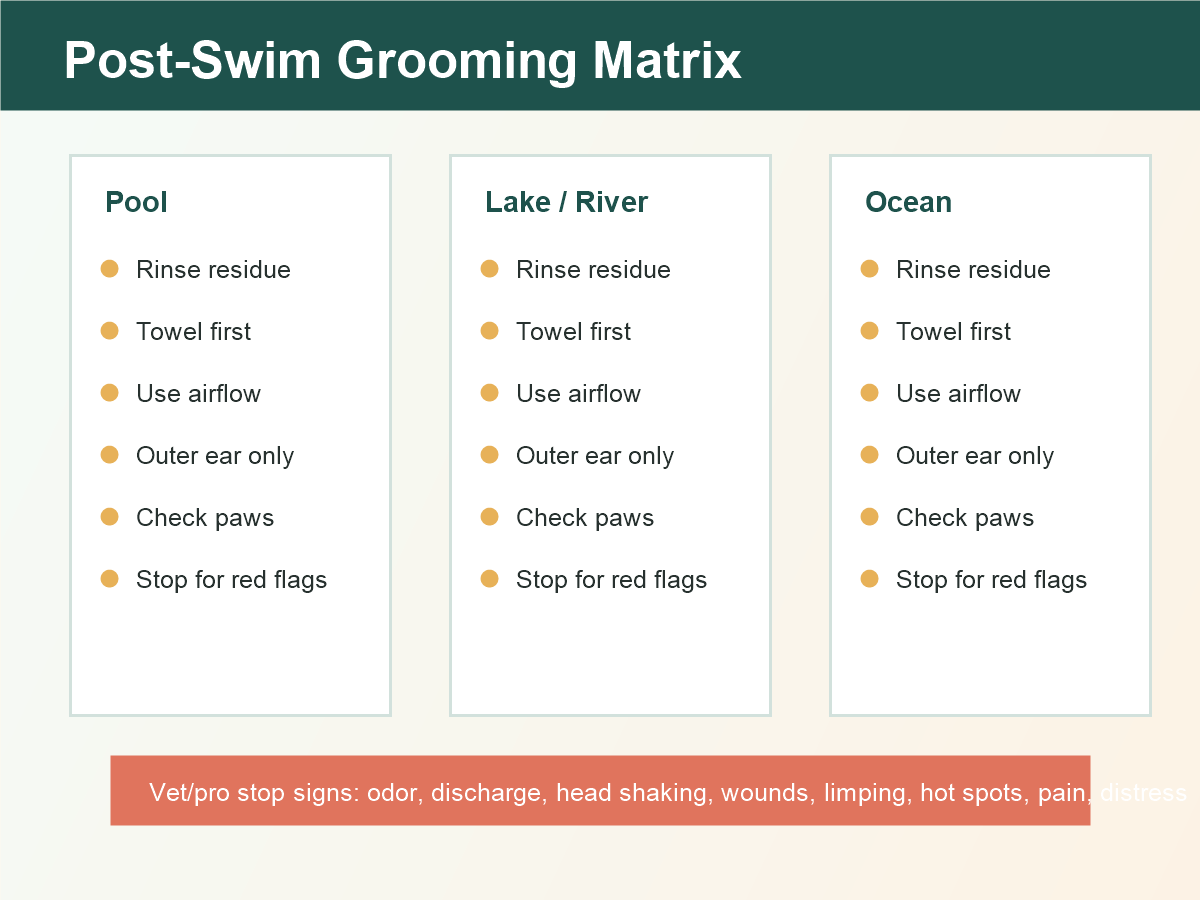
    Post-Swim Cleanup Matrix

    Water sourceRoutine grooming priorityStop if you see
    PoolRinse residue if the coat feels sticky or smells like pool water. Dry coat folds, collar areas, paws, and tail base.Skin redness, strong odor, red ears, discharge, head shaking, coughing, or distress.
    Lake or riverRinse debris, check belly and paws, dry damp coat zones, and clean towels or gear afterward.Wounds, parasites or suspected parasites, hot spots, limping, pain, vomiting, diarrhea, or unsafe handling.
    OceanRinse salt and sand from the coat, paws, belly, tail, and collar area. Dry between toes and under harness contact points.Eye irritation, ear symptoms, painful paws, swelling, limping, skin irritation, or unusual behavior.
    Post-swim dog grooming matrix for pool lake river and ocean cleanup with rinse dry ear paw and stop-sign steps.
    Use this as a routine cleanup card. It does not replace veterinary care for ear, skin, wound, parasite, pain, or illness signs.

    Rinse Sequence After Swimming

    Use clean water to rinse residue from the coat, belly, paws, tail, and collar area when the coat feels sticky, sandy, salty, muddy, or heavily scented from water. Keep the rinse calm and practical. Work in small zones instead of turning a tired dog into a long bath project.

    The ASPCA dog grooming tips recommend avoiding the ears, eyes, and nose during bathing. Apply the same boundary after swimming: rinse the coat and dirty areas, but do not pour or spray water into sensitive openings.

    If the swim left shampoo-like residue from a later bath, use the separate guide on how to rinse dog shampoo completely. For normal post-swim cleanup, a simple residue rinse is often enough.

    Dry the Coat Before Moisture Hides

    Towel first. Press and blot instead of rubbing hard, especially around the belly, armpits, tail base, feathering, and collar area. Dense coats can feel dry on the surface while moisture remains deeper in the coat.

    AKC drying guidance explains that airflow dries fur, while heat can burn skin. If you use a dryer, keep the setup cool, ventilated, and tolerated by the dog. Stop if the dog pants hard, panics, flinches, or cannot settle.

    For a fuller drying routine, use how to dry a dog after a bath. The post-swim version is shorter: rinse residue if needed, towel well, use safe airflow only when tolerated, then check damp zones.

    Outer Ear Boundary

    After swimming, dry the outer ear flap and visible outer area gently with a towel. Do not push cotton, cloth, tools, powders, or cleaners deep into the ear canal. Do not use ear products unless a veterinarian has directed them for that dog.

    Redness, odor, discharge, repeated head shaking, pain, swelling, scratching, or sensitivity around the ear is no longer a grooming task. Stop and ask a veterinarian. For bath-day prevention basics, see how to protect dog ears during bath.

    Paw, Belly, Collar, and Tail Checks

    After water play, check the areas that trap grit and moisture: toe gaps, paw pads, nails, belly, armpits, tail base, collar line, harness line, and long coat edges. Remove loose debris gently and dry damp areas before your dog settles into bedding or a crate.

    If paws are muddy or gritty after the walk home, the guide on how to clean dog paws after a walk gives a paw-only routine. After swimming, keep the full-body moisture check too.

    Summer Swim Timing

    Swimming often happens on hot days, so keep the cleanup short and cool. Move to shade or indoors, offer water, keep airflow gentle, and avoid turning the post-swim check into a long grooming session. For broader hot-weather grooming decisions, use how to groom a dog in summer.

    Stop Signs After Swimming

    Stop routine grooming when the problem is not routine residue, sand, or damp coat care. Do not try to solve ear symptoms, wounds, parasites, illness signs, or pain with more rinsing or brushing.

    Stop signSafer next step
    Odor, discharge, red ears, repeated head shaking, or ear painStop and contact a veterinarian.
    Wounds, hot spots, swelling, limping, embedded debris, or painful pawsStop grooming and use veterinary guidance.
    Parasites or suspected parasites after lake, river, trail, or beach timeDo not treat as grooming cleanup; contact a veterinarian.
    Panic, snapping, freezing, or unsafe handlingStop the session and get qualified help before continuing.
    Medically fragile dog or unusual behavior after swimmingAsk a veterinarian for individual guidance.

    FAQ

    Should I rinse my dog after swimming?

    Often yes, especially after salt water, pool residue, lake debris, river mud, or sand. Keep the rinse gentle and avoid ears, eyes, and nose.

    How do I dry my dog after swimming?

    Towel first, then use cool airflow only if your dog tolerates it. Avoid high heat and check damp areas such as paws, belly, armpits, tail base, collar area, and dense coat zones.

    How do I protect my dog’s ears after swimming?

    Dry the outer ear flap and visible outer area only. Do not insert tools or cotton deep into the canal, and do not use ear products unless a veterinarian directed them.

    What if my dog smells after swimming?

    A light water smell may clear after a rinse and dry. Strong odor, ear odor, skin odor, discharge, redness, head shaking, or pain should go to a veterinarian.

    When do post-swim symptoms need a vet?

    Use a veterinarian for ear symptoms, wounds, hot spots, parasites or suspected parasites, limping, swelling, pain, distress, illness signs, or unusual behavior after swimming.

    Sources