Category: Pet Care

General pet care topics that support safe grooming routines.

  • Why Does My Dog’s Breath Smell Like Fish? 7 Causes & Fixes

    Why Does My Dog’s Breath Smell Like Fish? 7 Causes & Fixes

    That sharp, oily fish smell hits you right after a face lick, and the first thing you type is why does my dogs breath smell like fish. Here's what most owners miss. In the majority of cases, the smell isn't coming from the mouth at all.

    It's anal sac fluid your dog has licked onto its muzzle fur.

    The odour profile is what gives it away. Periodontal disease is genuinely common, affecting roughly 80% of dogs by age three, but it smells rotten and sewage-like rather than cleanly fishy. True fish smell comes from trimethylamine, the same compound behind off seafood.

    As of 2026, telling those two smells apart is still the fastest route to the right answer.
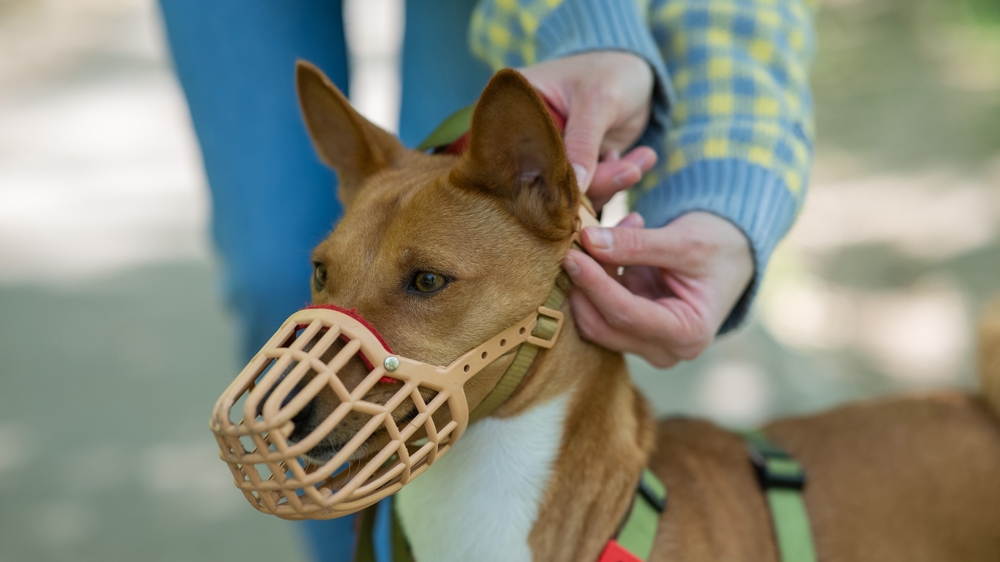
    why does my dogs breath smell like fish

    Image source: Bing (Web (fair-use with source credit))

    Quick Answer

    Fishy dog breath usually comes from anal sac fluid, not the mouth. Dogs lick their rear, then transfer the oily secretion onto the muzzle. That fluid contains trimethylamine, which smells strongly of fish.

    Dental disease smells rotten, kidney disease smells like ammonia, and diabetes smells sweet. Sniff the muzzle fur and the exhaled breath separately to tell which one you're dealing with.

    The Short Answer: It's Usually Not Their Breath at All

    Dogs have two small anal sacs sitting just inside the anus, at roughly the four and eight o'clock positions. They fill with a brown, oily secretion that a healthy dog empties naturally during a firm bowel movement. When they don't empty properly, the dog licks.

    And once that fluid is on the fur around the mouth, every breath smells like a fishmonger's bin.

    That's the single most common explanation, and it's the one generic advice tends to skip straight past. Most articles jump to "brush your dog's teeth", which is good advice in general but often the wrong answer here.

    Here's the full set of possibilities, ranked by how often they actually turn out to be the cause.

    CauseWhat it smells likeOther signs you'll noticeHow common
    Anal sac fluid on the muzzleSharp, oily, unmistakably fishyScooting, rear licking, smelly beddingVery common
    Periodontal diseaseRotting, sewage-like, sometimes metallicBrown tartar, red gums, one-sided chewingVery common
    Fish-based food or omega supplementsMild, consistent fishy noteNothing else. Dog is otherwise fineCommon
    Kidney disease (uraemia)Ammonia or stale urineIncreased thirst, weight loss, poor appetiteLess common, high stakes
    Diabetic ketoacidosisSweet, acetone, nail polish removerExcessive drinking, vomiting, lethargyUncommon, urgent
    Liver dysfunction or portosystemic shuntMusty, sulphurousDisorientation after meals, yellow gumsUncommon, urgent
    Lip fold dermatitis or yeastCheesy, yeasty, corn-chipDamp, red skin folds along the lower lipCommon in spaniels and bulldogs
    Oral foreign body, mass, or traumaFoul and one-sidedDrooling, blood-tinged saliva, pawing at mouthUncommon
    Pyometra or preputial dischargeFishy, from the rear endLicking at the genitals, discharge, illnessUncommon, emergency in females

    If your dog is bright, eating normally, drinking normally, and just smells fishy, you're almost certainly in the top three rows. If anything in the bottom half rings true, that changes the plan entirely.

    First, Work Out Where the Smell Is Actually Coming From

    This is the step that saves people a wasted vet trip, or catches a serious problem early. Don't guess. Localise the odour before you do anything else.

    The Muzzle Sniff Test (30 Seconds, Do This Before Anything Else)

    Sit with your dog somewhere calm and well lit. Then work through this in order.

    1. Sniff the fur on the muzzle and around the lips. Get close. Don't wait for a yawn.
    2. Now hold the mouth gently closed and sniff the nostrils as your dog exhales. That's the actual breath.
    3. Compare the two. If the fur reeks and the nostrils smell fairly neutral, the mouth isn't the problem.
    4. Wipe the muzzle with a damp cloth, plain warm water is fine. Wait ten minutes, then re-sniff.
    5. If the smell has gone, it was surface contamination. Anal sac fluid, rolled-in pond debris, or something they licked.
    6. If it's still there after cleaning, it's coming from inside. Mouth, gut, or systemic.

    That's the whole test. It takes half a minute and it splits the problem cleanly down the middle.

    Breath vs. Coat vs. Rear End: Three Very Different Problems

    Once you know where the smell lives, the next move is obvious.

    If the smell is on the coat and muzzle:

    Check the base of the tail, the hocks, and the fur either side of the anus. Anal sac fluid leaves an oily residue that stains lighter coats slightly brown. Check the bedding and the sofa too.

    If one cushion smells fishy in a specific patch, your dog has been dragging its rear across it.

    If the smell is genuinely on the exhaled breath:

    Lift the lip and look at the back teeth. Then decide whether the smell is fishy or actually rotten. Owners often use "fishy" as a catch-all for any bad smell, and that's normal, but the distinction matters clinically.

    Rotten and sewage-like points at the mouth. Cleanly fishy points elsewhere.

    If the smell is strongest at the rear:

    That's your answer. Look for swelling, redness, or discharge beside the anus. In an unspayed female, a fishy or foul discharge from the vulva alongside lethargy and increased thirst is a pyometra until proven otherwise.

    That's a same-day emergency, not a wait-and-see.

    Dogs also empty their anal sacs involuntarily when frightened. Fireworks, a vet waiting room, a car journey. If the fishy smell appeared suddenly after a stressful event and there are no other signs, that's usually it.

    A bath and it's gone.

    What Makes Something Smell Fishy in the First Place

    Understanding the chemistry actually helps you diagnose. Different problems produce different compounds, and each one has its own signature smell.

    Trimethylamine, Cadaverine and Why Anal Sacs Smell the Way They Do

    Trimethylamine, or TMA, is the compound responsible for the smell of decaying fish. It's produced when bacteria break down certain nitrogen-containing compounds. Anal sac secretion is loaded with bacterial breakdown products, and TMA is a big part of what you're smelling.

    It's the same chemistry behind the human condition trimethylaminuria, sometimes called fish odour syndrome.

    Oral bacteria produce a different set of compounds. Volatile sulfur compounds like hydrogen sulfide and methyl mercaptan give diseased gums that eggy, drain-like stink. Cadaverine and putrescine, both by-products of protein decay, add the rotting note.

    Together they smell foul, but rarely fishy in the clean seafood sense.

    Systemic disease adds a third category:

    • Uraemia raises blood urea, which crosses into saliva and breaks down to ammonia. Sharp, urine-like, catches the back of your throat.
    • Ketoacidosis produces acetone. Sweet and chemical, like nail polish remover or slightly off apples.
    • Liver failure produces mercaptans and dimethyl sulfide. Musty, sweetish, sometimes described as mousy.

    So "bad breath is bad breath" is wrong. The specific smell narrows the field faster than almost anything else you can do at home.

    Branch 1: Anal Sac Fluid on the Fur (The Most Common Cause by Far)

    Anal sacs are scent glands. They're lined with apocrine and sebaceous glands, and in the wild they'd serve for territorial marking. In domestic dogs on soft modern diets, they don't always empty the way they should.
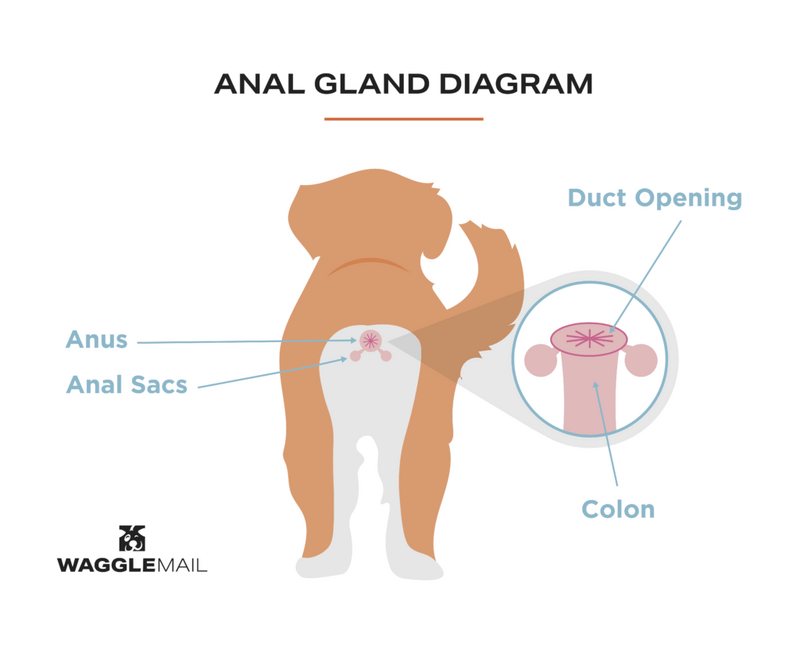
    anal sac anatomy in dogs

    Image source: Bing (Web (fair-use with source credit))

    The sacs sit either side of the anal opening, each draining through a narrow duct. Firm stool passing through applies pressure and squeezes them out. Soft stool doesn't.

    That's why chronically loose stools, low-fibre diets, and obesity all push dogs toward anal sac trouble.

    Telltale Signs: Scooting, Rear Licking, Smelly Bedding

    If two or more of these apply, the anal sacs are almost certainly your culprit.

    • Scooting or dragging the bottom along carpet or grass
    • Persistent licking or chewing at the rear, tail base, or hind legs
    • Chasing or biting at the tail
    • Sitting down abruptly, then shifting position
    • Straining or crying out when passing stool
    • Damp brown spots on bedding, with that oily fish smell
    • Swelling, heat, or redness at four or eight o'clock beside the anus
    • Fishy smell that reappears within days of a bath

    Scooting isn't exclusively an anal sac sign. Tapeworm segments, flea allergy dermatitis, and perianal skin infections all cause the same behaviour. If your dog scoots and the sacs check out clear, look at parasite control next.

    Impaction vs. Infection vs. Abscess vs. Something Worse

    These are four distinct problems, and they need four different responses.

    ConditionWhat's happeningSignsAction
    ImpactionFluid thickens, duct blocksScooting, fishy smell, mild discomfortVet expression, then fibre and weight management
    Anal sacculitisBacterial infection inside the sacPain, red swelling, blood or pus in fluidVet visit, flushing, antibiotics, pain relief
    AbscessSac ruptures through the skinHot painful lump, open draining wound, feverSame-day veterinary care
    Anal sac adenocarcinomaMalignant tumour of the glandFirm mass, often no pain early, usually dogs over 8Urgent vet exam, aspirate, staging

    That last row is the one worth taking seriously. Apocrine gland anal sac adenocarcinoma is uncommon but aggressive, and it can raise blood calcium, causing increased thirst and weakness. Any firm lump beside the anus in an older dog needs checking, even if the dog seems fine.

    If your dog is scooting and smells fishy but is otherwise well: book a routine appointment for expression and a rectal exam. Don't attempt it at home unless a vet or nurse has physically shown you how. Internal expression done badly bruises the duct and makes recurrence more likely.

    If there's a hot swelling, an open wound, or your dog yelps when touched back there: that's an abscess or close to one. Go today.

    If the dog is over eight and there's a firm lump that isn't painful: that needs a proper exam, a fine needle aspirate, and possibly abdominal imaging to check the sublumbar lymph nodes.

    Recurrence is the frustrating part. Roughly 4 to 12% of dogs seen in primary care have anal sac problems, and a good chunk of those come back repeatedly. In our review of the veterinary literature, chronic recurrence very often traces back to an underlying allergic skin disease driving inflammation around the duct.

    Treating the sacs over and over without addressing the allergy is a treadmill.

    Branch 2: Periodontal Disease and Tooth Root Infection

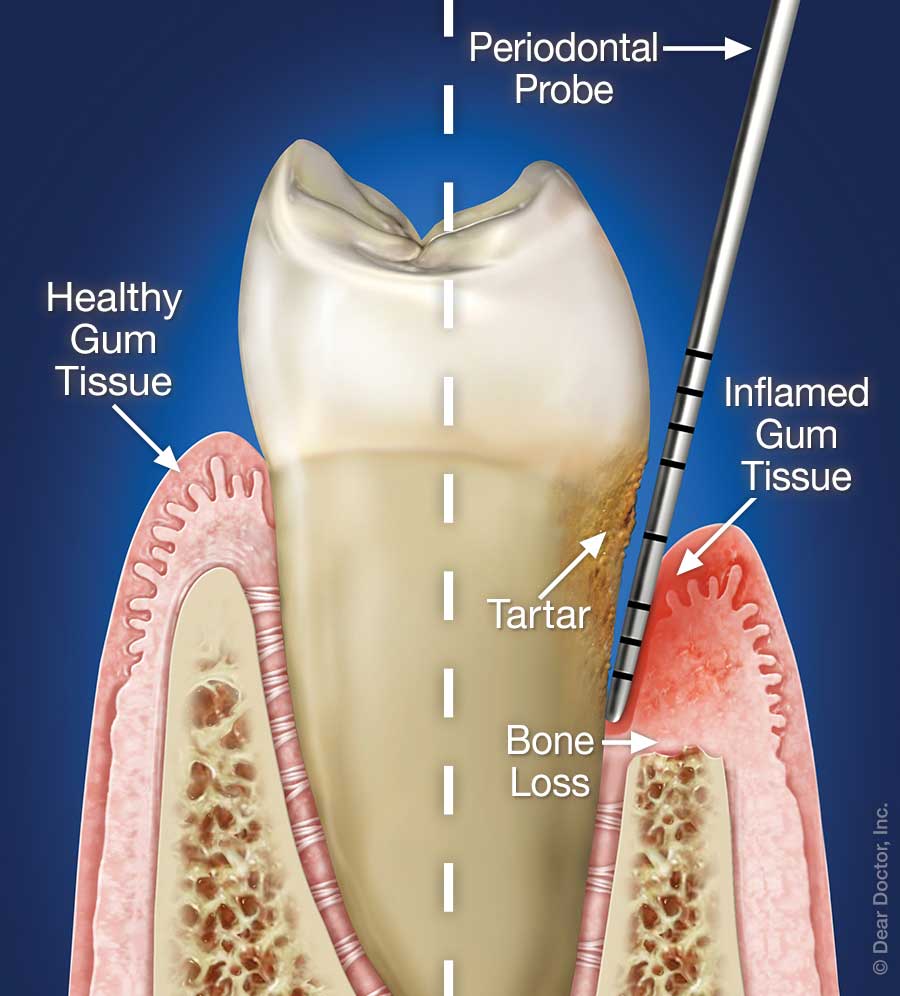
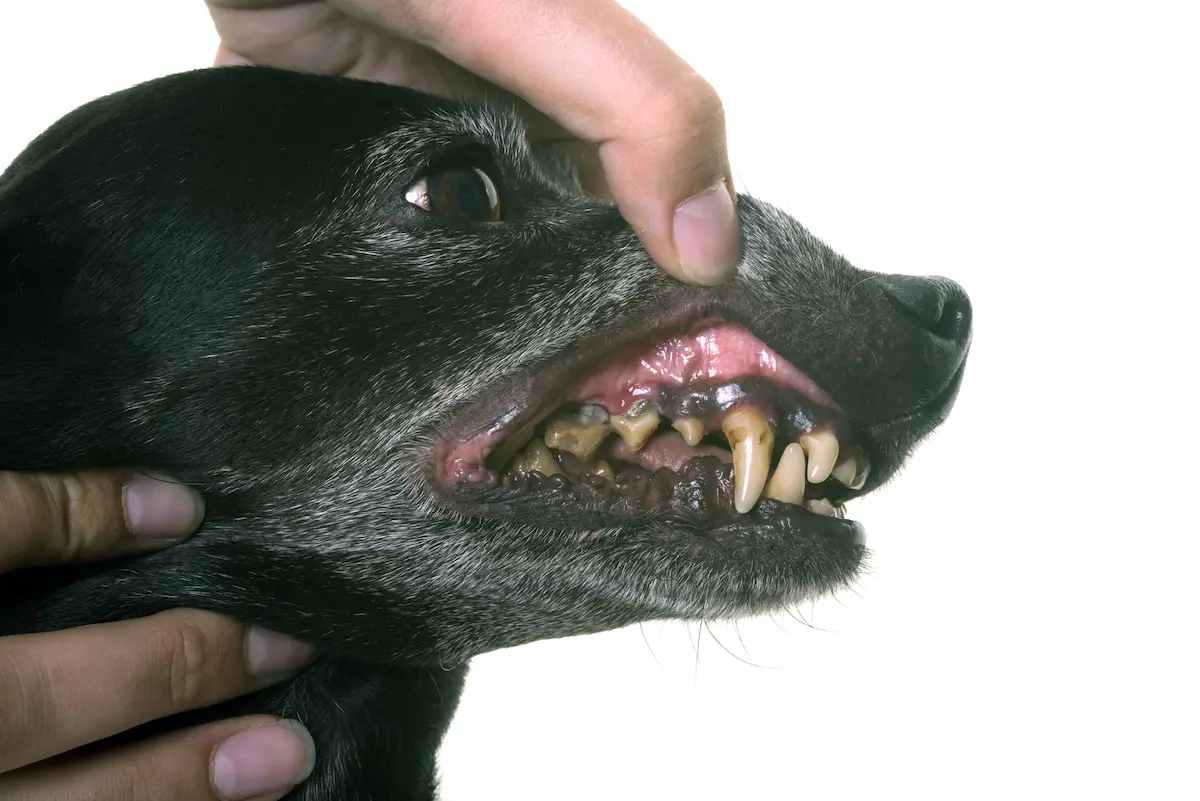
    If the smell survives a muzzle wipe and clearly rides on the exhaled breath, the mouth moves to the top of the list. Dental disease is the most under-recognised health problem in dogs. The American Veterinary Dental College stages it from grade one gingivitis through to grade four advanced periodontitis with bone loss.
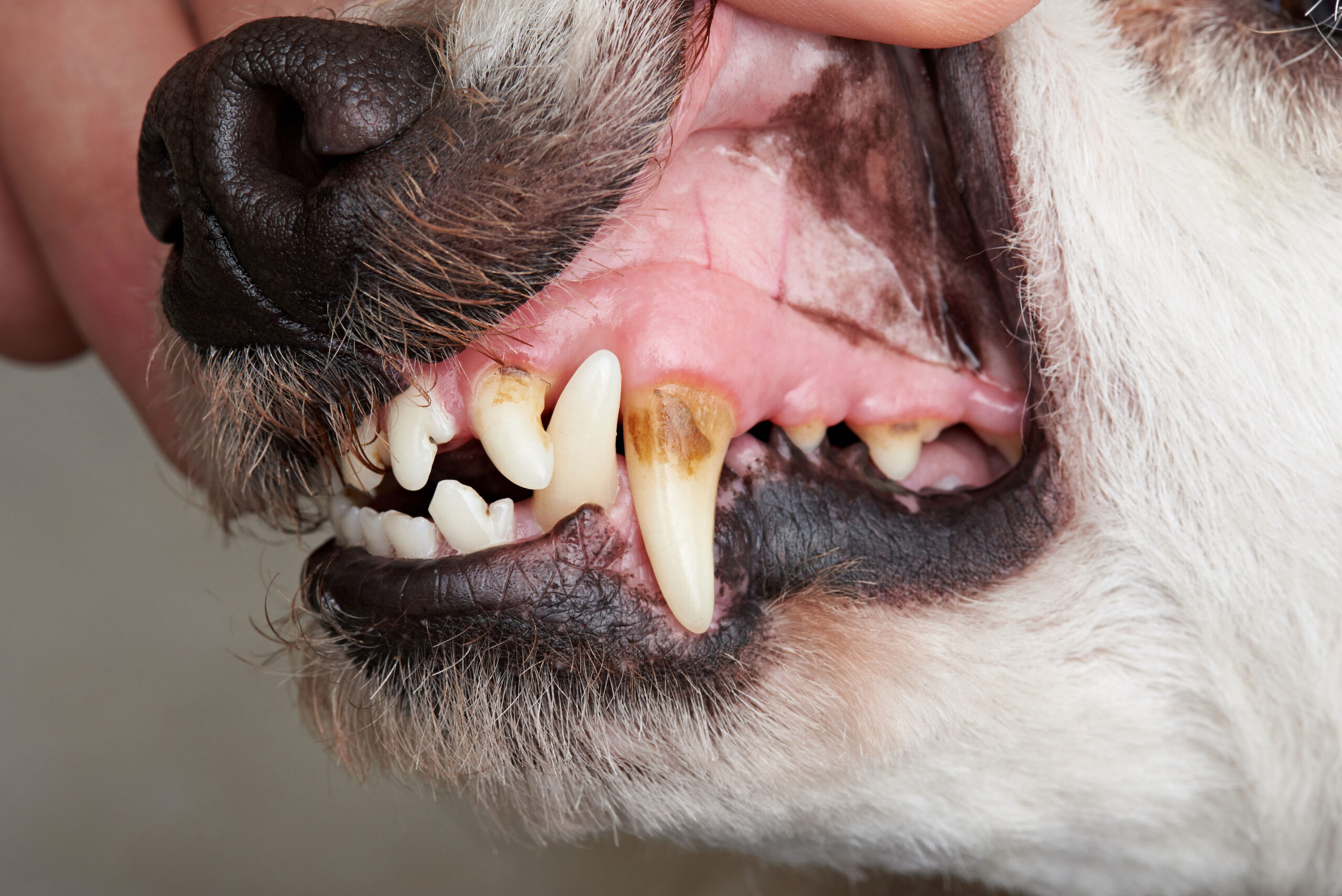
    periodontal disease in dogs

    Image source: Bing (Web (fair-use with source credit))

    Here's the sequence. Plaque, a soft bacterial biofilm, forms on the tooth within hours. Left alone, it mineralises into hard calculus in as little as 24 to 72 hours.

    Bacteria push down into the gingival sulcus, the gum detaches, and a pocket forms. The bacteria in that pocket, particularly Porphyromonas species, produce the volatile sulfur compounds you're smelling.

    How to Check Your Dog's Mouth at Home

    You don't need equipment. You need good light and a calm dog.

    1. Lift the upper lip on one side. Don't open the jaws. Most dogs tolerate a lip lift far better.
    2. Look at the upper fourth premolar, the big carnassial tooth near the back. Tartar builds there first and heaviest.
    3. Check the gum line colour. Healthy gums are pale pink and meet the tooth in a clean, thin margin. Red, puffy, or bleeding margins mean gingivitis.
    4. Look for brown or grey calculus, especially where the tooth meets the gum.
    5. Check for recession. If you can see a dark gap or the fork between two roots, there's bone loss.
    6. Press gently either side of the muzzle, under each eye. A firm swelling below the eye often means an abscessed upper carnassial root.
    7. Lift the tongue. Look for string, grass awns, or a wound. A sublingual foreign body is easy to miss and smells terrible.
    8. Repeat on the other side and compare. Asymmetry is a red flag.

    Behavioural clues matter just as much. Watch for chewing on one side only, dropping food, turning away from hard kibble, pawing at the face, or blood-tinged drool on toys.

    Why Clean-Looking Teeth Can Still Be the Problem

    Because most of the disease is invisible. Around 60% of dental pathology in dogs sits below the gum line, where you can't see it without full-mouth dental radiographs under anaesthesia. A dog can have a shiny white crown sitting on top of an abscessed root.

    That's why "his teeth look fine" isn't a reliable all-clear. The American Animal Hospital Association dental guidelines treat radiographs as standard rather than optional during a professional cleaning.

    Certain dogs are wired for early trouble. Small and toy breeds have full-sized teeth crammed into small jaws, so crowding traps plaque and bone loss starts young. Yorkshire Terriers, Maltese, Pomeranians, Chihuahuas, and Dachshunds top the list.

    Greyhounds are an outlier, with a strong breed predisposition despite plenty of jaw space.

    If you find red gums and visible tartar but no swelling: book a dental assessment. Expect a recommendation for a COHAT, a Comprehensive Oral Health Assessment and Treatment under general anaesthesia, with radiographs.

    If you find facial swelling, a loose tooth, or blood in the saliva: that's a painful infection. Get seen within a day or two, not at the next routine check.

    If the mouth looks genuinely clean and the breath still smells cleanly fishy: go back to Branch 1. You're probably chasing the wrong end of the dog.

    Branch 3: Fish in the Food Bowl

    Sometimes the answer is sitting right there on the ingredient panel. A dog eating salmon kibble twice a day, topped with a squirt of fish oil, is going to smell faintly of fish. That's not a disease.

    That's dinner.

    Check this branch early because it costs nothing and rules out a whole category. Diet-related odour is mild, constant, and comes with zero other symptoms. No scooting.

    No red gums. No change in thirst or appetite. Just a low-level fishy note that's been there since you switched foods.

    Salmon Oil, Fish-Based Kibble and Rancid Omega Supplements

    The usual suspects, in rough order of how strongly they smell:

    • Liquid fish oil and salmon oil pumps. The strongest offender by a mile, especially once opened.
    • Krill oil capsules. Similar, slightly milder.
    • Fish-based kibble. Salmon, whitefish, herring, sardine, menhaden meal.
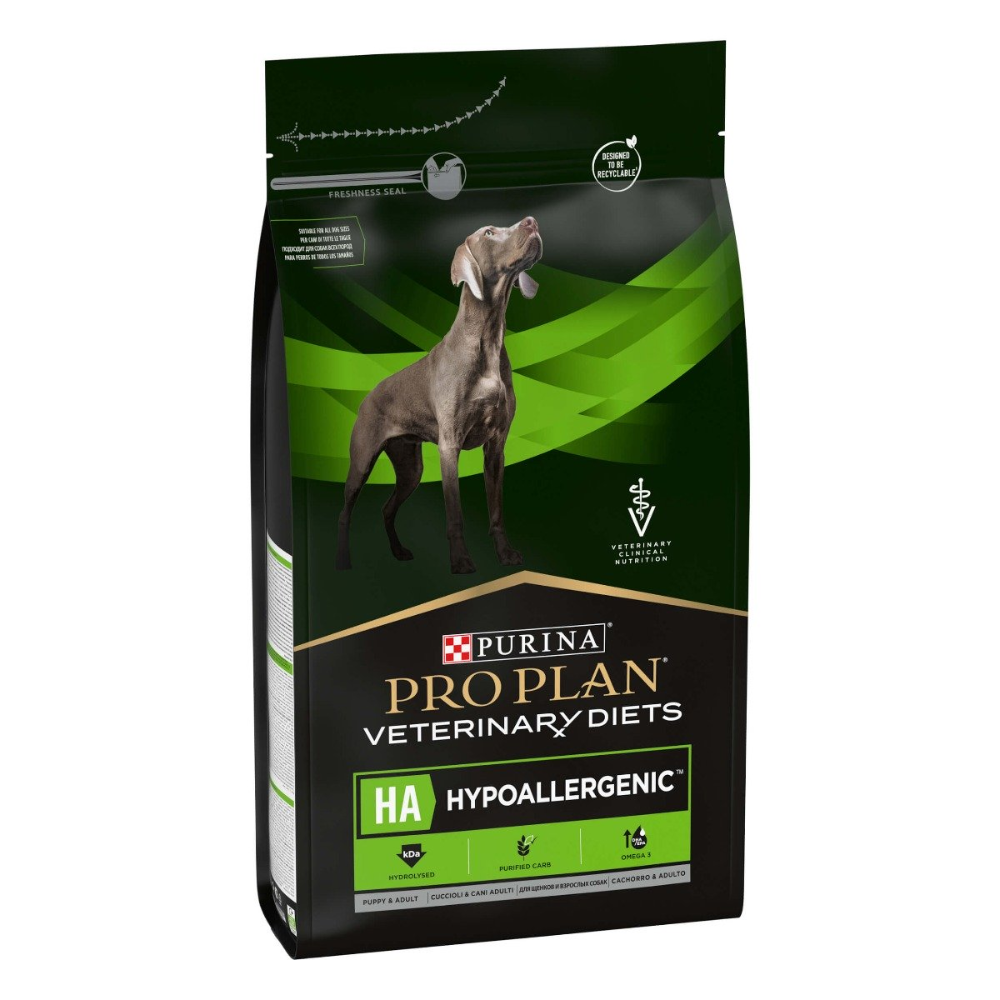
    • Hydrolysed fish protein prescription diets, used for food allergy trials.
    • Fish-flavoured dental chews and training treats.
    • Cat food raids. Cat diets are far more fish-heavy than dog diets.
    • Joint supplements containing green-lipped mussel.

    Rancidity is the part most owners never think about. Fish oils oxidise fast once exposed to air, heat, and light. A bottle sitting on a sunny kitchen shelf for four months will smell dramatically worse than a fresh one, and the oxidised oil is worth less nutritionally too.

    Practical fix: keep fish oil in the fridge, buy smaller bottles, and use them within 60 to 90 days of opening. Check the manufacturer's storage instructions on the label. If it smells sharp or acrid rather than cleanly fishy, bin it.

    There's a straightforward workaround if the smell bothers you but your dog needs the omega-3s. Algal oil is derived from marine algae rather than fish. It delivers DHA without the fishy odour, from the same source the fish get theirs from originally.

    EPA levels are typically lower, so check the label against what your vet recommended.

    The Two-Week Diet Swap Test

    If you suspect food, prove it. Two weeks gives you a clear yes or no.

    1. Write down everything your dog eats. Main food, treats, chews, supplements, table scraps, the lot.
    2. Remove every fish-based item. Swap to a poultry, lamb, or beef-based food of similar quality.
    3. Transition over 5 to 7 days. Mix increasing amounts of the new food to avoid loose stools, which would confuse the picture by triggering anal sac problems.
    4. Stop fish oil entirely for the test period. Restart later if needed.
    5. Bathe the dog once at the start so you're not smelling old residue.
    6. Re-assess the muzzle and breath at day 14.

    If the smell has faded or gone: it was dietary. You now choose between living with it, switching to algal oil, or keeping the non-fish diet.

    If nothing changed: food wasn't the cause. Go back and work through the anal sacs and the mouth properly.

    Don't run a diet swap on a dog that's on a prescription food for a diagnosed condition without speaking to your vet first. Renal, hepatic, and allergy diets aren't interchangeable with supermarket kibble.

    Branch 4: When the Smell Points to Something Systemic

    This is the branch nobody wants, and the reason we keep pushing you to identify the exact smell. Systemic disease breath is genuinely distinctive. Once you know what each one smells like, you can tell within seconds whether you're looking at a routine problem or a medical one.

    The key point: none of these smell truly fishy. If your dog's breath smells fishy and nothing else is off, systemic disease is unlikely. If it smells ammonia-like, sweet, or musty, and the dog is off in any way, this is your branch.

    Kidney Disease: Ammonia, Not Fish

    Uraemic breath smells like ammonia or stale urine, not fish. That's the single most useful distinction in this whole article. When kidney function drops, urea builds up in the blood.

    It crosses into saliva, oral bacteria break it down, and the result is a sharp, acrid smell that catches the back of your throat.

    Signs that go with it:

    • Drinking noticeably more, refilling the bowl more often
    • Urinating more, larger puddles, possible night accidents
    • Weight loss despite normal or reduced appetite
    • Nausea, vomiting, reluctance to eat
    • Pale gums, poor coat condition
    • Mouth ulcers, particularly on the tongue and inner cheek (uraemic stomatitis)
    • Lethargy that's crept up over weeks or months

    Chronic kidney disease is staged 1 to 4 by the International Renal Interest Society using blood creatinine and SDMA alongside urine protein and blood pressure. SDMA matters because it rises earlier than creatinine, sometimes when only 25 to 40% of kidney function has been lost. Catching a dog at Stage 1 or 2 means diet and management still change the trajectory.

    Catching them at Stage 4 rarely does.

    If your dog has ammonia breath plus increased thirst: book bloodwork and a urinalysis this week. This is the most common systemic cause people mistake for dental disease.

    Diabetes, Liver Problems and Pyometra: What Each One Smells Like

    Diabetic ketoacidosis smells sweet. Acetone, nail polish remover, or slightly fermenting apples. The body burns fat for fuel because it can't use glucose, producing ketones.

    The dog is usually drinking heavily, urinating heavily, vomiting, and getting weak fast. DKA is life-threatening and dogs can deteriorate within hours.

    Liver dysfunction smells musty and sulphurous. Some describe it as mousy or sweetish. In young dogs, a congenital portosystemic shunt is the classic cause.

    The tell is neurological signs that worsen 1 to 2 hours after eating: staring at walls, head pressing, circling, disorientation, sometimes seizures. Yellow gums, yellow whites of the eyes, or orange urine point at liver or bile duct problems too.

    Pyometra is the one that genuinely does smell fishy, and it's an emergency. It's a pus-filled infection of the uterus in unspayed females, usually 4 to 8 weeks after a season. An open pyometra discharges foul, fishy fluid from the vulva, which the dog then licks off, putting the smell on the muzzle.

    A closed pyometra has no discharge at all, which makes it more dangerous.

    Watch for increased thirst, vomiting, loss of appetite, a swollen or painful abdomen, and lethargy in an unspayed bitch within two months of a heat cycle. That combination needs same-day emergency care.

    In male dogs, a fishy or foul discharge from the prepuce is usually balanoposthitis, an inflammation of the penis and sheath. It's rarely an emergency, but it's uncomfortable and it produces exactly the licking behaviour that transfers smell to the face.

    Systemic causeBreath smellSpeed of action needed
    Chronic kidney diseaseAmmonia, urine-likeBloodwork within days
    Diabetic ketoacidosisSweet, acetoneEmergency, same day
    Liver disease or shuntMusty, sulphurousUrgent, within 24 to 48 hours
    Pyometra (open or closed)Fishy discharge, sick dogEmergency, same day
    Advanced periodontal infectionRotten, sewageUrgent, within a week

    Branch 5: Skin Folds, Ears and Yeast Overgrowth

    Here's a scenario that catches people out constantly. The mouth checks out fine, the anal sacs are empty and healthy, and the diet has no fish in it. But the dog still smells.

    The odour is coming from the skin right next to the mouth.

    Lip fold dermatitis is inflammation and infection in the deep skin creases along the lower lip. Saliva collects in the fold, the skin stays permanently damp, and bacteria and yeast move in. Because the fold sits inches from the mouth, the smell is indistinguishable from breath odour unless you go looking.

    Breeds built for this problem:

    • Cocker Spaniels and English Springer Spaniels
    • St Bernards and Newfoundlands
    • Bulldogs and French Bulldogs
    • Basset Hounds and Bloodhounds
    • Any dog with heavy, pendulous jowls

    Malassezia is the yeast most often involved. It smells musty, cheesy, or corn-chip-like rather than fishy. If the odour is more "old trainers" than "fishmonger", yeast is a strong candidate.

    How to check: roll the lower lip outward with your thumb and look inside the fold. Look for redness, wet-looking skin, a brown or grey greasy film, hair loss, or a rash of small bumps. Wipe the fold with a dry tissue and smell the tissue.

    That isolates the odour completely.

    Ears count too. A dog with a yeasty or bacterial ear infection scratches, licks its paws, and rubs its face against furniture. The smell transfers around.

    Lift the ear flap and check for redness, brown waxy discharge, or a sour smell. Never use leftover drops from a previous episode, since the wrong medication in a ruptured eardrum causes lasting damage.

    There's a bigger picture behind repeat cases. Chronic lip fold dermatitis, recurrent ear infections, and recurrent anal sac problems in the same dog usually share one root cause: underlying allergic skin disease, either environmental atopy or a food allergy. Treating each flare-up in isolation means you'll be back in three months.

    If the fold is red and smelly: clean it daily with a vet-recommended antiseptic wipe and dry it thoroughly. Persistent cases need medicated treatment. Severe recurrent cases sometimes need surgical cheiloplasty to remove the fold.

    Odour Decoder: Matching the Smell to the Cause

    Pull it all together and the diagnostic logic gets simple. Smell, plus location, plus accompanying signs, gets you to the right branch nearly every time.

    What you smellWhere it's strongestMost likely causeOther signsWhat to do
    Clean, oily, sharp fishMuzzle fur, rear, beddingAnal sac fluidScooting, rear lickingRoutine vet visit for expression
    Rotten, sewage, drainsExhaled breathPeriodontal diseaseTartar, red gums, one-sided chewingBook a dental assessment
    Mild, steady fishBreath and coat, all overFish-based diet or oilNoneTwo-week diet swap test
    Ammonia, stale urineExhaled breathKidney diseaseIncreased thirst, weight lossBloodwork and urinalysis this week
    Sweet, acetone, pear dropsExhaled breathDiabetic ketoacidosisHeavy drinking, vomiting, weaknessEmergency vet, today
    Musty, sulphurous, mousyExhaled breathLiver disease or shuntConfusion after meals, yellow gumsUrgent vet, 24 to 48 hours
    Cheesy, yeasty, corn chipsLip folds, ears, pawsMalassezia, lip fold dermatitisScratching, head shaking, red skinVet visit, skin cytology
    Foul fishy dischargeRear end of unspayed femalePyometraThirst, vomiting, lethargy, recent seasonEmergency vet, today
    Foul, one-sided, with droolOne side of the mouthForeign body, fractured tooth, oral massBlood in saliva, pawing at faceVet within 1 to 2 days
    Metallic, copperyExhaled breathOral bleeding, ulcerationBlood-tinged saliva, red gumsVet within a few days

    Three practical notes on using this table.

    Combinations are common. An overweight eight-year-old Cocker Spaniel can easily have anal sac impaction, grade three periodontal disease, and lip fold dermatitis all at once. Finding one cause doesn't rule out the others.

    Trust the accompanying signs over the smell description. Owners genuinely struggle to name smells, and that's normal. Increased thirst, weight loss, and vomiting are far more reliable data points than "I think it smells a bit fishy".

    Sudden onset versus gradual matters. Dental disease creeps in over months. Anal sac issues and stress-related gland emptying appear overnight. Systemic disease usually builds over weeks with other changes alongside it.

    Red Flags That Mean Call the Vet Today, Not Next Week

    Most fishy breath cases are annoying rather than dangerous. A handful are not. These signs override everything else in this article.

    Emergency, go now:

    • Sweet or acetone breath with vomiting, weakness, or collapse
    • Fishy vaginal discharge in an unspayed female, with lethargy or thirst
    • A hot, painful, swollen or ruptured lump beside the anus
    • Difficulty breathing or swallowing
    • Yellow gums, yellow eyes, or dark orange urine
    • Seizures, head pressing, or disorientation
    • A distended, painful abdomen
    • Collapse or inability to stand

    Urgent, within 24 to 48 hours:

    • Marked increase in thirst and urination alongside any breath change
    • Facial swelling, particularly below the eye
    • Blood-tinged saliva or bleeding from the mouth
    • Refusing food for more than 24 hours
    • Dropping food, crying while eating, or pawing at the mouth
    • Straining to defaecate with visible distress
    • A firm, non-painful lump near the anus in a dog over eight

    Book this week:

    • Persistent fishy smell with scooting and rear licking
    • Visible tartar with reddened, bleeding gums
    • Loose or discoloured teeth
    • Gradual weight loss with no obvious explanation
    • Recurrent anal sac problems, three or more episodes in a year
    • Smelly, red lip folds or ears

    A word on pain. Dogs are extraordinarily good at hiding oral pain, because a wild canid that stops eating dies. They'll keep eating on a fractured tooth with an exposed pulp.

    So "he's still eating fine" tells you almost nothing about whether his mouth hurts.

    Don't give human painkillers while you wait. Ibuprofen, paracetamol (acetaminophen), and aspirin all cause serious harm in dogs, including gastrointestinal ulceration, kidney damage, and liver failure. The FDA Center for Veterinary Medicine is clear that only veterinary-prescribed analgesics should be used.

    If your dog is in pain, that's a reason to go sooner, not a reason to self-medicate.

    What Happens at the Vet Visit (And What It'll Cost)

    Knowing what's coming makes the appointment far more productive. Bring specifics: when the smell started, whether it's on the fur or the breath, any scooting, changes in thirst, and a photo of the mouth if your dog let you take one.

    The exam follows a predictable order. A general physical, then a look in the mouth while the dog is awake, then a rectal exam if the history points that way. Awake oral exams have limits.

    A vet can grade visible tartar and gum inflammation, but they can't probe pockets or assess roots on a conscious dog.

    Anal Sac Expression, Cytology and Rectal Exam

    Manual expression is the first step and usually settles the question on the spot. A vet or nurse uses the internal technique, one gloved finger in the rectum, thumb outside, squeezing each sac between the two. That's far more thorough than the external squeeze used in most grooming salons.

    What they're assessing:

    • Volume and consistency. Thick, pasty, or gritty means impaction.
    • Colour. Normal is brown to tan. Green, yellow, or creamy suggests infection.
    • Blood. Fresh blood points to inflammation or a ruptured duct.
    • Pain response. A sharp reaction means sacculitis rather than simple impaction.
    • Any mass. A firm lump felt through the rectal wall changes everything.

    If the fluid looks infected, they'll take a swab for cytology to look for bacteria and inflammatory cells. Infected sacs often get flushed and infused with an antibiotic and steroid preparation under sedation. Oral antibiotics alone frequently fail because the drug doesn't reach the sac lumen well.

    If a mass is felt, expect a fine needle aspirate plus blood calcium testing. Around 25 to 50% of dogs with anal sac adenocarcinoma have hypercalcaemia of malignancy, which itself causes increased thirst and weakness. Abdominal ultrasound to check the sublumbar lymph nodes is standard staging.

    COHAT, Dental X-Rays and Bloodwork

    A COHAT is not a scale and polish. It's a full anaesthetised assessment with charting, probing, radiographs, and treatment of whatever's found. Skipping the radiographs means missing most of the disease, which is why the World Small Animal Veterinary Association global dental guidelines treat imaging as core to the procedure.

    Here's the typical sequence:

    1. Pre-anaesthetic bloodwork, usually a CBC and biochemistry panel, plus urinalysis in older dogs
    2. Intravenous catheter, fluids, and induction
    3. Intubation to protect the airway from water and debris
    4. Full-mouth radiographs, 10 to 14 views in most dogs
    5. Periodontal probing and charting of all 42 teeth
    6. Ultrasonic scaling above and below the gum line
    7. Extractions where roots are compromised, with local nerve blocks
    8. Polishing, then a final rinse
    9. Recovery with monitoring, discharge the same day in most cases

    Bloodwork does double duty here. It clears the dog for anaesthesia and screens for the systemic causes covered earlier. Creatinine, urea, SDMA, and urine specific gravity flag kidney disease.

    Glucose and fructosamine catch diabetes. ALT, ALKP, and bile acids point at the liver.

    Costs vary a lot by region and clinic type. These are indicative ranges as of 2026, not quotes.

    ServiceUS (USD)UK (GBP)
    Consultation$50 to $100£35 to £70
    Anal sac expression$15 to $60£15 to £40
    Anal sac flush and infusion under sedation$200 to $500£150 to £350
    Blood panel plus urinalysis$150 to $300£100 to £220
    Scale and polish, no extractions$300 to $800£200 to £450
    Dental with radiographs and extractions$800 to $2,500+£450 to £1,500+
    Anal sacculectomy (both sides)$1,000 to $2,500£600 to £1,500
    Fine needle aspirate plus cytology$150 to $350£100 to £250

    Two things worth knowing about insurance. Most policies exclude routine dental work unless you've kept up with annual check-ups, and many require documented preventive care. Anal sac problems are usually covered as illness, but chronic recurrent cases can get flagged as pre-existing after the first claim.

    Timelines are reassuring. Anal sac odour typically clears within 24 to 48 hours of expression plus a bath. Dental odour improves noticeably within 3 to 7 days of a COHAT.

    Extraction sites get rechecked at 10 to 14 days.

    Mistakes Owners Make With Fishy Dog Breath

    Some of these are harmless time-wasters. A few cause real damage.

    Why Human Toothpaste and Water Additives Backfire

    Human toothpaste is genuinely dangerous for dogs, and it's the mistake we see most often. Many brands contain xylitol, a sweetener that triggers a massive insulin release in dogs. That causes life-threatening hypoglycaemia within 30 to 60 minutes, and higher doses cause acute liver failure.

    Dogs can't spit, so they swallow the lot.

    Fluoride is the second problem. Swallowed regularly, it causes gastrointestinal upset and, over time, systemic toxicity. Use a dog-specific enzymatic paste, which is designed to be swallowed and usually flavoured with poultry or malt.

    Check dental water additives too. A handful of products contain xylitol, and it isn't always obvious on the label. It may appear as birch sugar or E967.

    The ASPCA Animal Poison Control Center treats xylitol ingestion as an emergency, and so should you.

    Water additives have a bigger issue anyway. They mask odour without touching the cause. If your dog has an abscessed carnassial root, a minty additive changes nothing except your ability to detect the problem.

    The same goes for mints, parsley treats, breath sprays, and chlorophyll tablets.

    Expressing Glands at Home and Over-Expression at the Groomer

    Home expression goes wrong more often than it goes right. The external technique most owners find online squeezes the outside of the sacs, which empties the liquid portion but leaves thickened material behind. That buys a day or two of relief and a fast return of the problem.

    Worse, aggressive squeezing bruises the duct and surrounding tissue. Inflammation narrows the duct, so the next impaction comes faster. That cycle is a recognised cause of chronic anal sac disease in dogs that never had a structural problem to begin with.

    Over-expression is the flip side. Routine gland expression at every groom, on a dog with no symptoms, causes unnecessary irritation. Healthy anal sacs empty on their own.

    If your dog isn't scooting, licking, or smelling, leave them alone.

    The rule of thumb: express only when there are symptoms, and get a vet or nurse to show you the internal technique in person if you want to do it yourself. Never learn this from a video alone.

    Other common errors worth avoiding:

    • Giving antlers, hooves, cooked bones, or hard nylon chews. These fracture the carnassial teeth, and a slab fracture with an exposed pulp is both painful and smelly.
    • Letting ice cubes become a habit. Same fracture risk on brittle teeth.
    • Assuming a fishy smell after a firework display means disease. Frightened dogs empty their sacs involuntarily.
    • Bathing repeatedly with harsh shampoo to kill the smell, which strips the coat and worsens skin problems.
    • Waiting for the dog to tell you it's in pain. They won't.

    Anaesthesia-Free Dental Cleaning: Why Vets Push Back

    Anaesthesia-free cleaning polishes the visible crown and leaves the disease untouched. That's the core objection, and it isn't a commercial one. The bacteria causing the smell live below the gum line, inside periodontal pockets.

    You can't access those on a conscious dog without causing pain and risking injury.

    It also produces a cosmetically clean tooth on a diseased root, which delays proper treatment by months. Owners see white teeth and assume the problem's solved.

    There's a legal dimension too. Veterinary dental specialists formally oppose the practice. In many US states and under UK veterinary legislation, scaling teeth is an act of veterinary surgery, so a non-veterinarian performing it may be practising unlawfully.

    If anaesthetic risk is your worry, that's a fair conversation to have. Ask about pre-anaesthetic bloodwork, IV fluids, dedicated monitoring, and a tailored protocol for brachycephalic or senior dogs. Modern protocols are far safer than the reputation suggests.

    Stopping It Coming Back

    Fixing the current problem is the easy part. Keeping it gone is where most owners lose ground, usually because they change five things at once and stick with none of them.

    brushing a dog's teeth

    Image source: Bing (Web (fair-use with source credit))

    Fibre, Stool Quality and Healthy Anal Sacs

    Firm stool is the whole game with anal sacs. A well-formed, slightly firm stool applies enough pressure on the way out to empty both sacs naturally. Soft or loose stool slides past and leaves them full.

    What actually helps:

    • Added soluble fibre. Psyllium husk is the most commonly used, typically 1/2 to 2 teaspoons per meal depending on body weight, added with plenty of water.
    • Plain canned pumpkin. Not pie filling. Around 1 to 4 tablespoons a day by size.
    • Weight management. Obesity is a strong risk factor, partly through reduced muscle tone around the sacs.
    • Consistent diet. Constant food changes cause loose stools, which cause impaction.
    • Regular exercise. Movement and normal defaecation frequency both help.

    Ask your vet before adding fibre if your dog is on a prescription diet. Some renal and gastrointestinal formulas already have adjusted fibre levels.

    Recurrent cases need an underlying cause found. If your dog has had three or more episodes in a year, push for an allergy investigation rather than another expression. Food trials, environmental allergy testing, and skin cytology are the standard route.

    For genuinely intractable cases, surgical anal sacculectomy removes the sacs entirely, though it carries a small risk of faecal incontinence and is a last resort.

    A Realistic Toothbrushing Routine Your Dog Will Tolerate

    Daily brushing is the gold standard and the most effective thing you can do at home. Plaque mineralises within 24 to 72 hours, so anything less than every other day loses ground. Below three times a week, plaque control drops off sharply.

    Most owners fail because they start by trying to brush. Don't. Build up over two weeks.

    1. Days 1 to 3. Let your dog lick a pea-sized blob of dog toothpaste off your finger. That's the whole session.
    2. Days 4 to 6. Lift the lip, rub the paste on the outside of the canine teeth with a fingertip. Five seconds. Praise, then stop.
    3. Days 7 to 9. Introduce a soft dog toothbrush or finger brush with paste. Touch the front teeth only. Ten seconds.
    4. Days 10 to 12. Brush the outer surfaces of the canines and front premolars. Twenty seconds per side.
    5. Days 13 to 14. Work back to the carnassials and molars. Thirty seconds per side.
    6. Ongoing. Aim for 30 seconds per side, daily, at the same time each day.

    Technique notes that make it work:

    • Only brush the outer surfaces. The tongue keeps the inner surfaces reasonably clean.
    • Angle the bristles at about 45 degrees toward the gum line. That's where the plaque sits.
    • Never force the jaws open. Lift the lip instead.
    • Stop before your dog gets fed up. Ending on a good note matters more than finishing the mouth.
    • Pair it with a fixed cue, like after the evening walk.

    If your dog won't accept a brush, a finger brush or a dental wipe beats nothing. A gauze square wrapped round a finger with enzymatic paste works too.

    VOHC-Accepted Chews, Diets and What Actually Works

    The Veterinary Oral Health Council awards a Seal of Acceptance to products that have proven plaque or tartar reduction in controlled trials. That seal is the only meaningful filter on a shelf full of marketing claims. You can check the current accepted product list at vohc.org.

    Here's how the main options stack up.

    MethodEffectivenessEffortBest for
    Daily brushingHighestHighAny dog that tolerates handling
    VOHC-accepted dental dietGoodVery lowDogs that refuse brushing entirely
    VOHC-accepted dental chewsModerateLowSupplementing brushing, food-motivated dogs
    Dental wipesLow to moderateMediumDogs that won't accept a brush
    Water additivesLow, mainly cosmeticVery lowMarginal add-on only
    Raw bonesVariable, fracture riskLowNot recommended by most veterinary dentists

    Dental diets work by kibble mechanics. The pieces are larger, with a fibre matrix that lets the tooth sink in rather than shattering the kibble on contact. That scrubs the tooth surface, and it's genuinely useful for dogs that won't accept a brush.

    Chews add calories, so cut the daily food ration to compensate. A large dental chew can carry 100 to 200 kcal, a meaningful chunk of a small dog's daily allowance.

    Check-up frequency: annual dental checks for medium and large breeds, every six months for toy breeds and dogs over eight. Small breeds accumulate periodontal disease years earlier, so annual is often too slow.

    Breeds and Ages That Get This Most Often

    Predisposition doesn't diagnose anything, but it does shift the odds. If your dog is on one of these lists, weight your suspicion accordingly.

    Anal sac problems are most common in:

    • Cocker Spaniels, the standout breed by some distance
    • Chihuahuas and Miniature Poodles
    • Dachshunds and Beagles
    • French Bulldogs and Pugs
    • Overweight Labradors and Golden Retrievers
    • Any dog with chronic soft stools or allergic skin disease

    Periodontal disease starts earliest in:

    • Yorkshire Terriers, Maltese, Pomeranians
    • Chihuahuas and Toy Poodles
    • Shih Tzus and Pugs, where jaw shape crowds the teeth
    • Greyhounds, a striking exception to the small-breed pattern
    • Dachshunds and Papillons

    Lip fold dermatitis clusters in:

    • Cocker and Springer Spaniels
    • St Bernards, Newfoundlands, Bloodhounds
    • Basset Hounds and Bulldogs

    Age changes the picture more than breed does. Here's the rough pattern.

    AgeMost likely cause of fishy odourWhat to prioritise
    Under 1 yearDiet, teething, retained deciduous teethCheck for retained baby teeth, start a brushing habit
    1 to 3 yearsAnal sac impaction, early gingivitis, dietGum check, stool quality, fibre
    3 to 7 yearsPeriodontal disease, anal sac disease, allergiesAnnual dental assessment, allergy workup if recurrent
    7 to 10 yearsAdvanced dental disease, early kidney diseaseBloodwork with SDMA, six-monthly dental checks
    Over 10 yearsKidney disease, oral masses, anal sac tumoursFull geriatric screen, careful rectal exam

    Puppies deserve a note. Teething breath between 4 and 7 months genuinely does smell odd, sometimes slightly metallic or sour, as deciduous teeth loosen and gums bleed a little. That resolves on its own.

    What doesn't resolve is a retained deciduous canine sitting alongside the adult tooth, trapping food and plaque between them. Those need extracting, usually at neutering.

    Real Scenarios: Four Dogs, Four Different Answers

    Four composite cases drawn from typical primary-care presentations. Same complaint, four completely different outcomes.

    Case one: the four-year-old Cocker Spaniel.

    Owner reports a fishy smell after face licks, worst in the evenings. The muzzle sniff test is decisive: the fur reeks, the exhaled breath is neutral. There are brown smears on the sofa arm and the dog has been chewing at its tail base.

    Diagnosis: anal sac impaction. Manual expression at the practice, a bath, and psyllium added to both meals. Smell gone within 36 hours.

    Recurrence at four months prompted an allergy workup, which found environmental atopy.

    Case two: the nine-year-old Yorkshire Terrier.

    Owner describes the breath as fishy, but questioning brings out "rotten, like drains". The smell survives a muzzle wipe. A lip lift shows heavy calculus on both upper carnassials with bright red, bleeding gum margins.

    Bloodwork is clear. Full-mouth radiographs at the COHAT reveal bone loss around six teeth and two abscessed roots. Eight extractions.

    Odour resolved by day five, and the owner reported the dog playing with toys again within two weeks.

    Case three: the eleven-year-old Labrador cross.

    Owner mentions the breath alongside a comment that the water bowl empties twice a day now. The smell is sharp and ammonia-like on the exhaled breath, not fishy. The dog has lost 2.8 kg over four months.

    Bloodwork shows elevated creatinine and SDMA with dilute urine. Diagnosis: chronic kidney disease, IRIS Stage 2. A renal diet and blood pressure monitoring started.

    This is the case where the "fishy breath" search saved months.

    Case four: the two-year-old Border Collie.

    Mild, constant fishy smell for six weeks. No scooting. Gums pale pink and clean.

    Bright, eating well, normal thirst. History reveals a switch to a salmon and potato kibble plus a daily pump of salmon oil, opened three months ago and stored on the windowsill. A two-week swap to a chicken-based diet, with the oil discontinued, cleared it completely.

    Omega-3s later reintroduced as refrigerated algal oil, with no return of the smell.

    The pattern across all four is the same. The smell narrowed things down, but the accompanying detail closed the case. Sofa smears.

    Bleeding gums. An emptied water bowl. A sunny windowsill.

    Frequently Asked Questions

    Why does my dog's breath smell like fish but his teeth look clean?

    Clean-looking teeth point away from the mouth entirely. In most of these cases the fish smell is anal sac fluid transferred to the muzzle by licking. Wipe the muzzle with a damp cloth, wait ten minutes, then sniff again.

    If the smell has gone, the mouth was never the source.

    Can I express my dog's anal glands myself at home?

    You can, but we'd steer you away from it unless a vet or veterinary nurse has shown you the internal technique in person. The external squeeze most owners try empties only the liquid portion and leaves thickened material behind. Done roughly, it bruises the duct and makes future impactions more likely.

    How often should healthy anal glands be expressed?

    Never, in a dog with no symptoms. Healthy anal sacs empty naturally during a firm bowel movement. Routine expression at every groom irritates the tissue and can create the very problem it's meant to prevent.

    Express only when there's scooting, rear licking, swelling, or a persistent fishy smell.

    Does fish oil make dogs' breath smell?

    Yes, and it's completely harmless. Liquid salmon and fish oils are the strongest offenders, especially once oxidised. Store them in the fridge and use within 60 to 90 days of opening.

    If the odour bothers you, algal oil delivers DHA from marine algae with no fishy smell at all.

    Is fishy breath in dogs a sign of kidney failure?

    Rarely. Uraemic breath from kidney disease smells like ammonia or stale urine, not fish. It also comes with increased thirst, increased urination, weight loss, and reduced appetite.

    If your dog has those signs alongside any breath change, book bloodwork including SDMA and a urinalysis within days.

    Why does my dog suddenly smell like fish after being scared?

    Frightened dogs empty their anal sacs involuntarily. Fireworks, thunderstorms, car journeys, and vet waiting rooms all trigger it. The smell appears within seconds and clings to the coat.

    A bath sorts it out, and there's nothing else to treat unless the smell keeps coming back without a trigger.

    Your Decision Guide: What to Do Based on What You Found

    Work through this in order. Stop at the first branch that matches.

    Start here: does the smell survive a damp-cloth wipe of the muzzle?

    No, it disappears. It's surface contamination. Check the rear, tail base, and bedding for oily brown residue.

    • Scooting or rear licking, dog otherwise well: book a routine appointment for expression and a rectal exam. Add fibre and manage weight afterwards.
    • Hot, painful swelling or an open wound beside the anus: go today. That's an abscess.
    • Firm, painless lump near the anus in a dog over eight: urgent appointment with an aspirate.
    • No rear signs at all, and it followed fireworks or a car trip: bathe and move on.
    • Unspayed female with foul discharge and lethargy within eight weeks of a season: emergency vet today.

    Yes, it's still there after cleaning. The smell is internal. Now identify the odour.

    • Rotten, sewage-like, or drain-like: the mouth. Lift the lip and check the upper carnassials. Tartar and red gums mean a dental assessment with radiographs. Facial swelling below the eye, a loose tooth, or blood in the saliva means seen within 1 to 2 days. A one-sided smell with drooling means checking under the tongue for a foreign body, then a vet within 48 hours.
    • Ammonia or stale urine: kidney. Bloodwork with creatinine and SDMA, plus urinalysis, this week. Sooner if thirst has climbed or weight has dropped.
    • Sweet, acetone, or pear drops: emergency. Diabetic ketoacidosis moves fast. Go now.
    • Musty, sulphurous, or mousy: liver. Urgent, within 24 to 48 hours. Faster with confusion after meals, yellow gums, or seizures.
    • Cheesy, yeasty, or corn-chip: skin, not mouth. Roll out the lower lip fold and check the ears. Book a vet visit for cytology and treatment.
    • Mild, steady, and the dog is completely well: check the food bowl. Run the two-week swap off fish protein and fish oil.

    Three closing rules that override the tree.

    Any red flag beats any branch. Collapse, breathing trouble, yellow gums, seizures, a painful abdomen, or a bitch in season eight weeks ago with discharge. Those go straight to emergency care regardless of what the smell suggests.

    Nothing found doesn't mean nothing's wrong. If you've worked through all five branches and drawn a blank, book the appointment anyway. A vet can probe pockets, palpate the sacs internally, and run bloods. You can't.

    Fix the cause, not the smell. Water additives, breath sprays, and mints buy you a few hours and cost you the early warning. That smell is your dog telling you something. It's worth listening to.

  • Yeast Infection in Dogs: What to Feed and What to Avoid

    Yeast Infection in Dogs: What to Feed and What to Avoid

    Your dog reeks of stale corn chips. There's a wet chewing noise coming from the foot of the bed at 2am, and the inside of both ears looks like someone smeared them with coffee grounds. That's usually the moment people start searching "what to feed when dog has a yeast infection" and land on a wall of advice telling them sugar and carbs are the villain.

    Most of that advice is wrong, and some of it delays a diagnosis that actually matters.

    Here's the part almost nobody leads with. Malassezia pachydermatis, the yeast living on your dog's skin, is lipophilic. It feeds on skin oils, not dietary starch. Diet only fixes this when a genuine food allergy is driving the inflammation underneath, and the only way to prove that is a strict 8 to 12 week elimination trial.

    Published veterinary dermatology data suggests roughly 80 to 90 percent of food-allergic dogs respond within eight weeks. So let's start with why getting this right is worth the effort.

    what to feed when dog has a yeast infection

    Image source: Bing (Web (fair-use with source credit))

    Quick Answer

    Feed a single hydrolysed protein or novel protein diet for 8 to 12 weeks. Nothing else goes in the mouth. No treats, chews, table scraps, or flavoured medications.

    Diet only helps if a food allergy is driving the flare. Yeast itself feeds on skin oils, not carbohydrates. You still need topical antifungal treatment to clear the active infection.

    Why Getting the Food Advice Right Actually Matters Here

    Yeast overgrowth is not a disease. It's a symptom.

    Malassezia lives on every healthy dog on the planet. It sits quietly on the lips, in the ear canals, between the toes, and around the perianal area. It only multiplies out of control when something changes the skin underneath it: allergy, inflammation, a damaged skin barrier, excess sebum, or a hormone problem.

    That means "what should I feed my yeasty dog" is really three separate questions wearing a trench coat:

    • Is a food allergy the thing inflaming this dog's skin?
    • If not, what actually is?
    • What do I feed in the meantime so I don't make anything worse?

    Get those in the wrong order and you burn months.

    The cost of chasing diet while the real cause goes untreated

    We see the same pattern constantly in owner forums and vet case discussions. Dog gets yeasty. Owner switches to grain-free.

    Nothing happens. Owner switches to raw. Slight improvement for a fortnight, then back to square one.

    Owner adds coconut oil, and it gets worse.

    Meanwhile the dog has undiagnosed hypothyroidism, or Cushing's disease, or a flea allergy. Eighteen months have gone by.

    The stakes here are real:

    • Untreated endocrine disease. Recurrent adult-onset yeast infections are a classic flag for hypothyroidism and hyperadrenocorticism. Both are progressive. Both are treatable.
    • Chronic ear damage. Repeated Malassezia otitis causes canal thickening and calcification. Left long enough, some dogs end up needing total ear canal ablation surgery.
    • Nutritional gaps. Home-cooked "anti-yeast" recipes from the internet are frequently deficient in calcium, zinc, vitamin D, and taurine.
    • Wasted money. Serum IgE and saliva-based food allergy tests cost real money and don't reliably identify food triggers.

    None of that means diet is irrelevant. For a meaningful subset of dogs, food is exactly the problem. But you have to test it properly instead of guessing your way through six bags of kibble.

    The Short Answer: What to Feed, What to Skip, and What Won't Help

    If you want the practical version before the biology, here it is.

    What to doWhat it looks likeWhy
    FeedOne hydrolysed protein or single novel protein diet, complete and balancedThe only reliable way to test for food allergy
    Duration8 to 12 weeks, zero exceptionsSkin turnover and inflammation take that long to settle
    SkipAll treats, chews, dental sticks, table scraps, flavoured medsOne chicken-flavoured heartworm tablet invalidates the whole trial
    SupportEPA and DHA omega-3 supplementationBest-evidenced nutritional add-on for itchy skin
    Won't helpGrain-free, low-carb, "sugar-free" foodsMalassezia doesn't eat dietary carbohydrate
    May hurtCoconut oil, MCT oil, oily toppersLipids are literally what this yeast grows on
    Non-negotiableTopical antifungal therapy alongsideFood does not kill an existing overgrowth

    If you only read one section

    Pick one diet. Feed only that diet. Give it eight weeks minimum.

    Then, and this is the step nearly everyone skips, put the old food back. If the itching returns within one to fourteen days, you've confirmed a food trigger. If nothing happens, food was never the issue and you've saved yourself years of pointless bag-swapping.

    That single rechallenge step is the difference between knowing and guessing.

    What Malassezia Yeast Really Is (And Why "Cut the Carbs" Is Wrong)

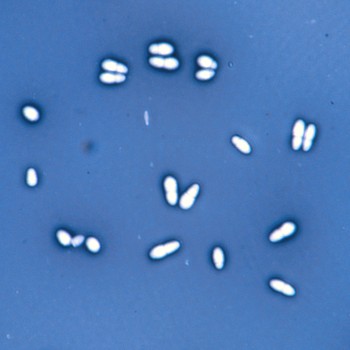
    Malassezia pachydermatis is a budding yeast that lives as a normal commensal on canine skin. Under a microscope it looks like a peanut, a footprint, or a tiny snowman. Vets identify it on cytology, using acetate tape or a swab, stained with Diff-Quik and read at high power.

    Malassezia pachydermatis cytology

    Image source: Bing (Web (fair-use with source credit))

    That's what a diagnosis actually looks like. Not a smell test. Not a photo on a Facebook group.

    Lipophilic, not sugar-hungry: what that means for the bowl

    The "yeast feeds on sugar" line got copied from human Candida diet content and pasted onto dogs. Different organism, different biology.

    Malassezia species are lipophilic. They lack the enzymes to make their own long-chain fatty acids, so they harvest lipids straight off the skin surface. They produce lipases, phospholipases, and proteases to break sebum down into the fatty acids they need.

    Their preferred neighbourhood is warm, humid, and greasy: ear canals, armpits, groin, skin folds, and between the toes.

    Dietary carbohydrate never reaches the skin surface as sugar. Blood glucose is tightly regulated, and it isn't sitting on the epidermis for yeast to eat.

    Two practical consequences follow:

    • Grain-free won't clear yeast. There's no controlled evidence that removing grain resolves Malassezia dermatitis. Grain-free foods are frequently high in peas, lentils, potato, and tapioca anyway. Still carbs.
    • Slathering on coconut oil is counterproductive. Medium-chain triglycerides get promoted as antifungal. On a lipid-dependent yeast, adding oil to the skin or the bowl is closer to feeding it than fighting it.

    If low-carb food genuinely cured yeast, every dog on a raw diet would have flawless skin. They don't.

    Why yeast is a symptom, not the disease

    Think of Malassezia as an opportunist watching for a gap in the fence.

    Healthy canine skin has an intact stratum corneum, a balanced lipid film, and a stable microbiome. When allergy, hormones, moisture, or steroids disrupt that, yeast populations bloom. The yeast then produces its own inflammatory byproducts, which damages the barrier further, which lets more yeast grow.

    That's the loop. Breaking it needs two things at once:

    1. Kill back the current overgrowth with topical and sometimes oral antifungals.
    2. Fix or control whatever opened the gap in the first place.

    Food only lives in step two, and only for some dogs.

    The Real Reasons Your Dog Keeps Flaring

    Before you commit to twelve weeks of restricted feeding, it's worth knowing what you're actually up against. Here are the usual suspects, ranked roughly by how often they turn out to be the answer.

    Underlying causeHow commonTypical cluesDoes diet fix it?
    Canine atopic dermatitis (environmental allergy)Most commonSeasonal pattern, face, paws, belly, starts age 1 to 3No, but omega-3s help
    Cutaneous adverse food reactionLess common than people assumeNon-seasonal, often with gut signs, any ageYes
    Flea allergy dermatitisVery common, often missedTail base, rump, thighsNo
    HypothyroidismAdult and senior dogsWeight gain, lethargy, poor coat, cold-seekingNo
    Hyperadrenocorticism (Cushing's)Middle-aged and seniorDrinking and peeing more, pot belly, thin skinNo
    Primary seborrhoeaBreed-linkedGreasy or flaky coat from a young ageNo
    Skin fold intertrigoBulldogs, Pugs, Shar PeiOnly in the foldsNo

    Canine atopic dermatitis

    This is the big one. Atopic dermatitis is an inherited tendency to react to environmental allergens: dust mites, pollens, moulds, storage mites. It usually shows up between one and three years old.

    Atopic dogs have a genuinely defective skin barrier. Ceramide levels are lower. Water loss through the skin is higher.

    That's a standing invitation for yeast.

    Signature pattern: itchy face, ears, paws, armpits, and belly. Often worse in certain months. Often responds well to oclacitinib, lokivetmab, or ciclosporin.

    Diet won't cure atopy. Omega-3 fatty acids can reduce itch and lower the dose of other medications needed, but they're support, not a solution.

    Food allergy (cutaneous adverse food reaction)

    A true food allergy is an immune reaction to a dietary protein. The most commonly reported culprits across published case series are beef, dairy, chicken, wheat, lamb, soy, and egg.

    Notice what's at the top of that list. It's proteins, mostly. The grain obsession has it backwards.

    Food-allergic dogs tend to be:

    • Non-seasonal. Itchy in January and July alike.
    • More likely to have concurrent gut signs. Loose stool, gassiness, more than three bowel movements a day.
    • Younger at onset than average, or unusually late onset.
    • Frequent sufferers of recurrent ear infections as the leading sign.

    Adverse food reactions account for a minority of allergic skin disease in dogs. That's still a lot of dogs. And it's the only category where changing the bowl actually solves the problem.

    Fleas, hypothyroidism, and Cushing's: the ones people miss

    Flea allergy is embarrassingly common in dogs whose owners are certain they don't have fleas. One bite from one flea can trigger weeks of itching in a sensitised dog. You will not necessarily find the flea.

    Year-round parasite control isn't optional here. It's a prerequisite for any meaningful diet trial.

    Then there's the endocrine pair. Hypothyroidism and Cushing's both suppress normal skin defences, and both cause recurrent, stubborn Malassezia infections. Red flags worth acting on:

    • Skin disease starting for the first time after age six
    • Weight gain with no change in food
    • Increased thirst and urination
    • Hair loss that's symmetrical rather than scratched-out
    • Thin skin, visible blood vessels, or a pot-bellied appearance
    • Poor wound healing

    If any of those apply, ask your vet about a thyroid panel (total T4, free T4, TSH) and adrenal testing before you spend three months on a food trial. The US Food and Drug Administration's Center for Veterinary Medicine regulates the therapeutic diets used in these trials, but no diet on the shelf treats an untreated endocrine disorder.

    When Food Is Actually the Trigger, and When It Isn't

    You can't diagnose a food allergy from a symptom list. But you can read the odds well enough to decide whether a trial is worth your time.

    Signs that point toward a food-driven flare

    The more of these that apply, the stronger the case:

    • No seasonal pattern at all. The dog is equally itchy in every month of the year.
    • Recurrent ear infections as the dominant sign. Especially both ears, especially back within weeks of finishing treatment.
    • Gut signs alongside skin signs. Soft stool, frequent stools, chronic gas, occasional vomiting.
    • Onset under one year or over six years. The middle band skews more toward atopy.
    • Poor or partial response to steroids. Food-allergic dogs often respond less predictably than atopic dogs.
    • Perianal itching and licking. Overrepresented in food-reactive dogs.
    • A history of doing better on one particular food. Even if you never tested it properly.

    Signs that point somewhere else entirely

    • Clear seasonality. Bad from May to September, fine in winter. That's environmental.
    • Rump, tail base, and thigh distribution. Classic flea allergy territory.
    • First flare after age seven with systemic changes. Drinking more, panting, weight shifts. Endocrine workup first.
    • Yeast confined to skin folds only. That's a moisture and anatomy problem, not a food problem.
    • A flare that started within weeks of an antibiotic course. Antibiotics knock back the bacteria that normally compete with yeast. That usually self-corrects with topical treatment.
    • A dog already on long-term steroids or ciclosporin. Immunosuppression alone can drive overgrowth.

    If you're genuinely on the fence

    Run the trial anyway.

    A properly executed elimination diet costs you twelve weeks and a bag of food. The information you get is definitive either way. Compare that to years of switching brands based on marketing claims and never actually learning anything.

    Just do it once, do it strictly, and treat the active yeast infection topically at the same time. The World Small Animal Veterinary Association's Global Nutrition Committee publishes practical guidance on assessing diets and questioning manufacturers, which is worth reading before you pick your trial food. As of 2026, therapeutic hydrolysed and novel protein diets remain the most reliable trial option, because retail limited ingredient foods have repeatedly tested positive for undeclared proteins.

    The Elimination Diet Trial: The Only Test That Tells You Anything

    This is the whole ball game. Everything else in this article is supporting cast.

    An elimination diet trial, also called a dietary restriction and provocation trial, works by feeding a protein the immune system has never seen or can no longer recognise. Nothing else goes in the dog. You wait for the skin to settle, then deliberately put the old food back to confirm.

    hydrolysed protein elimination diet

    Image source: Bing (Web (fair-use with source credit))

    That's a therapeutic hydrolysed diet, the kind most vets reach for first. Prescription authorisation is usually required, which is a feature rather than a nuisance. It means the formulation is controlled.

    Hydrolysed protein vs. novel protein: how to choose

    Hydrolysed diets take an ordinary protein like chicken or soy and chop it into fragments too small for the immune system to flag. The target is peptides under 10 kDa. Elemental diets go further, down to free amino acids.

    Novel protein diets rely on a protein your dog has genuinely never eaten. Kangaroo, rabbit, venison, alligator, duck, whitefish, or insect protein depending on your market.

    Use this to pick:

    SituationBetter choiceWhy
    Dog has eaten a long list of proteins over the yearsHydrolysedGenuinely novel proteins are hard to find
    Dog has only ever eaten chicken and beefNovel proteinCheaper, usually more palatable
    Severe, long-standing skin diseaseHydrolysed or elementalLowest possible antigen exposure
    Dog refuses hydrolysed kibble outrightNovel protein, or a hydrolysed wet formatCompliance beats theoretical perfection
    You want the strictest possible testElemental (amino acid based)Nothing left to react to
    Budget is genuinely tightVet-formulated home-cooked novel proteinCheaper per month, more work

    One caveat on hydrolysates. They're bitter. Palatability refusal is one of the most common reasons trials collapse in the first fortnight.

    Warming wet food slightly, or mixing it into kibble from the same product line, helps.

    The 8 to 12 week timeline, week by week

    Skin doesn't turn over quickly. Neither does inflammation. Here's what a properly run trial actually looks like.

    TimeframeWhat you doWhat to expect
    Days 1 to 10Gradual transition, old food to trial foodPossible loose stool, adjust pace
    Weeks 1 to 2Strict feeding, medicated bathing 2 to 3x weeklyOdour improves, itch may not yet
    Week 4Vet recheck, repeat cytologyYeast counts should be dropping
    Weeks 4 to 6Continue strict diet, taper bathingEar discharge reducing, coat improving
    Week 8Vet recheck, repeat cytology, score itch80 to 90 percent of food-allergic dogs have responded
    Weeks 8 to 12Continue if partially improvedSome dogs need the full 12 weeks
    RechallengeReintroduce original dietRelapse within 1 to 14 days confirms food trigger

    Track it properly. A weekly Pruritus Visual Analog Scale score, a simple 0 to 10 itch rating, plus a phone photo of the worst-affected area beats memory every time. Owners consistently underestimate improvement because it happens gradually.

    Weigh the dog every fortnight too. Hydrolysed diets have different caloric density to what you were feeding. Portion sizes need recalculating, not copying.

    The rechallenge step almost everyone skips

    Here's where trials go to die. The dog improves, the owner is delighted, and they never put the old food back.

    That's understandable. It's also a mistake.

    Without rechallenge you don't know whether the diet fixed things or whether the medicated shampoo, the flea treatment, the season change, or the antifungal course did the heavy lifting. You've spent twelve weeks and learned nothing you can act on.

    How to run it:

    1. Once the skin is clear and stable, feed the original diet again.
    2. Watch for 14 days. Most food-allergic dogs relapse in 1 to 14 days, often within 72 hours.
    3. If itching returns, go straight back to the trial diet. Confirmed.
    4. If nothing happens after two weeks, food was not your problem.

    After confirmation, you can run sequential single-ingredient provocations. Add beef alone for two weeks. Then chicken.

    Then dairy. Two weeks per ingredient, one at a time. That's how you build a long-term diet you can actually shop for at normal prices.

    Most owners stop at "hydrolysed food works" and stay on it for life. That's perfectly reasonable, just more expensive than it needs to be.

    Hydrolysed, Novel Protein, Retail LID, or Home-Cooked: A Side-by-Side Look

    Four routes, four very different risk and cost profiles.

    OptionMonthly cost, 20 kg dogReliability for a trialMain weaknessBest for
    Therapeutic hydrolysed£70 to £120 / $80 to $140HighestCost, palatabilityDogs with long dietary histories
    Therapeutic novel protein£60 to £100 / $70 to $120HighTruly novel proteins getting scarceYoung dogs, limited food history
    Retail limited ingredient£35 to £60 / $40 to $70LowUndeclared protein contaminationLong-term maintenance after diagnosis
    Vet-formulated home-cooked£45 to £80 / $50 to $90 in ingredientsHigh, if formulated properlyTime, nutritional risk if DIYFussy dogs, multiple confirmed allergies

    Costs vary widely by region and retailer. Online prescription-diet suppliers typically undercut in-clinic pricing, sometimes substantially.

    Why retail limited ingredient foods fail trials

    Because the label often isn't the whole story. Multiple published analyses using PCR and ELISA testing have found undeclared animal proteins in over-the-counter limited ingredient and novel protein pet foods. Beef and chicken DNA turning up in venison or duck formulas is a recurring finding.

    Shared production lines are the usual explanation. It's not malice, it's manufacturing.

    For a maintenance diet after you've already identified the trigger, retail LID is fine and considerably cheaper. For the diagnostic trial itself, it's a coin flip you don't want to take.

    Where home-cooked fits

    Home-cooked elimination diets are genuinely excellent for a short trial. One protein, one carbohydrate, nothing else. Rabbit and pumpkin.

    Venison and sweet potato.

    The problem is duration. A two-ingredient home diet is not complete and balanced. Feed it for eight weeks and you're borrowing against reserves.

    Feed it for a year and you'll create deficiencies in calcium, zinc, vitamin D, vitamin E, and essential fatty acids.

    If you want home-cooked long term, get the recipe formulated by a board-certified veterinary nutritionist (ACVN or ECVCN diplomate). Not from a blog. Not from a recipe generator with no vet oversight.

    What about raw?

    Raw feeding is popular in yeast circles, and there's no controlled evidence it resolves Malassezia overgrowth. Raw diets can function as a novel protein trial if the protein is genuinely novel and the formulation is complete.

    But you're adding pathogen risk for no proven skin benefit. Salmonella, Listeria, and E. coli shedding are documented in raw-fed dogs. That matters more if anyone in the house is immunocompromised, pregnant, elderly, or very young.

    Our position: if you want to feed raw for other reasons, fine. Just don't expect it to be the yeast cure. And use a complete, commercially balanced product rather than a DIY mince-and-bone recipe.

    Foods and Ingredients Worth Reconsidering During a Flare

    Not because they feed the yeast. Because they either break the trial, add antigen load, or increase the skin's oil output.

    Everything that breaks a trial

    This list ends more elimination diets than anything else:

    • Dental chews, rawhides, bully sticks, pig ears, antlers
    • Training treats of any kind, including hypoallergenic ones from a different manufacturer
    • Flavoured heartworm and flea preventives
    • Flavoured chewable NSAIDs and joint supplements
    • Flavoured toothpaste
    • Pill pockets and cheese for medication
    • Peanut butter in a lick mat
    • Table scraps, including "just a bit of the crust"
    • Cat food, cat treats, and litter tray contents
    • Another dog's bowl in a multi-dog household
    • Anything scavenged on walks

    If your dog is a committed street-scavenger, a basket muzzle for eight weeks is a legitimate tool. It's not cruel. It's the difference between a valid result and a wasted quarter.

    High-frequency allergen proteins

    If you're building a home trial or choosing a novel protein, avoid these. They're the most commonly reported triggers in published case series:

    • Beef
    • Dairy
    • Chicken
    • Wheat
    • Lamb
    • Soy
    • Egg

    Chicken deserves a special mention. It's in almost everything, including foods marketed on a different headline protein. Read the full ingredient panel, not the front of the bag.

    Oily toppers and fatty extras

    Here's where the lipophilic biology actually has a practical implication.

    Pouring oil-heavy toppers into the bowl, or rubbing coconut oil into the coat, gives Malassezia more of what it wants. That's not a reason to feed a fat-free diet. Dogs need fat.

    But it is a reason to skip the greasy add-ons during an active flare.

    Skip these while the skin is inflamed:

    • Coconut oil, orally or topically
    • MCT oil
    • Olive oil or bacon fat drizzled on food
    • Very high-fat home-cooked recipes

    Omega-3 supplementation is a different case, and we'll get to why in a moment.

    The things that genuinely don't matter

    Save your money and your sanity:

    • Sugar content. Commercial dog food isn't sugary, and dietary sugar doesn't reach the skin surface.
    • Grain-free status. No demonstrated effect on yeast.
    • Yeast as an ingredient. Brewer's yeast in dog food is Saccharomyces cerevisiae. Completely different organism from Malassezia. Eating it does not cause yeast infections.
    • Kibble vs. wet. Format has no proven effect on Malassezia. Feed whichever the dog will actually eat.

    Supplements That Have Evidence Behind Them, and the Ones That Don't

    There's a whole supplement industry built on canine yeast. Most of it is marketing. A few things genuinely help.

    SupplementEvidence for itchy skinPractical verdict
    EPA and DHA (fish oil)Good, multiple controlled studiesWorth using, steroid-sparing effect
    Gamma-linolenic acid (GLA)ModerateReasonable adjunct, often paired with omega-3
    Ceramide and phytosphingosineModerate, mostly topicalUseful for barrier repair
    ProbioticsEmerging, strain-specificLow risk, modest benefit
    Zinc, biotin, vitamin EOnly helps if deficientAlready adequate in complete diets
    Coconut oilNone for MalasseziaSkip, may worsen
    Apple cider vinegar, oralNoneSkip
    Caprylic acid, oregano oil, olive leafNone in dogsSkip
    Grapefruit seed extractNone, plus toxicity concernsActively avoid

    Omega-3s: the one with real backing

    Fish oil is the best-supported nutritional intervention for allergic skin disease in dogs. EPA and DHA compete with arachidonic acid in the inflammatory pathway, producing less inflammatory mediators.

    What the research supports:

    • Combined EPA and DHA dosing in the region of 50 to 220 mg per kg body weight daily, vet-directed
    • Meaningful clinical response typically takes 8 to 12 weeks
    • A documented steroid-sparing effect, meaning some dogs need lower doses of other medications

    Use marine sources. Flaxseed oil provides alpha-linolenic acid, and dogs convert ALA to EPA very inefficiently. Krill oil works but costs more per gram of EPA.

    Watch the calories. Fish oil is pure fat. A large dog's dose can add 100 kcal or more per day, which matters if weight is already an issue.

    Probiotics: what the research actually shows

    Strain matters more than the word "probiotic" on the tub. Lactobacillus rhamnosus GG and Enterococcus faecium SF68 have the most published work behind them in dogs.

    The evidence points toward modest benefit in atopic dogs, particularly around early-life exposure and immune modulation. It's not a treatment for active yeast overgrowth.

    Worth adding? Probably, if your dog also has soft stools or a history of antibiotic use. Not worth expecting miracles from.

    Coconut oil, ACV, and caprylic acid: an honest verdict

    None of these are supported for canine Malassezia.

    Coconut oil is the most-recommended and the most mechanistically backwards. Lauric acid has in vitro antifungal activity against some organisms, but Malassezia is a lipid-dependent yeast that thrives on fatty acid substrates. Feeding or applying oil to a yeasty dog is at best neutral and at worst counterproductive.

    Apple cider vinegar taken orally does nothing to skin pH. Diluted ACV as a topical rinse has some anecdotal support for mild cases, but it stings badly on broken or ulcerated skin. Never put it in inflamed ears.

    Oregano oil, tea tree oil, and other essential oils carry genuine toxicity risk in dogs. Tea tree oil poisoning is well documented. Keep them out of this entirely.

    Why Diet Alone Won't Clear an Active Infection

    If your dog has visible yeast right now, food will not fix it. Not this month, not any month.

    An elimination diet addresses the driver. It doesn't kill the organism already colonising the skin in large numbers. You need both, running at the same time.

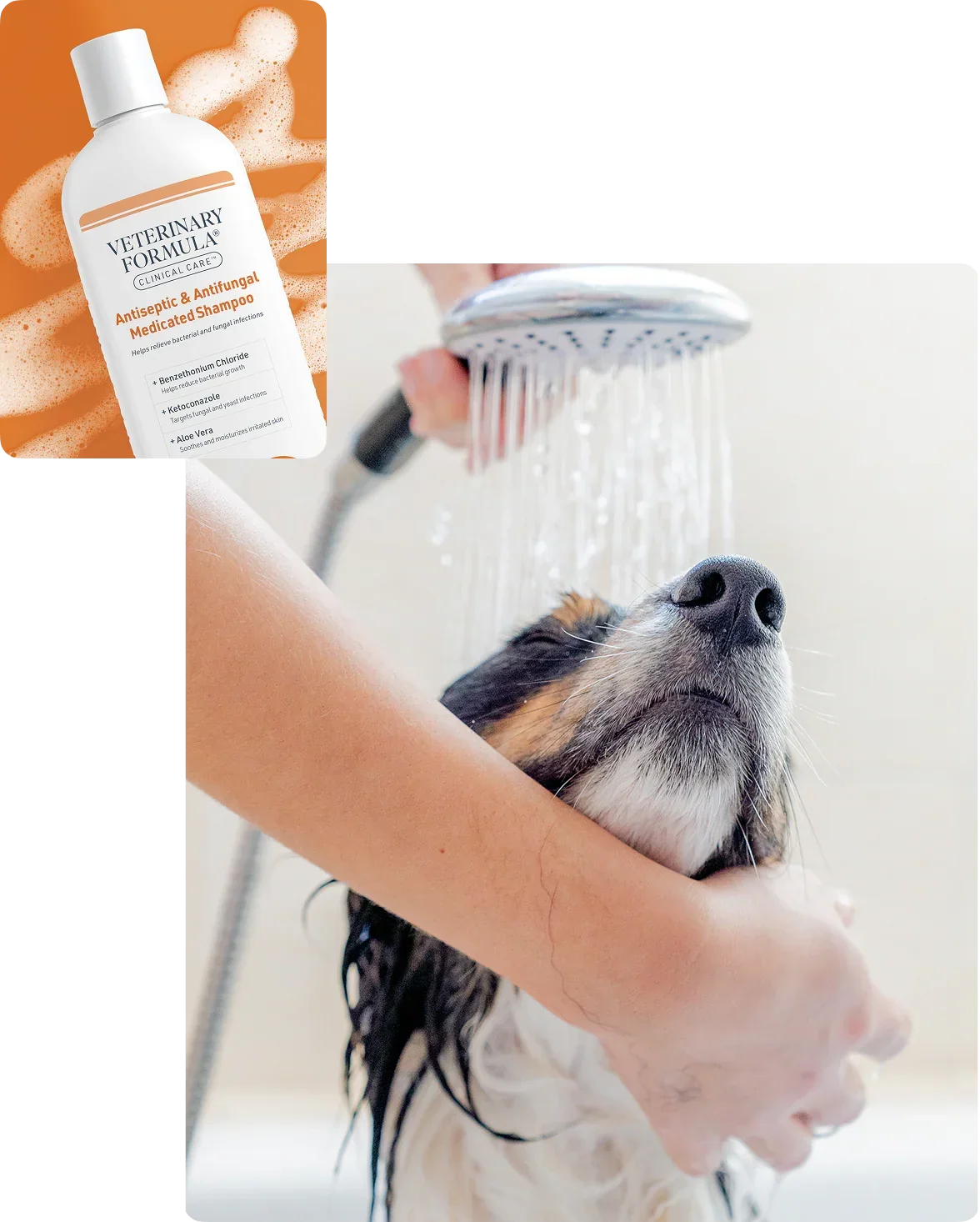
    antifungal medicated shampoo for dogs

    Image source: Bing (Web (fair-use with source credit))

    Topical antifungal therapy and contact time

    Topical treatment is the backbone of Malassezia management. It gets high drug concentrations exactly where the yeast lives, with none of the liver risk of oral medication.

    The active ingredients that work:

    Active ingredientTypical concentrationNotes
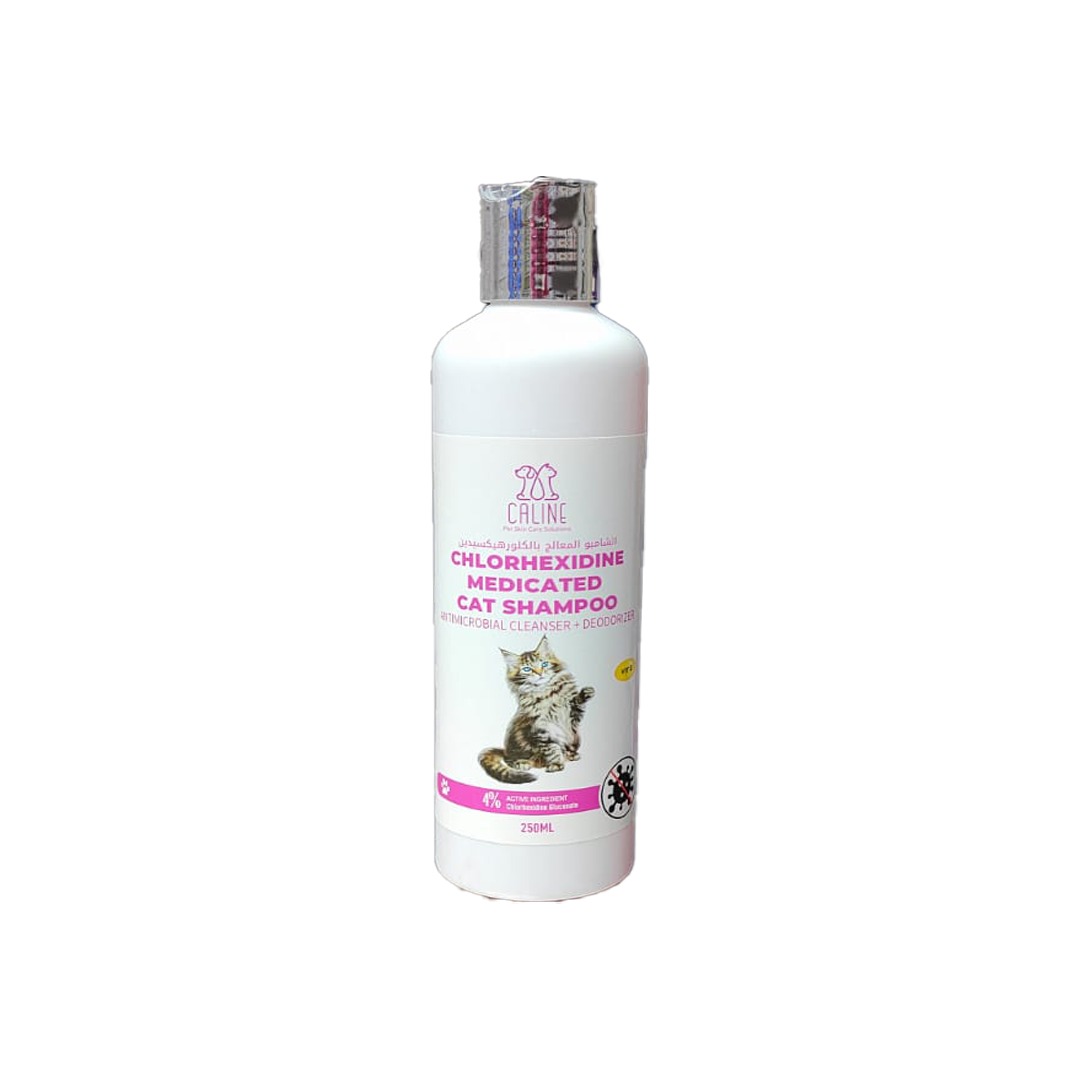
    Chlorhexidine2 to 4%Antibacterial and antifungal, good for mixed infections
    Miconazole2%Often combined with chlorhexidine, strong synergy
    Ketoconazole1 to 2%Effective, widely available
    ClimbazoleVariesCommon in European formulations
    Selenium sulphide1%Degreasing, useful in seborrhoeic dogs
    Acetic acid and boric acidVariesEar cleaners, drying and acidifying

    The single most-ignored instruction is contact time. Lather the shampoo, then leave it on for a full 10 minutes before rinsing. Aggregate owner feedback suggests most people rinse after two or three minutes, which is why the shampoo "doesn't work".

    Set a timer. Ten minutes.

    Frequency during an active infection is 2 to 3 baths per week, tapering to weekly or fortnightly for maintenance. Between baths, antifungal mousses, sprays, and wipes cover the ears, folds, and feet without a full wash.

    Drying is half the job

    Malassezia grows best in warm, humid conditions. Its optimum temperature sits around 32 to 37°C, which is roughly the temperature of a damp skin fold.

    After every bath or swim:

    • Towel dry thoroughly, then use a cool blow-dry on folds and armpits
    • Dry between every toe
    • Dry inside the ear flap and the visible part of the canal
    • Never leave a Bulldog's face folds damp

    This one habit prevents more relapses than most supplements ever will.

    When systemic antifungals come into it

    Oral antifungals are for severe, generalised, or treatment-resistant cases. They're prescription-only and they need vet supervision.

    The usual options:

    • Ketoconazole, roughly 5 to 10 mg/kg daily, vet-directed
    • Itraconazole, often used in pulse-dosing protocols
    • Fluconazole, better tissue penetration in some sites
    • Terbinafine, an allylamine rather than an azole

    Course length is typically a minimum of 3 to 4 weeks, continuing to about one week past clinical resolution. Stopping early is the most common cause of immediate relapse.

    Safety points worth knowing before you start:

    • All the azoles carry hepatotoxicity risk. Baseline and follow-up liver enzymes are standard practice.
    • Azoles inhibit cytochrome P450 enzymes, so drug interactions are a real concern. Tell your vet everything the dog takes.
    • Not for use in pregnancy.
    • Gut upset is common. Giving with food helps with ketoconazole absorption.

    Ears need their own protocol

    Never put medication into an ear without an otoscopic exam first. If the tympanic membrane is ruptured, certain ear preparations can cause permanent ototoxic damage, including deafness and vestibular signs.

    Chronic ear cases also often involve biofilm, which physically shields yeast from medication. That's why some dogs need a deep flush under sedation before topical treatment starts working.

    If your dog's ears have been treated three or more times in a year, the ears aren't the problem. Whatever's driving them is.

    What This Costs: Diets, Testing, and Long-Term Management

    Money is the reason a lot of owners stall halfway. Worth seeing the real numbers before you start, not after.

    ItemTypical cost rangeFrequency
    Vet consult, first skin visit£45 to £80 / $60 to $120Once, then rechecks
    Ear and skin cytology£25 to £60 / $30 to $80Per visit, often 2 to 3 times
    Thyroid panel (T4, free T4, TSH)£80 to £150 / $100 to $200Once, if indicated
    ACTH stimulation or LDDST£150 to £300 / $180 to $350Once, if Cushing's suspected
    Therapeutic hydrolysed diet, 20 kg dog£70 to £120 / $80 to $140Monthly
    Medicated antifungal shampoo, 500 ml£15 to £30 / $18 to $35Lasts 4 to 8 weeks
    Ear cleaner, 250 ml£10 to £20 / $12 to $25Every 6 to 10 weeks
    Oral antifungal course, 20 kg dog£40 to £90 / $50 to $110Per 3 to 4 week course
    Fish oil supplement£12 to £30 / $15 to $35Monthly
    Dermatology referral, initial£180 to £350 / $250 to $500Once

    Prices vary by country, clinic type, and whether you're in a city. Treat these as a planning range, not a quote.

    Where the money actually goes wrong

    The expensive path isn't the one with the referral on it. It's the drifting path.

    Aggregate owner accounts follow a familiar shape. Six food changes at £50 to £70 a bag over eighteen months. Three or four repeat vet visits for the same ear infection.

    A £200 saliva allergy test that produced a list nobody could act on.

    Add it up and you've often spent more than a proper workup plus a twelve-week trial would have cost. Running one structured trial once is cheaper than guessing for two years.

    Ways to cut the cost honestly

    • Buy the trial diet online. Prescription-diet retailers routinely undercut in-clinic pricing by 15 to 30 percent. Your vet still writes the authorisation.
    • Buy the largest bag. Cost per kilo drops noticeably at 12 kg and above. You'll need the volume anyway.
    • Ask about a novel protein instead of hydrolysed. If your dog's food history is short, it's usually cheaper and more palatable.
    • Use topical treatment properly so you need fewer oral courses. Ten-minute contact time is free.
    • Get the diagnosis right early. Treating hypothyroidism costs pennies a day. Chasing it with food costs hundreds.

    Does pet insurance cover any of this?

    Usually not the food. Most policies in the UK, US, and Australia exclude therapeutic diets outright, or cap them at a token amount.

    Diagnostics and medication are more commonly covered, provided the skin disease isn't pre-existing. That last word does a lot of work. If your dog was itchy before the policy started, expect a fight.

    Read the exclusions before you assume. And declare skin history honestly, because undisclosed conditions void claims.

    Mistakes That Wreck an Elimination Trial

    Trials rarely fail because the diet was wrong. They fail because something got past the gate.

    Flavoured meds, chews, and the household saboteur

    Chewable, flavoured medications are the number one silent trial-killer. Most heartworm preventives, many joint supplements, and a lot of NSAIDs come in beef or pork flavour.

    Swap them before day one:

    • Heartworm: ask for an unflavoured tablet or a topical alternative
    • Flea and tick: topical spot-ons and collars avoid the issue entirely
    • Joint supplements: pause them, or switch to unflavoured powder
    • NSAIDs: ask for the tablet, not the chew
    • Toothpaste: switch to plain, or pause brushing with flavoured paste

    Then there's the human factor. In a multi-person household, someone will give the dog something. It's usually well-meant, and it's usually a kid, a grandparent, or a partner who "only gave him a tiny bit".

    Practical fixes that work:

    • Put a written note on the fridge listing exactly what the dog can have
    • Move all treat jars out of the house or into a sealed box
    • Tell dog walkers, daycare, and neighbours in writing
    • Feed dogs separately in a multi-dog home, or put the whole household on the trial diet
    • Raise the cat's food and litter tray out of reach
    • Use a basket muzzle on walks for confirmed scavengers

    One flavoured tablet on week six doesn't always mean starting again from zero, but it does muddy your result. Log any slip-ups so you can interpret the outcome honestly.

    Judging results while your dog is still on steroids

    This one's subtle, and it wastes months.

    Prednisolone masks itch beautifully. So does oclacitinib. If your dog is on either during the trial, you can't tell whether the improvement came from the food or the drug.

    The workaround isn't to yank the medication. Abruptly stopping long-term corticosteroids is dangerous and can trigger an adrenal crisis. Instead:

    • Talk to your vet about a planned taper before or during the trial
    • If the dog needs itch relief, note the dose and keep it constant
    • Do the rechallenge only when medication is stable or withdrawn
    • Cytopoint's effect lasts 4 to 8 weeks, so time the trial around the injection cycle

    The other classic failures

    • Stopping at week four. Improvement often doesn't show until week six to eight. Four weeks proves nothing.
    • Treating yeast and running the diet trial at different times. Do both together. Otherwise the active infection keeps the dog itchy and you'll conclude the food failed.
    • Changing two things at once. New food plus a new supplement plus a new shampoo equals no usable information.
    • Ignoring fleas. A single flea-allergic dog will itch through a perfect diet trial.
    • Not recording anything. Memory is unreliable. Weekly itch scores and photos are not.
    • Picking a novel protein the dog has actually eaten. Check every food, treat, and chew the dog has had. Duck jerky counts.

    Serum IgE, Saliva, and Hair Testing: Why We Don't Recommend Them

    Short version: none of them reliably diagnose food allergy in dogs.

    These tests are heavily marketed, often direct to owners, and they generate a tidy printed list of "reactive" foods. The list looks authoritative. It usually isn't.

    What the research shows

    Published validation work has repeatedly found poor agreement between serum IgE food panels and the results of properly conducted elimination and rechallenge trials. Studies have run these tests on healthy, non-allergic dogs and got long lists of positive results.

    Hair and saliva tests have performed worse still. Investigations submitting samples from non-existent dogs, and even from synthetic fur, have returned detailed sensitivity reports.

    That's not a borderline accuracy problem. That's a test with no diagnostic value.

    Why it matters more than wasted money

    Because owners act on the results. They eliminate six proteins based on a printout, end up feeding an odd rotating diet, and never run the one test that would give a real answer.

    Worse, some of these lists include proteins the dog tolerates perfectly well. You end up restricting a diet for no reason, sometimes into nutritional territory that causes new problems.

    Where allergy testing does have a role

    Intradermal skin testing and serum IgE testing are genuinely useful for one purpose: identifying environmental allergens to formulate allergen-specific immunotherapy.

    That's dust mites, storage mites, pollens, moulds. Not food.

    If your vet or dermatologist suggests allergy testing to build an immunotherapy vaccine for atopic dermatitis, that's a legitimate, evidence-supported use. If a company suggests a hair sample will tell you your dog is allergic to chicken, it won't.

    Some IgE-based food panels are occasionally used to help select a trial diet, not to diagnose. Even then, the elimination trial remains the standard. Guidance from the American College of Veterinary Dermatology and the international consensus work on canine atopic dermatitis both put the dietary restriction and provocation trial at the top of the hierarchy.

    Safety Warnings You Shouldn't Ignore

    Skin disease feels low-stakes. Some of the fixes people reach for aren't.

    Raw diets, DIY recipes, and nutritional gaps

    Raw feeding carries documented pathogen risk. Studies sampling commercial raw pet food have found Salmonella, Listeria monocytogenes, and antibiotic-resistant E. coli at meaningful rates. Dogs can shed these organisms in stool without looking ill.

    Household risk is highest for infants, elderly relatives, pregnant people, and anyone immunosuppressed. Standard hygiene applies: separate prep surfaces, dedicated utensils, hand washing, no dog licking faces after a meal.

    The nutritional risk is quieter and just as real. Analyses of homemade dog food recipes published online have found the large majority fall short on at least one essential nutrient. Common gaps:

    • Calcium and the calcium to phosphorus ratio
    • Vitamin D
    • Vitamin E
    • Zinc
    • Choline
    • Essential fatty acids

    Puppies are especially vulnerable. Skeletal disease from a badly balanced homemade diet during growth is permanent.

    If you want to feed homemade beyond an eight-week trial, use a veterinary nutritionist-formulated recipe. Services run by veterinary teaching hospitals and ACVN diplomates exist precisely for this.

    The BEG diet and DCM question

    Boutique, exotic-ingredient, and grain-free diets came under FDA investigation after reports linking them to dilated cardiomyopathy in dogs without a genetic predisposition. Over 1,100 cases were reported through the investigation updates published to 2019.

    The mechanism has never been definitively established. Pulse ingredients (peas, lentils, chickpeas) making up a large proportion of the formula are the leading suspicion. Taurine deficiency explains some cases but not all.

    Here's the practical relevance. People switch to grain-free specifically to fight yeast, based on advice that was wrong to begin with. So they take on an unresolved cardiac question for a benefit that doesn't exist.

    If your dog is on a grain-free diet with pulses high in the ingredient list, and especially if you're in a predisposed breed like a Golden Retriever, it's worth a conversation with your vet.

    Essential oils, xylitol, and other DIY hazards

    Some popular home remedies are genuinely dangerous:

    • Tea tree oil. Documented canine poisoning. Causes ataxia, tremors, depression, and liver damage. Never apply undiluted, and ideally never at all.
    • Oregano, clove, cinnamon, and citrus oils. Skin irritation and toxicity risk. Cats in the household are at even greater risk.
    • Grapefruit seed extract. Frequently contaminated with synthetic preservatives, no proven benefit.
    • Xylitol. Fatal in dogs. Check every peanut butter, sugar-free item, and human food you're tempted to use as a pill hider.
    • Undiluted apple cider vinegar. On broken skin it's painful. In an ear with a ruptured eardrum it's dangerous.
    • Boric acid solutions in ears. Only under veterinary direction, and never without checking the eardrum.

    Medication safety points worth repeating

    • Never medicate an ear before an otoscopic exam confirms an intact tympanic membrane.
    • Azole antifungals need liver monitoring on longer courses.
    • Cytochrome P450 interactions are real. Give your vet a full medication and supplement list.
    • Don't stop long-term corticosteroids abruptly.
    • Malassezia pachydermatis is zoonotic in rare circumstances, mainly documented in neonatal intensive care settings. It's not a household concern for healthy people, but wash your hands after applying ear medication.

    Where diet-chasing becomes a welfare issue

    Six months of untreated Cushing's is not a neutral outcome. Neither is a year of nightly scratching, broken sleep, and self-trauma.

    If you've changed three foods and the dog is still itchy, stop changing food. That's your signal to go back to the vet and look underneath.

    Real Scenarios: Three Dogs, Three Different Answers

    These are composite cases drawn from typical presentation patterns in veterinary dermatology practice. Same symptom, three completely different answers.

    The Westie with lifelong itchy paws

    Four-year-old West Highland White Terrier. Itchy since around fourteen months. Rusty red staining between all four sets of toes, greasy coat, mild armpit redness.

    Worse from April through September. Improves noticeably in deep winter.

    Cytology confirms Malassezia. The owner has already tried grain-free and raw with no lasting change.

    The seasonal pattern is the tell. This is canine atopic dermatitis with secondary yeast, and Westies are one of the most over-represented breeds for both.

    What actually worked:

    • Twice-weekly antifungal shampoo with 10-minute contact time
    • Antifungal wipes on the feet between baths
    • Oclacitinib for itch control during peak season
    • EPA and DHA supplementation, reviewed at 12 weeks
    • Intradermal testing to build an allergen-specific immunotherapy vaccine

    Diet contributed nothing here beyond the omega-3s. A trial was run and produced no change, which was itself useful information.

    The Cocker Spaniel with recurring ear infections

    Three-year-old English Cocker Spaniel. Four courses of ear medication in fourteen months. Brown waxy discharge in both ears, head shaking, mild interdigital licking.

    No seasonal pattern. Soft stools most days and noticeably gassy.

    That combination, non-seasonal signs plus ears plus gut, moves food up the list considerably.

    The protocol:

    • Otoscopy first to confirm intact eardrums
    • Deep ear flush under sedation to break up biofilm
    • Topical ear medication for 14 days
    • Hydrolysed protein diet, strict, for 10 weeks
    • Flavoured heartworm preventive swapped to unflavoured
    • Rechallenge at week 10

    Ears cleared by week three. Skin settled by week seven. Stools firmed up around week five, which was the first genuine hint.

    Rechallenge with the original chicken-based food brought head shaking back on day four. Confirmed. Sequential provocation later identified chicken as the trigger, which opened up much cheaper long-term food options.

    The senior Labrador with sudden-onset skin disease

    Nine-year-old Labrador. Never had a skin problem in his life. Over four months: greasy coat, yeasty odour, thinning hair along both flanks, recurring skin infections.

    Also drinking more, panting at night, and up 4 kg without a change in feeding.

    This one shouldn't get a diet trial. Not yet.

    New-onset skin disease in a senior dog with systemic changes points squarely at endocrine disease. The workup came first: full blood panel, thyroid panel, urinalysis, then adrenal function testing.

    Result was hyperadrenocorticism. Yeast overgrowth was a downstream consequence of cortisol suppressing normal skin defences.

    Treatment addressed the adrenal disease with trilostane under veterinary supervision, plus topical antifungal therapy for the active overgrowth. The skin resolved as the underlying disease came under control.

    Had the owner spent twelve weeks on a hydrolysed diet first, the Cushing's would have progressed untreated. That's the exact risk this whole article exists to flag.

    When to Stop Experimenting and Call Your Vet

    There's a point where DIY becomes delay. Here's how to recognise it.

    Red flags that need same-week attention

    Book an appointment now if you see any of these:

    • Bleeding, oozing, or ulcerated skin. That's beyond yeast. Secondary bacterial infection is likely.
    • Sudden head tilt, circling, or loss of balance. Suggests middle or inner ear involvement.
    • A dog that cries or pulls away when you touch an ear. Painful ears often mean a ruptured eardrum or deep infection.
    • Hair loss that's symmetrical, not scratched off. Points to hormonal disease.
    • Increased thirst and urination. Especially alongside skin disease in a middle-aged or older dog.
    • Weight change without a food change. Either direction.
    • Skin so thin you can see blood vessels through it. Classic Cushing's sign.
    • Self-trauma bad enough to break sleep. For the dog or for you.
    • Any skin problem starting for the first time after age seven.

    When your yeast problem might not be yeast at all

    Plenty of conditions look identical from the sofa. Cytology sorts them out in ten minutes.

    Looks like yeastWhat it actually isDistinguishing clue
    Greasy, itchy, smelly skinStaphylococcal pyodermaPustules, crusts, epidermal collarettes
    Red itchy paws and earsDemodex mitesHair loss without much itch, young dogs
    Intense itching, worse at nightSarcoptic mangeEar margin scratch reflex, contagious to people
    Scaly, circular hair lossDermatophytosis (ringworm)Needs fungal culture or PCR, zoonotic
    Itchy rump and tail baseFlea allergy dermatitisFlea dirt in the coat
    Thickened, dark, itchy skinContact or hormonal dermatitisDistribution pattern

    Odour is not a diagnosis. Neither is a photo comparison. If nobody has looked at a stained slide from your dog's skin or ear, you don't actually know what you're treating.

    When to ask for a referral to a veterinary dermatologist

    Ask for a referral if any of these apply:

    • Three or more ear infections in twelve months
    • No meaningful improvement after a properly run 12 week diet trial plus topical therapy
    • Relapse within two weeks of finishing every antifungal course
    • Your dog needs continuous steroids to stay comfortable
    • Cytology keeps showing mixed yeast and rod-shaped bacteria
    • You're considering allergen-specific immunotherapy

    A board-certified veterinary dermatologist (DACVD or DipECVD) sees these cases daily. In our research, owners consistently report that a single referral consult resolved problems that had run for years in general practice. It costs more upfront and usually less overall.

    Keeping Flares Away Long-Term

    Once you've cleared it, the job shifts from treatment to maintenance. Most relapses are preventable.

    Bathing rhythm, ear drying, and weight control

    Build a schedule and stick to it. Prevention baths are far cheaper than treatment courses.

    TaskFrequencyWhy it works
    Antifungal maintenance bathEvery 1 to 2 weeksKeeps yeast populations below threshold
    Ear cleanerWeekly, or after swimmingRemoves wax and lowers pH
    Dry folds and pawsAfter every bath, swim, or wet walkRemoves the humidity yeast needs
    Antifungal wipes on feet2 to 3 times weekly in prone dogsInterrupts the lick and grow cycle
    Body condition score checkMonthlyTarget 4 to 5 out of 9
    Coat clip in fold breedsAs neededImproves air flow, speeds drying

    Weight matters more than people expect. Overweight dogs have deeper folds, more skin contact, and more trapped moisture. Getting a dog from 7/9 to 5/9 on body condition score reduces the microclimates yeast loves.

    Year-round flea control stays non-negotiable. So does keeping that flea treatment unflavoured if your dog is on a confirmed food restriction.

    Seasonal and regional adjustments

    Yeast pressure isn't constant. Adjust with the weather.

    • Humid summers. US Gulf Coast, Florida, coastal Australia, Southeast Asia, UK muggy spells. Increase bathing to weekly and dry aggressively after every walk.
    • Swimming season. Dry ears after every swim. Water dogs like Labradors, Cockers, and Portuguese Water Dogs need it most.
    • Pollen seasons. Wipe paws and belly after walks to reduce allergen contact in atopic dogs.
    • Winter indoor heating. Dry air worsens barrier function. Ceramide-based topical sprays and continued omega-3s help.
    • Monsoon and wet seasons. Expect flares. Pre-empt them with a scheduled bathing increase rather than waiting.

    Building a flare action plan with your vet

    Agree this in advance, while things are calm. It saves days of guessing later.

    A good plan spells out:

    1. The early warning signs specific to your dog: head shaking, paw licking, that first whiff of odour
    2. Which shampoo or ear cleaner to start immediately, and at what frequency
    3. How many days to wait before booking a vet visit
    4. What you're allowed to give without a consult, and what you're not
    5. When to repeat cytology
    6. Annual bloodwork if the dog is on repeat antifungal courses

    Keep a simple log. Date, sign, action taken, result. Six months of that log is worth more to your vet than any amount of description.

    Common Questions About Feeding a Dog With Yeast Overgrowth

    Should I switch to grain-free food for my yeasty dog?

    No. There's no controlled evidence that removing grain resolves Malassezia overgrowth, and grain-free foods usually swap grain for peas, lentils, or potato anyway. Grain allergy also isn't the main food trigger in dogs.

    Proteins are. If food is the driver, you need an elimination trial, not a marketing category.

    Can I just add probiotics and skip the diet trial?

    Probiotics won't diagnose or resolve a food allergy. Strain-specific benefits exist for atopic dogs, mainly with Lactobacillus rhamnosus GG and Enterococcus faecium SF68, but they're supportive rather than curative. Add them if you like.

    Just don't treat them as a substitute for finding the underlying cause.

    My dog gets loose stools on the hydrolysed diet. What now?

    Slow the transition. Extend it to 14 days instead of 7, mixing in 10 percent more trial food every couple of days. If that fails, ask your vet about a different hydrolysate or a wet format.

    Some dogs handle soy-based hydrolysates poorly and do better on poultry-derived ones.

    Do I have to feed the trial diet forever?

    Not necessarily. Once rechallenge confirms a food trigger, sequential single-ingredient provocation lets you identify the specific offenders. Two weeks per ingredient.

    Once you know your dog reacts to chicken and beef but tolerates fish and lamb, you can move to a normally priced complete diet that avoids those proteins.

    Will my dog lose weight on a restricted diet?

    Only if you don't recalculate portions. Therapeutic diets differ in caloric density from what you were feeding. Weigh your dog every two weeks during the trial and adjust.

    Removing treats also removes calories, sometimes 10 to 15 percent of daily intake in treat-heavy households.

    Your Feeding Decision Guide, Step by Step

    Run through this in order. Don't skip steps.

    Step 1. Get a diagnosis first.

    Book a vet visit. Ask specifically for skin and ear cytology. Confirm it's Malassezia, not pyoderma, mites, or dermatophytes.

    Step 2. Rule out the non-food causes.

    If the dog is over six, or has systemic signs, request a thyroid panel and adrenal testing before starting a diet trial. Get year-round flea control in place regardless.

    Step 3. Start topical treatment now.

    Antifungal shampoo two to three times weekly. Ten-minute contact time. Ear cleaner if the ears are involved.

    This runs in parallel with everything below.

    Step 4. Choose your trial diet.

    If your dog…Choose
    Has eaten many proteins over the yearsTherapeutic hydrolysed diet
    Has eaten only one or two proteinsTherapeutic novel protein diet
    Refuses hydrolysed kibbleNovel protein, or hydrolysed wet food
    Has severe, long-standing diseaseHydrolysed or elemental
    Needs the cheapest valid optionVet-formulated home-cooked, short term

    Step 5. Clear the decks.

    Swap flavoured medications for unflavoured. Bin the treats. Brief the household in writing.

    Separate multi-dog feeding. Muzzle scavengers on walks.

    Step 6. Feed strictly for 8 to 12 weeks.

    Nothing else. Score itch weekly on a 0 to 10 scale. Photograph the worst area.

    Weigh the dog fortnightly. Recheck cytology at weeks 4 and 8.

    Step 7. Rechallenge.

    Feed the original food again. Watch 14 days.

    • If itching returns within 1 to 14 days: food trigger confirmed. Return to the trial diet, then identify individual proteins by sequential provocation.
    • If nothing happens: food isn't your problem. Go back to your vet and pursue atopic dermatitis management, immunotherapy testing, or a second look at endocrine causes.

    Step 8. Set up maintenance.

    Lock in a bathing rhythm, an ear-drying habit, a weight target, omega-3 supplementation, and a written flare action plan.

    If you're still stuck after all eight steps, that's your referral trigger. Ask for the dermatologist.

    Frequently Asked Questions

    Does sugar in dog food cause yeast infections?

    No. Malassezia pachydermatis is lipophilic, meaning it feeds on skin oils and sebum rather than dietary sugar. Blood glucose is tightly regulated and doesn't sit on the skin surface for yeast to consume. Low-sugar and low-carb foods have no demonstrated effect on canine yeast overgrowth.

    How long before a diet change improves my dog's yeast infection?

    Allow 8 weeks minimum, and up to 12. Around 80 to 90 percent of genuinely food-allergic dogs show improvement by week eight. Skin turnover and inflammation resolution simply take that long.

    Stopping at four weeks is the most common reason owners wrongly conclude that diet made no difference.

    Is coconut oil good for a dog with a yeast infection?

    No, and it may make things worse. Malassezia is a lipid-dependent yeast that harvests fatty acids from the skin surface. Adding coconut oil orally or topically supplies more of the substrate it grows on. Skip oily toppers and greasy coat treatments while the skin is actively inflamed.

    Can chicken cause yeast infections in dogs?

    Chicken doesn't cause yeast directly, but it's one of the most commonly reported food allergens in dogs. A chicken allergy can inflame the skin, damage the barrier, and let Malassezia multiply. The only way to confirm it is an elimination trial followed by a deliberate chicken rechallenge.

    Do I need a prescription for a hydrolysed dog food?

    Usually yes. Therapeutic hydrolysed and selected protein diets require veterinary authorisation in most markets, including the US, UK, EU, and Australia. That control is part of why they're reliable for diagnostic trials.

    Online prescription-diet retailers typically price 15 to 30 percent below in-clinic rates.

    Will a raw diet cure my dog's yeast problem?

    There's no controlled evidence that raw feeding resolves Malassezia overgrowth. A complete, commercially balanced raw diet can work as a novel protein trial if the protein is genuinely new. But raw carries documented Salmonella and Listeria risk, which matters in households with infants, elderly, or immunocompromised people.

  • Beginner’s Guide to How to Treat Stud Tail in Cats

    Beginner’s Guide to How to Treat Stud Tail in Cats

    Your cat's tail looks greasy, smells funky, and is losing hair at the base. You've searched around and landed on something called stud tail. Now you need to know how to treat stud tail in cats without making things worse.

    Here's the short version: stud tail is a hormonal gland issue, not a hygiene failure. With the right degreasing routine and veterinary guidance, most cases clear up within a month. As of 2026, veterinary dermatology guidelines recommend a combination of topical degreasing therapy, targeted anti-inflammatory treatment, and addressing the underlying hormonal trigger, especially in unneutered males.

    how to treat stud tail in cats

    Image source: Bing (Web (fair-use with source credit))

    Quick Answer

    Wash the tail base with a veterinary chlorhexidine or benzoyl peroxide shampoo two to three times per week. Apply any prescribed topical steroid or antibiotic as directed. Consider neutering if your cat is intact.

    See a vet if the area looks infected or isn't improving after seven days.


    What Is Stud Tail in Cats? (And Why It Smells So Bad)

    Stud tail, medically known as feline supracaudal gland hyperplasia, happens when the sebaceous glands at the top of your cat's tail go into overdrive. These glands produce sebum, a waxy oil that normally keeps skin and fur conditioned. When they overproduce, that oil builds up, traps dirt and dead skin cells, and creates the classic signs: greasy fur, blackheads, thinning hair, and a distinct rancid odor.

    supracaudal gland anatomy

    Image source: Web (Bing) / spotpetinsurance.ca (Web image (fair-use with source credit))

    The supracaudal gland sits about one to three inches from the tail base, right on the top surface. It's a specialized cluster of sebaceous glands that respond to testosterone. That's why intact male cats develop stud tail far more often than females or neutered males.

    The smell is the giveaway. It's often described as sour, musty, or like old cooking oil. If you've ever smelled it, you won't forget it.

    That odor comes from oxidized sebum mixing with bacteria and yeast on the skin's surface. It's not your fault as an owner, and it's not from poor grooming.

    Is Stud Tail the Same as Feline Acne?

    No. They're related because both involve sebaceous gland overactivity, but they happen in different locations. Feline acne shows up on the chin and lips.

    Stud tail is specifically on the tail's dorsal surface. Some cats have both conditions at once, which points to a systemic tendency toward sebum overproduction.

    Why Intact Males Get It Most

    Testosterone directly stimulates the supracaudal gland. When testosterone levels drop after neutering, gland activity usually decreases significantly. Studies and veterinary clinical observations consistently show that neutering resolves or dramatically improves stud tail in a majority of cases within two to three months.

    That doesn't mean neutered cats never get it. They just get it less frequently and less severely.


    How to Tell If It's Stud Tail vs. Something Else

    Before you treat anything, you need to be sure it's actually stud tail. Several other conditions look similar at a glance, and treating the wrong one wastes time and can even make things worse.

    stud tail vs ringworm comparison

    Image source: Bing (Web (fair-use with source credit))

    Here's how to tell them apart:

    ConditionKey Visual CluesDistinguishing Features
    Stud tailGreasy, waxy fur; blackheads; thinning hair at tail baseStrong rancid odor; no itching usually
    RingwormCircular bald patches with crusting and scalingHair loss often spreads beyond tail; scaly, red edges
    Flea allergy dermatitisHair loss at tail base and lower back; red, irritated skinIntense itching; flea dirt visible
    Fight wound abscessSwelling, heat, pain, sometimes a scabCat is painful when tail is touched
    Stud tail with secondary infectionRedness, pus, sores, odor intensifiesPain, licking, possible fever

    Ringworm: The Sneaky Lookalike

    Ringworm is a fungal infection, not a worm. It causes circular patches of hair loss with crusty, scaly skin. Unlike stud tail, ringworm lesions usually itch and can spread to other body parts or even to humans.

    If you see multiple bald spots, especially with broken hairs and fine scaling, suspect ringworm first.

    Flea Allergy Dermatitis: The Itchy Cousin

    Fleas bite, and some cats have an allergic reaction to flea saliva. That causes intense itching, which leads to overgrooming. The tail base and lower back are common targets.

    If your cat is scratching and biting at the tail area, fleas are more likely than stud tail.

    Abscess: The Painful Possibility

    Cats get into fights. Bite wounds on the tail base can abscess quickly. The area becomes swollen, warm, and painful.

    Unlike stud tail, an abscess hurts when touched. Your cat might guard the tail, hiss when you approach, or act lethargic.

    When to Skip Home Diagnosis Entirely

    If you're unsure, don't guess. A vet can perform skin cytology, tape strips, or fungal cultures to confirm what you're dealing with. That takes minutes and prevents weeks of ineffective home treatment.

    If the area is painful, oozing, or your cat seems unwell, skip the home diagnosis entirely and go straight to the vet.


    Step-by-Step Treatment: What to Do at Home (For Mild Cases)

    Mild stud tail, meaning greasy fur, blackheads, and mild odor without signs of infection, often responds well to consistent home care. Here's the full process.

    chlorhexidine cat shampoo

    Image source: Bing (Web (fair-use with source credit))

    Step 1: Gather Your Supplies

    You'll need a few specific items before you start:

    • Veterinary chlorhexidine shampoo (2% to 4% concentration)
    • Benzoyl peroxide shampoo (2.5% to 3% for cats, never higher)
    • Warm water
    • Clean towels
    • Rubber gloves (optional, but helpful)
    • Treats for positive reinforcement
    • A second person, if your cat resists baths

    Step 2: Pre-Clean the Area

    If the fur at the tail base is matted or heavily coated in wax, trim it first. Use blunt-tipped scissors and go slowly. Matted fur holds onto sebum and prevents shampoo from reaching the skin.

    Trimming makes the whole process easier and more effective.

    Step 3: Apply the Degreasing Shampoo

    Wet the tail area thoroughly with warm water. Apply the chlorhexidine or benzoyl peroxide shampoo directly to the affected area. Work it into a lather, massaging gently into the skin.

    Let it sit for five to ten minutes. This contact time matters because degreasing agents need time to break down the waxy buildup.

    Step 4: Rinse Thoroughly

    Rinse completely with warm water. Leftover shampoo residue can irritate the skin and worsen inflammation. Run your fingers through the fur to check for any slippery feeling, which means shampoo is still there.

    Rinse again if needed.

    Step 5: Dry Completely

    Towel dry the area. Don't rub vigorously, pat gently. If your cat tolerates it, a low-heat hairdryer on the cool setting can help.

    Moisture trapped against skin encourages bacterial and yeast overgrowth.

    Step 6: Apply Prescribed Topical Treatment

    If your vet prescribed a topical steroid spray, cream, or antibiotic ointment, apply it now. Follow the exact dosage and frequency instructions. Don't skip this step even if the skin looks better.

    Premature discontinuation is a common cause of recurrence.

    Bathing Schedule

    Start with two to three baths per week for the first two weeks. This aggressive schedule breaks down existing buildup. Once the area looks clearer, reduce to once weekly for maintenance.

    Most cases show visible improvement within seven to fourteen days.

    The E-Collar Question

    Some cats obsessively lick or bite at the affected tail. If your cat is doing this, an E-collar (cone) may be necessary to let the skin heal. Licking introduces bacteria and removes protective oils, which makes everything worse.

    Keep the cone on until the skin looks healed and your cat shows no interest in the area.


    Veterinary Treatments: When Home Care Isn't Enough

    Home care works for mild cases. But stud tail can be stubborn, recurrent, or complicated by secondary infections. That's when veterinary treatment becomes essential.

    Prescription-Strength Therapies

    Your vet might prescribe:

    • Stronger topical steroids to reduce glandular inflammation
    • Oral antibiotics for secondary bacterial infections
    • Antifungal medications if yeast overgrowth is present
    • Injectable steroids for severe, acute flare-ups

    Oral antibiotics are typically prescribed for ten to fourteen days. Complete the full course even if the skin looks better. Stopping early can create antibiotic resistance and allow the infection to return stronger.

    The Role of Neutering

    If your cat is intact and has stud tail, neutering is the most effective long-term treatment. Here's why: removing testosterone removes the primary stimulus for the supracaudal gland. In the majority of cases, the gland gradually shrinks and sebum production normalizes.

    The timeline varies. Some cats show dramatic improvement within weeks. Others take two to three months for the coat to fully regrow and the gland to calm down.

    Neutering is not an instant fix, but it addresses the root cause rather than just the symptoms.

    When to See a Veterinary Dermatologist

    General practice vets handle most stud tail cases. But if your cat has chronic, recurrent stud tail that doesn't respond to standard therapy, a board-certified veterinary dermatologist might be needed. They can perform skin biopsies, allergy testing, and advanced diagnostics to identify underlying causes.

    The Surgical Option (Rare)

    In extremely severe, non-responsive cases, surgical removal of the supracaudal gland is possible. This is a last resort and rarely necessary. It's considered when medical management fails completely and the cat's quality of life is affected.

    Most cats never need this option.


    Mistakes to Avoid When Treating Stud Tail

    Even well-intentioned owners make errors that slow healing or cause new problems. Here's what not to do.

    Don't Use Human Acne Products

    Human acne treatments contain ingredients like salicylic acid, retinoids, and high-concentration benzoyl peroxide. These are toxic to cats. They cause severe skin irritation, chemical burns, and if ingested during grooming, systemic poisoning.

    Never use them on your cat.

    Don't Use Essential Oils

    Tea tree oil, eucalyptus, lavender, and citrus oils are all toxic to cats. They're absorbed through the skin and metabolized poorly by feline livers. Even diluted, they can cause drooling, vomiting, tremors, and liver damage.

    Skip them entirely.

    Don't Over-Bathe

    Bathing three times a week is plenty. More than that strips away the skin's protective barrier and triggers even more sebum production as a rebound effect. Your cat's skin needs some natural oil to stay healthy.

    Don't Stop Treatment Too Early

    The "looks better" trap is real. The greasiness fades, the hair starts growing back, and you stop treatment. Then it comes roaring back within a week or two.

    Stick with the full treatment duration your vet recommended, even when the area looks normal.

    Don't Ignore Secondary Infections

    If the area becomes red, swollen, oozing, or painful, that's a bacterial infection on top of the stud tail. Home care won't fix that. Your cat needs oral antibiotics, and delaying treatment makes the infection harder to clear.

    Don't Assume It's Just Stud Tail

    If home treatment isn't working after two weeks, question your diagnosis. It might be ringworm, flea allergy dermatitis, or another condition entirely. Re-evaluate with your vet rather than continuing the same approach.


    Recovery Timeline and What to Expect

    Healing from stud tail isn't linear, but knowing what to expect helps you stay patient.

    Week 1: The Degreasing Phase

    During the first week, you'll notice the most dramatic change. The greasy feel starts to fade, and the odor diminishes after each bath. The blackheads might look more prominent as the surrounding sebum washes away.

    Some redness can temporarily increase as the skin adjusts to treatment.

    Weeks 2 to 4: The Regrowth Phase

    Hair regrowth starts around week two, but it's slow and patchy at first. The tail base might look a little odd with short, stubbly hairs mixed with bald patches. This is normal.

    Redness continues to fade, and the skin takes on a healthier appearance.

    Weeks 4 to 8: The Resolution Phase

    By week eight, most mild to moderate cases look dramatically better or completely resolved. The hair has grown back, the skin looks pink and healthy instead of red and inflamed, and the odor is gone. Neutered cats often see the most significant improvement during this window.

    The Recurrence Question

    Stud tail can come back, especially in intact males or cats with hormonal imbalances. Keep a maintenance schedule of weekly or bi-weekly bathing. Watch for early warning signs: a slightly greasy tail base, faint odor, or a few blackheads.

    Catching it early means shorter, simpler treatment.

    What "Normal" Looks Like

    A healed tail base has soft, clean fur with no waxy residue. The skin underneath is pale pink and flexible. There's no odor, no blackheads, and no flaking.

    Your cat shouldn't be licking or biting at the area.


    When to See the Vet Immediately

    You don't need to panic over mild stud tail. But certain signs mean you should stop home treatment and get professional help right away.

    Red Flag Symptoms

    • Pus or yellow-green discharge from the tail area
    • Open sores or bleeding
    • Swelling that feels hot to the touch
    • Your cat flinches, hisses, or cries when you touch the tail
    • Lethargy or loss of appetite
    • Fever
    • Excessive licking or biting at the tail causing further damage

    Any of these suggests a secondary bacterial infection or abscess that requires prescription treatment. The sooner you get to the vet, the easier the infection is to clear.

    If Home Care Isn't Working

    You've been bathing consistently for seven to ten days. You've followed every step. And the area looks the same, or worse.

    That's your sign to stop guessing and get a veterinary exam. Some cases of stud tail simply don't respond to topical therapy alone.

    If the Problem Spreads

    Stud tail stays localized to the tail base. If you see new bald patches, crusty lesions, or redness appearing on other parts of your cat's body, that's a different condition. Ringworm and flea allergy dermatitis can spread quickly.

    A vet visit will sort it out.


    Frequently Asked Questions

    Does neutering always fix stud tail?

    No, but it helps in most cases. Neutering removes the testosterone that drives sebaceous gland overproduction. Most cats see significant improvement within two to three months post-surgery.

    A small percentage of cats continue to have mild symptoms that need ongoing management.

    Can I use human dandruff shampoo on my cat?

    No. Human dandruff shampoos contain ingredients like zinc pyrithione and salicylic acid that are toxic to cats. Cats groom themselves and will ingest whatever you put on their fur.

    Use only veterinary-specific shampoos formulated for feline skin.

    Is stud tail contagious to other cats or humans?

    No. Stud tail is a hormonal and glandular condition, not an infectious disease. It cannot spread between animals or to people.

    Secondary infections like ringworm or bacterial overgrowth can be contagious in some cases, which is another reason to get a proper diagnosis.

    Will the hair grow back?

    In most cases, yes. Once sebum production normalizes and inflammation subsides, hair follicles recover and regrow. The timeline ranges from a few weeks to a few months.

    Cats with chronic, untreated stud tail may develop permanent hair thinning due to follicle damage.

    Can female cats get stud tail?

    Yes, though it's less common. Female cats, especially unspayed ones, can develop stud tail because they produce some testosterone. It also appears occasionally in spayed females and neutered males, typically in milder forms.

    How often should I bathe my cat during treatment?

    Start with two to three times per week for the first two weeks. Once the greasiness and odor are under control, drop to once weekly for maintenance. In our research, the most common cause of treatment failure is inconsistent bathing.

    Keep the schedule steady for at least a month.

  • What Vegetables Can Dogs Eat? Safe Picks and Ones to Avoid

    What Vegetables Can Dogs Eat? Safe Picks and Ones to Avoid

    Standing at the chopping board with a dog parked at your feet is usually the moment people start asking what vegetables can dogs eat. Some are genuinely brilliant for them. A handful can land your dog in an emergency clinic inside 24 hours.

    The gap between those two lists is wider than most owners expect.

    Here's the number that frames everything else: treats of any kind, vegetables included, should stay under 10% of your dog's daily calorie intake. That guardrail comes from the nutritional frameworks veterinary nutritionists work to, and it exists because extras dilute a diet that's already balanced. So before we get to the safe list, let's sort out why "good for humans" and "good for dogs" are two different questions.

    what vegetables can dogs eat

    Image source: Bing (Web (fair-use with source credit))

    Quick Answer

    Dogs can safely eat carrots, green beans, broccoli, cucumber, peas and pumpkin. Cooked sweet potato, courgette, celery and bell peppers are also fine. Onions, garlic, chives, leeks and wild mushrooms are toxic and must be avoided.

    Serve vegetables plain, chopped small, with no salt, oil or seasoning. Keep all treats under 10% of daily calories.

    Why "Healthy for You" Doesn't Automatically Mean "Safe for Your Dog"

    Dogs and humans process food differently at a cellular level. That's the whole story in one sentence. A vegetable that's a nutritional star on your plate can be chemically hostile to a dog.

    Onions are the clearest example. You can eat a whole roasted onion with zero consequence. A dog's red blood cells can't handle the sulphur compounds in that same onion, and the damage builds quietly over several days.

    The three things that actually decide whether a vegetable is safe

    Most "can my dog eat X" answers fall apart because they only look at the first factor. All three matter.

    • The compound. Does the vegetable contain something dogs metabolise badly? Alliums, solanine and oxalates are the big three.
    • The dose relative to body weight. A 3 kg Chihuahua and a 40 kg Labrador are not the same animal. Toxic doses are measured in grams per kilogram, not "a bit" or "a lot".
    • The preparation. Corn kernels are harmless. Corn on the cob is a surgical emergency. Same plant, completely different risk.

    The "healthy halo" trap

    Something gets labelled a superfood for humans, so it gets assumed safe for dogs by association. Kale, garlic and avocado all ride that halo. All three carry caveats or outright bans for dogs.

    Garlic is the worst offender because of old folk advice about repelling fleas. There's no reliable evidence garlic works as a flea treatment, and there is solid clinical evidence it damages canine red blood cells. As of 2026, no veterinary body recommends feeding garlic to dogs at any dose.

    Dose is not the same as "a little won't hurt"

    Two dogs can eat identical amounts and get very different outcomes. Body weight, breed, existing illness and whether the exposure is a one-off or repeated all shift the picture.

    Japanese breeds including the Akita and Shiba Inu carry red blood cells that are more vulnerable to oxidative damage. The same onion dose a Labrador shrugs off can cause measurable haemolysis in a Shiba. Repeated small exposures, like onion gravy over a week, are cumulative rather than harmless.

    Safety note: Toxic doses in the veterinary literature are population averages. They tell you when signs become likely, not where safety ends. Treat every allium exposure as worth a phone call, regardless of the amount.

    Can Dogs Actually Digest Vegetables? What Their Gut Does and Doesn't Handle

    Yes, dogs can digest vegetables, but only partially and only when you help them. Their gut is built for meat first and plant matter second. That shapes everything about how you should prepare produce.

    Domestic dogs carry multiple copies of the AMY2B gene, which drives pancreatic amylase production. That's the enzyme that breaks down starch. Wolves typically carry two copies.

    Many dog breeds carry far more, an adaptation that happened alongside domestication and life around human food waste.

    So dogs are not obligate carnivores. They're closer to facultative carnivores, perfectly capable of extracting energy from cooked starches like sweet potato and squash.

    What their gut can't do

    Dogs produce no cellulase. Cellulose is the rigid structural fibre in plant cell walls, and without an enzyme to break it, most of it passes straight through.

    Their digestive tract is also short. Food moves through a dog in roughly 6 to 10 hours, compared with 24 to 72 hours in humans. There simply isn't time for extensive fermentation of tough plant material.

    That's why you find recognisable chunks of carrot in the garden the next morning. It looks alarming. It's normal and not a sign of illness on its own.

    Why chopping and cooking change everything

    Breaking the cell wall is what releases the nutrition inside. Whole raw vegetables mostly deliver fibre and water. Chopped, steamed or puréed vegetables deliver beta-carotene, potassium, folate and antioxidants your dog can actually absorb.

    Practical rule: if you want fibre and a satisfying crunch, serve raw and chopped. If you want nutrients, cook it plain and mash or purée it.

    Fibre is doing more work than the vitamins

    For a dog on a complete commercial diet, the vitamin contribution from vegetables is marginal. A properly formulated food already meets those requirements. The real value sits elsewhere.

    • Soluble fibre (pumpkin, sweet potato flesh) absorbs water and firms up loose stool.
    • Insoluble fibre (green beans, broccoli stems) adds bulk and supports regular transit.
    • Fermentable fibre feeds gut bacteria and produces short-chain fatty acids that support the colon lining.
    • Volume without calories helps dogs on weight-loss plans feel full when portions shrink.

    That last point is why so many vets suggest bulking meals with green beans during a diet. The dog gets a full bowl. The calorie count barely moves.

    The Safe List: 20+ Vegetables Dogs Can Eat (And How to Prepare Each One)

    Everything below is safe for a healthy adult dog when it's served plain, in the right form, and within the 10% treat allowance. No salt, no butter, no oil, no stock cubes and absolutely no garlic or onion in the pan.

    One rule applies to every item: introduce one new vegetable at a time and wait 24 to 48 hours before adding another. If something disagrees with your dog, you want to know exactly what it was.

    Root Vegetables and Tubers: Carrot, Sweet Potato, Parsnip, Beetroot

    These are the calorie-dense end of the vegetable world. Great in moderation, easy to overdo.

    VegetableBest preparationWatch out for
    CarrotRaw sticks or coins, steamed, chilled for teethingWhole raw carrots crack teeth in enthusiastic chewers
    Sweet potatoCooked, peeled, plain mash or cubesHigh carbohydrate load, roughly 90 kcal per 100 g
    ParsnipBoiled or steamed, choppedSweeter and starchier than it looks
    BeetrootCooked, small amountsOxalates, plus it will turn stool and urine red
    White potatoCooked flesh only, never raw or greenRaw and green potato contain solanine
    Turnip and swedeCooked and cubedMildly goitrogenic in large amounts

    Carrots earn their reputation. A medium raw carrot is about 25 kcal with roughly 2 g of fibre, and the crunch gives a bit of mechanical cleaning at the gum line. It does not replace tooth brushing, and no vet will tell you otherwise.

    For puppies teething, a large chilled carrot works well under supervision. Frozen solid is where people get into trouble. A rock-hard frozen carrot has enough density to fracture a premolar in a determined chewer, so chilled beats frozen for any dog over about 6 months.

    Green Beans, Peas and Other Pods

    This group is the weight-management workhorse. Low calorie, high volume, easy to portion.

    • Green beans: fresh, frozen or canned with no added salt. Roughly 31 kcal per cup. Trim the ends and chop for small dogs.
    • Garden peas, snow peas and sugar snaps: fresh or frozen, plain. Fine in small amounts.
    • Edamame: shelled and plain only. Never salted, never in the pod.
    • Mangetout: chop it, because the flat pods get gulped whole.

    A quick caution on legumes. The FDA has been examining a possible link between certain grain-free diets high in peas, lentils and legume seeds and cases of dilated cardiomyopathy in dogs. That investigation concerns the formulation of complete diets, not a few peas as a treat.

    You can follow the updates on the FDA's official site.

    Dogs with a history of urate bladder stones, including many Dalmatians, should skip high-purine vegetables. Green peas sit moderately high on that list. Ask your vet first.

    Cruciferous Vegetables: Broccoli, Cauliflower, Cabbage, Brussels Sprouts

    Nutritionally excellent. Digestively, let's call it eventful.

    Brassicas contain isothiocyanates, sulphur compounds that irritate the gut in quantity and produce genuinely impressive flatulence. Small amounts are fine. A bowlful is a bad night for everyone.

    VegetableServe asSensible ceiling
    BroccoliSteamed florets and chopped stemsUnder 10% of total daily food by volume
    CauliflowerSteamed, chopped smallSmall handful for a medium dog
    CabbageLightly cooked, shreddedOccasional, not daily
    Brussels sproutsCooked, halved or quarteredOne or two for a medium dog
    Bok choySteamed, choppedSmall portions

    Broccoli stems deserve a specific warning. They're dense and fibrous, and a chunk of stem swallowed whole is a real obstruction risk in small breeds. Slice stems into coins, never batons.

    Brassicas are also goitrogenic, meaning they can interfere with thyroid function when eaten in large, sustained quantities. For a healthy dog getting occasional florets, this is a non-issue. For a dog on levothyroxine for hypothyroidism, raise it with your vet before making cabbage a daily habit.

    Leafy Greens: Spinach, Kale, Lettuce, Bok Choy

    Safe, but this is the group where "safe" comes with the most footnotes.

    Spinach is high in oxalates. So is Swiss chard. In a dog with healthy kidneys eating a small amount occasionally, that's fine.

    In a dog with chronic kidney disease or a history of calcium oxalate bladder stones, avoid it entirely.

    Kale carries both oxalates and goitrogens, plus a fair amount of calcium. Small amounts, chopped and lightly steamed, are fine for a healthy dog. It should not become a daily topper.

    • Romaine, butterhead and iceberg lettuce: the safest greens on the list. Mostly water, almost no calories, easy to digest. Chop it, because long leaves get swallowed in ribbons.
    • Watercress and rocket: fine in tiny amounts, peppery enough that most dogs decline.
    • Spinach: small amounts only, and never for oxalate-stone formers.
    • Kale: occasional, chopped, lightly cooked.

    Wash all leafy greens properly. Ready-to-eat bagged salad has been linked to bacterial contamination often enough that a rinse is worth the ten seconds.

    Squashes and High-Water Vegetables: Pumpkin, Courgette, Cucumber, Celery

    This is the group we'd point most owners toward first. Low risk, low calorie, genuinely useful.

    Pumpkin is the one vets actually recommend. Plain canned pumpkin purée, not pie filling, is a soluble fibre source that helps with both loose stool and mild constipation. Around 5 kcal per tablespoon.

    The commonly used dose is about 1 teaspoon per 4.5 kg of body weight, once or twice daily.

    Check the tin before you open it. Pumpkin pie filling contains sugar, spices and often nutmeg, which is not something you want in your dog.

    Cucumber is roughly 96% water and about 16 kcal per sliced cup. It's the ideal hot-weather treat and the ideal training treat for a dog on a diet. Slice it into half-moons rather than thick discs.

    Courgette (zucchini) works raw or cooked, sliced thin. Butternut squash needs cooking and peeling, and the flesh mashes beautifully into a kibble topper. Celery is fine but stringy, so chop it into 1 cm pieces to break up the fibres.

    Bell peppers are safe in all colours once you remove the stem, core and seeds. Red peppers carry the most vitamin C and beta-carotene. Skip anything from the chilli end of the family, because capsaicin causes real gastric distress in dogs.

    Everything else worth knowing

    A few that come up repeatedly:

    • Corn kernels: safe, plain, off the cob. The cob itself is the danger.
    • Asparagus: safe once cooked and chopped. Raw stalks are too tough to be worth it.
    • Radish: safe, peppery, most dogs aren't interested.
    • Artichoke hearts: plain and cooked only, never marinated in oil and garlic.
    • Supermarket mushrooms: plain white button, chestnut and portobello are safe cooked and plain. Wild mushrooms are a completely different story.

    The Never List: Vegetables That Are Genuinely Toxic to Dogs

    onion and garlic toxicity in dogs

    Image source: Bing (Web (fair-use with source credit))

    These aren't "feed sparingly" items. They're hard stops. If your dog gets into any of them, the response is to call a vet or an animal poison line, not to wait and see.

    Onion, Garlic, Chives and Leeks: Why the Allium Family Destroys Red Blood Cells

    Every member of the Allium genus is toxic to dogs. That means onion, garlic, chives, leeks, shallots and spring onions, in every form: raw, cooked, dried, powdered, fried or in stock.

    The mechanism is well documented. Alliums contain organosulphur compounds, including N-propyl disulphide, that oxidise haemoglobin inside red blood cells. The damaged haemoglobin clumps into Heinz bodies, the spleen removes those cells, and the dog becomes anaemic.

    The clinical term is Heinz body haemolytic anaemia.

    Here's what makes it genuinely dangerous: the timeline. Signs rarely appear straight away. Haemolysis typically shows up 1 to 5 days after ingestion.

    A dog can seem completely fine on the evening it ate the onion and be visibly unwell three days later.

    Rough toxic thresholds:

    AlliumCommonly cited toxic dosePractical translation
    Onion (fresh)Signs reported from around 0.5% of body weightAbout 25 g for a 5 kg dog, roughly a quarter of a medium onion
    Garlic (fresh)Roughly 15 to 30 g/kg, around 5x more potent than onion by weightA few cloves is meaningful for a small dog
    Onion or garlic powderFar more concentrated than freshA teaspoon of powder can equal a whole fresh onion

    Powder is the trap almost nobody accounts for. Dried onion and garlic powder are dehydrated and concentrated. That means gravy granules, stock cubes, baby food, seasoned crisps, pizza, curry sauce and most leftover roast dinners carry a far higher dose than the fresh vegetable would.

    Signs to watch for:

    • Lethargy and weakness, often the first thing owners notice
    • Pale or yellowish gums
    • Rapid breathing or elevated heart rate
    • Vomiting, drooling, abdominal pain
    • Red or brown discoloured urine
    • Reduced appetite and exercise intolerance

    If you see red or brown urine after a known allium exposure, that's an emergency. Go straight in.

    Do not induce vomiting at home unless a veterinary professional tells you to. The ASPCA Animal Poison Control Center and the UK Veterinary Poisons Information Service both handle these calls around the clock. Have your dog's weight and an estimate of the amount eaten ready when you ring.

    Raw and Green Potato, Green Tomato and the Solanine Problem

    Nightshade vegetables produce glycoalkaloids, mainly solanine and chaconine, as a natural pest defence. Cooking the flesh of a ripe potato or tomato reduces them to safe levels. The problem parts are the ones people don't think of as food.

    Never feed:

    • Raw potato, especially with green patches under the skin
    • Potato peelings and sprouting eyes
    • Green, unripe tomatoes
    • Tomato plant leaves, stems and vines
    • Any part of an aubergine plant other than the cooked fruit

    Solanine poisoning causes vomiting, diarrhoea, drooling, drowsiness, tremors and, at higher doses, cardiac effects. Garden raiders are the usual patients. A dog that digs up potatoes or grazes on tomato vines can pick up a meaningful dose without you seeing it happen.

    Cooked, plain, peeled white potato is fine in small amounts. Chips, roast potatoes cooked in fat and anything salted or seasoned are not.

    Wild Mushrooms, Rhubarb Leaves and Corn on the Cob

    Wild mushrooms are in a category of their own because the deadliest ones look unremarkable. Amanita phalloides, the death cap, causes acute liver failure and can kill a dog from a single ingestion. Galerina species carry the same toxins. Autumn is peak season in most temperate regions.

    Nobody should be identifying mushrooms in a panic. If your dog eats a wild mushroom, treat it as an emergency, photograph the mushroom, and where possible bring a whole specimen including the base of the stem. Vets need that base to identify the species.

    Rhubarb leaves contain high concentrations of soluble oxalates that bind calcium and cause acute kidney injury. The stalks contain far less, but there's no good reason to feed rhubarb at all. Keep dogs out of the rhubarb patch and off the compost heap where the leaves usually end up.

    Corn on the cob is not toxic. It's mechanical. The cob sits at almost the perfect diameter to lodge in a dog's small intestine, it doesn't break down, and it doesn't pass.

    This is one of the most common summer obstruction surgeries in general practice.

    A dog that ate a cob may vomit repeatedly, refuse food, strain without producing stool and become quiet and hunched. Don't wait for those signs to progress. Obstruction is time-critical, and delay turns a straightforward enterotomy into a bowel resection.

    Also on the never list:

    • Avocado, botanically a fruit but always asked about, because of persin and the choking risk from the stone
    • Uncooked kidney beans, which contain phytohaemagglutinin
    • Anything from the compost bin, where mould produces tremorgenic mycotoxins

    How Much Is Too Much? The 10% Treat Rule and Portion Sizes by Body Weight

    The 10% rule is the single most useful number here. Everything your dog eats outside their complete and balanced food, vegetables included, should stay under 10% of their daily calorie intake.

    Cross that line regularly and you get nutritional dilution. The complete food was formulated to meet requirements at a specific portion size. Bulk it out with 30% extras and the vitamin, mineral and amino acid ratios stop adding up, even though every individual ingredient was "healthy".

    Working out your dog's treat budget

    You need two numbers: daily calories and 10% of that. Here's the shortcut most practices use.

    1. Calculate resting energy requirement: RER = (30 x body weight in kg) + 70
    2. Multiply by an activity factor. Roughly 1.6 for a neutered adult, 1.2 to 1.4 for a dog on a weight-loss plan, up to 2.0 for a working dog.
    3. Take 10% of that figure. That's the treat ceiling, shared across biscuits, chews and vegetables.

    Or check the feeding guide on your dog's food and use the calorie content listed per 100 g. Most manufacturers print it, and it's more accurate than a formula because it reflects what your dog actually eats.

    Realistic daily vegetable portions

    Dog weightApprox. daily calories10% treat budgetWhat that looks like in vegetables
    5 kg (Chihuahua, Yorkie)~350 kcal~35 kcal1 medium carrot, or 1 cup green beans
    10 kg (Cocker, Beagle)~590 kcal~60 kcal2 medium carrots, or 1 cup cucumber plus a few beans
    20 kg (Border Collie)~1,070 kcal~105 kcal3 carrots, or a large bowl of green beans and cucumber
    30 kg (Labrador)~1,550 kcal~155 kcal4 to 5 carrots, or 100 g cooked sweet potato
    40 kg (German Shepherd)~2,030 kcal~200 kcalRoughly 200 g cooked squash or a generous mixed bowl

    Those figures assume vegetables are the only treats that day. If your dog has already had two training biscuits and a dental chew, the vegetable allowance shrinks accordingly.

    The calorie cheat sheet

    Values below are approximate, based on standard composition data for raw or plainly cooked vegetables.

    VegetablePortionCaloriesNotes
    Cucumber1 cup sliced~16 kcalHighest volume for lowest calories
    Lettuce1 cup shredded~8 kcalAlmost pure water and fibre
    Green beans1 cup~31 kcalBest diet bulking option
    Carrot1 medium~25 kcal~2 g fibre
    Broccoli1 cup florets~31 kcalCap at 10% of the bowl
    Pumpkin purée1 tbsp~5 kcalFibre supplement, not a snack
    Sweet potato100 g cooked~90 kcalThe calorie-dense one
    Peas1/2 cup~62 kcalHigher than most people assume

    Two things owners get wrong here

    Forgetting to subtract. If you're adding a meaningful volume of vegetables as a topper rather than a treat, reduce the main meal to match. Otherwise you're just adding calories, which is how "healthy" toppers create overweight dogs.

    Treating volume as free. Cucumber genuinely is close to free. Sweet potato is not. A 5 kg dog eating 100 g of mashed sweet potato has used more than 25% of its daily calorie allowance in one sitting.

    If your dog is on a prescription veterinary diet for kidney, liver, urinary or gastrointestinal disease, the 10% rule tightens further. Those diets work by controlling specific nutrient levels, and adding vegetables can undermine the whole point. Check with the vet who prescribed it before you add anything.

    Raw vs Cooked vs Frozen vs Canned: Which Preparation Is Safest

    There's no single winner here. Each form does a different job, and the right choice depends on what you're trying to achieve.

    raw vs cooked vegetables for dogs

    Image source: Bing (Web (fair-use with source credit))

    One thing stays constant across all four: plain. No salt, no oil, no butter, no stock, no seasoning blends. Most commercial seasoning contains onion or garlic powder, which puts you straight back into allium territory.

    Raw vegetables

    Raw keeps the water content high and the calories low. It also keeps the cell walls intact, which means your dog absorbs less of the nutrition inside.

    Best for: hydration, crunch, low-calorie training treats, teething relief.

    Risks: choking and tooth fracture from dense items, harder digestion, pesticide and soil residue if you skip the wash.

    Cut size does most of the safety work. Coins and half-moons are safer than batons, because a baton can wedge lengthways across the throat.

    Cooked vegetables

    Steaming or boiling ruptures the cell walls and releases carotenoids, potassium and folate your dog can actually use. It also softens fibrous items like broccoli stems and asparagus into something digestible.

    Steaming preserves more water-soluble vitamins than boiling. If you boil, don't tip the water into the bowl as a "nutrient broth" unless it's completely plain, and never if the pan held anything seasoned.

    Best for: nutrient absorption, sensitive stomachs, senior dogs, dogs with poor dentition, anything from the root vegetable or brassica group.

    Avoid entirely: roasting in fat, frying, air-frying with oil, anything cooked alongside a joint of meat with garlic and herbs.

    Frozen vegetables

    Frozen produce is picked and blanched at peak ripeness, so nutrient retention often matches or beats fresh supermarket veg that's been in transit for a week. It's cheap, portions easily and keeps for months.

    Check the bag. Plain single vegetables are fine. Anything labelled "with butter sauce", "seasoned", "Mediterranean mix" or "stir-fry blend" almost always contains onion or garlic.

    Frozen peas and green beans straight from the freezer work well as a hot-weather treat for medium and large dogs. For small breeds, thaw them first so there's no choking risk from a solid pellet.

    Canned vegetables

    Usable, but read the label properly. The problem isn't the vegetable. It's the brine.

    • Choose no salt added every time. Standard canned green beans can carry several hundred milligrams of sodium per serving.
    • Drain and rinse thoroughly, even the no-salt versions.
    • Canned pumpkin purée is the exception, genuinely useful, as long as it's 100% pumpkin.
    • Never feed pumpkin pie filling, which contains sugar and spices including nutmeg.

    Skip anything canned in oil, sauce or vinegar. Marinated artichokes, roasted peppers in oil and pickled anything are all off the list.

    Side by side

    FormNutrient availabilityCalorie loadMain riskBest use
    Raw, choppedLowerLowestChoking, tooth damageTraining treats, hydration
    SteamedHighestLowOvercooking to mushNutrition, sensitive guts
    BoiledModerateLowVitamin loss into waterSoftening tough veg
    Frozen, plainHighLowSeasoned blends, hard pelletsBatch feeding, summer treats
    Canned, no saltModerateLowSodium, added oilsConvenience, pumpkin fibre
    Roasted in fatModerateHighPancreatitis triggerNever

    What about purée and dehydrated veg?

    Purée is the most digestible option and the easiest to portion. Blend plain cooked vegetables with a splash of water, spoon into an ice cube tray, and freeze. One cube is roughly 15 ml, which makes calorie tracking simple.

    Dehydrated vegetable chews are safe if they're single-ingredient. Watch the concentration, though. Dehydration removes water, so 10 g of dried sweet potato carries far more calories than 10 g of the fresh version.

    When a "Safe" Vegetable Becomes Risky: Health Conditions That Change the Answer

    This is the part most safe-vegetable lists leave out. A vegetable that's fine for a healthy five-year-old Labrador can be actively harmful for a dog with kidney disease or diabetes.

    If your dog has any diagnosed condition, or is on a prescription veterinary diet, treat everything below as a conversation to have with your vet rather than a decision to make alone.

    Kidney Disease, Bladder Stones and Oxalates

    Chronic kidney disease changes the rules on potassium and phosphorus. Diseased kidneys struggle to excrete phosphorus, and rising blood phosphorus accelerates further kidney damage. Renal diets are built around restricting it.

    Adding vegetables to a prescription renal diet can undo that restriction without you realising. Some are worse than others.

    VegetableConcern for renal patients
    Sweet potatoHigh potassium
    Butternut squashHigh potassium
    SpinachHigh potassium and oxalates
    Peas and edamameModerate phosphorus and protein
    BeetrootHigh oxalates
    CucumberLow risk, usually acceptable
    Green beansGenerally lower risk

    Calcium oxalate bladder stones are a separate issue with an overlapping food list. Dogs that form them, commonly Miniature Schnauzers, Bichon Frises, Shih Tzus and Lhasa Apsos, need low-oxalate diets for life.

    Cut entirely for oxalate stone formers: spinach, Swiss chard, beetroot, sweet potato, rhubarb in any form and okra.

    Generally lower oxalate: cucumber, cauliflower, cabbage, peeled cooked white potato and lettuce.

    Urate stones are a different problem again. Dalmatians and dogs with liver shunts need low-purine food, which means limiting peas, spinach, cauliflower, mushrooms and asparagus.

    Diabetes and Blood Sugar

    Diabetic dogs need consistency more than they need restriction. Their insulin dose is calculated around a predictable diet, and random carbohydrate additions destabilise glucose control.

    Starchy vegetables are the ones to watch. Sweet potato, white potato, peas, corn, parsnip and butternut squash all carry a meaningful carbohydrate load.

    Better options for diabetic dogs:

    • Green beans, the classic diabetic-dog bulking food
    • Cucumber
    • Courgette
    • Lettuce and other leafy greens
    • Broccoli and cauliflower in small amounts

    The fibre in green beans slows glucose absorption, which is exactly what you want. Keep the amount consistent day to day rather than varying it, and tell your vet what you're adding so insulin dosing accounts for it.

    Pancreatitis, Hypothyroidism and Sensitive Stomachs

    Pancreatitis is about fat, not vegetables. Plain steamed vegetables are safe for a dog with a pancreatitis history. Vegetables roasted in goose fat, tossed in butter or cooked in the meat tin are exactly what triggers a flare.

    Veterinary practices consistently report a spike in pancreatitis admissions over the festive period, and roast dinner leftovers are a repeat offender. The vegetables aren't the problem. What they've been cooked in is.

    Hypothyroidism raises the goitrogen question. Brassicas and soy contain compounds that can interfere with thyroid hormone production and, in theory, with levothyroxine absorption.

    Practical guidance: occasional broccoli or cabbage won't derail a well-managed thyroid dog. Daily large servings might. Keep cruciferous vegetables to a few times a week and don't feed them within a couple of hours of medication.

    Sensitive stomachs and IBD respond badly to sudden fibre changes. Introduce one vegetable at a time over a week rather than a day, favour cooked and puréed over raw, and skip the gas-producing brassicas entirely.

    Dogs on an elimination diet trial should have nothing added at all. The whole point of the trial is a limited ingredient list. Adding carrot invalidates the result.

    Deep-chested breeds and bloat

    Great Danes, Weimaraners, Standard Poodles and Setters carry elevated risk of gastric dilatation-volvulus. Large volumes of fermentable, gas-producing food in one sitting is not a helpful combination.

    There's no evidence that vegetables cause GDV. There's good sense in avoiding a huge bowl of broccoli and cabbage before exercise in a breed already at risk. Split portions, keep them modest, and leave an hour either side of activity.

    Puppies

    Puppies can have vegetables, but their calorie budget is doing more work than an adult's. Growth requires precise calcium, phosphorus and energy ratios, and diluting a growth formula with extras is a real risk in large-breed puppies.

    Keep treats well under 10% for puppies. Chilled carrot for teething is fine. A bowl of mixed vegetables as a daily topper is not.

    Choking, Obstruction and Tooth Fractures: The Physical Risks Owners Underestimate

    Toxicity gets all the attention. In practice, mechanical injuries are far more common, and they're almost entirely preventable with a knife and thirty seconds.

    corn on the cob obstruction risk in dogs

    Image source: Web (Bing) / taobao.com (Web image (fair-use with source credit))

    Know your dog's eating style first

    Every safe-size recommendation depends on this. Two dogs of identical weight can need completely different preparation.

    • Chewers grind food down before swallowing. They tolerate larger pieces but are more prone to tooth fractures on hard items.
    • Gulpers swallow whole. They need everything cut small, and they're the dogs who obstruct.

    If you've ever watched a treat vanish without a single chew, you've got a gulper. Cut accordingly, no exceptions.

    Safe cut sizes by dog size

    Dog sizeMaximum piece sizeBest shape
    Toy, under 5 kg5 to 8 mmThin coins, fine dice
    Small, 5 to 10 kg1 cmCoins, half-moons
    Medium, 10 to 25 kg1.5 to 2 cmCoins, chunks
    Large, 25 kg plus2 to 3 cmChunks, thick slices

    Coins beat batons. A round slice can't wedge across the airway the way a long stick can. Slice carrots, courgettes and cucumbers across the width, never lengthways.

    The specific offenders

    Corn cobs are the standout. They don't dissolve, they don't break down and they sit at almost exactly the wrong diameter for the canine small intestine. Strip the kernels, then bin the cob somewhere the dog physically cannot reach.

    Broccoli and cauliflower stems are dense enough to lodge in small breeds. Slice into thin discs.

    Whole raw carrots are a tooth-fracture risk for power chewers, particularly the carnassial teeth at the back. Frozen solid, that risk climbs.

    Celery and asparagus have long fibrous strands. Chop across the fibres into 1 cm pieces so they break down rather than tangle.

    Butternut and pumpkin skin is tough and poorly digested. Peel before cooking.

    Avocado stones, whole potatoes and small round items like Brussels sprouts fed whole to a gulper all belong in the same category.

    Signs of an obstruction

    An intestinal obstruction is a surgical emergency. The window matters, because a delayed obstruction can compromise blood supply and turn a simple enterotomy into a bowel resection.

    Get to a vet if you see:

    • Repeated vomiting, especially of undigested food or bile
    • Refusing food or water
    • Straining to pass stool with nothing produced, or small volumes of watery stool
    • A hunched posture, or the "praying" position with front legs down and rear up
    • Abdominal pain when touched
    • Lethargy and rapid decline over a few hours

    Don't wait to see whether it passes. Don't give laxatives or oil. Don't induce vomiting, because a sharp or bulky object coming back up can do more damage than it did going down.

    Actively choking, right now

    Choking looks different from obstruction. It's immediate and distressed, either loud or silent with visible panic.

    Look for pawing at the mouth, retching without producing anything, blue-tinged gums and frantic behaviour. If your dog can still cough forcefully, let them cough. Coughing is more effective than anything you can do.

    If they can't breathe, open the mouth and look. Remove the object only if you can see it and grab it cleanly. Blind finger sweeps push objects deeper.

    For a small dog, hold them with the back against your chest and apply firm upward thrusts just under the ribcage. For a large dog, stand behind them, make a fist under the ribs, and thrust upward and forward. Get to a vet afterwards regardless of the outcome, because there may be airway trauma or aspiration.

    Introducing New Vegetables: A Step-by-Step Protocol That Avoids Upset Stomachs

    Most vegetable-related vomiting and diarrhoea isn't toxicity. It's too much, too fast. A dog's gut microbiome adapts to fibre gradually, and a sudden load overwhelms it.

    Follow this and you'll avoid nearly all of it.

    The 12-step introduction protocol

    1. Check the safe list. If it isn't clearly safe, don't feed it.
    2. Screen for health conditions. Kidney disease, stones, diabetes, thyroid issues and pancreatitis all change the answer.
    3. Calculate the treat budget. Work out 10% of daily calories before you cut anything.
    4. Wash thoroughly under running water to remove soil, pesticide residue and surface bacteria.
    5. Peel and remove the risky parts. Skins, cores, stems, seeds, pits and cobs.
    6. Cook plain if the vegetable needs it. Steam or boil. No salt, oil, butter, stock or aromatics.
    7. Cut to size using the table above, based on your dog's weight and eating style.
    8. Cool completely. Hot food burns mouths and nobody thinks to check.
    9. Start tiny. One small piece for a small dog, two or three for a large dog. That's it on day one.
    10. Watch for 24 to 48 hours. Check stool consistency, appetite, gas and energy.
    11. Increase gradually over 5 to 7 days if everything looks normal.
    12. Reduce the main meal to offset the added calories if you're feeding a meaningful volume.

    Only introduce one new vegetable at a time. If you add carrot, broccoli and sweet potato together and your dog gets loose stool, you've learned nothing about which one caused it.

    A realistic 7-day introduction schedule

    Using carrot for a 15 kg dog as the example:

    DayAmountWhat to watch
    12 small coinsAny vomiting within 4 hours
    2Rest day, no vegetableStool quality that morning
    34 coinsGas, stool consistency
    46 coinsAppetite for main meals
    5Rest dayConfirm stool has stayed normal
    6Half a medium carrotAny change in behaviour
    7Full portion within budgetSettled baseline

    Slower than most people expect. That's the point.

    Troubleshooting the common reactions

    Loose stool after 12 to 24 hours. Too much fibre too soon. Stop the vegetable, feed the normal diet only for 48 hours, then restart at a quarter of the amount.

    Impressive gas. Almost always brassicas. Halve the portion or swap to a non-cruciferous option like green beans.

    Vomiting within a few hours. Stop entirely. If it happens more than twice, or your dog seems unwell, call the vet. Repeated vomiting after eating something whole raises the obstruction question.

    Whole pieces in the stool. Normal. It means the pieces were too large to break down, not that anything is wrong. Chop smaller or cook next time.

    Refusing to eat it. Perfectly fine. Dogs have preferences. Try a different vegetable or a different preparation, and never force it.

    Reduced appetite for main meals. Classic sign you've overshot the treat budget. Cut vegetable portions back and the appetite usually returns within a day or two.

    Storage and batch prep

    Cooked vegetables keep 3 to 4 days in the fridge in a sealed container. Beyond that, bin them.

    Freezing is the better system. Purée or chop, portion into ice cube trays, freeze, then transfer to a bag. Frozen portions keep around 3 months and defrost in minutes.

    Never feed vegetables showing mould. Mouldy food produces tremorgenic mycotoxins, which cause tremors and seizures in dogs. That's why compost bin access is a genuine hazard, not just a mess problem.

    Nutrition and Calorie Data for Common Dog-Safe Vegetables

    Calories tell you how much you can feed. This section covers what you get in return, plus the numbers that matter for dogs with health conditions.

    Values below come from standard food composition data for raw or plainly cooked vegetables, per 100 g. Cooking shifts water content, so cooked figures vary slightly.

    Fibre content per 100 g

    Fibre is the main reason vegetables earn a place in the bowl. Here's how they stack up.

    VegetableTotal fibre (g)Fibre typePractical use
    Green peas5.7MixedBulking, but higher calorie
    Green beans3.4Mostly insolubleWeight loss bulking
    Broccoli2.6MixedGeneral fibre
    Carrot2.8Mixed, soluble pectinAll-round
    Brussels sprouts3.8MixedSmall portions only
    Pumpkin (canned)2.9Largely solubleStool regulation
    Sweet potato (cooked)3.0SolubleFirming stool
    Cucumber0.5MinimalHydration, not fibre
    Lettuce (romaine)2.1InsolubleVolume filler

    Pumpkin punches above its fibre number because of the type. Soluble fibre absorbs water and forms a gel, which is why it works for both diarrhoea and constipation.

    Key nutrients worth knowing

    NutrientBest sourcesWhat it supports
    Beta-caroteneCarrot, sweet potato, pumpkin, butternutVitamin A precursor, vision, immune function
    Vitamin CBell pepper, broccoli, Brussels sproutsAntioxidant, though dogs synthesise their own
    Vitamin KKale, spinach, broccoli, cabbageBlood clotting
    PotassiumSweet potato, squash, spinachNerve and muscle function
    FolateBroccoli, asparagus, spinachCell division, red blood cell production
    Lutein and zeaxanthinKale, spinach, peasRetinal health
    SulforaphaneBroccoli, Brussels sproutsAntioxidant pathway support

    Worth being honest here. A dog eating a complete and balanced commercial diet already meets its vitamin and mineral requirements. Vegetables aren't correcting a deficiency in a healthy, well-fed dog.

    The genuine value sits in the fibre, the water, the low-calorie volume and the enrichment. Treat the micronutrients as a bonus rather than the reason.

    The numbers that matter for sick dogs

    If your dog has kidney disease, bladder stones or diabetes, these are the figures worth checking before you feed anything.

    VegetableOxalatePotassium (mg/100 g)Phosphorus (mg/100 g)Carbohydrate (g/100 g)
    SpinachVery high558493.6
    BeetrootHigh325409.6
    Sweet potatoHigh3374720.1
    BroccoliLow316666.6
    Green beansLow211387.0
    CucumberLow147243.6
    CauliflowerLow299445.0
    Green peasModerate24410814.5
    CabbageLow170265.8
    CarrotLow320359.6

    Read that table alongside your dog's diagnosis. Spinach looks like a superfood until you're managing calcium oxalate stones. Sweet potato looks wholesome until you're managing diabetes.

    Water content, and why it matters

    VegetableWater content
    Cucumber96%
    Lettuce95%
    Courgette95%
    Celery95%
    Broccoli89%
    Carrot88%
    Sweet potato77%

    High water content is why cucumber and lettuce are the go-to summer treats. They add hydration and bulk with almost no calorie cost, which helps a dog on a restricted diet.

    None of this replaces fresh drinking water. It supplements it.

    Mistakes Owners Make With Vegetables

    The same handful of errors come up again and again. None of them come from carelessness. They come from applying human food logic to a dog.

    Feeding straight from the roasting tin

    The most frequent one. Roast carrots and parsnips look harmless sitting in the tray. They've been cooking in fat, salt and usually garlic for an hour.

    You're not feeding a vegetable at that point. You're feeding a fat-loaded, allium-contaminated version of one. Set aside a plain portion before anything hits the oil.

    Assuming the treat budget resets

    Two carrots, a dental chew, three training biscuits and a bit of cheese in one day. Each felt small. Together they've pushed the daily total well past target.

    Track everything, not just the obvious treats. Unrecorded extras are the main driver of creeping weight gain in veterinary weight clinics.

    Trusting a "vegetable mix" without reading the bag

    Frozen and canned vegetable blends are one of the most reliable ways to accidentally feed onion. Stir-fry mixes, Mediterranean blends and casserole vegetables almost always include onion, leek or garlic.

    Buy single-ingredient frozen vegetables. Read the label every time the brand or packaging changes.

    Treating garlic as medicine

    The flea-repellent myth refuses to die. It shows up in home-cooked recipes and well-meaning advice from other owners.

    There is no reliable evidence that dietary garlic repels fleas. There is clear evidence it damages canine red blood cells. Small daily doses are worse than a single accidental one, because the damage accumulates.

    Adding vegetables to a prescription diet

    If a vet prescribed a renal, urinary, hepatic or hydrolysed diet, it's doing a specific therapeutic job. Adding carrot to a urinary diet or sweet potato to a renal diet undermines the exact nutrient control the food was formulated for.

    Always ask the prescribing vet first. They may approve one or two options and rule out others.

    Confusing "natural" with "safe"

    Wild garlic in spring woodland is natural. It's also an allium. Compost is natural.

    It grows mould that produces tremorgenic mycotoxins.

    Nature is not a safety certification. The dose and the compound decide.

    Feeding too much, too fast

    A dog that's never had vegetables gets a full bowl of steamed broccoli. Twelve hours later there's diarrhoea and the owner concludes broccoli is toxic.

    It wasn't toxic. It was a sudden fibre load on a gut with no adaptation. Slow introduction fixes this almost every time.

    Not adjusting for a small dog

    Guidance written for a 30 kg Labrador gets applied to a 4 kg Yorkshire Terrier. Portion, piece size and toxic threshold all scale with body weight.

    A quarter of a medium onion is a meaningful dose for a 5 kg dog. For a 40 kg dog it's far less significant. Same food, completely different risk.

    Storing prepped veg too long

    Cooked vegetables sit at the back of the fridge for a week, then get fed because they "look fine". Three to four days is the limit. After that, bin it.

    Emergency Signs and When to Call the Vet Immediately

    Some situations warrant a phone call. Others warrant getting in the car right now. Knowing the difference saves time you might not have.

    The general rule with suspected toxicity: call before symptoms appear, not after. Decontamination is far more effective in the first couple of hours than treatment is on day three.

    Go straight to an emergency vet

    Don't wait, don't monitor at home:

    • Any known ingestion of onion, garlic, chives, leeks or shallots
    • A swallowed corn cob, whole or partial
    • Any wild mushroom, even if it looks unremarkable
    • Rhubarb leaves
    • Repeated vomiting with no food or water staying down
    • Red, brown or cola-coloured urine
    • Pale, white or yellow gums
    • Collapse, staggering, tremors or seizures
    • Visible abdominal pain, hunched posture or a bloated, tight belly
    • Difficulty breathing or blue-tinged gums
    • Straining to pass stool with nothing coming out

    Call your vet or a poison line the same day

    • A large volume of a safe vegetable eaten in one go
    • Diarrhoea lasting more than 24 hours
    • A dog with kidney disease, diabetes or stones that ate something off its restricted list
    • A puppy or dog under 5 kg that ate something questionable
    • Any exposure where you can't work out how much was eaten

    What to have ready when you call

    Do this before you dial. It saves several minutes at a point where minutes count.

    InformationWhy it matters
    Your dog's current weight in kgToxic doses are calculated per kilogram
    What was eatenSpecies and form change the treatment
    How much, as accurately as possibleDetermines whether decontamination is worth it
    Time since ingestionInducing vomiting is usually only useful within 2 hours
    Existing conditions and medicationsChanges the risk profile and treatment options
    Packaging, plant material or a photoEspecially critical for mushrooms

    For mushrooms, take a whole specimen if you safely can, including the base of the stem in the soil. Identification often depends on that base, and a photo of the cap alone usually isn't enough.

    Do not do these things at home

    Don't induce vomiting unless a vet or a poison control professional tells you to. Hydrogen peroxide dosing is easy to get wrong, and it's actively dangerous with sharp or bulky objects, or in a dog that's already unwell.
    Don't give salt to make a dog vomit. It causes salt toxicity, which is worse than most of what you'd be treating.

    Don't give laxatives, oil or milk for a suspected obstruction. Nothing you add helps something pass that physically cannot pass.

    Don't wait for symptoms with allium exposure. The 1 to 5 day delay before haemolysis appears is exactly why waiting is the wrong call.

    Who to call

    Both the ASPCA Animal Poison Control Center in the US and the UK's Veterinary Poisons Information Service operate 24 hours a day. The ASPCA line carries a consultation fee, typically around $95 as of 2026, and it covers unlimited follow-up on that case.

    Some pet insurance policies reimburse that fee. Worth checking your policy before you need it, not during.

    Save your regular vet's number and the nearest 24-hour emergency clinic in your phone now. Trying to find them at 2am while your dog is unwell is not the moment.

    What treatment typically involves

    Knowing what to expect takes some of the panic out of it.

    • Recent ingestion: induced emesis, activated charcoal to bind remaining toxin
    • Allium toxicity: IV fluids, repeated packed cell volume (PCV) checks over several days, blood transfusion in severe haemolysis
    • Obstruction: X-rays or ultrasound, then endoscopy or surgery
    • Mushroom ingestion: aggressive decontamination, liver enzyme monitoring, supportive care
    • Solanine: fluids, anti-nausea medication, cardiac monitoring in serious cases

    Real Scenarios: Roast Dinner Leftovers, Garden Raids and Compost Bins

    Most vegetable incidents happen in three places. Understanding how they unfold makes them much easier to prevent.

    The Sunday roast and the holiday table

    This is the big one. Roast dinners combine every risk factor into a single plate: onion in the gravy, garlic in the stuffing, fat on the vegetables, and a bone in the mix.

    Veterinary practices report a sharp seasonal spike in dietary indiscretion cases around Christmas, Thanksgiving and Easter. Pancreatitis admissions climb alongside them.

    If you want to share, do it properly:

    • Set aside plain vegetables before anything is seasoned, buttered or roasted in fat
    • Steam a small portion separately if the main batch is going in the meat tin
    • Keep gravy, stuffing, sauces and stock away entirely
    • Brief guests and children before the meal, not during it
    • Bin scraps in a sealed bin the dog cannot open

    Sage and onion stuffing is the classic culprit. So is anything described as "caramelised", because caramelised onion is still onion.

    If your dog has already eaten roast leftovers, work out what was in them. Gravy or stuffing means calling a vet. Plain roast potatoes cooked in fat means watching for pancreatitis signs: repeated vomiting, a hunched posture, refusing food and abdominal pain within 24 to 72 hours.

    The vegetable garden raid

    Gardens are full of the plants on the never list, usually attached to plants dogs find interesting to dig.

    PlantDangerous part
    Onion, garlic, leek, shallotBulbs, sets, green tops, all of it
    PotatoFoliage, sprouts, green tubers
    TomatoLeaves, stems, green unripe fruit
    RhubarbLeaves
    Wild garlic (ramsons)Whole plant
    Onion sets in traysConcentrated and easy to reach

    Fence the vegetable beds, or fence the dog out of that section. Store bulbs, seed potatoes and onion sets in a shed rather than a low tray in the greenhouse.

    Mushrooms deserve their own mention. They appear overnight in lawns and under trees, especially in autumn after rain. If your dog forages, walk the lawn before letting them out during a wet spell.

    The compost bin

    Compost is arguably the highest-risk container in the garden. It combines mouldy food, onion peelings, potato skins and rotting vegetable matter in one accessible heap.

    The specific danger is tremorgenic mycotoxins from mould. These cause tremors, twitching, agitation and seizures, sometimes within an hour of ingestion. That's a genuine emergency, not an upset stomach.

    Use a sealed, lidded composter rather than an open heap. Keep onion and garlic waste in the kitchen bin. Fence off the composting area if your dog is a determined scavenger.

    The teething puppy

    Chilled carrot is a good tool for a teething puppy, with two conditions. Chilled, not frozen solid. And always supervised.

    Puppies bite off chunks unpredictably. Sit with them, take the carrot away once it's chewed down to a swallowable size, and never leave one in the crate.

    The overweight dog on a diet plan

    This is where vegetables genuinely earn their reputation. A common approach in veterinary weight clinics is replacing a portion of kibble with plain green beans to keep bowl volume up while cutting calories.

    The mechanics are simple. Green beans deliver roughly 31 kcal per cup against several hundred for the equivalent volume of kibble. The dog feels full.

    The calorie deficit does the work.

    Two conditions apply. Any substantial swap should be supervised by a vet, because replacing too much complete food creates nutrient gaps. And a safe rate of loss is 1 to 2% of body weight per week, no faster.

    The dog that steals from a toddler

    Small children drop food constantly, and a lot of it is seasoned. Pizza crusts, pasta sauce, crisps and dips are all common sources of concentrated onion and garlic powder.

    Feed the dog separately during family meals. A stair gate does more for canine safety than most people expect.

    Frequently Asked Questions About Feeding Dogs Vegetables

    Can dogs eat vegetables every day?

    Yes, dogs can eat suitable vegetables daily as long as they stay within 10% of daily calories. Rotate options rather than feeding the same one constantly. Cucumber, carrot and green beans suit daily feeding best.

    Keep cruciferous vegetables and high-oxalate greens like spinach to a few times a week instead.

    What vegetables are toxic to dogs?

    Onion, garlic, chives, leeks, shallots and spring onions are toxic in every form, including powdered and cooked. Wild mushrooms can cause fatal liver failure. Raw or green potato, potato sprouts, green tomatoes, tomato plant leaves and rhubarb leaves are also dangerous.

    Corn cobs are not toxic but cause life-threatening intestinal obstruction.

    Should I feed vegetables raw or cooked?

    Both work, and they do different jobs. Raw vegetables give crunch, hydration and the lowest calorie count. Cooking ruptures cell walls and releases far more absorbable nutrients, so steamed is better for nutrition.

    Always cook root vegetables, squash and tough brassica stems. Serve everything plain with no oil, salt or seasoning.

    How much vegetable can I give my dog?

    Keep all treats, vegetables included, under 10% of daily calories. For a 10 kg dog that's roughly 60 kcal, about two medium carrots. For a 30 kg dog it's around 155 kcal.

    If you're using vegetables as a meal topper rather than a treat, reduce the main portion to match.

    Can puppies eat vegetables?

    Yes, but keep quantities small. Puppy growth formulas are precisely balanced for calcium, phosphorus and energy, and extras dilute that balance. This matters most in large-breed puppies.

    Chilled chopped carrot works well for teething under supervision. Never feed frozen-solid vegetables to puppies, and introduce one new item at a time.

    Do vegetables help clean a dog's teeth?

    Crunchy raw vegetables give mild mechanical abrasion at the gum line, but the effect is small. They don't remove established plaque or tartar. Daily tooth brushing with a dog-specific toothpaste remains the only reliable home method.

    Treat carrot sticks as a bonus, never as a replacement for dental care.

    Your Verified Safe-Feeding Checklist

    Run through this before anything new goes in the bowl. It takes under a minute and catches nearly every problem covered above.

    Before you feed:

    • Confirm the vegetable is on the safe list, not just "probably fine"
    • Check it against any diagnosed condition (kidney disease, stones, diabetes, thyroid, pancreatitis)
    • Confirm nothing has been prescribed that restricts additions
    • Work out 10% of daily calories and check what's already been fed today

    Preparation:

    • Wash under running water
    • Peel and remove stems, cores, seeds, pits and cobs
    • Cook plain if the vegetable needs softening, steaming beats boiling
    • No salt, oil, butter, stock, seasoning, onion or garlic at any stage
    • Cut to coins or dice sized for your dog's weight and eating style
    • Cool completely before serving

    Serving:

    • Start with one small piece for a first-time vegetable
    • One new vegetable at a time, never two
    • Supervise anything hard, round or larger than a bite
    • Reduce the main meal if you're adding real volume

    After:

    • Watch 24 to 48 hours for stool changes, gas, vomiting or appetite loss
    • Increase gradually over 5 to 7 days if all is well
    • Store cooked leftovers 3 to 4 days maximum, or freeze in portions
    • Never feed anything mouldy

    Keep to hand:

    • Your vet's number and the nearest 24-hour emergency clinic
    • An animal poison control line number
    • Your dog's current weight in kilograms

    Get those four fundamentals right, correct vegetable, correct preparation, correct portion, correct dog, and vegetables become one of the most useful and cheapest tools you have. Get any one of them wrong and you're in a different conversation entirely.

  • How Long Can You Leave a Dog Alone? Safe Time Limits by Age

    Most owners just want a number. How long can you leave a dog alone before it stops being fair on the dog? The honest answer is that there isn't one number, and anyone handing you a single figure without asking about your dog is guessing.

    The RSPCA's welfare guidance sets four hours as the general ceiling for an adult dog left alone in one stretch, and it's a sensible default. But in our research across veterinary behaviour literature and welfare codes, that figure moves a lot depending on age, health, training history and whether anyone breaks up the day. Some dogs handle eight hours without blinking.

    Others fall apart in twenty minutes.

    how long can you leave a dog alone

    Image source: Web (Bing) / cinemagia.ro (Web image (fair-use with source credit))

    Quick Answer

    How long can you leave a dog alone? Most healthy adults cope with four to six hours. Puppies manage roughly one hour per month of age.

    Seniors and dogs on diuretics need breaks every two to three hours. Eight hours works only with a midday visit and proper training. Behaviour, not bladder capacity, usually sets the real limit.

    The Honest Answer: Why "4 to 6 Hours" Is a Starting Point, Not a Rule

    The four to six hour figure gets repeated everywhere. It's a reasonable average. It's also nearly useless on its own, because it describes a dog that doesn't exist: a healthy, well trained, middle aged, house trained dog with no anxiety and no medication.

    That number is a rough blend of two separate ceilings that rarely line up:

    • The physical ceiling. How long the dog can comfortably hold urine and stay hydrated, fed and thermally comfortable.
    • The emotional and behavioural ceiling. How long the dog can stay calm, settled and out of trouble.

    For most adult dogs, the second ceiling is far lower than the first. A five year old Labrador can physically hold on for eight or ten hours. Whether he spends those hours asleep on the sofa or eating the skirting board is a different question entirely.

    That's why two dogs in identical flats can have limits four hours apart. One learned early that departures are boring and predictable. The other never learned it, and now every closed door triggers a stress response.

    What the "one hour per month" puppy rule really means

    It's a bladder guideline, not a behaviour guideline. A three month old puppy can usually hold urine for around three hours. That does not mean three hours alone is a good idea for a three month old puppy.

    At that age, most puppies also can't self settle, can't be trusted around cables, and are still learning that you always come back. The toileting clock and the emotional clock are different clocks. Use the shorter one.

    Bladder Isn't Usually the Limit, Behaviour Is

    Ask most owners why they rush home, and they'll say the dog needs the loo. Ask a veterinary behaviourist, and you'll get a different answer. In most adult cases, the dog was fine on toileting and struggling on everything else.

    The American Veterinary Medical Association groups these problems under separation related behaviour, an umbrella covering barking, destruction, house soiling, pacing, drooling and escape attempts when the owner leaves. Note that house soiling sits in that list. Plenty of "accidents" aren't bladder failures at all.

    They're stress responses.

    What actually happens in the first 30 minutes after you close the door

    This is the single most useful thing to know, and almost nobody checks it. Distress peaks early. If a dog is going to unravel, it usually happens within the first fifteen to thirty minutes, not at hour four.

    A settled dog follows a predictable pattern on camera:

    • Two to five minutes of alertness near the door or window
    • A short wander, maybe a drink
    • Engagement with a food toy if one was left
    • Lying down and sleeping within roughly ten to twenty minutes

    A distressed dog looks nothing like that. You'll see pacing that doesn't stop, panting in a cool room, drooling, whining that builds rather than fades, or scratching at the exit point. A dog that won't touch a stuffed KONG is telling you something loud.

    Here's the practical takeaway. If your dog settles inside twenty minutes, extending from four hours to six is a small ask. If your dog is still pacing at the thirty minute mark, adding hours makes it worse, and a midday walker won't fix it either.

    That's a training problem, not a scheduling problem.

    How long a healthy dog can physically hold it

    Longer than most people assume. Adult dogs routinely hold urine overnight for eight to ten hours without difficulty. That's the normal, healthy pattern for a dog sleeping through the night.

    Daytime is different because the dog is awake, moving, drinking and being stimulated. As a working guide:

    SituationTypical comfortable hold
    Adult, awake, normal water intake6 to 8 hours
    Adult, overnight, asleep8 to 10 hours
    Senior with reduced sphincter tone2 to 4 hours
    Dog on furosemide or prednisolone1 to 3 hours
    Puppy, awakeRoughly 1 hour per month of age

    Two warnings worth taking seriously. Habitually forcing very long holds causes discomfort, so "he can physically manage it" isn't the same as "it's fine every day". And never restrict water to buy yourself extra hours.

    Constant access to fresh water is a welfare requirement under the Animal Welfare Act 2006 in England and Wales, and dehydration is a far bigger risk than a wet floor.

    The 7 Variables That Change Your Dog's Number

    Work through all seven honestly before you set a limit. Most owners find two or three that pull their number down and one or two that push it up.

    Age and life stage

    The strongest single variable. Puppies under six months are limited by bladder and by their inability to entertain themselves safely. Adolescents between six and eighteen months are limited by destructiveness, which peaks in that window even in dogs that were angels at four months.

    Adults between one and seven are usually at their most flexible. Seniors from around eight onwards start sliding back down the scale, and it accelerates fast if cognitive dysfunction or arthritis gets involved.

    Health conditions and medications

    This branch overrides everything else. If any of the following apply, your ceiling drops regardless of how well behaved your dog is:

    • Diuretics such as furosemide, which massively increase urine output within hours of a dose
    • Steroids such as prednisolone, which drive both drinking and urination
    • Diabetes mellitus, chronic kidney disease, or Cushing's disease, all of which cause increased thirst and urination
    • Urinary incontinence, including urethral sphincter mechanism incompetence, common in spayed females
    • Cognitive dysfunction syndrome in seniors, where the dog may become disoriented and vocal when alone

    Talk to your vet about dose timing. Giving a diuretic first thing in the morning before a nine hour workday is a recipe for accidents and urine scalding. Shifting the schedule sometimes solves the whole problem.

    Training history and time in the home

    A dog taught alone time deliberately, in small increments, from puppyhood has a completely different tolerance to one that was never taught at all. The pandemic puppy cohort is the clearest example. Many of those dogs, now adults, never spent a single unsupervised hour until their owners went back to the office.

    Time in your home matters too. A rescue dog in week one has no evidence that you're coming back. Start at minutes, not hours, no matter how calm they seem in your presence.

    Breed traits, energy level, and heat tolerance

    Breed doesn't set the number, but it shifts it. High drive working breeds like Border Collies, Malinois and Huskies need their mental needs met before an absence or they'll invent a job. Companion breeds bred for close human contact, including Cavaliers and some toy breeds, often show separation related behaviour more readily.

    Brachycephalic breeds deserve a specific mention. Pugs, French Bulldogs, Bulldogs and Boxers cool themselves inefficiently. In a warm room with no airflow, a flat faced dog left alone for six hours is a genuine heat risk, and most UK homes have no air conditioning.

    Crate, playpen, or free roam

    The container changes the ceiling dramatically. A crate is the tightest constraint. Most welfare guidance caps continuous daytime crating at around four hours, and many trainers go shorter.

    A puppy pen gives more room to shift position and separate toilet from bed. A single dog proofed room gives more again. Full house access has the highest ceiling for a trustworthy dog and the highest risk for one that isn't.

    Home setup, climate, and neighbours

    Practical stuff that quietly caps your number:

    • Room temperature. Aim for roughly 18 to 24°C (65 to 75°F). South facing rooms in summer climb well past that.
    • Water security. A tipped bowl at hour one turns a fine absence into a bad one. Use a heavy, non tip bowl or leave two.
    • Window access. Great for light, terrible if your dog barks at every passer by for eight hours.
    • Neighbours. In a flat, sustained barking can breach your tenancy long before it harms the dog.

    Whether anyone breaks up the day

    This is the variable most owners can actually change. A single midday break resets the toileting clock, the boredom clock and the movement clock all at once. It's the difference between a hard four hour ceiling and a workable eight hour day.

    Placement matters more than people think. Put the visit at the halfway point, not at the end. Two blocks of four hours are far easier than seven hours followed by one.

    Alone-Time Limits by Age: Puppy, Adult, and Senior

    Here's the age based framework, with the caveat that health and training override every row in it. Treat these as opening bids, not final answers.

    puppy bladder control by age

    Image source: Bing (Web (fair-use with source credit))

    Life stageRealistic daytime limitWhat actually sets the limit
    Puppy 8 to 10 weeks30 to 60 minutesBladder plus zero self settling skills
    Puppy 3 months2 to 3 hoursBladder, house training fragility
    Puppy 4 to 6 months3 to 4 hoursHouse training regression, chewing
    Puppy 6 to 12 months4 to 5 hoursAdolescent destructiveness peaks here
    Adult 1 to 7 years4 to 6 hours, up to 8 with a breakBehaviour and boredom, rarely bladder
    Senior 8 to 10 years3 to 4 hoursBladder tone, arthritis, disorientation
    Senior 10+ or incontinent2 to 3 hoursIncontinence, cognitive decline
    On diuretics or steroids1 to 3 hoursMedication driven urination

    Three notes that make this table more useful.

    Overnight is not the same as daytime. Puppies typically sleep through the night before they can manage the equivalent stretch during the day. A twelve week old puppy might do six hours overnight and only two hours awake. That's normal, not a contradiction.

    Adolescence is the trap. Owners relax at eight months because house training is solid. Then the dog rediscovers chewing at ten months. Don't extend alone time during adolescence just because toileting is sorted.

    Seniors decline gradually, then suddenly. A dog who managed five hours at nine may need three at eleven. Review the number every six months once your dog passes eight, and sooner if you spot night waking, pacing or new accidents.

    Work Out Your Dog's Ceiling: The Decision Tree

    Run through this in order. The first branch that matches your dog is the one you follow.

    Start here: is there a health flag?

    Answer this before anything else. If your dog has any of the following, your ceiling is medical, not behavioural:

    • On a diuretic, steroid, or any drug that increases urination
    • Diagnosed with diabetes, kidney disease, Cushing's, or a UTI
    • Incontinent, or leaking urine while asleep
    • Showing new night waking, disorientation, or getting stuck in corners

    If yes: cap alone time at 2 to 3 hours until you've spoken to your vet. Ask specifically about dose timing. Add absorbent bedding and check the skin for urine scalding.

    Don't start a behaviour programme yet. Rule out medical causes first, because pain and excessive urination produce behaviour that looks identical to anxiety.

    If no: move to the branch that matches your dog.

    Branch A: Puppy under 12 months

    Start from the age table above, then subtract for anything unfinished. If house training isn't reliable, or the puppy chews anything that isn't a toy, sit at the lower end.

    Your action list:

    1. Set the absence at the table figure, or your current reliable stretch, whichever is shorter.
    2. Confine to a puppy pen or one proofed room, not a crate, for anything over 90 minutes.
    3. Toilet break immediately before you leave, every time.
    4. Leave one safe, indestructible food toy. Nothing that can be broken up and swallowed.
    5. Add fifteen minutes per week only if the previous week was clean and calm on camera.

    Don't use a crate to buy longer absences. It looks like it's working because nothing gets destroyed. On camera you'll often see a dog that never settled at all.

    Branch B: Healthy adult, already settles well

    Your dog sleeps within twenty minutes, has no accidents, and hasn't damaged anything in months. You've got the most headroom of any group.

    Then: six hours is comfortable. Eight is realistic if you add a midday break at the halfway point and your home stays in the 18 to 24°C range. Beyond eight hours without a break, you're past the point where welfare guidance backs you up, even for a stoic dog.

    Keep verifying. Record a full length absence every couple of months. Dogs change, especially around age seven or eight, and the first sign is usually a subtle increase in time to settle.

    Branch C: Adult with anxiety or destruction

    If your dog barks continuously, destroys exit points, soils indoors despite being house trained, or drools and pants when left, your ceiling right now is however long your dog stays calm. For some dogs that's two hours. For some it's ninety seconds.

    Then: stop measuring in hours and start measuring in seconds. Adding a dog walker does not solve this. The distress happens in the first half hour of each absence, so two absences a day means two distress episodes instead of one.

    Your sequence:

    1. Vet check first, to rule out pain, gastrointestinal issues, or endocrine disease.
    2. Find your threshold with a camera. Note the exact minute distress begins.
    3. Work below that threshold with graduated departures, never above it.
    4. Arrange cover so the dog is genuinely not left over threshold while you train. This is the hard part, and it's non negotiable.
    5. Ask your vet about referral to a veterinary behaviourist if there's no progress in four to six weeks.

    Severe cases sometimes need medication alongside behaviour work. Fluoxetine and clomipramine are both used for canine separation anxiety under veterinary direction. They're not sedatives and they're not a shortcut.

    They lower the baseline enough for training to land.

    Branch D: Senior, incontinent, or on diuretics

    Then: cap at 2 to 4 hours and build the environment around accidents rather than trying to prevent all of them. An eleven year old with weak sphincter tone isn't being naughty and won't be trained out of it.

    Adjustments that work:

    • Washable waterproof bedding, changed the moment it's soiled
    • A defined indoor toilet area on hard flooring, away from the bed
    • Non slip runners so an arthritic dog can actually get up and move
    • Night lights for dogs with failing vision

    Urine scalding is the risk nobody warns you about. If your dog lies in urine for hours, you'll see red, sore skin on the belly and inner thighs. That needs veterinary attention, and it needs the schedule shortened.

    Branch E: New rescue in the first fortnight

    Then: assume zero tolerance until proven otherwise, no matter how relaxed the dog seems while you're home. You have no history, and neither does the dog. Many rescues have never been left alone in a house, or were surrendered because of exactly this problem.

    Week one plan: leave for two minutes, then five, then ten, always with a camera running. Build in small steps across the fortnight. Rescue organisations including the RSPCA recommend teaching alone time deliberately from day one rather than discovering the limit by accident on your first day back at work.

    One more thing about rescues. Calm in your presence tells you nothing about behaviour in your absence. Some of the quietest dogs in the house scream the moment the door shuts.

    Read the Evidence: What Your Camera, Floor, and Skirting Boards Are Telling You

    Your dog leaves a report card every time you go out. Most owners never read it properly, because they only see the aftermath and not the sequence. A camera turns guesswork into data.

    You don't need anything fancy. Any indoor camera with a phone app and a scrub bar works. Two way audio is optional and often counterproductive, because talking through a speaker winds an anxious dog up rather than settling them.

    The four numbers worth tracking

    Record one normal absence, then note these:

    MetricWhat to recordWhat it tells you
    Time to settleMinutes from door close to lying downUnder 20 minutes means real headroom
    First 30 minutesAny pacing, panting, drooling, vocalisingThe best single predictor of distress
    Vocalisation episodesBouts per hour and length of eachSeparates a bark at the postman from ongoing howling
    Food engagementDid the dog eat the stuffed toy?Refusing high value food means stress

    Run this once, then again a month later. A dog whose settle time creeps from twelve minutes to thirty five is telling you something changed. Might be age.

    Might be a new noise outside. Might be a health issue.

    Reading the physical evidence

    The house gives you a diagnosis if you know where to look. Location matters far more than the amount of damage.

    • Damage at doors, windows and door frames. Scratched paint, chewed frames, bent blinds. This is escape behaviour and points to separation related distress, not boredom.
    • Damage in the middle of the room. Chewed cushions, unravelled toys, raided bin. This is boredom and normal adolescent chewing.
    • Urine or faeces near the exit point. Often stress related, especially in an otherwise house trained dog.
    • Urine in a far corner or on absorbent surfaces. More likely a straightforward toileting problem or a bladder issue.
    • Broken nails, worn pads, blood on crate bars or door edges. Serious. That's panic, and it needs a vet and a behaviourist, not a longer walk.

    Faeces is worth a closer look too. Loose stool during absences, in a dog with a normal appetite otherwise, often points to stress rather than diet.

    What the greeting tells you

    The reunion is data as well. A dog that greets you happily for thirty seconds then goes back to what they were doing is a dog that coped. A dog that greets you with frantic, whole body excitement for several minutes, or one soaked in drool, has been in a heightened state for a while.

    The classic "guilty look" is not guilt. Dogs read your body language and offer appeasement signals: lowered head, squinting eyes, tucked tail, slow tail wag. They do it whether or not they caused the mess.

    Punishing after the fact teaches the dog to fear your return, which makes every future absence worse.

    Boredom or Separation Anxiety? How to Tell Them Apart

    Getting this wrong wastes months. Boredom responds to enrichment and exercise. Separation anxiety does not, and piling on more walks often achieves nothing.

    SignalBoredomSeparation related anxiety
    Timing of the behaviourLater in the absence, once boredFirst 15 to 30 minutes, almost always
    Where the damage happensMiddle of the room, wherever's interestingDoors, windows, exit points
    Reaction to departure cuesBarely notices keys and shoesPacing, panting, following before you leave
    When you're home in another roomFine, self settlesOften follows you room to room
    Food toy left downUsually eatenFrequently untouched
    Physical signsNoneDrooling, panting in a cool room, trembling
    Response to a second walkImproves noticeablyLittle or no change

    The room test

    There's a quick check you can run today, no camera required. Shut yourself in the bathroom for two minutes while the dog is in the hallway.

    A bored dog wanders off. An anxious dog whines, scratches or lies pressed against the door. If your dog can't cope with a closed internal door while you're still in the building, the problem isn't the length of your workday.

    Isolation distress versus true separation anxiety

    These get lumped together but they're different, and the difference changes your plan. True separation anxiety is attachment to a specific person. The dog is distressed when that person leaves, even if other people or dogs are present.

    Isolation distress is simpler: the dog can't cope with being alone, full stop, but is fine with any company. That distinction matters, because isolation distress often responds well to a sitter or a housemate. True separation anxiety usually doesn't, which is why "get another dog to keep him company" fails so often.

    What doesn't work

    • Tiring the dog out first. Helps boredom. Barely touches anxiety. An exhausted anxious dog still panics.
    • Getting a puppy as a companion. You risk ending up with two anxious dogs, because puppies copy.
    • Anti bark collars. They suppress the noise and leave the underlying panic intact. Major welfare organisations advise against them.
    • Flooding. Leaving the dog for eight hours to "get used to it" sensitises rather than builds tolerance.
    • Ignoring pre departure signs. If your dog pants when you pick up your keys, the absence has already begun emotionally.

    Crate vs. Playpen vs. One Safe Room vs. Full House Access

    The container you leave your dog in changes both the safe ceiling and the risk profile. Bigger space means more time, more comfort and more things to destroy. Tighter space means less damage and a much shorter clock.

    dog crate vs playpen confinement

    Image source: Bing (Web (fair-use with source credit))

    SetupSensible max aloneBest forMain risk
    CrateUp to 4 hours daytimeCrate trained dogs, post surgery rest, short absencesDistress masked by silence, injury on bars
    Puppy pen3 to 5 hoursPuppies, dogs still house trainingClimbing out, pen tipping
    One proofed room5 to 8 hoursMost adults, dogs that chewDoor frame damage in anxious dogs
    Full house access6 to 8 hours plusTrustworthy adults, no destruction historyHazards, stairs, bins, cables

    Crate rules that actually matter

    A crate is a bed, not a holding cell. It works brilliantly for a dog who chooses to go in and sleep. It's cruel for a dog who's shut in there panicking.

    Non negotiables:

    • Remove collars, tags and harnesses before crating. Tags catch on bars, and dogs have strangled this way.
    • The dog must be able to stand, turn around and lie flat out on their side.
    • Fresh water inside the crate, in a clip on bowl that can't tip.
    • No cooked bones, no rawhide, no small chews unsupervised.
    • Never use the crate as punishment. One bad association undoes months.

    If your dog toilets in the crate, the crate is either too big, or you've left them too long, or there's a medical issue. Dogs don't usually soil their bed by choice.

    When a room beats a crate

    For most working households, one dog proofed room is the sweet spot. It allows the longest safe absence without the risks of full house access.

    Proof it properly:

    1. Bin out, or behind a closed cupboard door.
    2. Cables clipped, coiled and out of reach. Chargers unplugged.
    3. Blind and curtain cords tied up high. Strangulation risk is real.
    4. Toxic houseplants removed, including lilies, sago palm and dieffenbachia.
    5. Food, medication and cleaning products behind latched doors.
    6. Heating set safely. No portable heaters, no open fires.
    7. Non slip flooring or a rug for older dogs.

    Kitchens are popular because of the floor, but they hold the most hazards. If you use one, clear the counters properly. Dogs counter surf when you're out, not when you're watching.

    Free roam: who it's actually for

    Full house access suits adult dogs with a clean record over months, no history of exit point damage, and no reactivity to the front window. It's the highest ceiling available without a walker.

    It's not a reward for good behaviour, though. It's an assessment. Move to free roam gradually: one short absence, camera on, then review.

    Some dogs cope better with more space. Some pace the whole house and do worse than they did in one room.

    Midday Cover Options: Walker, Daycare, Sitter, or Neighbour

    This is where you buy back hours. The right option depends on your dog's temperament, not just your budget.

    OptionWhat it gives youBest forPoor fit for
    Dog walker30 to 60 minute break, toilet, exerciseMost adult dogs on an 8 to 9 hour dayDogs terrified of strangers entering
    Drop in pet sitter20 to 30 minute toilet and checkSeniors, medicated dogsHigh energy dogs needing real exercise
    Doggy daycareFull day cover, no absence at allSociable, well socialised adultsReactive, nervous, elderly dogs
    Neighbour or familyFlexible, free or cheapShort term gaps, emergenciesAnything that must be reliable daily
    Live in house sitterOvernight and multi day coverHolidays, business tripsDay to day working cover, cost prohibitive

    Dog walker: the default for most people

    A walker turns one long absence into two shorter ones. That's the whole value. For a healthy adult on a nine hour workday, a single midday walk brings you back inside sensible territory.

    Timing beats duration. A thirty minute visit at the midpoint does more good than an hour tacked on at hour seven. And if your dog is anxious about strangers, a walker letting themselves in can trigger more stress than the absence itself.

    Do a meet and greet with you present, at least twice, before the first solo visit.

    Check the basics: insurance, background check, how many dogs walked together, and whether they'll send a photo or note each visit. Ask what happens if they're ill.

    Doggy daycare: brilliant for some, wrong for many

    Daycare works when the dog genuinely enjoys other dogs and handles noise and chaos well. Those dogs come home tired and content.

    It's a poor fit more often than the industry admits. Reactive dogs, nervous dogs, seniors and dogs with orthopaedic problems find a full day of forced social contact exhausting. Watch for reluctance at drop off, coming home wired rather than tired, or a rise in reactivity on walks.

    Questions worth asking any daycare:

    • What's the staff to dog ratio?
    • Are dogs grouped by size and play style?
    • Is there a quiet rest period, and is it enforced?
    • What vaccination policy do they require?
    • What's the assessment process for new dogs?

    Drop in visits for medical cases

    If you're in the senior or medication branch, a drop in visit is usually a better buy than a walk. It's shorter, cheaper, and the dog needs the toilet break far more than the exercise. Some sitters will also administer medication, which solves the diuretic timing problem neatly.

    Using a neighbour without it falling apart

    Informal help is great until it isn't. If you're relying on a neighbour daily, make it a proper arrangement: fixed time, spare key, written instructions on the fridge, your vet's number, and payment or a genuine reciprocal favour.

    Always have a plan B. The most common failure in our research isn't the dog. It's the cover falling through, and the owner discovering their dog can't actually do nine hours after all.

    What It Costs to Cover the Gap

    Costs vary a lot by region, so treat these as ranges rather than quotes. Urban rates in London, New York or Sydney sit at the top end. Rural rates can be half that.

    ServiceTypical UK rangeTypical US rangeFrequency most people use
    Dog walk, 30 min solo£12 to £20$20 to $303 to 5 days a week
    Dog walk, group£10 to £15$15 to $253 to 5 days a week
    Drop in visit, 20 to 30 min£10 to £15$18 to $28Daily for medical cases
    Doggy daycare, full day£22 to £40$30 to $502 to 5 days a week
    Overnight home boarding£30 to £50$50 to $85Holidays only
    Live in house sitter, per night£45 to £80$70 to $120Holidays only
    Boarding kennel, per night£25 to £45$40 to $70Holidays only
    Pet camera, one off£30 to £120$35 to $150One purchase
    Automatic feeder, one off£35 to £90$40 to $110One purchase

    Run the annual maths and it stops feeling optional. A midday walk five days a week at £15 works out around £3,600 a year. Daycare three days a week at £30 lands near £4,300.

    Budget for it before you get a dog, not after.

    The cost of getting it wrong

    The comparison people forget is what a bad absence costs. Foreign body removal surgery, the kind you get when a bored dog swallows a sock, typically runs £1,500 to £4,000 in the UK and $2,000 to $7,000 in the US. That's one incident.

    Then there's the recurring stuff. Replacing chewed door frames and skirting boards. Losing a deposit.

    A tenancy warning over barking. A behaviourist referral after eighteen months of untreated anxiety, which costs far more than early intervention would have.

    Where to spend first

    If the budget is tight, spend in this order:

    1. A camera, roughly £40. You can't make good decisions without knowing what actually happens. Highest value purchase on the list.
    2. A vet check for anything that looks medical. Cheaper than treating the wrong problem for six months.
    3. Enrichment items, £20 to £40. A couple of durable stuffable toys and a lick mat cover most boredom cases.
    4. Midday cover, ongoing. The biggest single lever on your ceiling.
    5. Professional behaviour help, if the camera shows genuine distress.

    Daycare sits last for a reason. It's the most expensive option and the one least likely to suit an anxious dog, which is exactly the dog whose owner is most tempted to book it.

    How to Build Alone-Time Tolerance Step by Step

    Alone time is a skill. Dogs aren't born with it, and no dog learns it by being left for eight hours and hoping. The training works because it stays below the point where the dog panics, every single time.

    The whole method has one rule: never let your dog rehearse distress. Every absence that goes badly makes the next one harder. That's why the pace feels absurdly slow at the start.

    Step 1: Find your actual threshold

    Set the camera running, walk out, and watch the footage back. Note the exact minute the first stress signal appears. Panting, pacing, whining, standing at the door.

    Whatever comes first.

    That minute is your threshold, and your training starts well below it. If distress starts at four minutes, you're training at ninety seconds. If it starts the second the door shuts, you're training with the door handle, not the door.

    Step 2: Break the pre departure cues

    Your dog reads your routine long before you leave. Keys, shoes, coat, bag, the specific way you close the laptop. By the time you reach the door, an anxious dog has been stressed for ten minutes.

    Defuse these one at a time, several times a day:

    • Pick up your keys. Sit back down. Do nothing.
    • Put your shoes on. Watch TV in them.
    • Grab your coat, hang it back up.
    • Open the front door, close it, stay inside.

    Repeat until the dog stops lifting their head. This takes days, not minutes, and it's the step most people skip.

    Step 3: Start with doors, not absences

    Work up in this order. Move to the next stage only when the dog stays relaxed at the current one.

    1. Move to the door. Return.
    2. Touch the handle. Return.
    3. Open the door, close it. Stay inside.
    4. Step out, close the door, come straight back in.
    5. Step out for five seconds.
    6. Ten seconds. Thirty. One minute.

    Come back before the dog gets worried, never after. That's the whole trick. You want the dog thinking "that was nothing", not "thank god you're back".

    Step 4: Vary duration, never climb in a straight line

    Once you're past a couple of minutes, stop increasing steadily. Predictable increases teach the dog that absences always get longer.

    Mix it up: three minutes, then forty seconds, then five minutes, then ninety seconds. Random durations stop the dog anticipating. Aggregate trainer guidance is consistent on this, and it's a common reason progress stalls around the ten minute mark.

    Step 5: Add a settle cue

    Teach your dog to lie on a specific mat or bed on cue while you're home. Reward calm, not just the down position. Feed a treat every few seconds while they stay relaxed, then stretch the gaps.

    Once the mat means "nothing is happening, switch off", use it as part of your departure. The dog goes to a place that already carries a calm association.

    Step 6: A realistic timeline

    Expect this to take longer than you want. Here's what our research across behaviour case literature suggests as typical, assuming daily short sessions.

    Starting pointTime to 30 minutesTime to 3 to 4 hours
    Puppy with no history1 to 2 weeks6 to 10 weeks
    Adult, never taught, no panic2 to 4 weeks2 to 4 months
    Adult, mild separation anxiety6 to 10 weeks4 to 8 months
    Severe separation anxiety3 to 6 months8 to 18 months, often with medication

    The hardest part isn't the training. It's arranging cover so the dog isn't left over threshold while you work through it. If you train for ten minutes in the morning and then leave for nine hours, you've undone the session.

    For that period, you need a sitter, a family member, taking the dog with you, or working from home. There's no way around it.

    The Leaving Routine That Actually Works

    Once your dog can handle the duration, the daily routine keeps it that way. Get this right and the same dog copes with an extra hour or two without noticing.

    frozen KONG enrichment toy

    Image source: Bing (Web (fair-use with source credit))

    The 60 minutes before you go

    Order matters here more than most owners realise.

    1. Sniffing walk, not a ball session. Twenty to forty minutes of nose work tires a dog more thoroughly than sprinting. Frantic fetch leaves an aroused dog, not a settled one.
    2. Toilet break, last thing. Every time, no exceptions. Wait for both, not just a quick wee.
    3. Feed with timing in mind. Leave at least an hour between a meal and exercise for deep chested breeds like Great Danes, Weimaraners and Standard Poodles, because of bloat risk.
    4. Quiet time. Ten to fifteen minutes of nothing before you go. Let the arousal drop.
    5. Set the environment. Temperature checked, water topped up, hazards away.
    6. Hand over the food toy. Give it as you leave, not five minutes before.

    The enrichment that earns its keep

    A frozen stuffed rubber toy is the workhorse. It buys twenty to forty minutes of licking, and licking is genuinely calming for dogs. Freeze it overnight to make it last.

    Good fillers: soaked kibble, plain natural yoghurt, wet dog food, mashed banana, pumpkin puree. Avoid anything with xylitol, grapes, raisins, onion, chocolate or macadamias. The ASPCA poison control list is the reference worth checking before you get creative.

    Other options that hold up:

    • Lick mats. Smear with wet food and freeze. Great for dogs that gulp.
    • Snuffle mats. Scatter kibble through fabric strips. Ten to fifteen minutes of foraging.
    • Cardboard box with kibble and scrunched paper. Cheap, effective, messy. Only for dogs that don't eat cardboard.
    • Scatter feeding on a lawn or rug. Uses the whole meal and takes real time.

    Skip anything the dog can break into pieces and swallow. No cooked bones, no rawhide, no small hard chews when you're not there. Choking and obstruction turn a normal Tuesday into emergency surgery.

    Sound: helpful or not?

    It depends on the dog and the reason for the noise. Low volume radio or a classical playlist can mask street sounds that trigger barking. Research on kennelled dogs has repeatedly found classical music associated with more resting and less vocalising than pop or talk radio.

    But sound does nothing for a genuinely anxious dog. If your dog reacts to the doorbell on television, silence or white noise is better than a talk station.

    Exits and returns

    Leave without a speech. A long goodbye ritual signals that something significant is happening, and it teaches the dog to dread the pattern.

    Come back the same way. Walk in, put your bag down, ignore the dog for thirty seconds, then greet calmly once they've settled. Rewarding a calm greeting builds calm greetings.

    A worked example: the nine hour office day

    Say you leave at 07:45 and get home at 17:15. That's nine and a half hours.

    • 06:45 sniffing walk, 35 minutes
    • 07:25 breakfast
    • 07:40 toilet break
    • 07:45 leave with frozen KONG
    • 12:30 walker arrives, 45 minute walk and toilet break
    • 17:15 home, calm greeting, walk at 17:45

    Two blocks of roughly five and four and a half hours. For a healthy trained adult, that works. Without the midday visit, it doesn't.

    Common Mistakes That Make Alone Time Worse

    Most of these come from good intentions. They're still the reasons progress stalls.

    Punishing after the fact. The dog can't connect your anger at 18:00 to the chewing at 10:00. All they learn is that your return is unpredictable and frightening, which raises anxiety during the next absence.

    Treating a quiet dog as a settled dog. Silence is not calm. Plenty of dogs freeze, pant and shut down without making a sound.

    Adding a second dog to fix anxiety. It works for isolation distress and usually fails for true separation anxiety. You also risk the new dog copying the behaviour.

    Restricting water. Never do this to reduce accidents. Fresh water at all times is a legal welfare requirement in the UK and basic care everywhere else.

    Using the crate to buy time. A crate reduces damage. It does not reduce distress. A dog that can't settle in a crate for four hours will just do it silently.

    Increasing duration too fast. Going from thirty minutes to three hours because "he was fine" is the most common way owners lose weeks of progress.

    Leaving pads down for a dog you want fully house trained. Pads teach that indoors is an acceptable toilet. For adult dogs, they usually slow house training rather than help it.

    Leaving the collar on in a crate. Tags and buckles catch on bars. This has killed dogs. Remove everything.

    Blaming behaviour without a vet check. Pain, UTIs, thyroid problems and cognitive decline all produce behaviour that looks exactly like anxiety.

    Ignoring the adolescent dip. Dogs that were fine at eight months often regress between ten and eighteen months. Tighten the setup rather than assuming it's spite.

    Leaving the TV on for a reactive dog. Doorbells, barking and knocking on screen can trigger the dog dozens of times a day.

    Relying on a single cover arrangement. One walker with no backup means one cancellation turns into a nine hour absence for a dog that can't handle five.

    Safety, Welfare Law, and the Lines You Shouldn't Cross

    Some of this is legal, some is practical. All of it turns a manageable absence into a genuine emergency when it goes wrong.

    The legal position

    In England and Wales, the Animal Welfare Act 2006 places a duty of care on owners to meet five welfare needs: a suitable environment, a suitable diet, the ability to exhibit normal behaviour, appropriate housing with or apart from other animals, and protection from pain, suffering, injury and disease. Leaving a dog so long that these aren't met can constitute an offence.

    The Department for Environment, Food and Rural Affairs publishes a Code of Practice for the Welfare of Dogs alongside the Act. It's not law itself, but courts can take it into account. Scotland and Wales have equivalent codes.

    In the US, neglect and abandonment thresholds are set state by state. There's no single federal alone time rule. Prolonged confinement without food, water or sanitary conditions meets the definition of neglect in most states.

    Beyond the law, sustained barking can breach a tenancy agreement, trigger a noise abatement notice from your local council, or cause problems with an HOA in the US.

    Heat: the risk that kills

    A closed room with sun through the window climbs well above outdoor temperature. Brachycephalic dogs, overweight dogs, seniors and thick coated breeds are all at higher risk of heatstroke.

    Before a hot day absence:

    • Close curtains or blinds on sun facing windows
    • Leave a fan running, positioned so the dog can move away from it
    • Provide two water bowls in different rooms
    • Give access to a cool tiled floor if possible
    • Shorten the absence, or cancel it

    Never leave a dog in a car in warm weather, even briefly, even with windows cracked. Cabin temperature rises fast enough to be lethal within minutes. Many US states have laws allowing enforcement officers, and sometimes members of the public, to break in and remove an animal.

    The hazard checklist

    Run through this before any absence longer than an hour:

    HazardAction
    Bin and food wasteBehind a closed door or in a latched cupboard
    Electrical cables and chargersUnplugged, clipped, out of reach
    Blind and curtain cordsTied high, cleats fitted
    HouseplantsRemoved if toxic (lilies, sago palm, dieffenbachia, aloe)
    MedicationLocked away, including handbags on the floor
    Cleaning productsLatched cupboards
    Toilet lidsClosed, especially with cleaning blocks in
    StairsGated for puppies and unsteady seniors
    Windows and balconiesLocked or restricted
    Heaters and candlesOff, always

    Fireworks and storms

    Never leave a noise phobic dog alone on Bonfire Night, New Year's Eve, or the Fourth of July. Same goes for a forecast thunderstorm if your dog reacts to them.

    Dogs escape during firework panic more than any other time of year. They go through windows, over fences and out of front doors. If you can't be home, arrange for someone else to be.

    Multi day absences

    Leaving a dog alone overnight with automatic feeders and water fountains isn't acceptable, and in many jurisdictions it crosses into neglect. Anything beyond a working day needs a person.

    Dogs need toileting, monitoring and human contact. A camera lets you watch a problem happen. It doesn't let you do anything about it.

    When to Call a Trainer, Your Vet, or a Veterinary Behaviourist

    Knowing who to call saves months. These three roles do different jobs, and the order matters.

    Call your vet first if you see any of this

    Book a veterinary appointment before any behaviour work when there's:

    • New house soiling in a previously reliable dog
    • Increased drinking or urination
    • Blood in urine, straining, or frequent small wees
    • Night waking, pacing or disorientation in a dog over eight
    • Sudden onset of any separation behaviour, especially in an adult
    • Self injury: bloodied paws, broken teeth or nails, damaged gums
    • Weight loss, appetite change, or persistent loose stool

    Sudden behaviour change in a previously settled adult dog is a medical flag until proven otherwise. Pain is the most under diagnosed driver of behaviour problems in dogs, and arthritis in particular gets missed for years.

    Call a qualified trainer for mild to moderate cases

    A good force free trainer is the right call when the camera shows boredom, mild restlessness, or a dog who simply never learned to be alone. They'll help you build a graduated departure plan and hold you to a realistic pace.

    Look for credentials rather than marketing. In the UK, membership of the Animal Behaviour and Training Council register. In the US, certification through the Certification Council for Professional Dog Trainers or the Karen Pryor Academy.

    Avoid anyone selling dominance theory, prong collars or shock collars for anxiety. Adding aversives to a frightened dog makes distress worse, and the major veterinary behaviour bodies are unanimous about this.

    Call a veterinary behaviourist for severe cases

    Escalate when the dog is panicking, self injuring, or hasn't improved after six to eight weeks of consistent training. A veterinary behaviourist is a vet with specialist behaviour qualifications, so they can diagnose medical contributors and prescribe.

    That combination matters for severe separation anxiety. Behaviour modification alone often isn't enough when the dog's baseline arousal is too high to learn anything.

    Medications used include fluoxetine and clomipramine, both licensed in various markets for canine separation anxiety, sometimes with trazodone for situational support. These take four to six weeks to reach full effect. They're a floor, not a fix, and they only work alongside training.

    What a referral costs and what you get

    ProfessionalTypical UK costWhat they provide
    Qualified trainer£60 to £120 per sessionDeparture plan, coaching, follow up
    Vet consultation£40 to £80Medical workup, referral, basic advice
    Veterinary behaviourist£250 to £500 initialFull diagnosis, written plan, prescribing
    Clinical animal behaviourist£150 to £350 initialDetailed behaviour plan, works with your vet

    Check your pet insurance policy. Many UK policies cover behavioural treatment when referred by a vet, though usually only if the condition started after the policy began. That referral route can save several hundred pounds, so ask before you book privately.

    Real Scenarios: Five Households, Five Different Answers

    Five dogs, five sets of circumstances, five different ceilings. Find the one closest to yours.

    The hybrid worker with a four year old Cocker Spaniel

    Three days in the office, two at home. The dog is house trained, settles in eleven minutes on camera, and hasn't damaged anything in two years.

    The answer: six hours comfortably, eight with a midday walk on office days. The two home days do a lot of quiet work here, because the dog never goes more than 48 hours without a normal day.

    The one risk worth watching is inconsistency. A dog on a wildly variable schedule struggles more than one on a fixed long day. Keep the office days the same each week.

    The full time nurse with a fourteen week old Labrador puppy

    Twelve hour shifts, three days a week. The puppy holds about ninety minutes and cries within four minutes of being left.

    The answer: the puppy can't be alone for a shift, and no gadget changes that. This household needs full day cover on shift days: a family member, a puppy sitter, or a daycare that accepts young puppies.

    The two non shift days are the training window. Short graduated departures, twice a day, building toward two hours by around six months. Shortcutting this because the shift pattern is inconvenient is how you create a dog with lifelong separation anxiety.

    The flat dweller with a rescued Greyhound, adopted six weeks ago

    Retired racer, calm in the house, sleeps eighteen hours a day. Week one testing showed distress at nine minutes. Six weeks of graduated departures has taken that to two hours.

    The answer: two hours right now, and no more. Greyhounds often look like the world's most relaxed dogs and still struggle badly with being alone, because kennel raised dogs have almost never been isolated.

    Progress should continue at roughly thirty minutes added per fortnight, checked on camera each time. Realistic target is four to five hours by month four. The flat adds a second constraint, because sustained howling in a shared building becomes a tenancy problem quickly.

    The office worker with an eleven year old Border Collie on furosemide

    Heart medication given at 07:00, owner leaves at 08:00 and returns at 17:30. Recent accidents, and sore red skin on the belly.

    The answer: three hours maximum, and the medication timing needs a conversation with the vet today. The urine scalding is a veterinary issue, not a behaviour one.

    Practical fix: two drop in visits, mid morning and mid afternoon, plus washable waterproof bedding and a defined indoor toilet area on hard flooring. Some vets will move the diuretic dose to a time when someone's home. That single change often solves most of it.

    The remote worker about to return to the office

    Two year old Cockapoo, has never been alone. Owner has eight weeks' notice before a three day office week starts.

    The answer: eight weeks is enough, but only if the training starts now. This is the most common situation we see, and the most fixable when it's caught early.

    Week by week: cue desensitisation in week one, seconds to minutes in weeks two and three, thirty minutes by week four, ninety minutes by week six, three hours by week eight. Book a walker for the midpoint of each office day from day one. Don't wait to see whether the dog needs it.

    Frequently Asked Questions

    Can I leave my dog alone for 8 hours?

    A healthy, trained adult dog manages eight hours if someone breaks up the day at the halfway point. Without a midday visit, eight hours in one stretch pushes past most welfare guidance. Puppies, seniors and dogs on diuretics can't do it at all.

    Check camera footage before assuming your dog copes.

    Is it cruel to leave a dog alone all day?

    Leaving a dog alone all day with no toilet break, no company and no enrichment isn't fair, and in some cases it breaches welfare law. It stops being cruel when you add cover, proper preparation and training. A dog with a midday walk, a safe space and real alone time skills isn't suffering.

    How long can a puppy be left alone?

    Roughly one hour per month of age, capped at four to five hours by twelve months. An eight week old puppy manages 30 to 60 minutes. A three month old handles two to three hours.

    That's a bladder guideline, though. Emotionally, most young puppies need building up far more gradually than the number suggests.

    Can I leave my dog alone overnight?

    No. Leaving a dog alone overnight without a person means no toileting, no monitoring and no help in an emergency. Automatic feeders and cameras don't cover it.

    In several jurisdictions, unattended multi day absences meet the legal definition of neglect. Book a sitter, home boarder or overnight carer instead.

    How long can a dog hold its bladder?

    Healthy adults hold urine for six to eight hours while awake and eight to ten hours overnight. Seniors manage two to four hours. Dogs on furosemide or prednisolone may need out every one to three hours.

    Never restrict water to extend these figures. Constant access to fresh water is a basic welfare requirement.

    Will getting a second dog fix separation anxiety?

    Usually not. A second dog helps with isolation distress, where the dog can't be alone but is fine with any company. True separation anxiety is attachment to one specific person, and company doesn't touch it.

    You also risk the new dog copying the behaviour. Fix the first dog first.

    Your Decision Guide: Setting a Limit You Can Actually Trust

    Work through this in order and write the answer down.

    Step 1. Rule out medical. Any diuretic, steroid, endocrine condition, incontinence or new night waking caps you at two to three hours until your vet says otherwise. Nothing else overrides that.

    Step 2. Set your age baseline. One hour per month for puppies, four to six for healthy adults, two to four for seniors.

    Step 3. Adjust for evidence, not hope. Record one normal absence. If settle time is under twenty minutes with no distress signals, keep your baseline or add an hour.

    If distress appears in the first thirty minutes, your real ceiling is the minute it starts.

    Step 4. Adjust for the container. Crate caps you at four hours. Puppy pen at five.

    One proofed room or free roam gives you the full baseline.

    Step 5. Add cover if the gap is bigger than the number. A midday break at the midpoint, not tacked on the end. That's the biggest lever you have.

    Step 6. Re-test every three months. Sooner if anything changes: new medication, a house move, a new baby, a dog turning eight.

    If this is trueThen your ceiling is
    On diuretics or incontinent2 to 3 hours, vet review needed
    Puppy under 6 months1 hour per month of age
    Adolescent 6 to 18 months4 to 5 hours, tighten the setup
    Adult, settles under 20 minutes6 hours, 8 with a midday break
    Adult, distress in first 30 minutesWhatever the camera shows, then train up
    New rescue, under a month in homeStart at minutes, build weekly
    Senior 10+ or cognitive decline2 to 3 hours
    In a crate4 hours, whatever else applies

    Two principles are worth holding onto. The physical limit and the emotional limit are separate, and the emotional one is almost always the binding one. And your dog's number changes over their life, sometimes quickly, so treat it as a figure you review rather than a fact you learned once.

    As of 2026, welfare guidance across the RSPCA, the AVMA and DEFRA's dog welfare code still converges on roughly four hours as the sensible default for an adult dog in one stretch. Use it as your starting point. Then let your own camera footage tell you whether your dog earns more or needs less.

  • Dog Digestive Health: A Complete Guide to a Happy Gut

    Dog Digestive Health: A Complete Guide to a Happy Gut

    Something's off with your dog's stomach, and you're trying to work out whether this is a wait-and-see night or a drive-to-the-emergency-vet night. That's exactly what this complete guide to dog digestive health is built to answer. Gut trouble is one of the most common reasons dogs end up in a consulting room.

    Most cases turn out to be minor. A handful are not, and those are the ones that kill.

    The stakes are genuinely high. Gastric dilatation-volvulus, the twisted-stomach emergency most people call bloat, still carries a mortality rate of roughly 10 to 20 percent even with fast surgery, and that figure climbs with every hour of delay. Knowing which signs mean "book an appointment" and which mean "go now" is the most useful thing you can learn as an owner.

    So let's start with the red flags.

    complete guide to dog digestive health

    Image source: Bing (Web (fair-use with source credit))

    Quick Answer

    Dog digestive health rests on diet, parasite control, and early recognition of trouble. Most acute diarrhoea clears within 24 to 48 hours. Emergency signs include unproductive retching, a swollen abdomen, black tarry stool, or pale gums.

    Chronic soft stool needs faecal testing, bloodwork, and a strict diet trial. Never fast a puppy or give human painkillers.

    When a Dog's Gut Goes Wrong: The Signs That Can't Wait Until Monday

    Here's the uncomfortable truth. The dog with one bout of vomiting and a wagging tail is usually fine. The dog that's quietly hunched in the corner, drooling, trying to be sick and producing nothing, is in serious trouble right now.

    Vets see both every week. The difference isn't how dramatic it looks. It's a short list of specific signs.

    The red-flag checklist every owner should know by heart

    If your dog shows any of the following, this is an emergency call, not a morning appointment:

    • Unproductive retching. Repeated heaving with nothing coming up, especially with drooling and restlessness. This is the classic GDV picture.
    • A swollen, tight, or drum-like belly. Tap it. If it sounds hollow like a ripe melon, go.
    • Pale, white, grey, or brick-red gums. Press a gum with your thumb. Colour should return in under two seconds.
    • Collapse, weakness, or an inability to stand.
    • Black, tarry stool (melaena). That's digested blood from the stomach or small intestine, and it means bleeding higher up.
    • Large volumes of fresh blood in stool or vomit.
    • Vomiting that won't stop, or a dog that can't keep water down for more than a few hours.
    • Known or suspected swallowing of a sock, string, corn cob, bone, toy, or underwear.
    • Suspected toxin: xylitol, chocolate, grapes or raisins, onions, macadamias, rodenticide, human painkillers, cannabis edibles.
    • An unvaccinated or partly vaccinated puppy with vomiting plus diarrhoea. Assume parvovirus until proven otherwise.
    • Hunched posture or the "praying position", front legs down and rear end up. That's abdominal pain.
    • Any GI signs in a dog currently taking NSAIDs or steroids. Ulceration risk goes up sharply.

    Diarrhoea alone, in a bright dog that's eating and drinking, rarely belongs on that list. Diarrhoea plus lethargy, plus fever, or lasting beyond 48 hours does.

    Why "let's see how he is in the morning" costs lives with GDV and obstruction

    Two conditions punish delay more than anything else in canine medicine.

    GDV is a mechanical emergency. The stomach fills with gas and rotates on itself. That cuts off blood supply to the stomach wall and squeezes the major veins returning blood to the heart.

    Shock follows fast. Blood lactate at admission is one of the strongest predictors of survival, which tells you everything about how time-sensitive this is.

    Deep-chested breeds carry the highest risk. Lifetime risk in Great Danes has been reported at around one in four without a preventive gastropexy.

    Foreign body obstruction is quieter and sneakier. A dog can swallow a sock and seem fine for a day. Then the vomiting starts, the gut above the blockage swells, and blood supply to that loop of intestine begins to fail.

    Linear foreign bodies (string, tinsel, tights) are worse. The gut bunches up along the string like a curtain on a rail, and the string saws through the wall from the inside.

    A practical rule: if the abdomen is distended, if the dog is retching without producing, or if the gums have lost their healthy pink, stop reading and call the nearest open clinic. Everything else in this guide can wait an hour. Those three cannot.

    How Your Dog's Digestive System Actually Works

    You don't need a veterinary degree here. But a rough mental map of the plumbing makes every symptom easier to read, and it's the difference between guessing and reasoning.

    Mouth to colon: transit times, gastric emptying, and what normal looks like

    Food travels a one-way route: mouth, oesophagus, stomach, small intestine (duodenum, jejunum, ileum), then the large intestine (caecum, colon, rectum).

    Dogs barely chew. Their saliva has almost no digestive enzyme activity, so breakdown really starts in the stomach. That stomach is highly acidic and muscular.

    The acid does two jobs: it starts protein digestion and it kills a large share of the bacteria a scavenging animal inevitably swallows.

    The small intestine is where absorption happens. Pancreatic enzymes (amylase, lipase, proteases) arrive through the duodenum. Bile arrives from the gallbladder to emulsify fat.

    Millions of finger-like villi pull nutrients across the gut wall.

    The large intestine's job is different. It reclaims water and electrolytes, and it houses the bulk of the microbiome.

    StageTypical timing in a healthy adult dog
    Gastric emptying (standard meal)Around 6 to 8 hours
    Small intestinal transitRoughly 1 to 2 hours per section, variable
    Total mouth-to-anus transitAround 10 to 30 hours
    Normal defecation frequency1 to 3 times daily
    Daily water intakeRoughly 50 to 60 mL per kg bodyweight

    That last row matters more than most owners realise. A dog with diarrhoea loses water fast, and dehydration is what actually makes them ill.

    The canine gut microbiome, short-chain fatty acids, and the mucosal barrier

    Your dog's colon holds a dense community of bacteria. When that community is balanced, it ferments dietary fibre into short-chain fatty acids: mainly butyrate, propionate, and acetate. Butyrate is the primary fuel for the cells lining the colon.

    Feed those cells properly and the barrier stays tight.

    The barrier itself is a single layer of enterocytes, covered by mucus, backed by gut-associated lymphoid tissue. A large share of a dog's immune tissue sits in the gut wall. That's why gut disease so often shows up alongside skin problems and low-grade immune signs.

    When the balance tips, we call it dysbiosis. It follows antibiotics, sudden diet change, stress, and disease. Recovery can take weeks, and in some dogs it never fully returns to baseline without help.

    Why dogs digest fat, fibre, and protein differently from us

    Three practical differences change what you feed a dog with a bad gut.

    • Fat is the big one. Dogs handle fat well when they're healthy and terribly when the pancreas is inflamed. A high-fat meal is the most reliable trigger for acute pancreatitis, which is why holiday leftovers fill emergency clinics every December.
    • Fibre is a tool, not a filler. Insoluble fibre bulks stool and speeds transit. Soluble and fermentable fibre (psyllium, beet pulp, inulin) slows things down, feeds the microbiome, and firms up large-bowel diarrhoea.
    • Protein quality beats protein quantity. Highly digestible protein leaves less residue in the colon. Poorly digested protein ferments, causing gas, odour, and soft stool.

    Dogs also lack meaningful lactase activity as adults. Milk, cream, and cheese are a common and completely avoidable cause of loose stool.

    Vomiting vs Regurgitation vs Coughing: The Distinction Vets Wish Owners Got Right

    Get this one wrong and the whole diagnostic path goes sideways. Owners say "he's been sick" and mean three completely different things.

    What each one tells you about where the problem sits

    Vomiting is an active event. There's warning: lip-licking, drooling, restlessness, then abdominal heaving. The material is usually partly digested, often yellow with bile, and it comes from the stomach or upper intestine.

    Regurgitation is passive. Nothing heaves. Food just comes back up, often undigested, tube-shaped, and coated in clear or frothy saliva.

    It typically comes minutes after eating and points to the oesophagus, not the stomach.

    Coughing that ends in a gag gets misread as vomiting constantly. The dog coughs, retches once, brings up white froth, and the owner reports vomiting. That's usually a respiratory problem.

    FeatureVomitingRegurgitation
    EffortActive heaving, abdominal contractionsPassive, no effort
    Warning signsDrooling, lip-licking, pacingNone
    Timing after eatingAny time, often 30 mins to hoursUsually within minutes
    AppearancePartly digested, bile, may smell sourUndigested, tubular, foamy saliva
    Points towardStomach, intestine, pancreas, systemic illnessOesophagus, megaoesophagus, hiatal hernia

    Why it matters: chronic regurgitation raises the possibility of megaoesophagus, which brings a real risk of aspiration pneumonia. That's managed with upright feeding and specific food consistency, not with anti-nausea drugs.

    Small bowel vs large bowel diarrhoea, how to tell them apart at home

    This single distinction halves your vet's differential list. You can make the call yourself from details you already notice.

    SignSmall bowel diarrhoeaLarge bowel diarrhoea
    Volume per motionLargeSmall, often just a smear
    FrequencySlightly increased (3 to 5 times daily)Markedly increased (5 to 10+ times)
    Urgency and strainingRareCommon, with tenesmus
    MucusUncommonVery common, jelly-like
    Fresh red bloodUncommonCommon (haematochezia)
    Black tarry stoolPossible (melaena)No
    Weight lossCommon if chronicUncommon
    VomitingFrequently presentLess common

    Small bowel signs suggest malabsorption, pancreatic disease, parasites, or infiltrative disease. Large bowel signs suggest colitis, whipworms, stress, or fibre-responsive disease. Some dogs show a mix, which usually means diffuse disease and warrants a fuller workup.

    Reading Your Dog's Poop Like a Diagnostic Tool

    Stool is free data, produced daily, and almost nobody records it properly. Vets do, and it's one reason they reach an answer faster.

    The 1 to 7 faecal scoring scale and what each score means

    Faecal scoring charts are standard clinical tools. The World Small Animal Veterinary Association publishes one used widely in practice and research. It runs from 1 (hard dry pellets) to 7 (watery, no texture).

    ScoreDescriptionWhat it usually means
    1Hard, dry, separate pelletsConstipation, dehydration, low residue diet
    2Firm, segmented, holds shapeSlightly firm but acceptable
    3Log-shaped, moist, leaves no residueIdeal. This is the target
    4Very moist log, leaves residue when picked upUpper limit of normal
    5Very moist, distinct piles, loses shapeMild diarrhoea
    6Textured piles, no defined shapeModerate diarrhoea
    7Watery, puddle, no textureSevere diarrhoea. Watch hydration closely

    Aim for a consistent 2 to 3. A dog that lives at 4 to 5 isn't "just a soft-stool dog". That's a chronic finding worth investigating.

    Mucus, blood, colour, and greasy stool, what they point to

    • Clear jelly-like mucus coating the stool: colonic irritation. Common with stress colitis, whipworms, or dietary indiscretion.
    • Fresh red streaks (haematochezia): bleeding in the colon or rectum. Often colitis, sometimes anal gland issues.
    • Black, tarry, sticky stool (melaena): digested blood from higher up. This is a same-day vet visit.
    • Greasy, pale, voluminous, foul-smelling stool (steatorrhoea): undigested fat. Raises suspicion of exocrine pancreatic insufficiency, especially in German Shepherds.
    • Grey or clay-coloured stool: possible bile flow problem.
    • Rice-grain segments or sesame-seed specks around the anus: tapeworm segments.
    • Green stool: usually grass, sometimes rapid transit.

    Bright red blood in an otherwise happy dog with one bout of colitis is usually benign. Bright red blood in a lethargic dog with a plummeting appetite, especially a small breed, can signal acute haemorrhagic diarrhoea syndrome. That causes rapid fluid loss into the gut and needs aggressive fluids.

    How often should a healthy dog poop?

    Most healthy adult dogs go once or twice a day, sometimes three times. Puppies go more, often four or five times, because they eat more frequently and have faster transit.

    What matters is the change, not the number. A dog that has always gone twice daily and suddenly goes six times has a problem. So does one that hasn't produced anything in 48 hours and is straining.

    Keep a simple stool diary if anything's ongoing. Date, score, colour, blood or mucus, frequency, and what they ate. Photograph anything unusual.

    Two weeks of that log is worth more to your vet than an hour of recalled description.

    The Digestive Conditions Behind Most Cases

    Here's the map of what's actually going on when a dog's gut misbehaves, from the trivial to the fatal.

    Acute gastroenteritis, dietary indiscretion, and stress colitis

    The bread and butter of small animal practice. Dogs are scavengers. They eat bins, rotten food, dead things, compost, and half a tub of butter off the counter.

    Signs come on within hours: vomiting, diarrhoea, gurgling gut sounds, maybe a skipped meal. The dog stays bright, drinks normally, and improves within 24 to 48 hours on small, low-fat, easily digested meals.

    Stress colitis is its own pattern. Boarding kennels, house moves, fireworks, and long car journeys trigger large-bowel diarrhoea with mucus and straining, typically 24 to 72 hours after the stressful event. It responds well to soluble fibre and time.

    Gastric dilatation-volvulus, the 90-minute emergency

    GDV is the one to memorise. The stomach distends with gas, twists on its axis, and traps everything inside while cutting off its own blood supply.

    gastric dilatation-volvulus in dogs

    Image source: Bing (Web (fair-use with source credit))

    On a right lateral abdominal radiograph, a twisted stomach shows a compartmentalised gas pattern that vets call the double bubble or reverse-C sign. That image is diagnostic within seconds, which is why the priority is getting the dog through the door.

    Highest-risk breeds are deep and narrow chested: Great Danes, Standard Poodles, Weimaraners, Irish Setters, Saint Bernards, Dobermans, and German Shepherds. Risk climbs with age, with a first-degree relative that has bloated, and with eating one large rapid meal a day.

    Prophylactic gastropexy tacks the stomach to the body wall so it can't rotate. Recurrence after emergency surgery drops from roughly 55 percent without a pexy to under 5 percent with one. Done electively alongside a spay or neuter, it typically runs a few hundred dollars.

    Emergency GDV surgery commonly runs several thousand.

    Parvovirus, Giardia, hookworms, and whipworms

    Canine parvovirus attacks rapidly dividing cells in the intestinal crypts and bone marrow. Unvaccinated puppies get profuse, often bloody, foul-smelling diarrhoea with severe vomiting and crashing white cell counts. Incubation is 3 to 7 days.

    With intensive supportive care, survival sits around 80 to 95 percent. Without it, most puppies die. The virus survives on surfaces for months to over a year, and ordinary household disinfectants don't touch it.

    Giardia duodenalis causes soft, pale, greasy, foul stool, often in young dogs from kennels or shared water sources. It sheds intermittently, so one negative faecal float proves nothing.

    Hookworms (Ancylostoma caninum) cause anaemia and dark stool. Multiple-anthelmintic-resistant strains are now well documented, particularly in the southeastern United States.

    Whipworms (Trichuris vulpis) cause classic large-bowel diarrhoea with mucus and blood. They live in the caecum and shed sporadically enough to be missed on a single test.

    Pancreatitis and exocrine pancreatic insufficiency

    These two are opposites and often confused.

    Pancreatitis is inflammation. The pancreas starts digesting itself. Classic triggers are a fatty meal, obesity, and certain drugs.

    Signs: repeated vomiting, abdominal pain (the praying posture), lethargy, and often diarrhoea.

    Miniature Schnauzers, Yorkshire Terriers, and Cocker Spaniels are over-represented. Diagnosis leans on a canine pancreatic lipase test plus ultrasound. Treatment is fluids, pain relief, anti-nausea medication, and early low-fat feeding.

    Exocrine pancreatic insufficiency (EPI) is failure to produce enzymes at all. The dog eats ravenously and still loses weight, passing huge volumes of pale greasy stool.

    German Shepherds and Rough Collies are the classic breeds. Diagnosis is a canine trypsin-like immunoreactivity (cTLI) blood test. Treatment is lifelong pancreatic enzyme replacement plus cobalamin, and treated dogs usually do very well.

    Chronic enteropathy: food-responsive, antibiotic-responsive, and immunosuppressant-responsive

    The term "IBD" has largely been retired in favour of chronic enteropathy, defined by response to treatment rather than by a single label. As of 2026, the accepted framework splits chronic GI signs lasting three weeks or more into four groups.

    CategoryWhat it meansTypical response time
    Food-responsive enteropathy (FRE)Resolves on a hydrolysed or novel protein dietOften within 1 to 2 weeks
    Antibiotic-responsive enteropathy (ARE)Improves on tylosin or similar1 to 2 weeks, relapse common
    Immunosuppressant-responsive enteropathy (IRE)Needs prednisolone, budesonide, or ciclosporin2 to 4 weeks
    Non-responsive enteropathy (NRE)Fails all of the aboveGuarded prognosis

    The headline finding from the veterinary literature is encouraging. The majority of chronic enteropathy dogs turn out to be food-responsive. That means diet gets tried first, properly, before anyone reaches for steroids.

    Protein-losing enteropathy, lymphangiectasia, and intestinal lymphoma

    Protein-losing enteropathy (PLE) is what happens when the damaged gut leaks protein faster than the liver replaces it. Serum albumin falls. Once it drops below roughly 2.0 g/dL, fluid pools in the abdomen or chest and the limbs swell.

    Yorkshire Terriers, Soft-Coated Wheaten Terriers, Rottweilers, and Norwegian Lundehunds carry known predispositions.

    Lymphangiectasia is one of the main causes. The lymph vessels in the gut wall dilate and rupture, spilling protein and fat. It's managed with an ultra-low-fat diet, sometimes under 8 percent on a dry matter basis, far lower than any standard "sensitive stomach" food.

    Intestinal lymphoma and other tumours can look identical to chronic enteropathy from the outside. Biopsy is the only way to separate them. In older dogs with weight loss and thickened bowel loops on ultrasound, that distinction changes everything about the plan.

    Foreign bodies, linear foreign bodies, and intussusception

    Labradors, young dogs, and anything with a taste for socks. A discrete foreign body causes intermittent then persistent vomiting, loss of appetite, and abdominal pain. Some pass.

    Many need surgery.

    Linear foreign bodies are the dangerous version. The string anchors at the tongue base or in the stomach while the gut keeps trying to move it along. Always check under the tongue.

    Intussusception is when one segment of bowel telescopes into the next, usually secondary to severe diarrhoea or parasites. It's most common in puppies, presents with bloody mucoid stool and vomiting, and shows a distinctive target sign on ultrasound. It's a surgical case.

    The great pretender: Addison's disease masquerading as a sensitive stomach

    Hypoadrenocorticism deserves its own paragraph because it kills dogs that were being managed as "just a sensitive tummy".

    The adrenal glands stop producing enough cortisol and often aldosterone. Signs are frustratingly vague: waxing and waning vomiting, diarrhoea, poor appetite, lethargy, and weight loss that improves on fluids and steroids, then returns.

    Young to middle-aged females are over-represented, along with Standard Poodles, Portuguese Water Dogs, and Bearded Collies. Then one day the dog collapses in an Addisonian crisis with dangerously high potassium and a slow heart rate.

    The screening test is cheap and simple: a basal cortisol. If it's above a set threshold, Addison's is effectively ruled out. Any dog with recurring, unexplained GI signs should have this done before anyone commits to a lifetime of diet changes and probiotics.

    Which Dogs Are Most at Risk

    Not every dog carries the same risk profile. Breed, age, and lifestyle shift the odds enough that knowing where your dog sits changes what you watch for.

    Breed predispositions: Great Danes, German Shepherds, Miniature Schnauzers, Yorkies, Boxers

    Genetics load the dice. These associations are well documented in veterinary literature and referral caseloads.

    BreedElevated risk forWhat to watch for
    Great Dane, Weimaraner, Standard Poodle, Irish Setter, Saint BernardGastric dilatation-volvulusRetching without producing, swollen belly
    German Shepherd, Rough CollieExocrine pancreatic insufficiency, chronic enteropathyRavenous appetite with weight loss, greasy stool
    Miniature Schnauzer, Cocker Spaniel, Yorkshire TerrierPancreatitis, hypertriglyceridaemiaVomiting after fatty food, hunched posture
    Yorkshire Terrier, Soft-Coated Wheaten Terrier, Rottweiler, Norwegian LundehundProtein-losing enteropathy, lymphangiectasiaChronic diarrhoea, swollen limbs, pot belly
    Boxer, French BulldogHistiocytic ulcerative colitisBloody mucoid diarrhoea in young dogs
    Rottweiler, Doberman, American Pit Bull TerrierSevere parvovirusAny GI signs in an unvaccinated puppy
    Collie, Australian Shepherd, Shetland Sheepdog, Long-haired WhippetMDR1 drug sensitivityReactions to loperamide and certain wormers
    Pug, French Bulldog, English BulldogReflux, hiatal hernia, aerophagiaRegurgitation, excessive gulping and gas
    Labrador RetrieverForeign body ingestionSudden vomiting after unsupervised time

    Miniature Schnauzers deserve a specific mention. Many carry inherited high blood triglycerides, and that's a direct pancreatitis risk factor. A low-fat diet isn't optional for those dogs.

    It's preventive medicine.

    Boxer colitis is worth knowing too. It looks like ordinary large-bowel diarrhoea but it's caused by invasive E. coli in the colon wall. It responds to a specific antibiotic course, and diagnosis needs biopsy.

    Treating it as stress colitis wastes months.

    Age brackets: puppies, adults, and seniors

    Puppies are the highest-stakes group. They have small energy reserves, so they crash fast. Any vomiting puppy under six months needs a low threshold for veterinary care.

    Their top causes differ from adults: parvovirus, roundworms, coccidia, Giardia, dietary indiscretion, intussusception, and sudden diet change. Puppies also can't be fasted safely. Toy-breed puppies can drop into hypoglycaemia within hours without food.

    Adults account for most cases of dietary indiscretion, food-responsive enteropathy, foreign bodies, and stress colitis. This is the group where owners most often "wait it out", and usually that works. Just not always.

    Seniors change the calculation. Weight loss in an older dog with a normal or increased appetite is not normal ageing. That combination points toward EPI, chronic enteropathy, or intestinal lymphoma.

    Older dogs also mask pain well, so subtle appetite changes carry more weight.

    Lifestyle triggers: boarding, travel, working dogs, multi-dog households, holiday season

    Environment matters as much as genetics.

    • Boarding and kennels: stress colitis usually appears 24 to 72 hours after pickup. Giardia and kennel-acquired parasites show up a week or two later.
    • Long car journeys: motion sickness, stress diarrhoea, and dogs that refuse food then binge on arrival.
    • Working and sporting dogs: feeding a full meal within four hours of hard work raises both diarrhoea and GDV risk.
    • Multi-dog households: parasites recycle endlessly. Treating one dog and not the others is why Giardia keeps coming back.
    • Dog parks and shared water: Giardia, hookworm larvae, and Campylobacter all spread here.
    • Holiday season: the December spike is real. Turkey skin, fat trimmings, cooked bones, tinsel, chocolate, raisins in Christmas pudding, and corn cobs at summer BBQs.
    • Households with young children: more dropped food, more swallowed toys.

    Regional exposure counts too. Hookworm pressure is heaviest in the warm, humid southeastern United States. Histoplasmosis clusters in the Ohio and Mississippi River valleys.

    Pythiosis shows up along the Gulf Coast. Cane toad and mushroom toxicity spike seasonally in Florida and Australia.

    Food Allergy, Food Intolerance, or Just Dietary Indiscretion?

    Three completely different problems, one shared symptom. Owners jump to "allergy" first, and it's usually the least likely of the three.

    hydrolysed protein and novel protein dog food

    Image source: Bing (Web (fair-use with source credit))

    What actually causes adverse food reactions in dogs, and why grains rarely do

    A true food allergy is an immune response to a specific protein. A food intolerance is a non-immune reaction, like fat causing loose stool. Dietary indiscretion is just a dog eating something it shouldn't have.

    The published data on canine food allergens is consistent, and it doesn't match the marketing. The most commonly reported culprits are beef, dairy, chicken, wheat, lamb, soy, and egg.

    There's a simple explanation for why beef, dairy, and chicken top the list. Those are the proteins dogs eat most. Exposure drives sensitisation, not the ingredient being inherently bad.

    Signs of a genuine adverse food reaction:

    • Chronic soft stool or intermittent diarrhoea with no infectious cause found
    • Increased defecation frequency, often 4 or more times daily
    • Itchy skin, ears, paws, or recurrent otitis alongside the gut signs
    • Occasional vomiting, gas, and gurgling
    • Signs that improve then return when the diet changes back

    Grain-free diets carry a separate complication. The US Food and Drug Administration has been examining reports linking certain grain-free formulations to dilated cardiomyopathy in dogs, with updates published through the FDA Center for Veterinary Medicine. Going grain-free without a medical reason isn't a neutral decision.

    Hydrolysed protein vs novel protein diets

    Both work by removing the protein the immune system reacts to. They just do it differently.

    FeatureHydrolysed proteinNovel protein
    How it worksProtein broken into fragments too small to trigger a reactionUses a protein the dog has never eaten
    Typical fragment sizeUnder 10 kDa, some under 3 kDaNot applicable
    Common examplesHydrolysed chicken, hydrolysed soyRabbit, venison, kangaroo, duck, insect protein
    Best forDogs with unknown diet history, rescues, multi-allergen dogsDogs with a clear, documented feeding history
    WeaknessPalatability can be poor, higher costCross-contamination in manufacturing, and you burn a protein option
    Cost vs standard foodRoughly 1.5 to 3 times higherSimilar, sometimes higher for exotic proteins

    Hydrolysed diets are the safer default when you genuinely don't know what a dog has eaten. Rescue dogs, strays, and dogs fed table scraps for years fall into this group.

    Novel protein works well when you have a reliable history. But there's a strategic cost. Once you've used venison as a trial protein and the dog reacts to it later, you can't use it again.

    One warning about over-the-counter "limited ingredient" foods. Independent testing has repeatedly found undeclared proteins in retail diets marketed as single-protein. For a diagnostic trial, that contamination invalidates the whole exercise.

    Running a proper 8 to 12 week elimination trial without wrecking it

    This is where most owners lose. Not because the diet fails, but because the trial does.

    The protocol is simple and completely unforgiving:

    1. Pick one diet. Hydrolysed or true novel protein. Get your vet's input on which.
    2. Transition over 7 to 10 days unless signs are severe enough to warrant a faster switch.
    3. Feed nothing else. At all. No treats, no table scraps, no dental chews, no rawhide, no flavoured toothpaste.
    4. Check the medications. Flavoured heartworm preventatives, chewable joint supplements, and palatable tablets all contain protein. Ask for unflavoured versions.
    5. Brief the whole household. One person slipping toast under the table ends the trial.
    6. Run it for 8 to 12 weeks. GI signs often improve in 2 to 4 weeks. Skin signs need the full stretch.
    7. Log everything. Faecal score daily, weight weekly, itch score if skin is involved.
    8. Rechallenge to confirm. Reintroduce the original diet. If signs return within 1 to 2 weeks, you've proven the diagnosis.

    That last step gets skipped constantly, and it matters. Without a rechallenge, you don't know whether the diet fixed it or the dog would have improved anyway.

    The single biggest saboteur: treats. If your dog needs rewards during training, use kibble from the trial diet, weighed out from the daily ration. That's it.

    If there's zero improvement after 12 weeks of strict compliance, the diet isn't the answer. Move on to the next diagnostic step rather than trying a fourth food.

    What to Feed a Dog With Digestive Problems

    Feeding is the most powerful tool you have, and also the one people get wrong most often. Here's what holds up.

    The truth about chicken and rice, and its 3 to 5 day limit

    Boiled chicken and white rice works because it's low in fat, low in fibre, and highly digestible. That's the entire mechanism. It's not therapeutic and it's not magic.

    It's also nutritionally incomplete. Feed it beyond about 3 to 5 days and you're running deficits in calcium, essential fatty acids, and several vitamins and minerals. In growing puppies, that matters within days.

    Practical version if you use it:

    • Skinless, boneless chicken breast, boiled, all fat and water drained
    • Plain white rice, overcooked so it's soft
    • Roughly 1 part chicken to 2 or 3 parts rice
    • Split the daily amount into 4 to 6 small meals
    • No oil, butter, salt, seasoning, garlic, or onion

    The bigger issue is what it hides. Chicken and rice will not fix an obstruction, parvovirus, pancreatitis, or Addison's disease. A dog that keeps vomiting on a bland diet doesn't need more bland diet.

    It needs a vet.

    Prolonged fasting has also fallen out of favour. Research in both pancreatitis and parvovirus cases supports early enteral feeding, meaning small amounts of food sooner rather than starving the gut. The enterocytes lining the intestine feed partly from what's inside the gut.

    Never fast a puppy. Never fast a toy breed. Twelve to twenty-four hours is the maximum for a healthy adult, and even that's now questioned.

    Low-fat, highly digestible, and high-fibre diets, when each one wins

    Different problems need different diets. Matching them is where owners gain the most ground.

    Diet typeKey specBest for
    Highly digestible, moderate fat85%+ digestibility, low residueAcute gastroenteritis, recovery, post-surgery
    Low fatUnder 10% fat on dry matter basisPancreatitis, hyperlipidaemia, fat intolerance
    Ultra-low fatRoughly 5 to 8% fat DMLymphangiectasia, protein-losing enteropathy
    High fibre / fibre-responsiveAdded soluble and insoluble fibreChronic colitis, stress colitis, anal gland issues
    Hydrolysed or novel proteinFragments under 10 kDa, or unfamiliar proteinFood-responsive enteropathy, adverse food reactions

    One thing to understand about labels: the percentage on the bag is "as fed", not dry matter. A wet food showing 5% fat with 78% moisture is actually around 23% fat on a dry matter basis. That's high.

    To convert, divide the as-fed percentage by the dry matter percentage, then multiply by 100. Get that calculation wrong and you can feed a pancreatitis dog a food that looks low fat and isn't.

    Prescription GI diets vs over-the-counter sensitive stomach food

    They aren't the same product with different pricing. The differences are real.

    Prescription veterinary diets are formulated to specific therapeutic targets, undergo digestibility testing, use tightly controlled protein sources, and are manufactured with contamination protocols. They're required for a valid elimination trial and for conditions like lymphangiectasia.

    Over-the-counter sensitive stomach foods suit mildly sensitive dogs. They're typically moderately digestible with a simplified ingredient list. But "sensitive stomach", "gentle", "digestive care", and "natural" have no legal definition in most markets.

    The claim isn't regulated.

    Who should use which:

    • Mild, occasional soft stool, no weight loss: an over-the-counter sensitive stomach diet is a fair first try.
    • Diagnosed pancreatitis, PLE, EPI, or chronic enteropathy: prescription diet, no shortcuts.
    • Running a diagnostic elimination trial: prescription only. Retail contamination risk is too high.
    • Post-surgical or hospital recovery: highly digestible prescription formula, short term.

    Expect prescription diets to run roughly 1.5 to 3 times the cost of a mid-range adult food.

    Pumpkin, psyllium, bone broth, and slippery elm, what the evidence supports

    Honest assessment, because the internet oversells all four.

    Pumpkin is fine but weak. Plain canned pumpkin (not pie filling) provides soluble fibre. The catch is dose.

    You'd need a meaningful volume to shift stool consistency, and most owners add a spoonful that does very little.

    Psyllium husk is the stronger option, with real clinical use in fibre-responsive large-bowel diarrhoea. Typical starting doses run around 1/2 to 2 teaspoons per meal depending on body size, mixed into wet food with plenty of water. Introduce it slowly.

    Too much too fast causes gas and cramping.

    Bone broth helps with hydration and palatability. That's the honest extent of it. Watch the sodium in commercial versions, and never use one containing onion or garlic.

    Slippery elm is popular and poorly studied in dogs. It may coat and soothe, but there's no controlled canine data supporting specific claims. It can also interfere with absorption of medications given at the same time, so space doses at least two hours apart.

    What does have solid support: hydration, low fat, high digestibility, appropriate fibre, and correct diagnosis.

    Raw, kibble, gently cooked, home-prepared, an honest risk comparison

    Feelings run hot here. The evidence is more measured.

    FormatDigestive strengthsDocumented risks
    Extruded kibbleConsistent, complete, shelf stable, cheapestLower moisture, quality varies enormously by brand
    Canned or wetHigh moisture, palatable, often lower carbohydrateCostlier, dental considerations, fat content often underestimated
    Gently cooked, commercialHigh digestibility, good palatabilityExpensive, requires refrigeration, shorter shelf life
    Home-preparedFull ingredient control, useful for elimination dietsMost published home recipes are nutritionally incomplete without formulation by a veterinary nutritionist
    Raw (commercial or DIY)Owners report firmer, smaller stoolsSalmonella, Campylobacter, Listeria shedding, bone-related obstruction and fractured teeth, household zoonotic risk

    Raw feeding has the clearest documented downside, and it isn't mainly about the dog. It's about the humans. Raw pet food handling has been directly linked to household bacterial contamination, and the FDA advises against feeding raw pet food in homes with infants, elderly, pregnant, or immunocompromised residents.

    If you feed raw anyway, the non-negotiables are: separate prep surfaces and utensils, thorough handwashing, dedicated storage, and no bones that can splinter or lodge. Never feed cooked bones of any kind.

    For home-prepared diets, get the recipe formulated by a board-certified veterinary nutritionist. Generic online recipes routinely miss calcium, zinc, vitamin D, and essential fatty acid targets by wide margins.

    Probiotics, Prebiotics, and the Supplement Aisle

    The supplement shelf is where a lot of money disappears with very little to show for it. Some of it works. Most of it doesn't do what the label implies.

    Strains with real canine data vs genus-only marketing

    Probiotic effects are strain-specific, not species-specific. That's the whole game.

    Enterococcus faecium SF68 is functionally a different organism from another Enterococcus faecium strain. A label reading "contains Lactobacillus acidophilus" without a strain designation tells you nothing about whether it does anything.

    Strains with published canine research behind them include Enterococcus faecium SF68 and Bacillus subtilis C-3102, along with several multi-strain veterinary synbiotic formulations. When you see a strain code (letters and numbers after the species name), that's a good sign. When you don't, treat the product as unproven.

    What probiotics realistically do in dogs:

    • Shorten acute diarrhoea duration by roughly one to two days in controlled studies
    • Help re-establish microbial balance after antibiotics
    • Reduce stress-associated diarrhoea in kennelled dogs
    • Support, but not replace, dietary management in chronic enteropathy

    What they don't do: cure food allergies, fix an obstruction, or replace a diagnosis.

    CFU counts, expiry dating, and why most shelf products underdeliver

    Two numbers decide whether a probiotic is worth buying.

    CFU at expiry, not at manufacture. Colony forming units die off during storage. A product guaranteeing counts at date of manufacture is telling you what it used to contain.

    Strain identity. Genus, species, and strain code. All three, or it's marketing.

    Independent analyses of retail pet probiotics have repeatedly found products containing far fewer live organisms than claimed, and in some cases organisms not listed on the label at all. Veterinary-channel products with third-party verification perform better in these audits.

    Other things worth checking:

    • Storage requirements. Some strains need refrigeration. Ones that don't are usually spore-forming, which survive stomach acid better.
    • Synbiotic formulation. Probiotic plus prebiotic in one product. Reasonable value, since the prebiotic feeds the organisms.
    • Yoghurt is not a probiotic supplement. The strains are human-food strains at low doses, and most adult dogs handle lactose poorly.

    Prebiotics are the fibres that feed existing gut bacteria: fructo-oligosaccharides (FOS), mannan-oligosaccharides (MOS), inulin, and beet pulp. Many good GI diets already include them, so adding more on top can cause gas.

    Where faecal microbiota transplantation currently stands

    Faecal microbiota transplantation, or FMT, transfers processed stool from a screened healthy donor into a recipient dog, usually by enema or capsule.

    The early data is promising, particularly in parvovirus puppies, where studies have reported faster resolution of diarrhoea. There's growing interest in chronic enteropathy and in dogs with persistent dysbiosis after antibiotics.

    But it's not a routine treatment yet. Donor screening protocols vary between centres. Optimal dosing, route, and repeat frequency aren't settled.

    As of 2026 it remains a referral-level option, best pursued through a veterinary internal medicine specialist rather than a DIY approach.

    Cobalamin (vitamin B12) deserves a mention here because it's more useful than most supplements sold for gut health. Dogs with chronic small intestinal disease frequently become deficient, since cobalamin is absorbed in the ileum. Deficiency causes poor appetite, weight loss, and further gut damage.

    It's cheap to test, cheap to correct, and correcting it often improves the response to everything else.

    The Diagnostic Workup: What Your Vet Runs and Why

    Understanding the sequence saves money. Owners who know why each test is being run make better decisions about what to authorise and what to decline.

    Giardia duodenalis faecal testing in dogs

    Image source: Bing (Web (fair-use with source credit))

    Faecal testing, PCR panels, and why one negative float proves nothing

    Parasites come first because they're common, cheap to find, and easy to treat.

    The standard test is a faecal flotation, ideally with centrifugation, which is meaningfully more sensitive than passive flotation. Under the microscope you'd see parasite eggs or cysts suspended in the flotation solution. Giardia cysts appear as small oval structures with distinctive internal features.

    Here's the catch. Giardia sheds intermittently. So do whipworms.

    A single negative sample means very little.

    Better approaches:

    • Three samples over consecutive days, pooled or run separately
    • Faecal antigen ELISA for Giardia, which detects protein rather than relying on catching a cyst
    • Faecal PCR panels, testing for multiple pathogens at once including parvovirus, Salmonella, Campylobacter, and Clostridium toxin genes

    PCR panels have a caveat worth knowing. They're sensitive enough to detect organisms that live harmlessly in healthy dogs. A positive Clostridium perfringens result doesn't automatically mean that's the cause.

    Many vets will also run a therapeutic deworming trial regardless of results, using a broad-spectrum product like fenbendazole for three to five days. It's cheap, safe, and removes a variable before more expensive testing begins.

    Bloodwork, cTLI, cPLI, cobalamin and folate, basal cortisol

    Blood testing does two jobs. It rules out disease outside the gut, and it points to specific gut diagnoses.

    TestWhat it checksWhy it matters
    CBCRed cells, white cells, plateletsAnaemia from bleeding, low white cells in parvovirus
    BiochemistryLiver, kidney, protein, glucoseRules out kidney and liver disease mimicking GI signs
    Albumin and globulinProtein levelsLow albumin flags protein-losing enteropathy
    ElectrolytesSodium, potassium, chlorideSodium:potassium ratio raises suspicion of Addison's
    cTLITrypsin-like immunoreactivityThe definitive test for exocrine pancreatic insufficiency
    cPLI / Spec cPLPancreatic lipaseSupports a pancreatitis diagnosis
    Cobalamin and folateB12 and folate levelsLocalises disease and identifies treatable deficiency
    Basal cortisolAdrenal function screenRules out Addison's disease cheaply
    Bile acidsLiver functionScreens for portosystemic shunt in young dogs

    The cobalamin and folate pair is often overlooked and genuinely informative. Low cobalamin points to ileal disease or EPI. Low folate points to proximal small intestinal disease.

    Both low suggests diffuse disease.

    Basal cortisol is the one to insist on. It's inexpensive, and a normal result effectively rules out the condition most likely to be missed. If it comes back borderline, an ACTH stimulation test confirms or excludes it.

    Radiographs vs ultrasound vs endoscopy with biopsy

    Each imaging option answers a different question. Ordering them out of sequence wastes money.

    Radiographs (X-rays) are fast, cheap, and available almost everywhere. They're the right first choice for suspected obstruction, GDV, or a swallowed object. They show gas patterns, radio-opaque foreign bodies, and organ size.

    They're poor at showing bowel wall detail, and many foreign bodies (fabric, plastic, rubber) don't show up at all. Expect roughly $150 to $350 in the US.

    Ultrasound is the workhorse for chronic cases. It shows bowel wall thickness and layering, lymph node size, pancreatic changes, free fluid, and intussusception with its characteristic target appearance. It's operator dependent, so results improve significantly with an experienced sonographer.

    Roughly $300 to $600.

    Endoscopy with biopsy is the only way to get tissue without surgery. A camera passes down into the stomach and upper small intestine, or up through the colon, taking pinch biopsies along the way. It distinguishes chronic enteropathy from lymphoma, which changes treatment completely.

    Roughly $1,500 to $3,000 including anaesthesia and histopathology.

    The limitation of endoscopy: it only samples the mucosal surface. When disease sits deeper in the bowel wall, or in sections the scope can't reach, full-thickness surgical biopsy is needed. That's more invasive and carries a small risk of wound breakdown in low-albumin dogs, but gives better samples.

    The logical testing order that saves money

    Diagnostics done in the right order cost less and answer more. Here's the sequence most internal medicine workups follow for chronic GI signs.

    1. History and physical exam. Faecal scores, timeline, diet history, weight trend. Free, and often the most valuable step.
    2. Faecal testing plus a deworming trial. Cheapest possible answer, ruled in or out first.
    3. CBC, biochemistry, electrolytes, urinalysis. Rules out disease outside the gut.
    4. cTLI, cPLI, cobalamin, folate, basal cortisol. The targeted GI panel.
    5. Imaging. Radiographs if obstruction is possible, ultrasound for chronic cases.
    6. Diet trial. 8 to 12 weeks, strict. Most chronic cases stop here because they're food-responsive.
    7. Antibiotic trial. Only if diet fails and the picture fits.
    8. Endoscopy with biopsy. When steps 1 to 7 haven't answered it.
    9. Immunosuppressive therapy. Only after biopsy confirms what you're treating.

    Skipping straight to step 8 happens more than it should. It's expensive, and in a food-responsive dog it was never necessary.

    What to ask before authorising a test: "What will this result change about the treatment plan?" If the honest answer is "nothing right now", it can usually wait.

    What It All Costs: Diagnostics, Treatment, and Emergency Care

    Money is part of the decision whether anyone likes it or not. Knowing the numbers up front means you're not making a five-figure choice at 3am with no context.

    Side-by-side price ranges for tests, surgery, and hospitalisation

    These are typical US ranges as of 2026. Urban and emergency clinics sit at the higher end. Rural general practices sit lower.

    UK and Australian pricing broadly tracks similar bands in local currency, though out-of-hours surcharges vary a lot.

    ServiceTypical range (US)Notes
    Standard consultation$60 to $120Emergency consult often $150 to $250
    Faecal flotation$30 to $60Cheapest useful test you can run
    Faecal PCR panel$130 to $250Multiple pathogens in one run
    Giardia antigen ELISA$40 to $80More reliable than a single float
    CBC and biochemistry$120 to $250Baseline for any chronic case
    cPLI / Spec cPL$80 to $200Pancreatitis support
    cTLI$80 to $150Definitive for EPI
    Cobalamin and folate panel$100 to $200Often billed together
    Basal cortisol$60 to $110Rules out Addison's cheaply
    Abdominal radiographs (2 to 3 views)$150 to $350First choice for suspected obstruction
    Abdominal ultrasound$300 to $600Higher with a specialist sonographer
    Endoscopy with biopsies$1,500 to $3,000Includes anaesthesia and histopathology
    Exploratory laparotomy with biopsy$2,000 to $4,000Full-thickness samples
    Foreign body removal surgery$2,000 to $5,000Higher with intestinal resection
    GDV emergency surgery$3,000 to $8,000+Includes ICU, monitoring, complications
    Parvovirus hospitalisation$1,500 to $5,000+3 to 7 days of intensive care
    Overnight hospitalisation with IV fluids$600 to $1,500 per nightEmergency facility rates
    Prescription GI diet$80 to $160 per monthSize dependent
    Veterinary probiotic$25 to $60 per monthStrain-verified products
    Pancreatic enzyme replacement (EPI)$60 to $200 per monthLifelong, powder cheaper than capsules
    Cobalamin injections$25 to $50 per doseWeekly initially, then monthly

    The pattern worth noticing: diagnostics are cheap relative to surgery. Spending $400 to reach an answer usually beats spending $2,000 guessing.

    Elective gastropexy vs emergency GDV surgery, the numbers that make the case

    For at-risk breeds, this is one of the clearest cost-benefit calculations in veterinary medicine.

    Elective prophylactic gastropexyEmergency GDV surgery
    Typical cost$400 to $1,000 combined with spay or neuter$3,000 to $8,000+
    Standalone laparoscopic cost$1,000 to $2,500Not applicable
    Anaesthetic riskLow, healthy planned patientHigh, dog in shock
    MortalityVery lowRoughly 10 to 20 percent, higher with delay
    Recurrence afterwardUnder 5 percentAround 55 percent if no pexy performed
    RecoveryRoutine, daysExtended, with ICU and possible complications
    TimingYour choiceMiddle of the night, unplanned

    If you own a Great Dane, Weimaraner, Standard Poodle, Irish Setter, Saint Bernard, or a giant breed with a bloated relative, ask about combining a gastropexy with the neuter or spay. Laparoscopic techniques mean smaller incisions and faster recovery than they used to.

    The stomach still bloats after a gastropexy. It just can't twist, and it's the twisting that kills.

    Where pet insurance changes the decision

    Insurance changes what owners are willing to authorise, which changes outcomes. Uninsured owners decline ultrasound and endoscopy far more often. Those declines lead to longer illness, more repeat visits, and sometimes a diagnosis reached too late.

    Practical points on cover:

    • Pre-existing exclusions bite hard here. A dog with two recorded episodes of diarrhoea before the policy starts may find all GI claims excluded. Insure young.
    • Annual limits matter more than premiums. A chronic enteropathy dog can burn through $3,000 in a year. Lifetime cover beats per-condition caps for gut disease.
    • Prescription diets are covered by some policies and not others. Check specifically.
    • Wellness plans are not insurance. They cover vaccines and routine care, not a GDV.

    Insurance penetration is high in the UK and Sweden, much lower in the US. If you're uninsured, ask your clinic about payment plans and third-party medical credit before you need them, not during the emergency.

    Medications and Home Remedies: What Helps, What Harms

    There's a small list of drugs that genuinely help a struggling gut, a larger list that's overused, and a short list that can kill. Knowing which is which matters.

    Anti-nausea, acid suppressants, and antidiarrhoeals explained

    Maropitant citrate is the workhorse anti-emetic in dogs. It blocks the vomiting centre in the brain and works for roughly 24 hours per dose. It's also mildly analgesic for visceral pain, which is part of why dogs perk up on it.

    Ondansetron is used when maropitant alone isn't holding, often in parvovirus or pancreatitis cases. The two work through different pathways, so they're frequently combined.

    Metoclopramide does two jobs: mild anti-nausea plus improved gastric emptying. It's useful for reflux and delayed emptying. It should never be given if obstruction is suspected, because you don't want to push gut contents against a blockage.

    Omeprazole is the most effective acid suppressant available for dogs, meaningfully stronger than famotidine. It's the right choice for confirmed ulceration or reflux oesophagitis. Two things to know: it takes 2 to 3 days to reach full effect, and stopping it suddenly after long use causes rebound acid hypersecretion.

    Taper it.

    Famotidine is weaker and loses effect with continuous use over several days. It's fine short term.

    Sucralfate coats ulcers and forms a protective barrier. It needs an acidic environment to activate, so give it separated from other medications by at least two hours.

    Kaolin-pectin and montmorillonite clay are adsorbents. They firm stool without slowing the gut. Low risk, modest benefit.

    Don't stack acid suppressants without a reason. Chronic omeprazole in a dog with no ulcer changes gut pH, alters the microbiome, and reduces absorption of some nutrients. It's not a harmless daily supplement.

    Why metronidazole is no longer the automatic answer

    Metronidazole used to be handed out for almost every case of dog diarrhoea. That's changed, and the reason is good evidence.

    Controlled studies have shown metronidazole doesn't shorten uncomplicated acute diarrhoea compared to supportive care alone. Worse, it causes significant, measurable disruption to the gut microbiome that can persist for weeks after the course ends.

    There's also a rare but serious neurological side effect at higher doses or with prolonged use: ataxia, head tilt, and nystagmus. It resolves when the drug stops, but it's alarming.

    Where metronidazole still has a place:

    • Confirmed anaerobic infections
    • Some cases of Giardia, though fenbendazole is generally preferred first line
    • Specific inflammatory conditions where a clinician has weighed the trade-off

    Where it doesn't: routine three-day-old diarrhoea in an otherwise well dog.

    Antimicrobial stewardship guidance from bodies like the American College of Veterinary Internal Medicine now discourages reflexive antibiotic use in acute canine diarrhoea. If your vet doesn't reach for antibiotics, that's current best practice, not neglect.

    Tylosin is the exception worth knowing. It's the drug most associated with antibiotic-responsive enteropathy, and some dogs relapse every time it's withdrawn. Those dogs often do better long term on diet plus probiotics than on repeated antibiotic courses.

    Loperamide and the MDR1 mutation warning

    Loperamide, the active ingredient in common human anti-diarrhoeal tablets, can cause severe neurological toxicity in dogs carrying the MDR1 (ABCB1) gene mutation.

    That mutation stops the blood-brain barrier from pumping certain drugs back out. The drug accumulates in the brain. Signs include sedation, ataxia, tremors, disorientation, and in severe cases coma.

    Breeds with high MDR1 carrier rates:

    • Rough and Smooth Collie (highest prevalence)
    • Australian Shepherd and Miniature American Shepherd
    • Shetland Sheepdog
    • Long-haired Whippet
    • Silken Windhound
    • Border Collie (lower rate, still present)
    • English Shepherd, German Shepherd (lower rate)
    • Any herding-breed mix, including rescues of unknown parentage

    Genetic testing is cheap and available through university veterinary genetics laboratories. One cheek swab, one result, useful for life. It also flags sensitivity to certain wormers, chemotherapy agents, and sedatives.

    Beyond MDR1, loperamide has a second problem. Slowing the gut traps bacteria and toxins inside it. In infectious or inflammatory diarrhoea, that's the opposite of helpful.

    Never give it to a dog with bloody diarrhoea, fever, or suspected obstruction.

    Human medicines that must never go near your dog

    This list causes preventable deaths every year.

    DrugWhat it does to dogs
    IbuprofenSevere gastric ulceration, perforation, kidney failure. Narrow safety margin
    NaproxenEven more toxic than ibuprofen. Very small doses cause ulcers
    Paracetamol / acetaminophenLiver damage and red blood cell injury
    AspirinGI ulceration and bleeding, platelet effects
    Bismuth subsalicylate productsMany contain salicylate. Also turns stool black, masking melaena
    Human multivitamins with ironIron toxicity, corrosive gut injury
    Xylitol-containing productsSudden severe hypoglycaemia, liver failure. Found in some sugar-free medicines and peanut butters
    LoperamideMDR1 toxicity, plus trapping infection

    Also on the never list: garlic and onion powder in home broths, cooked bones of any kind, and grape or raisin-containing foods.

    If a dog on prescribed NSAIDs or steroids starts vomiting or passing dark stool, stop the drug and call the vet the same day. That points toward ulceration. NSAIDs and corticosteroids should never be given together.

    Mistakes That Turn a Minor Upset Into a Serious Problem

    Most bad outcomes in gut disease aren't caused by rare disease. They're caused by ordinary decisions made with good intentions.

    Prolonged fasting, especially in puppies

    Fasting a sick dog for two or three days used to be standard advice. It isn't anymore, and in some patients it does real harm.

    The enterocytes lining the small intestine take a share of their fuel directly from food inside the gut. Starve the gut and the villi shorten, the barrier loosens, and bacteria translocate more easily.

    Puppies are the hard limit. A toy-breed puppy can develop hypoglycaemia within hours of not eating, and low blood sugar causes weakness, tremors, and seizures.

    The rule: healthy adults, no more than 12 to 24 hours without food. Puppies, small breeds, and diabetic dogs, no meaningful fasting at all. If a dog won't eat voluntarily for 24 hours, that's a symptom, not a treatment plan.

    Brand-hopping every two weeks

    This is the most common self-inflicted cause of chronic soft stool.

    The pattern: the dog has loose stool, so the food changes. Two weeks later it's still loose, so the food changes again. Six months and eight bags later, the dog has never been on one diet long enough for the gut to settle.

    Every abrupt switch causes its own diarrhoea, which then gets blamed on the new food. It's a loop.

    What to do instead:

    • Transition over 7 to 10 days, or 14 days for a known sensitive dog
    • Use 25 percent new / 75 percent old for days 1 to 3, then 50/50, then 75/25, then full
    • Give any new diet a minimum of 4 weeks before judging it
    • Change one variable at a time. Not the food, the treats, and the probiotic all at once
    • Write down what you changed and when

    If you can't remember what your dog has eaten over the past three months, neither can your vet reconstruct it. That history is diagnostic information.

    Treating chronic weight loss as picky eating

    A dog that's losing weight while eating well is not fussy. That's a malabsorption pattern until proven otherwise.

    The three big causes are exocrine pancreatic insufficiency, chronic enteropathy with malabsorption, and intestinal lymphoma. All three are far easier to manage caught early.

    Track it properly:

    • Weigh monthly on the same scales, and log the number
    • Any loss over 5 percent of body weight without a diet change deserves investigation
    • Use a body condition score (1 to 9 scale, target 4 to 5) alongside weight
    • Check muscle condition over the spine, skull, and hips separately. Muscle loss can happen even when weight looks stable

    Owners often notice the dog "looks a bit tucked up" months before the scales confirm it. Trust that observation.

    Cheating on an elimination trial with treats and flavoured meds

    A single flavoured chew ruins eight weeks of work. The dog reacts, the trial reads as a failure, and the actual diagnosis gets missed.

    The things that most commonly break a trial:

    • Dental chews and rawhide
    • Flavoured heartworm and flea preventatives
    • Chewable joint supplements and palatable tablets
    • Flavoured toothpaste
    • Pill pockets and cheese used to give medication
    • Table scraps from visitors or children
    • Another dog's food bowl in a multi-dog house
    • Cat food, cat litter, and rabbit droppings in the garden
    • Chewing on wood, grass, or compost

    Practical fixes: feed dogs in separate rooms, switch to unflavoured medication formulations, use the trial kibble as training rewards, and put a note on the fridge for the whole household.

    Other common errors worth naming:

    • Assuming one negative faecal test clears parasites. Giardia and whipworms shed intermittently.
    • Buying a probiotic with no strain code. You're paying for unverified organisms.
    • Ignoring scooting. Usually anal glands, not worms, and impaction can abscess.
    • Assuming grain is the allergen. Beef, dairy, chicken, and wheat dominate the published data.
    • Waiting on a distended abdomen. There's no scenario where that improves with time.

    Building Long-Term Digestive Resilience

    Prevention is unglamorous and it works. Most of what keeps a gut stable comes down to routine.

    Feeding routine, portioning, slow feeders, and meal timing

    Dogs do better on structure. A predictable feeding schedule steadies gut motility and makes any change in appetite immediately obvious.

    • Feed twice daily for most adults. Splitting the ration reduces stomach volume per meal, which matters for gas, reflux, and GDV risk in deep-chested breeds.
    • Measure with a scale, not a scoop. Cup measurements vary widely depending on how the food settles. A cheap kitchen scale removes the guesswork.
    • Use a slow feeder for gulpers. Fast eaters swallow air, which contributes to bloating, burping, and post-meal vomiting. Puzzle bowls and snuffle mats both work.
    • Avoid exercise for one hour before and two hours after meals. Especially in large, deep-chested breeds.
    • Skip elevated bowls unless prescribed. Research in large-breed dogs found raised feeders associated with increased GDV risk, not reduced.
    • Keep water available constantly. Restricting water to manage house-training in puppies is a common and unhelpful mistake.

    Bilious vomiting syndrome, that morning yellow bile vomit on an empty stomach, usually responds to a small late-evening meal. It's one of the easiest problems on this list to fix.

    The 7 to 10 day diet transition that actually works

    Any diet change deserves a proper transition, even between two excellent foods.

    DaysNew foodOld food
    1 to 325%75%
    4 to 650%50%
    7 to 975%25%
    10100%0%

    For dogs with known sensitivity, stretch each stage to four or five days and run the transition over 14 days. If stool softens at any stage, hold at that ratio for a few extra days rather than pushing forward.

    Add a probiotic during transitions and after antibiotics. That's one of the few situations where the evidence for supplementation is reasonably clear.

    Parasite control, vaccination schedules, and dental health's gut connection

    Parasite control is the cheapest gut insurance available. Guidance from the Companion Animal Parasite Council recommends year-round broad-spectrum control for most dogs, with faecal testing at least once or twice yearly depending on lifestyle and region.

    Higher-frequency testing makes sense for dogs that visit dog parks, swim in shared water, hunt, live with children, or come from multi-dog environments. Anthelmintic resistance in Ancylostoma caninum is now documented, so a dog that stays positive after treatment needs a different drug class, not a repeat of the same one.

    Vaccination against parvovirus is non-negotiable. The core puppy series typically runs every 3 to 4 weeks from around 6 to 8 weeks of age, finishing at or after 16 weeks, with a booster at roughly 6 to 12 months.

    That final dose timing matters. Maternal antibodies can block earlier vaccines, which is why puppies vaccinated only at 8 and 12 weeks still get parvo. Keep unvaccinated puppies away from dog parks, pet shop floors, and unknown dogs until the series is complete.

    Dental disease connects to gut health more than people expect. Painful mouths change chewing behaviour and food intake. Severe periodontal disease is also associated with systemic inflammation.

    Daily brushing and appropriate dental care support the whole system.

    Keeping a faecal diary, tracking body and muscle condition score

    The dogs that get diagnosed fastest belong to owners with records.

    A useful log takes 20 seconds a day:

    • Date and faecal score (1 to 7)
    • Number of motions
    • Blood, mucus, or unusual colour
    • Vomiting, and whether it was actually regurgitation
    • Appetite and energy, roughly rated
    • Anything eaten outside the normal diet
    • Weight, weekly

    Photograph anything abnormal against a plain background for scale. Vets read a photo far better than a description.

    Body condition scoring uses a 1 to 9 scale, with 4 to 5 as the target. You should feel ribs easily with light pressure, see a waist from above, and see an abdominal tuck from the side. Muscle condition is scored separately by feeling over the spine, skull, shoulder blades, and pelvis.

    For dogs on treatment, add specific rechecks: cobalamin four weeks after starting supplementation, albumin every 4 to 8 weeks in protein-losing enteropathy, and weight fortnightly in any chronic case.

    Zoonotic Risk: Protecting the Humans in the House

    A dog with diarrhoea isn't only a dog problem. Several gut pathogens transfer to people, and the households most at risk often don't realise it.

    Salmonella, Campylobacter, Giardia, and Toxocara

    Salmonella causes fever, cramping, and diarrhoea in people. Dogs can shed it without appearing ill at all, particularly those fed raw diets or raw treats.

    Campylobacter jejuni is one of the most common bacterial causes of human gastroenteritis worldwide. Puppies with diarrhoea are a documented source, and infection can be severe in young children.

    Giardia transmission between dogs and people is less common than assumed. The assemblages that typically infect dogs (C and D) differ from the main human ones. Cross-infection is possible but not the norm.

    Basic hygiene handles the risk.

    Toxocara canis, the roundworm, is the serious one for families. Eggs shed in dog faeces need 2 to 4 weeks in the environment to become infective, then survive in soil for years. Ingested by a child, larvae migrate through tissue, causing visceral or ocular larva migrans.

    Ocular cases can cause permanent vision loss.

    Ancylostoma hookworm larvae penetrate human skin directly, causing cutaneous larva migrans: itchy, winding red tracks, usually on the feet or hands. Bare feet on contaminated sand or soil are the classic exposure.

    Higher-risk household members include infants and young children, adults over 65, pregnant women, and anyone immunocompromised. Guidance for these households is available through the CDC's Healthy Pets, Healthy People programme.

    Raw feeding hygiene and safe stool handling

    If raw food is in the house, treat it like raw chicken for human consumption, because that's exactly what it is.

    • Thaw in the fridge in a sealed container, never on the counter
    • Use dedicated bowls, boards, and utensils
    • Wash hands with soap for 20 seconds after handling food or bowls
    • Disinfect prep surfaces after every use
    • Wash the dog's bowl after every meal, not weekly
    • Don't let a raw-fed dog lick faces, especially children's
    • Keep raw food separate from human food in the freezer

    For stool handling generally:

    • Pick up faeces daily from the garden, not weekly. That interval sits inside the Toxocara egg development window
    • Bag and bin. Never compost dog waste
    • Wash hands after garden work and before eating
    • Cover children's sandpits when not in use
    • No bare feet in areas where dogs toilet, especially in warm climates with hookworm pressure
    • Trim the coat around the back end of long-haired dogs to reduce faecal carry

    Wash food and water bowls daily. Biofilm builds fast, and shared bowls in multi-dog households spread organisms efficiently.

    Disinfecting properly after a parvo case

    Parvovirus is the hardest of these to eliminate, and most household cleaners simply don't work on it. It's a non-enveloped virus, which makes it resistant to alcohol, quaternary ammonium products, and most standard disinfectants.

    What works:

    • Diluted sodium hypochlorite (household bleach), commonly used at roughly 1 part bleach to 30 parts water, with a minimum contact time of 10 minutes on a pre-cleaned surface
    • Accelerated hydrogen peroxide products labelled as effective against non-enveloped viruses
    • Potassium peroxymonosulfate products used in veterinary and shelter settings

    The sequence matters. Clean off organic material first, because bleach is inactivated by faeces and dirt. Then disinfect.

    Then leave the full contact time before rinsing.

    Other steps after a parvo case:

    • Wash bedding and soft toys on the hottest cycle the fabric allows, and discard badly soiled items
    • Bleach-safe hard surfaces, crates, bowls, and grooming tools
    • Change shoes before entering the house, and wash them separately
    • Treat soil and grass as contaminated for at least 6 to 12 months
    • Don't bring a new unvaccinated puppy into that environment. Wait until it's fully vaccinated

    A recovered dog continues shedding virus for a period after clinical signs resolve. Keep them away from parks and unvaccinated dogs for several weeks on your vet's advice.

    Real-World Scenarios: How These Cases Play Out

    Patterns make more sense with a face on them. These are composite cases built from typical presentations described in veterinary caseloads, not individual patients.

    The Labrador that ate a sock

    A three-year-old Labrador vomits twice on a Tuesday evening. He's bright, drinks water, and the owner puts it down to something he found in the park.

    Wednesday he vomits four times and refuses breakfast. Thursday morning he's quiet, hunched, and has produced no stool since Tuesday.

    What's happening: a partial obstruction. Fabric foreign bodies don't show on plain radiographs, which is why the first X-ray can look unremarkable apart from gas patterns and fluid-filled loops.

    Typical workup: radiographs showing dilated small intestinal loops, then ultrasound identifying the obstruction point and confirming loss of normal motility past it.

    Outcome: surgery. Caught before the bowel wall loses its blood supply, it's a simple enterotomy and the dog is home in two to three days. Left another 24 hours and it can require resection of dead intestine, doubling the cost and the complication risk.

    The lesson: repeated vomiting plus no stool plus a dog that isn't bouncing back is not a bland-diet situation. Two days is the outer limit before imaging.

    The German Shepherd losing weight on a full bowl

    A two-year-old German Shepherd eats everything put in front of her and still drops weight. Her stools are pale, greasy, huge in volume, and foul-smelling. The owner has already tried three "sensitive stomach" foods and two probiotics.

    What's happening: exocrine pancreatic insufficiency. The pancreas has lost the acinar cells that make digestive enzymes, so food passes through essentially undigested.

    The test that settles it: a canine trypsin-like immunoreactivity (cTLI) blood test on a fasted sample. It costs roughly $80 to $150 and gives a definitive answer. No imaging, no endoscopy, no diet trial required.

    Outcome: lifelong pancreatic enzyme replacement mixed into every meal, plus cobalamin supplementation, since almost all EPI dogs are B12 deficient. Weight typically returns over 4 to 8 weeks. Stool normalises within days once the dose is right.

    The lesson: ravenous appetite with weight loss is a specific pattern, not fussiness. It has one cheap test, and it was available on day one.

    The Great Dane at 2am

    A six-year-old Great Dane ate his single daily meal at 6pm, then went out to play in the garden. By 11pm he's pacing, unable to settle, and drooling ropes of saliva.

    He tries to vomit repeatedly. Nothing comes up. By midnight his abdomen looks visibly larger behind the ribs and feels tight.

    What's happening: gastric dilatation-volvulus. His gums are already turning pale, and his heart rate is climbing as the twisted stomach compresses the veins returning blood to the heart.

    What the clock does to the odds: with immediate surgery, most dogs survive. Blood lactate on admission is one of the best predictors, and it rises with every hour the stomach wall goes without blood supply. Delay until morning and a large share of these dogs die or need a section of stomach removed.

    Outcome with fast action: decompression, aggressive IV fluids, surgery to untwist the stomach, and a gastropexy so it can't happen again. Expect $3,000 to $8,000 and several days in hospital.

    The lesson: this dog's owner had been offered an elective gastropexy at neutering for a few hundred dollars. Unproductive retching in a deep-chested breed is a same-hour emergency, no exceptions.

    The Yorkie with three years of "just a sensitive tummy"

    A seven-year-old Yorkshire Terrier has had intermittent soft stool for years. She's been on four different foods, two courses of metronidazole, and a shelf probiotic. Recently her belly looks slightly rounded and her back legs seem puffy.

    What's happening: protein-losing enteropathy, probably with intestinal lymphangiectasia. Yorkies are one of the classic predisposed breeds. Serum albumin has been quietly dropping for months.

    Workup: bloodwork showing low albumin and low globulin together, low cobalamin, and ultrasound showing thickened bowel with bright mucosal striations. Biopsy confirms it.

    Outcome: an ultra-low-fat diet, often under 8 percent fat on a dry matter basis, plus cobalamin, plus immunosuppressive therapy in many cases. Dogs caught early often stabilise for years. Dogs caught after abdominal fluid develops have a much tougher road, and clot risk rises with severe protein loss.

    The lesson: chronic soft stool in a predisposed breed needs bloodwork, not another bag of food. A basic albumin check three years earlier would have changed the entire trajectory.

    Your Digestive Health Decision Guide

    When something goes wrong, you have three realistic options. Here's how to pick the right one quickly.

    Emergency now, vet within 24 hours, or monitor at home

    Work down this list in order. Stop at the first match.

    Go to an emergency clinic right now if:

    • The abdomen is swollen, tight, or drum-like
    • The dog is retching repeatedly without bringing anything up
    • Gums are pale, white, grey, blue, or brick red
    • The dog has collapsed, can't stand, or is unresponsive
    • Stool is black and tarry, or there's heavy fresh blood
    • Vomiting is continuous, or water won't stay down
    • You know or suspect they swallowed string, a corn cob, a bone, a toy, or clothing
    • A toxin is involved: xylitol, chocolate, grapes, raisins, onions, macadamias, rodenticide, human painkillers, cannabis
    • It's an unvaccinated or partly vaccinated puppy with vomiting plus diarrhoea
    • The dog is hunched, praying, or clearly in abdominal pain
    • Any GI signs in a dog currently on NSAIDs or corticosteroids

    Book a vet appointment within 24 hours if:

    • Diarrhoea has run past 48 hours in an otherwise bright dog
    • Vomiting has happened more than twice in 24 hours
    • The dog has skipped two consecutive meals
    • There are streaks of fresh blood or jelly-like mucus, but the dog is bright
    • Straining to pass stool with little or nothing coming out
    • A puppy under six months has any diarrhoea at all
    • A senior dog has any new, unexplained GI sign
    • Weight has dropped noticeably in the last month
    • Diarrhoea returns within a week of the last episode

    Monitor at home for 24 to 48 hours if all of these are true:

    • The dog is bright, alert, and interested in you
    • Gums are pink and moist, with capillary refill under two seconds
    • They're drinking normally and keeping water down
    • No blood, no black stool, no abdominal pain
    • One or two soft or loose motions, no worsening
    • No known toxin or foreign body exposure
    • The dog is a healthy adult, not a puppy, senior, or dog with an existing condition

    While monitoring: offer small, frequent, low-fat, highly digestible meals rather than fasting. Keep water available. Log every stool and every vomit.

    If anything on the emergency list appears, stop monitoring and go.

    Skin tent test: gently lift the skin between the shoulder blades and let go. It should snap straight back. A slow return suggests dehydration around 6 to 8 percent, which needs veterinary fluids.

    It's less reliable in very thin or very obese dogs, so use gum moisture as a cross-check.

    Questions worth asking your vet at the appointment

    Owners who ask better questions get better outcomes. These cut straight to what matters.

    • "Do the signs look small bowel, large bowel, or both?"
    • "Have we ruled out Addison's disease with a basal cortisol?"
    • "Have we checked cobalamin and folate?"
    • "Should we run a cTLI given the breed and the weight loss?"
    • "Is there a reason to use an antibiotic here, or can we manage this with diet and supportive care?"
    • "If we do a diet trial, which specific diet, and for how long?"
    • "What result would change the plan? What can wait?"
    • "What exact signs should send me back sooner?"
    • "What's the total estimate, and what's the priority order if I need to stage the costs?"
    • "Is a referral to a veterinary internal medicine specialist worth it at this point?"

    Bring the stool diary. Bring photos. Bring the actual food packaging or a photo of the ingredient panel, plus a list of every treat, chew, and supplement.

    That five minutes of preparation routinely shortens a workup.

    Frequently Asked Questions About Dog Digestive Health

    How long is too long for dog diarrhoea?

    Diarrhoea lasting beyond 48 hours in an adult dog warrants a vet visit. Any diarrhoea in a puppy under six months needs same-day attention, since they dehydrate fast. Seek help immediately at any point if you see black tarry stool, heavy blood, lethargy, repeated vomiting, or a painful abdomen.

    Can I give my dog Imodium for diarrhoea?

    Don't, unless your vet specifically directs it. Loperamide causes severe neurological toxicity in dogs carrying the MDR1 gene mutation, common in Collies, Australian Shepherds, and Shetland Sheepdogs. It also slows the gut, trapping bacteria and toxins inside.

    Never use it with bloody diarrhoea, fever, or suspected obstruction.

    What are the first signs of bloat in dogs?

    The earliest signs are restlessness, pacing, and an inability to settle. Drooling and repeated unproductive retching follow. The abdomen swells behind the ribs and feels tight or drum-like.

    Gums pale as shock develops. Deep-chested breeds are at highest risk. This is a surgical emergency measured in hours, not days.

    How do I know if my dog has a food allergy or just a sensitive stomach?

    Only a strict elimination diet trial can tell you. Feed a hydrolysed or true novel protein diet for 8 to 12 weeks with zero treats, table food, or flavoured medications. If signs resolve then return on rechallenge with the old food, that confirms an adverse food reaction.

    Beef, dairy, chicken, and wheat are the most common triggers.

    Are probiotics actually worth it for dogs?

    Some are. Strain matters more than brand. Look for a specific strain code such as Enterococcus faecium SF68 or Bacillus subtilis C-3102, plus CFU counts guaranteed through the expiry date.

    Studies show these shorten acute diarrhoea by roughly one to two days. Products listing only a genus are unproven.

    Is chicken and rice good for a dog with an upset stomach?

    It works short term because it's low in fat and highly digestible. But it's nutritionally incomplete beyond three to five days, and it's inadequate for growing puppies. It also won't help an obstruction, pancreatitis, or parvovirus.

    If your dog isn't improving within 48 hours on a bland diet, they need a diagnosis, not more chicken.

  • Dog Dental Water Additives: Do They Actually Work?

    Dog Dental Water Additives: Do They Actually Work?

    You pour a capful into the water bowl, walk away, and hope you're doing something useful for your dog's teeth. So here's the real question behind the marketing: a dog dental water additive, does it help? Short version, yes, a little.

    It's the weakest tool in the dental kit, not a replacement for anything.

    The dividing line is the Veterinary Oral Health Council (VOHC) Seal of Acceptance, which a product only earns after showing a meaningful plaque or calculus reduction across two independent trials. As of 2026, only a small handful of water additives carry that seal. Most bottles on the shelf have never been through any efficacy testing at all.

    That gap is the whole story.

    dog dental water additive does it help

    Image source: Bing (Web (fair-use with source credit))

    Quick Answer

    Dog dental water additives help modestly with plaque and bad breath. They cannot dissolve hardened tartar already stuck to teeth. They do not reach below the gumline, where real gum disease happens.

    Only VOHC-accepted products have proven, measured results. Brushing and professional cleanings remain far more effective. Treat an additive as a backup, never a substitute.

    Why Getting This Right Matters More Than Most Dental Products

    Most pet products fail harmlessly. A bad harness chafes. A boring toy gets ignored.

    A water additive fails differently, because it can make a mouth smell fine while the disease underneath keeps moving.

    That's the risk we care about here. Not the wasted money on the bottle. The eighteen months an owner spends feeling covered while a molar quietly loses its bone support.

    Periodontal disease is already there by age three

    Veterinary dental data has been consistent on this for decades. By the time a dog reaches three years old, the large majority already show some stage of periodontal disease. The American Veterinary Medical Association treats it as the most common clinical condition in adult dogs and cats.

    That number reframes the question. You're not preventing a future problem in most cases. You're managing one that's already started.

    Small breeds run ahead of that curve. Yorkshire Terriers, Chihuahuas, Toy Poodles, Maltese and Dachshunds pack full-size tooth counts into short jaws, so teeth rotate, crowd and trap plaque. Brachycephalic dogs like Pugs, French Bulldogs and Boston Terriers have the same crowding problem for a different anatomical reason.

    If you own one of those breeds, a water additive alone is nowhere near enough.

    Fresh breath can hide a painful mouth

    Halitosis in dogs comes mostly from volatile sulfur compounds produced by anaerobic bacteria. Knock the bacterial load down in the mouth's fluid and the smell improves. That's real chemistry, and it happens fast, often inside two weeks.

    The trouble is what that improvement teaches the owner. Breath gets better, so the mouth must be getting better. The smell was only ever a rough proxy.

    A dog can have sweet-smelling breath and still be carrying:

    • A fractured maxillary fourth premolar with an exposed pulp
    • Advanced attachment loss around a canine root
    • Tooth resorption lesions
    • An oral mass on the gumline or under the tongue
    • A dead tooth showing as pink or grey discolouration

    None of that responds to anything in a water bowl. All of it hurts. Dogs are famously bad at telling you when their mouth hurts, because they keep eating right through it.

    Use the additive if you like. Just never let it become the reason you skipped the annual oral exam.

    Plaque vs. Tartar vs. Gum Disease: The Three Things People Keep Mixing Up

    Almost every misleading claim in this category comes from blurring these three words. Labels say "tartar remover" when they mean "plaque control". Owners read that and expect the brown crust to melt off.

    It doesn't, and it can't.

    Let's separate them cleanly.

    TermWhat it actually isCan a water additive affect it?
    PlaqueSoft, living bacterial biofilm on the tooth surfaceYes, modestly, if the product is proven
    Calculus (tartar)Plaque that has mineralised into hard, cemented depositNo. Removal is mechanical only
    GingivitisReversible inflammation of the gum marginIndirectly, by reducing plaque
    PeriodontitisIrreversible loss of bone and attachment below the gumNo. This needs veterinary treatment

    canine periodontal disease anatomy

    Image source: Bing (Web (fair-use with source credit))

    The 24-hour plaque window

    Plaque starts forming almost immediately on a clean tooth. Saliva lays down a protein film called the pellicle within minutes. Bacteria colonise that film within hours.

    By roughly 24 hours you have an organised, sticky biofilm.

    Then the clock speeds up. In dogs, mineralisation into calculus begins within days rather than weeks, far faster than in humans. Canine saliva is more alkaline and higher in calcium salts, exactly the wrong combination if you're trying to keep deposits soft.

    That's why "once a week" home care barely moves the needle. The biofilm rebuilds daily, so anything you do has to be daily too. That's the one genuine argument in favour of water additives.

    Supragingival vs. subgingival: where the real damage happens

    This is the single most important idea in the whole article, so let's make it concrete.

    Supragingival means above the gumline. That's the visible tooth, the part you see when you lift the lip, the part that goes brown and crusty.

    Subgingival means below the gumline, inside the pocket between tooth and gum. That's where anaerobic bacteria thrive, where the periodontal ligament sits, and where bone loss begins.

    Here's the uncomfortable truth. The destructive disease lives subgingivally. The cosmetic damage lives supragingivally.

    Owners judge by what they can see, and what they can see is the least clinically important part.

    A water additive circulates in the oral fluid. It contacts the visible surfaces of teeth and the outer gum margin. It does not flush a 5mm periodontal pocket.

    Neither does a chew, a wipe, or even brushing.

    Only subgingival scaling and curettage under anaesthesia reaches that space. That's why a COHAT (Comprehensive Oral Health Assessment and Treatment) exists, and why full-mouth dental radiographs are part of it. Without X-rays, a large share of the disease stays invisible.

    So when someone asks whether a water additive can fix gum disease, the honest answer is no.

    How Water Additives Actually Work Inside the Mouth

    The mechanism is simpler than the marketing suggests. You dilute an antibacterial or anti-mineralisation agent into drinking water. The dog drinks.

    The solution washes over the teeth and gums and mixes into the saliva pool.

    Two things can happen from there. Antibacterial agents (chlorhexidine, cetylpyridinium chloride, zinc salts) reduce the bacterial population so biofilm builds more slowly. Chelating agents like sodium hexametaphosphate bind free calcium in saliva, so soft plaque takes longer to harden.

    That's it. Both effects are real. Both are modest.

    Neither is mechanical.

    Contact time: a few seconds per drink

    Compare the exposure honestly and the ceiling becomes obvious.

    MethodRough daily contact with tooth surfaceMechanical disruption of biofilm
    Toothbrushing60 to 120 seconds, directed at the gumlineYes, the main benefit
    Dental chew30 seconds to several minutes, chewing surfaces onlyYes, on some teeth
    Water additiveA few seconds per drink, passive rinseNone

    A 20kg dog drinking around a litre a day might take six to ten drinking events. Each lasts seconds. The solution touches the teeth, then it's swallowed.

    There's no scrubbing. Mature plaque has a protective matrix that chemical agents penetrate poorly. That's precisely why human dentistry never claims mouthwash replaces a toothbrush.

    The upside is frequency. The dog gets a low dose many times a day, every day, without a single wrestling match. For a dog who genuinely will not tolerate handling, that consistency has real value.

    Why nothing in a water bowl dissolves hardened tartar

    Calculus is mineralised. It's mostly calcium phosphate compounds bonded to the enamel and root surface. You'd need something aggressive enough to attack that mineral, and anything that strong would also damage enamel and burn soft tissue.

    No safe drinking-water concentration comes close. Any product claiming to dissolve, melt or remove existing tartar is overselling.

    What a good additive can do is slow the formation of new calculus by interfering with mineralisation. That's a prevention claim, not a removal claim. The VOHC recognises the distinction directly, which is why it issues two separate seals: one for plaque control, one for calculus control.

    If your dog already has visible brown deposits at the gumline, an additive cannot take them off. Only an ultrasonic scaler in a veterinary practice can.

    What's Inside the Bottle: Active Ingredients Worth Knowing

    Flip the bottle over. The ingredient panel tells you more than the front label ever will. Most additives fall into four camps, and they don't do the same job.

    Ingredient familyTypical examplesWhat it targetsRealistic limitation
    AntisepticChlorhexidine gluconate, cetylpyridinium chlorideBacteria, plaque, breathTaste aversion, not for indefinite daily use
    Metal saltsZinc gluconate, zinc sulfate, zinc ascorbateBacteria, sulfur compoundsMild effect, dose-dependent
    ChelatorsSodium hexametaphosphate, tetrasodium pyrophosphateCalculus formationNo effect on existing tartar
    EnzymaticLactoperoxidase, glucose oxidase, lysozyme, lactoferrinBacteria, natural saliva defencesWeaker evidence in additive form

    Chlorhexidine, CPC and zinc compounds

    Chlorhexidine gluconate is the strongest antiplaque agent in veterinary oral care, usually at 0.12% in rinse form. It binds to oral tissues and keeps releasing for hours, which is why it works so well.

    But it comes with baggage. It stains teeth over time, tastes bitter to many dogs, and can irritate mucosa. Human dental guidance generally caps continuous use at a couple of weeks, and the same caution reasonably applies to dogs.

    Chlorhexidine additives make sense for short, targeted courses. Post-surgical care. A flare of gingivitis.

    The run-up to a dental. They're a poor choice for pouring in the bowl every day for three years.

    Cetylpyridinium chloride is gentler, tastes better, and is far more common in daily-use products. Weaker than chlorhexidine, but sustainable. Zinc salts sit in a similar bracket, with the bonus that zinc directly neutralises the sulfur compounds behind bad breath.

    Sodium hexametaphosphate and calculus control

    Sodium hexametaphosphate (often shortened to HMP) is a calcium chelator. It grabs free calcium ions in saliva before they can precipitate into the plaque matrix.

    Think of it as slowing the setting of concrete. The plaque still forms. It just takes longer to turn hard.

    This is the ingredient behind most legitimate calculus-control claims, and it's also used in dental diets and coated kibble. It does nothing antibacterial, so products relying on HMP alone tend to help with tartar buildup rather than gingivitis.

    Enzyme systems, green tea extract and botanicals

    Enzymatic blends borrow from the mouth's own defences. The lactoperoxidase and glucose oxidase system generates antibacterial compounds from substrates already present in saliva. Lysozyme and lactoferrin add to that.

    The concept is well established in veterinary toothpaste. In a diluted water additive, the evidence is thinner. Some enzymatic additives get good owner feedback for breath control, but breath is not plaque.

    Botanicals show up constantly. Green tea extract (EGCG), pomegranate extract, mints and essential oils. Green tea polyphenols do have documented antibacterial activity.

    Whether the dose surviving in a water bowl matters clinically is a different question, and mostly unanswered.

    Peppermint, spearmint and clove smell like clean. That's their main job.

    Ingredients that should make you put the bottle back

    Some entries on a label are a straight no. Scan for these before anything else.

    • Xylitol. Non-negotiable. Xylitol triggers a massive insulin release in dogs, causing dangerous hypoglycaemia, and higher doses can cause acute liver failure. The FDA has issued repeated consumer warnings about xylitol in pet-accessible products. Reputable brands reformulated years ago, often swapping to erythritol, which is safe. Older stock still circulates. Check every bottle, every time.
    • Tea tree oil (melaleuca). Documented toxicity in dogs and cats. Skip it.
    • Pennyroyal oil. Hepatotoxic. No place in an oral product.
    • Ethanol or alcohol. Irritating, and pointless in a drinking-water product.
    • Vague "proprietary blend" with no disclosed actives. If they won't tell you what's in it, you can't assess it.

    One more label habit worth building. Check the species. Some additives are dosed for dogs only, and cats are far more sensitive to essential oils and phenolic compounds.

    If a cat drinks from the dog's bowl in your house, that dose matters.

    The VOHC Seal: The One Label Check That Separates Proof from Marketing

    If you take one practical thing from this article, take this. Before you judge any water additive, check whether it's on the Veterinary Oral Health Council accepted products list.

    The VOHC was set up by the American Veterinary Dental College. It doesn't sell anything and doesn't run the trials itself. It reviews submitted data against a fixed protocol and either accepts the product or doesn't.

    To earn a seal, a product has to show a defined minimum reduction in plaque or calculus against a control group, in two independent trials. Read the current criteria straight from the Veterinary Oral Health Council rather than trusting a secondhand number.

    That's a modest bar. It's still infinitely higher than no bar at all, which is what most of the shelf clears.

    Plaque seal vs. calculus seal: they're not the same

    The VOHC issues two distinct seals, and this trips up almost everyone.

    • Plaque control seal. The product reduced soft bacterial biofilm. This is the one that relates to gingivitis and gum health.
    • Calculus control seal. The product reduced hardened deposit formation. This is the cosmetic and mechanical one.

    Some products hold one. Some hold both. A product with only a calculus seal has not demonstrated a plaque effect, and plaque is what drives gum disease.

    So "VOHC accepted" on a box isn't the end of the check. It's the start. Look at which seal, then decide whether that matches what you're trying to achieve.

    How to verify a product before you buy

    Don't trust the box. Packaging has been known to display seals for products no longer accepted, or lookalike graphics that aren't VOHC seals at all.

    Here's the sequence, and it takes about ninety seconds:

    1. Open the VOHC accepted products list for dogs directly on their site.
    2. Find the exact product name and formulation. Reformulations matter, since a seal applies to the tested formula only.
    3. Note which seal it carries: plaque, calculus, or both.
    4. Cross-check the ingredient panel on the actual bottle you're holding.
    5. Confirm no xylitol, no tea tree oil, no alcohol.

    Products that have appeared in this category with VOHC recognition include HealthyMouth and Virbac's C.E.T. AQUADENT FR3SH. Acceptance lists change, so verify at the point of purchase rather than taking any article's word for it, including this one.

    Where Water Additives Genuinely Help (And Where They Fall Short)

    Let's put the honest ledger side by side, because both columns are real.

    What they can doWhat they can't do
    Reduce plaque formation modestly, if VOHC acceptedRemove existing calculus
    Cut bad breath by lowering sulfur-producing bacteriaReach subgingival pockets
    Slow tartar re-accumulation after a professional cleaningTreat gingivitis that's already advanced
    Provide daily coverage with zero handlingReplace brushing or a COHAT
    Work for dogs who refuse every other home care methodDiagnose or address pain, fractures, or resorption

    The strongest legitimate use case is the one nobody markets. Post-cleaning maintenance.

    After a COHAT, your dog's teeth are genuinely clean, above and below the gumline. Plaque starts rebuilding within 24 hours. That's the exact window where a chemical plaque-control agent has something meaningful to do, because there's no established biofilm or mineral deposit for it to fight through.

    Where they fall short is anything remedial. A mouth with brown gumline crust, red inflamed margins and a smell you can catch across the room is past the point where any bowl additive contributes.

    Aggregate owner reviews across this category tell a consistent story. Breath improvement gets reported often and quickly. Visible tartar reduction gets reported rarely, and when it does, the dog usually had a professional cleaning too.

    That pattern matches the science exactly.

    Safety Risks Most Labels Don't Spell Out

    This goes into your dog's daily water supply. That deserves more scrutiny than a treat does, and the risks aren't always the obvious ones.

    Xylitol and why every ingredient panel needs a scan

    Dogs absorb xylitol rapidly and their pancreas responds with a huge insulin dump. Blood glucose crashes within 30 to 60 minutes.

    Signs come on fast. Weakness, staggering, vomiting, collapse, seizures. Higher doses can cause acute liver necrosis a day or two later, which is often fatal.

    Most reputable oral care brands removed xylitol years ago and moved to erythritol, which dogs tolerate fine. But old stock circulates, unbranded imports exist, and human oral rinses frequently still contain it.

    Never use a human mouthwash in a dog's water. Ever.

    If you suspect ingestion, that's an emergency call, not a wait-and-see. The ASPCA Animal Poison Control Center runs 24 hours in the US, and equivalent services exist in the UK and EU.

    The water intake problem: dehydration, CKD and senior dogs

    This is the risk that gets almost no airtime and matters more than people realise.

    Additives change the taste and smell of water. Some dogs don't care. Some drink noticeably less.

    A few refuse the bowl entirely.

    For a healthy young dog, a small drop in intake is minor. For certain dogs, it's genuinely dangerous:

    • Chronic kidney disease. These dogs depend on high water intake to compensate for poor urine concentrating ability. Reduced drinking can tip them into a crisis.
    • Diabetes mellitus. Same principle, especially if glucose control is imperfect.
    • Heart failure on diuretics. Fluid balance is already being manipulated pharmacologically.
    • History of urinary stones. Dilute urine is a core part of prevention.
    • Seniors generally. Reduced thirst drive plus reduced renal reserve is a bad combination.

    If your dog falls into any of those groups, talk to your vet before starting. For stage 2 or higher kidney disease, most vets will steer you toward brushing or a dental diet instead.

    Cats sharing the bowl

    Cats are far more sensitive than dogs to essential oils, phenols and certain preservatives, because they lack some of the liver enzymes needed to process them.

    They're also fussier drinkers with a naturally low thirst drive. That's exactly the wrong trait when the water suddenly tastes of mint.

    Two rules if you have cats:

    • Only use a product explicitly labelled safe for cats, at the cat dose.
    • Always keep at least one untreated water source available in a separate room.

    Cats with kidney disease, which is a huge proportion of cats over ten, should generally not have anything added to their water at all.

    Chlorhexidine isn't a forever-daily product

    This contradicts how these products are often sold, so it's worth stating plainly. Chlorhexidine-based additives are therapeutic, not maintenance.

    Long-term daily exposure risks staining, taste aversion, altered oral flora and mucosal irritation. If your vet dispenses one, use it for the period they specify and then stop.

    For open-ended daily use, choose a gentler chemistry: CPC, zinc, enzymatic, or an HMP-based formula.

    Dogs That Benefit Most from a Water Additive

    Not every dog gets the same value from this. Here's where it earns its place.

    The strongest candidates:

    • Dogs who genuinely will not tolerate a toothbrush, including rescues with handling trauma or bite risk around the muzzle
    • Dogs recently home from a COHAT, where the goal is slowing re-accumulation on clean teeth
    • Small and toy breeds with crowded dentition, as an addition to brushing
    • Anaesthesia-risk dogs whose cleanings have to be spaced further apart
    • Dogs already on brushing two or three times a week, using the additive on the off days
    • Multi-dog households where individual brushing time is genuinely limited

    Poor candidates:

    • Dogs with chronic kidney disease, diabetes, or heart failure on diuretics
    • Dogs in stage 3 or 4 periodontitis, who need treatment, not maintenance
    • Puppies with retained deciduous teeth, which need extraction, not chemistry
    • Dogs in the immediate post-extraction healing window, unless the surgeon prescribed a rinse
    • Dogs who drink from puddles, ponds, toilets or the neighbour's bowl, since the dose becomes meaningless

    That last one is more common than you'd think. If your dog gets most of their water outside the treated bowl, you're paying for nothing.

    Water Additive vs. Brushing vs. Chews vs. Dental Diets

    There's a clear hierarchy in veterinary dentistry, and water additives sit near the bottom of it. That's not a criticism. It's just where the evidence lands.

    brushing dog teeth with veterinary toothpaste

    Image source: Bing (Web (fair-use with source credit))

    MethodEffectivenessEffort requiredBest for
    Daily brushingHighest. Mechanical biofilm removal at the gumlineHigh. 1 to 2 minutes daily, needs cooperationEvery dog who tolerates it
    VOHC dental chewsModerate. Mechanical plus chemical on chewing surfacesLow. Dog does the workEnthusiastic chewers, calorie budget permitting
    Dental dietsModerate. Kibble texture plus HMP coatingVery low. Replaces normal foodDogs on a single-food diet with no medical conflict
    Water additiveLow to modest. Chemical only, no mechanicsLowest. Pour and walk awayDogs who refuse handling, post-cleaning maintenance
    Professional COHATComplete. Only method reaching subgingivallyVet visit, anaesthesia, costEvery dog, at the interval your vet advises

    Why brushing still wins by a mile

    Brushing does the one thing nothing else does. It physically disrupts biofilm at the gum margin, which is precisely where gingivitis begins.

    Use a veterinary enzymatic toothpaste, never human toothpaste. Human formulas contain fluoride at doses meant to be spat out, and some contain xylitol. Dogs swallow everything.

    Target the outer surface of the upper teeth, especially the canines and the big carnassial premolars. The tongue does a reasonable job on the inner surfaces. You don't need to open the mouth wide, just lift the lip.

    Realistic goal: 30 seconds a side, five to seven days a week. Three times a week is meaningfully better than nothing. Once a week is close to decorative.

    Where chews and diets fit

    VOHC-accepted chews and dental diets have real, measured data behind them. They work by texture, sometimes combined with an active like delmopinol or HMP.

    Two caveats. Chews add calories, which adds up fast in a small dog. And hard chew objects carry a serious downside.

    Antlers, hooves, bones, hard nylon and ice cubes cause slab fractures of the maxillary fourth premolar with grim regularity. It's one of the most common fracture presentations in veterinary dentistry. A chew you can't dent with a thumbnail is too hard.

    Tennis balls are a separate problem. The fuzz holds grit and abrades enamel over years of fetching.

    One method to avoid entirely

    Anaesthesia-free dental cleaning, sometimes marketed as non-anaesthetic scaling, gets sold as a gentler alternative.

    Both the American Veterinary Dental College and AAHA advise against it. The reason is simple. Without anaesthesia you cannot clean subgingivally, take radiographs, or probe pockets.

    You scrape the visible surfaces so the teeth look white while the disease continues underneath.

    It's the same failure mode as relying on a water additive, just more expensive and more stressful for the dog.

    How to Start One Properly Without Putting Your Dog Off Water

    If you've decided an additive earns a place in your routine, the introduction matters more than the brand.

    The baseline lip-lift check

    Do this before the first dose. Otherwise you'll have no way of knowing whether anything changed.

    1. Sit with your dog somewhere calm and well lit.
    2. Lift the upper lip on one side without opening the mouth.
    3. Photograph the canine and the large premolars, both sides.
    4. Note gum colour at the margin. Healthy is pink and tight. Red, puffy or bleeding is gingivitis.
    5. Note where the brown calculus line sits relative to the gum.

    Save the photos with the date. In three months you'll want them.

    Gradual introduction and the second bowl rule

    The most common failure is dumping a full dose in and finding the dog won't drink.

    • Start at half the recommended dose for the first three to five days.
    • Put out a second bowl of plain untreated water in a different spot. Always. This is the safety net that prevents dehydration.
    • Increase to full dose only once the dog is drinking normally from the treated bowl.
    • Keep the plain bowl available for at least two weeks.

    If your dog consistently chooses plain water over treated, that's your answer. Stop and use a different method. A refused additive has zero efficacy and a real dehydration risk.

    Daily bowl hygiene and dosing accuracy

    Measure properly. Use the cap or a measuring spoon, not a guess. Dosing is per volume of water, so a capful into a half-full bowl is a different concentration than a capful into a full one.

    Other practical points:

    • Make fresh solution daily. Don't top up a partially drunk bowl.
    • Wash the bowl every day with soap and rinse thoroughly. Additives feed bowl biofilm, and slimy bowls defeat the purpose.
    • Stainless steel or ceramic beats plastic, which scratches and holds bacteria.
    • Check the manufacturer's guidance before using an additive in a filtered pet fountain. Carbon filters can strip actives, and some fountain makers advise against it.
    • Store the concentrate out of reach. Undiluted product is a different exposure entirely.

    Track intake for the first fortnight. Measure in millilitres, or just count how often you refill. A sustained drop is your signal to stop.

    Mistakes That Undo the Whole Thing

    Most failures here are quiet. Nothing dramatic happens, the routine just stops meaning anything.

    • Treating the additive as the whole plan. It's the least effective tool available. Used alone, it's the dental equivalent of using mouthwash and never brushing.
    • Buying on "tartar remover" claims. Nothing in a water bowl removes tartar. If the front label says it does, distrust the rest.
    • Skipping the VOHC check. Without it, you have no evidence of any effect at all.
    • Never reading the ingredient panel. Ninety seconds rules out xylitol and tea tree oil.
    • Not noticing reduced drinking. The most likely real harm from this product category.
    • Using a chlorhexidine product indefinitely. Therapeutic agents need end dates.
    • Topping up rather than replacing. Dilutes the dose and grows biofilm in the bowl.
    • Letting good breath cancel the vet appointment. The most consequential mistake on this list.
    • Using human mouthwash. Fluoride, alcohol and sometimes xylitol. Never.
    • Assuming the multi-pet bowl is fine. Check cat safety and cat dosing separately.
    • Stopping when the bottle runs out. The effect depends entirely on continuous daily use. Two weeks off and you're back to baseline.

    What It Costs Per Day vs. What a Dental Procedure Costs

    The maths here is genuinely useful, and it usually surprises people in both directions.

    A typical 32oz bottle dosed at roughly one capful per litre lasts a small dog a couple of months and a large dog considerably less. Water intake scales with body weight at roughly 50 to 60ml per kg per day.

    Dog sizeApprox daily waterAdditive use rateRough annual cost
    5kg (11 lb) terrier250 to 300 mlLowestOne bottle every 2 to 3 months
    20kg (44 lb) spaniel1 to 1.2 LModerateSeveral bottles per year
    40kg (88 lb) retriever2 to 2.4 LHighestOngoing repeat purchases

    Prices vary widely by brand, market and pack size, so check current retail rather than budgeting off a number in an article.

    Now the other side of the ledger. A COHAT typically includes pre-anaesthetic bloodwork, IV fluids, anaesthesia with monitoring, full-mouth radiographs, ultrasonic scaling above and below the gumline, and polishing. Extractions, surgical flaps, nerve blocks and pain medication add to that.

    Costs differ enormously by region, by whether you're at a general practice or a board-certified veterinary dentist, and by how much work the mouth needs. A straightforward cleaning and a mouth requiring eight extractions are not the same invoice.

    Two practical notes. Routine dental care is excluded from most pet insurance policies, though dental disease arising from injury sometimes isn't, so read your wording. And in the US, February is National Pet Dental Health Month, when many practices run promotions.

    It's also when the marketing noise around miracle additives peaks.

    The honest framing isn't "additive instead of cleaning". It's "does daily home care push my dog's next cleaning from twelve months out to eighteen". That's a realistic goal, and the savings come from fewer extractions, not from skipping the procedure.

    Reading a Dental Estimate Before You Say Yes

    Estimates vary enormously, and that range makes people delay. Understanding the line items makes the number make sense.

    Line itemWhat it's forCan it be skipped?
    Pre-anaesthetic bloodworkScreens organ function before anaesthesiaNo, especially over 7 years
    IV catheter and fluidsBlood pressure support and emergency accessNo
    Anaesthesia and monitoringAllows subgingival work and radiographsNo. This is the whole procedure
    Full-mouth dental radiographsReveals bone loss, abscesses, resorption, root fracturesNo. Without them you're guessing
    Scaling and polishingRemoves deposits above and below the gumlineNo
    ExtractionsCharged per tooth or by complexityOnly if the tooth is savable
    Nerve blocks and pain medicationLocal anaesthesia and post-op comfortNo. Skipping this is a welfare issue

    Two things drive the final figure more than anything else. How many teeth need extracting, and how surgical those extractions are.

    A single mobile incisor comes out in seconds. A multi-rooted carnassial with bone loss needs a flap, sectioning and suturing. Same dog, wildly different cost.

    Why the estimate is a range, not a price

    Your vet can't finalise the plan until the dog is anaesthetised and radiographed. That's not evasiveness. Half the disease is invisible until the X-rays come up.

    Ask for two figures: best case (clean and polish only) and worst case (multiple surgical extractions). Then ask what the decision point is if they find more than expected.

    Most practices will call you mid-procedure for consent on significant extra work. Confirm that in advance, and give them a number you'll actually answer.

    Breed and Age Risk: Who Needs More Than an Additive

    Some dogs can coast on light home care. Plenty can't, and knowing which category yours falls into changes how hard you push the routine.

    GroupWhy the risk is higherRealistic minimum home care
    Toy breeds (Yorkshire Terrier, Chihuahua, Maltese, Toy Poodle)42 teeth crammed into a tiny jaw, rotated and crowdedDaily brushing plus annual COHAT from a young age
    DachshundsLong narrow muzzle, high periodontitis rates, early bone lossDaily brushing, early radiographs
    Brachycephalics (Pug, French Bulldog, Boston Terrier)Shortened jaw, rotated premolars, poor lip sealDaily brushing, watch for crowding and gingival overgrowth
    Greyhounds and sighthoundsDocumented predisposition to rapid calculus and periodontal diseaseDaily brushing, frequent professional cleanings
    Large breed heavy chewers (Labrador, German Shepherd, Malinois)Lower periodontal risk, much higher tooth fracture riskBrushing plus strict chew-hardness rules
    Seniors over 8Cumulative attachment loss, plus anaesthesia planning mattersBrushing plus earlier veterinary assessment, not later

    Notice the split. Small dogs mostly lose teeth to periodontal disease. Big dogs mostly lose them to fractures.

    That changes how you use an additive. In a Yorkie, it's a minor contributor to a problem it can't solve alone. In a Labrador who cracks a slab off a molar chewing a bone, it's irrelevant to the actual risk.

    If your dog is a toy breed, read this bit twice

    Toy breeds often need their first COHAT far earlier than owners expect. Gingivitis at eighteen months isn't unusual in a crowded mouth.

    Retained deciduous teeth are the other early flag. If an adult canine erupts while the puppy canine is still in place, plaque packs into the gap between them. That needs extraction, not chemistry.

    If your vet suggests a dental in a young small-breed dog, that's not upselling. That's catching it before bone is gone.

    Homemade Additives and DIY Fixes That Don't Work

    Search any dog forum and you'll find free alternatives being passed around. None have efficacy data, and some cause harm.

    • Apple cider vinegar in the water bowl. Widely recommended, no evidence for plaque control. Acidic solutions in drinking water raise enamel erosion concerns, and many dogs simply refuse to drink it.
    • Baking soda. High sodium load, unpleasant taste, and no demonstrated plaque effect at drinking-water dilutions.
    • Hydrogen peroxide, diluted. Irritating to oral mucosa. Ingestion causes vomiting. Never put this in a water bowl.
    • Coconut oil. Won't dissolve in water, offers no proven antibacterial benefit on teeth, and adds pure fat calories.
    • Human mouthwash, diluted. Fluoride, ethanol and often xylitol. Genuinely dangerous.
    • Grapefruit seed extract on its own. Appears in some commercial blends, but there's no independent data supporting it as a standalone plaque agent.

    The pattern is consistent. Anything cheap enough to mix at home is either untested or actively risky. If budget is the constraint, a toothbrush and veterinary toothpaste cost less per month than most additives and work considerably better.

    Tracking Whether It's Working: A 90-Day Home Check

    Home care fails quietly, so build in a checkpoint. Ninety days is long enough to see change and short enough to correct course.

    Use the baseline photos you took before starting.

    Every week, note three things:

    1. Gum margin colour. Pink and tight is healthy. A thin red line along the tooth is gingivitis.
    2. Bleeding on contact. Gently run a fingertip along the gum margin. Any bleeding is inflammation.
    3. Water intake. Same measuring jug, same routine. Note refills per day.

    Every month, photograph:

    • Upper canine, both sides
    • Upper fourth premolar (the big one behind the canine), both sides
    • The front incisors with lips relaxed

    Shoot in the same light, same angle, same distance. Otherwise you're comparing shadows.

    Reading the results at day 90

    If gum margins look less red and there's no new calculus above the old line, the routine is working. Keep going.

    If the calculus line has crept further down the tooth, chemistry alone isn't holding it. Add or increase brushing, and book an oral exam.

    If gums bleed on light contact where they didn't before, stop assessing and book the vet. Bleeding is inflammation, and inflammation in a mouth is rarely just cosmetic.

    If nothing has changed at all, that's still information. Some dogs don't respond much to a chemical-only approach. Switch tactics rather than buying a second bottle of the same thing.

    Troubleshooting a Routine That Isn't Working

    Most problems here are logistical, not scientific. Work through these before writing the whole approach off.

    "My dog drinks from everywhere except the treated bowl."

    Common in gardens with water butts, ponds or standing puddles. Also toilets. Reduce the alternatives during the day, or accept the dose is effectively random and use a chew instead.

    "The bowl gets slimy within a day."

    That's biofilm feeding on the additive's carriers, usually glycerin or sorbitol. Wash daily with soap, rinse thoroughly, dry. Switch from plastic to stainless steel or ceramic, since scratched plastic holds bacteria in the grooves.

    "I use a filtered fountain."

    Check the manufacturer's guidance first. Activated carbon filters strip out actives, so you may be filtering away the thing you paid for. Some fountain makers specifically advise against additives because of pump fouling.

    "Our water is very hard."

    Hard water carries more dissolved calcium and magnesium. Chelating additives like sodium hexametaphosphate get partly consumed binding those minerals before they reach the mouth. Not a dealbreaker, but expect less benefit.

    "Two dogs, one bowl, very different sizes."

    Dose by total water volume in the bowl, not by dog. Both get the same concentration, which is correct. Just be sure neither has a medical reason to avoid it.

    "He drank it fine for a month, now he won't."

    Palatability fatigue is real. Try a lower concentration for a week, or switch to an unflavoured formula. If refusal persists, stop and move to brushing or a VOHC chew.

    "Breath was better, now it's bad again."

    Two likely causes. Either the routine slipped, or something new is going on in the mouth. Check your own consistency first.

    If you've been diligent, that's a vet appointment.

    "We travel and boarding kennels won't dose it."

    Accept the gap. A fortnight off won't undo months of work. Restart immediately on return, because consistency over a year matters more than perfection over a week.

    US and UK Market Differences That Change What You Can Buy

    The science doesn't change across borders. The shelf does, and so does the regulatory backstop behind it.

    In the US, water additives sit in an awkward gap. They aren't approved drugs, so nobody reviews efficacy before sale. State feed control officials and AAFCO frameworks cover some labelling, and the FDA Center for Veterinary Medicine steps in mainly when something goes wrong.

    That's why the VOHC list carries so much weight in the US. It's the only pre-purchase quality filter most owners have.

    The UK runs differently. The Veterinary Medicines Directorate classifies products by claim, and anything making a genuine medicinal claim needs authorisation. Most water additives are sold as oral care products instead, which keeps them outside that net.

    Practical effect for UK buyers: fewer VOHC-listed additives are stocked domestically, because the seal is a US-centred scheme and brands don't always pursue it. Virbac and Dechra products are widely available through practices. Several US retail brands simply aren't.

    What this means when you're comparing options

    • US shoppers: check the VOHC list first, then look for the NASC Quality Seal as a secondary manufacturing signal.
    • UK shoppers: ask your practice what they stock and why. Vet-channel products are more likely to have data behind them than supermarket options.
    • EU shoppers: ingredient permissions vary by member state. Read the label in your own language rather than assuming a US formula matches.
    • Anywhere: an imported bottle bought through a marketplace listing may be an older formulation. That's exactly where legacy xylitol formulas resurface.

    Warning Signs That Mean Stop Buying Additives and Book a Vet Exam

    Some findings mean home care has done all it can. Recognising them early saves teeth.

    dental calculus on dog teeth

    Image source: Bing (Web (fair-use with source credit))

    Book an appointment if you see any of these:

    • Thick brown or grey calculus covering the gumline, especially on the upper premolars
    • Red, swollen or bleeding gum margins
    • Gum recession exposing root surface, or visible gaps at the tooth base
    • Any loose or wobbly tooth
    • Breath that's getting worse despite daily additive use
    • Chewing on one side only, dropping food, or turning away from hard kibble
    • Pawing at the mouth or rubbing the face along furniture
    • Drooling, especially if blood-tinged
    • A discoloured tooth, pink, purple or grey, which usually means a dead pulp
    • A lump, growth or ulcer anywhere in the mouth
    • Facial swelling below the eye, or a draining sore on the cheek, which often signals an abscessed carnassial tooth

    Stop the additive and call your vet if:

    • Water intake drops noticeably and doesn't recover
    • Your dog vomits or develops loose stools after starting
    • Gums become irritated or ulcerated
    • Your dog refuses the treated bowl over several days

    A quick note on the smell test. If breath deteriorates while you're doing everything right, that usually means infection somewhere the additive can't reach. That's not a reason to buy a stronger product.

    It's a reason to get radiographs.

    Building a Home Dental Routine That Actually Slows Disease

    Here's how the pieces fit together in a way that holds up over years.

    Tier 1, the foundation. Brushing with veterinary enzymatic toothpaste, aiming for daily. Start with one tooth and a treat. Build up over weeks.

    Most dogs accept it if the introduction is patient enough.

    Tier 2, the proven adjuncts. A VOHC-accepted dental chew or dental diet. Pick one, account for the calories, be consistent.

    Tier 3, the backstop. The water additive. Daily, correctly dosed, VOHC accepted where possible.

    Tier 4, the non-negotiable. Annual veterinary oral exams, and a COHAT at the interval your vet recommends. For crowded small breeds that might mean every twelve months. For a big dog with good genetics and consistent brushing, it might stretch further.

    A realistic weekly rhythm looks like this:

    WhenWhat
    Every dayFresh additive solution in a washed bowl. Brush if you can.
    Most daysBrushing, 30 seconds per side, focused on the gumline
    WeeklyLip-lift check, both sides. Note gum colour and any change.
    MonthlyPhotograph the canines and carnassials. Compare to baseline.
    AnnuallyVeterinary oral exam. Book the COHAT when advised.
    After every cleaningReset the whole routine from day one, while teeth are clean

    The last row matters more than any other. The 24 hours after a professional cleaning is the highest-value moment in your dog's dental year. Clean surfaces, no biofilm, nothing to fight through.

    Start the additive and the brushing that same evening.

    Frequently Asked Questions

    How long does it take for a dog dental water additive to work?

    Breath improvement usually shows within one to two weeks, since bacterial load drops fairly quickly. Plaque control effects are gradual and only continue while you're using it daily. Existing tartar never disappears at any timescale, because chemical agents can't dissolve mineralised deposit.

    If breath worsens instead, book a veterinary oral exam.

    Can a water additive replace brushing my dog's teeth?

    No. Brushing mechanically disrupts plaque biofilm at the gumline, which no water additive can do. Additives only work chemically, with a few seconds of contact per drink.

    Think of the additive as a supplement for days you can't brush, or for dogs who genuinely won't tolerate handling at all.

    Are dog dental water additives safe for daily use?

    Most CPC, zinc, enzymatic and HMP-based products are designed for daily use and are well tolerated. Chlorhexidine formulas are different and shouldn't run indefinitely without veterinary guidance. Always check for xylitol and tea tree oil.

    Dogs with kidney disease, diabetes or heart failure need veterinary clearance first, because reduced drinking is genuinely risky.

    My dog won't drink water with the additive in it. What should I do?

    Drop to half the dose and always offer a second bowl of plain water alongside. If your dog still avoids the treated bowl after a week, stop using it. A refused additive delivers zero benefit and risks dehydration.

    Switch to brushing, a VOHC dental chew, or a dental diet instead.

    Is a dog water additive safe for cats drinking from the same bowl?

    Only if the product is explicitly labelled and dosed for cats. Cats lack certain liver enzymes and are more sensitive to essential oils and phenolic compounds. They're also fussy drinkers with low thirst drives.

    Always keep an untreated water source in a separate room, and avoid additives entirely for cats with kidney disease.

    Do water additives help with tartar that's already on my dog's teeth?

    No. Calculus is mineralised and bonded to the tooth surface. Nothing safe to drink can dissolve it.

    Some additives contain sodium hexametaphosphate, which slows new calculus forming by binding salivary calcium. Existing deposits come off only with ultrasonic scaling during a professional cleaning under anaesthesia.

    The Verdict: Worth Using, But Only in the Right Place

    A dog dental water additive helps a bit. It's real, it's measurable in the VOHC-accepted products, and it beats doing nothing.

    But it's the last line in the routine, not the first. It can't scrub, it can't reach below the gumline, and it can't take off what's already hardened onto the tooth. Anything sold on those promises is selling you a story.

    Use it where it genuinely earns its keep. Straight after a professional cleaning, while the teeth are clean. On the days brushing doesn't happen.

    For the dog who'd rather bite than let you near their mouth.

    Check the VOHC list. Read the panel for xylitol. Watch the water intake for the first fortnight.

    Keep a plain bowl available.

    Then keep brushing, keep booking the annual oral exam, and keep lifting the lip once a week to look. The bottle in the bowl is the easy part. The looking is what actually saves teeth.

  • Beginner’s Guide to Do Rabbits Need Grooming

    Beginner’s Guide to Do Rabbits Need Grooming

    Rabbits are adorable, quiet, and surprisingly clean animals. But here's the question that trips up nearly every new owner: do rabbits need grooming? The short answer is yes, but probably not in the way you're imagining.

    You're not managing a dog that rolls in mud or a cat that needs weekly brushing to prevent matting. You're caring for a delicate creature with a unique digestive system where grooming is a health necessity, not a vanity project.

    Here's what most people don't realize: a rabbit's grooming routine is directly tied to its survival. Unlike cats, rabbits cannot vomit. When they groom themselves and swallow loose fur, that hair has nowhere to go but through their digestive tract.

    If it accumulates, it forms a blockage. As of 2026, exotic veterinarians and the House Rabbit Society consistently report that hairball blockages, technically called GI stasis, are among the top three reasons rabbits are rushed to emergency clinics. We're going to break down exactly what your rabbit needs, how often, and the mistakes that send owners into a panic.

    do rabbits need grooming

    Image source: Bing (Web (fair-use with source credit))

    Quick Answer

    Yes, rabbits need grooming. Short-haired breeds need a weekly brushing session. Long-haired and wool breeds need daily attention.

    Nail trims are needed every four to six weeks. Bathing is never part of routine care.

    The key is consistency. A stuck shed causes more problems than a skipped one. Most owners overthink the brushing part and underthink the nail trimming part.

    Both matter.

    Why Rabbit Grooming Is a Health Issue, Not a Beauty Routine

    Let's get one thing straight: you are not grooming your rabbit for looks. You're grooming them for their life. This is the mental shift every rabbit owner has to make.

    Rabbits are fastidious self-groomers. They spend a significant portion of their waking hours licking their fur, just like cats. But unlike cats, rabbits cannot cough up hairballs.

    They physically lack the vomiting reflex. That swallowed fur travels down into the stomach and must pass through the entire digestive tract.

    Here's where the danger kicks in. Rabbit digestion relies on continuous movement. The gastrointestinal tract is always pushing food through.

    When a rabbit ingests a large volume of loose fur, especially during a heavy shed, that fur can clump together. It mixes with food and creates a mass that the gut cannot push forward. The digestive system slows down and eventually stops entirely.

    This condition is called gastrointestinal stasis, or GI stasis.

    GI stasis is not a minor inconvenience. It's a medical emergency. The mortality rate is significant even with prompt veterinary care.

    Symptoms include a sudden loss of appetite, tiny or no fecal pellets, lethargy, and teeth grinding from pain. A rabbit that stops eating for more than twelve hours is in serious trouble.

    GI stasis fur block

    Image source: Bing (Web (fair-use with source credit))

    This diagram shows the rabbit's digestive anatomy. What you're looking at is a system designed for constant forward motion. There are no valves to reverse direction.

    Once a blockage forms, there's no natural way out.

    The "Coat Blow" Phenomenon

    Every few months, rabbits experience what's called a coat blow. This is a dramatic, synchronized shedding event where the rabbit loses a massive amount of fur over a short period, usually one to two weeks. It happens most heavily in spring and autumn, though indoor rabbits with climate control can shed year-round.

    During a coat blow, your rabbit will look like they're exploding in a fur cloud. If you pet them, clumps of loose undercoat will come away in your hand. This is precisely when the grooming matters most.

    Every strand of loose fur you remove with a brush is a strand that won't end up in their stomach.

    Stress Shedding: The Hidden Trigger

    Here's a lesser-known fact. Rabbits also shed in response to stress. This is called stress molting.

    A sudden change in environment, a new pet in the house, loud noises, or even a rough handling session can trigger a rapid fur release. It's a physiological response, not a mood thing.

    If you notice a sudden fur loss that doesn't match the seasonal pattern, ask yourself what changed in your rabbit's environment. The grooming response should be the same. Increase brushing frequency until the shed settles.

    The health risk is identical whether the fur came off due to season or stress.

    The 4 Rabbit Coat Types and What Each Needs

    Not all rabbit fur is created equal. This is where a lot of generic advice goes wrong. A one-size-fits-all grooming schedule will either be overkill for a short-haired rabbit or dangerously insufficient for a wool breed.

    Let's break down the four main coat types you'll encounter.

    Normal and Short-Haired Breeds

    This includes the most common pet rabbits: Holland Lops, Mini Lops, Netherland Dwarfs, and mixed breeds. These rabbits have a dense, standard-length coat with a distinct undercoat and topcoat. They are the lowest maintenance option in the rabbit world.

    For these rabbits, a weekly brushing session with a slicker brush or a soft bristle brush is sufficient during non-shedding periods. During a coat blow, you'll want to bump that up to every two to three days. The goal is to remove the dead undercoat before your rabbit ingests it.

    Rex Coats

    The Rex rabbit is famous for its plush, velvety fur. What makes them unique is that their fur lacks the long guard hairs that other rabbits have. The coat stands upright and feels like velvet to the touch.

    It's gorgeous, but it has special requirements.

    Rex fur is surprisingly fragile. The hair shafts are short and can break easily with aggressive brushing. You should never use a slicker brush on a Rex.

    Instead, use a soft bristle brush or a rubber curry comb. These tools gently lift loose hair without damaging the delicate coat. Weekly brushing is fine for the Rex rabbit, but you need to be gentler about how you do it.

    Satin Coats

    Satin rabbits have a genetic mutation that makes their hair shafts translucent and thinner than normal. The result is an incredibly shiny, luminous coat. It looks like a light show.

    But that shine comes at a cost: the hair breaks very easily.

    Satin coats need the lightest touch of all. A soft bristle brush is the safest option. Avoid anything with metal pins, even rounded ones.

    The rounding doesn't fully eliminate the risk of splitting the hair shafts. Weekly brushing with a soft brush, focusing on gentle strokes, is the standard recommendation.

    Wool Breeds and Angoras

    This is a completely different game. Wool breeds, including English Angora, French Angora, German Angora, and Jersey Wooly, have hair that grows continuously, much like human hair. It never stops growing.

    If you don't groom these rabbits, their fur will mat into solid, painful masses that pull on the skin.

    angora rabbit wool coat

    Image source: Bing (Web (fair-use with source credit))

    Angora grooming is a daily commitment. A full wool Angora needs daily brushing to prevent mats. Owners who keep their Angora in a shorter "cut" style can sometimes stretch it to every other day.

    But make no mistake, this breed demands time and patience. If you're not prepared for daily grooming sessions, an Angora is not the right rabbit for you.

    The Hybrid Question

    Many pet rabbits are mixes. You might adopt a rabbit that's clearly got some Angora lineage but isn't a full purebred. The grooming rule for mixed breeds is simple: follow the longer coat's schedule.

    If the fur is longer than standard, treat it like a long-haired breed. It's better to brush too often than too little.

    The 7 Essential Grooming Tools Every Owner Needs

    You don't need a closet full of equipment. But you do need the right tools. Using human brushes or cat brushes on a rabbit can cause more harm than good.

    Here's the core kit that every rabbit household should have.

    1. Slicker Brush

    The slicker brush is the workhorse of rabbit grooming. It has fine, short wires set closely together on a flat or slightly curved base. It is excellent for removing loose undercoat and breaking up small tangles.

    Look for a slicker brush with rounded pin tips. Sharp tips will scratch your rabbit's delicate skin. The skin on a rabbit is thinner than you think, and it tears easily.

    A brush that feels slightly uncomfortable on your own palm is too harsh for a rabbit.

    2. Soft Bristle Brush

    This is your finishing brush. It removes loose topcoat hairs and dust, and it distributes the rabbit's natural skin oils through the coat. It also feels good to the rabbit.

    Many rabbits will actually push into a soft bristle brush, enjoying the sensation. This is a great tool for bonding sessions.

    3. Rubber Curry Comb

    A rubber curry comb looks like a small, rounded brush with short rubber teeth. It's excellent for removing loose fur from short-haired and Rex-coated rabbits. The rubber teeth grip the loose undercoat without scratching the skin or breaking the fur.

    It's also very easy to clean. The fur collects in the comb and simply peels out.

    4. Nail Trimmers

    You will trim your rabbit's nails every four to six weeks. This is non-negotiable. Overgrown nails cause splayed feet, arthritis, and can snag on things, causing injury.

    You have two main options here. Guillotine-style trimmers have a hole where you insert the nail, and a blade that slices down. Scissor-style trimmers look like small scissors with a notch in the blade.

    Both work. The guillotine style is often easier for small, dark nails. The scissor style gives more control.

    5. Styptic Powder

    This is a life-saver, literally. Styptic powder is a blood-clotting agent that stops bleeding instantly. You will likely nick the quick at some point.

    It's not a question of if, it's a question of when. Having styptic powder on hand prevents a minor accident from becoming a stressful, bloody ordeal.

    If you do not have styptic powder, cornstarch or flour will work in a pinch. Apply direct pressure with a clean cloth first, then dip the nail in the powder.

    6. Grooming Wipes and Dry Shampoo

    Remember earlier when we said you never bathe a rabbit? Here's what you use instead. Waterless grooming wipes, formulated specifically for small animals, are the safest way to spot-clean a dirty patch of fur.

    Dry shampoos in powder form can also absorb small amounts of dirt. These are spot treatments. They are not a substitute for regular brushing.

    7. Ear Cleaning Supplies (For Lop Breeds)

    Lop-eared rabbits have floppy ears that fold over the ear canal. This traps moisture and wax, creating a perfect environment for infections. You'll need a rabbit-safe ear cleaning solution and cotton pads or balls.

    Never use cotton swabs. You will push debris further into the ear and risk damaging the eardrum.

    Step-by-Step: How to Groom Your Rabbit Safely (Including Nail Trims)

    Grooming a rabbit is a process. It's not something you rush. The more calm and predictable you are, the more cooperative your rabbit will be.

    Here's the safe, vet-recommended protocol.

    Pre-Groom Health Check

    Before you even pick up a brush, run your hands over your rabbit's entire body. This is your chance to catch problems early. Feel for lumps, bumps, scabs, or sore spots that might be hidden under the fur.

    Check for fleas or mites. Look at the condition of the skin. Healthy rabbit skin is pink and clean.

    Any redness, flakiness, or moist areas need attention.

    Also check the rear end. This is critical. Look for any fecal matter stuck to the fur.

    This condition, called urine scald or fecal matting, can lead to flystrike, which is a fatal condition where flies lay eggs in the soiled fur.

    Brushing Technique: Strokes, Direction, and Pressure

    Every rabbit has a fur direction, generally from head to tail. Always brush in that direction. Never brush against the grain.

    It causes discomfort and can stress the rabbit.

    Use short, gentle strokes. Do not bear down on the brush. You are removing loose fur, not vigorously scrubbing the coat.

    Start with the slicker brush to remove the undercoat, then finish with the soft bristle brush to smooth the topcoat.

    For short-haired breeds, this routine takes about five to ten minutes. For long-haired breeds, it will take longer, and you'll need to be more careful.

    How to Handle Mats Without Hurting Your Rabbit

    Mats and tangles are a common problem, especially with long-haired breeds or rabbits that have skipped a grooming session. Never pull a mat out of a rabbit's fur. The skin is thin and tears very easily.

    Pulling causes pain and will destroy your rabbit's trust.

    Instead, hold the mat firmly between your fingers, close to the skin, and cut it away with scissors. The picture below shows the positioning. You want to place the scissors between the mat and the skin, parallel to the skin, and carefully snip.

    If the mat is too tight or too close to the skin to cut safely, don't force it. Shave the area carefully with a small pair of clippers, or take your rabbit to a professional. If a mat has been there long enough, it can pull the skin into a painful fold that hides sores.

    In that case, a vet visit might be the safest route.

    Nail Trimming Step by Step

    nail trimming rabbit quick

    Image source: Bing (Web (fair-use with source credit))

    Nail trimming is the most stressful part of rabbit grooming for both owners and rabbits. Here's the safe procedure.

    Step 1: Secure your rabbit. You do not want to chase a rabbit around the room with a trimmer. Wrap your rabbit in a towel, a rabbit burrito style. Leave only the leg you are working on exposed.

    This calms the rabbit and gives you control.

    Step 2: Identify the quick. The quick is the blood vessel inside the nail. On white or light-colored nails, it's easy to see as a pink line running through the center of the nail. On dark nails, it's nearly impossible to see.

    This is where the danger lies.

    Step 3: Hold the paw gently. Use one hand to gently press on the paw, exposing the nail. You need to see the nail clearly before you cut.

    Step 4: Clip the tip. Cut the nail at a slight angle, just past the quick. When in doubt, cut less. It's better to take a tiny bit off and do it more often than to risk cutting the quick.

    Step 5: Handle bleeding. If you do cut the quick, stay calm. Apply styptic powder to the tip of the nail and hold pressure with a clean cloth for 30 seconds. The bleeding will stop.

    Do not panic and put the rabbit down. A bleeding nail will leave blood all over your house and stress the rabbit further.

    Ear Cleaning That Won't Damage Their Hearing

    To clean your rabbit's ears, first inspect them. Healthy ears are clean, pink, and dry. If you see dark, crusty debris, or if the ears smell bad, this is a sign of ear mites or an infection.

    A vet needs to see this. Do not attempt to treat it at home.

    For routine cleaning, apply a small amount of rabbit-safe ear solution to a cotton pad. Fold the ear back gently and wipe the outer area of the canal. Do not insert anything into the ear.

    Just clean what you can see. This should be done every two to three weeks for lop breeds, and monthly for erect-eared rabbits.

    Setting Up a Two-Person System

    Some rabbits, especially those that are not used to regular handling, will resist grooming. They might kick with their powerful hind legs, which can easily cause a spinal injury. For these rabbits, a two-person team is the safest approach.

    One person holds the rabbit securely, supporting the hindquarters and keeping the rabbit close to their chest. The other person does the brushing or nail trimming. This setup reduces the rabbit's ability to kick and makes the process much safer.

    It also makes the rabbit feel more secure, which reduces stress.

    The 10-15 Minute Rule

    Grooming sessions should never be marathon events. A rabbit's attention span and tolerance for handling are short. Fifteen minutes is a solid session.

    If you need to do more, split it into two sessions. A calm, cooperative rabbit is better than a stressed-out, terrified one.

    How Often Should You Groom? A Schedule That Matches Real Life

    Grooming frequency is not a one-size-fits-all answer. It depends on your rabbit's breed, whether they live indoors or outdoors, and the time of year. Here's how to build a realistic schedule.

    Indoor House Rabbits: The Year-Round Shed Surprise

    Indoor rabbits live in a climate-controlled environment. Their bodies don't receive the same seasonal temperature cues that outdoor rabbits do. As a result, they tend to shed lightly year-round instead of in two dramatic seasonal bursts.

    For an indoor short-haired rabbit, a weekly brushing session is sufficient. During the lighter, ongoing shed, that weekly session keeps loose fur under control. You'll still find fur on your clothes and furniture, but it will be manageable.

    Seasonal Shedding Cycles: Spring and Autumn Coat Blows

    Outdoor rabbits, and even indoor rabbits that get natural light, will experience the classic coat blows in spring and autumn. This is when your brushing frequency needs to increase.

    During a coat blow, brush your rabbit every two to three days, or even daily if the shed is heavy. The goal is to remove the dead undercoat before it becomes a health risk. A heavy shed that goes unmanaged is the number one cause of fur ingestion and GI stasis.

    Senior Rabbits and Mobility Issues: When They Need Your Help

    As rabbits age, their grooming habits change. Arthritis can make it painful for them to twist their bodies to reach their rear end. Dental issues can make it difficult to groom properly.

    A senior rabbit might start to look scruffy, not because they don't care, but because they physically can't do it anymore.

    If you have a senior rabbit, increase your brushing frequency. Pay special attention to the rear end and the lower back. These are the areas they struggle to reach.

    You are now doing the work they can no longer do themselves.

    Here is a quick reference schedule based on the most common scenarios.

    Rabbit TypeNormal ScheduleDuring Coat Blow
    Indoor short-hairedWeeklyEvery 2-3 days
    Indoor long-hairedEvery 2-3 daysDaily
    Outdoor short-hairedWeeklyEvery 2-3 days
    Senior rabbit2-3 times per weekDaily
    Wool breed (Angora)DailyDaily

    The 10-15 Minute Rule

    Grooming sessions should never be marathon events. A rabbit's attention span and tolerance for handling are short. Fifteen minutes is a solid session.

    If you need to do more, split it into two sessions. A calm, cooperative rabbit is better than a stressed-out, terrified one.

    The Bathing Debate: What to Do Instead of a Bath

    If you take nothing else from this article, remember this: never bathe your rabbit. Not in a sink. Not in a tub.

    Not with a hose. Not ever.

    Why Bathing Kills Rabbits

    Rabbits are highly susceptible to stress. The stress of being submerged in water, even warm water, can trigger a massive physiological panic response. This response can lead to sudden death from shock.

    It's not rare. It's not an anomaly. Exotic vets see this on a regular basis.

    There's also the hypothermia risk. A rabbit's dense fur loses its insulating properties when wet. The rabbit cannot easily warm itself back up.

    Hypothermia sets in quickly, and the rabbit can die before you even get them dried off.

    And then there's the skin factor. Rabbits have very sensitive skin. Bathing strips away the natural oils that keep their skin healthy.

    It also disrupts the delicate pH balance, leaving them vulnerable to bacterial and fungal infections. A routine bath can create a skin problem that lasts for months.

    Safe Alternatives for Dirty Fur

    So what do you do when your rabbit actually gets dirty? It happens. They might step in their water bowl, or get urine stuck on their rear end.

    Here are the safe, effective options.

    Spot-cleaning technique. For small areas, use a damp, warm cloth. Wipe the soiled area gently, then dry it thoroughly with a separate towel. The goal is to remove the dirt without soaking the fur down to the skin.

    Waterless grooming wipes. These are formulated specifically for small animals. They clean the fur without water, and they're safe to use on rabbits. They're ideal for cleaning the rear end or feet quickly.

    Dry shampoo powder. For a rabbit that has a slightly oily or dusty coat, a small animal dry shampoo can help. Apply the powder, let it sit for a few minutes, then brush it out thoroughly. This also helps with stubborn dirt.

    Cornstarch for emergencies. Plain cornstarch (not baby powder, which can be dangerous) is a great dry cleaning agent. Rub it into the dirty fur, let it sit, then brush it out. It absorbs oil and helps lift dirt.

    When a Vet Bath Is the Only Option

    There are rare cases where a rabbit needs professional help. If your rabbit has severe diarrhea, is heavily soiled, or has a skin condition that requires medicated baths, a vet will handle it. In these cases, the rabbit is usually sedated or given anti-stress medication before the bath.

    The vet also has the experience to dry and warm the rabbit quickly, minimizing the risk. Do not try this at home.

    A deep clean is never a reason to bathe a healthy rabbit. If your rabbit is healthy, you can manage all their grooming needs with brushes, wipes, and spot cleaning. The water stays in the bowl.

    7 Grooming Mistakes That Send Owners to the Emergency Vet

    Even with the best intentions, mistakes happen. Some of them are minor and easily fixed. Others are serious enough to send your rabbit to the emergency vet.

    Here are the seven most common grooming mistakes, so you can avoid them.

    1. Over-Bathing and What It Does to Rabbit Skin

    We just covered the dangers of bathing. Keep that rabbit dry. It sounds like a gentle approach, but a full water bath is a shock to the system.

    It strips the natural oils, leaves the rabbit vulnerable to hypothermia, and can trigger a fatal stress response. If you're tempted to dunk your rabbit, reach for the grooming wipes instead.

    2. Pulling Mats Instead of Cutting Them

    When you find a mat, your instinct might be to pull it out with the brush or your fingers. Don't. Rabbit skin is paper-thin.

    Pulling a stubborn mat can tear the skin clean open. This is a painful injury and a serious infection risk. Always cut mats out with scissors, placing the blades parallel to the skin.

    If you're not sure you can do it safely, let a professional handle it.

    3. Using Dog or Cat Flea Products

    This is one of the most common and most fatal mistakes. The chemicals in dog and cat flea treatments, specifically permethrin, are highly toxic to rabbits. A single drop of a concentrated dog flea product on a rabbit's skin can cause seizures, tremors, and death within hours.

    If you have a flea problem, talk to your exotic vet. There are rabbit-safe treatments, but they are prescribed specifically for rabbits. Never, ever use a product that wasn't explicitly designed for rabbits.

    4. The "Trance" Position and Why Flipping Your Rabbit Is Dangerous

    You might have seen videos of people flipping a rabbit onto its back, where it goes completely limp. This looks calm, but it's not. It's called tonic immobility, or "trancing." It's a fear-induced state of paralysis.

    The rabbit appears relaxed, but it's actually terrified and frozen in panic.

    When you trance a rabbit to groom it, you're causing significant psychological stress. In some cases, rabbits have died from the stress response. Always groom your rabbit in an upright, supported position.

    Never flip them onto their back.

    5. Using the Wrong Brush That Tears Skin

    A standard human hairbrush or a metal comb designed for a dog can scratch or tear a rabbit's delicate skin. The wrong brush can also pull the undercoat too aggressively, causing pain and stress.

    Stick to brushes designed for rabbits. A slicker brush with rounded tips is the safest all-around option. For Rex and Satin coats, use soft bristle brushes or rubber curry combs.

    When in doubt, the softer the better.

    6. Ignoring Rear-End Hygiene (Flystrike Risk)

    Flystrike is a gruesome and often fatal condition. It happens when flies lay eggs in soiled, damp fur, usually around the rabbit's rear end. The eggs hatch into maggots that burrow into the skin and feed on the rabbit's tissue.

    It is an agonizing, deadly problem.

    The prevention is simple: keep your rabbit's rear end clean and dry. Check daily for any stuck fecal matter or urine-soaked fur. If you find it, gently clean the area with grooming wipes or a damp cloth.

    If you see any maggots at all, get to the vet immediately. Flystrike is a life-threatening emergency.

    7. Skipping Nail Trims Until They're Overgrown

    Rabbits that don't get their nails trimmed develop serious foot problems. Overgrown nails curl, forcing the rabbit to walk on them. This causes pain and can lead to sore hocks, a condition where the skin on the bottom of the feet becomes inflamed and infected.

    Nail trims every four to six weeks are non-negotiable. If you don't feel confident doing it yourself, your vet or a professional rabbit groomer can do it. The cost of a professional trim is far less than the cost of treating a foot infection.

    MistakeThe RiskThe Safe Alternative
    Full water bathShock, hypothermia, skin infectionSpot-clean with wipes or damp cloth
    Pulling matsSkin tears, severe painCut mats with scissors, parallel to skin
    Dog/cat flea productsFatal toxicity from permethrinExotic vet-prescribed rabbit-safe treatment
    Trancing (flipping)Extreme stress, possible deathGroom in an upright, supported position
    Wrong brushSkin scratches, coat damageUse rabbit-specific slicker, bristle, or rubber comb
    Ignoring rear-end hygieneFlystrike, fatal infectionDaily check and cleanup of the rear area
    Skipping nail trimsSplayed feet, arthritis, sore hocksTrim every 4-6 weeks or seek professional help

    When to Call the Vet: Grooming-Related Red Flags

    Grooming isn't just about the fur. It's a chance to check on your rabbit's overall health. Here's what to look for during your grooming sessions, and when a red flag means a vet visit.

    Anorexia After a Shed (Possible GI Stasis)

    If your rabbit goes through a heavy shed and then suddenly stops eating, act fast. A decrease in appetite, small or no fecal pellets, and lethargy are the classic signs of GI stasis. This is the most dangerous grooming-related complication.

    A rabbit that stops eating for more than twelve hours needs immediate veterinary care.

    Lethargy and Unusual Hiding

    Rabbits are prey animals. They hide pain and illness as a survival instinct. If your normally social rabbit starts hiding in a corner, refusing to come out, or seems unusually lethargic, something is wrong.

    Don't wait to see if it improves. Call your vet.

    Bleeding That Won't Stop After a Trim

    If you accidentally cut the quick and it's still bleeding after several minutes of pressure and styptic powder, seek help. It's rare, but some rabbits have clotting issues. A vet can cauterize the nail or apply a stronger clotting agent.

    Skin Infections and Pus You Didn't Cause

    If you notice open sores, abscesses, or any discharge on your rabbit's skin during grooming, this is a vet issue. It could be a bacterial infection, a parasite, or a reaction to an irritant. Do not attempt to treat it at home.

    A vet can determine the cause and prescribe the right medication.

    Severe Matting That Requires Sedation

    If a rabbit's fur has become completely matted into a solid mass against the skin, especially if the mats are tight or have been there for a while, this is beyond home grooming. The pain of removing these mats can push the rabbit into shock. A vet will formally sedate the rabbit, shave the mats off safely, and treat any underlying skin damage.

    Frequently Asked Questions

    Do rabbits clean themselves?

    Yes, rabbits are very clean animals. They groom themselves throughout the day. But their self-grooming isn't enough.

    A rabbit can't stay on top of heavy shedding alone, which is why regular brushing is necessary.

    Rabbits groom their faces with their front paws. That's why you'll see them doing a "face wash" after a meal. The rest of their body gets attention too, but during a shed, they simply can't remove the sheer volume of loose fur quickly enough.

    That's where your brush becomes essential.

    Can I use a lint roller on my rabbit?

    A lint roller is not a good idea for a rabbit. The adhesive tape can pull on their skin, which is extremely thin and sensitive. It will hurt them and cause stress.

    If you're trying to pick up loose fur, use a sticky pet roller on their environment instead. For the rabbit itself, always use a proper brush designed for their coat type.

    Why is my rabbit pulling out their own fur?

    Rabbits pull fur for a few different reasons. If it's a pregnant or falsely pregnant female, she'll pull fur to line a nest. That's completely natural.

    If the fur pulling isn't nesting-related, it could be stress, boredom, a lack of fiber in the diet, or a skin irritation. If you see bald patches or raw skin, get them to a vet. If the behavior is new and persistent, that vet visit is the safest move.

    Do indoor rabbits need less grooming than outdoor ones?

    Not necessarily. Indoor rabbits shed year-round because their environment is temperature-controlled. Outdoor rabbits have intense seasonal sheds in spring and autumn.

    The total amount of fur an indoor rabbit sheds over the year is roughly the same as an outdoor rabbit. It's just spread out differently. The brushing schedule should be adjusted, not reduced.

    A weekly routine keeps indoor rabbits perfectly healthy.

    What happens if I never groom my rabbit?

    If you never groom a rabbit, several bad things happen. The dead undercoat builds up, making the rabbit look scruffy and increasing the risk of skin irritation.

    More importantly, the rabbit ingests enormous amounts of loose fur while self-grooming. This greatly increases the risk of GI stasis, which can be fatal. The nails will also overgrow, causing painful foot problems.

    Regular grooming is an essential part of rabbit care.

  • Puppy Care Essentials: Your Must-Have Daily Checklist

    Puppy Care Essentials: Your Must-Have Daily Checklist

    Most new owners end up buying the same kit twice. The best daily essentials for puppy care aren't the cute ones on the end-cap display. They're the boring, hard-wearing bits you'll touch every morning for the next twelve to fifteen years.

    Bowls, a crate, a lead, a brush, and a bottle of enzymatic cleaner.

    Our research into first-year ownership costs puts a realistic set-up between £1,200 and £3,000 (roughly $1,500 to $4,000). A big slice of that is gear replaced within three months because it was sized for an eight-week-old instead of a full-grown dog. One crate with a divider panel fixes that in a single purchase.

    Here's exactly where the money leaks, and what to buy instead.

    Quick Answer

    The best daily essentials for puppy care are simple and few. Buy an adult-size crate with a divider panel. Choose stainless steel bowls and an AAFCO growth-formula puppy food.

    Add a Y-front harness, a 6 ft lead, and rubber chews. Keep a slicker brush and enzymatic cleaner in daily reach.

    The £2,000 Puppy Kit Most People Buy Twice

    best daily essentials for puppy care

    Walk into any pet shop with a new puppy on the way and you'll be sold a bundle. Small crate, plastic bowls, a fleece bed, a squeaky plush, a starter bag of food. Within eight weeks, most of that is destroyed, outgrown, or quietly binned.

    The problem isn't carelessness. Puppies change size faster than almost any other pet you'll own. A Labrador puppy weighing 4 kg at eight weeks can hit 20 kg by six months.

    Where the money actually leaks in year one

    Aggregate reviews and returns data point to the same handful of repeat purchases every time.

    ItemWhy it gets replacedCost of the mistake
    Crate (puppy-sized)Outgrown by 4 to 6 months£40 to £80 wasted
    Harness (non-adjustable)Girth outgrown in 6 to 10 weeks£15 to £40 per replacement
    Plastic bowlsChewed, scratched, harbouring bacteria£10 plus a vet visit for chin acne
    Soft plush bedDestroyed during teething£25 to £60
    Rope toysFibres shed, ingestion risk£8 plus potential surgery
    Retractable leadRehomed once pulling starts£20 to £35

    Note the pattern. Nearly every one is a sizing or durability mistake, not a taste mistake.

    The buy-once test worth applying to every item

    Before anything goes in the basket, run it through four questions. If it fails two or more, put it back.

    • Will it still fit a fully grown dog? Crates, harnesses, collars and gates should all be bought at or adjustable to adult size.
    • Can it survive a teething mouth? Between roughly 12 and 24 weeks, everything within reach gets chewed. Rubber, stainless steel and tough-weave fabric survive. Foam, thin plastic and plush usually don't.
    • Does it go in the washing machine or dishwasher? Puppy gear gets covered in mud, wee and drool weekly. If you can't wash it at 60°C or run it through a dishwasher, it becomes a smell problem fast.
    • Is it used every single day? Poo bags, chews and bowls earn their place. A raincoat and a car booster seat can wait until you know the dog.

    The one honest exception is the bed. Skip a proper orthopaedic bed for the first few months and use a cheap washable vet bed fleece instead. It drains fluid, dries quickly, and you won't grieve when it gets shredded.

    Crates, Pens and Gates: Wire vs Plastic vs Fabric

    Containment is the first thing you'll set up and the last thing you'll stop using. A crate isn't a cage if it's introduced properly. It's a den, a toilet-training tool, and later on it's how you keep a dog on cage rest after surgery without losing your mind.

    wire dog crate with divider panel

    Why you buy the adult-size crate with a divider

    Here's the logic that saves most people £60. Puppies won't usually soil where they sleep, so a crate that's too big lets them wee in one corner and nap in the other. That's why everyone tells you to buy small.

    A divider panel does the same job. It's a wire or plastic partition that slots in and shrinks the usable space. You slide it back every few weeks as the puppy grows, and you've bought one crate instead of three.

    Look for these features on a wire crate:

    • Double door (front and side), so the crate works in more room layouts
    • Slide-bolt latches rather than flimsy clip catches
    • Removable plastic tray for easy cleaning, or a metal pan if your puppy chews plastic
    • Included divider panel, not sold separately
    • Foldable frame with a carry handle for car travel and holidays

    Manufacturer specifications from the main crate brands are consistent on sizing. Measure your dog's expected adult length from nose to base of tail, then add 5 to 10 cm. Height should be standing head height plus about 5 cm.

    Crate sizing by adult weight

    Crate sizeAdult weightTypical breeds
    24 inUnder 11 kgChihuahua, Yorkie, Dachshund, Pomeranian
    30 in11 to 18 kgCocker Spaniel, Beagle, Mini Poodle
    36 in18 to 29 kgBorder Collie, Springer, Staffie
    42 in29 to 41 kgLabrador, Golden Retriever, GSD
    48 in41 kg and overGreat Dane, Bernese, Rottweiler, Mastiff

    If your puppy is a crossbreed and you're guessing, size up. An oversized crate with a divider is recoverable. An undersized one isn't.

    Wire vs plastic vs fabric: who each one suits

    Wire crate. Best all-rounder for home use. Great airflow, folds flat, easy to cover with a blanket for a den feel. Downside is weight and the clanging noise a restless puppy makes at 3am.

    Plastic (airline-style) crate. Best for enclosed, den-like security and for dogs who settle better with solid walls. Also the go-to for air travel. Poorer ventilation and harder to clean around the seams.

    Fabric crate. Not suitable for a puppy. Zips and mesh last about one determined chewing session. Save it for a trained adult dog at a show or campsite.

    When a playpen beats a crate, and when you need both

    If you're out for more than a couple of hours, a crate alone is too restrictive. A puppy exercise pen (often called an X-pen) gives a safe zone with room for a bed, water, toys and a pad area.

    The practical set-up is this. Crate for sleeping and short settles. Pen for longer unsupervised stretches.

    Baby gates to shut off stairs, kitchens and hallways.

    • Pen panel height: 24 in for toy breeds, 30 to 36 in for medium, 42 in for anything that jumps
    • Pressure-mounted gates suit doorways and rentals, but they aren't safe at the top of stairs
    • Hardware-mounted gates screw into the frame and are the only sensible choice for stairs
    • Walk-through gates save you stepping over twenty times a day

    Put the crate in a family room, not an isolated utility room. Puppies separated from all human contact overnight cry more, settle slower, and crate training takes weeks longer.

    Bowls and Feeding Gear: Stainless Steel vs Ceramic vs Plastic

    This is the cheapest decision in the whole kit and one of the easiest to get wrong. Two bowls cost under £20 done properly. Done badly, they cause a vet visit.

    The plastic bowl problem

    Plastic bowls scratch. Puppies chew the rims and drag them around, and every scratch becomes a groove that holds bacteria and food residue through normal washing.

    That bacterial load sitting against the chin is a known trigger for canine chin acne and contact dermatitis. Vets see it most often in short-coated breeds. The fix is usually as simple as swapping the bowl.

    Plastic also gets destroyed. A bored puppy will happily chew a plastic bowl into swallowable shards.

    What to choose instead

    Bowl typeHygieneDurabilityBest for
    Stainless steel (304 / 18-8)Excellent, non-porousEffectively indestructibleAlmost every puppy
    Ceramic (lead-free glaze)Excellent while unchippedChips and cracks if droppedHeavy bowl for tippers
    Silicone (travel)GoodModerate, chewableCar and walks only
    PlasticPoor once scratchedLowAvoid for daily feeding

    Go for stainless steel with a non-slip rubber base ring. Look for 304 or 18-8 grade, which is food-grade and dishwasher safe. A pair sized around 700 ml suits most medium breeds, with 350 ml for toys and 1.4 L for giants.

    If you use ceramic, check the glaze is certified lead-free and cadmium-free. Retire the bowl the moment it chips, because a chipped glaze exposes porous clay underneath.

    Standard bowl vs slow feeder vs snuffle mat vs puzzle feeder

    A plain bowl is fine for a puppy who eats at a sensible pace. Plenty don't.

    • Slow feeder bowl. Moulded ridges force the dog to work food out. Best for gulpers and deep-chested breeds. Check the ridge depth suits your puppy's muzzle length, since flat-faced breeds struggle with deep, narrow patterns.
    • Snuffle mat. Fabric strips hide kibble and turn a meal into a sniffing job. Burns mental energy without loading growing joints. Machine washable ones are worth the extra few pounds.
    • Lick mat. Textured silicone smeared with wet food or plain yoghurt, then frozen. Brilliant for settling a puppy during nail trims or a first grooming session.
    • Puzzle feeder. Sliding and lifting compartments. Save these for 12 weeks and up, once the puppy has the coordination to succeed rather than get frustrated.

    Aggregate owner feedback is consistent on one point. Scatter feeding and snuffle mats do more to settle an overtired puppy than another walk does.

    Do puppies need an elevated feeder?

    Most don't. Raised bowls are usually recommended for older dogs with mobility or oesophageal issues, and the evidence around bloat prevention in large breeds is mixed. A standard floor bowl is fine for a healthy puppy.

    The exception is a giant-breed puppy who has to splay awkwardly to reach the floor, or a dog with a diagnosed condition where a vet has specifically advised it.

    Food storage that actually works

    Kibble goes stale and rancid once the fat oxidises. Don't decant it into a bare plastic bin.

    Keep the food in its original bag, then put the whole bag inside an airtight container. The bag has a fat barrier layer, and it carries the batch number and best-before date you'll need if there's ever a recall.

    Puppy Food: Reading the Label Instead of the Marketing

    Food is the biggest recurring cost and the one with the most real consequence. A growing puppy's skeleton is built out of what's in that bowl, and the window to get it right is short.

    AAFCO growth statement and FEDIAF complete-for-growth explained

    Ignore the front of the bag. All of it. Claims about ancestral diets and premium recipes are marketing copy with no legal definition behind them.

    Turn the bag over and find the nutritional adequacy statement. In the US, you want a line saying the food is formulated to meet the nutrient profiles established by AAFCO for growth, or for all life stages. In the UK and Europe, the equivalent is a FEDIAF-aligned statement that the food is complete for growth.

    Two details matter more than most people realise:

    • "Complete" vs "complementary." Complete means it can be fed as the only food. Complementary means it can't, and it's often on the tins people use as a main meal.
    • Feeding trial vs formulation. A statement saying the food passed AAFCO feeding trials carries more weight than one saying it was formulated to meet the profile on paper.

    Large-breed formula vs standard puppy food

    If your puppy will weigh over about 25 kg as an adult, this isn't optional. It's the most important nutritional decision you'll make in year one.

    Large and giant-breed puppies are vulnerable to developmental orthopaedic disease. Excess calcium and rapid growth are both implicated in hip dysplasia and osteochondrosis. Small breeds regulate calcium absorption reasonably well.

    Large-breed puppies under six months don't.

    Large-breed growth formulas control this deliberately:

    NutrientStandard growthLarge-breed growth
    Calcium (dry matter)1.2% to 1.8%Capped near 1.8%, typically 1.0% to 1.5%
    Calcium per 1,000 kcalWider rangeAround 4.5 g maximum
    Calcium to phosphorus ratio1:1 to 2:1Tightly held near 1.1 to 1.4:1
    Calorie densityHigherModerated to slow growth rate

    Two warnings that come up constantly:

    • Never add a calcium supplement to a complete puppy food. You aren't helping the bones. You're overriding a balanced formula and raising the risk of skeletal disease.
    • Don't feed adult food to a large-breed puppy to slow them down. Adult maintenance food lacks the protein, DHA and mineral balance a growing dog needs.

    AAFCO growth profiles set a minimum crude protein of 22.5% and crude fat of 8.5% on a dry matter basis, plus a DHA minimum of 0.05% for brain and retinal development. Most decent puppy foods sit comfortably above the protein and fat floors.

    Kibble vs wet vs fresh vs raw for a growing puppy

    There's no single right answer, but there are honest trade-offs.

    Diet typeStrengthsWatch-outs
    Dry kibbleCheapest per calorie, easy to measure, useful for trainingLower moisture, quality varies enormously
    Wet / cannedHigh palatability and moisture, good for fussy eatersHigher cost, softer stools, more dental plaque
    Fresh cookedHighly digestible, portion-controlled subscriptionsExpensive, fridge and freezer space needed
    RawSome owners report coat and stool improvementsPathogen handling risk, homemade recipes often unbalanced for growth

    If you go raw or home-cooked, get the recipe formulated by a board-certified veterinary nutritionist. Analyses of homemade puppy diets repeatedly find calcium and phosphorus levels well outside the safe growth range. That's a skeletal problem you can't undo later.

    The 7-day transition and why you don't switch on day one

    Whatever the breeder or rescue was feeding, buy a bag of it before pickup. Changing home, family, routine and food in the same 24 hours is how you end up mopping diarrhoea off a hallway floor at midnight.

    Give it a week to settle, then transition gradually:

    1. Days 1 and 2: 75% old food, 25% new
    2. Days 3 and 4: 50/50
    3. Days 5 and 6: 25% old, 75% new
    4. Day 7: 100% new food

    Slow it down further if stools go soft. Some puppies need ten to fourteen days.

    Meal frequency and portioning

    Feed by weight, not by scoop. Kibble density varies wildly between brands, and a cup is a guess.

    • 8 to 12 weeks: four meals a day
    • 3 to 6 months: three meals a day
    • 6 months onwards: two meals a day, for life

    Weigh the puppy weekly and recalculate portions against the manufacturer's chart, which is based on current weight and expected adult weight. Then check the body condition score. You want to feel ribs easily under a thin fat layer, with a visible waist from above.

    Around 4 to 5 out of 9 is the target.

    Skip free-feeding entirely. Leaving a full bowl down drives rapid growth, makes toilet training unpredictable, and removes the best training currency you have.

    Collars, Harnesses and Leads: What Protects a Growing Neck

    Walking gear is where the most damage gets done, and it's almost always with good intentions.

    Y-front puppy harness fit

    Y-front harness vs step-in vs back-clip

    A puppy learning to walk on a lead pulls. That's not misbehaviour, it's a dog with no idea what a lead is. The question is what that pulling force lands on.

    On a flat collar, it lands on the trachea, thyroid and cervical spine. On a badly designed harness, it lands across the point of the shoulder and restricts the gait. On a properly fitted Y-front harness, it spreads across the sternum and ribcage.

    Look at the front of the harness. The strap should form a Y shape sitting on the breastbone, leaving the shoulder joints free to rotate. If it's a straight horizontal bar across the chest, it's sitting directly on the shoulders.

    Step-in harnesses are usually the worst offenders.

    What to look for:

    • Four points of adjustment, so it grows with the puppy for months rather than weeks
    • Padded chest plate and girth strap
    • Two attachment points (chest and back) for flexibility as training progresses
    • Reflective stitching for dark mornings
    • Quick-release buckles you can undo one-handed with a wriggling puppy

    Fit check: slide two fingers flat under every strap. Recheck it fortnightly. Puppies outgrow harnesses fast, and a harness that's grown tight rubs the armpits raw.

    Flat lead vs retractable vs long line

    Three tools, three jobs. Only one belongs on a daily walk.

    Lead typeLengthBest useMain problem
    Flat lead1.2 m to 1.8 mEveryday walking and trainingNone worth mentioning
    Long line5 m to 10 mSafe freedom before recall is solidTangles, needs open space
    RetractableUp to 8 mVery littleTeaches pulling, burn and injury risk
    Slip leadVariableVet and kennel handling onlyNo stopper means real choking risk

    For material, biothane is waterproof, wipes clean and doesn't hold mud or smell. Nylon is cheapest. Leather softens beautifully with age but hates being soaked.

    Choose the lightest trigger clip that's still secure, because a heavy metal clip bouncing off a small puppy's chest is unpleasant.

    Why the retractable lead teaches pulling

    The mechanism is the problem. A retractable lead only extends when the dog pulls against the spring, which means constant, low-level tension every step of the walk.

    That's a training loop. Pull, gain ground, repeat. You're rewarding the exact behaviour you're trying to eliminate, hundreds of times a walk.

    There's a safety side too. The thin cord causes friction burns and lacerations to hands and legs. A dog hitting the end of 8 m of line at speed generates enough force to cause neck injuries and yank the handle from your grip.

    If you want distance, use a proper long line attached to a harness.

    Collars, ID tags and the legal bit

    A puppy still needs a flat collar, even if you walk on a harness. That's where the ID tag lives.

    In the UK, microchipping is a legal requirement for dogs from eight weeks old. The Control of Dogs Order 1992 requires a dog in a public place to wear a collar with the owner's name and address on it or on an attached tag. Add a phone number too.

    In the US, licensing and rabies-tag rules vary state by state and often town by town, so check your local ordinance.

    • Flat buckle collar with two fingers of room, checked weekly for growth
    • Martingale collar for narrow-headed breeds like Whippets and Greyhounds who back out of flat collars
    • Never a choke chain, prong or slip collar on a growing puppy
    • Microchip registered in your name, not the breeder's, on an ISO 11784/11785 compliant chip
    • Remove collars and harnesses before crating unsupervised, as they catch on wire bars

    The American Veterinary Medical Association and veterinary behaviour bodies are consistent here. Aversive neck equipment carries physical risk and doesn't outperform reward-based training.

    Chews and Enrichment: Rubber vs Nylon vs Natural vs Rawhide

    Teething runs from roughly 12 to 24 weeks, with all 42 adult teeth usually through by six or seven months. During that window a puppy will chew. Your only real choice is what.

    The thumbnail test for chew hardness

    Press your thumbnail into the chew. If it doesn't leave a slight indentation, it's too hard for a dog's teeth.

    Anything harder than tooth enamel risks a slab fracture, most commonly on the upper carnassial. That's the big shearing tooth at the back, and the repair is usually extraction or root canal under general anaesthetic. It's a four-figure problem.

    Fails the thumbnail test in most cases:

    • Antlers and split antlers
    • Hooves
    • Weight-bearing bones, raw or cooked
    • Hard nylon bones marked for powerful chewers
    • Ice cubes and stones, which owners often overlook

    What to give instead

    Natural rubber stuffable chews. The workhorse of the whole kit. Buy the puppy-grade compound, which is deliberately softer than the adult version. Stuff with wet food, soaked kibble or plain yoghurt, then freeze.

    A frozen stuffed chew soothes inflamed gums and reliably buys you thirty quiet minutes.

    Softer puppy-specific nylon chews. Fine as long as they flex slightly under a thumbnail. Bin them once the ends chew into sharp nubs.

    Edible natural chews. Yak milk chews, bully sticks and fish skins are digestible and popular. Always supervise, and take them away once they're small enough to swallow whole. A bully stick holder solves the end-of-chew gulping problem.

    Lick mats and snuffle mats. Not chews exactly, but they scratch the same itch and calm an over-aroused puppy fast.

    Rawhide, rope toys and tennis balls

    Three of the most commonly gifted puppy items, all with genuine problems.

    • Rawhide softens, swells and gets swallowed in strips. It's a well-documented choking and obstruction risk, and processing varies enormously by supplier. Skip it.
    • Rope toys shed cotton fibres that a puppy swallows. Ingested string acts as a linear foreign body, which can bunch the intestine and requires surgery. Use rope for supervised tug only, never as a leave-alone chew.
    • Tennis balls have an abrasive fuzz that wears down enamel over years of fetch. The bigger risk is a standard ball wedging in the throat of a large dog. Buy a dog-specific rubber ball sized bigger than your dog's throat.

    Sizing a toy so it can't be swallowed

    The rule is simple. Any toy or chew must be larger than your puppy's fully open mouth, and it must stay that way as the dog grows.

    Check the toy stack every fortnight:

    1. Squeeze the toy. Any splits, exposed stuffing or loose squeakers means it goes in the bin.
    2. Compare the smallest current piece against your puppy's gape.
    3. Rotate four or five toys in and out weekly, so nothing gets boring and everything gets inspected.
    4. Never leave a puppy crated alone with a chew, a rope, or a soft toy.

    Rotation matters more than volume. Owners consistently report that five toys rotated weekly hold attention better than twenty left in a heap.

    Grooming Kit Matched to Your Puppy's Coat Type

    The most common grooming mistake isn't brushing too little. It's owning the wrong brush and assuming the coat is fine because it looks fine on the surface.

    slicker brush and undercoat rake

    Slicker vs pin brush vs rubber curry vs undercoat rake

    Each tool does a different job, and the picture above shows why they're not interchangeable. Fine angled wire pins pull mats apart. Widely spaced steel teeth pull dead undercoat out.

    A rubber mitt does neither, it just lifts loose surface hair.

    ToolWhat it doesSuits
    Slicker brushFine bent wire pins, removes tangles and loose coatDoodles, Poodles, Spaniels, feathering
    Pin brushRounded-tip pins, gentle daily maintenanceSilky and long coats, Yorkies, Shih Tzus
    Rubber curry / mittLifts loose hair, stimulates skinSmooth coats, Labs, Boxers, Staffies
    Undercoat rakePulls dead undercoat from the layer beneathDouble coats, Huskies, Collies, Corgis, GSDs
    Steel greyhound combFinds mats a brush skims overEvery coat, as the final check

    The greyhound comb is the tool most owners don't own and should. Brush the coat, then run the comb through. If the comb snags, the brush didn't do the job.

    Doodles and curly coats: why daily brushing isn't optional

    Curly and wavy coats don't shed. The dead hair stays in the coat, wraps around the live hair, and knits itself into felt.

    The trouble spots are always the same. Behind the ears, in the armpits, on the inner thighs, around the collar line, and on the tail. Mats there tighten against the skin, trap moisture and cause sores.

    A badly matted dog often can't be brushed out at all and has to be shaved down.

    Fifteen minutes a day with a slicker and a comb prevents it. Line brush in sections, working from the skin outwards, not just skimming the surface. Start on day one, before the puppy coat changes at around eight to twelve months, because that transition is when most matting emergencies happen.

    Nail clippers vs grinder

    Both work. The choice comes down to your puppy's tolerance and your nerve.

    • Scissor-style clippers give clean, fast cuts and suit most sizes. Sharp blades matter more than brand.
    • Guillotine clippers suit small dogs but crush thicker nails.
    • Nail grinders file the nail down gradually and make it much harder to hit the quick. The trade-off is noise and vibration, which needs desensitising over a week or two.

    Keep styptic powder in the kit. You will nick a quick eventually, and it stops the bleeding in seconds. Trim every two to three weeks, taking small amounts often rather than a big cut occasionally, because frequent trimming encourages the quick to recede.

    Dark nails hide the quick. Take slivers off the tip and stop when you see a small grey or pink oval appear in the cut face.

    Shampoo, bathing frequency and what human products do to skin

    Don't bath a puppy weekly. Every four to eight weeks is plenty, or when they're genuinely dirty.

    Over-bathing strips the sebum layer that keeps the skin barrier working. That leads to dry, flaky, itchy skin and, ironically, a stronger doggy smell as the skin overcompensates.

    Human shampoo is the bigger error. Human skin is more acidic than canine skin, so shampoo formulated for us disrupts a dog's barrier function. Use a soap-free, sulphate-free dog shampoo, and a tearless formula around the face.

    The 60-second daily handling routine

    This is the highest-value habit in the entire grooming section, and it costs nothing.

    Every day, for about a minute:

    1. Handle each paw, spread the toes, touch each nail with the clippers or a switched-off grinder.
    2. Lift each ear flap and look inside.
    3. Lift the lips, touch the teeth and gums.
    4. Run a hand down the tail and pick up the tail base.
    5. Brush for thirty seconds even if the coat doesn't need it.

    Pair each one with a treat. A puppy handled like this from eight weeks becomes a dog your vet and groomer can actually work with. Skip it, and by six months you have a dog who has to be muzzled or sedated for a nail trim.

    Cleanup Gear: Enzymatic Cleaner vs Everything Else

    You will clean up wee. A lot of it. Get the cleaner right and toilet training moves faster, because half of house training is stopping the puppy returning to the same spot.

    Why ammonia and vinegar make toilet training worse

    Dog urine contains uric acid crystals. Those crystals bind to carpet fibres, grout and floorboards, and they don't dissolve in water or standard detergent. You clean the visible mess, the smell fades to your nose, and the puppy still smells a toilet.

    Enzymatic cleaners work differently. They contain bacteria and enzymes that break the uric acid down into carbon dioxide and ammonia gas, which evaporates. That removes the marker instead of masking it.

    CleanerWhat it doesVerdict for puppy accidents
    Enzymatic cleanerDigests uric acid at the sourceThe only reliable option
    Ammonia-based cleanerSmells like a component of urineActively encourages re-marking
    White vinegarNeutralises surface odour temporarilyMasks, doesn't remove crystals
    BleachDisinfects, doesn't break down uric acidOdour returns, fumes harsh on puppy airways
    Carpet shampooCleans the visible stainLeaves the crystals behind

    Never mix bleach and ammonia products. The reaction produces chloramine gas, which is genuinely dangerous in a closed room.

    How to use enzymatic cleaner properly

    Most people under-apply it and wonder why it failed. The enzymes need contact time and moisture to work.

    1. Blot up as much liquid as you can with kitchen roll. Press, don't rub.
    2. Soak the area generously. The cleaner needs to reach as deep as the urine went, including the underlay.
    3. Leave it wet for 10 to 15 minutes, or as long as the label says.
    4. Blot again and let it air dry fully. Don't heat-dry it.
    5. Keep the puppy off the area until dry.

    Don't steam clean before using enzymes, because heat sets the protein into the fibres permanently. And ignore any cleaner promising instant results, because enzymes need time by definition.

    A UV torch is a cheap add-on that pays for itself. Dried urine fluoresces under blacklight, so you can find the spots you missed and the ones behind the sofa you didn't know about.

    Puppy pads vs straight outdoor training

    If you have safe outdoor access and you're home during the day, skip pads entirely. They teach a puppy that going indoors on a soft absorbent surface is fine, and rugs, bathmats and duvets all feel like pads underfoot.

    Pads make sense in specific situations:

    • High-rise flats where the puppy can't get outside within the ninety seconds you have
    • Pre-vaccination weeks if your building has heavy dog traffic in shared areas
    • Overnight for very young puppies with a small bladder
    • Toy breeds in hard winters, where a real-grass patch or indoor litter tray is often the better version

    If you do use them, put them in one fixed spot near the door you'll eventually use. Then shrink the pad area weekly and move it closer to the exit. Washable pads with a waterproof backing work out cheaper and hold more than disposables.

    The toilet-training maths nobody tells you

    Bladder control follows a rough formula. Age in months plus one, in hours, is the maximum a puppy can hold it. An eight-week-old is looking at around two hours, and that's when asleep and calm.

    Awake and active, plan for a trip outside:

    • Immediately on waking, every single time
    • Within 10 to 20 minutes of eating
    • After play or excitement
    • Every 45 to 60 minutes otherwise
    • Last thing at night, and once during the night for the first few weeks

    Regression around four to six months is normal, not a failure. Growth spurts, hormones and increased confidence all play a part. Go back to a tighter schedule for a fortnight rather than telling yourself off.

    Dental and Health Basics You'll Actually Use Daily

    The health kit is small. Four or five items, most under a tenner, and skipping them creates problems that are expensive to fix later.

    Toothbrush, enzymatic paste and the xylitol warning

    Dental disease is one of the most common conditions vets diagnose in adult dogs. A scale and polish under general anaesthetic runs several hundred pounds, and extractions push it higher. Two minutes a day prevents most of it.

    Never use human toothpaste. Many contain xylitol, also labelled as birch sugar, which is severely toxic to dogs. It triggers a rapid insulin release and can cause fatal hypoglycaemia and liver failure at small doses.

    Human toothpaste also contains fluoride at levels dogs shouldn't swallow, and they swallow everything.

    What you need:

    • Dog-specific enzymatic toothpaste, usually poultry or malt flavoured
    • A finger brush to start with, moving to a long-handled dog toothbrush
    • Optionally, a product carrying the Veterinary Oral Health Council (VOHC) seal, which means it met a plaque or tartar reduction standard in testing

    Build it up over a week. Day one, let the puppy lick paste off your finger. Day two, rub a finger along the gum line.

    By day five you're using the brush on the outer surfaces only, at a 45 degree angle to the gum line. You don't need to do the inner surfaces. The tongue handles most of that.

    Daily is ideal. Three times a week is the realistic minimum for any meaningful benefit. Dental chews and water additives help around the edges, but nothing replaces mechanical brushing.

    Ear cleaner, eye wipes and what to check daily

    Ears are the second most common trouble spot, especially in drop-eared breeds. Cockers, Basset Hounds, Labradors and doodles all have poor airflow to the ear canal.

    Use a vet-approved ear cleaning solution, not cotton buds. Fill the canal, massage the base of the ear for about twenty seconds, let the puppy shake, then wipe the visible part with cotton wool. Never push anything down the canal.

    Clean ears only when they need it, roughly every two to four weeks, or after swimming. Over-cleaning irritates the lining. Signs that need a vet, not a wipe:

    • Head shaking or scratching at one ear
    • A yeasty or sour smell
    • Brown, black or yellow discharge
    • Redness, heat or pain when touched
    • Head tilt

    Eyes need less. A damp cotton pad, one per eye, wiped from the inner corner outwards. Persistent green or yellow discharge, squinting or a cloudy eye is a same-day vet call.

    Parasite prevention and vaccination timing

    Puppies come with worms. Roundworm is transmitted from the mother, which is why worming starts at two weeks and repeats fortnightly to twelve weeks, then monthly to six months.

    Flea, tick and worm products must be dosed by current weight. Puppies outgrow doses fast, so weigh before every treatment. Get products from your vet rather than a marketplace listing, because counterfeit spot-ons are a real problem and under-dosed product is wasted money.

    One serious warning for multi-pet homes. Permethrin-based flea treatments sold for dogs are highly toxic to cats. Cats poisoned by permethrin often get it from grooming or sleeping against a recently treated dog, not from direct application.

    If you have both species, ask your vet for a permethrin-free option.

    Typical vaccination timing:

    StageAgeNotes
    First vaccination6 to 8 weeksUsually given by the breeder
    Second vaccination10 to 12 weeksOften the first one you attend
    Third (region dependent)14 to 16 weeksSome protocols and some leptospirosis strains
    Full immunity1 to 2 weeks after final doseFree outdoor walking from here
    RabiesVaries by country and stateLegally required across most of the US
    First booster12 monthsThen per your vet's schedule

    Vaccination timing collides with the socialisation window, which closes around 16 weeks. Don't lock the puppy indoors until the course finishes. Carry them out, sit on a bench near traffic, let them meet vaccinated adult dogs in private gardens, and go to a properly run puppy class that requires proof of vaccination.

    Missed socialisation causes more dogs to be rehomed than infectious disease does.

    The puppy first-aid kit worth keeping

    Small box, kept where you can reach it in the dark. These are the items owners reach for most in the first year.

    • Styptic powder for nail bleeds
    • Sterile saline pods for flushing eyes and grazes
    • Non-stick wound pads and self-adhesive cohesive bandage
    • Blunt-ended scissors and tweezers
    • A tick removal hook, twist type rather than pointed
    • Digital thermometer (normal canine range is roughly 38.3 to 39.2°C, or 101 to 102.5°F)
    • Your vet's number and the nearest 24-hour emergency practice, written down

    Add your national poison line to your phone contacts. In the US that's the ASPCA Animal Poison Control Center or the Pet Poison Helpline. Both charge a consultation fee, and both are worth it at 2am.

    Side-by-Side: Budget vs Mid vs Premium Across Every Category

    Not every category rewards spending more. Some do, some absolutely don't, and knowing which is where the real savings sit.

    What the three tiers actually get you

    CategoryBudgetMidPremiumWorth upgrading?
    Crate with divider£30 / $40£60 / $80£120 / $160Mid. Thicker wire, better latches
    Playpen£35 / $45£60 / $80£110 / $140Budget is fine for small breeds
    Stainless bowls (pair)£8 / $10£18 / $22£35 / $45No. Steel is steel
    Puppy food (monthly)£20 / $28£40 / $55£75 / $100Yes, to mid at minimum
    Y-front harness£12 / $15£28 / $35£50 / $65Yes. Fit and adjustment points
    Lead plus long line£12 / $15£30 / $38£55 / $70Mid. Biothane earns it
    Chew and enrichment set£15 / $20£35 / $45£70 / $90Yes. Cheap rubber splits
    Grooming kit£15 / $20£40 / $50£90 / $120Depends entirely on coat type
    Enzymatic cleaner£6 / $8£12 / $16£20 / $25No. Check the enzyme claim, buy big
    Bed and bedding£15 / $20£40 / $50£90 / $120No, not in year one

    Where spending more genuinely pays off

    Food. The clearest case. Budget kibble is usually lower in digestible protein and higher in filler, which means bigger, softer stools and more of them. Mid-tier growth formulas from established manufacturers carry feeding-trial data and consistent batch quality.

    Harness. A £12 harness typically has two adjustment points and thin webbing. It'll be outgrown in six weeks and it rubs. A mid-tier harness with four points of adjustment often lasts from twelve weeks to six months.

    Chews. Cheap rubber is a false economy and a safety issue. Thin, low-grade rubber splits into swallowable chunks. Named-brand natural rubber survives a teething Labrador and gets replaced maybe twice a year.

    Grooming tools, but only if you have a coat that needs them. A cheap slicker with rigid, unrounded pins scratches skin and makes the puppy hate brushing. For a doodle or a double coat, spend the money. For a smooth-coated Staffie, a £5 rubber mitt does the whole job.

    Where premium is mostly marketing

    Bowls. A 304 stainless bowl is a 304 stainless bowl. The £35 version has a nicer rim.

    Enzymatic cleaner. Buy the 4 or 5 litre refill of a mid-priced brand rather than a small designer bottle. Check the label actually says enzymatic or bacterial, because plenty of pet stain removers are just scented detergent.

    Beds. Buy a £15 washable vet bed fleece for the first six months. Orthopaedic memory foam at £120 is for a dog who has stopped chewing and stopped growing.

    Designer collars and leads. No performance difference. Spend it on the harness instead.

    The two places you should never buy budget

    Car restraint and preventative medication. Both are safety items with a real failure mode.

    An untested travel harness or crate is decorative in a crash. Look for gear that has passed independent crash testing, such as products certified by the Center for Pet Safety, rather than one marked "crash tested" with no test body named.

    For flea, tick and worm products, buy through your vet. Counterfeit spot-ons are widespread online, and the consequences range from wasted money to genuine toxicity.

    Best Pick for Your Situation

    The right kit shifts depending on the dog and the household. Here's how the choices change.

    Large and giant breeds

    Everything scales up, and one thing becomes non-negotiable.

    • Food: large-breed growth formula, controlled calcium, until 18 to 24 months. Not adult food, not standard puppy food.
    • Crate: 42 in or 48 in with a divider from day one. Check the wire gauge, as thin wire bends under a Great Dane leaning on it.
    • Harness: buy for adjustability and expect to replace it two or three times regardless.
    • Joints: no forced running, no repetitive fetch on hard ground, and limit stairs. Growth plates in giant breeds may not close until 18 months or later.
    • Bowls: heavy stainless with a rubber ring, 1.4 L capacity.

    Toy and small breeds

    Different risks entirely. Fragility and dental disease, rather than joint loading.

    • Bowls: shallow, 350 ml. Deep bowls press on whiskers and put fussy small dogs off eating.
    • Collar: a lightweight harness is safer than a collar. Toy breeds are prone to tracheal collapse, and neck pressure makes it worse.
    • Dental: brush daily without exception. Small breeds are far more prone to periodontal disease and crowded teeth.
    • Food: small-breed kibble, because tiny mouths struggle with large pieces. Watch for hypoglycaemia in very small puppies, which means frequent meals.
    • Crate: 24 in with a divider. A 30 in crate for a Chihuahua is a bedroom and a toilet.

    Flat and apartment living

    The main constraint is time to get outside.

    • Toilet setup: a real-grass patch or a washable pad station near the door, with a plan to phase it out
    • Enrichment: more of it, since the garden isn't doing any of the work. Snuffle mat, lick mat and scatter feeding daily
    • Noise: a covered crate helps with corridor traffic and lift noise
    • Stairs: carry a small puppy up and down for the first few months rather than letting them bump down
    • Neighbours: start alone-time training in week one, in two-minute increments, before separation anxiety sets in

    Working owners and long-day routines

    If nobody's home for six hours, a crate alone won't do. Build a pen zone instead.

    The workable setup is a pen containing a crate with the door open, a water bowl, a toilet area at the far end, and two or three safe chews. Add a midday visit from a walker, a neighbour or a daycare pickup. A puppy under six months shouldn't be alone longer than about four hours.

    Frozen stuffed chews make departures manageable. Give one as you leave, every single time, so leaving predicts something good.

    Brachycephalic breeds

    Pugs, French Bulldogs, English Bulldogs and Boston Terriers need a modified kit.

    • Harness only. Never a collar for walking. Their airways are already compromised.
    • Heat management. Walk early morning and late evening. Keep a cooling mat available. Heatstroke risk is substantially higher, and it develops fast.
    • Bowls. Shallow and wide. Deep bowls make breathing while eating harder.
    • Slow feeders. Choose shallow ridge patterns. Deep, narrow mazes are unusable for a flat face.
    • Skin folds. Wipe facial and tail folds daily with a dry or barely damp pad, then dry thoroughly. Trapped moisture causes fold dermatitis.

    Rescue puppies with unknown history

    You're working without a manual, so build in more room.

    • Ask what food they're currently on and keep it for at least a week, longer than usual
    • Assume no handling desensitisation and start the 60-second routine from scratch, slowly
    • Introduce the crate with the door removed or tied open for several days before ever closing it
    • Expect toilet training to take longer if they were kennel-reared on a hard floor
    • Book a vet check within 48 hours for a weight, worming and vaccination status review
    • Add a long line early, because recall may need building from zero

    What to Skip: Gear You'll Outgrow or Never Touch

    Every pet shop bundle contains a few items that are genuinely wasted money. Here's what keeps showing up in the still-boxed pile.

    The things that get outgrown

    • Puppy-sized crates. The single biggest one.
    • Fixed-size harnesses and collars. Anything with fewer than four adjustment points is a six-week purchase.
    • Newborn-style plush beds. Cute at eight weeks. Confetti by fourteen.
    • Puppy-only feeding bowls. Novelty sizes with paw prints. Buy adult stainless immediately.
    • Tiny toys. A toy sized for a nine-week-old Labrador is a choking hazard for a four-month-old one.

    The things that rarely get used

    • Dog strollers and carriers for anything other than very small breeds or medical need.
    • Automatic ball launchers for a puppy. Repetitive high-speed fetch is exactly the joint loading you're trying to avoid.
    • Cologne and scented sprays. They irritate skin and mask smells you should be investigating.
    • Grooming clipper kits bought before you know the coat. Most owners use a groomer, and a bad home clip on a doodle takes months to grow out.
    • Raincoats and boots for most breeds in year one. A microfibre drying coat or an old towel by the door does more.
    • Water fountains for a single puppy. More parts to clean, no real benefit over a refreshed bowl.
    • Elaborate puzzle feeders bought at eight weeks. Coordination isn't there yet, and frustration teaches quitting.

    The things to actively avoid

    These aren't just wasted money. They carry risk.

    ItemThe problem
    Retractable leadRewards pulling, burn and injury risk
    Choke chain, prong, slip collarTracheal and cervical injury on a growing dog
    RawhideSwells, obstructs, choking risk
    Antlers, hooves, weight-bearing bonesSlab fractures of the carnassial tooth
    Rope toys left unsupervisedLinear foreign body, surgical risk
    Human shampoo or toothpasteWrong pH, xylitol and fluoride toxicity
    Calcium supplements on a complete dietDevelopmental orthopaedic disease
    Untested "crash tested" car harnessesNo verifiable protection in an impact
    Non-prescription spot-ons from marketplacesCounterfeits, wrong dosing, permethrin risk to cats

    The best buy nobody puts on the list

    A second enzymatic cleaner bottle and a stack of cheap microfibre cloths.

    Running out of cleaner at 11pm on night three, with wee soaking into a rug, is the moment most people reach for whatever's under the sink. That's how ammonia ends up on the carpet and the puppy learns the hallway is a toilet.

    Buy the 4 litre refill up front. As of 2026 it's still one of the cheapest lines on the whole set-up sheet, and it does more for toilet training than any gadget in the shop.

    Buying Mistakes That Cost Money or Cause Harm

    The gear list is only half the job. Most of the expensive errors come from how the kit gets used.

    Buying everything before the puppy arrives

    Tempting, and mostly a mistake. You don't know the adult size of a crossbreed, the coat type until it changes, or how hard your puppy chews.

    Buy the non-negotiables before pickup. Everything else waits two weeks.

    Buy first:

    • Crate with divider, sized to expected adult weight
    • Stainless bowls and the breeder's current food
    • Flat collar, ID tag, 1.8 m lead, adjustable Y-front harness
    • Two rubber stuffable chews
    • Enzymatic cleaner, poo bags, vet bed fleece
    • Baby gates for stairs

    Buy after two weeks:

    • Grooming tools, once you've seen how the coat behaves
    • Long line, once the puppy is walking outdoors
    • Slow feeder, only if they gulp
    • Puzzle feeders, from about 12 weeks
    • Proper bed, once teething eases

    Using the crate as punishment

    This one costs nothing and ruins everything. Shut a puppy in the crate as a telling-off and you've turned the safe den into a threat.

    The crate should predict good things. Feed meals in it. Throw treats in and let the puppy walk back out.

    Give the frozen chew in there. Never slam the door on a puppy who's already stressed.

    Same rule applies to opening it. Wait for calm, then open. Otherwise you teach them that barking opens the door.

    Buying gear that doesn't get measured first

    A depressing number of returns come down to guessing. Measure before you buy.

    • Collar: neck circumference, then add room for two fingers flat
    • Harness: girth just behind the front legs, plus chest width
    • Crate: expected adult nose-to-tail-base length plus 5 to 10 cm
    • Gates: the actual doorway width at its narrowest point, including skirting

    Then remeasure the collar and harness every two weeks until about six months. Puppies outgrow a collar without anyone noticing until it's rubbing.

    Over-walking a growing puppy

    More walking is not better. Growth plates are soft areas of cartilage at the ends of long bones, and they don't close until roughly 9 to 11 months in small breeds and 14 to 18 months or more in giants.

    Repetitive high-impact exercise on open growth plates is linked to joint problems later. The commonly used guideline is about five minutes of formal lead walking per month of age, up to twice a day. A four-month-old gets around 20 minutes, twice.

    That doesn't mean a bored puppy. Free play on grass, sniffing walks at the dog's pace, and enrichment feeding all burn energy without the loading. Avoid running alongside a bike, long hikes, repeated ball throwing and stair sprints until the vet says the plates have closed.

    Creating a resource guarder by accident

    Taking food and chews off a puppy to prove you can is the fastest way to build guarding. The dog learns that a hand near the bowl means loss.

    Do the opposite. Walk past the bowl and drop something better in. Approach a chew, drop a treat, walk away.

    Trade up rather than take.

    If you see stiffening, freezing, a hard stare or a low growl, stop and get help from a qualified behaviourist. A growl is information, not defiance. Punishing it removes the warning and leaves you with a dog who bites without one.

    Buying food on the front of the bag

    Grain-free, ancestral and premium have no legal definition. The nutritional adequacy statement does.

    One related point. The US Food and Drug Administration opened an investigation into a possible link between certain grain-free diets and dilated cardiomyopathy in dogs, and the picture is still unresolved. Unless your vet has diagnosed a genuine grain allergy, there's no health reason for a growing puppy to be on a grain-free diet.

    Skipping the microchip paperwork

    The chip is only useful if it's registered to you. A shocking number of found dogs are chipped to a breeder who moved house four years ago.

    Do three things in week one:

    1. Confirm the chip number with your vet at the first appointment.
    2. Transfer the registration into your name on the correct database.
    3. Add a second contact number, ideally someone at a different address.

    What a Real Day Looks Like With This Kit

    Gear only works inside a routine. Here's how the same kit gets used differently as the puppy grows.

    8 to 12 weeks

    Everything is short. Short naps, short training, short outdoor trips, and a bladder that holds about two hours.

    Sleep is the thing most owners underestimate. A puppy this age needs 16 to 20 hours in 24. An overtired puppy bites harder and listens less, and looks like a behavioural problem when it's just knackered.

    TimeWhat happensKit in use
    6:30amStraight outside, then meal 1Lead, poo bags, bowl
    7:15amToilet, short play, crate napCrate, chew
    9:00amToilet, 2 minute training, meal 2Treat pouch, clicker
    9:45amEnforced napCrate, cover
    11:30amToilet, handling routine, snuffle matBrush, snuffle mat
    1:00pmMeal 3, toilet, napBowl, crate
    3:00pmCarried outing for socialisationHarness, lead
    5:00pmMeal 4, toilet, calm playBowl, rubber chew
    7:00pmWitching hour, frozen chew, settleFrozen stuffed chew, pen
    10:30pmLast toilet, into crateCrate, vet bed
    2:00amOne night toilet tripLead, torch

    The evening zoomies and biting spell around 6 to 8pm is normal. It's overtiredness, not aggression. Frozen chew, dim the lights, and let them crash.

    12 to 16 weeks

    The socialisation window is closing, so this fortnight matters more than any other. Vaccinations usually finish here too.

    What changes:

    • Drop to three meals a day around 12 to 14 weeks
    • Teething is in full swing, so frozen chews come out daily
    • First proper lead walks once immunity is complete, roughly 15 minutes twice a day
    • Long line comes into use in a safe field for early recall
    • Night waking usually stops, and most puppies sleep through by 14 to 16 weeks

    Socialisation isn't about meeting dogs. It's calm exposure to the world. Aim for variety rather than volume: hard floors, stairs, umbrellas, wheelie bins, hi-vis jackets, hats, children's voices, traffic, hoovers, the vet's waiting room for a treat and a walk back out.

    Puppy class should start now. Look for one that caps numbers, requires vaccination proof, and spends more time on settling and handling than on free-for-all play.

    4 to 6 months

    The dog gets bigger and cockier, and the routine loosens. This is where owners hit the wobble.

    Expect three things:

    • Toilet regression. Usually a fortnight. Tighten the schedule, don't panic.
    • Selective hearing. Recall stops working around 5 months as confidence grows. This is exactly when the long line goes back on.
    • Adult teeth. All 42 through by six or seven months. Swap the softest puppy chews for adult-strength versions, but keep applying the thumbnail test.

    By six months, two meals a day. Walks around 25 to 30 minutes twice daily, still on the five-minute rule. Grooming becomes properly important for curly and double coats, since the puppy coat starts giving way to the adult one.

    Alone-time training should be well established. If your puppy still can't settle for 20 minutes without you, work on it now rather than at nine months.

    Safety Rules, Legal Requirements and Recall Checks

    Some of this is legal, some is common sense learned the hard way. All of it is cheaper to know than to discover.

    Legal requirements by region

    In the UK, microchipping is compulsory for dogs from eight weeks old across England, Scotland, Wales and Northern Ireland. The Control of Dogs Order 1992 also requires a collar with the owner's name and address in a public place. The Animal Welfare Act 2006 sets out five welfare needs you're legally responsible for meeting.

    Lucy's Law in England and Wales means puppies must be sold by the breeder, seen with their mother, and not through a third-party dealer. If a seller won't show you the mum with the litter, walk away.

    In the US, rules are set at state and municipal level. Rabies vaccination is legally required in most states, timing varies, and local licensing and leash ordinances differ by town. Check your county's animal services page rather than assuming.

    For car travel, UK Highway Code Rule 57 requires dogs to be suitably restrained. A loose dog is a projectile in a crash and a distraction before one.

    Household hazards to sort in week one

    Puppy-proofing takes an afternoon and prevents most emergency calls.

    • Cables: cover or reroute anything within reach. Chewed live cable causes mouth burns and pulmonary oedema.
    • Bins: lock or move. Cooked bones, corn cobs and greasy wrappers are all obstruction risks.
    • Medication: every packet off surfaces. Ibuprofen and paracetamol are toxic to dogs at low doses.
    • Antifreeze: ethylene glycol tastes sweet and causes fatal kidney failure. Wipe up driveway spills immediately.
    • Rodent bait and slug pellets: remove entirely if you have a puppy.

    Toxic foods and plants worth memorising

    CategoryItems
    FoodsChocolate, grapes and raisins, onion, garlic, leeks, macadamia nuts, alcohol, caffeine, xylitol/birch sugar
    PlantsLilies, sago palm, daffodil and tulip bulbs, azalea, oleander, foxglove, yew
    SeasonalConkers, acorns, blue-green algae in summer, grass seeds in long grass, adders on heathland

    Grass seeds deserve a specific mention. Between roughly May and September they burrow into paws, ears and eyes, and they often need removal under sedation. Check between the toes after every walk in long grass.

    Pet food recalls: how to actually check

    Keep the original bag. The batch number and best-before date printed on it are the only way to know whether your specific lot is affected.

    If a recall is announced, stop feeding immediately, photograph the batch details, and contact the manufacturer for a refund. Then speak to your vet before switching, especially if the puppy has been unwell.

    The FDA maintains a public recall and withdrawal list for animal food in the US. In the UK, the Food Standards Agency publishes pet food alerts. Both are worth a bookmark.

    Crate and toy safety rules that get broken

    Five rules, all learned the expensive way by somebody else.

    1. No collar or harness on a crated puppy. Tags and buckles catch on wire.
    2. No long chews, bully sticks or rawhide in a crate alone.
    3. No soft plush toys unsupervised once stuffing is exposed.
    4. Nothing hanging into a crate that can be pulled in and shredded.
    5. Water available in a pen for long stays, but a spill-proof or clip-on bowl rather than a tipping dish.

    Heat, cold and paw safety

    Hot pavement burns pads fast. Press the back of your hand to the ground for seven seconds. If you can't hold it, neither can the dog.

    Heatstroke risk is highest in brachycephalic breeds, but no puppy regulates heat well. Signs are heavy panting, bright red gums, drooling, wobbliness and vomiting. Cool with tepid water, move to shade, and get to a vet immediately.

    Don't use ice water.

    In winter, rinse paws after walks on gritted roads. Road salt irritates pads and gets licked off.

    When to Upgrade, Refit or Retire Each Item

    Most of this kit isn't permanent. Knowing when things change stops you replacing gear too early or, worse, too late.

    The refit and replacement schedule

    ItemCheck how oftenTypical change point
    Collar fitWeekly to 6 monthsTwo-finger rule fails
    Harness fitFortnightly to 6 monthsReplaced 2 to 3 times in year one
    Crate dividerEvery 3 to 4 weeksSlide back as the puppy grows
    Crate itselfOnce, if sized rightNever, if you bought adult size
    Toys and chewsFortnightly inspectionSplits, exposed squeaker, swallowable size
    Food portionsWeekly weigh-inRecalculate against current weight
    Food formulaOnce12 months small/medium, 18 to 24 months large/giant
    Nail trimEvery 2 to 3 weeksOngoing for life
    Bedding washWeekly at 60°CReplace when chewed or thin
    Parasite treatmentPer product scheduleRedose by current weight

    When to switch from puppy food to adult food

    Timing depends on adult size, not age alone. Switching too early on a large breed cuts the nutrition their skeleton still needs.

    • Toy and small breeds (under 10 kg): around 10 to 12 months
    • Medium breeds (10 to 25 kg): around 12 months
    • Large breeds (25 to 40 kg): around 15 to 18 months
    • Giant breeds (over 40 kg): 18 to 24 months

    Use the same seven-day transition. Portion sizes drop noticeably on adult food, so recalculate rather than filling the bowl to the same level.

    When the divider comes out and the pen goes away

    Retire the divider when the puppy can stand up, turn around and lie fully stretched out with a few centimetres to spare. Slide it back gradually rather than removing it in one go.

    The pen usually goes at around 6 to 9 months, once the dog is reliably house trained and no longer chewing furniture. Don't rush it. Plenty of owners take the pen down at four months and put it back up at five.

    The crate door can start staying open overnight from about 6 to 12 months, depending on the dog. Most keep using the crate voluntarily for years, which is exactly what you want when they need cage rest after a spay or an injury.

    When to upgrade the bed

    Once teething is done and destruction has stopped, usually between 8 and 12 months. That's the point where a proper orthopaedic or bolster bed is worth the money.

    Buy it in adult size, machine washable at 60°C, with a removable waterproof inner cover. Keep the old vet bed fleece for the car and the crate.

    When to stop the five-minute rule

    Ask your vet, and expect the answer to depend on breed size. Small breeds are usually cleared for longer, faster exercise from around 9 to 12 months. Giant breeds may need to wait until 18 months or later.

    Signs you're pushing too hard include limping after exercise, stiffness the next morning, reluctance to walk, or sitting down mid-walk. Any of those means back off and book a vet check.

    Real First-Year Costs: Line-by-Line Numbers

    Here's the honest arithmetic. Figures reflect typical mid-tier pricing as of 2026, in GBP and USD.

    One-off set-up costs

    ItemBudgetMid
    Crate with divider£30 / $40£60 / $80
    Playpen£35 / $45£60 / $80
    Baby gates (x2)£30 / $40£60 / $80
    Stainless bowls (pair)£8 / $10£18 / $22
    Harness, collar, lead, long line, tag£30 / $38£65 / $80
    Chews and enrichment starter set£15 / $20£35 / $45
    Grooming kit£15 / $20£40 / $50
    Vet bed fleece and bedding£15 / $20£35 / $45
    First-aid kit£15 / $20£25 / $32
    Microchipping (if not done)£10 / $25£25 / $60
    Set-up total£203 / $278£423 / $574

    Recurring yearly costs

    ItemBudget (year)Mid (year)
    Food£240 / $336£480 / $660
    Treats and chews£120 / $150£240 / $300
    Enzymatic cleaner and poo bags£60 / $80£100 / $130
    Parasite prevention£120 / $180£240 / $360
    Vaccination course plus booster£90 / $130£150 / $250
    Vet check-ups£60 / $90£120 / $180
    Neutering (if done in year one)£150 / $250£350 / $600
    Puppy classes (6 weeks)£70 / $100£150 / $220
    Grooming (coat dependent)£0 / $0£300 / $450
    Replacement gear (harnesses, toys)£60 / $80£120 / $160
    Pet insurance£180 / $360£420 / $700
    Recurring total£1,150 / $1,756£2,670 / $4,010

    What that means in practice

    A smooth-coated small breed on budget-tier gear, insured, with no complications, lands near £1,350 / $2,030 for year one.

    A large-breed doodle needing professional grooming every eight weeks, mid-tier food and full insurance can pass £3,000 / $4,500 without anything going wrong.

    Three costs surprise people most:

    • Grooming. Doodles, Poodles, Spaniels and Old English Sheepdogs need a groomer every six to eight weeks. At £50 to £90 a visit, that's £400 to £700 a year, forever.
    • Insurance. Premiums vary hugely by breed and postcode. Brachycephalic breeds, large breeds and known high-risk breeds cost far more. Get a quote before you choose a breed, not after.
    • Neutering. Timing is a vet conversation, since some evidence links early neutering in large breeds to joint issues. Many vets now advise waiting until growth is complete.

    Where to genuinely save money

    Not on food, not on preventative care, and not on car restraint. Save here instead:

    • Buy the adult-size crate once
    • Skip the bed until teething ends
    • Buy enzymatic cleaner in 4 or 5 litre refills
    • Learn to trim nails yourself, saving roughly £15 to £20 per visit
    • Learn basic brushing and line-brushing, which stretches groomer intervals
    • Use part of the daily kibble ration as training treats

    That last one is worth repeating. Weigh the day's food in the morning, take a portion for training, and feed the rest at meals. It costs nothing, prevents overfeeding, and gives you a full day of training currency.

    Frequently Asked Questions

    What do I actually need on day one with a puppy?

    You need six things ready before pickup. A crate with a divider, stainless bowls, the food the breeder was using, a flat collar with an ID tag, an adjustable Y-front harness with a lead, and enzymatic cleaner. Add two rubber chews and a washable vet bed fleece.

    Everything else can wait a fortnight.

    How much should I budget for a puppy's first year?

    Plan for £1,350 to £3,000, or roughly $2,000 to $4,500. Set-up gear is £200 to £430. The rest is food, insurance, vaccinations, parasite prevention, neutering and classes.

    Professional grooming adds £400 to £700 a year for curly and long-coated breeds. Insurance premiums vary sharply by breed and postcode.

    How often should I bath a puppy?

    Every four to eight weeks, or when they're genuinely dirty. More frequent bathing strips the sebum layer and causes dry, itchy skin. Use a soap-free, sulphate-free dog shampoo, never human shampoo, because canine skin sits at a different pH.

    Rinse thoroughly and dry properly, especially in skin folds and ears.

    Is a harness or a collar better for a puppy?

    A properly fitted Y-front harness is better for walking. It spreads pulling force across the sternum and ribcage instead of the trachea and cervical spine. Keep a flat collar on for the ID tag, since UK law requires one in public.

    Avoid step-in harnesses that sit across the shoulders.

    When can my puppy go for proper walks?

    Wait until one to two weeks after the final vaccination, usually around 14 to 16 weeks. Then follow the five-minute rule: about five minutes of formal lead walking per month of age, twice daily. Growth plates stay open until 9 to 18 months depending on breed size.

    Carry younger puppies out for socialisation instead.

    Do puppies really need pads, or should I train straight outdoors?

    Train straight outdoors if you have safe access and someone home during the day. Pads teach a puppy that soft indoor surfaces are acceptable toilets, which confuses rugs and bathmats. Use pads only for high-rise flats, overnight with very young puppies, or toy breeds in harsh winters.

    Then phase them out gradually.

    The Kit Worth Buying Again

    Strip everything back and the list that survives contact with a real puppy is short.

    An adult-size wire crate with a divider panel. Two stainless steel bowls. A growth-formula food with an AAFCO or FEDIAF adequacy statement on the back, matched to expected adult size.

    A Y-front harness with four adjustment points, a 1.8 m flat lead and a 10 m long line. Two natural rubber stuffable chews. The right brush for the actual coat.

    A big bottle of enzymatic cleaner.

    That's under £250 at mid-tier pricing, and almost none of it needs replacing before the dog is fully grown.

    The three decisions that matter most

    • Buy the crate at adult size with a divider. It saves the most money and works hardest across the dog's whole life.
    • Feed a growth-appropriate diet, with a large-breed formula if adult weight will top 25 kg. Skeletal development is the one thing you can't fix retrospectively.
    • Do the 60-second handling routine every day from week one. Paws, ears, mouth, tail, brush. It costs nothing and decides whether you own a dog your vet can treat calmly at five years old.

    What doesn't matter as much as the shop suggests

    Designer collars. Fancy beds bought before teething ends. Water fountains.

    Coats and boots. Puzzle feeders bought too early. Anything sold in a themed bundle with a bow on it.

    None of that shows up in the daily routine after the first fortnight.

    The gear that earns its place is the gear you pick up without thinking. Lead off the hook. Kibble into the bowl.

    Brush through the coat. Chew into the crate. Cleaner on the hallway floor at eleven at night, one more time, because that's the job for the first few months.

    Get those right and the rest is just shopping.

  • Dog Grooming After Camping

    Dog Grooming After Camping

    After camping, inspect your dog’s coat, paws, belly, collar area, and gear-contact zones before bathing. Remove loose debris gently, brush when safe, wipe or rinse routine grime, reset towels and bedding, and stop for ticks, embedded plant material, swelling, pain, bleeding, limping, chemical exposure, wounds, severe mats, distress, or unsafe handling.

    This guide is for grooming cleanup only. It does not teach tick removal, foxtail extraction, parasite prevention, wound care, embedded-object removal, severe-mat cutting, or chemical-exposure treatment.

    Campsite-Return Grooming Checklist

    Campsite-return dog grooming checklist for coat zones, paws, smoke odor, gear reset, and stop signs.
    Cleanup stepWhat to doWhen to stop
    Coat zonesCheck behind ears, armpits, belly, tail, collar line, harness line, legs, and toes.Embedded burrs, suspected foxtails, pain, tight mats, or skin injury.
    Paws and bellyWipe or rinse routine dirt, sand, and mud; dry before replacing gear.Limping, bleeding, swelling, lodged objects, or pain.
    Smoke and odorBrush loose debris first; bathe only if the skin looks normal and handling is calm.Chemical odor, wound odor, skin irritation, or unsafe handling.
    Gear resetClean towels, bedding, washable mats, crate tray, and tent/car grit separately.Unknown residue or cleaner exposure concern.

    Campsite-Return Grooming Order

    1. Keep your dog on a washable towel or mat.
    2. Check the coat before adding water.
    3. Remove only loose burrs, leaves, dirt, and dry debris.
    4. Inspect paws, toes, belly, tail, ears, collar line, harness line, and gear-contact zones.
    5. Brush safe loose debris before deciding on a bath.
    6. Wipe or rinse paws and belly.
    7. Wash bedding, towels, and washable camping items separately from the dog cleanup zone.

    If the trip was mostly a long trail day, the related dog grooming after hiking guide covers single-outing inspection. If mud is the main problem, use dog grooming after mud.

    Coat-Zone Inspection For Burrs And Loose Debris

    Check behind ears, armpits, belly feathering, tail, collar line, harness line, legs, and between toes. Loose burrs or leaves can be lifted out gently. If debris is embedded, painful, close to the skin, or tangled into a mat, stop and route to a veterinarian or professional groomer.

    Ticks and foxtails are check-and-refer items here. Cornell’s Lyme disease resource discusses tick exposure risk around outdoor vegetation, but this article does not give tick removal instructions. If you suspect tick attachment or embedded plant material, do not use this grooming article as a removal protocol.

    For routine coat checking, use how to comb-check a dog coat. Do not force a comb through tight or painful areas.

    Paw, Belly, Tail, And Collar Cleanup

    Outdoor grit often collects under the belly, around the tail, and where collars or harnesses rub. Wipe or rinse routine dirt, then dry the area before replacing gear.

    The AKC notes that dog paws can pick up dirt and debris outdoors and may need wiping or washing after messy exposure. For camping, keep the paw check gentle and stop if you see limping, bleeding, swelling, a lodged object, or pain.

    Smoke Odor And Bath/No-Bath Decision

    Campfire smell does not always require an immediate bath. Brush out loose debris first. If the coat still smells smoky but the skin looks normal and your dog is comfortable, a routine bath may help.

    The ASPCA dog grooming tips support routine grooming basics such as brushing before bathing, avoiding sensitive areas, rinsing, and drying. Do not bathe over wounds, chemical exposure concerns, severe mats, or painful areas.

    Bedding, Tent, And Car Reset

    Keep this reset separate from the dog’s body. Shake out or launder towels, bedding, blankets, and washable mats so grit does not return to the coat. Wipe hard crate trays or carrier surfaces by label, and keep your dog away from wet cleaners or unknown residues.

    This is not a vehicle-detailing or disinfecting article. Keep the dog-grooming workflow simple: separate dirty items, clean washable gear, dry the dog, then restore the collar, harness, and bedding only when they are clean.

    Stop Signs After Camping

    Stop grooming and contact a veterinarian or qualified professional for suspected tick attachment, embedded foxtail or plant material, swelling, pain, bleeding, limping, wounds, chemical exposure, severe mats, distress, or unsafe handling.

    Do not cut out severe mats, dig out embedded objects, treat wounds, or experiment with chemical exposure cleanup. Let the right professional see the problem before grooming hides it.

    FAQ

    Should I bathe my dog after camping?

    Maybe. Brush and inspect first. Bathe only for routine grime when there are no stop signs such as wounds, pain, embedded debris, suspected parasites, chemical exposure, severe mats, or unsafe handling.

    How do I check my dog for burrs after camping?

    Check behind ears, collar areas, armpits, belly, tail, legs, paws, and gear-contact zones. Remove only loose debris. Stop for embedded, painful, or matted debris.

    How do I handle campfire smell in my dog’s coat?

    Brush first, then decide if a routine bath is needed. Do not cover up odor linked with skin symptoms, wounds, pain, or chemical exposure.

    Should I remove ticks or foxtails during grooming?

    This guide does not provide removal instructions. Suspected tick attachment or embedded plant material should be routed to a veterinarian or appropriate professional guidance.

    When should after-camping cleanup stop?

    Stop for embedded objects, suspected ticks or foxtails, swelling, limping, bleeding, pain, wounds, chemical exposure, severe mats, distress, or unsafe handling.

    Sources

  • Dog Grooming After Kennel Boarding

    Dog Grooming After Kennel Boarding

    After kennel boarding, inspect your dog before bathing, let them decompress, clean washable items, and groom only if they are stable and comfortable. Do not wash away signs that may matter to a veterinarian or professional groomer.

    Coughing, fever concern, nasal or eye discharge, wounds, parasites, diarrhea, vomiting, pain, severe matting, distress, or unsafe handling should pause grooming. The goal is a calm reset, not a same-hour makeover.

    Post-Boarding Reset Checklist

    Post-boarding dog grooming reset checklist for decompression, inspection, item cleanup, and stop signs.
    Reset stepWhat to doWhen to stop
    DecompressGive a quiet space, water, and a short observation period before a bath.Panic, aggression, bite risk, collapse, labored breathing, or severe distress.
    InspectCheck coat, paws, skin, eyes, nose, outer ears, odor zones, and handling comfort.Discharge, wounds, swelling, limping, parasites, pain, or severe mats.
    Clean itemsWash bedding, towels, bowls, carrier surfaces, leash, collar, and toys by label.Unknown contamination, harsh cleaner exposure, or unsafe residue.
    Groom lightlyBrush loose coat, wipe mild dirt, or bathe later if the dog is calm and healthy.Cough, fever concern, vomiting, diarrhea, persistent foul odor, or unsafe handling.

    First Hour Home: Inspect Before Bathing

    Start with a quiet check before water, shampoo, or heavy brushing. Boarding can leave a dog tired, overstimulated, dusty, or smelly. It can also reveal signs that grooming should not hide.

    Look at breathing and energy first. A dog who is simply tired after pickup can rest before grooming. A dog who is coughing, weak, struggling to breathe, feverish, or collapsing needs professional help, not a bath.

    Then check eyes, nose, coat, skin, paws, nails, and handling comfort. Keep the inspection gentle. If your dog is anxious after pickup, use the dog grooming anxiety signs guide to decide whether to pause.

    What To Check On Coat, Paws, Ears, Eyes, And Skin

    • Coat: loose hair, debris, damp patches, odor zones, tangles, or packed areas.
    • Paws: dirt, trapped debris, tenderness, limping, cuts, or swelling.
    • Outer ears: debris on the ear flap only. Do not clean deep inside the ear canal.
    • Eyes and nose: discharge, swelling, squinting, or irritation as stop signs.
    • Skin: redness, sores, swelling, parasites, or painful areas as referral signs.

    Do not pick at scabs, remove parasites, treat wounds, flush ears, or cut severe mats. If something looks medical or painful, preserve what you can observe and contact the right professional.

    When To Delay A Bath

    Delay bathing when your dog is exhausted, anxious, coughing, feverish, vomiting, having diarrhea, limping, painful, or unsafe to handle. Also delay if odor may be connected to skin, ear, wound, or illness signs.

    If the dog is stable but tired, a rest period followed by a paw wipe, light brush, or towel rub may be enough for the first day. A full bath can wait until the dog is calm. If bathing is appropriate later, use safe dog bath water temperature and rinse thoroughly.

    How To Handle Odor Without Masking Symptoms

    Post-boarding odor can come from close quarters, bedding, outdoor play, stress drool, or damp coat areas. Note where the smell is strongest before cleaning. That detail matters if the smell is tied to skin, ears, mouth, rear, wounds, or illness signs.

    For routine surface odor, wipe mild dirt, brush loose debris, or bathe only after stop signs are excluded. The ASPCA dog grooming tips support basic bath habits such as brushing before bathing, protecting sensitive areas, rinsing, and drying.

    For a sudden surface odor event, use dog grooming after rolling in smell. For mud or outdoor dirt, use dog grooming after mud.

    Cleaning Boarding Items And Bedding

    Odor and residue can sit on the items that came home with your dog. The CDC pet-supply cleaning guidance supports cleaning bowls, toys, crates, and supplies while following labels and keeping pets safe around cleaners.

    • Launder washable bedding, blankets, towels, and soft toys according to labels.
    • Wipe hard crates, carriers, and crate trays with label-following methods.
    • Clean bowls, food containers, leashes, collars, harnesses, and travel bags.
    • Keep pets away from wet cleaners or unsafe residues.
    • Wash your hands after handling soiled items.

    Do not claim you verified a facility’s rules, cleaning process, or disease risk. This page stays on the owner’s after-home reset.

    Matting, Debris, And Stress Boundaries

    Small tangles can happen after bedding, play, dampness, or travel. Brush only loose, comfortable areas. Do not force a comb through tight mats or packed coat.

    If you are unsure whether the coat has tangles or true mats, use dog matting vs tangles. Severe or painful mats should go to a professional groomer or veterinarian.

    Stop Signs After Boarding

    Call a veterinarian, professional groomer, or qualified trainer instead of continuing home grooming for:

    • Coughing, fever concern, nasal or eye discharge, vomiting, diarrhea, weakness, or abnormal behavior.
    • Wounds, bleeding, punctures, swelling, limping, pain, or parasites.
    • Severe or extensive mats.
    • Ear odor, discharge, head shaking, or pain.
    • Panic, aggression, bite risk, or unsafe handling.

    Let the professional see the problem rather than washing, cutting, or hiding it.

    FAQ

    Should I bathe my dog right after boarding?

    Not always. Inspect first and let your dog decompress. Bathe only if the dog is stable, comfortable, and free of illness, wound, parasite, severe-mat, pain, or distress signs.

    Why does my dog smell after kennel boarding?

    Mild odor can come from close quarters, bedding, play, damp coat areas, or stress drool. Odor with discharge, wounds, skin changes, ear signs, illness, or pain should be treated as a stop sign.

    What should I check after my dog comes home from boarding?

    Check coat, paws, nails, outer ears, eyes, skin, odor zones, energy, breathing, and handling comfort. Preserve symptoms before grooming if anything seems abnormal.

    Should I wash my dog’s bedding and toys after boarding?

    Yes, washable items can be cleaned according to labels. Keep pets away from unsafe cleaners and use label-following methods for hard supplies.

    When should I call a vet after boarding?

    Call for coughing, fever concern, discharge, vomiting, diarrhea, wounds, parasites, limping, pain, weakness, severe distress, or any abnormal sign that grooming might hide.

    Sources

  • Dog Grooming After Rolling in Smell

    Dog Grooming After Rolling in Smell

    If your dog rolled in something smelly, do not start by covering the odor. First decide whether it is a normal surface mess or a warning sign. For routine surface odor, remove contaminated gear, rinse or wipe debris, shampoo only the affected coat when needed, rinse thoroughly, dry well, and clean collars, bedding, towels, and washable surfaces that touched the smell.

    Stop grooming and call a veterinarian, emergency clinic, or poison-control resource if the smell involves the eyes, mouth, ears, rear, wounds, chemicals, illness, pain, breathing trouble, collapse, or a persistent foul odor that seems to come from the skin instead of the coat.

    Odor Cleanup Flowchart

    Dog odor cleanup flowchart showing when to rinse, shampoo, clean gear, or call a veterinarian.
    What you findRoutine cleanup pathStop path
    Smell is clearly on the coat surfaceRinse or wipe debris, then shampoo only the affected area if needed.Stop if the skin looks sore, swollen, broken, or painful.
    Collar, harness, towel, crate pad, or bedding touched the smellRemove and wash gear before it transfers odor back to the coat.Discard or isolate items that may be contaminated by unknown chemicals.
    Odor is near eyes, mouth, ears, rear, wound, or irritated skinDo not treat it as a normal bath problem.Call a veterinarian or emergency clinic for direction.
    Chemical, fuel, pesticide, toxin, illness, collapse, breathing trouble, or severe distress concernDo not rinse, mix products, or experiment unless instructed.Call professional help immediately.

    Before You Start Cleaning

    Move your dog to an easy-to-clean area and keep them from licking the smelly spot. Take a quick look before adding water or shampoo. The goal is to learn where the odor is coming from, not to make the dog look clean as fast as possible.

    • Put on gloves if the mess may be feces, garbage, wildlife residue, or unknown outdoor material.
    • Remove the collar, harness, leash, sweater, bandana, or any item that touched the smell.
    • Keep your dog away from carpet, couches, beds, and other soft surfaces until you know whether the odor transfers.
    • Take a quick note or photo of the suspected source if it may matter for a veterinary call.

    If the mess is mud or normal outdoor dirt as well as odor, use the related dog grooming after mud guide for the dry-brush, rinse, bath, or stop decision.

    Quick Stop Signs: When Odor Is Not Just Odor

    Some smells should not be handled as routine grooming. Stop and call a veterinarian, emergency clinic, or poison-control resource if your dog may have contacted chemicals, toxins, medication, fuel, pesticides, dead wildlife, contaminated water, or anything that caused drooling, vomiting, coughing, weakness, collapse, breathing trouble, eye irritation, mouth irritation, bleeding, or severe distress.

    Also stop if the odor seems to come from the ears, skin, rear end, mouth, or a wound rather than from something on the coat. Do not deodorize those signs away.

    Brief Skunk Branch

    If skunk spray is suspected, keep the spray away from your dog’s eyes and mouth, avoid home chemical experimentation, and follow veterinary or professional guidance. The AKC notes that dogs sprayed in the eyes or mouth, or dogs that seem sick after skunk exposure, should be handled with veterinary help.

    This page is for broad surface-odor cleanup. A dedicated skunk-spray page should handle skunk-specific steps separately.

    Step 1: Identify The Odor Zone

    Before getting the whole dog wet, find the main odor area. Common places include the neck and shoulders, side of the body, ears and cheeks, belly, legs, paws, tail, and collar area.

    Part the coat gently with your fingers. Look for sticky residue, plant matter, mud, feces, oily patches, redness, broken skin, swelling, discharge, or tenderness. If the coat looks normal and the smell is clearly on the surface, routine cleanup may be reasonable. If skin looks abnormal or painful, pause and call the vet.

    Step 2: Remove Collars, Harnesses, And Bedding

    Odor often stays on gear even after the dog is clean. Put collars, harnesses, towels, blankets, crate bedding, and washable covers in a separate laundry pile. If an item is not washable, set it aside until you can check the care label or replace it.

    Do not put a smelly collar back on a clean dog. The odor can transfer right back to the neck coat.

    Step 3: Pre-Rinse Or Wipe Surface Debris

    For loose dirt, mud, grass, or surface residue, start with plain lukewarm water or a damp cloth. Rinse or wipe from cleaner areas toward the dirty area so you do not spread the smell across the coat.

    Keep water and shampoo away from the eyes, ears, nose, and mouth. If the odor is on the face, use a damp cloth with extra care and stop if your dog squints, paws at the face, coughs, gags, or resists because of discomfort. For bath setup, use dog bath water temperature before you wet the coat.

    Step 4: Shampoo Only The Affected Coat When Appropriate

    If plain water does not remove a normal surface odor, use a routine dog shampoo according to the label. Work only on the affected coat when the mess is localized. A full bath may be useful if the odor transferred across the body, but it is not always needed.

    Massage gently with your fingers. Do not scrub irritated skin, open wounds, hot spots, painful mats, ears, eyes, mouth, or the rear area. Those are not shampoo problems.

    Step 5: Rinse, Dry, And Recheck

    The ASPCA dog grooming tips support basic bath habits such as brushing before bathing, protecting sensitive areas, rinsing, drying, and checking for skin abnormalities. For odor events, rinsing matters because leftover shampoo can leave the coat itchy and leftover residue can keep smelling.

    After rinsing, towel blot the coat and dry the dog in a warm, low-stress space. Recheck the original odor zone once the coat is mostly dry. If the smell is still strong, seems to come from the skin instead of the hair, or returns quickly, call a veterinarian rather than adding perfumes or stronger products. Use how to rinse dog shampoo completely if shampoo was used.

    Clean The Surroundings Too

    Odor cleanup is not finished until the surroundings are clean. The CDC healthy pets guidance for dogs includes basic hygiene reminders such as handwashing after handling dogs, supplies, or waste.

    • Wash collars, harnesses, leashes, towels, crate pads, and bedding that touched the mess.
    • Wipe washable floors, crate trays, bath surfaces, and grooming tools.
    • Wash your hands after handling contaminated coat, gear, laundry, or outdoor messes.
    • Keep used towels separate until they are laundered.

    What Not To Do After A Mystery Odor Event

    Do not use perfume, essential oils, deodorizing sprays, harsh cleaners, undiluted concentrates, home chemical mixes, or human cosmetic products to cover the smell. Covering odor can irritate skin and may hide signs the vet needs to evaluate.

    Do not squeeze anal sacs, clean deep inside ears, treat wounds, shave irritated patches, or cut out mats as part of odor cleanup.

    FAQ

    Can I bathe my dog right after they roll in something smelly?

    Yes, if the odor is clearly a normal surface mess and your dog is otherwise comfortable. First check for toxin exposure, eye or mouth contact, wounds, pain, ear odor, rear-end odor, or illness.

    What smells should not be handled as normal grooming?

    Chemical smells, skunk spray near the eyes or mouth, foul ear odor, fishy rear-end odor, wound odor, persistent skin odor, and odor with vomiting, collapse, breathing trouble, pain, discharge, or distress should not be masked or treated as routine bathing.

    Should I wash my dog’s collar and bedding too?

    Yes. Collars, harnesses, leashes, towels, blankets, and crate bedding can hold odor and transfer it back to the coat.

    What if the smell is near the ears, mouth, eyes, or rear?

    Use extra caution and do not put shampoo, sprays, or cleaning products in those areas. If there is discharge, redness, squinting, swelling, pain, or persistent odor, call a veterinarian.

    Can I use perfume or deodorizing spray instead of washing?

    No. Covering odor does not remove the source and can hide medical signs. Clean normal surface mess gently, and call a vet for abnormal or persistent smells.

    Sources