
Paw pad care after grooming means checking each paw for trapped moisture, loose hair, small loose debris, nail-edge irritation, and normal comfort. For a routine grooming session, keep the check simple: let the dog stand safely, dry between the toes, look at the pads and nail edges, and stop if anything looks painful, swollen, bleeding, burned, cut, or unsafe to handle.
This is not wound care, cracked-pad treatment, balm advice, allergy diagnosis, limping diagnosis, or embedded-object removal. Pain, limping, swelling, bleeding, discharge, burns, blisters, cuts, sudden sensitivity, excessive licking, or chemical exposure concern belongs with a veterinarian.
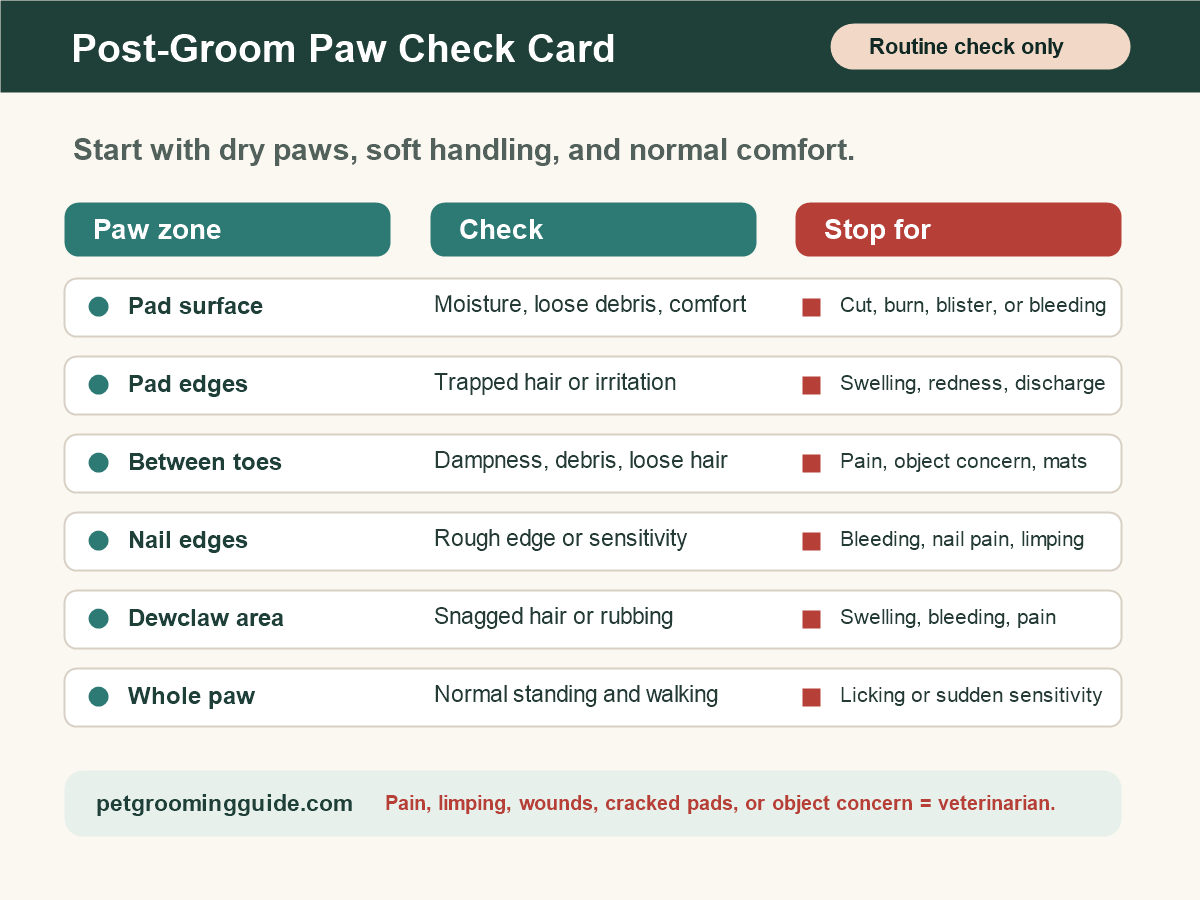
Use this check after normal brushing, bathing, drying, or nail work. The goal is to catch moisture, loose hair, debris, or discomfort early without turning a grooming routine into home treatment.

| Paw zone | Routine check | Stop if you see |
|---|---|---|
| Pad surface | Moisture, loose debris, and comfort. | Cuts, burns, blisters, or bleeding. |
| Pad edges | Trapped hair, rubbing, or irritation. | Swelling, redness, discharge, or pain. |
| Between toes | Dampness, loose hair, small loose debris, or mats. | Pain, embedded-object concern, painful mats, or unsafe handling. |
| Nail edges | Rough edge, sensitivity, and normal standing. | Bleeding, quick pain, limping, or repeated pulling away. |
| Dewclaw area | Snagged hair, rubbing, or moisture. | Swelling, bleeding, redness, or pain. |
| Whole paw | Normal walking, standing, and comfort. | Limping, excessive licking, sudden sensitivity, or panic. |
Step 1: Let Your Dog Stand or Rest Safely
Check paws only when your dog can stand, sit, or rest without slipping. Keep the hold light. If your dog panics, growls, snaps, freezes, yelps, or pulls away as if the paw hurts, end the session.
Do not force a paw hold to finish the checklist. A routine grooming check is only useful while the dog is safe to handle.
Step 2: Dry Between Toes and Around Pads
After a bath or wet grooming session, moisture can stay between toes, around pad edges, and near the dewclaw. Use a towel and gentle pressure. Do not rub hard, scrape, or apply products to irritated skin.
The AKC’s paw-cleaning guidance includes checking between toes and paw pads, and the ASPCA’s paw-care advice after outdoor exposure supports washing and drying paws when irritants may be present. If grooming followed salt, lawn chemicals, cleaners, or unknown irritants, keep the home step to gentle cleanup and call a veterinarian if exposure is a concern.
For a bath-specific routine, use how to clean dog paws after a walk as related cleaning context, but keep this page focused on the post-groom check.
Step 3: Check Nail Edges Without Treating Injuries
Look at each nail edge and the skin around it. A small rough edge can be noted for later grooming, but pain, bleeding, limping, swelling, or repeated pulling away means the nail check stops.
This page does not teach quick treatment, bandaging, antiseptics, disinfectants, or home remedies. The AKC nail-trimming guidance explains why the quick matters during nail work; if the paw is painful or bleeding after grooming, do not try to solve it from a checklist.
Step 4: Look Between the Toes
Separate the toes only enough to see whether the area is damp, packed with loose hair, holding small loose debris, or matted. Do not dig into the paw and do not remove anything that may be embedded.
Call a professional groomer for paw-hair trimming uncertainty, mats between toes, painful mats, or a task you cannot complete safely. Call a veterinarian for pain, limping, swelling, bleeding, cuts, burns, blisters, discharge, embedded-object concern, excessive licking, sudden sensitivity, or chemical exposure concern.
Normal Cleanup vs Vet Concern
| Situation | Routine cleanup | Vet concern |
|---|---|---|
| Damp paws after grooming | Towel dry gently, especially between toes. | Redness, swelling, odor with irritation, or pain. |
| Loose hair around pads | Note it for a safe future trim plan. | Painful mats, skin-close mats, or unsafe handling. |
| Small loose debris on the surface | Remove only if it is loose and easy. | Embedded-object concern or sudden pain. |
| Nail edge feels different | Observe comfort and stop nail work. | Bleeding, limping, quick pain, or swelling. |
| Dog licks once or twice | Recheck for moisture or trapped hair. | Excessive licking, sudden sensitivity, or abnormal walking. |
What Not to Do
Do not use this routine to apply paw balms, medicated products, antiseptics, disinfectants, bandages, wound treatments, parasite treatments, allergy treatments, or cracked-pad treatments. Do not remove embedded objects. Do not diagnose limping.
Those choices need a veterinarian when pain, injury, swelling, discharge, bleeding, abnormal walking, or unsafe handling is present. Cornell’s canine health guidance says limping usually indicates pain or weakness and deserves veterinary attention; treat limping as a stop sign, not a grooming checklist problem.
FAQ
What should I check on dog paw pads after grooming?
Check the pad surface, pad edges, between toes, nail edges, dewclaw area, moisture, debris, comfort, and normal walking. Stop for pain, limping, swelling, bleeding, cuts, burns, blisters, discharge, excessive licking, or sudden sensitivity.
Should I put balm on paw pads after grooming?
This page does not recommend balms or products. If the paw pads look painful, cracked, bleeding, swollen, burned, or irritated, call a veterinarian instead of covering the problem.
What if my dog limps after grooming?
Stop grooming and call a veterinarian. Limping can signal pain or injury and should not be diagnosed from a grooming checklist.
Can I trim mats between the toes?
If paw-hair trimming is uncertain, mats are painful, or the dog reacts with pain, stop and call a professional groomer. If the skin looks abnormal or the dog is limping, call a veterinarian.
How dry should paws be after grooming?
Paws should feel dry enough that moisture is not sitting between the toes or around the pad edges. Use a towel gently and stop if drying causes pain, panic, redness, or sensitivity.