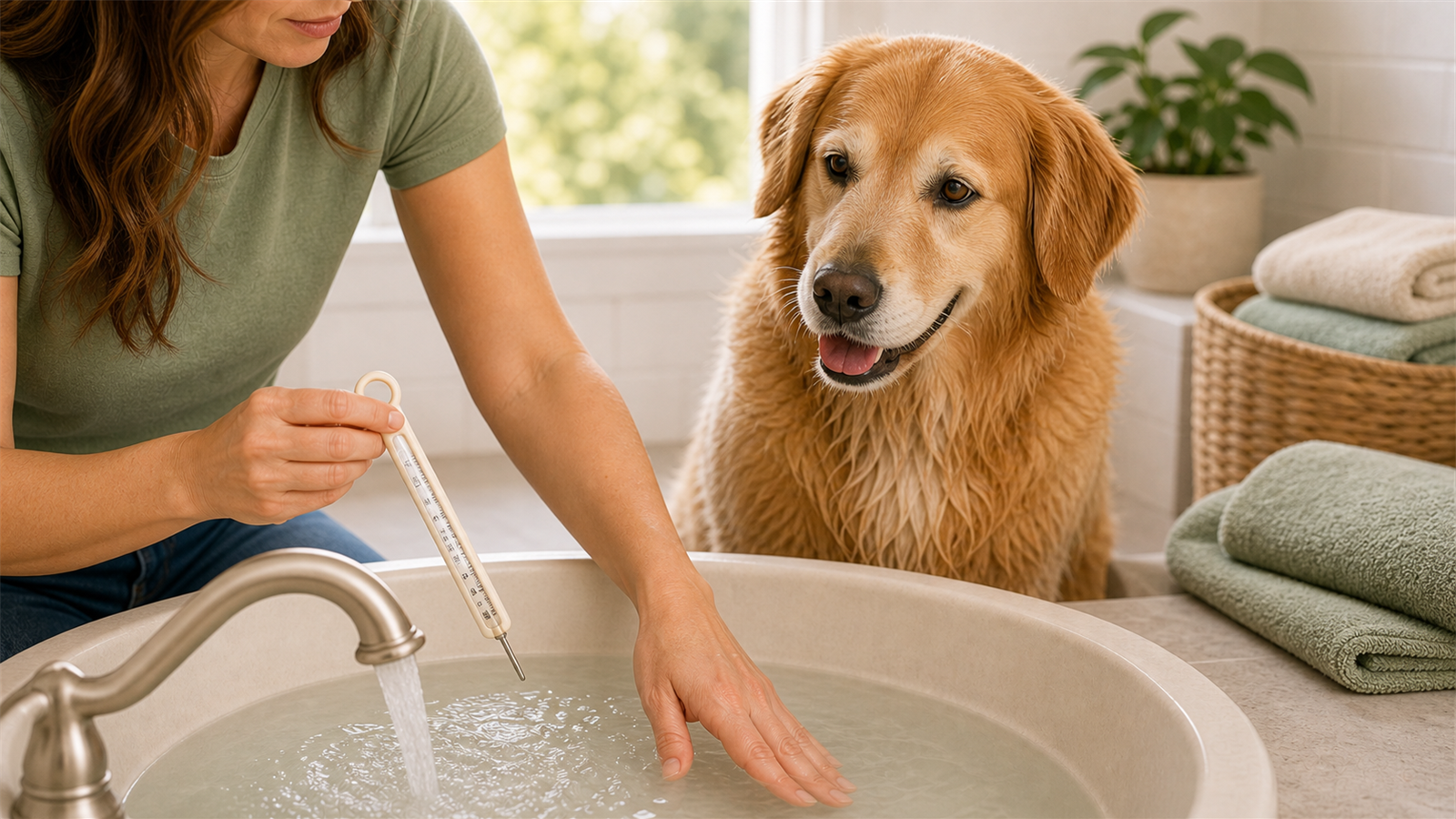

Use lukewarm, not hot, water for a routine dog bath. The goal is simple: water that feels comfortable and mild, with no hot bite, no icy shock, and no guesswork once the bath is already moving.
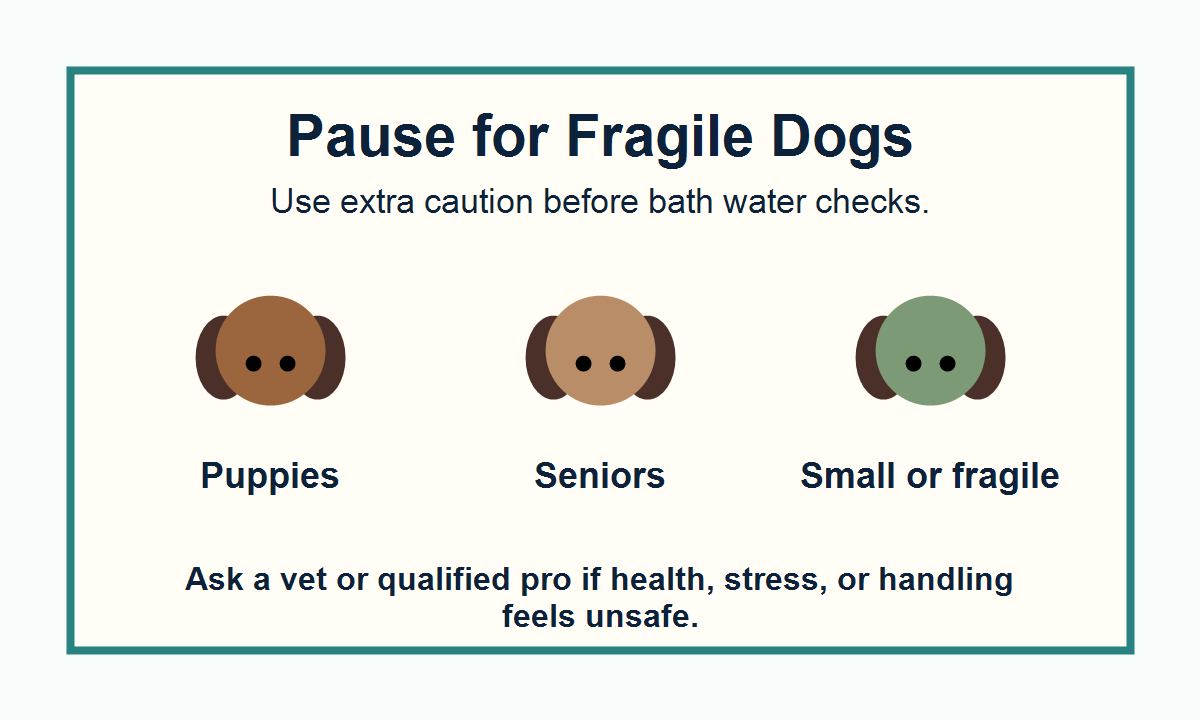
Do not bathe a dog at home if there are burns, open sores, signs of skin infection, heat or cold stress, panic, aggression, or handling that no longer feels safe. Puppies, senior dogs, small dogs, and medically fragile dogs need extra caution, and a veterinarian or qualified professional should guide bathing when health status is part of the concern.
The Safe Target: Lukewarm, Not Hot
For routine bathing, the practical target is lukewarm water. ASPCA dog grooming guidance describes using lukewarm water for bathing and keeping water out of the ears, eyes, and nose. A Merck Veterinary Manual shampoo therapy table uses the same basic direction: lukewarm, never hot.
This guide does not give a universal number for every dog and every bathroom setup. Water temperature can shift during the bath, and a dog’s age, size, skin condition, stress level, and health status all matter.
Why a Hand Check Can Mislead You
A hand or wrist check is useful for catching water that is obviously hot or cold, but it is not a perfect safety test. Owner comfort is not the same as dog comfort. A spray hose can warm up or cool down after it runs. A tub can feel different from the water coming out of the nozzle.
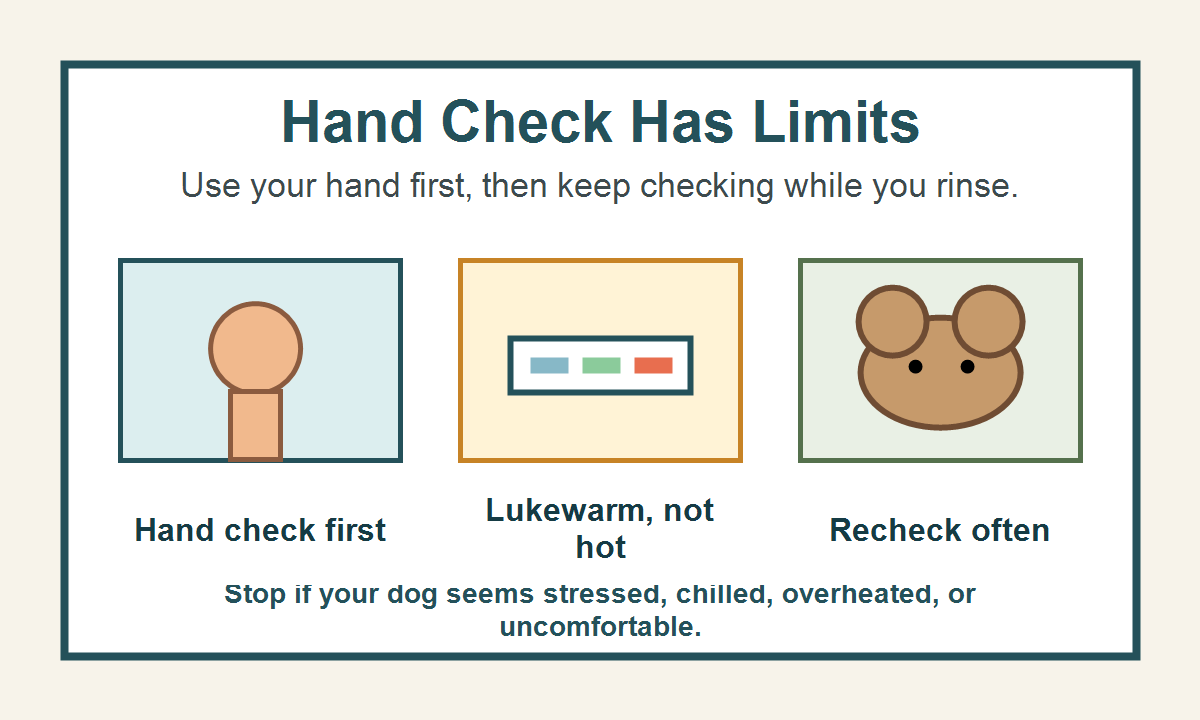
Check the water before the dog gets wet. Check again before rinsing the chest, belly, legs, and tail area. If the water suddenly feels sharp, hot, chilly, or uncomfortable, stop and adjust before continuing.
Use Extra Caution With Puppies, Seniors, Small Dogs, and Fragile Dogs
Puppies, senior dogs, small dogs, thin-coated dogs, and medically fragile dogs may have less tolerance for temperature stress or a long bath. Keep the session short, keep the room calm, and stop before the dog becomes exhausted or highly stressed.
Set Up the Bath Before Water Touches the Dog
Before you start, make the footing secure, place towels within reach, and test the water flow away from the dog. Keep the water shallow for a home bath. Avoid spraying or pouring water directly into the ears, eyes, or nose.
If the dog is already worried, rushing the water step can make the bath harder. Start slowly, keep one hand steady on the dog if safe, and stop if the dog begins to panic, growl, snap, scramble hard, or repeatedly try to escape.
Stop Signs During a Dog Bath
Stop the bath if you see skin redness, pain, suspected burns, shivering, heavy panting, weakness, panic, aggression, open sores, discharge, strong odor from irritated skin, or any handling risk. This page is not a treatment guide for skin, ear, eye, heat, cold, injury, or behavior problems.
If the bath was started because of itching, odor, sores, parasites, sudden hair loss, or recurring skin trouble, pause and ask a veterinarian what should happen next. A bath can clean surface dirt, but it should not be used to cover up a medical problem.
Where This Fits in Home Dog Grooming
Water temperature is only one part of a safer bath. Brush first when the coat allows it, use a calm setup, rinse thoroughly, and dry the dog in a way that does not overheat or frighten them.
FAQ
What temperature should dog bath water be?
Use lukewarm, not hot, water. This article does not give a universal numeric target because dogs, bathrooms, water flow, and health status vary.
Is warm water or cold water better for dogs?
Lukewarm water is the safer routine direction. Avoid hot water and icy water.
Can hot bath water hurt a dog?
Yes. Hot water can irritate or burn skin. Stop for redness, pain, distress, panic, or any burn concern.
Should puppies or senior dogs use cooler bath water?
Use extra caution with puppies, seniors, small dogs, and medically fragile dogs. Ask a veterinarian when health status affects bathing.
How do I tell if bath water is too hot for my dog?
Check that the water feels lukewarm, not hot, before and during bathing. Stop if the dog seems distressed, chilled, overheated, painful, or uncomfortable.
Bottom Line
For a routine dog bath, choose lukewarm water, check it more than once, and stop quickly when the dog or the skin tells you something is wrong. A calm, short bath with mild water is better than pushing through a setup that feels uncertain.