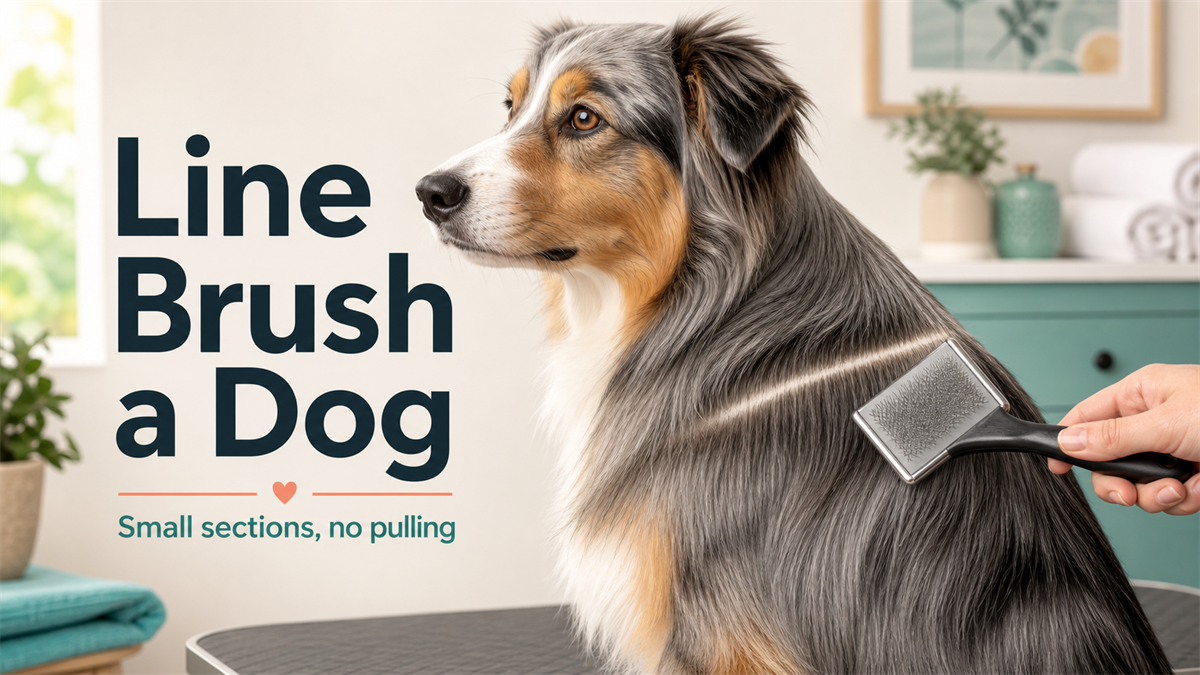

Line brushing means lifting a dog’s coat and brushing one small section at a time so the brush reaches more than the surface coat. It can help on long, double, curly, wavy, and feathered coats, but it is not a way to remove tight mats. If the brush catches, the skin pulls, or the dog reacts in pain or fear, stop and get help from a groomer or veterinarian.
Use light pressure, good light, and sections small enough that you can see the skin-side coat without scraping the skin. Do not force a brush or comb through mats, red skin, wounds, parasites, or a dog that is panicking, growling, snapping, or too hard to handle safely.
What Line Brushing Is
Line brushing is a section-by-section brushing method. You lift or part a narrow layer of coat, brush that visible section gently, move to the next nearby section, and check whether the coat is opening without tugging.
The goal is to prevent surface brushing, where the top looks smooth while tangles stay hidden underneath. This matters most on coats that hold hair in layers, such as long coats, double coats, curly or wavy coats, and feathering behind the ears, legs, tail, and chest.
The ASPCA’s dog grooming guidance notes that brushing helps remove dirt, spread natural oils, and check for fleas and flea dirt. Line brushing applies that same idea in smaller visible sections.
When Line Brushing Helps
Line brushing helps when the coat is healthy enough to brush and the problem is reach, not pain or tight matting. It is useful when the brush is only smoothing the surface, when feathering tangles between sessions, or when a thick coat needs smaller sections before a comb check.
| Coat area | Line-brushing fit | Stop point |
|---|---|---|
| Long coat | Small rows from lower coat upward | Stop if the coat pulls skin or forms tight clumps. |
| Double coat | Small sections where undercoat packs behind the topcoat | Stop for packed coat you cannot open with light brushing. |
| Curly or wavy coat | Very small sections with careful comb checks | Stop for skin-close mats or curls that will not separate gently. |
| Feathering | Short sections behind ears, legs, tail, and chest | Stop for pain, redness, or mats near thin skin. |
| Smooth coat | Usually not needed | Use a simpler gentle brushing routine instead. |
If you are unsure whether a spot is a loose tangle or a mat, check dog matting vs tangles before brushing through resistance.
Set Up Before You Start
Choose a calm time, a steady surface, and enough light to see the coat part clearly. Keep the session short if your dog is young, tired, worried, sore, or new to brushing.
- Use a brush or comb category that fits the coat, such as a slicker brush, pin brush, or metal comb.
- Keep one hand close to the section so you can feel skin movement.
- Brush with light pressure instead of pressing down toward the skin.
- Clear hair from the brush often.
- Reward calm pauses and stop before the dog becomes overwhelmed.
If your dog already dislikes brushing, start with handling and tolerance work first. The guide on how to brush a dog that hates being brushed can help you keep the session safer and shorter.
Step-by-Step Line Brushing
Work slowly and keep each section small. If you cannot see what the brush is doing, the section is probably too large.
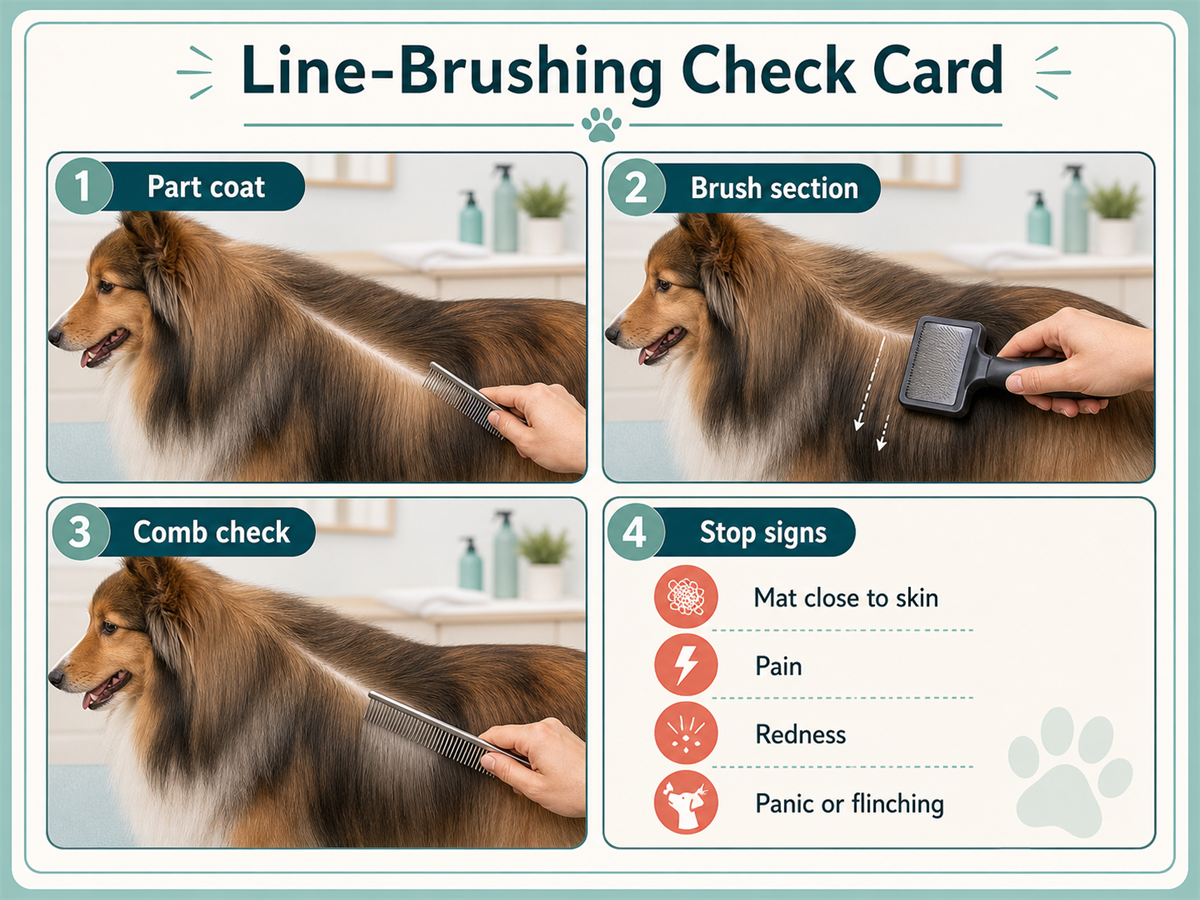
- Run your hands over the coat first. Check for mats, sore skin, wounds, parasites, swelling, heat, or painful spots.
- Lift a narrow layer of coat so you can see the section underneath.
- Hold the loose coat gently, without pulling the skin tight.
- Brush the exposed section with light strokes in the direction the coat grows.
- Move to the next small section beside or above it.
- Pause often to check skin color, dog comfort, and whether the brush is catching.
- When safe, finish the area with a gentle comb check. If the comb catches, do not force it.
How Small Should Each Section Be?
Each section should be small enough that you can see the coat you are brushing and feel whether the skin is being pulled. Thicker, longer, curlier, or more packed coats need smaller sections than open, easy coats.
Use smaller sections around ears, armpits, legs, tail, collar areas, and other friction spots. These areas can mat faster and may have thinner, more sensitive skin.
For routine spacing and prevention, see how to prevent dog mats. For a broader brushing rhythm, the dog grooming schedule by coat type can help you choose a realistic cadence.
Follow With a Comb Check
A comb check tells you whether the brush reached through the section. Use it only when the dog is comfortable and the coat has already opened with gentle brushing.
The comb should move through without tugging, skin pull, or a pain response. If it catches, stop. The answer is not more force. You may need a smaller section, a calmer session, or a groomer if the coat is tight or close to the skin.
Stop Signs
Stop line brushing if the dog or coat shows signs that the job is no longer safe for home brushing. These signs mean the session needs to end, not intensify.
- Pain, flinching, yelping, or repeated turning toward the brush
- Red, raw, swollen, hot, scabbed, wounded, or bleeding skin
- Fleas, ticks, parasite dirt, or sudden skin changes
- Tight mats, mats close to the skin, packed coat, or coat that pulls the skin
- Panic, freezing, growling, snapping, biting, or unsafe handling
- Any situation where sedation or restraint seems necessary
Use a professional groomer for tight mats, packed coat, sensitive-area matting, or coat work you cannot do gently. Use a veterinarian for wounds, parasites, painful skin, infection signs, sudden coat loss, or any medical concern.
Common Line-Brushing Mistakes
- Brushing only the top layer and missing the coat underneath.
- Taking sections so large that you cannot see the brush contact.
- Pressing the brush down into the skin.
- Using line brushing as a mat-removal method.
- Dragging a comb through resistance after brushing.
- Continuing after the dog shows pain, fear, or defensive behavior.
- Bathing a coat that still has tight tangles or mats.
For more brushing errors to avoid, see dog brushing mistakes. If you are brushing before a bath, review dog grooming before or after bath so mats and tangles are handled before water can tighten them.
How Line Brushing Fits With Shedding
Line brushing can help collect loose hair from deeper coat layers, but it should still feel gentle. On shedding coats, work in small sections, clear the brush often, and stop before the skin gets irritated.
If your main goal is normal shedding control rather than sectioning a long or curly coat, start with how to remove loose dog hair.
FAQ
What is line brushing a dog?
Line brushing is brushing a dog’s coat in small lifted sections so you can reach through the coat instead of smoothing only the surface.
Which dogs need line brushing?
Long, double, curly, wavy, and feathered coats may benefit from line brushing. Smooth coats usually need a simpler brushing routine.
Should line brushing hurt?
No. Stop for pain, redness, skin pull, tight mats, panic, growling, snapping, or any sign that the dog cannot be handled safely.
Can line brushing remove mats?
No. Line brushing is not a severe mat-removal method. Do not force brushes or combs through mats. Use a groomer or veterinarian for tight, painful, skin-close, or widespread mats.
Do you comb after line brushing?
Yes, when it is safe. A comb check can confirm whether the section is open. If the comb catches or pulls skin, stop instead of forcing it.