

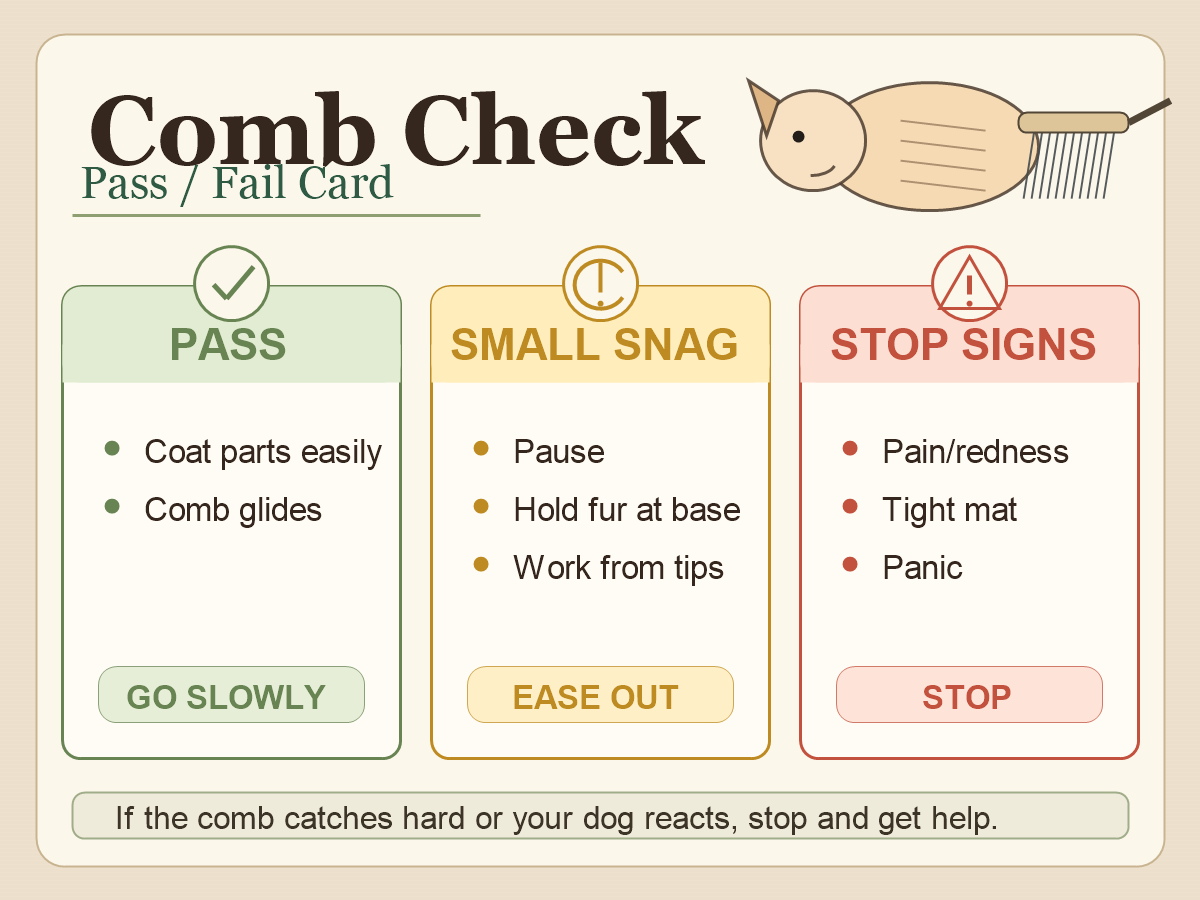
A comb check is a gentle pass/fail test after brushing. You slide a comb through one small brushed section to see whether the coat is truly open, not just smooth on top. Pass means the comb glides through without catching, tugging, skin pull, or a worried reaction from your dog. Fail means stop that section and do not force the comb.
Comb check before a bath, before drying a long or dense coat, or before ending a brushing session. Stop for pain, redness, tight mats, panic, defensiveness, or skin irritation. Use a groomer for coat work you cannot do gently, and call a veterinarian for painful skin, wounds, parasites, bleeding, infection signs, or any medical concern.
What a Comb Check Is
A comb check verifies brushing. It is not a detangling shortcut, a mat-removal method, or a reason to pull harder. The point is to learn whether the brush reached through the coat.
This matters because a coat can look neat on the surface while tangles stay hidden underneath. The ASPCA notes that brushing helps remove loose hair and dirt, spread natural oils, and check for fleas and flea dirt. A comb check makes that brushing result easier to confirm, section by section.
When to Comb Check
Use a comb check after brushing a small area, not before. If you start with the comb and it hits resistance, you may drag through a tangle before you know what is there.
Comb checking is especially useful before a bath. If the coat still has hidden tangles or mats, water and drying can make the session harder on your dog. For bath order, see dog grooming before or after bath.
The Pass/Fail Comb-Check Framework
Think of each section as pass, pause, or fail. That keeps the check simple and prevents the common mistake of treating resistance like something to push through.
| Result | What you feel | What to do next |
|---|---|---|
| Pass | The comb glides from the skin-side coat outward without snagging, tugging, or upsetting the dog. | Move to the next small section. |
| Pause | The comb meets a light snag, but the dog is calm and the skin is normal. | Stop combing that spot. Go back to gentle brushing only if the hair separates easily. |
| Fail | The comb stops, pulls skin, hits a tight mat, or the dog flinches, panics, growls, snaps, or turns defensively. | End work on that area. Use a groomer or veterinarian as appropriate. |
A failed section is useful information. It tells you the coat is not ready for bath, not ready for a harder comb pass, and not safe to rush.
Zones to Check
Comb check the areas that rub, bend, collect loose coat, or hide tangles. Work slowly around thin or sensitive skin.
- Behind the ears.
- Collar and harness line.
- Armpits.
- Chest and belly.
- Inner legs and feet.
- Tail base, pants, and feathering.
- Any spot where the coat looks packed, flat, damp, or clumped.
If you find repeated catching in these friction zones, use dog matting vs tangles before deciding whether the area is safe for home brushing.
How to Hold the Comb
Use a clean metal comb category that suits the coat. Hold it lightly, close enough that you can feel resistance before it becomes a pull. Keep your other hand near the coat section so you can notice skin movement.
- Brush a small section first.
- Part or lift the coat so you can see the area you are checking.
- Start with a light comb pass through the brushed section.
- Watch the dog and the skin, not just the comb.
- Stop as soon as the comb catches, the skin moves, or the dog reacts.
Do not saw the comb back and forth, brace the dog to finish, or pull harder because the section is almost done. If the comb cannot pass gently, the section fails the check.
What to Do If the Comb Catches
If the comb catches once, stop the comb pass and look at the area. A loose tangle may separate with gentle brushing if the dog stays calm and the skin looks normal. A tight mat, repeated catching, pain, redness, or skin pull needs a different plan.
Use how to line brush a dog if the coat is safe to brush but you need smaller sections. Use how to prevent dog mats for a routine that reduces future catching.
Call a groomer when the coat is tight, packed, skin-close, widespread, or beyond what you can brush without pulling. Call a veterinarian when there is pain, red or irritated skin, wounds, parasites, bleeding, swelling, infection signs, sudden coat loss, or a dog who seems medically fragile.
Comb Check by Coat Type
| Coat type | How to check | Extra caution |
|---|---|---|
| Smooth coat | Usually limited checks in thicker areas or shedding spots. | Do not scrape thin skin for loose hair. |
| Long silky coat | Check in small sections after brushing ends, ears, legs, belly, and tail. | Stop if feathering pulls or twists around the comb. |
| Curly or wavy coat | Use very small sections and check close to the skin only after brushing opens the coat. | Hidden mats may sit close to the skin; do not force the comb. |
| Dense double coat | Check packed areas after light section brushing. | Stop if undercoat is packed tight or the skin gets irritated. |
| Feathered coat | Check behind ears, legs, tail, chest, and pants in short passes. | These areas can be sensitive and mat from friction. |
The ASPCA’s at-home grooming tips describe different brush and comb categories by coat type. This guide stays category-level and does not recommend specific products.
Stop Signs
End the session if the check is no longer calm, gentle, and clear. A comb check should never turn into a struggle.
- Pain, yelping, flinching, or repeated turning toward the comb.
- Redness, raw skin, hot skin, swelling, scabs, wounds, bleeding, or skin irritation.
- Tight mats, skin-close mats, packed coat, or coat that pulls the skin.
- Panic, freezing, growling, snapping, biting, or defensive behavior.
- Fleas, ticks, parasite dirt, sudden hair loss, or unusual skin changes.
- Any situation where restraint or sedation seems necessary.
For broader brushing safety mistakes, see dog brushing mistakes.
FAQ
What is a comb check on a dog?
A comb check is a gentle pass through a brushed coat section to confirm that hidden tangles are not left under the surface.
Should you comb check before bathing?
Yes, when it is safe. Comb check after brushing and before bathing so hidden tangles or mats are not missed before water is added.
What does it mean if the comb catches?
It means that section does not pass. Stop the comb pass, check the skin and coat, and do not pull through resistance.
Can I comb through a mat?
No. Do not force a comb through tight, painful, skin-close, or repeated matting. Use a groomer or veterinarian as appropriate.
Which coat zones should I comb check?
Focus on behind the ears, collar line, armpits, chest, belly, legs, feet, tail, pants, feathering, and any packed or clumped area.